






 Video Library


Rape and Sexual Assault
Study Questions
Practice Questions 1
The nurse is triaging a client who presents to the emergency department after a recent sexual assault. Which of the following should the nurse prioritize initially?
Explanation
Post-assault care follows a fixed hierarchy: physical stabilization, psychological safety, then evidence collection. Occult genital lacerations, hemorrhage, and head trauma may coexist. Informed consent precedes every forensic step.
Rationale for correct answer:
B. Privacy with injury assessment addresses both physiological stability and psychological safety simultaneously. Survey identifies bleeding, fractures, strangulation marks, and altered consciousness. A secluded environment reduces sympathetic hyperarousal and re-traumatization. Airway, breathing, and circulation always rank first.
Rationale for incorrect answers:
A. Clothing collection preserves trace evidence including seminal fluid, hair, and fibres. Garments require paper bags to prevent moisture and mould. The step follows stabilization and consent. Undressing before assessment is premature.
C. Law enforcement notification depends on jurisdictional statute and, for competent adults, client consent. Reporting does not resolve physical injury. Autonomy is central to trauma-informed care. The action is not initial.
D. Written consent for forensic examination requires a client who is oriented and stable. Acute stress and possible head injury impair comprehension. Consent must be voluntary and informed. Physical assessment necessarily precedes it.
Test-taking strategy:
- Analyze the Scenario/Question: A client presents after recent sexual assault. The word initially signals ABC and safety prioritization over forensic tasks.
- Apply Knowledge of Post-Assault Triage Sequence:
- Physical stabilization and safety precede evidence collection, consent, and reporting in every assault protocol. Forensic tasks are meaningless if the client is medically unstable.
- Rule out Choice 1: Clothing collection is an evidence step requiring prior consent.
- Rule in Choice 2: Privacy with injury survey addresses physiological safety first.
- Rule out Choice 3: Notification depends on statute and consent, not urgency.
- Rule out Choice 4: Consent requires a stable, oriented client.
- Select the Conclusion: Select Choice 2, because physical assessment in a safe environment precedes all forensic and legal actions.
Take home points
- Physical stabilization and safety always precede forensic evidence collection.
- Assess for strangulation signs, head injury, and occult genital trauma during initial survey.
- Informed consent is required before every stage of the forensic examination.
- A private, quiet environment reduces re-traumatization and hyperarousal.
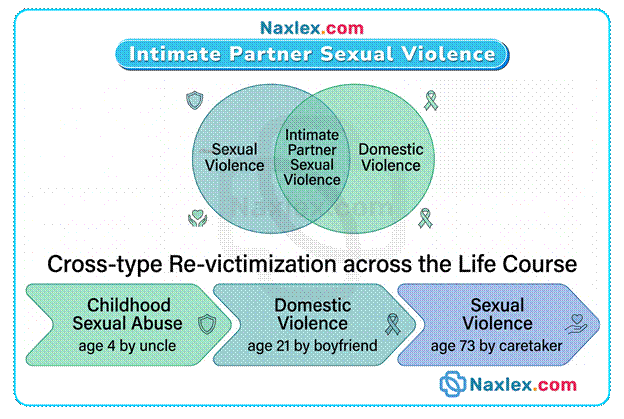
The nurse is interviewing a client who reports being forced into sexual activity by a current intimate partner through threats and coercion. Which of the following terms best describes this type of assault?
Explanation
Intimate partner sexual violence is coerced sexual contact by a current or former partner. Mechanisms include physical force, threats, and reproductive coercion. It coexists with physical and psychological abuse within controlling relationships.
Rationale for correct answer:
C. Intimate partner sexual violence requires a current or former partner as perpetrator, matching the stated relationship. Threats and coercion satisfy the absence of valid consent. Marriage or cohabitation never implies ongoing consent. Coercive control is the defining context.
Rationale for incorrect answers:
A. Statutory rape rests on legal age incapacity to consent, irrespective of willingness. The offence is defined by chronological age alone. No age element appears in this scenario. Force is not a required component.
B. Sexual harassment involves unwelcome verbal or physical conduct, typically in employment or educational settings. It creates a hostile environment without necessarily involving penetration. The relationship context differs entirely. Force and coercion are not defining.
C. Acquaintance rape designates a perpetrator known but not intimate, such as a classmate or coworker. The term excludes current romantic partners. Relationship proximity determines classification. This label understates the coercive dynamic.
Test-taking strategy:
- Analyze the Scenario/Question: A current intimate partner used threats and coercion. The correct term is determined by the perpetrator relationship.
- Apply Knowledge of Sexual Violence Terminology:
- Classification depends on who the perpetrator is: partner, acquaintance, stranger, or a minor victim. Consent obtained through threat is legally invalid regardless of relationship.
- Rule out Choice 1: Statutory rape is defined by age, not force.
- Rule out Choice 2: Harassment involves unwelcome conduct in institutional settings.
- Rule in Choice 3: A current partner perpetrator defines intimate partner sexual violence.
- Rule out Choice 4: Acquaintance rape excludes romantic partners.
- Select the Conclusion: Select Choice 3, because the perpetrator is a current intimate partner using coercion.
Take home points
- Intimate partner sexual violence is coerced sexual contact by a current or former partner.
- Marital or relationship status never constitutes implied or ongoing consent.
- Statutory rape is defined solely by the victim's legal incapacity to consent by age.
- Acquaintance rape involves a known perpetrator who is not an intimate partner.
The nurse is preparing a community education session about sexual assault epidemiology. Which of the following statements is most accurate?
Explanation
Sexual assault is markedly underreported, with fewer than 1 in 3 incidents disclosed to authorities. Perpetrators are predominantly known to the survivor. Peak incidence occurs between ages 16 and 24 years.
Rationale for correct answer:
B. Known perpetrators account for the substantial majority of assaults, including partners, acquaintances, relatives, and colleagues. Prior familiarity facilitates access and grooming behaviour. The stranger-assault stereotype is epidemiologically inaccurate. Familiarity also suppresses disclosure.
Rationale for incorrect answers:
A. Adolescents and young adults experience the highest incidence, peaking between 16 and 24 years. Social exposure, substance use, and relationship formation elevate risk. The statement inverts the true age distribution. It is factually incorrect.
C. Crime statistics capture only reported incidents, producing systematic underestimation. Shame, fear of retaliation, and distrust of legal processes suppress disclosure. Anonymous victimization surveys yield higher rates. Official data are unreliable for incidence.
D. Male survivors report at lower rates than women because of stigma, masculinity norms, and fear of disbelief. Underreporting is more pronounced, not less. The statement reverses established evidence. Male victimization is substantially undercounted.
Test-taking strategy:
- Analyze the Scenario/Question: The nurse teaches sexual assault epidemiology. The correct statement must match established surveillance data, not common stereotypes.
- Apply Knowledge of Assault Epidemiology:
- Assault is chronically underreported, perpetrators are usually known, and adolescents carry peak risk. Options reflecting stranger-danger or reliable official statistics are inaccurate.
- Rule out Choice 1: Adolescents carry the highest incidence, not minimal.
- Rule in Choice 2: Most perpetrators are known to the survivor.
- Rule out Choice 3: Official data capture only reported cases.
- Rule out Choice 4: Men report at lower rates due to stigma.
- Select the Conclusion: Select Choice 2, because known-perpetrator assault predominates in all population surveys.
Take home points
- Most sexual assaults are committed by someone known to the survivor.
- Peak incidence occurs among adolescents and young adults aged 16 to 24 years.
- National crime statistics underestimate incidence because most assaults go unreported.
- Male survivors report at lower rates because of stigma and fear of disbelief.
The nurse is assessing a client's risk profile for sexual victimization. Which of the following factors increase the client's risk? Select all that apply
Explanation
Victimization risk rises with impaired situational awareness, social isolation, and prior revictimization history. Substance intoxication reduces resistance capacity and credibility. Protective factors include supportive networks and economic stability.
Rationale for correct answers:
A. Living alone with frequent night ambulation increases situational exposure and reduces available guardianship. Isolation removes witnesses and immediate assistance. Perpetrators select low-surveillance opportunities. Environmental vulnerability rises correspondingly.
C. Prior assault history predicts revictimization through trauma-related dissociation and blunted threat appraisal. Impaired danger recognition delays protective response. Trauma bonding may sustain unsafe relationships. Risk is measurably elevated.
E. Substance use produces cognitive impairment, reduced motor coordination, and diminished resistance capacity. Intoxication compromises consent capacity and subsequent recall. Perpetrators deliberately target impaired individuals. Reporting credibility is unfairly undermined.
Rationale for incorrect answers:
B. Strong social support provides protective guardianship, monitoring, and early disclosure pathways. Connected individuals leave unsafe situations sooner. Isolation, not connection, elevates risk. This factor is protective.
D. High socioeconomic status with stable housing reduces environmental exposure to unsafe settings and dependency on unsafe hosts. Resources permit safe transport and secure residence. Assault occurs across all strata, though incidence is lower. It is not a risk factor.
Test-taking strategy:
- Analyze the Scenario/Question: The nurse assesses risk factors for sexual victimization. Each option is classified as risk-increasing or protective.
- Apply Knowledge of Victimization Risk Factors:
- Risk rises with isolation, impaired awareness, and prior victimization. Select-all items deliberately embed protective factors as distractors requiring independent evaluation.
- Rule in Choice 1: Isolation increases situational exposure.
- Rule out Choice 2: Social support provides protective guardianship.
- Rule in Choice 3: Prior assault predicts revictimization.
- Rule out Choice 4: Economic stability reduces environmental exposure.
- Rule in Choice 5: Intoxication causes impaired resistance.
- Select the Conclusion: Select Choice 1, Choice 3, and Choice 5 as the factors elevating victimization risk.
Take home points
- Prior sexual assault is among the strongest predictors of subsequent revictimization.
- Substance intoxication impairs resistance, consent capacity, and later recall.
- Social isolation and low guardianship increase situational vulnerability.
- Risk factors describe vulnerability only; responsibility always rests with the perpetrator.
The nurse is planning discharge teaching for a client who experienced a recent sexual assault. Which of the following interventions should the nurse prioritize to promote immediate safety and resilience?
Explanation
Discharge planning prioritizes ongoing safety, since perpetrators are usually known and re-contact is likely. A safety plan specifies emergency contacts, refuge locations, and escape steps, supporting self-efficacy and resilience.
Rationale for correct answer:
C. Personalized safety planning addresses the continuing threat posed by a perpetrator with ongoing access. Named contacts, refuge sites, and rehearsed actions convert intention into executable behaviour. Collaborative construction restores autonomy and control. Safety precedes all follow-up care.
Rationale for incorrect answers:
A. Forensic recheck scheduling documents evolving injuries and delayed bruising over subsequent days. Mental health evaluation identifies posttraumatic sequelae. Both occur days later. Neither secures immediate physical safety.
B. Prophylactic medication review covers post-exposure prophylaxis, emergency contraception, and sexually transmitted infection therapy. These address biological rather than environmental risk. Regimens are initiated before discharge. Physical safety still takes precedence.
D. Written support group information promotes long-term recovery and reduces isolation. Utilization depends on client readiness and timing. Printed material offers no protection from re-contact. It is supplementary, not priority.
Test-taking strategy:
- Analyze the Scenario/Question: The nurse plans discharge after recent sexual assault. The intervention must promote immediate safety, not long-term recovery.
- Apply Knowledge of Discharge Safety Planning:
- Most perpetrators are known and retain access, so environmental safety outranks medical follow-up and support referral. Collaborative safety planning also restores client autonomy.
- Rule out Choice 1: Forensic recheck occurs days later.
- Rule out Choice 2: Prophylaxis addresses biological, not environmental, risk.
- Rule in Choice 3: A safety plan addresses immediate threat of re-contact.
- Rule out Choice 4: Printed referrals support long-term recovery only.
- Select the Conclusion: Select Choice 3, because ongoing perpetrator access makes safety planning the immediate discharge priority.
Take home points
- Safety planning is the discharge priority when the perpetrator retains access to the client.
- A safety plan names emergency contacts, refuge locations, and rehearsed escape steps.
- Post-exposure prophylaxis and emergency contraception are initiated before discharge.
- Collaborative planning restores autonomy and control lost during the assault.
Practice Questions 2
The nurse is explaining the neurobiological acute stress response after a sexual assault. Which of the following physiologic changes is most directly mediated by activation of the sympathetic nervous system?
Explanation
Threat activates the sympathetic-adrenomedullary axis within seconds, releasing epinephrine and norepinephrine. Effects include tachycardia, alpha-1 mediated vasoconstriction, bronchodilation, mydriasis, and glycogenolysis. The slower adrenocortical axis follows over minutes.
Rationale for correct answer:
C. Peripheral vasoconstriction with tachycardia results from alpha-1 and beta-1 adrenergic receptor stimulation. Blood is shunted from skin and viscera toward skeletal muscle. Cardiac output and mean arterial pressure rise. This is direct sympathetic mediation.
Rationale for incorrect answers:
A. Catecholamine suppression is the opposite of sympathetic activation, which markedly increases their release. Adrenal medullary secretion rises within seconds. Suppression occurs only with pharmacologic blockade. The statement is physiologically inverted.
B. Hippocampal neurogenesis is suppressed by sustained glucocorticoid exposure during chronic stress. Dentate gyrus proliferation declines with cortisol elevation. The process is not sympathetically mediated. Chronic trauma reduces hippocampal volume.
D. Cortisol release is mediated by the hypothalamic-pituitary-adrenal axis through corticotropin-releasing hormone and adrenocorticotropic hormone. The pathway is endocrine, not neural. Onset requires minutes rather than seconds. Sympathetic mediation is indirect at best.
Test-taking strategy:
- Analyze the Scenario/Question: The nurse explains the acute stress response. The change must be directly sympathetically mediated, not endocrine.
- Apply Knowledge of Stress Response Pathways:
- The sympathetic-adrenomedullary axis acts within seconds through catecholamines, while the adrenocortical axis acts over minutes through cortisol. Distinguishing the two pathways resolves the item.
- Rule out Choice 1: Sympathetic activation increases catecholamines.
- Rule out Choice 2: Neurogenesis is suppressed by glucocorticoids.
- Rule in Choice 3: Vasoconstriction with tachycardia is adrenergic.
- Rule out Choice 4: Cortisol is released via the adrenocortical axis.
- Select the Conclusion: Select Choice 3, because vasoconstriction and tachycardia are direct adrenergic receptor effects.
Take home points
- The sympathetic-adrenomedullary axis responds within seconds through epinephrine and norepinephrine.
- The hypothalamic-pituitary-adrenal axis responds over minutes through cortisol release.
- Adrenergic effects include tachycardia, vasoconstriction, bronchodilation, and mydriasis.
- Chronic cortisol elevation suppresses hippocampal neurogenesis and reduces volume.
The nurse is assessing a client who reports feeling "numb" and detached immediately after a sexual assault. Which phase of rape trauma syndrome does this presentation most closely represent?
Explanation
Rape trauma syndrome comprises an acute disorganization phase lasting days to weeks and a long-term reorganization phase. Acute presentations are expressed with crying and agitation, or controlled with numbness and flat affect.
Rationale for correct answer:
C. Numbness and detachment immediately post-assault characterize the controlled reaction style within acute disorganization. Peritraumatic dissociation defends against overwhelming affect. Calm presentation never excludes assault. The timing places it firmly in this phase.
Rationale for incorrect answers:
A. The outward adjustment phase involves apparent resumption of routine with underlying suppression and denial. It develops weeks after the assault. Function superficially normalizes. The immediate timeframe excludes it.
B. Delayed expression describes posttraumatic stress disorder criteria met 6 months or later after exposure. It is a diagnostic specifier, not a syndrome phase. Symptoms here are immediate. The terminology is misapplied.
D. Long-term reorganization unfolds over months to years, involving lifestyle change, relocation, and identity restructuring. Nightmares and phobias may persist. The phase follows acute presentation. Timing entirely excludes it.
Test-taking strategy:
- Analyze the Scenario/Question: The client reports numbness immediately after assault. Phase identification depends on elapsed time and presentation.
- Apply Knowledge of Rape Trauma Syndrome:
- The acute phase spans days to weeks and includes both expressed and controlled reaction styles. Later phases require weeks to months to develop.
- Rule out Choice 1: Outward adjustment develops weeks later.
- Rule out Choice 2: Delayed expression requires 6 months or more.
- Rule in Choice 3: Numbness is the controlled reaction of the acute phase.
- Rule out Choice 4: Reorganization spans months to years.
- Select the Conclusion: Select Choice 3, because immediate numbness represents the controlled acute disorganization reaction.
Take home points
- The acute disorganization phase lasts days to weeks after the assault.
- Expressed reactions show crying and agitation; controlled reactions appear numb and calm.
- A composed presentation never indicates that assault did not occur.
- The long-term reorganization phase spans months to years and may involve relocation.
The nurse is educating a multidisciplinary team about tonic immobility (freeze response) following sexual assault. Which of the following are characteristic features of tonic immobility? Select all that apply.
Explanation
Tonic immobility is an involuntary dorsal vagal response to inescapable threat. Features include motor paralysis, vocal inhibition, analgesia, tremor, and dissociation with preserved awareness. It affects roughly 50 percent of survivors.
Rationale for correct answers:
B. Dissociation and detachment accompany immobility as a defensive disengagement from overwhelming stimuli. Depersonalization and derealization commonly co-occur. Analgesia may blunt physical pain perception. Both processes share dorsal vagal mediation.
C. Inability to move or call out with retained threat awareness is the defining feature. Consciousness and memory encoding continue throughout. The response is entirely involuntary and unchosen. Survivors accurately recall being unable to act.
E. Temporary paralysis with reduced vocalization reflects motor and laryngeal inhibition under parasympathetic dominance. Rigidity may alternate with tremor. Duration ranges from seconds to minutes. Resolution is spontaneous.
Rationale for incorrect answers:
A. Hyperactivity and pacing represent sympathetic mobilization rather than immobility. Psychomotor agitation may occur after the event but is a separate phenomenon. Immobility involves suppressed movement. The features are opposite.
D. Voluntary aggressive resistance constitutes an active fight response with intact motor output. Catecholamine-driven defensive aggression opposes paralysis. Voluntary action contradicts involuntary immobility. The two cannot coexist.
Test-taking strategy:
- Analyze the Scenario/Question: The team is taught tonic immobility. Features must reflect involuntary motor suppression, not activation.
- Apply Knowledge of Peritraumatic Freeze Responses:
- Tonic immobility involves parasympathetic dorsal vagal dominance producing paralysis, vocal inhibition, and dissociation with intact awareness. Any option describing movement or voluntary action is excluded.
- Rule out Choice 1: Pacing reflects sympathetic mobilization.
- Rule in Choice 2: Detachment is defensive dissociation.
- Rule in Choice 3: Paralysis with awareness is the defining feature.
- Rule out Choice 4: Aggression is a voluntary fight response.
- Rule in Choice 5: Vocal inhibition reflects parasympathetic dominance.
- Select the Conclusion: Select Choice 2, Choice 3, and Choice 5 as the characteristic features of tonic immobility.
Take home points
- Tonic immobility is involuntary paralysis occurring when escape appears impossible.
- Awareness and memory encoding remain intact throughout the freeze response.
- Dissociation, analgesia, and reduced vocalization commonly accompany immobility.
- Absence of resistance from tonic immobility never constitutes consent.
The nurse is performing an initial forensic-focused physical assessment on a client who presents 72 hours after a sexual assault. Which of the following findings should the nurse recognize as most time-sensitive for documentation and possible forensic testing?
Explanation
Biological evidence degrades progressively, with deoxyribonucleic acid recoverable up to 120 hours in adults. Acute genital injury re-epithelializes within 48 to 72 hours. Colposcopy and toluidine blue staining enhance detection.
Rationale for correct answer:
C. Fresh genital lacerations with active bleeding constitute acute injury that heals rapidly and disappears within days. Concurrent swabs may recover seminal fluid and epithelial cells. Photographic documentation with a scale is required immediately. Both clinical and forensic urgency coincide.
Rationale for incorrect answers:
A. Intrusive memories and nightmares are psychological manifestations without physical evidentiary substrate. Documentation supports diagnosis but carries no decay window. Symptoms may be recorded at any later visit. No forensic testing applies.
B. Sleep disturbance is a subjective symptom reflecting hyperarousal. It persists over weeks rather than degrading. No biological specimen derives from it. Timing has no evidentiary consequence.
D. Five-day-old abrasions are already healing with granulation and crust formation. Trace evidence at that site has long degraded. Documentation remains useful but not urgent. The window for recovery has closed.
The nurse is planning long-term follow-up for a client who experienced sexual assault 6 months ago and now reports persistent hypervigilance, avoidance of reminders, and exaggerated startle response. Which of the following nursing diagnoses best reflects the client's current clinical presentation?
Explanation
Posttrauma syndrome describes sustained maladaptive response to overwhelming traumatic events. Defining characteristics include hypervigilance, avoidance, intrusive recollection, exaggerated startle, and psychic numbing persisting beyond 1 month.
Rationale for correct answer:
C. Posttrauma syndrome matches the defining characteristics of hypervigilance, avoidance, and exaggerated startle stated in the scenario. The 6-month duration confirms chronicity. Sexual violence is an established etiologic factor. Diagnostic congruence is complete.
Rationale for incorrect answers:
A. Acute confusion requires disturbed consciousness and fluctuating cognition of recent onset. No head injury or disorientation is documented. The presentation is chronic and cognitively intact. The related factor is fabricated.
B. Risk for self-directed violence demands evidence of suicidal ideation or self-harm behaviour. None is reported. Grief additionally applies to bereavement, not assault. The diagnosis is speculative and unsupported.
D. Ineffective coping with absent support lacks stated evidence of maladaptive coping or social isolation. The reported symptoms are trauma-specific rather than general. Posttrauma syndrome is the more precise label. Specificity determines selection.
Test-taking strategy:
- Analyze the Scenario/Question: Symptoms persist 6 months post-assault. The diagnosis must match the defining characteristics stated.
- Apply Knowledge of Nursing Diagnosis Selection:
- Each diagnosis requires supporting data and an accurate related factor. When several fit loosely, the most specific diagnosis matching the stated cluster is correct.
- Rule out Choice 1: No head injury or altered consciousness is documented.
- Rule out Choice 2: No suicidal ideation is reported.
- Rule in Choice 3: Hypervigilance and startle define posttrauma syndrome.
- Rule out Choice 4: Coping and support data are absent.
- Select the Conclusion: Select Choice 3, because the stated symptom cluster precisely defines posttrauma syndrome.
Take home points
- Posttrauma syndrome features hypervigilance, avoidance, intrusion, and exaggerated startle.
- Symptoms persisting beyond 1 month distinguish posttraumatic from acute stress responses.
- Nursing diagnoses require defining characteristics documented in the assessment data.
- Choose the most specific diagnosis when several general options could loosely apply.
Practice Questions 3
The nurse is conducting an initial trauma-informed history for a client who reports a recent sexual assault. Which of the following should the nurse prioritize initially?
Explanation
Trauma-informed care establishes physical and psychological safety before all else. Occult strangulation signs, head injury, and genital trauma may be present. Traumatic memory is fragmented, so narration is never forced.
Rationale for correct answer:
C. Privacy with injury assessment simultaneously secures physiological stability and psychological safety. Survey detects bleeding, fractures, petechiae, and altered consciousness. A secluded setting reduces sympathetic hyperarousal. Safety is the foundational trauma-informed principle.
Rationale for incorrect answers:
A. Immediate notification of provider and police involves legal and collaborative processes that do not treat injury. Reporting for competent adults generally requires consent. Autonomy is central to trauma-informed practice. It is not the initial step.
B. Verbatim documentation preserves evidentiary integrity and remains essential. Recording nonetheless presupposes a stabilized, safe client. History-taking follows physical survey. Legal purpose does not outrank physiological need.
D. Detailed chronological questioning imposes coerced narration and precipitates flooding. Hippocampal suppression fragments traumatic memory naturally. Demanding sequence risks re-traumatization. Disclosure must proceed at client pace.
Test-taking strategy:
- Analyze the Scenario/Question: The nurse begins a trauma-informed history. The word initially requires safety and physical assessment first.
- Apply Knowledge of Trauma-Informed Sequencing:
- Safety precedes trustworthiness, choice, and collaboration, and physical stabilization precedes documentation and reporting. Options demanding narration or legal action are sequenced later.
- Rule out Choice 1: Notification is a collaborative step requiring consent.
- Rule out Choice 2: Documentation follows physical survey.
- Rule in Choice 3: Privacy with injury assessment establishes safety.
- Rule out Choice 4: Forced narration risks re-traumatization.
- Select the Conclusion: Select Choice 3, because establishing safety and assessing injuries precedes documentation and reporting.
Take home points
- Safety is the first principle of trauma-informed care and precedes all other actions.
- Assess for strangulation signs, head injury, and occult genital trauma initially.
- Traumatic memory is fragmented, so a chronological account is never demanded.
- A private, quiet environment lowers hyperarousal and supports voluntary disclosure.
The nurse is preparing to perform a sexual assault forensic examination on an adult client who is alert and oriented. Which of the following actions should the nurse take first?
Explanation
Informed consent requires disclosure, comprehension, voluntariness, and decisional capacity. Consent is stage-specific and revocable, covering examination, photography, specimen collection, and release. Proceeding without it constitutes battery.
Rationale for correct answer:
D. Stage-specific informed consent restores autonomy deliberately removed during the assault. The client may accept examination while declining photographs or evidence release. Consent may be withdrawn at any point. Legal validity depends on it.
Rationale for incorrect answers:
A. Undressing and gowning initiates evidence collection before authorization is obtained. Disrobing without consent is intrusive and re-traumatizing. Clothing collection requires explicit permission. The action is procedurally premature.
B. Warrant procurement is unnecessary because a competent adult may consent personally. Law enforcement does not authorize medical examination. Involving police without consent breaches confidentiality. The step is legally misconceived.
C. Proceeding on urgency substitutes time pressure for lawful authorization. Unconsented touching constitutes battery regardless of intent. Evidence obtained without consent is inadmissible. Urgency never overrides autonomy.
Test-taking strategy:
- Analyze the Scenario/Question: An alert and oriented adult faces forensic examination. The first action must establish lawful authorization.
- Apply Knowledge of Consent in Forensic Care:
- A competent adult must give informed, stage-specific consent before any examination or photography. Urgency, police involvement, and preparation steps never substitute for it.
- Rule out Choice 1: Undressing begins collection before authorization.
- Rule out Choice 2: A competent adult consents personally.
- Rule out Choice 3: Proceeding without consent constitutes battery.
- Rule in Choice 4: Stage-specific consent restores autonomy lawfully.
- Select the Conclusion: Select Choice 4, because informed consent must precede every element of the forensic examination.
Take home points
- Informed consent requires disclosure, comprehension, voluntariness, and decisional capacity.
- Consent is stage-specific: examination, photography, and evidence release are separate.
- The client may decline or withdraw consent at any point without losing medical care.
- Proceeding without consent constitutes battery and renders evidence inadmissible.
The nurse is preparing the forensic evidence collection kit for a client who presents within 24 hours of a sexual assault. Which of the following items should the nurse include in the evidence collection process? Select all that apply.
Explanation
Evidence collection preserves biological trace material for genetic profiling. Paper packaging prevents moisture-driven bacterial degradation. Specimens include swabs, fingernail scrapings, clothing, and reference standards, all under chain of custody.
Rationale for correct answers:
B. Fingernail scrapings and clippings recover the assailant's epithelial cells and blood when scratching occurred. Subungual debris yields usable genetic profiles. Each hand is sampled and packaged separately. Collection precedes handwashing.
D. Separate paper bags prevent cross-transfer between garments and permit air circulation. Individual labelling supports chain of custody documentation. The client stands on a clean sheet while undressing. Paper is the forensic standard.
E. Genital and external swabs recover seminal fluid, saliva, and epithelial cells for genetic profiling. Bite marks and licked areas are also swabbed. Swabs are air-dried before packaging. Yield declines progressively with time.
Rationale for incorrect answers:
A. Plastic bags retain moisture, promoting bacterial and fungal growth that degrades genetic material. Wet items must be air-dried before packaging. Paper permits necessary evaporation. This practice destroys evidence.
C. Showering and changing before collection mechanically removes biological deposits. Water and detergent degrade recoverable genetic material. Clients are instructed to avoid washing entirely. Recovery yield falls sharply afterward.
Test-taking strategy:
- Analyze the Scenario/Question: The client presents within 24 hours. Actions must preserve, not destroy, biological evidence.
- Apply Knowledge of Evidence Collection:
- Any washing removes trace material, and moisture-retaining packaging degrades what remains. Correct practice uses dried specimens in labelled paper packaging.
- Rule out Choice 1: Plastic retains moisture and degrades specimens.
- Rule in Choice 2: Subungual debris yields the assailant's profile.
- Rule out Choice 3: Showering removes biological deposits.
- Rule in Choice 4: Separate paper bags prevent cross-transfer.
- Rule in Choice 5: Swabs recover seminal and epithelial material.
- Select the Conclusion: Select Choice 2, Choice 4, and Choice 5 as correct evidence collection actions.
Take home points
- Clothing is collected in separate, labelled paper bags, never plastic.
- Wet specimens and swabs are air-dried before packaging to prevent degradation.
- Fingernail scrapings may recover the assailant's genetic material after scratching.
- Clients must not shower, douche, or change clothing before collection.
The nurse is obtaining laboratory tests for a client who presents after a sexual assault and requests emergency contraception and prophylaxis. Which of the following tests is most important to obtain immediately to guide medication decisions?
Explanation
Emergency contraception uses levonorgestrel within 72 hours or ulipristal acetate within 120 hours. A pre-existing pregnancy must be excluded first. Baseline serologic testing establishes pre-exposure infection status.
Rationale for correct answer:
D. Urine pregnancy testing excludes pre-existing pregnancy, for which emergency contraception is not indicated. Results return within minutes, matching the narrow therapeutic window. Antiretroviral selection also depends on pregnancy status. It directly governs immediate prescribing.
Rationale for incorrect answers:
A. Hepatitis B surface antigen determines immunization need rather than current treatment eligibility. Vaccine and immune globulin may be given empirically. Results are not immediately required. The test informs later management.
B. Nucleic acid amplification testing identifies existing infection but requires hours to days. Empiric antimicrobial prophylaxis proceeds regardless of results. Treatment is not withheld pending testing. Timing offers no prescribing advantage.
C. Human immunodeficiency virus antibody testing establishes a baseline serostatus for later comparison. Seroconversion cannot occur within hours of exposure. Prophylaxis begins before results return. It does not gate immediate decisions.
Test-taking strategy:
- Analyze the Scenario/Question: The client requests emergency contraception and prophylaxis. The test must directly determine immediate prescribing.
- Apply Knowledge of Post-Assault Laboratory Testing:
- Pregnancy status governs contraceptive eligibility and influences antiretroviral choice, and results return within minutes. Serologic and culture tests establish baselines but never delay empiric therapy.
- Rule out Choice 1: Hepatitis testing informs immunization, given empirically.
- Rule out Choice 2: Prophylaxis proceeds empirically regardless of results.
- Rule out Choice 3: Antibody testing provides a baseline only.
- Rule in Choice 4: Pregnancy status determines contraceptive eligibility.
- Select the Conclusion: Select Choice 4, because pregnancy status directly governs emergency contraception and regimen selection.
Take home points
- Levonorgestrel is effective within 72 hours; ulipristal acetate extends to 120 hours.
- Emergency contraception is not indicated for an established pregnancy.
- Empiric antimicrobial prophylaxis is given without waiting for culture results.
- Baseline serology establishes pre-exposure status for comparison at follow-up testing.
The nurse is preparing documentation and transfer of collected forensic evidence to the forensic laboratory. Which of the following actions maintain proper chain of custody? Select all that apply.
Explanation
Chain of custody is the unbroken documented record of possession from collection to court. Requirements include unique labelling, tamper-evident sealing, secured storage, and signed transfer at every handover. Gaps render evidence inadmissible.
Rationale for correct answers:
A. Signed transfer records with names, dates, and times create the continuous custody trail. Every handover must be individually documented. Any undocumented interval breaks the chain irreparably. Admissibility depends on completeness.
C. Unique labelling with client identifiers and collector initials establishes specimen identity and origin. Date and time permit correlation with the examination record. Mislabelled items cannot be attributed. Labelling occurs at collection.
D. Tamper-evident sealing with a documented seal number demonstrates integrity between handovers. Any disturbance becomes visibly apparent. Seal numbers are cross-referenced in the record. This proves the specimen was unaltered.
Rationale for incorrect answers:
B. Family transport introduces an unauthorized custodian outside the documented chain. Relatives may have conflicting interests or be implicated. Only authorized personnel may transfer evidence. Admissibility is destroyed.
E. Bedside locker storage provides no security and permits unrestricted access. Evidence must be held in a locked, restricted facility. Releasing evidence to the client is never permitted. Custody is broken immediately.
Test-taking strategy:
- Analyze the Scenario/Question: The nurse transfers forensic evidence to the laboratory. Each action is judged by whether it maintains documented, secured custody.
- Apply Knowledge of Chain of Custody:
- Custody requires unique identification, tamper-evident sealing, secured storage, and signed documentation at every transfer. Any unsecured location or unauthorized handler breaks the chain.
- Rule in Choice 1: Signed transfers create the continuous trail.
- Rule out Choice 2: Family transport introduces an unauthorized custodian.
- Rule in Choice 3: Labelling establishes specimen identity.
- Rule in Choice 4: Tamper-evident seals prove integrity.
- Rule out Choice 5: Bedside storage provides no security.
- Select the Conclusion: Select Choice 1, Choice 3, and Choice 4 as the actions maintaining chain of custody.
Take home points
- Chain of custody documents unbroken possession from collection through laboratory analysis.
- Every evidence item requires unique labelling with identifiers, date, time, and collector initials.
- Tamper-evident seals with recorded seal numbers demonstrate specimen integrity.
- Only authorized personnel may store or transport evidence; any gap renders it inadmissible.
Practice Questions 4
The nurse is assessing a client 3 weeks after a sexual assault who reports intrusive memories, nightmares, avoidance of reminders, and marked hyperarousal. Which of the following diagnoses is most consistent with the client's symptoms?
Explanation
Posttraumatic stress disorder requires exposure plus four clusters: intrusion, avoidance, negative cognitions, and arousal. Nightmares, flashbacks, hypervigilance, and exaggerated startle predominate. Amygdala hyperactivity with prefrontal hypoactivity underlies the presentation.
Rationale for correct answer:
B. Intrusion with avoidance and hyperarousal reproduces the full symptom architecture of posttraumatic stress disorder. Nightmares and intrusive memories represent reexperiencing. Avoidance of reminders prevents extinction learning. This cluster combination is diagnostically specific.
Rationale for incorrect answers:
A. Major depressive disorder centres on anhedonia and persistent low mood for at least 2 weeks. Intrusion and avoidance are not criteria. No mood or neurovegetative symptoms are reported. The cluster does not fit.
C. Adjustment disorder follows a non-traumatic stressor with disproportionate emotional response. Criterion A traumatic exposure excludes it here. Intrusion and hyperarousal clusters are absent from its criteria. It is a diagnosis of exclusion.
D. Acute stress disorder shares the symptom content but differs in required timeframe. It applies only within the first month. The clusters described match the trauma spectrum broadly. Duration is the discriminating variable.
Test-taking strategy:
- Analyze the Scenario/Question: Symptoms follow sexual assault with a defined cluster. The diagnosis must match symptom architecture after traumatic exposure.
- Apply Knowledge of Trauma Disorder Criteria:
- Intrusion, avoidance, negative cognition, and arousal define the posttraumatic cluster. Mood and adjustment disorders lack these criteria entirely.
- Rule out Choice 1: Depression requires anhedonia and low mood.
- Rule in Choice 2: The four-cluster pattern defines posttraumatic stress disorder.
- Rule out Choice 3: Adjustment disorder follows a non-traumatic stressor.
- Rule out Choice 4: The distinction rests on duration alone.
- Select the Conclusion: Select Choice 2, because the full intrusion, avoidance, and arousal cluster defines posttraumatic stress disorder.
Take home points
- Posttraumatic stress disorder requires intrusion, avoidance, negative cognitions, and arousal.
- Acute stress disorder covers 3 days to 1 month; beyond 1 month the diagnosis changes.
- Adjustment disorder follows non-traumatic stressors and lacks intrusion criteria.
- Avoidance is negatively reinforcing and blocks extinction learning.
The nurse is evaluating a client who experienced sexual assault and now reports persistent sadness, anhedonia, and passive suicidal ideation without a plan. Which of the following nursing actions should the nurse take first?
Explanation
Suicide risk assessment establishes ideation, plan, means access, and intent. Direct questioning does not induce risk. Passive ideation may progress to active ideation, and hopelessness predicts lethality independently.
Rationale for correct answer:
C. Direct questioning about plan and intent stratifies acute lethality and determines the required level of care. Passive ideation can escalate without warning. Evidence confirms asking does not plant the idea. Assessment precedes every intervention.
Rationale for incorrect answers:
A. Two-week follow-up leaves an unassessed interval during which risk may escalate. Passive ideation warrants same-day evaluation. Routine scheduling assumes stability not yet established. The delay is unsafe.
B. Written resources support self-directed help-seeking at a later time. Printed material provides no immediate risk stratification. Utilization depends on client initiative. Distribution follows assessment.
D. Support group referral offers peer validation over successive sessions. Participation presupposes established safety. Benefit accrues gradually rather than immediately. It cannot precede risk evaluation.
Test-taking strategy:
- Analyze the Scenario/Question: The client reports passive suicidal ideation. The first action must quantify risk, not provide resources.
- Apply Knowledge of Suicide Risk Assessment:
- Assessment precedes intervention, and only direct questioning distinguishes passive ideation from active planning. Referral and scheduling assume a stability not yet demonstrated.
- Rule out Choice 1: Delayed follow-up leaves risk unassessed.
- Rule out Choice 2: Printed resources give no risk stratification.
- Rule in Choice 3: Direct questioning determines acute lethality.
- Rule out Choice 4: Group referral presupposes established safety.
- Select the Conclusion: Select Choice 3, because direct assessment of plan and intent determines the necessary level of care.
Take home points
- Always ask directly about suicidal ideation, plan, means access, and intent.
- Asking about suicide does not plant the idea or increase risk.
- Passive ideation can progress to active ideation and requires prompt evaluation.
- Hopelessness and prior attempts are strong independent predictors of lethality.
The nurse is reviewing prophylactic medical management options with a client who presents within 72 hours after a sexual assault. Which of the following interventions are commonly offered as part of immediate prophylaxis? Select all that apply.
Explanation
Immediate prophylaxis covers pregnancy, gonorrhea, chlamydia, trichomoniasis, and hepatitis B. Human immunodeficiency virus prophylaxis uses a 3-drug regimen for 28 days, and prevents rather than cures infection.
Rationale for correct answers:
A. Hepatitis B vaccination is initiated when the client lacks documented immunity, with immune globulin added for known positive assailants. The series continues at 1 and 6 months. Post-exposure vaccination is highly effective. Serologic status guides the decision.
C. Emergency contraception prevents ovulation and reduces pregnancy risk after unprotected exposure. Levonorgestrel acts within 72 hours; ulipristal extends to 120 hours. A pre-existing pregnancy must be excluded. Efficacy declines with delay.
D. Intramuscular ceftriaxone provides empiric gonorrhea coverage without awaiting culture results. Single-dose administration ensures adherence. Combination with antichlamydial therapy is standard. Empiric treatment prevents ascending infection.
Rationale for incorrect answers:
B. Zidovudine monotherapy cannot cure human immunodeficiency virus, and prophylaxis requires 3 agents for 28 days. Modern regimens favour tenofovir-based combinations. Monotherapy promotes resistance. The premise is doubly incorrect.
D. Azithromycin has been superseded by doxycycline for chlamydia in current treatment guidelines. Doxycycline demonstrates superior efficacy, particularly for rectal infection. Azithromycin remains an alternative only. It is not the standard regimen.
Test-taking strategy:
- Analyze the Scenario/Question: The client presents within 72 hours. Interventions must be standard immediate prophylaxis.
- Apply Knowledge of Post-Assault Prophylaxis:
- Standard prophylaxis addresses pregnancy, bacterial sexually transmitted infections, and hepatitis B. Options misstating drug class, mechanism, or curative claims are eliminated.
- Rule in Choice 1: Vaccination protects the non-immune client.
- Rule out Choice 2: Monotherapy cannot cure the infection.
- Rule in Choice 3: Contraception reduces pregnancy risk.
- Rule out Choice 4: Doxycycline has superseded azithromycin.
- Rule in Choice 5: Ceftriaxone gives empiric gonorrhea coverage.
- Select the Conclusion: Select Choice 1, Choice 3, and Choice 5 as the standard immediate prophylactic interventions.
Take home points
- Empiric prophylaxis covers gonorrhea, chlamydia, and trichomoniasis without awaiting results.
- Hepatitis B vaccination is given if the client lacks documented immunity.
- Human immunodeficiency virus prophylaxis uses 3 agents for 28 days and prevents, not cures.
- Emergency contraception is most effective the sooner it is administered.
The nurse is planning care for a client who reports heavy alcohol use and was sexually assaulted. Which of the following interventions should the nurse prioritize initially?
Explanation
Alcohol withdrawal begins 6 to 24 hours after the last drink, producing tremor, tachycardia, hypertension, and diaphoresis. Withdrawal seizures occur at 12 to 48 hours and delirium tremens at 48 to 96 hours, with substantial mortality.
Rationale for correct answer:
C. Withdrawal assessment with vital signs detects autonomic hyperactivity signalling impending seizure or delirium tremens. Tachycardia, hypertension, tremor, and fever are objective markers. Benzodiazepine prophylaxis depends on these data. Physiological risk precedes all planning.
Rationale for incorrect answers:
A. Written harm reduction resources support long-term risk reduction and community linkage. Printed material addresses no acute physiological threat. Utilization requires later readiness. It cannot be the initial action.
B. Safety plan signing with sober supports promotes relapse prevention and ongoing protection. The intervention presumes physiological stability. Withdrawal-related confusion undermines participation. Assessment must come first.
D. Treatment program education belongs to the implementation phase after stabilization. Motivation and readiness determine uptake. Teaching during withdrawal is poorly retained. It addresses no immediate danger.
Test-taking strategy:
- Analyze the Scenario/Question: The client reports heavy alcohol use after assault. The word initially signals physiological assessment first.
- Apply Knowledge of Withdrawal Prioritization:
- Alcohol withdrawal is potentially fatal, so assessment for autonomic hyperactivity precedes psychosocial planning. Education and referral assume a stability not yet established.
- Rule out Choice 1: Written resources address long-term risk.
- Rule out Choice 2: Safety planning presumes physiological stability.
- Rule in Choice 3: Vital signs detect autonomic hyperactivity.
- Rule out Choice 4: Education is an implementation action.
- Select the Conclusion: Select Choice 3, because potentially fatal withdrawal must be assessed before psychosocial interventions.
Take home points
- Alcohol withdrawal begins 6 to 24 hours after the last drink and can be fatal.
- Withdrawal seizures occur at 12 to 48 hours; delirium tremens at 48 to 96 hours.
- Autonomic hyperactivity, tremor, and agitation are key assessment findings.
- Benzodiazepines are the treatment of choice for withdrawal management.
The nurse is using therapeutic communication during an acute crisis intervention with a client who experienced sexual assault and expresses feelings of shame and self-blame. Which of the following responses by the nurse are appropriate? Select all that apply.
Explanation
Crisis intervention prioritizes belief, validation, and restoration of autonomy. Self-blame independently predicts posttraumatic severity. Normalization without minimization reduces shame; directive or blaming statements cause secondary victimization.
Rationale for correct answers:
A. Normalizing self-blame as a common reaction reduces isolation without endorsing the belief. Universality counters the sense of personal defect. Psychoeducation corrects misattribution of responsibility. Shame diminishes as understanding grows.
C. Offering facilitated referral preserves client choice while providing active coordination. Acute stress impairs the executive function needed to initiate contact. Asking rather than imposing restores control. Uptake improves substantially with facilitation.
E. Explicit belief with offered presence counters the fear of disbelief that suppresses disclosure. Affirmation establishes therapeutic trust immediately. Support is stated rather than assumed. This is foundational crisis communication.
Rationale for incorrect answers:
B. Advising the client to forget and move on minimizes distress and promotes avoidance coping. Suppression blocks emotional processing and extinction learning. The response invalidates present suffering. Recovery timelines cannot be dictated.
D. Assigning blame to the client constitutes overt victim-blaming and secondary victimization. Responsibility rests entirely with the perpetrator. Such statements intensify shame and suicidality. The response is professionally indefensible.
Test-taking strategy:
- Analyze the Scenario/Question: The client expresses shame and self-blame. Responses must validate and restore autonomy.
- Apply Knowledge of Crisis Communication:
- Therapeutic responses affirm belief, normalize reactions, and offer choice without judgment or direction. Blaming, minimizing, and prescriptive statements are always non-therapeutic.
- Rule in Choice 1: Normalizing reduces isolation and shame.
- Rule out Choice 2: Advising forgetting promotes avoidance coping.
- Rule in Choice 3: Offering referral preserves client choice.
- Rule out Choice 4: Assigning blame causes secondary victimization.
- Rule in Choice 5: Stating belief establishes therapeutic trust.
- Select the Conclusion: Select Choice 1, Choice 3, and Choice 5 as the appropriate therapeutic responses.
Take home points
- Explicitly stating belief counters the fear of disbelief that suppresses disclosure.
- Normalizing self-blame reduces isolation without endorsing the underlying belief.
- Responsibility for assault rests entirely and always with the perpetrator.
- Minimizing, prescribing recovery timelines, and blaming produce secondary victimization.
Practice Questions 5
The nurse is caring for a client who discloses a recent sexual assault and requests care but is unsure about reporting. Which of the following should the nurse prioritize initially?
Explanation
Post-assault care begins with physical stabilization and psychological safety. Occult strangulation injury, head trauma, and genital laceration may coexist. Competent adults retain reporting autonomy in most jurisdictions.
Rationale for correct answer:
B. Privacy with needs assessment secures both physiological stability and psychological safety simultaneously. Survey identifies bleeding, petechiae, and altered consciousness. Seclusion reduces sympathetic hyperarousal. Safety is the foundational trauma-informed principle.
Rationale for incorrect answers:
A. Directing the client to a family member transfers a decision belonging to the competent adult. Relatives may be implicated or unsupportive. Disclosure remains the client's choice alone. This delays needed care.
C. Unconsented collection constitutes battery and renders evidence inadmissible. Time sensitivity never overrides authorization. Consent is stage-specific and revocable. The action is legally impermissible.
D. Immediate notification presumes a mandatory reporting duty that generally applies to minors and vulnerable adults. Competent adults decide independently. Unconsented reporting breaches confidentiality. Physical needs remain unaddressed.
Test-taking strategy:
- Analyze the Scenario/Question: The client discloses assault and is unsure about reporting. The word initially requires safety and assessment first.
- Apply Knowledge of Post-Assault Sequencing:
- Safety and physical assessment precede consent, collection, and reporting. Competent adults retain autonomy over disclosure decisions.
- Rule out Choice 1: The competent adult decides, not relatives.
- Rule in Choice 2: Privacy with assessment establishes safety.
- Rule out Choice 3: Unconsented collection constitutes battery.
- Rule out Choice 4: Reporting for adults generally requires consent.
- Select the Conclusion: Select Choice 2, because establishing safety and assessing needs precedes forensic and legal actions.
Take home points
- Safety and physical assessment always precede forensic collection and reporting.
- Competent adults retain autonomy over whether to report to law enforcement.
- Mandatory reporting generally applies to minors and vulnerable adults.
- Evidence collected without consent constitutes battery and is inadmissible.
The nurse is preparing documentation after a forensic examination. Which of the following actions best reflects the nurse's role in the legal process?
Explanation
The forensic nurse functions as a fact witness, recording observations without interpretation. Verbatim documentation and unbroken chain of custody determine admissibility. Records are never altered; corrections require dated addenda.
Rationale for correct answer:
C. Objective verbatim documentation with preserved custody satisfies both evidentiary requirements of accuracy and integrity. Quoted statements separate client account from nurse observation. Documented transfers prove uninterrupted possession. Admissibility depends on both elements.
Rationale for incorrect answers:
A. Unconsented record release breaches confidentiality and privacy statutes without a subpoena. Disclosure requires client authorization or valid court order. Requests alone confer no authority. The action is legally impermissible.
B. Counselling against legal action imposes the nurse's personal judgment on the client's decision. Prosecution is the client's autonomous choice. Directive advice exceeds professional scope. Autonomy is undermined.
D. Credibility opinions exceed the fact witness role, as assessing truthfulness belongs to the court. Subjective assertions invite impeachment. Objectivity is a professional obligation. Advocacy destroys evidentiary weight.
Test-taking strategy:
- Analyze the Scenario/Question: The nurse documents after forensic examination. The action must preserve objectivity and admissibility.
- Apply Knowledge of the Forensic Nurse Role:
- The nurse records observations factually and maintains custody, without opinion, advice, or unauthorized disclosure.
- Rule out Choice 1: Unconsented release breaches confidentiality.
- Rule out Choice 2: Advising against prosecution undermines autonomy.
- Rule in Choice 3: Verbatim records with custody ensure admissibility.
- Rule out Choice 4: Credibility judgments exceed the fact witness role.
- Select the Conclusion: Select Choice 3, because objective documentation with intact chain of custody defines the nurse's legal role.
Take home points
- The forensic nurse testifies as a fact witness reporting observations, not opinions.
- Chain of custody documents unbroken possession from collection to laboratory.
- Records are never altered; corrections require dated, signed addenda.
- Release of records requires client consent or a valid subpoena or court order.
The nurse is developing a community-based prevention program to reduce sexual assault. Which of the following interventions are appropriate primary or secondary prevention strategies? Select all that apply.
Explanation
Primary prevention precedes occurrence through education and bystander training. Secondary prevention detects early through routine screening. Tertiary prevention limits sequelae. Extrajudicial naming violates due process and provokes retaliation.
Rationale for correct answers:
A. Routine screening in primary care constitutes secondary prevention through early detection of ongoing violence. Universal inquiry normalizes disclosure and reduces stigma. Identification permits timely intervention. Validated screening tools support implementation.
C. Bystander intervention training builds situational responsibility and concrete skills for interrupting risk. Programs address diffusion of responsibility directly. School and workplace delivery reaches broad populations. Evidence demonstrates reduced perpetration.
E. Consent education campaigns target social norms sustaining coercion and rape myths. Universal delivery reaches populations before offending occurs. Healthy relationship literacy improves boundary recognition. This is core primary prevention.
Rationale for incorrect answers:
B. Online perpetrator naming invites defamation liability and retaliatory violence. Extrajudicial accusation may compromise criminal proceedings. Survivor identity risks exposure. It is not a recognized prevention strategy.
D. Mandatory public posting before conviction violates due process and the presumption of innocence. Wrongful identification causes irreversible harm. No evidence supports reduced incidence. The measure is legally indefensible.
Test-taking strategy:
- Analyze the Scenario/Question: The nurse develops community prevention. Options must fit recognized primary or secondary prevention.
- Apply Knowledge of Prevention Levels:
- Primary prevention educates before harm; secondary prevention screens for early detection. Punitive extrajudicial measures fall outside both categories.
- Rule in Choice 1: Screening enables early detection.
- Rule out Choice 2: Online naming risks defamation and retaliation.
- Rule in Choice 3: Bystander training builds intervention skills.
- Rule out Choice 4: Pre-conviction posting violates due process.
- Rule in Choice 5: Consent campaigns shift social norms.
- Select the Conclusion: Select Choice 1, Choice 3, and Choice 5 as the appropriate prevention strategies.
Take home points
- Primary prevention acts before occurrence through education and norm change.
- Secondary prevention detects early through routine universal screening.
- Bystander intervention training reduces perpetration by addressing diffusion of responsibility.
- Extrajudicial naming violates due process and is never a nursing prevention strategy.
The nurse is obtaining informed consent from a client for a sexual assault forensic examination. Which of the following elements must the nurse include to ensure consent is valid?
Explanation
Valid consent requires disclosure, comprehension, voluntariness, and decisional capacity. Disclosure covers procedure, risks, benefits, alternatives, and the right to refuse. Consent is stage-specific and revocable at any moment.
Rationale for correct answer:
D. Full disclosure with the explicit right to refuse satisfies every legal element of informed consent. Alternatives permit meaningful comparison of options. Stating revocability restores control lost during the assault. Documentation completes the process.
Rationale for incorrect answers:
A. Family consent for a distressed adult wrongly presumes incapacity from emotional distress. Distress does not remove decisional capacity. Surrogate consent applies only to legally incapacitated persons. The requirement is coercive.
B. Provider authorization without client input bypasses autonomy entirely. Prescriptive orders never substitute for personal consent. Unconsented examination constitutes battery. The approach is legally void.
C. Implied consent from emergency presentation applies only to unconscious clients needing life-saving care. An alert client must consent explicitly. Forensic examination is not emergent treatment. The doctrine is misapplied.
Test-taking strategy:
- Analyze the Scenario/Question: The nurse obtains informed consent. The option must contain all legal elements of valid consent.
- Apply Knowledge of Informed Consent:
- Valid consent requires disclosure of procedure, risks, benefits, alternatives, and the right to refuse, given voluntarily by a capable client.
- Rule out Choice 1: Distress does not remove decisional capacity.
- Rule out Choice 2: Provider orders cannot replace consent.
- Rule out Choice 3: Implied consent applies to unconscious emergencies.
- Rule in Choice 4: Full disclosure with refusal rights meets all legal elements.
- Select the Conclusion: Select Choice 4, because it contains every required element of valid informed consent.
Take home points
- Informed consent requires disclosure, comprehension, voluntariness, and capacity.
- The client must be told of alternatives and the right to refuse any part.
- Emotional distress alone does not remove decisional capacity in an adult.
- Implied consent applies only to unconscious clients requiring emergency treatment.
The nurse is acting as an advocate for a client who experienced sexual assault. Which of the following actions are appropriate advocacy roles for the nurse? Select all that apply.
Explanation
Nursing advocacy spans individual support, referral, and policy engagement. The nurse protects confidentiality and autonomy throughout. Legal counsel and public accusation lie outside the professional scope of practice.
Rationale for correct answers:
A. Agency collaboration for policy reform constitutes structural advocacy improving services for all survivors. Nurses supply clinical and epidemiologic evidence to legislators. Funding and service coordination improve. Effects extend across populations.
C. Certified advocate referral links the client to confidential specialized support including crisis counselling and shelter. Advocates hold legally recognized privilege in many jurisdictions. Referral is core coordinated-response practice. Uptake improves with facilitation.
D. Court accompaniment on request provides emotional support during a re-traumatizing process. Presence reduces attrition from proceedings. Support remains client-initiated and voluntary. Testimony burden is eased.
Rationale for incorrect answers:
B. Legal advice exceeds the nursing scope of practice and constitutes unauthorized practice of law. Incorrect guidance may harm the client's case. Referral to legal counsel is appropriate instead. Liability attaches to the nurse.
E. Public posting of identifying details breaches confidentiality and privacy statutes. Naming an accused person invites defamation liability. Exposure risks retaliation against the client. The action is professionally indefensible.
Test-taking strategy:
- Analyze the Scenario/Question: The nurse acts as an advocate. Actions must remain within scope of practice and protect confidentiality.
- Apply Knowledge of Nursing Advocacy:
- Advocacy includes referral, presence, and policy work, while legal counsel and public disclosure fall outside professional boundaries.
- Rule in Choice 1: Policy lobbying is structural advocacy.
- Rule out Choice 2: Legal advice exceeds the nursing scope.
- Rule in Choice 3: Advocate referral provides specialized support.
- Rule in Choice 4: Court accompaniment supplies emotional support.
- Rule out Choice 5: Public posting breaches confidentiality.
- Select the Conclusion: Select Choice 1, Choice 3, and Choice 4 as the appropriate advocacy roles.
Take home points
- Nursing advocacy operates at individual, community, and policy levels.
- Certified sexual assault advocates provide confidential crisis and legal navigation support.
- Providing legal advice exceeds the nursing scope and creates professional liability.
- Client confidentiality is protected absolutely; public disclosure is never appropriate.
Comprehensive Questions
The nurse is educating a group of staff about legal terminology related to sexual assault. Which of the following definitions best describes "consent" in the forensic and legal context?
Explanation
Consent requires voluntariness, capacity, and specificity, and remains revocable at any point. Intoxication, unconsciousness, cognitive impairment, and legal minority abolish capacity. Coercion or threat renders apparent agreement legally invalid.
Rationale for correct answer:
C. Voluntary agreement by a person possessing decisional capacity captures both statutory elements of valid consent. Freedom from force, threat, and coercion establishes voluntariness. Orientation and comprehension establish capacity. Consent is act-specific and withdrawable.
Rationale for incorrect answers:
A. Absent physical resistance does not constitute consent, since tonic immobility and freeze responses occur involuntarily. Fear of lethal escalation also suppresses fighting. Resistance is not legally required. This is a discredited historical standard.
B. Witness attestation documents an evidentiary observation, not the client's own agreement. Consent originates solely from the participant. Third parties cannot supply it. The definition confuses documentation with authorization.
D. Any behaviour during an encounter is far too broad, since ambiguous conduct cannot signify agreement. Silence, passivity, or intoxicated compliance are not consent. Prior consent does not extend forward. Affirmative agreement is required.
Test-taking strategy:
- Analyze the Scenario/Question: Staff are taught the legal definition of consent. The correct option must contain both voluntariness and capacity.
- Apply Knowledge of Consent Elements:
- Valid consent is freely given by someone able to decide, and it is specific and revocable. Definitions based on absent resistance or ambiguous behaviour fail the standard.
- Rule out Choice 1: Absent resistance may reflect tonic immobility.
- Rule out Choice 2: A witness statement is evidentiary, not consent.
- Rule in Choice 3: Voluntary agreement with capacity meets both elements.
- Rule out Choice 4: Ambiguous behaviour cannot constitute affirmative agreement.
- Select the Conclusion: Select Choice 3, because valid consent requires voluntary agreement by a person with decisional capacity.
Take home points
- Consent must be voluntary, informed, act-specific, and revocable at any moment.
- Intoxication, unconsciousness, cognitive impairment, and minority status remove capacity.
- Absence of resistance never equals consent, since freeze responses are involuntary.
- Consent to one act or on one occasion does not extend to another.
The nurse is reviewing epidemiologic data for sexual assault to inform prevention planning. Which of the following statements most accurately reflects current epidemiologic understanding?
Explanation
Sexual assault surveillance suffers from systematic underreporting, producing a dark figure of unrecorded crime. Anonymous victimization surveys exceed official counts. Peak incidence occurs at ages 16 to 24 years, with known perpetrators predominating.
Rationale for correct answer:
D. Underreporting creates a persistent gap between recorded incidence and true prevalence. Shame, fear of retaliation, and distrust of legal processes suppress disclosure. Anonymous survey methods consistently yield higher estimates. Prevention planning must adjust for this deficit.
Rationale for incorrect answers:
A. Older adults show lower reported rates than adolescents and young adults. Peak victimization occurs between 16 and 24 years. Institutional elder assault remains undercounted separately. The statement inverts the age gradient.
B. Stranger perpetration is the minority pattern across all age groups and settings. Partners, acquaintances, and relatives predominate consistently. Relationship distribution varies by context. Uniform stranger risk is epidemiologically false.
C. Crime statistics record only reported offences, systematically excluding undisclosed assaults. Attrition occurs at reporting, charging, and prosecution stages. The measure is neither complete nor unbiased. Survey data supplement it.
Test-taking strategy:
- Analyze the Scenario/Question: The nurse reviews epidemiologic data for prevention planning. The accurate statement must reflect surveillance limitations.
- Apply Knowledge of Assault Surveillance:
- Official statistics capture only reported cases, so true prevalence exceeds recorded incidence. Age distribution peaks in adolescence and perpetrators are usually known.
- Rule out Choice 1: Adolescents, not older adults, show peak incidence.
- Rule out Choice 2: Stranger perpetration is the minority pattern.
- Rule out Choice 3: Crime data record only reported offences.
- Rule in Choice 4: Underreporting causes systematic underestimation.
- Select the Conclusion: Select Choice 4, because non-disclosure makes reported incidence far lower than true prevalence.
Take home points
- Reported incidence substantially underestimates true sexual assault prevalence.
- The dark figure of crime describes offences never reported to authorities.
- Adolescents and young adults aged 16 to 24 years carry peak victimization risk.
- Known perpetrators predominate across nearly all age groups and settings.
The nurse is teaching colleagues about perpetrator typologies and risk factors. Which of the following characteristics are commonly associated with perpetrators of sexual assault? Select all that apply
Explanation
Perpetrator profiles feature hostile masculinity, impersonal sexuality, cognitive distortions minimizing harm, and empathy deficits. Prior offending, antisocial traits, and disinhibiting substance use recur across typologies.
Rationale for correct answers:
B. Substance use at the time of assault produces disinhibition and reduced inhibitory control in a subset of offenders. Intoxication does not cause offending but facilitates it. Perpetrators may also deliberately intoxicate targets. Alcohol involvement is frequently documented.
D. Prior offending history reflects antisocial orientation and established rule violation. Recidivism risk instruments weight previous sexual convictions heavily. Serial perpetration is common among detected offenders. Criminal versatility often accompanies it.
E. Coercion and manipulation exploit power differentials of authority, dependency, or physical advantage. Grooming establishes access and secures silence. Force is frequently psychological rather than physical. This is the central perpetration mechanism.
Rationale for incorrect answers:
A. Exclusive stranger perpetration contradicts data showing most offenders are known to the survivor. Assaults commonly occur in residences, not public spaces. The stereotype hinders recognition of acquaintance assault. It is empirically false.
C. Consistent empathy and remorse oppose the documented empathy deficits and cognitive distortions of offenders. Perpetrators typically minimize, deny, or blame the survivor. Expressed remorse is frequently manipulative. This is not a characteristic feature.
Test-taking strategy:
- Analyze the Scenario/Question: The nurse teaches perpetrator characteristics. Each option is judged against documented offender profiles.
- Apply Knowledge of Perpetrator Typologies:
- Offending is associated with empathy deficits, cognitive distortions, prior criminality, and exploitation of power. Absolute statements and prosocial traits are distractors.
- Rule out Choice 1: Most perpetrators are known, not strangers.
- Rule in Choice 2: Intoxication produces disinhibition in some offenders.
- Rule out Choice 3: Offenders characteristically show empathy deficits.
- Rule in Choice 4: Prior offending indicates antisocial orientation.
- Rule in Choice 5: Power exploitation is the core coercion mechanism.
- Select the Conclusion: Select Choice 2, Choice 4, and Choice 5 as the characteristics associated with perpetrators.
Take home points
- Perpetrators typically exploit power differentials through grooming, coercion, and manipulation.
- Prior sexual or criminal offending is a strong predictor of repeat perpetration.
- Substance use facilitates but does not excuse or cause offending behaviour.
- Empathy deficits, minimization, and victim-blaming distortions characterize most offenders.
The nurse is assessing a client who reports experiencing tonic immobility during a sexual assault. Which of the following client statements best reflects tonic immobility?
Explanation
Tonic immobility is an involuntary brainstem-mediated freeze response during inescapable threat. Features include motor paralysis, vocal inhibition, analgesia, and preserved awareness. It occurs in roughly 50 percent of assault survivors.
Rationale for correct answer:
C. Inability to move or vocalize with retained awareness defines tonic immobility precisely. Dorsal vagal activation produces motor inhibition when escape is impossible. Consciousness and memory encoding persist throughout. The response is entirely involuntary.
Rationale for incorrect answers:
A. Physical fighting back represents an active sympathetic fight response with motor mobilization. Catecholamine surge drives defensive aggression. Motor output is preserved and voluntary. This is the opposite of immobility.
B. Immediate reporting demonstrates executive functioning and goal-directed action after the event. Prompt disclosure indicates intact decision-making capacity. The behaviour is post-assault, not peritraumatic. It has no relation to freezing.
D. Planning and fleeing constitute a flight response requiring intact prefrontal deliberation. Motor escape is executed voluntarily. Cognitive appraisal precedes the action. This contradicts the paralysis of immobility.
Test-taking strategy:
- Analyze the Scenario/Question: The client reports tonic immobility. The statement must describe involuntary paralysis with retained consciousness.
- Apply Knowledge of Peritraumatic Responses:
- Threat responses include fight, flight, freeze, and fawn. Tonic immobility is the freeze variant with motor and vocal inhibition despite full awareness.
- Rule out Choice 1: Fighting back is an active fight response.
- Rule out Choice 2: Reporting shows intact executive function.
- Rule in Choice 3: Paralysis with awareness defines tonic immobility.
- Rule out Choice 4: Planned escape is a flight response.
- Select the Conclusion: Select Choice 3, because involuntary paralysis with preserved awareness is the defining feature.
Take home points
- Tonic immobility is an involuntary freeze response occurring when escape is impossible.
- Motor paralysis and vocal inhibition occur while awareness remains fully intact.
- Absence of resistance from tonic immobility never implies consent.
- Survivors often experience intense guilt for not resisting and require explicit reassurance.
The nurse is preparing to document clinical manifestations after a recent sexual assault. Which of the following findings are common acute psychological or behavioral manifestations? Select all that apply
Explanation
The acute phase of rape trauma syndrome lasts days to weeks. Expressed reactions include crying and agitation; controlled reactions appear calm and flat. Hyperarousal, dissociation, and somatic complaints predominate.
Rationale for correct answers:
A. Sleep disturbance with nightmares reflects sustained noradrenergic hyperarousal and rapid eye movement fragmentation. Intrusive nocturnal reexperiencing disrupts continuity. Insomnia impairs concentration and emotional regulation. Onset is typically immediate.
C. Numbness and dissociation represent peritraumatic detachment protecting against overwhelming affect. Derealization and depersonalization commonly accompany it. The controlled reaction style presents with flat affect. Calm presentation never excludes assault.
E. Fear, anxiety, and panic arise from amygdala hyperactivation and catecholamine release. Tachycardia, tremor, hyperventilation, and startle are typical. Symptoms may generalize to assault-related cues. Severity varies widely between clients.
Rationale for incorrect answers:
B. Improved performance is not an acute manifestation, since concentration deficits and absenteeism predominate. Functional decline is the expected trajectory. Overwork may rarely serve as avoidance. Improvement is not a recognized finding.
D. Immediate personality change is impossible, as personality traits are enduring patterns requiring prolonged observation. Acute states must not be mistaken for traits. Long-term reorganization occurs over months to years. Premature attribution is diagnostically incorrect.
Test-taking strategy:
- Analyze the Scenario/Question: The nurse documents acute manifestations after assault. Each option must be evaluated for acute-phase plausibility.
- Apply Knowledge of Rape Trauma Syndrome:
- The acute disorganization phase produces hyperarousal, dissociation, fear, and somatic symptoms within days. Findings implying improvement or enduring trait change are not acute manifestations.
- Rule in Choice 1: Nightmares reflect hyperarousal and sleep fragmentation.
- Rule out Choice 2: Acute trauma causes functional decline, not improvement.
- Rule in Choice 3: Detachment is peritraumatic dissociation.
- Rule out Choice 4: Personality traits are enduring and cannot change immediately.
- Rule in Choice 5: Panic symptoms reflect amygdala hyperactivation.
- Select the Conclusion: Select Choice 1, Choice 3, and Choice 5 as the common acute manifestations.
Take home points
- Rape trauma syndrome has an acute disorganization phase and a longer reorganization phase.
- Expressed reactions show crying and agitation; controlled reactions appear calm and flat.
- A calm, composed presentation never indicates that assault did not occur.
- Personality change is enduring and cannot be diagnosed in the acute period.
The nurse is collecting a focused history from a client who presents 48 hours after a sexual assault and reports possible exposure to sexually transmitted infections. Which of the following questions is most important to ask to guide immediate prophylactic decisions?
Explanation
Post-assault prophylaxis is time-dependent. Human immunodeficiency virus post-exposure prophylaxis must begin within 72 hours; emergency contraception is effective up to 120 hours. Exposure site determines transmission risk and regimen selection.
Rationale for correct answer:
B. Timing and exposure site establish eligibility for post-exposure prophylaxis within the 72-hour therapeutic window. Anogenital penetration carries higher transmission risk than oral contact. Mucosal trauma further increases seroconversion probability. These data directly determine the regimen.
Rationale for incorrect answers:
A. Clinician gender preference supports psychological comfort and reduces re-traumatization. Accommodation is important trauma-informed practice. The response carries no pharmacologic implication. It does not guide prophylaxis.
C. Support group history informs psychosocial referral and existing coping resources. The information shapes long-term recovery planning. No infectious risk data emerge. It is irrelevant to immediate decisions.
D. Coping strategy preference addresses emotional regulation and resilience assessment. Such data guide counselling approaches. No exposure or timing information is obtained. Prophylactic decisions remain unaffected.
Test-taking strategy:
- Analyze the Scenario/Question: The client presents 48 hours post-assault. The question must generate data guiding immediate prophylaxis.
- Apply Knowledge of Post-Exposure Prophylaxis:
- Eligibility depends on elapsed time and the anatomical site of exposure, since both determine transmission risk and drug windows. Psychosocial questions, however valid, do not inform pharmacologic decisions.
- Rule out Choice 1: Gender preference addresses comfort, not pharmacology.
- Rule in Choice 2: Timing and site determine prophylaxis eligibility.
- Rule out Choice 3: Support history guides long-term referral.
- Rule out Choice 4: Coping preference informs counselling only.
- Select the Conclusion: Select Choice 2, because timing and exposure site directly determine prophylactic eligibility and regimen.
Take home points
- Human immunodeficiency virus post-exposure prophylaxis must start within 72 hours of exposure.
- Emergency contraception remains effective up to 120 hours, with efficacy declining over time.
- Empiric therapy covers gonorrhea, chlamydia, and trichomoniasis regardless of test results.
- Hepatitis B vaccination and immune globulin are given if the client is unimmunized.
The nurse is planning discharge teaching for a client who accepted prophylactic medications after a sexual assault. Which of the following instructions should the nurse include to promote adherence and safety?
Explanation
Post-assault prophylaxis combines antiretroviral therapy for 28 days, antimicrobial coverage, and emergency contraception. Nausea and fatigue threaten adherence. Serologic retesting occurs at 6 weeks, 3 months, and 6 months.
Rationale for correct answer:
C. Regimen explanation with anticipated adverse effects enables the client to persist through nausea, headache, and fatigue. Completion of the full 28-day antiretroviral course is essential for efficacy. Scheduled serologic retesting detects delayed seroconversion. Comprehension underpins adherence.
Rationale for incorrect answers:
A. Stopping medication after symptomatic improvement produces subtherapeutic exposure and treatment failure. Prophylaxis prevents infection rather than relieving symptoms. Incomplete antiretroviral courses promote resistance. The instruction is dangerous.
B. Social media disclosure breaches confidentiality and risks harassment or perpetrator contact. Public exposure may compromise legal proceedings. Support should come from vetted advocacy services. The advice is inappropriate.
D. Omitting follow-up when asymptomatic ignores the asymptomatic latency of chlamydia, gonorrhea, syphilis, and human immunodeficiency virus. Seroconversion may take weeks to months. Untreated infection causes pelvic inflammatory disease and infertility. Retesting is mandatory.
Test-taking strategy:
- Analyze the Scenario/Question: The client accepted prophylactic medications. Teaching must promote adherence and safety.
- Apply Knowledge of Prophylaxis Teaching:
- Effective teaching explains purpose, expected adverse effects, full-course completion, and scheduled retesting. Options endorsing early discontinuation, public disclosure, or skipped follow-up are unsafe.
- Rule out Choice 1: Early discontinuation causes treatment failure.
- Rule out Choice 2: Public disclosure breaches confidentiality.
- Rule in Choice 3: Full explanation supports adherence and retesting.
- Rule out Choice 4: Infections are frequently asymptomatic initially.
- Select the Conclusion: Select Choice 3, because complete regimen teaching with follow-up planning ensures adherence and safety.
Take home points
- Antiretroviral post-exposure prophylaxis requires a full 28-day course for efficacy.
- Anticipating nausea, fatigue, and headache improves adherence to prophylaxis.
- Sexually transmitted infections are often asymptomatic, so follow-up testing is mandatory.
- Serologic retesting occurs at 6 weeks, 3 months, and 6 months after exposure.
The nurse is using trauma-informed principles during history taking with a client who experienced sexual assault. Which of the following approaches are consistent with trauma-informed care? Select all that apply
Explanation
Trauma-informed care rests on safety, trustworthiness, choice, collaboration, and empowerment. Practice avoids re-enacting the powerlessness of assault. Sequential disclosure is permitted; coerced narration causes re-traumatization.
Rationale for correct answers:
A. Validation with emphasis on autonomy counters self-blame and restores agency stripped by the assault. Affirming that responses were normal reduces shame. Client-directed pacing reinforces control. Empowerment is a core principle.
C. Calm, nonjudgmental tone with permission-seeking models predictability and respects boundaries. Asking before sensitive questioning restores decisional control. Neutral delivery prevents perceived blame. Trustworthiness is established through transparency.
E. Offering choices about attendees and interventions operationalizes collaboration and shared decision-making. Selecting a support person increases perceived safety. Declining any step remains permissible. Autonomy is actively preserved.
Rationale for incorrect answers:
B. Reduced privacy with multiple observers reproduces exposure and powerlessness. Unnecessary personnel increase shame and inhibit disclosure. Confidentiality is a legal and ethical requirement. Safety does not justify audience presence.
D. Insisting on chronological narration before care imposes coerced disclosure and precipitates flooding. Traumatic memory is fragmented and non-linear by nature. Immediate physical and safety needs take precedence. This risks re-traumatization.
Test-taking strategy:
- Analyze the Scenario/Question: History taking uses trauma-informed principles. Each approach is judged against safety, choice, and empowerment.
- Apply Knowledge of Trauma-Informed Principles:
- Care must restore control rather than reproduce powerlessness. Approaches involving coercion, exposure, or compelled disclosure violate the framework outright.
- Rule in Choice 1: Validation restores autonomy and reduces self-blame.
- Rule out Choice 2: Reduced privacy reproduces powerlessness.
- Rule in Choice 3: Permission-seeking establishes trustworthiness.
- Rule out Choice 4: Forced narration causes re-traumatization.
- Rule in Choice 5: Offering choices operationalizes collaboration.
- Select the Conclusion: Select Choice 1, Choice 3, and Choice 5 as the trauma-informed approaches.
Take home points
- The six principles are safety, trustworthiness, peer support, collaboration, empowerment, and cultural responsiveness.
- Ask permission before sensitive questioning to restore the client's decisional control.
- Traumatic memory is fragmented, so a chronological account should never be demanded.
- Limit personnel present to those clinically necessary to protect privacy and dignity.
The nurse is assessing a client 4 months after a sexual assault who reports persistent avoidance, intrusive memories, and hyperarousal that impair functioning. Which of the following interventions should the nurse recommend as evidence-based first-line treatment?
Explanation
Posttraumatic stress disorder requires intrusion, avoidance, negative cognitions, and hyperarousal exceeding 1 month. Trauma-focused psychotherapy is first-line; selective serotonin reuptake inhibitors are first-line pharmacotherapy. Benzodiazepines are contraindicated.
Rationale for correct answer:
B. Trauma-focused cognitive behavioral therapy and eye movement desensitization and reprocessing carry the strongest evidence across treatment guidelines. Both promote extinction learning and restructure maladaptive appraisals. Graded exposure reduces avoidance directly. Effect sizes exceed pharmacotherapy alone.
Rationale for incorrect answers:
A. Routine antipsychotics lack first-line evidence for core posttraumatic symptoms. Use is reserved for refractory cases or comorbid psychosis. Metabolic syndrome and extrapyramidal effects limit tolerability. Intrusions are not psychotic phenomena.
C. Trauma avoidance reinforces the avoidance cluster through negative reinforcement. Escaping reminders prevents extinction learning and maintains symptoms. Structured processing is therapeutic, not harmful. This perpetuates the disorder.
D. Long-term benzodiazepines impair memory consolidation required for extinction learning. Tolerance, dependence, and rebound anxiety develop rapidly. Evidence shows worsened outcomes in posttraumatic stress disorder. They are explicitly contraindicated.
Test-taking strategy:
- Analyze the Scenario/Question: Symptoms persist 4 months with functional impairment, meeting posttraumatic stress disorder criteria. The answer must be first-line evidence-based treatment.
- Apply Knowledge of PTSD Treatment Hierarchy:
- Trauma-focused psychotherapy ranks above pharmacotherapy, and avoidance-promoting strategies worsen outcomes. Benzodiazepines and antipsychotics are not first-line agents.
- Rule out Choice 1: Antipsychotics lack first-line evidence.
- Rule in Choice 2: Trauma-focused therapy promotes extinction learning.
- Rule out Choice 3: Avoidance reinforces the avoidance cluster.
- Rule out Choice 4: Benzodiazepines impair extinction and cause dependence.
- Select the Conclusion: Select Choice 2, because trauma-focused psychotherapy is the established first-line treatment.
Take home points
- Trauma-focused cognitive behavioral therapy and eye movement desensitization are first-line treatments.
- Sertraline and paroxetine are the approved first-line pharmacologic agents.
- Benzodiazepines impair extinction learning and are contraindicated in posttraumatic stress disorder.
- Avoiding trauma discussion reinforces avoidance and perpetuates symptoms.
The nurse is preparing to testify in court about findings from a sexual assault forensic examination. Which of the following actions best supports the nurse's role in the legal process?
Explanation
Forensic nurses testify as fact witnesses, reporting observations without interpretation. Credibility rests on contemporaneous documentation, unbroken chain of custody, and record integrity. Expert witnesses alone may offer professional opinion.
Rationale for correct answer:
C. Objective, fact-based testimony confined to observed findings satisfies the fact witness role. Contemporaneous verbatim records corroborate recollection months or years later. Documentation withstands cross-examination when unaltered. Credibility depends on this consistency.
Rationale for incorrect answers:
A. Withholding records despite a valid court order or subpoena constitutes obstruction and contempt. Judicial process lawfully overrides confidentiality. Legal counsel should be consulted, not unilateral refusal. Privacy is protected through court procedure.
B. Altering the report after the fact destroys evidentiary integrity and suggests fabrication. Any post hoc modification discredits the entire record. Clarification is delivered verbally during testimony instead. Amendments require dated addenda.
D. Credibility opinions exceed the nurse's scope of testimony, since assessing truthfulness belongs to the jury. Subjective assertions invite impeachment on cross-examination. Objectivity is the nurse's professional obligation. Advocacy undermines evidentiary weight.
Test-taking strategy:
- Analyze the Scenario/Question: The nurse prepares to testify in court. The action must preserve objectivity and record integrity.
- Apply Knowledge of Forensic Testimony:
- Fact witnesses report what they observed and documented, without opinion or interpretation. Altering records, withholding subpoenaed evidence, or judging credibility destroys admissibility.
- Rule out Choice 1: Withholding subpoenaed records is obstruction.
- Rule out Choice 2: Alteration destroys evidentiary integrity.
- Rule in Choice 3: Objective testimony with records preserves credibility.
- Rule out Choice 4: Credibility judgments exceed the nursing scope.
- Select the Conclusion: Select Choice 3, because objective testimony supported by unaltered contemporaneous documentation is the nurse's proper role.
Take home points
- The nurse testifies as a fact witness, reporting observations rather than opinions.
- Contemporaneous, verbatim documentation supports recall and withstands cross-examination.
- Records are never altered; corrections require a dated, signed addendum.
- A valid subpoena or court order lawfully overrides client confidentiality.
The nurse is teaching staff about diagnostic frameworks for sexual assault–related disorders. Which of the following best describes the distinction between acute stress disorder and posttraumatic stress disorder (PTSD)?
Explanation
Both disorders follow exposure to actual or threatened death, injury, or sexual violence. Symptom duration is the discriminating criterion. Clusters include intrusion, avoidance, negative mood, dissociation, and arousal.
Rationale for correct answer:
C. Acute stress disorder spans 3 days to 1 month post-trauma, while persistence beyond 1 month establishes posttraumatic stress disorder. Symptom content overlaps substantially between the two. Duration alone separates them diagnostically. Distress under 3 days is a normal reaction.
Rationale for incorrect answers:
A. Dissociation appears in both conditions, and posttraumatic stress disorder carries a formal dissociative subtype. Depersonalization and derealization define that specifier. Acute stress disorder does not mandate dissociative symptoms specifically. The exclusion is false.
B. Symptom domains overlap entirely, since both disorders produce psychological and somatic manifestations. Neither is restricted to one domain. Palpitations, insomnia, and gastrointestinal distress occur in both. The distinction is fabricated.
D. Duration criteria are inverted in this option. Acute stress disorder cannot extend beyond 1 month by definition. Posttraumatic stress disorder requires more than 1 month. The statement reverses both thresholds.
Test-taking strategy:
- Analyze the Scenario/Question: Staff are taught the diagnostic distinction between two trauma disorders. The answer must state the duration criterion correctly.
- Apply Knowledge of Trauma Disorder Criteria:
- Both diagnoses share symptom clusters and differ chiefly in timeframe. Options creating artificial symptom-domain splits or inverting durations are incorrect.
- Rule out Choice 1: Dissociation occurs in both disorders.
- Rule out Choice 2: Symptom domains overlap entirely.
- Rule in Choice 3: The 3-day to 1-month window defines acute stress disorder.
- Rule out Choice 4: The duration thresholds are inverted.
- Select the Conclusion: Select Choice 3, because symptom duration is the defining distinction between the two diagnoses.
Take home points
- Acute stress disorder is diagnosed from 3 days to 1 month after trauma exposure.
- Posttraumatic stress disorder requires symptoms persisting beyond 1 month.
- Both share intrusion, avoidance, negative cognition, dissociation, and arousal symptoms.
- Delayed expression PTSD is diagnosed when full criteria appear 6 months or later.
The nurse is reviewing risk and protective factors for sexual victimization with a community health team. Which of the following are recognized protective factors that may reduce a client's risk? Select all that apply
Explanation
Protective factors operate across the social-ecological model at individual, relationship, community, and societal levels. Connectedness, economic stability, and consent education reduce exposure and strengthen recognition of coercion.
Rationale for correct answers:
A. Economic stability with safe housing removes dependency on unsafe hosts and hazardous environments. Secure residence reduces exposure to opportunistic perpetration. Resources permit safe transport and legal recourse. Vulnerability declines correspondingly.
C. Social connectedness supplies guardianship, monitoring, and rapid disclosure pathways. Supported individuals exit coercive relationships sooner. Bystander intervention becomes possible. Isolation, by contrast, is a recognized risk factor.
E. Consent education builds boundary literacy and early recognition of grooming and coercion. Healthy relationship curricula reduce perpetration and victimization rates. Knowledge supports refusal and reporting skills. Effects operate at community level.
Rationale for incorrect answers:
B. Isolated living with limited community ties reduces guardianship and witness availability. Perpetrators select low-surveillance conditions. Disclosure and help-seeking become delayed. This is a risk, not protective, factor.
D. Substance use producing impaired judgment causes reduced resistance capacity and compromised consent ability. Perpetrators deliberately target intoxicated individuals. Recall and credibility are subsequently undermined. It elevates vulnerability substantially.
Test-taking strategy:
- Analyze the Scenario/Question: The team reviews protective factors for sexual victimization. Each option is classified as risk-reducing or risk-increasing.
- Apply Knowledge of the Social-Ecological Model:
- Protective factors increase connectedness, resources, and knowledge, while risk factors increase isolation and impairment. Two options here are explicitly worded as vulnerabilities.
- Rule in Choice 1: Economic stability removes dependency and exposure.
- Rule out Choice 2: Isolation reduces guardianship.
- Rule in Choice 3: Connectedness enables support and disclosure.
- Rule out Choice 4: Impaired judgment raises vulnerability.
- Rule in Choice 5: Consent education builds boundary literacy.
- Select the Conclusion: Select Choice 1, Choice 3, and Choice 5 as the recognized protective factors.
Take home points
- Protective factors act at individual, relationship, community, and societal levels.
- Social connectedness and stable housing reduce exposure and support early disclosure.
- Consent and healthy relationship education lowers both victimization and perpetration.
- Protective factors reduce risk but never transfer responsibility away from the perpetrator.
The nurse is explaining the neurobiology of the acute trauma response after sexual assault. Which of the following brain structures is most associated with encoding fear and triggering hyperarousal?
Explanation
The amygdala encodes fear conditioning and activates the hypothalamic-pituitary-adrenal axis and sympathetic outflow. Trauma produces amygdala hyperactivity, prefrontal hypoactivity, and hippocampal volume reduction impairing contextual memory.
Rationale for correct answer:
C. The amygdala assigns emotional valence to threat stimuli and initiates the defensive cascade. Projections to the hypothalamus and locus coeruleus drive catecholamine release. Hyperactivity sustains startle, vigilance, and flashbacks. Fear memory is consolidated here.
Rationale for incorrect answers:
A. The occipital lobe performs primary visual processing of form, motion, and colour. It transmits sensory data onward for appraisal. No autonomic or emotional encoding occurs. Lesions produce cortical blindness only.
B. The cerebellum coordinates motor timing, balance, and postural control. Emerging evidence suggests limited affective modulation. It does not encode fear memory. Dysfunction produces ataxia and dysmetria.
D. The prefrontal cortex provides top-down inhibition of amygdala output and executive appraisal. Trauma reduces rather than increases its activity. Hypofunction permits unchecked fear responses. It regulates, not generates, fear.
Test-taking strategy:
- Analyze the Scenario/Question: The nurse explains fear encoding and hyperarousal. The structure must generate, not regulate or perceive, the threat response.
- Apply Knowledge of Trauma Neurobiology:
- The amygdala generates fear responses, the prefrontal cortex inhibits them, and the hippocampus contextualizes memory. Sensory and motor regions play no role in fear conditioning.
- Rule out Choice 1: The occipital lobe performs visual processing.
- Rule out Choice 2: The cerebellum governs motor coordination.
- Rule in Choice 3: The amygdala drives fear encoding and arousal.
- Rule out Choice 4: The prefrontal cortex inhibits the fear response.
- Select the Conclusion: Select Choice 3, because the amygdala encodes fear and initiates hyperarousal.
Take home points
- The amygdala encodes fear memory and triggers sympathetic and adrenal activation.
- Prefrontal hypoactivity during trauma removes top-down inhibition of the amygdala.
- Hippocampal suppression fragments contextual memory, producing disjointed recall.
- Fragmented, non-chronological memory is neurobiologically expected, not evidence of fabrication.
The nurse is assessing a client who reports tonic immobility during an assault and now feels intense shame. Which of the following nursing responses is most therapeutic?
Explanation
Tonic immobility is an involuntary dorsal vagal freeze response affecting roughly 50 percent of survivors. Psychoeducation normalizing the reaction reduces self-blame, which independently predicts posttraumatic stress disorder severity.
Rationale for correct answer:
C. Normalizing the freeze response with explicit absolution of blame corrects the misattribution driving shame. Explaining involuntary neurobiology restores accurate self-appraisal. Reduced self-blame predicts better recovery trajectories. The response validates without minimizing.
Rationale for incorrect answers:
A. Questioning the account inflicts secondary victimization and destroys therapeutic trust. Fragmented memory is neurobiologically expected after trauma. Disbelief suppresses further disclosure. The response is harmful and inaccurate.
B. Demanding rapid self-forgiveness imposes an unrealistic recovery timeline and dismisses present distress. Prescriptive advice invalidates the client's emotion. Recovery proceeds non-linearly over months. This creates additional failure pressure.
D. Suggesting the client should have resisted assigns culpability to the survivor and intensifies shame. Resistance frequently escalates violence and lethality. Freezing is involuntary and unchosen. The statement is overtly victim-blaming.
Test-taking strategy:
- Analyze the Scenario/Question: The client feels shame after tonic immobility. The response must normalize the reaction and remove blame.
- Apply Knowledge of Therapeutic Communication:
- Therapeutic responses validate feelings and supply accurate information without judgment or prescription. Blaming, disbelieving, and directive statements are always non-therapeutic.
- Rule out Choice 1: Questioning the account causes secondary victimization.
- Rule out Choice 2: Prescribing forgiveness imposes an unrealistic timeline.
- Rule in Choice 3: Normalizing the response reduces self-blame.
- Rule out Choice 4: Suggesting resistance is overt victim-blaming.
- Select the Conclusion: Select Choice 3, because normalizing the involuntary freeze response therapeutically reduces shame.
Take home points
- Tonic immobility is involuntary and affects roughly half of sexual assault survivors.
- Self-blame independently predicts greater posttraumatic stress disorder severity.
- Psychoeducation about the freeze response reduces shame and supports recovery.
- Questioning a survivor's account produces secondary victimization and blocks disclosure.
The nurse is preparing a client for a sexual assault forensic examination and wants to minimize contamination of evidence. Which of the following instructions should the nurse give the client? Select all that apply
Explanation
Evidence integrity depends on avoiding hygiene practices that remove biological material. Paper packaging prevents moisture retention and bacterial degradation of deoxyribonucleic acid. Collection is optimal within 72 to 120 hours.
Rationale for correct answers:
B. Deferring urination preserves toxicologic specimens for drug-facilitated assault screening. Sedative agents such as benzodiazepines and gamma-hydroxybutyrate clear rapidly. Early voiding may eliminate detectable metabolites. Collection should precede micturition where feasible.
D. Avoiding showering and douching prevents mechanical removal of seminal fluid, saliva, and epithelial cells. Water and detergents degrade recoverable deoxyribonucleic acid. Douching additionally disrupts vaginal mucosal evidence. Yield falls sharply after washing.
E. Paper bag storage permits air circulation, preventing condensation and bacterial overgrowth. Each garment is bagged separately to avoid cross-transfer. Sealing and labelling maintain chain of custody. Paper is the forensic standard.
Rationale for incorrect answers:
A. Plastic bags retain moisture, promoting bacterial proliferation and mould that degrade genetic material. Enclosed humidity accelerates specimen breakdown. Paper packaging is required for damp items. This instruction destroys evidence.
C. Toothbrushing with mouthwash mechanically removes oral cellular evidence and salivary deposits. Antiseptic agents denature residual genetic material. Oral swabs must precede any cleaning. The instruction eliminates recoverable evidence.
Test-taking strategy:
- Analyze the Scenario/Question: The nurse minimizes evidence contamination before forensic examination. Each instruction is judged by whether it preserves or destroys biological material.
- Apply Knowledge of Evidence Preservation:
- Any action that washes, wipes, or dilutes biological material destroys evidence, and moisture-retaining packaging degrades it further. Paper packaging and deferred hygiene preserve yield.
- Rule out Choice 1: Plastic retains moisture and degrades genetic material.
- Rule in Choice 2: Deferred voiding preserves toxicologic specimens.
- Rule out Choice 3: Toothbrushing removes oral evidence.
- Rule in Choice 4: Avoiding washing preserves biological deposits.
- Rule in Choice 5: Paper bags permit air circulation.
- Select the Conclusion: Select Choice 2, Choice 4, and Choice 5 as the correct evidence-preservation instructions.
Take home points
- Clients should not bathe, douche, brush teeth, or change clothing before examination.
- Clothing is packaged in paper bags, never plastic, to prevent moisture degradation.
- Urine is collected before voiding when drug-facilitated assault is suspected.
- Each item is bagged separately, sealed, labelled, and signed through chain of custody.
The nurse is reviewing documentation standards after a forensic exam. Which of the following entries best demonstrates objective, forensic-quality documentation?
Explanation
Forensic documentation requires objectivity, metric measurement, and attributed verbatim reporting. Entries must distinguish client account from nurse observation, exclude conclusory language, and support photographic evidence with a scale reference.
Rationale for correct answer:
C. This entry separates reported history from observed findings and quantifies lesions by number, morphology, size, and location. Measurement with a photographic scale permits later verification. No interpretive judgment is inserted. It meets evidentiary standards fully.
Rationale for incorrect answers:
A. Describing clothing as suspicious is a subjective inference lacking measurable description. Colour, staining pattern, and tears should be recorded instead. The wording implies unfounded conclusions. It is inadmissible characterization.
B. Noting the client as very emotional without behavioural specifics is vague and interpretive. Observable data such as tearfulness or tremor should be documented. The entry cannot be verified. It provides no evidentiary value.
D. Labelling the client unreliable asserts a credibility judgment reserved for the court. Such wording constitutes secondary victimization within the record. It discredits the nurse under cross-examination. Objectivity is abandoned entirely.
Test-taking strategy:
- Analyze the Scenario/Question: The nurse reviews documentation standards. The correct entry must be objective and measurable, not interpretive.
- Apply Knowledge of Forensic Documentation:
- Defensible entries record measurable observations and attributed client statements without conclusions. Any wording implying judgment about truthfulness or character fails the standard.
- Rule out Choice 1: Suspicious clothing is a subjective inference.
- Rule out Choice 2: Very emotional is vague and unverifiable.
- Rule in Choice 3: Measured, attributed findings meet evidentiary standards.
- Rule out Choice 4: Unreliable is a credibility judgment beyond nursing scope.
- Select the Conclusion: Select Choice 3, because it records measured observations and attributed history without interpretation.
Take home points
- Document measurable observations using number, size, shape, colour, and anatomical location.
- Attribute the client's account as reported and keep it separate from nurse observation.
- Never record conclusions about credibility, character, or whether assault occurred.
- Photographs require a measuring scale, consent, and accurate date and time stamps.
The nurse is planning care for a client with suspected acute HIV exposure after sexual assault who presents within 24 hours. Which of the following actions should the nurse take in collaboration with the primary health care provider?
Explanation
Post-exposure prophylaxis uses a 3-drug antiretroviral regimen for 28 days, ideally started within 2 hours and no later than 72 hours. Baseline serology, renal function, and pregnancy testing precede initiation.
Rationale for correct answer:
C. Timely prophylaxis discussion exploits the 72-hour window during which viral replication can be interrupted. Presentation at 24 hours places the client well within eligibility. Baseline testing and counselling accompany initiation. Collaborative prescribing is required.
Rationale for incorrect answers:
A. Delaying discussion for weeks forfeits the entire therapeutic window irreversibly. Established infection cannot be prevented retrospectively. Emotional distress does not remove decisional capacity. The delay is clinically indefensible.
B. Prescribing without baseline testing omits detection of existing infection, renal impairment, and pregnancy. Undiagnosed infection treated as prophylaxis risks resistance. Counselling supports adherence to a demanding regimen. The approach is unsafe.
D. Claiming prophylaxis is ineffective after assault contradicts established efficacy evidence. Timely initiation substantially reduces seroconversion. The statement denies indicated care. It is factually incorrect.
Test-taking strategy:
- Analyze the Scenario/Question: The client presents within 24 hours of possible exposure. The action must exploit the prophylaxis window.
- Apply Knowledge of HIV Post-Exposure Prophylaxis:
- Efficacy depends on initiation within 72 hours, with baseline testing and counselling completed alongside. Options that delay, deny, or omit assessment forfeit prevention.
- Rule out Choice 1: Delay forfeits the 72-hour window.
- Rule out Choice 2: Omitting baseline testing risks undetected infection.
- Rule in Choice 3: Timely initiation prevents seroconversion.
- Rule out Choice 4: Prophylaxis is effective when started promptly.
- Select the Conclusion: Select Choice 3, because prompt prophylaxis discussion and initiation prevents seroconversion.
Take home points
- Post-exposure prophylaxis must begin within 72 hours, ideally within 2 hours of exposure.
- The regimen consists of 3 antiretroviral agents taken for a full 28 days.
- Baseline serology, renal function, and pregnancy testing precede initiation.
- Repeat serologic testing occurs at 6 weeks, 3 months, and 6 months.
The nurse is prioritizing safety planning for a client who experienced sexual assault by an intimate partner. Which of the following elements should be included in the safety plan? Select all that apply
Explanation
Safety planning addresses continued perpetrator access, since separation is the period of highest lethality risk. Components include refuge locations, prepared documents, legal remedies, and rehearsed escape steps with coded signals.
Rationale for correct answers:
A. Protective order guidance with advocacy contacts supplies a legal barrier and enforcement mechanism. Advocates assist with filings, shelter access, and court accompaniment. Documented violations support prosecution. Legal remedy strengthens the plan.
C. Safe locations and emergency contacts convert intent into executable action during crisis. Rehearsed destinations reduce hesitation under acute threat. Contacts must be unknown to the perpetrator. Specificity determines usability.
E. Prepared documents and an emergency bag enable rapid departure without returning. Identification, financial records, medications, and keys are included. The bag is stored with a trusted person. Preparation removes practical barriers.
Rationale for incorrect answers:
B. Public disclosure to shame the partner provokes retaliatory escalation and lethality risk. Publication may compromise criminal proceedings. Confidentiality protects the client legally and physically. The advice is dangerous.
D. Confronting the partner removes the protective distance central to safety planning. Confrontation reliably escalates coercive violence. It lies outside nursing scope entirely. Separation and legal process are indicated instead.
Test-taking strategy:
- Analyze the Scenario/Question: The client was assaulted by an intimate partner. Plan elements must increase distance and reduce lethality risk.
- Apply Knowledge of Safety Planning:
- Effective planning provides concrete resources, refuge, and legal protection while avoiding perpetrator contact. Any option involving confrontation or publicity escalates danger.
- Rule in Choice 1: Protective orders create a legal barrier.
- Rule out Choice 2: Public shaming provokes retaliation.
- Rule in Choice 3: Named refuges enable executable escape.
- Rule out Choice 4: Confrontation escalates coercive violence.
- Rule in Choice 5: Prepared documents permit rapid departure.
- Select the Conclusion: Select Choice 1, Choice 3, and Choice 5 as the appropriate safety plan elements.
Take home points
- Separation from an abusive partner is the period of highest lethality risk.
- Safety plans name refuge locations, emergency contacts, and rehearsed escape steps.
- An emergency bag holds identification, financial documents, medications, and keys.
- Confrontation and public disclosure escalate danger and are never recommended.
The nurse is assessing a client who presents 2 weeks after a sexual assault and reports new onset of alcohol use to cope. Which of the following nursing diagnoses is most appropriate to address immediately?
Explanation
Substance use as post-trauma coping predicts comorbid alcohol use disorder and worsened posttraumatic outcomes. Negative reinforcement through avoidance blocks extinction learning. Early identification permits adaptive coping substitution.
Rationale for correct answer:
C. Ineffective coping with alcohol matches the stated defining characteristic of new-onset drinking to manage distress. Avoidance-based coping prevents emotional processing. Escalation toward dependence is the documented trajectory. The etiology is explicitly supported.
Rationale for incorrect answers:
A. Chronic low self-esteem requires a long-standing pattern predating the assault. The scenario spans only 2 weeks. Acute self-blame is situational, not chronic. The temporal criterion is unmet.
B. Disturbed sleep attributed to environmental noise misassigns etiology, since post-trauma insomnia arises from hyperarousal. No noise exposure is described. The related factor is unsupported. Data do not validate the diagnosis.
D. Risk for other-directed violence demands evidence of aggressive ideation or threatening behaviour. No anger or hostility is reported. The diagnosis is speculative. Existing problems outrank unsupported risk diagnoses.
Test-taking strategy:
- Analyze the Scenario/Question: The client began alcohol use 2 weeks post-assault. The diagnosis must match the stated data.
- Apply Knowledge of Nursing Diagnosis Selection:
- Each diagnosis requires defining characteristics present in the scenario, and actual problems outrank speculative risk diagnoses. Options with unsupported etiologies or timeframes are eliminated.
- Rule out Choice 1: Chronic self-esteem issues require a long-standing pattern.
- Rule out Choice 2: The stated etiology of noise is unsupported.
- Rule in Choice 3: Alcohol use to manage distress defines ineffective coping.
- Rule out Choice 4: No aggressive behaviour is documented.
- Select the Conclusion: Select Choice 3, because the data explicitly support ineffective coping through alcohol use.
Take home points
- Substance use after trauma is avoidance-based coping that blocks emotional processing.
- Nursing diagnoses require defining characteristics present in the assessment data.
- Actual problems take precedence over unsupported risk diagnoses.
- Posttraumatic stress disorder and alcohol use disorder are commonly comorbid and require integrated treatment.
The nurse is preparing to refer a client to community advocacy services after a sexual assault. Which of the following actions best reflects the nurse's role in coordinated care?
Explanation
Coordinated response teams pair the forensic examiner, law enforcement, and a certified advocate. Advocates provide crisis intervention, court accompaniment, and confidential support. Warm handoff referral markedly increases service utilization.
Rationale for correct answer:
D. Warm handoff referral with facilitated contact converts intent into actual service engagement. Acute stress impairs the executive function needed to initiate calls independently. Certified advocates provide legally recognized confidentiality. Offering, not imposing, preserves autonomy.
Rationale for incorrect answers:
A. Declaring advocacy unnecessary after evidence collection confuses forensic and psychosocial functions. Evidence collection addresses legal proof only. Emotional recovery and legal navigation continue for months. The advice withholds indicated care.
B. Directing the client to search independently transfers burden during impaired concentration. Unvetted online sources may be inaccurate or unsafe. Passive referral yields low uptake. It abandons the coordination role.
C. Requiring family presence breaches confidentiality and may endanger the client when relatives are involved. Adults hold independent decisional authority. Disclosure must remain the client's choice. The condition is coercive.
Test-taking strategy:
- Analyze the Scenario/Question: The nurse refers the client to advocacy services. The action must reflect active care coordination.
- Apply Knowledge of Coordinated Response:
- Effective referral is active, confidential, and voluntary, since acute stress impairs independent follow-through. Passive, conditional, or dismissive referrals reduce uptake or violate autonomy.
- Rule out Choice 1: Forensic collection does not replace psychosocial support.
- Rule out Choice 2: Independent searching yields low uptake.
- Rule out Choice 3: Mandating family presence breaches confidentiality.
- Rule in Choice 4: Facilitated contact ensures service engagement.
- Select the Conclusion: Select Choice 4, because active facilitated referral maximizes engagement while preserving client autonomy.
Take home points
- Coordinated response teams combine forensic examiners, law enforcement, and advocates.
- Warm handoff referral substantially increases uptake of advocacy services.
- Advocacy addresses psychosocial and legal needs that forensic examination does not.
- Referral remains voluntary and confidential, never conditional on family involvement.
The nurse is reviewing diagnostic and classification frameworks for trauma-related disorders after sexual assault. Which of the following statements best reflects the DSM-5-TR criteria that distinguish acute stress disorder from posttraumatic stress disorder?
Explanation
Both diagnoses require exposure to actual or threatened death, injury, or sexual violence. Symptom duration is the sole discriminating criterion. Clusters span intrusion, negative mood, dissociation, avoidance, and arousal.
Rationale for correct answer:
B. Acute stress disorder occupies the 3-day to 1-month interval following exposure. Persistence beyond 1 month converts the diagnosis to posttraumatic stress disorder. Symptom content overlaps substantially between them. Duration alone separates the two.
Rationale for incorrect answers:
A. Immediate diagnosis is precluded, since posttraumatic stress disorder requires more than 1 month of symptoms. Distress within 3 days is a normal stress reaction. Premature labelling pathologizes expected responses. The duration criterion is mandatory.
C. Acute stress disorder is fully coded within the DSM-5-TR trauma and stressor-related chapter. Both classification systems recognize the diagnosis. The claim is factually false. Coding availability is not a distinguishing criterion.
D. Dissociative symptoms are not required for posttraumatic stress disorder, which carries an optional dissociative subtype. Acute stress disorder explicitly includes dissociative symptoms among its criteria. The statement inverts both conditions.
Test-taking strategy:
- Analyze the Scenario/Question: The nurse reviews DSM-5-TR criteria distinguishing two trauma disorders. The correct statement must state the duration boundary.
- Apply Knowledge of Trauma Disorder Classification:
- Both diagnoses share symptom clusters and are separated by timeframe alone. Options inverting dissociation requirements or denying DSM coding are factually wrong.
- Rule out Choice 1: Diagnosis requires more than 1 month of symptoms.
- Rule in Choice 2: The 3-day to 1-month window defines acute stress disorder.
- Rule out Choice 3: The diagnosis is coded in the DSM-5-TR.
- Rule out Choice 4: Dissociation requirements are inverted.
- Select the Conclusion: Select Choice 2, because symptom duration is the defining diagnostic boundary.
Take home points
- Acute stress disorder spans 3 days to 1 month after trauma exposure.
- Posttraumatic stress disorder requires symptoms persisting beyond 1 month.
- Dissociation appears in both; PTSD carries an optional dissociative subtype specifier.
- Distress within the first 3 days is a normal reaction, not a disorder.
The nurse is conducting a community risk assessment and teaching about situational and environmental risk factors that increase vulnerability to sexual assault. Which of the following factors should the nurse include? Select all that apply
Explanation
Environmental vulnerability rises with low guardianship, poor illumination, and transience. Alcohol-saturated settings impair consent capacity and resistance. Crime prevention through environmental design reduces opportunity through visibility and surveillance.
Rationale for correct answers:
B. Housing insecurity with frequent transience creates dependency on unsafe hosts and temporary accommodation. Unstable residence removes consistent locks and known neighbours. Perpetrators exploit reliance for shelter. Reporting and follow-up become difficult.
D. Poor illumination with isolated routes eliminates natural surveillance and witness presence. Low visibility conceals approach and escape. Offenders deliberately select such locations. Environmental design directly modifies this risk.
E. Heavy alcohol environments with limited supervision produce impaired consent capacity and reduced resistance. Intoxicated individuals are deliberately targeted. Absent responsible staff removes intervention. Bystander capacity is simultaneously diminished.
Rationale for incorrect answers:
A. Supervised escort services increase guardianship during high-risk night hours. Accompanied transit removes isolation. Utilization measurably reduces campus assault. This is a protective intervention.
C. Community cohesion with neighbourhood watch enhances collective efficacy and informal surveillance. Connected residents intervene and report. Social disorganization, not cohesion, predicts victimization. The factor is protective.
Test-taking strategy:
- Analyze the Scenario/Question: The nurse teaches situational and environmental risk factors. Each option is classified as risk-increasing or protective.
- Apply Knowledge of Environmental Risk:
- Risk rises where guardianship, visibility, and supervision are absent. Options describing surveillance, cohesion, or escort programs are protective by definition.
- Rule out Choice 1: Escort services increase guardianship.
- Rule in Choice 2: Transience creates dependency and instability.
- Rule out Choice 3: Cohesion enhances collective efficacy.
- Rule in Choice 4: Poor lighting removes natural surveillance.
- Rule in Choice 5: Alcohol settings impair consent capacity.
- Select the Conclusion: Select Choice 2, Choice 4, and Choice 5 as the environmental risk factors.
Take home points
- Low guardianship, poor lighting, and isolation increase situational vulnerability.
- Housing instability and transience raise dependency on potentially unsafe hosts.
- Alcohol-saturated, poorly supervised settings impair consent capacity and resistance.
- Environmental design, escort services, and community cohesion are protective strategies.
The nurse is assessing a client who presents to the emergency department immediately after a sexual assault and has visible genital trauma and active bleeding. Which of the following should the nurse prioritize?
Explanation
Active hemorrhage threatens circulation and precedes all forensic activity. Genital vascularity permits rapid blood loss with tachycardia, hypotension, and delayed capillary refill. Hemostasis is achieved before evidence collection.
Rationale for correct answer:
C. Direct pressure with hemodynamic stabilization addresses the circulation component of the primary survey. Ongoing blood loss progresses to hypovolemic shock. Life preservation supersedes evidentiary considerations universally. Documentation of interventions maintains record integrity.
Rationale for incorrect answers:
A. Showering removes biological evidence and offers no hemostatic benefit. Water does not reduce wound contamination meaningfully. Irrigation, if needed, occurs after evidence collection. The instruction destroys evidence needlessly.
B. Delaying wound care for the examiner permits continued hemorrhage and preventable deterioration. Treatment is never withheld to preserve evidence. Interventions are simply documented contemporaneously. The delay is clinically negligent.
D. Detailed history taking is a non-urgent activity requiring a stable client. Prolonged questioning during hemorrhage delays intervention. Acute stress fragments recall regardless. Assessment follows stabilization.
Test-taking strategy:
- Analyze the Scenario/Question: The client has active bleeding after assault. The word initially invokes airway, breathing, circulation prioritization.
- Apply Knowledge of Trauma Prioritization:
- Circulation compromise outranks forensic, historical, and hygiene considerations without exception. Evidence is never preserved at the cost of physiological stability.
- Rule out Choice 1: Showering destroys evidence without clinical benefit.
- Rule out Choice 2: Delaying care permits continued hemorrhage.
- Rule in Choice 3: Pressure and stabilization address circulation.
- Rule out Choice 4: History taking is non-urgent during bleeding.
- Select the Conclusion: Select Choice 3, because controlling hemorrhage takes absolute priority over forensic considerations.
Take home points
- Life-threatening hemorrhage always takes priority over forensic evidence collection.
- Genital tissue is highly vascular and can bleed substantially after trauma.
- Necessary interventions are performed and documented, never withheld to preserve evidence.
- Clients must not shower, douche, or change clothing before the forensic examination.
The nurse is evaluating a client 18 months after a sexual assault who reports chronic pelvic pain, sexual dysfunction, and persistent avoidance of intimacy. Which of the following long-term manifestations is the nurse most likely observing?
Explanation
Long-term assault sequelae include chronic pelvic pain, dyspareunia, vaginismus, and hypoactive desire. Central sensitization amplifies nociception, while conditioned avoidance and pelvic floor hypertonicity sustain sexual dysfunction.
Rationale for correct answer:
C. Somatic and sexual sequelae encompass chronic pelvic pain, dyspareunia, and intimacy avoidance persisting for years. Central sensitization lowers pain thresholds without structural pathology. Conditioned associations link intimacy with threat. The 18-month course fits precisely.
Rationale for incorrect answers:
A. Bereavement follows loss through death and features yearning and preoccupation with the deceased. No death is described. Pelvic pain is not a grief manifestation. The attribution is inappropriate.
B. Malingering requires intentional fabrication for external incentive, and no such incentive appears. Trauma sequelae are involuntary and neurobiologically mediated. The term primary gain is also misapplied. Presuming deception harms the therapeutic relationship.
D. Acute stress reaction is limited to the first month post-trauma by definition. Eighteen months exceeds this window entirely. Symptoms are chronic, not transient. The temporal criterion excludes this option.
Test-taking strategy:
- Analyze the Scenario/Question: Symptoms persist 18 months post-assault. The manifestation must be a recognized long-term sequela.
- Apply Knowledge of Chronic Trauma Sequelae:
- Sexual assault produces enduring somatic pain, sexual dysfunction, and intimacy avoidance. Options bounded by short timeframes or implying deception are eliminated.
- Rule out Choice 1: Bereavement follows death, not assault.
- Rule out Choice 2: Malingering requires intentional fabrication.
- Rule in Choice 3: Chronic pain with dysfunction is a trauma sequela.
- Rule out Choice 4: Acute reactions resolve within 1 month.
- Select the Conclusion: Select Choice 3, because chronic somatic and sexual dysfunction are established long-term sequelae.
Take home points
- Chronic pelvic pain, dyspareunia, and vaginismus are common long-term assault sequelae.
- Central sensitization produces amplified pain without identifiable structural pathology.
- Intimacy avoidance reflects conditioned association of closeness with threat.
- Somatic symptoms after trauma are involuntary and must never be dismissed as malingering.
The nurse is planning evaluation and continuity of care for a client after discharge following a sexual assault forensic exam. Which of the following actions should the nurse include to ensure coordinated follow-up? Select all that apply
Explanation
Continuity requires scheduled serologic retesting, mental health referral, and consented contact arrangements. Retesting occurs at 6 weeks, 3 months, and 6 months. Confidentiality governs all interagency information sharing.
Rationale for correct answers:
A. Consented contact preferences prevent inadvertent disclosure to a perpetrator sharing the client's household or phone. Safe outreach methods must be verified beforehand. Consent preserves autonomy and safety simultaneously. Coordination depends on reachable contact.
C. Timeline-specific testing instructions cover serologic windows for human immunodeficiency virus, syphilis, and hepatitis. Pregnancy testing is repeated after the expected menses. Written schedules improve adherence markedly. Asymptomatic infection demands retesting.
E. Mental health referral for trauma-focused therapy addresses posttraumatic sequelae with first-line interventions. Early linkage reduces chronicity. Trauma-focused cognitive behavioural therapy and eye movement desensitization carry strongest evidence. Timeliness improves outcomes.
Rationale for incorrect answers:
B. Sharing identifying details without consent breaches confidentiality and privacy statutes. Advocacy referral requires client authorization. Unconsented disclosure may endanger the client. The action is legally impermissible.
D. Withholding contact information obstructs access to care and abandons continuity. Delayed bruising and evolving injuries warrant proactive re-examination offers. Clients cannot request unknown services. The approach fails coordination duties.
Test-taking strategy:
- Analyze the Scenario/Question: The nurse plans discharge continuity after forensic examination. Actions must ensure access, safety, and consent.
- Apply Knowledge of Post-Assault Follow-Up:
- Coordinated care provides scheduled retesting, mental health linkage, and consented safe contact. Options breaching confidentiality or withholding information violate both ethics and continuity.
- Rule in Choice 1: Consented contact prevents inadvertent disclosure.
- Rule out Choice 2: Unconsented sharing breaches confidentiality.
- Rule in Choice 3: Timelines cover serologic windows.
- Rule out Choice 4: Withholding information obstructs access.
- Rule in Choice 5: Referral supplies first-line trauma treatment.
- Select the Conclusion: Select Choice 1, Choice 3, and Choice 5 as the coordinated follow-up actions.
Take home points
- Serologic retesting occurs at 6 weeks, 3 months, and 6 months after exposure.
- Trauma-focused psychotherapy is the first-line treatment for posttraumatic stress disorder.
- Confirm safe contact methods, since a perpetrator may share the client's household.
- Information sharing with advocates requires explicit client consent.
Lessons
 Naxlex
Just Now
Naxlex
Just Now
- Objectives
- Introduction
- Foundational Concepts And Classification
- Etiology, Risk Factors, And Protective Factors
- Practice Questions 1
- Pathophysiology And Psychological Response To Trauma
- Clinical Manifestations
- Practice Questions 2
- Nursing Assessment And Forensic Examination
- Practice Questions 3
- Associated DSM-5-TR Psychiatric Disorders
- Nursing Management
- Practice Questions 4
- Legal And Ethical Dimensions
- Prevention And Advocacy
- Practice Questions 5
- Summary
- Comprehensive Questions
Notes Highlighting is available once you sign in. Login Here.
Objectives
By the end of these notes, the registered nurse student should be able to:
- Define rape and sexual assault using accepted legal, clinical, and public health terminology.
- Differentiate consent, incapacitation, coercion, and the legal categories of sexual offence.
- Classify sexual assault according to DSM-5-TR and ICD-11 diagnostic frameworks.
- Describe the global and regional epidemiology, incidence, and reporting patterns of sexual assault.
- Identify the major types and contexts in which sexual assault occurs.
- Describe perpetrator typologies and the motivational drivers of sexual offending.
- Analyse victim, situational, and environmental risk factors, and protective and resilience factors.
- Explain the neurobiology of the acute trauma response, including the hypothalamic-pituitary-adrenal axis, sympathetic activation, and the freeze/tonic immobility response.
- Describe the phases and features of rape trauma syndrome.
- Recognise the acute, subacute, and chronic physical, psychological, and behavioural manifestations of sexual assault.
- Perform trauma-informed, non-leading history taking with a sexual assault survivor.
- Describe the components of the sexual assault forensic examination and the role of the sexual assault nurse examiner.
- Identify indicated laboratory investigations, prophylactic medications, and forensic evidence collection and documentation standards.
- Identify the DSM-5-TR psychiatric disorders most strongly associated with sexual assault.
- Formulate nursing diagnoses, outcomes, and priority interventions using the nursing process.
- Apply principles of trauma-informed care, crisis intervention, and therapeutic communication with the survivor.
- Discuss reporting obligations, consent, confidentiality, and the nurse's role in the legal process, including courtroom testimony.
- Describe primary and secondary prevention strategies and the nurse's role in advocacy and self-care.
Introduction
- Sexual assault is any sexual act, contact, or behaviour performed on a person without their consent, achieved through force, threat, coercion, deception, or exploitation of a person's incapacity to consent.
- Rape is a legally defined subtype of sexual assault, generally denoting non-consensual vaginal, anal, or oral penetration by a body part or object.
- Consent must be informed, voluntary, specific, and given by a person with the legal and cognitive capacity to give it; it may be withdrawn at any point, and prior consent does not imply ongoing or future consent.
- Sexual assault is a global public health and human rights problem, occurring across all genders, ages, socioeconomic strata, and cultural settings, though women and adolescent girls bear the highest documented burden.
- The great majority of victims know their assailant. Assault by an intimate partner, family member, or acquaintance is far more common than assault by a stranger, which is a frequently examined and counter-intuitive point.
- The acute experience triggers a profound neurobiological stress response, mediated by the amygdala, hypothalamic-pituitary-adrenal axis, and sympathetic nervous system, which frequently produces tonic immobility, a involuntary freeze response that explains the common absence of physical resistance or vocalisation during the assault.
- Rape trauma syndrome, first described by Burgess and Holmstrom, characterises the predictable, phasic pattern of acute disorganisation followed by longer-term reorganisation that survivors typically experience.
- Sexual assault is strongly and consistently associated with posttraumatic stress disorder, major depressive disorder, anxiety disorders, substance use disorder, and sexual dysfunction, and elevates lifetime suicide risk.
- Nursing assessment integrates trauma-informed, survivor-centred care with the sexual assault forensic examination, balancing simultaneous medical, psychological, evidentiary, and legal needs without allowing any one need to override the others.
- Physical injury is frequently absent or minor; the absence of visible trauma never indicates absence of assault or absence of force.
- The nurse holds central responsibility for crisis intervention, physical assessment, infection and pregnancy prophylaxis, forensic evidence collection, meticulous documentation, safety planning, and connection to advocacy and follow-up services.
- The overarching guiding principle throughout care is that the survivor directs the pace and choices of their own care wherever safely possible, actively restoring the sense of control and autonomy that the assault removed.
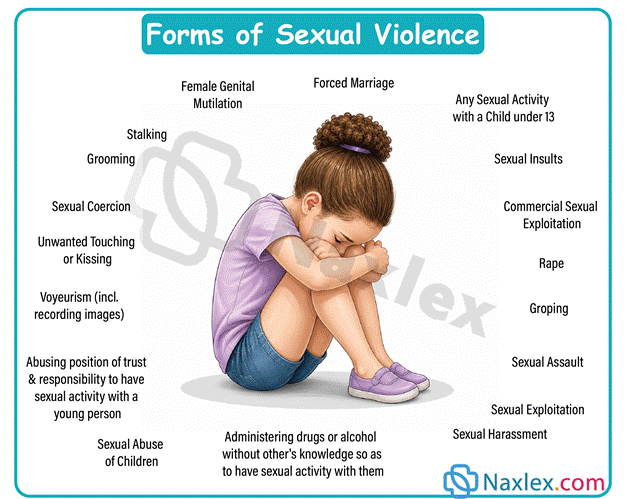
Foundational Concepts And Classification
Definitions And Legal Terminology
- Sexual assault — any unwanted sexual contact obtained without consent, encompassing a spectrum of acts from unwanted touching and fondling through to penetrative rape. It is the broad umbrella term under which rape is one specific, severe category.
- Rape — non-consensual penetration, however slight, of the vagina, anus, or mouth by a penis, another body part, or an object. Legal definitions vary by jurisdiction, but the absence of consent, not the presence of physical resistance, is the defining element.
- Consent — clear, knowing, and voluntary agreement to engage in a specific sexual act. Valid consent requires capacity (the person is of legal age and cognitively able to understand the nature of the act), voluntariness (free from force, threat, or manipulation), and specificity (consent to one act or with one partner does not extend to another).
- Incapacitation — the inability to consent due to intoxication by alcohol or drugs, unconsciousness, sleep, or cognitive or intellectual impairment. Sexual contact with an incapacitated person constitutes assault regardless of any apparent verbal or physical compliance, because a person who cannot understand or resist cannot legally consent.
- Statutory rape — sexual activity with a person below the legally defined age of consent. The minor's apparent willingness is legally irrelevant, because a minor is deemed incapable of giving legal consent.
- Marital or spousal rape — non-consensual sexual activity occurring within a marriage or committed partnership. This is now criminalised in the majority of jurisdictions, reversing the historical legal doctrine of implied ongoing marital consent.
- Drug-facilitated sexual assault — assault committed after the perpetrator administers an incapacitating substance without the victim's knowledge, or after exploiting the victim's voluntary intoxication. Voluntary intoxication by the victim never constitutes consent and never mitigates the perpetrator's culpability.
- Coercion — the use of psychological pressure, manipulation, threats to reputation or wellbeing, or abuse of a position of authority or trust to obtain sexual compliance in the absence of overt physical force.
- Corroborating physical resistance is not required to establish that an assault occurred. This principle underlies the tonic immobility response described in section 6.3.
- Survivor and victim are both clinically acceptable terms; "survivor" is generally preferred in therapeutic and advocacy contexts because it emphasises agency and resilience rather than passive victimhood, though the person's own preferred term should always be used.
Diagnostic And Classification Framework (DSM-5-TR, ICD-11)
- Sexual assault is not itself a psychiatric diagnosis. It is classified in DSM-5-TR as a traumatic life event, coded under the chapter "Other Conditions That May Be a Focus of Clinical Attention."
- Within this chapter, sexual assault is captured under the subheading of adult abuse and neglect problems, further specified as sexual abuse of an adult by a non-partner or sexual abuse of an adult by a partner, using dedicated Z codes (encounter not attributable to a mental disorder) and, where physical injury results, corresponding T codes.
- The classification distinguishes the encounter for the victim from the encounter related to the perpetrator, mirroring the structure used for child maltreatment coding.
- Any resulting psychiatric disorder, most commonly posttraumatic stress disorder or acute stress disorder, is recorded as a separate, additional diagnosis, coded alongside the exposure code rather than in place of it.
- ICD-11 codes sexual assault within its maltreatment and violence-related categories, distinct from, but frequently co-occurring with, its own PTSD and complex PTSD diagnostic entities.
- This distinction between the traumatic exposure and the resulting psychiatric disorder is a frequently examined point: a survivor may have significant, clinically important symptoms without yet meeting full diagnostic criteria for a disorder, and clinical attention and documentation are warranted regardless of whether formal diagnostic criteria are met.
Epidemiology And Incidence
- Global surveillance data indicate that approximately 1 in 3 women and approximately 1 in 4 to 1 in 5 men experience some form of sexual violence in their lifetime.
- Under-reporting is extensive and well documented. Official police and health-system statistics represent only a small fraction of the true incidence, a pattern often described as the reporting "iceberg."
- Adolescents and young adults, particularly those aged 16-24 years, experience the highest incidence of any age group, coinciding with early independent social activity and dating.
- Approximately 80-90% of victims know their assailant, most commonly a current or former intimate partner, a family member, or an acquaintance; assault by a stranger accounts for a clear minority of cases.
- Sexual and gender minority individuals experience disproportionately elevated rates of sexual victimisation compared with the general population.
- Disability, prior victimisation, homelessness, custodial settings, and displacement or conflict settings are all associated with markedly elevated incidence.
- Male victimisation is substantially under-recognised and under-reported, compounded by stigma, disbelief, and the mistaken assumption that men cannot be victims.
- Reasons for under-reporting include shame, self-blame, fear of disbelief, fear of retaliation, fear of the legal process, relationship to the perpetrator, and normalisation of the experience.
Types And Contexts Of Sexual Assault
- Acquaintance or date assault — the most common type, involving a person known to the victim through a social, dating, or casual relationship context.
- Intimate partner sexual assault — occurring within a current or former romantic or marital relationship; frequently co-occurs with other forms of intimate partner violence and is markedly under-recognised because of the existing relationship.
- Stranger assault — the least common type but is frequently associated with greater use of physical force, weapon involvement, and physical injury, and is more likely to be reported to police because it fits the stereotypical, though statistically atypical, image of assault.
- Drug-facilitated sexual assault — involves alcohol or an incapacitating substance, such as a benzodiazepine or gamma-hydroxybutyrate, administered covertly or exploited opportunistically; characterised by fragmented or absent memory, which complicates both disclosure and forensic recall.
- Gang or multiple-perpetrator assault — assault involving more than one perpetrator, associated with greater physical and psychological severity.
- Institutional assault — occurring within custodial, healthcare, educational, religious, or residential care settings, typically involving a significant power or authority differential between perpetrator and victim.
- Conflict-related and mass sexual violence — used systematically as a weapon of war, ethnic conflict, and forced displacement, often accompanied by additional trauma, forced pregnancy, and lack of access to services.
- Sexual harassment and non-contact sexual violence — including verbal harassment, exposure, and coerced viewing of pornography, which, while distinct from rape, contribute to the same spectrum of sexual violation and psychological harm.
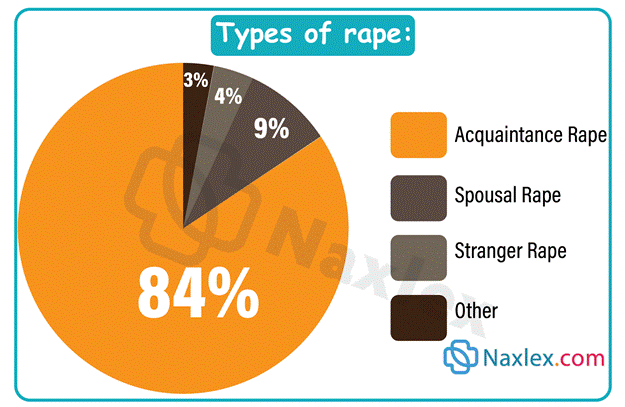
Perpetrator Characteristics And Typologies
- No single psychological profile reliably identifies a perpetrator of sexual assault. Perpetrators span all demographic, educational, and socioeconomic groups and frequently present as socially unremarkable or well regarded.
- Sexual assault is best understood as an act driven primarily by power, control, anger, and entitlement, rather than by uncontrollable sexual desire or attraction; this reframing is central to nursing and public understanding of the crime.
- Groth's classic typology describes three motivational patterns of rape.
- Anger rape — driven by rage and a wish to hurt, humiliate, and degrade; characterised by excessive, gratuitous physical violence beyond what is needed to accomplish the act.
- Power rape — driven by a need to assert control, dominance, and mastery over the victim, using only the force necessary to accomplish the assault, often to compensate for underlying feelings of inadequacy.
- Sadistic rape — the least common but most dangerous pattern, in which the infliction of pain and suffering is itself eroticised, and violence is deliberate and escalating.
- The overwhelming majority of perpetrators are known to the victim, reinforcing that stranger-danger models of prevention are insufficient on their own.
- Repeat and serial offending is common. Research consistently demonstrates that a relatively small proportion of individuals commit a disproportionately large share of assaults, frequently against multiple victims across time.
- Alcohol and substance use by the perpetrator is a frequent situational disinhibiting factor but is never an excuse, mitigation, or explanation for the assault; culpability rests entirely with the perpetrator.
- Perpetrators frequently employ grooming, isolation, and manipulation tactics analogous to those used in child sexual abuse, particularly in acquaintance and institutional assault.
Etiology, Risk Factors, And Protective Factors
- As with child maltreatment, risk factors for sexual assault victimisation describe statistical association and increased vulnerability, never fault, provocation, or responsibility. Responsibility for the assault rests exclusively and entirely with the perpetrator.
- Risk is best understood through overlapping individual, relational, situational, and societal influences, consistent with the socio-ecological model applied to violence more broadly.
Risk Factors For Victimization
- Younger age, particularly adolescence and early adulthood, is the most consistently replicated demographic risk factor.
- Prior history of sexual victimisation, including childhood sexual abuse, substantially increases the risk of subsequent revictimisation in adolescence and adulthood.
- Female sex confers markedly higher population-level risk, though male and gender-diverse individuals remain significantly vulnerable and are frequently under-identified.
- Intoxication or substance use increases vulnerability to incapacitation-based assault and impairs the ability to recognise or resist coercive tactics.
- Disability, cognitive impairment, or serious mental illness increases vulnerability through dependency on caregivers, communication barriers, and reduced perceived credibility when disclosing.
- Social isolation and limited support networks reduce both protective supervision and the availability of post-assault support.
- Prior or current intimate partner violence within the relevant relationship is a strong predictor of intimate partner sexual assault specifically.
- Homelessness, institutionalisation, and displacement substantially elevate risk through reduced safety, supervision, and access to protective resources.
Situational And Environmental Risk Factors
- Presence in settings involving heavy alcohol consumption, such as parties, bars, or unsupervised social gatherings, is a well-documented situational risk factor, operating through impaired judgement and increased opportunity for perpetration.
- Isolated, unfamiliar, or poorly supervised environments with reduced bystander presence increase both opportunity and perpetrator confidence.
- Institutional settings with inherent power imbalance, such as custodial, residential care, or hierarchical work and educational settings, create conditions in which coercion is harder to resist and disclosure is harder to make.
- Armed conflict, displacement, and humanitarian crisis settings dismantle normal protective social structures and are associated with markedly elevated rates of sexual violence, frequently used as a deliberate tactic.
- Weak legal enforcement, impunity for perpetrators, and social norms that minimise, excuse, or tolerate coercive sexual behaviour operate at the societal level to increase population-level risk.
- Rape myths, such as beliefs that certain clothing, intoxication, or behaviour invites assault, or that "real" rape only involves a stranger and a weapon, function as a societal risk factor by shifting blame toward the victim and discouraging reporting.
Protective Factors And Resilience
- Strong, immediate social support following disclosure is the single strongest predictor of positive long-term psychological recovery. This finding parallels the equivalent finding for child sexual abuse and should be considered a core, testable nursing principle.
- Prompt access to trauma-informed medical, forensic, and psychological care improves both physical and psychological outcomes and preserves forensic evidence.
- Community and bystander intervention programmes, which train peers to safely recognise and interrupt high-risk situations, are evidence-supported prevention strategies.
- Comprehensive, population-level consent education, delivered from an early age, is associated with reduced perpetration and improved bystander response.
- Belief and a non-judgemental response from the first person a survivor discloses to strongly predicts whether the survivor goes on to seek further medical and psychological care.
- Pre-existing effective coping skills, emotion regulation capacity, and a secure attachment history are associated with more adaptive post-assault psychological trajectories.
- Access to advocacy services, such as rape crisis centres and victim advocates, improves engagement with both the healthcare and legal systems and reduces secondary victimisation.
Table — Risk versus protective factors in sexual assault
|
Level |
Key risk factors |
Key protective factors |
|
Individual |
Young age, prior victimisation, disability, intoxication |
Effective coping skills, secure attachment history |
|
Relational |
Intimate partner violence, isolation, dependency |
Strong social support network, trusted confidant |
|
Situational |
Alcohol-heavy settings, isolated environments, institutional power imbalance |
Bystander presence and intervention, supervised settings |
|
Societal |
Rape myths, weak enforcement, impunity, conflict settings |
Consent education, victim advocacy services, strong legislation |
Nursing Insights
- Most survivors know their assailant, so the absence of a stranger, a weapon, or visible injury never lessens the reality or severity of the assault.
- Tonic immobility is an involuntary neurobiological freeze response, so a lack of physical resistance or screaming during the assault is normal and is never evidence of consent.
- The single strongest predictor of psychological recovery is a supportive, believing response from the first person the survivor discloses to, so the nurse's initial reaction carries lasting weight.
Pathophysiology And Psychological Response To Trauma
- Sexual assault is a biological event as much as a psychological one, producing measurable, time-limited, and sometimes enduring changes in neuroendocrine, autonomic, and neurocognitive function.
- Understanding this pathophysiology is essential to nursing practice because it explains presentations, such as apparent calm or absent resistance, that are frequently and wrongly misread as inconsistent with genuine assault.
Neurobiology Of The Acute Trauma Response
- Threat perception begins in the amygdala, which rapidly appraises the situation as life-threatening and initiates the stress cascade before conscious, deliberate thought occurs.
- Hypothalamic-pituitary-adrenal (HPA) axis activation — the hypothalamus releases corticotropin-releasing hormone (CRH), stimulating anterior pituitary release of adrenocorticotropic hormone (ACTH), which stimulates adrenal cortical release of cortisol.
- Sympathetic-adrenomedullary activation — the locus coeruleus and adrenal medulla release noradrenaline and adrenaline, producing the immediate fight, flight, or freeze physiological response.
- Physiological effects of acute activation include tachycardia, tachypnoea, pupillary dilation, diversion of blood flow to skeletal muscle, and suppression of non-essential functions such as digestion.
- Endogenous opioid release occurs during extreme, inescapable threat, producing analgesia and emotional numbing, which explains why some survivors report reduced pain perception or a sense of detachment during the assault itself.
- Cortical function is altered under extreme threat. The prefrontal cortex, responsible for reasoning, planning, and verbal processing, becomes relatively hypoactive, while the amygdala becomes hyperactive. This shift explains fragmented, non-linear, or incomplete memory of the assault, which must never be interpreted as evidence of fabrication or inconsistency.
- Hippocampal function, responsible for contextual and temporal memory encoding, is also impaired under high cortisol and noradrenaline exposure, contributing to difficulty establishing a clear timeline of events.
- Memory for central, emotionally salient details (such as the perpetrator's face or actions) is often preserved or enhanced, while memory for peripheral details (such as surroundings or exact timing) is frequently poor. This pattern is well documented and clinically important when survivors are questioned.
- These same mechanisms underlie the acute presentations described in rape trauma syndrome and the freeze response described below.
Rape Trauma Syndrome
- Rape trauma syndrome, first described by Burgess and Holmstrom in 1974, is a recognised, predictable pattern of physical, psychological, and behavioural responses experienced by survivors of sexual assault, occurring in overlapping phases.
- It is not itself a DSM-5-TR diagnosis but is a widely used clinical and forensic framework for understanding and normalising the survivor's response, and frequently underlies subsequent formal diagnoses such as PTSD.
- Acute phase (disorganisation phase)
- Occurs in the hours to days immediately following the assault.
- Characterised by disorganisation of the survivor's usual lifestyle and coping mechanisms.
- Expressed style — survivor is outwardly emotional, crying, agitated, or visibly distressed.
- Controlled style — survivor appears calm, subdued, flat, or composed. This style is frequently and wrongly misinterpreted by staff, police, or family as evidence that no assault occurred, when it in fact reflects the same underlying trauma response.
- Common features include shock, disbelief, fear, humiliation, guilt, anger, and somatic complaints such as generalised soreness, gastrointestinal upset, and sleep disturbance.
- Outward adjustment phase
- The survivor appears to have resumed normal functioning and daily activities, often minimising or avoiding discussion of the assault.
- This is frequently a period of denial and suppression rather than genuine resolution, during which the survivor uses avoidance as a coping strategy.
- Reorganisation phase
- Occurs over the following weeks to months, and may extend for years.
- Involves the gradual, active process of integrating the traumatic experience and rebuilding a sense of safety, trust, and control.
- May include changing residence, changing telephone numbers, altered relationships, new fears or phobias, and, for many, seeking therapy.
- Silent rape reaction describes a pattern in which the survivor has never disclosed the assault to anyone, and the reorganisation process is significantly complicated or delayed as a result.
- Resolution is not linear. Survivors commonly move back and forth between phases, and anniversary reactions, triggered by dates, places, or reminders resembling the assault, may recur for years.
The Tonic Immobility And Freeze Response
- Tonic immobility is an involuntary, reflexive state of profound physical immobility and inability to move, speak, or resist, occurring in response to overwhelming, inescapable threat.
- It is a well-documented mammalian defence response, phylogenetically ancient, and is not under voluntary control.
- Studies indicate that a substantial proportion of sexual assault survivors, commonly cited at approximately 50% or more, experience significant tonic immobility during the assault.
- Mechanism — thought to be mediated by the periaqueductal grey, in combination with extreme sympathetic and parasympathetic co-activation, producing simultaneous physiological arousal and motor shutdown.
- Clinical features include an inability to move or cry out, muscle rigidity, a sense of cold or numbness, and, on later recall, a feeling of having been "paralysed" or "frozen."
- Peritraumatic dissociation frequently accompanies tonic immobility, involving a sense of unreality, detachment, or watching the event from outside the body, and is itself a strong predictor of subsequent PTSD.
- Clinical and forensic significance — tonic immobility explains why many survivors do not fight back, scream, or flee, a fact of central importance because the absence of resistance or visible injury is frequently misused, in both public perception and legal proceedings, to cast doubt on the validity of the assault.
- The nurse's role is to normalise this response explicitly to the survivor, who may experience profound guilt or self-blame for "not fighting back," and to document the response accurately without judgemental language.
Clinical Manifestations
- Manifestations of sexual assault span the physical, psychological, and behavioural domains, and evolve over the acute, subacute, and chronic timeframes.
- The absence of physical injury never indicates the absence of assault. Genital and extragenital injury is present in only a minority of cases, particularly where lubrication, tonic immobility, or lack of resistance reduced tissue trauma.
Acute Physical Manifestations
- Genital and anal findings — may include erythema, oedema, laceration, abrasion, or bruising of the vulva, vagina, cervix, anus, or perianal tissue; the majority of examinations show no visible genital injury, particularly beyond 24-48 hours after the assault, when minor mucosal injury has already begun to heal.
- Extragenital injury — bruising, abrasion, or laceration of the extremities, torso, neck, face, and wrists, the latter often from restraint.
- Ligature marks or fingertip bruising on the wrists, upper arms, or neck, indicating restraint or strangulation.
- Signs of strangulation, including petechiae of the face, conjunctivae, or oral mucosa, voice change, and neck pain, which constitute a medical emergency requiring urgent evaluation given the risk of delayed airway compromise or stroke.
- Generalised soreness, headache, and gastrointestinal disturbance, including nausea and appetite disturbance, in the days following assault.
- Sleep disturbance, including difficulty falling asleep, nightmares, and hypervigilant awakening.
- Findings consistent with drug-facilitated assault, including a period of memory loss, disorientation, and residual sedation, particularly where the survivor reports voluntarily consuming only a small amount of alcohol.
Acute Psychological And Behavioural Manifestations
- Shock and disbelief, often with a subjective sense of unreality about the event.
- Fear and hypervigilance, including exaggerated startle response and hyperawareness of surroundings.
- Guilt and self-blame, frequently focused on perceived failure to resist, on choices made before the assault, or on trust placed in the perpetrator.
- Shame and humiliation, which are frequently intensified where the assault involved a known or trusted individual.
- Anger, which may be directed at the perpetrator, at the self, or, at times, displaced onto supportive others including healthcare staff.
- Emotional lability, alternating rapidly between tearfulness, calm, and irritability.
- Denial and minimisation, particularly where the assault involved an acquaintance or partner, or where the survivor is not yet ready to process the event.
- Dissociation, including derealisation and depersonalisation, described by survivors as feeling detached, numb, or as though watching events from outside the body.
- Withdrawal from usual activities and relationships, and avoidance of reminders of the assault.
- Both the expressed style (visibly distressed) and the controlled style (outwardly calm) are normal presentations, and neither indicates greater or lesser credibility.
Chronic And Long-Term Manifestations
- Posttraumatic stress disorder, with the full symptom range of intrusion, avoidance, negative alterations in cognition and mood, and hyperarousal, is the most strongly associated long-term psychiatric outcome and is addressed in detail in section 11.1.
- Major depressive disorder, anhedonia, and persistent low mood, with elevated suicide risk relative to the general population.
- Generalised anxiety, panic disorder, and specific phobias, including phobias related to the location, time, or circumstances of the assault.
- Sexual dysfunction, including loss of desire, difficulty with arousal, dyspareunia, and avoidance of intimacy.
- Substance use disorder, frequently emerging as a maladaptive coping strategy for intrusive symptoms and hyperarousal.
- Chronic somatic symptoms, including pelvic pain, gastrointestinal disturbance, headache, and chronic fatigue, without a clear organic cause.
- Disrupted interpersonal relationships and difficulty with trust, including within existing intimate partnerships.
- Impaired occupational, academic, and social functioning, related to concentration difficulty, avoidance, and hyperarousal.
- Revictimisation risk is elevated following an initial assault, compounding cumulative psychological burden.
- Post-traumatic growth is also documented in a proportion of survivors over the long term, involving increased personal strength, changed priorities, and deepened relationships, generally emerging alongside, not instead of, other symptoms, and typically facilitated by strong support and effective treatment.
Nursing Insights
- Fragmented, incomplete, or non-linear memory of the assault is a well-documented neurobiological effect of trauma on the hippocampus, never evidence that the account is false or exaggerated.
- The controlled coping style, in which a survivor appears calm or flat, is as valid and as common as visible distress, and must never be read as evidence that no assault occurred.
- Absence of genital injury or visible physical injury is the norm, not the exception, so a normal examination never rules out sexual assault.
Nursing Assessment And Forensic Examination
- Assessment of the sexual assault survivor is survivor-centred, trauma-informed, and forensically defensible, integrating medical care, psychological first aid, and evidence collection into a single coordinated process.
- Medical stabilisation and safety always take priority over forensic evidence collection. A life-threatening injury is treated first, regardless of any impact on evidentiary yield.
- Wherever available, care is ideally delivered by a Sexual Assault Nurse Examiner (SANE) or equivalent specially trained forensic examiner, working within a Sexual Assault Response Team (SART) alongside advocacy, law enforcement, and mental health services.
- The survivor directs the pace of the encounter. Every step, including the examination itself and evidence collection, requires the survivor's informed consent, and any part may be declined without affecting the quality of medical care provided.
Principles Of Trauma-Informed History Taking
- Conduct the interview in a private, quiet, unhurried setting, minimising the number of people present and the number of times the history must be repeated.
- Introduce yourself, explain your role, and explain each step before it happens, restoring a sense of predictability and control.
- Use open-ended, non-leading questions: "Tell me what you are comfortable sharing about what happened."
- Never ask "why" questions that imply blame, such as "why were you there" or "why didn't you fight back"; such questions replicate the self-blame the survivor may already feel.
- Allow the survivor to set the pace, tolerate silence, and never pressure for details the survivor is not ready to share.
- Take only the history necessary for medical care and safety. Extensive forensic detail is deferred to the trained forensic interviewer or examiner wherever such a service exists, minimising repetition.
- Record the history using the survivor's own words, in quotation marks where possible, avoiding paraphrasing that could alter meaning.
- Avoid visible expressions of shock, disbelief, or judgement.
- Explicitly state belief and support: "I believe you," "This is not your fault," and "You are safe here now."
- Never promise absolute confidentiality where mandatory reporting obligations may apply; explain honestly what will and will not remain confidential.
- Assess immediate safety, including whether the perpetrator is known, whether the survivor has a safe place to go, and whether there is ongoing risk of harm.
- Screen for suicidal ideation and self-harm risk directly, since assault substantially elevates short-term risk.
- Obtain relevant medical history: last menstrual period, current contraception, pregnancy status, allergies, current medications, tetanus and hepatitis B immunisation status, and pre-existing conditions relevant to prophylaxis.
- Ask about the assault itself only as needed for clinical decision-making: type of contact (oral, vaginal, anal), ejaculation, condom use, and time elapsed since the assault, since these directly determine examination timing, testing, and prophylaxis choices.
- Use a professional interpreter, never a family member or friend, when needed.
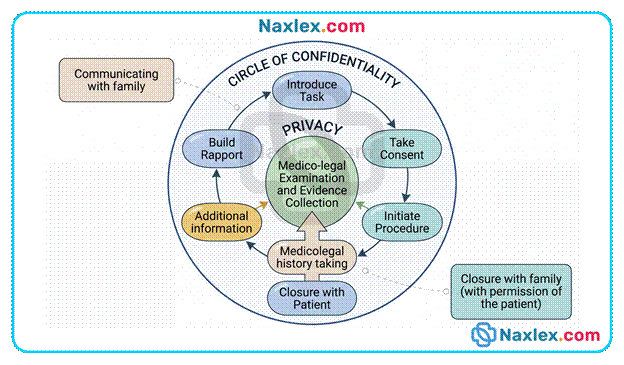
The Sexual Assault Forensic Examination
- Timing — forensic evidence collection is generally most productive within 72-120 hours of the assault, though the exact window varies by jurisdiction and by the specific evidence sought; medical care is never withheld or delayed on the basis of elapsed time, and examination may still be clinically indicated beyond this window.
- Informed consent is obtained separately for the medical examination, for photography, and for release of evidence to law enforcement; each may be consented to or declined independently.
- The examination should be performed once, by the most experienced available examiner, to minimise repeated intrusive examination.
- Preserving evidence before examination — advise the survivor, where possible and without imposing further distress, to avoid bathing, showering, urinating, defecating, changing clothes, eating, drinking, or brushing teeth prior to the examination, while emphasising that evidence can often still be recovered even if these activities have occurred.
- Components of the examination
- General physical examination, head to toe, documenting all injury by site, size, shape, colour, and pattern.
- Clothing collection — the survivor undresses over a clean paper sheet; each item of clothing is collected and packaged separately in paper, never plastic, to prevent moisture retention and DNA degradation.
- Genital and anal examination, performed with the survivor's consent, using appropriate positioning and, where available, colposcopy or a comparable magnification device with photographic capability to identify and document subtle injury.
- Use of an alternate light source (Wood's lamp) to identify possible seminal, salivary, or other biological staining on skin or clothing.
- Swabbing of oral, vaginal, cervical, and anal sites as indicated by the history, following the sequence specified in the standardised forensic evidence kit.
- Fingernail scrapings or clippings, where the survivor may have scratched the assailant.
- Bite mark swabbing for salivary DNA, performed before any cleaning of the site.
- Reference (elimination) samples from the survivor, typically a buccal swab or blood sample, to distinguish the survivor's own DNA from the perpetrator's.
- Toxicology sampling (blood and urine), collected as early as possible where drug-facilitated assault is suspected, since many relevant substances clear from the body within hours to a few days.
- Photography of all injuries, with and without a forensic scale, under consistent, adequate lighting, and only with specific consent.
- Every specimen is packaged, sealed, and labelled with the survivor's identifying information, date, time, anatomical site, and the collector's signature.
Laboratory Investigations And Testing
- Pregnancy testing (beta-hCG) for all survivors of reproductive age, to guide counselling on emergency contraception.
- Baseline sexually transmitted infection testing, including nucleic acid amplification testing for Neisseria gonorrhoeae and Chlamydia trachomatis, and testing for Trichomonas vaginalis, obtained from relevant exposed sites.
- Serological testing for HIV, syphilis, hepatitis B, and hepatitis C, with repeat testing at approximately 6 weeks, 3 months, and 6 months to detect delayed seroconversion.
- Hepatitis B surface antibody testing to determine existing immunity and the need for vaccination.
- Toxicology screening of blood and urine where drug-facilitated assault is suspected, collected as early as possible.
- Baseline renal and hepatic function testing where post-exposure HIV prophylaxis is being considered, since the medication regimen may require dose adjustment or monitoring.
- Laboratory testing serves the dual purpose of clinical management and, where consented to, forensic corroboration, and results are interpreted and explained to the survivor with sensitivity, since a positive infection result can compound distress.
Documentation And Chain Of Custody
- The health record is a legal document and may be the central evidence relied upon in any subsequent legal proceeding, sometimes examined years after the event.
- Documentation must be objective, factual, contemporaneous, legible, and free of judgemental or conclusory language. Write "the patient stated" rather than "the patient claims" or "alleges," since such language implies disbelief.
- Record the history verbatim, in quotation marks, attributed to the survivor by name.
- Never estimate the age of a bruise, and never draw a conclusion of "assault confirmed" or "assault not confirmed" in the record; the nurse documents findings, not verdicts.
- Body maps and photography supplement written description, with every documented lesion cross-referenced by number to a written entry describing site, size, shape, colour, and pattern.
- Chain of custody is the unbroken, documented record of every person who has handled a piece of evidence, from collection through to delivery to law enforcement or forensic laboratory.
- Every specimen is labelled at the point of collection with identifying information, date, time, site, and the collector's signature.
- Evidence is sealed with tamper-evident tape, signed across the seal by the collector.
- Every transfer of evidence is logged, recording the name, signature, date, and time of both the person releasing and the person receiving the evidence.
- Evidence is stored in a locked, secure, restricted-access location until formal handover, and is never left unattended.
- A break in the chain of custody can render evidence inadmissible in court, regardless of the evidence's underlying forensic value.
Associated DSM-5-TR Psychiatric Disorders
- Sexual assault is one of the most potent traumatic stressors recognised in psychiatric practice, conferring elevated risk across a range of DSM-5-TR diagnostic categories, with PTSD carrying the strongest and most specific association.
Posttraumatic Stress Disorder And Acute Stress Disorder
- Criterion A (exposure) — sexual assault meets Criterion A as exposure to actual or threatened sexual violence, satisfied by direct experience of the event.
- Criterion B (intrusion, ≥1 symptom) — recurrent, involuntary, distressing memories; distressing dreams related to the event; dissociative reactions such as flashbacks; intense psychological distress at exposure to cues resembling the assault; marked physiological reactivity to such cues.
- Criterion C (avoidance, ≥1 symptom) — avoidance of distressing memories, thoughts, or feelings associated with the assault; avoidance of external reminders, including people, places, conversations, or activities associated with the event.
- Criterion D (negative alterations in cognition and mood, ≥2 symptoms) — inability to recall an important aspect of the event; persistent, distorted negative beliefs about oneself, others, or the world, such as "I am permanently damaged" or "no one can be trusted"; persistent distorted blame of self, a pattern of central importance following sexual assault; persistent negative emotional state such as fear, horror, anger, guilt, or shame; markedly diminished interest in significant activities; feelings of detachment or estrangement from others; persistent inability to experience positive emotions.
- Criterion E (alterations in arousal and reactivity, ≥2 symptoms) — irritable behaviour and angry outbursts; reckless or self-destructive behaviour; hypervigilance; exaggerated startle response; concentration difficulty; sleep disturbance.
- Criterion F — duration of disturbance greater than 1 month.
- Criterion G — clinically significant distress or impairment in functioning.
- Criterion H — not attributable to a substance or another medical condition.
- Specifiers include "with dissociative symptoms" (depersonalisation or derealisation) and "with delayed expression" (full criteria not met until ≥6 months after the event).
- Acute stress disorder — the equivalent diagnosis for symptom duration of 3 days to 1 month, requiring ≥9 symptoms drawn from the categories of intrusion, negative mood, dissociation, avoidance, and arousal. If symptoms persist beyond 1 month, the diagnosis is reclassified as PTSD.
- Distorted self-blame (Criterion D) is a particularly prominent and clinically important feature following sexual assault relative to other trauma types, and is a central target of both crisis intervention and later psychotherapy.
Depressive And Anxiety Disorders
- Major depressive disorder is markedly elevated following sexual assault, with survivors demonstrating substantially higher rates than the general population, often with earlier onset and greater symptom severity where the assault occurred in childhood or adolescence.
- Core features remain the standard DSM-5-TR criteria: depressed mood or anhedonia plus ≥4 additional symptoms among appetite or weight change, sleep disturbance, psychomotor changes, fatigue, worthlessness or guilt, concentration difficulty, and suicidal ideation, present for ≥2 weeks.
- Generalised anxiety disorder, panic disorder, and specific phobia occur at elevated rates, with phobias frequently developing around the specific location, time of day, or circumstances resembling the assault.
- Social anxiety disorder may develop or worsen, related to fear of negative judgement following disclosure or fear of encountering the perpetrator socially.
- Obsessive-compulsive disorder, including contamination-focused obsessions and washing compulsions, is documented at increased rates and may relate directly to feelings of being "dirty" or "contaminated" following the assault.
- Suicidal ideation and behaviour are significantly elevated following sexual assault; direct, explicit suicide risk assessment is a mandatory component of every assessment, and asking about suicide does not increase risk.
Substance-Related And Sexual Dysfunction Disorders
- Substance use disorder risk is significantly elevated following sexual assault, commonly emerging as a maladaptive coping strategy to manage intrusive symptoms, hyperarousal, and insomnia, a pattern sometimes described as self-medication.
- Alcohol use disorder in particular shows a strong, well-replicated association with sexual assault history, and substance use in the aftermath does not indicate a pre-existing vulnerability or fault, but rather a trauma response requiring integrated, non-judgemental treatment.
- Integrated treatment addressing both trauma symptoms and substance use concurrently is more effective than treating either issue in isolation or sequentially.
- Sexual dysfunctions are common and clinically significant sequelae, including female sexual interest/arousal disorder, genito-pelvic pain/penetration disorder, male erectile disorder, and delayed ejaculation, related to both the physical and psychological impact of the assault.
- Genito-pelvic pain/penetration disorder may develop or worsen specifically as a conditioned response to penetrative contact following assault, and requires specialised, gradual, trauma-informed treatment.
- Sexual dysfunction following assault is frequently compounded by relationship strain, avoidance of intimacy, and difficulty with trust, requiring attention to both the individual and, where appropriate and desired by the survivor, the relationship.
Nursing Insights
- Package all clothing and biological evidence in paper, never plastic, and maintain unbroken chain of custody; a single gap in that chain can make otherwise strong evidence inadmissible in court.
- The examination is consented to step by step and can be declined at any point without affecting the medical care the survivor receives.
- Distorted self-blame is a core PTSD symptom after sexual assault, so actively and repeatedly reinforcing that the assault was not the survivor's fault is a direct clinical intervention, not just kindness.
Nursing Management
- Management of the sexual assault survivor is guided by three simultaneous goals: physiological stabilisation, psychological safety, and preservation of evidence and dignity, delivered through a survivor-centred, trauma-informed approach.
- Every intervention is offered, never imposed. The survivor's right to decline any component of care, other than genuinely life-saving treatment, is respected throughout.
Nursing Diagnoses And Priority Setting
- Physiological
- Acute pain related to physical trauma as evidenced by guarding and reported tenderness.
- Risk for infection related to mucosal disruption and exposure to sexually transmitted pathogens.
- Impaired skin/tissue integrity related to genital, anal, or extragenital injury.
- Risk for unintended pregnancy related to unprotected sexual contact.
- Disturbed sleep pattern related to hyperarousal and intrusive recollection.
- Psychosocial
- Rape-trauma syndrome related to sexual assault as evidenced by disorganisation, self-blame, and emotional lability.
- Post-trauma syndrome related to the traumatic event as evidenced by intrusive thoughts and hypervigilance.
- Fear related to perceived threat of recurrence or retaliation.
- Anxiety related to the unpredictable psychological and physical aftermath.
- Powerlessness related to loss of control during the assault.
- Chronic or situational low self-esteem related to shame and self-blame.
- Disturbed body image related to the assault as evidenced by statements of feeling "dirty" or "damaged."
- Ineffective coping related to overwhelming stress as evidenced by dissociation or substance use.
- Risk for self-directed violence related to trauma-related hopelessness and elevated suicide risk.
- Social isolation related to shame, avoidance, and withdrawal from relationships.
- Sexual dysfunction related to the traumatic sexual experience.
- Spiritual distress related to disrupted sense of safety, meaning, or trust.
- Priority framework
- First — physiological stability. Manage life-threatening injury, including strangulation-related airway compromise, haemorrhage, or shock, before any other intervention.
- Second — safety. Establish that the survivor has a safe place to go after discharge and is not returning to ongoing danger.
- Third — pain and physical comfort. Provide adequate analgesia, which is frequently under-recognised and under-treated in this population.
- Fourth — psychological safety and crisis stabilisation, including reassurance, presence of a trusted support person or advocate, and grounding.
- Fifth — informed consent-based forensic evidence collection, which is time-sensitive but never overrides the preceding priorities.
- Sixth — prophylaxis, referral, and follow-up planning.
Acute Care Interventions
- Provide a private, quiet room, away from public areas, minimising the number of staff and repeated questioning.
- Assign a consistent nurse for the duration of the visit wherever possible, to reduce the number of unfamiliar people the survivor must interact with.
- Offer the option of a support person, advocate, or SANE/SART team member to accompany the survivor throughout.
- Manage physical injury according to standard trauma principles: haemorrhage control, wound care, splinting, and pain management.
- Assess and manage signs of strangulation urgently, including airway assessment, neurological observation, and imaging as indicated, given the risk of delayed complications such as stroke.
- Offer, never force, the forensic examination, explaining its purpose, its voluntary nature, and that declining it will not affect medical care.
- Provide clean clothing where the survivor's own clothing has been collected as evidence.
- Offer a shower or washing facility only after evidence collection is complete, or after the survivor has declined the examination.
- Provide food, fluids, and a warm blanket once appropriate, attending to basic comfort needs.
- Facilitate contact with a chosen support person, family member, or friend, according to the survivor's wishes.
Prophylaxis And Medical Management
- HIV post-exposure prophylaxis (PEP) — offered where there has been a mucosal exposure risk; most effective when started as soon as possible, and generally offered up to 72 hours after exposure, continued for 28 days with a weight-appropriate combination antiretroviral regimen.
- Nursing responsibility includes baseline HIV testing before initiation, adherence counselling, and management of common adverse effects such as nausea.
- Sexually transmitted infection prophylaxis — empirical antimicrobial treatment is commonly offered covering gonorrhoea, chlamydia, and trichomoniasis, rather than awaiting laboratory confirmation, given the psychological burden of awaiting results and the risk of loss to follow-up.
- Hepatitis B prophylaxis — vaccination is offered to any survivor without documented immunity; hepatitis B immunoglobulin is added where the source's status is unknown or positive and the survivor is unimmunised.
- Human papillomavirus vaccination is offered where age-eligible and not already completed.
- Emergency contraception — offered to any survivor at risk of pregnancy; most effective the sooner it is taken, with different agents effective within 72 to 120 hours depending on the specific method used.
- Tetanus prophylaxis where there are penetrating or contaminated wounds.
- Analgesia, using a validated pain scale, prioritising the survivor's comfort as a fundamental component of care rather than a secondary concern.
- Follow-up serological testing for HIV, syphilis, and hepatitis is scheduled at 6 weeks, 3 months, and 6 months to detect delayed seroconversion.
- All prophylactic and testing decisions are explained clearly, with risks, benefits, and alternatives, and are accepted or declined according to the survivor's informed choice.
Therapeutic Communication And Crisis Intervention
- Crisis intervention principles apply throughout the encounter: establish safety, reduce acute distress, mobilise support, and provide clear information about what will happen next.
- Use calm, unhurried, non-judgemental language throughout, avoiding any tone of interrogation.
- State explicitly and repeatedly: "I believe you," "This is not your fault," and "You are safe here."
- Never ask why the survivor did or did not act in a particular way, such as why they did not resist or did not report sooner; such questions imply blame and replicate self-doubt.
- Normalise the trauma response explicitly, including tonic immobility, memory fragmentation, and the controlled or flat coping style, so the survivor does not misinterpret their own reaction as evidence of fault.
- Offer choices wherever possible — which arm for a blood draw, whether a support person remains in the room, whether to proceed with each step of the examination — to actively restore the sense of control removed by the assault.
- Use grounding techniques where the survivor appears dissociated: orient to the present time and place, use a calm steady voice, and offer a tangible comfort item.
- Avoid physical touch without explicit permission, since unexpected touch can itself be a trauma trigger.
- Assess and respond to suicidal ideation directly and without hesitation. Implement safety planning and psychiatric referral where risk is identified.
- Provide clear, written information on prophylaxis, follow-up appointments, and crisis or advocacy resources, since acute stress markedly impairs the retention of verbal information.
- Involve a victim advocate wherever available, as advocates provide continuity of emotional support that extends beyond the single clinical encounter.
Evaluation And Continuity Of Care
- Indicators of effective acute care
- Physiological stability achieved and pain adequately controlled.
- The survivor's immediate safety needs identified and addressed before discharge.
- Informed consent obtained and respected at every step of examination and evidence collection.
- The survivor verbalises understanding of prophylaxis, follow-up testing, and discharge instructions.
- The survivor identifies at least one support person or resource to contact after discharge.
- Suicide risk assessed and, where present, an appropriate safety plan established.
- Discharge and continuity of care
- Discharge occurs only once the survivor has a safe place to go; where safety cannot be assured, options such as shelter placement or extended observation are arranged.
- Provide written follow-up instructions, including appointment dates for repeat serological testing, PEP adherence support, and psychological referral.
- Refer to trauma-focused psychotherapy and, where available, a specialised sexual assault counselling service.
- Provide crisis line and advocacy service contact information, in writing, for the survivor to use at their own pace.
- Coordinate handover between shifts and services using a structured tool such as SBAR (Situation, Background, Assessment, Recommendation) to prevent loss of critical information.
- Encourage, but never mandate, follow-up medical review at 1-2 weeks to reassess physical healing, prophylaxis adherence, and psychological status.
- Provide information on the option to report to law enforcement at any time, including after initially declining, since many jurisdictions allow deferred or later reporting.
- Attend to the nurse's own secondary traumatic stress through debriefing and clinical supervision, recognising this as an expected occupational demand of this area of practice.
Nursing Insights
- Explicitly state "I believe you" and "this is not your fault" early and repeat it; distorted self-blame is a core symptom the nurse can directly counter in the moment.
- HIV post-exposure prophylaxis works best started as soon as possible, generally within 72 hours, and continues for 28 days; emergency contraception is also most effective the sooner it is given.
- Never discharge a survivor without a confirmed safe place to go, and always screen directly for suicidal ideation before the encounter ends.
Legal And Ethical Dimensions
- Sexual assault care exists at the intersection of clinical practice, law, and ethics, and the nurse must be able to navigate all three competently and simultaneously.
- The survivor's autonomy and informed choice are central and are protected at every stage, distinguishing sexual assault care in adults from the mandated, non-discretionary reporting duty that governs child maltreatment.
Reporting, Consent, And Confidentiality
- Unlike child maltreatment, reporting an adult sexual assault to law enforcement is generally the survivor's own choice, not a mandatory nursing duty, except where the survivor is a minor, is otherwise vulnerable, or local law imposes a specific mandatory reporting requirement.
- The nurse's role is to inform the survivor of their reporting options, not to make the decision for them or pressure them toward any particular choice.
- Some jurisdictions allow anonymous or third-party reporting, and some allow forensic evidence to be collected and stored without an immediate decision to report, preserving the survivor's option to report at a later date.
- Informed consent is required separately for medical treatment, for the forensic examination, for photography, and for release of information or evidence to law enforcement; each may be given or withheld independently of the others.
- Confidentiality is protected under ordinary health information privacy standards, and information is shared only on a need-to-know basis with the survivor's consent, except where law compels disclosure, such as evidence of a weapon-related injury reportable under local statute, or a mandatory reporting obligation involving a minor.
- The nurse must never promise absolute, unconditional confidentiality, since limited legal exceptions may apply; honesty about these limits should be provided at the outset.
- Where the survivor is a minor, standard child protection mandatory reporting obligations, as detailed in the child maltreatment notes, apply in full.
- Where the survivor has a cognitive impairment or is otherwise a vulnerable adult, local adult protective service reporting requirements may apply.
The Nurse's Role In The Legal Process
- The health record and forensic evidence collected may become central evidence in any subsequent criminal or civil proceeding, sometimes reviewed years after the initial encounter.
- Documentation must be objective, factual, and free of judgemental or conclusory language, exactly as described in section 9.4, since it may be scrutinised in court.
- Forms of nursing testimony
- Fact witness testimony — the nurse may testify only to what was personally observed, heard, or documented during the encounter.
- Expert witness testimony — reserved for nurses with specialised forensic qualification, such as a SANE certification, permitted to offer clinical opinion within their defined scope of expertise.
- A subpoena compelling testimony or records must be complied with, but does not itself authorise voluntary release of information outside the legal proceeding it specifies.
- Principles of courtroom testimony
- Testify only to facts within personal knowledge and documented observation; do not offer opinions on guilt or credibility.
- Answer only the question asked, without volunteering additional information.
- Use clear, plain, professional language.
- Refer to contemporaneous notes to refresh memory, as the court permits.
- Remain calm and factual under cross-examination.
- Never alter, destroy, or withhold a record, even one that appears unfavourable to the prosecution's case.
- The nurse does not determine, comment on, or predict the outcome of any legal proceeding, and should avoid promising the survivor a particular legal result, since case outcomes depend on many factors beyond the clinical encounter.
- Ethical principles guiding this work mirror those in child protection nursing: beneficence, non-maleficence, autonomy, and justice, with particular weight given to autonomy, since the adult survivor, unlike a child, retains full legal decision-making authority over whether to report and how to proceed.
Nursing Insights
- Reporting to police is generally the adult survivor's own decision, not a mandatory nursing duty; the nurse's role is to inform, not to pressure or decide for them.
- Consent for treatment, for the examination, for photography, and for release of evidence to police are four separate consents, and any one can be given while another is declined.
- In court, testify only to what you personally observed or documented, and never promise a survivor a particular legal outcome.
Prevention And Advocacy
- Prevention of sexual assault operates across the public health spectrum of primary and secondary prevention, targeting both potential perpetrators and population-level risk, alongside strategies that support survivors early to reduce long-term harm.
- Nurses are positioned across every level of this model, from bedside care to community education to policy advocacy.
Primary And Secondary Prevention Strategies
- Primary prevention — universal strategies aimed at preventing sexual assault before it occurs.
- Comprehensive consent education, delivered from an early age, teaching that consent must be informed, voluntary, specific, and freely given.
- Bystander intervention training, teaching safe recognition and interruption of high-risk situations before an assault occurs.
- Challenging rape myths and victim-blaming attitudes through public education, since these attitudes function as a societal-level risk factor.
- School and campus-based prevention programmes addressing healthy relationships, boundaries, and respect.
- Alcohol harm-reduction strategies in settings with elevated situational risk, such as licensed venues and campus events.
- Legislative and policy measures criminalising all forms of non-consensual sexual contact, including marital and acquaintance assault, and closing legal gaps that historically excused certain contexts.
- Addressing broader societal drivers, including gender inequality and normalisation of coercive behaviour, which sustain population-level risk.
- Secondary prevention — strategies targeting early identification and rapid response once risk or an event has occurred, to limit harm and prevent escalation or recurrence.
- Screening for sexual violence history and intimate partner violence at routine points of healthcare contact.
- Prompt, accessible sexual assault response services, including 24-hour SANE/SART availability, to ensure timely medical, forensic, and psychological care.
- Safety planning for survivors at risk of ongoing danger from the same perpetrator, particularly in intimate partner or acquaintance assault.
- Early linkage to trauma-focused psychological care, which reduces the likelihood of chronic PTSD and other long-term sequelae.
- Workplace and institutional policies enabling safe, confidential disclosure and response, including in educational and custodial settings.
The Nurse's Role In Advocacy
- Direct advocacy
- Advocate for the individual survivor's needs, choices, and pace of care throughout the clinical encounter and, where invited, within the broader legal and social service process.
- Ensure the survivor is aware of, and connected to, victim advocacy and crisis services.
- Support the survivor's right to make their own decisions about reporting, treatment, and follow-up without pressure in any direction.
- Institutional advocacy
- Advocate for trauma-informed institutional policies, adequate SANE/SART staffing, and 24-hour access to forensic examination services.
- Contribute to the development of institutional protocols for sexual assault response that minimise repeated examination and repeated disclosure.
- Participate in multidisciplinary quality improvement to strengthen coordinated care pathways.
- Public and policy-level advocacy
- Support and participate in public education campaigns addressing consent, bystander intervention, and rape myth reduction.
- Advocate for legislative reform strengthening survivor protections, closing gaps in the legal definition of assault, and ensuring adequate funding for crisis and advocacy services.
- Engage with professional nursing organisations involved in sexual violence prevention policy.
- Professional self-care
- Secondary traumatic stress and compassion fatigue are recognised occupational hazards of this area of nursing practice, arising from repeated empathic engagement with survivors' trauma.
- Engage in regular clinical supervision and structured debriefing after difficult encounters.
- Maintain professional boundaries and a sustainable caseload where possible.
- Seek professional support without stigma when needed, recognising that a depleted nurse cannot sustain safe, attentive, trauma-informed care.
Nursing Insights
- Bystander intervention and consent education are primary prevention; safety planning and rapid linkage to trauma-focused therapy after an assault are secondary prevention. Know the distinction.
- Prompt referral to trauma-focused psychotherapy after assault measurably reduces the likelihood the survivor develops chronic PTSD.
- Secondary traumatic stress is an expected occupational hazard in this field, not a personal failing, and should be met with supervision and support, not silence.
Summary
- Sexual assault is any sexual act performed without valid consent, achieved through force, threat, coercion, or exploitation of incapacity; rape is the specific subtype involving non-consensual penetration.
- DSM-5-TR codes the assault itself under "Other Conditions That May Be a Focus of Clinical Attention," as a traumatic exposure distinct from any resulting psychiatric diagnosis, most commonly PTSD.
- Most survivors know their assailant, and perpetration is driven by power, control, and anger rather than uncontrollable desire, per Groth's typology of anger, power, and sadistic rape.
- Risk arises from overlapping individual, situational, and societal factors, while strong post-disclosure social support is the single strongest predictor of psychological recovery.
- The acute trauma response is neurobiologically mediated, producing tonic immobility and fragmented memory, which explain the frequent absence of resistance and the non-linear recall that must never be mistaken for inconsistency or fabrication.
- Rape trauma syndrome describes the acute disorganisation phase, outward adjustment phase, and longer reorganisation phase that follow assault, with both expressed and controlled coping styles being equally valid.
- Physical injury is frequently absent; a normal examination never excludes assault, while chronic sequelae commonly include PTSD, depression, anxiety, substance use, and sexual dysfunction.
- Nursing assessment integrates trauma-informed history taking, a consent-driven forensic examination, targeted laboratory testing, and meticulous documentation with unbroken chain of custody.
- Nursing management follows the priority sequence of stabilisation, safety, pain control, psychological support, and consented evidence collection, delivered through explicit crisis intervention statements such as "I believe you" and "this is not your fault."
- HIV PEP, STI prophylaxis, hepatitis B prophylaxis, and emergency contraception are time-sensitive interventions offered to every eligible survivor, alongside scheduled follow-up serology.
- Unlike child maltreatment, reporting to police is generally the adult survivor's own informed choice, and the nurse's legal role centres on objective documentation, fact-witness testimony, and protecting the four separate consents involved in care.
- Prevention spans primary strategies such as consent education and bystander training, and secondary strategies such as rapid trauma-focused referral, with the nurse engaged in advocacy at the individual, institutional, and policy level while actively managing their own secondary traumatic stress.