






 Video Library


Please set your exam date
Drugs Used to Treat Thromboembolic Disorders
Study Questions
Practice Questions 1
Which test should the nurse check in her assessment of a patient receiving heparin?
Explanation
Heparin is a parenteral unfractionated anticoagulant that accelerates the action of antithrombin III, thereby inactivating thrombin and activated factor X. It is indicated for acute thromboembolic disorders to prevent clot propagation. Because of its unpredictable pharmacokinetics, regular monitoring of the coagulation cascade is required to prevent life-threatening systemic bleeding.
Rationale for correct answer
B. The partial thromboplastin time (PTT) directly measures the integrity of the intrinsic and common coagulation pathways. It serves as the primary laboratory standard to evaluate the therapeutic efficacy and safety of unfractionated heparin infusions. The nurse must check this value regularly to guide dosage adjustments and maintain therapeutic anticoagulation. This makes it the most critical test.
Rationale for incorrect answers
A. A complete blood count evaluates general cellular components, including red blood cells, white blood cells, and platelets. While a baseline platelet count is vital to monitor for heparin-induced thrombocytopenia, it does not assess the therapeutic activity of heparin. Prioritizing this broad hematological screening panel over the specific coagulation-timing assay represents a major diagnostic monitoring error.
C. Arterial blood gas levels assess the acid-base balance, partial pressure of oxygen, and partial pressure of carbon dioxide in arterial blood. This test is used to evaluate respiratory and metabolic status rather than the activity of the coagulation cascade. Confusing pulmonary oxygenation parameters with heparin monitoring represents a critical pathophysiological assessment error.
D. The hemoglobin level measures the oxygen-carrying protein concentration in blood and decreases primarily during active, heavy hemorrhage. While baseline and serial hemoglobin checks help detect occult internal bleeding, this test does not reflect the immediate therapeutic anticoagulation effect of the drug. Prioritizing a marker of blood loss over the direct activity test is a coagulation monitoring error.
Test-taking strategy
- Analyze the Scenario and Question: The patient is receiving heparin therapy. The nurse needs to identify the primary laboratory test required for monitoring this specific medication.
- Apply Knowledge of Laboratory Monitoring and Anticoagulants: Group the laboratory options by their diagnostic targets (general hematology, respiratory status, or coagulation).
- Rule out Respiratory Parameters: Eliminate choice 3 because arterial blood gas levels evaluate gas exchange and have no connection to the coagulation cascade.
- Rule out General Blood Loss Indicators: Eliminate choices 1 and 4 because complete blood count and hemoglobin levels are broad hematological assessments that detect blood loss or thrombocytopenia but cannot measure direct heparin activity.
- Select the Specific Coagulation Assay: Choose choice 2 because the partial thromboplastin time is the gold standard clinical test used to monitor and titrate unfractionated heparin infusions safely.
Take home points
- The partial thromboplastin time (PTT or aPTT) is the specific laboratory test used to monitor unfractionated heparin therapy.
- Platelet counts must be checked periodically alongside heparin therapy to screen for drug-induced immune thrombocytopenia.
- Hemoglobin levels identify secondary blood loss but do not provide information on the current therapeutic level of anticoagulation.
- Oral anticoagulants like warfarin require International Normalized Ratio (INR) monitoring rather than partial thromboplastin time testing.
A patient had an orthopedic surgery and is prescribed dalteparin (Fragmin). What would the nurse teach the patient and/or family about this low–molecular-weight heparin (LMWH) before discharge?
Explanation
Dalteparin is a parenteral low-molecular-weight heparin that selectively accelerates the inactivation of clotting factors Xa and IIa by antithrombin III. It is indicated for the prophylaxis of deep vein thrombosis in clients undergoing hip replacement, abdominal surgery, or those with severely restricted mobility. Its main adverse effect is pathological systemic hemorrhage, requiring careful assessment of occult or visible blood loss. It is strictly contraindicated in patients with active major bleeding, thrombocytopenia, or a history of drug-induced platelet count depletion.
Rationale for correct answer
D. The suppression of the coagulation cascade by dalteparin increases the risk of microvascular bleeding, even with minimal localized trauma. Educating the patient to report early signs of bleeding, such as epistaxis, hematuria, melena, or expansive subcutaneous ecchymosis, is the primary safety priority before discharge. This monitoring helps detect clinically significant hemorrhage before it progresses to a life-threatening crisis. This is a critical self-care safety measure.
Rationale for incorrect answers
A. Low-molecular-weight heparins like dalteparin must be administered via subcutaneous injection and are never given by the intramuscular route. Intramuscular administration of an anticoagulant causes severe localized muscle tissue trauma, leading to intramuscular hematoma formation and severe pain. Instructing a client or family member to use the intramuscular route represents a dangerous medication administration error. Therefore, this is an incorrect instruction.
B. Routine monitoring of prothrombin time and international normalized ratio is used to manage oral warfarin therapy, not low-molecular-weight heparin. Dalteparin has a highly predictable pharmacokinetic profile that does not require weekly laboratory testing to adjust the daily outpatient dose. Suggesting that weekly blood draws are necessary for dalteparin represents a fundamental coagulation monitoring misconception. Thus, it is not included.
C. Restricting the intake of vitamin K-rich green leafy vegetables is a dietary instruction specific to patients taking oral warfarin. Vitamin K directly antagonizes warfarin, whereas dalteparin's anticoagulant mechanism is completely independent of vitamin K levels. Imposing unnecessary dietary restrictions on a patient taking dalteparin indicates a clinical nutritional education error that conflates two different drug classes.
Test-taking strategy
- Analyze the Scenario and Question: The client is prescribed dalteparin following orthopedic surgery. The question asks for the correct information the nurse must include in the discharge teaching plan for this low-molecular-weight heparin.
- Apply Pharmacological Classification and Route Safety: Identify dalteparin as a low-molecular-weight heparin that is administered strictly via the subcutaneous route.
- Rule out Out-of-Class Monitoring and Diet: Eliminate choice 2 because weekly PT and INR monitoring is specific to warfarin therapy, and eliminate choice 3 because avoiding green leafy vegetables is a vitamin K restriction that only applies to warfarin.
- Assess Route of Administration: Eliminate choice 1 because administering any anticoagulant intramuscularly is strictly avoided due to the high risk of hematoma formation.
- Select the Primary Safety Instruction: Choose choice 4 because monitoring for early clinical signs of bleeding and excessive bruising is a universal, essential safety teaching point for any patient discharged on anticoagulant therapy.
Take home points
- Dalteparin is a low-molecular-weight heparin that is administered strictly by the subcutaneous route, never intramuscularly.
- The most important discharge teaching point for any anticoagulant is monitoring for signs of bleeding, including hematuria, epistaxis, and excessive bruising.
- Unlike warfarin, dalteparin does not require routine coagulation monitoring such as weekly PT or INR blood tests.
- Dietary vitamin K restrictions, such as avoiding green leafy vegetables, do not apply to patients receiving dalteparin therapy.
The nurse is teaching a patient about the self-administration of enoxaparin (Lovenox). Which statement will be included in this teaching session?
Explanation
Enoxaparin is a parenteral low-molecular-weight heparin that accelerates antithrombin III activity to inhibit clotting factors Xa and IIa. It is indicated for the prevention and treatment of deep vein thrombosis and unstable angina. Its primary adverse effect is localized hematoma formation, and it is strictly contraindicated in patients with active major bleeding or history of heparin-induced thrombocytopenia.
Rationale for correct answer
B. The nurse instructs the patient to administer the medication subcutaneously into the anterolateral or posterolateral abdominal wall folds. Injecting at least 2 inches away from the umbilicus ensures proper absorption into adipose tissue while avoiding the highly vascular area surrounding the navel. This subcutaneous administration technique minimizes pain and prevents accidental vascular puncture. This is the standard self-injection protocol.
Rationale for incorrect answers
A. Self-administration of low-molecular-weight heparin is designed for independent patient management, and the preferred site is the abdomen rather than the arm. Injecting into the arm increases the risk of intramuscular delivery which can cause severe muscle hematomas. Teaching a family member to perform arm injections is clinically inappropriate for standard home therapy.
C. Enoxaparin is administered strictly via subcutaneous injection and cannot be taken orally with water because gastric enzymes would quickly digest its active chemical structure. Telling a patient to take this medication with water suggests an oral route of administration. This represents a critical and dangerous medication administration error.
D. Massaging the injection site after a subcutaneous injection of low-molecular-weight heparin is contraindicated because it causes local tissue trauma and capillary rupture. This friction significantly increases the size and severity of subcutaneous bruising and hematoma formation at the site. The patient must be taught to avoid post-injection rubbing completely.
Test-taking strategy
- Analyze the Scenario and Question: The patient is learning self-administration of enoxaparin. The nurse must identify the correct instruction to include in this teaching session.
- Apply Knowledge of Drug Administration Routes and Technique: Group each option by the physiological route and localized tissue impact it describes.
- Rule out Oral Routes: Eliminate choice 3 because enoxaparin is a parenteral medication that cannot be taken orally.
- Rule out Inappropriate Sites and Techniques: Eliminate choice 1 because the arm is not the primary site for enoxaparin self-injection, and eliminate choice 4 because massaging the site causes capillary bleeding.
- Select the Standard Subcutaneous Protocol: Choose choice 2 because the standard, safest site for subcutaneous low-molecular-weight heparin injections is the abdominal fat folds, keeping a safe distance from the umbilicus.
Take home points
- Enoxaparin is administered strictly by subcutaneous injection into the anterolateral or posterolateral abdominal wall.
- The injection site must be at least 2 inches away from the umbilicus to prevent hematomas.
- Massaging the site after administration is strictly avoided because it causes localized tissue bruising and capillary trauma.
- Enoxaparin cannot be administered orally because the gastrointestinal tract would degrade its active drug components.
The order for enoxaparin (Lovenox) reads as follows: Give 1 mg/kg subQ every 12 hours. The patient weighs 242 lb, and the medication is available in an injection form of 120 mg/0.8 mL. How many milligrams will this patient receive? How many milliliters will the nurse draw up for the injection? (Round to hundredths.)
Explanation
Continuous intravenous infusion of dopamine serves as a vital vasoactive intervention to support hemodynamic stability in critically ill patients. This sympathetic agonist stimulates adrenergic and dopaminergic receptors to improve cardiac output and systemic perfusion. Precise nursing calculation of infusion rates prevents dangerous vascular compromise or severe extravasation injury.
Rationale for correct answer:
Step 1 is to calculate the ordered dose in micrograms per minute (mcg/min) based on the patient's weight Patient weight: 91 kg Prescribed dosage: 3 mcg/kg/min Total mcg/min = 91 × 3 91 × 3 = 273 Result = 273 mcg/min
Step 2 is to convert the dose from micrograms per minute to micrograms per hour (mcg/hour) Conversion factor: 1 hour = 60 minutes Total mcg/hour = 273 × 60 273 × 60 = 16380 Result = 16380 mcg/hour
Step 3 is to convert the hourly dose from micrograms to milligrams (mg) Conversion factor: 1 mg = 1000 mcg Total mg/hour = (16380 ÷ 1000) 16380 ÷ 1000 = 16.38 Result = 16.38 mg/hour
Step 4 is to calculate the concentration of the available solution in milligrams per milliliter (mg/mL) Available dosage strength: 400 mg in 250 mL Concentration (mg/mL) = (400 ÷ 250) 400 ÷ 250 = 1.6 Result = 1.6 mg/mL
Step 5 is to calculate the infusion pump rate in milliliters per hour (mL/hour) Infusion rate = (Hourly dose in mg ÷ Concentration in mg/mL) Infusion rate = (16.38 ÷ 1.6) 16.38 ÷ 1.6 = 10.2375 Result = 10.2375 mL/hour
Step 6 is to round to the nearest tenth 10.2375 ≈ 10.2 Answer: 10.2
Test-taking strategy:
- Identify the Prescribed Parameters:
- Isolate the patient's weight (91 kg), the dosing rate (3 mcg/kg/min), and the concentration parameters (400 mg in 250 mL).
- Establish that the final target metric is mL/hour, requiring a time conversion from minutes to hours.
- Align Measurement Units:
- Convert the prescribed microgram-based dose to milligrams to match the labeled concentration of the IV solution.
- Use basic dimensional analysis step-by-step to prevent mathematical errors in decimal placement.
- Perform the Mathematical Computations:
- Calculate total micrograms per minute, convert to hourly dosage, convert to milligrams, and divide by the solution concentration.
- Perform rounding only at the final step to avoid compounding errors.
Take home points
- Continuous vasoactive infusions require exact weight-based calculations to prevent systemic hemodynamic instability.
- Medication concentration must be converted to matching units of measurement before calculating the final infusion rate.
- Hourly infusion pump programming always requires converting minutes to hours to ensure correct medication delivery.
- Diligent check of final rounding parameters is crucial for clinical accuracy and patient safety.
A patient is starting warfarin (Coumadin) therapy as part of treatment for atrial fibrillation. The nurse will follow which principles of warfarin therapy? Select all that apply
Explanation
Warfarin is an oral coumarin anticoagulant that inhibits the synthesis of vitamin K-dependent clotting factors to prevent thromboembolic events. Proper outpatient management requires consistent dosing, regular assessment for excessive hemorrhage, and therapeutic serum level monitoring. Its main hazard is bleeding, and it requires careful therapeutic monitoring to avoid serious systemic hematomas.
Rationale for correct answers
B. Administering the medication at the exact same time every day maintains a stable, steady-state concentration of the drug in the systemic circulation. This routine dosing consistency prevents sudden fluctuations in drug levels, ensuring reliable and uniform anticoagulant activity over 24 hours. The nurse must highlight this scheduling necessity to achieve optimal therapeutic coagulation control.
C. Assessing the patient for clinical signs of minor or major bleeding is a fundamental nursing safety action during initial anticoagulant administration. Because warfarin has a narrow therapeutic range, early detection of abnormal bleeding or unusual bruising helps prevent catastrophic hemorrhagic events. This monitoring helps the clinical team perform early, proactive dose adjustments.
D. The International Normalized Ratio is the standard laboratory value used to assess the therapeutic efficacy and safety of oral warfarin administration. For patients with atrial fibrillation, a target range of 2 to 3 is necessary to provide adequate thromboembolic protection while preventing excessive bleeding. This target value is the coagulation standard.
Rationale for incorrect answers
A. Warfarin is formulated strictly as an oral tablet medication and is never administered via the subcutaneous or parenteral routes. Suggesting that a patient needs teaching on self-injection techniques represents a major and dangerous medication route error. This instruction belongs to therapies involving parenteral anticoagulants.
E. Activated partial thromboplastin time is a laboratory assay used specifically to monitor the therapeutic efficacy of intravenous unfractionated heparin infusions. It is not the standard test used to monitor long-term oral warfarin therapy, which instead requires International Normalized Ratio monitoring. Confusing these two distinct monitoring metrics represents a clinical laboratory monitoring error.
Test-taking strategy
- Analyze the Scenario and Question: The patient is starting oral warfarin therapy for atrial fibrillation, and the nurse must select all the correct clinical management principles.
- Apply Knowledge of Anticoagulant Routes and Monitoring: Group the choices by the specific drug class (oral vs. parenteral) and their matching laboratory tests.
- Rule out Inappropriate Routes: Eliminate choice 1 because warfarin is strictly an oral medication and is never administered subcutaneously.
- Match the Correct Laboratory Test: Eliminate choice 5 because aPTT is used for heparin, not warfarin. This leaves choices 2, 3, and 4 as correct.
- Confirm Safe Management Principles: Select choice 2 (dosing at the same time), choice 3 (monitoring for bleeding), and choice 4 (monitoring target INR of 2 to 3) as they represent standard clinical protocols.
Take home points
- Warfarin is an oral anticoagulant that must be administered at the same time every day to maintain stable blood levels.
- The International Normalized Ratio (INR) is the primary laboratory test used to monitor the efficacy of warfarin therapy.
- The therapeutic INR target range for atrial fibrillation is 2 to 3, balancing stroke prevention with bleeding risks.
- Nurses must assess patients receiving warfarin for early signs of bleeding, including hematuria, epistaxis, and excessive ecchymosis.
A patient who received heparin begins to bleed. The nurse anticipates that the health care provider will order which antidote?
Explanation
Protamine sulfate is a heparin antagonist that chemically combines with strongly acidic heparin molecules to form a stable, inactive ionic complex. It is indicated for the rapid reversal of heparin-induced bleeding or systemic anticoagulation overdosage. Its major adverse effects include severe arterial hypotension, bradycardia, and systemic anaphylaxis if infused too rapidly. It is strictly contraindicated in individuals with known hypersensitivity to fish proteins, as the active substance is industrially derived from salmon sperm.
Rationale for correct answer
A. Protamine sulfate functions as a highly specific antidote by forming a stable, non-active chemical salt complex with circulating heparin. The nurse anticipates this order because the therapeutic administration of protamine rapidly restores the patient's physiological coagulation pathways to stop active hemorrhage. It neutralizes both unfractionated heparin and, to a lesser extent, low-molecular-weight heparin formulations. This is a critical emergency reversal agent.
Rationale for incorrect answers
B. Vitamin K1 is the physiological antidote used to reverse oral warfarin therapy rather than parenteral heparin. Warfarin inhibits vitamin K epoxide reductase, whereas heparin acts on antithrombin III, making vitamin K1 biologically ineffective for heparin reversal. Administering this compound to a bleeding heparinized patient will not neutralize the circulating drug. It is a common anticoagulant pharmacodynamics misconception.
C. Aminocaproic acid is an antifibrinolytic agent that stops bleeding by preventing the breakdown of established fibrin clots. It does not actively bind to, neutralize, or clear heparin from the blood, making it inappropriate as a direct heparin antidote. Using this agent would fail to address the underlying heparin-mediated antithrombin III activation and continuous coagulation inhibition.
D. Potassium chloride is an electrolyte replenisher used to treat systemic hypokalemia and has no physiological role in the coagulation cascade. It exerts no chemical or biological neutralizing effects on heparin molecules or its downstream anticoagulant activity. Prescribing potassium chloride to treat acute hemorrhage represents a critical pharmacological error that ignores the physiological mechanism of hemostatic drug toxicity.
Test-taking strategy
- Analyze the Scenario and Question: The patient is receiving heparin and has initiated active bleeding. The question asks the nurse to identify the correct antidote that the healthcare provider will order.
- Apply Pharmacological Core Concepts: Match the specific anticoagulant medication with its highly specific biochemical reversal agent.
- Rule out Ineffective Reversal Agents: Eliminate choice 2 because vitamin K1 is the specific antidote for warfarin-induced coagulopathy, and eliminate choice 3 because aminocaproic acid is an antifibrinolytic used to preserve clots rather than directly neutralize heparin.
- Differentiate Electrolytes from Antidotes: Eliminate choice 4 because potassium chloride is an electrolyte supplement used to correct hypokalemia and has no impact on hemostasis.
- Select the Specific Antagonizing Agent: Choose choice 1 because protamine sulfate is the unique, direct-acting chemical antagonist that binds with heparin to form an inactive salt complex.
Take home points
- Protamine sulfate is the specific chemical antidote used to rapidly reverse the anticoagulant effects of heparin.
- Vitamin K1 is used to reverse oral warfarin therapy by promoting hepatic synthesis of clotting factors 2, 7, 9, and 10.
- Aminocaproic acid acts as an antifibrinolytic to prevent clot degradation but does not neutralize heparin molecules.
- Protamine sulfate carries a severe risk of rapid-infusion hypotension and anaphylaxis, particularly in patients with fish allergies.
A patient is prescribed enoxaparin (Lovenox). The nurse knows that low–molecular-weight heparin has what kind of half-life?
Explanation
Enoxaparin is a parenteral low-molecular-weight heparin that depolymerizes unfractionated heparin to yield smaller chemical fragments with a more predictable anticoagulant response. It is indicated for the prophylaxis and treatment of deep-vein thrombosis and acute coronary syndromes. Its primary clinical benefit is a predictable pharmacokinetic profile, requiring no routine coagulation monitoring. It is strictly contraindicated in patients with active major bleeding, history of drug-induced thrombocytopenia, or severe platelet count depletion.
Rationale for correct answer
A. Enoxaparin exhibits significantly less non-specific binding to plasma proteins, macrophages, and vascular endothelial cells compared to standard unfractionated heparin. This reduced cellular clearance prolongs its presence in the intravascular compartment, resulting in a longer half-life of approximately 4.5 to 7 hours. This extended duration of action allows for convenient once-daily or twice-daily subcutaneous dosing in outpatient settings. It is a defining advantage of low-molecular-weight heparin.
Rationale for incorrect answers
B. Stating that low-molecular-weight heparin has a shorter half-life than standard heparin contradicts established pharmacological data and clearance mechanisms. Unfractionated heparin is rapidly cleared by both a rapid, saturable cellular mechanism and a slower renal elimination pathway, giving it a short half-life of only 1 to 2 hours. Suggesting enoxaparin clears faster ignores its lack of non-specific binding, which is a major pharmacokinetic misconception.
C. Enoxaparin does not share the same half-life as unfractionated heparin because its chemical structure is depolymerized into smaller, more stable fragments. Standard heparin has a short half-life that is highly dose-dependent, whereas enoxaparin maintains a stable duration across therapeutic doses. Conflating the half-lives of these two drug classes can lead to dangerous clinical errors in dosing intervals.
D. Expecting low-molecular-weight heparin to have a half-life four times shorter than standard heparin represents a complete reversal of actual drug elimination profiles. A shorter half-life would require highly frequent subcutaneous infusions or continuous intravenous administration to maintain therapeutic factor Xa inhibition. In reality, enoxaparin's half-life is actually three to four times longer than unfractionated heparin, allowing for stable prophylactic anticoagulation.
Test-taking strategy
- Analyze the Scenario and Question: The question asks the nurse to identify the relationship between the half-life of low-molecular-weight heparin (enoxaparin) and standard unfractionated heparin.
- Apply Pharmacokinetic Principles: Recall that low-molecular-weight heparin is chemically modified to have less binding to endothelial cells and proteins, which directly slows its clearance from the body.
- Compare Clearance Rates: Recognize that standard unfractionated heparin has a very rapid clearance and a short half-life of 1 to 2 hours, necessitating continuous intravenous infusions.
- Deduce Dosing Implications: Note that enoxaparin is administered only once or twice daily subcutaneous, which is only possible because its active therapeutic level persists longer in the bloodstream.
- Select the Correct Comparative Trend: Choose choice 1 because enoxaparin's reduced cellular binding and renal-dependent clearance give it a significantly longer half-life than standard heparin.
Take home points
- Low-molecular-weight heparin has a longer half-life than standard unfractionated heparin due to reduced binding to plasma proteins and endothelial cells.
- The half-life of enoxaparin is approximately 4.5 to 7 hours, whereas standard unfractionated heparin has a half-life of 1 to 2 hours.
- This longer half-life enables predictable anticoagulation and convenient once-daily or twice-daily subcutaneous dosing regimens.
- Because enoxaparin is eliminated primarily by the kidneys, its half-life can be significantly prolonged in clients with renal impairment.
A patient is receiving instructions regarding warfarin therapy and asks the nurse about what medications she can take for headaches. The nurse will tell her to avoid which type of medication? Select all that apply
Explanation
Warfarin is an oral coumarin anticoagulant that antagonizes vitamin K-dependent clotting factors to prevent thromboembolic events. Because it has a narrow therapeutic index, concurrent use of medications that alter platelet function or hepatic metabolism increases hemorrhagic risk. Safe outpatient management requires strict avoidance of drugs or supplements that enhance systemic bleeding.
Rationale for correct answers
A. Aspirin irreversibly inhibits cyclooxygenase-1, which suppresses platelet aggregation and damages the protective gastric mucosal barrier. Combining aspirin with warfarin compounding the risk of gastrointestinal hemorrhage and systemic bleeding. The nurse must instruct the patient that this combination is strictly contraindicated for headache self-treatment.
C. Nonsteroidal anti-inflammatory drugs (NSAIDs) inhibit prostaglandin synthesis, which disrupts platelet function and increases gastric acid secretion. Taking NSAIDs while on warfarin therapy significantly increases the risk of mucosal bleeding and peptic ulceration. Patients must avoid these over-the-counter medications to prevent severe hemorrhage.
D. Gingko biloba is an herbal supplement that exhibits potent antiplatelet properties and can inhibit clotting factor activation. Combining gingko with warfarin creates a dangerous pharmacodynamic synergy that increases the patient's susceptibility to bleeding. The nurse must emphasize that herbal products can cause uncontrolled bleeding.
Rationale for incorrect answers
B. Acetaminophen is the preferred non-opioid analgesic for mild pain in patients receiving oral anticoagulants. It does not inhibit platelet aggregation or cause gastric mucosal injury, making it a safer alternative to aspirin or NSAIDs. However, patients should avoid high doses to prevent potential hepatic toxicity.
5. Caffeine does not alter the coagulation cascade or interfere with platelet aggregation in a clinically significant manner. It is not contraindicated during warfarin therapy and does not increase the risk of systemic bleeding. Instructing a patient to avoid caffeine for headache management represents an unnecessary dietary restriction.
Test-taking strategy
- Analyze the Scenario and Question: The patient on warfarin therapy asks what medications to avoid for headaches. This is a "select all that apply" question regarding drug-drug and drug-herb interactions.
- Apply Knowledge of Coagulation and Platelet Inhibition: Identify substances that can synergistically increase bleeding risks when combined with anticoagulants.
- Evaluate Antiplatelets and NSAIDs: Select choice 1 (aspirin) and choice 3 (NSAIDs) because they directly impair platelet function and damage the gastric mucosa, which multiplies the risk of severe bleeding.
- Evaluate Herbal Supplements: Select choice 4 (gingko) because it has documented antiplatelet activity and synergizes with anticoagulants to increase bleeding risks.
- Eliminate Safe Alternatives: Rule out choice 2 (acetaminophen) because it is the standard, safe analgesic choice for patients on anticoagulants. Rule out choice 5 (caffeine) because it does not affect coagulation.
Take home points
- Aspirin and NSAIDs must be avoided during warfarin therapy due to platelet inhibition and gastric mucosal damage.
- Herbal supplements like gingko biloba possess antiplatelet properties and can cause severe bleeding when combined with anticoagulants.
- Acetaminophen is the recommended over-the-counter analgesic for patients taking warfarin, provided daily doses are kept within safe limits.
- Patient education must emphasize checking all over-the-counter labels to avoid accidental ingestion of aspirin or NSAIDs.
A patient is receiving a continuous intravenous infusion of unfractionated heparin. Which laboratory value must the nurse monitor to adjust the infusion rate?
Explanation
Unfractionated heparin is a parenteral anticoagulant medication that accelerates the activity of antithrombin III, inactivating thrombin and factor Xa. It is indicated for thromboembolic disorders like deep vein thrombosis. Its variable pharmacokinetics require monitoring the intrinsic pathway of coagulation to prevent major hemorrhage, while keeping values within therapeutic margins to avoid thrombus propagation.
Rationale for correct answer
C. The activated partial thromboplastin time measures the overall functional speed of the intrinsic and common coagulation pathways. Continuous intravenous unfractionated heparin infusions directly prolong this value, requiring periodic monitoring to guide precise dosage adjustment. Maintaining a therapeutic range, typically 1.5 to 2.5 times the laboratory baseline control value, ensures the perfect balance between preventing thrombosis and avoiding active bleeding.
Rationale for incorrect answers
A. Prothrombin time evaluates the extrinsic and common pathways of the coagulation cascade by measuring the time required for plasma clot formation. This specific test is primarily utilized to evaluate congenital or acquired coagulation factor deficiencies rather than managing continuous intravenous heparin. Prothrombin time remains relatively insensitive to therapeutic levels of standard unfractionated heparin, making it an improper marker for infusion titration.
B. The International Normalized Ratio is a standardized laboratory metric derived from prothrombin time to monitor oral vitamin K antagonists. It is used exclusively to stabilize patients undergoing long-term warfarin therapy rather than managing acute parenteral anticoagulation. Utilizing this value to alter an active heparin drip would lead to inaccurate dosing adjustments, introducing a severe medication safety risk.
D. Monitoring a platelet count alone is insufficient because it assesses cell numbers rather than the functional speed of the coagulation cascade. While monitoring platelets is necessary to detect heparin-induced thrombocytopenia, it does not provide information regarding the exact level of clotting inhibition. Relying on platelet parameters alone fails to ensure therapeutic efficacy or prevent immediate thromboembolic complications.
Test-taking strategy
- Analyze the Scenario and Question: The patient is receiving a continuous intravenous infusion of unfractionated heparin. The question asks for the specific laboratory value the nurse must monitor to adjust the infusion rate.
- Apply Knowledge of Hematology and Coagulation Pathways: Distinguish between the distinct laboratory tests used for different classes of anticoagulant medications.
- Rule out Vitamin K Antagonist Markers: Eliminate choices 1 and 2 because prothrombin time and the International Normalized Ratio are standard tools for oral warfarin therapy rather than acute intravenous heparin titration.
- Rule out Cellular Assessments: Eliminate choice 4 because a platelet count alone assesses cellular quantity rather than plasma clotting times, though it screens for secondary immune complications.
- Select the Target Coagulation Marker: Choose choice 3 because the activated partial thromboplastin time directly measures the intrinsic pathway affected by heparin, serving as the standard metric for adjusting continuous infusions safely.
Take home points
- The activated partial thromboplastin time is the standard laboratory marker used to titrate continuous intravenous unfractionated heparin.
- Prothrombin time and the International Normalized Ratio are standard metrics used to monitor oral warfarin therapy.
- Platelet counts must be monitored during heparin therapy to screen for heparin-induced thrombocytopenia but cannot guide infusion rate titration.
- Maintaining therapeutic anticoagulation parameters minimizes the risk of sudden thrombus propagation and systemic hemorrhage.
The nurse is preparing to administer enoxaparin (Lovenox) subcutaneously to a postoperative patient. Which action by the nurse demonstrates proper administration technique?
Explanation
Enoxaparin is a parenteral low-molecular-weight heparin that accelerates the antithrombin III-mediated inactivation of clotting factors Xa and IIa. It is indicated for the prophylaxis and treatment of deep vein thrombosis in postoperative patients. Safe subcutaneous administration requires alternating tissue sites to avoid localized hematoma formation, while avoiding common intramuscular injection errors that cause severe deep tissue hemorrhage.
Rationale for correct answer
D. Administering the subcutaneous injection into the subcutaneous fat layers of the anterolateral or posterolateral abdominal wall ensures optimal, predictable systemic absorption pathways. This anatomical site avoids underlying muscular structures, reducing the risk of local blood vessel trauma and pain. The nurse maintains a safe distance of at least 2 inches away from the umbilical boundary. This technique prevents regional tissue vascular injury.
Rationale for incorrect answers
A. Expelling the nitrogen air bubble from a manufacturer-prefilled medication syringe before performing the injection is an improper technique that can alter dosing accuracy. The pre-measured bubble is designed to remain at the plunger end to seal the medication entirely within the deep subcutaneous tissue layer. Clearing this air pocket causes drug tracking into superficial layers, leading to localized skin irritation.
B. Injecting this low-molecular-weight heparin formulation into the highly vascular deltoid muscle constitutes an improper intramuscular delivery pathway that is strictly contraindicated. Intramuscular administration of potent anticoagulant medications triggers extensive capillary bleeding within the dense muscular fibers. This procedural error can lead to agonizing pain, functional restriction, and intramuscular hematoma development.
C. Massaging the subcutaneous injection site vigorously immediately following the completion of the medication delivery is contraindicated because it causes local tissue trauma. The physical friction damages fragile capillaries that have been exposed to the anticoagulant drug, causing localized blood extravasation into surrounding tissues. This inappropriate manual manipulation worsens patient discomfort and increases extensive ecchymosis formation.
Test-taking strategy
- Analyze the Scenario and Question: The nurse is preparing to administer a subcutaneous dose of enoxaparin to a postoperative patient. The question requires identifying the choice that represents proper medication administration technique.
- Apply Pharmacological and Procedural Rules for Low-Molecular-Weight Heparins: Evaluate the choices based on standard subcutaneous safety and tissue protection guidelines.
- Rule out Syringe Manipulation and Site Massage Errors:
- Eliminate choice 1 because the prefilled air bubble must not be expelled; it serves to seal the medication within the tissue.
- Eliminate choice 3 because massaging the site after injection causes capillary rupture and local bleeding.
- Rule out Wrong Route Variations: Eliminate choice 2 because injecting anticoagulants into muscle tissue like the deltoid is contraindicated due to deep tissue hemorrhage risks.
- Rule out Syringe Manipulation and Site Massage Errors:
- Select the Correct Anatomical Site: Choose choice 4 because the anterolateral and posterolateral abdominal walls provide the standard, safe subcutaneous tissue layers required for enoxaparin administration.
Take home points
- Enoxaparin must be administered strictly via the subcutaneous route into the abdominal wall to ensure proper absorption and safety.
- The prefilled nitrogen air bubble inside the commercial syringe must not be expelled prior to drug injection.
- Massaging the injection site following low-molecular-weight heparin administration is contraindicated due to tissue bruising risks.
- Intramuscular administration of low-molecular-weight heparin is strictly avoided to prevent the formation of large muscle hematomas.
A nurse notes that a patient receiving subcutaneous heparin has a platelet count that dropped from 250,000/mm³ to 110,000/mm³ over 4 days. What is the nurse's priority action?
Explanation
An adverse drug reaction known as heparin-induced thrombocytopenia is a clinicopathological syndrome mediated by immunologic autoantibodies against platelet factor 4 complexes. It is indicated by an acute drop in thrombocytes following parenteral exposure, causing widespread thromboembolic complications. Prompt management relies on absolute drug cessation because continued administration triggers intravascular platelet activation, causing paradoxical arterial or venous thrombus formation.
Rationale for correct answer
B. A platelet count drop greater than 50 percent from baseline indicates a severe drug-induced immune response. The nurse must immediately stop the heparin infusion to prevent further antibody-mediated thrombocyte activation and life-threatening thromboembolism. Notifying the provider enables the immediate initiation of alternative non-heparin anticoagulants like argatroban. This urgent intervention minimizes systemic thrombotic risk.
Rationale for incorrect answers
A. Documenting a significant 56 percent reduction in circulating platelets over 4 days as a routine clinical manifestation constitutes negligence. True immunologic thrombocytopenia represents a life-threatening complication rather than an expected or benign medication side effect. Categorizing this rapid pathological drop as normal delays critical care and exposes the patient to fatal thromboembolic events.
C. Applying a warm compress to the localized subcutaneous injection site is a useless intervention that fails to address the underlying systemic immunological cascade. Localized skin complications are not the primary concern when an immune-mediated systemic platelet destruction process is active. Implementing localized thermal therapy represents an inappropriate and ineffective clinical care diversion.
D. Requesting an immediate repeat of the activated partial thromboplastin time level is an incorrect action because that test evaluates plasma clotting factor pathways rather than thrombocyte counts. While heparin therapy prolongs coagulation times, the core life-threatening pathology here is immunologic destruction of platelets. Ordering this plasma test delays the necessary cessation of the offending anticoagulant medication.
Test-taking strategy
- Analyze the Scenario and Question: A patient receiving heparin experiences a platelet count drop from 250,000 to 110,000 within 4 days. The question asks for the nurse's priority action.
- Identify the Pathological State: Recognize that a drop in platelets greater than 50 percent within a 5 to 10 day window of heparin exposure confirms heparin-induced thrombocytopenia.
- Evaluate Potential Actions Based on Risk Reduction:
- Eliminate choice 1 because this condition is a medical emergency, not a benign side effect.
- Eliminate choices 3 and 4 because local comfort measures and plasma clotting tests do not halt the underlying immunologic destruction.
- Select the Most Critical Safety Intervention: Choose choice 2 because the immediate priority in any drug-induced immune crisis is to eliminate exposure to the offending antigen by stopping the drug, protecting the patient from thrombosis.
Take home points
- A platelet count decline of greater than 50 percent from baseline during heparin therapy indicates heparin-induced thrombocytopenia.
- The immediate nursing priority for a suspected immunologic heparin reaction is to stop the drug and notify the provider.
- Failing to recognize severe thrombocytopenia as a medical emergency can result in paradoxical, catastrophic arterial and venous thrombosis.
- Patients who develop an immunologic reaction to heparin require immediate transition to alternative, non-heparin anticoagulants like argatroban.
Which of the following medications is a selective activated factor X (Xa) inhibitor administered via the parenteral route?
Explanation
Fondaparinux is a synthetic anticoagulant medication that selectively binds to antithrombin III to rapidly neutralize active factor Xa. It is indicated for the prophylaxis and management of deep vein thrombosis and pulmonary embolism. It provides highly predictable subcutaneous bioavailability, lacks direct effects on thrombin, and does not require regular plasma activated partial thromboplastin time adjustments while presenting a lower statistical risk for inducing heparin-induced thrombocytopenia.
Rationale for correct answer
B. Fondaparinux represents a synthetic oligosaccharide that acts as a highly selective inhibitor of active factor Xa delivered exclusively through the subcutaneous route. By binding to antithrombin III, it accelerates the standard neutralization of factor Xa, halting the entire coagulation cascade. The nurse selects this parenteral agent over indirect or non-selective options to achieve precise prophylaxis against deep vein thrombosis. This mechanism ensures target coagulation cascade interruption.
Rationale for incorrect answers
A. Warfarin is an oral vitamin K antagonist that downregulates the hepatic synthesis of functional coagulation factors II, VII, IX, and X. It is completely unsuited for parenteral administration and requires several days to reach therapeutic levels via International Normalized Ratio monitoring. Using this oral tablet fails to meet the immediate physiological requirements of rapid parenteral anticoagulation, representing a critical pharmacological route error.
C. Dalteparin is a low-molecular-weight heparin derivative that non-selectively accelerates the inactivation of both factor Xa and thrombin. While it is administered via the parenteral subcutaneous route, it possesses a heterogeneous molecular structure derived from animal sources. It does not fit the specific definition of a pure, synthetic selective factor Xa inhibitor. Choosing this agent represents a drug class misidentification.
D. Protamine sulfate is a highly alkaline protein molecule used exclusively as a parenteral antidote to reverse unfractionated heparin and low-molecular-weight heparin. It functions by binding ionically to acidic heparin molecules to form a stable, inactive salt complex that lacks anticoagulant efficacy. It acts as an anticoagulant reversal agent rather than a factor Xa inhibitor, making its selection a therapeutic category error.
Test-taking strategy
- Analyze the Scenario and Question: The question asks to identify a medication that is a selective activated factor Xa inhibitor administered via the parenteral route.
- Apply Knowledge of Anticoagulant Classification and Administration Routes: Differentiate medications by their molecular structure, specific target clotting factors, and required routes of delivery.
- Rule out Incompatible Administration Routes: Eliminate choice 1 because warfarin is an oral vitamin K antagonist, which contradicts the required parenteral delivery route.
- Rule out Non-Selective and Biological Agents: Eliminate choice 3 because dalteparin is a low-molecular-weight heparin that inhibits multiple factors rather than acting as a purely selective factor Xa inhibitor.
- Rule out Antidotes and Reversal Agents: Eliminate choice 4 because protamine sulfate functions as an inactive neutralizing salt complex used to reverse heparin instead of inhibiting active clotting factors.
- Select the Target Pharmacological Agent: Choose choice 2 because fondaparinux is a synthetic, parenteral oligosaccharide that selectively targets factor Xa to prevent thrombus formation.
Take home points
- Fondaparinux is a synthetic parenteral anticoagulant that selectively binds antithrombin III to inhibit factor Xa.
- Low-molecular-weight heparins like dalteparin inhibit both factor Xa and factor IIa non-selectively.
- Warfarin is an oral vitamin K antagonist that requires long-term monitoring via the International Normalized Ratio.
- Protamine sulfate is an alkaline reversal agent utilized exclusively to neutralize acidic heparin molecules during hemorrhage.
A patient accidentally took a double dose of warfarin (Coumadin) and is presenting with severe epistaxis (nosebleed) and a critically elevated INR. Which medication should the nurse anticipate administering?
Explanation
An accidental overdose of warfarin therapy suppresses the functional synthesis of clotting factors II, VII, IX, and X by inhibiting vitamin K epoxide reductase complex subunit 1. It is indicated for thromboembolic stroke prophylaxis. Toxic accumulation presents as severe spontaneous hemorrhage and an elevated International Normalized Ratio, necessitating rapid neutralization via exogenous coagulation factor restoration to avoid fatal intracranial bleeding or hemorrhagic shock while circumventing secondary thromboembolic rebound risks.
Rationale for correct answer
B. Administering vitamin K acts as a specific competitive antagonist to bypass the enzymatic block induced by warfarin molecules. This therapeutic agent directly supplies the essential cofactor needed to resume hepatic production of functional clotting factors II, VII, IX, and X. The nurse anticipates this treatment to correct the patient's critically elevated International Normalized Ratio and control severe epistaxis. This pharmacological action provides definitive systemic hemorrhage control.
Rationale for incorrect answers
A. Protamine sulfate is a highly alkaline protein compound used exclusively to neutralize the systemic anticoagulant effects of unfractionated heparin or low-molecular-weight heparin. It binds ionically with acidic heparin molecules in the bloodstream to form a stable, inactive salt complex that lacks therapeutic efficacy. It cannot reverse vitamin K deficiency or enhance hepatic clotting factor production, making its selection a drug class mismatch.
C. Idarucizumab is a specific humanized monoclonal antibody fragment engineered solely to bind and neutralize the direct oral thrombin inhibitor dabigatran etexilate. It attaches directly to the dabigatran molecule with an affinity much higher than thrombin, exerting zero reversing action on coumarin derivatives. Administering this targeted biological agent to a patient experiencing warfarin toxicity represents a critical antidote selection error.
D. Aminocaproic acid is a synthetic antifibrinolytic agent that competitively inhibits plasminogen activation to preserve existing fibrin matrices from degradation. It is primarily utilized to control hemorrhage associated with hyperfibrinolysis, surgical procedures, or severe absolute thrombolytic agent overdoses. Because it fails to replenish missing vitamin K dependent factors within the hepatic synthesis cascade, it represents an inappropriate pathway intervention.
Test-taking strategy
- Analyze the Scenario and Question: The patient took an accidental overdose of warfarin and presents with severe epistaxis and a critically elevated International Normalized Ratio. The question asks for the medication the nurse should anticipate administering.
- Identify the Drug Class and Antidote: Recognize that warfarin is a vitamin K antagonist that blocks the production of clotting factors II, VII, IX, and X.
- Evaluate Potential Reversal Agents Based on Mechanism:
- Eliminate choice 1 because protamine sulfate reverses heparin molecules, not coumarin derivatives.
- Eliminate choice 3 because idarucizumab reverses direct thrombin inhibitors like dabigatran.
- Eliminate choice 4 because aminocaproic acid targets fibrinolysis rather than hepatic synthesis.
- Select the Specific Antagonizing Agent: Choose choice 2 because vitamin K directly overcomes the enzymatic block caused by warfarin, allowing the liver to synthesize new functional clotting factors.
Take home points
- Vitamin K is the specific antidote used to reverse warfarin toxicity and normalize an elevated International Normalized Ratio.
- Protamine sulfate is a basic protein compound used to neutralize acidic parenteral heparin molecules.
- Idarucizumab is a monoclonal antibody fragment indicated exclusively for reversing the direct thrombin inhibitor dabigatran.
- Aminocaproic acid is an antifibrinolytic agent that preserves fibrin clots rather than correcting vitamin K deficiency.
When providing discharge teaching to a patient prescribed warfarin (Coumadin), which dietary instruction is most important?
Explanation
An oral anticoagulant, warfarin therapy suppresses the hepatic synthesis of clotting factors II, VII, IX, and X by inhibiting vitamin K epoxide reductase. It is indicated for thromboembolic stroke prophylaxis. Its mechanism requires an equitable, reliable dietary presence of exogenous vitamin K levels to maintain a narrow, predictable therapeutic International Normalized Ratio, thus avoiding spontaneous vascular rupture or dangerous thromboembolic recurrence risks.
Rationale for correct answer
B. Maintaining a highly consistent daily consumption of vitamin K rich foods allows for stable, predictable medication pricing within hepatic synthesis pathways. Sudden fluctuations in the intake of green leafy materials alter the pharmacological effectiveness of the maintenance dose. The nurse instructs the client to keep their green vegetable intake uniform to prevent dangerous International Normalized Ratio shifts. This practice ensures baseline anticoagulation therapeutic stability.
Rationale for incorrect answers
A. Avoiding all sources of dietary vitamin K completely represents a dangerous operational error that makes the coagulation cascade hypersensitive to the medication. Total elimination of this essential nutrient causes extreme elevations in the International Normalized Ratio, predisposing the patient to spontaneous internal bleeding. A normal, balanced metabolic environment requires a regular supply of clotting factor cofactors rather than abrupt nutrient deprivation.
C. Increasing the systemic intake of red meat to prevent secondary anemia does not address the primary physiological safety requirements of active coumarin treatment. While red meat contains heme iron, altering its intake does not stabilize the functional activity of the vitamin K epoxide reductase system. This instructions provides irrelevant nutritional guidance that fails to regulate the target baseline plasma clotting metrics.
D. Drinking massive volumes of grapefruit juice to assist with intestinal absorption is contraindicated because it can cause dangerous medication toxic accumulation. Flavonoid compounds inside grapefruit inhibit the hepatic cytochrome P450 2C9 enzyme system responsible for metabolizing the active s-warfarin isomer. This enzymatic blockade causes dangerously elevated serum levels, creating a severe and unpredictable internal hemorrhage risk.
Test-taking strategy
- Analyze the Scenario and Question: The question asks for the most important dietary instruction to incorporate into discharge teaching for a patient who has been prescribed oral warfarin.
- Identify the Drug Class and Dietary Interactions: Recognize that warfarin acts as a direct vitamin K antagonist with a narrow therapeutic index that relies heavily on a stable dietary substrate.
- Evaluate Options Based on Pharmacological Homeostasis:
- Eliminate choice 1 because complete nutritional elimination induces an unstable, hyper-anticoagulated state that increases hemorrhage risks.
- Eliminate choice 3 because manipulating red meat volumes does not affect the target vitamin K dependent clotting pathways.
- Eliminate choice 4 because grapefruit juice inhibits hepatic enzyme clearance, creating toxic accumulation.
- Select the Balance and Consistency Action: Choose choice 2 because maintaining a uniform intake of green leafy vegetables avoids erratic swings in the International Normalized Ratio, ensuring patient safety.
Take home points
- Patients receiving warfarin must maintain a highly consistent daily intake of vitamin K to stabilize clotting times.
- Complete elimination of green leafy vegetables is contraindicated because it predisposes the patient to a dangerously high International Normalized Ratio.
- Grapefruit juice must be strictly avoided during therapy due to severe cytochrome P450 enzyme inhibition and toxicity risks.
- Regular laboratory monitoring of the International Normalized Ratio is required to safely evaluate and adjust chronic therapy.
A patient is transitioning from an intravenous heparin infusion to oral warfarin (Coumadin). The patient asks, "Why am I receiving both medications at the same time?" What is the nurse's best response?
Explanation
The clinical strategy of bridging anticoagulation therapy coordinates parenteral heparin with oral warfarin to manage thromboembolic risks. It is indicated due to different pharmacodynamics. The delay in warfarin efficacy requires temporary overlap therapy to maintain anticoagulation and suppress transient hypercoagulability states.
Rationale for correct answer
B. Oral warfarin requires 3 to 5 days to deplete circulating clotting factors and reach an optimal therapeutic International Normalized Ratio. Administering continuous parenteral heparin provides immediate, reliable protection against thrombus propagation during this transition. The nurse explains this biological lag to justify the concurrent prescription. This explanation ensures patient education consistency.
Rationale for incorrect answers
A. Stating that parenteral heparin enhances the gastrointestinal absorption rate of oral coumarin derivatives is a significant pharmacological error. Heparin acts systemically by accelerating antithrombin III activity and has no physiological impact on intestinal mucosa or drug bioavailability. Providing this inaccurate mechanism of action represents an unacceptable clinical information distortion.
C. Explaining that dual therapy is utilized simply to ensure absolute prevention of duplicate clot formation mischaracterizes the underlying protocol. Combining full doses of distinct anticoagulants without a clear kinetic rationale dangerously increases the risk of major systemic hemorrhage. This response fails to identify the temporary nature of bridging therapy guidelines.
D. Concluding that the concurrent prescription constitutes a medical error and abruptly stopping the maintenance heparin drip violates standing protocols. Halting the immediate parenteral anticoagulant before the International Normalized Ratio reaches the target therapeutic range leaves the patient highly vulnerable to acute thromboembolism. This inappropriate action creates a severe patient safety hazard.
Test-taking strategy
- Analyze the Scenario and Question: A patient transitioning from intravenous heparin to oral warfarin asks why both medications are administered simultaneously. The question requires the best nursing response.
- Apply Pharmacological Principles of Bridging Anticoagulation: Evaluate the specific time lag associated with vitamin K antagonists compared to rapid parenteral agents.
- Rule out Erroneous Absorption Claims: Eliminate choice 1 because heparin does not alter the physiological absorption pathways or kinetics of oral drugs.
- Rule out General or Unsafe Rationale: Eliminate choice 3 because the combination is not a permanent double-dosing strategy to prevent clots, which would pose extreme bleeding risks.
- Rule out Misidentification of Clinical Error: Eliminate choice 4 because overlapping these specific drugs is a standard bridging protocol rather than an active medication error.
- Select the Factually Accurate Timeline Response: Choose choice 2 because it correctly identifies the delayed therapeutic onset of warfarin and the protective necessity of concurrent heparin.
Take home points
- Warfarin requires several days to achieve a therapeutic International Normalized Ratio due to the half-lives of circulating clotting factors.
- Heparin bridging therapy provides immediate systemic anticoagulation while oral vitamin K antagonists reach therapeutic steady state.
- Abruptly discontinuing parenteral heparin before warfarin is fully therapeutic exposes the patient to an acute risk of thromboembolism.
- Overlapping fast-acting and slow-acting anticoagulants is a standard pharmacological transition rather than a clinical prescription error.
Practice Questions 2
A nurse is caring for a client who has atrial fibrillation and is has a new prescription for dabigatran (Pradaxa) to prevent development of thrombosis. Which of the following medications is prescribed concurrently to treat an adverse effect of dabigatran?
Explanation
Dabigatran is an oral direct thrombin inhibitor that binds to both free and clot-bound thrombin, preventing fibrinogen cleavage. It is indicated for thromboembolism prophylaxis in non-valvular atrial fibrillation. Its most frequent, non-hemorrhagic adverse effect is dyspepsia or severe gastritis, occurring due to the drug's tartaric acid core. Severe bleeding risks exist, and its therapeutic action is strictly contraindicated in patients with active pathological hemorrhage or mechanical prosthetic heart valves.
Rationale for correct answer
C. Dabigatran capsules contain a tartaric acid core to facilitate gastric absorption, which commonly induces chemical gastritis, dyspepsia, and localized mucosal erosion. Omeprazole is a proton pump inhibitor that suppresses gastric acid secretion, effectively alleviating this drug-induced GI distress and reducing bleeding risks. Administering this medication concurrently directly treats this prominent gastrointestinal adverse effect. This represents a standard clinical strategy to improve client adherence to oral thrombin inhibitor therapy.
Rationale for incorrect answers
A. Phytonadione is the specific physiological antidote utilized to reverse the anticoagulant effects of the oral vitamin K antagonist warfarin. It is ineffective against direct thrombin inhibitors because dabigatran does not interfere with vitamin K recycling or hepatic synthesis of clotting factors. Administering phytonadione to a client experiencing dabigatran-induced adverse effects or hemorrhage is clinically useless. It plays no role in managing direct oral anticoagulants.
B. Protamine is the specific, positively charged reversing agent used to rapidly neutralize parenteral unfractionated heparin or low-molecular-weight heparin. It is chemically incapable of binding to or neutralizing oral direct thrombin inhibitors like dabigatran. Utilizing protamine for dabigatran-induced bleeding or side effects is pharmacologically incorrect and therapeutically ineffective. The specific reversal agent designed for dabigatran-associated emergency bleeding is the monoclonal antibody idarucizumab.
D. Probenecid is a uricosuric agent that inhibits the renal tubular reabsorption of uric acid, utilized for the treatment of chronic gouty arthritis. It also inhibits the renal excretion of certain weak organic acids, but it does not treat the adverse effects of direct oral anticoagulants. Concurrently prescribing probenecid has no therapeutic benefit for managing dabigatran-induced gastritis or bleeding. It is not indicated for anticoagulation adverse effects.
Test-taking strategy
- Analyze the Scenario and Question: The question asks which concurrent medication is prescribed to treat a specific adverse effect of the oral direct thrombin inhibitor dabigatran.
- Identify Drug-Specific Characteristics: Recall that dabigatran capsules are manufactured with an acidic core (tartaric acid) to lower the microenvironmental pH, which frequently causes severe gastric irritation, heartburn, and dyspepsia.
- Rule out Coagulation Reversal Antidotes: Eliminate choice 1 and 2 because phytonadione and protamine are emergency antidotes for warfarin and heparin respectively; they do not treat ongoing gastrointestinal side effects.
- Eliminate Unrelated Therapeutic Classes: Eliminate choice 4 because probenecid is a gout medication that does not mitigate gastrointestinal distress.
- Select the Mucosal Protective Agent: Choose choice 3 because omeprazole, a proton pump inhibitor, decreases gastric acid production to directly treat and manage dabigatran-induced dyspepsia and gastritis.
Take home points
- Dabigatran is formulated with a tartaric acid core, which commonly causes gastrointestinal side effects like dyspepsia and gastritis.
- Omeprazole or other proton pump inhibitors are frequently prescribed concurrently to treat and alleviate dabigatran-induced gastric irritation.
- Idarucizumab is the specific reversal antidote for dabigatran-induced bleeding, while phytonadione and protamine are ineffective.
- Dabigatran must be swallowed whole with a full glass of water, and the capsules should never be opened, crushed, or chewed.
A patient is receiving dabigatran (Pradaxa) 150 mg twice daily as part of treatment for atrial fibrillation. Which condition, if present, would be a concern if the patient were to receive this dose?
Explanation
Dabigatran is an oral direct thrombin inhibitor that binds to both free and clot-bound thrombin, preventing fibrinogen conversion to fibrin. It is indicated to reduce the risk of stroke and systemic embolism in patients with non-valvular atrial fibrillation. Its major elimination pathway is renal clearance, making renal impairment a critical hazard that causes drug accumulation and severe systemic hemorrhage.
Rationale for correct answer
C. Dabigatran is predominantly eliminated unchanged by the kidneys, with approximately 80% of the active drug excreted in urine. The nurse identifies that pre-existing renal impairment significantly decreases drug clearance, leading to elevated plasma concentrations and a higher risk of hemorrhage. This clinical finding requires immediate dose adjustment or medication discontinuation based on the calculated glomerular filtration rate. This makes renal status the paramount clinical concern.
Rationale for incorrect answers
A. Asthma is a chronic inflammatory disorder of the airways characterized by bronchial hyperresponsiveness and reversible airflow obstruction. Dabigatran does not interact with beta-adrenergic receptors or affect pulmonary mucosal linings, meaning it carries no risk of triggering bronchospasm. Asserting that pulmonary airway disease is a contraindication to direct thrombin inhibition represents a significant pathophysiological misinterpretation.
B. While many oral medications require intensive hepatic metabolism, dabigatran is not a major substrate of the cytochrome P450 enzyme pathway. An elevation in liver enzymes does not significantly alter the clearance or systemic accumulation of this direct thrombin inhibitor. Prioritizing hepatic monitoring over kidney function assessment for dabigatran represents a critical metabolic pathway confusion.
D. A history of myocardial infarction is not a contraindication to dabigatran and is frequently a comorbidity in patients with chronic atrial fibrillation. Direct thrombin inhibitors are used safely in these individuals to prevent arterial thromboembolism without increasing re-infarction risk. Classifying a previous ischemic cardiac event as a safety concern for this anticoagulant represents a clear therapeutic indication error.
Test-taking strategy
- Analyze the Scenario and Question: The patient is prescribed dabigatran 150 mg twice daily for atrial fibrillation. The nurse must identify which co-existing condition would be a major safety concern for this dose.
- Apply Pharmacokinetics and Drug Elimination Principles: Recall how dabigatran is metabolized and excreted from the human body to identify potential organs of clearance failure.
- Assess Excretory Pathways: Recognize that dabigatran is primarily cleared by the kidneys, making it highly sensitive to renal filtration capacity.
- Rule out Unrelated Pathologies: Eliminate choice 1 because asthma affects the respiratory tract and does not alter drug clearance, and eliminate choice 4 because a past myocardial infarction is not a contraindication.
- Differentiate Elimination Pathways: Eliminate choice 2 because liver enzymes reflect hepatic function, whereas dabigatran does not undergo primary hepatic clearance.
- Select the Primary Organ of Clearance: Choose choice 3 because renal impairment directly decreases the excretion of dabigatran, leading to toxic drug accumulation and hemorrhage.
Take home points
- Dabigatran is a direct thrombin inhibitor that is primarily eliminated by the kidneys.
- Renal impairment causes dabigatran accumulation, which exponentially increases the risk of major bleeding.
- Dose reduction or drug discontinuation is necessary when the creatinine clearance falls below 30 mL/min.
- Hepatic impairment and respiratory diseases like asthma do not significantly alter the pharmacokinetics of dabigatran.
A patient undergoes percutaneous coronary intervention (PCI) and is receiving an intravenous infusion of bivalirudin (Angiomax). The nurse knows this medication belongs to which drug class?
Explanation
The synthetic peptide bivalirudin therapy reversibly binds both the catalytic site and exosite 1 of circulating or clot-bound thrombin molecules. It is indicated as an alternative parenteral anticoagulant to prevent ischemic complications during percutaneous coronary intervention. Its mechanism prevents fibrinogen cleavage, thrombin-mediated feedback amplification loops, and platelet activation without interacting with platelet factor 4 complexes, reducing the development of immune-mediated thrombocytopenia.
Rationale for correct answer
C. Bivalirudin is a parenteral direct thrombin inhibitor that specifically targets and neutralizes the enzymatic activity of both free and fibrin-bound thrombin molecules. By directly blocking the thrombin active center, it arrests the conversion of soluble plasma fibrinogen into insoluble strands. This mechanism prevents immediate vessel reocclusion during percutaneous coronary intervention. This action ensures targeted intravascular clot mitigation.
Rationale for incorrect answers
A. Vitamin K antagonists, represented by oral coumarin derivatives like warfarin, suppress the hepatic carboxylation of clotting factors II, VII, IX, and X. They require prolonged periods to reach a steady therapeutic state, making them entirely unsuited for acute percutaneous procedural needs. They cannot exert immediate, direct molecular inhibition on circulating thrombin proteins, resulting in an anticoagulant mechanism mismatch.
B. Thrombolytic agents, including recombinant tissue plasminogen activators like alteplase, function as plasminogen convertases that actively degrade existing intravascular fibrin matrices. They dissolve established clots indiscriminately, which introduces an extreme, non-selective systemic bleeding risk during invasive cardiac catheterization procedures. Bivalirudin prevents new thrombus formation rather than actively lysing existing clots, making this a therapeutic class error.
D. Antiplatelet glycoprotein IIb/IIIa inhibitors, including abciximab and eptifibatide, selectively block the surface receptor integrin complex responsible for binding fibrinogen molecules. They inhibit physical platelet aggregation pathways rather than acting as direct enzymatic inhibitors of soluble plasma clotting cascade proteins. While used in interventional cardiology, they represent an entirely separate class of antiplatelet tools, constituting a pharmacological category error.
Test-taking strategy
- Analyze the Scenario and Question: The patient is undergoing percutaneous coronary intervention and is receiving an intravenous infusion of bivalirudin. The question requires identifying the correct drug class for this medication.
- Apply Knowledge of Anticoagulant and Antiplatelet Pharmacology: Differentiate between classes based on molecular targets, mechanisms, and therapeutic indications.
- Rule out Delay-Onset and Oral Agents: Eliminate choice 1 because vitamin K antagonists are oral maintenance drugs that alter hepatic factor synthesis rather than providing immediate direct thrombin block.
- Rule out Clot-Dissolving Formulations: Eliminate choice 2 because thrombolytic agents actively degrade existing fibrin strings rather than serving as procedural anticoagulants.
- Rule out Receptor-Targeted Antiplatelet Blocks: Eliminate choice 4 because glycoprotein IIb/IIIa inhibitors stop platelet aggregation rather than directly neutralizing soluble coagulation cascade enzymes.
- Select the Direct Enzyme Inhibitor Category: Choose choice 3 because bivalirudin selectively and directly binds to thrombin molecules, placing it squarely within the direct thrombin inhibitor class.
Take home points
- Bivalirudin is a parenteral direct thrombin inhibitor used to maintain anticoagulation during acute percutaneous coronary intervention.
- Direct thrombin inhibitors neutralize both free and clot-bound thrombin, unlike indirect agents that require circulating antithrombin.
- Thrombolytic agents actively degrade fibrin matrices to dissolve clots, which differs from the clot-preventing mechanism of bivalirudin.
- Glycoprotein IIb/IIIa inhibitors target surface receptors to prevent platelet aggregation rather than inhibiting soluble clotting cascade proteins.
A patient who developed Heparin-Induced Thrombocytopenia (HIT) still requires anticoagulation therapy for a DVT. Which intravenous medication should the nurse anticipate administering?
Explanation
An emergency syndrome, heparin-induced thrombocytopenia is mediated by immunologic autoantibodies that activate platelets following heparin exposure. It causes a paradoxical, severe thromboembolic risk. Management demands alternate direct thrombin inhibition with specialized parenteral anticoagulants to maintain vascular patency while totally avoiding any cross-reactive animal heparin derivatives or associated consumptive microvascular ischemic events.
Rationale for correct answer
B. Argatroban is a synthetic, small-molecule direct thrombin inhibitor that binds reversibly to the thrombin catalytic site. It does not interact with platelet factor 4 antibodies or cross-react with heparin. The nurse anticipates this intravenous infusion to treat the deep vein thrombosis safely. This targeted therapy achieves immediate, predictable parenteral anticoagulation stabilization.
Rationale for incorrect answers
A. Enoxaparin is a low-molecular-weight heparin product that exhibits an extremely high cross-reactivity profile with circulating heparin-induced antibodies. Administering this sub-fractionated drug triggers further immunological platelet activation, rapidly accelerating systemic microvascular clotting processes. This treatment worsens the underlying thrombocytopenia, creating a catastrophic thrombotic propagation danger.
C. Unfractionated heparin is the direct primary inciting antigen responsible for inducing antibody-mediated platelet activation sequences. Continuing or reintroducing this specific drug maintains the autoantibody cascade, accelerating widespread intravascular aggregation and vessel occlusion. Re-exposing a patient to this agent constitutes negligence, presenting an immediate fatal thromboembolism risk.
D. Alteplase is a potent recombinant tissue plasminogen activator that initiates fibrinolysis to dissolve existing clot structures. It does not possess standard anticoagulant properties required to arrest active, antibody-driven thrombin generation cycles. Using this thrombolytic drug introduces extreme system-wide bleeding risks without correcting the source of the immunologic crisis, representing a critical therapeutic category selection error.
Test-taking strategy
- Analyze the Scenario and Question: The patient has developed heparin-induced thrombocytopenia and requires alternative anticoagulation for a deep vein thrombosis. The question requires the correct intravenous medication choice.
- Identify the Pathological State and Contraindicated Drugs: Recognize that heparin-induced thrombocytopenia is an immune-mediated disorder where all heparin-based products are strictly contraindicated.
- Evaluate Options Based on Cross-Reactivity and Mechanism:
- Eliminate choice 3 because unfractionated heparin is the offending antigen causing the immune response.
- Eliminate choice 1 because enoxaparin is a low-molecular-weight heparin with high antibody cross-reactivity.
- Eliminate choice 4 because alteplase is a thrombolytic agent that lyses clots but fails to provide necessary anticoagulation.
- Select the Safe Alternative Class: Choose choice 2 because argatroban is a direct thrombin inhibitor that does not cross-react with heparin antibodies, providing safe anticoagulation.
Take home points
- Direct thrombin inhibitors like argatroban are the drugs of choice for patients with active heparin-induced thrombocytopenia.
- All heparin formulations, including low-molecular-weight heparins like enoxaparin, are strictly contraindicated during this immune response.
- Re-exposing a patient with an active immunologic reaction to heparin derivatives results in rapid, widespread arterial and venous thrombosis.
- Thrombolytics like alteplase lyse existing fibrin structures but do not treat the underlying antibody-mediated coagulation cascade failure.
The nurse is reviewing the medication list of a patient newly prescribed oral rivaroxaban (Xarelto). Which mechanism of action explains how this medication prevents blood clots?
Explanation
A direct oral anticoagulant, rivaroxaban therapy binds directly and selectively to the active site of factor Xa molecules. It is indicated for stroke prophylaxis in non-valvular atrial fibrillation. Its mechanism interrupts the intrinsic and extrinsic pathways of the coagulation cascade, which prevents thrombin generation and subsequent fibrin clot formation without requiring cofactor proteins like antithrombin III, thereby presenting predictable pharmacokinetic profiling parameters.
Rationale for correct answer
C. Rivaroxaban operates as a small-molecule direct factor Xa inhibitor that binds to free and clot-bound factor Xa. By blocking this specific factor, it directly prevents the conversion of prothrombin to active thrombin. This targeted action arrests the coagulation cascade before fibrinogen is cleaved into fibrin strands. This physiological suppression provides highly effective thromboembolism risk reduction.
Rationale for incorrect answers
A. Direct thrombin inhibitors, represented by alternative oral agents such as dabigatran, target factor IIa directly rather than factor Xa. They bind to the active catalytic center of thrombin to prevent fibrinogen cleavage and secondary platelet activation cascades. Rivaroxaban acts further upstream in the common pathway, making this selection a distinct molecular target error.
B. Reversible or irreversible blockade of the vitamin K epoxide reductase complex is the mechanism of coumarin anticoagulants like warfarin. These vitamin K antagonists decrease hepatic carboxylation of factors II, VII, IX, and X rather than directly inhibiting a single factor. They require lengthy bridging timelines, representing a completely separate anticoagulant drug class mismatch.
D. Degradation of fibrin polymers within existing clots is the mechanism of thrombolytic agents such as alteplase or tenecteplase. These medications stimulate plasminogen conversion to plasmin, actively lysing structural bonds within an established thrombus. Rivaroxaban prevents new clot development rather than actively breaking up existing complexes, constituting a therapeutic class misidentification.
Test-taking strategy
- Analyze the Scenario and Question: The question asks for the specific mechanism of action that explains how the newly prescribed oral medication rivaroxaban prevents blood clots.
- Apply Knowledge of Coagulation Cascade Pharmacology: Categorize oral anticoagulants by their specific target factors and biochemical pathways.
- Rule out Downstream Factor IIa Blocks: Eliminate choice 1 because direct thrombin inhibitors target factor IIa, which is a different molecular site than factor Xa.
- Rule out Hepatic Synthesis Inhibitors: Eliminate choice 2 because vitamin K epoxide reductase inhibitors represent an older drug class that alters overall clotting factor production.
- Rule out Active Clot-Lysis Formulations: Eliminate choice 4 because agents that degrade existing fibrin polymers are thrombolytics used for acute reperfusion rather than oral prophylaxis.
- Select the Specific Single-Factor Blocker: Choose choice 3 because rivaroxaban belongs to the direct oral anticoagulant class that selectively targets and binds active factor Xa.
Take home points
- Rivaroxaban is a direct oral anticoagulant that selectively binds and inhibits factor Xa in the common pathway.
- Direct factor Xa inhibitors prevent the conversion of prothrombin to thrombin without requiring plasma antithrombin III cofactors.
- Vitamin K antagonists like warfarin suppress hepatic synthesis of multiple factors, whereas rivaroxaban directly inhibits one specific enzyme.
- Thrombolytic medications actively dissolve established fibrin matrices, while direct oral anticoagulants function strictly to prevent new thrombus propagation.
Practice Questions 3
A nurse is monitoring a client who takes aspirin, 81 mg PO daily. Which of the following clinical manifestations are adverse effects of daily aspirin therapy? Select all that apply
Explanation
Aspirin is an antiplatelet salicylate agent that irreversibly inhibits cyclooxygenase-1 and cyclooxygenase-2 enzymes to decrease prostaglandin and thromboxane synthesis. It is indicated for myocardial infarction prophylaxis and ischemic stroke prevention. Its primary toxicity involves mucosal injury and acute mucosal hemorrhage throughout the gastrointestinal tract. It is strictly contraindicated in patients with active gastrointestinal ulceration, severe bleeding disorders, or a history of pediatric viral infections due to Reye syndrome risk.
Rationale for correct answers
B. Aspirin-induced inhibition of mucosal cyclooxygenase-1 enzymes depletes protective prostaglandins, predisposing the stomach lining to gastric ulceration and microvascular erosion. Bleeding within the upper gastrointestinal tract results in blood interacting with gastric acid, creating coffee-ground emesis. Experiencing this clinical sign indicates active gastrointestinal bleeding due to severe mucosal damage. This is a critical adverse effect of antiplatelet therapy.
C. Tinnitus is a classic clinical manifestation of salicylate toxicity, occurring as aspirin metabolites affect the auditory nerve and cochlear hair cells. Developing ringing ears can occur even at low daily doses like 81 mg if a client has high sensitivity. This symptom serves as an early sensory warning of salicylate accumulation. It requires close clinical evaluation of the client's drug regimen.
E. Depletion of gastric mucosal prostaglandins decreases bicarbonate and mucus production, rendering the stomach highly susceptible to direct irritation from salicylic acid. This localized mucosal inflammation commonly precipitates clinical nausea and epigastric distress. It represents the most frequent gastrointestinal complication reported by clients undergoing daily therapy. This symptom requires lifestyle or pharmacological interventions to manage.
Rationale for incorrect answers
A. Aspirin does not cause systemic hypertension; instead, regular antiplatelet therapy has no direct pressor effects on vascular smooth muscle. In fact, severe uncontrolled hypertension is a relative contraindication to daily aspirin use because it increases the risk of hemorrhagic stroke. Treating high blood pressure requires direct antihypertensive agents rather than antiplatelet drugs. Therefore, elevated blood pressure is not a drug-induced side effect.
D. Paresthesias of the extremities, characterized by abnormal tingling or numbness, are neurological symptoms associated with peripheral neuropathy or electrolyte imbalances. The therapeutic mechanism of daily salicylate therapy does not affect peripheral nerve conduction or cause localized sensory deficits. It is clinically incorrect to attribute sensory paresthesias to regular low-dose aspirin administration. These symptoms point toward alternative metabolic or neurological etiologies.
Test-taking strategy
- Analyze the Scenario and Question: The question asks to identify the clinical manifestations that represent documented adverse effects of daily low-dose aspirin therapy.
- Apply Pathophysiological and Pharmacological Concepts: Recall that aspirin is a salicylate and an antiplatelet drug that inhibits prostaglandins, leading to gastrointestinal mucosal vulnerability and auditory nerve irritation.
- Rule out Neurological and Vascular Anomalies: Eliminate choice 1 because aspirin does not cause high blood pressure, and eliminate choice 4 because paresthesias point to peripheral nerve issues rather than antiplatelet complications.
- Identify Gastrointestinal and Sensory Toxicities: Select choice 2 because coffee-ground emesis indicates active gastric bleeding, choice 3 because tinnitus is the hallmark sign of salicylate-induced ototoxicity, and choice 5 because nausea is a common manifestation of gastric mucosal irritation.
Take home points
- Gastric mucosal bleeding manifesting as coffee-ground emesis is a major, high-risk adverse effect of daily aspirin therapy.
- Tinnitus is an early, highly specific indicator of salicylate toxicity and sensory nerve irritation.
- Nausea and dyspepsia are common gastrointestinal adverse effects resulting from decreased mucosal prostaglandin synthesis.
- Paresthesias and hypertension are not associated with aspirin therapy and warrant investigation for alternative medical diagnoses.
A patient is to undergo a coronary angioplasty. The nurse acknowledges that which drug is used primarily for preventing re-occlusion of coronary arteries following coronary angioplasty?
Explanation
Abciximab is a parenteral glycoprotein IIb/IIIa receptor antagonist that binds to the glycoprotein IIb/IIIa receptors of human platelets, thereby inhibiting platelet aggregation by preventing the binding of fibrinogen, von Willebrand factor, and other activating molecules. It is indicated as an adjunct to percutaneous coronary intervention for the prevention of ischemic cardiac complications and acute coronary re-occlusion. Its major adverse effect is acute profound thrombocytopenia and major hemorrhagic events, and it is strictly contraindicated in patients with active internal bleeding, recent major surgery within 6 weeks, or severe uncontrolled systemic hypertension.
Rationale for correct answer
B. Abciximab binds irreversibly to platelet glycoprotein IIb/IIIa receptors, blocking the final common pathway for platelet aggregation. The nurse recognizes abciximab is administered intravenously during percutaneous coronary intervention to prevent thrombus-mediated re-occlusion of the newly dilated artery. This provides rapid, potent antiplatelet coverage to maintain coronary artery patency in the immediate post-procedure period. This is the primary drug indicated for this acute procedural setting.
Rationale for incorrect answers
A. Clopidogrel is an oral thienopyridine ADP receptor antagonist used for long-term maintenance antiplatelet therapy rather than acute, immediate procedurally driven prevention. While it is initiated as part of dual antiplatelet therapy, its oral route and delayed onset of action make it less suitable as the primary, immediate high-potency agent during the acute angioplasty window. It does not provide the same instantaneous, near-complete glycoprotein receptor blockade as intravenous abciximab.
C. Warfarin is an oral vitamin K antagonist that suppresses the coagulation cascade by inhibiting factors 2, 7, 9, and 10. It does not inhibit platelet aggregation directly, making it ineffective at preventing the high-shear, platelet-rich arterial thrombi that typically cause acute closure after coronary angioplasty. Using warfarin as an acute interventional agent represents a significant pharmacological class error in procedural management.
D. Cilostazol is an oral phosphodiesterase 3 inhibitor used specifically to treat intermittent claudication in patients with peripheral arterial disease. It exerts slow-acting vasodilation and mild antiplatelet effects that are entirely inadequate for preventing hyperacute arterial re-occlusion during a percutaneous coronary intervention. Recommending this agent for an acute coronary angioplasty represents a complete clinical therapeutic indication error.
Test-taking strategy
- Identify the Pathological State and Setting: The question asks for the primary drug used to prevent acute re-occlusion of coronary arteries in a patient undergoing a coronary angioplasty.
- Apply Concepts of Thrombus Formation: Recognize that post-angioplasty arterial re-occlusion is driven primarily by rapid platelet activation and aggregation at the site of endothelial injury, requiring immediate, high-potency intravenous antiplatelet intervention.
- Rule out Long-Term Oral Agents: Eliminate choices 1 and 4 because clopidogrel and cilostazol are oral maintenance drugs that do not provide the immediate, maximal antiplatelet inhibition required during an active invasive procedure.
- Eliminate Inappropriate Drug Classes: Eliminate choice 3 because warfarin is an oral anticoagulant affecting the clotting cascade rather than immediate platelet aggregation, making it unsuitable for preventing acute, platelet-rich arterial closure.
- Select the Specific High-Potency Interventional Agent: Choose choice 2 because abciximab is a powerful, intravenous glycoprotein IIb/IIIa inhibitor designed specifically for use during percutaneous coronary procedures to prevent acute thrombotic complications.
Take home points
- Abciximab is an intravenous glycoprotein IIb/IIIa receptor antagonist used primarily during coronary angioplasty to prevent acute arterial re-occlusion.
- Glycoprotein IIb/IIIa inhibitors block the final common pathway of platelet aggregation, making them far more potent in acute settings than oral antiplatelets.
- Warfarin is a long-term oral anticoagulant that is ineffective for the hyperacute prevention of platelet-rich arterial thrombi.
- Clopidogrel and cilostazol are oral maintenance medications and are not used as the primary, immediate intravenous blockade during active angioplasty.
The nurse is teaching a patient about clopidogrel (Plavix). Which information will the nurse include in the patient’s teaching plan?
Explanation
Clopidogrel is an oral thienopyridine antiplatelet agent that selectively and irreversibly blocks adenosine diphosphate binding to its platelet P2Y12 receptor, preventing activation of the glycoprotein IIb/IIIa complex. It is indicated for the reduction of atherothrombotic events in clients with a history of recent myocardial infarction, acute coronary syndrome, peripheral arterial disease, or ischemic stroke. Its major adverse effect is hemorrhage, and it is strictly contraindicated in individuals with active pathological bleeding such as peptic ulcer or intracranial hemorrhage.
Rationale for correct answer
C. Administering clopidogrel and aspirin concurrently produces a synergistic antiplatelet effect because they inhibit distinct pathways of platelet activation. Aspirin irreversibly inhibits cyclooxygenase-1, while clopidogrel blocks P2Y12 adenosine diphosphate receptors, together compounding the risk of systemic hemorrhage. Educating the patient on this cumulative effect is a critical nursing intervention to prevent serious gastrointestinal bleeding. This is a key safety teaching point.
Rationale for incorrect answers
A. Constipation is not a standard or clinically significant adverse effect associated with oral clopidogrel therapy. Instead, patients are much more likely to report gastrointestinal irritation, dyspepsia, or increased diarrhea due to mucosal alterations. Informing a patient to anticipate constipation represents an inaccurate side effect profile projection. Therefore, this is not a suitable teaching inclusion.
B. Systemic arterial hypotension is not a direct pharmacological side effect of taking clopidogrel at standard therapeutic doses. Unlike vasodilators or direct cardiovascular drugs, this antiplatelet agent does not alter vascular smooth muscle tone or cardiac output to reduce systemic perfusion. If hypotension occurs, it is typically secondary to a hidden, severe internal hemorrhage. Thus, it is not taught as a direct drug reaction.
D. The standard adult prophylactic maintenance dose of clopidogrel is 75 mg orally once per day rather than a 25 mg daily dose. Educating a patient to take a 25 mg tablet daily represents a critical medication dosing error. Underdosing the client compromises therapeutic antiplatelet efficacy, increasing the risk of secondary ischemic events. Therefore, this dose must not be included in the teaching plan.
Test-taking strategy
- Analyze the Scenario and Question: The question asks to identify the correct clinical information the nurse must include in a patient teaching plan for clopidogrel.
- Apply Pharmacological Core Concepts: Recognize clopidogrel as an antiplatelet agent that targets primary hemostasis to prevent arterial thrombi.
- Rule out Inaccurate Side Effect Profiles: Eliminate choice 1 because clopidogrel is associated with diarrhea rather than constipation, and eliminate choice 2 because it does not directly lower systemic blood pressure.
- Assess Dosing Guidelines: Eliminate choice 4 because the standard daily maintenance dose is 75 mg, making 25 mg subtherapeutic.
- Identify Drug Interaction Risks: Select choice 3 because combining clopidogrel with another antiplatelet agent like aspirin amplifies the drug's primary therapeutic mechanism, directly increasing the risk of serious bleeding.
Take home points
- Combining clopidogrel and aspirin creates a synergistic antiplatelet effect that significantly increases the patient's risk of bleeding.
- The standard adult daily maintenance dose for clopidogrel is 75 mg orally, not 25 mg.
- Common gastrointestinal side effects of clopidogrel include diarrhea and dyspepsia rather than constipation.
- Hypotension is not a direct side effect of clopidogrel unless it occurs secondary to an acute hemorrhagic event.
Cilostazol (Pletal) is being prescribed for a patient with coronary artery disease. The nurse understands that which is the major purpose for antiplatelet drug therapy?
Explanation
Cilostazol is a oral phosphodiesterase 3 inhibitor that increases intracellular cyclic adenosine monophosphate, leading to reversible inhibition of platelet aggregation and direct vasodilation. It is indicated for the reduction of symptoms of intermittent claudication in peripheral vascular disease. Its primary hazard is decreased myocardial perfusion in patients with congestive heart failure of any severity, which is a strict contraindication due to increased risk of ventricular tachyarrhythmias.
Rationale for correct answer
D. The major pharmacological purpose of antiplatelet drug therapy is to suppress platelet aggregation to prevent the formation of arterial thrombi. By inhibiting cyclic adenosine monophosphate degradation, cilostazol keeps levels high, which prevents platelet activation and subsequent thrombosis in narrowed arteries. This effectively reduces the risk of pathological vaso-occlusive events. This is the primary therapeutic goal.
Rationale for incorrect answers
A. Antiplatelet medications are designed to prevent the initial formation and growth of clots, but they cannot dissolve existing clots. Dissolving an established thrombus requires fibrinolytic or thrombolytic agents, such as alteplase, which convert plasminogen to active plasmin. Conflating antiplatelet therapy with thrombolytic clot dissolution represents a major pharmacological error. Therefore, this option is incorrect.
B. While preventing arterial occlusion may ultimately protect surrounding structures, antiplatelet drugs do not directly decrease tissue necrosis once ischemia has already occurred. Their cellular mechanism is strictly limited to inhibiting platelets and does not salvage already infarcted or necrotic myocardial cells. Believing these drugs directly reverse necrotic cell damage is a pathophysiological misconception.
C. Inhibiting the hepatic synthesis of vitamin K-dependent clotting factors is the specific mechanism of action of oral coumarin anticoagulants like warfarin. Antiplatelet agents like cilostazol do not affect the liver or alter clotting factor synthesis in any way. Attributing a vitamin K pathway inhibition to a phosphodiesterase inhibitor represents a significant clinical drug class confusion.
Test-taking strategy
- Analyze the Scenario and Question: The question asks to identify the major pharmacological purpose of prescribing an antiplatelet drug such as cilostazol.
- Apply Pharmacological Classification Principles: Define the primary role of antiplatelet therapies in contrast to other hematological drug classes.
- Differentiate Anticoagulants and Thrombolytics: Eliminate choice 1 because thrombolytics dissolve existing clots, and eliminate choice 3 because inhibiting vitamin K-dependent clotting factor synthesis is the mechanism of oral anticoagulants like warfarin.
- Assess Cellular Effects: Eliminate choice 2 because antiplatelets have no direct cellular action on reducing tissue necrosis once ischemia and cell death have occurred.
- Match Drug Class to Mechanism: Select choice 4 because the fundamental, defining pharmacological purpose of any antiplatelet drug is to suppress platelet aggregation and prevent arterial thrombus formation.
Take home points
- The primary therapeutic purpose of antiplatelet medications is to suppress platelet aggregation and prevent arterial thrombi.
- Antiplatelet drugs prevent new clot formation but do not possess the fibrinolytic properties required to dissolve existing clots.
- Anticoagulants like warfarin inhibit the hepatic synthesis of vitamin K-dependent factors, which is distinct from antiplatelet mechanisms.
- Cilostazol is a phosphodiesterase 3 inhibitor that uniquely combines antiplatelet activity with direct arterial vasodilation.
A client is receiving a thrombolytic drug, alteplase (Activase), following an acute myocardial infarction. Which of the following effects is most likely attributed to this drug?
Explanation
Alteplase is a thrombolytic enzyme that catalyzes the conversion of tissue plasminogen to active plasmin to degrade systemic fibrin clots. It is indicated for the hyperacute management of myocardial infarction, acute ischemic stroke, and massive pulmonary embolism. Its primary therapeutic risk is severe hemorrhage because it systematically breaks down protective hemostatic plugs. It is strictly contraindicated in individuals with active bleeding, a history of recent hemorrhagic stroke, or severe uncontrolled hypertension.
Rationale for correct answer
C. The pharmacological dissolution of fibrin barriers by alteplase prevents normal clotting and increases capillary fragility, leading to localized microvascular bleeding. The nurse must monitor the client for accessible bleeding indicators, such as spontaneous epistaxis and superficial dermal ecchymosis. These findings are the most common manifestations of a drug-induced systemic lytic state. This requires close monitoring to prevent progression to catastrophic hemorrhage.
Rationale for incorrect answers
A. Skin rash with urticaria represents an IgE-mediated type 1 hypersensitivity reaction, which is not a common adverse effect associated with alteplase therapy. Alteplase is a recombinant human tissue plasminogen activator, making it highly non-immunogenic compared to older, bacterial-derived thrombolytics like streptokinase. Therefore, finding a dermatological allergic hypersensitivity reaction is rare. It is not the most likely drug-attributed effect.
B. Wheezing with labored respirations is a clinical presentation of acute bronchospasm, which is a key component of systemic anaphylaxis or severe allergic reactions. Because recombinant human proteins carry an extremely low risk of antigenic stimulation, bronchial constriction is not a typical reaction to this drug. Respiratory distress during myocardial infarction is more likely caused by emerging acute heart failure. Thus, it is incorrect.
D. An elevated temperature of 100.8 F is a febrile state, which is not a direct pharmacological or adverse effect of alteplase administration. A transient fever after an acute myocardial infarction is actually a normal physiological response to myocardial tissue necrosis. It is mediated by endogenous inflammatory cytokines rather than a thrombolytic drug reaction. Therefore, this temperature elevation is not attributed to alteplase.
Test-taking strategy
- Analyze the Scenario and Question: The question asks for the clinical manifestation that is most likely attributed to the administration of the thrombolytic drug alteplase following an acute myocardial infarction.
- Apply Core Pharmacological Concepts: Recall that thrombolytics like alteplase are "clot-busting" medications that degrade fibrin, which systematically disrupts the coagulation cascade and dramatically increases the risk of bleeding.
- Rule out Immunological and Allergic Manifestations: Eliminate choice 1 and 2 because alteplase is a recombinant human protein and has a very low risk of triggering allergic hypersensitivity reactions such as urticaria or bronchospasm.
- Differentiate Drug Effects from Pathology: Eliminate choice 4 because a low-grade fever following a myocardial infarction is a physiological response to cardiac muscle necrosis rather than an adverse reaction to the drug.
- Select the Most Common Adverse Event: Choose choice 3 because epistaxis and bruising are direct, common clinical consequences of the systemic lytic state and impaired clot formation caused by thrombolytic therapy.
Take home points
- Alteplase is a thrombolytic agent that dissolves existing clots, making bleeding and bruising the most common adverse effects.
- Epistaxis and easy bruising are early, visible clinical indicators of systemic fibrinogen depletion and impaired hemostasis.
- Because alteplase is a recombinant human protein, the risks of systemic anaphylaxis, bronchospasm, and urticaria are extremely low.
- Mild post-infarction fever is caused by myocardial tissue necrosis and inflammation, not by thrombolytic therapy.
Practice Questions 4
A patient is admitted to the emergency department with an acute myocardial infarction. Which drug does the nurse anticipate the health care provider to order for prevention of tissue necrosis following blood clot blockage in a coronary artery?
Explanation
Acute myocardial infarction is a myocardial ischemic necrosis resulting from the abrupt occlusion of a coronary artery by an obstructive thrombus, leading to irreversible cardiomyocyte death. Thrombolytic agents are indicated for the emergency restoration of coronary perfusion when primary percutaneous coronary intervention is unavailable. Their primary hazard is intracranial hemorrhage, and they are strictly contraindicated in patients with a history of hemorrhagic stroke, active internal bleeding, or recent intracranial neoplasm.
Rationale for correct answer
C. Alteplase is a recombinant tissue plasminogen activator that directly converts entrapped plasminogen into active plasmin, degrading the fibrin meshwork of the occluding thrombus. The nurse anticipates this drug to achieve rapid coronary clot lysis, thereby limiting ischemic penumbra progression and stopping subsequent tissue necrosis. Re-establishing early coronary arterial blood flow is a critical emergency intervention in patients presenting with acute ST-elevation myocardial infarction.
Rationale for incorrect answers
A. Heparin sodium is an anticoagulant that accelerates antithrombin III activity to prevent new clot propagation and future thrombus formation. It does not possess any intrinsic fibrinolytic activity, meaning it cannot actively dissolve or break down the pre-existing clot that is currently blocking the coronary artery. Utilizing heparin alone as a direct thrombolytic intervention to reverse acute arterial blockage represents a critical pharmacological mechanism error.
B. Clopidogrel is an oral antiplatelet agent that irreversibly blocks the P2Y12 adenosine diphosphate receptor to prevent platelet aggregation. While it is administered as part of dual antiplatelet therapy, it cannot dissolve the established thrombus causing the acute coronary artery occlusion. Relying on clopidogrel to rapidly restore perfusion during an acute infarction is a critical therapeutic limitation error.
D. Aminocaproic acid is an antifibrinolytic agent that competitively inhibits plasminogen activation, thereby preventing clot degradation and stabilizing existing fibrin networks. Administering this drug during an acute myocardial infarction would dangerously preserve the occluding thrombus, accelerating coronary ischemia and worsening myocardial tissue death. Prescribing a clot-stabilizing agent to treat an acute arterial occlusion is a severe antidote misuse error.
Test-taking strategy
- Analyze the Scenario and Question: The patient presents with an acute myocardial infarction caused by an occlusive blood clot, and the nurse must identify the drug used to dissolve the clot and prevent tissue necrosis.
- Apply Pathophysiological and Pharmacological Concepts: Recognize that preventing necrosis in an actively occluded coronary artery requires immediate restoration of blood flow via dissolution of the existing fibrin clot.
- Rule out Prophylactic Agents: Eliminate choice 1 because heparin is an anticoagulant that prevents new clots but does not dissolve old ones, and eliminate choice 2 because clopidogrel is an antiplatelet that prevents aggregation but cannot degrade an established thrombus.
- Rule out Opposite Acting Agents: Eliminate choice 4 because aminocaproic acid is an antifibrinolytic that prevents clot breakdown, which would worsen the myocardial occlusion.
- Select the Direct Thrombolytic Agent: Choose choice 3 because alteplase is a tissue plasminogen activator that actively dissolves the fibrin matrix of the obstructive clot, restoring perfusion to the ischemic myocardium.
Take home points
- Alteplase is a thrombolytic agent that actively dissolves pre-existing thrombi to restore coronary blood flow and limit tissue necrosis.
- Heparin and clopidogrel prevent clot formation and propagation but lack the physiological ability to dissolve established fibrin clots.
- Aminocaproic acid is an antifibrinolytic that stabilizes clots and is strictly contraindicated during an acute thrombotic event.
- The administration of thrombolytic therapy requires rigorous screening for bleeding risks due to the high hazard of hemorrhagic stroke.
A client has started clopidogrel (Plavix) after experiencing a transient ischemic attack (TIA). What is the desired therapeutic effect of this drug?
Explanation
Clopidogrel is an oral thienopyridine antiplatelet agent that selectively and irreversibly blocks adenosine diphosphate binding to its platelet P2Y12 receptor, preventing activation of the glycoprotein IIb/IIIa complex. It is indicated for the reduction of atherothrombotic events in clients with a history of recent myocardial infarction, acute coronary syndrome, peripheral arterial disease, or ischemic stroke. Its major adverse effect is hemorrhage, and it is strictly contraindicated in individuals with active pathological bleeding such as peptic ulcer or intracranial hemorrhage.
Rationale for correct answer
B. Clopidogrel prevents platelet aggregation and subsequent arterial thrombus formation on ruptured atherosclerotic plaques, thereby maintaining adequate cerebral perfusion. By inhibiting this initial step of thrombus propagation, the drug significantly decreases the risk of subsequent cerebral infarction in a client who has experienced a transient ischemic attack. Prescribing this antiplatelet agent targets the underlying pathophysiological mechanism of arterial occlusion to prevent secondary ischemic events. This is the primary therapeutic goal.
Rationale for incorrect answers
A. Clopidogrel is a dedicated antiplatelet agent and completely lacks any pharmacological properties that would produce anti-inflammatory or antipyretic effects. It does not inhibit cyclooxygenase enzymes or suppress prostaglandin synthesis, which are the biological pathways required to reduce inflammation or resolve a fever. Expecting this drug to manage systemic inflammation or lower a client's temperature represents a basic pharmacological misconception. These effects are characteristic of non-steroidal anti-inflammatory medications.
C. This medication does not possess any analgesic properties to relieve pain, nor does it have thrombolytic enzyme activity capable of dissolving established clots. The drug operates solely as a prophylactic barrier to prevent platelets from adhering to one another, rather than cleaving existing fibrin networks. Conflating an antiplatelet drug with pain-relieving agents or clot-dissolving thrombolytics is a critical clinical error. Active thrombolysis requires different pharmacological classes like recombinant tissue plasminogen activators.
D. Preventing a localized blood clot from detaching to become a circulating embolus is a therapeutic function standardly attributed to systemic anticoagulants like heparin or warfarin. Anticoagulants target venous clotting factors to prevent thrombus extension, whereas clopidogrel targets arterial platelet-rich thrombi at the site of vascular injury. Stating that clopidogrel functions specifically to stabilize or prevent the embolization of already existing clots misidentifies its true cellular mechanism of action.
Test-taking strategy
- Analyze the Scenario and Question: The client has experienced a transient ischemic attack and is starting clopidogrel. The question asks to identify the desired therapeutic effect of this medication.
- Apply Pharmacological Classification: Identify clopidogrel as an oral P2Y12 adenosine diphosphate receptor antagonist, which functions specifically as an antiplatelet agent.
- Rule out Non-Antithrombotic Properties: Eliminate choice 1 because clopidogrel has no chemical effect on cyclooxygenase or prostaglandins to provide anti-inflammatory or antipyretic relief, and eliminate choice 3 because it does not relieve pain (analgesic) or break down clots (thrombolytic).
- Differentiate Anticoagulants from Antiplatelets: Eliminate choice 4 because preventing thrombi from embolizing throughout the venous circulation is the clinical role of anticoagulants rather than antiplatelet therapy.
- Select the Specific Prophylactic Goal: Choose choice 2 because preventing arterial platelet aggregation in cerebral vessels directly reduces the long-term risk of a secondary, disabling ischemic stroke following a transient ischemic attack.
Take home points
- Clopidogrel is an oral antiplatelet agent that irreversibly prevents platelet aggregation to reduce the risk of ischemic stroke and myocardial infarction.
- The drug does not possess analgesic, antipyretic, anti-inflammatory, or direct thrombolytic properties.
- Unlike thrombolytics, clopidogrel cannot dissolve or break down an already established blood clot in the vasculature.
- While anticoagulants are typically used to stop venous clots from extending and embolizing, antiplatelets prevent arterial plaque-induced thrombi.
A patient arrives in the emergency department presenting with signs of an acute ischemic stroke. Symptoms started 2 hours ago. Which of the following is an absolute contraindication to the administration of alteplase (tPA)?
Explanation
A recombinant tissue plasminogen activator, alteplase therapy converts systemic plasminogen into active plasmin proteins. It is indicated for hyperacute management of ischemic stroke. Its mechanism drives the proteolytic lysis of fibrin matrices within pathologic cerebrovascular occlusions, though it introduces major risks of intracranial conversion hemorrhage if structural endothelial weaknesses or active coagulopathies exist, requiring strict parameter screening before thrombolytic enzyme administration.
Rationale for correct answer
B. Presenting with active internal bleeding or a verified medical history of recent intracranial hemorrhage constitutes a critical absolute thrombolytic contraindication. Introducing a potent fibrinolytic agent in these scenarios destabilizes existing vascular hemostatic plugs, potentially inducing fatal exsanguination. The nurse identifies this specific finding in the emergency department protocol to halt immediate drug delivery. This vigilant action prevents catastrophic systemic hemorrhage propagation.
Rationale for incorrect answers
A. Advanced age greater than 65 years old does not serve as an absolute barrier to receiving acute reperfusion therapy within standard windows. While older cohorts exhibit statistically higher baseline structural vascular fragility risks, chronological metric status alone does not preclude administration. Eligible individuals up to 80 years old or beyond receive this drug provided they satisfy remaining standard clinical screening parameters.
C. Experiencing a current blood pressure reading of 135/85 mmHg sits well within the safe physiological parameters established for thrombolysis. Protocol guidelines mandate that the systolic pressure must remain below 185 mmHg and diastolic below 110 mmHg to prevent secondary vessel rupture. Because this measurement represents a well-controlled hemodynamic state, it eliminates any immediate periprocedural hypertensive danger.
D. Documented history of type 2 diabetes mellitus is classified as a chronic metabolic comorbidity rather than an absolute exclusion criterion. While comorbid vascular disease can alter long-term functional recovery, acute stroke presentation within 3 hours remains highly eligible for treatment. The nurse evaluates this parameter as a baseline health variable rather than an immediate fibrinolytic protocol violation.
Test-taking strategy
- Analyze the Scenario and Question: The patient presents with an acute ischemic stroke that began 2 hours ago. The question requires identifying an absolute contraindication to administering intravenous alteplase.
- Identify the Drug Class and Associated Safety Risks: Recognize that alteplase is a high-alert thrombolytic agent that dissolves clots indiscriminately throughout the entire vascular tree.
- Evaluate the Options Based on Absolute Exclusion Protocol Guidelines:
- Eliminate choice 1 because age greater than 65 years old remains a relative consideration rather than an absolute barrier.
- Eliminate choice 3 because a blood pressure of 135/85 mmHg satisfies the prerequisite safety limit of less than 185/110 mmHg.
- Eliminate choice 4 because chronic diabetes mellitus alters long-term prognosis but does not absolutely prohibit acute reperfusion.
- Select the Absolute Hemorrhage Risk Option: Choose choice 2 because active internal bleeding or recent intracranial hemorrhage guarantees a catastrophic, life-threatening exacerbation under systemic fibrinolysis.
Take home points
- Active internal bleeding or a history of intracranial hemorrhage represents an absolute contraindication to alteplase administration.
- Blood pressure must be carefully managed to remain below 185/110 mmHg before initiating any intravenous thrombolytic infusion.
- Chronological age and controlled metabolic diseases like diabetes mellitus represent relative factors rather than absolute exclusion criteria.
- Thrombolytic therapy for acute ischemic stroke must be initiated within a strict therapeutic time window from clear symptom onset.
In a situation where a patient experiences catastrophic, uncontrollable bleeding due to a thrombolytic medication overdose, which antidote should the nurse anticipate administering?
Explanation
An emergency intervention, aminocaproic acid therapy competitively binds to the lysine-binding sites of circulating plasminogen and plasmin molecules. It is indicated for severe hemorrhage. Its mechanism completely blocks the subsequent binding of plasmin to fibrin matrices, which effectively suppresses hyperfibrinolysis and preserves systemic clot structural integrity from premature degradation during catastrophic, life-threatening fibrinolytic toxic overdosage events.
Rationale for correct answer
B. Aminocaproic acid operates as a synthetic antifibrinolytic agent that blocks plasminogen activation to preserve structural fibrin matrices. It stops the rapid clot dissolution process responsible for the patient's catastrophic hemorrhage. The nurse anticipates administering this specific compound to arrest immediate systemic blood loss. This intervention achieves reliable hemostatic pathway stabilization.
Rationale for incorrect answers
A. Protamine sulfate is a highly basic protein compound used exclusively to neutralize the systemic anticoagulant effects of unfractionated heparin. It binds ionically with acidic heparin molecules to create an inactive stable salt complex that lacks antifibrinolytic properties. Administering this drug to treat a thrombolytic overdose constitutes an ineffective antidote class mismatch.
C. Vitamin K acts as an essential cofactor to reverse coumarin derivatives by resuming the hepatic carboxylation of clotting factors. It requires several hours to synthesize new functional proteins and cannot directly inhibit active circulating plasmin enzymes. Selecting this agent for hyperacute thrombolytic toxicity represents an inappropriate and ineffective metabolic pathway intervention.
D. Flumazenil is a selective benzodiazepine receptor antagonist engineered solely to reverse sedation induced by drugs like midazolam. It attaches to gamma-aminobutyric acid type A receptor complexes in the central nervous system, possessing zero therapeutic activity within the blood coagulation cascade. Its selection in a major hemorrhage scenario constitutes a critical pharmacological category error.
Test-taking strategy
- Analyze the Scenario and Question: The patient presents with catastrophic, uncontrollable bleeding due to a thrombolytic medication overdose. The question asks for the specific antidote the nurse should anticipate administering.
- Identify the Pathological State and Mechanism: Recognize that thrombolytic overdosage triggers extreme hyperfibrinolysis by excessively converting plasminogen into active plasmin, which destroys fibrin clots.
- Evaluate Options Based on Antidote Target Specificity:
- Eliminate choice 1 because protamine sulfate reverses parenteral heparin molecules rather than systemic thrombolytic agents.
- Eliminate choice 3 because vitamin K addresses hepatic clotting factor synthesis delays seen in warfarin therapy.
- Eliminate choice 4 because flumazenil targets central nervous system benzodiazepine receptors rather than hemostatic pathways.
- Select the Specific Antifibrinolytic Reversal Agent: Choose choice 2 because aminocaproic acid directly blocks plasmin from binding to fibrin, halting hyperfibrinolysis and controlling catastrophic hemorrhage.
Take home points
- Aminocaproic acid is the specific systemic antifibrinolytic antidote utilized to reverse thrombolytic medication overdosage.
- Protamine sulfate is a basic protein compound used exclusively to neutralize the effects of heparin infusions.
- Vitamin K promotes the hepatic synthesis of missing clotting factors but cannot arrest active, circulating plasmin enzymes.
- Flumazenil is a targeted benzodiazepine receptor antagonist that has no physiological function within the hematologic system.
How do thrombolytic medications like alteplase (Activase) and tenecteplase (TNKase) differ from anticoagulants like heparin and warfarin?
Explanation
An acute reperfusion strategy, thrombolytic enzyme therapy catalyzes the biochemical degradation of fibrin meshes within established vascular blockages. It is indicated for ischemic cerebral infarctions and acute myocardial infarctions. Its mechanism contrasts with standard preventative anticoagulant mechanisms, which merely inhibit enzymatic clotting factor cascades or decrease structural synthesis markers to minimize new thrombus propagation risks rather than degrading pre-existing fibrin polymers.
Rationale for answer
D. Thrombolytic agents actively dissolve established pathological blockages by converting endogenous plasminogen into active plasmin to cleave internal fibrin structures. Conversely, traditional maintenance anticoagulants possess zero direct degradative capacity, functioning strictly to restrict additional factor generation. The nurse distinguishes these pharmacological mechanisms to guide safe periprocedural care. This clear differentiation ensures proper clinical category application.
Rationale for incorrect answers
A. Reversing the physiological functions of these distinct medication classes represents an inaccurate and dangerous interpretation of systemic hematological therapies. Anticoagulants never possess the required proteolytic properties to cleave or dissolve pre-existing cross-linked fibrin networks within occluded blood vessels. Stating they break up existing thrombi while thrombolytics perform preventive work constitutes a significant pharmacological mechanism reversal.
B. Suggesting that fibrinolytic medications exert their therapeutic effects by destroying circulating thrombocytes describes an incorrect hematological clearance process. These specific agents target soluble protein pathways and bound fibrin polymers rather than inducing targeted physical cell destruction or chemical thrombocytopenia. This explanation misidentifies the drug target, representing an inaccurate cellular mechanism description.
C. Administering aggressive fibrinolytic agents to a patient experiencing an active hemorrhage violates basic clinical safety protocols. Because these medications systematically dissolve existing hemostatic plugs, their introduction during a bleed causes rapid, uncontrollable systemic blood loss. Promoting this practice presents an immediate, catastrophic threat, creating an unacceptable patient safety hazard.
Test-taking strategy
- Analyze the Scenario and Question: The question asks how thrombolytic medications differ from anticoagulant drugs.
- Compare Mechanisms of Action and Physiological Effects: Differentiate between active clot dissolution and passive clot prevention.
- Rule out Reversed Class Mechanisms: Eliminate choice 1 because it attributes clot breakdown to anticoagulants and prevention to thrombolytics.
- Rule out Erroneous Cellular Destruction: Eliminate choice 2 because thrombolytic agents target fibrin strands rather than physically destroying platelet structures.
- Rule out High-Risk Safety Violations: Eliminate choice 3 because giving thrombolytic therapy to an actively bleeding patient is strictly contraindicated due to extreme hemorrhage risk.
- Select the Accurate Functional Definition: Choose choice 4 because it correctly states that thrombolytics actively break down existing clots while anticoagulants function to prevent new clot formation.
Take home points
- Thrombolytic agents function by actively breaking down the fibrin structural matrix of existing intravascular clots.
- Anticoagulant medications prevent new thrombus formation and propagation but cannot dissolve pre-existing fibrin networks.
- Administering a thrombolytic medication to a patient with an active internal hemorrhage is strictly contraindicated.
- Differentiating between clot dissolution and clot prevention is critical for selecting safe clinical protocols.
Comprehensive Questions
A patient recently developed palpitations and went to see a healthcare provider who diagnosed atrial fibrillation. The patient was then started on an antiarrhythmic and an anticoagulant. The nurse recognizes which of the following conditions are reasons for having patients receive anticoagulant therapy? Select all that apply
Explanation
Anticoagulant agents are critical pharmacotherapeutic interventions designed to prevent the formation or expansion of intravascular thrombi. They inhibit specific clotting cascade factors to mitigate the risk of thromboembolic events, such as ischemic strokes and pulmonary infarctions. These medications are primarily indicated for high-risk conditions, including prosthetic heart valves and venous thromboembolism. Adverse effects are dominated by major hemorrhage, and active, uncontrolled clinical bleeding represents an absolute contraindication to their therapeutic administration.
Rationale for correct answers
A. Atrial fibrillation causes disorganized, rapid atrial contractions that lead to blood stasis in the left atrial appendage. This stasis directly promotes thrombus formation, which can embolize to the cerebral vasculature and cause an ischemic stroke. Initiating therapeutic anticoagulation in these clients is a critical intervention to prevent catastrophic systemic thromboembolism. This therapy remains a cornerstone of comprehensive atrial fibrillation management guidelines.
B. A documented clinical history of pulmonary emboli indicates an underlying state of venous thromboembolism or systemic hypercoagulability. The administration of anticoagulant therapy is mandated to prevent the recurrence of life-threatening venous clots. This pharmacological intervention limits the expansion of existing thrombi and reduces the risk of pulmonary arterial occlusion. It is a crucial standard of care for secondary thromboprophylaxis.
C. Orthopedic procedures such as recent hip surgery cause significant localized vascular endothelial damage and require prolonged postoperative immobility. These factors satisfy Virchow's triad, placing the client at an extremely high risk for deep vein thrombosis. Prophylactic anticoagulation is standardly prescribed to suppress thrombin generation during the immediate postoperative recovery phase. This intervention significantly reduces the incidence of sudden, fatal pulmonary emboli.
Rationale for incorrect answers
D. Hematuria is defined as the abnormal presence of red blood cells in the urine, indicating active genitourinary mucosal bleeding. Administering anticoagulant therapy to a client with active hematuria is strictly avoided because it will worsen urological hemorrhage. Rather than being an indication, bleeding is a major adverse effect and an absolute contraindication to anticoagulant initiation. The underlying source of the genitourinary bleeding must be resolved first.
E. Asthma is a chronic inflammatory disorder of the respiratory airways characterized by bronchial hyperresponsiveness and reversible bronchoconstriction. The pathophysiology of this reactive airway disease does not involve the coagulation cascade. There is no scientific rationale for utilizing systemic anticoagulant medications to manage bronchial airway inflammation. Treating asthma relies instead on inhaled bronchodilators and anti-inflammatory corticosteroid agents.
F. A high-risk pregnancy involves maternal or fetal complications, but standard anticoagulant agents are not routinely indicated unless a specific thrombophilic disorder is diagnosed. Many systemic anticoagulants, especially warfarin, are avoided because they cross the placenta and cause severe fetal malformations. Pregnancy alone does not serve as a clinical indication for initiating systemic anticoagulation. Any thromboprophylaxis during pregnancy requires carefully selected low-molecular-weight heparins.
G. Hypertension is a chronic cardiovascular condition characterized by persistently elevated systemic arterial pressure. While chronic high blood pressure is a major risk factor for vascular disease, it does not represent an indication for anticoagulant therapy. In fact, uncontrolled severe hypertension combined with anticoagulation significantly increases the risk of sustaining a fatal intracranial hemorrhage. Hypertension management requires antihypertensive medications, not antithrombotic drugs.
Test-taking strategy
- Analyze the Scenario and Question: The question asks to identify the clinical conditions that serve as valid, evidence-based indications for receiving anticoagulant therapy from a list of options.
- Apply Pathophysiological Concepts: Recall that anticoagulants prevent thrombus formation and are indicated for conditions involving blood stasis, vascular injury, or hypercoagulability.
- Rule out Airway and Non-Thrombotic Diseases: Eliminate choice 5 because asthma is an inflammatory airway disease, and choice 7 because hypertension is a pressure-related vascular disease.
- Assess Bleeding and Pregnancy Risks: Eliminate choice 4 because active hematuria is a bleeding complication that contraindicates anticoagulation, and choice 6 because a high-risk pregnancy is not a direct indication and introduces teratogenic risks.
- Select Thrombotic Risk Conditions: Choose choices 1, 2, and 3 because atrial fibrillation, a history of pulmonary emboli, and recent hip surgery all present major thromboembolic risks requiring therapeutic or prophylactic anticoagulation.
Take home points
- Anticoagulant therapy is indicated for conditions characterized by blood stasis, such as atrial fibrillation, to prevent ischemic stroke.
- Postoperative orthopedic clients require anticoagulation due to the high risk of deep vein thrombosis from endothelial damage and immobility.
- Active clinical bleeding, such as hematuria, is a strict contraindication to the initiation of any anticoagulant therapy.
- Hypertension is managed with antihypertensive drugs, as anticoagulating a hypertensive client increases the risk of hemorrhagic stroke.
The nurse reviewed the mechanism of action for those medications that are used for patients with blood clots or for those at risk for developing blood clots. Indicate with an ‘X’ the effect each drug classification will have.
Explanation
Pathological thrombus formation triggers ischemic injury, necessitating targeted pharmacological therapies to maintain vascular patency. Antithrombotics modulate the coagulation cascade, while fibrinolytics actively degrade fibrin matrices to restore perfusion. These agents carry significant risk of hemorrhage, requiring precise monitoring of bleeding parameters.
Rationale for correct answers:
Fibrinolytic agents like alteplase catalyze the conversion of plasminogen to plasmin. Plasmin directly cleaves fibrin polymers, which effectively dissolves clots that have already formed in the vasculature. This action restores immediate perfusion to ischemic tissues during acute myocardial infarction or ischemic stroke.
Thrombus formation is prevented prophylactically by platelet inhibitors, thrombin inhibitors, and anticoagulants. These agents disrupt early chemical cascades or cellular adhesion pathways to stop new clot propagation. Inhibiting these pathways ensures that pathological coagulation is suppressed in high-risk patients.
Platelet inhibitors like aspirin block cyclooxygenase-1 or adenosine diphosphate receptors on cellular membranes. This disruption directly halts activation signals and prevents platelet aggregation at sites of vascular endothelial injury. Consequently, the primary platelet plug cannot form to initiate a clot.
Anticoagulants and thrombin inhibitors stop the secondary coagulation cascade to arrest clot growth. By neutralizing clotting factors like thrombin or factor Xa, they halt further fibrin deposition on established clots. This prevents the dangerous extension of an existing deep vein thrombus.
Rationale for incorrect answers:
None of these therapeutic drug classifications decrease bleeding time. Because they impair clot formation or promote clot lysis, they actually prolong bleeding and coagulation times significantly. Decreasing bleeding time would imply a procoagulant effect, which directly opposes the intended therapeutic mechanisms of these high-alert medications.
Test-taking strategy:
- Analyze the Classifications and Actions:
- Group the medications by their primary physiologic targets (platelets vs. clotting factors vs. existing fibrin).
- Differentiate between prophylactic mechanisms (preventing formation or extension) and rescue mechanisms (clot dissolution).
- Apply Pathophysiologic Principles:
- Recognize that fibrinolytics are the only class capable of active thrombolysis.
- Classify anticoagulants and platelet inhibitors as preventive agents that do not dissolve established structural fibrin.
- Eliminate Opposite Clinical Trends:
- Identify choice 4 ("decreases bleeding time") as an opposite effect.
- Rule out any matching for choice 4 because antithrombotics inherently increase systemic bleeding risk.
Take home points
- Fibrinolytic agents are the only drug class that actively dissolves an existing, fully formed fibrin thrombus.
- Anticoagulants and thrombin inhibitors prevent the growth and propagation of existing clots but do not degrade them.
- Platelet inhibitors target the primary hemostatic plug, whereas anticoagulants target the secondary coagulation cascade.
- All four drug classifications increase clinical bleeding risk and prolong standardized laboratory bleeding times.
The nurse is reviewing an order for alteplase, a fibrinolytic agent, to be administered for a hospitalized patient and recognizes that this drug can be used for which reasons? Select all that apply
Explanation
Alteplase is a recombinant tissue plasminogen activator that catalyzes the conversion of plasminogen to plasmin, initiating local fibrinolysis. It is indicated for hyperacute management of ischemic stroke, acute myocardial infarction, massive pulmonary embolism, and occluded venous access. Its most catastrophic risk is life-threatening intracranial hemorrhage, necessitating absolute exclusion of active internal bleeding or recent head trauma prior to initiating intravenous administration.
Rationale for correct answers
B. Central venous catheters frequently become non-functional due to the formation of an intraluminal fibrin sheath or thrombus. Instilling a low dose of alteplase directly into the catheter lumen acts as an effective thrombolytic intervention to dissolve the local clot. This targeted instillation safely restores catheter patency without exposing the client to the risks of systemic fibrinolytic therapy. It is an established clinical standard for managing central line occlusions.
D. Alteplase is a potent thrombolytic agent designed to directly degrade the fibrin matrix of an already established blood clot. Unlike anticoagulants, it is clinically administered to dissolve thromboemboli in acute, life-threatening events like ischemic strokes or massive pulmonary embolisms. This pharmacological action rapidly restores distal tissue perfusion and minimizes permanent ischemic injury. Its primary therapeutic value lies in active clot dissolution rather than prevention.
Rationale for incorrect answers
A. Anticoagulants, such as heparin or warfarin, are the correct pharmacological agents utilized to prevent the extension of an existing thrombus. Alteplase is a thrombolytic designed to actively degrade clots, not a prophylactic drug to prevent clot propagation. Using a fibrinolytic for clot stabilization is an incorrect application of its pharmacodynamic actions. The rapid systemic bleeding risks of alteplase make it inappropriate for long-term thrombus management.
C. Maintaining stent patency after a percutaneous coronary intervention requires dual antiplatelet therapy, typically consisting of aspirin and a P2Y12 receptor inhibitor. Using a powerful fibrinolytic like alteplase to preserve stent patency would cause catastrophic clinical hemorrhage. This therapeutic approach is highly contraindicated and does not align with post-procedure antiplatelet protocols. Antiplatelets prevent platelet adhesion on metallic stent struts, whereas fibrinolytics dissolve fibrin networks.
5. Preventing thromboembolic stroke in clients diagnosed with atrial fibrillation is achieved through long-term oral anticoagulant therapy, such as apixaban or warfarin. Administering a systemic fibrinolytic agent for chronic prophylaxis is a dangerous practice that would induce lethal bleeding. Fibrinolytics are reserved strictly for the acute, emergency management of an active, documented ischemic stroke. Long-term stroke prevention requires the suppression of clotting factors, not continuous fibrinolysis.
Test-taking strategy
- Analyze the Scenario and Question: The question asks to identify the correct clinical indications for administering the fibrinolytic agent alteplase from the provided options.
- Distinguish Fibrinolytics from Anticoagulants and Antiplatelets: Recall that fibrinolytics actively dissolve existing fibrin clots, whereas anticoagulants prevent clot growth and antiplatelets prevent platelet aggregation.
- Rule out Prophylactic Indications: Eliminate choice 1 and 5 because preventing the extension of a thrombus and preventing stroke in atrial fibrillation are chronic prophylactic goals managed with anticoagulants.
- Eliminate Incorrect Post-Procedural Care: Eliminate choice 3 because maintaining stent patency after percutaneous coronary intervention requires antiplatelet therapy to prevent platelet-rich arterial clotting on the stent.
- Select Clot-Dissolving Actions: Choose choices 2 and 4 because reopening an occluded central venous catheter and dissolving an established thromboembolus are direct clinical applications of alteplase's fibrin-degrading capabilities.
Take home points
- Alteplase is a recombinant tissue plasminogen activator that actively dissolves existing fibrin clots, making it a true thrombolytic.
- Standard indications for systemic alteplase include acute ischemic stroke, acute myocardial infarction, and massive pulmonary embolism.
- Low-dose instillation of alteplase is clinically indicated to safely dissolve intraluminal clots and restore patency in occluded central venous catheters.
- Prophylaxis against clot extension or stroke in atrial fibrillation requires anticoagulant or antiplatelet therapy, not fibrinolytic agents.
The patient in the scenario with atrial fibrillation is started on warfarin; which laboratory tests will be monitored to determine the correct dosage? Select all that apply
Explanation
Warfarin is an oral vitamin K antagonist that suppresses the hepatic synthesis of clotting factors 2, 7, 9, and 10. It is indicated to prevent thromboembolic complications in atrial fibrillation and mechanical heart valves. The drug has a narrow therapeutic index, carrying severe risks of hemorrhagic complications or paradoxical skin necrosis. It is contraindicated during pregnancy due to severe teratogenic effects, and regular monitoring of the coagulation cascade is vital to ensure therapeutic efficacy.
Rationale for correct answers
A. The International Normalized Ratio represents a standardized mathematical correction of the patient's prothrombin time to eliminate laboratory reagent variability. It is the primary clinical parameter monitored to adjust oral warfarin dosing safely and effectively. For a client with atrial fibrillation, the standard target therapeutic range is 2.0 to 3.0. Maintaining this specific baseline level prevents ischemic stroke while minimizing major hemorrhage.
E. Prothrombin time measures the extrinsic and common pathways of the coagulation cascade, which are highly sensitive to decreases in vitamin K-dependent clotting factors. Because warfarin directly depletes factor 7, prothrombin time will prolong significantly during active warfarin therapy. Assessing this value alongside the calculated ratio is essential to evaluate the drug's initial and steady-state anticoagulant effects. It remains a fundamental test for oral vitamin K antagonist monitoring.
Rationale for incorrect answers
B. The anti-Xa assay is a specialized laboratory test used to monitor the anticoagulant effects of low-molecular-weight heparin or direct oral anticoagulants. It does not accurately reflect the complex multifactored suppression of the extrinsic pathway induced by warfarin administration. Utilizing this test to adjust vitamin K antagonists would lead to highly inaccurate dosing decisions. The clinical standard for managing these patients remains the standardized prothrombin time.
C. Platelets are cellular fragments essential for the initial formation of a primary hemostatic plug rather than components of the soluble coagulation cascade. Warfarin selectively blocks clotting factor synthesis in the liver without directly altering the circulating platelet count. While monitoring platelets is critical for heparin therapy to detect heparin-induced thrombocytopenia, it does not guide warfarin dose. Therefore, platelet counts are not used to titrate this specific drug.
D. Activated clotting time is a rapid, point-of-care coagulation test primarily used to monitor high-dose heparin therapy during cardiopulmonary bypass or percutaneous coronary interventions. It measures the time required for whole blood to clot after exposure to an activator, which is not sensitive enough to monitor low-dose, chronic oral anticoagulation. Using activated clotting time for outpatient titration is clinically inappropriate and unsafe. It cannot replace the standardized international ratio.
Test-taking strategy
- Analyze the Scenario and Question: The question asks which specific laboratory tests must be monitored to determine the correct dosage of warfarin for a client with atrial fibrillation.
- Identify Drug Class and Target Cascade: Recall that warfarin is an oral vitamin K antagonist that blocks the synthesis of factors 2, 7, 9, and 10, primarily affecting the extrinsic pathway of coagulation.
- Rule out Cellular Tests: Eliminate choice 3 because platelets measure cellular clotting components, not the soluble protein cascade targeted by warfarin.
- Eliminate Alternative Anticoagulant Tests: Eliminate choice 2 because anti-Xa is used to monitor low-molecular-weight heparin or direct factor Xa inhibitors, and choice 4 because activated clotting time is reserved for high-dose heparin monitoring in acute procedural settings.
- Select the Extrinsic Pathway Standard: Choose choices 1 and 5 because prothrombin time and its standardized mathematical equivalent, the International Normalized Ratio, directly measure the extrinsic pathway suppression caused by warfarin.
Take home points
- Warfarin therapy is monitored and titrated using prothrombin time and the International Normalized Ratio.
- The standard therapeutic target range for the International Normalized Ratio in a client with atrial fibrillation is 2.0 to 3.0.
- Anti-Xa assays are indicated for monitoring low-molecular-weight heparin and direct oral anticoagulants, not warfarin.
- Platelet counts are not used to determine warfarin dosing because the drug affects clotting factor synthesis rather than platelet production.
The nurse initiates discharge teaching for the patient in the scenario who is being maintained on warfarin after hospitalization to prevent clot formation. Which statement by the patient indicates that further teaching is needed?
Explanation
Warfarin is an oral vitamin K antagonist that blocks the hepatic synthesis of key clotting factors. It is indicated for long-term prevention of thromboembolic events in clients with atrial fibrillation or prosthetic heart valves. Its therapeutic window is narrow, making clients highly susceptible to severe bleeding if levels become supratherapeutic. The absolute dietary requirement is maintaining a stable intake of phytonadione to ensure predictable clotting profiles and avoid dangerous coagulopathic complications.
Rationale for correct answer
B. Green leafy vegetables are highly concentrated sources of natural vitamin K, which directly antagonizes the therapeutic anticoagulant effects of warfarin. Systematically increasing the dietary intake of these foods can abruptly lower the client's international normalized ratio, elevating their thromboembolic risk. Instead of increasing intake, the client must keep their daily consumption of these vegetables highly consistent. This statement indicates a dangerous misconception that requires immediate educational correction.
Rationale for incorrect answers
A. Wearing a medical alert identification bracelet is a critical safety recommendation for any client maintained on chronic anticoagulant therapy. In an emergency situation, this visible notification alerts first responders to the client's high risk for acute hemorrhage. This knowledge is essential for guiding emergency clinical decisions and avoiding the administration of conflicting medications. Because this statement demonstrates a correct understanding of safety protocols, it does not require clinical follow-up.
C. Warfarin is highly prone to numerous drug-drug interactions that can drastically alter its therapeutic plasma concentration. Initiating or discontinuing over-the-counter medications, herbal supplements, or prescription drugs without provider consultation can trigger uncontrolled bleeding or paradoxical clotting. Consulting a physician or pharmacist before any medication changes is a crucial, self-protective habit for the client. This statement reflects excellent comprehension of pharmacotherapeutic safety.
D. Consistent outpatient laboratory evaluation of the international normalized ratio is mandatory to monitor the anticoagulant effects of warfarin. These routine blood draws allow the healthcare provider to adjust the dose and maintain the client's clotting parameters within a safe therapeutic range. Without regular testing, the client is exposed to silent, dangerous deviations in their coagulation profile. Because this statement is medically accurate, it confirms proper understanding of therapeutic monitoring.
Test-taking strategy
- Analyze the Scenario and Question: The question asks to identify which client statement indicates that further teaching is needed regarding outpatient warfarin therapy.
- Focus on the Action Word: Recognize that "further teaching is needed" means the correct answer must be an incorrect or unsafe patient statement.
- Assess General Safety Practices: Eliminate choice 1 and 3 because wearing a medical alert bracelet and consulting healthcare providers before changing medications are safe, correct behaviors.
- Evaluate Monitoring Requirements: Eliminate choice 4 because routinely drawing blood for clotting tests is a standard and necessary component of warfarin safety.
- Analyze Dietary Interactions with Anticoagulants: Choose choice 2 because increasing the consumption of green leafy vegetables introduces excess vitamin K, which directly counteracts warfarin's mechanism of action. Clients must maintain a consistent, rather than an increased, intake of these foods.
Take home points
- Diet plans for clients taking warfarin must focus on maintaining a highly consistent intake of vitamin K, not increasing or eliminating it.
- Sudden increases in dietary vitamin K can lower the international normalized ratio and increase the risk of thrombus formation.
- Medical alert identification is a vital safety measure that warns emergency personnel of a client's heightened bleeding risk.
- Routine laboratory monitoring of the international normalized ratio remains mandatory to ensure safe and therapeutic warfarin dosing.
The nurse will monitor the therapeutic effect, as well as the adverse effects of anticoagulation therapy. Indicate with an “X” which assessment finding is part of the therapeutic effect and which is an adverse effect from anticoagulation therapy.
Explanation
Anticoagulation therapy requires balancing the prevention of thromboembolic complications with the serious risk of systemic hemorrhage. Therapeutic success is marked by stable hemodynamic parameters and appropriate prolongation of the coagulation profile. Conversely, toxic accumulation or overdosage manifests as active bleeding, occult blood in excretions, or hypovolemic shock.
Rationale for correct answers
B. Stable vital signs after taking these drugs for several months indicate that the patient is hemodynamically stable without suffering from occult bleeding. It demonstrates that long-term anticoagulation has not caused significant blood loss or disrupted cardiovascular homeostasis. This finding directly reflects a safe, therapeutic response to the prescribed medication regimen.
E. An International Normalized Ratio of 2.2 is within the established therapeutic range of 2.0 to 3.0 for standard warfarin anticoagulation. This level indicates adequate suppression of vitamin K-dependent clotting factors to prevent thrombosis while keeping the risk of major hemorrhage low. This value is a primary clinical indicator of therapeutic efficacy.
Rationale for incorrect answers
A. A positive guaiac stool test indicates the presence of microscopic, occult blood within the gastrointestinal tract. This finding is a pathological sign of mucosal injury and gastrointestinal bleeding secondary to drug-induced coagulation inhibition. It is a critical indicator of adverse drug effects rather than a desired therapeutic outcome.
C. Hematuria represents the pathological excretion of intact red blood cells in the urine due to renal or mucosal micro-hemorrhage. The nurse identifies this finding as a clear sign of localized bleeding caused by excessive anticoagulation. It represents a significant and dangerous adverse drug reaction requiring immediate clinical intervention.
D. Moist clammy skin accompanied by a weak rapid pulse are classic physiological signs of stage 2 or stage 3 hypovolemic shock. This state is triggered by rapid, severe internal hemorrhage that depletes the circulating blood volume and triggers compensatory sympathetic nervous activation. This represents a life-threatening adverse emergency.
Test-taking strategy
- Analyze the Scenario and Question: The patient is undergoing anticoagulation therapy. The nurse must classify five distinct assessment findings as either a desired therapeutic effect or an unwanted adverse effect.
- Apply Principles of Hemostasis and Coagulation: Group the findings by their physiological meaning to distinguish stable, therapeutic outcomes from hemorrhagic complications.
- Identify Indicators of Stability and Efficacy:
- Select stable vital signs (finding 2) because it shows a lack of active bleeding and preserved hemodynamics over months.
- Select an INR of 2.2 (finding 5) because it falls within the standard therapeutic range of 2.0 to 3.0, proving medication efficacy.
- Identify Indicators of Hemorrhagic Complications:
- Classify positive guaiac stool test (finding 1) and hematuria (finding 3) as adverse effects because they represent abnormal gastrointestinal and urinary bleeding.
- Classify moist clammy skin and a weak rapid pulse (finding 4) as adverse effects because they indicate cardiovascular decompensation due to severe hemorrhage.
- Identify Indicators of Stability and Efficacy:
Take home points
- Therapeutic anticoagulation is marked by stable hemodynamic parameters and a target INR range of 2.0 to 3.0.
- Occult gastrointestinal bleeding and macroscopic hematuria are common adverse effects indicating excessive anticoagulation.
- Hypovolemic shock presenting as cool, clammy skin and tachycardia is a life-threatening adverse reaction to bleeding.
- Monitoring programs must evaluate both laboratory coagulation assays and clinical signs of systemic perfusion to ensure safety.
A client with a congenital coagulation disorder is given aminocaproic acid (Amicar) to stop bleeding following surgery. The nurse will carefully monitor this client for development of which of the following adverse effects? Select all that apply
Explanation
Aminocaproic acid is an antifibrinolytic agent that competitively inhibits plasminogen activation and downstream plasmin activity to prevent clot degradation. It is indicated for excessive bleeding associated with systemic hyperfibrinolysis or post-surgical hemorrhage. Its primary adverse effects include skeletal muscle damage, thrombosis, and neurological deficits. It is strictly contraindicated in clients with active intravascular coagulation processes, severe renal impairment, or known hypersensitivity to the active substance to prevent widespread ischemic organ injury.
Rationale for correct answers
A. Intravenous administration of foreign proteins or complex antifibrinolytic compounds can trigger an acute, IgE-mediated type 1 hypersensitivity reaction. The nurse must monitor for clinical signs of systemic anaphylaxis, including bronchospasm, urticaria, angioedema, and cardiovascular collapse. This severe adverse event requires immediate discontinuation of the drug and rapid administration of emergency epinephrine therapy. This is a rare but life-threatening immune response.
D. Antifibrinolytic drugs can alter localized cerebral microvascular hemodynamics and promote microvascular thrombosis, which standardly manifests as a severe, acute neurological headache. This symptom can also indicate early changes in intracranial pressure or altered perfusion to the central nervous system. Evaluating new-onset head pain is essential to rule out emerging cerebral ischemia or localized occlusive vascular events. It is a documented side effect.
E. Rapid intravenous infusion of aminocaproic acid can precipitate profound, acute peripheral vasodilation and subsequent systemic arterial cardiovascular hypotension. To prevent this hemodynamic instability and associated reflex tachycardia, the medication must be infused slowly over the scheduled duration. Monitoring the client's arterial blood pressure throughout the administration period is a vital nursing safety action during antifibrinolytic therapy.
Rationale for incorrect answers
B. Aminocaproic acid administration is associated with acute blood pressure drops rather than drug-induced systemic hypertension. The pharmacological mechanism of action does not stimulate vascular alpha-adrenergic receptors or cause vasoconstrictive pressor effects on the arterial system. Consequently, monitoring for high blood pressure is not a clinical priority for this medication. If high blood pressure occurs, it points to alternative pathophysiological mechanisms.
C. The intended therapeutic purpose of aminocaproic acid is to promote hemostasis and halt active hemorrhage by preserving the structural integrity of fibrin clots. Because it halts fibrinolysis, its administration decreases the risk of bleeding rather than causing or accelerating systemic hemorrhage. Developing signs of bleeding would indicate a therapeutic failure of the medication rather than a direct antifibrinolytic adverse effect.
Test-taking strategy
- Analyze the Scenario and Question: The client has a congenital coagulation disorder, received postoperative aminocaproic acid to stop bleeding, and the nurse must identify the specific adverse effects associated with this medication.
- Apply Pharmacological Principles of Antifibrinolytics: Recall that aminocaproic acid is a hemostatic agent that prevents clot breakdown, and its rapid intravenous administration is associated with systemic vasodilation, neurological symptoms, and potential immune responses.
- Rule out Therapeutic Contradictions: Eliminate choice 3 because hemorrhage is the indication for which the drug is given; the drug stops bleeding rather than causing it.
- Differentiate Hemodynamic Deviations: Eliminate choice 2 because the drug causes a rapid drop in blood pressure (hypotension) rather than causing hypertension.
- Identify Correct Adverses: Select choice 1 because intravenous infusions carry a risk of anaphylaxis, choice 4 because headache is a common neurological side effect of altered clotting and perfusion, and choice 5 because rapid infusion directly precipitates hypotension.
Take home points
- Aminocaproic acid is a hemostatic drug that prevents bleeding by inhibiting the breakdown of fibrin clots.
- Rapid intravenous infusion of this medication can cause severe hypotension, requiring slow, controlled administration.
- Headache is a common neurological adverse effect that must be evaluated to rule out microvascular thrombosis.
- Anaphylaxis is a rare but life-threatening hypersensitivity reaction that requires immediate cessation of the infusion.
The nurse is monitoring a patient who is receiving antithrombolytic therapy in the emergency department because of a possible MI. Which adverse effect would be of the greatest concern at this time?
Explanation
Antithrombolytic therapy, also called thrombolytic therapy, involves using agents like alteplase to initiate systemic fibrinolysis by converting plasminogen to plasmin. This dissolves the occluding coronary thrombus to restore myocardial blood flow. However, rapid vascular reperfusion frequently triggers ventricular dysrhythmias due to the sudden washout of metabolic byproducts from ischemic tissue into the systemic circulation. These rhythms can rapidly degrade into lethal ventricular fibrillation.
Rationale for correct answer
D. An irregular heart rhythm indicates the onset of reperfusion dysrhythmias, such as accelerated idioventricular rhythm, premature ventricular contractions, or ventricular tachycardia. When coronary blood flow is abruptly restored, the ischemic myocardium becomes electrically unstable as accumulated ions are washed out. The nurse must monitor this finding with extreme vigilance because these cardiac electrical disturbances can quickly become life-threatening. This represents the complication of highest immediate concern.
Rationale for incorrect answers
A. Dizziness can occur due to mild alterations in cerebral perfusion or transient blood pressure shifts during the early phases of treatment. While it warrants clinical evaluation, it does not pose an immediate, life-threatening risk compared to acute myocardial electrical instability. Labeling subjective dizziness as the paramount emergency during active reperfusion represents a critical nursing prioritization error. Therefore, this is incorrect.
B. A blood pressure reading of 130/98 mmHg indicates a mildly elevated diastolic pressure but does not represent an acute, catastrophic hemodynamic collapse. This reading must be monitored, but it does not indicate active major hemorrhage or immediate cardiogenic shock. Focusing on this stable vital sign over active cardiac dysrhythmias is a clinical assessment prioritization error.
C. Slight bloody oozing at the intravenous insertion site is a common, expected local complication of systemic fibrinolytic therapy due to fibrin depletion. This minor localized bleeding can be easily managed with local compression and does not indicate major systemic hemorrhage. Prioritizing minor localized oozing over a potential lethal dysrhythmia represents a failure to recognize life-threatening complications.
Test-taking strategy
- Analyze the Scenario and Question: The patient is receiving thrombolytic therapy in the emergency department for an acute myocardial infarction. The question asks for the adverse effect of greatest concern.
- Apply the ABCs and Prioritization Principles: Assess the options using the Airway, Breathing, Circulation framework.
- Rule out Minor Bleeding and Stable Parameters: Eliminate choice 3 because minor intravenous site oozing is an expected finding that does not compromise circulation, and eliminate choice 2 because a blood pressure of 130/98 mmHg does not indicate acute cardiovascular collapse.
- Assess Subjective Findings: Eliminate choice 1 because dizziness is a subjective symptom that does not represent an immediate physiological emergency.
- Select the Primary Circulation Hazard: Choose choice 4 because an irregular heart rhythm signifies reperfusion dysrhythmias, which directly threaten cardiac output and can deteriorate into lethal cardiac arrest.
Take home points
- Reperfusion dysrhythmias are common, potentially lethal electrical complications that occur when blood flow is restored to ischemic myocardial tissue.
- Minor oozing from invasive lines and puncture sites is an expected effect of thrombolytic-induced systemic fibrinolysis.
- Dysrhythmias, such as ventricular tachycardia or ventricular fibrillation, require immediate identification and emergency antiarrhythmic intervention.
- Neurological changes and severe hypotension are key signs of major internal or intracranial hemorrhage during thrombolytic therapy.
The nurse is assessing a patient who has a new prescription for vorapaxar (Zontivity). Which of these conditions are considered contraindications to the use of vorapaxar? Select all that apply
Explanation
Vorapaxar is a novel protease-activated receptor-1 antagonist that reversibly inhibits thrombin-induced platelet aggregation. It is indicated to reduce thrombotic cardiovascular events in patients with myocardial infarction or peripheral arterial disease. Due to its metabolic pathways and long half-life of 20 days, vorapaxar carries a major risk of intracranial hemorrhage, making any pre-existing severe organ dysfunction or central nervous bleeding history a strict contraindication to therapy.
Rationale for correct answers
A. Severe kidney damage reduces the elimination of the active drug metabolites, which increases the systemic concentration of the drug. The nurse notes that severe renal impairment predisposes the patient to unpredictable drug accumulation and severe bleeding complications. This physiological clearance failure makes severe kidney dysfunction a primary contraindication.
B. The liver is the primary organ responsible for metabolizing the drug via cytochrome P450 pathways, particularly CYP3A4. Moderate to severe hepatic impairment decreases drug metabolism, leading to elevated serum concentrations and a significantly increased risk of severe hemorrhage. Consequently, compromised liver function is a strict contraindication.
E. Vorapaxar has been clinically proven to significantly increase the incidence of severe bleeding inside the cranium. A previous intracranial hemorrhage or stroke represents an absolute contraindication because the drug disrupts platelet activation pathways permanently, risking recurrent and fatal cerebral bleeding.
Rationale for incorrect answers
C. A documented history of myocardial infarction is a primary therapeutic indication for vorapaxar rather than a clinical contraindication. This antagonist is specifically prescribed alongside aspirin or clopidogrel to reduce the recurrence of ischemic stroke and secondary cardiovascular death in these post-infarction patients. This is a therapeutic indication error.
D. Peripheral artery disease is another primary clinical indication for prescribing vorapaxar to reduce the risk of major amputation. The drug works to prevent critical arterial thrombosis in the lower extremities of these patients, improving systemic blood flow. Classifying this disease as a contraindication represents a significant clinical application error.
Test-taking strategy
- Identify the Pathological State and Contraindications: The question asks for the clinical conditions that are strictly contraindicated when a patient is prescribed the antiplatelet drug vorapaxar.
- Apply Pharmacokinetic and Safety Principles: Evaluate the options based on drug metabolism, excretion, and the primary physiological risk of bleeding.
Choices 1 (renal impairment) and 2 (hepatic impairment) directly compromise the clearance and metabolism of the drug, leading to systemic accumulation and toxic bleeding risk.
Choice 5 (history of intracranial hemorrhage) represents an absolute contraindication because the drug irreversibly impairs thrombin-induced platelet aggregation, which dramatically increases the risk of recurrent, fatal brain bleeding.
- Eliminate Indications and Clinical Targets: Rule out choices 3 and 4 because a history of myocardial infarction and peripheral artery disease are the actual therapeutic indications for initiating vorapaxar therapy.
Take home points
- Vorapaxar is a protease-activated receptor-1 antagonist that is contraindicated in patients with a history of stroke or intracranial hemorrhage.
- Severe hepatic and renal impairment are contraindications due to the risk of drug accumulation and systemic bleeding.
- A history of myocardial infarction and peripheral artery disease are indications, not contraindications, for vorapaxar use.
- Vorapaxar has an exceptionally long half-life of 20 days, making bleeding complications difficult to reverse quickly.
What’s the most common adverse reaction experienced with IV antiplatelet drugs?
Explanation
Intravenous antiplatelet drugs, such as glycoprotein IIb/IIIa inhibitors, are parenteral agents that rapidly block the final common pathway of platelet aggregation to prevent coronary thrombosis. They are primarily indicated during percutaneous coronary intervention or for acute coronary syndrome. Because they profoundly inhibit cellular clotting mechanisms, their most severe and common adverse effect is systemic hemorrhage, which is absolutely contraindicated in patients with active internal bleeding or recent major ischemic stroke.
Rationale for correct answer
D. Intravenous administration of antiplatelet drugs causes a rapid and potent inhibition of clotting, which directly exposes the patient to uncontrolled bleeding. This bleeding frequently occurs at the arterial access site or as gastrointestinal or retroperitoneal hemorrhage. It is the most common and clinically significant adverse reaction of these parenteral therapies.
Rationale for incorrect answers
A. Nausea is a generalized gastrointestinal symptom that can occur with many intravenous medications but is not the most common reaction to this therapeutic class. Attributing nausea as the primary clinical complication of acute platelet receptor blockade indicates a failure to prioritize vascular integrity. It is considered a minor, non-specific symptom in this patient population.
B. Joint pain, or arthralgia, is not a documented or expected adverse reaction associated with the administration of acute intravenous antiplatelet therapies. Suggesting that joint discomfort is a common reaction to short-term glycoprotein receptor antagonists represents a significant pharmacological misinterpretation. Muscle or skeletal symptoms are clinically unrelated to this therapy.
C. Headache can sometimes occur due to minor systemic vasomotor changes, but it is not the most frequent or hazardous adverse effect. Focusing on a headache instead of assessing for potential occult or overt blood loss is a serious clinical monitoring error. A new headache is only concerning if it indicates an intracranial bleed.
Test-taking strategy
- Analyze the Scenario and Question: The question asks for the most common adverse reaction associated with intravenous antiplatelet medications.
- Apply Knowledge of Drug Class and Action: Focus on the physiological purpose of antiplatelet therapy, which is to disrupt platelet plug formation.
- Identify Safety Risks: Recognize that disrupting platelet aggregation directly impairs the body's primary hemostatic defense mechanisms.
- Rule out Minor and Unrelated Symptoms: Eliminate choices 1 and 3 because nausea and headache are non-specific, minor side effects. Eliminate choice 2 because joint pain is not clinically linked to antiplatelet drugs.
- Select the Primary Pathological Risk: Choose choice 4 because preventing platelet aggregation directly and logically leads to bleeding, making it the most common and dangerous adverse reaction of intravenous antiplatelets.
Take home points
- Bleeding is the most common and dangerous adverse effect associated with intravenous antiplatelet medications.
- Intravenous antiplatelet agents, like glycoprotein IIb/IIIa inhibitors, cause rapid and profound platelet inhibition.
- Nurses must closely monitor arterial puncture sites, urine output, and vital signs for early indicators of hemorrhage.
- Alternative non-specific symptoms such as nausea, headache, and joint pain are not the primary clinical concerns during therapy.
A nurse is planning to administer subcutaneous enoxaparin (Lovenox) to an adult client following hip arthroplasty. Which of the following actions should the nurse plan to take?
Explanation
Enoxaparin is a parenteral low-molecular-weight heparin that accelerates the antithrombin III-mediated inhibition of clotting factors Xa and IIa. It is indicated for the prevention of deep vein thrombosis following orthopedic or abdominal surgery. Major adverse effects include severe localized hematoma formation, hemorrhage, and thrombocytopenia. It is strictly contraindicated in patients with active major bleeding or a history of heparin-induced immune-mediated platelet count depletion.
Rationale for correct answer
B. Administering subcutaneous enoxaparin requires a short, fine-gauge needle to ensure the medication is deposited precisely into the subcutaneous tissue rather than muscle. A 5/8-inch needle is the standard length required to reach this subcutaneous adipose layer safely in average-sized adults. Proper needle depth prevents accidental intramuscular delivery, which can trigger severe muscle hematomas. This selection aligns directly with evidence-based injection guidelines.
Rationale for incorrect answers
A. A 22-gauge needle is far too thick for subcutaneous low-molecular-weight heparin administration and would cause unnecessary tissue trauma and severe localized bleeding. Subcutaneous injections of anticoagulants standardly require a much finer 25-gauge needle to 27-gauge needle to minimize bruising. Using a thick 22-gauge needle increases the risk of severe injection-site hematoma formation. Therefore, selecting this thick gauge is clinically inappropriate.
C. The anatomical site for injecting enoxaparin must be the anterolateral or posterolateral abdominal wall, commonly referred to as the love handles. Injecting this specific anticoagulant into the thigh is contraindicated because the frequent movement of the thigh muscle increases the risk of local hematoma formation. Additionally, the absorption rate of low-molecular-weight heparin from the abdominal subcutaneous tissue is much more predictable.
D. Aspirating before injecting subcutaneous anticoagulants like enoxaparin is strictly contraindicated because the pulling back of the plunger causes tissue pulling and localized vascular trauma. This mechanical disruption significantly increases the risk of bleeding and painful subcutaneous bruising at the injection site. The nurse should insert the needle, inject the medication steadily, and withdraw without aspiration.
Test-taking strategy
- Analyze the Scenario and Question: The question asks for the correct nursing action when planning to administer a subcutaneous injection of the anticoagulant enoxaparin to a postoperative client.
- Apply Anatomical and Injection Principles: Recall that enoxaparin is a subcutaneous medication that must be delivered into adipose tissue while minimizing tissue trauma.
- Rule out Thick Needle Gauges: Eliminate choice 1 because a 22-gauge needle is too large and causes bleeding; a 25-gauge to 27-gauge needle is required.
- Eliminate Incorrect Sites and Techniques: Eliminate choice 3 because the abdomen is the mandated site rather than the thigh, and choice 4 because aspirating causes local tissue damage and bruising.
- Select the Correct Needle Length: Choose choice 2 because a 5/8-inch needle is the standard length to safely penetrate subcutaneous fat without reaching muscle tissue.
Take home points
- Enoxaparin must be administered strictly in the anterolateral or posterolateral abdominal wall to ensure predictable absorption.
- A 5/8-inch, 25-gauge to 27-gauge needle is the clinical standard for subcutaneous anticoagulant administration.
- Aspiration and massage of the site are strictly contraindicated as they cause tissue damage and hematoma formation.
- Intramuscular administration must be avoided due to the high risk of painful, deep muscle hematomas.
A nurse is caring for a hospitalized client who is receiving IV heparin for a deep-vein thrombosis. The client begins vomiting blood. After the heparin has been stopped, which of the following medications should the nurse prepare to administer?
Explanation
Heparin is a parenteral rapid-acting anticoagulant that binds to antithrombin III, accelerating its inactivation of thrombin and factor Xa. It is indicated for the acute management of thromboembolic diseases like deep-vein thrombosis. A primary, catastrophic complication is uncontrolled hemorrhage, which requires immediate discontinuation of the infusion. If life-threatening hematemesis occurs, administering a specific reversal antagonist is crucial to prevent profound hypovolemic shock.
Rationale for correct answer
C. Protamine is a highly basic, positively charged protein that rapidly binds with negatively charged heparin molecules to form a stable, inactive ionic salt complex. This pharmacological neutralization completely halts the anticoagulant effect of heparin within minutes. When a hospitalized client exhibits severe hemorrhagic symptoms like hematemesis, initiating this targeted antidote therapy is the priority nursing intervention. This action immediately helps stabilize the coagulation cascade and control further bleeding.
Rationale for incorrect answers
A. Phytonadione is a lipid-soluble vitamin required for the hepatic synthesis of coagulation factors 2, 7, 9, and 10. It serves as the specific physiological antagonist used to reverse the oral coumarin anticoagulant warfarin. Phytonadione has no direct effect on heparin-mediated antithrombin III activation. Because its onset of action takes several hours, it is useless in managing acute heparin-induced hemorrhage emergencies.
B. Atropine is a parenteral anticholinergic medication that blocks muscarinic acetylcholine receptors to treat severe bradycardia or organophosphate poisoning. It has no pharmacodynamic interaction with clotting factors or the systemic coagulation cascade. Administering atropine will not neutralize heparin or control active gastrointestinal bleeding. Using this drug to address hematemesis is completely clinically inappropriate.
D. Calcium gluconate is an intravenous electrolyte replacement solution indicated to stabilize myocardial membranes during severe hyperkalemia or manage acute hypocalcemia. It is also utilized as the specific antidote to treat toxic cardiovascular depression caused by magnesium sulfate infusions. It plays no role in reversing systemic anticoagulation or stopping acute blood loss. Therefore, it is not indicated for heparin reversal protocols.
Test-taking strategy
- Analyze the Scenario and Question: The client is receiving intravenous heparin for a deep-vein thrombosis and starts vomiting blood (hematemesis), indicating an acute bleeding emergency. The question asks for the correct reversal medication to administer after the heparin infusion is discontinued.
- Identify Drug and Antidote Pairs: Connect the prescribed drug, unfractionated heparin, with its unique, direct-acting pharmacological neutralizer.
- Rule out Vitamin-Based Reversals: Eliminate choice 1 because phytonadione is the slow-acting antidote for warfarin, which is ineffective against heparin.
- Eliminate Autonomic and Electrolyte Agents: Eliminate choice 2 because atropine is an anticholinergic used for bradycardia, and choice 4 because calcium gluconate is used to manage calcium deficits or magnesium toxicity.
- Select the Specific Neutralizer: Choose choice 3 because protamine is the direct, positively charged chemical antagonist that binds to and inactivates heparin molecules immediately.
Take home points
- Protamine is the specific, rapid-acting antidote indicated for reversing unfractionated heparin and low-molecular-weight heparin.
- Phytonadione is the specific reversal agent for warfarin-induced anticoagulation and is ineffective against heparin.
- Immediate discontinuation of the heparin infusion is the first action when a client exhibits signs of active bleeding.
- Calcium gluconate is the specific antidote utilized to treat systemic magnesium sulfate toxicity, not anticoagulant-induced hemorrhage.
A nurse is planning to administer IV alteplase (Activase) to a client who is demonstrating manifestations of a massive pulmonary embolism. Which of the following interventions is appropriate for the nurse to plan?
Explanation
Alteplase is a recombinant tissue plasminogen activator that binds to fibrin to convert plasminogen to active plasmin, promoting systemic clot dissolution. It is indicated for hyperacute management of massive pulmonary embolism, acute ischemic stroke, and myocardial infarction. Its primary, most critical adverse effect is severe hemorrhage, which can manifest as fatal intracranial or gastrointestinal bleeding. It is strictly contraindicated in patients with active internal bleeding, recent major surgery, or severe uncontrolled hypertension to avoid catastrophic clinical outcomes.
Rationale for correct answer
B. The administration of alteplase induces a profound systemic lytic state, which prevents normal clot formation and causes prolonged bleeding from any vascular access sites. The nurse must plan to hold manual, direct pressure on all active puncture or venipuncture sites for a minimum of 30 minutes to achieve hemostatic control. This extended physical compression is essential to prevent the formation of massive local hematomas. It represents a critical post-administration safety intervention.
Rationale for incorrect answers
A. Concurrently administering an intramuscular injection of enoxaparin during a systemic alteplase infusion is highly contraindicated due to the extreme risk of bleeding. Furthermore, enoxaparin is formulated exclusively for subcutaneous delivery, and administering any medication via the intramuscular route during thrombolytic therapy can cause deep, life-threatening muscle hematomas. Standard clinical protocols mandate avoiding all invasive injections during fibrinolytic administration.
C. Aminocaproic acid is a specific antifibrinolytic agent that acts as an inhibitor of plasminogen activation to halt systemic clot dissolution. Routine administration of this antidote prior to initiating an alteplase infusion is contraindicated because it would completely neutralize the thrombolytic efficacy of the therapy. Aminocaproic acid is reserved strictly as an emergency reversal agent in cases of severe, uncontrolled hemorrhage.
D. To achieve optimal clinical efficacy and reduce the risk of hemorrhagic transformation, systemic alteplase for massive pulmonary embolism must be administered as soon as possible, ideally within a narrow therapeutic window. Administering this high-risk fibrinolytic agent 8 hours after the onset of clinical manifestations is outside the standard recommended time frame and significantly increases the risk of bleeding. Delaying therapy reduces its ability to safely dissolve the pulmonary arterial obstruction.
Test-taking strategy
- Analyze the Scenario and Question: The question asks for the appropriate nursing intervention when planning to administer intravenous alteplase to a client with a massive pulmonary embolism.
- Apply Safety and Bleeding Principles: Recognize that alteplase is a potent thrombolytic agent that dissolves all clots, creating an extreme risk for severe, systemic hemorrhage.
- Rule out Incompatible Routes and Co-administrations: Eliminate choice 1 because intramuscular injections are strictly contraindicated during thrombolytic therapy due to the risk of deep muscle hematomas, and enoxaparin is not given intramuscularly.
- Eliminate Antidotes and Premature Reversals: Eliminate choice 3 because aminocaproic acid is the reversal antidote and administering it beforehand would prevent the alteplase from dissolving the life-threatening pulmonary embolus.
- Assess Temporal Limitations: Eliminate choice 4 because waiting 8 hours to administer the drug is outside the preferred acute therapeutic window and significantly increases the risk of bleeding.
- Select the Safest Hemostasis Intervention: Choose choice 2 because applying direct, manual pressure for up to 30 minutes at puncture sites is a necessary nursing action to control bleeding caused by the drug-induced systemic lytic state.
Take home points
- Alteplase creates a systemic lytic state, requiring the nurse to apply direct pressure to puncture sites for at least 30 minutes to ensure hemostasis.
- Intramuscular injections are strictly contraindicated during fibrinolytic therapy due to the high risk of severe muscle hematoma formation.
- Aminocaproic acid is the specific reversal antidote for alteplase and is used only during active, life-threatening hemorrhage.
- Fibrinolytic therapy for massive pulmonary embolism must be initiated rapidly to maximize clot dissolution and minimize bleeding risks.
A client with deep venous thrombosis (DVT) is receiving an infusion of heparin and will be started on warfarin (Coumadin) soon. While the client is receiving heparin, what laboratory test will provide the nurse with information about its therapeutic effects?
Explanation
Heparin is a parenteral rapid-acting anticoagulant that binds to antithrombin III, neutralizing thrombin and activated factor X. It is indicated for the acute management of deep venous thrombosis and pulmonary embolism. Its major adverse effects include hemorrhage, localized irritation, and thrombocytopenia. It is contraindicated in patients with active bleeding, severe thrombocytopenia, or a history of immune-mediated platelet count depletion.
Rationale for correct answer
C. Activated partial thromboplastin time directly measures the intrinsic and common pathways of the coagulation cascade, which are highly sensitive to heparin. The therapeutic range is typically 1.5 to 2.5 times the control baseline value. Monitoring this parameter ensures the heparin infusion remains therapeutic to prevent thrombus propagation. It is the most specific clinical test used to evaluate and adjust parenteral unfractionated heparin.
Rationale for incorrect answers
A. Prothrombin time is a diagnostic laboratory test that measures the extrinsic and common pathways of the coagulation cascade. While high doses of heparin can slightly affect this pathway, this test is not utilized to monitor therapeutic heparin therapy. Instead, prothrombin time is standardly utilized alongside the standardized ratio to monitor oral vitamin K antagonists. Using it for heparin titration is a clinical error.
B. The International Normalized Ratio represents a standardized mathematical correction of prothrombin time designed to eliminate laboratory reagent variations. It is the primary clinical parameter monitored to adjust oral warfarin dosing safely and effectively. It does not provide accurate or useful information regarding the acute therapeutic effects of intravenous unfractionated heparin. Therefore, it is incorrect for monitoring this parenteral drug.
D. Platelet count measures the quantity of circulating cellular fragments essential for primary hemostasis and thrombus formation. Although monitoring platelets is critical to screen for heparin-induced thrombocytopenia, this test does not measure the drug's therapeutic anticoagulant effect. A stable platelet count indicates a lack of adverse immunological reaction but does not confirm therapeutic heparinization. Thus, it is incorrect.
Test-taking strategy
- Analyze the Scenario and Question: The client is receiving an active intravenous infusion of unfractionated heparin for deep venous thrombosis and will soon begin warfarin. The question asks which laboratory test provides information about the therapeutic effects of heparin.
- Match the Anticoagulant with its Specific Monitoring Parameter: Recall that different classes of anticoagulants affect different pathways of the coagulation cascade and require specific laboratory monitoring.
- Rule out Oral Anticoagulant Monitoring: Eliminate choice 1 and 2 because prothrombin time and the International Normalized Ratio are standardly used to evaluate extrinsic pathway inhibition caused by warfarin, not heparin.
- Eliminate Cellular Safety Screenings: Eliminate choice 4 because while a platelet count is checked to monitor for the adverse effect of heparin-induced thrombocytopenia, it does not assess the therapeutic, clot-preventing efficacy of the heparin infusion.
- Select the Intrinsic Pathway Standard: Choose choice 3 because the activated partial thromboplastin time is the direct clinical standard used to measure heparin's therapeutic effect on the intrinsic coagulation cascade.
Take home points
- Activated partial thromboplastin time is the standard laboratory test used to monitor the therapeutic effects of unfractionated heparin.
- The International Normalized Ratio and prothrombin time are used to monitor oral warfarin therapy, not heparin infusions.
- Platelet counts must be monitored during heparin therapy to screen for the adverse development of heparin-induced thrombocytopenia.
- The therapeutic target for activated partial thromboplastin time during active heparinization is typically 1.5 to 2.5 times the control value.
The client receiving heparin therapy asks how the “blood thinner” works. What is the best response by the nurse?
Explanation
Heparin is an anticoagulant that binds to antithrombin III to accelerate the inactivation of factors IIa and Xa. It is indicated for the prevention and treatment of deep-vein thrombosis and pulmonary embolism. It does not possess fibrinolytic activity, meaning it cannot break down existing clots but rather halts their growth and prevents new thrombus formation. Overdosage can precipitate life-threatening bleeding or severe immunological reactions like thrombocytopenia.
Rationale for correct answer
B. The nurse's explanation accurately clarifies that heparin is not a literal thinning agent but rather a drug that suppresses the coagulation cascade to prevent the synthesis of new clots. This response provides the client with a scientifically accurate and clear understanding of the medication's therapeutic function without using confusing or misleading medical colloquialisms. Correcting this common misconception helps the client comprehend their ongoing thrombosis prophylaxis. It represents the most educational response.
Rationale for incorrect answers
A. Describing heparin as a substance that physically thins the blood or reduces its viscosity is a physiological misconception that misrepresents the actual mechanism of anticoagulation. Anticoagulants alter the biochemical enzymatic cascade of clotting factors but do not change the physical thickness or cellular density of the blood. Providing this explanation to the client propagates inaccurate medical beliefs and hinders proper patient education.
C. Heparin does not lower the quantity of circulating platelets as part of its therapeutic mechanism of action to slow down coagulation. A decrease in platelet count is actually a highly dangerous, immune-mediated adverse reaction known as heparin-induced thrombocytopenia. Explaining that the drug works by decreasing these cellular fragments is pharmacologically incorrect and describes a major systemic complication as a normal effect.
D. Heparin lacks enzymatic fibrinolytic properties and is chemically unable to dissolve, break down, or lyse an already established blood clot. The degradation of an existing clot requires thrombolytic agents such as alteplase, which directly convert plasminogen to active plasmin to cleave the fibrin network. Stating that heparin dissolves clots is a critical clinical error that misidentifies the drug's true pharmacological classification.
Test-taking strategy
- Analyze the Scenario and Question: The question asks for the best response by the nurse to explain the mechanism of action of heparin to a client receiving anticoagulation therapy.
- Focus on Pharmacological Definitions: Contrast the true physiological action of anticoagulants with layperson terms and other drug classes.
- Rule out Viscosity and Platelet Misconceptions: Eliminate choice 1 because heparin does not change blood viscosity, and choice 3 because reducing platelets is a pathological complication (thrombocytopenia) rather than a therapeutic goal.
- Differentiate Anticoagulants from Thrombolytics: Eliminate choice 4 because heparin does not dissolve existing clots; that is the function of fibrinolytic medications.
- Select the Most Accurate Explanation: Choose choice 2 because it correctly identifies that heparin prevents clot formation and propagation rather than thinning the blood or breaking down existing clots.
Take home points
- Anticoagulants like heparin prevent clot formation and propagation but do not dissolve existing thrombi.
- Thrombolytics are a distinct class of medication designed to dissolve and lyse established fibrin clots.
- Anticoagulant drugs do not alter blood viscosity or physically thin the blood.
- A decrease in platelet count during heparin therapy is a severe adverse event rather than a therapeutic mechanism.
What client education should be included for a client receiving enoxaparin (Lovenox)? Select all that apply
Explanation
Enoxaparin is a parenteral low-molecular-weight heparin that accelerates the antithrombin III-mediated inactivation of clotting factors Xa and IIa. It is indicated for thromboembolism prophylaxis and outpatient treatment of deep-vein thrombosis. Its primary safety hazard is severe hemorrhage, requiring vigilant screening for occult blood loss or bruising. It is contraindicated in patients with active pathological bleeding, severe thrombocytopenia, or a history of drug-induced platelet count depletion.
Rationale for correct answers
A. Enoxaparin is routinely prescribed for continued deep-vein thrombosis prophylaxis at home following orthopedic or abdominal surgeries. The nurse must instruct the client or family on the sterile administration of subcutaneous injections into the anterolateral or posterolateral abdomen. Teaching proper administration ensures treatment compliance and prevents accidental intramuscular delivery, which causes severe muscle hematomas. This education is vital for safe outpatient care.
B. Over-the-counter formulations frequently contain aspirin, salicylates, or non-steroidal anti-inflammatory drugs that alter platelet function and damage gastric mucosa. Taking these compounds concurrently with enoxaparin significantly multiplies the client's risk of sustaining major bleeding events. Instructing the client to consult their provider prior to initiating any new drug avoids dangerous drug-drug interactions. It remains a cornerstone of anticoagulant safety counseling.
C. Systemic anticoagulation impairs the body's physiological coagulation pathways, making the client highly susceptible to microvascular leaks and internal hemorrhage. Educating the client to recognize early indicators of occult bleeding, such as hematuria manifesting as discolored urine, or epistaxis and gingival bleeding, is crucial. Early detection allows for timely clinical evaluation and prevents progression to hypovolemic shock.
D. Despite receiving prophylactic anticoagulant therapy, clients remain at risk for the propagation or recurrence of thromboembolic events. The nurse must teach the client to monitor for unilateral extremity swelling, localized warmth, erythema, and calf tenderness, which indicate a recurrent thrombus. Recognizing these clinical manifestations allows the client to seek emergency care before a clot embolizes into a fatal pulmonary embolism.
Rationale for incorrect answers
E. Consuming grapefruit juice is not indicated during enoxaparin therapy because the fruit does not interact with the elimination or metabolic pathways of low-molecular-weight heparin. Grapefruit juice specifically inhibits hepatic cytochrome P450 3A4 enzymes, which primarily affects certain oral medications but has no impact on renal clearance of parenterally administered anticoagulants. Suggesting daily intake of this juice is clinically irrelevant for this medication regimen.
Test-taking strategy
- Analyze the Scenario and Question: The question asks for the critical components of client education that a nurse should include when preparing a client for outpatient discharge with enoxaparin therapy.
- Apply Client Safety and Anticoagulation Principles: Recognize that enoxaparin is a high-alert subcutaneous anticoagulant that carries a significant risk of hemorrhage, requiring proper injection technique and monitoring.
- Validate Self-Administration and Safety Needs: Select choice 1 because enoxaparin is commonly self-administered at home, and choice 2 because over-the-counter medications like aspirin can cause severe bleeding.
- Identify Key Signs to Monitor: Select choice 3 because checking for signs of bleeding like hematuria is a priority, and choice 4 because the client must monitor for signs of a new or worsening deep-vein thrombosis.
- Rule out Irrelevant Dietary Restrictions: Eliminate choice 5 because grapefruit juice does not interfere with the pharmacokinetics of low-molecular-weight heparin, unlike its well-documented interactions with oral statins or calcium channel blockers.
Take home points
- Discharge education must include sterile subcutaneous self-injection techniques in the abdominal adipose tissue.
- Clients on enoxaparin must avoid over-the-counter antiplatelet medications and non-steroidal anti-inflammatory drugs to prevent bleeding.
- Promptly reporting hematuria, epistaxis, or bloody gums is essential for early detection of systemic hemorrhage.
- Clients must remain vigilant for signs of deep-vein thrombosis propagation, such as unilateral calf pain, erythema, and swelling.
A patient is placed on heparin, and the nurse acknowledges that heparin is effective for preventing clot formation in patients who have which disorder(s)? Select all that apply
Explanation
Heparin is a parenteral rapid-acting anticoagulant that binds to antithrombin III, neutralizing thrombin and activated factor X. It is indicated for the acute management of deep venous thrombosis, pulmonary embolism, and acute coronary syndromes. Its major adverse effects include hemorrhage, localized irritation, and thrombocytopenia. It is contraindicated in patients with active bleeding, severe thrombocytopenia, or a history of immune-mediated platelet count depletion.
Rationale for correct answers
A. Coronary thrombosis is the acute occlusion of a coronary artery by a platelet-fibrin thrombus, leading to ischemic myocardial injury. Heparin is highly effective in this state as it halts the propagation of the occlusive thrombus and preserves coronary blood flow. Neutralizing clotting factors prevents further fibrin deposition on the disrupted atherosclerotic plaque. This is a primary therapeutic indication for acute coronary syndromes.
B. Acute myocardial infarction occurs when myocardial tissue suffers ischemic necrosis due to sudden coronary artery occlusion. Heparin is administered concurrently with antiplatelets or thrombolytics to prevent reocclusion of vessels after coronary reperfusion therapy. It maintains patency of the infarct-related artery by suppressing the common coagulation pathway. This represents a cornerstone of emergency cardiovascular ischemic injury management.
C. Deep vein thrombosis involves blood clot formation within the deep venous system, standardly in the lower extremities. Heparin is indicated to prevent thrombus propagation and reduce the high risk of embolization into the pulmonary arterial bed. It allows endogenous fibrinolytic mechanisms to break down the existing clot while preventing new fibrin deposition. This is the primary clinical application of parenteral anticoagulation therapy.
E. Disseminated intravascular coagulation is a complex hematological disorder characterized by systemic, pathological activation of the coagulation cascade. Low-dose heparin is indicated in the chronic or thromboembolic phase of this condition to halt microvascular thrombosis and prevent widespread organ ischemia. By stopping the consumption of clotting factors, it can paradoxically help stabilize systemic clotting. This is a critical, highly specific consumptive coagulopathy treatment.
Rationale for incorrect answers
D. A hemorrhagic cerebrovascular accident is characterized by active, pathological bleeding into the brain parenchyma or subarachnoid space. Administering an anticoagulant like heparin is strictly contraindicated because it impairs physiological hemostasis and will worsen the intracranial hemorrhage. This action directly increases mortality by accelerating localized bleeding and intracranial pressure. Safe management requires reversing any ongoing coagulopathy rather than administering parenteral anticoagulants.
Test-taking strategy
- Analyze the Scenario and Question: The question asks to identify the disorders for which heparin is an effective pharmacological intervention to prevent clot formation.
- Apply Pathophysiological Principles of Thrombosis versus Hemorrhage: Differentiate between diseases caused by arterial or venous occlusion (clots) and those caused by vessel rupture (active bleeding).
- Identify Thromboembolic Indications: Select choices 1, 2, and 3 because coronary thrombosis, acute myocardial infarction, and deep vein thrombosis are classic obstructive thrombotic disorders that require immediate anticoagulation.
- Assess Complex Coagulopathies: Select choice 5 because disseminated intravascular coagulation involves massive systemic microvascular clotting that can be treated with heparin to stop clotting factor consumption.
- Rule out Active Hemorrhage: Eliminate choice 4 because a hemorrhagic stroke involves active bleeding in the brain; administering heparin would cause catastrophic bleeding, making it a absolute contraindication.
Take home points
- Heparin is indicated for acute thromboembolic disorders including deep vein thrombosis, coronary thrombosis, and acute myocardial infarction.
- In disseminated intravascular coagulation, heparin may be used to halt systemic microvascular thrombosis and clotting factor consumption.
- Heparin is strictly contraindicated in hemorrhagic stroke or any active, uncontrolled pathological bleeding.
- The primary therapeutic goal of heparin is to prevent clot propagation and new clot formation, not to dissolve existing clots.
A patient received a double dose of heparin during surgery and is bleeding through the incision site. While the surgeons are working to stop the bleeding at the incision site, the nurse will prepare to take what action?
Explanation
Heparin-induced bleeding is a severe systemic hemorrhage resulting from heparin accelerated antithrombin III activation, which rapidly inactivates clotting factors IIa and Xa. An overdose during major surgical procedures leads to acute coagulopathy and wound site bleeding. The specific treatment requires the immediate administration of an antidote to neutralize the circulating heparin.
Rationale for correct answer
B. Protamine sulfate is a highly cationic protein that binds ionically to heparin molecules, forming a stable, inactive heparin-protamine complex that lacks anticoagulant properties. The nurse prepares this specific intravenous drug to achieve rapid, chemical heparin neutralization in the bleeding patient. This direct pharmacological intervention immediately halts heparin-induced hemorrhage and restores baseline coagulation parameters. This represents the primary, life-saving antidote action.
Rationale for incorrect answers
A. Vitamin K is the specific reversal agent for oral coumarin anticoagulants and acts by stimulating the hepatic synthesis of clotting factors. It has no chemical or physiological effect on heparin activity and cannot reverse unfractionated heparin overdose. Recommending this agent during an acute heparin-induced bleed represents a major, life-threatening antidote class confusion.
C. Platelet transfusions are indicated to correct severe thrombocytopenia or functional platelet defects causing acute hemorrhagic events. Heparin acts on plasma proteins of the coagulation cascade rather than destroying or depleting the circulating platelets themselves. Initiating an immediate platelet transfusion for heparin-induced coagulopathy represents a significant pathological mechanism error.
D. Transfusing packed red blood cells restores oxygen-carrying capacity and vascular volume in patients experiencing profound hemorrhagic shock. While blood replacement may ultimately be supportive, it does not correct the underlying circulating drug toxicity causing the persistent surgical site bleeding. Prioritizing blood products over the specific neutralizing antidote represents a serious nursing intervention error.
Test-taking strategy
- Analyze the Scenario and Question: The patient received an overdose of heparin during surgery and is actively bleeding. The nurse must identify the primary, immediate antidote action.
- Apply Knowledge of Antidotes and Mechanism of Action: Differentiate between pharmacological neutralizing agents and general supportive therapies.
- Eliminate Inappropriate Antidotes: Eliminate choice 1 because vitamin K is the reversal agent for warfarin, not heparin.
- Eliminate Supportive Blood Products: Eliminate choices 3 and 4 because platelets and packed red blood cells do not correct the underlying anticoagulant activity of circulating heparin.
- Select the Specific Neutralizing Agent: Choose choice 2 because protamine sulfate is the unique, direct chemical antagonist of heparin and is the indicated treatment for heparin-induced hemorrhage.
Take home points
- Protamine sulfate is the specific chemical antidote used to reverse the anticoagulant effects of heparin.
- Vitamin K serves to reverse warfarin and has no therapeutic role in correcting heparin-induced hemorrhage.
- Blood products like packed red blood cells support volume but do not correct the underlying pharmacologic coagulopathy.
- Protamine sulfate works through ionic bonding, neutralizing the highly acidic heparin molecules in systemic circulation.
A patient is being changed from an injectable anticoagulant to an oral anticoagulant. Which anticoagulant does the nurse realize is administered orally?
Explanation
Warfarin is an oral coumarin anticoagulant that inhibits vitamin K epoxide reductase complex 1, depleting functional vitamin K-dependent clotting factors. It is indicated for the prevention of thromboembolism in atrial fibrillation, prosthetic heart valves, and venous thrombosis. Its primary hazard is pathological bleeding, and it is strictly contraindicated during pregnancy due to high teratogenicity risks.
Rationale for correct answer
B. Warfarin is formulated specifically as an oral tablet, making it the ideal long-term anticoagulant for outpatient maintenance. It suppresses hepatic synthesis of factors 2, 7, 9, and 10 to maintain therapeutic blood anticoagulation. Transitioning from parenteral therapy to oral warfarin allows safe discharge while maintaining long-term thrombosis prophylaxis. This matches the clinical scenario requirements.
Rationale for incorrect answers
A. Enoxaparin is a low-molecular-weight heparin that must be administered only via the subcutaneous route. Gastric enzymes would rapidly degrade the drug's glycosaminoglycan chains if it were given orally, rendering it completely therapeutically ineffective. Identifying enoxaparin as an oral agent represents a serious medication route error. Thus, it is incorrect.
C. Bivalirudin is a synthetic direct thrombin inhibitor that is administered strictly via intravenous infusion. Because of its protein-based peptide structure, the gastrointestinal tract would immediately digest and destroy the molecule if administered orally. Conflating this parenteral agent with oral alternatives is a significant clinical pharmacological error. Therefore, it is inappropriate.
D. Lepirudin is a recombinant hirudin derivative that functions as a direct thrombin inhibitor and is administered only intravenously. It is specifically used as an emergency intervention for heparin-induced thrombocytopenia and has no stable oral formulation. Recommending lepirudin as an oral discharge medication shows a critical lack of drug administration knowledge. It cannot be used.
Test-taking strategy
- Analyze the Scenario and Question: The question asks to identify which of the listed anticoagulants is administered orally for a patient transitioning from an injectable medication.
- Apply Knowledge of Drug Formulations and Routes: Categorize each listed anticoagulant by its unique route of clinical administration.
- Rule out Parenteral Direct Thrombin Inhibitors: Eliminate choices 3 and 4 because bivalirudin and lepirudin are intravenous peptide-based direct thrombin inhibitors that would be digested if taken orally.
- Assess Low-Molecular-Weight Heparins: Eliminate choice 1 because enoxaparin is a low-molecular-weight heparin restricted to subcutaneous injection.
- Select the Standard Oral Agent: Choose choice 2 because warfarin is a classic, widely used oral vitamin K antagonist designed specifically for enteral absorption and long-term outpatient thrombotic prophylaxis.
Take home points
- Warfarin is an oral anticoagulant that works by inhibiting the synthesis of vitamin K-dependent clotting factors.
- Enoxaparin is a low-molecular-weight heparin administered strictly by the subcutaneous route.
- Bivalirudin and lepirudin are direct thrombin inhibitors administered only via intravenous infusion.
- Transitioning from parenteral to oral anticoagulation requires a temporary therapeutic overlap because warfarin has a delayed onset of action.
A patient is taking warfarin 5 mg/day for atrial fibrillation. The patient’s international normalized ratio (INR) is 3.8. The nurse would consider the INR to be what?
Explanation
Atrial fibrillation is a supraventricular tachyarrhythmia characterized by uncoordinated atrial activation, leading to blood stasis in the left atrial appendage and a high risk of ischemic stroke. Warfarin is indicated for chronic anticoagulation to prevent thromboembolism, but it carries a severe risk of major systemic hemorrhage. The target therapeutic range for a patient with atrial fibrillation is 2.0 to 3.0, and values exceeding this increase the risk of intracranial bleeding.
Rationale for correct answer
B. The international normalized ratio of 3.8 is significantly higher than the established target therapeutic range of 2.0 to 3.0 for atrial fibrillation. This level represents a highly elevated range of anticoagulation, where the blood's clotting ability is excessively suppressed. The nurse identifies this finding as a critical indicator of hemorrhage susceptibility requiring medical intervention. This requires immediate clinical follow-up.
Rationale for incorrect answers
A. The value of 3.8 is not within the normal physiologic or standard therapeutic range for atrial fibrillation. A normal unmedicated individual has a baseline level of 0.8 to 1.2, while the targeted therapeutic interval for this cardiac patient is strictly 2.0 to 3.0. Classifying 3.8 as acceptable represents a critical coagulation range error that ignores bleeding hazards. Thus, it is incorrect.
C. An international normalized ratio of 3.8 is far above, rather than below, the target parameters for chronic atrial fibrillation therapy. A low range would be a value less than 2.0, indicating that the patient is receiving inadequate stroke prophylaxis and remains hypercoagulable. Misinterpreting this high level as subtherapeutic represents a severe pharmacological assessment error. Therefore, this is wrong.
D. This lab result does not fall within a low-average therapeutic range, which would typically span from 2.0 to 2.4. A value of 3.8 is supratherapeutic and indicates that the blood is taking too long to clot due to excessive clotting factor depletion. Labeling this finding as low-average represents a dangerous laboratory value misinterpretation that compromises patient safety.
Test-taking strategy
- Analyze the Scenario and Question: The client is taking warfarin for atrial fibrillation, and their international normalized ratio is measured at 3.8. The question asks how the nurse should interpret this level.
- Apply Coagulation Guidelines: Recall the specific therapeutic laboratory targets established for oral anticoagulant therapies.
- Identify Atrial Fibrillation Targets: Recall that the standard therapeutic interval for a patient taking warfarin for atrial fibrillation is 2.0 to 3.0.
- Compare the Result to the Target: Note that the patient's result of 3.8 is greater than 3.0, which immediately places them above the safe therapeutic ceiling.
- Deduce the Clinical Range: Eliminate choice 1 because the value is too high, and eliminate choices 3 and 4 because they describe subtherapeutic trends. Select choice 2 because 3.8 indicates an elevated, supratherapeutic state that increases the risk of hemorrhage.
Take home points
- The therapeutic international normalized ratio range for a patient with atrial fibrillation is 2.0 to 3.0.
- A value of 3.8 is elevated, placing the patient at high risk for minor or major bleeding.
- An international normalized ratio below 2.0 is subtherapeutic and exposes the patient to stroke and thromboembolism.
- Supratherapeutic values require dose adjustment, withholding doses, or administering low-dose oral vitamin K1.
Exams on Drugs Used to Treat Thromboembolic Disorders
Custom Exams
Login to Create a Quiz
Click here to loginLessons
 Naxlex
Just Now
Naxlex
Just Now
- Objectives
- Introduction
- Parenteral Anticoagulants
- Oral Anticoagulants
- Practice Questions 1
- Direct Thrombin Inhibitors (DTIs)
- Direct Factor XA Inhibitors (Oral)
- Practice Questions 2
- Antiplatelet Medications
- Practice Questions 3
- Thrombolytic Medications
- Practice Questions 4
- Summary
- Comprehensive Questions
Notes Highlighting is available once you sign in. Login Here.
Objectives
- Contrast the distinct mechanisms, clinical indications, and therapeutic limitations of anticoagulants, antiplatelets, and thrombolytic agents.
- Describe the correct subcutaneous administration technique for low molecular weight heparin (enoxaparin) and outline the mandatory aPTT monitoring protocols for unfractionated heparin infusions.
- Recognize the clinical diagnostic criteria for Type II Heparin-Induced Thrombocytopenia (HIT) and specify the immediate priority nursing interventions required to prevent catastrophic thrombosis.
- Formulate a comprehensive monitoring plan for patients on warfarin using PT/INR ranges and identify critical CYP2C9 drug interactions (such as amiodarone) that alter bleeding risks.
- Explain the unique administrative requirements of direct oral anticoagulants (like taking higher doses of rivaroxaban with food) and identify structural cardiac contraindications, including mechanical valves.
- Explain how primary antiplatelet therapies (aspirin and clopidogrel) irreversibly inhibit platelet aggregation to prevent arterial "white clots".
- Identify major drug-drug combinations that impair antiplatelet efficacy, specifically focusing on how proton pump inhibitors (like omeprazole) reduce clopidogrel bioactivation.
- Recognize the mechanism of phosphodiesterase III inhibitors used for intermittent claudication and recall the absolute Black Box Warning contraindicating their use in patients with heart failure.
- Implement the mandatory nursing safety checklist to screen for absolute and relative contraindications before administering tissue plasminogen activators (alteplase).
- Formulate comprehensive nursing care plans to minimize bleeding risks, recognize subtle signs of internal or intracranial hemorrhage, and identify the clinical signs of underlying valvular issues like a narrow pulse pressure.
Introduction
THROMBOEMBOLIC DISORDERS
Overview of Thromboembolic Disorders
Thromboembolic disorders are characterized by the pathological formation of blood clots (thrombi) within the vascular system, which can partially or completely obstruct blood flow.
- Thrombus: A solid mass of blood constituents formed within the cardiovascular system during life, remaining attached to the vessel wall or cardiac endothelium.
- Embolus: A detached intravascular mass (solid, liquid, or gaseous) transported by the bloodstream to a site distant from its origin, where it obstructs blood flow.
- Thromboembolism: Occurs when a thrombus dislodges and travels through the circulation to lodge in another blood vessel.
These disorders affect both the arterial and venous circulatory systems and can manifest as sudden, acute emergencies or gradual, chronic vascular diseases.
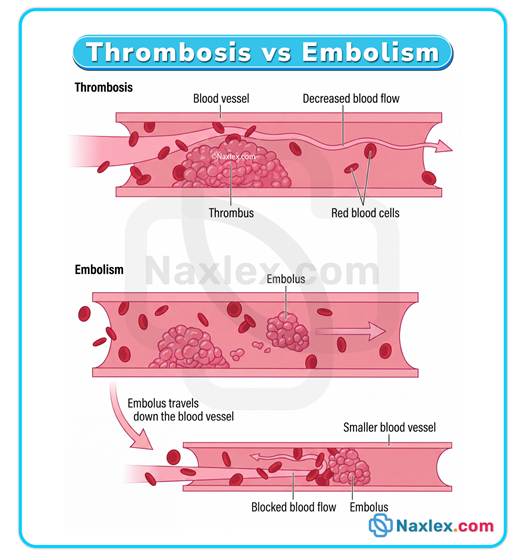
Determinants of Severity
The clinical severity of thromboembolic disease depends upon:
- The size of the thrombus.
- The anatomical location of vessel occlusion.
- The degree of vascular obstruction.
- The duration of ischemia.
- The availability of collateral circulation.
Consequences of Untreated Disease
[Untreated Thrombus] ──> [Tissue Ischemia] ──> [Infarction] ──> [Organ Dysfunction/Death]
Hemostasis and Normal Coagulation Physiology
Hemostasis is the physiological process that prevents blood loss following vascular injury while maintaining blood fluidity within intact vessels. It is a carefully regulated balance between procoagulant and anticoagulant pathways.
|
Stage |
Major Event |
Key Mediators |
|
1. Vascular Spasm |
Immediate vasoconstriction |
Endothelin, serotonin, thromboxane A2 |
|
2. Primary Hemostasis |
Platelet plug formation |
von Willebrand factor (vWF), ADP, collagen |
|
3. Secondary Hemostasis |
Activation of coagulation cascade |
Clotting factors, thrombin, fibrin |
|
4. Clot Retraction |
Platelets contract to stabilize clot |
Actomyosin, fibrin mesh |
|
5. Fibrinolysis |
Breakdown of clot after vessel healing |
tPA, plasminogen, plasmin |
The Coagulation Cascade
The coagulation cascade is sequentially activated through two distinct pathways that merge into a single common pathway:
- Intrinsic Pathway: Activated by endothelial injury and exposure of blood to subendothelial collagen. Involves factors XII, XI, IX, and VIII.
- Extrinsic Pathway: Activated by external tissue trauma, releasing tissue factor (Factor III), which activates Factor VII.
- Common Pathway: Initiated by the activation of Factor X (converting to Factor Xa). Factor Xa, with cofactor Va, converts prothrombin (Factor II) into thrombin (Factor IIa). Thrombin then converts soluble fibrinogen (Factor I) into insoluble fibrin strands. Factor XIII stabilizes the final fibrin clot through cross-linking.
Endogenous Regulatory Mechanisms
- Anticoagulant Systems: Antithrombin III, Protein C, Protein S, tissue factor pathway inhibitor (TFPI), prostacyclin (PGI2), and nitric oxide (NO).
- Fibrinolytic System: Prevents excessive clotting. Tissue plasminogen activator (tPA) converts plasminogen into plasmin, which degrades fibrin into fibrin degradation products (FDPs).
Pathophysiology of Thrombus Formation
Thrombosis occurs when hemostatic mechanisms become dysregulated, leading to abnormal clot formation in the absence of active bleeding.
[Endothelial Injury] ──> [Platelet Adhesion & Activation] ──> [Coagulation Cascade Activation] ──> [Fibrin Deposition] ──> [Occlusion]
Classifications of Thrombi
- Arterial Thrombi ("White Thrombi"): Develop in high-pressure, high-shear systems. Rich in platelets and associated with atherosclerosis, myocardial infarction (MI), and ischemic stroke.
- Venous Thrombi ("Red Thrombi"): Form in low-pressure, low-shear systems. Rich in fibrin and trapped red blood cells. Commonly develop in lower extremity deep veins.
- Cardiac Thrombi: Develop within the chambers of the heart. Frequently caused by atrial fibrillation, left ventricular wall motion abnormalities (e.g., post-MI), or mechanical prosthetic valves.
Virchow's Triad
Virchow's Triad outlines the three key pathophysiological factors that contribute to thrombus formation.
- Endothelial Injury (Vessel Wall Damage): Exposes subendothelial collagen, activates platelets, and releases tissue factor.
- Causes: Trauma, surgery, smoking, hypertension, diabetes, atherosclerosis, vascular catheterization.
- Venous Stasis (Altered Blood Flow): Prevents the clearance and dilution of activated coagulation factors.
- Causes: Prolonged bed rest, long-distance travel, paralysis, obesity, heart failure, pregnancy, varicose veins.
- Hypercoagulability (Altered Blood Constituents): An increased systemic tendency for clot formation.
- Inherited Causes: Factor V Leiden mutation, Protein C/S deficiencies, antithrombin deficiency, prothrombin gene mutation.
- Acquired Causes: Malignancy, pregnancy, oral contraceptives, estrogen therapy, antiphospholipid syndrome, major surgery, COVID-19.
Types of Thromboembolic Disorders
- Venous Disorders: Deep vein thrombosis (DVT), pulmonary embolism (PE), cerebral venous sinus thrombosis, portal vein thrombosis.
- Arterial Disorders: Acute myocardial infarction (AMI), ischemic stroke, peripheral arterial occlusion, acute limb ischemia, mesenteric ischemia.
- Cardiac Embolic Disorders: Atrial fibrillation-associated systemic emboli, left ventricular mural thrombi, prosthetic heart valve thrombosis.
Venous Thromboembolism (VTE)
Venous Thromboembolism (VTE) represents a single disease spectrum encompassing DVT and PE.
- Epidemiology: VTE is a leading cause of preventable hospital-associated mortality.
- Risk Factors: Surgery, trauma, immobilization, malignancy, advanced age, obesity, smoking, and hormonal therapies.
- Complications: Pulmonary embolism, chronic venous insufficiency, post-thrombotic syndrome (PTS), recurrence, and death.
Deep Vein Thrombosis (DVT)
DVT is the formation of a thrombus within deep veins, most commonly in the lower extremities (femoral, popliteal, iliac, or deep calf veins).
- Clinical Presentation: Unilateral leg swelling, local warmth, erythema, pain, tenderness, and prominent superficial veins.
- Major Complications: Pulmonary embolism and post-thrombotic syndrome (characterized by chronic pain, swelling, and venous ulceration).
Pulmonary Embolism (PE)
A life-threatening emergency occurring when a venous thrombus (usually from a DVT) dislodges and occludes the pulmonary arterial bed.
- Pathophysiology: Right ventricular workload increases rapidly due to sudden pulmonary vascular resistance, impairing gas exchange and causing hypoxemia.
- Clinical Presentation: Sudden-onset dyspnea, tachypnea, tachycardia, pleuritic chest pain, hemoptysis, apprehension, cyanosis, syncope, and hemodynamic collapse.
Nursing Insight
- Do not massage or vigorously manipulate any extremity suspected of having a DVT; doing so can dislodge the thrombus and precipitate a fatal pulmonary embolism.
- Immediate nursing priorities for suspected PE include assessing airway, breathing, and circulation (ABCs), administering oxygen, and establishing rapid venous access.
Parenteral Anticoagulants
Parenteral anticoagulants are administered via intravenous (IV) or subcutaneous (SC) injection. They halt the formation, propagation, and extension of thrombi.
Parenteral anticoagulants do not dissolve existing blood clots. Instead, they prevent clot enlargement, allowing the endogenous fibrinolytic system (plasmin) to gradually break down the thrombus over time.
Classification of Parenteral Anticoagulants
Parenteral anticoagulants are categorized by their molecular target and mechanism of action.
|
Classification |
Drug Examples |
Primary Target |
Route |
|
Unfractionated Heparin (UFH) |
Heparin sodium |
Thrombin (Factor IIa) & Factor Xa (via Antithrombin III) |
IV, SC |
|
Low Molecular Weight Heparins (LMWH) |
Enoxaparin, Dalteparin, Tinzaparin |
Primarily Factor Xa (via Antithrombin III) |
SC (rarely IV) |
|
Indirect Factor Xa Inhibitors |
Fondaparinux |
Selective Factor Xa (via Antithrombin III) |
SC |
|
Direct Thrombin Inhibitors (DTIs) |
Argatroban, Bivalirudin |
Direct inhibition of Thrombin (Factor IIa) |
IV |
Mechanism of Action of Anticoagulants
- Unfractionated Heparin: Binds to antithrombin III, accelerating its activity approximately 1,000-fold. This complex neutralizes thrombin (IIa) and activated Factor Xa, along with factors IXa, XIa, and XIIa.
- Low Molecular Weight Heparins: Have smaller polysaccharide chains. They bind to antithrombin III and preferentially inhibit Factor Xa rather than thrombin (IIa), yielding a highly predictable dose response.
- Fondaparinux: A synthetic pentasaccharide that binds antithrombin III, selectively inactivating Factor Xa. It has no direct inhibitory effect on thrombin (IIa).
- Direct Thrombin Inhibitors: Bind directly to the active catalytic site and/or exosite of thrombin, inhibiting both free (circulating) and clot-bound thrombin. They do not require antithrombin III as a cofactor.
Indications
- VTE Prophylaxis: Prior to and following major orthopedic surgeries (hip/knee replacements), major abdominal or pelvic surgeries, neurosurgery, and during prolonged immobilization in critically ill patients.
- VTE Treatment: Acute deep vein thrombosis and pulmonary embolism.
- Acute Coronary Syndromes (ACS): Unstable angina, non-ST-elevation myocardial infarction (NSTEMI), and ST-elevation myocardial infarction (STEMI).
- Cardiovascular Procedures: During percutaneous coronary intervention (PCI), coronary artery bypass grafting (CABG), hemodialysis, and extracorporeal membrane oxygenation (ECMO).
- Bridging Therapy: Maintaining anticoagulation when starting warfarin or during temporary oral anticoagulant interruption before invasive procedures.
Contraindications
Absolute Contraindications
- Active major bleeding.
- Acute intracranial hemorrhage or hemorrhagic stroke.
- Severe uncontrolled bleeding disorders.
- Severe thrombocytopenia.
- Confirmed history of immune-mediated Heparin-Induced Thrombocytopenia (HIT) (for UFH and LMWH).
- Recent major central nervous system, ophthalmic, or spinal surgery with a high risk of bleeding.
Relative Contraindications
- Severe, uncontrolled arterial hypertension.
- Active peptic ulcer disease (PUD) or recent gastrointestinal (GI) bleeding.
- Severe hepatic or renal impairment.
- Recent lumbar puncture, spinal anesthesia, or epidural catheterization.
- Advanced age, chronic alcohol misuse, or high fall risk.
Adverse Effects
- Bleeding: The primary complication, ranging from minor (easy bruising, epistaxis, gingival bleeding, hematuria, injection-site bruising) to life-threatening (intracranial hemorrhage, retroperitoneal bleeding, hemothorax).
- Heparin-Induced Thrombocytopenia (HIT): An immune-mediated reaction (specifically Type II HIT) that drastically lowers platelet counts while paradoxically increasing the risk of life-threatening thrombosis.
- Local Injection Site Reactions: Pain, hematoma, bruising, local irritation, and skin necrosis.
- Long-Term Complications (Heparin): Osteoporosis (with prolonged therapy due to accelerated osteoclast activity), alopecia, and transient elevations in serum aminotransferases (AST/ALT).
- Metabolic Effects: Hyperkalemia (from heparin-induced suppression of aldosterone synthesis).
Drug Interactions
The risk of serious bleeding is compounded when parenteral anticoagulants are administered with:
- Antiplatelet Agents: Aspirin, clopidogrel, prasugrel, ticagrelor.
- Nonsteroidal Anti-Inflammatory Drugs (NSAIDs): Ibuprofen, naproxen, ketorolac (causes both platelet inhibition and gastric mucosal irritation).
- Other Anticoagulants: Warfarin, Direct Oral Anticoagulants (DOACs).
- Thrombolytic Agents: Alteplase, tenecteplase.
- Serotonergic Medications: SSRIs and SNRIs (impair platelet serotonin uptake).
- Herbal Supplements ("The G's"): Ginkgo biloba, garlic, ginger, ginseng, feverfew, dong quai, and high-dose fish oil.
Monitoring Parameters
Safe parenteral anticoagulant administration requires regular laboratory monitoring:
|
Test |
Clinical Significance |
Normal/Target Value |
|
Activated Partial Thromboplastin Time (aPTT) |
Monitors Unfractionated Heparin (UFH) |
Baseline: ~30–40 sec; Therapeutic: 1.5–2.5x control |
|
Anti-Factor Xa Assay |
Monitors LMWH (when indicated) & UFH |
Target varies by indication and dosing frequency |
|
Platelet Count |
Detects Heparin-Induced Thrombocytopenia (HIT) |
Baseline and every 2–3 days during early therapy |
|
Hemoglobin & Hematocrit |
Evaluates for occult or overt blood loss |
Assess for sudden, unexplained decreases |
|
Serum Creatinine & eGFR |
Evaluates renal clearance (critical for LMWH/fondaparinux) |
Dose reductions needed in renal impairment |
Nursing Assessment Before Therapy
- Comprehensive History: Assess for a history of bleeding disorders, peptic ulcer disease, recent major trauma or surgery, previous history of HIT, and renal or hepatic dysfunction.
- Current Medication Profile: Perform a medication reconciliation to screen for concurrent NSAIDs, antiplatelet therapies, or herbal supplements.
- Physical Assessment: Establish baseline vital signs (paying attention to blood pressure and heart rate) and conduct a head-to-toe skin assessment for pre-existing bruises, petechiae, or active bleeding.
- Baseline Diagnostics: Ensure baseline CBC, platelet count, PT/INR, aPTT, and renal function tests are completed and reviewed.
Nursing Responsibilities During Therapy
- Independent Double-Checks: Always verify UFH and LMWH doses, concentrations, and infusion pump settings with another licensed nurse prior to administration.
- Bleeding Surveillance: Perform frequent assessments for subtle signs of bleeding (such as gingival oozing, new petechiae, hematuria, dark tarry stools, or persistent oozing from IV sites).
- Occult Bleeding Detection: Monitor for hemodynamically unstable states (tachycardia and hypotension accompanied by pallor, weakness, or unexplained flank/abdominal pain), which can indicate retroperitoneal or occult internal hemorrhage.
- Fall Precautions: Implement standard fall prevention protocols to minimize the risk of trauma-induced bleeding.
- Avoid IM Injections: Do not administer intramuscular injections to anticoagulated patients due to the high risk of severe hematoma formation.
Patient Education
- Mechanism of Therapy: Explain that the medication prevents new clots from forming and stops existing clots from growing, but does not actively dissolve them.
- Bleeding Precautions: Instruct the patient to use a soft-bristled toothbrush, use an electric razor for shaving, avoid contact sports, and wear protective footwear.
- Reporting Symptoms: Teach the patient to immediately report signs of bleeding, such as nosebleeds lasting longer than 10 minutes, blood in the urine or stool (black, tarry stools), vomiting blood or coffee-ground material, severe unremitting headaches, or sudden dizziness.
- Medication Safety: Advise against taking over-the-counter NSAIDs, aspirin, or herbal supplements unless explicitly approved by the prescribing healthcare provider.
Unfractionated Heparin (UFH)
Pharmacokinetics and Key Characteristics
- Source: Derived from porcine intestinal mucosa.
- Administration: IV bolus, continuous IV infusion, or subcutaneous injection. Never administer UFH intramuscularly (IM) due to the risk of severe tissue hematomas.
- Onset of Action: Immediate when given via IV bolus; 1–2 hours following subcutaneous injection.
- Half-Life: Rapidly cleared (30–90 minutes; dose-dependent), making it highly manageable in perioperative settings.
- Placental Barrier: Does not cross the placenta and is not excreted in breast milk, making it a preferred choice for acute anticoagulation during pregnancy.
Heparin-Induced Thrombocytopenia (HIT)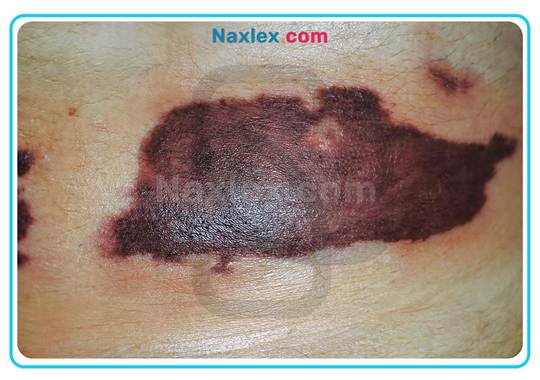
HIT is a life-threatening, immune-mediated reaction to heparin.
[Heparin + PF4 Complex] ──> [IgG Antibody Formation] ──> [Platelet Activation] ──> [Thrombocytopenia + Thrombi Formation]
- Pathophysiology: Heparin binds to Platelet Factor 4 (PF4), forming a complex that triggers the production of IgG antibodies. These antibodies bind to and activate platelets, causing widespread microvascular thrombosis, consumption of platelets, and severe thrombocytopenia.
- Key Clinical Sign: A reduction in platelet count of ≥ 50% from baseline occurring 5–10 days after starting heparin therapy.
- Management:
- Discontinue all forms of heparin immediately (including heparin flushes and heparin-coated catheters).
- Avoid administering platelet transfusions, as this can fuel the thrombotic process.
- Initiate alternative, non-heparin anticoagulation (e.g., Argatroban, Bivalirudin, or Fondaparinux).
- Do not initiate warfarin until platelet levels have recovered to normal, as early use can cause venous limb gangrene and skin necrosis.
Antidote: Protamine Sulfate
Protamine sulfate is a strongly basic protein that binds to negatively charged heparin molecules to form a stable, inactive complex.
- Administration: Administer via slow IV infusion (usually no faster than 50 mg over 10 minutes) to avoid severe adverse effects.
- Adverse Effects of Rapid Administration: Severe hypotension, bradycardia, dyspnea, bronchospasm, and pulmonary hypertension.
- Dosing: Based on the amount of heparin received in the preceding 2–3 hours (typically 1 mg of protamine neutralizes approximately 100 units of UFH).
Low Molecular Weight Heparins (LMWH)
Comparative Overview
LMWHs are produced by the controlled depolymerization of UFH. They provide several clinical advantages over standard heparin:
- Greater bioavailability (~90% after subcutaneous injection).
- Longer half-life (4–7 hours), allowing once- or twice-daily dosing.
- Predictable dose-response that eliminates the need for routine laboratory monitoring.
- Lower incidence of HIT and a reduced risk of osteoporosis with long-term therapy.
Key Medications
- Enoxaparin (Lovenox): The most widely used LMWH. Commonly used for VTE prophylaxis, DVT/PE treatment, and acute coronary syndromes. Dosing must be reduced in severe renal impairment (typically adjusted if creatinine clearance is <30 mL/min).
- Dalteparin (Fragmin): Often utilized for VTE prophylaxis in major surgery and long-term treatment of cancer-associated thrombosis.
- Tinzaparin (Innohep): Features a higher molecular weight than other LMWHs, resulting in a slightly different anti-Xa to anti-IIa ratio.
Subcutaneous Injection Technique
[Cleanse Anterolateral Abdomen] ──> [Pinch Skin Fold] ──> [Insert Needle 90°] ──> [Inject Slowly (Do Not Aspirate/Massage)]
- Site Selection: Inject into the anterolateral or posterolateral abdominal wall, at least 5 cm (2 inches) away from the umbilicus.
- Air Bubble: Do not expel the nitrogen air bubble in prefilled syringes before injection; it ensures delivery of the full dose and seals the medication in the subcutaneous tissue.
- Avoid Aspiration and Massage: Do not pull back on the plunger (aspirate) or massage the site after injection, as both techniques increase local bruising and hematoma formation.
Antidote Considerations
- Protamine Sulfate: Partially reverses LMWH activity. It completely neutralizes anti-IIa (thrombin) activity but only partially neutralizes anti-Xa activity (~60% maximum reversal).
Activated Factor Xa Inhibitor: Fondaparinux (Arixtra)
Pharmacology and Mechanism
Fondaparinux is a synthetic pentasaccharide that selectively binds to antithrombin III, accelerating the neutralization of Factor Xa.
- Because it is synthetic, it does not contain animal proteins and has a low risk of cross-reactivity in patients with a history of HIT.
- It does not directly inhibit thrombin (IIa) and does not interact with platelets.
Clinical Characteristics
- Route: Subcutaneous injection once daily (half-life of 17–21 hours).
- Elimination: Excreted unchanged by the kidneys. Contraindicated if creatinine clearance is <30 mL/min.
- Weight Limit: Contraindicated for VTE prophylaxis in patients weighing <50 kg undergoing major orthopedic or abdominal surgeries due to an increased risk of bleeding.
- Monitoring: Routine coagulation testing is not required.
- Antidote: There is no specific reversal agent for fondaparinux. Severe bleeding requires supportive therapy, which may include administering activated prothrombin complex concentrates (aPCCs).
Oral Anticoagulants
Oral anticoagulants are used for long-term thromboembolic prophylaxis and treatment.
Classification of Oral Anticoagulants
Oral anticoagulants are divided into two primary classes:
- Vitamin K Antagonists (VKA)
- Direct Oral Anticoagulants (DOACs)
|
Feature |
Vitamin K Antagonists (VKA) |
Direct Oral Anticoagulants (DOACs) |
|
Drug Examples |
Warfarin |
Dabigatran, Rivaroxaban, Apixaban, Edoxaban |
|
Mechanism |
Inhibits factors II, VII, IX, X, Protein C/S |
Direct, selective inhibition of Factor IIa or Xa |
|
Onset of Action |
Delayed (4–5 days to reach therapeutic effect) |
Rapid (1–4 hours to peak effect) |
|
Laboratory Monitoring |
PT/INR required |
Not routinely required |
|
Dietary Restrictions |
Requires consistent Vitamin K intake |
None |
|
Standard Reversal |
Phytonadione (Vitamin K), 4F-PCC |
Idarucizumab (for Dabigatran), Andexanet Alfa |
Warfarin (Coumadin)
Mechanism of Action
Warfarin inhibits the enzyme vitamin K epoxide reductase (VKORC1), blocking the conversion of oxidized vitamin K to its active, reduced form. This prevents the functional synthesis of Factors II (prothrombin), VII, IX, and X, as well as endogenous anticoagulant Proteins C and S.
- Delayed Therapeutic Effect: Previously synthesized, active clotting factors must naturally decay before the therapeutic effect of warfarin is achieved. Full anticoagulation takes 4–5 days.
- Transient Hypercoagulability: Protein C (an anticoagulant) decays faster than the procoagulant factors (particularly prothrombin). This can create a temporary prothrombotic state during initiation, which can lead to rare complications like warfarin-induced skin necrosis or purple toe syndrome.
- Bridging Therapy: Heparin or LMWH must be co-administered alongside warfarin until the INR is within the therapeutic target range for at least 24–48 hours.
Pharmacokinetics
- Absorption: Highly bioavailable (~100% absorption) via oral administration.
- Protein Binding: Extensively bound to plasma albumin (>99%). Displacement by interacting drugs can increase the active free fraction, elevating bleeding risk.
- Metabolism: Metabolized in the liver by the cytochrome P450 system (primarily the CYP2C9 isoenzyme). Genetic polymorphisms in CYP2C9 and VKORC1 can cause wide variations in dose requirements.
Indications
- Treatment and secondary prevention of DVT and PE.
- Stroke and systemic embolism prevention in patients with atrial fibrillation or mechanical prosthetic heart valves (DOACs are contraindicated in patients with mechanical heart valves).
- Prophylaxis against mural thrombus formation following myocardial infarction.
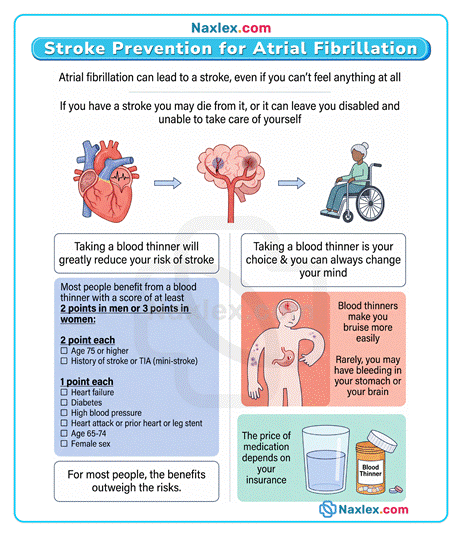
Contraindications
- Pregnancy: Contraindicated (Category X) because it crosses the placenta, causing fetal bleeding and fetal warfarin syndrome (characterized by nasal hypoplasia and skeletal abnormalities).
- Active, clinically significant bleeding.
- Severe, unmanaged arterial hypertension.
Laboratory Monitoring (PT/INR)
- Prothrombin Time (PT): Standardized internationally as the International Normalized Ratio (INR) to ensure consistent results across laboratories.
- Target INR Ranges:
- 2.0–3.0 for most indications (DVT, PE, atrial fibrillation).
- 2.5–3.5 for high-risk mechanical prosthetic heart valves (e.g., mechanical mitral valves).
Crucial Drug-Drug and Drug-Food Interactions
Warfarin has a high potential for clinically significant interactions:
- Potentiating Interactions (Elevating INR & Bleeding Risk):
- Antibiotics: Trimethoprim-sulfamethoxazole, metronidazole, fluconazole, ciprofloxacin (inhibit CYP2C9 or alter intestinal flora that synthesize vitamin K).
- Cardiovascular Drugs: Amiodarone (requires a preemptive 30–50% reduction in warfarin dosing).
- NSAIDs & Aspirin: Increase bleeding risk through antiplatelet activity and gastric mucosal injury, even without altering the INR.
- Inhibiting Interactions (Lowering INR & Thrombosis Risk):
- Enzyme Inducers: Rifampin, carbamazepine, phenytoin, phenobarbital, St. John's wort (accelerate warfarin clearance).
- Dietary Vitamin K Interactions:
- Green leafy vegetables (spinach, kale, broccoli, Brussels sprouts) contain high amounts of vitamin K.
- Nursing Guidance: Do not instruct patients to avoid green leafy vegetables. Instead, advise them to keep their daily intake consistent to maintain stable INR levels.
Antidote: Vitamin K1 (Phytonadione)
- Mechanism: Promotes hepatic synthesis of functional clotting factors II, VII, IX, and X.
- Administration:
- Oral: Preferred for non-urgent reversal in patients with an elevated INR (>5.0 to 10.0) without active bleeding.
- Intravenous: Reserved for serious or life-threatening hemorrhage. Must be infused slowly to minimize the risk of anaphylactoid reactions.
- Rapid Reversal: In cases of severe hemorrhage, administer 4-Factor Prothrombin Complex Concentrate (4F-PCC) or Fresh Frozen Plasma (FFP) alongside IV Vitamin K for immediate clotting factor replacement.
Direct Thrombin Inhibitors (DTIs)
DTIs bind directly and selectively to the thrombin molecule (Factor IIa), blocking its ability to convert fibrinogen into fibrin. They do not require antithrombin III as a cofactor.
[Direct Thrombin Inhibitor] ──| [Thrombin (Factor IIa)] ──> [Inhibition of Fibrin Clot Formation]
Classification of DTIs
- Oral DTI: Dabigatran etexilate (Pradaxa).
- Parenteral DTIs: Argatroban, Bivalirudin, Lepirudin.
Dabigatran (Pradaxa)
- Mechanism: An oral, reversible direct thrombin inhibitor. It is administered as a prodrug (dabigatran etexilate) and converted to its active form in the liver and plasma.
- Indication: Stroke prevention in non-valvular atrial fibrillation, and the treatment or prevention of DVT and PE.
- Monitoring: Routine coagulation monitoring is not required.
- Storage Requirements: Highly sensitive to moisture. Must be kept in its original manufacturer bottle or blister pack, and discarded 5 months after opening the bottle.
- Antidote: Idarucizumab (Praxbind), a humanized monoclonal antibody fragment that binds specifically to dabigatran, neutralizing its anticoagulant effect within minutes.
Bivalirudin (Angiomax)
- Mechanism: A synthetic, reversible, short-acting IV direct thrombin inhibitor.
- Clinical Use: Used as an alternative to heparin during percutaneous coronary intervention (PCI), particularly in patients with a history of or risk for HIT.
Lepirudin (Refludan)
- Mechanism: A recombinant, irreversible yeast-derived hirudin analog.
- Clinical Use: Previously used for anticoagulation in patients with HIT. Note: Availability has declined significantly due to the development of alternative agents.
Argatroban (Acova)
- Mechanism: A synthetic, small-molecule, reversible IV direct thrombin inhibitor.
- Clinical Use: The preferred anticoagulant for prophylaxis or treatment of thrombosis in patients with confirmed or suspected HIT.
- Pharmacokinetics: Metabolized primarily by the liver. Safe for use in patients with severe renal impairment, but requires dose reductions in patients with hepatic dysfunction.
- Monitoring: Monitored using the aPTT (target range typically 1.5–3 times baseline).
Direct Factor XA Inhibitors (Oral)
Overview of Direct Factor Xa Inhibitors
Direct Oral Anticoagulants (DOACs) that target Factor Xa selectively bind to and inhibit the active site of Factor Xa without requiring a cofactor like antithrombin III. This class represents a major milestone in pharmacology nursing, offering predictable anticoagulation without the intense lifestyle limitations of warfarin.
Rivaroxaban (Xarelto)
Introduction
- Rivaroxaban is the prototype oral selective inhibitor of Factor Xa.
- By inhibiting Factor Xa, it directly prevents the conversion of prothrombin (Factor II) to thrombin (Factor IIa), stopping the final stages of the coagulation cascade.
- It does not require routine laboratory monitoring (like INR) or dietary restrictions, making it highly convenient for outpatient management.
Pharmacokinetics
- Route: Oral.
- Bioavailability: High; doses of 16 mg and 20 mg must be taken with food to ensure optimal absorption.
- Onset of Action: Rapid (peak plasma levels achieved in 2 to 4 hours).
- Half-life: Approximately 6 to 9 hours in young healthy subjects; 11 to 13 hours in older adults.
- Elimination: Dual elimination; approximately one-third is excreted active in the urine, while the remaining two-thirds are metabolized by the liver (CYP3A4/6, CYP2J2).
Clinical Indications
- Prevention of deep vein thrombosis (DVT) and pulmonary embolism (PE) following hip or knee replacement surgery.
- Treatment of acute deep vein thrombosis (DVT) and pulmonary embolism (PE).
- Reduction in the risk of recurrent DVT and PE.
- Prevention of stroke and systemic embolism in patients with non-valvular atrial fibrillation.
- Risk reduction of major cardiovascular events in patients with chronic coronary artery disease (CAD) or peripheral artery disease (PAD) (when combined with aspirin).
Contraindications
- Active major pathological bleeding.
- Known hypersensitivity to rivaroxaban.
- Severe hepatic impairment (Child-Pugh Class B and C) associated with coagulopathy.
- Prosthetic heart valves (especially mechanical valves).
Adverse Effects
- Bleeding (ranging from epistaxis and bruising to life-threatening intracranial hemorrhage).
- Thrombocytopenia.
- Muscle spasms and pain.
- Syncope and dizziness.
- Elevated liver enzymes (ALT/AST).
Drug & Food Interactions
- Strong CYP3A4 and P-gp Inducers: (e.g., Rifampin, Carbamazepine, Phenytoin, St. John's wort) decrease rivaroxaban levels and increase thrombosis risk.
- Strong CYP3A4 and P-gp Inhibitors: (e.g., Ketoconazole, Ritonavir, Clarithromycin) increase rivaroxaban levels and elevate bleeding risk.
- Other Anticoagulants / Antiplatelets / NSAIDs: Increase risk of serious bleeding.
Monitoring Parameters
- Renal Function (Serum Creatinine, eGFR): Critically important to assess before initiation and at least annually, as dosage adjustments are required for renal impairment.
- Hepatic Function: Assessed at baseline.
- Hemoglobin and Hematocrit: Periodically assessed to screen for occult gastrointestinal blood loss.
- Coagulation Studies: Routine PT/aPTT are not utilized for monitoring because they are not reliably calibrated to DOAC activity.
Antidote / Reversal Agent
- Andexanet Alfa (Andexxa): A recombinant modified human Factor Xa decoy protein that binds and neutralizes rivaroxaban, reversing its anticoagulant effect during life-threatening or uncontrolled bleeding.
Nursing Insights
- Food Administration: Always verify the prescribed dose of Xarelto; 16 mg and 20 mg tablets must be taken with the largest meal of the day to ensure adequate systemic bioavailability.
- Aortic Stenosis Connection: In nursing assessments, always be alert to physical exam signs. In patients presenting with valvular issues like aortic stenosis—traditionally marked by clinical signs such as a narrow pulse pressure—be aware that DOACs are strictly contraindicated if they possess mechanical prosthetic valves.
- No Bridging Needed: Because of its rapid onset of action (peaking in 2–4 hours), rivaroxaban does not require bridging with heparin when starting therapy.
Antiplatelet Medications
Overview of Antiplatelet Medications
Antiplatelet agents work by preventing platelet adhesion, activation, and aggregation, which represent the initial steps of primary hemostasis. These medications are primarily used to prevent arterial thrombosis, which is typically rich in platelets (often referred to as "white clots").
Antiplatelet / Salicylic: Aspirin (Ecotrin)
Introduction
- Aspirin is an irreversible inhibitor of cyclooxygenase (COX-1 and COX-2) enzymes.
- It is widely used in both acute and chronic coronary artery disease management.
Mechanism of Action
- Irreversibly acetylates COX-1 inside platelets.
- This blocks the synthesis of Thromboxane A2 ($TXA_2$), a potent platelet activator and vasoconstrictor.
- Because platelets lack nuclei, they cannot synthesize new COX-1 enzymes; the inhibitory effect persists for the lifetime of the platelet (approximately 7 to 10 days).
Pharmacokinetics
- Route: Oral.
- Absorption: Rapidly absorbed from the stomach and upper small intestine.
- Onset of Action: 5 to 30 minutes for non-enteric coated tablets.
- Metabolism: Hydrolyzed to salicylic acid in the liver.
Clinical Indications
- Primary and secondary prevention of myocardial infarction (MI).
- Ischemic stroke and transient ischemic attack (TIA) prevention.
- Acute coronary syndrome (ACS) management (administered immediately upon suspicion of acute MI).
- Secondary prevention following coronary artery bypass grafting (CABG) or PCI.
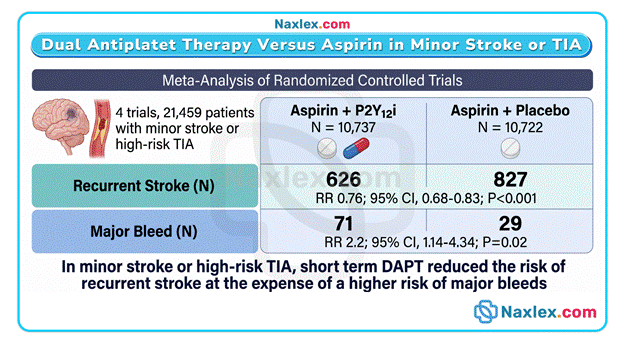
Contraindications & Precautions
- Known hypersensitivity to NSAIDs or salicylates.
- Bleeding disorders (e.g., hemophilia).
- Active peptic ulcer disease or gastrointestinal bleeding.
- Pediatric Patients: Contraindicated in children and adolescents with viral infections due to the risk of Reye’s Syndrome.
Adverse Effects
- Gastrointestinal distress, dyspepsia, and gastric ulceration.
- Occult or overt gastrointestinal bleeding.
- Tinnitus and hearing loss (early signs of salicylate toxicity/salicylism).
- Bronchospasm (aspirin-exacerbated respiratory disease).
Antiplatelet / ADP Inhibitors: Clopidogrel (Plavix) & Ticlopidine (Ticlid)
Introduction
- These agents are thienopyridine prodrugs that selectively prevent platelet aggregation by blocking adenosine diphosphate (ADP) receptors.
Mechanism of Action
- Irreversibly bind to and block $P2Y_{12}$ ADP receptors on the platelet surface.
- This prevents ADP from binding to its receptor, blocking the subsequent activation of the glycoprotein IIb/IIIa receptor complex required for platelet aggregation.
Pharmacokinetics
- Route: Oral.
- Metabolism: Clopidogrel is a prodrug requiring two-step hepatic bioactivation, primarily via CYP2C19.
- Onset: Slow unless a loading dose (typically 300–500 mg) is administered.
- Half-life: Active metabolite half-life is about 30 minutes, but the functional antiplatelet effect lasts 7 to 10 days due to irreversible receptor binding.
Clinical Indications
- Secondary prevention of MI, ischemic stroke, or peripheral arterial disease.
- Acute coronary syndrome (ACS) management (combined with aspirin as Dual Antiplatelet Therapy - DAPT).
- Prevention of coronary stent thrombosis after PCI.
Adverse Effects
- Bleeding (increased risk when combined with aspirin).
- Ticlopidine Special Risks: Severe neutropenia, agranulocytosis, and Thrombotic Thrombocytopenic Purpura (TTP). Due to these toxicities, ticlopidine has been largely replaced by clopidogrel.
- Clopidogrel Special Risks: Dyspepsia, rash, and rare TTP.
Drug Interactions
- Proton Pump Inhibitors (PPIs): Specifically Omeprazole and Esomeprazole are moderate CYP2C19 inhibitors. They can decrease the activation of clopidogrel, reducing its antiplatelet efficacy and increasing the risk of stent thrombosis or MI.
Antiplatelet / Glycoprotein (GP) IIb/IIIa Inhibitors
|
Drug |
Class/Type |
Route of Administration |
|
Abciximab (ReoPro) |
Monoclonal antibody |
Intravenous (IV) |
|
Eptifibatide (Integrilin) |
Synthetic cyclic peptide |
Intravenous (IV) |
|
Tirofiban (Aggrastat) |
Non-peptide small molecule |
Intravenous (IV) |
Mechanism of Action
- These agents represent the most potent antiplatelet class.
- They block the Glycoprotein IIb/IIIa ($GP\ IIb/IIIa$) receptor, which is the final common pathway for platelet aggregation.
- By blocking this receptor, they prevent the binding of fibrinogen and von Willebrand factor, completely stopping platelets from cross-linking and forming a plug.
Clinical Indications
- Used in patients undergoing PCI to prevent ischemic complications.
- Treatment of acute coronary syndrome (ACS) with planned invasive management.
Key Contraindications
- Active internal bleeding.
- Severe uncontrolled hypertension.
- History of stroke within the past 30 days (or any history of hemorrhagic stroke).
- Major surgery or trauma within the past 4 to 5 weeks.
- Severe thrombocytopenia (platelets < 100,000/$mm^3$).
Adverse Effects
- Profound bleeding (especially at arterial access sites).
- Acute, severe thrombocytopenia (immune-mediated destruction of platelets, particularly with abciximab).
Antiplatelet / Arterial Vasodilator: Pentoxifylline (Trental)
Introduction
- Pentoxifylline, dipyridamole, and cilostazol are classified as antiplatelet agents that have arterial vasodilatory properties.
- Pentoxifylline works primarily as a hemorheologic agent rather than a classic antiplatelet drug.
Mechanism of Action
- Pentoxifylline (Trental): Decreases blood viscosity by improving erythrocyte (RBC) flexibility, reducing platelet aggregation, and decreasing fibrinogen concentration. This allows blood to flow more easily through microcirculation.
- Cilostazol (Pletal): Selectively inhibits phosphodiesterase III (PDE-3). This increases cyclic adenosine monophosphate (cAMP) levels in platelets and blood vessels, leading to both inhibition of platelet aggregation and direct arterial vasodilation.
- Dipyridamole (Persantine): Inhibits the uptake of adenosine into platelets and blocks PDE, increasing intracellular cAMP.
Clinical Indications
- Pentoxifylline & Cilostazol: Treatment of intermittent claudication associated with chronic peripheral arterial disease (PAD).
- Dipyridamole: Used in combination with aspirin (Aggrenox) for secondary stroke prevention; or with warfarin for thromboembolism prophylaxis after mechanical heart valve replacement.
Adverse Effects & Black Box Warning
- Cilostazol Black Box Warning: Strictly contraindicated in patients with Heart Failure of any severity. PDE-3 inhibitors can cause cardiotoxicity and increase mortality in patients with heart failure.
- Pentoxifylline Adverse Effects: Nausea, vomiting, dyspepsia, headache, and dizziness.
Thrombolytic Medications
Overview of Thrombolytic Medications
Unlike anticoagulants (heparin, warfarin, DOACs) and antiplatelets (aspirin, clopidogrel), which prevent the formation or extension of clots, thrombolytic agents actively dissolve and break down existing, fully formed fibrin clots. Because they can cause catastrophic hemorrhage, they are classified as high-alert medications and require strict clinical adherence to safety check-lists.
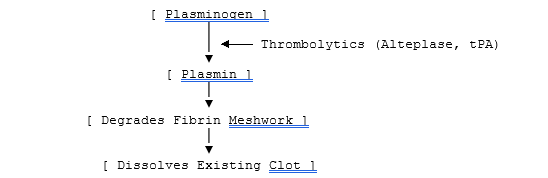
Alteplase (Activase, Cathflo Activase)
Introduction
- Commonly referred to as tissue Plasminogen Activator (tPA).
- It is a biosynthetic form of human tPA produced by recombinant DNA technology.
- Primarily used for emergency reperfusion of ischemic stroke, myocardial infarction, and massive pulmonary embolism.
Mechanism of Action
- Binds selectively to fibrin within a thrombus and converts clot-bound plasminogen to plasmin.
- Plasmin then enzymatically cleaves and degrades the fibrin meshwork, breaking the structural integrity of the clot and restoring blood flow.
Pharmacokinetics
- Route: Intravenous (IV bolus followed by a continuous infusion).
- Onset: Immediate.
- Half-life: Rapidly cleared from plasma (half-life of approximately 5 minutes).
- Metabolism: Hepatical.
Clinical Indications
- Acute ischemic stroke (must be administered within a strict time-window, typically within 3 to 4.5 hours of symptom onset).
- Acute myocardial infarction (STEMI) (used when primary PCI is unavailable or cannot be performed within 90–120 minutes of medical contact).
- Acute massive pulmonary embolism (PE) associated with hemodynamic instability (obstructive shock).
- Restoring patency to occluded central venous access devices (using low-dose Cathflo Activase).
Contraindications (The Nursing Safety Checklist)
Due to the profound risk of fatal hemorrhage, these criteria must be assessed meticulously before administering thrombolytics:
|
Category |
Absolute Contraindications |
Relative Contraindications |
|
Bleeding Risks |
• Active internal bleeding • Known bleeding diathesis |
• Current use of oral anticoagulants • Active peptic ulcer disease |
|
Neurological |
• History of intracranial hemorrhage • Structural cerebrovascular lesion • Intracranial neoplasm • Ischemic stroke within past 3 months |
• History of chronic, severe, poorly controlled hypertension |
|
Trauma / Surgical |
• Recent intracranial or intraspinal surgery • Significant closed head or facial trauma (within 3 months) |
• Major surgery or significant trauma within past 3 weeks • Recent internal bleeding (within 2–4 weeks) • Non-compressible vascular punctures |
|
Cardiovascular |
• Suspected aortic dissection |
• Pregnancy |
Adverse Effects
- Hemorrhage (most severe is intracranial hemorrhage).
- Bleeding at invasive sites (IV lines, arterial access points, surgical incisions).
- Angioedema (especially in patients concurrently taking ACE inhibitors).
- Hypotension.
Monitoring & Nursing Interventions
- Neurological Checks: Perform Glasgow Coma Scale (GCS) and pupil checks every 15 minutes during the infusion and for the first hour post-infusion, then every 30 minutes for the next 5 hours.
- Vital Signs: Monitor blood pressure closely. Maintain blood pressure below 180/105 mmHg to reduce the risk of hemorrhagic transformation in stroke patients.
- Discontinue Immediately: If the patient develops severe headache, acute hypertension, nausea, vomiting, or sudden neurological deterioration, stop the infusion immediately and anticipate an emergent head CT scan.
- Avoid Invasive Procedures: Do not insert nasogastric tubes, urinary catheters, or initiate new IV lines unless absolutely necessary; do so before starting the infusion if possible. Apply manual compression for at least 30 minutes to any unavoidable puncture site.
Tenecteplase (TNKase) & Reteplase (Retavase)
Introduction
- These are third-generation recombinant tissue plasminogen activators engineered with structural modifications to improve pharmacologic profiles.
Comparison with Alteplase
- Tenecteplase (TNKase): Has a longer half-life, greater binding affinity for fibrin, and higher resistance to inactivation by endogenous plasminogen activator inhibitor-1 (PAI-1) compared to alteplase.
- Reteplase (Retavase): Has a longer half-life than alteplase, allowing it to be administered as double-bolus injections instead of a continuous infusion.
|
Medication |
Dosing Scheme |
Advantage Over Alteplase |
|
Alteplase (Activase) |
IV Bolus + 50-minute continuous infusion |
Established, versatile clinical history |
|
Tenecteplase (TNKase) |
Single, rapid IV bolus (weight-based over 5 sec) |
Faster administration, lower bleeding risk |
|
Reteplase (Retavase) |
Two IV bolus injections (administered 30 mins apart) |
Simplified bolus dosing, no continuous drip |
Summary
ANTICOAGULANTS
Anticoagulants disrupt the coagulation cascade to prevent the formation or extension of fibrin clots. They do not dissolve existing clots.
1. Indirect Thrombin Inhibitors
- Unfractionated Heparin (UFH): Binds to antithrombin III to turn off thrombin and Factor Xa. Administered IV or SubQ. Antidote: Protamine sulfate.
- Low Molecular Weight Heparins (LMWH) / Enoxaparin (Lovenox): More selective for Factor Xa with a predictable response. Administered SubQ; do not expel the prefilled syringe air bubble.
- Critical Complication: Heparin-Induced Thrombocytopenia (HIT). An immune-mediated $\ge 50\%$ drop in platelets. Requires immediate cessation of all heparin and initiation of a non-heparin anticoagulant like Argatroban.
- Monitoring: UFH requires strict aPTT monitoring (therapeutic target is 1.5–2.5x baseline). LMWH does not require routine laboratory monitoring.
2. Vitamin K Antagonists
- Warfarin (Coumadin): Inhibits hepatic synthesis of Vitamin K-dependent clotting factors (II, VII, IX, X).
- Monitoring: Monitored via PT/INR (Target INR: 2.0–3.0).
- Key Interactions: Highly prone to drug-drug interactions. CYP2C9 inhibitors (e.g., Amiodarone) drastically increase bleeding risks. Avoid sudden changes in dietary Vitamin K intake.
- Antidote: Vitamin K (Phytonadione).
3. Direct Oral Anticoagulants (DOACs)
- Direct Factor Xa Inhibitors / Rivaroxaban (Xarelto): Selectively binds to and blocks Factor Xa. Does not require routine lab monitoring. High doses (15 mg/20 mg) must be taken with food. Antidote: Andexanet Alfa.
- Clinical Note: Contraindicated in patients with mechanical prosthetic heart valves.
ANTIPLATELET AGENTS (PREVENT ARTERIAL THROMBOSIS)
Antiplatelets inhibit platelet adhesion, activation, and aggregation, preventing "white clots" in high-pressure arterial systems.
- Aspirin (Salicylic Acid): Irreversibly inhibits COX-1, blocking Thromboxane A2 ($TXA_2$) synthesis for the 7–10 day lifetime of the platelet. Contraindicated in children due to Reye's Syndrome.
- Clopidogrel (Plavix): An ADP receptor antagonist that irreversibly blocks $P2Y_{12}$ receptors. It is a prodrug; concurrent use with proton pump inhibitors (Omeprazole) reduces its therapeutic efficacy.
- Glycoprotein IIb/IIIa Inhibitors (Abciximab, Eptifibatide): The most potent antiplatelet class; blocks the final common pathway of platelet aggregation. Given via IV route.
- Arterial Vasodilators (Pentoxifylline, Cilostazol): Used for intermittent claudication in peripheral artery disease. Cilostazol carries a Black Box Warning and is strictly contraindicated in all severities of Heart Failure.
THROMBOLYTIC MEDICATIONS (CLOT BUSTERS)
Thrombolytics actively dissolve and break down existing, fully formed fibrin clots.
- Alteplase (tPA), Tenecteplase (TNKase): Recombinant tissue plasminogen activators that convert clot-bound plasminogen into plasmin, which enzymatically digests the fibrin meshwork.
- Indications: Acute ischemic stroke, STEMI, and massive hemodynamically unstable pulmonary embolism.
- Safety Mandate: Must meticulously check for absolute contraindications (e.g., active internal bleeding, history of intracranial hemorrhage, structural cerebrovascular lesions, or recent major surgery/trauma).
CORE NURSING EDUCATION INSIGHTS
- High-Alert Status: All medications listed here are high-alert agents due to severe bleeding risks.
- Aortic Stenosis Connection: Always monitor structural cardiac issues closely. In nursing assessments, remember that a narrow pulse pressure is a classic clinical indicator of aortic stenosis. If structural issues progress to mechanical valve replacements, DOACs are strictly contraindicated.
- Bleeding Precautions: Implement soft-bristled toothbrushes, electric razors, and minimize invasive punctures. Monitor for occult blood, severe headaches (intracranial hemorrhage), and hemodynamic instability.
Naxlex
Videos
Login to View Video
Click here to loginTake Notes on Drugs Used to Treat Thromboembolic Disorders
This filled cannot be empty
Join Naxlex Nursing for nursing questions & guides! Sign Up Now