






 Video Library


Please set your exam date
Growth And Development In Adolescents
Study Questions
Practice Exercise 1
A 16-year-old boy believes that he is invincible and that he will not get hurt while driving his car at high speeds. This cognitive characteristic is known as the:
Explanation
Adolescents often undergo significant cognitive and emotional development, which can influence their behavior and decision-making. Understanding these developmental characteristics is essential for recognizing common thought patterns during this stage of growth.
Rationale for correct answer:
3. The personal fable is a cognitive distortion commonly seen in adolescents, where they believe they are unique and invincible. This belief often leads them to underestimate risks, such as driving at high speeds, because they feel that bad things happen to others, not to them.
Rationale for incorrect answers:
1. Imaginary Audience refers to the adolescent's belief that others are constantly watching and judging them, which affects self-consciousness, not risk-taking.
2. Postconventional Moral Reasoning is a stage in Kohlberg's theory of moral development where individuals base decisions on universal ethical principles, not invincibility beliefs.
4. Identity vs. Role Confusion is Erikson’s psychosocial stage for adolescents, focusing on developing a sense of self, not beliefs about physical invulnerability.
Take-Home Point:
- Adolescents often engage in risky behaviors due to the personal fable.
- This contributes to a sense of invincibility and underestimation of danger, highlighting the importance of targeted health education and safety counseling.
Which of the following hormones have the initial and most impact on the development of puberty in females and males? Select all that apply
Explanation
Puberty is the natural developmental process during which a child's body matures into an adult body capable of sexual reproduction. It involves a complex interplay of hormonal, physical, emotional, and cognitive changes that typically occur between ages 8–14 in girls and 9–16 in boys.
Rationale for correct answers:
1. Follicle-stimulating hormone (FSH) is a gonadotropin released by the anterior pituitary gland in response to gonadotropin-releasing hormone (GnRH) from the hypothalamus. It stimulates spermatogenesis in males and ovarian follicle development in females. It is an initial and primary driver of puberty in both males and females.
3. Luteinizing hormone (LH) is a gonadotropin released by the anterior pituitary gland in response to gonadotropin-releasing hormone (GnRH) from the hypothalamus. It stimulates Leydig cells in males to produce testosterone, which is essential for male secondary sexual characteristics. It triggers ovulation and corpus luteum formation in females, leading to progesterone and additional estrogen production.
Rationale for incorrect answers:
2. Insulin is a metabolic hormone important for glucose regulation, not for initiating puberty.
4. Estrogen is a secondary hormone whose production is stimulated by FSH and LH. While it is critical in developing secondary sexual characteristics, it does not initiate puberty.
Take home points
- Puberty is initiated by GnRH → FSH & LH → sex hormone production (estrogen/testosterone).
- FSH and LH are the primary hormones that kick-start the physiological changes of puberty.
- Estrogen and testosterone are downstream hormones, important for visible puberty changes but not the initiators.
According to Jean Piaget, adolescent cognitive development is represented by the stage of formal operational thought that includes which of the following? Select all that apply
Explanation
Jean Piaget’s theory of cognitive development is a foundational framework in developmental psychology that explains how children construct a mental model of the world as they grow. Adolescents, typically ages 11 and older, enter the formal operational stage of cognitive development.
Rationale for correct answers:
2. Thinking in abstract terms: Adolescents begin to move beyond concrete experiences and can reason about abstract ideas, such as justice, freedom, and morality.
3. Thinking about hypotheses: They develop the ability for hypothetico-deductive reasoning: forming hypotheses and testing them systematically.
4. Using a future time perspective: Adolescents can plan ahead, set goals, and anticipate future consequences, a marked shift from present-focused thinking.
Rationale for incorrect answers:
1. Believing that thoughts are all-powerful: This is more aligned with egocentric thinking seen in earlier adolescence, such as the personal fable and imaginary audience. While related to adolescent thinking, this belief is not a core feature of formal operational thought.
5. Thinking in the here and now: This reflects concrete operational thought, typical in school-age children. Adolescents move beyond "here and now" to hypothetical and abstract reasoning.
Take home points
- Formal Operational Thought (Piaget's final stage) enables adolescents to:
- Think abstractly
- Form and test hypotheses
- Use deductive logic
- Consider the future
- This stage supports advanced problem-solving, decision-making, and moral reasoning essential for transitioning to adulthood.
One of the key factors in addressing the health concerns and needs of the adolescent in a clinic or primary care office setting is to:
Explanation
Professional guidelines such as the American Academy of Pediatrics, Society for Adolescent Health and Medicine, strongly support confidential care for adolescents, within the bounds of safety.
Rationale for correct answer:
1. Confidentiality is crucial in adolescent health care. It fosters trust, encourages honest disclosure, especially regarding sensitive topics like sexuality, substance use, and mental health, and increases the likelihood that adolescents will seek care and follow recommendations.
Rationale for incorrect answers:
2. While parental involvement can be valuable, it should not be automatic, especially when it comes to sensitive health issues. Adolescents have the right to private discussions with healthcare providers, unless there are safety concerns.
3. Asking the adolescent if she or he is sexually active is an important health screening question, but it is not the key factor. Such questions should come after establishing trust and ensuring confidentiality.
4. While discussing the negative effects of tobacco use is important in health education, it addresses only one specific concern, and does not encompass the broader approach needed to address multiple adolescent health needs.
Take home points
- Confidentiality is a cornerstone of adolescent healthcare.
- It empowers adolescents to speak openly and make informed choices.
- Providers should clearly explain limits of confidentiality, particularly regarding risk of harm to self or others.
- Once trust is established, providers can more effectively explore sexual health, substance use, and mental health concerns.
A 13-year-old girl, 61 inches tall, is seen for a yearly checkup. She tells the nurse, “I’m the shortest one of my friends. Do you think that I’ll grow anymore?” In which of the following situations is it most likely that the young woman will continue to grow?
Explanation
Growth during adolescence is closely tied to pubertal development. In females, the growth spurt typically begins before the onset of menstruation (menarche) and slows significantly afterward. However, girls often continue to grow for 6–12 months after menarche, though at a reduced rate. Understanding pubertal milestones helps nurses provide realistic and supportive guidance regarding growth expectations.
Rationale for correct answer:
2. She started to menstruate 3 months earlier: Menarche usually occurs after the peak growth velocity. Since this girl began menstruating recently, she is likely still within her final growth phase. Most girls grow approximately 1–2 more inches in the year following menarche.
Rationale for incorrect answers:
1. Her growth spurt began when she was 9 years old: If her growth spurt began early, it is likely that she has already completed most of her height gain. Early puberty often results in early epiphyseal plate closure, limiting additional growth.
3. She is at the 75th percentile for weight: Weight percentile is not a direct indicator of growth potential. While nutrition affects overall development, weight percentile alone does not predict future height gain.
4. Her parents are both average for height and weight: While genetics influence ultimate height, parental height alone does not determine whether she will grow more at this moment. The timing of her pubertal development is a more accurate indicator.
Take home points
- In girls, growth continues for about a year after menarche, though at a slower pace.
- Recent onset of menstruation suggests ongoing, albeit limited, linear growth.
- The timing of the pubertal growth spurt is a more accurate predictor of continued height increase than weight or parental stature.
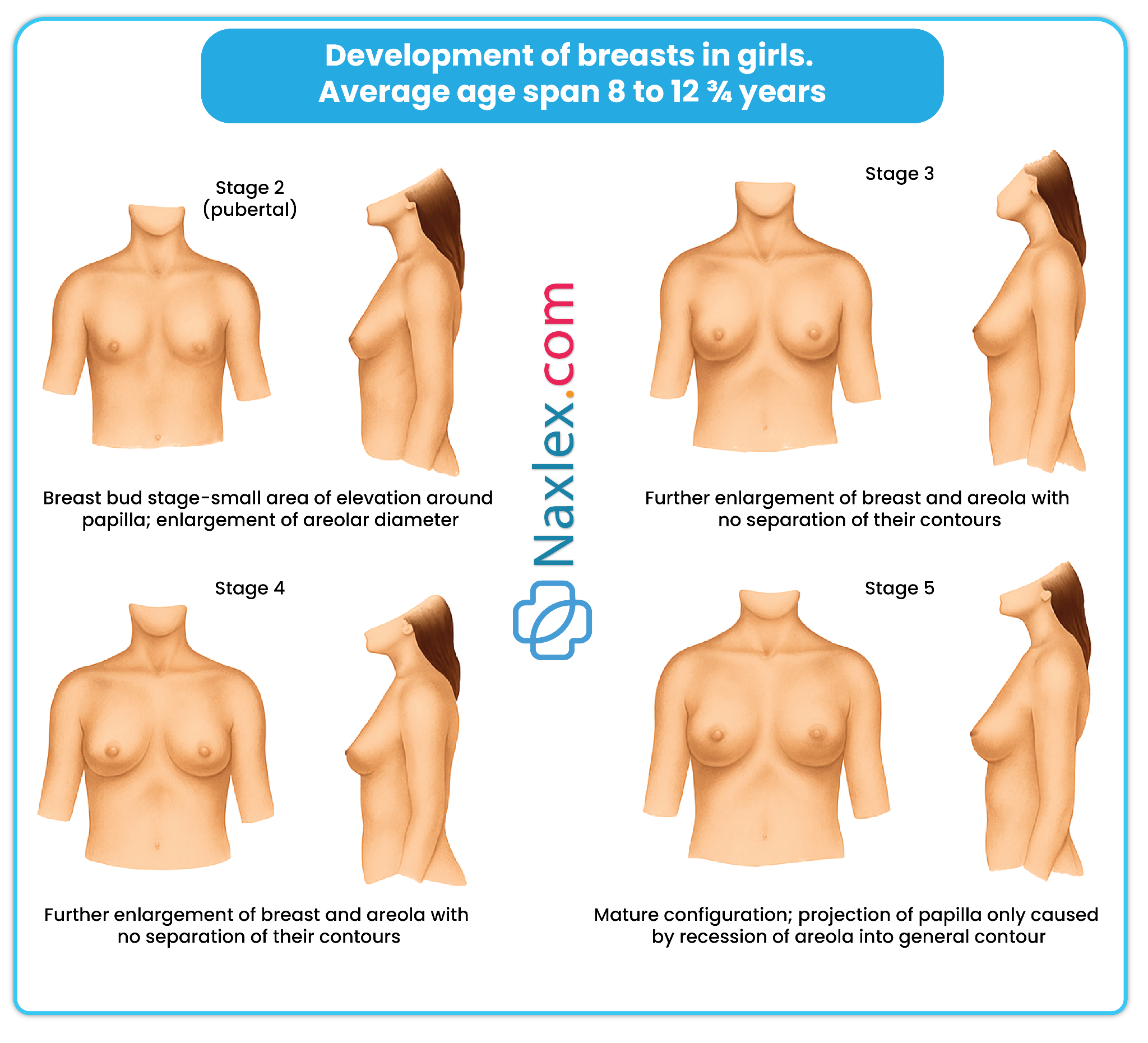
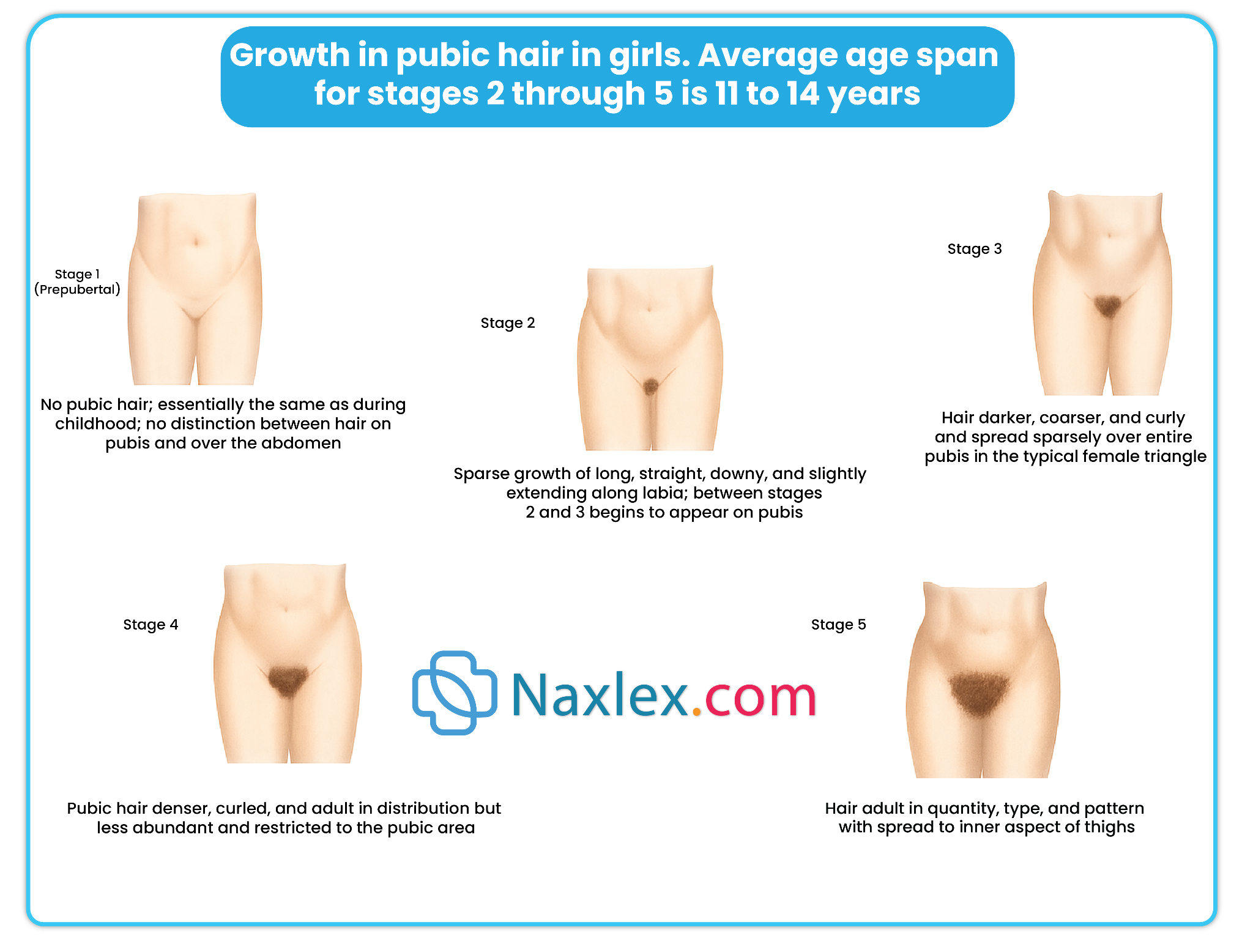
A nurse, who is performing the preliminary physical examination of a female patient, notes the physical changes shown in the figures above. The nurse should interview the child about which of the following information at this time? The young woman’s:
Explanation
Adolescence is a critical developmental period marked by significant physical, emotional, and psychological changes. The physical changes observed, such as breast development (thelarche) and pubic hair growth, indicate that the adolescent girl is in Tanner stage II or III, which is part of early to mid-puberty.
Rationale for correct answer:
4. During this time, it is developmentally appropriate for the nurse to assess how the child is emotionally coping with these bodily changes. Asking about feelings toward her changing body helps the nurse evaluate the girl’s body image and self-esteem, support psychosocial development during this critical period, and identify any misunderstandings or concerns related to puberty and maturation.
Rationale for incorrect answers:
1. While menstruation (menarche) typically follows within 1–2 years after breast development begins, it’s more important initially to explore how the adolescent feels about the physical changes, rather than focusing immediately on menstruation.
2. Asking about sexual activity is inappropriate at this stage unless there are other indicators. Initiating a conversation about sexual activity too early in the developmental process, without first building rapport and assessing emotional readiness, may make the child uncomfortable or guarded.
3. If there is no indication that menarche has occurred, asking about the menstrual cycle would be premature. It’s more important to assess psychosocial adaptation to pubertal changes at this stage.
Take home points
- Puberty is not just physical, it involves emotional and psychological adaptation.
- Early conversations should focus on helping adolescents feel normal, supported, and informed.
- Once trust is established, more sensitive topics like menstruation and sexual health can be addressed.
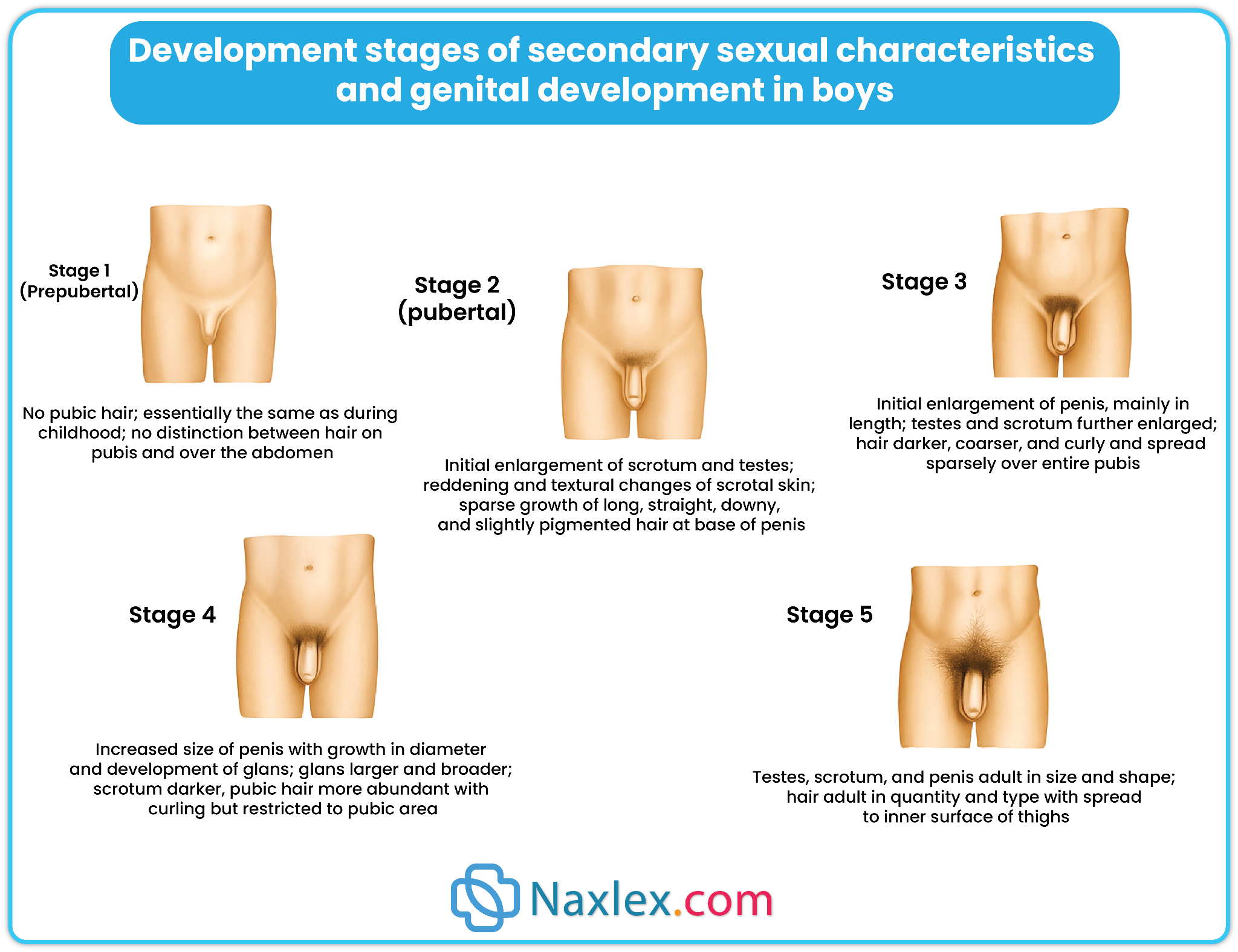
A nurse is providing anticipatory guidance to a young man who is at Tanner stage 2. Which of the following information should the nurse discuss with the young man?
Explanation
Tanner staging is used to track the progression of puberty in adolescents. At each stage, different physiological and psychosocial changes occur, and nurses must provide developmentally appropriate anticipatory guidance to support understanding and adaptation.
Rationale for correct answer:
1. Tanner stage 2 marks the onset of puberty in males, including testicular enlargement and sparse pubic hair. Around this stage, laryngeal growth and early voice changes begin, although the most dramatic deepening typically occurs in Tanner stage 3. Discussing voice changes at this time helps adolescents understand that these changes are normal and expected soon.
Rationale for incorrect answers:
2. Education on sexually transmitted infections are important for later discussions, particularly when sexual activity is disclosed or suspected, but not the focus during early puberty unless indicated.
3. Education about condom use is essential, but it is more relevant in later Tanner stages or when sexual activity begins.
4. Nocturnal emissions typically occur later, often in Tanner stage 3 or 4, not commonly at the onset of puberty.
Take-Home Point:
- At Tanner stage 2, boys experience early changes in the reproductive system, including initial voice changes.
- Anticipatory guidance should focus on helping the adolescent understand and prepare for these normal developmental milestones.
Practice Exercise 2
A nurse is conducting a health screening for a group of 17-year-old adolescents. Which of the following immunizations should the nurse confirm the adolescents have received or are scheduled to receive?
Explanation
Vaccinations in children are a vital public health strategy designed to protect young individuals from serious, often life-threatening infectious diseases. They work by stimulating the child’s immune system to recognize and fight specific pathogens, before the child is exposed to the actual disease.
Rationale for correct answer:
3. The CDC recommends that adolescents receive a booster dose of the meningococcal conjugate vaccine (MenACWY) at age 16 to maintain protection against meningococcal disease during the peak years of risk (16–23 years). This is especially important for those living in close quarters, such as in college dormitories.
Rationale for incorrect answers:
1. Varicella booster is typically given in two doses during early childhood. By age 17, this vaccine is not routinely required unless the adolescent was not previously vaccinated or lacks evidence of immunity.
2. Rotavirus vaccine is an oral vaccine series completed in infancy (before 8 months of age) and is not appropriate for adolescents.
4. Hepatitis A series is recommended in early childhood, especially in high-risk groups. Although catch-up vaccination can be done in adolescence, it is not specifically recommended for all 17-year-olds unless indicated by risk factors or missed in childhood.
Take home points
- Adolescents should receive a MenACWY booster at age 16 to protect against meningococcal disease.
- Additional vaccines may include the HPV series (if not already completed) and annual influenza vaccination.
- Catch-up vaccines are considered based on immunization history, but routine adolescent vaccinations are focused on meningococcal, Tdap, and HPV.
Which of the following are the primary causes of mortality among adolescents in the United States? Select all that apply
Explanation
Among adolescents in the United States (ages 10–19), the leading causes of mortality are largely preventable and related to behavioral and social factors. This age group is vulnerable to risk-taking behaviors, mental health struggles, and exposure to violence. Public health efforts focus on prevention, education, and early intervention to reduce mortality from these leading causes.
Rationale for correct answers:
1. Unintentional injuries, particularly those caused by motor vehicle accidents, are the leading cause of death in adolescents. Contributing factors include inexperience, distracted driving, lack of seatbelt use, and substance use.
2. Suicide ranks as a top 3 cause of death among adolescents. Mental health disorders, bullying, family conflict, and lack of access to mental health services contribute significantly.
4. Homicide is also a leading cause of death, particularly among adolescent males and racial/ethnic minority groups. It is often associated with firearm violence, gang activity, and social disparities.
Rationale for incorrect answers:
3. Congenital anomalies are a leading cause of death in infants and young children, not adolescents. By adolescence, most congenital conditions have been treated or stabilized.
5. While chronic conditions like cancer, asthma, or diabetes can impact quality of life, they are not among the leading causes of mortality in this age group. They account for a smaller proportion of adolescent deaths.
Take home points
- The top causes of adolescent mortality in the U.S. are preventable: injuries, suicide, and homicide.
- Mental health support, violence prevention, and safety education are essential public health priorities.
- Nurses, educators, and healthcare providers must be proactive in screening for risk factors and providing youth-centered support services.
Which of the following immunization booster vaccines should be considered for a 13-year-old adolescent who has completed all recommended routine childhood vaccinations? Select all that apply
Explanation
By age 13, most adolescents have completed their primary childhood vaccination series. However, the early teen years are a critical time for booster doses and the introduction of adolescent-specific vaccines to maintain immunity and protect against emerging risks related to lifestyle and social behavior. The CDC's immunization schedule guides booster recommendations at this stage.
Rationale for correct answers:
2. Adolescents should receive a booster dose of Tdap (tetanus, diphtheria, acellular pertussis) at age 11–12, even if they completed the DTaP series in early childhood. It ensures continued protection against pertussis, which can still pose a significant public health risk in teens.
3. A quadrivalent meningococcal conjugate vaccine (MenACWY) is routinely recommended at age 11–12, with a booster at age 16. This protects against Neisseria meningitidis, which can cause life-threatening meningitis and septicemia during adolescence.
Rationale for incorrect answers:
1. DTaP vaccine (Diphtheria, Tetanus, and acellular Pertussis) is administered in early childhood (under age 7). It contains higher antigen quantities than Tdap and is not recommended as a booster in adolescents.
4. Pneumococcal vaccine is routinely given to infants and high-risk children (e.g., immunocompromised or with chronic illness), not typically to healthy adolescents.
5. Hepatitis B vaccine is part of the routine infant and early childhood series. Catch-up vaccination may be indicated if doses were missed, but not routinely given at age 13 if the series was completed.
6. The Haemophilus influenzae type b vaccine is for infants and toddlers. It is not recommended for healthy adolescents unless they are immunocompromised.
Take home points
- Adolescents at age 13 should receive the Tdap and meningococcal vaccines if not already given at 11–12 years.
- Vaccines like DTaP, Hib, and pneumococcal are specific to early childhood or high-risk groups.
- Adherence to the CDC adolescent immunization schedule ensures lifelong protection and prevents disease resurgence.
An 18-year-old, who is being seen for a routine dental examination, is told that 2 wisdom teeth are impacted. Which of the following complications should the adolescent and his parents be advised may develop? Select all that apply
Explanation
Impacted third molars (wisdom teeth) are common in older adolescents and young adults, often due to insufficient space in the jaw for proper eruption. If left untreated, impacted wisdom teeth can lead to several dental and oral health complications. Early identification and anticipatory guidance can help prevent long-term issues.
Rationale for correct answers:
1. Pain is the most common symptom of impacted wisdom teeth, especially when they press on adjacent structures or become partially erupted, exposing sensitive gum tissue.
2. Fluid-filled cysts can form around the crown of an impacted tooth, potentially causing bone damage or affecting nearby teeth if not removed.
3. Partially erupted or impacted teeth create spaces where bacteria can accumulate, increasing the risk for pericoronitis (gum infection) and abscesses.
4. Impacted wisdom teeth may exert pressure on adjacent teeth, especially if growing at an angle, potentially causing crowding or shifting of teeth, particularly a concern for those who’ve had orthodontic treatment.
Rationale for incorrect answer:
5. Mandibular osteopenia refers to bone density loss in the jaw, which is not associated with impacted wisdom teeth. It is more commonly linked to systemic issues such as osteoporosis, not local dental conditions.
Take home points
- Impacted wisdom teeth can lead to pain, infections, cyst formation, and crowding of other teeth.
- Timely dental evaluation and, if needed, surgical removal can prevent complications.
- Dental professionals should educate families about potential risks and encourage follow-up with an oral surgeon when indicated.
To promote language development in the adolescent, parents, educators, and health-care professionals should encourage teenagers to perform which of the following activities?
Explanation
Adolescence is a key period for refining language skills, including vocabulary, comprehension, critical thinking, and expression. While basic language acquisition occurs in early childhood, adolescence offers opportunities to enhance communication abilities through rich and varied language exposure. Educators, parents, and healthcare providers can support this by promoting activities that deepen reading, listening, and speaking skills.
Rationale for correct answer:
2. Reading exposes adolescents to new vocabulary, diverse sentence structures, complex ideas, and different perspectives. It supports language growth, comprehension, and critical thinking, all of which are essential for academic success and social communication.
Rationale for incorrect answers:
1. While internet use can provide access to information, it often promotes short-form or informal content. Unless directed toward educational or literature-based sites, general surfing does not consistently foster advanced language development.
3. Public speaking improves verbal confidence and articulation, but it requires a foundation in language skills that are best developed through reading and comprehension first. It is more a tool for practicing expression than developing language.
4. While writing promotes expression, letter writing is less common today and does not offer the same depth or variety of exposure to language as reading does. Also, its scope is narrower compared to diverse literature.
Take home points
- Reading diverse literature is the most effective activity to enhance adolescent language development.
- Encouraging regular reading builds vocabulary, comprehension, and critical thinking skills.
- Language development supports academic achievement, interpersonal communication, and future professional success.
The school nurse is providing nutrition education to a group of high school students. Which of the following information should be included in the teaching session? Select all that apply
Explanation
Adolescence is a period of rapid growth and increased nutritional needs, making it essential for teens to develop healthy eating habits. Nutrition education should address common dietary pitfalls, such as excessive sugar intake, reliance on processed foods, and fad diets. The goal is to promote balanced nutrition that supports physical development, cognitive function, and long-term health.
Rationale for correct answers:
1. Energy drinks are high in sugar and caffeine: These beverages can contain excessive amounts of both, which can lead to irritability, anxiety, dehydration, sleep disturbances, and even heart-related side effects. Teens should be advised to limit or avoid energy drinks.
2. Vegan diets are low in complete proteins: While a well-planned vegan diet can be healthy, it may lack complete proteins (those containing all essential amino acids) unless carefully balanced with complementary plant sources (e.g., legumes with grains). Education should focus on how to ensure adequate protein intake.
4. Sodas are high in sugar and empty calories: Soda offers no nutritional benefit, contributing only sugar and calories, which can increase the risk for obesity, dental caries, and metabolic issues. Adolescents often consume large amounts of sugary drinks, so this is a key point to address.
Rationale for incorrect answers:
3. Fast foods are low in fat and cholesterol: This is incorrect. Most fast foods are high in saturated fat, cholesterol, sodium, and calories. Regular consumption is associated with poor cardiovascular health and obesity.
5. Adolescents often need to limit their intake of calories: Most adolescents, due to their growth and activity levels, require increased, not limited caloric intake from nutrient-dense sources. Caloric restriction is typically unnecessary unless there is a specific health issue like obesity under medical supervision.
Take home points
- Teach adolescents to limit high-sugar, high-caffeine, and high-fat foods like sodas and energy drinks.
- Help teens on vegan diets understand how to obtain complete proteins.
- Promote balanced meals rich in fruits, vegetables, lean proteins, and whole grains to support growth and energy needs.
- Encourage critical thinking about food choices rather than restrictive dieting.
A school nurse is providing an education session for parents of high school students. Which of the following information should be included in the teaching session?
Explanation
Adolescents undergo significant physical, emotional, and cognitive development, making health education for both teens and parents essential. One critical aspect of adolescent well-being is ensuring adequate sleep to support growth, learning, and emotional regulation.
Rationale for correct answer:
1. Teens often experience sleep deprivation due to early school start times, academic demands, and social activities. While it's ideal to maintain a consistent sleep schedule, sleeping in on weekends can help compensate for lost sleep during the week. This strategy may improve alertness and mood, though it should not replace consistent, healthy sleep habits throughout the week.
Rationale for incorrect answers:
2. Teens are less likely to get into an automobile accident if others are in the car with them: This is incorrect; having teen passengers increases the risk of motor vehicle accidents due to distraction.
3. Adolescents are especially at high risk for accidental poisonings: While younger children are more prone to accidental poisoning, intentional misuse of substances is more common in adolescents. This item doesn't reflect the most accurate or generalizable concern for parents.
4. Tanning beds are safe as long as the adolescent reapplies sunscreen every ten minutes: Tanning beds are unsafe regardless of sunscreen use and increase the risk of skin cancer.
Take-Home Point:
- Parents should encourage teens to prioritize sleep and allow extra rest when needed, especially on weekends.
- However, promoting consistent sleep hygiene is essential to support long-term physical and mental health.
A student informs the school nurse that she is planning to get a tattoo. Which of the following information should the nurse teach the student about tattoos?
Explanation
Tattoos involve inserting ink into the dermis using needles, which can pose health risks if not done properly. Adolescents may not be fully aware of the long-term consequences or potential complications. The school nurse has a key role in providing factual, nonjudgmental information so students can make informed decisions.
Rationale for correct answer:
4. Tattooing involves puncturing the skin, which can lead to localized skin reactions such as inflammation, keloid formation, granulomas, allergic reactions to tattoo ink (especially red dyes), and infection if aseptic technique is not followed. Additionally, tattooed areas may mask or complicate the detection of skin cancers or other dermatological issues in the future.
Rationale for incorrect answers:
1. Laser removal is possible but not easy, quick, or guaranteed. It often requires multiple painful sessions, may leave scarring, and bleach should never be used on skin since it can cause chemical burns.
2. Red dye, in particular, is commonly associated with allergic reactions and hypersensitivity. There is no evidence that any specific color is safer, and dyes can contain toxic metals or allergens.
3. Tattoo needles and inks must be sterilized and single-use or properly autoclaved. Heat is not a routine method of sterilization during tattooing. If improper technique is used, bacterial, viral (Hepatitis B/C, HIV), or fungal infections can occur.
Take home points
- Tattooing poses health risks including skin lesions, infections, and allergic reactions.
- Tattoos are not easily or completely removed.
- Safe tattooing requires professional settings, sterile equipment, and informed decisions.
- School nurses should encourage informed choices and provide accurate health education before body modifications.
Comprehensive Questions
A school nurse is providing an educational session regarding actions parents can take to assess whether or not their child is engaging in risk-taking behavior. Which of the following actions should the nurse recommend? Select all that apply
Explanation
Adolescents are navigating a period of identity formation and increased independence, which may involve exposure to risky behaviors such as substance use, unsafe sexual activity, or delinquent behavior. Parental engagement, emotional attunement, and proactive communication are essential strategies in detecting early signs of risk-taking.
Rationale for correct answers:
3. Timely, open conversations create a supportive environment where teens feel comfortable sharing. This gives parents a chance to gauge emotional well-being and detect warning signs without appearing intrusive.
4. Establishing clear expectations about plans, locations, and companions reinforces boundaries and helps prevent exposure to risky situations.
5. Sudden shifts in behavior, mood, or peer groups may signal emotional distress or involvement in risky behavior. Early recognition allows for supportive intervention.
Rationale for incorrect answers:
1. Random room searches may damage trust and escalate conflict. While safety concerns are valid, this approach is considered intrusive and should be reserved for situations where there is a serious concern or clear red flag.
2. Although it may seem like an opportunity to gather information, asking the child what drinks and foods were served can feel interrogative and may lead to defensiveness. It's more effective to initiate general conversations about the event and encourage openness without focusing immediately on potential wrongdoing.
Take home points
- Parental monitoring should balance structure with trust and communication.
- Observing behavioral changes and maintaining awareness of a teen's social environment are key to early detection of risky behavior.
- Creating a nonjudgmental space for open dialogue is more effective than surveillance-based strategies.
- School nurses can empower parents with strategies that foster healthy relationships and responsible adolescent behavior.
A school nurse determines that a group of young women is in early adolescence based on which of the following observations? All of the young women:
Explanation
Early adolescence is marked by the onset of puberty, concrete thinking, and a strong desire for peer acceptance. During this phase, young adolescents begin to shift their emotional reliance from family to peers and often exhibit conformity in dress, behavior, and attitudes as they explore identity in a safe, socially acceptable way.
Rationale for correct answer:
2. Dressing in the same style clothes and wearing the same hairdos reflects a classic trait of early adolescence, the desire to conform to peer norms. Imitating clothing, hairstyles, and interests helps adolescents feel accepted and gain a sense of belonging during a period of self-consciousness and identity exploration.
Rationale for incorrect answers:
1. Having decided on which career they wish to pursue is more typical of late adolescence (ages 17–19), when abstract thinking, future planning, and identity formation are more developed.
3. Risk-taking behavior can occur in adolescence, but defying curfew is more characteristic of middle to late adolescence, when testing boundaries and autonomy becomes more pronounced.
4. Experimentation with substances is more common in middle or late adolescence. Bragging about risky behaviors often reflects deeper identity assertion or rebellion than what is typical in early adolescence.
Take home points
- Early adolescence (ages 11–14) is defined by a strong need for peer approval and group conformity, particularly in appearance and behaviors.
- Risk-taking and future planning are more aligned with middle and late adolescence.
- School nurses and educators should recognize these developmental patterns to provide age-appropriate support and guidance.
A school nurse is providing an educational session for parents of high school students. Which of the following actions should the nurse encourage parents to perform in relation to the moral development of their teenagers?
Explanation
Moral development during adolescence involves increased capacity for abstract thinking, ethical reasoning, and forming personal values. Teenagers begin to question societal norms, assess fairness, and make independent moral decisions. Parents play a critical role in shaping their teen’s moral framework by modeling behaviors, encouraging discussion, and reinforcing values through example rather than fear or control.
Rationale for correct answer:
2. Role-model ethical and moral behavior in their everyday lives: Adolescents learn more from what they see than from what they’re told. When parents consistently demonstrate honesty, fairness, empathy, and responsibility, they teach these values naturally and effectively. Teens are highly observant and are influenced by the authenticity and consistency of adult behavior.
Rationale for incorrect answers:
1. Threaten a severe consequence if their child breaks any rules: Harsh threats foster fear and rebellion rather than internalized moral reasoning. This approach may lead teens to hide behavior rather than understand right from wrong.
3. Take their child on a trip to the local jail to show what happens when adults break the law: While intended as a deterrent, such a tactic is generally ineffective and may be perceived as manipulative. Fear-based interventions do not support meaningful moral reflection or ethical decision-making.
4. Require their child to sign an honor pledge never to break house rules or the law: While pledges can affirm values, forcing a teen to sign a document is superficial and unlikely to affect real behavior. Moral growth depends on internal values, not just external commitments.
Take home points
- Adolescents develop morals through observation, dialogue, and critical thinking, not fear or control.
- Parents should model ethical behavior in daily life to support healthy moral development.
- Open, respectful communication and consistency are more effective than punishment or symbolic pledges.
When giving parents guidance for the adolescent years, the nurse would advise the parents to: Select all that apply
Explanation
Adolescence is a time of identity formation, increased independence, and emotional intensity. Effective parenting during this stage requires a balance between guidance and respect for autonomy. The school nurse can support parents by promoting strategies that foster trust, self-esteem, and healthy communication while maintaining appropriate boundaries.
Rationale for correct answers:
1. Adolescents are developing their own identity, values, and interests. Parental acceptance helps build self-confidence and strengthens the parent-child bond.
3. Active listening fosters mutual respect and encourages adolescents to express themselves. Being open to their perspectives promotes healthy communication and reduces conflict.
5. Privacy is essential for developing independence and self-respect. While safety is important, respecting personal space shows trust and supports emotional growth.
6. Adolescents need reassurance that they are loved regardless of mistakes or disagreements. Unconditional support is crucial for emotional security and resilience.
Rationale for incorrect answers:
2. Rigid parenting often leads to rebellion and breakdowns in communication. While rules are necessary, flexibility and negotiation are more effective during adolescence.
4. Micromanaging friendships can damage trust and provoke secrecy. Parents should guide adolescents in making healthy choices but allow them to form their own social relationships.
Take home points
- Adolescents thrive in environments that combine guidance with empathy and respect.
- Listening, accepting individuality, and maintaining trust are key components of positive parenting.
- Unconditional love and privacy foster emotional growth and healthy independence.
- School nurses play an essential role in empowering parents with developmentally appropriate strategies.
In developing a weight-loss plan for an adolescent, which would the nurse include? Select all that apply
Explanation
Adolescent weight management should emphasize sustainable, health-focused habits rather than restrictive dieting. Involving the adolescent in decision-making, promoting healthy family behaviors, and ensuring emotional support are essential components. The school nurse plays a key role in guiding individualized, age-appropriate plans that promote lifelong wellness.
Rationale for correct answers:
2. Eating slowly and placing the fork down between each bite promotes mindful eating, helps recognize satiety cues, and reduces overeating. Slower eating is associated with better digestion and long-term weight control.
3. Family-based physical activity models healthy habits and provides emotional support. It turns exercise into a shared, enjoyable experience, increasing adherence.
4. Specialized programs often include medical, nutritional, and psychological support tailored to adolescents’ developmental needs. They provide structure and professional guidance.
5. Tracking intake and activity increases self-awareness and accountability. It helps identify patterns and triggers that may hinder progress and allows for personalized interventions.
Rationale for incorrect answer:
1. Excluding the adolescent from meal planning may reduce motivation and create resistance. Involving the teen encourages ownership, builds decision-making skills, and increases adherence to healthy eating habits.
Take home points
- Adolescent weight-loss plans should be collaborative, empowering, and family-centered.
- Mindful eating, regular physical activity, and self-monitoring are foundational practices.
- Involving the whole family enhances success and sustainability.
- School nurses can offer referrals and support to ensure a holistic, developmentally appropriate approach to weight management.
Which is associated with early adolescence? Select all that apply
Explanation
Early adolescence (typically ages 10–13) is a transitional phase marked by physical, emotional, and social changes. During this stage, children begin to shift their focus from family to peers, develop abstract thinking in early stages, and experience mood swings. Understanding developmental characteristics of this phase helps school nurses, educators, and parents provide appropriate support and guidance.
Rationale for correct answers:
2. Early adolescents are often torn between the desire for independence and the need for parental security. They may seek autonomy in some areas while still relying on parents for emotional support and decision-making.
4. Peer influence becomes more prominent during early adolescence. Belonging to a group or clique helps adolescents develop social identity, though it may also lead to conformity or experimentation with risky behaviors.
Rationale for incorrect answers:
1. Using scientific reasoning to solve problems is more typical of middle to late adolescence (ages 14–18), when abstract, hypothetical, and logical thinking become more developed as part of Piaget’s formal operational stage.
3. While early adolescents begin to question authority, the solidification of personal moral values and ethical reasoning generally emerges later, during middle or late adolescence, as cognitive maturity increases.
Take home points
- Early adolescents straddle the line between dependence and independence.
- Peer approval is a major driver of behavior during this phase.
- Cognitive and moral development is still emerging and continues into later adolescence.
- School nurses and caregivers should offer consistent support while fostering responsible decision-making and self-expression.
What has the most influence in deterring an adolescent from beginning to drink alcohol?
Explanation
Adolescents are highly impressionable and learn behaviors by observing influential adults in their lives, particularly parents. While peers and cultural factors play a role, parental modeling and communication are the most powerful deterrents or enablers when it comes to initiating behaviors like alcohol use. The school nurse can help parents understand how their actions shape adolescent choices.
Rationale for correct answer:
1. Parental behavior and attitudes toward alcohol strongly impact adolescents. Parents who model responsible behavior, set clear expectations, and maintain open communication are more likely to prevent underage drinking. Conversely, permissive or heavy parental drinking increases the likelihood of adolescent alcohol use.
Rationale for incorrect answers:
2. While peer pressure is a well-known influence, it typically affects continued or binge drinking more than initial decision-making. A solid foundation from parents can buffer peer influence.
3. Cultural norms can shape general attitudes toward alcohol, but they have less immediate influence than family modeling, especially when teens are still forming their identity.
4. Religious teachings may discourage alcohol use, but unless these values are reinforced within the home, they may not strongly deter adolescent behavior. Internalization of religious values often depends on parental influence.
Take home points
- Parental behavior is the most significant factor in preventing underage drinking.
- Open communication, clear boundaries, and consistent modeling are key deterrents.
- Peer influence and cultural or religious values matter—but are secondary to family modeling.
- School nurses can support prevention by educating families on the power of parental example.
A school nurse is concerned about the lack of physical activity in the high school. The nurse has gathered data related to appropriate activity from the document Healthy People 2010: Understanding and Improving Health. Which recommendation for physical activity should the school nurse recommend for this age group?
Explanation
The Healthy People initiative provides evidence-based guidelines to promote health and prevent disease. For adolescents, regular physical activity supports physical growth, mental health, and academic performance. The school nurse plays a crucial role in advocating for school-wide wellness policies and educating students and families about national health recommendations.
Rationale for correct answer:
1. Adolescents should get at least 60 minutes of physical activity daily: This aligns with the Healthy People 2010 (and continued in 2020 and 2030) recommendations. The daily 60 minutes should include a mix of moderate to vigorous physical activity, such as aerobic, muscle-strengthening, and bone-strengthening exercises.
Rationale for incorrect answers:
2. High school students should be required to participate in physical education classes: While physical education is important, Healthy People 2010 focuses on daily activity rather than school mandates. PE classes may not occur daily or provide sufficient activity levels.
3. Teenagers should be exercising at least 30 minutes three to five times per week: This underestimates the recommendation. Sixty minutes daily is the gold standard for optimal physical and mental health benefits in adolescence.
4. Adolescents should be exercising every day for at least 15 minutes: Fifteen minutes is insufficient. Brief periods of activity are better than none, but they do not meet national guidelines for cardiovascular or musculoskeletal health.
Take home points
- Adolescents need at least 60 minutes of moderate-to-vigorous physical activity daily.
- Activity should be varied and enjoyable to encourage lifelong fitness habits.
- School nurses should advocate for policies and environments that promote daily movement.
- Educating students and families on physical activity guidelines supports long-term health and academic success.
A school nurse is teaching adolescents about oral care. Which point should the nurse address with the students?
Explanation
Oral health is a key component of overall adolescent health. During this developmental stage, hormonal changes, dietary habits, and inconsistent hygiene can increase the risk of dental problems such as cavities, gingivitis, and orthodontic issues. The school nurse plays an important role in reinforcing proper dental hygiene habits and preventive care practices.
Rationale for correct answer:
1. The adolescent should floss daily, brush teeth twice a day, and see the dentist two times per year:
This recommendation reflects current guidelines from dental health authorities like the American Dental Association (ADA). Brushing twice daily and flossing once per day help prevent plaque buildup and gum disease, while semi-annual dental visits support early detection and professional cleaning.
Rationale for incorrect answers:
2. The adolescent should brush once a day and see the dentist twice per year: Brushing only once per day is inadequate for preventing plaque accumulation and tooth decay. Twice-daily brushing is the standard recommendation.
3. The adolescent should see the dentist once a year and brush teeth twice a day: Although brushing twice daily is correct, annual dental visits may not be sufficient for monitoring oral health or managing orthodontic and hygiene concerns.
4. The adolescent should floss daily, brush teeth twice a day, and see the dentist once a year: This option is nearly correct but falls short by recommending only one dental visit per year. Two visits allow for more consistent monitoring and preventive care.
Take home points
- Adolescents should brush twice daily, floss once daily, and see the dentist every 6 months.
- Good oral hygiene prevents dental caries, gum disease, and bad breath.
- Regular dental checkups help detect problems early and reinforce positive habits.
- School nurses can support oral health by teaching proper techniques and promoting preventive care access.
A nurse is caring for a 14-year-old client who was admitted for dehydration from nausea and vomiting. The client is ready for discharge and says to the nurse, “I will tell you something, but you can’t tell anyone.” Which nursing action is most appropriate?
Explanation
Adolescents often seek trust and privacy when sharing sensitive information with healthcare providers. However, nurses must balance confidentiality with legal and ethical obligations, especially if a client’s disclosure involves self-harm, abuse, or danger to others. Establishing clear boundaries before the client discloses ensures both therapeutic rapport and protection.
Rationale for correct answer:
2. Telling the client that the information will be confidential unless it is life threatening or harmful sets appropriate limits on confidentiality, aligns with professional ethics, and ensures the adolescent is aware of mandatory reporting duties. It maintains trust while prioritizing client safety.
Rationale for incorrect answers:
1. Promising the client that the information will not be told to anyone due to Health Insurance Portability and Accountability Act (HIPAA) laws is misleading. HIPAA does protect client privacy, but it allows and requires disclosure when there is concern for safety (e.g., suicidal ideation, abuse, or threats). Making a blanket promise can compromise care and violate mandatory reporting laws.
3. Telling the client that only the physician will be told; otherwise the information will remain confidential narrows the scope of disclosure too much. Other members of the care team (e.g., nurses, mental health professionals, social workers) may need to be involved depending on the nature of the concern. Limiting disclosure to the physician may delay appropriate intervention.
4. Asking the client to tell a social worker who then can follow through with the information if it is concerning deflects the responsibility may cause the adolescent to shut down or feel dismissed. The nurse should first address the client’s concern and then, if necessary, involve appropriate team members.
Take home points
- Nurses should clarify the limits of confidentiality with adolescent clients before sensitive disclosures.
- Information that indicates danger to self or others must be reported and followed up.
- Trust can still be maintained when nurses are honest about their professional responsibilities.
- Clear, compassionate communication helps adolescents feel respected and safe.
A school nurse is teaching adolescents about sexual activity and how the human papilloma virus (HPV) is contracted and prevented. Which statements should the nurse include when teaching about HPV? Select all that apply
Explanation
Human papillomavirus (HPV) is the most common sexually transmitted infection globally. Some strains cause genital warts, while others are linked to cancers such as cervical, throat, and anal cancer. Teaching adolescents accurate information helps reduce risk, destigmatize preventive practices like vaccination, and promote safer behaviors.
Rationale for correct answers:
1. HPV can be transmitted through oral-genital contact, potentially leading to oropharyngeal cancers. Many adolescents are unaware that oral sex carries STI risks.
3. According to the CDC, nearly all sexually active people will contract HPV at some point unless vaccinated.
4. Vaginal intercourse is a primary route of HPV transmission.
5. Anal sex is another high-risk activity for HPV transmission and is associated with anal cancer risk.
Rationale for incorrect answers:
2. HPV is not transmitted through casual contact or inanimate objects like toilet seats. It requires skin-to-skin contact, usually in a sexual context.
6. While condom use reduces the risk of HPV transmission, it does not fully prevent it because HPV can infect areas not covered by a condom such as the scrotum, vulva, or perineum.
Take home points
- HPV is extremely common and can be transmitted through vaginal, anal, and oral sex.
- Condoms reduce but do not eliminate the risk of HPV infection.
- Vaccination before sexual activity is the most effective method of prevention.
- School nurses should provide accurate, age-appropriate education to reduce stigma and support informed decision-making.
A school nurse is presenting the latest information related to driving under the influence (DUI) of alcohol to high school students. The nurse informs the students that all 50 states and the District of Columbia have laws defining it as a crime to drive with a blood alcohol concentration (BAC) at or above a prescribed level of:
Explanation
Driving Under the Influence (DUI) refers to the criminal offense of operating a motor vehicle while impaired by alcohol, illicit drugs, prescription medications, or any substance that affects safe driving ability.
Rationale for correct answer:
3. All 50 U.S. states and the District of Columbia have made it illegal to operate a motor vehicle with a blood alcohol concentration (BAC) of 0.08% or higher. This legal limit applies to drivers aged 21 and older. For drivers under 21, zero tolerance laws typically apply, meaning any detectable alcohol can be grounds for DUI charges.
Rationale for correct answers:
1. 0.1%: This was an older standard in some states decades ago, but it is no longer the legal threshold.
2. 1.0%: This is extremely high and unsafe, far beyond the legal limit. Driving at this level could lead to severe impairment or unconsciousness.
4. 0.8%: The physical changes observed, such as breast development (thelarche) and pubic hair growth, indicate that the adolescent girl is in Tanner stage II or III, which is part of early to mid-puberty.
Take home points
- 0.08% BAC is the legal limit for DUI in the U.S. for adults 21 and older.
- For teens and young adults under 21, any alcohol use while driving is illegal.
- Driving under the influence significantly impairs judgment, reaction time, and coordination—raising the risk of crashes and fatalities.
- Always plan for a designated driver, rideshare, or public transportation if drinking.
The American Academy of Pediatrics lists safety tips for adolescents who drive a motor vehicle. When teaching a group of parents with teenagers, which statement should a nurse include in the teaching?
Explanation
The American Academy of Pediatrics (AAP) emphasizes that teen drivers are at a significantly higher risk of motor vehicle accidents. As adolescents begin driving, their risk of motor vehicle accidents increases significantly due to inexperience, distractions, and developmental factors.
Rationale for correct answer:
3. Having other teenage passengers increases that risk substantially due to peer distraction, pressure, and risk-taking behavior. Therefore, limiting or avoiding the transport of other teens by newly licensed teenage drivers is a critical safety recommendation.
Rationale for incorrect answers:
1. Nighttime driving is riskier for teens regardless of fatigue due to reduced visibility and increased likelihood of impaired or drowsy drivers on the road. Most states restrict nighttime driving for newly licensed teens.
2. Lack of experience is a risk factor, not a motivator. In fact, teens often overestimate their driving skills and may not seek enough practice on their own.
4. Teens are less likely to wear seat belts than older drivers. While reminders are helpful, this statement downplays the fact that consistent seatbelt use among teens is still a concern.
Take home points
- Teen drivers should avoid carrying peer passengers early in their driving experience.
- Parental supervision, graduated licensing laws, and clear household rules play a vital role in teen driver safety.
- Always enforce seatbelt use, limit nighttime driving, and avoid distractions such as phones or music while driving.
A nurse is preparing to consult with an adolescent being seen in a clinic. Which principle is most important for the nurse to consider when interacting with the client?
Explanation
Adolescents often experience emotional vulnerability and heightened sensitivity during health encounters. Establishing trust and open communication is essential for effective nurse-client interaction in this age group.
Rationale for correct answer:
3. Adolescents are often testing boundaries, values, and identities. When they confide in a nurse or other health professional, expressions of shock, surprise, or judgment can shut down communication and create distrust. Maintaining a calm, accepting, and professional demeanor encourages open dialogue, which is essential for effective care and rapport building with teens.
Rationale for incorrect answers:
1. Avoid a straightforward approach because adolescents cannot fully process their health needs: Adolescents can process health information, especially when it's presented clearly and respectfully. Avoiding directness may come across as patronizing.
2. Reassure the teenager that it is unnecessary to answer all questions; however, before the examination is complete the client will need to provide all information: This can be confusing or seem coercive. It's better to explain why questions are asked and respect confidentiality while encouraging honest responses.
4. Because adolescents want to be treated as adults, the same cognitive information should be provided as if they were an adult: While teens want to be respected, their cognitive development is still maturing. Health information should be adapted to their developmental level, ensuring it's understandable and relevant without overwhelming them.
Take home points
- Build trust with adolescents through a nonjudgmental attitude and respectful, age-appropriate communication.
- Confidentiality and emotional safety are critical for effective interactions.
- Stay neutral and calm, especially when teens discuss sensitive or unexpected topics.
A nurse in a clinic is caring for a 16-year-old mother and her baby. The mother seems anxious about her new role as a mother. She looks at the nurse and says, “I don’t think I can do this.” What are some conclusions that the nurse might make about this situation? Select all that apply
Explanation
Teenage mothers often face significant emotional, social, and developmental challenges in adjusting to their new maternal role. Nurses play a critical role in assessing for signs of distress and providing supportive interventions.
Rationale for correct answers:
1. Adolescents are at increased risk for postpartum depression due to lack of support, immaturity, and the stress of early motherhood. The mother’s statement, “I don’t think I can do this,” suggests possible emotional distress, low self-efficacy, or depression.
2. Her statement also raises concern that she may feel overwhelmed or helpless, which can, in some cases, place the infant at risk for neglect or abandonment, especially in the absence of support.
3. Safe Haven laws allow a parent to legally relinquish a newborn at designated locations such as hospitals or fire stations without facing prosecution. Offering this information ensures the safety of both the infant and the mother, and supports her in making safe, informed decisions.
Rationale for incorrect answers:
4. This is blaming the mother and assumes she received comprehensive prenatal education, which is often not the case with adolescent mothers. It doesn’t acknowledge her current need for support.
5. Encouraging adoption without exploring the mother's feelings and support system is inappropriate and premature. The nurse's role is to provide emotional support and resources, not to make assumptions or decisions for the client.
Take home points
- Adolescents may face unique emotional and developmental challenges in early motherhood.
- Nurses must be alert to signs of postpartum depression or crisis.
- Supportive interventions should focus on nonjudgmental counseling, referrals, and resources (e.g., mental health services, parenting programs, Safe Haven options).
- Avoid making value-laden assumptions or decisions for adolescent clients—center the care on empathy, safety, and empowerment.
Exams on Growth And Development In Adolescents
Custom Exams
Login to Create a Quiz
Click here to loginLessons
 Naxlex
Just Now
Naxlex
Just Now
Notes Highlighting is available once you sign in. Login Here.
Objectives
- Analyze the physiologic changes of puberty, including the sequence of Tanner staging and the adolescent growth spurt.
- Evaluate the psychosocial stage of Identity vs. Role Confusion, identifying how adolescents navigate peer influence and self-discovery.
- Identify cognitive milestones in Piaget’s Formal Operations stage, such as abstract reasoning and hypothetical-deductive thinking.
- Discuss the development of value autonomy and the shift toward internalized moral standards and independent decision-making.
- Assess the impact of social environments, including the family, peer groups, and school, on adolescent health outcomes.
- Formulate screening strategies for high-risk behaviors, including substance use, unprotected sexual activity, and dietary disturbances.
- Recognize early clinical indicators of mental health challenges, such as depression, suicidal ideation, and sleep deprivation.
- Prioritize inclusive care strategies for special populations, including LGBTQ+, minority, and rural adolescents.
Introduction
- Adolescence, a transitional phase from childhood to adulthood, typically spans the second decade of life (approximately ages 11 to 20).
- It is not merely a period of physical maturation but a complex journey of self-discovery and identity formation.
- This stage is marked by the onset of puberty, the emergence of formal operational thought, and the profound shift from a family-centric social world to a peer-dominated one.
- The nursing role during adolescence is pivotal, focusing on health promotion, risk reduction, and providing a safe, confidential space for open dialogue.
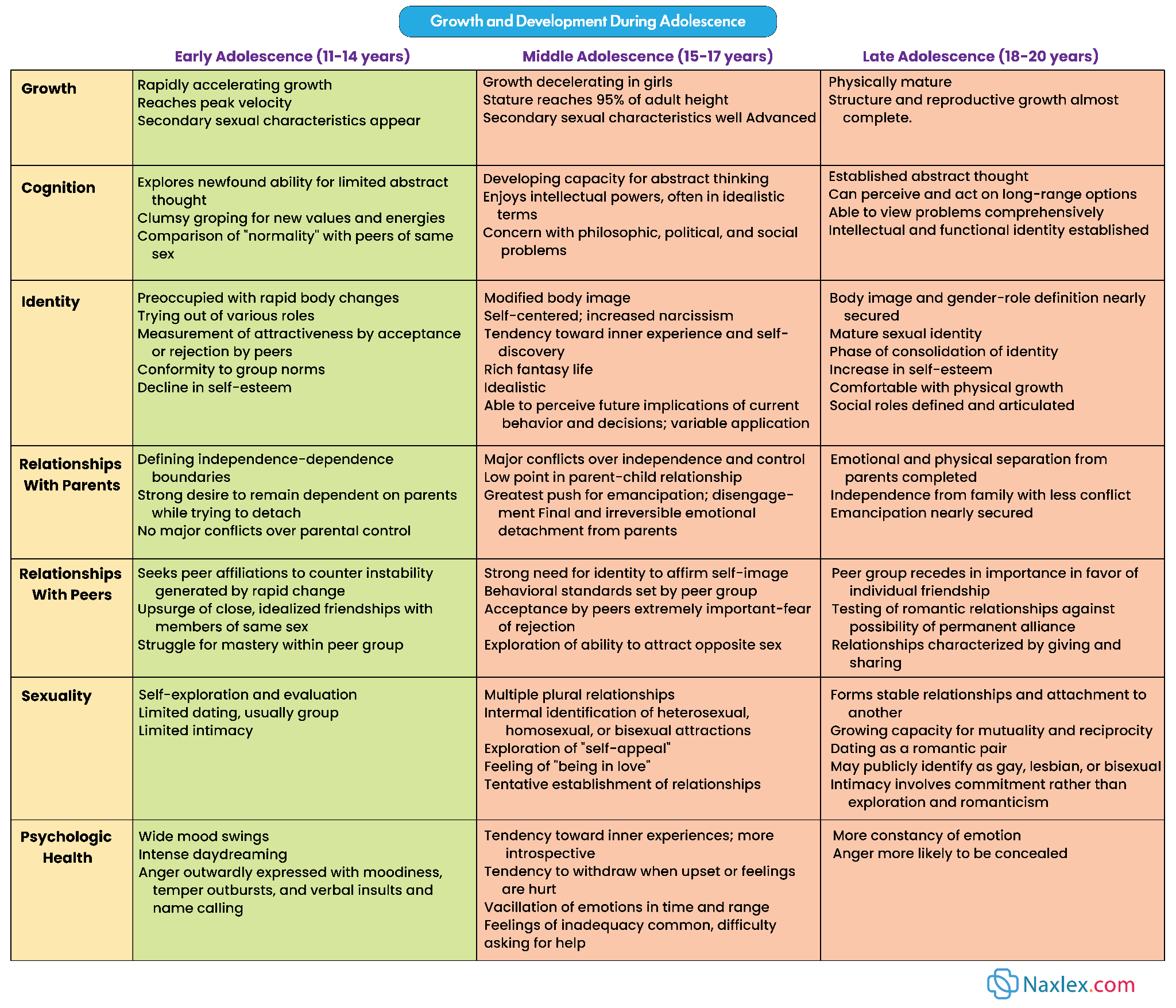
Promoting Optimum Growth And Development
1.1. Biologic Development
- Neuroendocrine Events of Puberty: The initiation of puberty is a cascade of hormonal events. It begins when the hypothalamus, a region in the brain, matures and starts releasing pulses of gonadotropin-releasing hormone (GnRH). This hormone then travels to the anterior pituitary gland, which in turn secretes two key gonadotropins: follicle-stimulating hormone (FSH) and luteinizing hormone (LH). These gonadotropins are the primary drivers of sexual maturation, targeting the gonads (ovaries and testes).

- Changes in Reproductive Hormones:
- Males: In boys, LH stimulates the Leydig cells in the testes to produce testosterone, the primary male androgen. Testosterone is responsible for the development of secondary sexual characteristics, such as muscle mass increase, voice deepening, and body hair growth. FSH, along with testosterone, stimulates the Sertoli cells in the seminiferous tubules to initiate spermatogenesis (sperm production).
- Females: In girls, FSH and LH stimulate the ovaries to produce estrogen and progesterone. Estrogen is responsible for breast development, widening of the hips, and the maturation of the female reproductive organs. Progesterone, produced after ovulation, prepares the uterus for a potential pregnancy. The cyclical interaction of these hormones culminates in the menstrual cycle.
- Pubertal Sexual Maturation (Tanner Staging): Pubertal development is systematically measured using the Tanner stages (or Sexual Maturity Rating, SMR), a five-stage scale.
- Girls:
- Stage 1 (Prepubertal): No breast development; no pubic hair.
- Stage 2: Thelarche (breast budding) is the first sign, usually around age 10-11. Pubic hair begins to appear.
- Stage 3: Breasts and areolae continue to grow. Pubic hair becomes darker and more coarse.
- Stage 4: The areolae and nipples form a secondary mound above the breast tissue. Pubic hair is more dense but does not yet extend to the inner thighs.
- Stage 5 (Mature): Adult breast size and contour. Pubic hair has an adult distribution, extending to the inner thighs. Menarche (first menstruation) typically occurs in Tanner Stage 3 or 4, about two years after the onset of breast budding.
- Girls:
- Boys:
- Stage 1 (Prepubertal): Testicular volume less than 4 ml. No pubic hair.
- Stage 2: Testicular enlargement (volume > 4 ml or long axis > 2.5 cm) is the first sign, usually around age 11-12. A small amount of pubic hair at the base of the penis.
- Stage 3: Testes continue to grow, and the penis begins to lengthen. Pubic hair becomes more abundant and curly.
- Stage 4: Further testicular and penile growth. Glans penis develops. Pubic hair fills the pubic triangle.
- Stage 5 (Mature): Adult size and proportion of genitalia. Pubic hair has an adult pattern, extending to the medial surface of the thighs. Spermarche (first ejaculation) occurs around age 13-14.
- Physical Growth During Puberty:
- Growth Spurt: A rapid acceleration in height and weight. Girls typically experience their peak height velocity around age 11.5, reaching their adult height by age 16-17. Boys' growth spurt is later and more intense, with peak height velocity around age 13.5, and they continue to grow until around age 18-20.
- Nursing Insight: It is crucial for nurses to understand the normal variations in pubertal timing. Both early and late maturers may experience psychological distress, such as body image dissatisfaction, low self-esteem, or social anxiety. Providing education and reassurance can mitigate these concerns. A nurse can use a growth chart to show a patient that their growth trajectory is within the normal range.
1.2. Psychosocial Development
- Identity Development (Erikson's Stage: Identity vs. Role Confusion): This is the central task of adolescence. Identity is a sense of self, encompassing one's values, beliefs, and life goals. Adolescents explore different roles (e.g., student, athlete, artist), beliefs (e.g., religious, political), and relationships to form a coherent sense of who they are.
- Role confusion occurs when an adolescent is unable to synthesize these various aspects, leading to a fragmented sense of self.
- Development of Autonomy: The quest for independence is a hallmark of this stage. It manifests in three forms:
- Emotional Autonomy: The adolescent's ability to emotionally detach from their parents and rely more on themselves and peers for support.
- Behavioral Autonomy: The capacity to make independent decisions and act on them.
- Value Autonomy: The development of a personal set of values and beliefs separate from their parents'.
- Sexuality: Adolescent sexuality is a complex interplay of biology and psychology. It involves not only physical maturation but also the development of a sexual identity, including sexual orientation and gender identity. This is a time of exploration, experimentation, and forming intimate relationships.
- Nursing Insight: Confidentiality is paramount when discussing sexual health with adolescents. Use non-judgmental, open-ended questions to facilitate communication.
- Intimacy: Moving beyond the superficial friendships of childhood, adolescents develop a capacity for genuine intimacy. This involves sharing personal thoughts, feelings, and secrets, fostering deep emotional connections with peers and romantic partners. This ability to form close bonds is a crucial precursor to adult relationships.
1.3. Cognitive Development (Piaget's Formal Operational Thought)
- Adolescent Concepts of Self: With the onset of formal operational thought, adolescents can think abstractly and hypothetically. They can now conceptualize their own thoughts and feelings, and they begin to understand that their self-concept is not fixed but can be changed. They can consider multiple possibilities and imagine future outcomes.
- Changes in Social Cognition: This advanced cognitive ability influences how adolescents perceive themselves and others.
- Imaginary Audience: The adolescent's belief that they are the focus of everyone's attention and that others are constantly scrutinizing their appearance and behavior. This can lead to self-consciousness and a strong desire to conform.
- Personal Fable: A sense of uniqueness and invincibility. This belief that "it won't happen to me" can lead to risk-taking behaviors, such as driving recklessly, engaging in unprotected sex, or experimenting with drugs.
- Nursing Insight: When educating adolescents about risks, it is more effective to frame the information in a way that resonates with their immediate concerns (e.g., "Drinking alcohol can make you look uncool and embarrass yourself on social media") rather than focusing solely on long-term consequences.
1.4. Development of Value Autonomy
- Moral Development (Kohlberg's Postconventional Stage): While many adolescents remain in the Conventional Stage, some begin to transition to the Postconventional Stage. They move beyond a morality based on external rules and the desire for social approval. They start to define moral principles based on universal ethical principles, such as justice, human rights, and the greater good.
- Spiritual Development: The capacity for abstract thought allows adolescents to explore existential questions about life, death, and purpose. They may question their family's religious beliefs or seek their own spiritual path. This can be a time of intense personal and spiritual growth.
1.5. Social Environments
- Families: The family unit remains the primary source of love, support, and guidance. However, the adolescent's drive for autonomy can lead to increased conflict. A healthy family environment provides a balance between structure and independence, allowing for open communication and a sense of belonging.
- Peer Groups: As adolescents spend more time with friends, the peer group becomes increasingly influential. Peer relationships are essential for identity formation, social skill development, and validation. The desire for peer acceptance is a powerful motivator, sometimes leading to both positive and negative behaviors.
- Schools: School is a central part of an adolescent's life. It provides not only academic instruction but also a vital social environment. Success or failure in school can significantly impact self-esteem and future opportunities.
- Work: Many adolescents take on part-time jobs. This can teach them responsibility, money management, and a sense of independence. However, working too many hours can interfere with schoolwork, sleep, and social activities.
- Technology as a Social Environment: The internet, social media, and gaming have revolutionized adolescent social life.
- Pros: They provide opportunities for connection, self-expression, and access to information.
- Cons: They also present risks such as cyberbullying, social comparison, body image concerns, and exposure to harmful content.
- Nursing Insight: Assess an adolescent's technology use and screen for signs of digital dependency or negative online experiences.
Promoting Optimum Health During Adolescence
1.1. Adolescents’ Perspectives on Health Adolescents' health beliefs are often rooted in the present, not the future. They are more concerned with immediate issues like appearance, physical attractiveness, peer acceptance, and feeling good in the short term. Nurses must frame health discussions in a way that aligns with these priorities to be effective. For example, discussing the link between good nutrition and clear skin may be more impactful than focusing on long-term heart disease prevention.
1.2. Factors that Promote Adolescent Health and Well-Being
- Contexts for Adolescent Health Promotion:
- Schools: Offer health education curricula on topics such as nutrition, sexual health, substance use, and mental health. They also provide opportunities for physical activity and social interaction.
- School-Based and School-Linked Health Services: These clinics provide confidential, accessible, and affordable healthcare, reducing barriers to care. They can offer immunizations, STI testing, contraception, and mental health counseling.
- Communities: Safe neighborhoods, parks, after-school programs, and youth centers provide adolescents with safe, structured environments and opportunities for positive social engagement.
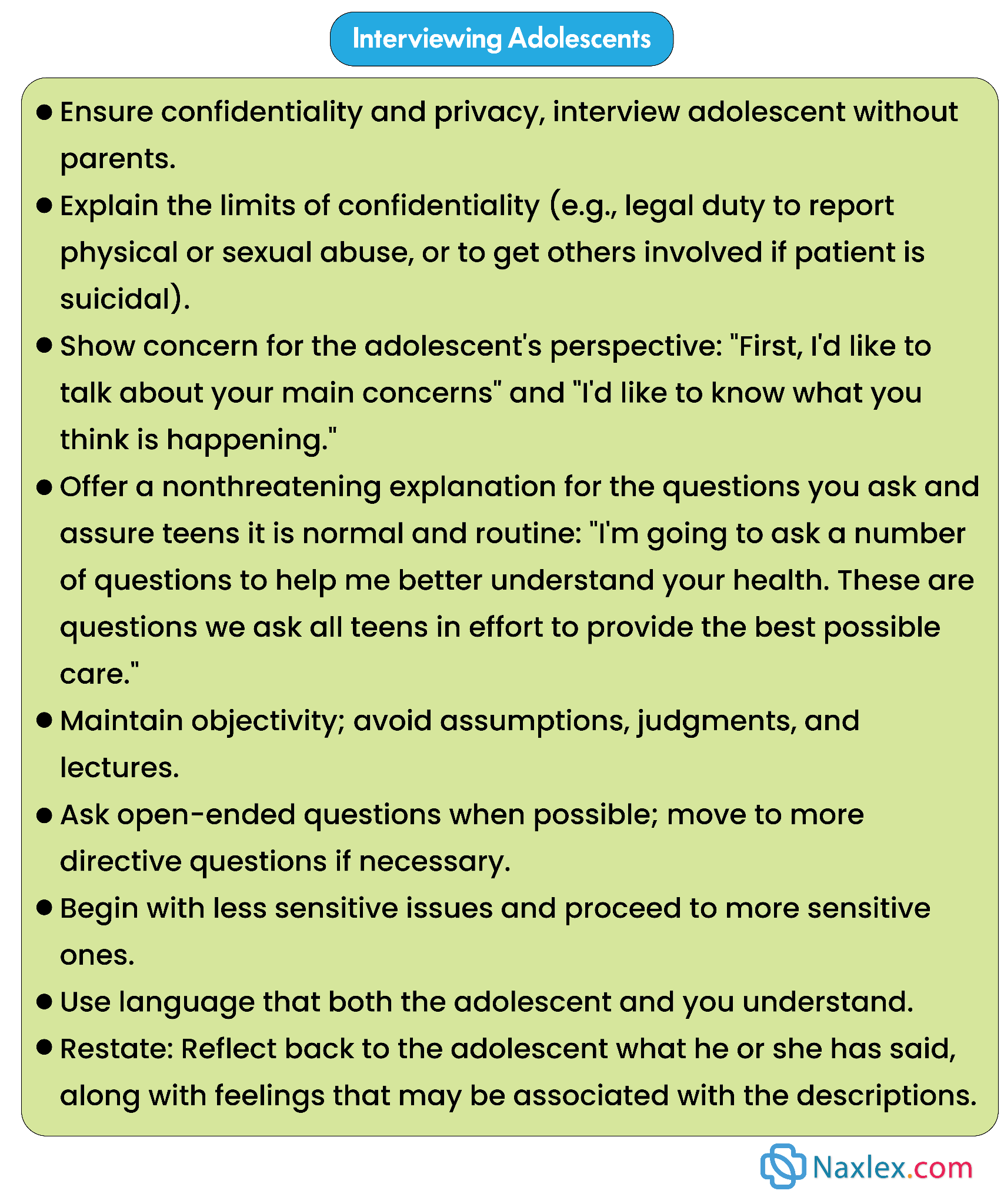
- Health Care Settings: Nurses must create a youth-friendly environment that is confidential, non-judgmental, and respectful of the adolescent's autonomy. Using tools like the HEEADSSS assessment can facilitate comprehensive health discussions.
- The Internet and Other Technologies: Digital platforms can be used for health promotion, such as providing reliable health information or connecting adolescents to mental health resources. However, it's crucial to guide adolescents to credible sources.
- Adolescent Health Screening:
- Routine Physicals: Annually, to monitor growth, vital signs, BMI, and pubertal development.
- Psychosocial Screening: Use validated tools to screen for depression (e.g., PHQ-A), anxiety, substance use (e.g., CRAFFT), and suicidal ideation.
- Immunizations: Ensure adolescents are up-to-date on all recommended vaccines, including Tdap, HPV, Meningococcal (both MCV4 and MenB), and influenza.
- Vision and Hearing Screening: To identify and address potential learning or social challenges.
- Hyperlipidemia and Hypertension: Screen adolescents with a family history or who are overweight/obese.
1.3. Health Concerns of Adolescence
Some practical suggestions for addressing the adolescent’s individual health care needs are found in the following mnemonic:
H—Home environment (“Where do you stay? Who else lives with you?”)
E—Education/employment (congruent with age/developmental stage?)
E—Eating/nutrition/elimination
A—Activities, physical activities (“What do you do for fun? Who do
you do this with?”)
D—Drugs (tobacco, alcohol, illicit substance use, caffeine)
S- Sexuality (gender orientation, sexual debut, use of contraception)
S- Suicide/depression
S- Safety (seat belt, texting, sports equipment, gun in the home)
1.3.1. Parenting and Family Adjustment
Adolescence is a time of shifting family dynamics. The adolescent's push for independence often clashes with the parents' desire for control, leading to increased conflict and communication breakdowns. This "generation gap" is a normal part of development.
- Key Challenges:
- Autonomy vs. Control: Adolescents need to make their own decisions to develop a sense of self-efficacy, while parents still have a responsibility to keep them safe. This can lead to arguments over curfews, friends, social media use, and schoolwork.
- Communication: As adolescents become more private, they may communicate less with their parents. They may feel that their parents don't understand them, while parents may feel alienated and worried.
- Family Structure Changes: Divorce, remarriage, or the death of a family member can be particularly difficult for adolescents who are already navigating identity issues.
- Nursing Role:
- Provide Anticipatory Guidance: Educate both adolescents and parents that this conflict is a normal and necessary part of the developmental process.
- Promote Communication Skills: Teach families strategies for "I" statements, active listening, and finding common ground. Encourage family meetings to discuss rules and expectations collaboratively.
- Offer Referrals: Suggest family therapy or parent support groups for families struggling with chronic or intense conflict.
1.3.2. Psychosocial Adjustment
The intense physical, hormonal, and social changes of adolescence make it a period of heightened risk for mental health issues.
- Key Challenges:
- Body Image Dissatisfaction: Puberty can be a difficult time for self-esteem. Comparing one's body to idealized images on social media and in the media can lead to feelings of inadequacy, body dysmorphia, and a higher risk of developing eating disorders.
- Anxiety and Depression: Academic pressure, social expectations, family conflicts, and hormonal fluctuations can contribute to significant anxiety and depressive symptoms.
- Self-Esteem: A sense of self-worth is often tied to academic performance, physical appearance, and peer acceptance. Low self-esteem can lead to social withdrawal, substance use, and poor academic performance.
- Nursing Role:
- Screen Routinely: Use validated screening tools (e.g., PHQ-A for depression, GAD-7 for anxiety) at every health visit.
- Create a Safe Environment: Ensure confidentiality and use open-ended, non-judgmental questions to encourage adolescents to share their feelings.
- Provide Psychoeducation: Educate adolescents about the link between thoughts, feelings, and behaviors. Teach coping skills like mindfulness, deep breathing, and positive self-talk.
- Referrals: When symptoms are severe or persistent, provide referrals to mental health professionals, such as a school counselor, psychologist, or psychiatrist.
1.3.3. Intentional and Unintentional Injury
Injury is the leading cause of death and disability for adolescents. The combination of a developing brain (specifically the prefrontal cortex, which is responsible for impulse control and risk assessment) and a sense of invincibility makes this age group particularly vulnerable.
- Key Challenges:
- Unintentional Injuries: Motor vehicle crashes are the leading cause. Other significant risks include drowning, falls, and sports-related injuries.
- Intentional Injuries: Suicide and homicide are major concerns. Bullying, violence, and access to weapons all contribute to this risk.
- Nursing Role:
- Anticipatory Guidance: Provide comprehensive education on injury prevention. For new drivers, discuss the importance of seatbelts, not texting while driving, and the dangers of impaired driving.
- Sports Safety: Educate on proper protective gear (e.g., helmets, mouthguards) and the signs and symptoms of concussions.
- Screen for Violence and Abuse: Ask direct questions about bullying, exposure to violence at home or in the community, and access to weapons.
- Suicide Risk Assessment: Use a standardized suicide risk assessment tool and have a clear protocol for intervention and referral to an emergency room or a crisis hotline.
1.3.4. Dietary Habits and Eating Disorders
Adolescent dietary habits are often characterized by inconsistency, a high intake of fast food and sugary drinks, and a tendency to skip meals. This can lead to nutritional deficiencies or, conversely, obesity.
- Key Challenges:
- Poor Nutrition: Skipping breakfast, consuming excessive amounts of processed foods, and high-sugar beverages. This can lead to iron deficiency anemia, dental caries, and sub-optimal growth.
- Obesity: The prevalence of adolescent obesity has risen dramatically. Obesity is a major risk factor for developing hypertension, type 2 diabetes, and hyperlipidemia.
- Eating Disorders: Anorexia nervosa, bulimia nervosa, and binge-eating disorder often emerge in adolescence. These are serious, life-threatening conditions.
- Nursing Role:
- Assess and Educate: Use a 24-hour diet recall to assess eating habits. Provide guidance on balanced nutrition, portion control, and the importance of regular meals.
- Screen for Eating Disorders: Be alert for warning signs like rapid weight loss, distorted body image, excessive exercise, or secretive eating behaviors.
- Offer Support: Provide confidential counseling and refer to a dietitian or a mental health professional specializing in eating disorders.
1.3.5. Physical Fitness; Sexual Behavior
Adolescents need regular physical activity and accurate information about sexual health to thrive.
- Key Challenges:
- Physical Inactivity: Many adolescents do not meet the recommended 60 minutes of daily physical activity. This sedentary lifestyle contributes to obesity and poor physical health.
- Risky Sexual Behavior: This can include unprotected intercourse, multiple partners, or sex under the influence of drugs or alcohol. These behaviors put adolescents at risk for STIs and unintended pregnancy.
- Nursing Role:
- Encourage Activity: Discuss ways to incorporate physical activity into their daily routines, emphasizing activities they enjoy (e.g., sports, dance, hiking).
- Confidential Counseling: Provide a confidential space to discuss sexual health. Use clear, medically accurate language.
- Comprehensive Sex Education: Educate on consent, safe sex practices (correct condom use), and the full range of contraception options.
1.3.6. Sexually Transmitted Infections (STIs) and Unintended Pregnancy
Adolescents have some of the highest rates of STIs and unintended pregnancies.
- Key Challenges:
- Biological Vulnerability: The cervical os of adolescent girls is not yet fully mature, making it more susceptible to certain STIs like Chlamydia.
- Lack of Knowledge: Many adolescents do not have a comprehensive understanding of how STIs are transmitted or the effectiveness of contraception.
- Barriers to Care: Cost, confidentiality concerns, and a lack of access to youth-friendly clinics are significant barriers to seeking care.
- Nursing Role:
- Routine Screening: Offer routine, confidential STI screening (e.g., Chlamydia and Gonorrhea) for all sexually active adolescents.
- Discuss Contraception: Review the different types of contraception (e.g., condoms, birth control pills, long-acting reversible contraception).
- Provide Resources: Offer referrals to family planning clinics and provide information about confidential testing and treatment.
1.3.7. Use of Tobacco, Alcohol, and Other Substances
Adolescence is a time of experimentation, and many adolescents try substances for the first time. Early initiation of substance use is a major risk factor for developing substance use disorders later in life.
- Key Challenges:
- Peer Pressure: The desire to fit in and be accepted by peers is a strong motivator for trying substances.
- Risk-Taking Behavior: The "personal fable" (sense of invincibility) contributes to a willingness to take risks with substances.
- Long-Term Consequences: Substance use can harm the developing brain and increase the risk of addiction, mental health issues, and academic problems.
- Nursing Role:
- Screening and Brief Intervention: Use a validated screening tool like the CRAFFT to assess substance use. For adolescents who report use, provide a brief, motivational interview-style intervention to discuss the risks and encourage a reduction in use.
- Education: Provide accurate information about the short- and long-term effects of drugs and alcohol on the adolescent body and mind.
- Resources: Offer referrals to substance use counseling or support groups.
1.3.8. Depression and Suicide
Suicide is a leading cause of death in adolescents, and depression is a major risk factor.
- Key Challenges:
- Stigma: The stigma surrounding mental illness can prevent adolescents from seeking help.
- Lack of Recognition: Parents and adolescents may mistake the symptoms of depression for normal teenage moodiness.
- Access to Means: Easy access to firearms, prescription medications, or other lethal means is a major risk factor.
- Nursing Role:
- Direct Questioning: Ask direct, non-judgmental questions about suicidal ideation: "Sometimes when people are feeling this sad, they think about hurting themselves. Have you had any thoughts of hurting yourself?"
- Assess for Risk Factors: Look for signs of depression (e.g., changes in sleep or appetite, loss of interest in activities), a history of self-harm, a recent loss, and feelings of hopelessness.
- Safety Plan: If there is any risk, a safety plan must be created. This includes removing lethal means from the home, identifying trusted adults, and providing emergency contact information for a crisis hotline. Nursing Insight: Never leave a patient at risk for suicide alone.
1.3.9. Physical, Sexual, and Emotional Abuse
Abuse can have devastating, long-lasting effects on an adolescent's physical and mental health.
- Key Challenges:
- Secrecy: Adolescents may be afraid or ashamed to disclose abuse.
- Vulnerability: Adolescents, especially those with disabilities or from marginalized groups, are at higher risk.
- Nursing Role:
- Mandated Reporting: Nurses are legally required to report suspected abuse or neglect to child protective services.
- Screen for Abuse: Ask questions about safety at home and in relationships. Look for unexplained injuries, signs of neglect, or changes in behavior.
- Provide a Safe Space: Create a confidential and non-judgmental environment where adolescents feel safe to share their experiences.
1.3.10. School and Learning Problems
Academic difficulties and school-related stress can significantly impact an adolescent's well-being.
- Key Challenges:
- Learning Disabilities: Undiagnosed or unmanaged learning disabilities can lead to frustration, low self-esteem, and school refusal.
- Bullying: Both cyberbullying and traditional bullying are prevalent and can have serious mental health consequences.
- Nursing Role:
- Screen for School Problems: Ask about academic performance and peer relationships.
- Collaborate: Work with school nurses, teachers, and school counselors to identify and address learning and social problems.
1.3.11. Hypertension and Hyperlipidemia
These conditions, once considered adult diseases, are increasingly being diagnosed in adolescents due to rising rates of obesity and poor dietary habits.
- Key Challenges:
- Silent Conditions: These conditions often have no symptoms, making them difficult to detect without screening.
- Long-Term Risk: Untreated hypertension and hyperlipidemia can lead to cardiovascular disease later in life.
- Nursing Role:
- Routine Screening: Monitor blood pressure at every visit. Screen for hyperlipidemia in adolescents with risk factors (e.g., family history, obesity).
- Health Education: Emphasize the importance of a healthy diet, regular exercise, and maintaining a healthy weight.
1.3.12. Infectious Diseases and Immunizations
Adolescents need to be protected from a variety of infectious diseases.
- Key Challenges:
- Adherence: As adolescents gain more autonomy, they may be less adherent to immunization schedules.
- Nursing Role:
- Immunization Record Review: Check immunization records at every visit to ensure adolescents are up-to-date on all recommended vaccines, including Tdap, HPV, and Meningococcal.
- Educate on the Importance: Explain the benefits of vaccines in preventing serious illnesses.
1.3.13. Body Art
Piercings and tattoos are popular forms of self-expression for adolescents.
- Key Challenges:
- Infection Risk: Improper technique, unsterile equipment, and poor aftercare can lead to bacterial infections.
- Blood-borne Pathogens: Unsterile equipment can transmit diseases like HIV and hepatitis B and C.
- Nursing Role:
- Health Education: Discuss the risks associated with body art. Advise adolescents to use licensed, reputable artists who follow strict hygiene and safety protocols.
- Provide Aftercare Instructions: Teach adolescents how to care for their piercings or tattoos to prevent infection.
1.3.14. Sleep Deprivation, and Insomnia
Adolescents have a different sleep-wake cycle (circadian rhythm) than children and adults. They naturally go to bed later and wake up later. However, early school start times and technology use often lead to chronic sleep deprivation.
- Key Challenges:
- Shifted Circadian Rhythm: The adolescent brain secretes melatonin later in the evening, making it difficult to fall asleep early.
- Technology Use: The blue light from phones, tablets, and computers can interfere with melatonin production and disrupt sleep.
- Nursing Role:
- Assess Sleep Habits: Ask about sleep patterns, including bedtime, wake-up time, and technology use before bed.
- Teach Sleep Hygiene: Provide practical tips, such as keeping a consistent sleep schedule, creating a relaxing bedtime routine, and turning off all screens at least an hour before bed.
1.3.15. Tanning
This is a process of darkening one’s skin color, mainly done under the sun. Many adolescents, particularly girls, believe that a tan makes them look more attractive.
- Key Challenges:
- Risk of Skin Cancer: Sun exposure and tanning beds significantly increase the risk of developing melanoma, the deadliest form of skin cancer.
- Social Pressure: The desire to conform to beauty standards can override health concerns.
- Nursing Role:
- Health Education: Provide clear and compelling information about the dangers of UV radiation.
- Promote Sun Safety: Advise adolescents to use sunscreen, wear protective clothing, and avoid peak sun hours.
- Discuss Alternatives: Suggest alternatives to tanning, such as self-tanning lotions.
1.4. Health Promotion Among Special Groups of Adolescents
- 1.4.1. Minority Adolescents:
- Concrete Numbers: Minority adolescents, particularly those from low-income backgrounds, often face significant health disparities, including higher rates of chronic diseases, limited access to care, and greater exposure to violence. For example, a 2019 study by the CDC found that Black adolescents had higher rates of obesity and asthma compared to their White counterparts.
- Nursing Insight: Provide culturally competent care. This involves understanding and respecting the cultural beliefs and health practices of the adolescent's family and community. Address systemic barriers to care and advocate for equitable health services.
- 1.4.2. Lesbian, Gay, Bisexual, and Transgender (LGBT) Adolescents:
- Concrete Numbers: LGBT adolescents are at a higher risk for bullying, family rejection, homelessness, depression, and suicide attempts. A 2021 survey found that 40% of LGBTQ youth seriously considered suicide in the past year.
- Nursing Insight: Create a safe, confidential, and affirming clinical environment. Use gender-neutral language and respect the adolescent's chosen name and pronouns. Screen for mental health issues and provide information about local support groups and resources.
- 1.4.3. Rural Adolescents:
- These adolescents often have limited access to healthcare providers, mental health services, and specialty care due to geographical isolation. They may also face unique challenges related to substance use and a lack of recreational opportunities. Telehealth and mobile health services can help bridge these gaps.
Summary
- Nursing management of the adolescent requires a transition from family-centered care to a more individual-centered approach that still respects the family’s supportive role.
- Health promotion in this age group focuses on the "Big Three" risks: intentional/unintentional injury, mental health crises, and reproductive health issues.
- Nurses utilize the HEADSS (Home, Education, Activities, Drugs, Sexuality, Suicide) assessment tool to screen for psychosocial stressors and risky behaviors.
- Addressing the rising rates of depression, suicide, and eating disorders is paramount, as is providing evidence-based education on the prevention of sexually transmitted infections (STIs) and unintended pregnancies.
- The physical health of adolescents also requires vigilance regarding "adult" conditions that have pediatric roots, such as hypertension and hyperlipidemia.
- Nurses must promote healthy dietary habits and physical fitness to combat the long-term effects of obesity.
- Furthermore, guidance on sleep hygiene is essential since the biological "phase-delay" in adolescent sleep patterns often leads to chronic insomnia and sleep deprivation, negatively impacting school performance and mental health.
- The nurse must also be culturally competent, recognizing that minority, rural, and LGBTQ+ adolescents face unique health disparities and higher risks of abuse or social isolation.
- Nurses should also promote prevention through immunizations, specifically HPV and Meningococcal vaccines, and education on the risks of tobacco, vaping, and alcohol are core nursing interventions.
- When discussing the safety of body art (tattoos and piercings) or the dangers of tanning, the nurse acts as a source of clinical truth in a world of conflicting social media messages.
- By fostering resilience and encouraging healthy lifestyle choices, the nurse helps ensure that the adolescent emerges from this transition with a stable identity and a strong foundation for adult health.
Naxlex
Videos
Login to View Video
Click here to loginTake Notes on Growth And Development In Adolescents
This filled cannot be empty
Join Naxlex Nursing for nursing questions & guides! Sign Up Now