






 Video Library


Please set your exam date
Four Stages of Labor Part 1
Study Questions
Practice Exercise 1
A nurse is caring for a client at 38 weeks of gestation who reports uterine tightening. Which of the following findings would best differentiate true labor from false labor?
Explanation
True labor involves progressive cervical changes driven by regular, intense contractions that intensify with physical activity. Effective uterine contractions are categorized by cervical effacement and dilation, distinguishing them from the episodic, non-progressive uterine activity characteristic of false labor.
Rationale for correct answer:
1. True labor contractions inherently increase in frequency, duration, and intensity with ambulation. Conversely, physical activity often diminishes or terminates false labor contractions. This progressive response to activity confirms the physiological onset of active labor and necessary cervical advancement.
Rationale for incorrect answers:
2. False labor contractions typically diminish or cease with interventions like hydration or voiding. These contractions are often irregular and lack the progressive cervical changes indicative of true labor. Identifying these non-productive patterns helps differentiate them from true, labor-inducing uterine activity.
3. True labor discomfort typically originates in the lower back and radiates to the abdomen. Localized discomfort strictly in the lower abdomen often suggests Braxton Hicks contractions. Such symptomatic localization is clinically significant for distinguishing non-progressive, false labor from true active labor.
4. True labor contractions occur at regular, predictable intervals that progressively shorten over time. Irregular, episodic uterine tightening is a hallmark of false labor or Braxton Hicks. These contractions do not produce the consistent pressure required to initiate progressive labor processes.
Test-taking strategy:
Analyze the scenario/question: The client at 38 weeks gestation presents with uterine tightening. The question requires differentiating true labor from false labor based on physiological indicators.
- Apply knowledge of labor pathophysiology: True labor is defined by progressive cervical change, whereas false labor involves non-progressive uterine activity. Understanding that true labor contractions are consistent, rhythmic, and intensified by activity is essential for accurate clinical assessment and patient education.
- Rule in Choice 1: True labor contractions demonstrate a predictable pattern of increasing intensity and frequency with physical activity. This is the most reliable clinical indicator for progression.
- Rule out Choice 2: Relief with hydration or voiding is a classic sign of false labor, indicating uterine irritability rather than true labor progression.
- Rule out Choice 3: Discomfort localized to the abdomen is common in Braxton Hicks, while true labor pain typically radiates from the back to the abdomen.
- Rule out Choice 4: Irregular intervals indicate an inconsistent pattern associated with false labor, contrasting with the rhythmic, progressive nature of true labor contractions.
Take home points
- True labor is characterized by progressive cervical effacement and dilation driven by consistent, intensifying contractions.
- Contractions that increase in intensity with ambulation are a hallmark sign of true labor progression.
- False labor, or Braxton Hicks contractions, are often irregular and frequently subside with rest, hydration, or positional changes.
Clinical differentiation relies on monitoring for consistent contraction patterns and progressive cervical changes rather than subjective discomfort location alone.
A nurse is reviewing the labor curve with a nursing student. Which of the following statements by the student indicates a need for further teaching regarding the phases of Stage 1 of labor?
Explanation
The first stage of labor is divided into latent, active, and transition phases, characterized by progressive cervical dilatation and effacement. Mastering the distinct physiological milestones and timing associated with each phase is essential for monitoring labor progression, managing pain, and anticipating potential complications during the intrapartum period.
Rationale for correct answer:
3. The transition phase involves rapid cervical dilation from 8 to 10 centimeters, not 4 to 6. This period represents the most intense portion of the first stage. Misunderstanding these specific anatomical benchmarks indicates a need for further clinical education.
Rationale for incorrect answers:
1. The latent phase is correctly defined as the interval from the start of regular contractions until the cervix reaches 6 centimeters. This phase involves gradual cervical changes and is typically the longest portion of labor.
2. The active phase involves more rapid progress, and multiparous clients generally experience shorter labor durations due to reduced resistance of the pelvic floor muscles. This physiological difference is a fundamental concept in obstetrical nursing management.
4. The Ferguson reflex is triggered by fetal pressure on the cervix, which stimulates the release of endogenous oxytocin from the posterior pituitary. This feedback loop significantly enhances the intensity of uterine contractions during the final stages of labor.
Test-taking strategy:
Analyze the scenario/question: The student must identify an incorrect statement regarding the stages and phases of labor, specifically Stage 1. The question requires differentiating accurate clinical definitions from inaccurate ones.
- Apply knowledge of labor progression: Stage 1 of labor consists of the latent phase (0 to 6 cm), the active phase (6 to 8 cm), and the transition phase (8 to 10 cm). Understanding these standard ranges is critical for evaluating whether a client's labor progress is within expected parameters.
- Rule in Choice 3: This statement is clinically inaccurate, as 4 to 6 centimeters defines the latter part of the latent phase or early active labor, not the transition phase. This necessitates further teaching.
- Rule out Choice 1: The latent phase definition provided is accurate according to current standards for stage 1 labor.
- Rule out Choice 2: This statement correctly reflects the clinical reality that parity impacts the duration of the active phase of labor.
- Rule out Choice 4: This correctly describes the Ferguson reflex, which is a vital physiological mechanism that drives the progression of labor toward birth.
Take home points
- Stage 1 of labor is divided into latent, active, and transition phases based on cervical dilation.
- The latent phase spans from 0 to 6 centimeters, while the transition phase covers 8 to 10 centimeters.
- Parity is a primary factor influencing the duration of the active phase due to pelvic anatomy.
- The Ferguson reflex is the neuroendocrine mechanism where cervical stretch triggers oxytocin release to strengthen contractions.
A nurse is caring for a nulliparous client admitted in early labor. The primary health care provider asks the nurse to estimate the expected duration of Stage 1 of labor. Which of the following responses by the nurse is most accurate?
Explanation
The first stage of labor represents the longest phase of the birth process, spanning from the onset of true labor until complete cervical dilation of 10 centimeters. Physiological progression depends heavily on parity, fetal position, and uterine efficiency, necessitating a broad clinical expectation for nulliparous individuals. Understanding the expected timeframe is essential for effective patient support and the timely recognition of dystocia.
Rationale for correct answer:
2. Nulliparous clients often experience a prolonged labor process, as the cervix and pelvic floor tissues have not previously undergone the stretching of birth. A duration of up to 20 hours is within the range of normal physiological variation for a first-time mother.
Rationale for incorrect answers:
1. A duration of 2 to 4 hours is indicative of rapid, precipitous labor, which is not typical for a first-time mother. Expecting such a short labor would lead to inaccurate clinical management and inadequate preparation for delivery.
3. Parity is a primary determinant of labor duration, with nulliparous clients consistently experiencing longer labor than multiparous clients. Disregarding this difference ignores established obstetrical evidence regarding the resistance of maternal tissues to fetal descent.
4. Concluding labor within 30 minutes would constitute an extremely precipitous birth, which is highly abnormal. Normal labor requires progressive, gradual dilation over several hours to ensure maternal and fetal safety during the descent.
Test-taking strategy:
Analyze the scenario/question: The client is nulliparous and in early labor. The question asks for the expected duration of Stage 1 of labor to provide accurate anticipatory guidance.
- Apply knowledge of labor physiology: Stage 1 is the longest phase of labor, characterized by gradual cervical changes. Nulliparous clients have less "prepared" pelvic tissue, leading to longer durations compared to multiparous clients.
- Rule in Choice 2: This reflects the wide, normal range for Stage 1 duration in nulliparous clients, accounting for the slower cervical dilation process.
- Rule out Choice 1: This timeframe is far too brief for a nulliparous client and does not align with expected labor progression.
- Rule out Choice 3: This statement is clinically incorrect because parity significantly impacts the duration of labor stages.
- Rule out Choice 4: This timeframe describes a rare and potentially dangerous precipitous labor, not the standard expectation for a first-time mother.
Take home points
- Stage 1 of labor is the longest stage, extending from true labor onset to 10 centimeters of dilation.
- Nulliparous clients typically experience longer labor stages compared to multiparous clients.
- Stage 1 duration can vary significantly but may last up to 20 hours or more in nulliparous patients.
- Clinical assessment of labor progression must account for parity and the gradual nature of cervical effacement and dilation.
A nurse is explaining the process of cervical effacement to a client in early labor. Which of the following statements should the nurse include in this explanation?
Explanation
Cervical effacement is the structural transformation of the cervix from a long, thick structure to a thin, paper-like segment during labor. This process occurs as the uterine segments contract, effectively pulling the cervix upward into the lower uterine segment to facilitate fetal descent. Understanding this mechanical process is crucial, as the degree of thinning is measured in percentages rather than centimeters. These cervical changes are mediated by complex hormonal signaling, including the local release of prostaglandins and collagen degradation.
Rationale for correct answer:
2. Effacement is defined as the thinning and shortening of the cervical canal. Clinical assessment of this process is expressed as a percentage, where 0 percent indicates a thick cervix and 100 percent indicates complete thinning.
Rationale for incorrect answers:
1. Dilation refers to the opening of the cervical os, measured in centimeters from 0 to 10. Effacement is a distinct anatomical process that describes the degree of cervical tissue shortening rather than the width of the opening.
3. Effacement and dilation typically occur simultaneously throughout the first stage of labor, particularly in nulliparous clients. Effacement is not a terminal event; it must occur before or during the process of achieving full cervical dilation.
4. Prostaglandins are essential chemical mediators that promote cervical ripening and collagen breakdown. These substances are central to the physiological cascade that enables the cervix to thin and eventually dilate under the influence of regular uterine contractions.
Test-taking strategy:
Analyze the scenario/question: The client is in early labor and needs information about cervical effacement. The question requires distinguishing the definition of effacement from dilation and understanding its physiological mechanisms.
- Apply knowledge of labor mechanics: Effacement is the thinning of the cervix (%), while dilation is the opening of the cervix (cm). Both are markers of labor progress but represent different structural changes.
- Rule in Choice 2: This accurately defines effacement as the process of thinning and shortening, correctly noting that it is quantified as a percentage.
- Rule out Choice 1: This statement describes cervical dilation, not effacement, which is a common distractor in obstetric terminology.
- Rule out Choice 3: This statement is incorrect because effacement and dilation occur concurrently during the labor process, not sequentially.
- Rule out Choice 4: This statement is false because prostaglandins are primary drivers of the cervical ripening and effacement process.
Take home points
- Cervical effacement describes the thinning and shortening of the cervical canal, measured as a percentage.
- Cervical dilation describes the widening of the cervical os, measured in centimeters from 0 to 10.
- Effacement and dilation are progressive processes that typically occur simultaneously during the first stage of labor.
- Prostaglandins and collagen degradation are vital biochemical processes that facilitate cervical thinning and ripening before and during birth.
A nurse is caring for a multiparous client in early labor. Which of the following findings would the nurse expect regarding the relationship between effacement and dilation in this client?
Explanation
In multiparous clients, the physiological process of labor differs significantly from nulliparous clients due to prior cervical structural changes. In both groups, cervical transformation involves the simultaneous progression of effacement and dilation, although the timing and rate of these changes are typically faster in those with previous vaginal births. Effective management requires recognizing that these cervical changes are interdependent and concurrent, reflecting the active mechanical forces of the uterus acting on a more compliant tissue structure.
Rationale for correct answer:
2. In multiparous clients, the cervix often remains slightly open and partially thinned, allowing effacement and dilation to proceed simultaneously. This synchronized progression is the expected physiological norm, as the cervix has already undergone structural remodeling from previous deliveries.
Rationale for incorrect answers:
1. Completing effacement entirely before dilation is not the standard physiological pathway. While nulliparous clients show more distinct sequential patterns than multiparous ones, even they usually exhibit concomitant progress, making this statement clinically inaccurate for the multiparous client.
3. Dilation cannot be completed without the accompanying thinning and shortening of the cervical tissue. If the cervix remained thick while dilating, the structural integrity would be compromised, making this an anatomical impossibility during normal labor progression.
4. Effacement is an essential component of the labor process, regardless of parity. Without the thinning and shortening of the cervix, the birth canal would not adequately prepare for the descent of the fetus, leading to arrested labor complications.
Test-taking strategy:
Analyze the scenario/question: The client is multiparous and in early labor. The question asks to identify the expected relationship between effacement and dilation based on current obstetrical physiology.
- Apply knowledge of parity and labor progression: Parity influences the physical characteristics of the cervix. A multiparous cervix is typically more compliant, and labor progress generally involves the simultaneous thinning and opening of the cervix.
- Rule in Choice 2: This is the correct clinical expectation, acknowledging the concurrent and efficient cervical changes typical in multiparous clients.
- Rule out Choice 1: This describes a more sequential process that is not characteristic of multiparous labor and is physiologically rare.
- Rule out Choice 3: This violates the fundamental mechanics of labor, where effacement and dilation must work together to create an opening for the fetus.
- Rule out Choice 4: This is incorrect because effacement is an absolute requirement for successful vaginal birth in all clients.
Take home points
- Effacement and dilation occur simultaneously during the labor process in both nulliparous and multiparous clients.
- Parity influences the rate and efficiency of cervical changes, with multiparous clients typically progressing more rapidly.
- A multiparous cervix is generally more compliant, often showing early signs of both effacement and dilation at the onset of labor.
- Clinical assessment must evaluate both the thinning percentage and the centimeter dilation to accurately gauge labor progression.
A nurse is assessing a client who reports the onset of what she believes is true labor. Which of the following findings should the nurse identify as consistent with true labor? Select all that apply.
Explanation
True labor is defined by progressive physiological changes to the cervix accompanied by consistent, intensifying uterine contractions. These contractions originate in the lower back and move toward the abdomen, demonstrating a clear pattern of increased frequency and duration that does not dissipate with conservative measures. Accurate assessment of these markers is critical to distinguish true labor from false labor, ensuring appropriate maternal monitoring and the timely implementation of intrapartum interventions for fetal safety and optimal birth outcomes.
Rationale for correct answers:
1. True labor contractions exhibit a predictable pattern of increasing frequency, duration, and intensity over time. This consistent progression is a primary indicator of effective uterine activity that drives the labor process toward delivery.
3. Progressive cervical dilation and effacement are the definitive diagnostic criteria for true labor. These structural changes confirm that the uterus is effectively preparing the birth canal for fetal descent, regardless of the client's subjective comfort level.
4. Discomfort radiating from the lower back to the lower abdomen is characteristic of true labor. This specific symptomatic presentation distinguishes the contractions from the generalized abdominal tightening typical of Braxton Hicks, which are usually localized to the anterior abdomen.
Rationale for incorrect answers:
2. False labor contractions are typically irregular and frequently diminish or disappear with rest, hydration, or warm showers. The ability to alleviate the sensation of contractions with non-pharmacological interventions is a key diagnostic indicator for false labor.
5. True labor contractions demonstrate a clear, intensifying response to movement. If contractions remain unchanged in intensity despite ambulation, they are considered non-progressive and are clinically associated with irregular uterine activity or Braxton Hicks rather than established labor.
Test-taking strategy:
Analyze the scenario/question: The client believes she is in true labor. The question asks to identify findings consistent with true labor, requiring the selection of all accurate diagnostic signs.
- Apply knowledge of true vs. false labor: True labor is characterized by progressive cervical changes (the gold standard) and contractions that follow a specific pattern (intensity, duration, frequency) and location (back to abdomen).
- Rule in Choice 1: Increased frequency and intensity over time is a hallmark of true labor progression.
- Rule out Choice 2: Relief with comfort measures indicates false labor, not true labor.
- Rule in Choice 3: Progressive cervical change is the definitive confirmation of true labor.
- Rule in Choice 4: Back-to-abdomen radiation of pain is a classic clinical indicator of true labor.
- Rule out Choice 5: Lack of response to activity is associated with false labor; true labor intensity increases with activity.
Take home points
- True labor is clinically confirmed by progressive cervical dilation and effacement.
- True labor contractions intensify with activity and increase in duration and frequency over time.
- The discomfort of true labor typically begins in the back and radiates to the lower abdomen.
- False labor contractions are inconsistent, often subside with rest or hydration, and do not produce cervical change.
A client at 39 weeks of gestation asks the nurse what triggers the progression of labor once contractions begin. Which of the following responses by the nurse best describes the Ferguson reflex?
Explanation
The Ferguson reflex is a neuroendocrine mechanism that plays a critical role in the progression of labor. As the fetus descends and applies pressure against the cervix and lower vaginal wall, sensory neurons are activated, signaling the posterior pituitary to increase the release of oxytocin. This creates a positive feedback loop that intensifies uterine contractions, promoting further cervical dilation and fetal descent throughout the labor process.
Rationale for correct answer:
1. The Ferguson reflex involves physical stretching of the cervix and vaginal tissues, which triggers the neuroendocrine release of oxytocin. This physiological response is essential for establishing the strong, effective contractions required to achieve full cervical dilation.
Rationale for incorrect answers:
2. Labor is a multifactorial process involving prostaglandins, oxytocin, and shifting estrogen-progesterone ratios. Attributing contractions solely to declining progesterone oversimplifies the complex hormonal interactions that govern the initiation and maintenance of the birth process.
3. The Ferguson reflex is fundamentally a neuroendocrine process, not a mechanical one isolated from hormonal influence. Fetal descent stimulates the maternal endocrine system, meaning the reflex is directly dependent on the synergistic relationship between pressure and hormones.
4. The Ferguson reflex specifically refers to the neuroendocrine feedback loop initiated by cervical stretch. It does not describe the anatomical retraction of the lower uterine segment, which is a structural feature of labor rather than the hormonal signaling mechanism itself.
Test-taking strategy:
Analyze the scenario/question: The client is inquiring about the mechanisms triggering labor progression. The question asks specifically for a description of the Ferguson reflex.
- Apply knowledge of obstetrical neuroendocrinology: The Ferguson reflex is a positive feedback mechanism. It is defined by physical pressure (stretch) on the cervix and vagina, resulting in a hormonal response (oxytocin release) that intensifies labor contractions.
- Rule in Choice 1: This accurately describes the neuroendocrine positive feedback loop involving cervical stretch and oxytocin release.
- Rule out Choice 2: Labor is driven by multiple factors, and attributing it solely to progesterone ignores the role of oxytocin and prostaglandins.
- Rule out Choice 3: This ignores the crucial hormonal component of the reflex, which is central to its definition.
- Rule out Choice 4: This incorrectly identifies the reflex as an anatomical movement rather than a neuroendocrine physiological process.
Take home points
- The Ferguson reflex is a positive feedback loop where cervical stretch triggers oxytocin release.
- Oxytocin release strengthens uterine contractions, which in turn promotes further cervical dilation and fetal descent.
- This reflex is a critical neuroendocrine mechanism that helps maintain effective labor progress.
- Labor initiation and progression are complex processes involving hormonal shifts and mechanical feedback, not a single isolated event.
A nurse notes that a client's amniotic membranes have just ruptured spontaneously during the latent phase of labor. Which of the following nursing actions is the priority at this time?
Explanation
Spontaneous rupture of membranes (SROM) during labor introduces a risk of umbilical cord prolapse, particularly if the presenting fetal part is not fully engaged. Immediate evaluation of fetal status is the primary nursing obligation following amniotic sac disruption. This assessment ensures that the fetal heart rate remains within the normal range of 110 to 160 beats per minute and helps detect early signs of hypoxia or cord entanglement. Prioritizing this cardiovascular assessment is essential for preventing catastrophic outcomes and facilitates immediate intervention if fetal distress is identified.
Rationale for correct answer:
2. The immediate priority following membrane rupture is assessing the fetal heart rate (FHR). This clinical action serves to rule out cord prolapse or occult compression, which are life-threatening emergencies. Prompt detection allows for immediate intervention to stabilize the fetus.
Rationale for incorrect answers:
1. Ambulation should be deferred until the fetal heart rate is assessed and the presenting part is determined to be well engaged. Premature mobilization increases the risk of umbilical cord prolapse, particularly if the head remains high in the pelvis.
3. Documentation of amniotic fluid characteristics, including color, odor, and amount, must occur immediately upon rupture. Waiting until the end of the shift constitutes a delay in providing critical clinical data regarding fetal well-being and potential meconium staining.
4. Delaying vaginal examinations indefinitely is not the standard of care. Subsequent assessments are necessary to monitor labor progression, though they should be performed judiciously to minimize the risk of ascending infection following the rupture of protective membranes.
Test-taking strategy:
Analyze the scenario/question: A client's membranes have ruptured spontaneously during early labor. The question asks for the priority nursing action following this event, which requires applying the principles of patient safety and risk reduction.
- Apply the ABCs and Safety: Prioritize fetal safety by assessing for the most dangerous potential complication, which is cord prolapse.
- Rule in Choice 2: This is the only action that addresses the immediate, life-threatening risk associated with membrane rupture.
- Rule out Choice 1: Moving the patient before ensuring fetal stability is dangerous and contrary to standard safety protocols.
- Rule out Choice 3: Delaying documentation of important findings violates charting standards and misses the opportunity for early identification of complications.
- Rule out Choice 4: While limiting exams is standard practice to reduce infection, complete cessation of assessments is not appropriate as labor must still be monitored.
Take home points
- Spontaneous rupture of membranes requires immediate fetal heart rate assessment to screen for cord prolapse.
- Assessing fluid characteristics (color, amount, odor) is a critical diagnostic step following rupture.
- Ambulation should be postponed until the fetal presenting part is confirmed to be engaged in the maternal pelvis.
- The risk of ascending infection increases significantly after membrane rupture, necessitating careful, limited vaginal examinations.
Practice Exercise 2
A nurse is caring for a client in the latent phase of labor. Which of the following contraction patterns should the nurse expect to identify as most consistent with this phase?
Explanation
The latent phase of labor is the initial stage characterized by gradual cervical change, typically lasting until the cervix reaches 6 centimeters of dilation. During this phase, uterine activity is generally irregular and less intense compared to the active and transition phases of labor. Understanding these baseline characteristics is essential for differentiating early, prodromal labor from the highly efficient, rhythmic contractions of active labor. Recognizing the mild intensity and longer intervals between contractions helps the nurse provide appropriate supportive care, such as encouraging rest and conservation of maternal energy.
Rationale for correct answer:
2. The latent phase is defined by contractions that are relatively infrequent and shorter in duration. These mild to moderate contractions allow for gradual cervical effacement, which is the expected clinical norm during this early period of the first stage.
Rationale for incorrect answers:
1. These contraction patterns describe the active or transition phases of labor. Such frequent, intense, and firm contractions indicate a more advanced stage of labor, requiring more frequent monitoring and potential analgesic intervention.
3. This pattern describes uterine hypertonicity or a potential transition into the second stage of labor. Such frequent contractions with minimal relaxation pose a risk of fetal distress due to reduced placental perfusion and are inconsistent with the latent phase.
4. The cessation of all uterine activity would indicate that the labor process has stopped, potentially describing a move into a resting state or false labor. This is not an expected finding during the active, progressive latent phase of labor.
Test-taking strategy:
Analyze the scenario/question: The client is in the latent phase of labor. The question asks to identify the contraction pattern characteristic of this specific phase.
- Apply knowledge of labor phases: Labor phases are defined by the frequency, duration, and intensity of contractions. The latent phase is the earliest and least intense phase, characterized by longer intervals between contractions and milder intensity.
- Rule in Choice 2: This matches the standard clinical description of latent phase contractions (long intervals, short duration, mild intensity).
- Rule out Choice 1: This indicates active or transition labor, where contractions are significantly closer together and stronger.
- Rule out Choice 3: This suggests hyperstimulation or advanced labor, which is not characteristic of the latent phase.
- Rule out Choice 4: This indicates a cessation of labor, which is not an expected finding for a client in the latent phase.
Take home points
- The latent phase of labor is the longest and least intense part of the first stage.
- Contractions in the latent phase are typically irregular, infrequent, and mild to moderate in intensity.
- A primary goal during the latent phase is to conserve maternal energy for the more intensive active and transition phases.
- Clinical assessment of contraction patterns helps the nurse determine the appropriate level of intervention and monitoring required.
A client in the latent phase of labor asks the nurse how long this phase is expected to last. Which of the following responses by the nurse is most accurate for a nulliparous client?
Explanation
The latent phase of labor is defined as the interval from the onset of true labor until the cervix reaches 6 centimeters of dilation. This phase is characterized by a slow, gradual cervical change and is the longest component of the first stage. Because the cervix is undergoing its initial thinning and structural remodeling, nulliparous clients often experience a more protracted early labor compared to multiparous individuals. Recognizing that this phase can last up to 20 hours is vital for maintaining patience and preventing unnecessary clinical interventions that might interfere with physiological labor progression.
Rationale for correct answer:
2. In nulliparous clients, the latent phase commonly lasts 10 to 20 hours. A duration up to 20 hours is considered within the range of normal variation, reflecting the gradual nature of initial cervical effacement.
Rationale for incorrect answers:
1. A duration of 2 hours is indicative of rapid or precipitous labor, which is not the expected norm for a first-time mother. Expecting such a short latent phase would lead to inaccurate anticipatory guidance and premature management.
3. Concluding labor within 30 minutes would be highly abnormal and clinically classified as a precipitous birth. Normal labor progression necessitates a much slower timeline to ensure maternal comfort and adequate fetal oxygenation.
4. While individual labor experiences vary significantly, clinical research provides established evidence-based guidelines for the duration of labor stages. Stating it cannot be estimated disregards established obstetrical standards used to identify abnormal progression.
Test-taking strategy:
Analyze the scenario/question: The client is nulliparous and in the latent phase of labor. The question asks for the expected duration of this phase.
- Apply knowledge of labor phases: Nulliparous labor is generally longer than multiparous labor, specifically in the latent phase, due to the need for primary cervical remodeling.
- Rule in Choice 2: This reflects current obstetrical guidelines regarding the potential duration of the latent phase in nulliparous clients.
- Rule out Choice 1: This timeframe is far too short for a standard nulliparous latent phase.
- Rule out Choice 3: This timeframe is physiologically unrealistic and suggests an emergency precipitous labor rather than a standard latent phase.
- Rule out Choice 4: While variations occur, medical science provides helpful, evidence-based estimates for labor stages; ignoring these is inaccurate.
Take home points
- The latent phase of labor is the earliest, most protracted part of the first stage.
- Nulliparous clients typically experience a longer latent phase compared to multiparous clients.
- Latent phase duration can safely extend up to 20 hours in the nulliparous population.
- Clinicians should avoid aggressive interventions during the latent phase unless fetal or maternal complications arise.
A nurse is caring for a client during the latent phase of labor. Which of the following behaviors should the nurse expect to observe based on typical emotional characteristics of this phase?
Explanation
The latent phase of labor is defined as the interval from the onset of true labor until the cervix reaches 6 centimeters of dilation. This phase is characterized by a slow, gradual cervical change and is the longest component of the first stage. Because the cervix is undergoing its initial thinning and structural remodeling, nulliparous clients often experience a more protracted early labor compared to multiparous individuals. Recognizing that this phase can last up to 20 hours is vital for maintaining patience and preventing unnecessary clinical interventions that might interfere with physiological labor progression.
Rationale for correct answer:
2. In nulliparous clients, the latent phase commonly lasts 10 to 20 hours. A duration up to 20 hours is considered within the range of normal variation, reflecting the gradual nature of initial cervical effacement.
Rationale for incorrect answers:
1. A duration of 2 hours is indicative of rapid or precipitous labor, which is not the expected norm for a first-time mother. Expecting such a short latent phase would lead to inaccurate anticipatory guidance and premature management.
3. Concluding labor within 30 minutes would be highly abnormal and clinically classified as a precipitous birth. Normal labor progression necessitates a much slower timeline to ensure maternal comfort and adequate fetal oxygenation.
4. While individual labor experiences vary significantly, clinical research provides established evidence-based guidelines for the duration of labor stages. Stating it cannot be estimated disregards established obstetrical standards used to identify abnormal progression.
Test-taking strategy:
Analyze the scenario/question: The client is nulliparous and in the latent phase of labor. The question asks for the expected duration of this phase.
- Apply knowledge of labor phases: Nulliparous labor is generally longer than multiparous labor, specifically in the latent phase, due to the need for primary cervical remodeling.
- Rule in Choice 2: This reflects current obstetrical guidelines regarding the potential duration of the latent phase in nulliparous clients.
- Rule out Choice 1: This timeframe is far too short for a standard nulliparous latent phase.
- Rule out Choice 3: This timeframe is physiologically unrealistic and suggests an emergency precipitous labor rather than a standard latent phase.
- Rule out Choice 4: While variations occur, medical science provides helpful, evidence-based estimates for labor stages; ignoring these is inaccurate.
Take home points
- The latent phase of labor is the earliest, most protracted part of the first stage.
- Nulliparous clients typically experience a longer latent phase compared to multiparous clients.
- Latent phase duration can safely extend up to 20 hours in the nulliparous population.
- Clinicians should avoid aggressive interventions during the latent phase unless fetal or maternal complications arise.
A nurse is planning care for a client admitted in the latent phase of labor. Which of the following nursing interventions should the nurse prioritize at this time?
Explanation
The latent phase of labor is a time of gradual cervical change requiring supportive, non-invasive nursing care to facilitate physiological progression. Promoting maternal movement and comfort helps the client manage early contractions while utilizing gravity to support fetal descent. Ensuring a supportive environment allows for the preservation of maternal energy, which is critical for the upcoming active and transition phases of labor. Clinical priorities during this time emphasize patient-centered care and the promotion of natural labor progression through active management strategies.
Rationale for correct answer:
2. Upright positioning and ambulation utilize gravity to promote fetal descent and increase the pressure of the presenting part against the cervix. This helps stimulate more effective uterine contractions and may shorten the duration of the labor process.
Rationale for incorrect answers:
1. Strict bed rest is not indicated for low-risk clients in the latent phase. Promoting maternal comfort and movement is preferred, as enforced immobilization can lead to muscle stiffness and reduced labor efficiency compared to active positioning.
3. There is no clinical indication for operative vaginal delivery during the latent phase for a healthy client. Such interventions are reserved for emergency situations where fetal or maternal distress is identified, which is not suggested by the stable latent phase presentation.
4. Current evidence supports allowing clear liquid oral intake for low-risk laboring clients to maintain energy levels and hydration. Restricting all oral intake is an outdated practice that does not reflect modern, evidence-based care standards for the latent phase.
Test-taking strategy:
Analyze the scenario/question: The client is in the latent phase of labor. The question asks for appropriate nursing interventions that support the goal of labor progression and patient comfort.
- Apply knowledge of latent phase management: The latent phase is characterized by slow, early progress. Nursing care should focus on facilitating progression through non-invasive, supportive measures rather than aggressive medical interventions.
- Rule in Choice 2: This is the best clinical practice for promoting labor and ensuring patient comfort.
- Rule out Choice 1: Bed rest is not required and can hinder labor progress by preventing gravity-assisted descent.
- Rule out Choice 3: This is an unnecessary and aggressive intervention for a client just beginning the latent phase.
- Rule out Choice 4: Restricting all oral intake is unnecessary and counterproductive for maintaining maternal energy levels.
Take home points
- Nursing care during the latent phase should prioritize maternal comfort and the promotion of labor progression.
- Ambulation and upright positioning utilize gravity to facilitate fetal descent and intensify contractions.
- Clear liquid intake should be encouraged to ensure the client remains hydrated and energized for labor.
- Operative delivery is a secondary measure reserved only for situations where labor progress or fetal status is compromised.
A nurse is teaching a client about non-pharmacologic pain relief options appropriate for the latent phase of labor. Which of the following statements by the client indicates a correct understanding of the teaching?
Explanation
The latent phase of labor is the initial stage of birth characterized by gradual cervical change, typically lasting until the cervix reaches 6 centimeters. This protracted early period requires careful assessment of maternal and fetal well-being, as labor progression is highly variable among individuals. Recognizing that this phase can last up to 20 hours is vital for maintaining patience and preventing unnecessary clinical interventions that might interfere with natural physiological labor.
Rationale for correct answer:
2. In nulliparous clients, the latent phase commonly lasts 10 to 20 hours. A duration up to 20 hours is within the range of normal physiological variation, reflecting the slow nature of early cervical effacement and initial dilatation processes.
Rationale for incorrect answers:
1. A duration of 2 hours is indicative of rapid or precipitous labor, which is not the expected norm for a first-time mother. Expecting such a short latent phase would lead to inaccurate anticipatory guidance and premature clinical management decisions.
3. Concluding labor within 30 minutes would be highly abnormal and clinically classified as a precipitous birth. Normal labor progression necessitates a much slower, rhythmic timeline to ensure maternal safety and adequate fetal oxygenation.
4. While individual labor experiences vary significantly, clinical research provides established evidence-based guidelines for the duration of labor stages. Stating it cannot be estimated disregards established obstetrical standards used to identify abnormal labor progression patterns.
Test-taking strategy:
Analyze the scenario/question: The client is nulliparous and in the latent phase of labor. The question asks for the expected duration of this phase to provide accurate clinical information.
Apply knowledge of labor phases: Nulliparous labor is generally longer than multiparous labor, specifically in the latent phase, due to the need for primary cervical remodeling. Understanding these standard timeframes is critical for evaluating whether a client's labor progress is within expected parameters.
- Rule in Choice 2: This reflects current obstetrical guidelines regarding the potential duration of the latent phase in nulliparous clients.
- Rule out Choice 1: This timeframe is far too short for a standard nulliparous latent phase and does not align with expected progression.
- Rule out Choice 3: This timeframe is physiologically unrealistic and suggests an emergency precipitous birth rather than a standard latent phase.
- Rule out Choice 4: While variations occur, medical science provides helpful, evidence-based estimates for labor stages; ignoring these is inaccurate.
Take home points
- The latent phase of labor is the earliest, most protracted part of the first stage.
- Nulliparous clients typically experience a longer latent phase compared to multiparous clients.
- Latent phase duration can safely extend up to 20 hours in the nulliparous population.
- Clinicians should avoid aggressive interventions during the latent phase unless fetal or maternal complications arise.
A nurse is assessing a client's understanding of the physiologic basis for non-pharmacologic pain relief techniques. Which of the following statements by the nurse best reflects the Gate Control Theory of pain?
Explanation
The Gate Control Theory proposes that non-nociceptive input closes the neural gates in the dorsal horn of the spinal cord, preventing pain signals from reaching the central nervous system. This modulation occurs through the activation of large-diameter myelinated fibers that inhibit the transmission of noxious impulses carried by smaller fibers. Recognizing these physiological pathways is essential for implementing nursing interventions like massage, heat, or cold therapy to effectively gate pain signals.
Rationale for correct answer:
2. This statement accurately describes the mechanism where non-nociceptive input stimulates inhibitory interneurons, which effectively block pain signals. By overloading the transmission cells in the spinal cord, sensory input effectively closes the gate to pain.
Rationale for incorrect answers:
1. Painful stimuli propagate primarily through afferent nociceptors, not motor neurons. Motor neurons are responsible for efferent output, facilitating muscle contraction rather than the transmission of sensory input to the brain.
3. Pain perception is never entirely eliminated during labor through non-pharmacologic means alone. While techniques may modulate sensation, the intense physiologic process of uterine contraction ensures that nociceptive signals continue to reach the brain.
4. Cutaneous stimulation is a fundamental component of the Gate Control Theory. Techniques such as transcutaneous electrical nerve stimulation and massage are specifically designed to influence transmission through the peripheral stimulation of the nervous system.
Test-taking strategy:
- Analyze the scenario/question: The nurse must identify the correct explanation of the Gate Control Theory, which involves the spinal cord's ability to modulate sensory input.
- Apply neurophysiological principles: Understanding that the spinal cord acts as a gatekeeper for sensory information is crucial. This theory emphasizes that large-fiber stimulation inhibits the passage of smaller-fiber pain signals. The strategy involves filtering out statements that contradict the known physiology of the dorsal horn.
- Rule out Choice 1: Afferent neurons carry pain, not motor neurons.
- Rule in Choice 2: Non-painful stimuli inhibit pain transmission at the spinal level.
- Rule out Choice 3: Pain is not eliminated by specific labor phases.
- Rule out Choice 4: Cutaneous stimulation is central to pain modulation.
Take home points
- The Gate Control Theory describes the spinal cord's role in modulating pain transmission.
- Large-diameter sensory fibers inhibit the transmission of nociceptive signals.
- Non-pharmacologic techniques utilize this theory to reduce perceived pain intensity.
- Nociceptive input travels via specific afferent pathways to reach the brain.
A nurse is caring for a client in the latent phase of labor. Which of the following findings should the nurse identify as expected during this phase? Select all that apply.
Explanation
The latent phase of labor is the initial stage of the first stage of labor, characterized by gradual cervical changes and mild uterine activity. During this period, the cervix dilates slowly from 0 to 3 cm, and effacement begins as the lower uterine segment prepares for fetal descent. The physiological state allows for social interaction and manageable discomfort, requiring the nurse to monitor for maternal well-being and the normal progression of uterine contractions.
Rationale for correct answers:
1. During the latent phase, the cervix typically dilates to 3 cm. The assessment of cervical dilation and effacement indicates the progression of labor is within expected physiologic parameters for this early stage.
2. Contractions in the latent phase are generally irregular and occur every 5 to 30 minutes. These contractions are typically mild intensity and short duration, reflecting the early labor process before active labor begins.
4. Latent labor is characterized by a client who remains relatively relaxed and cooperative. The client can typically engage conversation while remaining socially interactive between contractions, reflecting a manageable level of early discomfort.
Rationale for incorrect answers:
3. The inability to speak or ambulate due to overwhelming pain is characteristic of the transition phase of labor. In the latent phase, the client is generally comfortable and mobile, not physically overwhelmed by pain.
5. Complete dilation of 10 cm and the urge to push define the second stage of labor. These findings indicate that the cervical os is fully dilated, signifying the advanced progress of the labor process.
Test-taking strategy:
- Analyze the scenario/question: The nurse must identify expected physical and behavioral findings for a client in the latent phase of labor versus those in active or second-stage labor.
- Apply obstetrical knowledge: The latent phase is the earliest part of stage one, where the focus is on slow dilation and comfort. The nurse must apply knowledge of Friedman's curve or modern labor progression guidelines to evaluate maternal behaviors and physiological status. These guidelines define the expected norms for the initial stage of labor, helping to differentiate early onset from the intensifying progression of later stages.
- Rule out Choice 3: This finding indicates severe pain associated with the transition phase rather than the latent phase.
- Rule in Choice 1: Dilation up to 3 cm is a standard clinical definition of the latent phase.
- Rule in Choice 2: Contraction frequency and intensity reflect the early, less frequent pattern of latent labor.
- Rule in Choice 4: The ability to socialize is a classic behavioral sign of the latent phase.
- Rule out Choice 5: This represents the second stage of labor, not the latent phase.
Take home points
- The latent phase is the earliest part of the first stage of labor.
- Expected cervical dilation for the latent phase is between 0 and 3 cm.
- Latent labor contractions are typically mild and spaced 5 to 30 minutes apart.
- Behavioral signs of latent labor include the ability to talk and interact between contractions.
A nurse notes that a client in the latent phase of labor has not voided in 3 hours. Which of the following actions should the nurse take at this time?
Explanation
The latent phase of labor requires careful management of maternal bladder status to ensure optimal progression. A full bladder can act as a physical obstacle, preventing the fetal head from engaging effectively in the pelvis and potentially inhibiting efficient contractions. Maintaining a low bladder volume is a critical nursing intervention to support fetal descent and minimize the risk of postpartum hemorrhage caused by uterine atony.
Rationale for correct answer:
1. A full bladder occupies space in the pelvic cavity, obstructing the fetal descent. Encouraging the client to void is the standard priority to ensure the bladder does not interfere with the mechanisms of labor.
Rationale for incorrect answers:
2. Catheterization is an invasive procedure that introduces a risk of urinary infection. The nurse should first use non-invasive methods like encouraging voiding before considering an indwelling catheter unless specific medical necessity is present.
3. Restricting fluids during labor can lead to maternal dehydration and ketosis, which negatively affect uterine efficiency. Maintaining adequate hydration is vital for energy, and withholding fluids is clinically contraindicated during the labor process.
4. Bladder distension is highly significant because it can displace the uterus and impede labor progress. Simply documenting the finding is insufficient, as the nurse must implement proactive interventions to resolve potential mechanical obstructions promptly.
Test-taking strategy:
- Analyze the scenario/question: The nurse is evaluating a client who has not voided in 3 hours during latent labor, which requires assessment of bladder impact on labor progress.
- Apply the nursing process and safety principles: Nursing care in labor focuses on maintaining a clear pelvic pathway for the fetus. The nurse must apply the principles of risk reduction and physiological promotion by addressing potential barriers to descent. If a bladder is full, it occupies space needed by the fetus; therefore, removing this barrier through natural voiding is the safest initial step before considering more invasive medical interventions.
- Rule in Choice 1: Encouraging voiding is the safest and most direct way to resolve potential bladder distension.
- Rule out Choice 2: Invasive procedures like catheterization are not the first-line action when natural methods are feasible.
- Rule out Choice 3: Fluid restriction is dangerous during labor and does not address the current issue.
- Rule out Choice 4: Ignoring a full bladder is unsafe practice due to the potential for impeding labor and uterine atony.
Take home points
- A full bladder can physically obstruct fetal descent during labor.
- Encouraging frequent voiding is a primary nursing responsibility during the labor process.
- Invasive catheterization should be reserved for cases where spontaneous voiding is impossible.
- Maternal hydration must be maintained throughout all phases of labor.
Practice Exercise 3
A nurse is assessing a client in the active phase of labor. Which of the following contraction patterns should the nurse expect to identify as most consistent with this phase?
Explanation
The active phase of labor represents a period of accelerated cervical dilation, typically occurring from 6 cm to 10 cm in contemporary obstetric practice. During this phase, uterine activity increases in frequency, duration, and intensity to effectively promote fetal descent and cervical change. Monitoring these contraction patterns is essential for the nurse to evaluate the adequacy of labor and to identify when the progression of the labor process requires more intensive clinical monitoring or intervention.
Rationale for correct answer:
2. Active labor is defined by consistent, stronger contractions. A frequency of 3 to 5 minutes with moderate to strong intensity reflects the physiologic requirements for dilating the cervix effectively during this phase of the labor process.
Rationale for incorrect answers:
1. These characteristics describe the latent phase of labor. Contractions that are widely spaced and palpate as mild are insufficient to facilitate the rapid dilation expected during the active phase of the first stage of labor.
3. Contractions occurring every 8 to 10 minutes are indicative of early, pre-labor, or prodromal activity. These patterns are too infrequent to result in the progressive dilation required for the active phase of the labor process.
4. Continuous uterine activity without a relaxation phase defines uterine tetany or hyperstimulation. This pattern is a pathological finding that threatens fetal oxygenation and is not a normal physiological expectation for the active phase of labor.
Test-taking strategy:
- Analyze the scenario/question: The nurse must identify the normal physiological contraction pattern specifically associated with the active phase of labor, distinguishing it from latent or abnormal labor patterns.
- Apply obstetrical knowledge: Knowledge of the stages and phases of labor is critical for clinical assessment. The nurse must apply the understanding that labor intensity increases as dilation progresses from the latent phase through active labor. The active phase requires regular, strong contractions to achieve the cervical change necessary for the birth process, whereas other patterns suggest either a less advanced stage or a dangerous deviation from normal uterine function.
- Rule out Choice 1: These parameters define the latent phase, not the active phase.
- Rule in Choice 2: The specified frequency and intensity are the clinical hallmarks of active labor.
- Rule out Choice 3: This pattern is too infrequent to be classified as active labor.
- Rule out Choice 4: This pattern indicates uterine hyperstimulation, which is a clinical emergency, not a normal finding.
Take home points
- The active phase of labor is characterized by moderate to strong contractions.
- Active labor contractions typically occur every 3 to 5 minutes.
- Uterine relaxation between contractions is necessary to maintain fetal oxygenation.
- Contractions without a relaxation phase indicate uterine hyperstimulation and require immediate intervention.
A nurse is monitoring the progress of a nulliparous client in the active phase of labor. Which of the following findings would indicate the client is dilating at the expected minimum rate?
Explanation
The progression of labor in a nulliparous client is measured by the rate of cervical dilation during the active phase. Contemporary clinical standards emphasize that once a patient enters the active phase of labor, typically defined as 6 cm of dilation, the cervix should dilate at a minimum rate to ensure safe and efficient delivery. Monitoring this expected progression is critical for clinicians to identify labor dystocia or the need for interventions such as amniotomy or oxytocin administration to support maternal health and prevent complications.
Rationale for correct answer:
2. The consensus in modern obstetrics is that a dilation rate of at least 1.2 cm per hour is considered the minimum standard for a nulliparous woman in the active phase. Meeting this rate confirms the labor progress is moving within normal limits.
Rationale for incorrect answers:
1. A rate of 0.5 cm per hour is significantly below the expected progression for a nulliparous woman. This finding indicates labor dystocia, suggesting that the labor process is not progressing as efficiently as required for normal birth.
3. No change in cervical dilation over 4 hours indicates an arrest of labor. This lack of progressive change signifies a mechanical or functional obstruction that requires immediate clinical evaluation to ensure the fetal safety of the unborn child.
4. An increase of 0.2 cm per hour is clinically negligible and indicates a severe failure to progress. Such a slow rate of cervical change is incompatible with the expected trajectory of the active phase and necessitates comprehensive reassessment.
Test-taking strategy:
- Analyze the scenario/question: The nurse must identify the expected minimum rate of cervical dilation for a nulliparous client in active labor to distinguish normal progress from arrest or dystocia.
- Apply clinical standards of labor progression: Understanding standardized benchmarks for labor, such as those established by the American College of Obstetricians and Gynecologists (ACOG), is essential. The nurse must apply knowledge that active labor involves a predictable, relatively rapid rate of cervical opening. Any rate significantly below the established threshold of 1.2 cm per hour for a nulliparous client suggests the need for clinical intervention to support the labor trajectory.
- Rule out Choice 1: This rate is too slow and indicates delayed labor progression.
- Rule in Choice 2: This matches the accepted minimum threshold for expected nulliparous dilation.
- Rule out Choice 3: Stasis in dilation for 4 hours defines an arrest of labor.
- Rule out Choice 4: This minimal change indicates a significant failure to progress.
Take home points
- Nulliparous clients in active labor should dilate at a minimum of 1.2 cm per hour.
- Failure to progress at expected rates may necessitate medical intervention like oxytocin.
- An arrest of labor is defined by a lack of cervical change over several hours.
- Monitoring the rate of dilation is vital for early detection of potential labor dystocia.
A nurse is caring for a client in the active phase of labor. Which of the following behaviors should the nurse expect to observe based on typical characteristics of this phase?
Explanation
The active phase of labor, typically commencing at 6 cm of dilation, marks a shift in maternal behavior as the intensity of uterine activity increases. During this period, the client often experiences a transition from the social, outgoing demeanor of the latent phase to a more inwardly focused state. This behavioral change reflects the physiological necessity for the mother to concentrate all her coping efforts on managing the intensifying discomfort, necessitating significant nursing support and presence to provide encouragement and physical comfort.
Rationale for correct answer:
2. The active phase demands greater concentration and effort from the mother. As labor intensifies, the client naturally becomes increasingly serious and inwardly focused, often requiring consistent, calm support to navigate the labor intensity effectively.
Rationale for incorrect answers:
1. Being talkative and relaxed is a hallmark of the latent phase. By the active phase, the mother typically shifts away from casual interaction toward a more concentrated state to manage the increasing discomfort of the labor process.
3. The active phase is characterized by regular, moderate-to-strong contractions. It is physiologically impossible for the client to report a complete absence of discomfort, as the uterine contractions create significant physical sensations that are inherent to labor.
4. A request to be discharged home indicates a lack of comprehension of the current labor status or an avoidant coping mechanism. In active labor, the progression of cervical change is steady and clinically evident, making discharge an inappropriate clinical expectation.
Test-taking strategy:
- Analyze the scenario/question: The nurse must identify the typical psychological and behavioral signs of the active phase of labor, distinguishing them from the earlier latent phase or abnormal behaviors.
- Apply psychosocial assessment principles: Understanding the stages of labor involves both physical and psychological components. The nurse must apply knowledge that the client's ability to converse diminishes as the labor intensity rises. Behavioral shifts towards introspection and a need for direct guidance are expected clinical findings during the active phase of the first stage, helping the nurse differentiate between a coping mother and one experiencing distress.
- Rule out Choice 1: These social behaviors are characteristic of the earlier, less intense latent phase.
- Rule in Choice 2: Inward focus and a serious demeanor are standard responses to the heightened physical demands of active labor.
- Rule out Choice 3: Labor involves physical pain; an absence of sensation would be highly abnormal and atypical.
- Rule out Choice 4: Active labor is a progressive event that does not align with the expectation of being discharged home.
Take home points
- Maternal behavior shifts from social to inwardly focused during active labor.
- Continuous nursing support is essential as the client becomes more serious and concentrated.
- Active labor discomfort is a normal, expected physiological reality.
- Assessing behavioral cues helps the nurse gauge the patient's coping status and labor progression.
A nurse is caring for a client in the active phase of labor who is receiving continuous electronic fetal monitoring. Which of the following fetal heart rate patterns should the nurse identify as a benign finding requiring no intervention?
Explanation
The assessment of fetal heart rate during labor relies on the interpretation of specific patterns in relation to uterine contractions. A benign, reassuring finding indicates a healthy fetal response to the stress of labor, reflecting intact autonomic nervous system function and adequate oxygenation. Recognizing these physiological patterns is crucial for the nurse to prioritize care, ensuring that non-reassuring indicators are identified promptly while avoiding unnecessary, invasive clinical interventions for patterns that represent normal fetal physiology.
Rationale for correct answer:
3. These are early decelerations, caused by head compression during contractions. They mirror the contraction, maintaining a reassuring pattern that requires no intervention because they represent a normal physiologic response to vaginal pressure.
Rationale for incorrect answers:
1. These are late decelerations, which indicate uteroplacental insufficiency. This pattern signals that the fetus is not receiving adequate oxygen during contractions, necessitating immediate intrauterine resuscitation measures to improve blood flow and fetal oxygen delivery.
2. These are variable decelerations, typically caused by umbilical cord compression. While sometimes benign, recurrent variables may signify compromised fetal status, requiring nursing actions like changing maternal position to relieve pressure on the umbilical cord.
4. Absent variability is a non-reassuring sign indicating fetal acidemia or central nervous system depression. When combined with recurrent decelerations, it necessitates immediate evaluation and potential emergency delivery to prevent further fetal compromise or hypoxic injury.
Test-taking strategy:
- Analyze the scenario/question: The nurse must distinguish between reassuring (benign) fetal heart rate patterns and those that indicate fetal compromise (non-reassuring), requiring specific nursing interventions.
- Apply fetal monitoring knowledge: The nurse must apply the ABCs of fetal heart rate monitoring: Accelerations, Baselines, and Contractions. Understanding that early decelerations are a mechanical, benign result of head compression is essential for correct interpretation. By contrast, patterns reflecting placental insufficiency (lates) or cord compression (variables) indicate a need for immediate action to protect the fetus.
- Rule out Choice 1: Late decelerations indicate placental insufficiency and require urgent intervention.
- Rule out Choice 2: Variable decelerations suggest cord compression and often require positional changes or further evaluation.
- Rule in Choice 3: Early decelerations are benign, mechanical findings that signify a healthy fetal response.
- Rule out Choice 4: Absent variability is a sign of fetal distress that warrants immediate medical assessment.
Take home points
- Early decelerations are benign and caused by fetal head compression.
- Late decelerations signal uteroplacental insufficiency and require urgent nursing action.
- Variable decelerations are often associated with umbilical cord compression.
- Baseline variability is the most important indicator of fetal autonomic nervous system status.
A nurse identifies variable decelerations on the fetal heart rate monitor strip of a client in the active phase of labor. Which of the following actions should the nurse take first?
Explanation
The appearance of variable decelerations on the fetal heart rate monitor is classically associated with umbilical cord compression. This pattern is characterized by an abrupt decrease in the fetal heart rate, which relates to the mechanical occlusion of blood flow through the umbilical vessels. Identifying this pattern early is a critical nursing priority, as prompt maternal repositioning can frequently relieve the pressure on the cord and restore adequate fetal oxygenation, preventing the progression toward fetal acidemia or distress.
Rationale for correct answer:
2. Changing the client's position to a lateral position is the first-line intervention to relieve umbilical cord compression. This action effectively removes the pressure exerted by the fetus on the umbilical cord, thereby improving fetal blood flow.
Rationale for incorrect answers:
1. Variable decelerations represent a potential compromise to fetal oxygenation. Ignoring this finding is unsafe, as it may precede a more severe, sustained fetal distress pattern that could jeopardize the well-being of the fetus.
3. An emergency cesarean delivery is an invasive, high-risk intervention reserved for persistent, non-reassuring patterns. The nurse must first attempt non-invasive measures like repositioning, as many variable decelerations resolve spontaneously with these simple, effective nursing actions.
4. Continuous electronic fetal monitoring is essential in the active phase to detect changes in fetal status. Discontinuing the monitor is dangerous, as it deprives the team of critical information regarding the fetal heart rate and the response to labor.
Test-taking strategy:
- Analyze the scenario/question: The nurse is observing variable decelerations, which signify possible cord compression, and must prioritize the safest, least invasive intervention to improve fetal status.
- Apply the nursing process and safety principles: In obstetric nursing, when non-reassuring fetal heart rate patterns are detected, the nurse must act to improve perfusion. The strategy follows the principle of using the least invasive, most effective nursing interventions first (intrauterine resuscitation). The nurse should prioritize actions that directly address the mechanical cause of the deceleration, such as repositioning the mother to alleviate cord pressure, before escalating to medical or surgical procedures.
- Rule out Choice 1: Monitoring without intervention fails to address the risk of ongoing cord compression.
- Rule in Choice 2: Lateral positioning is the standard, effective initial response to relieve cord pressure.
- Rule out Choice 3: Surgical intervention is premature and unnecessary as a first-line response to variable decelerations.
- Rule out Choice 4: Removing the monitor is unsafe and prevents the assessment of fetal status during labor.
Take home points
- Variable decelerations are caused by compression of the umbilical cord.
- Maternal repositioning to a lateral side is the primary intervention for cord compression.
- Non-invasive nursing actions should always precede surgical or aggressive medical interventions.
- Continuous monitoring is required to evaluate the effectiveness of interventions in correcting fetal heart rate patterns.
A nurse is providing care to a client in the active phase of labor. Which of the following nursing actions is most appropriate to promote effective coping during this phase?
Explanation
The active phase of labor requires significant psychological and physical energy from the mother. As labor progresses, the intensity of contractions increases, demanding focused coping strategies to manage discomfort and anxiety. Providing continuous presence serves as a vital nursing intervention, offering emotional reassurance and physical guidance to help the client navigate the intense sensations of the labor process and promote a positive birth experience.
Rationale for correct answer:
2. Continuous support is proven to reduce anxiety and improve maternal outcomes. Coaching the client to manage her breathing during contraction peaks allows her to feel more in control, effectively facilitating her active participation in the birthing process.
Rationale for incorrect answers:
1. Total isolation can increase maternal anxiety during active labor. While privacy is important, the client requires professional nursing support to monitor fetal and maternal status and provide necessary emotional guidance throughout the progress of labor.
3. Pain management should always align with client preference and clinical necessity. Discouraging pharmacologic relief ignores the client's autonomy and can lead to excessive maternal distress, which may negatively impact both the maternal well-being and labor progress.
4. Limiting communication is contrary to providing effective, patient-centered care. The nurse must maintain open communication throughout the active phase to assess maternal needs, evaluate coping status, and provide essential information regarding the progression of labor.
Test-taking strategy:
- Analyze the scenario/question: The nurse must identify the most effective, evidence-based nursing intervention to support a client's coping mechanisms during the active phase of labor.
- Apply patient-centered care principles: Providing continuous support is a core component of intrapartum nursing. The strategy focuses on recognizing that labor is an intense, demanding physiological experience that necessitates professional guidance. By prioritizing interventions that enhance the client's sense of control and minimize distress, the nurse adheres to the standards of compassionate care and patient autonomy.
- Rule out Choice 1: Leaving the patient unmonitored is unsafe and fails to provide needed professional encouragement.
- Rule in Choice 2: Continuous presence and active coaching are standard, effective nursing practices for managing labor pain.
- Rule out Choice 3: Limiting choices regarding pain management is unethical and contradicts patient-centered care.
- Rule out Choice 4: Restricting communication prevents the nurse from assessing the patient's condition and emotional needs.
Take home points
- Continuous nursing presence is a primary intervention to promote coping in labor.
- Coaching and breathing techniques assist the mother during peak contraction intensity.
- Pain management strategies should always respect the client's preferences and clinical needs.
- Maintaining open communication is essential for ongoing maternal and fetal assessment.
A nurse is caring for a client in the active phase of labor. Which of the following findings should the nurse identify as expected during this phase? Select all that apply.
Explanation
The active phase of labor is a critical period of accelerated progression during the first stage of labor, typically beginning when the cervix has reached 6 centimeters of dilation. During this phase, uterine activity intensifies significantly to facilitate the effective effacement and dilation of the cervix. As the fetus moves deeper into the pelvis, the mother often experiences increased physiological and psychological strain, requiring the nurse to provide consistent nursing support to monitor for maternal well-being and ensure the steady advancement of the labor process.
Rationale for correct answers:
1. The active phase is clinically defined by the acceleration of labor, starting at 6 centimeters and continuing to 10 centimeters of dilation. Identifying this range confirms that the client is experiencing the expected cervical progress associated with the active phase.
2. Contractions in the active phase become more frequent and powerful, typically occurring every 3 to 5 minutes. This intensity is necessary to generate the force required for fetal descent, which is a key requirement for the labor process during this stage.
3. As the labor intensity increases, physiological stress responses often emerge. Increased restlessness and diaphoresis are expected physical manifestations of the heightened hormonal and physical demands placed on the mother as she works through the active contractions.
Rationale for incorrect answers:
4. The overwhelming and uncontrollable urge to push is the hallmark of the second stage of labor, occurring after full dilation. This finding indicates that the cervical os has reached 10 centimeters, signifying that the active phase has already concluded.
5. A relaxed demeanor and the ability to converse easily are characteristic of the latent phase. By the active phase, the mother typically becomes inwardly focused and serious, as she must concentrate her energy to effectively manage the increasing discomfort.
Test-taking strategy:
- Analyze the scenario/question: The nurse must identify the correct clinical indicators of the active phase of labor by differentiating them from the latent phase and the subsequent second stage.
- Apply obstetrical knowledge: Nursing care during the active phase centers on recognizing the physical and behavioral markers of progressive labor. The nurse must apply knowledge that labor follows a predictable trajectory of intensity. By evaluating the frequency and strength of contractions alongside maternal physical and emotional behaviors, the nurse can accurately assess whether the client is progressing through the expected norms of the active phase or requires intervention for stalled progress.
- Rule in Choice 1: Dilation between 6 and 10 cm is the standard clinical definition of the active phase.
- Rule in Choice 2: The specified frequency and intensity of contractions are characteristic of active labor.
- Rule in Choice 3: Increased restlessness and diaphoresis are expected physiological responses to active labor.
- Rule out Choice 4: The urge to push indicates the second stage, not the active phase.
- Rule out Choice 5: The ability to hold casual conversation is a behavioral sign of the latent phase.
Take home points
- The active phase of labor is defined by cervical dilation between 6 and 10 centimeters.
- Active labor contractions are regular and increase in intensity to promote cervical change.
- Maternal behavioral changes, such as increased seriousness and focus, are typical in the active phase.
- The urge to push is an indicator that labor has progressed to the second stage.
A nurse notes late decelerations on the fetal heart rate monitor strip of a client in the active phase of labor. Which of the following nursing actions should be implemented first?
Explanation
Late decelerations are a sign of uteroplacental insufficiency, where the fetal oxygen reserve is inadequate to meet the stress of uterine contractions. These decelerations begin after the peak of the contraction and return to baseline after it ends, signaling that the fetal heart rate is struggling to recover. Immediate intrauterine resuscitation is required to improve placental perfusion and fetal oxygenation, as this pattern, if persistent, indicates the fetus is at risk for developing hypoxia and acidemia.
Rationale for correct answer:
2. The nurse must act to improve oxygen delivery. Lateral repositioning relieves pressure on the vena cava, while administering oxygen and notifying the provider ensures expedient care and stabilization for the compromised fetus during labor.
Rationale for incorrect answers:
1. Delayed assessment is dangerous because late decelerations indicate a fetal compromise. Simply documenting the finding without intervention fails to address the underlying cause of placental insufficiency, potentially leading to adverse outcomes for the neonate.
3. Oxytocin increases uterine activity, which can worsen placental perfusion and worsen the late decelerations. Increasing the infusion rate in the presence of these decelerations is clinically contraindicated and could lead to fetal distress or injury.
4. Ambulation does not resolve the physiological cause of impaired perfusion. While movement is generally encouraged, it is inappropriate during fetal compromise when maternal positioning is needed to optimize oxygen delivery to the fetal circulation during labor.
Test-taking strategy:
- Analyze the scenario/question: The nurse must identify the correct nursing response to late decelerations, which signify placental insufficiency and fetal distress.
- Apply the nursing process and safety principles: Intrauterine resuscitation is the standard of care for non-reassuring fetal heart rate patterns. The nurse must prioritize maternal-fetal safety by applying interventions that optimize oxygen transfer across the placenta. The strategy is to maximize blood flow and oxygenation, then promptly communicate the need for further medical management to the healthcare team.
- Rule out Choice 1: Documentation without intervention is negligent when fetal well-being is at stake.
- Rule in Choice 2: These actions directly address the physiological cause of late decelerations through resuscitation.
- Rule out Choice 3: Oxytocin can decrease placental blood flow, making this action harmful to the fetus.
- Rule out Choice 4: Ambulation does not address the need for immediate oxygenation and medical evaluation.
Take home points
- Late decelerations indicate uteroplacental insufficiency and fetal hypoxia.
- Intrauterine resuscitation involves repositioning, oxygen administration, and provider notification.
- Oxytocin must be discontinued if decelerations are severe or persistent.
- Continuous monitoring is mandatory to assess the fetus's response to interventions.
Practice Exercise 4
A nurse is assessing a client in the transition phase of labor. Which of the following contraction patterns should the nurse expect to identify as most consistent with this phase?
Explanation
The transition phase represents the final, most intense part of the first stage of labor, typically occurring as the cervix dilates from 8 centimeters to 10 centimeters. During this period, uterine activity reaches its peak frequency, duration, and intensity to facilitate the final stages of cervical effacement and fetal descent. This phase is characterized by rapid physiological changes and often intense maternal behavioral responses, requiring the nurse to provide focused nursing interventions and continuous support as the client prepares for the second stage of labor.
Rationale for correct answer:
3. Transition contractions are the most intense and frequent of the first stage. A frequency of 2 to 3 minutes with strong intensity reflects the physiologic necessity for completing the dilation process to reach full cervical opening.
Rationale for incorrect answers:
1. These characteristics define the latent phase of labor. Contractions that are widely spaced and palpate as mild are insufficient to facilitate the rapid cervical change expected during the advanced transition phase of labor.
2. These characteristics are consistent with the active phase of labor. Contractions occurring every 3 to 5 minutes are typical for middle-stage labor but do not possess the extreme frequency and intensity associated with the transition phase.
4. Contractions occurring every 10 to 15 minutes are very infrequent and do not represent a progressive labor pattern. This pattern suggests a prodromal state or early labor, which is not consistent with the advanced progression of the transition phase.
Test-taking strategy:
- Analyze the scenario/question: The nurse must identify the specific contraction pattern associated with the transition phase, which is the most intense portion of the first stage of labor, distinguishing it from latent or active phases.
- Apply obstetrical knowledge: Understanding the progression of labor is essential. The nurse must apply knowledge that uterine contractions increase in strength and frequency as labor advances toward the second stage. The transition phase is marked by the highest intensity of contractions to achieve the final dilation of the cervix. This pattern is distinct from earlier phases, and the nurse must recognize these signs to prepare for the upcoming birth.
- Rule out Choice 1: These findings are indicative of the latent phase.
- Rule out Choice 2: These findings describe the contractions of the active phase.
- Rule in Choice 3: This pattern of intense, frequent contractions is the clinical hallmark of transition.
- Rule out Choice 4: These findings represent a pre-labor or extremely early, non-progressive pattern.
Take home points
- The transition phase is the most intense part of the first stage of labor.
- Contractions in transition are strong, frequent, and long-lasting (60-90 seconds).
- Dilation during the transition phase typically occurs from 8 to 10 centimeters.
- Transition phase labor requires high levels of maternal focus and continuous nursing support.
A nurse is caring for a client who begins to verbalize an inability to continue and becomes irritable with her support person during labor. Which of the following responses by the nurse is most appropriate?
Explanation
The transition phase of labor is frequently marked by intense psychological and physiological upheaval, as the mother approaches the culmination of the first stage of labor. It is clinically common for clients to experience transient irritability, feelings of being overwhelmed, and a desire to escape the intense discomfort of contractions. Recognizing these behavioral shifts as normal components of labor progression is essential for the nurse to provide effective, empathetic support and to reassure the client and her family that these reactions are not indicators of poor coping or failure.
Rationale for correct answer:
2. Validating the client's experience provides essential emotional support and reassurance. Acknowledging that these feelings are a normal part of the transition phase helps reduce the client's anxiety and reinforces her confidence in her birthing ability.
Rationale for incorrect answers:
1. Labeling the client as not coping is judgmental and punitive. Such communication undermines the therapeutic relationship and can escalate maternal anxiety, which is counterproductive to maintaining a supportive environment during the most demanding stage of labor.
3. Telling the client her behavior is inappropriate is insensitive and invalidates her physiological state. The nurse should focus on therapeutic communication that acknowledges the client's distress, rather than enforcing rigid behavioral expectations during a physiologic crisis.
4. Removing the support person deprives the mother of a critical resource during a time of high stress. The nurse should instead work to facilitate effective communication between the client and her support, fostering a collaborative environment for labor management.
Test-taking strategy:
- Analyze the scenario/question: The nurse must identify the most therapeutic and professional response to a laboring client exhibiting irritability and a perceived inability to continue, which are classic signs of the transition phase.
- Apply communication and support principles: The strategy is to prioritize empathy and validation. Labor is an intense process, and the nurse must apply principles of non-judgmental care and patient advocacy. By normalizing the client's behaviors, the nurse reinforces her coping abilities and maintains a supportive atmosphere, avoiding interventions that increase the client's stress or isolate her from her chosen support system.
- Rule out Choice 1: This response is judgmental and unprofessional.
- Rule in Choice 2: This is a therapeutic, validating response that normalizes the labor experience.
- Rule out Choice 3: This response is insensitive and fails to address the underlying distress.
- Rule out Choice 4: Removing support is counterproductive and harmful to the client's emotional well-being.
Take home points
- Irritability and feelings of being overwhelmed are common during the transition phase of labor.
- Therapeutic communication should be validating, empathetic, and non-judgmental.
- Professional support aims to empower the mother rather than criticize her behavior.
- Maintaining the presence of a support person is vital for the client's emotional stabilization during labor.
A nurse is caring for a client in the transition phase of labor. Which of the following findings should the nurse identify as expected during this phase? Select all that apply.
Explanation
The transition phase represents the most intense period of the first stage of labor, marking the final progression toward full dilation. As the cervix dilates rapidly to 10 centimeters, the physiological and psychological demands on the mother reach their peak. The nurse must be prepared to monitor for expected manifestations—ranging from gastrointestinal distress to significant behavioral shifts—and provide the intensive nursing support necessary for the mother to navigate this challenging transition before the second stage of labor begins.
Rationale for correct answers:
1. Nausea, vomiting, and tremors are common autonomic nervous system responses to the intense physiologic stress of transition. These findings are considered normal and reflect the rapid pace of hormonal changes occurring during this labor phase.
2. The transition phase is clinically defined by the final acceleration of cervical change, occurring between 8 and 10 centimeters. This range confirms that the client is experiencing the expected labor progress leading into the second stage.
4. As the fetal head descends into the pelvic floor, the pressure on the rectum increases significantly. This rectal pressure often triggers an involuntary urge to bear down, signaling that the fetal descent is nearing the vaginal opening.
5. Behavioral indicators like irritability and verbalized feelings of being overwhelmed are classic signs of the transition phase. These expressions reflect the intense discomfort and the psychological challenge of managing the peak uterine contractions of labor.
Rationale for incorrect answers:
3. Complete relaxation and an absence of discomfort are not expected during the transition phase. Contractions are frequent, strong, and long, leaving very little time for maternal recovery, which contributes to the heightened distress and intensity of this specific phase.
Test-taking strategy:
- Analyze the scenario/question: The nurse must identify the correct clinical and behavioral indicators of the transition phase of labor, which involves the most intense and rapid changes of the first stage.
- Apply obstetrical knowledge: Nursing care during transition requires identifying the physical and emotional markers of the final stage of cervical dilation. The nurse must apply knowledge that transition involves high intensity, physiological stress (vomiting, tremors), and specific behavioral responses (irritability, doubt). These indicators help the nurse differentiate transition from the earlier active phase and prepare for the imminent second stage of labor.
- Rule in Choice 1: Nausea and trembling are standard, expected autonomic responses to transition.
- Rule in Choice 2: Cervical dilation of 8 to 10 cm is the clinical definition of the transition phase.
- Rule out Choice 3: This is impossible given the intensity and frequency of transition contractions.
- Rule in Choice 4: Increased rectal pressure is a normal finding as the fetus descends.
- Rule in Choice 5: Irritability and doubt are expected behavioral responses to the intense demands of transition.
Take home points
- Transition phase labor is characterized by rapid cervical change from 8 to 10 centimeters.
- Autonomic responses like nausea, vomiting, and tremors are common during this phase.
- Increased rectal pressure often signals that the fetus is low in the pelvis.
- Behavioral expressions of doubt and irritability are normal and expected during transition.
A nurse is caring for a client in the transition phase of labor who suddenly reports an overwhelming urge to push. Which of the following actions should the nurse take first?
Explanation
The transition phase of labor is characterized by rapid progression, often accompanied by involuntary sensations of pressure. As the fetal head descends into the pelvic floor, the client frequently experiences an overwhelming urge to bear down. However, it is a critical safety priority to verify that the cervix is fully dilated before the client begins pushing. Pushing against an incomplete cervix can cause cervical edema, tearing, and potential long-term reproductive complications, making a precise clinical assessment the necessary first step before initiating the second stage of labor.
Rationale for correct answer:
2. A sterile vaginal examination is the only way to confirm full dilation. Confirming 10 cm of dilation prevents cervical injury and ensures that the client does not push prematurely, which protects the integrity of the cervical tissue.
Rationale for incorrect answers:
1. Encouraging forceful pushing before confirming full dilation is hazardous. Pushing against a partially dilated cervix can lead to significant swelling and cervical trauma, which may ultimately delay the progress of labor and require surgical intervention.
3. Instructing the client to bear down immediately is unsafe without a prior assessment. This action could initiate pushing while the cervix remains thin or edematous, increasing the risk for laceration and preventing the smooth transition into the second stage.
4. Increasing oxytocin without assessment is dangerous and clinically inappropriate. The nurse must first determine the maternal progress; escalating medication without understanding the cause of the urge to push could lead to uterine hyperstimulation and fetal compromise.
Test-taking strategy:
- Analyze the scenario/question: The nurse must manage a client's sudden urge to push during transition labor, which requires differentiating between the second stage of labor and a premature urge caused by fetal descent.
- Apply obstetrical safety standards: The primary rule in labor nursing is never to allow pushing until the cervix is fully dilated (10 cm). The nurse must apply the principle of injury prevention by assessing the cervical status before facilitating any physical pushing efforts. This assessment ensures that both the mother and fetus are safely positioned for the final stage of labor, avoiding the complications associated with premature bearing down.
- Rule out Choice 1: Pushing before verification of 10 cm dilation is unsafe and risks tissue damage.
- Rule in Choice 2: A vaginal exam is the standard and necessary step to safely confirm full dilation.
- Rule out Choice 3: Immediate bearing down is reckless and ignores the risk of significant maternal injury.
- Rule out Choice 4: Medication adjustments must be based on objective assessment, not subjective reports of pressure.
Take home points
- Pushing should never be encouraged until the cervix is fully dilated at 10 centimeters.
- Premature pushing can cause severe cervical edema and lacerations.
- A vaginal examination is essential to distinguish between the transition phase and the second stage of labor.
- Clinical assessment must always precede any intervention or direction to push.
A nurse is coaching a client in the transition phase of labor who reports a premature urge to push before complete cervical dilation has been confirmed. Which of the following breathing techniques should the nurse instruct the client to use?
Explanation
The transition phase of labor often triggers a premature, involuntary urge to bear down as the fetal head exerts pressure on the pelvic floor before the cervix is fully dilated. To prevent cervical edema, lacerations, and long-term damage, the nurse must instruct the client to use controlled breathing techniques that inhibit the involuntary expulsive reflex. These techniques serve as a crucial nursing intervention, allowing the mother to bypass the urge to push while maintaining adequate oxygenation for both herself and the fetus until the cervix is confirmed to be 10 centimeters dilated.
Rationale for correct answer:
2. Blowing or panting breathing patterns interrupt the Valsalva maneuver reflex. By using these short, rapid exhalations, the client effectively prevents the involuntary pushing response, thereby protecting the delicate cervical tissue from trauma and mechanical injury.
Rationale for incorrect answers:
1. Slow-paced breathing is generally used during the latent phase to promote relaxation. This technique does not provide the necessary distraction or physiological counter-pressure required to effectively override the intense urge to push during the transition phase.
3. Breath holding is the core component of the Valsalva maneuver, which is precisely what the client must avoid until full dilation is confirmed. Instructing a client to hold her breath promotes increased pressure and may accidentally initiate premature pushing.
4. Sustaining rapid, shallow breathing between contractions is physically exhausting and serves no therapeutic purpose. Breathing patterns should be reserved for the contraction period; during intervals, the client should focus on physiological recovery and relaxation.
Test-taking strategy:
- Analyze the scenario/question: The nurse must identify the correct breathing technique to prevent premature pushing in a client during the transition phase of labor, ensuring maternal safety.
- Apply obstetrical safety principles: The nurse must apply the principle of injury prevention by guiding the mother to redirect her focus away from the expulsive urge. Understanding that panting or "blowing out" air inhibits the natural reflex to push is essential for the nurse to coach the client effectively. This intervention protects the cervix while providing a tangible, manageable coping strategy for the client during this highly demanding period.
- Rule out Choice 1: This technique is ineffective at overriding the intense expulsive reflex of transition.
- Rule in Choice 2: Panting or blowing air is the standard technique to inhibit the urge to push.
- Rule out Choice 3: This encourages the Valsalva maneuver, which is unsafe before full dilation.
- Rule out Choice 4: This technique is physically inappropriate and does not serve the goal of inhibiting pushing.
Take home points
- The urge to push before full dilation must be inhibited to prevent cervical injury.
- Blow or pant breathing patterns effectively counteract the involuntary urge to bear down.
- Valsalva-style breath holding is contraindicated until the cervix is fully dilated.
- Coaching techniques are vital nursing tools for maintaining maternal safety during transition.
A nurse is providing support to a client in the transition phase of labor. Which of the following approaches should the nurse use given the client's decreased ability to process information at this time?
Explanation
The transition phase of labor is characterized by a significant narrowing of the client's cognitive field, often described as an inward-focused state. During this period, the intense physiological demands of labor intensity impair the client's ability to concentrate on complex tasks or abstract information. Therefore, the nurse must adopt a modified communication style, focusing on providing direct, concise, and supportive guidance that helps the mother navigate the final progression of labor without becoming overwhelmed by excessive stimuli.
Rationale for correct answer:
2. During transition, the client's cognitive processing is limited. Providing firm, simple one-step directions minimizes the need for complex decision-making, which keeps the mother focused effectively on the immediate task of managing each contraction.
Rationale for incorrect answers:
1. Complex, lengthy explanations are counterproductive during the transition phase. The client lacks the cognitive capacity to process detailed information, and such input can increase her frustration and maternal anxiety during a period of high physical demand.
3. Minimizing physical presence is unsafe and emotionally neglectful. While the client may appear to want privacy, she requires consistent nursing support to monitor for fetal and maternal needs and to receive the necessary encouragement during this final, most difficult stage of labor.
4. Avoiding all verbal communication is inappropriate and denies the client needed professional care. The nurse must continue to provide essential guidance and ongoing assessment, utilizing simplified communication to maintain the therapeutic relationship and ensure a safe labor experience.
Test-taking strategy:
- Analyze the scenario/question: The nurse must identify the most effective communication strategy for a client in transition labor who is experiencing a decreased capacity to process information.
- Apply communication and support principles: The nurse must apply the principle of simplification and focus. Understanding that the client's cognitive processing is severely limited due to the physiological intensity of the transition phase, the nurse should prioritize clear, concise, and direct communication. This ensures the client remains grounded and responsive to safety cues, preventing the communication overload that could exacerbate her existing distress.
- Rule out Choice 1: Complex information increases cognitive load and maternal stress.
- Rule in Choice 2: Simple, direct instructions are the most effective way to communicate during periods of high cognitive impairment.
- Rule out Choice 3: Leaving the client isolated is unsafe and fails to provide necessary support.
- Rule out Choice 4: Cessation of communication is a failure of care and leaves the client without vital guidance.
Take home points
- Cognitive processing is significantly reduced during the transition phase of labor.
- Communication should be restricted to simple, direct, one-step directions.
- Continuous nursing support is required despite the client's inward focus.
- Excessive verbal or complex information should be avoided to prevent maternal distress.
A nurse is caring for a client in the transition phase of labor who reports intense back pain with each contraction. Which of the following nursing actions is most appropriate?
Explanation
Intense back pain during labor, often termed back labor, typically occurs when the fetus is in the occiput posterior position. This malposition causes the fetal skull to press directly against the maternal sacrum, resulting in significant discomfort that persists even between contractions. Providing targeted physical support through counter-pressure is a vital nursing intervention to alleviate this specific musculoskeletal pain, improve the client's coping ability, and optimize the maternal environment during the demanding transition phase.
Rationale for correct answer:
2. Applying firm counter-pressure to the sacral area provides essential relief from back labor. This physical support counteracts the fetal pressure exerted against the sacrum, helping the client manage the intense discomfort more effectively during each contraction.
Rationale for incorrect answers:
1. Remaining in a supine position is contraindicated for back labor. This position intensifies pressure on the sacral area and the mother's spine. The nurse should instead encourage positional changes to facilitate fetal rotation into a more optimal position.
3. Discouraging physical contact is inappropriate and neglects the client's needs. Touch, including massage or firm pressure, is a proven, evidence-based method to promote relaxation and pain modulation during the high-intensity period of transition.
4. Withholding comfort measures is contradictory to the principles of compassionate nursing care. The nurse is obligated to utilize all available non-pharmacologic interventions to support the client's comfort throughout the labor process, not just after delivery.
Test-taking strategy:
- Analyze the scenario/question: The nurse must identify the most effective nursing intervention for managing intense sacral back pain in a client during the transition phase of labor.
- Apply pain management and positioning principles: The nurse must apply knowledge that back labor is often due to the fetal position and requires mechanical support to relieve pressure. By utilizing non-invasive techniques like counter-pressure, the nurse promotes maternal comfort and facilitates better coping. This approach is superior to passive care and aligns with evidence-based standards for labor support and pain mitigation.
- Rule out Choice 1: Supine positioning increases sacral pressure and worsens back labor discomfort.
- Rule in Choice 2: Firm counter-pressure is the gold-standard nursing intervention for sacral back pain.
- Rule out Choice 3: Limiting physical touch removes a key resource for pain relief during transition.
- Rule out Choice 4: Withholding comfort measures is unethical and fails to provide necessary nursing support.
Take home points
- Persistent back pain in labor often indicates an occiput posterior fetal position.
- Sacral counter-pressure is a highly effective nursing intervention for back labor.
- Maternal positioning (e.g., side-lying or hands-and-knees) can help alleviate sacral pressure.
- Continuous comfort measures are essential for the mother's ability to cope during the transition phase.
A nurse is caring for a client in the transition phase of labor. Which of the following findings should the nurse report to the primary health care provider as an indication that delivery is imminent?
Explanation
Imminent delivery is characterized by rapid physical progression as the fetus moves through the birth canal. As the fetal head descends to the pelvic floor, it exerts significant mechanical pressure on the surrounding tissues, leading to observable signs that the second stage of labor is beginning. Recognizing these clinical indicators, such as perineal bulging and acute rectal pressure, is a critical nursing responsibility to ensure the healthcare team is prepared for a rapid, safe delivery and to initiate necessary emergency precautions for the impending birth.
Rationale for correct answer:
2. Increased rectal pressure and visible perineal bulging are cardinal signs of the fetal head pressing against the pelvic floor. These findings indicate that birth is imminent, requiring immediate preparation for delivery assistance.
Rationale for incorrect answers:
1. Mild contractions every 20 minutes suggest early, non-progressive labor, not imminent delivery. Such a pattern is far removed from the intense frequency and duration associated with the final stages of the birthing process.
3. An absence of discomfort or pressure is atypical for the transition phase. This finding does not align with the physiological progression of labor and would require an immediate assessment to ensure maternal and fetal well-being.
4. Stalled progress at 4 centimeters indicates labor dystocia, not imminent delivery. A lack of cervical change despite being in the latent or active phase suggests that the labor process has not reached the advanced stages required for birth.
Test-taking strategy:
- Analyze the scenario/question: The nurse must identify the specific physical findings that signal that a baby is about to be born, distinguishing signs of imminent delivery from non-progressive labor or early phases.
- Apply obstetrical assessment principles: The nurse must apply knowledge of the physical mechanisms of the second stage of labor. By observing the pelvic floor for bulging and listening to the mother's reports of intense pressure, the nurse can accurately predict the timing of birth. This identification is crucial for timely preparation of the labor and delivery environment and ensuring that the birth happens in a controlled, safe manner.
- Rule out Choice 1: This contraction frequency indicates very early, non-advanced labor.
- Rule in Choice 2: These physical findings are direct indicators that birth is about to occur.
- Rule out Choice 3: This report is inconsistent with the physiological progression of labor and suggests an underlying concern.
- Rule out Choice 4: A cervix that is not dilating confirms a lack of progress, ruling out an imminent birth.
Take home points
- Perineal bulging and intense rectal pressure are reliable signs of imminent delivery.
- The transition phase rapidly precedes the second stage of labor where birth occurs.
- Continuous assessment is required to identify clinical signs that signal birth is near.
- Preparation for delivery must be initiated immediately upon recognizing signs of fetal descent to the pelvic floor.
Comprehensive Questions
A nurse is caring for a client who reports uterine tightening at 39 weeks of gestation. Which of the following assessment findings would confirm that the client is experiencing true labor rather than false labor?
Explanation
True labor involves regular uterine contractions that increase in frequency, duration, and intensity, leading to myometrial remodeling and cervical changes. It is driven by oxytocin receptors and prostaglandin release, causing progressive cervical effacement and dilation.
Rationale for correct answer:
3. Progressive cervical dilation and effacement are the definitive diagnostic indicators of true labor. The mechanical force of rhythmic uterine contractions induces structural changes in the cervix. This process involves collagen lysis and water content alterations. These changes do not occur during false labor episodes.
Rationale for incorrect answers:
1. Contractions in false labor typically decrease with activity changes or sedative administration. True labor contractions persist and intensify regardless of maternal position or rest. This responsiveness indicates a lack of permanent myometrial activation here. This distinguishes false from true labor.
2. Irregular contraction intervals spanning 5 to 20 minutes are characteristic of Braxton Hicks contractions, which signify false labor. True labor contractions demonstrate a predictable, progressive pattern where the interval steadily decreases over time. Irregularity indicates uncoordinated uterine muscle activity. This does not confirm true labor.
4. Discomfort that remains localized to the lower abdomen without radiation is highly indicative of false labor contractions. True labor pain typically originates in the lumbosacral region and radiates anteriorly toward the abdominal wall. This radiation pattern reflects sensory nerve pathway stimulation. It confirms false labor over true labor.
Test-taking strategy:
- Analyze the scenario/question: The client is at 39 weeks of gestation reporting uterine tightening, which requires distinguishing true labor from false labor.
- Apply Knowledge of Uterine Dynamics: The physiological distinction between true and false labor relies entirely on the presence of cervical remodeling. True labor requires regular myometrial contractions that cause cervical effacement and dilation. False labor lacks these progressive structural alterations.
- Rule out Choice 1: Relieving contractions with rest or position changes points to false labor where myometrial paths are not yet permanently activated.
- Rule out Choice 2: Irregular intervals indicate Braxton Hicks contractions rather than the coordinated rhythm of true labor.
- Rule in Choice 3: Progressive cervical changes represent the definitive standard to confirm active labor onset.
- Rule out Choice 4: Localized pain without anterior radiation indicates a false labor pattern without lumbosacral involvement.
Take home points
- True labor is clinically defined by progressive cervical dilation and effacement.
- False labor contractions are typically irregular and diminish with rest or position changes.
- Pain from true labor usually originates in the back and radiates to the abdomen.
- Continuous maternal assessment at term ensures timely identification of active labor onset.
A nurse is admitting a client in early labor. Which of the following findings should the nurse document as an expected characteristic of the latent phase?
Explanation
The first stage of labor begins with true labor contractions and ends with full cervical dilation. The latent phase is characterized by slow, progressive cervical remodeling and mild uterine contractions that pave the way for faster dilation.
Rationale for correct answer:
3. A cervical dilation of 3 cm with mild contractions represents the hallmark of the latent phase of labor. During this early period, contractions remain regular but manageable, typically lasting 30 to 45 seconds. This phase primarily focuses on early cervical effacement and minimal initial dilation.
Rationale for incorrect answers:
1. A cervical dilation of 9 cm with an urge to push signifies the transition phase of the first stage of labor. This phase features the most intense uterine contractions, which occur every 2 to 3 minutes. The urge to push indicates that the fetal head is descending low into the pelvic floor.
2. Contractions occurring every 2 minutes and lasting 90 seconds are characteristic of the active or transition phase of labor. In contrast, latent phase contractions are spaced farther apart and have a much shorter duration. Excessive frequency and duration can lead to uterine tachysystole and potential fetal distress if prolonged.
4. Complete effacement with visible bulging of the perineum occurs during the second stage of labor, not the first stage. This stage involves active fetal expulsion and structural stretching of the maternal pelvic soft tissues. The latent phase occurs long before any perineal bulging or crowning takes place.
Test-taking strategy:
- Analyze the scenario/question: The nurse is admitting a client in early labor and needs to identify the expected physiological findings specifically associated with the latent phase of labor.
- Apply Knowledge of Stages of Labor: Labor is divided into distinct stages and phases based on cervical dilation, contraction patterns, and maternal behaviors. The latent phase is the earliest part of the first stage of labor, spanning from 0 to 5 cm of dilation, characterized by mild, less frequent contractions that are manageable for the client.
- Rule out Choice 1: A 9 cm dilation is too advanced for the early stage, indicating the intense transition phase instead.
- Rule out Choice 2: Frequent and prolonged contractions reflect late active labor or the transition phase rather than the latent period.
- Rule in Choice 3: Dilation under 5 cm with mild contractions perfectly matches the criteria for the early labor phase.
- Rule out Choice 4: Perineal bulging occurs only during the second stage when fetal descent is nearly complete.
Take home points
- The latent phase of labor is characterized by cervical dilation from 0 to 5 cm.
- Contractions during early labor are typically mild, short in duration, and manageable for the client.
- Maternal assessment during the latent phase focuses on coping mechanisms and baseline vital signs.
- Transition phase and second stage characteristics involve much higher contraction intensity and advanced fetal descent.
A nurse is caring for a multiparous client in active labor. Which of the following findings would the nurse expect regarding cervical dilation over a 2-hour period?
Explanation
The active phase of the first stage of labor involves accelerated cervical dilation and structural changes driven by regular, intense uterine contractions. In multiparous clients, the rate of cervical dilation is characteristically faster than in nulliparous clients due to prior tissue stretching and altered myometrial responsiveness, typically progressing at ≥1.5 cm per hour.
Rationale for correct answer:
1. An increase of approximately 3 cm over a 2-hour period aligns with the expected multiparous dilation rate of ≥1.5 cm per hour during active labor. This accelerated progress is due to reduced cervical resistance from previous deliveries. It represents normal physiological progression for a multipara.
Rationale for incorrect answers:
2. No measurable change in cervical dilation over a 2-hour period indicates an abnormal labor pattern, such as protracted labor or secondary arrest of dilation. Active labor should show continuous, measurable cervical progress, especially in a multiparous individual. A lack of change warrants immediate clinical intervention.
3. A decrease in cervical dilation from a prior examination is physiologically impossible during normal labor progression because the cervical os does not close back up once dilated by uterine forces. Such a finding typically points to a palpation error or examiner variability during sequential vaginal assessments. It is never an expected finding.
4. An increase limited to less than 0.2 cm over a 2-hour period indicates a protraction disorder of active labor. Multiparous clients progress much faster than this minimal rate, which falls well below the standard physiological threshold for adequate active labor. This sluggish progress suggests inadequate uterine contractility.
Test-taking strategy:
- Analyze the scenario/question: The nurse is evaluating the labor progression of a multiparous client in active labor over a 2-hour window, requiring knowledge of standard physiological rates of dilation.
- Apply Knowledge of Labor Progression Dynamics: Active labor progress varies significantly based on parity. Multiparous clients demonstrate a more rapid dilation rate, typically averaging 1.5 cm per hour or greater, whereas nulliparous clients progress more slowly at roughly 1.0 cm per hour. This variance dictates clinical expectations and helps identify dystocia early.
- Rule in Choice 1: A 3 cm change over 2 hours perfectly matches the expected multiparous speed of labor progression.
- Rule out Choice 2: A total lack of cervical change signifies an arrest of dilation rather than an expected finding.
- Rule out Choice 3: Cervical regression is an invalid finding that indicates examiner inconsistency during the pelvic exam.
- Rule out Choice 4: Minimal progress under 0.2 cm signifies labor protraction which requires medical re-evaluation.
Take home points
- Multiparous clients in active labor dilate at a faster expected rate of at least 1.5 cm per hour.
- Nulliparous clients progress more slowly during active labor, averaging around 1.0 cm per hour.
- A lack of cervical progression over a 2-hour window during active labor suggests a labor arrest or protraction disorder.
- Accurate serial vaginal examinations are vital to plotting labor curves and identifying dystocia early.
A client in labor asks the nurse to explain the physiologic basis of the Ferguson reflex. Which of the following responses by the nurse is most accurate?
Explanation
The first stage of labor transitions into the second stage through neuroendocrine loops that optimize expulsive forces. The Ferguson reflex is an essential neuroendocrine mechanism where mechanical stretching of the cervix or vagina triggers a positive feedback loop that augments myometrial contractions by stimulating the posterior pituitary gland to release endogenous oxytocin.
Rationale for correct answer:
2. This reflex describes how cervical stretching stimulates further oxytocin release. Mechanical stimulation of sensory pathways in the cervix transmits signals to the hypothalamus, prompting neurohypophyseal oxytocin secretion. This surge enhances the force of uterine contractions, creating a vital positive feedback loop. This physiological cascade accelerates the expulsive process necessary for successful second-stage fetal descent.
Rationale for incorrect answers:
1. This reflex refers to fetal descent that occurs independent of hormonal changes. Fetal descent is heavily dependent on biochemical signals, and the Ferguson reflex itself is fundamentally driven by a systemic hormonal response. Describing this process as independent of hormones ignores the crucial role of plasma oxytocin concentrations. It mischaracterizes the underlying physiology of labor.
3. This reflex explains the decline in progesterone levels prior to labor onset. The functional withdrawal of progesterone is a localized biochemical event that alters the estrogen-to-progesterone ratio to initiate labor, not a reflex loop. The Ferguson reflex is an acute, neurovascular event triggered by mechanical stretching rather than a pre-labor decline in systemic steroids. It occurs primarily during active expulsion.
4. This reflex refers only to retraction of the upper uterine segment. Retraction of the upper uterine segment is a structural characteristic of myometrial muscle fibers that maintains permanent shortening after contractions to reduce uterine volume. While essential for labor, segment shortening is a localized myometrial property, whereas the Ferguson reflex represents a systemic neuroendocrine reflex arc. It is not limited to upper segment behavior.
Test-taking strategy:
- Analyze the scenario/question: The nurse must explain the precise physiological mechanism and basis underlying the Ferguson reflex to a client who is currently in labor.
- Apply Knowledge of Neuroendocrine Feedback Loops: The Ferguson reflex represents a classic biological positive feedback loop operating during parturition. Mechanical stretch of the lower uterine segment and cervix sends neural signals to the maternal brain, resulting in a systemic release of oxytocin that further amplifies mechanical stretch. This cycle self-terminates only upon delivery of the fetus.
- Rule out Choice 1: Hormonal secretion is the defining pathway of this reflex, making an independent mechanism physiologically incorrect.
- Rule in Choice 2: Cervical stretching directly provokes downstream oxytocin release, which perfectly defines the Ferguson reflex arc.
- Rule out Choice 3: Progesterone withdrawal is a prerequisite for labor onset, not an active reflex stimulated by mechanical stretching.
- Rule out Choice 4: Upper segment retraction is a localized muscular mechanism rather than a neuroendocrine reflex.
Take home points
- The Ferguson reflex is a positive feedback loop driven by mechanical stretching of the cervix and vagina.
- Afferent neural signals from cervical stretch receptors stimulate the posterior pituitary to secrete oxytocin.
- Increased circulating oxytocin binds to myometrial receptors, directly enhancing the frequency and intensity of contractions.
- This reflex acts as a primary driving force during the second stage of labor to facilitate active fetal expulsion.
A nurse is caring for a client whose amniotic membranes rupture spontaneously while the fetal presenting part remains unengaged. Which of the following nursing actions is the priority at this time?
Explanation
The spontaneous rupture of amniotic membranes when the fetal presenting part is unengaged creates a high risk for umbilical cord prolapse. This life-threatening obstetric complication occurs when the umbilical cord descends alongside or ahead of the fetal presenting part, causing mechanical compression of the umbilical vessels and immediate fetal hypoxia.
Rationale for correct answer:
1. Assessing the fetal heart rate immediately is the priority action to rule out umbilical cord prolapse. When membranes rupture prematurely without engagement, the sudden rush of amniotic fluid can wash the umbilical cord down into the cervix. Evaluating the heart rate detects profound bradycardia or variable decelerations, which reveal acute fetal compromise. Prompt identification allows for immediate emergent intervention.
Rationale for incorrect answers:
2. Encouraging the client to ambulate throughout the labor unit right away increases the risk of gravity-induced umbilical cord descent. Ambulation is strictly contraindicated when the fetus is unengaged and membranes have ruptured, as it allows the cord to slip beneath the head. The client should instead be placed on strict bed rest to prevent severe vessel compression. This choice compromises maternal-fetal safety.
3. Documenting the fluid characteristics at the conclusion of the nursing shift delays essential clinical documentation and ignores immediate assessment needs. While documenting fluid color, odor, and amount is required, it must be performed promptly and is never prioritized over active fetal surveillance. Delaying documentation until the end of the shift risks clinical data loss and mismanaged patient care.
4. Delaying any further assessment until the primary health care provider arrives constitutes professional negligence and delays life-saving nursing interventions. The nurse must act autonomously to assess fetal well-being immediately following membrane rupture, as cord prolapse requires instantaneous detection. Waiting for the provider exposes the fetus to prolonged, irreversible hypoxic injury. This action directly violates nursing practice standards.
Test-taking strategy:
- Analyze the scenario/question: The nurse is caring for a client experiencing spontaneous rupture of membranes while the fetal presenting part is unengaged, and must identify the priority nursing intervention.
- Apply Knowledge of Obstetric Complications and Prioritization: When membranes rupture before the fetal head is fully engaged in the pelvic inlet, a large space exists around the presenting part. The force of the escaping amniotic fluid can carry the umbilical cord into the cervix, leading to acute cord compression and cessation of fetal blood flow. Immediate assessment of the fetal heart rate is critical to detect the bradycardia or prolonged decelerations associated with this emergency.
- Rule in Choice 1: Monitoring the fetal heart rate immediately allows the nurse to detect signs of cord compression and rule out a catastrophic cord prolapse.
- Rule out Choice 2: Encouraging ambulation is unsafe because gravity promotes the downward displacement of the umbilical cord into the cervical canal.
- Rule out Choice 3: Documenting fluid characteristics at the end of the shift ignores the acute, time-sensitive necessity of immediate evaluation.
- Rule out Choice 4: Waiting for the provider to arrive delays necessary monitoring and exposes the fetus to severe, unmanaged asphyxia.
Take home points
- Spontaneous rupture of membranes with an unengaged presenting part carries a high risk for umbilical cord prolapse.
- Umbilical cord prolapse leads to acute vessel compression, causing rapid fetal hypoxia and severe bradycardia.
- The immediate nursing action following any membrane rupture is to assess the fetal heart rate to ensure fetal well-being.
- Clients with ruptured membranes and an unengaged fetus must be maintained on bed rest to minimize gravity-induced cord descent.
A nurse is caring for a client in the active phase of labor who requests pain relief. Which of the following statements by the client indicates an accurate understanding of contraction changes during this phase?
Explanation
The active phase of the first stage of labor features accelerated cervical dilation driven by progressive, intense uterine contractions. As labor transitions from the latent phase to the active phase, myometrial pacemakers synchronize to ensure that contractions efficiently efface and dilate the cervix by increasing in frequency, duration, and peak mechanical amplitude.
Rationale for correct answer:
2. My contractions should feel stronger and occur closer together than before. In the active phase, uterine contractions typically occur every 2 to 3 minutes and last 45 to 60 seconds with increased intensity. This progressive escalation provides the mechanical force necessary for rapid cervical progress. It reflects the normal orderly advancement of labor.
Rationale for incorrect answers:
1. My contractions should feel weaker and further apart than earlier today. Weaker and less frequent contractions describe a pattern of uterine hypotony or labor protraction, rather than normal active labor. Active labor requires an increase, not a decrease, in contractile energy. This statement indicates an incorrect physiological expectation.
3. My contractions should stop entirely until the primary health care provider arrives. Uterine contractions are driven by autonomous neuroendocrine feedback loops that do not pause for clinical staff. Complete cessation of contractions signals a pathological event like uterine arrest or rupture. It represents a severe obstetric deviation.
4. My contractions should remain identical to those I had this morning. Labor is a dynamic process characterized by a continuous, measurable cervical change and intensifying uterine activity. Stagnant contraction characteristics imply a failure to progress from the early latent phase into active labor. This demonstrates poor labor progression.
Test-taking strategy:
- Analyze the scenario/question: The nurse must evaluate a client's statement regarding the expected physiological changes in contraction patterns as she transitions into the active phase of labor.
- Apply Knowledge of Uterine Dynamics and Labor Stages: Labor progression requires a predictable escalation in uterine activity. While early latent labor features mild, widely spaced contractions, the active phase requires regular, coordinated contractions that grow progressively stronger, longer, and more frequent to achieve efficient cervical dilation.
- Rule out Choice 1: Weaker and further apart contractions describe an abnormal hypotonic pattern rather than normal active labor.
- Rule in Choice 2: Stronger and closer contractions accurately reflect the physiological acceleration required for active dilation.
- Rule out Choice 3: Uterine contractions do not stop arbitrarily, and full cessation indicates a pathological labor arrest.
- Rule out Choice 4: Identical contractions indicate a lack of labor acceleration, which points to a protracted course.
Take home points
- Active labor is characterized by a predictable increase in contraction frequency, duration, and intensity.
- Normal contractions in the active phase occur every 2 to 3 minutes and last up to 60 seconds.
- A decrease in contraction strength or frequency during active labor suggests uterine dysfunction or hypotonic labor.
- Clear patient education regarding labor progression helps alleviate anxiety and sets realistic expectations for pain management.
A nurse identifies a fetal heart rate pattern in which decelerations begin after the peak of the contraction and return to baseline after the contraction ends. Which of the following actions should the nurse take first?
Explanation
The fetal heart rate pattern described represents late decelerations, which are a direct indicator of uteroplacental insufficiency. This critical pattern occurs when uterine contractions compress maternal vessels, causing a transient decrease in intervillous space blood flow and triggering fetal hypoxia and myocardial depression, which requires immediate intrauterine resuscitation.
Rationale for correct answer:
2. Reposition the client, administer oxygen, and notify the primary health care provider. Late decelerations signal compromised fetal oxygenation that necessitates rapid nursing interventions to improve placental perfusion. Turning the mother to her side relieves vena caval compression, while oxygen administration maximizes maternal arterial saturation. Prompt provider notification ensures readiness for birth if the pattern persists.
Rationale for incorrect answers:
1. Continue routine monitoring, since this pattern is a benign, expected finding. Late decelerations are non-reassuring and indicate underlying fetal distress rather than a physiologic variance. Labeling this pattern as benign delays necessary interventions, exposing the fetus to worsening metabolic acidosis and potential hypoxic-ischemic injury. It represents poor clinical judgment.
3. Document the finding and reassess again at the end of the shift. Waiting until the conclusion of the shift to re-evaluate late decelerations constitutes extreme clinical delay and severe nursing neglect. Because uteroplacental compromise can escalate rapidly, delays in intervention risk intrauterine fetal demise or profound neurological damage. Immediate serial assessment is mandatory.
4. Discontinue fetal monitoring, since this pattern requires no further evaluation. Discontinuing electronic fetal monitoring in the presence of recurring late decelerations removes the only objective tool for tracking fetal well-being. This non-reassuring tracing mandates continuous, intensive surveillance rather than cessation of monitoring. Stopping monitoring violates standard protocols.
Test-taking strategy:
- Analyze the scenario/question: The nurse must identify the correct first priority action when a fetal heart rate tracing exhibits late decelerations that begin after the contraction peak and return to baseline after it ends.
- Apply Knowledge of Fetal Monitoring and Intrauterine Resuscitation: Decelerations that are delayed relative to uterine contractions indicate a mismatch in placental oxygen reserve during myometrial contraction peaks. This pattern is never benign and requires the immediate initiation of intrauterine resuscitation measures. These measures include lateral maternal positioning to maximize uterine blood flow, supplemental oxygen delivery, and immediate notification of the obstetric team to prepare for potential delivery.
- Rule out Choice 1: Late decelerations are never considered benign, making routine monitoring an inappropriate response.
- Rule in Choice 2: Corrective positioning and oxygen administration constitute the essential immediate steps for intrauterine resuscitation.
- Rule out Choice 3: Delaying reassessment until the end of the shift permits unmanaged, continuous fetal hypoxia.
- Rule out Choice 4: Removing the fetal monitor is completely contraindicated during periods of documented fetal compromise.
Take home points
- Late decelerations are caused by uteroplacental insufficiency and indicate a deficiency in fetal oxygen reserves.
- The shape of a late deceleration is symmetric and smooth, with the lowest point occurring after the peak of the contraction.
- Priority interventions for late decelerations include lateral position changes, intravenous fluid boluses, and oxygen therapy.
- Persistent non-reassuring late decelerations require prompt medical evaluation to determine the necessity of an operative delivery.
A nurse is caring for a client in the transition phase of labor who begins vomiting and trembling. Which of the following responses by the nurse is most appropriate?
Explanation
The transition phase of the first stage of labor involves rapid cervical dilation from 8 to 10 cm and is characterized by intense neuroendocrine activation. The physiological stress of maximum myometrial contractions combined with rapid hormonal fluctuations frequently triggers autonomic nervous system responses, leading to transient symptoms like maternal hyperventilation, emesis, and involuntary muscle trembling.
Rationale for correct answer:
2. These symptoms are common during this phase and do not indicate a problem. Nausea, vomiting, and trembling are classic, expected signs of the transition phase driven by intense vagal stimulation and shifting hormone levels. Explaining this to the client provides immediate psychological reassurance by normalizing these unsettling but benign physiological adaptations. It prevents unnecessary maternal anxiety.
Rationale for incorrect answers:
1. These symptoms indicate a complication that must be reported immediately. Labeling vomiting and trembling as signs of an acute obstetric complication is pathologically incorrect and misinterprets normal labor physiology. Initiating an emergency report for expected autonomic changes creates undue panic within the labor room. This response demonstrates inadequate clinical assessment skills.
3. These symptoms suggest you should be transferred for an emergency delivery. Vomiting and shivering are systemic autonomic side effects of advanced labor rather than indications for an operative assisted delivery. Recommending emergency transfer based solely on these findings disrupts the normal labor process and exposes the client to unnecessary medical intervention. It bypasses standard low-intervention protocols.
4. These symptoms mean your labor has stalled and requires intervention. Autonomic signs like trembling and vomiting typically signal the exact opposite of a labor stall, often marking the final push toward complete dilation. Misinterpreting these signs as labor dystocia could lead to inappropriate administration of labor-augmenting medications like synthetic oxytocin. This compromises maternal-fetal safety.
Test-taking strategy:
- Analyze the scenario/question: The nurse must address a client in the transition phase of labor who is exhibiting sudden vomiting and trembling, identifying the most appropriate professional response.
- Apply Knowledge of Labor Phase Characteristics: The transition phase is the most intense portion of the first stage of labor. The rapid stretch of the lower uterine segment combined with extreme catecholamine release alters maternal homeostasis, frequently precipitating sudden GI upset and shivering. These manifestations are normal physiological milestones indicating imminent second-stage labor rather than signs of distress or deceleration.
- Rule out Choice 1: Reporting these findings as a complication reveals a fundamental misunderstanding of normal advanced labor.
- Rule in Choice 2: Confirming that these symptoms are normal helps validate and soothe the client during peak labor.
- Rule out Choice 3: Transferring the patient for an emergency delivery is an extreme, unjustified deviation from routine care.
- Rule out Choice 4: Labeling this as stalled labor contradicts the active, hyperdynamic state associated with the transition window.
Take home points
- Vomiting and trembling are expected autonomic nervous system responses during the transition phase of labor.
- The transition phase represents the rapid progression of cervical dilation from 8 to 10 cm.
- Reassuring the client that these symptoms are normal helps decrease catecholamine release and promotes coping.
- These physical signs often indicate that the client is nearing full dilation and entering the second stage of labor.
A nurse is coaching a client who reports a premature urge to push prior to confirmed complete cervical dilation. Which of the following instructions should the nurse provide?
Explanation
A premature urge to push before complete cervical dilation occurs when the fetal presenting part descends and triggers the rectal receptors of the pelvic floor prematurely. Bearing down against an incompletely dilated cervix causes localized cervical edema, structural tissue lacerations, and can result in cervical dystocia or maternal exhaustion, requiring immediate behavioral modification to delay pushing.
Rationale for correct answer:
2. Use short blow or pant breathing to help resist the urge to push. Implementing specific pant-blow patterns prevents the closure of the glottis and stops the contraction of abdominal muscles. This respiratory technique counteracts voluntary expulsive forces, effectively protecting the maternal cervical tissue from mechanical trauma. It preserves maternal energy for the active second stage of labor.
Rationale for incorrect answers:
1. Bear down forcefully with each contraction you experience right now. Forceful bearing down against a rigid, incompletely dilated cervix leads to structural cervical bruising and potential annular detachment. This premature exertion can entrap the fetal head and prolong the overall labor timeline due to induced tissue swelling. It directly causes maternal-fetal trauma.
3. Hold your breath completely throughout the entirety of each contraction. Holding the breath induces a prolonged Valsalva maneuver, which increases intra-abdominal pressure and forces the fetus against an undilated cervix. This action also restricts maternal venous return, resulting in decreased uteroplacental blood flow and acute fetal hypoxia. It causes maternal exhaustion and distress.
4. Push gently regardless of your current cervical dilation status. Pushing gently still exerts cumulative mechanical pressure on an unyielding cervix, which promotes swelling and impedes further passive dilation. Any expulsive efforts are strictly contraindicated until a digital examination confirms complete patency of the cervical canal. This instruction risks preventable labor complications.
Test-taking strategy:
- Analyze the scenario/question: The nurse must identify the correct instructional intervention for a laboring client who experiences a premature urge to push prior to full cervical dilation.
- Apply Knowledge of Respiratory Interventions and Cervical Protection: Pushing before 10 cm of dilation forces the fetal presenting part against a restrictive cervical ring, leading to edema and delayed labor progression. To inhibit this involuntary urge, the nurse must instruct the client to use breathing techniques that prevent intra-abdominal pressure accumulation. Short panting or blowing out prevents the diaphragm from descending, thereby stopping voluntary and involuntary bearing-down efforts.
- Rule out Choice 1: Forceful bearing down is highly dangerous and directly causes cervical lacerations.
- Rule in Choice 2: Pant-blow breathing effectively allows the client to override the physiological urge to push.
- Rule out Choice 3: Breath-holding triggers a dangerous Valsalva effect that compromises placental perfusion.
- Rule out Choice 4: Any form of pushing prior to full dilation is contraindicated due to the risk of tissue edema.
Take home points
- Pushing against an incompletely dilated cervix causes cervical edema, tissue lacerations, and delays labor progression.
- Pant-blow breathing patterns effectively prevent the client from closed-glottis bearing down during contractions.
- The premature urge to push is frequently caused by early fetal descent or a persistent occiput posterior position.
- Complete cervical dilation (10 cm) must be verified via vaginal examination before any expulsive efforts begin.
A nurse is assessing contraction intensity by palpation in a client during the active phase of labor. Which of the following descriptions best corresponds to the expected palpation finding?
Explanation
Assessment of uterine contraction intensity via manual abdominal palpation relies on evaluating the firming of the upper uterine segment during a contraction peak. During the active phase of labor, contractions increase in amplitude and duration, and the myometrial fibers undergo significant shortening and tightening, rendering the uterine fundus firm to rigid upon manual examination.
Rationale for correct answer:
2. The fundus feels similar to the chin or forehead upon palpation. In the active phase of labor, moderate contractions yield a fundus that feels like a chin, while strong contractions feel like a hard forehead. These tactile sensations reflect the advanced myometrial muscle tension required for effective cervical progression. This confirmation indicates adequate uterine power.
Rationale for incorrect answers:
1. The fundus feels similar to the tip of the nose upon palpation. A fundal firmness that resembles the tip of a nose indicates mild contraction intensity, which is characteristic of the early latent phase. In the active phase, contractions must be significantly stronger to achieve efficient dilation. Relying on this mild baseline signifies hypotonic uterine dysfunction.
3. The fundus feels entirely soft with no palpable tension present. An entirely soft fundus during a contraction peak indicates a complete lack of myometrial contraction or severe uterine atony. Active labor requires strong, rhythmic muscle contractions, and a completely flaccid uterus indicates a stalled labor pattern. This finding represents a pathological deviation.
4. The fundus cannot be palpated at any point during a contraction. The fundus is located in the upper abdomen and is always accessible to manual palpation during advanced gestation unless obscured by severe maternal structural anomalies. Failing to locate or feel the fundus during a contraction peak reflects incorrect palpation technique. It indicates an inadequate physical assessment.
Test-taking strategy:
- Analyze the scenario/question: The nurse is evaluating uterine contraction intensity by palpation during the active phase of labor and must choose the correct tactile description.
- Apply Knowledge of Uterine Palpation Mechanics: Clinical palpation categorizes contraction intensity into mild, moderate, or strong based on the firmness of the fundus at its peak. Mild contractions feel like the tip of a nose (easily indented); moderate contractions feel like a chin (slightly indentable); and strong contractions feel like a rigid forehead (cannot be indented).
- Rule out Choice 1: A nose-like firmness signifies mild contractions, which are expected in early latent labor only.
- Rule in Choice 2: A chin or forehead sensation accurately describes moderate-to-strong active phase uterine contractions.
- Rule out Choice 3: A completely soft fundus during a reported contraction peak points to an abnormal hypotonic pattern.
- Rule out Choice 4: The fundus is easily accessible at term, making an unpalpable uterus an indicator of poor technique.
Take home points
- Contraction intensity is clinically monitored via manual fundal palpation or an intrauterine pressure catheter.
- Mild contractions feel like the tip of the nose, moderate like the chin, and strong like the forehead.
- Active labor contractions typically progress from moderate to strong to facilitate rapid cervical dilation.
- Adequate fundal assessment requires placing the fingertips on the upper uterine segment during the contraction peak.
A nurse is caring for a client who reports increased rectal pressure and grunting sounds during a contraction. Which of the following actions should the nurse take next?
Explanation
Involuntary grunting and intense rectal pressure during uterine contractions indicate activation of the maternal expulsive urge, typically driven by the Ferguson reflex. This physiological response occurs when the fetal presenting part descends into the lower pelvis and mechanically compresses the pelvic floor receptors, signaling the transition from the first stage to the second stage of labor.
Rationale for correct answer:
2. Reassess cervical dilation to determine whether pushing is appropriate. The nurse must perform a digital vaginal examination to confirm complete cervical dilation before allowing the client to bear down. Initiating voluntary pushing efforts against an incompletely dilated cervix can lead to structural cervical lacerations or severe tissue edema. This immediate assessment ensures maternal-fetal safety.
Rationale for incorrect answers:
1. Encourage the client to begin pushing immediately without further assessment. Allowing the client to push based solely on clinical signs without confirming full dilation is an unsafe obstetric practice. If the cervix is not completely retracted, forceful bearing down can entrap the fetal head and cause severe cervical bruising. This choice skips critical validation.
3. Instruct the client to remain in a supine position until delivery occurs. Maintaining a strict supine position is highly discouraged because it exacerbates aortocaval compression, which lowers maternal cardiac output and reduces placental perfusion. This positioning also works against natural gravitational forces, which can prolong the overall expulsive phase unnecessarily.
4. Disregard the finding, since it is not clinically significant at this time. Ignoring grunting and rectal pressure represents a profound failure to recognize the imminent onset of the second stage of labor. These signs indicate rapid fetal descent that requires immediate nursing presence, preparation of birth equipment, and direct clinical evaluation. Disregarding them risks unassisted delivery.
Test-taking strategy:
- Analyze the scenario/question: The nurse is assessing a laboring client who displays physical signs of advanced fetal descent, including increased rectal pressure and involuntary grunting, and must determine the immediate next action.
- Apply Knowledge of Labor Stages and Cervical Safety: Involuntary grunting and rectal pressure are classic clinical signs that the client has reached full dilation (10 cm) and is entering the second stage of labor. However, before instructing or permitting the client to actively bear down, the nurse must objectively verify that the cervix is fully dilated and effaced to prevent severe maternal tissue trauma.
- Rule out Choice 1: Encouraging pushing without an objective exam risks forcing the fetus against an undilated cervix, causing tissue injury.
- Rule in Choice 2: Performing a digital examination to verify complete dilation is the mandatory next step before expulsive efforts.
- Rule out Choice 3: The supine position is contraindicated due to the high risk of inducing maternal supine hypotension.
- Rule out Choice 4: Disregarding these primary behavioral indicators of imminent birth represents a significant deviation from standard nursing.
Take home points
- Involuntary grunting and increased rectal pressure are strong clinical indicators of advanced fetal descent and imminent second-stage labor.
- Digital vaginal examination must be performed to confirm complete cervical dilation (10 cm) before any pushing begins.
- Pushing against an undilated cervix can cause localized cervical edema, tissue tears, and delay overall labor progression.
- Avoid the supine position during advanced labor to maximize uteroplacental blood flow and optimize pelvic dimensions.
A nurse is teaching a client about expected findings during the latent phase of labor. Which of the following statements by the client indicates a need for further teaching?
Explanation
The latent phase of the first stage of labor is characterized by early cervical effacement and slow dilation up to 5 cm. Because the fetal presenting part has not yet descended deep into the pelvic floor to stimulate the rectal receptors, an overwhelming expulsive urge is absent, making early labor a period of mild, manageable uterine activity and minimal systemic distress.
Rationale for correct answer:
3. I should expect an overwhelming urge to push during this early phase. An intense urge to push occurs exclusively when the fetus descends and activates the Ferguson reflex, typically during the second stage of labor. Experiencing this urge during the early latent phase is abnormal and indicates a need for further teaching. Correcting this misconception prevents premature maternal expulsive efforts.
Rationale for incorrect answers:
1. I can expect to walk and talk comfortably between contractions. During the latent phase, contractions are mild and widely spaced, allowing the client to maintain effective coping mechanisms and conversational ability. This comfort level is an expected characteristic of early labor that confirms the client is not yet in the active or transition phase. This statement displays accurate patient understanding.
2. My contractions will likely occur every 5 to 30 minutes at this stage. Latent phase uterine contractions are characteristically infrequent and irregular, with intervals ranging anywhere from 5 to 30 minutes. This intermittent pattern provides adequate uterine rest and is a classic hallmark of early myometrial activation. The client's statement accurately reflects normal labor physiology.
4. I may notice some blood-tinged mucus as my cervix begins to change. The passage of a blood-tinged mucous plug, commonly called bloody show, occurs as early cervical effacement disrupts superficial capillaries. This finding is a normal, expected sign of early labor that confirms structural cervical remodeling is underway. This statement shows correct knowledge.
Test-taking strategy:
- Analyze the scenario/question: The question asks for a statement by the client that indicates a need for further teaching regarding the expected findings during the latent phase of labor, meaning the nurse is looking for an incorrect or atypical statement.
- Apply Knowledge of Labor Phases and the Expulsive Urge: The latent phase is the earliest part of labor, marked by mild contractions and minimal cervical dilation (0 to 5 cm). Advanced signs like an involuntary urge to push only occur later in labor when the fetal head descends into the lower pelvis and exerts direct pressure on the perineal floors.
- Rule out Choice 1: Walking and talking comfortably between contractions is an expected behavior during the mild latent phase.
- Rule out Choice 2: Inregular contractions spaced 5 to 30 minutes apart are standard at the onset of labor.
- Rule in Choice 3: Expecting an overwhelming urge to push in early labor represents a major misconception that requires nursing correction.
- Rule out Choice 4: Observing a bloody show is a normal physiological sign of early structural cervical alterations.
Take home points
- The latent phase of labor features mild contractions, cervical dilation up to 5 cm, and manageable maternal discomfort.
- An overwhelming urge to push is triggered by the Ferguson reflex during advanced fetal descent, not early labor.
- Bloody show is a normal sign during the latent phase, resulting from small capillary ruptures as the cervix effaces.
- Identifying misconceptions about labor phases allows the nurse to provide targeted education and promote energy conservation.
A nurse is caring for a client in labor whose support person appears distressed after the client became irritable and stated she could not continue. Which of the following statements by the nurse to the support person is most appropriate?
Explanation
The transition phase of the first stage of labor involves rapid cervical dilation from 8 to 10 cm and represents the most intense period of myometrial activity. The physiological stress of maximum uterine contractions, combined with a surge in maternal catecholamine release, frequently induces severe psychological vulnerability, leading to predictable behavioral changes such as irritability, exhaustion, and a vocalized loss of control.
Rationale for correct answer:
2. This reaction is a common and expected part of the transition phase. Irritability and declaring an inability to continue are classic, expected behavioral signs that occur as the cervix nears complete dilation. Explaining this normal trajectory to the support person provides immediate psychological reassurance by reframing the client's distress as a milestone of imminent birth. It reduces ambient anxiety.
Rationale for incorrect answers:
1. Her behavior suggests she is not coping and may need medication now. Labeling this transient emotional climax as a failure to cope ignores standard labor psychology and misinterprets an expected physiological milestone. Automatically recommending pharmacological sedation during the transition phase can unnecessarily suppress maternal expulsive drives and cause neonatal depression. It bypasses non-pharmacological coaching.
3. You should leave the room until she becomes calmer and more cooperative. Instructing the support person to leave deprives the laboring client of essential emotional buffer systems when her vulnerability peaks. Removing support structures increases maternal panic and disrupts the continuity of care needed for a positive birth experience. It represents poor family-centered care.
4. This indicates a serious complication requiring immediate intervention. Characterizing irritability and verbal venting as signs of an acute obstetric complication is pathologically incorrect and demonstrates a failure to recognize normal parturition. Creating false panic alarms damages the support person's confidence and compromises the stability of the care environment. It exhibits inadequate clinical assessment.
Test-taking strategy:
- Analyze the scenario/question: The nurse must address a distressed support person whose partner is exhibiting extreme irritability and vocalizing that she cannot continue during advanced labor.
- Apply Knowledge of Maternal Labor Psychology: The transition phase is marked by severe physical discomfort and emotional withdrawal. As the cervix stretches to 10 cm, the client often experiences an acute sense of helplessness, which manifests as irritability or a declaration that she cannot proceed. The nurse's role is to normalize these behaviors for the support person to maintain a calming, supportive environment.
- Rule out Choice 1: Assuming the patient is not coping improperly pathologizes a standard behavioral marker of advanced labor.
- Rule in Choice 2: Confirming that this reaction is a common part of the transition phase helps ground the support team.
- Rule out Choice 3: Banishing the support person eliminates critical emotional assistance at the exact moment maternal stress peaks.
- Rule out Choice 4: Labeling emotional venting as a medical complication indicates a severe misinterpretation of normal physiology.
Take home points
- Irritability, anxiety, and a perceived loss of control are classic behavioral signs of the transition phase of labor.
- The transition phase represents the acceleration of cervical dilation from 8 to 10 cm.
- Educating the support person on these expected behavioral milestones preserves the integrity of the labor support structure.
- Emotional shifts during advanced labor are driven by physiological exhaustion and intense neuroendocrine feedback mechanisms.
A nurse is assessing a client during the latent phase of labor. Which of the following findings should the nurse identify as consistent with this phase? Select all that apply
Explanation
The latent phase of the first stage of labor is characterized by early cervical remodeling and slow dilation up to 5 cm. Because uterine activity remains mild and widely spaced, the maternal homeostatic reserve is preserved, allowing the client to maintain effective coping mechanisms, perform basic mobility, and engage in comfortable social interaction between contractions.
Rationale for correct answers:
1. A cervical dilation of approximately 4 cm with mild contractions is a classic baseline finding of the latent phase of labor. This early period involves gradual tissue softening and minor thinning before entering the rapid active phase. Contractions are typically short and well-tolerated, providing ample uterine rest intervals. This finding confirms early labor status.
2. The client converses comfortably with staff between contractions because the mild intensity of early labor does not overwhelm maternal pain thresholds. This behavioral pattern is a reliable clinical indicator that the client remains in the early latent period rather than the intense active phase. It reflects preserved maternal coping mechanisms.
4. The client is ambulatory and able to perform self-care activities because mechanical pelvic pressure and discomfort are minimal during this phase. Maintaining mobility is encouraged during early labor to promote functional fetal alignment and enhance gravity-assisted descent. It represents normal physiological tolerance for this stage.
Rationale for incorrect answers:
3. Contractions occurring every 2 minutes and lasting 90 seconds are characteristic of the advanced active or transition phase of labor. This hyperdynamic frequency is necessary to achieve rapid dilation from 8 to 10 cm but is never expected during the early latent window. Such close contractions in early labor could indicate uterine tachysystole. This pattern creates fetal distress risks.
5. Complete cervical dilation with an irresistible urge to bear down signifies the onset of the second stage of labor, which involves active fetal expulsion. This intense expulsive urge is driven by the neuroendocrine Ferguson reflex as the fetal head compresses the lower pelvic floor receptors. It occurs long after the mild latent phase has concluded.
Test-taking strategy:
- Analyze the scenario/question: The nurse is identifying multiple clinical findings that are consistent with the expected physiological and behavioral characteristics of the latent phase of labor.
- Apply Knowledge of Labor Stage Progression: Labor is systematically divided into stages and phases. The latent phase spans from 0 to 5 cm of dilation, characterized by mild, widely spaced contractions and a client who is conversational, ambulatory, and coping well. Advanced contraction patterns and active pushing urges occur much later in the labor continuum.
- Rule in Choice 1: Dilation under 5 cm with mild contractions matches the clinical criteria for early labor.
- Rule in Choice 2: Being able to converse comfortably between contractions reflects the mild tactile intensity of early labor.
- Rule out Choice 3: Frequent, long-lasting contractions indicate the transition phase rather than a mild latent course.
- Rule in Choice 4: Remaining ambulatory is a standard behavioral expectation during the low-intensity latent phase.
- Rule out Choice 5: A bearing-down urge with full dilation is the hallmark of second-stage expulsive labor.
Take home points
- The latent phase of labor encompasses cervical dilation from 0 to 5 cm with mild, irregular contractions.
- Clients in early labor are typically ambulatory, conversational, and able to manage their discomfort without difficulty.
- Frequent contractions lasting 90 seconds and advanced urges to push indicate transition or second-stage labor.
- Encouraging movement and self-care during the latent phase optimizes maternal comfort and supports mechanical labor progress.
A nurse is caring for a client during the active phase of labor. Which of the following nursing actions are appropriate during this phase? Select all that apply
Explanation
The active phase of the first stage of labor is characterized by rapid cervical dilation, typically from 6 cm to 10 cm, driven by intense, frequent uterine contractions. This hyperdynamic phase demands heightened clinical surveillance and adaptive supportive care as the maternal cardiovascular workload increases and pain thresholds are challenged by aggressive myometrial ischemia.
Rationale for correct answers:
1. Reassuring maternal vital signs at more frequent intervals than during the latent phase is required to monitor for hemodynamic shifts. The physical stress of active labor increases maternal cardiac output and blood pressure, making regular cardiovascular assessment essential to detect early preeclampsia or infection. This frequent monitoring ensures maternal-fetal safety as labor intensity escalates.
2. Offering pharmacologic pain relief options if desired by the client is appropriate during this phase because contractions become significantly stronger and less manageable. The active phase is the optimal window for administering systemic analgesics or initiating epidural anesthesia without causing significant labor deceleration. Providing these options addresses acute maternal distress effectively.
Rationale for incorrect answers:
3. Withholding all fluids and encouraging strict bed rest without position changes is an outdated and potentially harmful practice during normal labor. Unless contraindicated, clients should be allowed oral intake of clear liquids to prevent maternal dehydration and ketosis. Furthermore, strict immobility increases vena caval compression, whereas frequent maternal position changes facilitate fetal descent and optimize pelvic diameters.
4. Providing clear, concise communication timed with contraction peaks is counterproductive and impairs maternal coping. During the peak of a powerful contraction, maternal attention is entirely consumed by pain management and internal sensory processing, rendering outside information impossible to process. Communications and coaching should instead be delivered during the uterine rest interval between contractions.
5. Discontinuing fetal heart rate monitoring once active labor is confirmed represents a severe deviation from established obstetric standards of care. The increased intensity and frequency of active contractions place a higher hypoxic stress load on the fetus, making continuous or intermittent fetal heart monitoring absolutely mandatory. Discontinuing surveillance risks missing profound hypoxic decelerations.
Test-taking strategy:
- Analyze the scenario/question: The nurse must identify multiple appropriate nursing actions specifically tailored for a client navigating the active phase of labor.
- Apply Knowledge of Active Labor Interventions: The active phase of labor is a dynamic period requiring close physiological monitoring and proactive comfort management. As uterine contractions become more frequent and intense, the nurse must increase the frequency of vital sign assessments to catch hemodynamic instability early, while offering appropriate pain management strategies before transition begins.
- Rule in Choice 1: Increasing the frequency of vital sign checks is a standard requirement due to accelerated maternal physiological stress.
- Rule in Choice 2: Offering analgesia during the active phase is timed perfectly to alleviate severe pain without stalling labor progression.
- Rule out Choice 3: Enforcing strict bed rest and withholding clear liquids can induce maternal exhaustion and reduce placental perfusion.
- Rule out Choice 4: Teaching or communicating during contraction peaks is ineffective because maternal focus is entirely fixed on coping.
- Rule out Choice 5: Stopping fetal surveillance during peak labor intensity exposes the fetus to unmonitored and dangerous intrauterine hypoxia.
Take home points
- The active phase of labor requires more frequent maternal vital sign assessments to track hemodynamic responses to pain and stress.
- Pharmacologic pain management, including epidural anesthesia, is most commonly initiated during the active phase of labor.
- Frequent position changes should be encouraged during active labor to enhance gravity-assisted fetal descent and maximize pelvic dimensions.
- Fetal surveillance must be maintained throughout active labor to promptly detect potential patterns of uteroplacental insufficiency.
A nurse is caring for a client in the transition phase of labor. Which of the following findings should prompt the nurse to reassess cervical dilation before allowing the client to push? Select all that apply
Explanation
The transition phase of the first stage of labor is characterized by rapid cervical dilation from 8 to 10 cm and represents the period of maximum uterine activity. The intense mechanical force of advanced myometrial contractions causes rapid fetal descent, which triggers the neuroendocrine Ferguson reflex as the fetal presenting part compresses pelvic floor tissue, signaling imminent entry into the second stage of labor.
Rationale for correct answers:
1. A sudden, overwhelming urge to bear down is an involuntary physiological response to the fetal head pressing firmly against the pelvic floor. The nurse must verify complete cervical dilation via digital examination before permitting voluntary expulsive efforts. Pushing against a residual cervical lip can lead to severe structural cervical lacerations or localized tissue edema. This action prevents preventable tissue trauma.
2. Increased grunting and rectal pressure are primary behavioral and physical indicators of advanced fetal descent. These manifestations signify that the fetal presenting part is stretching the lower pelvic structures, mimicking the sensation of defecation. The nurse must perform a digital examination to confirm full retraction of the cervical ring before encouraging pushing. This verification ensures maternal-fetal safety.
4. Visible bulging of the perineum noted upon inspection indicates that the fetal presenting part has descended deeply into the vaginal vault and is beginning to distend the pelvic soft tissues. While this strongly suggests the onset of the expulsive stage, an objective assessment of the cervix is mandatory to ensure no tissue remains entrapped around the fetal head. It confirms readiness for active expulsion.
Rationale for incorrect answers:
3. Contractions that have become less frequent and weaker indicate a pattern of hypotonic uterine dysfunction or labor protraction, rather than progress toward delivery. This sluggish uterine activity does not trigger an expulsive urge or rapid fetal descent, meaning it would not prompt an immediate exam for pushing readiness. It requires investigation into inadequate contractility.
5. Reporting mild discomfort that is easily managed with breathing is characteristic of the early latent phase of labor, rather than the intense transition phase. Transition is marked by a severe escalation in pain, emotional withdrawal, and physiological vulnerability. Mild, manageable discomfort indicates that the client is not yet close to full dilation or the expulsive window.
Test-taking strategy:
- Analyze the scenario/question: The nurse must identify multiple clinical findings during the transition phase of labor that indicate advanced fetal descent and should prompt an immediate assessment of cervical dilation before pushing is allowed.
- Apply Knowledge of Second Stage Transition Indicators: The transition from the first stage to the second stage of labor is marked by distinct physical and behavioral signs driven by mechanical pressure on the lower pelvic floor. These signs include involuntary grunting, an irresistible urge to bear down, and perineal bulging. However, because forceful bearing down against an undilated cervix causes severe maternal injury, the nurse must always verify complete dilation (10 cm) before instructing the client to push.
- Rule in Choice 1: A sudden urge to bear down indicates activation of the Ferguson reflex, necessitating confirmation of complete dilation.
- Rule in Choice 2: Involuntary grunting and rectal pressure are classic behavioral signs that the fetal head is compressing pelvic receptors.
- Rule out Choice 3: Weak and infrequent contractions point to labor protraction, which contradicts the hyperdynamic state of imminent birth.
- Rule in Choice 4: Perineal bulging provides objective visual proof of fetal descent, requiring a final check for cervical patency.
- Rule out Choice 5: Easily managed mild discomfort indicates early labor, meaning the client is far from entering the active pushing phase.
Take home points
- Signs of imminent second-stage labor include an involuntary urge to push, rectal pressure, grunting, and perineal bulging.
- The nurse must always perform a digital vaginal examination to confirm complete cervical dilation (10 cm) before allowing a client to push.
- Pushing before full dilation is achieved can cause severe cervical edema, lacerations, and delayed labor progression.
- Autonomic and behavioral changes during transition are reliable clinical markers of rapid labor progression.
A nurse is monitoring fetal heart rate patterns throughout Stage 1 of labor. Which of the following findings require prompt nursing intervention? Select all that apply
Explanation
Stage 1 of labor involves continuous myometrial contractions that place repetitive mechanical and hypoxic stress on the fetus. Monitoring the fetal heart rate pattern allows for the evaluation of fetal oxygenation and the immediate identification of non-reassuring features like uteroplacental insufficiency or umbilical cord compression, which can lead to metabolic acidosis and require rapid intrauterine resuscitation.
Rationale for correct answers:
1. Late decelerations occurring after the peak of each contraction indicate underlying uteroplacental insufficiency caused by reduced maternal-fetal oxygen exchange. This non-reassuring pattern signals that the fetus is utilizing its oxygen reserves during contractions, necessitating rapid maternal position changes and intravenous fluids. Failing to intervene risks worsening fetal hypoxia and profound metabolic acidosis.
3. Variable decelerations with an abrupt, unpredictable onset are a direct indicator of umbilical cord compression, which cuts off fetal blood flow. These decelerations drop sharply and require prompt nursing interventions, such as maternal repositioning, to relieve the mechanical pressure on the cord vessels. This active management preserves stable fetal perfusion during labor.
5. Absent variability accompanied by recurrent decelerations represents a critical, non-reassuring Category III tracing that indicates severe fetal hypoxia and neurological depression. The lack of beat-to-beat variability shows that the fetal autonomic nervous system is no longer responding to stress, demanding immediate emergent delivery preparations. This pattern requires instant obstetric team notification.
Rationale for incorrect answers:
2. Early decelerations that mirror the contraction pattern precisely are caused by temporary fetal head compression during labor. This pattern is considered a benign, physiological response to pelvic pressure that triggers a transient vagal reflex rather than an indicator of hypoxia. It requires no corrective action beyond regular routine monitoring.
4. A stable baseline fetal heart rate of 130 beats/minute with moderate variability represents a normal, reassuring Category I fetal heart rate tracing. Moderate variability confirms an intact, well-oxygenated fetal central nervous system and adequate cardiac output during myometrial activity. It indicates a reassuring status that does not require any clinical intervention.
Test-taking strategy:
- Analyze the scenario/question: The nurse is evaluating multiple fetal heart rate patterns during the first stage of labor to identify which specific findings represent non-reassuring pathology that requires immediate nursing intervention.
- Apply Knowledge of Fetal Surveillance and Interpretation: Fetal heart rate patterns are categorized into three tiers to guide clinical action. Category I patterns are normal and require only observation, while Category II and III patterns reflect varying degrees of potential or definitive fetal compromise. Abnormal decelerations (late and variable) and the loss of baseline variability indicate altered placental perfusion or mechanical cord compression, necessitating immediate intrauterine resuscitation to restore oxygenation.
- Rule in Choice 1: Late decelerations signal a dangerous drop in placental blood flow that requires immediate intrauterine resuscitation.
- Rule out Choice 2: Early decelerations are benign vagal responses to head compression that do not represent fetal compromise.
- Rule in Choice 3: Variable decelerations indicate mechanical cord occlusion that demands a prompt maternal position change.
- Rule out Choice 4: A baseline of 130 bpm with moderate variability is an ideal, reassuring finding of fetal well-being.
- Rule in Choice 5: Absent variability combined with recurrent decelerations indicates severe, decompensated fetal hypoxia.
Take home points
- Late decelerations are caused by uteroplacental insufficiency and require immediate lateral positioning and oxygen therapy.
- Variable decelerations indicate umbilical cord compression and necessitate positional changes to relieve vascular occlusion.
- Absent baseline variability accompanied by recurrent decelerations is a Category III emergency requiring immediate preparation for delivery.
- Early decelerations mirror contractions precisely, represent benign fetal head compression, and require no clinical intervention.
A nurse is caring for a client throughout the 3 phases of Stage 1 of labor. Which of the following statements correctly pair a phase with its expected characteristic? Select all that apply
Explanation
Stage 1 of labor encompasses the onset of true labor until full cervical dilation is achieved, which is divided into distinct physiological phases. Progress is marked by regular uterine contractions that progressively increase in frequency, duration, and intensity, alongside predictable changes in maternal homeostatic reserve and behavioral coping mechanisms.
Rationale for correct answers:
1. The latent phase features contractions occurring every 5 to 30 minutes with mild to moderate intensity as labor begins to accelerate. During this early period, uterine activity is widely spaced, allowing the mother to preserve energy and maintain baseline physiological stability. This intermittent pattern establishes the foundation for early cervical remodeling.
4. The transition phase is characterized by nausea, trembling, and irritability with contractions occurring every 2 to 3 minutes due to intense vagal stimulation. This phase represents the final, most hyperdynamic portion of the first stage of labor, where rapid cervical stretching and surging catecholamines trigger systemic autonomic responses. These acute signs indicate imminent second-stage entry.
Rationale for incorrect answers:
2. The active phase involves cervical dilation progressing from 6 cm to approximately 8 cm, rather than full complete dilation. Dilation from 8 cm to 10 cm specifically defines the transition phase, which exhibits distinct behavioral and physical challenges compared to active labor. Confusing these thresholds can lead to premature obstetric management changes.
3. The transition phase involves maximum physical discomfort and an overwhelming sense of vulnerability, rather than complete relaxation between uterine contractions. Contractions during this phase are frequent, peak rapidly, and leave very little time for recovery, which frequently induces profound maternal exhaustion. Expecting an absence of discomfort represents a serious clinical misinterpretation.
5. A talkative and sociable maternal demeanor is a hallmark of the early latent phase, whereas the active phase features increased internal focus and quiet concentration. As contraction amplitude escalates in the active phase, the client usually stops conversing during contractions to implement focused coping strategies. Expecting sociability here indicates inadequate labor assessment knowledge.
Test-taking strategy:
- Analyze the scenario/question: The nurse must evaluate multiple options to correctly pair each of the three phases of the first stage of labor with its standard physiological and behavioral characteristics.
- Apply Knowledge of Labor Phase Characteristics: Stage 1 of labor is divided into the latent, active, and transition phases. The latent phase spans 0 to 5 cm with mild, widely spaced contractions and a relaxed client. The active phase spans 6 to 7 cm with moderate, closer contractions and an internally focused client. The transition phase spans 8 to 10 cm with intense contractions every 2 to 3 minutes, often accompanied by trembling, vomiting, and irritability.
- Rule in Choice 1: Mild, infrequent contractions occurring every 5 to 30 minutes are the standard physiological baseline for latent phase labor.
- Rule out Choice 2: Progressing all the way to 10 cm spans into the transition phase, which makes this active phase pairing partially incorrect.
- Rule out Choice 3: Severe discomfort and anxiety peak during transition, meaning complete relaxation between contractions is physiologically absent.
- Rule in Choice 4: Trembling, nausea, and close, powerful contractions are classic autonomic manifestations unique to the transition window.
- Rule out Choice 5: Talkativeness disappears after the latent phase as the client enters the quiet, internally focused active labor state.
Take home points
- The latent phase is characterized by mild contractions spaced 5 to 30 minutes apart and a conversational maternal demeanor.
- The transition phase includes cervical dilation from 8 to 10 cm and contractions every 2 to 3 minutes.
- Autonomic signs such as trembling, nausea, and intense irritability are expected markers of the transition phase.
- Precise phase identification enables the nurse to provide appropriately timed labor support and anticipate delivery preparation.
Exams on Four Stages of Labor Part 1
Custom Exams
Login to Create a Quiz
Click here to loginLessons
 Naxlex
Just Now
Naxlex
Just Now
Notes Highlighting is available once you sign in. Login Here.
Objectives
- Define Stage 1 of labor and describe its physiologic significance within the overall labor process.
- Differentiate among the latent, active, and transition phases of Stage 1 based on cervical dilation, effacement, and contraction pattern.
- Explain the physiologic mechanisms underlying cervical dilation and effacement, including the roles of prostaglandins, oxytocin, and myometrial contractility.
- Identify the primary uterine and cervical changes that occur progressively across the three phases of Stage 1 of labor.
- Apply knowledge of Stage 1 physiology to anticipate expected maternal responses at each phase.
Introduction
- Labor is defined as the physiologic process by which the products of conception, namely the fetus, placenta, and membranes, are expelled from the uterus through the birth canal.
- Labor is clinically divided into 4 distinct stages, each representing a unique set of physiologic events and nursing priorities.
- Stage 1 of labor begins with the onset of regular, progressive uterine contractions and ends with complete cervical dilation at 10 cm.
- Stage 1 is the longest of the 4 stages of labor and is subdivided into 3 phases: latent, active, and transition.
- Nurses play a critical role throughout Stage 1 in assessing maternal-fetal status, providing comfort measures, and facilitating a safe progression of labor.
- A thorough understanding of the expected physiologic and psychological changes at each phase allows the nurse to anticipate client needs and identify deviations from normal labor progression early.
Overview Of Stage 1 Of Labor
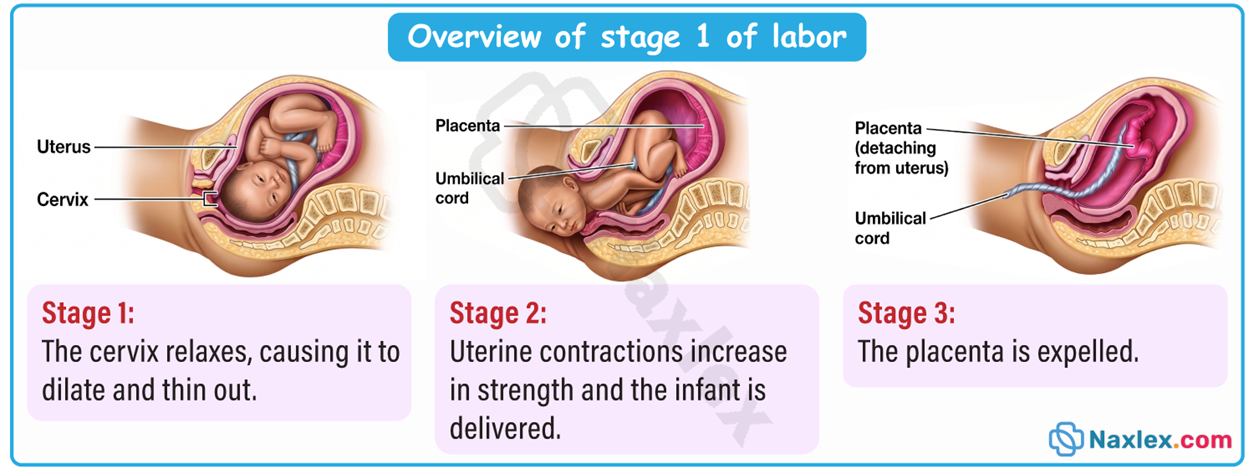
3.1 Definition and Physiologic Basis of Stage 1 of Labor
- Stage 1 of labor is defined as the interval from the onset of true, regular uterine contractions to complete cervical dilation of 10 cm.
- True labor contractions are characterized by regular intervals, progressive increase in intensity, and cervical change over time.
- Stage 1 is driven primarily by 2 physiologic processes occurring simultaneously:
- Progressive uterine muscle contraction and retraction, shortening the upper uterine segment.
- Passive stretching and thinning of the lower uterine segment and cervix.
- The Ferguson reflex describes a positive feedback loop wherein cervical and vaginal stretching stimulates endogenous oxytocin release, further intensifying uterine contractions.
- Stage 1 accounts for the majority of total labor duration, particularly in nulliparous clients.
Nursing Insights
- A nurse must distinguish true labor from false labor (Braxton Hicks contractions) by assessing for cervical change, since false labor contractions are irregular and do not cause cervical dilation.
- A nurse should document the exact time of labor onset as reported by the client, since this timestamp anchors the assessment of labor progression against expected timelines.
- A nurse caring for a client in early Stage 1 should recognize that maternal anxiety can transiently slow labor progression through catecholamine-mediated inhibition of uterine activity.
3.2 The Three Phases of Stage 1 of Labor
- Stage 1 of labor is subdivided into 3 sequential phases based on cervical dilation, contraction characteristics, and maternal behavior.
|
Phase |
Cervical Dilation |
Approximate Duration (Nullipara) |
Approximate Duration (Multipara) |
|
Latent |
0-6 cm |
Up to 20 hours |
Up to 14 hours |
|
Active |
6-10 cm |
Approximately 4-6 hours |
Approximately 2-4 hours |
|
Transition |
8-10 cm |
15 minutes to 3 hours |
Shorter, variable |
- The mnemonic "0-6-10" is commonly used to remember the cervical dilation cutoffs separating latent (0-6 cm) from active/transition (6-10 cm) phases, per updated labor curve definitions.
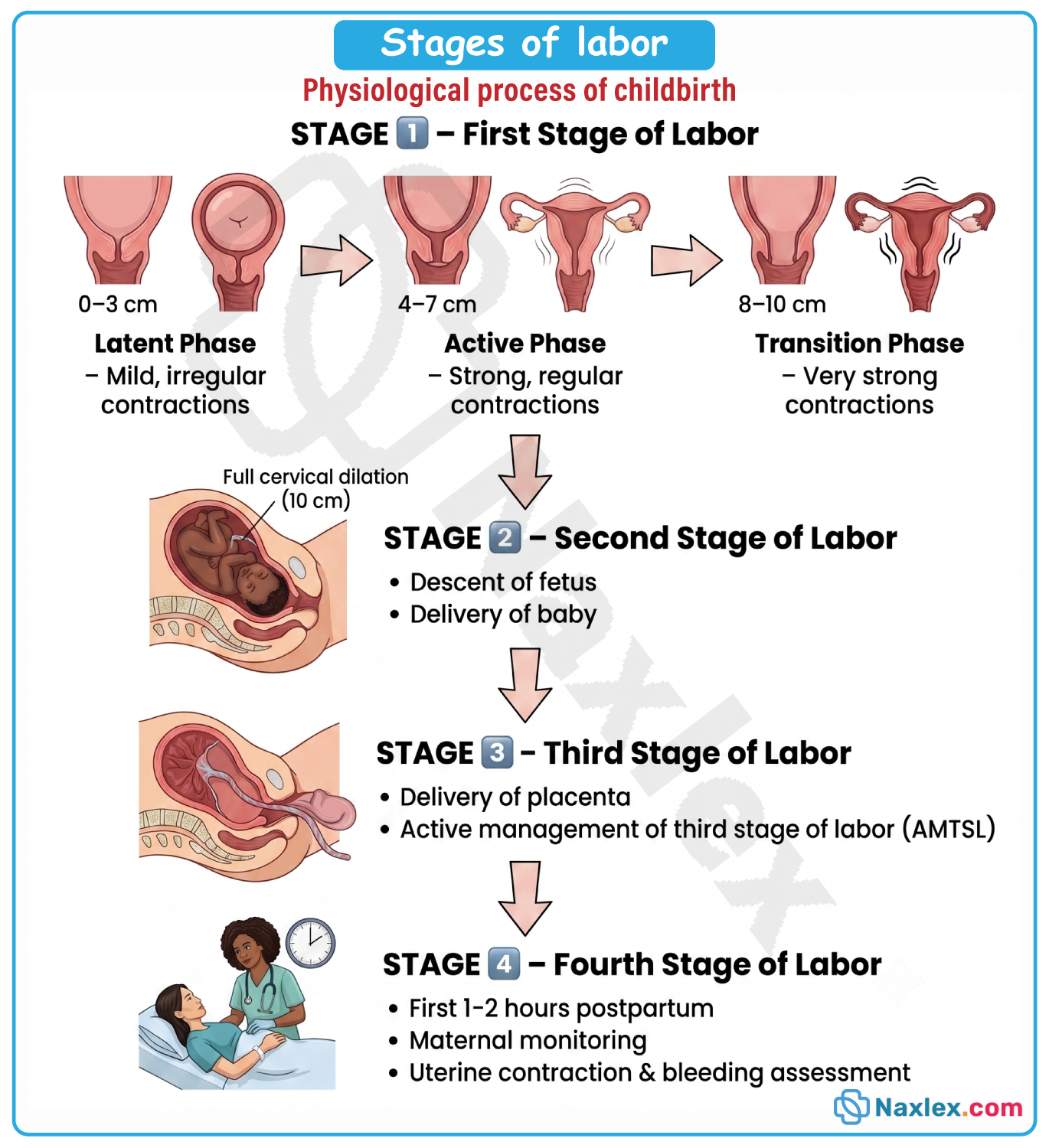
Nursing Insights
- A nurse should recognize that the newer Friedman labor curve revisions extended the latent phase threshold to 6 cm rather than the historically taught 4 cm, reflecting updated obstetric consensus.
- A nurse must individualize expectations for labor duration since parity significantly shortens the length of each phase, particularly the active and transition phases.
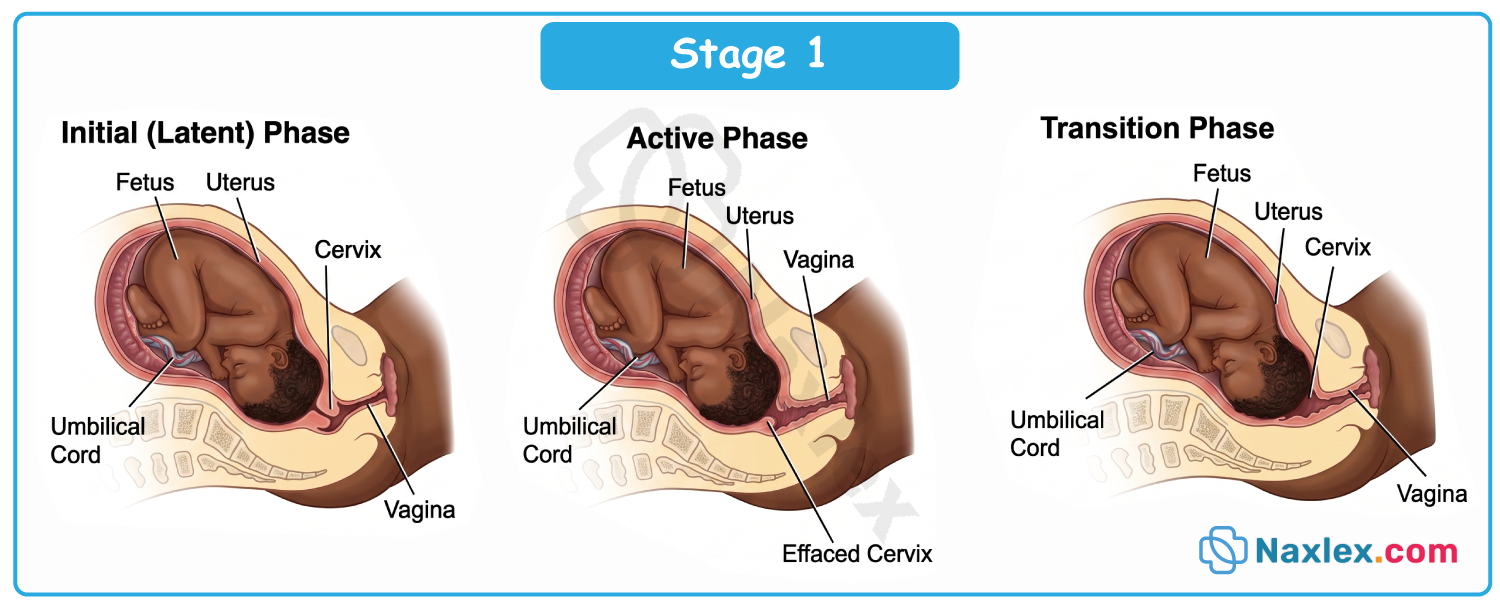
3.3 Mechanisms of Cervical Dilation and Effacement
- Effacement refers to the thinning and shortening of the cervix, expressed as a percentage from 0% (thick, uneffaced) to 100% (fully thinned).
- Dilation refers to the opening of the cervical os, measured in centimeters from 0 cm (closed) to 10 cm (fully dilated).
- In nulliparous clients, effacement typically precedes dilation, whereas in multiparous clients, effacement and dilation often occur concurrently.
- Cervical ripening precedes active labor and involves enzymatic breakdown of collagen fibers under the influence of prostaglandins, softening the cervical connective tissue.
- Uterine contractions exert downward pressure via the fetal presenting part, which is often described as a hydrostatic wedge effect from the fetal membranes, or a direct pressure effect from the fetal head once membranes rupture.
- Progressive myometrial contraction and retraction in the fundus shortens the upper uterine segment and draws the cervix upward and open.
Nursing Insights
- A nurse assessing cervical dilation and effacement via vaginal examination must correlate these findings with contraction frequency, duration, and intensity to form a complete picture of labor progress.
- A nurse should recognize that a bloody show, which is the passage of blood-tinged mucus, often signals capillary rupture as cervical effacement and dilation progress and indicates approaching active labor.
- A nurse must limit the frequency of vaginal examinations after rupture of membranes to reduce the risk of ascending infection such as chorioamnionitis.
Latent Phase Of Stage 1
5.1 Cervical Dilation, Effacement, and Contraction Parameters
- The latent phase begins at the onset of regular uterine contractions and extends until approximately 6 cm of cervical dilation.
- Cervical effacement progresses from 0% toward approximately 40-60% by the end of the latent phase in nulliparous clients.
- Contractions during the latent phase are characterized by specific measurable parameters:
- Frequency occurs every 5-30 minutes between the onset of one contraction and the onset of the next.
- Duration of each contraction lasts approximately 20-40 seconds.
- Intensity is typically mild to moderate on palpation, described as feeling similar to the tip of the nose on the examiner's fingers.
- The latent phase is the longest phase of Stage 1, often lasting up to 20 hours in nulliparous clients and up to 14 hours in multiparous clients.
- Cervical change during this phase occurs slowly, and the rate of dilation is less predictable than in the active phase.
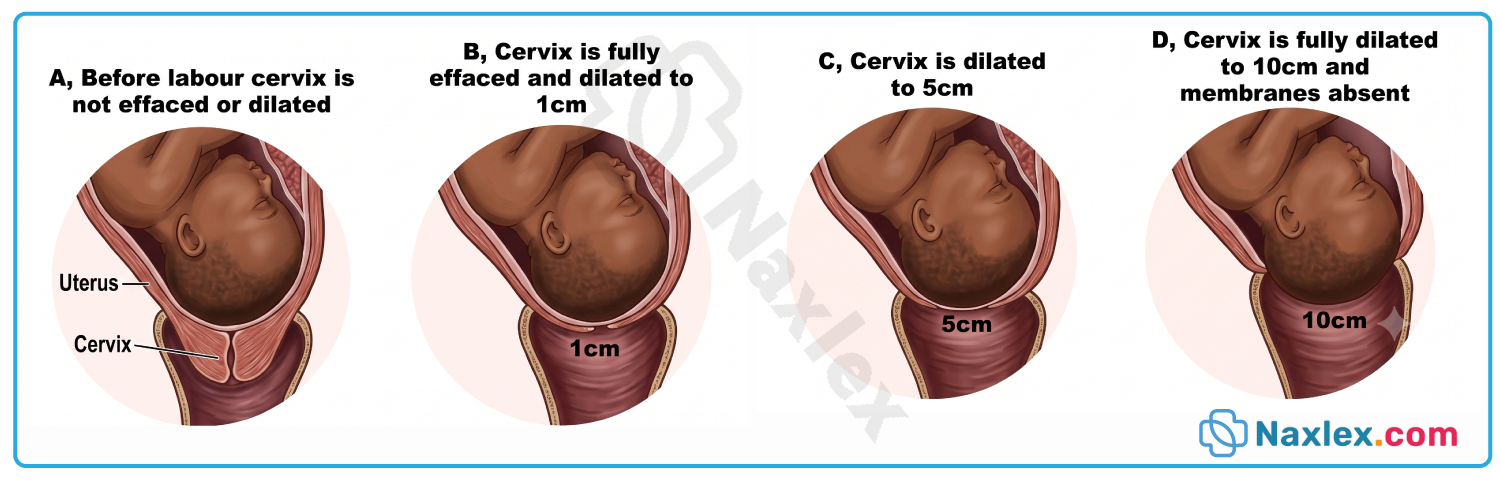
Nursing Insights
- A nurse should reassure a client that slow progress during the latent phase is physiologically expected and does not necessarily indicate dysfunctional labor.
- A nurse must document baseline contraction frequency, duration, and intensity at admission to serve as a reference point for evaluating labor progression over time.
- A nurse should recognize that prolonged latent phase, exceeding 20 hours in a nullipara or 14 hours in a multipara, may indicate a protraction disorder warranting further evaluation.
5.2 Maternal Physical and Emotional Characteristics
- Clients in the latent phase are frequently ambulatory, alert, and able to converse comfortably between contractions.
- Common physical characteristics observed during the latent phase include the following:
- Mild to moderate discomfort that is manageable without significant pharmacologic intervention.
- Ability to walk, talk, and engage in self-care activities between contractions.
- Possible passage of blood-tinged mucus, referred to as bloody show, as the cervix begins to efface.
- Emotionally, clients in the latent phase are often described using the mnemonic-associated behaviors of excitement, talkativeness, and sociability.
- Clients may express anticipation, mild anxiety, or eagerness as labor begins, and are generally receptive to teaching and instructions.
Nursing Insights
- A nurse should use this phase as an opportunity to reinforce childbirth education, since clients are typically alert and receptive to information at this stage.
- A nurse should assess maternal coping mechanisms early, since the client's emotional response during the latent phase often predicts coping patterns in later, more intense phases.
- A nurse must remain alert for excessive maternal anxiety, since catecholamine release secondary to fear can inhibit uterine contractility and slow labor progression.
5.3 Nursing Assessment and Interventions
- Nursing assessment priorities during the latent phase include the following parameters:
- Maternal vital signs, including blood pressure, pulse, respirations, and temperature, assessed per unit protocol.
- Fetal heart rate assessed via intermittent auscultation or continuous electronic fetal monitoring per institutional guidelines.
- Contraction frequency, duration, and intensity via palpation or tocodynamometer.
- Cervical dilation and effacement via sterile vaginal examination, performed judiciously to reduce infection risk.
- Status of membranes, whether intact or ruptured, and characteristics of amniotic fluid if ruptured.
- Nursing interventions during the latent phase include the following:
- Orient the client and support person to the labor unit environment and routines.
- Encourage ambulation and upright positioning to promote fetal descent and labor progression.
- Provide clear explanations of expected labor progression to reduce anxiety.
- Encourage adequate hydration and light oral intake per institutional policy.
- Monitor for signs of maternal exhaustion or dehydration during a prolonged latent phase.
Nursing Insights
- A nurse should encourage voiding every 2 hours during labor, since a distended bladder can impede fetal descent and contribute to uterine atony later in labor.
- A nurse should promote upright positioning and ambulation during the latent phase, since gravity assists fetal descent and may enhance the efficiency of contractions.
- A nurse must notify the primary health care provider if fetal heart rate abnormalities or maternal vital sign deviations are identified at any point during assessment.
5.4 Non-Pharmacologic Pain Management Approaches
- Non-pharmacologic strategies are typically well-tolerated and effective during the latent phase due to the mild to moderate intensity of contractions.
- Common non-pharmacologic approaches appropriate for the latent phase include the following:
- Ambulation and frequent position changes to enhance comfort and promote labor progression.
- Breathing techniques, such as slow-paced breathing, to promote relaxation and reduce perceived pain.
- Effleurage, which is light rhythmic massage of the abdomen, to provide cutaneous stimulation and distraction.
- Application of heat or cold packs to the lower back to reduce discomfort.
- Use of a birthing ball to facilitate pelvic rocking and optimal fetal positioning.
- Hydrotherapy, such as showers or warm baths, where institutionally available.
- The Gate Control Theory of pain is often cited as the physiologic basis for many non-pharmacologic comfort measures, proposing that non-painful stimuli can block or reduce the transmission of painful stimuli to the brain.
Nursing Insights
- A nurse should individualize comfort measures to the client's preferences, since effectiveness of non-pharmacologic techniques varies significantly among clients.
- A nurse should teach slow-paced breathing techniques early in the latent phase, since clients are more able to learn and practice new techniques before pain intensity increases.
- A nurse should continue to offer non-pharmacologic comfort measures even if a client later requests pharmacologic pain relief, since a combined approach often improves overall satisfaction with the labor experience.
Active Phase Of Stage 1
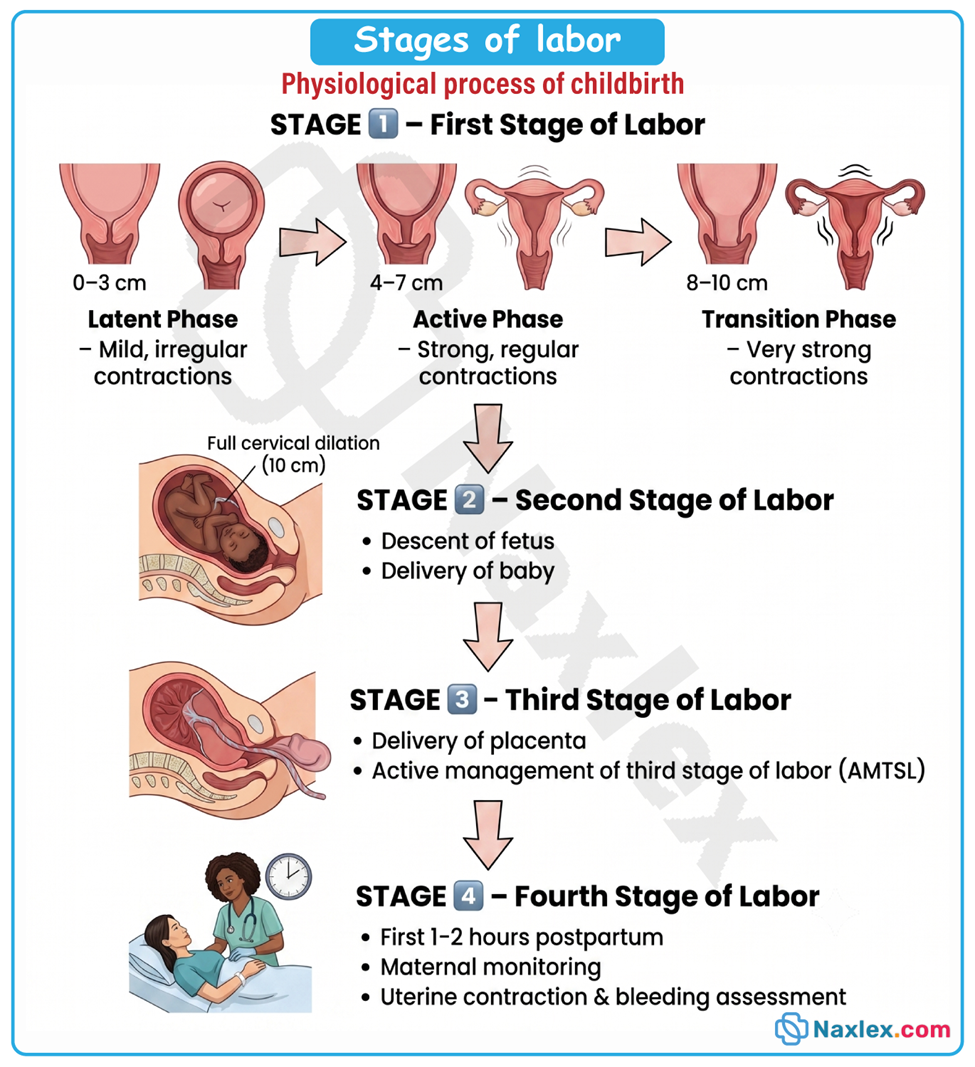
7.1 Cervical Dilation and Contraction Pattern Changes
- The active phase begins at approximately 6 cm of cervical dilation and continues until 10 cm, marking the transition point into the transition phase.
- Cervical dilation progresses more rapidly and predictably during the active phase compared to the latent phase.
- Expected rates of cervical dilation during the active phase vary by parity:
- Nulliparous clients typically dilate at a minimum rate of approximately 1.2 cm/hour.
- Multiparous clients typically dilate at a minimum rate of approximately 1.5 cm/hour.
- Contractions during the active phase demonstrate the following measurable parameters:
- Frequency occurs every 3-5 minutes between the onset of one contraction and the onset of the next.
- Duration of each contraction lasts approximately 40-60 seconds.
- Intensity is moderate to strong on palpation, often described as feeling similar to the chin or forehead on the examiner's fingers.
- Fetal descent through the maternal pelvis becomes more pronounced during the active phase as the presenting part advances against the cervix.
Nursing Insights
- A nurse should recognize that failure to dilate at the expected minimum rate during the active phase may indicate active phase arrest, warranting further evaluation.
- A nurse must correlate contraction intensity on palpation with the client's subjective pain reports, since perception of pain intensity varies among clients.
- A nurse should anticipate that the client may request pharmacologic pain relief as contraction intensity increases during this phase.
7.2 Maternal Physical and Emotional Characteristics
- Clients in the active phase generally exhibit increased focus on managing contractions and decreased ability to engage in casual conversation.
- Common physical characteristics observed during the active phase include the following:
- Increased restlessness, fatigue, and diaphoresis as contraction intensity rises.
- Decreased ability to ambulate independently as discomfort increases.
- Increased urge to use coping techniques learned during childbirth education.
- Emotionally, clients in the active phase often demonstrate increased seriousness, inward focus, and a heightened need for support and encouragement.
- Clients may express feelings of doubt regarding their ability to cope, requiring reassurance and continuous nursing presence.
Nursing Insights
- A nurse should provide continuous labor support during the active phase, since one-to-one nursing presence has been associated with reduced need for pharmacologic intervention.
- A nurse must recognize behavioral cues of increasing pain, such as gripping the bed rails or verbalizing an inability to cope, as indicators for reassessment of pain management needs.
- A nurse should involve the support person actively in coaching techniques, since maternal coping is often enhanced by a familiar, trusted presence.
7.3 Nursing Assessment and Interventions
- Nursing assessment priorities during the active phase include the following parameters:
- Maternal vital signs assessed at more frequent intervals than during the latent phase, per institutional protocol.
- Fetal heart rate assessed via intermittent auscultation or continuous electronic fetal monitoring at increased frequency.
- Contraction frequency, duration, and intensity reassessed regularly to monitor labor progression.
- Cervical dilation and effacement reassessed periodically via sterile vaginal examination.
- Client's pain level and coping status reassessed continuously throughout the phase.
- Nursing interventions during the active phase include the following:
- Offer pharmacologic pain relief options, such as epidural analgesia, if desired by the client and appropriate per protocol.
- Continue to encourage position changes and use of comfort measures as tolerated.
- Provide clear, concise communication during contractions, since the client's ability to process complex information decreases.
- Monitor for signs of maternal exhaustion, dehydration, or ketosis during a prolonged active phase.
- Prepare the client and environment for potential rapid progression as dilation accelerates.
Nursing Insights
- A nurse should time coaching and instructions to coincide with contraction peaks, since clients often require more directive guidance as pain intensity increases.
- A nurse must continue to encourage voiding every 2 hours, since epidural analgesia may reduce the client's sensation of bladder fullness.
- A nurse should notify the primary health care provider promptly if active phase arrest or fetal heart rate abnormalities are identified.
7.4 Fetal Heart Rate Monitoring Considerations
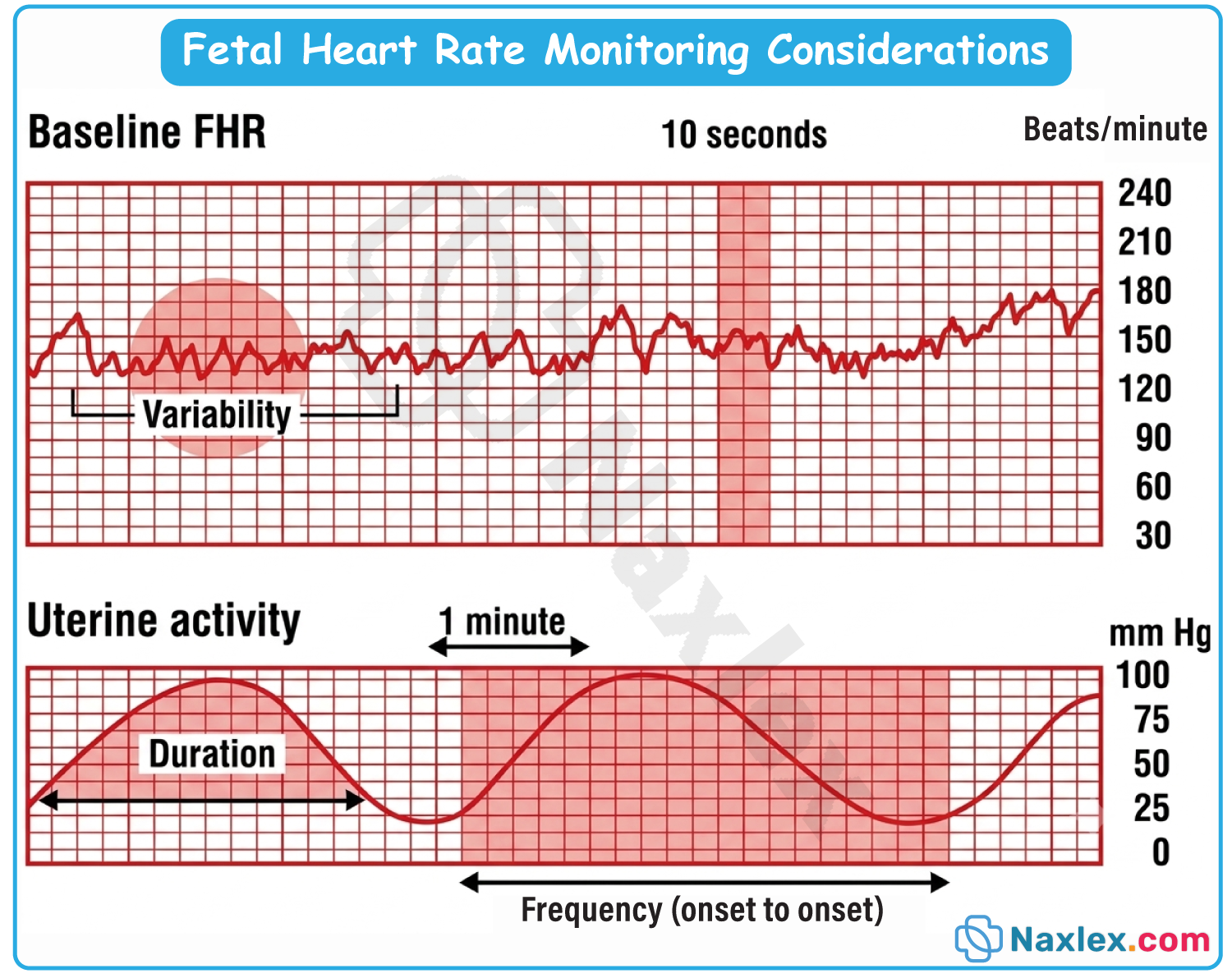
- Fetal heart rate monitoring during the active phase requires increased vigilance due to the intensifying uterine contractions and advancing fetal descent.
- Intermittent auscultation, when used, should occur at a minimum frequency of every 15-30 minutes during the active phase per common institutional guidelines.
- Continuous electronic fetal monitoring is often preferred during the active phase, particularly in clients with risk factors, to detect the following patterns:
- Baseline fetal heart rate, normally ranging from 110-160 beats/minute.
- Baseline variability, which reflects fetal autonomic nervous system function.
- Presence or absence of accelerations and decelerations in relation to contractions.
- Early decelerations, which mirror the contraction pattern, are considered a benign finding reflecting fetal head compression during descent.
- Variable decelerations, which have an abrupt onset and variable shape, suggest umbilical cord compression and warrant maternal repositioning.
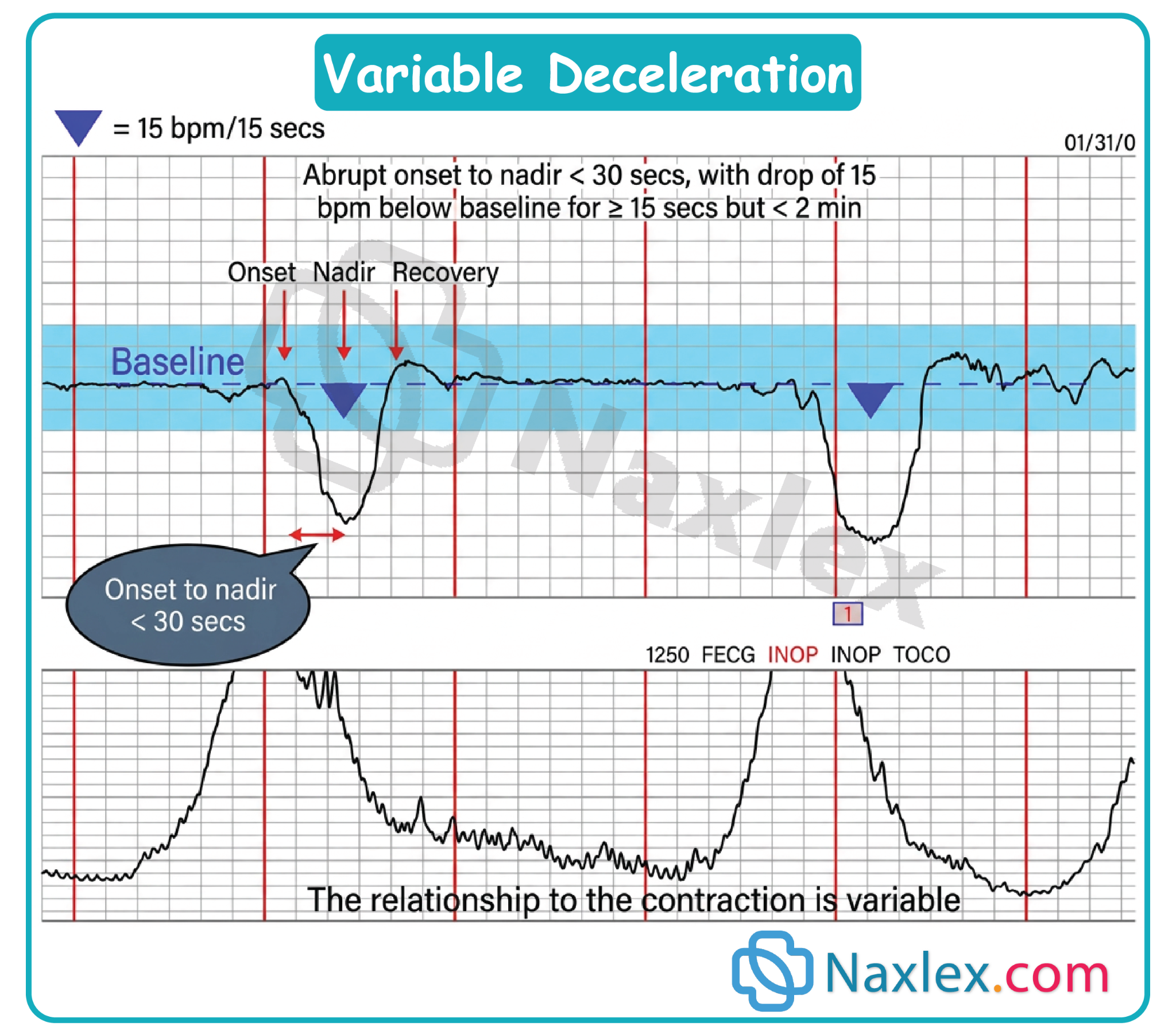
- Late decelerations, which occur after the peak of the contraction, suggest uteroplacental insufficiency and require immediate intervention.
Nursing Insights
- A nurse should reposition the client to a lateral position immediately upon identifying variable decelerations, since this may relieve cord compression.
- A nurse must recognize that late decelerations require immediate intervention, including maternal repositioning, oxygen administration, and notification of the primary health care provider.
- A nurse should correlate fetal heart rate changes with the timing of contractions on the monitor strip, since the relationship between the two patterns is essential for accurate interpretation.
Transition Phase Of Stage 1
9.1 Cervical Dilation and Contraction Pattern Changes
- The transition phase begins at approximately 8 cm of cervical dilation and continues until complete dilation of 10 cm.
- This phase is the shortest but most intense phase of Stage 1, typically lasting 15 minutes to 3 hours in nulliparous clients.
- Contractions during the transition phase demonstrate the following measurable parameters:
- Frequency occurs every 2-3 minutes between the onset of one contraction and the onset of the next.
- Duration of each contraction lasts approximately 60-90 seconds.
- Intensity is strong to very strong on palpation, often described as feeling similar to the forehead or a rigid, board-like surface on the examiner's fingers.
- Effacement is complete or nearly complete at 100% by the transition phase.
- Fetal descent accelerates significantly during transition as the presenting part reaches the lower pelvis and perineum.
- The client may experience minimal to no relaxation between contractions due to their increased frequency and duration.
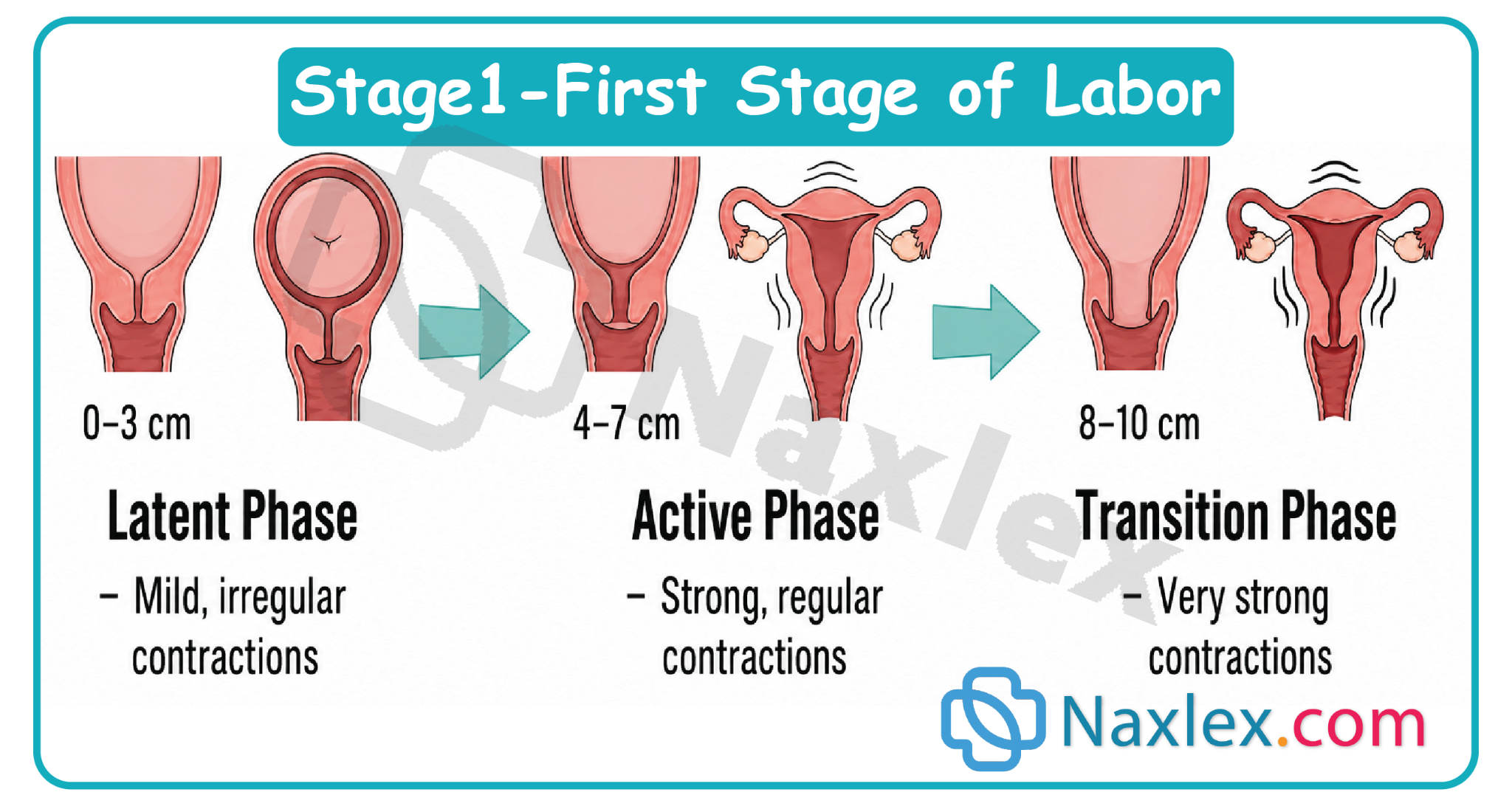
Nursing Insights
- A nurse should anticipate that transition is often the most physically and emotionally challenging phase, requiring intensive one-to-one nursing support.
- A nurse must recognize that the rapid cervical change during transition often precedes an imminent urge to push, signaling approaching Stage 2 of labor.
- A nurse should avoid interpreting a client's increased distress during transition as a lack of coping ability, since this is a physiologically expected response to peak contraction intensity.
9.2 Maternal Physical and Emotional Characteristics
- Clients in the transition phase frequently exhibit a distinct constellation of physical and emotional signs.
- Common physical characteristics observed during the transition phase include the following:
- Nausea, vomiting, and belching related to increased intra-abdominal pressure and vagal stimulation.
- Trembling, shaking, or generalized muscle tremors, particularly of the legs.
- Diaphoresis, flushed cheeks, and sensations of intense heat alternating with chills.
- Increased rectal pressure and an urge to bear down as the fetal head descends.
- Hiccups or increased belching in some clients.
- Emotionally, clients often demonstrate irritability, feelings of loss of control, and increased dependency on support persons and nursing staff.
- Clients frequently verbalize an inability to continue, express fear, or become irritable with support persons and staff, which is a recognized and expected behavioral pattern of this phase.
Nursing Insights
- A nurse should recognize that irritability and statements such as an inability to continue are hallmark, expected findings of the transition phase rather than a sign of inadequate coping.
- A nurse should anticipate maternal nausea and vomiting during transition and have an emesis basin readily available at the bedside.
- A nurse must recognize trembling and shaking as a common autonomic response during transition and reassure the client that this is expected and not harmful.
9.3 Nursing Assessment and Interventions
- Nursing assessment priorities during the transition phase include the following parameters:
- Frequent reassessment of contraction frequency, duration, and intensity given the rapid pace of change.
- Fetal heart rate assessed via continuous electronic monitoring or intermittent auscultation at increased frequency.
- Assessment for signs of an urge to push or bear down, rectal pressure, or bulging perineum.
- Assessment for crowning or visible fetal presenting part at the introitus.
- Maternal vital signs monitored closely given the intensity of physiologic stress during this phase.
- Nursing interventions during the transition phase include the following:
- Discourage pushing until complete cervical dilation is confirmed via vaginal examination, to prevent cervical edema or lacerations.
- Coach the client to use patterned breathing techniques to counteract the premature urge to push.
- Prepare the delivery room and equipment in anticipation of imminent Stage 2 of labor.
- Provide firm, clear, one-on-one coaching due to the client's decreased ability to process complex instructions.
- Notify the primary health care provider of the client's progress and anticipated delivery timing.
Nursing Insights
- A nurse should instruct the client to use blow or pant breathing techniques if she experiences a premature urge to push before complete dilation is confirmed.
- A nurse must perform a vaginal examination to confirm complete cervical dilation before allowing the client to push, since pushing on an incompletely dilated cervix may cause cervical trauma.
- A nurse should recognize increased rectal pressure and grunting sounds as clinical indicators warranting prompt reassessment of cervical dilation.
9.4 Coping Strategies and Support Techniques
- Coping strategies during the transition phase must be adapted to the client's decreased ability to process complex information and heightened distress.
- Effective support techniques during the transition phase include the following:
- Providing firm, simple, one-step directions rather than lengthy explanations.
- Maintaining continuous physical presence and eye contact to help the client focus.
- Using patterned breathing techniques, such as short blow-pant sequences, to manage the urge to push prematurely.
- Offering ice chips or a cool cloth to the forehead to address nausea and sensations of heat.
- Providing firm counter-pressure to the lower back if the client experiences intense back pain.
- The mnemonic "the 3 Ds", referring to Doubt, Discouragement, and Disorganization, is sometimes used informally to describe the emotional hallmarks of the transition phase.
Nursing Insights
- A nurse should remind the support person that the client's irritability during transition is an expected phase-specific response and not a reflection of the support provided.
- A nurse should use short, simple commands during transition, since the client's cognitive processing capacity is diminished during peak contraction intensity.
- A nurse should reassure the client and support person that transition, while intense, signals that delivery is approaching soon.
Summary
- Stage 1 of labor extends from the onset of regular, progressive uterine contractions to complete cervical dilation of 10 cm and is subdivided into 3 phases: latent, active, and transition.
- The latent phase spans 0-6 cm dilation, features mild to moderate contractions every 5-30 minutes lasting 20-40 seconds, and is characterized by an alert, talkative, and sociable maternal demeanor.
- The active phase spans 6-10 cm dilation, features moderate to strong contractions every 3-5 minutes lasting 40-60 seconds, and is marked by increasing maternal focus, restlessness, and decreased ability to converse.
- The transition phase spans 8-10 cm dilation, is the shortest and most intense phase, features strong to very strong contractions every 2-3 minutes lasting 60-90 seconds, and is associated with nausea, trembling, irritability, and an urge to push.
- The Ferguson reflex, a positive feedback loop between cervical stretch and oxytocin release, underlies the progressive intensification of contractions throughout Stage 1.
- Effacement, the thinning and shortening of the cervix, and dilation, the opening of the cervical os, occur sequentially in nulliparous clients and concurrently in multiparous clients.
- Nursing priorities across all 3 phases include continuous maternal-fetal assessment, individualized comfort measures, timely recognition of abnormal fetal heart rate patterns, and phase-appropriate communication and coaching techniques.
- Recognition of expected physical and emotional characteristics at each phase allows the nurse to anticipate client needs, provide anticipatory guidance, and identify deviations from normal labor progression promptly.
- Fetal heart rate vigilance increases progressively across the 3 phases, with particular attention to variable and late decelerations, which require prompt intervention including repositioning, oxygen administration, and provider notification.
- Discouraging pushing until complete cervical dilation is confirmed, along with the use of patterned breathing techniques, remains a critical nursing intervention during the transition phase to prevent cervical trauma.
Naxlex
Videos
Login to View Video
Click here to loginTake Notes on Four Stages of Labor Part 1
This filled cannot be empty
Join Naxlex Nursing for nursing questions & guides! Sign Up Now