





Please set your exam date
CONGENITAL HEART DISEASES: MIXED DEFECTS
Study Questions
Practice Exercise 1
The nurse is teaching a student nurse about the distinct hemodynamic patterns of congenital heart defects. The nurse explains that while atrial septal defect (ASD) represents an acyanotic lesion with a left-to-right shunt, transposition of the great vessels (TGV) represents:
Explanation
Transposition of the great vesselsis a critical cyanotic congenitaldefectwhere the aorta emerges from the right ventricle and the pulmonary artery from the left ventricle. This anatomical switch creates two separate, parallelhemodynamic circuitsthat prevent oxygenated blood from reaching the systemic tissues. Survival depends entirely on mixing via an associated atrial septal defect,ventricular septal defect, or patent ductus arteriosus.
Rationale for correct answer:
2. Transposition of the great vesselscreates two parallel circuits where unoxygenated blood recirculates systemically.The neonate experiences profound hypoxemia immediately upon closure of the ductus arteriosus. Survival requires mixing via a patent shuntingmechanism. This condition presents as an emergency requiring prostaglandin E1infusion.
Rationale for incorrect answers:
1. Right-to-left shuntscause severe, early-onset cyanosis rather than acyanotic presentations. Transposition does not involve a standard right-to-left shunting mechanism as its primary pathophysiological driver. Instead, it features complete ventriculoarterial discordance.
3. A obstructive lesion that limits blood flow directly to the systemic tissuesdescribes an obstructive defectlike coarctation of the aorta. Transposition does not physically block blood flow to the systemic tissues. It alters the origin of the great vessels, leading to systemicunoxygenated perfusion.The primary issue is oxygenation, not physical luminal obstruction.
4. A structural anomaly where blood completely bypasses the right side of the heartdescribes a defect like tricuspid atresiawhere blood bypasses the right ventricle. In transposition, blood still flows through the right atrium and right ventricle normally. The blood is then pumped directly back into the aorta instead of the lungs. This creates an isolated systemic loop.
Test-taking strategy:
- Analyze the scenario/question: The question contrasts the acyanotic, left-to-right shunting mechanism of an atrial septal defect with the specific hemodynamic pattern of transposition of the great vessels.
- Apply pathophysiological principles:
- Recognize that Transposition of the Great Vessels involves ventriculoarterial discordance. This means the plumbing is switched, creating an unoxygenated systemic loop and an overoxygenated pulmonary loop.
- Rule out Choice 1because transposition is a classic cyanotic lesion, not an acyanotic lesion.
- Rule out Choice 3because it describes an obstructive lesion, such as aortic stenosis or coarctation, which limits volume rather than oxygen content.
- Rule out Choice 4because blood does not bypass the right side of the heart; it flows through it but exits to the body without being oxygenated.
- Rule in Choice 2because parallel circulation is the defining scientific hallmark of this defect.
Take home points
- Transposition of the Great Vessels creates two independent, parallel circulatory loops that are incompatible with life unless an anatomical shunt allows mixing of blood.
- It is classified as a cyanotic congenital heart defect, presenting with severe, progressive hypoxemia and cyanosis shortly after birth as fetal shunts close.
- Continuous intravenous infusion of prostaglandin E1 is indicated immediately to maintain ductus arteriosus patency and sustain systemic oxygenation.
- Definitively managed via an arterial switch operation, which surgically transposes the aorta and pulmonary artery to restore normal serial circulation.
The nurse is evaluating the chest radiograph report of a 12-hour-old infant demonstrating profound cyanosis and tachypnea. The radiologist notes a "narrow superior mediastinum with a normal-sized to slightly enlarged silhouette resembling an egg on a string." The nurse recognizes this finding as highly characteristic of:
Explanation
The classic egg on a string radiologic signreflects the specific anatomical silhouette of transposition of the great vessels. The narrow superior mediastinum results from the anterior-posterior relationshipof the transposed great arteries and stress-induced thymic atrophy. Concurrent pulmonary vascular markings are typically hyperemic,reflecting increased pulmonary blood flow driven by parallel hemodynamic circuitsthat require structural shunts to sustain systemic oxygenation.
Rationale for correct answer:
3.The specific alignment of the anterior aorta and posterior pulmonary artery in transposition of the great vesselsnarrows the mediastinal shadow on an anteroposterior radiograph. This structural orientation creates the classic egg shadowsilhouette.The finding directly confirms ventriculoarterial discordance in a symptomatic, cyanotic neonate. It differentiates this emergency from other causes of neonatal respiratorydistress.
Rationale for incorrect answers:
1. An atrial septal defectrepresents an acyanotic lesion that does not present with profound cyanosis at 12 hours of life. The chest radiograph typically shows increased pulmonary vascularity but exhibits a completely normal mediastinal contour. This defect lacks the characteristic discordant vesselalignment.
2. Coarctation of the aortapresents primarily with systemic perfusion differentials, diminished femoral pulses, and upper extremity hypertension. The classic radiographic sign in older children is rib notching or the figure 3 sign, not a narrow mediastinum. It is an obstructive lesionrather than a defect defined by parallel circulation.
4. Tetralogy of Fallotis a cyanotic defect characterized by a boot-shaped heart silhouette on a radiograph. This boot shape occurs due to right ventricular hypertrophy and a concave main pulmonary artery segment. The pulmonary vascular markings are classically decreased,differing from the hyperemic pattern seen in transposition anomalies.
Test-taking strategy:
- Analyze the scenario/question: The question describes a 12-hour-old infant presenting with profound cyanosis, tachypnea, and a chest radiograph demonstrating a narrow superior mediastinum with an egg on a string appearance.
- Correlate radiographic pathology:
- Identify pathognomonic radiological signs associated with congenital cardiac anomalies to differentiate similar cyanotic presentations.
- Rule out Choice 1because an atrial septal defect is an acyanotic lesion that does not cause profound cyanosis or abnormal mediastinal narrowing in the immediate neonatal period.
- Rule out Choice 2because coarctation of the aorta is an obstructive defect that presents with blood pressure discrepancies and does not produce an egg-shaped silhouette.
- Rule out Choice 4because tetralogy of Fallot exhibits a boot-shaped heart, or coeur en sabot, due to right ventricular hypertrophy and diminished pulmonary flow, rather than an egg-shaped appearance.
- Rule in Choice 3because the egg on a string sign is the definitive diagnostic radiographic hallmark of Transposition of the Great Vessels.
Take home points
- The egg on a string sign is caused by the aorta sitting directly anterior to the pulmonary artery, narrowing the superior mediastinal shadow.
- Transposition of the Great Vessels presents with increased pulmonary vascular markings due to excessive pulmonary blood flow through the parallel loop.
- Tetralogy of Fallot must be differentiated radiographically by its characteristic boot-shaped heart and decreased pulmonary vascular markings.
- Initial management of a suspected transposition anomaly based on radiographic findings requires immediate stabilization with prostaglandin E1 to maintain ductal patency.
The nurse is assessing a newborn diagnosed with isolated transposition of the great vessels (TGV) without any associated septal defects. Which of the following findings is the nurse most likely to note during cardiac auscultation?
Explanation
Transposition of the great vesselsis a cyanotic congenital heart defect characterized by ventriculoarterial discordance,where the aorta arises from the right ventricle and the pulmonary artery from the left ventricle. This anatomy creates two parallel, non-communicating circulatory loops that require prostaglandin E1 infusionimmediately postpartum to maintain ductal patency for survival. Without an associated septal shunt, the primary physical finding is severe, refractory hypoxemia presenting within hours of birth as profound central cyanosisuncorrected by supplemental oxygen.
Rationale for correct answer:
2.Anterior displacement of the aorta places the valve closer to the anterior chest wall, amplifying closure intensity. The parallel arrangement prevents synchronous closure with the pulmonary valve, causing a single S2.The absence of shunting structures means blood flows smoothly through non-obstructed vessels, resulting in no prominent murmur.
Rationale for incorrect answers:
1. A harsh, holosystolic murmur at the lower left sternal borderis characteristic of a ventricular septal defect.This murmur is generated by high-velocity turbulent flow across the interventricular septum during ventricular contraction. Isolated transposition of the great vessels specifically lacks this anatomical shunt, meaning this holosystolic murmurwould not be auscultated.
3. A continuous, machine-like murmur loudest underneath the left claviclesignifies a patent ductus arteriosus.This sound is generated by continuous, high-pressure aortopulmonary shunting throughout both systole and diastole. While a patent ductus arteriosus is necessary for survival here, an isolated TGVdiagnosis means no large, murmur-producing ductal shunthas been established.
4. A soft mid-diastolic flow rumble over the tricuspid valve areaindicates increased blood flow across the AV valves. This finding is typically seen in large left-to-right shunts like an atrial septal defect or ventricular septal defect.Isolated transposition does not feature these volume-overload states, making a diastolic rumbleabsent during early newborn clinical assessment.
Test-taking strategy:
- Analyze the scenario/question:The patient is a newborn with isolated Transposition of the Great Vessels (TGV). The key clinical modifier is "without any associated septal defects," meaning there is no mixing of blood via an ASD or VSD. The question asks for the specific finding noted during cardiac auscultation.
- Evaluate pathophysiology and anatomy:
- Recall that in TGV, the aorta is positioned anteriorly and directly connects to the right ventricle.
- Because the aorta is closer to the chest wall, its closure is loud and obscures the pulmonary component, resulting in a single second heart sound.
- Since there are no septal defects, there is no turbulent flow across shunts to create a classic murmur.
- Apply elimination methodology
- Rule out Choice 1:A holosystolic murmur requires a ventricular septal defect, which is explicitly ruled out by the question stem.
- Rule in Choice 2:The anterior aorta directly explains the single S2, and the lack of septal defects explains why there is no prominent murmur.
- Rule out Choice 3:A continuous, machine-like murmur belongs to a patent ductus arteriosus, which is not the primary auscultatory finding of isolated TGV anatomy itself.
- Rule out Choice 4:Mid-diastolic rumbles indicate excessive diastolic flow from large shunts, which cannot occur in an isolated ventriculoarterial discordance.
Take home points
- Isolated Transposition of the Great Vessels features a single, loud second heart sound due to the anteriorly displaced aorta closing close to the anterior chest wall.
- Prominent murmurs are characteristically absent in isolated TGV because blood flows through non-obstructed pathways without passing through abnormal septal openings.
- Holosystolic and continuous murmurs indicate associated defects like ventricular septal defects or patent ductus arteriosus, which are absent in isolated disease.
- Cyanosis in newborns with isolated TGV is severe and refractory to oxygen therapy because the systemic and pulmonary circulations function as independent parallel loops.
The nurse is developing a post-operative discharge care plan for the parents of an infant recovering from an open-heart surgical repair for TGV. To protect the integrity of the healing sternum, which instructions must be explicitly integrated into the discharge teaching?
Explanation
Infant transposition of the great vessels(TGV) surgical correction requires an open median sternotomy. Post-operative recovery mandates strict sternal precautionsto avert mechanical dehiscence and mediastinitis. Intact healing relies on minimizing shear stress, avoiding prone positioning, and ensuring bilateral trunk supportduring mobility.
Rationale for correct answer:
2.Sternal integrity requires eliminating axial traction.Lifting infants under the axillae creates lateral distracting forces across the healing bone edges. Supporting the cranium and pelvis redistributes mass safely. Sternal union takes 4 to 6 weeks.
Rationale for incorrect answers:
1.Axillary liftingtranslates bilateral outward tension directly to the healing sternal site. This mechanical strain can fracture immature bony callus. Parents must avoid this maneuver completely during early recovery. Dehiscence risk is greatly exacerbated by this specific action.
3.Prone sleep positioningis strictly contraindicated. The anterior thoracic pressure forces sternal borders apart. This position increases sudden infant death syndrome risks. Infants must sleep supine on flat surfaces.
4.Absolute immobilizationcauses pulmonary atelectasis and skin breakdown. Frequent gentle position changes promote optimal lung expansion. Turning from side to side is safe when trunk alignment is maintained. Bed rest is not indicated for infants at home.
Test-taking strategy:
- Analyze the scenario/question: The infant is post-operative from open-heart surgery for TGV. The core nursing requirement is protecting the healing sternum from dehiscence after discharge.
- Evaluate anatomical strain:
- Choice 1introduces significant lateral shear forces to the healing bone. This action directly threatens incision line stability.
- Choice 2protects the incision by distributing the infant's weight evenly. This alignment minimizes sternal distraction.
- Assess safe positioning and mobility:
- Rule out Choice 3:Prone positioning increases anterior chest pressure and increases asphyxiation risk. Supine sleep is the standard.
- Rule out Choice 4:Strict bed rest promotes respiratory complications. Controlled position changes are essential for pediatric pulmonary hygiene.
Take home points
- Avoid lifting the infant under the arms or axillae for 4 to 6 weeks post-sternotomy to prevent chest wall separation.
- Support the infant's head and bottom simultaneously when lifting to keep the thoracic skeleton in neutral alignment.
- Maintain strict supine positioning for sleep to protect the surgical site and reduce pediatric safe-sleep hazards.
- Promote gentle repositioning and age-appropriate movement rather than strict immobilization to prevent respiratory atelectasis.
Practice Excercise 2
A neonatal intensive care nurse is assessing a 12-hour-old newborn who is suspected of having obstructed infracardiac total anomalous pulmonary venous connection (TAPVC). Which clinical finding should the nurse anticipate as the most characteristic presentation of this defect?
Explanation
Obstructedinfracardiac total anomalous pulmonary venous connection(TAPVC)is a critical neonatal emergency. Pulmonary veins channel below the diaphragm, becoming compressed by the ductus venosus or hepatic sinusoids, triggering severe pulmonary venous hypertension.This obstruction causes flash pulmonary edemaand profound, refractory hypoxemia.
Rationale for correct answer:
2.Infracardiac venous obstruction restricts blood return to the left atrium. This restriction causes massive backpressure within the pulmonary capillary beds.Severe alveolar flooding and right-to-left shunting produce profound cyanosis.This presentation requires immediate surgical intervention.
Rationale for incorrect answers:
1.Cyanosis from obstructed TAPVCis caused by an obligatory mixing defect and severe alveolar diffusion barriers.Supplemental oxygen does not bypass the mechanical obstruction. Cyanosis is therefore highly refractory to oxygen therapy.True improvement with oxygen does not occur.
3.Obstructed TAPVC lacks a distinct, loud holosystolic murmurbecause blood flow bypasses the left ventricular outflow tract completely. Auscultation usually reveals a normal or single second heart sound. A harsh holosystolic murmur implies a ventricular septal defect.
4.Bounding peripheral pulsesindicate a large left-to-right systemic shunt or aortic insufficiency. Obstructed TAPVC severely reduces systemic output because left-heart filling is critically low. Pulses are characteristically weak or thready, never bounding.
Test-taking strategy:
- Analyze the scenario/question: The patient is a 12-hour-old newborn with suspected obstructed infracardiac TAPVC. The nurse must identify the pathognomonic clinical presentation of this specific lesion.
- Evaluate pathophysiology:
- Infracardiac TAPVC involves an obligatory subdiaphragmatic pathway that is almost always severely obstructed. This restriction causes backward pulmonary vascular congestion.
- Differentiate clinical signs:
- Choice2matches the catastrophic presentation of pulmonary venous congestion and low systemic cardiac output.
- Rule out Choice1:Cyanosis from structural mixing and severe pulmonary edema is highly resistant to supplemental hyperoxia.
- Rule out Choice3:This lesion is notoriously quiet on auscultation, lacking a characteristic harsh murmur.
- Rule out Choice4:Left-sided stroke volume is diminished, which produces weak pulses rather than bounding pulses.
Take home points
- Obstructed infracardiac TAPVC presents in early neonatal life as severe respiratory failure and cyanosis unresponsive to oxygen therapy.
- The subdiaphragmatic routing of pulmonary veins subjects them to mechanical compression, causing acute pulmonary venous hypertension.
- Chest radiography typically demonstrates diffuse reticular markings consistent with pulmonary edema, while the cardiac silhouette remains normal.
- Emergent surgical repair or ECMO stabilization is required because medical management cannot relieve the mechanical venous obstruction.
The nurse is reviewing a chest X-ray of an asymptomatic 4-month-old infant admitted for evaluation of non-obstructed supracardiac TAPVC. Which classic radiographic sign should the nurse expect to find?
Explanation
Non-obstructed supracardiac total anomalous pulmonary venous connection(TAPVC) involves pulmonary veins draining into a vertical vein, which channels into the left innominate vein and superior vena cava. This persistent left-to-right shunt creates enlarged superior mediastinal structures.Massive volume overload subsequently leads to profound right ventricular hypertrophy.
Rationale for correct answer:
3.The superior loop consists of the dilated vertical vein, left innominate vein, and right superior vena cava.This widening forms the upper half of the figure. The lower half is formed by the dilated right atrium. This combination creates the classic snowman shape.
Rationale for incorrect answers:
1.A boot-shaped heartis the classic radiographic presentation of tetralogy of Fallot.This shape is caused by a prominent, upturned cardiac apex from severe right ventricular hypertrophy. It also features a concave pulmonary artery segment. TAPVC does not produce this shape.
2.An egg-on-a-string appearanceindicates transposition of the great arteries.This sign is caused by a narrow superior mediastinum resulting from the anterior-posterior alignment of the aorta and pulmonary artery. It also features a globoid cardiac silhouette. It is not seen in TAPVC.
4.Non-obstructed supracardiac TAPVC causes marked widening,not narrowing, of the upper mediastinum. This widening occurs because the anomalous venous channels carry the entire pulmonary blood flow back to the right side. Narrowing of the upper mediastinum implies great vessel malposition.
Test-taking strategy:
- Analyze the scenario/question: The patient is an asymptomatic 4-month-old infant with non-obstructed supracardiac TAPVC. The nurse must identify the pathognomonic chest X-ray finding associated with this congenital cardiac anomaly.
- Evaluate anatomical changes:
- Supracardiac TAPVC routes pulmonary blood through a vertical vein and the innominate vein into the superior vena cava. This pathway creates massive vascular dilation in the upper chest.
- Differentiate radiographic signs:
- Choice3accurately describes the upper mediastinal and lower atrial dilation that creates the snowman appearance.
- Rule out Choice 1:The boot-shaped heart represents Tetralogy of Fallot, characterized by a small pulmonary artery and upturned apex.
- Rule out Choice2:The egg-on-a-string sign reflects the narrow vascular stalk seen in transposition of the great arteries.
- Rule out Choice4:Increased venous flow through the superior vena cava widens the superior mediastinum significantly.
Take home points
- The snowman or figure-of-8 sign is caused by dilation of the vertical vein, innominate vein, and superior vena cava combined with right atrial enlargement.
- This classic radiographic sign typically appears after 4 months of age as pulmonary blood flow and volume overload increase over time.
- Non-obstructed TAPVC presents with increased pulmonary vascular markings on chest X-ray due to continuous, massive pulmonary overcirculation.
- Understanding abnormal venous routing helps differentiate supracardiac TAPVC from other cyanotic heart defects on pediatric thoracic imaging.
An infant with TAPVC requires an obligatory right-to-left shunt immediately after birth to sustain systemic oxygenation. Which anatomical structure must remain patent to facilitate this shunting?
Explanation
In total anomalous pulmonary venous connection(TAPVC), all pulmonary veins empty directly into the right atrium instead of the left atrium. Systemic cardiac output is entirely dependent on a restrictive interatrial communicationto divert mixed blood into the left heart. This pathognomonic right-to-left interatrial shuntis essential to prevent immediate systemic collapse.
Rationale for correct answer:
1.An atrial septal defect or patent foramen ovaleprovides the only pathway for oxygenated blood to enter the left atrium.Without this communication, no blood reaches the left ventricle or systemic circulation. This obligatory shunt preserves systemic perfusion and viability.
Rationale for incorrect answers:
2.A ventricular septal defectcannot adequately decompress the right atrium or provide reliable systemic filling in isolated TAPVC. Blood must enter the left atrium first to fill the left ventricle normally. An isolated ventricular septal defect does not sustain life in this condition.
3.The ductus venosusbypasses the hepatic microcirculation during fetal life, connecting the umbilical vein to the inferior vena cava. While it can be a site of obstruction in infracardiac TAPVC, its patency does not create the necessary right-to-left heart shunting.
4.An isolated patent ductus arteriosusshunts blood between the pulmonary artery and the aorta based on vascular pressures. It does not facilitate filling of the left atrium, which remains starved of volume without an interatrial communication. It cannot independently sustain systemic output.
Test-taking strategy:
- Analyze the scenario/question: The question asks for the specific anatomical structure that must remain patent immediately after birth to provide an obligatory right-to-left shunt in an infant with TAPVC.
- Evaluate atrial physiology:
- TAPVC forces all pulmonary and systemic venous return into the right atrium. Blood must cross into the left side of the heart at the atrial level to reach the systemic circulation.
- Differentiate structural pathways:
- Choice1correctly identifies the interatrial communication (ASD or PFO) as the mandatory conduit for left-heart filling.
- Rule out Choice2:A ventricular septal defect occurs below the AV valves and does not resolve the left atrial filling deficit.
- Rule out Choice 3:The ductus venosus is a hepatic vascular channel, not an intracardiac shunt that feeds the left ventricle.
- Rule out Choice 4:A patent ductus arteriosus alters great vessel flow but cannot compensate for an absent interatrial connection.
Take home points
- An atrial septal defect or patent foramen ovale is strictly required in TAPVC to allow mixed blood to reach the left atrium.
- The absence or premature closure of an interatrial communication in TAPVC results in rapid, fatal low cardiac output syndrome.
- Right-to-left shunting at the atrial level causes systemic cyanosis because deoxygenated systemic venous blood completely mixes with pulmonary venous blood.
- Balloon atrial septostomy may be emergently performed in the cardiac catheterization lab if the natural interatrial communication is found to be highly restrictive.
An infant is Day 1 post-operative following surgical repair of TAPVC. The nurse notes that the mediastinal chest tube has drained 6 mL/kg of bloody output over the last hour. What is the priority nursing action?
Explanation
Pediatric post-operative hemorrhageafter open-heart surgery is a life-threatening complication that requires rapid identification. Mediastinal chest tube drainage exceeding 3 mL/kg/hr for 3 consecutive hours, or > 5 mL/kg in a single hour,indicates surgical bleeding.Prompt recognition and surgical consultation are vital to prevent cardiac tamponadeand hemorrhagic shock.
Rationale for correct answer:
4.A chest tube drainage volume of 6 mL/kg/hrexceeds the critical threshold (3 mL/kg/hr for 3 consecutive hours, or > 5 mL/kg in a single hour),for acute surgical hemorrhage.The nurse must alert the surgeon immediately to evaluate the need for exploration or blood product administration. Delayed notification increases mortality from hypovolemic collapse.
Rationale for incorrect answers:
1.Documenting this volume as expectedis incorrect and represents an unsafe omission of care. This massive rate of blood loss indicates active thoracic hemorrhage rather than routine serosanguinous drainage. Failing to escalate this finding delays life-saving surgical intervention.
2.Clamping the chest tubeis strictly contraindicated during active, high-volume mediastinal bleeding. Obstructing the drainage pathway causes blood to rapidly accumulate within the pericardial space. This accumulation leads to acute cardiac tamponade and obstructive shock.
3.Administering loop diureticsis inappropriate and exacerbates the infant's existing hypovolemia. The patient is losing intravascular volume rapidly through hemorrhage, so diuresis would precipitate severe cardiovascular collapse. Diuretcs do not treat active surgical bleeding.
Test-taking strategy:
- Analyze the scenario/question: The patient is an infant on Day 1 post-operative from TAPVC repair. The chest tube has drained 6 mL/kg of bloody fluid in one hour. The nurse must determine the priority action.
- Evaluate clinical thresholds:
- In pediatric cardiac surgery, mediastinal drainage > 5 mL/kg in a single hour or > 3 mL/kg/hr for 3 hours indicates acute hemorrhage. Immediate surgical escalation is mandated.
- Differentiate nursing interventions:
- Choice4recognizes the threshold for active hemorrhage and appropriately prioritizes immediate surgeon notification.
- Rule out Choice 1:This volume is abnormally high and dangerous, so minimizing it as a normal finding is an error.
- Rule out Choice 2:Clamping a running chest tube traps blood around the heart, directly triggering fatal cardiac tamponade.
- Rule out Choice 3:Diuretics worsen the volume deficit caused by severe, acute post-operative blood loss.
Take home points
- Mediastinal chest tube drainage greater than 5 mL/kg in any single hour constitutes a surgical emergency requiring immediate notification of the surgeon.
- Clamping a mediastinal tube during active bleeding is contraindicated because trapped blood causes rapid-onset cardiac tamponade.
- Excessive post-operative bleeding requires monitoring of coagulation profiles, platelet counts, and immediate preparation for blood product transfusion.
- Tachycardia, hypotension, and narrowing pulse pressures are systemic signs of hemorrhagic shock that accompany high chest tube output.
The nurse is caring for newborn with obstructed TAPVC. Which nursing diagnosis takes the highest priority for this client within the first few hours of life prior to surgical intervention?
Explanation
Obstructedtotal anomalous pulmonary venous connection(TAPVC)triggers acute, severe retro-grade pulmonary venous congestion. This mechanical blockage impedes blood flow returning to the heart, causing profound alveolar flooding and interstitial pulmonary edema. The resulting ventilation-perfusion mismatch leads to severe hypoxemia and life-threatening impaired gas exchange.
Rationale for correct answer:
2.Mechanical obstruction of the common pulmonary venous channel rapidly increases hydrostatic pressure in the pulmonary capillaries.This pressure forces fluid into the alveolar spaces, causing severe hypoxemia and respiratory distress.Prioritizing gas exchangetargets the immediate life-threatening pathophysiology.
Rationale for incorrect answers:
1.Activity intolerancerepresents a secondary, long-term nursing concern that is completely irrelevant during the hyperacute stabilization phase. A newborn with obstructed TAPVC is critically ill and requires immediate intensive care, not evaluation for exertion-related deconditioning. This diagnosis does not address the acute physiological crisis.
3.Deficient caregiver knowledgeregarding rehabilitation is a discharge-oriented diagnosis that takes low priority during the initial hours of life. The immediate clinical focus must be on keeping the neonate alive via cardiorespiratory stabilization. Educational needs are addressed once the patient is hemodynamically stable.
4.Nutritional risks and oral feeding fatigueare entirely managed by maintaining strict nothing-by-mouth status and providing intravenous fluids. Attempting oral feeding in a neonate with severe respiratory distress is contraindicated due to aspiration risks. This option fails to prioritize the airway and breathing.
Test-taking strategy:
- Analyze the scenario/question: The client is a newborn with obstructed TAPVC in the first few hours of life before surgery. The nurse must select the highest priority nursing diagnosis.
- Evaluate hierarchy of needs:
- Apply the ABCs (Airway, Breathing, Circulation) framework.Obstructed TAPVC causes immediate, catastrophic respiratory and circulatory failure due to backup of blood into the lungs.
- Differentiate priorities:
- Choice2directly addresses the critical "Breathing" deficit caused by pulmonary edema and profound systemic hypoxemia.
- Rule out Choice 1:Physical deconditioning is a chronic issue that is non-urgent in an emergency resuscitation scenario.
- Rule out Choice3:Discharge teaching and long-term care plans are deferred during acute, life-threatening physiological instability.
- Rule out Choice4:Oral feeding is entirely paused during severe respiratory distress, rendering oral intake fatigue a low priority.
Take home points
- Impaired gas exchange takes absolute priority in obstructed TAPVC due to rapid fluid accumulation in the alveoli causing respiratory failure.
- Nursing care must immediately focus on aggressive respiratory support, including mechanical ventilation, to manage severe pulmonary congestion.
- Chronic diagnoses like activity intolerance or feeding fatigue are completely secondary to life-preserving cardiorespiratory interventions in critical congenital heart disease.
- Initial stabilization requires strict tracking of acid-base status via blood gases to monitor the severity of tissue hypoxia.
Practice Excercise 3
A 2-week-old newborn is admitted with suspected truncus arteriosus Type I. When explaining the anatomy of this condition to the parents, which statement by the nurse is accurate?
Explanation
Truncus arteriosusType Iis a critical congenital anomaly where embryonic conotruncal septation fails, leaving a single truncal valve.This single great vessel overrides a mandatory ventricular septal defect, receiving mixed output from both ventricles. In the Collett and Edwards classification, Type I features a common pulmonary trunkoriginating from the lateral wall of the truncus before bifurcating.
Rationale for correct answer:
2.Type I truncus arteriosus is characterized by a single arterial trunk that gives rise to systemic, coronary, and pulmonary circulations.A distinct, short pulmonary trunk branches directly off the left lateral aspect of this main vessel. This trunk then branches into the right and left pulmonary arteries.
Rationale for incorrect answers:
1.Two separate heart valves with switched blood vesselsdescribes transposition of the great arteries,not truncus arteriosus. Transposition features parallel circulations where the aorta arises from the right ventricle and the pulmonary artery from the left ventricle. Truncus arteriosus possesses only one common ventricular valve.
3.Missing pulmonary arteries with pulmonary blood flow dependent entirely on systemic collaterals from the abdomendescribes a severe variant of tetralogy of Fallot with pulmonary atresia.This is also called a pseudotruncus. True Type I truncus arteriosus possesses a well-formed common pulmonary artery trunk.
4.Right and left pulmonary arteries branching completely separate from each other from the posterior or lateral wall of the main truncusdefines Type II or Type III truncus arteriosus.In Type I, they do not arise separately; they stem from a single, short common pulmonary trunk.
Test-taking strategy:
- Analyze the scenario/question: The patient is a 2-week-old newborn with suspected truncus arteriosus Type I. The nurse must identify the anatomically correct statement that describes this specific type.
- Evaluate anatomical classification:
- Truncus arteriosus involves a single great vessel. The sub-types (Collett and Edwards) are classified exclusively by how the pulmonary arteries branch off that single main artery.
- Differentiate structural types:
- Choice2correctly describes Type I, which features a single trunk that splits into a brief, common pulmonary segment before branching.
- Rule out Choice 1:Switched vessels with two separate valves represents transposition of the great arteries.
- Rule out Choice 3:Missing pulmonary arteries with major aortopulmonary collateral arteries describes pulmonary atresia with VSD.
- Rule out Choice 4:Separate origins of the right and left pulmonary arteries off the back or sides of the truncus defines Types II and III.
Take home points
- Truncus arteriosus Type I is defined by a single great artery overriding both ventricles with a short, single pulmonary trunk branching off its side.
- A large, non-restrictive ventricular septal defect is always present in this condition to allow blood from both ventricles to exit through the truncal valve.
- As pulmonary vascular resistance drops in early infancy, excessive blood flow is directed into the low-pressure lungs, leading to congestive heart failure.
- Surgical repair involves separating the pulmonary arteries from the main truncus and connecting them to the right ventricle using a homograft conduit.
The nurse is examining an infant diagnosed with persistent truncus arteriosus. Which specific heart sound variation should the nurse anticipate?
Explanation
Persistenttruncus arteriosusfeatures a single embryonic great vessel that fails to separate into an aorta and a pulmonary artery. Consequently, the heart contains only a single truncal valveinstead of distinct aortic and pulmonic valves. The simultaneous closure of this solitary, frequently thickened valve produces a single second heart soundlacking any physiological splitting.
Rationale for correct answer:
2.Persistent truncus arteriosus causes a single, loud, and prominent second heart sound (S2).The second heart sound is generated entirely by the closure of the truncal valve leaflets. Because there are no separate aortic and pulmonic valves to close independently, splitting cannot occur. The single sound is abnormally loud due to the vessel's large size and anterior position.
Rationale for incorrect answers:
1.A wide, fixed splitting of the second heart soundis the classic hallmark of an atrial septal defect.This split occurs because delayed right ventricular emptying prolongs pulmonic valve closure across all respiratory phases. It cannot happen in truncus arteriosus where a pulmonic valve does not exist.
3.A muffled, distant first heart sound paired with a pericardial friction rubindicates acute pericarditis or a large pericardial effusion. This finding points to inflammation or fluid accumulation around the epicardium. It is not an inherent anatomical sound variation of a truncus arteriosus defect.
4.Complete absence of systolic murmursis unexpected because truncus arteriosus always features a large ventricular septal defect and altered flow. High-velocity blood moving across the overriding truncal valve routinely creates a systolic ejection murmur. Tricuspid regurgitation from volume overload can also cause murmurs.
Test-taking strategy:
- Analyze the scenario/question: The patient is an infant diagnosed with persistent truncus arteriosus. The nurse must identify the specific heart sound variation associated with this congenital cardiac structural anomaly.
- Evaluate valvular anatomy:
- Truncus arteriosus results from a failure of the conotruncal septum to divide. This leaves the heart with only one common ventricular outflow tract closed by a single truncal valve.
- Differentiate heart sounds:
- Choice2reflects the mechanical reality that closing a single truncal valve eliminates split sounds, producing a loud, singular S2.
- Rule out Choice 1:Fixed splitting requires two separate semilunar valves (aortic and pulmonic) with asynchronous closing times.
- Rule out Choice 3:Muffled sounds and friction rubs are signs of pericardial disease or fluid tampanade, not congenital structural shunts.
- Rule out Choice 4:A systolic murmur is almost universally heard due to turbulent flow crossing the VSD and the large truncal valve.
Take home points
- A single, loud second heart sound is a definitive clinical finding in truncus arteriosus due to the anatomical presence of only one truncal valve.
- The truncal valve itself is often malformed or dysplastic, which can add a systolic ejection click or a diastolic murmur of regurgitation.
- Wide, fixed splitting of S2 must be clinically differentiated from a single S2, as fixed splitting points directly to an atrial level shunt.
- Careful cardiac auscultation helps clinicians screen for embryological failure of conotruncal division in cyanotic infants before echocardiography confirms the defect.
The nurse is reviewing the genetic test profiles for an infant admitted with an absolute conotruncal defect. The nurse should recognize that truncus arteriosus is most frequently associated with which genetic abnormality?
Explanation
Truncus arteriosusresults from an embryological failure of conotruncal septation. This specific structural anomaly is highly associated with a 22q11.2 microdeletion,the genetic basis of DiGeorge syndrome.This deletion disrupts the migration of neural crest cells,which are essential for normal pharyngeal pouch development and the division of the embryonic outflow tract into the aorta and pulmonary artery.
Rationale for correct answer:
3.DiGeorge syndromeoccurs due to a microdeletion on chromosome 22. Up to 40% of infants with truncus arteriosus have this genetic abnormality. Neural crest cell disruption simultaneously affects thymic, parathyroid, and conotruncal facial-cardiac morphology.
Rationale for incorrect answers:
1.Edwards syndromeis caused by trisomy 18 and presents with severe growth restriction, clenched fists, and low-set ears. While ventricular septal defects and polyvalvular disease are common, it is not the classic genetic driver for truncus arteriosus. DiGeorge syndrome shares a far more specific link.
2.Down syndromeis caused by trisomy 21 and is strongly associated with endocardial cushion defects. These include complete atrioventricular canal defects and isolated atrial or ventricular septal defects. It does not carry a primary or frequent association with truncus arteriosus.
4.Turner syndromeis characterized by a 45,X karyotype in females and classically drives left-sided obstructive cardiac lesions. These include bicuspid aortic valves, coarctation of the aorta, and hypoplastic left heart syndrome. It is rarely implicated in truncus arteriosus development.
Test-taking strategy:
- Analyze the scenario/question: The patient is an infant with a conotruncal defect (truncus arteriosus). The nurse must identify the genetic abnormality that is most frequently associated with this specific cardiac anomaly.
- Evaluate embryological pathology:
- Truncus arteriosus is a classic conotruncal defect driven by abnormal neural crest cell migration. This exact pathway is disrupted by the 22q11.2 deletion.
- Differentiate genetic associations:
- Choice3correctly pairs DiGeorge syndrome with truncus arteriosus due to the shared 22q11.2 chromosomal microdeletion.
- Rule out Choice 1:Trisomy 18 is associated with profound multi-system anomalies and complex valvular defects rather than isolated truncus lesions.
- Rule out Choice 2:Trisomy 21 is classically linked to endocardial cushion defects such as atrioventricular canal defects.
- Rule out Choice 4:Turner syndrome involves an X-chromosome monosomy that targets left-sided obstructive pathology like aortic coarctation.
Take home points
- DiGeorge syndrome (22q11.2 microdeletion) is the most common genetic abnormality associated with truncus arteriosus and other conotruncal defects.
- Neural crest cell maldevelopment explains why truncus arteriosus occurs alongside extra-cardiac signs like thymic hypoplasia and cleft palate.
- Every newborn diagnosed with truncus arteriosus should undergo a genetic evaluation, including a fluorescence in situ hybridization (FISH) assay.
- Screening for associated hypocalcemia due to parathyroid hypoplasia is a critical nursing priority in newborns suspected of having DiGeorge syndrome.
An infant who underwent complete surgical repair of truncus arteriosus 12 hours ago is monitored in the pediatric cardiac ICU. The nurse notes the chest tube has drained 6.5 mL/kg of bright red blood over the last hour. What is the priority nursing action?
Explanation
Pediatricpost-operative hemorrhagefollowing truncus arteriosus repair is a critical complication that requires rapid identification. Mediastinal chest tube drainage exceeding 5 mL/kg in a single hour, or 3 mL/kg/hr for 3 consecutive hours, indicates surgical bleeding.Prompt recognition and surgical consultation are vital to prevent cardiac tamponadeand hemorrhagic shock.
Rationale for correct answer:
4.A chest tube drainage volume of 6.5 mL/kg/hr significantly exceeds the emergency threshold for acute thoracic hemorrhage(exceeding 5 mL/kg in a single hour, or 3 mL/kg/hr for 3 consecutive hours).The nurse must alert the surgeon immediatelyto evaluate the need for surgical re-exploration or blood product administration. Delayed notification increases mortality from hypovolemic collapse.
Rationale for incorrect answers:
1.Aggressive milking or stripping of chest tubescreates extreme negative pressure within the thoracic cavity that can injure delicate vascular structures. This high suction can worsen active bleeding at the aortic or pulmonary suture sites. Routine aggressive manipulation is contraindicated in pediatric care.
2.Documenting this volume and waiting two hoursis an unsafe omission of care that delays essential medical intervention. Active hemorrhage at this rate can lead to exsanguination or tamponade within minutes. High-volume bloody drainage requires immediate escalation rather than continued observation.
3.Decreasing the intravenous maintenance fluid rateexacerbates the infant's existing hypovolemia caused by rapid blood loss. The patient is losing intravascular volume, so reducing fluid intake would accelerate cardiovascular collapse. Intravenous access must instead be preserved for volume resuscitation.
Test-taking strategy:
- Analyze the scenario/question: The patient is an infant 12 hours post-operative from truncus arteriosus repair. The chest tube has drained 6.5 mL/kg of bright red blood in one hour. The nurse must determine the priority action.
- Evaluate clinical thresholds:
- In pediatric cardiac surgery, mediastinal drainage greater than 5 mL/kg in a single hour indicates acute hemorrhage. Immediate surgical escalation is mandatory.
- Differentiate nursing interventions:
- Choice4recognizes the threshold for active hemorrhage and appropriately prioritizes immediate surgeon notification.
- Rule out Choice 1:Tube milking generates dangerous subatmospheric pressures that strip clots and worsen active vascular bleeding.
- Rule out Choice 2:This volume represents a surgical emergency, so delaying intervention for two hours introduces fatal risk.
- Rule out Choice 3:Reducing fluids during active blood loss worsens hypovolemic shock. Fluid or blood replacement is indicated.
Take home points
- Mediastinal chest tube drainage greater than 5 mL/kg in any single hour constitutes a surgical emergency requiring immediate notification of the surgeon.
- Stripping or aggressively milking chest tubes is contraindicated because high negative pressures can disrupt delicate fresh cardiovascular sutures.
- Excessive post-operative bleeding requires close monitoring of coagulation profiles, platelet counts, and immediate preparation for blood product transfusion.
- Tachycardia, hypotension, and narrowing pulse pressures are systemic signs of hemorrhagic shock that accompany high chest tube output.
Practice Excercise 4
A 3-day-old infant is diagnosed with hypoplastic left heart syndrome (HLHS). Which intravenous medication should the nurse anticipate administering immediately to maintain systemic tissue perfusion?
Explanation
Infanthypoplastic left heart syndrome(HLHS) is a critical, ductal-dependent congenital anomaly where the left ventricle and ascending aorta are severely underdeveloped. Systemic tissue perfusion depends entirely on a right-to-left shunt via a patent ductus arteriosus(PDA). Intravenous alprostadil(prostaglandin E1) administration is mandatory to prevent ductal closure and subsequent cardiogenic shock.
Rationale for correct answer:
3.Alprostadilacts directly on the smooth muscle of the ductus arteriosus to maintain patency or reopen a constricting ductus.In HLHS, the right ventricle pumps blood to the lungs and across the PDA into the descending aorta for systemic delivery. Maintaining this channel is essential for survival.
Rationale for incorrect answers:
1.Furosemideis a loop diuretic used to manage volume overload and pulmonary congestion by promoting diuresis. Although fluid management is important in congenital heart lesions, furosemide does not maintain the ductal patency required for systemic blood flow. Administering it first does not prevent immediate circulatory collapse.
2.Indomethacinis a non-selective cyclooxygenase inhibitor that blocks endogenous prostaglandin synthesis, promoting the closure of a patent ductus arteriosus. In a ductal-dependent lesion like HLHS, administering indomethacin is strictly contraindicated. Closure of the ductus cuts off all systemic perfusion, leading to rapid death.
4.Dopamineis an inotropic vasopressor used to support blood pressure and myocardial contractility in cardiogenic or distributive shock. While it optimizes ventricular function, it cannot force blood into the systemic circulation if the ductus arteriosus closes structurally. It is secondary to maintaining the ductal conduit.
Test-taking strategy:
- Analyze the scenario/question: The patient is a 3-day-old infant diagnosed with hypoplastic left heart syndrome. The nurse must identify the medication given immediately to maintain systemic tissue perfusion.
- Evaluate anatomical dependencies:
- HLHS is a classic single-ventricle lesion where the left side of the heart cannot support systemic life. Perfusion relies completely on right-to-left shunting through the ductus arteriosus.
- Differentiate pharmacological agents:
- Choice3correctly identifies alprostadil (PGE1) as the life-saving drug needed to keep the ductus arteriosus wide open.
- Rule out Choice 1:Furosemide treats fluid retention but has no direct therapeutic action on ductal tissue patency.
- Rule out Choice 2:Indomethacin closes the ductus arteriosus, making it highly fatal to give to an infant with HLHS.
- Rule out Choice 4:Dopamine increases myocardial work but fails to restore systemic blood flow if the mechanical pathway is obstructed.
Take home points
- Alprostadil infusion must be started immediately in any newborn suspected of having hypoplastic left heart syndrome to prevent ductal closure.
- Hypoplastic left heart syndrome is a ductal-dependent systemic lesion where the right ventricle supports both pulmonary and systemic circulations.
- Inhibitors of prostaglandins, such as indomethacin or ibuprofen, are strictly contraindicated in infants with ductal-dependent cardiac anatomy.
- Side effects of alprostadil infusions include apnea, flushing, and hypotension, requiring close respiratory monitoring and dedicated intravenous access.
The nurse is caring for a stable infant diagnosed with hypoplastic left heart syndrome. Which oxygen saturation range should the nurse identify as the standard pre-operative target for this client?
Explanation
Pre-operative hypoplastic left heart syndrome(HLHS)management requires precise balancing of the pulmonary-to-systemic blood flowratio (Qp/Qs). Because the right ventricle supports both circulations, excessive oxygenation decreases pulmonary vascular resistance, causing pulmonary overcirculation and systemic hypoperfusion. Maintaining a deliberate, sub-normal target oxygen saturationprevents cardiovascular collapse.
Rationale for correct answer:
3.An oxygen saturation range of 75% to 85%reflects a balanced Qp/Qs ratio near 1.0. This safe zone ensures adequate tissue oxygen delivery without provoking pulmonary overcirculation.Keeping saturations in this stable range prevents systemic hypoperfusion and metabolic acidosis.
Rationale for incorrect answers:
1.A saturation range of 95% to 100%indicates severe pulmonary overcirculation at the expense of systemic delivery. Oxygen acts as a potent pulmonary vasodilator, reducing pulmonary resistance and flooding the lungs with blood. This drop in resistance starves the systemic organs, causing cardiogenic shock.
2.A saturation range of 90% to 95%remains dangerously high for an unoperated single-ventricle lesion. This high level indicates that pulmonary blood flow is significantly greater than systemic blood flow. This imbalance leads to progressive myocardial fatigue and systemic hypoperfusion.
4.An oxygen saturation range of 60% to 70%indicates inadequate tissue oxygenation and severe hypoxemia. This low level leads to tissue hypoxia, anaerobic metabolism, and profound metabolic acidosis. This range reflects critical mixing failure or restrictive interatrial flow.
Test-taking strategy:
- Analyze the scenario/question: The patient is a stable infant with HLHS. The nurse must identify the standard pre-operative target oxygen saturation range for this specific single-ventricle anatomy.
- Evaluate parallel physiology:
- In HLHS, the right ventricle drives parallel systemic and pulmonary circuits. High oxygen levels lower pulmonary resistance, which dangerously shunts blood away from the systemic organs.
- Differentiate saturation thresholds:
- Choice3represents the optimal therapeutic window that balances blood flow between the lungs and the body.
- Rule out Choice 1:Normal saturations indicate severe pulmonary flooding and subsequent systemic vascular collapse.
- Rule out Choice 2:This elevated range still favors the pulmonary bed too much, accelerating systemic organ ischemia.
- Rule out Choice 4:This low range signifies severe systemic hypoxia and a failing mixing pathway that threatens survival.
Take home points
- The target oxygen saturation for pre-operative HLHS infants is strictly maintained between 75% and 85% to balance parallel blood flow.
- Supplemental oxygen is avoided or used with extreme caution because it acts as a vasodilator that induces pulmonary overcirculation.
- Low systemic output in HLHS presents as weak peripheral pulses, delayed capillary refill, and decreasing urine output despite high oxygen saturations.
- Sub-ambient nitrogen or carbon dioxide blending therapies may be utilized to adjust pulmonary resistance and stabilize systemic perfusion.
The nurse is caring for an infant with unrepaired hypoplastic left heart syndrome who is receiving mechanical ventilation. The infant's pulse oximetry reading rises from 82% to 96%. Which action should the nurse take first?
Explanation
Unrepairedhypoplastic left heart syndrome(HLHS) requires strict maintenance of balanced pulmonary and systemic blood flow. A sudden spike in oxygen saturation to 96% indicates a critical drop in pulmonary vascular resistance,leading to massive pulmonary flooding. This overcirculation rapidly steals volume from the systemic pathways, precipitating sudden systemic hypoperfusionand cardiogenic shock.
Rationale for correct answer:
3.A pulse oximetry reading of 96% represents a medical emergency in an unrepaired single-ventricle lesion. The nurse must assess peripheral perfusion and notify the provider immediatelyto adjust ventilator parameters or reduce oxygen delivery.Immediate intervention prevents profound systemic hypoperfusion.
Rationale for incorrect answers:
1.Documenting this increase as a favorable responseis an unsafe error that misinterprets critical single-ventricle pathophysiology. While high oxygen saturation is normal for healthy neonates, it indicates life-threatening pulmonary overcirculation in pre-operative HLHS. Failing to intervene leads to circulatory collapse.
2.Increasing the fraction of inspired oxygenis strictly contraindicated and will exacerbate the pulmonary flooding. Oxygen acts as a potent pulmonary vasodilator, so increasing it lowers pulmonary resistance further and completely starves the systemic circulation. It accelerates cardiovascular collapse.
4.Performing endotracheal suctioningis inappropriate because the rise in oxygenation stems from vascular changes rather than airway secretions. Suctioning can cause agitation, hyperventilation, and hypocapnia, which further dilates the pulmonary capillary bed. This action worsens the underlying hemodynamic imbalance.
Test-taking strategy:
- Analyze the scenario/question: The patient is an unoperated infant with HLHS on a mechanical ventilator whose oxygen saturation has risen sharply from 82% to 96%. The nurse must determine the immediate priority action.
- Evaluate single-ventricle hemodynamics:
- Oxygen saturations above 85% in unrepaired HLHS signify that pulmonary vascular resistance has dropped too low. Blood is being shunted into the lungs at the expense of systemic organs.
- Differentiate nursing interventions:
- Choice3recognizes that hyper-oxygenation indicates an impending circulatory crisis and prioritizes immediate assessment and provider notification.
- Rule out Choice 1:Normalizing high oxygen levels as a positive finding overlooks the risk of systemic vascular starvation.
- Rule out Choice 2:Adding supplemental oxygen lowers pulmonary pressures further, directly worsening the systemic steal syndrome.
- Rule out Choice 4:Suctioning causes hyperventilation-induced hypocapnia, which increases pulmonary blood flow and worsens systemic shock.
Take home points
- An oxygen saturation of 96% in unrepaired HLHS indicates dangerous pulmonary overcirculation that requires immediate medical reversal.
- Hyper-oxygenation in single-ventricle anatomy triggers a systemic steal phenomenon, leaving the coronary and abdominal organs severely under-perfused.
- Intubation parameters for pre-operative HLHS are managed to maintain mild hypercapnia and avoid hypocapnia, which dilates pulmonary vessels.
- Systemic hypoperfusion caused by pulmonary flooding presents clinically as thready peripheral pulses, prolonged capillary refill, and severe metabolic acidosis.
The nurse is caring for an infant on post-op day 1 following a Norwood procedure for HLHS. The hourly chest tube drainage for the 4 kg infant is measured at 24 mL for the last hour. Which action is most appropriate?
Explanation
Pediatricpost-operative hemorrhageafter the stage 1 Norwood procedure is a catastrophic complication that requires rapid identification. Mediastinal chest tube drainage exceeding 5 mL/kg in a single hour, or 3 mL/kg/hr for 3 consecutive hours,indicates surgical bleeding.Prompt recognition and surgical consultation are vital to prevent cardiac tamponadeand hemorrhagic shock.
Rationale for correct answer:
3.A chest tube drainage volume of 24 mL in a 4 kg infantequals 6 mL/kg/hr. This volume exceeds the emergency threshold for acute thoracic hemorrhage.The nurse must alert the provider immediately to evaluate the need for surgical re-exploration or blood product administration. Delayed notification increases mortality from hypovolemic collapse.
Rationale for incorrect answers:
1.Documenting this volume as an expected findingis incorrect and represents an unsafe omission of care. This massive rate of blood loss indicates active thoracic hemorrhage rather than routine serosanguinous drainage. Failing to escalate this finding delays life-saving surgical intervention.
2.Clamping the chest tubeis strictly contraindicated during active, high-volume mediastinal bleeding. Obstructing the drainage pathway causes blood to rapidly accumulate within the pericardial space. This accumulation leads to acute cardiac tamponade and obstructive shock.
4.Aggressive milking or stripping of chest tubescreates extreme negative pressure within the thoracic cavity that can injure delicate vascular structures. This high suction can worsen active bleeding at the fresh aortic arch reconstruction site. Routine aggressive manipulation is contraindicated in pediatric care.
Test-taking strategy:
- Analyze the scenario/question: The patient is a 4 kg infant on post-operative day 1 following a Norwood procedure. The chest tube has drained 24 mL of fluid in one hour. The nurse must determine the most appropriate action.
- Evaluate clinical thresholds:
- Calculate the weight-based threshold: 24 mL divided by 4 kg equals 6 mL/kg/hr. In pediatric cardiac surgery, drainage greater than 5 mL/kg in a single hour indicates acute hemorrhage. Immediate surgical escalation is mandated.
- Differentiate nursing interventions:
- Choice3recognizes the threshold for active hemorrhage and appropriately prioritizes immediate provider notification.
- Rule out Choice 1:This volume is abnormally high and dangerous, so minimizing it as a normal finding is an error.
- Rule out Choice 2:Clamping a running chest tube traps blood around the heart, directly triggering fatal cardiac tamponade.
- Rule out Choice 4:Tube milking generates dangerous subatmospheric pressures that strip clots and worsen active vascular bleeding.
Take home points
- Mediastinal chest tube drainage greater than 5 mL/kg in any single hour constitutes a surgical emergency requiring immediate notification of the provider.
- Clamping a mediastinal tube during active bleeding is contraindicated because trapped blood causes rapid-onset cardiac tamponade.
- Excessive post-operative bleeding requires monitoring of coagulation profiles, platelet counts, and immediate preparation for blood product transfusion.
- Tachycardia, hypotension, and narrowing pulse pressures are systemic signs of hemorrhagic shock that accompany high chest tube output.
The nurse is planning discharge teaching for the parents of a 5-month-old infant who has undergone a Glenn procedure. Which instruction regarding physical handling must be included to maintain sternal precautions?
Explanation
Infant post-sternotomy recoveryfollowing a bidirectional Glenn procedure mandates strict adherence to physical restrictions to ensure bony healing. Universal sternal precautionsfocus on eliminating opposing lateral or axial traction forces across the healing chest wall. Intact healing relies on minimizing shear stress and ensuring bilateral trunk supportduring all handling and repositioning maneuvers.
Rationale for correct answer:
2.Lifting an infant by pulling or scooping under the axillaetranslates bilateral outward tension directly to the healing sternal site. This mechanical strain can fracture immature bony callus and cause dehiscence. Supporting the head-neck complex and buttocks simultaneouslyredistributes mass safely. Sternal union takes 4 to 6 weeks.
Rationale for incorrect answers:
1.Avoiding prone positioning or tummy time for an entire yearis an excessive restriction that unnecessarily delays normal pediatric motor development. Sternal precautions and structural bone healing are typically completed within 4 to 6 weeks post-operatively. Tummy time can safely resume once the sternum is completely fused.
3.Keeping an infant completely immobilized in a car seat for two weeksis inappropriate and promotes respiratory and skin complications. Absolute immobilization causes pulmonary atelectasis, secretions pooling, and localized pressure ulcers. Frequent, gentle position changes are essential for optimal pediatric pulmonary hygiene.
4.Expecting a 5-month-old infant to never cryis an impossible clinical standard that places undue emotional distress on the caregivers. Crying increases intrathoracic pressure but does not threaten sternal integrity if the bone is protected from external shear forces. Preventing axillary lifting is the primary mechanical defense.
Test-taking strategy:
- Analyze the scenario/question: The patient is a 5-month-old infant who has undergone a Glenn procedure. The nurse must identify the correct physical handling instruction to maintain sternal precautions at discharge.
- Evaluate anatomical strain:
- Open median sternotomies require a recovery period where external forces must not pull the two halves of the healing bone apart. Lifting under the arms causes direct mechanical stress on the thoracic cage.
- Differentiate handling guidelines:
- Choice2correctly identifies the primary handling restriction and standard timeline required to prevent sternal dehiscence.
- Rule out Choice 1:Structural bone healing is achieved in weeks, making a one-year ban on prone positioning developmentally harmful.
- Rule out Choice 3:Continuous containment in a car seat restricts respiratory chest excursion and accelerates skin breakdown.
- Rule out Choice 4:Crying is a normal infant behavior; nursing education must focus on physical support techniques rather than vocal suppression.
Take home points
- Avoid lifting the infant under the arms or axillae for 4 to 6 weeks post-sternotomy to prevent chest wall separation.
- Support the infant's head and bottom simultaneously when lifting to keep the thoracic skeleton in neutral alignment.
- Maintain age-appropriate positioning and gentle movement rather than strict immobilization to prevent respiratory atelectasis.
- Ensure all caregivers are trained in flat-surface lifting techniques before discharge to protect the surgical site at home.
Comprehensive Questions
A nurse has attended a staff education program on congenital heart defects. Which of the following statements about transposition of the great arteries is correct?
Explanation
Transposition of the great arteries(TGA)is a critical cyanotic congenital heart defect characterized by ventriculoarterial discordance. The aorta arises directly from the right ventricle, and the pulmonary artery originates from the left ventricle, creating parallel circulatory loops. Advancements in fetal echocardiographyallow for accurate prenatal screeningand diagnosis, optimizing perinatal stabilization and planning.
Rationale for correct answer:
2.Prenatal diagnosiscan be reliably established during routine fetal screening using extended cardiac views. Visualizing the parallel outflow tracts rather than the normal great vessel crossoverconfirms TGA in utero. This early detection allows for planned delivery at a specialized tertiary cardiac center.
Rationale for incorrect answers:
1.Electrocardiographydoes not always show arrhythmias in neonates with TGA, as the conduction system remains anatomically intact. The tracing typically demonstrates normal neonatal electrical pathways or non-specific right ventricular hypertrophy due to systemic pressures. Arrhythmias are post-operative complications rather than presenting signs.
3.A standard chest X-raycannot provide an anatomically accurate or definitive view of the underlying structural cardiac defect. Although it may classically demonstrate a narrow vascular stalk resembling an egg on a string, this finding is often absent at birth. Definitive structural delineation requires an echocardiogram.
4.Heart failureis a highly prevalent and severe related complication of unrepaired TGA within the first few weeks of life. The systemic right ventricle faces excessive workload, while the pulmonary circuit experiences profound volume and pressure overload. This combination accelerates myocardial exhaustion and failure.
Test-taking strategy:
- Analyze the scenario/question: The question asks for the correct statement regarding the diagnostic and clinical characteristics of transposition of the great arteries following a staff education program.
- Evaluate diagnostic modalities:
- TGA represents a gross spatial malposition of the great vessels. Differentiating this defect from normal anatomy can be achieved using high-resolution ultrasound waves during gestational development.
- Differentiate diagnostic capabilities:
- Choice2correctly identifies that fetal echocardiography serves as an established method for in utero detection.
- Rule out Choice 1:While conduction blocks can occur after surgical repair near the AV node, baseline TGA does not universally cause arrhythmias.
- Rule out Choice3:Planar radiography lacks the spatial resolution or dynamic imaging necessary to map complex internal great vessel origins.
- Rule out Choice 4:Parallel circuits cause extreme ventricular volume imbalances, making congestive heart failure a primary clinical complication.
Take home points
- Transposition of the great arteries can be accurately diagnosed in utero via fetal echocardiography, allowing for proactive delivery planning.
- Electrocardiogram findings are typically normal at birth or demonstrate right axis deviation, rather than active cardiac arrhythmias.
- Chest radiography may reveal a narrow mediastinal shadow but cannot substitute for echocardiography as a definitive diagnostic tool.
- Congestive heart failure is a major clinical risk in infants with TGA due to progressive right ventricular overload and overcirculation.
A nurse is assessing a child with transposition of the great arteries. Which associated defect should the nurse expect to see in this client?
Explanation
Transposition of the great arteries(TGA)creates independent, parallel systemic and pulmonary circulatory loops that are incompatible with extrauterine life. Survival after birth is completely dependent on an anatomical interatrial communicationto allow obligatory mixing of oxygenated and deoxygenated blood. A patent foramen ovaleis the most common naturally occurring default pathway present in these neonates.
Rationale for correct answer:
3.A patent foramen ovaleis an embryological interatrial conduitpresent in virtually all newborns at birth. In TGA, it serves as the vital primary pathway for bi-directional blood mixing between the isolated parallel circuits. Without this persistent communication, fatal systemic hypoxia occurs immediately upon ductal constriction.
Rationale for incorrect answers:
1.Mitral atresiais a severe left-sided congenital obstructive anomaly where the mitral valve fails to develop normally. It is a defining feature of certain hypoplastic left heart variants, not a standard or expected finding in TGA. Transposition typically presents with well-formed mitral and tricuspid valves.
2.An atrial septal defectis a structural deficiency of the interatrial septum that provides excellent bi-directional mixing in TGA. Although highly favorable, a true atrial septal defect occurs less frequently naturally than a simple patent foramen ovale. It is an associated finding rather than the primary expected default.
4.Hypoplasia of the left ventricledescribes a severe developmental undergrowth of the left ventricular chamber mass. In TGA, the left ventricle pumps blood into the low-resistance pulmonary circuit, so it remains normally sized or dilated at birth. Left ventricular hypoplasia implies a different single-ventricle pathology.
Test-taking strategy:
- Analyze the scenario/question: The nurse is assessing a child with TGA. The nurse must identify the specific associated structural defect that is expected to be present to allow survival in this client.
- Evaluate parallel physiology:
- TGA creates two closed, non-communicating vascular loops. For the newborn to survive the transition from fetal life, there must be an open intra-cardiac connection to facilitate cross-mixing.
- Differentiate structural defects:
- Choice3correctly identifies the patent foramen ovale as the universal, naturally expected anatomical opening present at birth.
- Rule out Choice 1:Mitral valve atresia disrupts inflow to the left ventricle and is not an inherent feature of great vessel transposition.
- Rule out Choice 2:A true atrial septal defect is a distinct structural lack of tissue, whereas a patent foramen ovale is the universal flap-valve default.
- Rule out Choice 4:The left ventricle functions as the pulmonary pump in TGA and is structurally well-developed, not hypoplastic.
Take home points
- A patent foramen ovale is the most common and universally expected mixing defect present in newborns diagnosed with TGA.
- Bi-directional shunting at the atrial level is essential to allow oxygenated pulmonary venous blood to reach the systemic circulation.
- If the natural patent foramen ovale is restrictive, a balloon atrial septostomy is emergently performed to increase interatrial mixing.
- Intravenous prostaglandin E1 is concurrently administered to keep the ductus arteriosus open, providing an additional temporary site for blood mixing.
A nurse is caring for an infant with transposition of the great arteries. Administration of which drug would be the most important in treating this client?
Explanation
Transposition of the great arteries(TGA)creates independent, parallel systemic and pulmonary circulatory loops that are incompatible with extrauterine life. Survival depends completely on maintaining open pathways for bi-directional blood mixing between these isolated circuits. Intravenous prostaglandin E1infusion is the most critical immediate pharmacological intervention used to preserve ductal patencyand prevent lethal systemic hypoxemia.
Rationale for correct answer:
4.Prostaglandin E1directly relaxes the vascular smooth muscle of the ductus arteriosus to prevent its natural closure.In TGA, keeping this channel open allows oxygenated blood from the pulmonary circuit to mix with deoxygenated systemic blood. This pharmacological conduit sustains systemic tissue oxygenation.
Rationale for incorrect answers:
1.Digoxinis a cardiac glycoside that increases myocardial contractility and slows the heart rateto manage chronic congestive heart failure. While it can support cardiac output over time, it does not address the immediate, life-threatening mixing deficit caused by parallel circulations. It cannot prevent acute asphyxiation.
2.Diureticsreduce intravascular volume and alleviate pulmonary congestion by promoting fluid excretion through the kidneys. While helpful for managing secondary heart failure symptoms, diuretics do not maintain the anatomical shunting required to deliver oxygenated blood to the body. They are secondary stabilizers.
3.Antibioticsare antimicrobial agents used to treat or prevent documented bacterial infections or sepsis. Transposition of the great arteries is a structural, embryological malformation of the great vessels rather than an infectious process. Prophylactic antibiotics do not correct or improve systemic hypoxemia.
Test-taking strategy:
- Analyze the scenario/question: The patient is an infant with transposition of the great arteries. The nurse must identify the drug that is most important for the immediate treatment of this structural defect.
- Evaluate survival dependencies:
- TGA isolates the systemic and pulmonary systems into two non-communicating loops. To prevent immediate mortality, the nurse must prioritize a drug that maintains a vascular mixing bridge between these circuits.
- Differentiate pharmacological mechanisms:
- Choice4targets the ductus arteriosus directly, keeping it wide open to allow life-sustaining bi-directional blood flow.
- Rule out Choice 1:Digoxin alters ion exchange to improve contractility but cannot resolve a complete mechanical lack of vascular communication.
- Rule out Choice 2:Diuretics manage volume overload but have no physiological mechanism to maintain or expand essential inter-circulatory shunts.
- Rule out Choice 3:Antibiotics treat pathogenic microorganisms and play no role in treating cyanotic congenital great vessel structural defects.
Take home points
- Prostaglandin E1 is the primary life-saving pharmacological intervention required immediately for newborns diagnosed with TGA.
- The drug works by preventing the muscular constriction of the ductus arteriosus, maintaining an essential pathway for blood mixing.
- Common adverse effects of prostaglandin E1 infusions include neonatal apnea, cutaneous flushing, and systemic hypotension.
- The nurse must secure dedicated intravenous access and maintain emergency airway equipment at the bedside due to apnea risks.
A nurse is caring for an infant with transposition of the great arteries. Which surgical procedure is recommended for repair of this defect?
Explanation
Transposition of the great arteries(TGA)features ventriculoarterial discordance where the aorta arises from the right ventricle and the pulmonary artery from the left ventricle. Anatomical correction requires transection and trans-position of both great vessels to restore normal physiology. Thearterial switch operation,or Jatene procedure,is the definitive surgical standard that also requires coronary artery translocationto the neoaorta.
Rationale for correct answer:
1.The Jatene proceduresurgically switches the aorta and pulmonary artery back to their anatomically correct ventricles.This operation ensures that the left ventricle functions as the systemic pump and the right ventricle as the pulmonary pump. This anatomical correction prevents long-term systemic right ventricular failure.
Rationale for incorrect answers:
2.The Fontan procedureis the final stage of single-ventricle palliative surgical pathways, diverting systemic venous return directly into the pulmonary arteries. TGA features two well-developed ventricles rather than single-ventricle anatomy. A single-ventricle palliative track is not indicated for isolated great vessel transposition.
3.A balloon atrial septostomyis a palliative percutaneous catheter procedure used to tear the interatrial septum and improve mixing. While it stabilizes a severely hypoxemic newborn before surgery, it is a temporary bridge rather than a definitive surgical repair. It does not correct the underlying structural anatomy.
4.The Blalock-Taussig operationestablishes a temporary systemic-to-pulmonary shunt using a Gore-Tex conduit between the subclavian and pulmonary arteries. This shunt increases pulmonary blood flow in defects with pulmonary stenosis or atresia. TGA lacks restricted pulmonary flow, making this shunt inappropriate.
Test-taking strategy:
- Analyze the scenario/question: The patient is an infant with transposition of the great arteries. The nurse must identify the recommended surgical procedure for the definitive repair of this congenital cardiac defect.
- Evaluate anatomical goals:
- TGA involves switched great vessels over two normal-sized ventricles. The ideal treatment must anatomically correct the vascular origins and preserve the left ventricle as the systemic pump.
- Differentiate surgical choices:
- Choice1correctly identifies the arterial switch operation (Jatene procedure) as the definitive anatomical repair for TGA.
- Rule out Choice 2:The Fontan procedure manages single-ventricle defects (like HLHS) and does not reconstruct dual-ventricle ventriculoarterial discordance.
- Rule out Choice 3:A balloon atrial septostomy is a temporary, transcatheter medical stabilization technique rather than a definitive surgical repair.
- Rule out Choice 4:The Blalock-Taussig shunt addresses lesions with restricted pulmonary flow, which is not the primary issue in TGA.
Take home points
- The Jatene procedure is the surgical treatment of choice for TGA and must ideally be performed within the first two weeks of life.
- Surgical success depends on the meticulous relocation of the coronary arteries from the native aorta to the newly constructed neoaorta.
- Early anatomical repair ensures the left ventricle does not lose its muscular mass and capacity to support systemic blood pressures.
- Atrial switch operations like the Mustard or Senning procedures are historical options that left the right ventricle as the systemic pump.
A pediatric cardiologist has just informed the parents of a neonate with transposition of the great vessels that he needs a cardiac catheterization. The father asks the nurse, “Why is he going to enlarge a hole in my son’s heart? Isn’t that going to cause more problems?” Which statement by the nurse is appropriate?
Explanation
In transposition of the great arteries (TGA),the systemic and pulmonary circulations run in completely separate, parallel loops. Deoxygenated blood is pumped continuously back to the body, while oxygenated blood is pumped continuously back to the lungs. Survival before surgery depends entirely on mixing blood between these two circuits. Enlarging the naturally occurring patent foramen ovale via a balloon atrial septostomycreates an unrestrictive interatrial communication, allowing oxygen-rich blood to reach the systemic circulation and relieve severe tissue hypoxia.
Rationale for correct answer:
4.“The physician will enlarge a ‘hole’ that’s already open in your son’s heart. Enlarging it will allow for more oxygenated blood to flow throughout your son’s body.”This response addresses the father's specific concern directly,validates the truth behind what the cardiologist said, and explains the physiological necessity of the procedure in accessible language. It accurately conveys that creating or expanding this interatrial opening is a life-saving stabilization measure,not a complication.
Rationale for incorrect answers:
1.Deflecting the question to a pediatricianrepresents an inappropriate avoidance of care that leaves the family anxious and uninformed.As an integral member of the specialized care team, the nurse possesses the necessary clinical knowledge to explain basic cardiac mechanics and should not pass off standard educational opportunities.
2.Telling the father he misunderstoodis incorrect and provides false information. The cardiologist was indeed referring to a balloon atrial septostomy, which physically tears the interatrial septum to expand a hole. Contradicting the provider creates confusion and damages the family's trust in the medical team.
3.Stating that another nurse will explain the procedureis a deflection that delays essential emotional and educational support. The nurse currently caring for the infant in the cardiac unit must be fully capable of explaining the foundational rationale behind pre-operative parallel circulation mixing strategies.
Test-taking strategy:
- Analyze the scenario/question: A father asks why a cardiologist is going to enlarge a hole in his son's heart for TGA, worrying it will cause more problems. The nurse must provide the most therapeutic and educationally accurate answer.
- Evaluate parallel physiology:
- TGA isolates the lungs and body into separate circuits. Without an open window between the left and right sides of the heart, the infant will experience fatal oxygen deprivation.
- Differentiate communication approaches:
- Choice4directly answers the user's question, explains the therapeutic mechanism of a balloon atrial septostomy (Rashkind procedure), and uses clear, non-jargony language to ease the parent's anxiety.
- Rule out Choices 1 and 3:These choices represent pass-offs that delay necessary communication and undermine the professional role of the bedside nurse.
- Rule out Choice 2:This response incorrectly gaslights the father and denies a standard, widely performed pediatric interventional cardiology procedure.
Take home points
- Transposition of the great vessels creates an unmixed parallel circulation where survival depends completely on an open interatrial communication.
- A balloon atrial septostomy is a cardiac catheterization procedure that enlarges the atrial hole to increase systemic oxygen delivery.
- Therapeutic nursing communication requires directly answering parental questions with clear medical facts rather than deflecting to other providers.
- Preoperative stabilization for this defect involves balancing a prostaglandin infusion with mechanical septostomy to maximize tissue perfusion.
A nurse is educating a group of nurses on congenital heart defects. Which disorder is an example of a mixed congenital heart defect?
Explanation
Mixed congenital heart defectsinvolve the survival-dependent mixing of systemic and pulmonary blood within the cardiac chambers. Transposition of the great vesselsfeatures ventriculoarterial discordance causing profound cyanosis at birth.It presents with immediate hypoxemia, tachypnea, and requires emergency prostaglandin E1infusionto maintain ductal patency.
Rationale for correct answer:
4. Transposition of the great vesselsinvolves inverted embryonic arterial trunk division. The aorta arises from the right ventricle and the pulmonary artery from the left ventricle. This creates two separate, parallel circulationsincompatible with lifeunless a mixing shunt exists. It represents a classic mixed defect requiring urgent intervention.
Rationale for incorrect answers:
1. Ventricular septal defectis classified structurally as an acyanotic defect. It features an abnormal opening in the interventricular septum. It causes a left-to-right shuntdue to higher systemic resistance. This increasespulmonary blood flowrather than mixing the two distinct circulations.
2. Tetralogy of Fallotis categorized strictly as a cyanotic defect with decreased pulmonary blood flow.It comprises four distinct anatomical anomalies occurring simultaneously. It features a right-to-left shunt driven by severe infundibular stenosis.This results in systemic desaturation rather than a true mixed parallel circulatory pathway.
3. Patent ductus arteriosusrepresents a persistent fetal vascular connection. It occurs when the embryonic conduit between the aorta and pulmonary artery fails to close. It causes an acyanotic shuntmoving blood from the left to the right side. This increases pulmonary congestionwithout causing mixed systemic-pulmonary venous blood blending.
Test-taking strategy:
- Analyze the scenario/question:The educational session focuses on classifying congenital heart defects based on altered hemodynamics. The specific task requires identifying the choice that represents a mixed congenital heart defect pattern.
- Apply pathophysiological classification principles:
- Differentiate defects by flow dynamics: acyanotic with increased pulmonary flow, cyanotic with decreased pulmonary flow, obstructive, and mixed lesions. Mixed lesions require survival-dependent bidirectional mixing.
- Rule out Choice 1:A ventricular septal defect is an acyanotic lesion causing increased pulmonary flow.
- Rule out Choice 2:Tetralogy of Fallot is classified as a cyanotic defect with decreased pulmonary flow due to right ventricular outflow tract obstruction.
- Rule out Choice 3:Patent ductus arteriosus is an acyanotic, left-to-right vascular shunt.
- Rule in Choice 4:Transposition of the great vessels establishes parallel circuits where survival depends entirely on mixing via an atrial septal defect, ventricular septal defect, or patent ductus arteriosus.
Take home points
- Mixed congenital heart defects involve survival-dependent mixing of oxygenated and deoxygenated blood, resulting in systemic hypoxemia and cyanosis.
- Transposition of the great vessels creates two independent parallel circulatory loops that require an open shunt for postnatal survival.
- Acyanotic defects like ventricular septal defect and patent ductus arteriosus typically cause left-to-right shunting and pulmonary volume overload.
- Cyanotic defects with decreased pulmonary flow like Tetralogy of Fallot present with right-to-left shunting due to right ventricular outflow obstruction.
A nurse is caring for a child who has undergone complete repair of total anomalous pulmonary venous connection. What part of the assessment of this client would lead the nurse to suspect that the complication of pulmonary venous obstruction has occurred?
Explanation
Total anomalous pulmonary venous connectionrequires surgical redirection of pulmonary veins into the left atrium. Postoperative pulmonary venous obstructionimpedes blood flow from the lungs, accelerating pulmonary capillary wedge pressure. This results in severe pulmonary edema, structural right ventricular strain, and critical hypoxemiarequiring immediate mechanical or surgical intervention.
Rationale for correct answer:
3.Obstruction of the repaired pulmonary venous pathway creates severe backpressure into the pulmonary capillary bed.This causes rapid fluid transudation into the alveoli, severely impairing gas exchange across the alveolar-capillary membrane.The resulting ventilation-perfusion mismatch manifests clinically as decreasing oxygenation saturation levelsthat fail to correct with supplemental oxygen. This reflects critical postoperative obstruction rather than normal recovery.
Rationale for incorrect answers:
1.Pulmonary venous blockage causes fluid accumulation within the interstitial and alveolar spaces of the lungs.This pathological change decreases lung compliance and significantly increases the effort needed to breathe.The nurse would observe an increased work of breathing characterized by intercostal retractions, nasal flaring, and grunting rather than decreased respiratory effort.
2.As pulmonary congestion worsens due to the obstructed venous outflow, the body triggers compensatory mechanisms to maintain minute ventilation. This physiology causes the respiratory rate to rise significantly as the patient attempts to overcome hypoxemia.A progressive tachypneawould manifest instead of a slowing or decreasing respiratory rate.
4.Obstruction of pulmonary venous return decreases the volume of blood entering the left atrium and left ventricle. This anatomical blockage reduces overall cardiac output, which diminishes systemic tissue perfusion and compromises renal blood flow.This drop in renal perfusion causes oliguria rather than increasing urine output.
Test-taking strategy:
- Analyze the scenario/question:The patient is a child post-complete repair of total anomalous pulmonary venous connection. The nurse is assessing for signs indicating the specific postoperative complication of pulmonary venous obstruction.
- Apply pathophysiological principles:
- Determine the mechanical effects of venous obstruction: blocking outflow from the lungs leads to pulmonary venous hypertension, alveolar flooding, right ventricular overload, and dropped systemic cardiac output.
- Rule out Choice 1:Obstructed pulmonary veins trigger pulmonary edema, which increases lung stiffness and work of breathing, making decreased work an incorrect finding.
- Rule out Choice 2:Hypoxemia and congestion stimulate respiratory centers, driving tachypnea rather than a decreasing respiratory rate.
- Rule out Choice 4:Low systemic cardiac output from poor left heart filling decreases renal perfusion, causing oliguria instead of an increasing urine output.
- Select Choice 3:Impaired alveolar gas exchange due to pulmonary venous congestion directly causes decreasing oxygenation saturation levels, making this the definitive sign of obstruction.
Take home points
- Pulmonary venous obstruction after surgical repair leads to elevated pulmonary capillary pressures and rapid alveolar flooding.
- Decreasing oxygen saturation levels and worsening tachypnea are primary clinical indicators of compromised pulmonary venous blood flow.
- Low systemic cardiac output resulting from obstructed pulmonary venous return causes poor tissue perfusion and decreased urine output.
- Total anomalous pulmonary venous connection repair requires close postoperative monitoring for pulmonary hypertensive crises and anastomotic narrowing.
A nurse is assessing a client with a total anomalous pulmonary venous return defect. Which finding is common during an assessment of this client?
Explanation
Total anomalous pulmonary venous returnredirects all oxygenated pulmonary veins into the right atrium. This anatomy creates a mandatory right-to-left shunt via an atrial septal defect,causing significant pulmonary hypervolemia and systemic cyanosis.Chronic pulmonary overcirculation leads to interstitial edema, which alters respiratory compliance and promotes recurrentbacterial colonizationwithin the respiratory tract.
Rationale for correct answer:
2. Increased pulmonary blood flow and high pressure within the pulmonary vasculaturecause chronic fluid transudation into the alveoli and interstitial spaces.This fluid accumulation creates an ideal environment for microbial proliferation, leaving the infant highly susceptible to recurrentrespiratory infectionslike pneumonia. The persistent pulmonary congestion damages local mucosal defense mechanisms, making frequent respiratory illness a hallmark finding.
Rationale for incorrect answers:
1.The defect redirects pulmonary venous return away from the left heart, which reduces left ventricular filling and systemic stroke volume.This structural redirection leads to systemic hypotension or narrow pulse pressuresrather than systemic hypertension. The right heart undergoes severe hypertrophy, but the systemic vasculature experiences reduced perfusion pressure.
3.Chronic hypoxemia combined with the metabolic stress of excessive myocardial workloads severely impairs cellular energy production and tissue oxygenation. This persistent energy deficit inhibits normal musculoskeletal and neurological milestones, causing noticeable delayed developmentrather than normal growth and development.
4.The high metabolic demands of increased myocardial work and rapid breathing burn excessive calories, while feeding intolerance limits nutritional intake.This metabolic imbalance results in severe failure to thrive and weight stagnation on the growth chart.The nurse would observe profound weight loss or plateauing rather than above-average weight gain.
Test-taking strategy:
- Analyze the scenario/question:The question requires identifying a common clinical finding during the physical assessment of an infant diagnosed with an unrepaired total anomalous pulmonary venous return defect.
- Apply pathophysiological principles:
- Determine the hemodynamic consequences: all pulmonary veins dump into the right atrium, driving massive pulmonary overcirculation, right heart volume overload, and low systemic output.
- Rule out Choice 1:Poor left ventricular filling lowers systemic cardiac output, which causes hypotension rather than hypertension.
- Rule out Choice 3:Chronic systemic hypoxemia and elevated metabolic workloads prevent normal growth and development, causing significant delays.
- Rule out Choice 4:Failure to thrive from high metabolic demands ensures weight charts show severe growth restriction rather than above-average weight gain.
- Select Choice 2:Persistent pulmonary volume overload causes chronic pulmonary congestion and fluid stasis, directly predisposing the child to frequent respiratory infections.
Take home points
- Total anomalous pulmonary venous return causes massive pulmonary blood flow, leading to chronic pulmonary congestion and fluid accumulation.
- Interstitial pulmonary fluid stasis compromises airway clearance and increases susceptibility to recurrent respiratory tract infections.
- Low systemic blood flow across the left heart results in systemic hypotension and poor peripheral tissue perfusion.
- High metabolic demands and poor systemic oxygenation cause severe failure to thrive and delayed developmental milestones.
A nurse is caring for a child with total anomalous pulmonary venous return. Which complication may result after the repair of this defect?
Explanation
Total anomalous pulmonary venous returnsurgical correction requires extensive restructuring to anastomose the anomalous pulmonary venous confluence directly into the left atrium. Postoperativepulmonary hypertensionoccurs frequently due to structural vascular remodeling from pre-existing overcirculation, prolonged pulmonary vasoconstriction,or localized tissue edema. This elevates right ventricular afterload, predisposing the neonate to critical right-heart failureand acute hypoxemic crises.
Rationale for correct answer:
2.Chronic prenatal and postnatal pulmonary overcirculation causes irreversible smooth muscle hypertrophy within the pulmonary arterial bed.Following surgical manipulation, this hypertrophied vasculature remains hyper-reactive to stimuli like hypoxia, hypercapnia, or endotracheal suctioning, precipitating severe pulmonary hypertension.The acute rise in pulmonary vascular resistance significantly impairs right ventricular output, making pulmonary hypertensive crisesa principal postoperative complication.
Rationale for incorrect answers:
1.Although low cardiac output can occur immediately post-bypass, the primary long-term vascular complication is elevated pressure within the pulmonary circuit.The surgical repair aims to restore normal systemic blood flow into the left atrium, which eventually normalizes systemic blood pressure rather than inducing chronic systemic hypotension.
3.The surgical incisions, suturing, and patching for this specific repair are concentrated around the pulmonary venous confluence and the atrial walls. Consequently, post-surgical electrical instability typically manifests as atrial arrhythmias, such as supraventricular tachycardia or junctional ectopic tachycardia,rather than ventricular arrhythmias.
4.Postoperative complications involving the reconstructed pulmonary veins are characterized by narrowing, fibrosis, and intimal hyperplasia at the anastomosis site. This structural change results in progressive pulmonary vein stenosis and mechanical obstructionrather than pulmonary vein dilatation.
Test-taking strategy:
- Analyze the scenario/question:The question asks for a specific, well-documented medical complication that can develop in a pediatric patient following the surgical repair of total anomalous pulmonary venous return.
- Apply pathophysiological principles:
- Analyze the anatomical area repaired: surgical correction focuses on the pulmonary veins and the atria. Preoperative physiology involves massive pulmonary overcirculation.
- Rule out Choice 1:Restoring pulmonary venous flow to the left atrium enhances left ventricular filling, which stabilizes systemic pressures rather than causing hypotension.
- Rule out Choice 3:Surgical trauma is localized to the atria and pulmonary venous confluence, making atrial tachydysrhythmias common and ventricular dysrhythmias rare.
- Rule out Choice 4:Tissue healing and scarring at the suture line lead to contracture and narrowing, causing stenosis instead of pulmonary vein dilatation.
- Rule in Choice 2:Pre-existing pulmonary vascular remodeling and surgical endothelial injury combine to cause reactive pulmonary hypertension postoperatively.
Take home points
- Pulmonary hypertension is a frequent and severe complication after total anomalous pulmonary venous return repair due to reactive pulmonary vasculature.
- Surgical trauma to the atrial tissue puts the patient at high risk for postoperative atrial arrhythmias rather than ventricular arrhythmias.
- Postoperative scarring at the surgical site typically causes pulmonary vein stenosis and obstruction, not dilatation.
- Management of post-repair pulmonary hypertensive crises involves maximizing sedation, avoiding hypoxia, and administering inhaled nitric oxide.
A nurse is assessing a child with truncus arteriosus. Which finding commonly should the nurse expect during the assessment of this client?
Explanation
Truncus arteriosusresults from the embryological failure of the truncus swelling to septate into the aorta and pulmonary artery.This single truncal root receives mixed blood from both ventricles via a mandatory ventricular septal defect, causing systemic desaturation.The excessive volume ejected into a single high-flow vessel generates a prominent harsh systolic regurgitant murmurand rapid pulmonary overcirculationleading to congestive heart failure.
Rationale for correct answer:
4.The large ventricular septal defect combined with blood rushing through the single, dilated truncal valve during ventricular systole creates high-velocity turbulence. This altered hemodynamics produces a loud, harsh systolic regurgitant murmuralong the left sternal border. Additionally, a systolic ejection click is frequently audible due to the abnormal, often quadricuspid truncal valveopening under high pressure.
Rationale for incorrect answers:
1.The single truncal root routes blood directly into the low-resistance pulmonary vascular bed and the high-resistance systemic circulation simultaneously. This rapid runoff of blood into the lungs during diastole causes a sharp drop in diastolic pressure, producing bounding peripheral pulsesrather than weak, thready pulses.
2.The rapid runoff of blood from the truncal root into the low-resistance pulmonary arteries during diastole lowers the systemic diastolic blood pressure significantly. This physiology creates a wide gap between the systolic and diastolic pressures, resulting in a widened pulse pressurerather than a narrowed pulse pressure.
3.The anatomical mixing of completely unoxygenated systemic venous blood and highly oxygenated pulmonary venous blood within the single truncal vessel ensures that systemic arterial blood is permanently desaturated. This mixed circulation causes visible, persistent cyanosis, presenting as dusky or blue mucous membranesrather than pink and moist mucous membranes.
Test-taking strategy:
- Analyze the scenario/question:The question requires identifying the expected clinical assessment finding in a pediatric patient diagnosed with an unrepaired truncus arteriosus defect.
- Apply pathophysiological principles:
- Analyze the anatomical defect: a single great vessel overrides a large ventricular septal defect, supplying the systemic, pulmonary, and coronary circulations simultaneously.
- Rule out Choice 1:Massive diastolic runoff into the low-resistance pulmonary arteries creates hyperdynamic circulation, resulting in bounding rather than weak, thready pulses.
- Rule out Choice 2:Low diastolic blood pressure from pulmonary runoff causes a widened pulse pressure instead of a narrowed pulse pressure.
- Rule out Choice 3:Complete mixing of systemic and pulmonary venous blood causes obligatory cyanosis, making pink mucous membranes impossible.
- Rule in Choice 4:High-volume systolic ejection through a single, malformed truncal valve over a ventricular septal defect characteristically generates a harsh systolic regurgitant murmur.
Take home points
- Truncus arteriosus involves a single great artery overriding both ventricles, resulting in mandatory mixing of oxygenated and deoxygenated blood.
- A harsh systolic regurgitant murmur and a systolic ejection click are classic auscultatory findings due to truncal valve turbulence.
- Diastolic runoff into the low-resistance pulmonary vascular bed causes low diastolic blood pressure and widened pulse pressures.
- Children with truncus arteriosus present with persistent cyanosis and rapid-onset congestive heart failure due to massive pulmonary overcirculation.
A nurse understands that the treatment for truncus arteriosus includes digoxin and diuretics. Which technique would be best for giving these drugs to an infant?
Explanation
Infants with truncus arteriosusrequire meticulous neurohormonal blockade and volume management to mitigate progressive heart failure. Because digoxinpossesses an exceptionally narrow therapeutic index, precisemicro-dosingis required to prevent life-threatening bradyarrhythmias. Utilizing a calibrated graduated dropperor oral syringeensures exact volume delivery directly into the oral mucosa, preventing under-dosing from spilled medication or feeding refusal.
Rationale for correct answer:
2.Pediatric liquid formulations of potent cardiotonic and diuretic agents require highly accurate measurement to avoid toxicity or treatment failure.A graduated dropperor oral syringeallows the nurse or caregiver to measure fractions of a milliliter precisely according to the infant's weight-based prescription. Administering the medication via a calibrated oral deviceinto the side of the mouth ensures the entire prescribed dose is swallowed safely.
Rationale for incorrect answers:
1. Household cutlery, including standard kitchen spoonsand even generic measuring spoons, lacks the refined calibration necessary for measuring micro-volumes of high-alert medications. Using a measuring spoon significantly increases the risk of volume estimation errors, leading to accidental under-dosing or dangerous digitalis toxicity.Standard practice dictates using only the calibrated dosing devicesupplied with the specific medication.
3. Mixing a crucial cardiac medication directly into baby foodis an unreliable delivery method because infants frequently refuse to finish the entire portion. If the infant rejects the food after a few bites, it is impossible to calculate the exact amount of drug consumed. This practice compromises therapeutic tracking and can lead to inadequate diuresis or sub-therapeutic serum levels.
4. Blending oral medications into a full bottle of infant formula, breast milk, or juiceintroduces the risk of incomplete dose delivery if the infant does not drain the container. Furthermore, certain medications can alter the flavor of the milk, causing the infant to develop a feeding aversionto their primary source of nutrition. Cardiac medications must always be administered separately from essential nutritional volumes.
Test-taking strategy:
- Analyze the scenario/question:The question asks for the safest, most precise technique for administering high-alert liquid medications (digoxin and diuretics) to an infant experiencing heart failure secondary to truncus arteriosus.
- Apply safety and pharmacological principles:
- Evaluate the safety profile of the medications: digoxin has a narrow therapeutic range, meaning minor over-dosing causes toxic arrhythmias, and under-dosing worsens heart failure.
- Rule out Choice 1:Measuring spoons are imprecise for milliliter fractions, posing a significant risk for medication errors.
- Rule out Choice 3:Mixing drugs with baby food guarantees unpredictable dosing because infants rarely consume a precise, fixed quantity of solid foods.
- Rule out Choice 4:Mixing medications in a large volume of formula or juice risks incomplete delivery and can cause feeding aversion.
- Rule in Choice 2:A graduated dropper or oral syringe provides the exact scientific precision needed to measure and deliver micro-doses safely into the infant's mouth.
Take home points
- High-alert pediatric medications like digoxin must always be measured using a calibrated graduated dropper or oral syringe to prevent toxic or sub-therapeutic dosing.
- Liquid medications should never be mixed with a full bottle of formula or baby food due to the high probability of incomplete dose consumption.
- Digoxin toxicity in infants presents primarily as bradycardia, feed refusal, and vomiting, necessitating an apical pulse check before administration.
- Administering oral medications to infants should be done slowly into the side of the cheek to prevent aspiration and ensure complete ingestion.
A nurse is caring for a newborn with suspected truncus arteriosus. Which diagnostic evaluation parameter is considered the primary gold standard to delineate the anatomical origins of the pulmonary arteries and assess truncal valve regurgitation?
Explanation
Newborn truncus arteriosusevaluation requires precise structural mapping before surgical intervention can be planned. A multi-angle transthoracic echocardiogramwith color flow Doppler imaging represents the primary non-invasive modality to confirm this lesion. It evaluates pulmonary artery anatomy,identifies the ventricular septal defect, and quantifies truncal valve regurgitation.
Rationale for correct answer:
3.Transthoracic echocardiographyprovides real-time images of the single overriding great vessel and its specific branching patterns. Color Doppler allows the clinician to directly visualize and quantify the severity of truncal valve stenosis or regurgitation.This non-invasive tool establishes the definitive anatomical diagnosis.
Rationale for incorrect answers:
1.A 12-lead electrocardiogramevaluates the electrical conduction system of the heartand detects chamber enlargement. In truncus arteriosus, it typically shows non-specific right, left, or biventricular hypertrophy. It cannot visualize physical structures or assess truncal valve competence.
2.Continuous Holter monitoring tracks cardiac rhythms over an extended period to detect transient arrhythmias or conduction blocks. While useful for checking heart rate variability or post-operative blocks, it provides zero structural detail. It cannot define the origins of the pulmonary arteries.
4.A high-resolution chest X-rayreveals cardiomegaly and increased pulmonary vascular markingsdue to left-to-right shunting. It may also show a high aortic arch, but it lacks the resolution to differentiate between truncus types. It cannot measure valvular regurgitation.
Test-taking strategy:
- Analyze the scenario/question: The patient is a newborn with suspected truncus arteriosus. The nurse must identify the diagnostic parameter that serves as the gold standard to outline pulmonary artery origins and assess truncal valve regurgitation.
- Evaluate diagnostic capabilities:
- Delineating vascular origins and assessing valvular regurgitation requires a high-resolution, real-time structural imaging tool equipped with hemodynamic flow mapping.
- Differentiate diagnostic modalities:
- Choice3provides the necessary anatomical details and color flow Doppler data required to diagnose congenital great vessel anomalies.
- Rule out Choice 1:An electrocardiogram measures electrical waveforms, which only provides indirect evidence of chamber hypertrophy.
- Rule out Choice 2:Holter monitoring records electrical rhythms over time and has no capacity for structural imaging.
- Rule out Choice 4:A chest X-ray outlines the general cardiac silhouette and lung field wetness but cannot map internal cardiac valves.
Take home points
- Transthoracic echocardiography is the primary diagnostic gold standard used to define the anatomy of truncus arteriosus non-invasively.
- Color flow Doppler imaging during the echocardiogram is essential for identifying and grading truncal valve regurgitation or stenosis.
- Electrocardiograms and chest X-rays serve as helpful baseline screening utilities but cannot replace ultrasound for definitive structural mapping.
- Cardiac magnetic resonance imaging or cardiac catheterization may be utilized if echocardiography leaves great vessel branching origins ambiguous.
A nurse is caring for a child with hypoplastic left heart syndrome. Which drug may be given to allow the patent ductus arteriosus (PDA) to remain open until surgery?
Explanation
Hypoplastic left heart syndromefeatures severe underdevelopment of the left-sided cardiac structures, rendering the left ventricle incapable of supporting systemic perfusion. Postnatal survival depends entirely on maintaining a duct-dependent circulationwhere the right ventricle supplies the body via a right-to-left vascular shunt. Administering an exogenous prostaglandin Einfusion prevents the physiological constriction of the ductus arteriosus,maintaining critical systemic perfusionuntil palliative surgical staging can occur.
Rationale for correct answer:
3.Smooth muscle within the ductus arteriosus naturally constricts in response to rising postnatal oxygen levels and dropping maternal prostaglandin levels. Administering a continuous intravenous infusion of prostaglandin Eacts directly on the ductal smooth muscle to cause vasodilation, keeping the pathway patent.This medication is a lifesaving bridge that guarantees mixed blood reaches the aorta, ensuring systemic tissue perfusionin neonates with left-sided obstructive lesions.
Rationale for incorrect answers:
1. Indomethacinis a potent nonsteroidal anti-inflammatory drug that inhibits cyclooxygenase enzymes, thereby halting endogenous prostaglandin synthesis. In pediatric cardiology, it is administered specifically to accelerate the pharmacological closure of an unwanted patent ductus arteriosus in premature infants.Giving this drug would precipitate rapid ductal closure, causing sudden cardiovascular collapse and death in an infant with hypoplastic left heart syndrome.
2. Ibuprofenis a nonselective cyclooxygenase inhibitor utilized clinically to block the production of inflammatory prostaglandins. Similar to indomethacin, its primary application in neonatal intensive care is to induce the closure of a hemodynamically significant patent ductus arteriosus. Restricting prostaglandin synthesis with this medication is strictly contraindicated because it would terminate the infant's only source of systemic blood flow.
4. Digoxinfunctions as a positive inotrope and negative chronotrope by inhibiting the cellular sodium-potassium pump to increase intracellular calcium. While it is used long-term to manage congestive heart failure and optimize myocardial contractility, it exerts no biochemical effect on the smooth muscle of the ductus arteriosus. It cannot prevent ductal constriction or maintain the vital vascular shunt required for preoperative survival.
Test-taking strategy:
- Analyze the Scenario/Question
- The question requires identifying the specific pharmacological agent used to maintain the patency of the ductus arteriosus preoperatively in a neonate diagnosed with hypoplastic left heart syndrome.
- Apply pathophysiological and pharmacological principles:
- Identify the clinical goal: the infant has a duct-dependent congenital lesion, meaning systemic blood flow stops completely if the ductus arteriosus closes. A drug that keeps the duct open is required.
- Rule out Choice 1:Indomethacin blocks prostaglandin synthesis to close a patent ductus arteriosus, which would cause immediate death in this client.
- Rule out Choice 2:Ibuprofen is another cyclooxygenase inhibitor used to close the ductus arteriosus, making it strictly contraindicated.
- Rule out Choice 4:Digoxin improves myocardial contractility but lacks any physiological mechanism to manipulate ductal smooth muscle patency.
- Rule in Choice 3:Prostaglandin E directly relaxes ductal smooth muscle, maintaining the vital right-to-left shunt required to sustain systemic perfusion preoperatively.
Take home points
- Neonates with hypoplastic left heart syndrome have a duct-dependent systemic circulation that requires a patent ductus arteriosus for survival.
- Prostaglandin E must be initiated immediately after birth to maintain ductal patency and prevent fatal cardiovascular collapse.
- Cyclooxygenase inhibitors such as indomethacin and ibuprofen are strictly contraindicated because they induce ductal closure.
- The primary adverse effect of a prostaglandin E infusion is central apnea, requiring the nurse to monitor respiratory status constantly and have intubation equipment at the bedside.
A nurse attended a staff education program on heart transplantation. A heart transplant may be indicated for a child with severe heart failure and:
Explanation
Pediatric orthotopic heart transplantationis reserved for complex, end-stage cardiac anomalies where standard surgical palliation or medical management is exhausted. Hypoplastic left heart syndromerepresents a severe single-ventricle defect that can lead to rapid ventricular failuredespite complex multi-stage reconstruction. When single-ventricle physiology deteriorates into intractable myocardial dysfunction, transplantation becomes the primary palliative optionto restore normal biventricular systemic perfusion.
Rationale for correct answer:
3. Hypoplastic left heart syndromepresents as a critical underdevelopment of the left heart structures, leaving the right ventricle responsible for both pulmonary and systemic circulation. While managed surgically via three complex palliations, many infants experience progressive right ventricular strain, severe tricuspid regurgitation, and lethal heart failure. For infants with anatomy unfavorable for reconstruction or those in refractorymyocardial failure,an orthotopic heart transplantationprovides a definitive cure.
Rationale for incorrect answers:
1.Patent ductus arteriosusrepresents an isolated, extra-cardiac vascular connection between the descending aorta and the main pulmonary artery. It is easily treated and completely resolved via bedside intravenous cyclooxygenase inhibitors or percutaneous transcatheter coil occlusion in the cardiac catheterization lab. Because it does not cause intrinsic, irreversible myocardial destruction, it never serves as an indication for cardiac transplantation.
2. Ventricular septal defect (VSD)features an opening in the interventricular septum that causes a left-to-right shunt and pulmonary overcirculation. Standard therapy involves medical management with diuretics followed by a routine surgical patch closure, which completely restores normal intracardiac anatomy. Because the ventricular muscle remains healthy and responsive to routine repair, it is never a reason to pursue organ transplantation.
4. Pulmonic stenosis (PS)involves mechanical narrowing of the pulmonary valve leaflet structure, which obstructs right ventricular outflow and causes right ventricular hypertrophy. The gold-standard treatment is a minimally invasive percutaneous balloon valvuloplasty performed during a routine cardiac catheterization procedure. This simple mechanical intervention relieves the obstruction completely, eliminating any need to consider a highly complex heart transplant.
Test-taking strategy:
- Analyze the scenario/question:The question requires identifying which congenital heart defect, when combined with severe heart failure, serves as a standard clinical indication for a pediatric heart transplant.
- Apply surgical triage principles:
- Differentiate between simple, easily correctable structural defects and complex, lethal single-ventricle anomalies that cause intrinsic, irreversible cardiac muscle failure.
- Rule out Choice 1:A patent ductus arteriosus is an extra-cardiac vessel corrected easily with medication or a small catheter coil, not an organ transplant.
- Rule out Choice 2:A ventricular septal defect is a routine intra-cardiac hole that is entirely curable using a simple synthetic surgical patch.
- Rule out Choice 4:Pulmonic stenosis is a localized valvular narrowing corrected quickly via balloon dilation in a standard catheterization lab.
- Rule in Choice 3:Hypoplastic left heart syndrome is an incurable, complex single-ventricle deformity where progressive failure of the single pumping chamber leaves transplantation as the ultimate therapeutic option.
Take home points
- Pediatric heart transplantation is indicated for end-stage heart failure caused by complex congenital anomalies or unmanageable single-ventricle dysfunction.
- Hypoplastic left heart syndrome is a principal congenital indication for transplantation due to the high rate of progressive right ventricular failure.
- Isolated structural lesions like ventricular septal defects and patent ductus arteriosus are managed successfully with standard corrective surgeries or catheter procedures.
- Valvular defects such as pulmonic stenosis are treated directly with percutaneous balloon valvuloplasty rather than organ replacement.
A nurse is preparing a staff education program on congenital heart defects. The Norwood procedure is used to correct:
Explanation
The Norwood procedureis the first stage of a complex three-stage surgical palliation strategy for single-ventricle lesions. It is performed within the first days of life to reconstruct systemic blood flow in infants with hypoplastic left heart syndrome.This surgery builds a new functional aorta using the main pulmonary artery, ensuring the right ventricle can sustain systemic perfusionwhile securing controlled pulmonary blood flowvia a specialized shunt.
Rationale for correct answer:
2.Infants born with hypoplastic left heart syndromehave an unusable, hypoplastic left ventricle that cannot pump blood to the body. The Norwood procedure converts the right ventricle into the main systemic pumping chamber by anastomosing the main pulmonary artery directly to the tiny, underdeveloped aorta. This extensive neo-aortic reconstructionguarantees systemic cardiac output, making the Norwood stage a definitive, lifesaving intervention specifically for hypoplastic left heart syndromepalliation.
Rationale for incorrect answers:
1.The primary surgical treatment for transposition of the great vesselsis the arterial switch operation performed within the first 2 weeks of life. This corrective procedure transects and swaps the transposed aorta and pulmonary artery to restore normal anatomical alignment. The Norwood procedure is not utilized for this defect because the patient has two fully developed ventricles that can support biventricular circulationonce switched.
3. Tetralogy of Fallotcyanotic defect is managed through a complete surgical repair typically performed during infancy between 3 and 6 months of age. The repair involves patching the large ventricular septal defect and relieving the right ventricular outflow tract obstruction via infundibular muscle resection. Because this pathology features a well-developed left ventricle, it requires a definitive anatomical correction rather than a single-ventricle Norwood reconstruction.
4. Patent ductus arteriosusinvolves a persistent embryonic connection that fails to close spontaneously after birth. Treatment consists of pharmacological closure using intravenous cyclooxygenase inhibitors or percutaneous transcatheter device occlusion in a standard cardiac catheterization laboratory. It does not involve complex open-heart reconstruction, making a multi-stage single-ventricle procedure like the Norwood operation completely clinically inapplicable.
Test-taking strategy:
- Analyze the scenario/question:The question requires identifying the specific congenital heart defect that is palliated utilizing the Norwood procedure during a staff education session.
- Apply surgical matching principles:
- Differentiate between biventricular corrective surgeries and complex single-ventricle palliative staging pathways designed for an absent or hypoplastic pumping chamber.
- Rule out Choice 1:Transposition of the great vessels is repaired via an arterial switch operation to restore normal biventricular pathways, not a single-ventricle palliation.
- Rule out Choice 3:Tetralogy of Fallot has a functioning left ventricle and is treated with a complete intra-cardiac repair patch and infundibular resection.
- Rule out Choice 4:A patent ductus arteriosus is a minor vascular connection managed easily with medications or a simple transcatheter device closure.
- Rule in Choice 2:The Norwood procedure is explicitly designed as stage one palliation to enable the right ventricle to support the systemic circulation in hypoplastic left heart syndrome.
Take home points
- The Norwood procedure is the first of three scheduled surgical stages used exclusively to manage hypoplastic left heart syndrome and related single-ventricle anomalies.
- The primary goal of the Norwood stage is to construct a neo-aorta using the pulmonary trunk, allowing the right ventricle to provide systemic perfusion.
- Multi-stage single-ventricle palliation does not cure the underlying defect but reconstructs the circulation to prolong life until a future heart transplant may be needed.
- Two-ventricle defects like transposition of the great vessels and Tetralogy of Fallot are managed with definitive anatomical repairs rather than single-ventricle staging.
Exams on CONGENITAL HEART DISEASES: MIXED DEFECTS
Custom Exams
Login to Create a Quiz
Click here to loginLessons
Naxlex
Just Now
Notes Highlighting is available once you sign in. Login Here.
Objectives
- Classify congenital heart diseases characterized by mixed blood flow, distinguishing them from simple left-to-right shunting mechanisms.
- Describe the anatomical defects and abnormal systemic-pulmonary connections in Transposition of the Great Vessels (TGV), Total Anomalous Pulmonary Venous Connection (TAPVC), Truncus Arteriosus, and Hypoplastic Left Heart Syndrome (HLHS).
- Identify the clinical manifestations of mixed blood defects, highlighting profound cyanosis, rapidly developing congestive heart failure (CHF), and differential oxygen saturations.
- Explain the vital role of transitional fetal structures, specifically the Patent Ductus Arteriosus (PDA) and Foramen Ovale, in maintaining life before surgical intervention.
- Interpret diagnostic findings from echocardiograms, chest X-rays (such as the "egg-on-a-string" or "snowman" signs), and cardiac catheterization.
- Outline urgent medical management (including Prostaglandin E1 infusion) and complex multi-stage surgical corrections.
- Develop a comprehensive nursing care plan for pediatric patients exhibiting critical cyanosis, metabolic stress, and poor perfusion.
- Recognize severe post-operative complications, including pulmonary hypertensive crises, low cardiac output syndrome, and arrhythmias.
Introduction
- Congenital Heart Diseases (CHDs): Mixed Defects represent a highly complex, critical category of cardiac anomalies characterized by the survival-dependent mixing of oxygenated and unoxygenated blood.
- Unlike simple lesions, mixed defects involve a profound anatomical restructuring where the systemic and pulmonary circulations function either as isolated, parallel loops or drain into a single, shared cardiac chamber.
- The defining pathophysiological hallmark of these defects, which include Transposition of the Great Vessels (TGV), Total Anomalous Pulmonary Venous Return (TAPVR), and Truncus Arteriosus, is bidirectional shunting.
- Because oxygen-rich and oxygen-poor blood completely blend within the heart or great vessels, the blood ejected into the systemic circulation is permanently desaturated. This results in progressive tissue hypoxia and profound, visible cyanosis that does not resolve with supplemental oxygen.
- In the neonatal period, these defects constitute a medical emergency. Survival is entirely dependent on the patency of fetal pathways, such as a Patent Ductus Arteriosus (PDA) or Foramen Ovale, which act as the sole channels for cross-mixing.
- As these fetal pathways naturally begin to close hours or days after birth, blood mixing drops catastrophically, triggering severe metabolic acidosis, respiratory distress, and rapid cardiovascular collapse.
- Advanced nursing and medical management center on keeping these vital mixing pathways open. The immediate initiation of a continuous prostaglandin E1 (PGE1) infusion is required to maintain ductal patency.
- Paradoxically, high-flow supplemental oxygen must be tightly restricted; because oxygen is a potent pulmonary vasodilator and ductal constrictor, over-oxygenation can flood the lungs, starve systemic organs, and close the life-sustaining PDA.
- Palliative interventions like a balloon atrial septostomy provide temporary stabilization until definitive, highly complex open-heart surgical correction can be performed.
Transposition of the Great Vessels
Transposition of the Great Vessels (TGV) is a cyanotic congenital heart anomaly characterized by a complete reversal of the anatomical positions of the major outflow tracts. The aorta erroneously arises directly from the right ventricle, and the pulmonary artery arises from the left ventricle. This creates two separate, parallel circulatory loops rather than the normal series circuit, preventing oxygenated blood from reaching the systemic circulation unless a mixing shunt coexists.
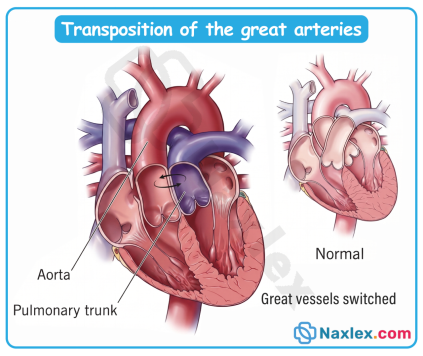
Epidemiology
- TGV accounts for approximately 5% to 7% of all congenital heart defects.
- It is the most common cyanotic heart defect presenting in the immediate neonatal period.
- There is a distinct male-to-female predilection, with a ratio of approximately 3:1.
- Occurs in roughly 20 to 30 per 100,000 live births.
Etiology
- Genetic factors: Often isolated, but can be associated with specific gene mutations (such as PROSIT24 or GDF1) or chromosomal syndromes, though less frequently linked to Down syndrome than septal defects.
- Environmental factors: Strongly linked to maternal pre-gestational diabetes, maternal obesity, exposure to organic solvents, and advanced maternal age during the first trimester.
- Embryological failure: Results from the abnormal spiraling and partitioning of the truncus arteriosus by the aorticopulmonary septum during the 5th to 8th weeks of fetal development.
Pathophysiology
- Parallel Circulation: Unoxygenated systemic venous return enters the right atrium, passes to the right ventricle, and is pumped directly back out to the body via the transposed aorta. Simultaneously, oxygenated pulmonary venous return enters the left atrium, passes to the left ventricle, and is pumped back into the lungs via the transposed pulmonary artery.
- Survival Dependency: Life is incompatible with birth unless an anatomical communication exists to allow mixing of the two circuits. Mixing typically occurs via a Patent Ductus Arteriosus (PDA), Foramen Ovale/ Atrial Septal Defect (ASD), or Ventricular Septal Defect (VSD).
- Hypoxemia and Tissue Hypoxia: As the PDA begins to close postnatally, systemic oxygen saturation drops precipitously, leading to severe metabolic acidosis and tissue hypoxia.
Clinical Manifestations
Symptoms present immediately at birth or within the first hours of life, depending on the degree of mixing through fetal shunts.
- General: Profound, progressive cyanosis that does not improve with supplemental oxygen administration (unresponsive to hyperoxia challenge). Tachypnea and signs of respiratory distress (grunting, flaring, retractions) emerge as tissue hypoxia worsens.
- Growth/Feeding: Poor feeding performance and rapid fatigue during attempts to suckle.
- Cardiac Auscultation:
- S1: Normal.
- S2: Typically single and loud, because the anteriorly transposed aorta closes closer to the chest wall, obscuring the pulmonic closure sound.
- Murmur: Often completely absent if the interventricular septum is intact. If a VSD or PDA is present, a systolic murmur or continuous murmur may be heard, respectively.
Diagnostic Evaluation
- Echocardiography (ECHO): The gold standard diagnostic tool. It directly visualizes the ventriculoarterial discordance, confirming that the aorta arises from the right ventricle and the pulmonary artery from the left ventricle, while mapping out any concurrent mixing lesions (ASD, VSD, PDA).
- Electrocardiogram (ECG): Usually reveals right axis deviation and right ventricular hypertrophy (RVH) because the right ventricle continues to pump against high systemic vascular resistance.
- Chest X-ray (CXR): Characteristically demonstrates cardiomegaly with a narrow mediastinal shadow, classically described as an "egg-on-a-string" appearance, along with increased pulmonary vascular markings.
Image Title: Transposition of the Great Arteries Chest X-ray
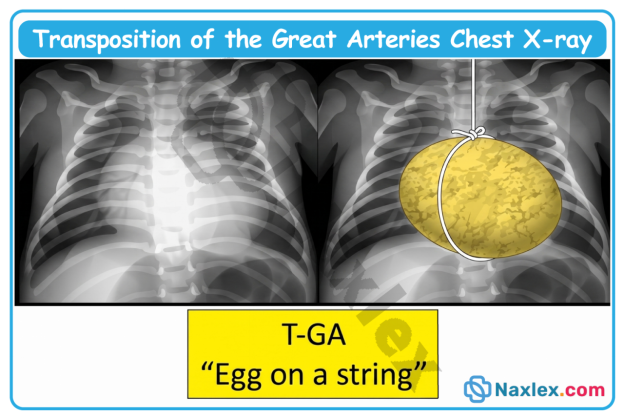
- Hyperoxia Test: Administering 100% fraction of inspired oxygen (FiO2) fails to significantly raise the partial pressure of arterial oxygen (PaO2), pointing directly to a right-to-left structural shunt.
Therapeutic Management
A. General & Medical Principles
- Prostaglandin E1 (PGE1) Infusion: Initiated immediately via a secure central or peripheral line. PGE1 prevents the physiological closure of the patent ductus arteriosus, maintaining critical mixing of systemic and pulmonary blood.
- Therapeutic Sub-ambient Oxygen/Minimal Handling: High oxygen concentrations reduce pulmonary vascular resistance and may hasten ductal closure; therefore, oxygen supplementation is kept minimal, targeting oxygen saturations between 75% and 85%.
- Emergency Balloon Atrial Septostomy (Rashkind Procedure): Performed in the cardiac catheterization lab or at the bedside under ECHO guidance if severe hypoxia persists despite PGE1. A balloon catheter is advanced into the right atrium, through the foramen ovale into the left atrium, inflated, and pulled back forcefully to tear the interatrial septum, creating a large ASD for blood mixing.
B. Surgical Management
- Indication: Definitively required for all neonates diagnosed with TGV, typically executed within the first 1 to 2 weeks of life.
- Procedure (Arterial Switch Operation / ASO): The definitive corrective surgery (Jatene procedure). The transposed aorta and pulmonary artery are transected above the valves and switched to their correct anatomical ventricles. Crucially, the coronary arteries must be meticulously excised from the native aorta and replanted into the neoaorta.
Post-Operative Nursing Interventions
Post-Op Day 0 to 1 (ICU Phase)
- Maintain continuous mechanical ventilation and closely analyze arterial blood gases (ABGs) to optimize acid-base balance and oxygenation.
- Monitor hourly chest tube output. Report drainage greater than 3 mL/kg/hr for 3 consecutive hours or greater than 5 mL/kg in any single hour, as this signals acute post-operative hemorrhage.
- Provide continuous ECG monitoring; closely watch for bradyarrhythmias, heart blocks, or ST-segment changes that indicate coronary artery compression or spasm following replantation.
- Maintain a strict fluid balance profile via an indwelling Foley catheter, ensuring a minimum urine output of 1 mL/kg/hr.
- Regularly check central and peripheral perfusion status (ensure capillary refill time remains less than 3 seconds).
Post-Op Day 2 to 3 (Transition Phase)
- Gradually wean from mechanical ventilation and supplemental oxygen as tolerated by the patient.
- Slowly advance nutrition from NPO status to clear liquids or specialized infant formula once bowel sounds return and extubation is successful.
- Implement respiratory therapy support (e.g., gentle chest physiotherapy or tactile stimulation to encourage deep crying) to prevent micro-atelectasis.
- Ensure multimodal pain management utilizing scheduled intravenous acetaminophen or ketorolac with low-dose opioid rescue choices.
Post-Op Day 4 to Discharge
- Regularly inspect the sternotomy surgical incision site for signs of localized infection (warmth, purulent drainage, erythema, or wound dehiscence).
- Assist the infant's caregivers with safe handling and holding techniques during gradual increases in ambient activity.
- Deliver comprehensive discharge and parent education, explicitly instructing caregivers never to lift the infant by their arms or under the armpits for 4 to 6 weeks to prevent structural mechanical stress on the healing sternum.
Nursing Diagnosis (Post-Op)
Post-Op Day 1
- Decreased Cardiac Output related to surgical myocardial ischemia, coronary artery translocation alterations, or arrhythmia development.
- Impaired Gas Exchange related to cardiopulmonary bypass effects, mechanical ventilation dependencies, or ventilation-perfusion mismatching.
- Risk for Fluid Volume Deficit related to chest tube blood loss, surgical hemorrhage, or aggressive post-bypass diuretic management.
Post-Op Day 2 to 3
- Acute Pain related to surgical sternotomy access, chest tube placement irritation, and frequent nursing manipulations.
- Ineffective Airway Clearance related to thick retained respiratory secretions, relative immobility, and post-extubation incisional splinting.
- Risk for Infection related to multiple indwelling lines (central venous lines, arterial lines) and the median sternotomy incision.
Post-Op Day 4+
- Deficient Knowledge (Caregiver) related to specialized infant home care routines, recognition of cardiac decompensation signs, and medication tracking.
- Activity Intolerance related to prolonged surgical recovery, decreased caloric intake during the acute illness, and generic physical weakness.
Complications
- Cardiac: Acute myocardial infarction or ischemia due to coronary artery kinking or stenosis at the surgical reimplantation sites; supraventricular arrhythmias, or neo-aortic root dilation.
- Pulmonary: Pulmonary artery stenosis at the site of the surgical anastomosis.
- Surgical: Postpericardiotomy syndrome, phrenic nerve injury causing diaphragmatic paralysis, or paradoxical systemic emboli.
Prognosis
- Without surgical intervention, the mortality rate is approximately 30% within the first week of life, and exceeds 90% by 1 year of age.
- Following a successful Arterial Switch Operation (ASO), the long-term prognosis is excellent, boasting a survival rate greater than 95% at 20 years.
- Most survivors enjoy a completely normal life span and normal exercise tolerance, requiring only lifelong periodic follow-up with a pediatric cardiologist.
Total Anomalous Pulmonary Venous Connection
Total anomalous pulmonary venous connection (TAPVC) is a critical cyanotic congenital heart defect in which none of the four pulmonary veins connect directly to the left atrium. Instead, all oxygenated pulmonary venous return drains abnormally into the right atrium or systemic venous circulation (such as the superior vena cava, inferior vena cava, or coronary sinus). Survival is strictly dependent on a right-to-left interatrial shunt, typically an atrial septal defect (ASD) or patent foramen ovale (PFO), to deliver oxygenated blood to the left side of the heart and the rest of the body.
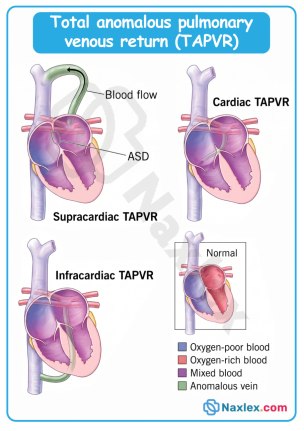
Epidemiology
- TAPVC is rare, accounting for approximately 1% to 3% of all congenital heart anomalies.
- The overall incidence is roughly 1 in 10,000 to 15,000 live births.
- Unlike ASD, there is no significant female predilection; however, the infracardiac type shows a distinct male predominance (up to a 4:1 male-to-female ratio).
- Supracardiac TAPVC is the most common anatomical variant, representing roughly 45% to 50% of all presentations.
Etiology
- Genetic factors: Can be isolated or occur in association with heterotaxy syndromes (asplenia or polysplenia), Trisomy 21, or specific genetic mutations altering early cardiac looping.
- Environmental factors: Maternal exposure to specific environmental toxins, metabolic conditions (uncontrolled maternal diabetes), or organic solvent exposure during the early weeks of embryogenesis.
- Embryological failure: Results from an developmental arrest during the first month of gestation. The common pulmonary vein fails to sprout from the posterior wall of the left atrium or prematurely undergoes atresia before connecting to the pulmonary venous plexus, forcing primitive systemic venous channels to persist.
Pathophysiology
- Total Mixing: Because all pulmonary veins dump into the right side of the heart, the right atrium becomes a common mixing chamber for completely deoxygenated systemic venous return and highly oxygenated pulmonary venous return.
- Obligatory Shunt: The mixed blood in the right atrium can only reach the left side of the heart and systemic circulation via a right-to-left shunt across an ASD or PFO.
- Volume Overload: The right atrium and right ventricle must accommodate the entire systemic venous return plus the entire pulmonary venous return, leading to severe right-sided heart volume overload and hypertrophy.
- Obstruction vs. Non-obstruction:
- Non-obstructed TAPVC: Pulmonary blood flow is massive, leading to early congestive heart failure and mild-to-moderate cyanosis.
- Obstructed TAPVC: If the anomalous venous pathway is compressed (classic in Infracardiac types passing through the diaphragm), pulmonary venous pressures skyrocket, causing severe pulmonary edema, profound hypoxemia, and neonatal shock.
Clinical Manifestations
Clinical presentation varies dramatically based on whether pulmonary venous drainage is obstructed.
- General: Profound, early cyanosis and tachypnea in newborns with obstruction. Infants with non-obstructed pathways present with poor feeding, diaphoresis during feeds, and failure to thrive.
- Respiratory: Severe respiratory distress, retractions, and grunting if obstruction is present; frequent lower respiratory tract infections due to pulmonary hypercirculation if non-obstructed.
- Cardiac auscultation:
- S1: Normal or prominent.
- S2: Widely split with a loud, accentuated pulmonic component due to pulmonary hypertension.
- Murmur: Usually a soft, hyperdynamic midsystolic ejection murmur at the upper left sternal border due to increased flow across the pulmonic valve. A mid-diastolic rumble may be noted at the lower left sternal border due to tricuspid overcirculation.
- Quadruple Rhythm: A distinctive 3rd or 4th heart sound can sometimes create a galloping quadruple rhythm in non-obstructed states.
Diagnostic Evaluation
- Echocardiography (ECHO): The definitive gold standard diagnostic tool. It visualizes the common pulmonary venous confluence, tracks the anomalous pathway, determines the direction of the right-to-left shunt across the atrial septum, and evaluates for the presence of venous obstruction.
- Electrocardiogram (ECG): Demonstrates severe right axis deviation, right atrial enlargement (tall, peaked P waves), and right ventricular hypertrophy.
- Chest X-ray (CXR): In non-obstructed older infants, it reveals the classic "snowman" or "figure-of-8" appearance caused by a dilated vertical vein and superior vena cava. In obstructed neonates, it reveals a normal-sized heart with severe, diffuse reticular patterns mimicking respiratory distress syndrome.
Image Title: Total Anomalous Pulmonary Venous Connection Chest X-ray
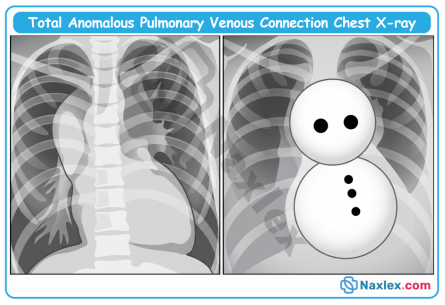
- Cardiac catheterization: Historically utilized but now largely reserved for emergency transcatheter decompression or when echocardiographic views are inconclusive regarding individual pulmonary vein entries.
Therapeutic Management
A. General Principles
- Stabilization: Obstructed TAPVC is a profound surgical emergency. Intubation, mechanical ventilation, and continuous inotropic support are implemented immediately.
- Prostagladin E1 (PGE1): May be infused to maintain ductal patency, though its therapeutic benefit is variable and depends heavily on the specific anatomical subtype.
- ECMO: Extracorporeal Membrane Oxygenation may be required as a bridge to surgery for infants presenting in extremis with severe pulmonary edema and refractory hypoxia.
B. Surgical Management
- Indication: All cases of TAPVC require definitive surgical repair. Obstructed variants undergo immediate emergent surgery, while non-obstructed forms are scheduled semi-urgently within the first few weeks or months of life.
- Procedure: Completed via open-heart surgery utilizing cardiopulmonary bypass. The common pulmonary venous confluence is anastomosed directly to the posterior wall of the left atrium, the anomalous vertical connecting channels are ligated, and the accompanying ASD or PFO is surgically closed.
Post-Operative Nursing Interventions
Post-Op Day 0 to 1 (ICU Phase):
- Maintain mechanical ventilation and strictly monitor arterial blood gases (ABGs) to manage volatile pulmonary vascular resistance.
- Monitor hourly chest tube output; report drainage greater than 3 mL/kg/hr for 3 consecutive hours or 5 mL/kg in any single hour to catch acute post-operative hemorrhage early.
- Continuously monitor ECG for tachyarrhythmias, junctional ectopic tachycardia (JET), or heart blocks resulting from suture lines near the conduction system.
- Maintain strict fluid balance and intake/output (I&O) tracking; monitor urinary output hourly through a Foley catheter (maintain greater than 1 mL/kg/hr).
- Assess peripheral perfusion, core-to-peripheral temperature gradients, and capillary refill time (normal less than 3 seconds) to ensure adequate cardiac output.
Post-Op Day 2 to 3 (Transition Phase):
- Encourage gradual weaning from mechanical ventilation and transition to supplemental oxygen as tolerated.
- Advance diet slowly from NPO to clear liquids or breast milk as active bowel sounds return and extubation goals are met.
- Utilize age-appropriate chest physiotherapy, gentle repositioning, or bubble blowing to prevent atelectasis and maximize recruitment of functional lung volumes.
- Provide aggressive pain management via scheduled IV multi-modal regimens (e.g., acetaminophen or ketorolac) combined with opioid rescue doses to minimize sympathetic surges.
Post-Op Day 4 to Discharge:
- Inspect the sternotomy incision daily for signs of infection, such as progressive erythema, warmth, or purulent drainage.
- Promote progressive, age-appropriate ambulation and holding to prevent standard post-surgical deconditioning.
- Deliver comprehensive caregiver education on handling restrictions, explicitly reinforcing that the infant must not be lifted by the arms or under the armpits for 4 to 6 weeks to ensure proper sternal healing.
Nursing Diagnosis (Post-Op)
Post-Op Day 1:
- Decreased Cardiac Output related to myocardial stunning, post-operative arrhythmias, or acute alterations in right-to-left fluid volume shifts.
- Impaired Gas Exchange related to cardiopulmonary bypass exposure, mechanical ventilation dependencies, or transient pulmonary venous congestion.
- Risk for Fluid Volume Deficit related to mediastinal bleeding or aggressive post-operative diuretic therapy.
Post-Op Day 2 to 3:
- Acute Pain related to the midline sternotomy site, mediastinal chest tube placement, and required nursing manipulations.
- Ineffective Airway Clearance related to thick retained secretions, transient diaphragm weakness, or splinting due to thoracic pain.
- Risk for Infection related to multiple indwelling central venous lines, arterial monitoring lines, and a healing surgical wound.
Post-Op Day 4+:
- Deficient Knowledge (Caregiver) related to specialized home medication schedules, post-surgical warning signs, and specific activity restrictions.
- Activity Intolerance related to surgical recovery, residual cardiopulmonary imbalances, and prolonged bed rest.
Complications
- Cardiac: Left ventricular dysfunction (due to a chronically underfilled left ventricle suddenly managing total systemic load), atrial flutter/fibrillation, and persistent pulmonary hypertension.
- Pulmonary: Recurrent pulmonary venous obstruction at the surgical anastomosis site, occurring in 5% to 15% of patients and presenting as late-onset respiratory distress.
- Surgical: Postpericardiotomy syndrome, structural phrenic nerve injury resulting in diaphragmatic paralysis, or localized wound infections.
Prognosis
- Surgical repair provides an excellent long-term survival rate exceeding 85% to 90% for uncomplicated, non-obstructed variants.
- Surgical mortality remains higher (up to 10% to 15%) in neonates presenting with severe infracardiac obstruction and preoperative cardiogenic shock.
- If the patient completes the first post-operative year without developing recurrent pulmonary venous stenosis or anastomotic narrowing, the long-term prognosis is outstanding, and most children achieve catch-up growth and lead active lives.
Truncus Arteriosus
Truncus arteriosus (TA) is a rare, complex, and cyanotic congenital heart anomaly characterized by a single large primitive arterial trunk that overrides a large ventricular septal defect (VSD). Instead of dividing into a distinct aorta and main pulmonary artery during fetal development, this single trunk serves as the sole outlet for both the right and left ventricles, supplying the systemic, pulmonary, and coronary circulations simultaneously.
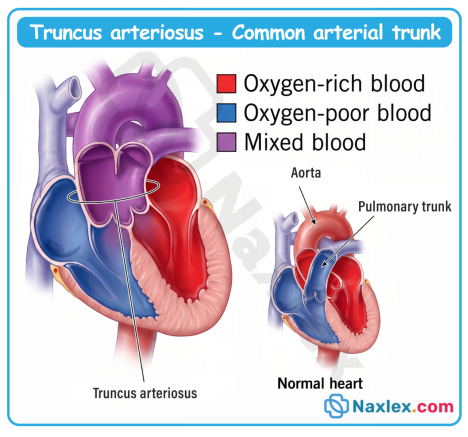
Epidemiology
- Truncus arteriosus is uncommon, accounting for approximately 1% to 2% of all congenital heart defects.
- The incidence is approximately 1 in 10,000 live births.
- Unlike ASD, there is no significant gender predilection; it affects males and females relatively equally.
- It carries an extremely high mortality rate if left untreated, with the majority of infants dying within the first year of life due to severe congestive heart failure.
Etiology
- Genetic factors: Highly associated with microdeletions of chromosome 22q11.2 (DiGeorge Syndrome and Velocardiofacial Syndrome), which impacts normal conotruncal development.
- Environmental factors: Maternal exposure to rubella, poorly controlled pregestational maternal diabetes, advanced maternal age, smoking, and alcohol consumption during the first trimester.
- Embryological failure: Occurs due to a failure of the neural crest-derived conotruncal ridges to fuse and spiral, which prevents the normal embryonic truncus arteriosus from dividing into the ascending aorta and the main pulmonary trunk.
Pathophysiology
- Mixing of blood: Deoxygenated systemic venous return enters the right ventricle, while oxygenated pulmonary venous return enters the left ventricle. Both streams meet and freely mix through the large, obligatory ventricular septal defect (VSD) directly underneath the truncal valve.
- Common ejection pathway: This mixed, desaturated blood is ejected out of both ventricles into the single massive truncal vessel.
- Shifting fluid dynamics: Blood flow divides into the systemic and pulmonary pathways based entirely on the path of least resistance. Initially, newborn pulmonary vascular resistance (PVR) is high, balancing flow.
- Pulmonary overcirculation: As PVR drops sharply over the first few weeks of life, blood preferentially floods the low-pressure pulmonary bed. This leads to massive pulmonary overcirculation, systemic hypoperfusion, and rapid volume overload of the left atrium and left ventricle.
- Vessel remodeling: Chronic volume and pressure overload damage the pulmonary vascular bed. If surgical intervention is delayed, irreversible pulmonary hypertension and pulmonary vascular obstructive disease will establish rapidly.
Anatomical Classifications
Anatomical variants are universally classified using two major systems based on how the pulmonary arteries arise from the common truncal vessel:
|
Type |
Collett and Edwards System (1949) |
Van Praagh System (1965 / 2000 Mod) |
|
Type I / A1 |
A single short pulmonary trunk arises from the common trunk and then branches into the right and left pulmonary arteries. (Most common, ~50-60% of cases). |
Identical to Collett & Edwards Type I; single pulmonary trunk arises from the left posterolateral side of the main truncus. |
|
Type II / A2 |
The right and left pulmonary arteries arise separately and directly from the posterior wall of the common trunk close to each other. |
The right and left branch pulmonary arteries have separate origins from the posterolateral portion of the common trunk (combines C&E Types II and III). |
|
Type III / A3 |
The right and left pulmonary arteries arise separately from the lateral aspects of the common trunk, widely spaced. |
Unilateral branch pulmonary artery atresia or absence; one lung is supplied by a branch from the truncus, while the other is fed by collaterals/PDA. |
|
Type IV / A4 |
No pulmonary arteries arise from the common trunk; pulmonary flow is supplied by major collateral arteries from the descending aorta (now classified as Tetralogy of Fallot with pulmonary atresia). |
Common trunk coexists with an underdeveloped, hypoplastic, or completely interrupted aortic arch. |
Image Title: Truncus Arteriosus Types
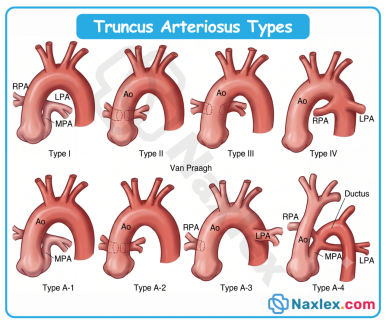
Clinical Manifestations
Infants may appear deceptively normal at birth while PVR remains elevated, but symptoms escalate rapidly over the first few weeks of life as pulmonary resistance plummets.
- General: Persistent mild-to-moderate cyanosis or duskiness that does not resolve with oxygen therapy, profound fatigue, lethargy, poor feeding patterns, and sweating during feeds leading to failure to thrive.
- Respiratory: Signs of severe congestive heart failure and pulmonary edema including tachypnea, grunting, nasal flaring, costosternal retractions, and persistent rales.
- Cardiac auscultation:
- S1: Normal.
- S2: Characteristically single, loud, and pounding because there is only one functioning semilunar valve closing (the truncal valve).
- Ejection Click: A sharp systolic ejection click is frequently heard immediately after S1 at the apex and left sternal border, caused by the opening of the large, often dysplastic truncal valve.
- Murmur: A harsh, loud pansystolic murmur (Grade/ III-IV/VI) is heard best at the lower left sternal border due to the VSD. A mid-diastolic low-pitched rumble may be heard at the apex due to excessive, increased blood flow returning across the mitral valve.
Diagnostic Evaluation
- Echocardiography (ECHO): The primary diagnostic tool. Confirms a single overriding arterial trunk, delineates the origin of the branch pulmonary arteries, measures the size of the VSD, and assesses the structure and competence of the truncal valve (which is frequently regurgitant or stenotic).
- Electrocardiogram (ECG): Demonstrates biventricular hypertrophy as both lower chambers adapt to systemic pressures. Right axis deviation and prominent P-waves indicating biatrial enlargement may be present.
- Chest X-ray (CXR): Typically reveals profound cardiomegaly, a prominent or absent pulmonary artery segment, an abnormally high right-sided aortic arch (present in ~30% of cases), and massively increased pulmonary vascular markings.
- Genetic Testing: Indicated in all presentations to confirm or rule out a 22q11.2 microdeletion (DiGeorge Syndrome).
Therapeutic Management
A. General Pre-Operative Principles
- Medical Stabilization: Aggressive management of congestive heart failure using loop diuretics (e.g., furosemide) and afterload reducers (e.g., ACE inhibitors) to ease systemic output.
- Inotropic Support: Digoxin or low-dose milrinone may be initiated to maximize myocardial contractility and lower systemic vascular resistance.
- Oxygen Delivery Balancing: Supplemental oxygen must be used with extreme caution. Oxygen is a potent pulmonary vasodilator; administering high concentrations drops PVR further, causing massive pulmonary flooding and dangerous systemic hypoperfusion. Target oxygen saturations are deliberately maintained at tight sub-normal parameters (75% to 85%).
B. Surgical Management
- Indication: Mandatory for survival. Performed early in infancy, typically within the first 2 to 6 weeks of life, before irreversible pulmonary vascular changes set in.
- Procedure (Complete Repair / Rastelli-type variant):
- The branch pulmonary arteries are surgically detached from the common truncal vessel.
- The remaining common trunk is repaired and remodeled to serve exclusively as the new ascending aorta.
- The large ventricular septal defect is closed using a synthetic patch (Dacron or pericardial), ensuring the left ventricle vents directly into the remodeled aorta.
- A valved Right Ventricle-to-Pulmonary Artery (RV-PA) conduit (allograft or synthetic tube) is placed to establish a brand-new pathway for right ventricular outflow to the lungs.
Post-Operative Nursing Interventions
Post-Op Day 0 to 1 (ICU Phase)
- Ventilatory Architecture & Gas Exchange: Maintain mechanical ventilation with precise sedation/paralysis to prevent pulmonary hypertensive crises. Closely monitor arterial blood gases (ABGs). Avoid hypercapnia and acidosis, which act as triggers for pulmonary vasoconstriction.
- Hemorrhage Tracking: Monitor hourly chest tube output. Report drainage greater than 3 mL/kg/hr for 3 consecutive hours OR greater than 5 mL/kg in any single hour, as this indicates acute surgical hemorrhage.
- Hemodynamic Core Parameters: Monitor mean arterial pressures (MAP) and central venous pressures (CVP). Assess peripheral perfusion markers (capillary refill time less than 3 seconds, core-to-peripheral temperature gradients, and strong pedal pulses).
- Rhythm Surveillance: Continuous ECG monitoring for conduction delays or lethal arrhythmias. Watch for Junctional Ectopic Tachycardia (JET) or varying degrees of Atrioventricular (AV) blocks caused by surgical manipulation near the AV node during VSD patch placement.
- Fluid & Metabolism Balancing: Strict intake and output (I&O) recording. Monitor urinary output hourly via an indwelling Foley catheter; report values dropping below 1 mL/kg/hr (signaling low cardiac output or early acute kidney injury).
Post-Op Day 2 to 3 (Transition Phase)
- Pulmonary Toilet and Weaning: Support gradual weaning from mechanical ventilation to supplemental oxygen as tolerated. Perform gentle endotracheal or oral suctioning accompanied by pre-oxygenation. Initiate active atelectasis prevention measures (bubble-blowing or infant repositioning shifts).
- Metabolic Escalation: Advance gastrointestinal intake from NPO to clear liquids or specialized formulas via a nasogastric/orogastric tube as bowel sounds recover. Monitor closely for abdominal distension or feeding intolerance.
- Analgesic Titration: Administer scheduled multi-modal pain therapies (IV ketorolac or acetaminophen) coupled with continuous or scheduled opioid infusions (fentanyl or morphine) to minimize sympathetic stress responses.
Post-Op Day 4 to Discharge
- Integumentary Inspection: Assess the median sternotomy incision site hourly then daily for early indicators of deep or superficial wound infections (erythema, localized warmth, edema, or purulent drainage).
- Caregiver Empowerment: Provide intensive education regarding activity restrictions. Instruct caregivers never to lift the infant under the arms/axillae for 4 to 6 weeks to prevent sheer forces across the healing bony sternum; demonstrate scooping techniques supporting the neck and bottom.
- Conduit Longevity Counseling: Educate parents that the RV-PA conduit does not grow with the child. Emphasize the absolute necessity of long-term pediatric cardiology follow-ups, as future surgical or transcatheter conduit replacements will be required as the child grows.
Nursing Diagnosis (Post-Op)
Post-Op Day 1
- Decreased Cardiac Output related to structural surgical trauma, altered pre/afterload parameters, transient myocardial dysfunction, or dysrhythmias.
- Impaired Gas Exchange related to ventilation-perfusion (V/Q) mismatching, high pulmonary vascular resistance, residual anesthesia effects, or surgical pain.
- Risk for Altered Trigeminal/Systemic Perfusion related to fluid shifts, chest tube losses, or rapid changes in vascular circuit resistance.
Post-Op Day 2 to 3
- Acute Pain related to invasive chest tubes, continuous tissue retraction, and a median sternotomy incision.
- Ineffective Airway Clearance related to viscous retained secretions, post-extubation glottic edema, and a pain-induced reluctance to cough or sigh deep.
- Risk for Infection related to indwelling central venous lines, arterial monitoring lines, temporary pacing wires, and an open surgical field.
Post-Op Day 4+
- Deficient Knowledge (Caregiver) related to specialized home medication management (diuretics, digoxin safety parameters), wound care tracking, and red flag clinical signs.
- Activity Intolerance related to surgical convalescence, compromised cardiopulmonary reserves, and generalized physical deconditioning.
Complications
- Cardiac: Pulmonary hypertensive crises (abrupt spiking of PVR leading to right-heart collapse), residual ventricular septal leaks, persistent truncal (aortic) valve regurgitation, and refractory tachyarrhythmias (JET, atrial flutter).
- Pulmonary: Chronic atelectasis, diaphragmatic paralysis due to phrenic nerve injury during thoracic dissection, and pleural effusions.
- Surgical/Systemic: Conduit stenosis or calcification, postpericardiotomy syndrome, infective endocarditis, or thromboembolic neurological events (stroke).
Prognosis
- Surgical survival rates for early primary repair range between 80% and 97% in high-volume pediatric cardiac centers.
- Long-term data reveals roughly 75% of survivors are alive 20 years post-op.
- Re-intervention is a mathematical certainty; nearly 100% of infants will outgrow or experience structural degeneration of their RV-PA conduit, requiring successive surgical replacements or transcatheter balloon/stent dilations throughout late childhood and adolescence.
Hypoplastic Left Heart Syndrome
Hypoplastic left heart syndrome (HLHS) is a severe, complex congenital heart anomaly characterized by the marked underdevelopment of the left-sided cardiac structures. This includes a hypoplastic left ventricle, atresia or severe stenosis of the aortic and mitral valves, and hypoplasia of the ascending aorta and aortic arch. As a result, the left side of the heart is completely incapable of supporting systemic circulation, rendering systemic perfusion entirely dependent on a patent ductus arteriosus (PDA) after birth.
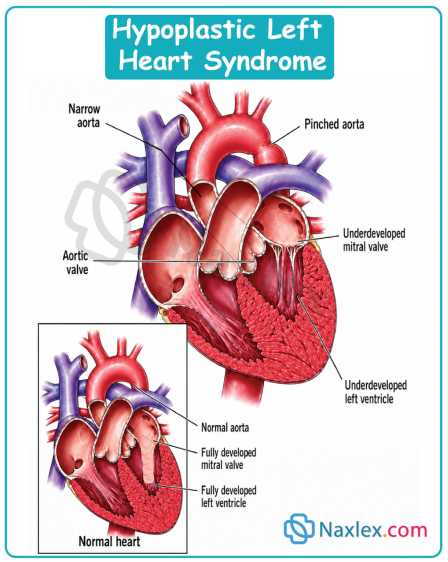
Epidemiology
- HLHS accounts for approximately 1% to 3% of all congenital heart defects, but it is responsible for nearly 25% of all cardiac-related deaths in the first week of life if left untreated.
- The incidence is approximately 1 in 3,000 to 4,300 live births.
- There is a slight male predilection, with a male-to-female ratio of approximately 1.5:1.
- It represents one of the most challenging and high-risk conditions in pediatric cardiology.
Etiology
- Genetic factors: Highly heritable with a complex multi-genic inheritance pattern. It is associated with specific genetic syndromes like Turner syndrome, Trisomy 13, Trisomy 18, and mutations in genes such as NOTCH1 and NKX2.5.
- Environmental factors: Maternal exposure to specific industrial solvents, maternal diabetes, or advanced maternal age have been noted as potential contributing risks.
- Embryological failure: Result of restricted blood flow through the left side of the developing heart during fetal life, leading to the failure of left ventricular and valvular growth (the "no flow, no grow" hypothesis).
Pathophysiology
- Underdeveloped Left Ventricle: The left ventricle is tiny, non-functional, and unable to pump blood to the body.
- Ductal-Dependent Systemic Circulation: Oxygenated blood returning from the lungs to the left atrium cannot pass normally into the left ventricle. Instead, it crosses an atrial communication (PFO or ASD) into the right atrium, mixing with deoxygenated systemic venous return.
- Single Ventricle Function: The right ventricle must perform double duty: pumping mixed blood into the pulmonary artery to the lungs, and simultaneously redirecting a portion of that blood through the patent ductus arteriosus (PDA) into the aorta to supply the brain and coronary arteries.
- Ductal Closure Crisis: As the PDA begins to constrict naturally within the first hours or days of life, systemic blood flow drops rapidly. This leads to systemic hypoperfusion, severe metabolic acidosis, hypovolemic-cardiogenic shock, and organ failure unless the ductus is medically forced open.
Clinical Manifestations
Infants often appear healthy and stable at birth while the ductus arteriosus remains open, but deteriorate rapidly as it closes.
- General: Progressive, profound cyanosis, cold extremities, weak peripheral pulses, and a grayish skin color as systemic perfusion collapses.
- Respiratory: Tachypnea, dyspnea, grunting, and retractions due to severe pulmonary overcirculation and congestive heart failure.
- Cardiac auscultation:
- S1: Normal.
- S2: Typically single and loud because the aortic valve component is faint or entirely absent.
- Murmur: A non-specific, soft systolic ejection murmur may be heard at the left sternal border, or a continuous machinery-like murmur if a patent ductus arteriosus is present, though murmurs can be surprisingly quiet or absent.
- Shock/Metabolic: Hypotension, delayed capillary refill (> 3 seconds), oliguria, and profound metabolic acidosis.
Diagnostic Evaluation
- Echocardiography (ECHO): The gold standard diagnostic tool. It definitively shows a diminutive left ventricle, atretic/stenotic aortic and mitral valves, a hypoplastic ascending aorta, and confirms the size and patency of the PDA and atrial communication.
- Electrocardiogram (ECG): Demonstrates right axis deviation and right ventricular hypertrophy (RVH) due to chronic right-sided volume and pressure workload.
- Chest X-ray (CXR): Typically reveals cardiomegaly and marked pulmonary venous congestion or increased pulmonary vascular markings.
- Cardiac Catheterization: Rarely needed for initial diagnosis, but may be used emergently to perform an atrial septostomy if the interatrial communication is severely restrictive.
Therapeutic Management
A. Pre-Operative General Principles
- Prostaglandin E1 (Alprostadil) Infusion: Continuous IV infusion is started immediately to prevent the closure of, or reopen, the ductus arteriosus. This maintains essential systemic blood flow.
- Balancing the Qp:Qs Ratio: Careful management of the balance between pulmonary blood flow (Qp) and systemic blood flow (Qs).
- Avoid hyperoxemia: Keep targeted SpO2 tight between 75% to 85%. High supplemental oxygen acts as a potent pulmonary vasodilator, which steals blood from the systemic loop and floods the lungs.
- Permissive Hypercapnia: Sub-ambient oxygen environment or mild hypoventilation on a mechanical ventilator may be used to elevate pulmonary vascular resistance (PVR) slightly, shifting blood flow safely back toward systemic circulation.
- Avoid Inadvertent Over-oxygenation: Maintain room air (FiO2 21%) or precise blending; avoid high-flow or 100% oxygen therapies unless directed.
B. Surgical Management (Staged Palliation)
HLHS cannot be cured, but it is palliated through a series of three highly complex surgeries to convert the heart into a single-ventricle system where the right ventricle acts as the systemic pump.
Stage 1: The Norwood Procedure: First 1-2 weeks of life.
The hypoplastic aorta is reconstructed and connected directly to the right ventricle so it can pump blood to the body. A shunt (either a modified Blalock-Taussig [BT] shunt or a Sano shunt) is placed to provide a controlled source of blood flow to the lungs. The atrial septum is completely removed to ensure unhindered flow from the lungs to the right side of the heart.
Stage 2: The Bidirectional Glenn Procedure: Age 4-6 months.
The superior vena cava (SVC) is disconnected from the heart and sutured directly to the pulmonary artery. This routes deoxygenated blood from the upper body straight to the lungs without passing through the ventricle, reducing the volume workload on the right ventricle. The previous BT or Sano shunt is removed.
Stage 3: The Fontan Procedure: Age 2-4 years.
The inferior vena cava (IVC) is connected to the pulmonary artery, often via an extracardiac conduit. This completely separates systemic and pulmonary circulations. The single right ventricle now functions exclusively as the systemic pump, driving oxygenated blood to the body, while systemic venous blood flows passively into the lungs.
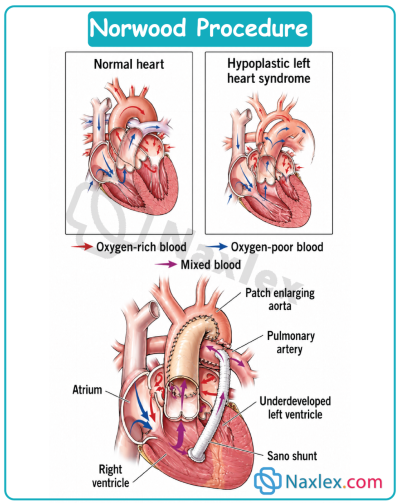
Post-Operative Nursing Interventions
Post-Op Day 0 to 1 (ICU Phase)
- Monitor Hemodynamic Balance: Maintain SpO2 precisely between 75% and 85%. Watch for signs of pulmonary overcirculation (SpO2 > 85%, widening pulse pressures, hypotension) which indicates blood is stealing away from the body to the lungs.
- Monitor Chest Tube Output: Assess hourly drainage. Report immediately if output is greater than 3 mL/kg/hr for 3 consecutive hours or greater than 5 mL/kg in any single hour (indicates surgical hemorrhage).
- Vigilant ECG Monitoring: Watch for arrhythmias, especially Junctional Ectopic Tachycardia (JET) or heart blocks, which can quickly drop cardiac output.
- Strict Intake and Output (I&O): Monitor fluid balances hourly. Maintain a patent Foley catheter; target urine output at a minimum of 1 mL/kg/hr to preserve renal perfusion.
- Perfusion and Pulse Checks: Assess capillary refill times (normal < 3 seconds) and evaluate core-to-peripheral temperature gradients alongside central and peripheral pulses.
Post-Op Day 2 to 3 (Transition Phase)
- Weaning Ventilation: Carefully monitor respiratory mechanics during weaning from mechanical ventilation to prevent hypoxemia or respiratory acidosis.
- Nutritional Advancement: Keep NPO status until bowel sounds return and hemodynamic status is completely stable; advance from clear liquids to specialized high-calorie formulas as tolerated.
- Pulmonary Hygiene: Utilize gentle suctioning, passive repositioning, or bubble blowing/age-appropriate techniques in older stages to prevent atelectasis.
- Structured Pain Management: Administer scheduled multi-modal analgesia (e.g., IV acetaminophen or ketorolac) combined with titrated intravenous opioids for rescue to prevent stress-induced hypertensive crises.
Post-Op Day 4 to Discharge
- Incision Site Assessment: Monitor the sternotomy line and previous chest tube sites daily for signs of infection (erythema, warmth, edema, or drainage).
- Ambulation and Handling: Promote gentle handling and cluster care; facilitate gradual ambulation for older toddlers recovering from later-stage surgeries.
- Caregiver Education: Extensive training on feeding strategies (often requiring nasogastric tubes due to high caloric needs), infection prevention, strict medication adherence, and sternal precautions (avoid lifting the child under the arms for 4 to 6 weeks).
Nursing Diagnosis (Post-Op)
Post-Op Day 1
- Decreased Cardiac Output related to complex single-ventricle physiology, myocardial surgical trauma, or altered systemic/pulmonary vascular resistance balances.
- Impaired Gas Exchange related to mechanical ventilation dependency, altered pulmonary blood perfusion pathways, or ventilation-perfusion mismatching.
- Risk for Fluid Volume Deficit related to chest tube blood loss, surgical third-spacing shifts, or intensive diuretic therapy.
Post-Op Day 2 to 3
- Acute Pain related to sternotomy incision, mediastinal chest tube irritation, and invasive central lines.
- Ineffective Airway Clearance related to thick respiratory secretions, mechanical ventilation trauma, or reluctance to clear airway secondary to surgical pain.
- Risk for Infection related to multiple indwelling invasive lines (arterial, central venous lines) and a large median sternotomy incision.
Post-Op Day 4+
- Deficient Knowledge (Caregiver) related to highly complex home care protocols, multiple critical medication regimens, feeding challenges, and subtle red-flag identification.
- Activity Intolerance related to prolonged surgical recovery, baseline cardiac status, and generalized physical deconditioning.
Complications
- Cardiac: Single-ventricle pump failure, severe arrhythmias (especially during Fontan transition), thromboembolism, and progressive tricuspid valve regurgitation.
- Pulmonary: Pulmonary hypertension, plastic bronchitis (a rare proteinaceous cast complication post-Fontan), or pleural effusions.
- Surgical/Systemic: Interstage mortality (sudden death between Stage 1 and Stage 2), developmental delays, protein-losing enteropathy (PLE), renal insufficiency, or postpericardiotomy syndrome.
Prognosis
- Without surgical intervention, HLHS is fatal, typically within the first few days to weeks of life.
- With staged palliation, 5-year survival rates range between 60% and 70%, depending on center experience and underlying anatomical variations.
- Long-term survivors face unique, ongoing morbidities, and many may ultimately require a orthotopic heart transplantation later in childhood or adulthood due to eventual single-ventricle heart failure.
Summary
- Mixed congenital heart defects represent a high-acuity category of cardiac anomalies where survival depends on the deliberate blending of oxygenated and deoxygenated blood within the heart's chambers or great vessels.
- Unlike simple acyanotic shunts, these defects alter the traditional serial configuration of the circulatory system into parallel loops or single-chamber mixing pools.
- Consequently, the blood delivered to the systemic organs is invariably desaturated, manifesting clinically as cyanosis that is largely unresponsive to supplemental oxygen therapy.
- A definitive hallmark of critical mixed lesions, such as Transposition of the Great Vessels (TGV) and Hypoplastic Left Heart Syndrome (HLHS), is their absolute reliance on fetal transitional pathways, namely the Patent Ductus Arteriosus (PDA) and Patent Foramen Ovale (PFO).
- When these structures begin their natural closure shortly after birth, systemic perfusion or pulmonary mixing drops to zero, triggering swift metabolic acidosis, cardiogenic shock, and cardiovascular collapse.
- From a nursing perspective, managing these neonates requires maintaining a delicate equilibrium between pulmonary vascular resistance (PVR) and systemic vascular resistance (SVR).
- Because oxygen acts as a potent pulmonary vasodilator, administering excessive supplemental oxygen drastically drops PVR, causing blood to rush into the lungs and steal essential perfusion from the rest of the body.
- Nurses must target a lower baseline oxygen saturation (typically 75% to 85%) and maintain continuous, secure intravenous access for immediate prostaglandin E1 (PGE1) infusions to guarantee ductal patency.
- Definitive management involves complex surgical repairs, varying from the early neonatal arterial switch operation for TGV to the high-risk, three-stage palliative tracking (Norwood, Glenn, and Fontan procedures) required to reshape the right ventricle into a systemic pump for HLHS.
- Post-operative nursing care focuses on monitoring for low cardiac output syndrome, arrhythmias, and acute pulmonary hypertensive crises.

Naxlex
Videos
Login to View Video
Click here to loginTake Notes on CONGENITAL HEART DISEASES: MIXED DEFECTS
This filled cannot be empty
Join Naxlex Nursing for nursing questions & guides! Sign Up Now