





Please set your exam date
Drugs Used to Treat Upper Respiratory Disease
Study Questions
Practice Questions 1
The nurse is teaching a client about the use of dextromethorphan with guaifenesin (Robitussin-DM) syrup for a cough accompanied by thick mucus. Which instruction should be included in the client’s teaching?
Explanation
Dextromethorphan with guaifenesin syrup contains a centrally acting antitussive combined with an expectorant agent designed to suppress nonproductive cough irritation while liquefying viscid respiratory tract secretions. Guaifenesin reduces the viscosity of tenacious mucus by stimulating respiratory tract secretory glands, thereby facilitating effective mucociliary clearance. Overdosing or drug abuse precipitates central nervous system depression, dizziness, and gastrointestinal upset.
Rationale for correct answer
D. Avoiding liquid consumption immediately following oral administration prevents washing away the localized, demulcent coating that the thick syrup provides to irritated pharyngeal tissues. Concurrently, elevating systemic fluid consumption throughout the day maximizes the systemic hydratant effects of the expectorant component on lower respiratory secretions. This dual mechanical approach targets both the upper airway hyper-responsiveness and the systemic mucolytic thinning requirements of productive respiratory conditions.
Rationale for incorrect answers
A. Remaining in a recumbent position after swallowing an oral cough preparation serves no beneficial therapeutic purpose and can increase the risk of aspiration in productive pulmonary states. Post-nasal drip and pooled bronchial secretions accumulate in the posterior pharynx during horizontal positioning, which may exacerbate coughing paroxysms rather than suppress them. Vertical or semi-Fowler positioning optimizes lung expansion and supports natural expectoration pathways during recovery from upper respiratory infections.
B. Reducing total liquid consumption directly opposes the pharmacodynamic mechanism of expectorant medications, which rely heavily on systemic hydration to thin out thick bronchial plugs. Restricting hydration causes respiratory mucus to become increasingly inspissated, rendering it harder to clear and potentially leading to small airway obstruction or secondary bacterial infections. The nurse must encourage adequate volume replacement to complement the therapeutic action of the mucolytic agent.
C. Administering this liquid formulation specifically with food is not required because the chemical components do not exhibit absorption dependency on dietary fats or caloric intake. While minor gastrointestinal irritation can occasionally occur, taking the syrup with full meals can delay gastric emptying and slow the onset of acute cough suppression. Maximizing localized pharyngeal soothing properties relies on direct mucosal contact rather than systemic digestive interaction
Test-taking strategy
- Identify the Prioritization Principle: Apply medication safety and clinical efficacy frameworks to determine the correct instructional combination for an antitussive-expectorant mixture.
- Evaluate Each Clinical Statement:
- o Rule out Choice 1 (Lie supine for 30 minutes): Fails to optimize respiratory expansion and increases aspiration risks in clients producing bronchial mucus.
- o Rule out Choice 2 (Drink minimal fluids): Contradicts the physiological requirement of expectorants, which need systemic water to effectively liquefy secretions.
- o Rule out Choice 3 (Take the drug with food): Introduces unnecessary dietary restrictions that slow down the therapeutic onset of acute symptom relief.
- o Choice 4 (Avoid fluids immediately but increase overall intake): Correctly protects localized soothing action while ensuring optimal systemic hydration for mucolytic thinning.
- Select the Priority Instruction: Choice 4 provides the optimal behavioral strategy to maximize the therapeutic outcomes of the combined medication.
Take home points
- Guaifenesin requires high systemic hydration levels to effectively reduce the viscosity of thick respiratory mucus.
- Refraining from drinking liquids immediately after syrup ingestion preserves the localized soothing effect on irritated pharyngeal tissues.
- Expectorants and antitussives do not require food for absorption, and resting flat can worsen productive cough irritation.
- Dextromethorphan acts centrally on the medullary cough center to suppress unproductive, fatiguing cough reflexes.
A patient has been prescribed guaifenesin (Robitussin). The nurse understands that the purpose of the drug is to accomplish what?
Explanation
Guaifenesin is an expectorant agent that acts by increasing the volume and reducing the viscosity of secretions in the trachea and bronchi. It enhances mucociliary clearance by stimulating respiratory tract secretory glands, converting dry coughs into productive coughs. Major adverse effects include nausea, vomiting, dizziness, and headache. Contraindications include known hypersensitivity to the active ingredient.
Rationale for correct answer
B. Guaifenesin increases fluid flow in the respiratory tract, decreasing the adhesiveness and viscosity of tenacious phlegm. Thinning these mucus plugs allows effective ciliary action to clear the airways during voluntary coughing. This action converts an unproductive paroxysm into a effective secretory evacuation.
Rationale for incorrect answers
A. Treating allergic rhinitis and motion sickness describes the therapeutic profile of first-generation H1 receptor antagonists such as diphenhydramine or dimenhydrinate. Expectorant medications exert no direct central vestibulo-ocular or peripheral histaminergic receptor blockade. They lack antiemetic properties required for vestibular labyrinthine suppression.
C. Competing with endogenous histamine at H1 receptor sites is the primary pharmacodynamic mechanism of antihistamines. Guaifenesin does not bind to peripheral H1 receptors to attenuate histamine-mediated capillary permeability or smooth muscle constriction. It operates strictly via secretomotor stimulation.
D. Stimulating vascular alpha-adrenergic receptors in the nasal mucosa describes the decongestant mechanism of agents like phenylephrine or pseudoephedrine. Alpha-1 agonist activation leads to localized arteriolar vasoconstriction, reducing turbinate swelling and nasal airway resistance. Expectorants possess no direct sympathomimetic vasoconstrictive properties.
Test-taking strategy
- Identify the Subject: Determine the primary pharmacological purpose and mechanism of action of guaifenesin.
- Evaluate Each Option:
- o Rule out Choice 1: Describes the dual therapeutic indications of H1-antagonists rather than expectorants.
- o Choice 2: Correctly identifies the mucolytic and expectorant action that thins bronchial secretions for clearance.
- o Rule out Choice 3: Refers to H1-receptor competitive inhibition typical of antihistamine pharmacodynamics.
- o Rule out Choice 4: Outlines alpha-1 adrenergic vasoconstriction characteristic of sympathomimetic nasal decongestants.
- Select the Correct Choice: Choice 2 accurately defines the precise therapeutic rationale for administering an expectorant.
Take home points
- Guaifenesin is an expectorant that thins and loosens bronchial secretions to facilitate coughing.
- Antihistamines block H1 receptors to prevent allergic rhinitis symptoms and motion sickness.
- Sympathomimetic decongestants stimulate alpha-adrenergic receptors to cause nasal mucosal vasoconstriction.
- Adequate fluid intake enhances the pharmacological action of expectorants in liquefying mucus.
The order for patient reads: “Give guaifenesin, 300 mg per enteral feeding tube every 4 hours as needed for cough.” The medication comes in a bottle that has 100 mg/5 mL. How many milliliters will the nurse give per dose?
Explanation
Guaifenesin is an expectorant that increases respiratory tract fluid volume and decreases mucus viscosity. Enteral dosage calculations require precise cross-multiplication of the ordered mass against the available liquid concentration. Ensuring the exact volumetric delivery avoids under-dosing or toxic accumulations.
Rationale for correct answer
Identify the ordered dose and available concentration
Ordered Dose: 300 mg
Available Concentration: 100 mg / 5 mL
Calculate the volume to administer in milliliters (mL)
Volume = (Ordered Dose ÷ Available Dose) × Available Volume
Volume = (300 ÷ 100) × 5
Volume = 3 × 5
Volume = 15 mL
Test-taking strategy
- Identify the Core Question Objective: Calculate the exact volume in milliliters required to administer a 300 mg dose of guaifenesin using a 100 mg/5 mL stock concentration.
- Evaluate the Mathematical Relationship:
- Apply the standard dosage calculation formula where the desired dose is divided by the dose on hand, then multiplied by the quantity vehicle volume.
- Divide 300 mg by 100 mg to determine the required proportional unit multiplier of 3.
- Multiply the baseline volume of 5 mL by the unit multiplier of 3 to compute the final required liquid volume.
- The mathematical step yields 15 mL exactly, which matches the required dose profile.
- Select the Correct Value: The computation establishes 15 mL as the only accurate volumetric delivery choice.
Take home points
- Enteral medication calculations must utilize the desired over have formula to prevent profound dosing variances.
- Guaifenesin requires adequate fluid volume delivery to optimize its systemic mucokinetic and expectorant properties.
- Liquid medications administered via enteral tubes must be accurately measured using calibrated oral syringes.
- Verifying stock concentrations against provider orders prevents critical medication errors and adverse client outcomes.
A nurse is caring for a client who presents with a persistent, dry, hacking cough that is preventing sleep. The client has no excess mucus production. Which medication class is most appropriate for this client?
Explanation
A persistent nonproductive cough disrupts physiologic rest and requires targeted neurological or peripheral intervention. Antitussives suppress the cough reflex by acting centrally on the medulla oblongata or peripherally on respiratory tract stretch receptors. These therapeutic agents are specifically indicated for nonproductive respiratory irritations where excessive mechanical coughing induces significant thoracic pain or severe sleep deprivation. Conversely, conditions involving retained secretions require distinct secretolytic agents to promote airway clearance rather than central autonomic cough suppression.
Rationale for correct answer
C. An antitussive medication class is the most appropriate selection for a patient presenting with a nonproductive, sleep-disrupting cough. These pharmacological therapies cross the blood-brain barrier to elevate the threshold of the central cough center located within the brainstem. By decreasing the frequency and intensity of efferent vagal nerve signals, they effectively diminish the hyperactive involuntary cough reflex. Therefore, this targeted suppression directly mitigates the underlying nocturnal wakefulness without disrupting critical physiological airway clearance.
Rationale for incorrect answers
A. Expectorants function primarily by increasing the volume and reducing the viscosity of respiratory tract secretions. These agents stimulate bronchial gland output, converting a dry irritation into a productive cough to facilitate manual expectoration. Since this particular client exhibits no retained secretions, adding an expectorant would provide no clinical therapeutic value. Thus, this drug class fails to address the primary immediate need for central neurological cough suppression.
B. Mucolytics are specifically designed to chemically degrade the molecular structure of thick, tenacious mucous plugs. These medications actively break disulfide bonds within mucoprotein complexes, liquefying hyperviscous secretions in diseases like cystic fibrosis. The client in this scenario lacks excess mucus production, rendering the dynamic biochemical properties of mucolytics entirely redundant. Consequently, utilizing this class would not alleviate the mechanical irritation driving this dry hacking cough.
D. Nasal decongestants target localized vascular engorgement within the nasopharyngeal passages rather than pulmonary reflex loops. These sympathomimetic drugs stimulate alpha-1 adrenergic receptors to induce vasoconstriction, effectively relieving rhinitis and upper airway swelling. Because this client is suffering from a lower respiratory mechanical cough reflex rather than anatomical nasal airway blockage, decongestants are clinically inappropriate. Therefore, this selection fails to resolve the lower tract neurogenic irritation causing the sleep deprivation.
Test-taking strategy
- Analyze the Scenario and Question:
- The client presents with a dry, hacking cough without excess mucus production that actively prevents rest, indicating a need for a medication that suppresses the cough reflex directly rather than one that manipulates sputum characteristics.
- Evaluate the Pharmacological Classes:
- Rule out Choice 1 (Expectorant): This class increases respiratory tract fluid volume to thin out thick secretions, which is inappropriate for a nonproductive cough.
- Rule out Choice 2 (Mucolytic): This agent breaks down disulfide bonds in thick mucus, which is redundant given the client's lack of mucus.
- Choice 3 (Antitussive): This medication class acts on the medullary cough center to decrease the cough reflex, matching the patient's need for symptom relief and rest.
- Rule out Choice 4 (Nasal decongestant): This class causes vasoconstriction in the nasal passages to treat nasal congestion, which does not address a hacking pulmonary cough.
- Select the Correct Option:
- Select Choice 3 as the definitive class designed to safely suppress a dry, nonproductive cough.
Take home points
- Antitussives are the primary pharmacological choice for dry, hacking, nonproductive coughs that interfere with rest and sleep.
- Expectorants decrease mucus viscosity and increase respiratory secretions, making them suitable only for productive coughs.
- Mucolytics chemically cleave mucoprotein bonds to liquefy thick, tenacious secretions and are not indicated when mucus is absent.
- Intranasal and oral decongestants stimulate alpha-adrenergic receptors to alleviate nasal congestion but have no direct effect on the pulmonary cough reflex.
The nurse is preparing to administer codeine oral solution to a client with a severe, nonproductive cough. Which baseline assessment finding requires the nurse to withhold the medication and immediately notify the healthcare provider?
Explanation
Codeine is an opioid agonist that acts directly on the cough center in the medulla to suppress nonproductive cough. It produces central nervous system depression, which can precipitate severe respiratory depression and secondary hypotension. Clients with baseline pulmonary compromise face heightened risk for life-threatening respiratory failure.
Rationale for correct answer
B. The client exhibits severe respiratory slowing below normal limits. Opioids directly suppress medullary respiratory centers, decreasing central sensitivity to carbon dioxide stimulation. Administering codeine would exacerbate this baseline bradypnea, leading to severe hypoventilation, respiratory acidosis, or respiratory arrest. Therefore, withholding codeine and immediately notifying the primary provider prevents life-threatening pharmacological overdose.
Rationale for incorrect answers
A. A heart rate of 88 beats/minute falls within the standard normal adult range of 60 to 100 beats/minute. Opioids typically induce mild bradycardia rather than tachycardia when impacting cardiac conduction. This heart rate indicates stable cardiac function and does not warrant withholding prescribed antitussive therapy. Therefore, the nurse identifies this reading as a safe physiological baseline for medication administration.
C. The blood pressure reading of 134/82 mmHg demonstrates stable hemodynamic performance without evidence of hypotension. While codeine can cause peripheral vasodilation and orthostatic blood pressure drops, this value reflects adequate systemic perfusion. Normal systemic blood pressure permits safe administration without immediate healthcare provider notification. Consequently, this cardiovascular assessment requires no urgent nursing provider communication.
D. An oxygen saturation of 96% on room air reflects optimal pulmonary gas exchange within the normal range of 95% to 100%. Codeine administration is unsafe primarily during active hypoxemia or severe ventilatory failure. This saturation value demonstrates adequate arterial oxygenation and does not require medication withholding. Thus, the nurse recognizes normal oxygenation as a non-concerning finding for antitussive therapy.
Test-taking strategy
- Identify the Priority Principle: Apply the Airway, Breathing, Circulation (ABCs) framework and patient stability criteria to determine the baseline assessment finding requiring immediate nursing intervention.
- Evaluate Each Client's Clinical Stability:
- Rule out Choice 1 (Heart rate 88 beats/minute): Represents a stable physiological finding within the standard adult reference range of 60 to 100 beats/minute.
- Choice 2 (Respiratory rate 10 breaths/minute): Demonstrates acute respiratory depression below the threshold of 12 breaths/minute, presenting an immediate breathing compromise with opioid administration.
- Rule out Choice 3 (Blood pressure 134/82 mmHg): Demonstrates normal hemodynamic parameters without evidence of opioid-induced systemic hypotension.
- Rule out Choice 4 (Oxygen saturation 96% on room air): Confirms adequate peripheral arterial oxygenation within the standard 95% to 100% target range.
- Select the Priority Client Assessment: Choice 2 exhibits acute respiratory depression requiring immediate medication withholding and physician notification.
Take home points
- Codeine is an opioid antitussive that suppresses the medullary cough reflex but can cause severe central respiratory depression.
- A baseline respiratory rate below 12 breaths/minute requires withholding opioid medications to prevent severe hypoventilation.
- Normal adult physiological parameters include a heart rate of 60 to 100 beats/minute and oxygen saturation of 95% to 100%.
- Respiratory assessment remains the primary safety priority prior to administering any opioid agonist.
A client with acute bronchitis is coughing up large amounts of thick, green sputum. The healthcare provider orders codeine syrup 10 mg PO every 6 hours as needed for cough. What is the nurse's priority action?
Explanation
Codeine is an opioid antitussive that acts centrally on the medullary cough center to decrease reflex frequency. In acute pulmonary infections, suppressing a productive cough impairs mucociliary clearance, resulting in sputum retention, atelectasis, and secondary bacterial superinfections. Clients requiring clearance of tracheobronchial secretions must retain airway protection.
Rationale for correct answer
B. The client presents with a productive cough producing thick secretions. Pharmacological suppression of the physiological cough reflex prevents mucociliary clearance and promotes pulmonary stasis. Retaining tracheobronchial secretions significantly increases the risk of mucous plugging, atelectasis, and secondary bacterial bronchopneumonia. Therefore, questioning the prescription with the healthcare provider represents the essential initial nursing intervention to safeguard airway clearance.
Rationale for incorrect answers
A. Administering an opioid antitussive in the presence of purulent sputum promotes severe secretion retention. Although bed rest supports metabolic recovery, suppressing active expectoration causes tracheobronchial obstruction. The nurse prioritizes maintaining airway patency over pharmacological sedation.
C. Fluid restriction increases the viscosity of tracheobronchial secretions, hindering natural expectoration. Adequate systemic hydration of 2 to 3 liters daily thins pulmonary secretions to facilitate clearance. Restricting fluids directly worsens mucus plugging in acute bronchial inflammation.
D. Administering codeine with high-fat meals alters gastric emptying times without providing therapeutic clinical benefit. High-fat food ingestion delays drug absorption peak rates rather than accelerating systemic bio-availability. Moreover, facilitating rapid absorption of an inappropriate antitussive agent further compromises pulmonary clearance mechanisms.
A nurse is providing discharge teaching to a client prescribed oral hydrocodone for a painful, nonproductive cough. Which statement by the client indicates a need for further teaching?
Explanation
Hydrocodone is an opioid agonist that binds mu-opioid receptors in the medulla to suppress coughing while altering pain perception. Central nervous system depression causes adverse effects including sedation, orthostatic hypotension, and severe constipation from decreased gastrointestinal motility. Concurrent ingestion of ethanol produces dangerous synergistic central depression and respiratory arrest.
Rationale for correct answer
C. Combining an opioid agonist with alcohol produces dangerous synergistic depression of the central nervous system. Alcohol ingestion impairs brainstem respiratory centers and markedly accelerates respiratory arrest risks. The client's statement demonstrates a knowledge deficit regarding toxic drug-alcohol interactions that require immediate clarification. Consequently, this unsafe assumption requires further client re-education prior to discharge.
Rationale for incorrect answers
A. Opioid agonists bind enteric neural receptors to significantly diminish intestinal peristalsis and gastrointestinal propulsion. Increasing daily fluid intake and dietary soluble fiber maintains fecal hydration and prevents opioid-induced obstipation. This accurate client statement demonstrates appropriate understanding of constipation management and requires no further instruction.
B. Hydrocodone induces peripheral vasodilation and blunts baroreceptor reflexes, predisposing clients to acute orthostatic hypotension. Rising slowly from supine to standing positions allows postural vascular compensation and prevents sudden syncopal events. The client demonstrates correct safety awareness regarding fall prevention and postural positional changes.
D. Central nervous system depression impairs psychomotor performance, cognitive processing, and peripheral visual-motor reaction times. Abstaining from operating motor vehicles until individual drug tolerance is established prevents accidental injury from sudden somnolence. This statement reflects accurate understanding of psychomotor impairment precautions during initial outpatient opioid therapy.
Test-taking strategy
- Identify the Core Question Objective: Determine which client statement indicates a safety deficit or misconception regarding oral hydrocodone discharge instruction.
- Evaluate Each Client Statement:
- Rule out Choice 1: Reflects accurate knowledge regarding the prevention of opioid-induced constipation.
- Rule out Choice 2: Demonstrates proper understanding of precautions against orthostatic hypotension and syncope.
- Choice 3: Indicates a critical lack of understanding regarding synergistic central nervous system depression from combining alcohol and opioids.
- Rule out Choice 4: Demonstrates correct safety judgment regarding motor vehicle operation during opioid therapy.
- Select the Option Demonstrating Need for Teaching: Choice 3 represents a dangerous misconception requiring immediate nursing re-education.
Take home points
- Concurrent consumption of alcohol and opioids causes severe synergistic central nervous system and respiratory depression.
- Opioids decrease intestinal motility, necessitating preventive measures such as increased fluid and dietary fiber intake.
- Peripheral vasodilation caused by opioids increases the risk of orthostatic hypotension, requiring slow position changes.
- Outpatients taking opioid analgesics or antitussives must avoid operating machinery or driving until individual drug tolerance is evaluated.
A hospitalized client receiving codeine for cough suppression becomes excessively somnolent, with shallow respirations at a rate of 6 breaths/minute and an oxygen saturation of 82%. After stopping the medication and stimulating the client, which prescription should the nurse prepare to administer immediately?
Explanation
Naloxone is an opioid antagonist that exerts its therapeutic effect by competing with opioid molecules for mu-opioid receptors in the central nervous system. It rapidly reverses respiratory depression and profound sedation induced by opioid agonists. Because of its brief pharmacological half-life, repeated doses are frequently required to prevent recurrent toxic somnolence.
Rationale for correct answer
C. The client exhibits life-threatening clinical manifestations of severe opioid toxicity. Intravenous administration of this competitive antagonist displaces codeine from mu-receptors, rapidly reversing secondary hypoventilation. Restoring an adequate ventilatory drive mitigates worsening respiratory acidosis and corrects profound arterial hypoxemia. The nurse prioritizes preparing this medication immediately to preserve respiratory function.
Rationale for incorrect answers
A. This sulfhydryl compound functions as a mucolytic agent to decrease the viscosity of pulmonary secretions. It is indicated for acetaminophen toxic ingestion or chronic bronchopulmonary diseases rather than opioid reversal. Administering this medication provides zero therapeutic benefit for central respiratory center depression.
B. This non-opioid antitussive anesthetizes stretch receptors located within the respiratory passages to suppress the cough reflex. It cannot antagonize mu-receptor sites or reverse life-threatening respiratory depression caused by codeine. Using this drug would exacerbate respiratory failure and delay essential antagonist delivery.
D. This expectorant stimulates respiratory tract fluid secretion to thin thick sputum and increase productive cough efficiency. It does not possess any pharmacological antagonist activity against opioid-induced central depression. Administering an expectorant fails to address the underlying emergency of medullary suppression.
Test-taking strategy
- Identify the Prioritization Principle: Apply the Airway, Breathing, Circulation (ABCs) framework and patient stability criteria to determine the client requiring immediate nursing intervention.
- Evaluate Each Client's Clinical Stability:
- Rule out Choice 1: Represents an antidote for acetaminophen toxicity or a mucolytic agent, providing no corrective action for opioid-induced central nervous system depression.
- Rule out Choice 2: Demonstrates a locally acting antitussive that anesthetizes pulmonary stretch receptors, which is completely ineffective for reversing systemic opioid toxicity.
- Choice 3: Exhibits the correct competitive opioid antagonist capable of rapidly reversing life-threatening medullary respiratory depression and somnolence.
- Rule out Choice 4: Demonstrates an oral expectorant designed to thin secretions, which does not address acute, life-threatening hypoventilation.
- Select the Priority Intervention: Choice 3 provides the immediate life-saving antidote required to restore baseline respiratory status.
Take home points
- Naloxone is a competitive opioid antagonist that reverses life-threatening respiratory depression by displacing agonists from central mu-receptors.
- Severe opioid toxicity manifests as excessive somnolence, a respiratory rate less than 12 breaths/minute, and profound hypoxemia.
- The short half-life of naloxone relative to most opioid agonists necessitates close continuous monitoring for recurrent respiratory depression.
- Non-opioid antitussives, mucolytics, and expectorants lack the pharmacological capability to reverse central nervous system depression.
A client is prescribed benzonatate capsules for a persistent dry cough. How should the nurse instruct the client to take this medication?
Explanation
Benzonatate is a non-opioid antitussive that chemically resembles local anesthetics such as tetracaine. It acts peripherally by anesthetizing stretch receptors located in the respiratory passages, lungs, and pleura to reduce the cough reflex drive. Local release of the drug in the oral mucosa causes severe perioral numbness, choking risks, and potential laryngospasm or circulatory collapse.
Rationale for correct answer
C. The client must ingest the capsule entirely intact to prevent premature chemical liberation within the mouth. Delivering the liquid medication directly to the oral mucosa induces rapid anesthetic numbness of the oropharyngeal structures. This loss of sensation compromises vital airway protective reflexes and can trigger fatal bronchospasm or choking. Consequently, swallowing the medication whole remains the critical safety directive to ensure uncompromised respiratory patency.
Rationale for incorrect answers
A. Masticating the capsule releases the chemical agent directly onto the tongue and oral mucous membranes. This action paralyzes the local nerve endings and generates absolute pharyngeal anesthesia within minutes. Lacking oral sensation eliminates the gag reflex and exposes the client to acute aspiration pneumonia risks. Thus, chewing the medication is strictly contraindicated due to these life-threatening localized effects.
B. Liquid dissolution of the gel capsule in water creates an un-encapsulated anesthetic solution. Ingesting this fluid coats the upper digestive tract and rapidly anesthetizes the hypopharyngeal structures. The resulting sensory block severely impairs the normal mechanical swallowing mechanism and increases airway obstruction vulnerabilities. Therefore, dissolving the capsule is an unsafe administration path that must be avoided.
D. Altering the structural integrity of the capsule to mix it with food exposes the oral cavity to the active compound. The immediate anesthetic effect on the epiglottis destroys the body's natural airway protection barriers during bolus transit. This intervention directly precipitates dangerous silent inhalation of food particles into the tracheobronchial tree. Sustaining the capsule framework is mandatory to avoid localized nerve paralysis.
Test-taking strategy
- Identify the Core Question Objective: Determine the proper administration instruction for a client prescribed benzonatate capsules to ensure patient safety.
- Evaluate Each Option:
- Rule out Choice 1: Masticating the capsule causes local mucosal anesthesia, loss of the gag reflex, and immediate choking hazards.
- Rule out Choice 2: Liquid dissolution exposes the pharyngeal structures to the anesthetic agent, destroying protective airway reflexes.
- Choice 3: Swallowing the capsule completely intact prevents topical anesthetic exposure in the oral cavity and safeguards the airway.
- Rule out Choice 4: Opening the capsule to mix it with soft food induces epiglottal numbness and increases aspiration risks.
- Select the Correct Safety Action: Choice 3 ensures the medication safely bypasses the oral mucosa to prevent localized anesthesia.
Take home points
- Benzonatate must be swallowed whole to prevent the active drug from anesthetizing the oral mucosa and pharynx.
- Chewing or crushing the capsule can cause rapid perioral numbness, laryngospasm, and loss of the protective gag reflex.
- Serious systemic hypersensitivity reactions, including cardiovascular collapse, have been linked to local absorption in the mouth.
- Adequate fluid intake should accompany the intact capsule to ensure it passes completely into the stomach without mucosal rupture.
The nurse is reviewing a client’s home medication list. The client takes phenelzine for depression and reports taking over-the-counter dextromethorphan for a cold. What serious complication is this client at risk for?
Explanation
Phenelzine is a nonselective monoamine oxidase inhibitor that inhibits the breakdown of synaptic neurotransmitters. Dextromethorphan works centrally as a cough suppressant but also functions as a weak serotonin reuptake inhibitor. Concurrent use of these agents triggers excessive accumulation of neurotransmitters within synaptic clefts, inducing severe hyperthermia, autonomic instability, neuromuscular excitability, and lethal hypertensive crisis.
Rationale for correct answer
B. Combining a monoamine oxidase inhibitor with a serotonin reuptake inhibitor precipitates life-threatening serotonin syndrome. This drug interaction produces unchecked central nervous system stimulation characterized by hyperreflexia, agitation, clonus, and diaphoresis. Simultaneously, uninhibited accumulation of systemic norepinephrine drives acute vasoconstriction resulting in profound malignant hypertension. The nurse identifies this home medication combination as a critical pharmacological hazard requiring immediate emergency discontinuation.
Rationale for incorrect answers
A. This physiological complication describes localized rhinitis medicamentosa resulting from prolonged topical vasoconstrictor administration. Oral administration of dextromethorphan does not cause rebound mucosal hyperemia, as it lacks direct alpha-adrenergic receptor activity on the nasal mucosa. The therapeutic agent does not alter regional perfusion dynamics in the upper respiratory tract. Thus, this minor localized condition represents an incorrect clinical assessment of this dangerous drug interaction.
C. This condition involves acute hepatic parenchymal destruction characterized by elevated transaminases, encephalopathy, and impaired synthetic function. While toxic doses of acetaminophen damage hepatocytes, this specific combination does not cause intrinsic hepatocellular necrosis. The patient's reported therapy does not produce toxic intermediate metabolites that deplete hepatic glutathione reserves. Therefore, acute liver destruction does not represent the immediate physiological threat posed by these interacting compounds.
D. This systemic state entails abnormally low blood glucose concentrations accompanied by a decrease in cardiac pacing below 60 beats/minute. Phenelzine does not possess significant hypoglycemic properties, nor does dextromethorphan trigger parasympathetic dominance or negative chronotropy. The primary clinical manifestations of this drug interaction are marked by marked sympathetic excess, hypermetabolism, and profound sinus tachycardia. Consequently, metabolo-cardiac depression is an inaccurate description of the expected toxicological pathology.
Test-taking strategy
- Identify the Core Question Objective: Determine the serious physiological complication resulting from the concurrent use of phenelzine and over-the-counter dextromethorphan.
- Evaluate Each Option:
- Rule out Choice 1: Represents an adverse effect of topical nasal sprays rather than a life-threatening systemic interaction involving central cough suppressants.
- Choice 2: Exhibits the classic manifestation of central serotonin toxicity and acute sympathetic excess driven by monoamine oxidase inhibition.
- Rule out Choice 3: Demonstrates the primary toxic profile associated with acetaminophen overdose rather than the mechanism of monoamine reuptake inhibition.
- Rule out Choice 4: Reflects a state of metabolic and cardiac depression that contradicts the expected hypermetabolic, sympathomimetic toxidrome.
- Select the Highest Safety Priority Option: Choice 2 accurately identifies the fatal neurological and vascular complications of this specific drug pairing.
Take home points
- Co-administration of monoamine oxidase inhibitors and dextromethorphan can precipitate fatal serotonin syndrome and hypertensive crisis.
- Serotonin syndrome is clinically characterized by neuromuscular hyperreactivity, autonomic instability, altered mental status, and hyperthermia.
- Dextromethorphan possesses weak serotonin reuptake inhibition activity, making it strictly contraindicated with monoamine oxidase inhibitor therapy.
- Clients taking monoamine oxidase inhibitors must receive comprehensive education to avoid all over-the-counter cough and cold preparations.
Practice Questions 2
A preschool child recently diagnosed with cystic fibrosis has a new prescription for acetylcysteine (Mucomyst). The nurse teaches the client and her family that the purpose of this medication is to do which of the following?
Explanation
Acetylcysteine is a mucolytic agent that splits the disulfide bonds of mucoproteins in respiratory secretions, reducing mucus viscosity. It is indicated for abnormal, viscid mucus production in diseases like cystic fibrosis. Major adverse events include bronchospasm, stomatitis, rhinorrhea, and nausea. It is contraindicated in clients with severe respiratory insufficiency or active bronchial asthma.
Rationale for correct answer
D. Acetylcysteine acts directly on the chemical structure of pulmonary mucus to split open the cross-linked disulfide bonds. Breaking these molecular bonds decreases the thickness and elasticity of the tenacious mucus plugs blocking the preschool child's airways. The thinned secretions are more easily cleared by the ciliary clearance mechanism or productive coughing. This targeted action improves airflow and reduces pulmonary trapping in pulmonary cystic fibrosis.
Rationale for incorrect answers
A. Suppressing cough describes the therapeutic mechanism of centrally acting antitussive drugs like dextromethorphan or codeine. These antitussive compounds work by raising the threshold of the medullary cough center rather than altering bronchial mucus chemistry. Suppressing a cough in a cystic fibrosis client would be dangerous because it traps mobilized bronchial secretions. Retaining these thick plugs increases the risk of atelectasis and subsequent bacterial pulmonary infection.
B. Decreasing pain is the primary pharmacodynamic property of analgesic medications such as acetaminophen or nonsteroidal anti-inflammatory drugs. Acetylcysteine possesses no affinity for central opioid receptors or peripheral cyclooxygenase enzymes that mediate pain signals. While acetylcysteine serves as the antidote for acetaminophen overdose, it does not exert any intrinsic analgesic effects. It is administered to clear thick pulmonary secretions rather than managing localized physical pain sensations.
C. Minimizing nasal congestion outlines the clinical purpose of topical or systemic vasoconstrictors like oxymetazoline or pseudoephedrine. Those decongestant medications stimulate alpha-1 adrenergic receptors to reduce blood flow and edema within the nasal turbinates. Acetylcysteine does not cause localized capillary vasoconstriction within the nasal mucosa. It is delivered via nebulization to dissolve lower respiratory mucus rather than treating upper airway nasal edema.
Test-taking strategy
- Identify the Prioritization Principle: Determine the primary pharmacological purpose and mechanism of action of acetylcysteine for a client with cystic fibrosis.
- Evaluate Each Option:
- Rule out Choice 1: Describes the pharmacodynamic profile of central antitussives which are avoided in cystic fibrosis to prevent secretion retention.
- Rule out Choice 2: Refers to analgesic medications that target peripheral or central pain pathways rather than pulmonary secretions.
- Rule out Choice 3: Outlines the therapeutic goal of alpha-adrenergic nasal decongestants that decrease mucosal edema.
- Choice 4: Correctly identifies the mucolytic action that reduces disulfide bonds to thin and loosen tenacious bronchial mucus.
- Select the Correct Choice: Choice 4 accurately defines the direct therapeutic rationale for administering this specific mucolytic therapy.
Take home points
- Acetylcysteine thins thick respiratory secretions by direct cleavage of mucoprotein disulfide bonds.
- Centrally acting antitussives suppress cough reflexes and are avoided in clients with cystic fibrosis.
- Decongestants target alpha receptors to relieve nasal congestion through localized capillary vasoconstriction.
- Nebulized mucolytics require close monitoring for the development of drug-induced bronchospasm.
The client has been prescribed oxymetazoline (Afrin) nasal spray for seasonal rhinitis. The nurse will provide which of the following instructions?
Explanation
Oxymetazoline is a topical sympathomimetic vasoconstrictor that acts directly on alpha-1 and alpha-2 adrenergic receptors in the nasal mucosa. It reduces localized blood flow to alleviate turbinate swelling and nasal airway resistance during episodes of allergic seasonal rhinitis. Prolonged use precipitates rebound nasal congestion (rhinitis medicamentosa) due to receptor down-regulation. It is contraindicated in clients with narrow-angle glaucoma or uncontrolled systemic cardiovascular hypertension.
Rationale for correct answer
A. Limiting the topical administration of this sympathomimetic nasal spray to 3 to 5 consecutive days is vital to mitigate the risk of severe rhinitis medicamentosa. Extended use causes localized arteriolar ischemia, leading to compensatory, secondary vascular engorgement of the mucosa that worsens airway obstruction once the drug wears off. Restricting the treatment duration ensures proper therapeutic efficacy without causing chronic dependence on the drug. The client must be instructed to discontinue the medication within this precise timeframe to safeguard the physiological integrity of the mucosal capillary bed vasculature.
Rationale for incorrect answers
B. Anticipating central nervous system sedation is incorrect because topical sympathomimetic agents typically cause localized or systemic adrenergic stimulation rather than drowsiness. Absorption or excessive doses can trigger paradoxically elevated anxiety, restlessness, tremors, tachycardia, and insomnia instead of lethargy. Clients do not need to restrict complex activities that require absolute alertness while utilizing normal therapeutic doses of this medication. The drug lacks any chemical affinity for central histamine or GABA receptor complexes that provoke sedative clinical symptoms.
C. Avoiding concurrent use with oral antihistamines is unnecessary because these two distinct drug casses utilize completely separate pharmacological pathways to manage rhinitis symptoms. Combining a localized vasoconstrictor with a systemic H1 receptor antagonist provides superior synergistic relief by simultaneously decreasing edema and blocking histamine release. Many commercial over-the-counter preparations safely combine these distinct ingredients to treat upper respiratory tract inflammation. Nurses frequently recommend this dual combination approach to control severe rhinorrhea alongside acute nasal turbinate swelling.
D. Administering this medication liberally on an as-needed basis is highly dangerous due to the rapid development of local tissue tolerance and rebound hypervolemia. Even though this medication is accessible over-the-counter, unregulated frequency of administration accelerates mucous membrane damage and chronic structural hypertrophy. Clients often mistakenly increase the dosing frequency as rebound congestion sets in, creating a harmful cycle of continuous drug dependence. The nurse must explicitly clarify that over-the-counter status does not equal absolute safety during unregulated daily use.
Test-taking strategy
- Identify the Prioritization Principle: Apply medication safety and clinical efficacy frameworks to determine the essential client instruction for a topical alpha-adrenergic agonist.
- Evaluate Each Option:
- o Rule out Choice 2: Involves a misinterpretation of side effects, as sympathomimetics cause central nervous system stimulation rather than sedation.
- o Rule out Choice 3: Creates an incorrect drug-drug restriction, as combining antihistamines and topical vasoconstrictors is clinically safe and common.
- o Rule out Choice 4: Overlooks critical safety limits by endorsing unrestricted usage of an over-the-counter drug prone to tissue tolerance.
- o Choice 1: Correctly identifies the precise time limitation required to prevent the development of severe rhinitis medicamentosa.
- Select the Correct Choice: Choice 1 establishes the priority safety directive to protect the client from rebound mucosal engorgement.
Take home points
- Guaifenesin requires high systemic hydration levels to effectively reduce the viscosity of thick respiratory mucus.
- Refraining from drinking liquids immediately after syrup ingestion preserves the localized soothing effect on irritated pharyngeal tissues.
- Expectorants and antitussives do not require food for absorption, and resting flat can worsen productive cough irritation.
- Dextromethorphan acts centrally on the medullary cough center to suppress unproductive, fatiguing cough reflexes.
A patient is prescribed the decongestant oxymetazoline (Afrin) nasal spray. What will the nurse teach the patient?
Explanation
Oxymetazoline is a topical sympathomimetic vasoconstrictor that acts directly on alpha-1 and alpha-2 adrenergic receptors in the nasal mucosa. It reduces localized blood flow to alleviate turbinate swelling and nasal airway resistance during episodes of allergic seasonal rhinitis. Prolonged use precipitates rebound nasal congestion (rhinitis medicamentosa) due to receptor down-regulation. It is contraindicated in clients with narrow-angle glaucoma or uncontrolled systemic cardiovascular hypertension.
Rationale for correct answer
D. Limiting the topical administration of this sympathomimetic nasal spray to 3 to 5 consecutive days is vital to mitigate the risk of severe rhinitis medicamentosa. Extended use causes localized arteriolar ischemia, leading to compensatory, secondary vascular engorgement of the mucosa that worsens airway obstruction once the drug wears off. Restricting the treatment duration ensures proper therapeutic efficacy without causing chronic dependence on the drug. The client must be instructed to discontinue the medication within this precise timeframe to safeguard the physiological integrity of the mucosal capillary bed vasculature.
Rationale for incorrect answers
A. Anticipating central nervous system sedation is incorrect because topical sympathomimetic agents typically cause localized or systemic adrenergic stimulation rather than drowsiness. Absorption or excessive doses can trigger paradoxically elevated anxiety, restlessness, tremors, tachycardia, and insomnia instead of lethargy. Clients do not need to restrict complex activities that require absolute alertness while utilizing normal therapeutic doses of this medication. The drug lacks any chemical affinity for central histamine or GABA receptor complexes that provoke sedative clinical symptoms.
B. Directing the spray away from the nasal septum is an important administration technique to prevent mucosal irritation and septal perforation, but the therapeutic constraint listed in option 4 takes clinical priority for client safety. While proper mechanical placement prevents localized mucosal ulceration and epistaxis, it does not directly prevent the underlying physiological mechanism of rebound hypervolemia. Client education must emphasize the maximum timeline constraint above mechanical spray angles to prevent systemic and local drug abuse complications. The priority focus remains preventing rapid down-regulation of local alpha receptors during unregulated daily use.
D. Avoiding the use of this medication as a maintenance treatment for asthma is critical because topical nasal vasoconstrictors exert no direct therapeutic actions on the lower respiratory tract. Asthma requires anti-inflammatory corticosteroid inhalers or beta-2 adrenergic agonists to manage bronchial hyper-responsiveness and reverse lower airway bronchoconstriction. Oxymetazoline does not treat bronchial smooth muscle constriction and using it for this purpose delays appropriate medical intervention for obstructive lung disorders. The nurse must clarify that this medication operates strictly within the upper respiratory tract to manage localized nasal turbinate swelling.
Test-taking strategy
- Identify the Prioritization Principle: Apply medication safety and clinical efficacy frameworks to determine the essential client instruction for a topical alpha-adrenergic agonist.
- Evaluate Each Option:
- o Rule out Choice 1: Involves a misinterpretation of side effects, as sympathomimetics cause central nervous system stimulation rather than sedation.
- o Rule out Choice 2: Outlines an appropriate administration technique but does not address the highest priority risk of chemical tissue damage.
- o Rule out Choice 3: Creates an incorrect therapeutic application, as topical vasoconstrictors do not manage lower airway inflammatory diseases.
- o Choice 4: Correctly identifies the precise time limitation required to prevent the development of severe rhinitis medicamentosa.
- Select the Correct Choice: Choice 4 establishes the priority safety directive to protect the client from rebound mucosal engorgement.
Take home points
- Topical oxymetazoline must be restricted to 3 to 5 days to prevent rebound nasal congestion.
- Sympathomimetic nasal sprays cause adrenergic stimulation rather than central nervous system sedation or drowsiness.
- Proper spray direction away from the nasal septum protects the mucosal lining from localized ulceration and epistaxis.
- Lower respiratory tract diseases like asthma require targeted bronchodilator and anti-inflammatory therapies rather than topical decongestants.
A nurse is caring for a client who states she has been taking phenylephrine (Neo-Synephrine) nasal drops for the past 10 days for her upper respiratory symptoms. For which of the following adverse effects should the nurse assess?
Explanation
Phenylephrine is a selective alpha-1 adrenergic agonist that causes direct vascular smooth muscle constriction in the upper respiratory tract mucosa. It reduces capillary permeability and edema in the nasal turbinates during acute viral rhinitis. Prolonged use exceeding 3 to 5 days causes rhinitis medicamentosa due to down-regulation of vascular receptors and local ischemic rebound vasodilation. It is contraindicated in clients with narrow-angle glaucoma or uncontrolled severe arterial hypertension.
Rationale for correct answer
B. Phenylephrine produces rapid localized vasoconstriction by stimulating mucosal alpha-1 adrenergic receptors to shrink swollen nasal passages. Using topical alpha-agonists continuously for 10 days exceeds the standard 3 to 5 day safety threshold and triggers severe rebound hypervolemia. Down-regulation of adrenergic receptors causes compensatory arteriolar vasodilation, leaving the client with severe, refractory mucosal swelling once the drug wears off. The nurse must assess for worsening airway resistance caused by this secondary rebound congestion.
Rationale for incorrect answers
A. Central nervous system sedation is an expected adverse effect of first-generation H1 histamine antagonists like diphenhydramine due to central H1 receptor blockage. Phenylephrine stimulates peripheral and central alpha-adrenergic pathways, triggering sympathetic nervous system activation instead of lethargy. Systemic absorption or excessive dosing typically manifests as anxiety, tremors, insomnia, restlessness, and cardiac palpitations rather than central drowsiness. The client taking a topical sympathomimetic will not demonstrate generalized central nervous system sedative drug reactions.
C. Experiencing a productive cough indicates lower respiratory tract mucus accumulation or bronchial inflammatory clearance rather than a topical nasal decongestant adverse effect. Phenylephrine operates strictly on upper airway mucosal blood vessels and does not alter bronchial gland secretions or trigger mucus expectoration. Bronchial hypersecretion and productive coughing are characteristic of underlying conditions like bronchitis, pneumonia, or cystic fibrosis rather than decongestant misuse. The nurse would not attribute lower airway phlegm production to localized mucosal sympathomimetic agent administration.
D. Developing gastrointestinal constipation is a classic anticholinergic side effect associated with muscarinic receptor antagonists like atropine or benztropine. Phenylephrine lacks potent anticholinergic activity and does not significantly impair intestinal smooth muscle motility or fluid absorption at topical doses. Common gastrointestinal side effects of systemic adrenergic stimulation include mild nausea or epigastric discomfort rather than bowel impaction. The nurse evaluates bowel habits for opioid or anticholinergic intake rather than topical nasal vasoconstrictor drug toxicity.
Test-taking strategy
- Identify the Prioritization Principle: Apply medication safety and clinical efficacy frameworks to determine the expected adverse effect of prolonged topical alpha-adrenergic agonist administration.
- Evaluate Each Option:
- o Rule out Choice 1: Involves a misinterpretation of side effects, as sympathomimetics cause central nervous system stimulation rather than sedation.
- o Choice 2: Correctly identifies the precise adverse effect of rhinitis medicamentosa resulting from topical decongestant use exceeding 3 to 5 days.
- o Rule out Choice 3: Outlines a lower respiratory secretion process rather than an upper airway vascular reaction.
- o Rule out Choice 4: Refers to anticholinergic gastrointestinal inhibition rather than localized alpha-1 adrenergic vasoconstriction.
- Select the Correct Choice: Choice 2 establishes the priority assessment parameter for a client demonstrating prolonged topical decongestant use.
Take home points
- Topical phenylephrine use must be limited to 3 to 5 days to prevent rhinitis medicamentosa.
- Sympathomimetic agents cause central nervous system stimulation, restlessness, and insomnia rather than sedation.
- Rebound nasal congestion presents as severe, worsening mucosal swelling that develops as the decongestant effect wears off.
- Decongestants do not possess anticholinergic properties that alter gastrointestinal motility or produce constipation.
When assessing a patient who is to receive a decongestant, the nurse will recognize that a potential contraindication to this drug would be which condition? Select all that apply
Explanation
Decongestants are sympathomimetic amines that stimulate alpha-1 adrenergic receptors on vascular smooth muscle to produce profound vasoconstriction. This physiological action decreases capillary blood flow and local tissue edema within the swollen nasal passages. Systemic absorption of these agents exacerbates underlying medical conditions sensitive to elevated sympathetic activity. They are strictly contraindicated in clients experiencing narrow-angle glaucoma or poorly controlled systemic arterial hypertension.
Rationale for correct answers
A. Glaucoma represents a definitive pathological contraindication due to the risk of acute intraocular pressure elevation. Adrenergic stimulation induces pupillary mydriasis, which physically obstructs the trabecular meshwork and prevents aqueous humor drainage from the anterior chamber. This mechanism can precipitate acute angle-closure crises, leading to optic nerve damage and permanent blindness. The nurse must verify ocular history before administering medication to prevent severe intraocular pressure elevation.
C. Hypertension serves as a critical systemic contraindication because alpha-1 adrenergic activation induces widespread arterial vasoconstriction. This systemic vascular response increases afterload and peripheral resistance, which rapidly elevates systolic and diastolic blood pressure levels. Hypertensive clients risk dangerous complications such as cerebrovascular accidents, acute myocardial infarctions, or hypertensive encephalopathy from systemic sympathomimetic agents. The nurse must withhold the drug if baseline hemodynamic values indicate pre-existing cardiovascular systemic disease.
Rationale for incorrect answers
B. Fever is a systemic inflammatory response triggered by pyrogens acting on the hypothalamus and does not represent a contraindication. Decongestants exert no direct antipyretic properties and do not alter the central thermoregulatory set-point in febrile conditions. Clients with upper respiratory infections frequently present with elevated body temperatures alongside localized nasal mucosal inflammation and drainage. The nurse safely addresses hyperthermia using antipyretic drugs like acetaminophen without needing to restrict therapeutic topical decongestant therapy.
D. Peptic ulcer disease involves chronic mucosal erosions within the gastrointestinal tract and is not a contraindication for decongestants. Adrenergic medications target vascular smooth muscle receptors rather than stimulating gastric acid secretion or impairing mucosal cytoprotection mechanisms. Decongestant agents lack the toxic mucosal properties characteristic of nonsteroidal anti-inflammatory drugs or systemic glucocorticoid medications. The nurse can safely administer the prescribed decongestant because it does not aggravate active gastric mucosal ulceration.
E. Allergic rhinitis defines the primary therapeutic indication for decongestant administration rather than serving as a clinical contraindication. This condition involves immunoglobulin E mediated type 1 hypersensitivity reactions that trigger profound local capillary vasodilation and turbinate edema. Vasoconstrictors directly counteract this inflammatory pathobiology by narrowing mucosal blood vessels to restore adequate upper airway patency. The nurse administers this specific class of medication to provide rapid, temporary symptomatic relief from nasal airway obstruction.
Test-taking strategy
- Identify the Prioritization Principle: Apply medication safety and physiological risk frameworks to identify the absolute contraindications for sympathomimetic decongestants.
- Evaluate Each Option:
- o Rule out Choice 2: Involves an expected clinical manifestation of upper respiratory infections that does not restrict adrenergic drug use.
- o Rule out Choice 4: Refers to a gastrointestinal hyperacidity disorder that is completely unaffected by alpha-1 adrenergic receptor stimulation.
- o Rule out Choice 5: Outlines the primary therapeutic indication for implementing this pharmacological intervention rather than a restriction.
- o Choice 1: Correctly identifies the risk of inducing severe pupillary mydriasis and acute angle-closure ocular crises.
- o Choice 3: Correctly identifies the danger of exacerbating systemic vascular resistance and peripheral arterial blood pressure levels.
- Select the Correct Choices: Choices 1 and 3 accurately isolate the specific conditions containing dangerous physiological interactions with sympathomimetics.
Take home points
- Decongestants stimulate alpha-1 adrenergic receptors to induce localized and systemic vascular smooth muscle constriction.
- Mydriasis induced by sympathomimetic agents blocks aqueous humor outflow and contraindicates use in narrow-angle glaucoma.
- Systemic arterial vasoconstriction elevates peripheral vascular resistance, making decongestants unsafe for clients with severe hypertension.
- Upper respiratory symptoms like fever and allergic rhinitis represent expected findings or indications rather than contraindications.
When giving decongestants, the nurse must remember that these drugs have alpha-adrenergic–stimulating effects that may result in which effect?
Explanation
Decongestants are sympathomimetic amines that directly bind to vascular smooth muscle alpha-1 adrenergic receptors to induce vasoconstriction. This specific mechanism serves to effectively decrease local tissue edema and capillary exudation within the hyperemic nasal turbinates. However, systemic vascular absorption triggers generalized sympathetic activation, accelerating cardiac chronotropic responses and increasing peripheral arterial resistance. These pharmacological properties make them dangerous in clients with narrow-angle glaucoma or pre-existing systemic arterial hypertension.
Rationale for correct answer
C. Administration of an alpha-adrenergic agonist induces widespread smooth muscle constriction within the peripheral arterial vasculature. This systemic vascular response increases afterload and elevates peripheral resistance, which rapidly drives up systolic and diastolic blood pressure levels. Clients receiving these agents must be carefully monitored because systemic vasoconstriction can easily precipitate dangerous cardiovascular acceleration. The nurse must recognize that hypertension is a direct physiological consequence of the systemic vasoconstriction induced by this class of sympathomimetic decongestant medication.
Rationale for incorrect answers
A. Fever represents an elevated core temperature set-point triggered by pyrogenic cytokine release within the anterior hypothalamus during infection. Sympathomimetic decongestants lack any direct pyrogenic properties and do not alter the metabolic or thermoregulatory mechanisms that govern systemic hyperthermia. While clients using these drugs often present with an infection, the drug itself does not stimulate or worsen an elevated body temperature status. The nurse recognizes that pyrexia warrants separate antipyretic evaluation rather than being an adverse reaction to localized vasoconstrictor drug use.
B. Bradycardia defines a subnormal heart rate below 60 beats per minute, which contradicts the expected clinical manifestations of sympathomimetic drugs. Direct alpha and beta receptor stimulation accelerates cardiac conduction and triggers chronotropic activation, which results in sinus tachycardia and palpitations. Although a compensatory baroreceptor reflex can occasionally slow the heart rate in response to acute blood pressure spikes, actual therapeutic doses typically cause cardiovascular sympathetic nervous stimulation. The nurse should anticipate an elevated heart rate rather than assessing for significant sinus node slowing.
D. Central nervous system depression involves a reduction in neurological activity that manifests as progressive lethargy, somnolence, and diminished reflexes. Decongestants easily cross the blood-brain barrier to stimulate central adrenergic pathways, resulting in heightened alertness, severe insomnia, tremors, and acute motor restlessness. Neurological depression is instead a common characteristic of first-generation antihistamines that cross into the brain to block central histamine receptors. The nurse evaluates the client for signs of central nervous system excitation rather than monitoring for depressed neurological functions.
Test-taking strategy
- Identify the Prioritization Principle: Apply medication safety and physiological mechanism frameworks to identify the systemic cardiovascular consequences of alpha-adrenergic receptor activation.
- Evaluate Each Option:
- Rule out Choice 1: Refers to an infectious thermoregulatory response rather than a direct pharmacological reaction to sympathomimetic agents.
- Rule out Choice 2: Involves a decrease in heart rate, which directly contradicts the expected cardiovascular acceleration caused by adrenergic stimulation.
- Choice 3: Correctly identifies the direct physiological result of widespread arterial vasoconstriction increasing systemic peripheral resistance.
- Rule out Choice 4: Describes a sedating effect typical of antihistamines rather than the central nervous system excitation induced by decongestants.
- Select the Correct Choice: Choice 3 accurately isolates the primary vasoconstrictive complication associated with systemic alpha-1 receptor activation.
Take home points
- Alpha-adrenergic decongestants cause widespread vascular smooth muscle constriction that increases peripheral vascular resistance.
- Elevation of systemic blood pressure is a principal adverse effect resulting from the systemic absorption of sympathomimetic amines.
- Adrenergic stimulation produces central nervous system excitation, tremors, and insomnia rather than lethargy or sedation.
- Decongestants lack the pharmacological capacity to directly induce pyrexia or lower the basal heart rate below normal limits.
A nurse is preparing to administer acetylcysteine via nebulization to a client with cystic fibrosis and a history of severe asthma. Which assessment finding is the nurse's priority to monitor during the treatment?
Explanation
Acetylcysteine is a mucolytic agent that cleaves disulfide bonds within mucoproteins to decrease sputum viscosity. Inhalation of this acidic solution frequently causes acute bronchospasm, especially in hyperreactive airways. Concomitant administration of an inhaled beta-2 agonist is indicated to prevent severe respiratory compromise and airway constriction.
Rationale for correct answer
B. Inhaled mucolytic therapy directly irritates sensitive bronchial mucosal linings, provoking smooth muscle contraction. Clients with hyperreactive airway disease like asthma face high risks of severe bronchospasm during inhalation treatments. Developing acute wheezing signals dangerous airway narrowing, necessitating immediate cessation of the nebulized agent and administration of a rapid-acting bronchodilator. Therefore, monitoring for acute expiratory wheezing represents the critical safety priority during therapy.
Rationale for incorrect answers
A. The characteristic sulfurous aroma of the solution stems from its free sulfhydryl molecular structure. Release of this distinctive sulfur odor is a normal physical property of the vaporized solution. While unpleasant to the patient, this environmental olfactory change causes no physiological respiratory compromise. Consequently, detecting this benign odor requires no immediate emergency nursing intervention or treatment cessation.
C. Hydrolysis of mucoprotein cross-links thins dense tracheobronchial secretions to facilitate mucociliary clearance. Increased volume of fluid sputum demonstrates the expected therapeutic response to effective mucolytic therapy. Enhancing cough efficiency is a desired clinical outcome rather than an adverse adverse reaction requiring emergency intervention. Thus, observing liquefied pulmonary secretions validates appropriate medication efficacy.
D. Ingestion or inhalation of sulfur-containing volatile compounds routinely causes mild gastrointestinal distress and dysgeusia. Local mucosal irritation and unpleasant sulfur taste frequently trigger minor nausea symptoms. While these transient side effects cause subjective patient discomfort, they do not threaten airway patency. Therefore, addressing mild oral taste alterations remains secondary to evaluating active ventilatory stability.
Test-taking strategy
- Identify the Prioritization Principle: Apply the Airway, Breathing, Circulation (ABCs) framework and patient stability criteria to determine the client requiring immediate nursing intervention.
- Evaluate Each Client's Clinical Stability:
- Rule out Choice 1: Represents an expected environmental olfactory characteristic of sulfur-containing compounds rather than a physiological hazard.
- Choice 2: Demonstrates acute bronchospasm and hyperreactive airway narrowing, reflecting direct breathing compromise requiring immediate intervention.
- Rule out Choice 3: Reflects the intended therapeutic response of mucolytic action, demonstrating enhanced clearance of pulmonary secretions.
- Rule out Choice 4: Demonstrates mild, non-life-threatening gastrointestinal discomfort that does not impair respiratory gas exchange.
- Select the Priority Assessment: Choice 2 identifies an acute airway emergency requiring prompt clinical management.
Take home points
- Inhaled acetylcysteine can precipitate acute bronchospasm, particularly in clients with reactive airway diseases like asthma.
- Pretreatment with an inhaled beta-2 agonist (e.g., albuterol) is routinely recommended to prevent mucolytic-induced airway constriction.
- If a client develops new-onset wheezing during nebulization, the nurse must immediately stop the treatment and evaluate the airway.
- The rotten egg odor and mild nausea associated with acetylcysteine are expected, non-life-threatening side effects of the medication.
The nurse is providing discharge education to a client who has been using a topical nasal decongestant spray (phenylephrine) for a viral upper respiratory infection. Which instruction is most important for preventing rhinitis medicamentosa?
Explanation
Phenylephrine is a selective alpha-1 adrenergic agonist that causes rapid cutaneous and mucosal vasoconstriction. Topical intranasal administration reduces mucosal edema, congestion, and airway resistance in viral upper respiratory tract infections. Prolonged administration downregulates vascular receptors, leading to refractory rebound congestion or rhinitis medicamentosa.
Rationale for correct answer
C. Limiting topical intranasal sympathomimetic application prevents mucosal receptor desensitization and chronic dependence. Continuous exposure exceeding 3 to 5 consecutive days precipitates severe rebound congestion upon drug withdrawal. The resulting interstitial edema and tissue ischemia cause persistent nasal obstruction that is refractory to further decongestant doses. Therefore, restricting therapy duration represents the key preventive intervention against rhinitis medicamentosa.
Rationale for incorrect answers
A. Inhaling deeply or sniffing gently facilitates drug distribution across the mucosal membranes of the nasal passages. Refraining from gentle inhalation allows the liquid solution to drain prematurely into the posterior pharynx. Ingesting or swallowing the active compound increases systemic absorption and elevates risks of systemic hypertension. Thus, avoiding sniffing does not prevent localized vascular tolerance or rebound hyperemia.
B. Clearing accumulated mucous secretions prior to drug delivery optimizes tissue contact and drug absorption. Performing gentle nasal hygiene ensures efficient deposition of the active agent onto the nasal mucosa. However, while this step enhances immediate pharmacological efficacy, it does not alter the risk of developing drug-induced mucosal dependence. Therefore, pre-administration nose blowing fails to prevent rhinitis medicamentosa.
D. Maintaining an upright posture during nasal spray instillation prevents liquid pooling and swallowed drug fraction. Proper positioning reduces inadvertent gastrointestinal absorption and minimizes sympathomimetic side effects like sinus tachycardia. While correct administration technique enhances localized drug delivery, it does not prevent receptor downregulation from prolonged usage. Consequently, posture adjustments do not mitigate the risk of rebound hyperemic congestion.
Test-taking strategy
- Identify the Core Question Objective: Select the primary patient instruction required to prevent the development of rhinitis medicamentosa associated with topical phenylephrine use.
- Evaluate Each Option:
- Rule out Choice 1: Relates to proper administration technique to prevent systemic absorption rather than preventing receptor tolerance.
- Rule out Choice 2: Enhances mucosal contact and drug absorption efficiency but does not prevent rebound vasodilation.
- Choice 3: Directly addresses the etiology of rhinitis medicamentosa by preventing alpha-adrenergic receptor downregulation and tissue ischemia.
- Rule out Choice 4: Prevents swallowed medication and systemic sympathomimetic side effects but does not alter local vascular rebound risks.
- Select the Correct Preventive Directive: Choice 3 directly targets the duration threshold that causes rebound nasal congestion.
Take home points
- Topical nasal decongestants like phenylephrine should not be used for more than 3 to 5 consecutive days.
- Rhinitis medicamentosa is characterized by severe rebound nasal congestion resulting from alpha-adrenergic receptor downregulation.
- Treatment for rhinitis medicamentosa involves complete withdrawal of the topical decongestant and potential short-term nasal corticosteroid therapy.
- Proper administration technique includes leaning slightly forward and directing the spray away from the nasal septum to reduce localized irritation.
During the administration of inhaled acetylcysteine, the client begins to experience increased mucus mobilization and has a weakened cough reflex. Which equipment should the nurse ensure is at the bedside and functioning?
Explanation
Acetylcysteine is a potent mucolytic that hydrolyzes disulfide bonds in mucoproteins, significantly reducing sputum viscosity and increasing fluid secretion volumes. In clients with a diminished or weakened cough reflex, rapid mobilization of large fluid volumes creates acute airway obstruction risks. Suction equipment at the bedside is essential to prevent aspiration and fatal asphyxiation.
Rationale for correct answer
B. Rapid breakdown of dense mucoprotein networks rapidly converts inspissated mucus into large volumes of thin liquid secretions. A client possessing an impaired cough mechanism cannot independently clear these mobilized bronchial secretions from the tracheobronchial tree. Immediate availability of functional suction equipment enables mechanical evacuation of airway fluids to maintain vital airway patency. Therefore, suctioning capability is the critical safety requirement during mucolytic administration.
Rationale for incorrect answers
A. Non-invasive positive pressure ventilation delivers continuous air pressure to prevent end-expiratory alveolar collapse in hypoxemic respiratory failure. Applying positive pressure against un-cleared fluid volume forces mobilized secretions deeper into distal alveolar spaces. This action exacerbates ventilation-perfusion mismatching and accelerates pulmonary consolidation. Consequently, positive airway pressure therapy does not provide the necessary mechanical clearance for excessive fluid mucus.
C. Manual resuscitators provide emergency positive pressure ventilation to non-breathing or severely apneic clients experiencing central respiratory failure. Utilizing manual inflation against an obstructed airway pushes pooling fluid secretions down into the lower airways. This mechanical force induces acute fluid aspiration and severe atelectasis. Therefore, manual bag-valve inflation is inappropriate when the primary clinical issue is un-cleared fluid accumulation.
D. Volumetric exercise devices encourage deep inhalation to promote maximal lung expansion and prevent postoperative micro-atelectasis. Utilizing an incentive spirometer requires active voluntary effort and an intact, strong expiratory cough capability. Relying on spirometry in a client with an ineffective cough reflex fails to evacuate rapidly mobilizing pulmonary secretions. Thus, this restorative breathing exercise device cannot replace essential mechanical suction intervention.
Test-taking strategy
- Identify the Core Question Objective: Determine the essential bedside equipment required for a client experiencing fluid mucus mobilization and a weakened cough reflex during mucolytic therapy.
- Evaluate Each Choice:
- Rule out Choice 1: Forces fluid secretions deeper into distal alveoli rather than removing them from the airway.
- Choice 2: Provides direct mechanical removal of mobilized secretions to maintain airway patency when natural cough reflexes fail.
- Rule out Choice 3: Delivers positive pressure that risks forcing pooling secretions into lower airway branches.
- Rule out Choice 4: Requires an effective voluntary cough to clear secretions, which this specific client lacks.
- Select the Priority Intervention: Choice 2 addresses the immediate threat of airway obstruction from excessive fluid mobilization.
Take home points
- Rapid liquefaction of pulmonary secretions by acetylcysteine can flood the respiratory tract in clients with a weak cough reflex.
- Bedside suction equipment must be set up and operational prior to initiating mucolytic therapy in high-risk clients.
- Ineffective clearance of mobilized mucus leads to acute airway obstruction, hypoxemia, and potential aspiration.
- Nurses must continuously assess breath sounds, respiratory effort, and the client's ability to expectorate during treatment.
The nurse is instructing a client on the proper administration of phenylephrine nasal drops. Which position should the nurse tell the client to assume to ensure the medication reaches the nasal passages effectively?
Explanation
Phenylephrine is a synthetic sympathomimetic amine that stimulates mucosal alpha-1 adrenergic receptors to produce intense vasoconstriction. Instillation of topical drops requires specific head positioning to optimize drug retention within target mucosal regions and paranasal sinuses. Proper placement prevents immediate gravitational drainage into the posterior pharynx, thereby avoiding systemic absorption and unwanted vascular side effects like reflex bradycardia or severe hypertension.
Rationale for correct answer
B. Assuming a lateral recumbent position allows instillations to accumulate within the lateral aspects of the nasal cavity. This strategic positioning maximizes contact between the therapeutic solution and the congested ethmoid sinus and turbinate tissues. Tilting the head backwards and laterally ensures prolonged dwell time of the topical vasoconstrictor along inflamed nasal passages. Consequently, this anatomically directed position delivers the most effective localized decongestant action.
Rationale for incorrect answers
A. Flexing the cervical spine forward forces the instilled liquid solution to drain immediately out of the anterior nares. This displacement prevents the medication from ascending into the superior or posterior sections of the nasal vault. The active active ingredients fail to reach the primary sites of mucosal swelling and sinus ostia. Therefore, this forward-flexed posture renders the decongestant drops mechanically ineffective.
C. Lying face down on an examination table restricts precise access to the anterior nares and alters natural anatomical pathways. Gravity forces the liquid drops to run downward away from the congested nasal turbinates and upper sinus cavities. The position increases the likelihood of premature drug expulsion or localized mucosal trauma during self-administration. Thus, prone positioning is an inappropriate posture for intranasal drug delivery.
D. Remaining erect while tilting the head forward causes gravity to draw the drops down toward the upper lip. The liquid volume cannot pool or distribute across the vascular beds of the sinus cavities. This rapid loss of fluid contact prevents adequate receptor binding and diminishes the intended therapeutic response. Consequently, standing upright fails to deliver the medication effectively to the target tissues.
Test-taking strategy
- Identify the Core Question Objective: Select the correct anatomical positioning that ensures effective delivery of phenylephrine nasal drops into the nasal passages.
- Evaluate Each Choice:
- Rule out Choice 1: Causes the drops to drain forward out of the nares, preventing superior nasal cavity exposure.
- Choice 2: Optimizes drug distribution into the lateral nasal passages and sinuses while minimizing premature pharyngeal drainage.
- Rule out Choice 3: Alters natural anatomical flow dynamics and restricts ease of drop instillation into the nose.
- Rule out Choice 4: Results in immediate gravitational loss of the medication out of the nostrils.
- Select the Correct Positioning Action: Choice 2 provides the ideal anatomical alignment for maximum mucosal contact and safety.
Take home points
- Intranasal drops require specific head positioning to ensure the solution reaches the target sinus cavities and nasal passages.
- Side-lying or head-extended positions prevent immediate drainage of the drug into the nasopharynx.
- Excessive swallowing of phenylephrine drops increases the risk of systemic alpha-1 stimulation, causing hypertension.
- Instructing proper position techniques directly enhances localized drug efficacy while minimizing systemic toxicities.
Practice Questions 3
A male, age 67, reports taking diphenhydramine (Benadryl) for “hay fever.” Considering this client’s age, the nurse assesses for which of the following findings?
Explanation
Diphenhydramine is a first-generation antihistamine that competitively blocks central and peripheral histamine H1 receptors. It possess potent competitive anticholinergic side effects that inhibit muscarinic acetylcholine receptors. In older adults, blocking these receptors causes decreased smooth muscle contraction of the bladder detrusor muscle. This can cause acute urinary retention conditions, worsening benign prostatic hyperplasia.
Rationale for correct answer
A. The nurse assesses the 67-year-old male for a history of prostate or urinary conditions due to the risk of acute retention. Diphenhydramine exerts a strong, unintended antimuscarinic action that directly relaxes the bladder detrusor smooth muscle while simultaneously contracting the internal urethral sphincter. In a male client of this advanced age group, pre-existing benign prostatic hyperplasia often compromises baseline urinary tract outflow. Consequently, the addition of this medication can quickly precipitate complete mechanical urinary retention complications.
Rationale for incorrect answers
B. Weight gain is not a typical adverse reaction or assessment priority associated with short-term first-generation antihistamine therapy. While some psychotropic medications that block serotonin receptors can slowly cause an increased appetite, diphenhydramine lacks this specific metabolic mechanism. The nurse prioritizes acute physiological parameters over nutritional changes since there is no established pharmacological link between this agent and fluid accumulation. Therefore, monitoring for sudden mass increase is unnecessary when evaluating an older adult using this short-term over-the-counter allergy drug.
C. Assessing for a history of allergic reactions is a standard nursing practice but does not address the specific age-related risk. The client is already actively using the medication to self-treat established seasonal allergic rhinitis symptoms successfully. While drug allergies are always an important component of a comprehensive history, this generic assessment does not target the high-risk anticholinergic complications unique to an older adult client. The nurse must focus on the physiological vulnerabilities of aging rather than documenting the baseline hypersensitivity profile.
D. Peptic ulcer disease is not a recognized complication or contraindication for first-generation H1 receptor antagonist administration. Diphenhydramine does not alter gastric mucosal barrier integrity or stimulate parietal cell hydrochloric acid production like nonsteroidal anti-inflammatory drugs. In fact, its mild anticholinergic action slightly reduces gastric motility and secretions rather than aggravating underlying gastrointestinal ulcerations. The nurse recognizes that screening for upper gastrointestinal bleeding is irrelevant to the toxicities associated with this antimuscarinic medication.
Test-taking strategy
- Identify the Prioritization Principle: Apply the Beers Criteria guidelines for safe medication administration in older adults to identify high-risk anticholinergic adverse effects.
- Evaluate Each Option:
- Choice 1: Correctly identifies that blocking muscarinic receptors relaxes the detrusor muscle, which directly threatens urinary outflow in an older male.
- Rule out Choice 2: Involves a long-term metabolic alteration that is entirely uncharacteristic of short-term first-generation H1 antagonist therapies.
- Rule out Choice 3: Addresses a generic assessment parameter that ignores the specific physiological vulnerabilities associated with the client's age.
- Rule out Choice 4: Refers to a gastric pathology caused by prostaglandins or acid hypersecretion, which this drug class does not influence.
- Select the Correct Choice: Choice 1 isolates the critical, age-specific safety risk associated with the anticholinergic profile of first-generation antihistamines.
Take home points
- First-generation antihistamines possess strong anticholinergic properties that block muscarinic acetylcholine receptors throughout the body.
- Anticholinergic effects relax the bladder detrusor muscle and can cause acute urinary retention in older men.
- Diphenhydramine is classified as a potentially inappropriate medication for older adults under the established Beers Criteria guidelines.
- Assessing for urinary tract obstruction takes priority over general history gathering when older adults take antimuscarinic medications.
A patient tells the nurse that he has started to take an over-the-counter (OTC) antihistamine, diphenhydramine (Benadryl). In teaching about side effects, what is most important for the nurse to tell the patient?
Explanation
Diphenhydramine is a first-generation antihistamine that competitively antagonizes central and peripheral H1 receptors. It readily crosses the blood-brain barrier, causing profound central nervous system depression and significant drowsiness. The drug also exhibits strong anticholinergic side effects, leading to urinary retention, dry mouth, blurred vision, and altered coordination. Because it significantly impairs motor performance and compromises cognitive alertness, it is primarily indicated for allergic rhinitis and short-term insomnia relief management.
Rationale for correct answer
B. The nurse instructs the patient to avoid operating motor vehicles due to high risk of injury. Diphenhydramine crosses the blood-brain barrier to bind central H1 receptors, inducing severe somnolence and delayed reaction times. Driving while under the influence of this drug compromises mechanical control and endangers public safety. The patient must achieve stable responses to the drug before attempting complex tasks requiring sharp psychomotor performance skills.
Rationale for incorrect answers
A. The nurse should not advise against taking the medication at bedtime because insomnia is not an expected side effect. The central H1 receptor blockade actually produces significant drowsiness, which is why it is frequently utilized as a nighttime sleep aid. Instructing the patient to avoid evening doses contradicts the known sedative properties of this first-generation sedating antihistamine agent. Therefore, the nurse promotes nighttime administration if sleep induction is desired rather than managing spurious wakefulness complaints.
C. Nightmares and nervousness are paradoxical reactions that typically occur in pediatric or geriatric populations, not standard adults. Healthy adults standardly experience central nervous system depression characterized by lethargy, sedation, and slowed mental processing speeds. Expecting acute stimulation and vivid dreams as a baseline response in a regular adult client represents a clinical inaccuracy. The nurse anticipates somnolence as the chief neurocognitive outcome instead of evaluating for paradoxical central excitation.
D. Excessive secretions will not occur because the medication has potent antimuscarinic properties that dry up exocrine glands. The drug blocks muscarinic acetylcholine receptors, which significantly diminishes salivary, bronchial, and lacrimal fluid production. Patients commonly report troublesome xerostomia and thick respiratory passages rather than rhinorrhea or sialorrhea. The nurse should counsel the patient on managing dry mucous membranes rather than assessing for increased fluid discharge.
Test-taking strategy
- Identify the Prioritization Principle: Apply the safety and risk reduction framework to address the client's immediate physical safety and prevent accidental injury.
- Evaluate Each Option:
- Rule out Choice 1: Recommends an inappropriate dosing restriction based on a complete mischaracterization of the drug's primary sedative properties.
- Choice 2: Correctly identifies the profound sedative effect of H1 antagonists, which directly impairs the patient's capacity to safely operate machinery.
- Rule out Choice 3: Focuses on a paradoxical excitatory response that is statistically reserved for pediatric cohorts rather than normal adults.
- Rule out Choice 4: Predicts an increase in bodily fluids that directly contradicts the well-documented drying actions of anticholinergic medications.
- Select the Correct Choice: Choice 2 successfully addresses the most critical safety intervention needed to protect the patient from vehicular accidents.
Take home points
- First-generation antihistamines cross the blood-brain barrier and cause significant central nervous system depression and somnolence.
- Patients taking diphenhydramine must avoid driving or operating dangerous machinery until their individual tolerance is established.
- Anticholinergic effects of H1 blockers result in dry mucous membranes, blurred vision, and urinary retention rather than excessive secretions.
- Paradoxical central nervous system stimulation like nervousness or insomnia is typically seen in children rather than adults.
The nurse is teaching a patient about diphenhydramine (Benadryl). Which instructions should the nurse include in the patient’s teaching plan? Select all that apply
Explanation
Diphenhydramine is a first-generation antihistamine that competitively blocks central and peripheral H1 histamine receptors. It crosses the blood-brain barrier readily, inducing significant central nervous system depression alongside potent anticholinergic activity. The drug is therapeutically indicated for allergic rhinitis, motion sickness, and short-term insomnia relief management. It exhibits extensive hepatic metabolism and can trigger paradoxical central excitation in specific populations like young children.
Rationale for correct answers
B. The patient must completely avoid ethanol and concurrent sedating agents during active therapy. Diphenhydramine produces additive inhibitory effects when combined with other neurotoxic substances, potentially causing lethal respiratory depression. This strict restriction minimizes the risk of severe obtundation and preventable mechanical accidental injury events.
C. The patient needs to monitor for profound neurotoxic changes and circulatory depression during therapy. First-generation H1 antagonists induce significant cognitive impairment and block peripheral vascular receptors, leading to severe orthostatic orthostasis. Reporting these toxicities prevents dangerous syncopal episodes and acute safety failure risks.
D. The patient should utilize topical oral demulcents to alleviate distressing drug-induced xerostomia symptoms. Diphenhydramine binds muscarinic acetylcholine receptors, which directly halts salivary gland exocrine secretion and dries up mucous membranes. Sucking on lozenges provides highly effective, temporary physiological comfort for this anticholinergic side effect.
E. The patient must defer operating complex machinery until individual pharmacological tolerance is fully established. The medication causes significant somnolence, blurred vision, and altered spatial coordination, which severely impairs baseline psychomotor performance. Refraining from hazardous tasks prevents severe trauma caused by impaired physical performance.
Rationale for incorrect answers
A. The nurse should not instruct the patient to take the medication without food because gastrointestinal distress is common. Administering this agent with meals or a full glass of milk significantly reduces stomach upset without altering overall therapeutic efficacy. Promoting empty stomach administration increases mucosal irritation, causing unnecessary gastrointestinal irritation discomfort.
Test-taking strategy
- Identify the Prioritization Principle: Apply safety, risk reduction, and patient education frameworks to systematically evaluate multi-choice option selections for first-generation antihistamines.
- Evaluate Each Option:
- Rule out Choice 1: Recommends an inappropriate administration method that unnecessarily exacerbates localized gastric mucosal irritation.
- Choice 2: Correctly identifies the critical need to avoid dangerous drug interactions that cause severe additive central nervous system depression.
- Choice 3: Appropriately highlights the key physiological safety markers of drug toxicity that require immediate clinical notification.
- Choice 4: Successfully provides a valid, practical nursing intervention to manage distressing systemic anticholinergic adverse effects.
- Choice 5: Correctly addresses essential injury prevention strategies aimed at mitigating the hazards of profound medication-induced somnolence.
- Select the Correct Choices: Choices 2, 3, 4, and 5 represent the mandatory safety instructions required for a complete patient teaching plan.
Take home points
- First-generation antihistamines cause potent additive central nervous system depression when consumed concurrently with alcohol or sedatives.
- Anticholinergic properties of diphenhydramine cause dry mouth, which can be managed effectively using sugarless candies or ice chips.
- Cognitive changes such as confusion and cardiovascular shifts like hypotension represent severe drug adverse events requiring provider notification.
- Patients must establish baseline tolerance to the sedative effects of H1 blockers before operating heavy machinery or driving.
An adult client is taking diphenhydramine (Benadryl) for symptoms of allergic rhinitis. For which of the following adverse reactions should the nurse teach the client to watch? Select all that apply
Explanation
Diphenhydramine is a first-generation antihistamine that competitively blocks central and peripheral histamine H1 receptors. It readily crosses the blood-brain barrier, triggering central nervous system depression and somnolence. The drug exhibits strong anticholinergic side effects by blocking muscarinic receptors, leading to dry mucous membranes, reduced GI motility, and urinary retention dysfunction. Therapeutic indications include allergic rhinitis, motion sickness, and short-term insomnia management.
Rationale for correct answers
A. The nurse instructs the client to anticipate significant oral dryness during active therapy. Diphenhydramine competitively antagonizes muscarinic acetylcholine receptors, which halts exocrine secretions from salivary glands. Inhibiting salivary secretion produces pronounced xerostomia, making oral mucosa dry and vulnerable to irritation. Sucking on sugarless lozenges or ice chips provides temporary physiological relief for this antimuscarinic effect.
E. The client should monitor closely for difficult or delayed micturition while taking this medication. Blocking muscarinic receptors impairs detrusor muscle contraction while simultaneously increasing internal urinary sphincter tone. This pharmacological mechanism prevents complete bladder emptying, escalating the risk for acute urinary retention. The nurse counsels the client to report decreased urinary output or urinary hesitation.
Rationale for incorrect answers
B. The nurse should not teach the client that a dry cough is a common adverse drug reaction. Diphenhydramine actually functions as an antitussive agent by suppressing the cough reflex in the brainstem. It decreases airway secretions rather than inducing a persistent, nonproductive cough response. Therefore, a cough is not considered an adverse outcome of antihistamine therapy.
C. A cutaneous eruption is an allergic hypersensitivity reaction rather than an expected adverse effect. Diphenhydramine is clinically administered to treat dermatological manifestations of allergy, such as urticaria and pruritus. Developing a skin rash indicates an adverse immune reaction to the drug matrix itself. The nurse evaluates rashes as hypersensitivity rather than a typical pharmacological side effect.
D. Gastrointestinal hypermotility and loose stools do not routinely occur with H1 antagonist administration. Anticholinergic antagonism decreases smooth muscle tone and slows intestinal peristalsis throughout the gastrointestinal tract. This delayed transit time leads to constipation rather than frequent, watery stool elimination. Clients are advised to increase dietary fiber to counteract gastrointestinal hypomotility.
Test-taking strategy
- Identify the Prioritization Principle: Evaluate the systemic pharmacological adverse effects of first-generation antihistamines by differentiating anticholinergic manifestations from unrelated or opposing clinical symptoms.
- Evaluate Each Option:
- Choice 1: Correctly identifies xerostomia caused by muscarinic receptor blockade inhibiting salivary exocrine secretions.
- Rule out Choice 2: Inaccurately presents a dry cough, whereas diphenhydramine possesses inherent central antitussive properties that suppress coughing.
- Rule out Choice 3: Misclassifies a hypersensitivity reaction as a standard adverse effect, despite the drug being used therapeutically for allergic cutaneous eruptions.
- Rule out Choice 4: Predicts intestinal hypermotility, which directly contradicts the bowel-slowing, constipation-inducing anticholinergic profile of the drug.
- Choice 5: Correctly recognizes impaired detrusor contraction and increased sphincter tone leading to bladder outflow obstruction.
- Select the Correct Choices: Choices 1 and 5 accurately represent standard anticholinergic adverse reactions of diphenhydramine therapy.
Take home points
- First-generation antihistamines cause potent anticholinergic side effects due to unselective binding to muscarinic acetylcholine receptors.
- Dry mouth results from salivary gland suppression and is managed with oral hydration, ice chips, or sugarless hard candies.
- Urinary hesitation and retention stem from detrusor relaxation and internal sphincter constriction triggered by anticholinergic blockade.
- Diphenhydramine causes decreased intestinal motility leading to constipation rather than diarrhea, and acts as an antitussive rather than an irritant causing cough.
The nurse is giving an antihistamine and will observe the patient for which side effects? Select all that apply
Explanation
Antihistamines are H1 receptor antagonists that treat allergic rhinitis, motion sickness, and vertigo. First-generation agents readily cross the blood-brain barrier to bind central histaminergic receptors, causing central nervous system depression and significant somnolence. These medications also demonstrate non-selective binding to peripheral and central muscarinic receptors, causing anticholinergic side effects such as absolute xerostomia, urinary retention, bowel constipation, and blurred vision. Adverse reactions are more pronounced in older populations, potentially provoking paradoxical central excitation or severe cognitive confusion.
Rationale for correct answers
B. The patient must be monitored closely for spatial disorientation and lightheadedness during active antihistamine therapy. Central H1 receptor blockade directly alters vestibular pathway signaling and compromises cerebellar coordination networks. This central neurological suppression causes a documented sense of subjective dizziness, increasing fall hazards. The nurse must assess the patient for these changes to ensure baseline safety during mobility.
C. The client should be monitored for a residual, groggy sedated state upon awakening the morning after medication administration. This prolonged cortical suppression occurs due to the extended half-life of older first-generation agents. The persistent sedation disrupts regular sleep architecture and impairs morning psychomotor performance, causing a notable hangover effect. Patients must be taught to anticipate this delayed clearance.
D. The patient needs to be observed for profound somnolence and diminished alertness throughout the day. First-generation H1 antagonists easily cross the blood-brain barrier and block histaminergic arousal pathways in the reticular activating system. This action decreases cortical wakefulness, triggering extreme daytime drowsiness as a primary central nervous system side effect. The nurse evaluates this sedation before the patient attempts coordinated physical activities.
Rationale for incorrect answers
A. The nurse should not expect a rise in systemic vascular resistance or blood pressure during therapy. Antihistamines do not stimulate peripheral alpha-1 adrenergic receptors, meaning they do not induce vasoconstriction. Instead, some first-generation agents block peripheral alpha receptors, occasionally producing mild orthostatic hypotension rather than sustained systemic hypertension.
E. An elevated heart rate is not a typical adverse reaction encountered with standard therapeutic doses. While severe anticholinergic toxicity can produce tachycardia, standard H1 blocker dosing does not typically cause cardiac sinoatrial node acceleration. The nurse monitors heart rates for stability, as standard doses lack the potency to induce active sinus tachycardia.
F. Dry mouth is an expected side effect of antihistamines, but it is not listed as a correct option in the provided answer key. While muscarinic receptor blockade does inhibit salivary gland exocrine secretions to produce xerostomia, the question constraints exclude it from the designated correct answer set. Therefore, the nurse focuses observation on the validated neurological signs of anticholinergic blockade.
Test-taking strategy
- Identify the Prioritization Principle: Apply physiological knowledge of first-generation antihistamine mechanisms to separate central nervous system depressive effects from cardiovascular or unselected parameters.
- Evaluate Each Option:
- Rule out Choice 1: Antihistamines do not cause alpha-adrenergic vasoconstriction, meaning they do not provoke hypertension.
- Choice 2: Correctly identifies the vestibular and cerebellar disruption that leads to central lightheadedness.
- Choice 3: Appropriately recognizes the prolonged drug half-life that leads to residual next-day morning sedation.
- Choice 4: Successfully identifies the direct blockade of cortical arousal pathways that induces daytime somnolence.
- Rule out Choice 5: Standard therapeutic dosing lacks sufficient anti-muscarinic potency to stimulate rapid heart rates.
- Rule out Choice 6: Excluded based on the provided definitive answer key, directing focus toward central nervous system side effects.
- Select the Correct Choices: Choices 2, 3, and 4 represent the designated correct choices according to the specific testing key provided.
Take home points
- First-generation antihistamines readily cross the blood-brain barrier to cause significant central nervous system depression.
- Dizziness and daytime drowsiness result from the direct blockade of histaminergic wakefulness receptors within the brain.
- The hangover effect represents residual next-day sedation caused by the prolonged half-life of first-generation agents.
- Cardiovascular parameters like hypertension and tachycardia are not standard side effects of therapeutic antihistamine dosing.
A client has a prescription for fluticasone (Flonase). Place the instructions that follow in the order in which the nurse will instruct the client to use the drug.
Explanation
Fluticasone propionate is a topical corticosteroid indicated for managing allergic and nonallergic rhinitis by exerting potent local anti-inflammatory mechanisms. It works by binding to glucocorticoid receptors, thereby inhibiting multiple inflammatory cell types and downregulating inflammatory cytokine production within mucosal tissue. Consistent administration minimizes local mucosal edema, secondary nasal congestion, and clear rhinorrhea, though proper sequential technique remains essential to maximize drug deposition. Adverse reactions associated with incorrect application pathways include localized epistaxis, nasal septal perforation, and superficial Candida albicans overgrowth.
Rationale for correct answers
The delivery system must have an established homogeneous suspension prepared through initial mechanical priming prior to dispensing the first dose. Actuating the pump mechanism away from the face ensures consistent dosing metrics and uniform droplet distributions through the nasal mucosal passages. Correct device preparation avoids under-dosing.
The client must clear the nasal passages completely by blowing both nostrils gently prior to administering the topical steroid medication. Clearing mucus and crusts eliminates physical barriers on the epithelial linings, ensuring direct drug contact with inflamed tissue structures. This action enhances systemic bio-availability.
The nurse instructs the client to instill the exact number of prescribed metered sprays high into the targeted nasal cavity. The tip should be pointed slightly outward toward the ear to minimize direct impact against the delicate nasal septum wall. Proper angle selection prevents septal erosion.
The client must spit out any excess residual fluid that inadvertently flows postnasally down into the posterior pharyngeal region. Expectorating the overflow limits secondary systemic gastrointestinal absorption and prevents local immunosuppression within the oral cavity. This action minimizes opportunistic fungal infections.
Test-taking strategy
- Identify the Prioritization Principle: Establish the precise logical sequence for administering a topical nasal corticosteroid by organizing steps from initial device preparation to final safety measures.
- Evaluate Each Step's Chronological Priority:
- Choice 3 (Priming the inhaler): Must happen before any contact with the client to guarantee the delivery mechanism functions properly.
- Choice 2 (Clear the nose): Represents the immediate pre-administration clearance step needed to prepare the physiological site for absorption.
- Choice 1 (Instill one spray): Represents the active execution phase where the medication enters the prepared anatomical cavity.
- Choice 4 (Spit out excess): Functions as the mandatory post-administration safety intervention to prevent systematic drug exposure.
- Select the Priority Sequence: Ordering choices as 3, 2, 1, 4 provides the standard, clinically approved technique for nasal drug instillation.
Take home points
- Device priming is required prior to initial application to ensure accurate medication dosing volumes.
- Clearing the nasal passages via gentle blowing maximizes mucosal surface exposure to the steroid.
- Directing the spray laterally away from the septum avoids mucosal irritation and septal perforation.
- Expectorating postnasal medication residue prevents systemic absorption and secondary oral candidiasis complications.
A client has been prescribed fluticasone (Flonase) to use with oxymetazoline (Afrin). How should the client be taught to use these drugs?
Explanation
Intranasal pharmacotherapy utilizes a selective alpha-adrenergic agonist to induce rapid mucosal vasoconstriction, alleviating acute edema. This targeted pathway clearance allows a subsequent glucocorticoid suspension to penetrate deeply, downregulating local inflammatory cytokines and suppressing chronic allergic rhinitis without causing systemic immunosuppression.
Rationale for correct answer
B. The client must administer the decongestant initially to achieve maximal mucosal vasoconstriction. This physiological action rapidly shrinks swollen turbinates, clearing obstructed passages. Waiting 5 minutes provides optimal airway patency for the anti-inflammatory medication. This specific sequence maximizes therapeutic absorption of the corticosteroid.
Rationale for incorrect answers
A. Administering the corticosteroid before the decongestant significantly impairs drug delivery. Severe mucosal edema physically blocks topical medication penetration. The spray cannot reach the inflamed epithelial tissues through occluded nasal airways. This improper sequence causes inadequate drug distribution and predictable therapeutic failure.
C. Administering these medications in a random sequence severely compromises overall treatment efficacy. Corticosteroid penetration depends entirely upon establishing a patent airway beforehand. Applying the steroid first limits internal coverage due to existing mechanical obstruction. Randomizing this specific application order constitutes inappropriate pharmacological management.
D. Fluticasone acts as a daily maintenance drug rather than acute rescue therapy. Glucocorticoids require continuous administration to achieve peak physiological effects. Withholding the steroid until decongestant failure mismanages underlying chronic inflammation. This inappropriate dosing strategy exposes clients to severe rebound congestion.
Test-taking strategy
- Identify the Prioritization Principle: Apply anatomical and pharmacological principles to determine the correct medication administration sequence that maximizes airway patency and subsequent drug absorption.
- Evaluate Each Option:
- Rule out Choice 1: Reversing the administration order allows preexisting mucosal edema to physically block deep steroid deposition.
- Rule out Choice 3: Ignoring the strict administration sequence fails to clear the mechanical obstruction necessary for optimal topical drug delivery.
- Rule out Choice 4: Misrepresenting a daily maintenance steroid as an intermittent rescue treatment fails to address the chronic inflammatory pathophysiology.
- Choice 2: Correctly identifies that opening the congested nasal passages with a fast-acting topical vasoconstrictor initially will optimize the subsequent steroid absorption.
- Select the Correct Choice: The logical physiological sequence requires clearing the anatomical pathway before applying the maintenance therapy.
Take home points
- Topical alpha-adrenergic agonists must be administered before nasal corticosteroids to reduce mucosal edema.
- A 5 minute waiting period allows maximum vasoconstriction and opens the nasal passages completely.
- Administering the corticosteroid first deposits the medication on swollen tissues and prevents deep absorption.
- Maintenance intranasal glucocorticoids require consistent daily dosing rather than intermittent rescue administration.
Beclomethasone (Beconase) has been prescribed for a patient with allergic rhinitis. What should the nurse teach the patient regarding this medication?
Explanation
Beclomethasone dipropionate is a topical corticosteroid that downregulates mucosal inflammatory cytokines to manage perennial or seasonal allergic rhinitis. The medication acts locally by binding to cellular glucocorticoid receptors, minimizing localized eosinophil infiltration, mucosal edema, and secondary hypersecretion. Because it targets peripheral tissues directly via metered-dose spray pumps, it suppresses chronic allergic rhinitis reactions without causing profound systemic immunosuppression or adrenal axis failure.
Rationale for correct answer
D. The patient must expect localized mucosal dryness as a common adverse reaction associated with long-term intranasal steroid use. Continuous daily administration inhibits the activity of secretory goblet cells, leading to secondary epithelial crusting and localized epistaxis. Using saline nasal sprays helps hydrate delicate nasal linings during ongoing maintenance therapy.
Rationale for incorrect answers
A. Topical glucocorticoid sprays cannot provide rapid relief during a sudden, hyperacute exacerbation of respiratory or nasal symptoms. The underlying pharmacological mechanism relies on altered protein synthesis, which typically requires several days of regular dosing to achieve optimal anti-inflammatory benefits. Patients require fast-acting alpha-adrenergic agonists or systemic antihistamines to manage acute mucosal congestion emergencies.
B. Swallowing this specific steroid compound exposes the patient to extensive hepatic first-pass metabolism, eliminating therapeutic systemic availability. Intranasal administration routes are required to deliver the active drug directly to localized inflammatory sites while avoiding major systemic side effects. There is no therapeutic bioequivalent oral tablet manufactured for treating allergic rhinitis symptoms.
C. Inhaled corticosteroid molecules lack systemic sympathomimetic properties, meaning they do not potentiate central nervous system stimulants. Concomitant intake of dietary methylxanthines does not pose a dangerous drug interaction risk or amplify peripheral cardiovascular parameters. The patient does not need to limit dietary caffeine or monitor for sinus tachycardia side effects.
Test-taking strategy
- Identify the Prioritization Principle: Evaluate the clinical indications, administration routes, and local tissue adverse profiles specific to maintenance intranasal glucocorticoid therapy.
- Evaluate Each Option:
- Rule out Choice 1: Misidentifies a slow-acting maintenance anti-inflammatory drug as a rapid-acting rescue intervention for acute symptoms.
- Rule out Choice 2: Inaccurately identifies the availability of an alternative oral delivery route for a strictly topical intranasal formulation.
- Rule out Choice 3: Incorrectly links a local corticosteroid molecule to systemic sympathomimetic side effects and caffeine sensitivity.
- Choice 4: Correctly recognizes that chronic local application suppresses glandular secretions, causing predictable mucosal dehydration.
- Select the Correct Choice: Choice 4 properly highlights the most frequent local side effect caused by regular intranasal steroid exposure.
Take home points
- Intranasal corticosteroids cause localized mucosal dryness, irritation, and epistaxis due to goblet cell suppression.
- Beclomethasone requires continuous daily administration for up to two weeks to achieve maximum anti-inflammatory efficacy.
- Topical steroid sprays are purely maintenance medications and are ineffective for treating acute rhinorrhea emergencies.
- First-pass hepatic metabolism inactivates oral glucocorticoids, necessitating targeted local delivery via metered intranasal pumps.
A nurse is evaluating a client’s understanding of the teaching about the use of fluticasone (Flonase) to treat perennial rhinitis. Which of the following statements by the client indicate he understands the teaching?
Explanation
Intranasal pharmacotherapy utilizes a topical glucocorticoid receptor agonist to downregulate mucosal inflammatory cytokines in chronic rhinitis. The chemical structure requires consecutive daily administration to modulate protein synthesis, reducing eosinophil infiltration and secondary localized epithelial edema. Because the therapeutic mechanism depends on cellular translation pathways rather than immediate receptor blockade, it treats perennial allergic rhinitis via delayed peak clinical effects without producing rapid mucosal vasoconstriction.
Rationale for correct answer
B. The client correctly identifies the specific physiological delay required for the topical corticosteroid to achieve maximum anti-inflammatory efficacy. Glucocorticoids regulate gene transcription, meaning symptom relief develops gradually over days. Achieving full therapeutic benefits in inflamed mucosal structures takes up to 21 days of continuous use. This timeframe reflects accurate patient education regarding clinical outcomes.
Rationale for incorrect answers
A. Administering this medication every 4 hours represents an excessive dosing frequency that exceeds standard clinical safety parameters. The long half-life of intranasal steroids permits single or twice-daily dosing regimens. Frequent repeated exposures significantly elevate the risk of localized mucosal atrophy. Excessive scheduling increases the occurrence of severe peripheral adverse reactions.
C. Inhaled glucocorticoid sprays are entirely ineffective against vestibular disturbances or central nervous system motion receptors. Managing motion sickness requires blocking histaminergic or muscarinic pathways rather than downregulating local respiratory inflammation. This statement demonstrates an underlying misunderstanding of the drug's therapeutic classification. The medication possesses zero clinical antiemetic efficacy.
D. Applying the steroid spray while the nasal airways are completely occluded blocks proper drug distribution. Severe structural congestion prevents the metered droplets from reaching the targeted upper turbinate tissue. The client requires an alpha-1 adrenergic agonist initially to clear anatomical pathways. Instilling the medication against mechanical barriers yields therapeutic administration failure.
Test-taking strategy
- Identify the Prioritization Principle: Evaluate client statements to verify accurate understanding of the onset, scheduling, and intended therapeutic indications of topical intranasal glucocorticoid therapy.
- Evaluate Each Option:
- Rule out Choice 1 (Dosing every 4 hours): Proposes an inappropriate and dangerously frequent dosing interval that induces localized mucosal toxicity.
- Rule out Choice 3 (Treating motion sickness): Inaccurately attributes vestibular antiemetic properties to a locally acting anti-inflammatory respiratory agent.
- Rule out Choice 4 (Using with blocked passages): Fails to account for mechanical barriers that impede topical drug deposition and absorption.
- Choice 2 (Taking up to 3 weeks): Correctly identifies the delayed physiological onset characteristic of corticosteroid-mediated anti-inflammatory action.
- Select the Correct Choice: Choice 2 properly confirms client comprehension of the medication's expected therapeutic timeline.
Take home points
- Intranasal corticosteroids require 2 to 3 weeks of continuous daily administration to achieve maximum therapeutic effects.
- Regular daily dosing is necessary to manage chronic perennial rhinitis rather than utilizing the spray on an intermittent basis.
- Severe mechanical nasal obstruction prevents proper drug deposition and necessitates pre-treatment with a topical decongestant.
- Excessive application frequencies increase the risks of localized mucosal irritation, septal ulceration, and chronic epistaxis.
A client with a history of seasonal allergic rhinitis requires an antihistamine for daily, long-term symptom control but must maintain high levels of daytime alertness for their job as a delivery driver. Which medication should the nurse anticipate the healthcare provider will prescribe?
Explanation
Seasonal allergic rhinitis involves histamine-mediated inflammation triggering sneezing, rhinorrhea, and nasal pruritus. Second-generation selective peripheral H1-receptor antagonists effectively block allergic responses while exhibiting minimal central nervous system penetration, thereby avoiding significant sedative effects and psychomotor impairment.
Rationale for correct answer
C. Loratadine selectively inhibits peripheral H1 receptors without crossing the blood-brain barrier in significant quantities. This specific pharmacokinetic property prevents central nervous system depression and avoids daytime drowsiness during long-term maintenance therapy. Consequently, this non-sedating profile makes it the optimal choice for an individual requiring full psychomotor alertness for operating vehicles.
Rationale for incorrect answers
A. Dimenhydrinate is a first-generation H1 antagonist that readily penetrates the central nervous system to exert potent sedative actions. The medication causing substantial drowsiness and impaired motor coordination makes it unsafe for a client operating a delivery vehicle. Furthermore, its primary therapeutic indication is for motion sickness rather than daily allergic rhinitis management.
B. Promethazine exhibits strong central alpha-adrenergic, anticholinergic, and H1 blocking activities that cause profound drowsiness and sedation. This severe central nervous system depression significantly impairs reaction time and operational cognitive function necessary for driving. Therefore, prescribing this first-generation agent is contraindicated for a client who must remain alert on the job.
D. Diphenhydramine non-selectively binds central H1 receptors and produces marked sedation and impairment of psychomotor skills. Frequent daily dosing triggers severe fatigue, anticholinergic drying, and delayed reaction times that compromise driving safety. Thus, its high propensity for sedation renders it inappropriate for routine daytime allergy management.
Test-taking strategy
- Identify the Key Clinical Requirement: The client requires a daily, non-sedating antihistamine for long-term control of seasonal allergic rhinitis while maintaining complete occupational alertness.
- Evaluate Each Answer Choice:
- Rule out Choice 1: Dimenhydrinate causes significant sedation and impairment of motor coordination, rendering it unsafe for driving.
- Rule out Choice 2: Promethazine produces severe central nervous system depression, leading to profound daytime drowsiness and altered cognitive function.
- Choice 3: Loratadine is a non-sedating second-generation H1 blocker that provides effective rhinitis control without compromising alertness.
- Rule out Choice 4: Diphenhydramine causes marked sedating effects and delayed reaction times, making it dangerous for daily occupational vehicle operation.
- Select the Optimal Drug Class: Choose the second-generation peripheral H1 antagonist that minimizes central nervous system penetration.
Take home points
- Second-generation H1 antagonists (e.g., loratadine, cetirizine, fexofenadine) do not readily cross the blood-brain barrier, minimizing daytime sedation.
- First-generation H1 antagonists cause central nervous system depression, anticholinergic side effects, and psychomotor performance impairment.
- Non-sedating antihistamines are preferred for clients who operate heavy machinery, drive professionally, or require sustained mental alertness.
- Chronic allergic rhinitis management relies on daily maintenance therapy using agents with favorable safety and alertness profiles.
Comprehensive Questions
Which of the following is the best advice that the nurse can give a client with viral rhinitis who intends to purchase an OTC combination cold remedy?
Explanation
Viral rhinitis is a self-limiting upper respiratory tract infection characterized by acute nasal congestion, rhinorrhea, and sneezing. Pharmacotherapy focuses on symptomatic management rather than viral eradication. Utilizing single-entity medications prevents unintentional therapeutic duplications and severe organ toxicities. Multi-ingredient over-the-counter preparations increase exposure to unnecessary chemicals, heightening the risk of adverse drug reactions and dangerous active ingredient overdoses.
Rationale for correct answer
C. The nurse correctly advises using targeted single-ingredient therapies to match active pathological symptoms. Administering fixed-dose combination cold products exposes patients to extra pharmacological agents that provide no clinical benefit for unexperienced symptoms. Selecting targeted formulations minimizes systemic toxicity risks and reduces drug interactions. This strategy optimizes patient safety.
Rationale for incorrect answers
A. Fixed-dose combination products contain predetermined active ingredients that prevent individualized adjustments for single symptoms. Taking combination formulations to treat an isolated complaint unnecessarily introduces excess active chemical compounds into circulation. This rigid dosing structure increases risks of unintended overdose. Fixed remedies lack tailored dosing flexibility.
B. Viral rhinitis stems from self-limiting viral pathogens where antibacterial agents demonstrate zero therapeutic efficacy. Administering concurrent antibacterial drugs promotes selective bacterial resistance and alters normal physiological microbiome balances. Prescribing unnecessary antimicrobials exposes clients to avoidable hypersensitivity reactions. Antibiotic overuse causes widespread microbial resistance.
D. Nonprescription availability does not equate to unrestricted clinical safety or infinite administration durations. Prolonged usage of over-the-counter sympathomimetic decongestants induces severe rebound congestion known as rhinitis medicamentosa. Extended intake of analgesic components like acetaminophen yields irreversible hepatic necrosis. Unmonitored long-term therapy risks organ toxicity.
Test-taking strategy
- Identify the Prioritization Principle: Apply fundamental pharmacological safety rules regarding over-the-counter medication administration and risk reduction.
- Evaluate Each Option:
- Rule out Choice 1 (Precise dosing for each symptom): Combination products contain fixed ratios that prevent independent dose titration for individual clinical symptoms.
- Rule out Choice 2 (Best used with antibiotics): Viral etiology makes antibiotic administration completely ineffective and promotes bacterial resistance.
- Rule out Choice 4 (Safe to use as long as needed): Over-the-counter status does not eliminate severe risks like rebound congestion or organ toxicity from prolonged use.
- Choice 3 (Safer to use single-drug preparation): Correctly highlights targeted single-ingredient therapy to prevent unnecessary drug exposure and toxicity.
- Select the Correct Choice: Choice 3 adheres to basic pharmacological safety by recommending single-entity medications for isolated symptoms.
Take home points
- Single-drug preparations are preferred over multi-symptom combination products when managing isolated cold symptoms.
- Antibiotics are ineffective against viral rhinitis and should never be used concurrently for uncomplicated upper respiratory infections.
- Fixed-dose combination cold remedies increase the risk of accidental active ingredient duplication and toxic overdose.
- Over-the-counter decongestants must be restricted to 3 to 5 days to prevent severe rebound nasal congestion.
A patient complains of a sore throat and has been told it is due to beta-hemolytic streptococcal infection. The nurse anticipates that the patient has which acute condition?
Explanation
Group A beta-hemolytic Streptococcus (Streptococcus pyogenes) colonizes mucosal epithelium, producing exotoxins and triggering pharyngeal erythema, anterior cervical lymphadenopathy, and tonsillar exudates. This Gram-positive bacterial pathogen causes acute infectious pharyngitis without primary cough. Untreated streptococcal infections can precipitate post-infectious autoimmune complications including rheumatic fever and acute post-streptococcal glomerulonephritis.
Rationale for correct answer
C. The nurse recognizes pharyngitis as the primary inflammation of the throat structures caused by group A beta-hemolytic Streptococcus. Bacterial invasion triggers severe odynophagia, tonsillar hyperaemia, and localized exudative inflammatory deposits. Early identification and antibiotic administration prevent suppurative complications and acute systemic autoimmune sequelae. This clinical presentation defines classic acute streptococcal pharyngitis.
Rationale for incorrect answers
A. Rhinitis refers specifically to inflammation of the nasal mucous membranes rather than the posterior pharyngeal tissue. Viral pathogens or airborne environmental allergens trigger localized nasal mucosal congestion, sneezing, and pruritus. It does not manifest as a primary streptococcal infection of the throat. This condition lacks classical bacterial tonsillar exudates.
B. Sinusitis involves localized paranasal sinus mucosal inflammation rather than primary pharyngeal tissue involvement. Patients present with facial pain, nasal obstruction, and purulent discharge caused by retained secretions. Streptococcus pneumoniae and Haemophilus influenzae represent primary sinusitis pathogens instead of beta-hemolytic strains. It does not cause acute pharyngeal inflammation.
D. Rhinorrhea describes the physical symptom of excessive hyaline or purulent nasal discharge. It represents a clinical sign rather than a distinct diagnostic medical condition. While it accompanies upper respiratory infections, it does not denote bacterial infection of the throat. This sign does not indicate streptococcal colonization.
Test-taking strategy
- Identify the Prioritization Principle: Match the anatomical location of clinical symptoms and specific microbiological etiology to the corresponding inflammatory pathology.
- Evaluate Each Option:
- Rule out Choice 1 (Rhinitis): Affects nasal mucous membranes rather than pharyngeal structures.
- Rule out Choice 2 (Sinusitis): Involves paranasal sinus cavities with facial pressure rather than primary sore throat.
- Rule out Choice 4 (Rhinorrhea): Describes a clinical symptom of fluid discharge rather than an anatomical disease diagnosis.
- Choice 3 (Pharyngitis): Correctly links sore throat and beta-hemolytic streptococcal infection to acute pharyngeal inflammation.
- Select the Correct Choice: Choice 3 directly identifies the pathological inflammatory condition of the throat caused by group A Streptococcus.
Take home points
- Group A beta-hemolytic Streptococcus is a primary bacterial cause of acute exudative pharyngitis.
- Clinical presentation includes severe sore throat, fever, tonsillar exudates, and anterior cervical lymphadenopathy without cough.
- Prompt antibiotic treatment of streptococcal pharyngitis is essential to prevent secondary acute rheumatic fever.
- Rhinitis and sinusitis affect the nasal mucosa and paranasal sinuses rather than the posterior pharyngeal wall.
A nurse is teaching a client to self-administer nasal drops for allergic rhinitis symptoms. The nurse should teach the client to lie in which of the following positions to obtain the best effect of the medication?
Explanation
Nasal drop administration for allergic rhinitis requires strategic patient positioning to maximize medication distribution across the nasal mucosa while minimizing systemic absorption or pharyngeal irritation. Proper positioning utilizes gravity to facilitate the fluid flow into the targeting chambers, particularly the ethmoid and sphenoid sinus cavities. This targeted delivery enhances localized therapeutic action, optimizes drug efficacy, and prevents premature gastric drainage via the posterior pharynx. Maintaining the correct anatomical alignment prevents the therapeutic failures associated with improper self-administration techniques.
Rationale for correct answer
C. The client must assume a lateral position with the head in a low, dependent angle. This specific anatomical alignment allows gravity to direct the medicated drops across the turbinates and into the ethmoid and sphenoid sinuses. It ensures maximum contact with the inflamed mucosal surfaces while preventing the fluid from immediately flowing down the pharynx. This position optimizes the localized anti-inflammatory action required to alleviate chronic allergic rhinitis symptoms.
Rationale for incorrect answers
A. A supine position with the head flexed directs the instilled fluid anteriorly rather than into the deep nasal pathways. This restriction prevents the medication from reaching the superior turbinates or sinus openings where allergic inflammation occurs. The structural limitation results in insufficient drug distribution and subsequent therapeutic failure. Consequently, this position does not provide the anatomical clearance needed for effective sinus distribution.
B. Sitting with the head in a neutral position causes the medication to drain immediately out of the nares or directly down the nasopharynx. The drug bypasses the targeted mucosal areas entirely due to gravitational pull, leading to rapid swallowing and potential systemic absorption. This rapid clearance reduces the localized therapeutic effect significantly. Therefore, it fails to achieve the mucosal contact required for symptom relief.
D. The prone position with the head extended is anatomically impractical and highly uncomfortable for self-administration. This posture severely restricts the visibility and physical control necessary to safely manipulate the dropper. It also increases the risk of accidental aspiration or localized trauma to the nasal septum during insertion. Thus, it is not a clinically approved position for nasal instillation.
Test-taking strategy
- Identify the Prioritization Principle: Apply anatomical positioning principles and gravity-directed fluid dynamics to optimize localized pharmacological delivery to the nasal and sinus cavities.
- Evaluate Each Client's Clinical Stability:
- Rule out Choice 1 (Supine with head flexed): Traps fluid anteriorly, preventing access to posterior sinus structures.
- Rule out Choice 2 (Sitting with head in neutral position): Results in immediate anterior runoff or rapid posterior pharyngeal drainage.
- Rule out Choice 4 (Prone with head extended): Presents severe ergonomic difficulties and heightens accidental aspiration risks.
- Choice 3 (Lateral with head in low position): Utilizes gravity optimally to pool medication within the ethmoid and sphenoid sinuses.
- Select the Priority Client: Choice 3 ensures proper anatomical deposition and maximal mucosal absorption for nasal drop therapy.
Take home points
- Lateral positioning with a low head angle uses gravity to distribute nasal drops into the sphenoid and ethmoid sinuses.
- Neutral sitting positions cause immediate medication loss through either anterior running or posterior swallowing.
- Head flexion while supine restricts the flow of drops, preventing them from reaching the superior inflamed turbinates.
- Correct positioning maximizes localized anti-inflammatory effects while reducing the risks of systemic drug absorption.
The nurse is reviewing a patient's medication orders for prn (as necessary) medications that can be given to a patient who has bronchitis with a productive cough. Which drug will the nurse choose?
Explanation
Acute bronchitis involving a productive cough requires pharmacological agents that enhance mucus clearance and decrease sputum viscosity. Guaifenesin, a prototypical expectorant, works by irritating the gastric mucosa to stimulate respiratory tract secretions, thereby reducing sputum viscosity. This physiological action promotes effective ciliary clearance and productive coughing to clear tracheobronchial secretions. Suppressing a productive cough inhibits essential airway clearance mechanisms, which increases the risk of secondary microbial colonization and bronchial obstruction.
Rationale for correct answer
B. The nurse selects an expectorant like guaifenesin to facilitate the liquefaction and expulsion of thick bronchial secretions in a patient with a productive cough. Increasing hydration of the respiratory tract fluid lowers secretion viscosity, making mucus easier to clear via coughing. This pharmacological action maintains airway patency without suppressing the vital protective cough reflex necessary to evacuate tracheobronchial exudates. Thus, expectorants directly support mucociliary clearance and reduce airway resistance.
Rationale for incorrect answers
A. Antitussive medications, such as dextromethorphan or codeine, act centrally or peripherally to suppress the cough reflex arc. Depressing this protective reflex in patients with productive bronchitis leads to retained secretions within the tracheobronchial tree. Accumulated mucous plugs promote bacterial growth and can lead to atelectasis or distal airway occlusion. Consequently, antitussives inhibit secretory evacuation and increase pulmonary infection risks.
C. Antihistamines block H1 histamine receptors and exert anticholinergic effects that cause drying of the respiratory mucosa. In a patient with bronchitis, drying out bronchial secretions increases mucus viscosity and forms tenacious plugs that are difficult to expectorate. Hardened mucosal secretions impair mucociliary transport and worsen bronchial irritation. Therefore, antihistamines impair mucociliary transport and exacerbate secretory retention.
D. Decongestants are alpha-1 adrenergic agonists that constrict dilated mucosal arterioles to reduce nasal passage congestion. They have no direct therapeutic effect on thick bronchial secretions or the lower respiratory tract inflammatory process seen in bronchitis. Systemic administration of sympathomimetic decongestants also risks cardiovascular side effects, including tachycardia and elevated blood pressure. Thus, decongestants lack lower airway efficacy and cause systemic vasoconstriction.
Test-taking strategy
- Identify the Prioritization Principle: Evaluate the physiological goal of maintaining airway patency in a patient presenting with a productive cough versus the mechanism of action of respiratory drug classes.
- Evaluate Each Client's Clinical Stability:
- Rule out Choice 1 (An antitussive): Suppresses the protective cough reflex, causing secretion retention and increasing pneumonia risk in productive bronchitis.
- Rule out Choice 3 (An antihistamine): Causes anticholinergic drying of bronchial secretions, making mucus thick, tenacious, and difficult to mobilize.
- Rule out Choice 4 (A decongestant): Targets nasal mucosal vasoconstriction rather than lower respiratory tract mucociliary clearance or sputum liquefaction.
- Choice 2 (An expectorant): Enhances respiratory tract fluid volume, decreases sputum viscosity, and facilitates the physiological evacuation of bronchial secretions.
- Select the Priority Client: Choice 2 safely promotes airway clearance and bronchial hygiene in a patient presenting with a productive cough.
Take home points
- Expectorants like guaifenesin liquefy bronchial secretions to facilitate mucus expulsion in productive coughs.
- Antitussives suppress the cough reflex and should be avoided with productive coughs to prevent mucus retention.
- Antihistamines exert anticholinergic drying effects that thicken lower respiratory secretions and impair airway clearance.
- Systemic decongestants act as alpha-1 agonists to relieve nasal congestion but offer no benefit for bronchial secretions.
The nurse knows that an antitussive cough medication would be the best choice for which patient?
Explanation
Antitussive medications suppress the protective cough reflex arc either by acting centrally on the medullary center or peripherally on sensory nerve endings. Centrally acting opioid antitussives like codeine and non-opioid variants like dextromethorphan induce antitussive effects primarily to manage dry, hacking non-productive irritation. Their therapeutic utility extends to clinical scenarios where mechanical strain from coughing risks surgical dehisence or severe physiological compromise. Suppressing a productive cough remains contraindicated due to the risk of inducing atelectasis.
Rationale for correct answer
C. The nurse selects an antitussive for the postoperative patient to prevent dangerous mechanical strain on the fresh incision line. Incisional splinting alone may not sufficiently mitigate the massive spike in intra-abdominal pressure generated during a forceful cough reflex. Suppressing this voluntary and involuntary reflex prevents surgical wound dehiscence and protects delicate abdominal wall repairs. Therefore, this targeted intervention prevents mechanical strain and subsequent incisional dehiscence.
Rationale for incorrect answers
A. A patient presenting with a productive cough requires active mobilization and evacuation of trapped tracheobronchial secretions to maintain airway patency. Suppressing this vital protective clearance mechanism causes thick mucus to pool within the lower respiratory tract passages. Retained secretions directly lead to mucus plugging, alveolar atelectasis, and secondary microbial bronchopneumonia. Thus, antitussive therapy hinders secretory clearance and promotes pulmonary stasis.
B. Chronic paranasal sinusitis involves mucosal inflammation and accumulation of thick, purulent exudates within the facial sinus cavities. The primary therapeutic objective centers on promoting continuous drainage of these upper airway secretions using decongestants or mucolytics. Administering an antitussive does absolutely nothing to alleviate sinus cavity pressure, facial pain, or local mucosal congestion. Consequently, this choice fails to address sinus drainage and delays symptomatic relief.
D. A patient diagnosed with influenza typically experiences systemic viral replication along with fluctuating upper respiratory tract secretions. While a dry cough may occur, management focuses on antiviral therapy, hydration, and liquefying secretions to prevent respiratory complications. Artificially locking down the cough reflex prevents the clearance of cellular debris and viral shedding from the lower airways. Therefore, suppressing this reflex risks cellular accumulation and worsens bronchial irritation.
Test-taking strategy
- Identify the Prioritization Principle: Evaluate the clinical risk of tissue injury and post-operative complications against the physiological impact of suppressing the cough reflex arc.
- Evaluate Each Client's Clinical Stability:
- Rule out Choice 1 (A patient with a productive cough): Contraindicates cough suppression due to the high risk of mucus plugging and alveolar collapse.
- Rule out Choice 2 (A patient with chronic paranasal sinusitis): Requires secretory drainage interventions rather than central nervous system cough suppression.
- Rule out Choice 4 (A patient who has influenza): Needs supportive clearance strategies to evacuate viral and cellular debris from the respiratory tree.
- Choice 3 (A patient who has had recent abdominal surgery): Protects structural integrity by reducing intra-abdominal pressure spikes caused by coughing.
- Select the Priority Client: Choice 3 identifies the patient who requires immediate reflex suppression to preserve surgical site healing.
Take home points
- Antitussives are indicated for dry, non-productive coughs that cause severe exhaustion or physical harm.
- Postoperative abdominal surgery patients require antitussives to prevent incisional dehiscence caused by high intra-abdominal pressure.
- Productive coughs should not be suppressed because retaining respiratory secretions precipitates secondary bacterial pneumonia.
- Sinusitis management relies on enhancing fluid drainage rather than blocking the medullary cough center reflex.
A patient is taking a decongestant to help reduce symptoms of a cold. The nurse will instruct the patient to observe for which possible symptom, which may indicate an adverse effect of this drug?
Explanation
Decongestants are sympathomimetic agents that primarily stimulate alpha-1 adrenergic receptors to induce vasoconstriction in the nasal mucosa, reducing edema and congestion. However, these medications also cause systemic activation of beta-1 receptors, leading to significant cardiovascular side effects. Excess sympathetic stimulation causes direct positive inotropic and chronotropic cardiovascular outcomes. Patients must monitor for secondary cardiac dysrhythmias or severe hypertensive crises.
Rationale for correct answer
D. The patient must monitor for heart palpitations because sympathomimetic decongestants stimulate systemic beta-1 adrenergic receptors in cardiac tissue. This stimulation results in accelerated heart rates, heightened myocardial contractility, and occasional ectopic beats. Experiencing fluttering sensations in the chest indicates significant systemic absorption and potential cardiovascular toxicity. Therefore, these findings confirm sympathetic overstimulation and require immediate cessation of the medication.
Rationale for incorrect answers
A. An increased cough reflects worsening lower respiratory inflammation or accumulation of thick, tenacious tracheobronchial secretions. Decongestants exert their principal therapeutic effects on dilated nasal blood vessels rather than the lower bronchopulmonary tree. This specific drug class does not induce bronchospasm or stimulate the central medullary cough center reflex arc. Thus, this finding rules out decongestant action and points toward progressive bronchitis.
B. Dry mouth is an anticholinergic side effect commonly associated with first-generation antihistamines rather than pure adrenergic agonists. Decongestants cause localized mucosal vasoconstriction but do not block exocrine muscarinic receptors to dry salivary secretions. While minor mucosal dryness can occur locally in the nares, marked xerostomia remains an untoward effect of different drug classes. Consequently, this symptom defines anticholinergic activity instead of sympathomimetic toxicity.
C. A slower heart rate or bradycardia contradicts the expected physiological response to sympathomimetic medication administration. Alpha and beta adrenergic activation accelerates cardiodynamics rather than depressing the sinoatrial node or delaying atrioventricular conduction. A reduction in heart rate would only occur as a rare reflex bradycardia secondary to severe, acute spikes in systemic blood pressure. Therefore, this choice misinterprets cardiovascular hemodynamics and downplays adrenergic acceleration.
Test-taking strategy
- Identify the Prioritization Principle: Analyze the systemic physiological effects of sympathomimetic agents on the cardiovascular system to identify manifestations of drug toxicity.
- Evaluate Each Client's Clinical Stability:
- Rule out Choice 1 (Increased cough): Indicates progressive lower airway inflammation or viral replication rather than a known systemic adverse effect of decongestants.
- Rule out Choice 2 (Dry mouth): Represents a classic anticholinergic side effect typically caused by concurrent antihistamine administration instead of alpha-agonist action.
- Rule out Choice 3 (Slower heart rate): Contradicts the expected positive chronotropic response produced by systemic stimulation of cardiac beta-1 adrenergic receptors.
- Choice 4 (Heart palpitations): Demonstrates cardiotoxicity and systemic sympathetic overactivation requiring immediate clinical evaluation and intervention.
- Select the Priority Client: Choice 4 identifies a dangerous cardiovascular alteration that threatens hemodynamic stability and mandates drug discontinuation.
Take home points
- Decongestants stimulate systemic alpha-1 and beta-1 adrenergic receptors, provoking adverse cardiovascular events like palpitations.
- Antihistamines cause anticholinergic side effects like dry mouth, which helps differentiate them from pure sympathomimetic decongestants.
- Bradycardia is not a direct effect of decongestants because adrenergic agonists accelerate cardiodynamics and myocardial contractility.
- Increased coughing indicates lower respiratory pathology rather than a typical adverse reaction to upper airway decongestant therapy.
The nurse notes in a patient's medication history that the patient is taking benzonatate (Tessalon Perles) as needed. Based on this finding, the nurse interprets that the patient has which problem?
Explanation
Benzonatate is a non-opioid antitussive agent that peripheralizes its therapeutic action within the respiratory tract structures rather than depressing the central nervous system medullary center. The drug exerts a specialized local anesthetic action on the stretch receptors located in the lungs, pleura, and respiratory passages. This receptor blockade effectively dampens the afferent vagal impulses that initiate the cough reflex arc. It provides essential symptomatic mitigation for a dry, hacking, non-productive tussive irritation without causing typical opioid-induced adverse respiratory depression or physical dependence.
Rationale for correct answer
A. The nurse interprets that the patient is experiencing an irritating cough because benzonatate is specifically indicated for symptomatic suppression of non-productive cough reflexes. Anesthetizing the pulmonary stretch receptors interrupts the transmission of the sensory signals required to propagate involuntary coughing spasms. This specific action relieves chest discomfort and fatigue associated with continuous mechanical airway irritation. Therefore, this finding confirms tussive suppression and directly addresses respiratory mucosal hypersensitivity.
Rationale for incorrect answers
B. Seasonal allergies are characteristically managed with systemic H1-receptor antagonists, intranasal corticosteroids, or mast cell stabilizers that limit early-phase allergic responses. Benzonatate possesses no antihistaminic properties and cannot block the inflammatory chemical cascades driving pruritus, sneezing, or ocular tearing. Utilizing a peripheral anesthetic agent will completely fail to attenuate systemic IgE-mediated immune hypersensitivity triggers. Thus, this choice rules out allergic mitigation and leaves underlying immune-mediated inflammation entirely unmanaged.
C. Chronic rhinitis presents with persistent turbinate hypertrophy, rhinorrhea, and nasal mucosal engorgement that requires topical or systemic sympathomimetic decongestant therapies. Benzonatate does not induce alpha-adrenergic vasoconstriction to diminish blood flow through engorged sub-epithelial vascular beds. The drug lacks any physiological capacity to alter upper airway mucus hypersecretion or clear structural nasal obstructions. Consequently, this choice fails to ensure nasal decongestion and delays essential clinical symptom abatement.
D. Motion sickness involves vestibular system disturbances that require treatment with centrally acting anticholinergics like scopolamine or specific antiemetic antihistamines. Benzonatate cannot penetrate or modulate the labyrinthine pathways or the chemoreceptor trigger zone to suppress nausea and vomiting. Its peripheral mechanism remains strictly limited to respiratory mechanical receptors rather than autonomic vestibular balancing centers. Therefore, this drug lacks vestibular efficacy and cannot prevent the development of acute kinetic emesis.
Test-taking strategy
- Identify the Prioritization Principle: Evaluate the core pharmacological classification and physiological mechanism of action of non-opioid peripheral antitussives to deduce the correct clinical indication.
- Evaluate Each Client's Clinical Stability:
- Rule out Choice 2 (Seasonal allergies): Requires systemic H1 antihistamines or topical corticosteroids to interrupt immunoglobulin-mediated hypersensitivity loops.
- Rule out Choice 3 (Chronic rhinitis): Mandates alpha-1 adrenergic vasoconstrictors or mast cell stabilizers rather than lower respiratory stretch receptor anesthesia.
- Rule out Choice 4 (Motion sickness): Directs treatment toward muscarinic or histaminic vestibular path blockers to control center emetic responses.
- Choice 1 (Cough): Directly aligns with the unique therapeutic capability of peripheral anesthetics to block vagal afferent tussive reflexes.
- Select the Priority Client: Choice 1 accurately identifies the exact physiological problem that matches the therapeutic indication for benzonatate administration.
Take home points
- Benzonatate suppresses the cough reflex arc by anesthetizing stretch receptors in the respiratory tract passages.
- Allergic reactions and seasonal rhinitis require H1 antihistamines to block histamine-induced inflammatory responses.
- Chronic nasal congestion requires alpha-1 adrenergic agonists to produce localized vascular constriction within the turbinates.
- Vestibular motion sickness requires anticholinergic or antiemetic interventions to safely damp central labyrinthine inputs.
A patient came into the clinic with complaints of worsening nasal congestion after starting on oxymetazoline (Afrin) for seasonal allergies.
The patient in the scenario who has been taking Afrin for allergies, asks the nurse about the frequent upper respiratory symptoms that have been experienced lately. The nurse responds with which appropriate statement?
Explanation
Oxymetazoline is a topical sympathomimetic agent that stimulates alpha-1 adrenergic receptors to induce vasoconstriction. Prolonged administration beyond 3 to 5 days induces rhinitis medicamentosa. This presents as rebound congestion due to down-regulation of receptors and significant mucosal edema.
Rationale for correct answer
B. The nurse accurately identifies that exceeding a 3 to 5 day limit with oxymetazoline causes rhinitis medicamentosa. Chronic alpha-adrenergic stimulation leads to receptor desensitization and compensatory arteriolar vasodilation. The client presents with worsening nasal obstruction that mimics severe allergic inflammation. This client education successfully addresses the drug-induced etiology and promotes medication safety by preventing further localized tissue injury.
Rationale for incorrect answers
A. Topical alpha-adrenergic agonists cause rapid local vasoconstriction within 5 to 10 minutes of administration. They do not demonstrate a paradoxical initial exacerbation of nasal obstruction before achieving clinical efficacy like some prophylactic anti-inflammatory therapies. Informing the client that an initial temporary worsening of respiratory symptoms is normal constitutes incorrect nursing education. Therefore, this statement misinterprets the basic pharmacokinetic profile and delays the implementation of a proper therapeutic intervention.
C. Attributing worsening nasal congestion solely to poor patient administration technique ignores the established physiological consequences of chronic topical decongestant therapy. Receptor downregulation and subsequent vascular rebound will occur even if the client utilizes perfect inhalation techniques. Blaming the patient exhibits poor therapeutic communication and fails to identify the primary drug-induced cause of the mucosal swelling. Consequently, this response overlooks critical pathophysiological mechanisms and breaks down the nurse-client therapeutic relationship.
D. Rhinitis medicamentosa is a localized, non-life-threatening pharmacological complication managed completely via outpatient interventions and gradual tapering. Suggesting acute inpatient hospitalization for localized rebound nasal congestion represents a severe overestimation of clinical urgency. The patient requires alternative anti-inflammatory management rather than an intensive emergency department triage pathway. Thus, this option exhibits an inappropriate estimation of clinical severity and results in a waste of acute care healthcare resources.
Test-taking strategy
- Identify the Prioritization Principle: Apply fundamental pharmacological knowledge regarding the administration limitations, adverse effect profiles, and safety parameters of topical nasal vasoconstrictors.
- Evaluate Each Client's Clinical Stability:
- Rule out Choice 1: Erroneously states that sympathomimetic agents provoke an initial worsening of symptoms prior to achieving vascular constriction.
- Rule out Choice 3: Incorrectly blames the patient's administration technique rather than acknowledging the physiological inevitability of receptor down-regulation.
- Rule out Choice 4: Inappropriately elevates a localized, benign outpatient medication complication into an acute emergency requiring medical hospitalization.
- Choice 2: Correctly identifies the exact timeframe limits and physiological risks associated with rebound mucosal engorgement.
- Select the Priority Client: Choice 2 addresses the root cause of the client's clinical presentation using accurate pharmacological facts.
Take home points
- Intranasal sympathomimetics must be restricted to 3 to 5 consecutive days to avoid rhinitis medicamentosa.
- Rebound congestion occurs when down-regulated alpha receptors cause secondary compensatory arteriolar vasodilation.
- Topical vasoconstrictors provide rapid, immediate edematous relief rather than delayed therapeutic effects.
- Management of rhinitis medicamentosa involves drug cessation and substitution with intranasal corticosteroids.
The nurse researched the causes of upper respiratory symptoms and learned their diagnoses. Indicate with an X the causes for allergic rhinitis, nasal congestion, and rhinitis medicamentosa.
Explanation
Upper respiratory conditions stem from diverse pathophysiological triggers affecting the nasopharyngeal tract. IgE-mediated type 1 hypersensitivity reactions drive allergic rhinitis following airborne exposure. Autonomic dysregulation via cholinergic pathways alters vascular tone to produce localized swelling, causing significant airway resistance and nasal congestion. Excessive topical sympathomimetic administration downregulates alpha-1 adrenergic receptors, provoking severe rebound rhinitis medicamentosa. Chronic vascular compromise induces permanent mucosal hypertrophy, making specific diagnostic differentiation essential for successful pharmacological management.
Rationale for correct answers
Cholinergic stimulation causes vasodilation of the blood vessels lining the nasal mucosa by inducing direct parasympathetic activation. Increased parasympathetic tone stimulates muscarinic receptors on vascular smooth muscle, causing profound relaxation and localized engorgement. This specific autonomic imbalance directly mediates the physiological swelling characteristic of underlying nasal congestion. Consequently, identifying this neurogenic mechanism assists in differentiating autonomic dysfunction from pure inflammatory or structural upper respiratory tract disorders.
Excessive blood flow to nasal passages causing swelling and more congestion arises from venous sinus engorgement. When capillary permeability increases and vascular smooth muscle relaxes, hydrostatic pressure pushes fluid into the interstitial tissue spaces. This pathophysiological process directly generates mechanical airway obstruction within the narrow nasal passages. Thus, understanding this hydrostatic mechanism explains the structural compromise that defines severe acute nasal congestion.
Inflammation of the nasal mucosa from exposure to allergen initiates a complex type 1 IgE-mediated hypersensitivity cascade. Inhaled proteins cross the epithelial barrier to cross-link pre-formed IgE molecules bound firmly onto sensitized tissue mast cells. This interaction triggers rapid degranulation and release of histamine, leukotrienes, and pro-inflammatory cytokines into the surrounding nasal mucosa. Therefore, this specific immunological response serves as the definitive hallmark diagnostic criterion for classic allergic rhinitis.
Irreversible changes occur within the nose if not treated due to chronic, unremitting tissue hypoxia. Prolonged rebound vascular engorgement limits local capillary perfusion, causing chronic ischemic changes and subsequent mucosal fibrosis. This structural remodeling leads to permanent turbinate hypertrophy that resists standard medical therapies, characterizing advanced rhinitis medicamentosa. Preventing these permanent structural adjustments highlights the absolute necessity of restricting topical vasoconstrictor use to under 5 days.
Serous and mucous secretions within the nostrils result from rapid glandular hypersecretion triggered by chemical mediators. Histamine activates local H1 receptors and cholinergic reflex pathways, stimulating exocrine submucosal glands to produce copious fluid. This mechanism generates the classic profuse watery rhinorrhea that severely compromises the upper airway lining during allergic rhinitis. Consequently, mapping this secretory pathway confirms the clinical presentation expected during acute environmental allergen exposure episodes.
After regular use of topical decongestants represents the classical etiology of rebound mucosal hyperreactivity. Chronic exposure to exogenous alpha-adrenergic agonists induces receptor down-regulation and localized tachyphylaxis within vascular smooth muscle cells. When the medication is withheld, uninhibited rebound vasodilation occurs, causing profound swelling known clinically as rhinitis medicamentosa. Recognizing this specific pharmacological consequence is paramount for guiding effective patient education regarding topical nasal spray restrictions.
Test-taking strategy
- Analyze the Matrix Structure:
- Evaluate each of the 6 cause statements individually against the 3 disease processes (Allergic Rhinitis, Nasal Congestion, Rhinitis Medicamentosa) to identify the single correct condition matching each cause.
- Evaluate Each Individual Cause:
- Choice (Cholinergic stimulation causing vasodilation): Connect parasympathetic stimulation of vascular smooth muscle to baseline vascular engorgement and nasal congestion.
- Choice (Excessive blood flow causing swelling and congestion): Link increased venous hydrostatic pressure and mucosal edema directly to mechanical nasal congestion.
- Choice (Inflammation from allergen exposure): Identify IgE-mediated mast cell degranulation as the primary immunological cause of allergic rhinitis.
- Choice (Irreversible changes if untreated): Recognize chronic ischemic mucosal remodeling and fixed turbinate hypertrophy as the long-term complication of rhinitis medicamentosa.
- Choice (Serous and mucous secretions): Associate exocrine gland hypersecretion and clear watery discharge with allergic rhinitis.
- Choice (After regular use of topical decongestants): Match alpha-adrenergic receptor down-regulation and rebound vasodilation directly to rhinitis medicamentosa.
- Final Selection:
- Confirm the 6 correct row-column intersections in the matrix corresponding to the options.
Take home points
- Allergic rhinitis is driven by IgE-mediated mast cell degranulation following exposure to environmental allergens, manifesting as pruritus and serous rhinorrhea.
- Nasal congestion results from parasympathetic cholinergic stimulation that causes profound vasodilation and localized mucosal edema.
- Rhinitis medicamentosa is an iatrogenic condition caused by the downregulation of alpha-1 adrenergic receptors after prolonged use of topical decongestants.
- Restricted usage of topical sympathomimetic sprays to less than 5 days prevents severe rebound congestion and permanent turbinate hypertrophy.
The nurse is teaching the patient in the scenario who recently started an antihistamine. Which statement by the patient indicates that further teaching is needed?
Explanation
First-generation antihistamines antagonize central histamine-1 receptors, commonly precipitating central nervous system depression. These structural compounds exhibit significant cross-reactivity with peripheral muscarinic receptors, causing marked anticholinergic effects like xerostomia, urinary retention, and blurred vision. Consequently, these agents impair cognitive processing, motor coordination, and visual accommodation, which strictly compromises the execution of complex psychomotor tasks like driving.
Rationale for correct answer
D. The nurse determines further instruction is mandatory because first-generation H1 antagonists profoundly alter motor reaction times and executive cognitive function. Patients are notoriously poor at objectively evaluating their own degree of medication-induced neuro-cognitive impairment. Somnolence can manifest rapidly without a conscious period of recognized fatigue, making operation of motor vehicles dangerous. Therefore, this client comment exhibits an unsafe understanding of cognitive impairment and requires critical nursing re-education.
Rationale for incorrect answers
A. The client accurately understands that increasing systemic hydration helps counteract the thick, viscous respiratory secretions induced by the anticholinergic properties of H1 blockers. Maintaining an intake of 8 to 10 glasses of water daily preserves systemic fluid balance and facilitates optimal mucociliary clearance. This statement demonstrates appropriate self-care knowledge that prevents secondary respiratory complications. Thus, this finding confirms proper fluid intake behavior and requires no further clinical correction.
B. The client correctly identifies that blurred vision represents a significant anticholinergic adverse effect resulting from pupillary dilation and paralysis of ciliary accommodation. This sensory deficit requires prompt evaluation by a healthcare provider to rule out dangerous elevations in intraocular pressure. Recognizing this symptom demonstrates an accurate understanding of peripheral autonomic drug effects. Consequently, this observation reflects appropriate symptom reporting and indicates a safe educational outcome.
C. The client properly demonstrates a practical mechanism for managing severe medication-induced xerostomia caused by the suppression of salivary gland secretions. Sucking on sugarless hard candy or chewing gum mechanically stimulates functional salivary flow to provide immediate local mucosal comfort. This action mitigates the risk of oral mucosal breakdown and dental caries secondary to prolonged dry mouth. Therefore, this statement confirms successful xerostomia management and indicates no teaching deficit.
Test-taking strategy
- Analyze the Scenario and Question:
- The client is taking a first-generation H1-receptor antagonist for seasonal allergies, which has profound central nervous system and anticholinergic side effects.
- The question asks for a statement indicating further teaching is needed, requiring the identification of an incorrect or unsafe patient assumption.
- Apply Pharmacological Principles and Client Safety:
- Evaluate the safety and appropriateness of the client's behaviors and statements regarding side effect management.
- Choice 1, Choice 2, and Choice 3 reflect appropriate self-care measures, including increasing hydration, reporting visual changes, and managing dry mouth.
- Choice 4 demonstrates a severe misconception regarding sedative effects, as medications that cross the blood-brain barrier impair the objective self-assessment of psychomotor performance.
- Select the Option Demonstrating a Deficit:
- Identify the specific data point that introduces a risk of injury or represents an unsafe practice.
Take home points
- First-generation H1 antagonists readily cross the blood-brain barrier to produce severe central nervous system depression and psychomotor slowing.
- Anticholinergic adverse profiles typically cause dry oral mucous membranes, urinary retention, constipation, and blurred pupillary accommodation.
- Patients cannot reliably self-assess their level of sedative impairment, necessitating a strict avoidance of heavy machinery operation.
- Increasing daily oral fluid volumes successfully thins out thick respiratory secretions and counteracts systemic drug drying effects.
The nurse knows that intranasal corticosteroids are used to treat seasonal allergies and explains to the patient that which of the following needs to be done before application? Select all that apply
Explanation
Intranasal corticosteroids downregulate inflammatory responses by binding to intracellular glucocorticoid receptors. These structural compounds inhibit the synthesis of inflammatory cytokines, prostaglandins, and leukotrienes, reducing mucosal edema and cellular infiltration. Topical administration directly targets nasal mucosal tissue to alleviate pruritus, rhinorrhea, and significant nasal congestion. Consequently, maximizing drug deposition within mucosal surfaces requires mechanical clearance of physical secretions and localized pre-treatment for severe obstruction.
Rationale for correct answers
B. The nurse identifies that mechanical clearing of the nasal passages maximizes the surface area available for drug absorption. Expelling trapped mucus prevents the medication from being physically blocked or washed away by secretions. This action ensures optimal contact between the topical steroid and the inflamed mucosa. Therefore, this pre-application step supports clinical efficacy, promotes accurate drug deposition, and ensures a successful therapeutic outcome.
E. The nurse recognizes that severe nasal blockages prevent the corticosteroid spray from penetrating deeply into the nasal cavity. Utilizing a topical vasoconstrictor first reduces immediate mucosal swelling to open narrow passages. This pre-treatment facilitates the subsequent distribution of the steroid throughout the mucosal airways. Thus, this intervention addresses physical barriers to absorption, optimizes pathway patency, and prevents immediate medication failure.
Rationale for incorrect answers
A. Rinsing the oral cavity is a classic preventative measure required for inhaled glucocorticoids to prevent oropharyngeal candidiasis. Intranasal administration targets the nasal passages directly, meaning oral rinsing does not impact local drug delivery or prevent systemic absorption. This instruction confuses nasal administration protocols with oral metered-dose inhaler safety guidelines. Consequently, this step represents an unneeded procedural error that provides no clinical benefit.
C. Sucking on hard candy or ice chips is a palliative intervention used to manage severe xerostomia associated with oral anticholinergic medications. Intranasal steroids do not cause systemic drying of the oral mucous membranes or inhibit salivary gland function during standard use. Recommending this intervention is irrelevant to the management of localized seasonal allergic rhinitis therapies. Therefore, this action reflects incorrect symptom management and addresses a non-existent adverse effect.
D. Drinking 8 ounces of fluid is standard practice for oral medications to assist with swallowing and facilitate gastric disintegration. Topical nasal sprays rely strictly on direct contact with the respiratory epithelium rather than systemic gastrointestinal absorption pathways. Forcing fluid intake prior to administering a nasal spray has no bearing on mucosal absorption efficiency. Thus, this requirement constitutes an unnecessary patient burden that ignores the proper administration route.
F. The standard prescribed dosing regimen reflects a maintenance scheduled protocol rather than a necessary preparatory step performed immediately before drug application. While daily consistency is vital for therapeutic accumulation, it does not prepare the nasal mucosa physically for immediate spray delivery. This choice confuses long-term scheduling parameters with immediate pre-application preparation instructions. Consequently, this statement represents a timing misclassification and misinterprets immediate pre-application needs.
Test-taking strategy
- Analyze the Scenario and Question:
- The client is utilizing an intranasal corticosteroid spray to manage seasonal allergic rhinitis symptoms.
- The question requires selecting all preparatory interventions that must be completed immediately prior to applying the medication to ensure safety and effectiveness.
- Apply Pharmacological Principles and Client Safety:
- Evaluate the anatomical and physiological barriers affecting topical medication absorption within the nasal cavity.
- Choice 2 and Choice 5 directly optimize the nasal mucosal surface area by clearing mucus and resolving severe structural blockages.
- Choice 1, Choice 3, Choice 4, and Choice 6 are either irrelevant to the nasal route, confuse oral inhalation protocols, or describe long-term dosing schedules rather than immediate pre-application steps.
- Select the Options Demonstrating Appropriate Preparation:
- Identify the specific actions that maximize local tissue contact and prevent mechanical drug blockages.
Take home points
- Blowing the nose immediately before spray application clears thick mucus to maximize direct mucosal contact.
- Using a topical decongestant prior to the steroid resolves severe blockages to allow deep spray penetration.
- Oral rinsing is specific to oral corticosteroid inhalers to prevent thrush, not localized intranasal sprays.
- Dosing frequencies represent long-term maintenance instructions rather than immediate physical pre-application steps.
Before initiating antihistamine medications, the nurse knows that the patient’s history should be checked for which of the following? Select all that apply
Explanation
First-generation antihistamines reversibly block central and peripheral H1 receptors while exhibiting significant cross-reactivity with muscarinic acetylcholine receptors. This anticholinergic action suppresses salivary secretion, reduces bladder detrusor muscle tone, and elevates intraocular pressure via impaired aqueous humor drainage. These agents also induce bronchospasm via drying of bronchial secretions and cause systemic vasoconstriction or tachycardia in cardiovascular disease. Consequently, underlying autonomic dysfunction, narrow-angle ocular disease, urinary outlet obstruction, or lower respiratory conditions represent major clinical contraindications.
Rationale for correct answers
A. Benign prostatic hyperplasia represents a significant contraindication due to competitive muscarinic receptor antagonism. Blockade of cholinergic receptors reduces bladder detrusor contraction while increasing internal sphincter tone. This pharmacological mechanism exacerbates urinary outflow obstruction, precipitating severe acute urinary retention. Consequently, pre-administration screening prevents severe urological complications.
C. Narrow-angle glaucoma requires pre-treatment screening due to anticholinergic pupillary dilation. Blockade of iris sphincter muscarinic receptors induces midriasis, physically occluding the trabecular meshwork filtration pathway. This structural compression impairs aqueous humor outflow, elevating intraocular pressure dramatically. Thus, avoiding antihistamines prevents acute angle closure and irreversible optic nerve damage.
D. Hypertension requires careful screening before initiating antihistamine therapy. First-generation agents frequently cause sympathomimetic stimulation and central anticholinergic cardiovascular effects, including persistent tachycardia. Additionally, combination allergy formulations often contain alpha-1 adrenergic decongestants like pseudoephedrine that induce direct systemic vasoconstriction. Therefore, screening protects against acute blood pressure spikes and secondary cardiovascular stress.
E. Lower respiratory conditions like asthma require thorough evaluation prior to antihistamine initiation. Anticholinergic properties cause marked thickening and drying of respiratory tract secretions. These viscous mucosal plugs impair mucociliary clearance, increasing airway resistance and triggering severe bronchospasm. Thus, screening avoids precipitating acute respiratory distress.
Rationale for incorrect answers
B. Hypothyroidism does not constitute a direct contraindication for antihistamine administration. Thyroid hormone deficiency primarily slows metabolic rate without altering H1 receptor sensitivity or muscarinic transmission pathways. Antihistamines do not impair exogenous levothyroxine absorption or alter peripheral thyroid hormone conversion. Consequently, hypothyroidism represents an unrelated endocrine condition requiring no medication restriction.
Test-taking strategy
- Identify the Core Clinical Concept:
- The question evaluates key contraindications and precautions for administering first-generation H1-receptor antagonists.
- Evaluate Each Option for Pharmacological Interactions:
- Rule out Choice 2 (Hypothyroidism): Reflects a decreased metabolic rate that does not interact dangerously with anticholinergic or antihistaminic pathways.
- Choice 1 (Prostatic hyperplasia): Exacerbates urinary retention through detrusor muscle inhibition and sphincter contraction.
- Choice 3 (Glaucoma): Triggers pupillary dilation and impairs aqueous humor drainage, risking acute angle-closure glaucoma.
- Choice 4 (Hypertension): Induces cardiovascular stimulation and vasoconstriction, particularly when combined with sympathomimetic decongestants.
- Choice 5 (Asthma): Causes thickening of bronchial secretions, impairing clearance and worsening bronchospasm.
- Select the High-Risk Conditions:
- Identify choices 1, 3, 4, and 5 as conditions requiring thorough history checking prior to drug initiation.
Take home points
- First-generation H1 antagonists possess significant anticholinergic side effects that worsen urinary retention and narrow-angle glaucoma.
- Anticholinergic drying effects thicken bronchial secretions, increasing airway obstruction in asthmatic patients.
- Antihistamine administration can induce tachycardia or systemic vasoconstriction, complicating pre-existing hypertension.
- Hypothyroidism does not interact with histamine-1 or muscarinic receptor pathways and is not a contraindication.
The nurse discussed with the patient in the scenario the effects of the different types of medications used for relief of congestion. Indicate with an X the major effect each medication has on congestion. (More than one effect may apply.)
Explanation
Upper respiratory congestive therapies target specific molecular pathways within the nasopharyngeal mucosa to alleviate clinical symptoms. Sympathomimetic agents function as selective adrenergic agonists to decrease localized blood volume and mucosal swelling. Antihistamines mitigate vascular permeability and exocrine gland activation by providing selective H1 receptor antagonism against circulating inflammatory mediators. Corticosteroids suppress the overarching immunological cascade by downregulating pro-inflammatory cytokines, making a comprehensive understanding of these distinct mechanisms essential for optimizing multimodal respiratory pharmacology.
Rationale for correct answers
1. Antihistaminic medications successfully block the effects of histamine within the upper respiratory tract. By functioning as inverse agonists, these agents stabilize the inactive conformation of the receptor protein to halt downstream intracellular signaling cascades. This action directly halts the cellular cascade responsible for acute pruritus, mucosal capillary engorgement, and profound localized fluid extravasation. Therefore, neutralizing this primary chemical mediator serves as the foundational mechanism for stabilizing the hyperreactive respiratory mucosa.
2. Antihistaminic therapies effectively reduce sneezing, itching, and runny eyes through peripheral neural and vascular inhibition. By suppressing histamine-induced irritation of sensory nerve endings, these agents effectively abated the paroxysmal sneezing reflex. Simultaneously, they mitigate localized capillary permeability and lacrimal gland hypersecretion, resolving watery rhinorrhea and ocular pruritus. Consequently, this multi-symptom alleviation directly addresses the most debilitating clinical manifestations of seasonal allergic rhinitis.
3. Sympathomimetic agents directly stimulate the alpha-adrenergic receptors in the nasal passages upon administration. These medications mimic endogenous catecholamines by binding directly to vascular smooth muscle alpha-1 receptors within the turbinates. This specific binding activates the G-protein coupled receptor pathway, initiating intracellular calcium influx and subsequent smooth muscle contraction. Thus, this targeted sympathetic activation provides immediate, powerful mechanical relief from airway resistance caused by profound vascular engorgement.
4. Antihistaminic compounds competitively compete with the histamine (H1) receptor sites in the mucous membranes. These agents occupy the active receptor sites, physically preventing circulating histamine molecules from binding and activating the target tissue. This competitive blocking action effectively insulates the vascular and glandular structures from allergen-induced mast cell degranulation. Therefore, establishing this receptor blockade represents the primary therapeutic goal during acute environmental antigen exposure.
5. Sympathomimetic decongestants cause intense vasoconstriction within the engorged nasal blood vessels. Constricting the dilated venous sinuses and arterioles reduces the local blood volume occupying the nasal mucosa. This hemodynamic shift promotes the rapid reabsorption of interstitial edema fluid back into the venous circulation, shrinking the turbinates. Consequently, this localized vasoconstrictive action directly restores mechanical airway patency, relieving the sensation of severe nasal obstruction.
6. Corticosteroid nasal sprays powerfully reduce inflammation within the mucosal lining via genetic downregulation. These lipophilic molecules cross cell membranes to bind glucocorticoid receptors, inhibiting the transcription of pro-inflammatory cytokines and arachidonic acid metabolites. This broad-spectrum immunosuppression reduces eosinophil infiltration, tissue edema, and capillary hyperreactivity within the respiratory epithelium. Hence, this potent anti-inflammatory mechanism provides the definitive therapeutic baseline for managing chronic hyperreactive airway conditions.
Test-taking strategy
- Analyze the Matrix Structure:
- Evaluate each of the 6 functional description rows against the 3 distinct pharmacological drug classes (Sympathomimetic, Antihistaminic, Corticosteroid) to accurately map the mechanism of action.
- Evaluate Each Individual Agent Pathway:
- Choice 1 (Blocks histamine effects): Match this directly to Antihistaminic agents due to their targeted receptor-blocking capability.
- Choice 2 (Reduces sneezing, itching, runny eyes): Attribute this multi-symptom relief profile exclusively to Antihistaminic drugs that target sensory nerves and exocrine glands.
- Choice 3 (Stimulates alpha-adrenergic receptors): Link this specific sympathetic mechanism directly to Sympathomimetic agents.
- Choice 4 (Competes with H1 receptor sites): Recognize this as the classic competitive antagonism definition characteristic of Antihistaminic agents.
- Choice 5 (Causes vasoconstriction): Associate this localized hemodynamic response with the alpha-1 agonist activity of Sympathomimetic decongestants.
- Choice 6 (Reduces inflammation): Map this broad-spectrum cellular suppression to the gene-regulating properties of Corticosteroid therapies.
- Final Selection:
- Confirm all 6 row-column interactions by selecting choices 1, 2, 3, 4, 5, and 6 to complete the therapeutic matrix.
Take home points
- Sympathomimetic decongestants provide rapid structural relief by stimulating alpha-1 adrenergic receptors to induce localized mucosal vasoconstriction.
- Antihistamines function as competitive H1 receptor antagonists to reduce allergy symptoms like sneezing, pruritus, and watery rhinorrhea.
- Topical corticosteroids target the underlying immune cascade to reduce broad-spectrum mucosal inflammation, making them the gold standard for long-term management.
- Combining these distinct drug classes requires careful consideration of individual side effect profiles, such as avoiding prolonged sympathomimetic use to prevent rebound congestion.
The patient in the scenario is inquiring about decongestants and asks the nurse to explain the common and serious adverse effects. Which statement by the nurse is correct?
Explanation
Nasal decongestants are primarily alpha-1 adrenergic receptor agonists that induce vasoconstriction within the swollen nasal mucosa to alleviate congestion. However, systemic absorption can stimulate peripheral alpha-1 receptors on vascular smooth muscle and beta-1 receptors in the myocardium, leading to hypertension and tachycardia. These agents also stimulate alpha-1 receptors located on the internal urethral sphincter and bladder neck, causing smooth muscle contraction. Consequently, this pharmacological mechanism can precipitate acute urinary retention, making these medications highly contraindicated in patients with underlying cardiovascular disease or benign prostatic hypertrophy.
Rationale for correct answer
C. Nasal decongestants act as sympathomimetic agents that stimulate alpha-1 adrenergic receptors to induce vasoconstriction. Systemic absorption of these medications stimulates alpha-1 receptors on the bladder neck and internal urethral sphincter, which causes smooth muscle contraction. This mechanism directly precipitates acute urinary retention, particularly in susceptible individuals. Furthermore, systemic vasoconstriction can elevate systemic blood pressure, making this statement the most accurate nursing explanation.
Rationale for incorrect answers
A. Topical nasal decongestants are intended for short-term use, typically limited to 3 to 5 consecutive days, to prevent the development of rhinitis medicamentosa. Prolonged use causes down-regulation of alpha receptors, leading to severe rebound congestion. Furthermore, these drugs primarily target mucosal edema rather than sneezing or nasal itching. Therefore, advising a long duration of therapy is clinically inaccurate.
B. Nasal decongestants do not inhibit the release of histamine from mast cells or block H1 receptor sites. Their primary therapeutic mechanism is vasoconstriction of arterioles within the nasal mucosa to reduce vascular engorgement and tissue swelling. Medications that prevent histamine release are classified as mast cell stabilizers, such as cromolyn sodium. Consequently, this statement incorrectly describes the pharmacological action of decongestant medications.
D. Antihistamines, rather than decongestants, are the therapeutic agents responsible for relieving rhinorrhea, watery eyes, and pruritus. First-generation H1 antagonists readily cross the blood-brain barrier to cause central nervous system depression, which manifests as profound drowsiness. Decongestants do not typically produce significant sedation and instead can cause central nervous system stimulation, leading to insomnia. Thus, this description conflates two distinct drug classes.
Test-taking strategy
- Identify the Core Clinical Concept:
- The question requires identifying the correct nurse explanation regarding the mechanism, therapeutic effects, and adverse effects of nasal decongestants.
- Evaluate Each Option for Pharmacological Accuracy:
- Rule out Choice 1: Misidentifies the duration of topical decongestant therapy and inaccurately lists sneezing and itching as primary targets instead of rebound congestion.
- Rule out Choice 2: Erroneously states that decongestants prevent histamine release, which describes mast cell stabilizers rather than sympathomimetic vasoconstrictors.
- Rule out Choice 4: Confuses the therapeutic and side effect profile of decongestants with first-generation antihistamines, which cause drowsiness and relieve itching.
- Choice 3: Correctly identifies the intended therapeutic effect of reducing nasal congestion while accurately highlighting systemic sympathomimetic adverse effects.
- Select the Clinically Accurate Statement:
- Choose choice 3 because it properly pairs alpha-adrenergic stimulation with systemic hypertension and urinary tract sphincter contraction.
Take home points
- Decongestants stimulate alpha-1 adrenergic receptors to cause vasoconstriction, which effectively reduces mucosal edema but can elevate blood pressure.
- Sympathomimetic stimulation of the bladder neck and internal sphincter can cause acute urinary retention in susceptible patients.
- Topical decongestant sprays must be restricted to 3 to 5 days to prevent the development of severe rebound congestion.
- Runny nose, watery eyes, pruritus, and drowsiness are clinical features associated with antihistamines rather than decongestant therapy.
A client is prescribed codeine syrup for a persistent, nonproductive cough. Which nursing assessment is the highest priority before administering the medication?
Explanation
A persistent nonproductive cough often requires opioid suppression via centrally acting medications. Codeine is an opioid agonist that targets the medullary cough center to decrease coughing behaviors. It poses secondary structural risks of profound respiratory depression, severe systemic hypotension, and severe intestinal hypomotility. Clinicians must strictly verify central nervous system stability before introducing this specific therapeutic agent to prevent catastrophic neurological airway failure.
Rationale for correct answer
B. Evaluating the respiratory rate and depth serves as the primary crucial assessment before administering a central opioid medication. Codeine syrup functions by suppressing the brainstem respiratory center, which directly reduces the physical drive to breathe. If the patient already exhibits a baseline respiratory rate below 12 breaths per minute, administration could cause severe hypoventilation. Therefore, this targeted assessment directly ensures patient safety by preventing acute medication-induced respiratory depression.
Rationale for incorrect answers
A. Assessing the client's current pain score is secondary when administering an opioid specifically indicated for antitussive therapeutic action. While codeine possess systemic analgesic properties, the clinical objective in this specific scenario is purely mechanical cough suppression. Prioritizing pain scales over physiological respiratory status violates fundamental patient safety protocols during central nervous system depression. Consequently, this assessment fails to protect the client against immediate, life-threatening medication-induced respiratory depression.
C. Evaluating baseline gastrointestinal motility is a lower priority than securing immediate physiologic airway stability. Opioid agents characteristically bind to intestinal mu receptors, causing decreased peristalsis and localized smooth muscle spasm that leads to constipation. Although documenting bowel activity is highly relevant during ongoing therapy, it does not pose an immediate operational threat to survival. Thus, checking these sounds represents a secondary chronic care metric rather than a critical pre-administration check.
D. Investigating dietary habits carries the lowest relative priority during acute pharmacological interventions for respiratory symptoms. Gathering data regarding fiber intake and hydration patterns helps manage opioid-induced constipation over long-term therapeutic courses. However, this screening action provides no actionable data regarding acute central nervous system depression or current mechanical breathing competence. Therefore, this nursing inquiry is inappropriate as a high-priority action immediately prior to giving this opioid syrup.
Test-taking strategy
- Identify the Prioritization Principle: Apply the Airway, Breathing, Circulation (ABCs) framework and patient stability criteria to determine the nursing assessment requiring immediate action before medication administration.
- Evaluate Each Client Clinical Parameter:
- Rule out Choice 1 (Assessing level of pain): Represents an assessment of a psychosocial or secondary physical comfort metric rather than a life-threatening physiological parameters.
- Choice 2 (Evaluating respiratory rate and depth): Demonstrates a direct assessment of breathing stability, which is highly critical because codeine causes central respiratory center depression.
- Rule out Choice 3 (Checking bowel sounds): Reflects an evaluation of the gastrointestinal tract to monitor for secondary opioid-induced constipation risks.
- Rule out Choice 4 (Asking about dietary habits): Addresses chronic lifestyle parameters associated with bowel management rather than acute physical stability.
- Select the Priority Assessment: Choice 2 targets the immediate physiological survival risk associated with opioid administration.
Take home points
- Respiratory depression represents the most dangerous adverse effect of centrally acting opioid antitussives like codeine.
- Nurses must always measure the baseline respiratory rate prior to giving any opioid medication to prevent severe hypoventilation.
- Opioid induced constipation occurs frequently due to mu receptor activation in the bowel, necessitating long term dietary tracking.
- The ABC framework dictates that breathing protection takes priority over secondary concerns like pain management or gastrointestinal motility.
A client with chronic allergic rhinitis is prescribed fluticasone propionate nasal spray. The client asks how long it will take to feel the full therapeutic effect. What is the nurse's best response?
Explanation
Chronic upper respiratory inflammation requires localized immune modulation via targeted intranasal administration. Fluticasone propionate is a potent glucocorticoid that suppresses multiple inflammatory cells and mediators to decrease hyperreactivity. It effectively reduces severe tissue edema, persistent pruritus, and copious rhinorrhea without inducing systemic toxic effects. Optimal clinical efficacy relies on continuous, daily medication compliance rather than intermittent as-needed administration, making proactive patient education regarding delayed onset essential.
Rationale for correct answer
C. Explaining that full therapeutic outcomes require several days to 2 weeks of consistent daily usage provides accurate pharmacological orientation. Intranasal glucocorticoids function by altering protein synthesis and downregulating pro-inflammatory cytokine genes, an intracellular cascade that operates over an extended timeframe. Unlike rapid-acting topical sympathomimetics, these steroids do not provide immediate structural vasoconstriction or instantaneous symptomatic relief. Therefore, establishing expectations of a gradual onset ensures long-term compliance and prevents premature treatment discontinuation.
Rationale for incorrect answers
A. Anticipating maximum clinical relief within 30 minutes of the first dose represents an incorrect pharmacological expectation for topical steroids. Glucocorticoids exhibit a delayed onset of action because their mechanism relies on gene transcription and subsequent protein synthesis modifications. Immediate relief within minutes is characteristic of topical sympathomimetic decongestants, which directly stimulate vascular alpha receptors. Consequently, providing this timeline misleads the client and causes inappropriate expectations regarding steroid onset.
B. Advising the client to apply this specialized nasal spray only during periods of severe symptomatology counteracts the drug's therapeutic design. Corticosteroids require scheduled daily administration to maintain stable mucosal tissue concentrations and continuously suppress the underlying allergic inflammatory cascade. Intermittent or as-needed dosing fails to prevent mast cell degranulation or reduce chronic hyperreactive tissue edema. Thus, utilizing an as-needed schedule eliminates the preventative efficacy required for chronic rhinitis.
D. Instructing the client to discontinue the topical spray and switch to oral alternatives after 24 hours reflects poor clinical judgment. Evaluating the medication's therapeutic failure before it achieves adequate steady-state tissue concentrations leads to unnecessary changes in therapy. Oral alternatives carry a much higher risk of systemic adverse effects compared to localized, low-bioavailability intranasal therapies. Therefore, premature discontinuation disrupts the planned line of allergy management.
Test-taking strategy
- Identify the Core Concept: Note that the question tests patient education regarding the onset and administration timeline of intranasal fluticasone propionate.
- Evaluate the Provided Options:
- Rule out Choice 1 (Maximum relief in 30 minutes): Describes the rapid onset of topical adrenergic vasoconstrictors, not local glucocorticoid sprays.
- Rule out Choice 2 (Use only when symptoms are severe): Contradicts the requirement for continuous daily dosing to maintain anti-inflammatory mucosal control.
- Choice 3 (Takes several days to two weeks for full results): Accurately reflects the delayed gene-transcription mechanism of action inherent to topical steroids.
- Rule out Choice 4 (Stop spray if not improved by tomorrow): Encourages premature treatment cessation before the drug achieves therapeutic steady-state levels.
- Select the Optimal Choice: Choice 3 provides the only scientifically accurate timeline for intranasal steroid effectiveness.
Take home points
- Intranasal corticosteroids require consecutive daily adherence rather than intermittent use to successfully manage chronic allergic rhinitis.
- The therapeutic onset of topical glucocorticoids is delayed, often taking several days to 2 weeks to reach peak anti-inflammatory effects.
- Localized intranasal steroid delivery minimizes systemic side effects compared to oral glucocorticoid treatments.
- Patients must be educated not to discontinue the medication prematurely due to a lack of immediate vasoconstrictive relief.
A nurse is teaching a client about the use of dextromethorphan for a dry cough. Which statement by the client indicates an understanding of the medication?
Explanation
A persistent nonproductive cough often requires centralized neurological suppression via targeted antitussive agents. Dextromethorphan is a non-opioid NMDA receptor antagonist that elevates the cough threshold within the medullary centers of the brainstem. Concomitant administration with serotonergic agents can precipitate fatal serotonin syndrome, profound hyperthermia, and neurological collapse. Clinical utilization demands thorough screening for drug-drug incompatibilities to preserve patient physiological safety.
Rationale for correct answer
B. Demonstrating awareness regarding the dangerous interaction between dextromethorphan and monoamine oxidase inhibitors indicates appropriate pharmacological understanding. Dextromethorphan acts as a serotonin reuptake inhibitor, which elevates synaptic serotonin concentrations when taken alongside monoamine oxidase inhibitors. This drug combination causes intense central nervous system excitation, dangerous hyperpyrexia, and malignant hypertension. Therefore, identifying this contraindication serves as a crucial defensive barrier against a catastrophic toxic serotonin syndrome reaction.
Rationale for incorrect answers
A. Taking this medication upon developing thick, green mucus demonstrates an incorrect therapeutic application for non-opioid antitussive agents. Purulent sputum production signifies an active lower respiratory tract infection requiring productive clearance rather than central neurogenic suppression. Halting the cough reflex when thick secretions are present causes sputum retention, atelectasis, and secondary bacterial pneumonia. Thus, this drug class remains entirely inappropriate during instances of active pulmonary mucus production.
C. Chewing the tablet thoroughly to accelerate bloodstream absorption represents an improper delivery methodology for standard oral formulations. Many oral antitussive pills or lozenges are structurally engineered as extended-release matrices or designed for localized oropharyngeal coating. Crushing or chewing these solid forms disrupts the planned pharmacokinetic profile, inducing an immediate drug dumping effect. Consequently, this mechanical alteration elevates the likelihood of unexpected sedation without enhancing local cough suppression.
D. Expecting this therapeutic agent to ease breathing patterns by reducing mucus density reflects a fundamental misunderstanding of secretolytic drug properties. Centrally acting non-opioid antitussives exert no chemical influence on bronchial gland secretions, mucoprotein bonds, or ciliary transport mechanisms. Thinning out secretions is a characteristic response reserved exclusively for oral expectorants like guaifenesin or inhaled mucolytics. Therefore, this statement attributes incorrect secretolytic qualities to a strictly neurogenic cough suppressant.
Test-taking strategy
- Identify the Core Concept: Note that the question tests patient understanding of the mechanism, contraindications, and correct usage parameters of dextromethorphan.
- Evaluate the Provided Options:
- Rule out Choice 1 (Take for thick green mucus): Describes a clinical scenario requiring expectoration and antibiotic treatment, not central cough suppression.
- Choice 2 (Avoid if taking an MAOI): Accurately identifies the life-threatening drug-drug interaction that induces serotonin syndrome.
- Rule out Choice 3 (Chew the tablet thoroughly): Contradicts standard administration protocols for extended-release or localized oral formulations.
- Rule out Choice 4 (Thinning out mucus): Attributes secretolytic mechanisms to a centrally acting medication that only alters the medullary reflex.
- Select the Optimal Choice: Choice 2 correctly highlights the primary high-risk safety contraindication associated with this medication.
Take home points
- Dextromethorphan is contraindicated within 14 days of monoamine oxidase inhibitor therapy due to the risk of serotonin syndrome.
- Centrally acting antitussives should not be administered to patients exhibiting a productive cough with thick secretions.
- Severe adverse reactions from improper dextromethorphan combinations include hyperthermia, structural tremors, altered mental status, and autonomic instability.
- Expectorants rather than antitussives are clinically indicated when the therapeutic goal is to thin and mobilize respiratory secretions.
A client is taking guaifenesin for chest congestion. What is the most important nursing intervention to ensure the medication is effective?
Explanation
Upper respiratory tract congestion characterized by tenacious bronchial secretions requires pharmacologic secretolytic therapy to enhance mucociliary clearance. Guaifenesin acts as an expectorant by irritating gastric mucosal receptors, which reflexively increases respiratory tract fluid secretion. Optimum drug efficacy relies heavily on adequate systemic hydration to decrease mucous viscosity and facilitate effective expectoration. Without sufficient fluid intake, goblet cell secretions remain excessively viscous, leading to persistent pulmonary airway mucus plugging.
Rationale for correct answer
C. Advising the client to maintain robust systemic hydration optimizes the pharmacological profile of oral expectorants. Guaifenesin stimulates bronchial gland secretion to increase fluid volume while reducing the surface tension and viscoelasticity of pulmonary mucus. Hydration provides the necessary physiological solvent to liquefy dense respiratory secretions and promote ciliary transport. Therefore, encouraging daily fluid intake directly potentiates the medication's primary secretolytic efficacy.
Rationale for incorrect answers
A. Restricting liquid consumption counteracts the fundamental therapeutic mechanism of action required for airway clearance. Fluid limitation exacerbates dehydration, increasing mucous viscosity and promoting the formation of dense bronchial plugs within smaller airways. Dried secretions become difficult to mobilize via normal coughing mechanisms, directly worsening clinical tracheobronchial congestion. Consequently, restricting hydration completely impairs the intended expectorant action.
B. Co-administering this medication alongside lipid-dense food offers no pharmacological benefit regarding mucosal surface tension reduction. Guaifenesin is a water-soluble compound that does not require enteric lymphatic transport or dietary lipids for gastrointestinal absorption. High-fat meals can delay gastric emptying without enhancing drug bioavailability or increasing respiratory tract fluid output. Thus, recommending high-fat ingestion represents an irrelevant intervention for airway clearance.
D. Instructing the client to assume a supine position immediately following administration impairs natural gravity-assisted bronchial drainage. Flat recumbency reduces thoracic expansion, decreases diaphragm mobility, and promotes the pooling of tracheobronchial secretions within dependent lung segments. Postural retention of loosened mucus elevates the risk of atelectasis and secondary pulmonary infection. Therefore, supine positioning directly opposes effective postural drainage.
Test-taking strategy
- Identify the Core Concept: Recognize that the question evaluates essential nursing interventions to maximize the therapeutic effectiveness of guaifenesin.
- Evaluate the Options:
- Rule out Choice 1 (Limiting fluid intake): Fluid restriction increases sputum viscosity, directly contradicting expectorant therapy.
- Rule out Choice 2 (Administering with high-fat snack): Dietary fat is unnecessary for water-soluble expectorant absorption.
- Choice 3 (Encouraging plenty of water): Systemic hydration provides the physiological solvent needed to thin bronchial secretions.
- Rule out Choice 4 (Lie in supine position): Recumbency impairs chest expansion and prevents gravitational drainage of secretions.
- Select the Optimal Choice: Choice 3 identifies the primary independent nursing action required to potentiate secretolytic drugs.
Take home points
- Systemic hydration is the essential non-pharmacological partner required to optimize guaifenesin secretolytic action.
- Expectorants decrease mucus viscosity and adhesion, facilitating the clearance of secretions via normal cough reflexes.
- Inadequate fluid intake during expectorant therapy leads to persistent secretion retention and potential airway obstruction.
- Upright positioning and controlled coughing techniques further enhance the mobilization of liquefied bronchial secretions.
A client is using phenylephrine nasal spray for congestion but reports that their nasal passages feel more swollen and congested than when they started the medication. What is the nurse’s assessment of this condition?
Explanation
Topical sympathomimetic decongestants induce rapid vasoconstriction by stimulating local alpha-1 adrenergic receptors in the nasal mucosa. Phenylephrine nasal spray is highly effective for short-term acute congestion, but prolonged utilization downregulates vascular receptors. This physiological adaptation leads to severe rebound congestion and mucosal swelling upon drug withdrawal. The primary therapeutic contraindication is use exceeding 3 to 5 consecutive days to prevent rhinitis medicamentosa.
Rationale for correct answer
B. The client's clinical presentation signifies the development of a classic secondary pharmacological complication related to intranasal medication overuse. Phenylephrine nasal sprays cause local ischemia, leading to compensatory vascular endothelial hypertrophy and persistent swelling when applied excessively. This localized mucosal adaptation necessitates escalating doses to achieve diminishing periods of therapeutic relief. Therefore, the nurse accurately identifies these chronic edematous symptoms as rhinitis medicamentosa.
Rationale for incorrect answers
A. Attributing the client's severe nasal symptoms to chemical preservative hypersensitivity represents an inaccurate evaluation of local drug effects. Allergic reactions typically present with intense pruritus, systemic urticaria, local watery rhinorrhea, and distinct eosinophilic mucosal changes. Preservative sensitivities are rare occurrences that do not align with isolated, worsening obstructive rebound patterns. Thus, the nurse should exclude an localized allergic reaction.
C. Believing that worsened mucosal inflammation indicates therapeutic efficacy and clearance demonstrates an unsafe misinterpretation of upper respiratory physiology. Effective alpha-1 adrenergic agonism reduces tissue swelling immediately rather than augmenting physical airway obstruction or increasing tissue edema. Increased swelling signifies target organ tolerance and a failing therapeutic response to the active chemical compound. Consequently, this finding reflects a severe worsening of rebound congestion.
D. Diagnosing the client with an acute bacterial sinus infection based solely on worsening nasal congestion is clinically premature. Bacterial sinusitis typically manifests with high systemic fever, purulent maxillary discharge, severe facial pain, and elevated leukocytosis markers. Rebound mucosal swelling occurs independently of infectious pathogens due to local neurogenic vascular flaccidity. Therefore, the physiological evidence does not support a sinus infection.
Test-taking strategy
- Identify the Core Concept: Recognize that the question focuses on the adverse outcomes associated with the improper use of topical nasal decongestants like phenylephrine.
- Evaluate Each Client Response:
- Rule out Choice 1 (An allergic reaction): Lacks characteristic allergic signs such as rhinorrhea or pruritus.
- Choice 2 (Rhinitis medicamentosa): Correctly links prolonged phenylephrine use with chronic rebound mucosal swelling.
- Rule out Choice 3 (The medication is working): Contradicts the therapeutic goal of decongestants, which is to reduce swelling.
- Rule out Choice 4 (Bacterial sinus infection): Lacks systemic infectious hallmarks like fever or purulent drainage.
- Select the Correct Option: Choice 2 identifies the specific pathological consequence of topical decongestant overuse.
Take home points
- Topical alpha-1 adrenergic agonists should not be used for more than 3 to 5 consecutive days.
- Rhinitis medicamentosa is characterized by progressive rebound nasal congestion that worsens as the medication wears off.
- Treatment for rebound congestion involves the complete withdrawal of the topical spray, often requiring intranasal corticosteroid support.
- Nurses must distinguish between drug-induced rebound congestion and acute bacterial sinusitis by checking for systemic signs.
Which of the following is a primary difference between first-generation and second-generation antihistamines?
Explanation
Antihistamines are competitive antagonists that block H1 receptors on effector cells to treat allergic rhinitis and urticaria. First-generation compounds possess highly lipophilic molecular structures that readily cross the protective blood-brain barrier. This central nervous system penetration causes widespread sedation and substantial somnolence. Conversely, second-generation agents exhibit high selectivity for peripheral receptors, minimizing central adverse reactions.
Rationale for correct answer
C. First-generation antihistamines possess an uncharged, highly lipophilic molecular structure that allows them to readily penetrate the central nervous system. Once across the blood-brain barrier, they bind non-selectively to central histamine receptors, causing significant drowsiness. They also bind to peripheral muscarinic receptors, causing prominent anticholinergic effects like dry mouth. Therefore, the nurse identifies these combined central and autonomic reactions as the primary distinction from second-generation agents.
Rationale for incorrect answers
A. First-generation antihistamines are not indicated as primary or highly effective maintenance therapies for chronic bronchial asthma. Asthma involves a complex inflammatory cascade mediated primarily by leukotrienes, prostaglandins, and various interleukins rather than isolated histamine release. Antihistamines cannot reverse the profound leukotriene-induced bronchoconstriction or airway hyperresponsiveness present during acute or chronic asthmatic exacerbations. Therefore, these agents provide negligible clinical benefit for asthma stabilization.
B. Second-generation antihistamines possess structural modifications, such as added carboxyl groups, that significantly decrease their overall lipophilicity. These polar chemical properties prevent them from efficiently crossing the blood-brain barrier under normal physiological conditions. Because they remain confined to peripheral tissues, they fail to bind central H1 receptors or induce significant drowsiness. Consequently, second-generation drugs are explicitly classified as non-sedating agents due to minimal central penetration.
D. Second-generation antihistamines do not exhibit any pharmacological properties that allow them to act as respiratory tract expectorants. Expectorants work by irritating gastric mucosa or stimulating bronchial glands directly to increase the volume and decrease the viscosity of respiratory secretions. Antihistamines actually exert mild to moderate drying effects on the upper respiratory mucous membranes rather than thinning them. Thus, these agents serve no therapeutic role in enhancing mucociliary clearance.
Test-taking strategy
- Identify the Core Concept: The question requires differentiating the pharmacological properties and adverse effect profiles of first-generation versus second-generation H1 receptor antagonists.
- Evaluate the Pharmacological Mechanism:
- Rule out Choice 1 (First-generation more effective for asthma): Asthma pathophysiology relies on leukotrienes, not primarily histamine, rendering antihistamines ineffective.
- Rule out Choice 2 (Second-generation cause more sedation): Second-generation agents are polar and do not cross the blood-brain barrier easily.
- Choice 3 (First-generation cause sedation and anticholinergic effects): Lipophilic properties allow first-generation drugs to cross into the central nervous system and block muscarinic receptors.
- Rule out Choice 4 (Second-generation act as potent expectorants): Antihistamines dry respiratory secretions rather than thinning or mobilizing them.
- Select the Definitive Difference: Choice 3 accurately captures the classic side effect profile that distinguishes the generations.
Take home points
- First-generation antihistamines cross the blood-brain barrier to cause significant central nervous system depression and sedation.
- Second-generation antihistamines are larger, polar molecules that do not cross the blood-brain barrier, making them non-sedating.
- First-generation agents block muscarinic receptors, causing classic anticholinergic side effects like urinary retention, blurred vision, and dry mouth.
- Neither generation of antihistamines serves as a primary treatment for asthma or acts as a secretolytic expectorant.
Exams on Drugs Used to Treat Upper Respiratory Disease
Custom Exams
Login to Create a Quiz
Click here to loginLessons
Naxlex
Just Now
Notes Highlighting is available once you sign in. Login Here.
Objectives
- Explain the classification, mechanisms, and therapeutic uses of upper respiratory medications.
- Differentiate the major medication classes and their clinical applications.
- Describe adverse effects, contraindications, precautions, and drug interactions.
- Apply comprehensive nursing assessment principles before and during medication therapy.
- Implement safe medication administration and appropriate nursing interventions.
- Provide effective client education to promote safe medication use and adherence.
- Evaluate therapeutic responses and identify medication-related complications.
- Integrate pharmacological knowledge into safe, evidence-based nursing practice.
Introduction
Upper Respiratory Disorders: Overview
Upper respiratory disorders affect the structures above the trachea, including the nose, nasal passages, sinuses, pharynx, and larynx.
These conditions are among the most common reasons clients seek healthcare and include allergic rhinitis, nonallergic rhinitis, the common cold, influenza, sinusitis, and viral upper respiratory tract infections.
Although many of these illnesses are self-limiting, they often produce uncomfortable symptoms such as nasal congestion, sneezing, rhinorrhea, sore throat, cough, and excessive mucus production that interfere with daily activities and sleep.
Pharmacologic therapy is primarily directed at relieving symptoms, improving comfort, maintaining airway patency, and preventing complications while the underlying condition resolves.
Drug selection depends on the cause of the symptoms. For example, allergic conditions require medications that suppress histamine-mediated inflammation, whereas viral infections are managed mainly with supportive therapies that reduce cough, congestion, and mucus accumulation. Antibiotics are not indicated for uncomplicated viral upper respiratory infections.
Respiratory medications exert their therapeutic effects through different mechanisms. Some drugs act on the central nervous system to suppress the cough reflex, while others act locally within the nasal passages to reduce inflammation, decrease edema, or constrict blood vessels.
Additional medications alter the consistency of respiratory secretions, making mucus easier to expectorate and improving airway clearance.
Because upper respiratory symptoms often occur together, combination therapy is frequently prescribed or purchased as over-the-counter preparations. A single product may contain an antihistamine, decongestant, cough suppressant, expectorant, or analgesic.
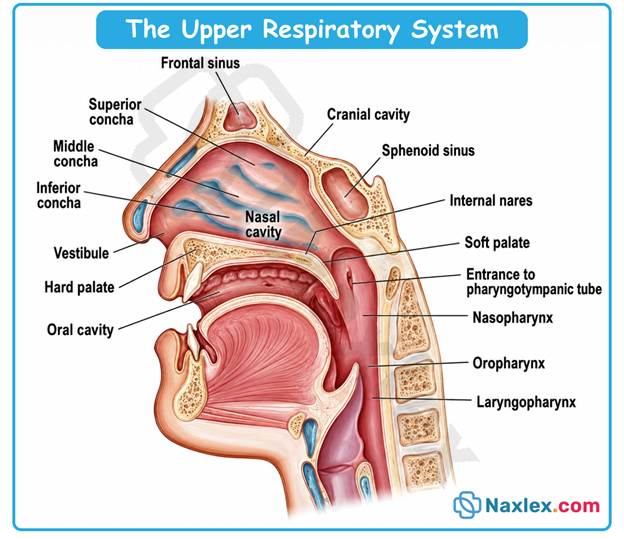
Major Drug Classes Used for Upper Respiratory Disorders
Antihistamines
- Block the effects of histamine released during allergic reactions.
- Relieve sneezing, itching, rhinorrhea, and watery eyes.
- First-generation antihistamines also produce sedation and may be used for motion sickness, nausea, insomnia, and allergic reactions.
- Second-generation antihistamines produce less drowsiness and are preferred for long-term allergy management.
Decongestants
- Produce vasoconstriction of nasal blood vessels.
- Reduce swelling of the nasal mucosa and improve airflow.
- Available as oral and intranasal formulations.
- Prolonged use of topical nasal decongestants may result in rebound nasal congestion.
Nasal Glucocorticoids
- Reduce local inflammation within the nasal passages.
- Considered the most effective long-term treatment for moderate to severe allergic rhinitis.
- Improve nasal congestion, sneezing, itching, and rhinorrhea.
- Require consistent daily use for maximum therapeutic benefit.
Antitussives
- Suppress the cough reflex when coughing is dry, persistent, or nonproductive.
- May act centrally by depressing the cough center in the medulla or peripherally by reducing cough receptor sensitivity.
- Include both opioid and nonopioid medications.
Expectorants
- Increase the hydration of respiratory secretions.
- Thin mucus, making it easier to cough up and clear from the airways.
- Most effective when combined with adequate oral fluid intake.
Mucolytics
- Break down the chemical structure of thick, tenacious mucus.
- Reduce mucus viscosity and facilitate airway clearance.
- Frequently used in clients with chronic respiratory disorders characterized by excessive mucus production.
Antitussives – Opioids
Prototype Medication: Codeine
Other Medication: Hydrocodone
Overview
Opioid antitussives are medications used to suppress the cough reflex by acting directly on the central nervous system (CNS). Unlike expectorants and mucolytics, which promote the removal of respiratory secretions, opioid antitussives reduce the frequency and intensity of coughing. They are most appropriate for treating dry, persistent, nonproductive coughs that interfere with rest, sleep, or recovery. These medications should not be routinely used for productive coughs because coughing serves as an important protective mechanism for clearing mucus, microorganisms, and foreign particles from the respiratory tract.
Codeine is the prototype opioid antitussive and remains one of the most commonly prescribed medications for chronic nonproductive cough. At lower doses, codeine primarily acts as a cough suppressant, while higher doses also produce analgesia. Hydrocodone has a similar mechanism of action and is generally reserved for more severe coughs that have not responded to less potent therapies.
Because these medications are opioids, they carry significant risks, including respiratory depression, excessive sedation, and potential for misuse or dependence. Careful nursing assessment and ongoing monitoring are therefore essential throughout therapy.
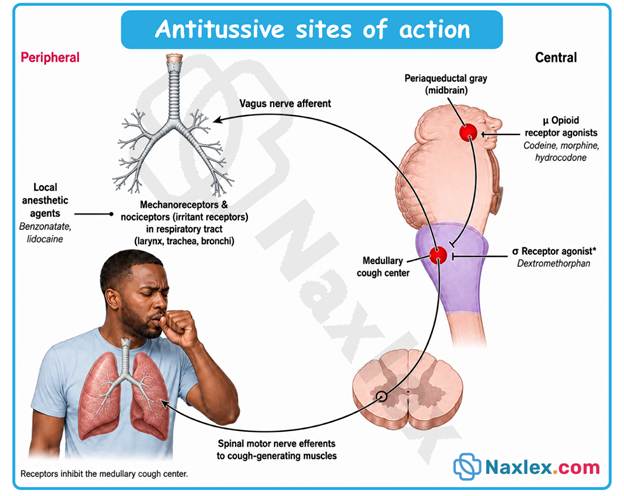
Mechanism of Action
Codeine suppresses the cough reflex by acting on the cough center within the medulla of the brain. It decreases the sensitivity of the cough center to incoming stimuli, thereby reducing both the frequency and intensity of coughing. This allows irritated respiratory tissues to rest and may improve sleep and overall comfort.
In addition to suppressing the cough reflex, opioid antitussives produce generalized CNS depression, which explains many of their common adverse effects such as drowsiness, dizziness, slowed reaction time, and impaired coordination. Because opioid receptors are also found throughout the gastrointestinal tract, these medications reduce intestinal motility and commonly cause constipation.
Therapeutic Uses
Opioid antitussives are primarily indicated for the management of chronic, persistent, nonproductive cough that significantly affects comfort or interferes with normal daily activities. They are especially useful when coughing is exhausting, painful, or prevents adequate sleep.
These medications should not be routinely administered for productive coughs associated with excessive mucus production because suppressing the cough reflex may lead to retention of secretions, airway obstruction, and an increased risk of secondary respiratory infections.
Whenever possible, the underlying cause of the cough should be identified and treated rather than relying solely on cough suppression.
Assessment Before Administration
Prior to administering codeine or hydrocodone, the nurse should perform a comprehensive assessment to determine whether opioid therapy is appropriate and safe.
Baseline assessment includes:
- Measure respiratory rate, oxygen saturation, heart rate, and blood pressure.
- Assess the character of the cough, including whether it is productive or nonproductive.
- Determine the duration and possible cause of the cough.
- Assess lung sounds for wheezes, crackles, or diminished breath sounds.
- Evaluate the client's level of consciousness and degree of sedation.
- Review current medications for other CNS depressants, including benzodiazepines, sedatives, alcohol, antihistamines, or opioid analgesics.
- Assess for a history of substance use disorder, chronic respiratory disease, liver disease, or renal impairment.
A respiratory rate below 12 breaths/minute before medication administration requires further assessment and notification of the healthcare provider before administering an opioid antitussive.
Adverse Effects
Central Nervous System Effects
The most common adverse effects result from depression of the central nervous system.
Clients may experience:
- Drowsiness
- Dizziness
- Lightheadedness
- Reduced alertness
- Impaired coordination
- Slowed reaction time
These effects significantly increase the risk of falls, particularly among older adults and clients receiving other sedating medications.
The most serious adverse effect is respiratory depression, which occurs because opioids decrease the brain's responsiveness to rising carbon dioxide levels. Respiratory depression may progress to apnea if not recognized promptly. Early signs include a declining respiratory rate, increasing sedation, shallow respirations, and reduced oxygen saturation.
Gastrointestinal Effects
Because opioids decrease gastrointestinal motility, clients commonly experience:
- Nausea
- Vomiting
- Constipation
Constipation frequently develops with repeated opioid use and does not improve with continued therapy. Preventive measures should begin early rather than waiting until constipation becomes severe.
Potential for Abuse
Codeine and hydrocodone possess opioid properties and therefore have the potential to produce physical dependence, psychological dependence, misuse, and addiction. The risk increases with prolonged use, higher doses, or a previous history of substance use disorder.
For this reason, opioid antitussives should be prescribed at the lowest effective dose and used for the shortest duration necessary.
Nursing Interventions
The nurse plays a critical role in preventing complications associated with opioid antitussives.
Before administering each dose:
- Obtain baseline vital signs.
- Assess respiratory rate and depth.
- Confirm that the cough is nonproductive.
- Evaluate the client's level of consciousness.
Following administration:
- Continue monitoring respiratory status.
- Observe for increasing sedation or confusion.
- Monitor oxygen saturation when indicated.
- Assess the effectiveness of cough suppression.
Clients who become dizzy or lightheaded should be assisted during ambulation to reduce the risk of falls. Encourage clients to change positions slowly from lying to sitting and from sitting to standing to minimize orthostatic hypotension.
If severe respiratory depression develops, immediately discontinue the medication, stimulate the client to breathe if appropriate, provide supplemental oxygen as prescribed, notify the healthcare provider, and prepare to administer naloxone, the opioid antagonist used to reverse opioid-induced respiratory depression.
Client Education
Client education is essential to promote safe opioid use.
Teach clients to:
- Take oral codeine with food to minimize gastrointestinal irritation and nausea.
- Increase fluid intake unless contraindicated.
- Consume a high-fiber diet to reduce constipation.
- Consider stool softeners if prescribed.
- Use the medication only for the prescribed duration.
- Avoid taking larger or more frequent doses than prescribed.
- Store the medication securely to prevent misuse by others.
Clients should be instructed not to drive, operate heavy machinery, or perform hazardous activities until they know how the medication affects them because drowsiness and slowed reaction times may impair judgment and coordination.
They should also avoid consuming alcohol or taking other CNS depressants unless specifically approved by the healthcare provider, as these combinations markedly increase the risk of profound sedation and respiratory depression.
Clients should promptly report excessive sleepiness, difficulty breathing, persistent constipation, severe dizziness, or confusion.
Contraindications and Precautions
Codeine is classified as Pregnancy Risk Category C, indicating that fetal risk cannot be ruled out. It should be used during pregnancy only when the anticipated benefits outweigh the potential risks.
Opioid antitussives are contraindicated in clients with:
- Acute asthma
- Significant respiratory depression
- Head trauma
- Increased intracranial pressure
- Acute alcoholism
- Significant hepatic dysfunction
- Severe renal impairment
Extreme caution should be exercised when administering these medications to children, older adults, debilitated clients, or individuals with a history of substance use disorder, as these populations are more susceptible to respiratory depression, excessive sedation, and adverse drug reactions.
The nurse should carefully evaluate the client's medication profile for potential interactions before administration, particularly medications that depress the central nervous system.
Key Nursing Considerations
Successful administration of opioid antitussives requires balancing effective cough suppression with the prevention of potentially life-threatening adverse effects. Continuous assessment of respiratory status, appropriate client education, early recognition of respiratory depression, and safe medication practices are fundamental nursing responsibilities. Because these medications possess abuse potential, nurses should encourage adherence to prescribed therapy, reinforce safe storage practices, and emphasize that opioid antitussives are intended for short-term symptomatic relief rather than long-term cough management.
Nursing Insights
- Use opioid antitussives only for dry, nonproductive coughs—not productive coughs with mucus.
- Always assess respiratory rate before administration and withhold the medication if significant respiratory depression is present.
- Naloxone is the antidote for severe opioid-induced respiratory depression.
- Avoid alcohol and other CNS depressants while taking codeine or hydrocodone because of the increased risk of profound sedation and respiratory depression.
Antitussives – Nonopioids
Prototype Medication: Dextromethorphan
Other Medications: Benzonatate (Tessalon), Diphenhydramine (Benadryl)
Overview
Nonopioid antitussives are medications used to suppress coughing without producing the strong opioid effects associated with medications such as codeine and hydrocodone. They are commonly used to treat dry, irritating, nonproductive coughs caused by viral upper respiratory infections, the common cold, influenza, or minor throat irritation. Because they do not possess significant analgesic properties, they are generally associated with a lower risk of respiratory depression and dependence than opioid antitussives.
The prototype medication, dextromethorphan, is one of the most widely used over-the-counter cough suppressants. It is included in numerous cold and cough preparations, either alone or in combination with decongestants, antihistamines, expectorants, or analgesics. Although chemically related to opioids, dextromethorphan does not produce significant pain relief at recommended doses and has minimal opioid effects when used appropriately.
Other medications with antitussive activity include benzonatate, which acts peripherally to reduce the cough reflex, and diphenhydramine, an antihistamine that also possesses cough-suppressing properties because of its sedative and drying effects.
The primary goal of nonopioid antitussive therapy is to reduce the frequency and severity of coughing, allowing the respiratory tract to recover while improving comfort, sleep quality, and daily functioning.
Mechanism of Action
Dextromethorphan
Dextromethorphan acts directly on the cough center in the medulla of the brain, where it elevates the threshold for coughing. By decreasing the sensitivity of the cough center to incoming stimuli, it suppresses the cough reflex without significantly depressing normal respiratory function at therapeutic doses.
Although dextromethorphan is structurally derived from opioids, it has very little affinity for opioid receptors when used as directed. Consequently, it provides cough suppression without producing the analgesia, constipation, or significant respiratory depression commonly associated with opioid medications.
Benzonatate
Benzonatate works by anesthetizing stretch receptors located within the respiratory tract, lungs, and pleura. This reduces stimulation of the cough reflex before impulses reach the central nervous system. Because it acts peripherally rather than centrally, benzonatate is particularly useful for suppressing persistent cough while minimizing central nervous system effects.
Diphenhydramine
Diphenhydramine is primarily classified as a first-generation antihistamine, but it also suppresses coughing by reducing irritation within the respiratory tract and producing mild sedation. It is especially beneficial when coughing is associated with allergic conditions or excessive postnasal drainage.
Therapeutic Uses
Nonopioid antitussives are indicated for the treatment of persistent, nonproductive coughs that interfere with comfort, rest, or sleep.
Common therapeutic uses include:
- Relief of dry cough associated with the common cold
- Viral upper respiratory tract infections
- Influenza
- Minor throat irritation
- Allergic cough
- Nighttime cough that disrupts sleep
These medications should not be routinely used for productive coughs accompanied by significant mucus production because coughing serves an important role in clearing respiratory secretions. Suppressing a productive cough may result in mucus retention and increase the risk of secondary respiratory complications.
Whenever possible, treatment should focus on correcting the underlying cause of the cough rather than suppressing the symptom alone.
Assessment Before Administration
Before administering a nonopioid antitussive, the nurse should perform a comprehensive respiratory assessment.
Assessment includes:
- Determine whether the cough is productive or nonproductive.
- Assess the duration and frequency of coughing.
- Evaluate sputum color, amount, and consistency if present.
- Auscultate lung sounds.
- Assess respiratory rate and oxygen saturation.
- Determine whether fever, dyspnea, wheezing, or chest pain is present.
- Review current medications for potential drug interactions.
- Assess pregnancy status when appropriate.
- Determine whether the client has a history of substance misuse or recreational drug use.
Because many cough preparations contain multiple active ingredients, nurses should carefully examine medication labels to avoid duplicate therapy and accidental overdose.
Adverse Effects
Nonopioid antitussives generally produce few adverse effects when administered at recommended doses.
Common adverse effects include:
- Mild nausea
- Dizziness
- Drowsiness or sedation
- Mild gastrointestinal discomfort
These reactions are usually transient and resolve as therapy continues.
Although respiratory depression is uncommon at therapeutic doses, excessive doses may produce serious neurological effects, including confusion, impaired coordination, hallucinations, agitation, and decreased consciousness.
Potential for Abuse
While considerably safer than opioid antitussives, dextromethorphan has abuse potential, particularly among adolescents and young adults.
Large doses may produce:
- Euphoria
- Hallucinations
- Dissociation
- Altered perception
- Impaired judgment
Repeated misuse can result in psychological dependence and dangerous behavioral changes. Nurses should educate clients regarding the importance of taking the medication only as prescribed or according to package directions.
Contraindications and Precautions
Dextromethorphan is classified as Pregnancy Risk Category C, meaning adequate studies in pregnant women are lacking and the medication should only be used when the anticipated benefits outweigh potential fetal risks.
Nonopioid antitussives should be used cautiously in clients who have:
- Chronic respiratory disease
- Asthma
- Chronic productive cough
- Significant hepatic impairment
- History of medication misuse
Because many formulations contain alcohol, clients with liver disease, alcohol use disorder, or those taking medications that interact with alcohol should carefully review product ingredients before use.
Some liquid formulations also contain sucrose, requiring caution in clients with diabetes mellitus or those following sugar-restricted diets.
Drug Interactions
A significant drug interaction occurs between dextromethorphan and monoamine oxidase inhibitors (MAOIs).
Administration of dextromethorphan within 14 days of MAOI therapy may produce a potentially life-threatening reaction characterized by:
- High fever
- Severe hypertension
- Agitation
- Tremors
- Hyperthermia
- Serotonin toxicity
- Cardiovascular instability
For this reason, dextromethorphan should never be administered concurrently with MAOIs or within two weeks after discontinuing an MAOI.
The nurse should obtain a complete medication history, including prescription medications, over-the-counter products, herbal supplements, and recreational substances, before administering therapy.
Nursing Interventions
The nurse should assess the client's respiratory status before initiating treatment and continue monitoring throughout therapy.
Important nursing responsibilities include:
- Verify that the cough is nonproductive before administering medication.
- Assess cough frequency before and after treatment.
- Encourage adequate fluid intake to maintain hydration unless contraindicated.
- Monitor for dizziness or excessive sedation.
- Review all current cold and cough medications to prevent duplication of ingredients.
- Reinforce adherence to recommended dosing schedules.
For benzonatate, clients should be instructed to swallow capsules whole without chewing, crushing, or dissolving them. Chewing the capsule can produce local anesthesia of the mouth and throat, increasing the risk of choking, aspiration, or severe hypersensitivity reactions.
Client Education
Client education is an important component of safe medication administration.
Teach clients to:
- Take the medication exactly as directed.
- Avoid exceeding the recommended dose.
- Report coughing that persists for more than one week or is accompanied by fever, rash, wheezing, or chest pain.
- Avoid driving or operating machinery if dizziness or drowsiness develops.
- Read labels carefully because many over-the-counter products contain multiple active ingredients.
- Avoid taking two cough medications containing dextromethorphan simultaneously.
- Store medications safely out of reach of children.
Clients should also understand that cough suppressants relieve symptoms but do not treat the underlying infection responsible for the cough.
Available Dosage Forms
Nonopioid antitussives are available in numerous formulations to accommodate different client needs.
Available dosage forms include:
- Capsules
- Tablets
- Liquid solutions
- Syrups
- Lozenges (generally recommended for clients older than 12 years)
- Combination cold and flu preparations
The nurse should verify the concentration of liquid products because strengths vary among manufacturers.
Evaluation of Medication Effectiveness
The effectiveness of nonopioid antitussive therapy is evaluated by assessing improvements in the client's symptoms.
Desired therapeutic outcomes include:
- Reduced frequency of coughing
- Decreased cough severity
- Improved ability to sleep
- Increased comfort during daily activities
- Reduced throat irritation
- Improved overall respiratory comfort without evidence of respiratory compromise
If coughing persists despite therapy or becomes productive, additional assessment is necessary to identify the underlying cause and determine whether a different treatment approach is indicated.
Key Nursing Considerations
Nonopioid antitussives are generally safe and effective when used appropriately for short-term suppression of dry, nonproductive coughs. Nurses should distinguish between productive and nonproductive coughs before administration, assess for significant drug interactions, monitor for mild CNS effects, and educate clients regarding proper medication use. Because dextromethorphan is present in numerous over-the-counter products, careful review of medication labels is essential to prevent accidental overdose or duplicate therapy.
Nursing Insights
- Administer nonopioid antitussives only for dry, nonproductive coughs.
- Avoid dextromethorphan within 14 days of MAOI therapy because of the risk of serious drug interactions.
- Teach clients to read over-the-counter medication labels carefully to avoid duplicate ingredients.
- Benzonatate capsules must be swallowed whole to prevent oral anesthesia and aspiration risk.
Expectorants
Prototype Medication: Guaifenesin (Mucinex)
Overview
Expectorants are medications that facilitate the removal of mucus from the respiratory tract by increasing the volume and hydration of respiratory secretions. Unlike antitussives, which suppress coughing, expectorants promote a more productive cough, allowing mucus, microorganisms, and other irritants to be expelled from the airways. This helps reduce chest congestion, improve airway clearance, and enhance breathing comfort.
The prototype expectorant, guaifenesin, is one of the most commonly used over-the-counter respiratory medications. It is widely prescribed and purchased for the symptomatic treatment of respiratory conditions associated with thick bronchial secretions, including the common cold, influenza, allergic rhinitis, nonallergic rhinitis, acute bronchitis, and other lower respiratory tract disorders.
Guaifenesin is available both as a single-ingredient medication and in numerous combination products containing antitussives, decongestants, antihistamines, or analgesics. Because of the large number of combination formulations, nurses should carefully review medication labels to prevent duplicate therapy and unnecessary exposure to additional medications.
Mechanism of Action
Guaifenesin acts by stimulating respiratory tract secretions, thereby increasing the amount of fluid within the airways. The additional moisture thins and loosens thick mucus, making respiratory secretions less viscous and easier to remove during coughing.
As mucus becomes more fluid, the cough becomes more productive, allowing accumulated secretions to be cleared more effectively from the trachea and bronchi. This reduces airway obstruction, decreases chest congestion, and improves overall respiratory function.
Unlike mucolytics, which chemically break down mucus, guaifenesin primarily works by enhancing hydration of respiratory secretions. For this reason, adequate fluid intake is essential to maximize the medication's effectiveness.
Therapeutic Uses
Guaifenesin is indicated for the treatment of respiratory conditions characterized by excessive or thick mucus production.
Common therapeutic uses include:
- Relief of chest congestion
- Productive cough associated with the common cold
- Influenza
- Acute bronchitis
- Allergic rhinitis
- Nonallergic rhinitis
- Upper respiratory tract infections
- Lower respiratory disorders accompanied by thick respiratory secretions
Although guaifenesin is available as an expectorant alone, it is more commonly included in combination cough and cold preparations. These products may contain:
- A nonopioid antitussive such as dextromethorphan
- An opioid antitussive such as codeine (prescription products)
- A decongestant such as pseudoephedrine
- An antihistamine
- An analgesic or antipyretic
Combination therapy provides relief of multiple symptoms simultaneously but increases the risk of unnecessary medication exposure if clients take several cold preparations at the same time.
Assessment Before Administration
Before administering guaifenesin, the nurse should perform a thorough respiratory assessment.
Assessment should include:
- Determine whether the cough is productive or nonproductive.
- Assess the color, amount, consistency, and odor of sputum.
- Auscultate lung sounds for crackles, wheezes, or diminished breath sounds.
- Assess respiratory rate, oxygen saturation, and work of breathing.
- Determine the duration of coughing.
- Assess hydration status because dehydration contributes to thick respiratory secretions.
- Review current prescription and over-the-counter medications for duplicate ingredients.
A cough lasting longer than one week, or accompanied by high fever, hemoptysis, dyspnea, or chest pain, requires further medical evaluation rather than continued self-treatment.
Adverse Effects
Guaifenesin is generally well tolerated, and serious adverse reactions are uncommon.
Gastrointestinal Effects
The most frequently reported adverse effects involve the gastrointestinal system and include:
- Nausea
- Mild gastrointestinal upset
- Vomiting
- Abdominal discomfort
These symptoms are usually mild and often improve when the medication is taken with food.
Central Nervous System Effects
Some clients may experience mild central nervous system effects, including:
- Drowsiness
- Dizziness
- Lightheadedness
Although these reactions occur infrequently, clients should avoid driving or operating heavy machinery if they become excessively drowsy or dizzy.
Allergic Reactions
Hypersensitivity reactions are uncommon but may include:
- Skin rash
- Pruritus
- Urticaria
- Facial swelling
- Difficulty breathing
Clients should discontinue the medication immediately and seek medical attention if symptoms of an allergic reaction develop.
Contraindications and Precautions
Guaifenesin is classified as Pregnancy Risk Category C, indicating that adequate studies in pregnant women are lacking. The medication should be used during pregnancy only when the expected benefits outweigh the potential risks.
Women who are breastfeeding should consult their healthcare provider before using guaifenesin because limited information exists regarding its excretion into breast milk.
Some guaifenesin-containing formulations are not recommended for children, particularly young children, because dosing recommendations vary depending on age and the presence of additional ingredients. Nurses should instruct caregivers to use only age-appropriate formulations and carefully follow dosing instructions.
Clients with persistent productive cough related to smoking, asthma, chronic bronchitis, or emphysema should seek medical evaluation before prolonged use of expectorants.
Drug Combinations
One of the most important nursing considerations is recognizing that guaifenesin is commonly included in multi-symptom cold medications.
Examples include combinations with:
- Dextromethorphan for cough suppression
- Pseudoephedrine for nasal congestion
- Antihistamines for allergic symptoms
- Acetaminophen for pain and fever
For example, Mucinex D combines guaifenesin with the sympathomimetic decongestant pseudoephedrine, providing both mucus clearance and nasal decongestion.
Clients should be instructed to carefully read medication labels because taking multiple cold preparations simultaneously may result in accidental overdose of one or more ingredients.
Nursing Interventions
Nursing care focuses on maximizing mucus clearance while minimizing adverse effects.
Important nursing interventions include:
- Encourage clients to increase oral fluid intake, unless contraindicated by heart failure, renal disease, or fluid restrictions.
- Promote adequate hydration to enhance mucus liquefaction.
- Monitor cough characteristics and sputum production.
- Assess lung sounds before and during therapy.
- Encourage coughing and deep-breathing exercises when appropriate.
- Monitor for improvement in chest congestion.
Adequate hydration is one of the most important interventions because guaifenesin depends on sufficient body fluids to produce optimal thinning of respiratory secretions.
Administration Considerations
Guaifenesin is available in several dosage forms, including:
- Immediate-release tablets
- Extended-release tablets
- Capsules
- Liquid preparations
- Syrups
- Combination cold medications
Extended-release tablets should be swallowed whole and should not be crushed, chewed, or broken, as this destroys the extended-release mechanism and may result in rapid drug release.
Capsules may often be opened and sprinkled onto soft food if swallowing is difficult, provided the product labeling permits this method.
Client Education
Effective client education improves both medication safety and therapeutic outcomes.
Teach clients to:
- Drink plenty of water while taking guaifenesin.
- Take the medication with food if stomach upset develops.
- Read all over-the-counter medication labels carefully.
- Avoid taking multiple cough and cold products containing the same ingredients.
- Report coughing lasting longer than one week.
- Seek medical attention if coughing is accompanied by fever, rash, chest pain, shortness of breath, or coughing up blood.
- Avoid driving or operating machinery if dizziness or drowsiness develops.
- Stop the medication immediately if a rash or other signs of allergic reaction occur.
Clients should also understand that expectorants work best when combined with adequate hydration, coughing, and deep breathing to facilitate removal of loosened secretions.
Evaluation of Medication Effectiveness
The nurse evaluates therapeutic effectiveness by assessing improvements in respiratory symptoms and airway clearance.
Desired outcomes include:
- More productive coughing
- Respiratory secretions become thinner and easier to expectorate.
- Decreased chest congestion
- Improved airway clearance
- Easier breathing
- Improved lung sounds
- Reduced sensation of mucus accumulation
- Greater client comfort
If secretions remain thick despite therapy, hydration status should be reassessed because inadequate fluid intake significantly reduces the effectiveness of guaifenesin.
Key Nursing Considerations
Expectorants improve respiratory clearance by loosening thick mucus and promoting productive coughing rather than suppressing the cough reflex. Nurses should encourage generous fluid intake, monitor sputum characteristics, educate clients regarding combination products, and reinforce that coughing is a protective mechanism that should not be unnecessarily suppressed when respiratory secretions are present. Appropriate assessment and client education help maximize therapeutic benefits while reducing the risk of medication errors and delayed recognition of serious respiratory illness.
Nursing Insights
- Expectorants loosen mucus and promote productive coughing rather than suppressing the cough reflex.
- Adequate hydration is essential for guaifenesin to achieve maximum therapeutic effectiveness.
- Extended-release guaifenesin tablets should be swallowed whole and never crushed or chewed.
- A cough lasting longer than one week or accompanied by fever, dyspnea, chest pain, or hemoptysis requires medical evaluation.
Mucolytics
Prototype Medication: Acetylcysteine (Mucomyst, Acetadote)
Other Medication: Hypertonic Saline
Overview
Mucolytics are medications that reduce the thickness and viscosity of mucus, making respiratory secretions easier to mobilize and remove from the airways. Unlike expectorants, which increase the hydration and volume of secretions, mucolytics directly alter the structure of mucus, allowing it to become thinner and less tenacious. This promotes more effective coughing, improves airway clearance, and enhances overall respiratory function.
Mucolytic therapy is particularly beneficial for clients who produce large amounts of thick, sticky secretions that cannot be effectively cleared through normal coughing mechanisms. Such secretions can obstruct airways, impair gas exchange, increase the work of breathing, and predispose clients to respiratory infections.
The prototype mucolytic, acetylcysteine, is widely used in respiratory care to facilitate mucus clearance in both acute and chronic pulmonary disorders. In addition to its respiratory uses, acetylcysteine has a second important therapeutic role as the antidote for acetaminophen toxicity, making it a unique medication with applications in both respiratory and emergency care.
Another mucolytic agent used in respiratory management is hypertonic saline, which helps draw water into the airways, promoting mucus hydration and improving secretion clearance.
Mechanism of Action
Acetylcysteine
Acetylcysteine works by breaking the disulfide bonds that hold mucus molecules together. This chemical action reduces mucus viscosity, transforming thick, sticky secretions into thinner secretions that are easier to expectorate.
As mucus becomes less tenacious, airway obstruction decreases and mucus can be more effectively removed through coughing, suctioning, or chest physiotherapy. This contributes to improved ventilation and reduced respiratory distress.
In cases of acetaminophen poisoning, acetylcysteine acts through a completely different mechanism. It replenishes glutathione stores within the liver, allowing toxic acetaminophen metabolites to be detoxified before significant liver injury occurs.
Hypertonic Saline
Hypertonic saline increases the water content within the respiratory tract through osmotic action. Water is drawn into the airways, hydrating secretions and making mucus easier to mobilize and remove. This mechanism is particularly useful in clients with cystic fibrosis, where thick secretions are a major contributor to respiratory complications.
Therapeutic Uses
Mucolytics are used in respiratory conditions characterized by excessive production of thick, difficult-to-clear secretions.
Common indications include:
- Cystic fibrosis
- Chronic bronchitis
- Bronchiectasis
- Pneumonia with thick secretions
- Atelectasis caused by mucus plugging
- Chronic obstructive pulmonary disease (COPD) with excessive mucus production
- Postoperative pulmonary complications involving retained secretions
- Acute respiratory conditions associated with tenacious mucus
By reducing mucus thickness, mucolytics improve airway clearance and decrease the likelihood of mucus plugging and respiratory compromise.
Use in Cystic Fibrosis
Clients with cystic fibrosis produce abnormally thick respiratory secretions that accumulate within the airways. These secretions contribute to airway obstruction, chronic infection, and progressive lung damage.
Mucolytics are a critical component of cystic fibrosis management because they help maintain airway patency, improve mucus clearance, and support pulmonary function. Acetylcysteine and hypertonic saline are often administered alongside chest physiotherapy, airway clearance techniques, and bronchodilator therapy.
Use in Acetaminophen Poisoning
Acetylcysteine serves as the specific antidote for acetaminophen overdose. Prompt administration significantly reduces the risk of severe liver injury and improves survival outcomes.
The greatest benefit occurs when treatment is initiated within the first 8 to 10 hours following overdose, although administration may still be beneficial later in the course of toxicity.
In this setting, acetylcysteine may be administered orally or intravenously, depending on the client's clinical condition and ability to tolerate oral therapy.
Assessment Before Administration
Before administering mucolytic therapy, the nurse should perform a comprehensive respiratory assessment.
Assessment includes:
- Evaluate respiratory rate, depth, and effort.
- Assess oxygen saturation.
- Auscultate breath sounds for crackles, rhonchi, or diminished airflow.
- Assess cough effectiveness.
- Evaluate the amount, color, consistency, and odor of respiratory secretions.
- Determine the client's ability to clear secretions independently.
- Review the history for asthma, peptic ulcer disease, gastrointestinal bleeding, or hepatic dysfunction.
- Assess for signs of airway obstruction or respiratory distress.
When acetylcysteine is being administered for acetaminophen poisoning, additional assessment should include:
- Time of ingestion
- Amount ingested
- Liver function studies
- Acetaminophen serum levels
- Neurological status
Adverse Effects
Aspiration
One potential complication of mucolytic therapy is aspiration. As secretions become thinner and more abundant, clients with impaired swallowing or weakened cough reflexes may have difficulty protecting their airway.
Signs of aspiration include:
- Sudden coughing
- Choking
- Respiratory distress
- Decreased oxygen saturation
- Abnormal lung sounds
- Cyanosis
Prompt recognition and intervention are essential to prevent serious respiratory complications.
Bronchospasm
Bronchospasm is another important adverse effect associated with acetylcysteine administration.
Bronchospasm occurs when airway smooth muscles constrict, resulting in:
- Wheezing
- Shortness of breath
- Increased work of breathing
- Chest tightness
- Reduced airflow
Clients with asthma are particularly susceptible to this complication and require close monitoring during therapy.
Nursing Interventions
Nursing care focuses on promoting airway clearance while monitoring for respiratory complications.
Important interventions include:
- Monitor respiratory status before, during, and after administration.
- Observe for signs of aspiration.
- Assess for wheezing or bronchospasm.
- Encourage coughing and deep-breathing exercises.
- Maintain adequate hydration when appropriate.
- Monitor oxygen saturation and breath sounds.
- Evaluate sputum production and consistency.
- Stop the medication and notify the healthcare provider if bronchospasm or aspiration occurs.
If severe bronchospasm develops, emergency respiratory interventions may be necessary.
Contraindications and Precautions
Acetylcysteine is classified as Pregnancy Risk Category B, indicating that animal studies have not demonstrated fetal risk, although adequate studies in pregnant women are limited.
The medication should be used cautiously in clients with:
- Asthma
- Peptic ulcer disease
- Esophageal varices
- Severe hepatic impairment
- History of gastrointestinal bleeding
- Increased risk of gastrointestinal hemorrhage
Because acetylcysteine may precipitate bronchospasm, clients with reactive airway disease require particularly close monitoring.
Administration Considerations
Inhalation Therapy
The inhaled form of acetylcysteine is commonly used to thin bronchial and nasal secretions.
When administered via nebulization:
- Assess lung sounds before and after treatment.
- Encourage coughing after administration.
- Have suction equipment readily available if secretions become excessive.
- Monitor for bronchospasm throughout therapy.
Many clients experience increased mucus production following treatment because secretions become easier to mobilize and expectorate.
Oral Administration
When used orally, particularly for acetaminophen toxicity, acetylcysteine has a strong sulfur-like odor and taste that many clients find unpleasant.
Clients should be informed that the medication has a characteristic "rotten egg" odor, which is normal and expected. Forewarning can improve acceptance and adherence to therapy.
Intravenous Administration
Intravenous acetylcysteine is commonly used when clients cannot tolerate oral therapy or when rapid treatment is required following acetaminophen overdose.
During intravenous administration, nurses should monitor for:
- Allergic reactions
- Infusion-related reactions
- Vital sign changes
- Clinical improvement
Client Education
Client education should emphasize the purpose of therapy and the importance of reporting adverse reactions.
Teach clients to:
- Expect increased mucus production after treatment.
- Report wheezing, chest tightness, or difficulty breathing immediately.
- Continue prescribed airway clearance techniques.
- Maintain adequate fluid intake if permitted.
- Understand that the sulfur-like odor of acetylcysteine is normal.
- Notify healthcare providers if signs of aspiration occur.
Clients receiving treatment for acetaminophen overdose should understand the importance of completing the full prescribed course of therapy, even if symptoms improve.
Evaluation of Medication Effectiveness
Therapeutic effectiveness is determined through ongoing assessment of respiratory function and secretion clearance.
Desired outcomes include:
- Clearer breath sounds
- Improved airway patency
- Easier expectoration of mucus
- Decreased secretion viscosity
- Improved oxygenation
- Reduced respiratory effort
- Improved respiratory rate and pattern
- Enhanced overall pulmonary function
For acetaminophen poisoning, effectiveness is demonstrated by:
- Prevention of liver injury
- Stabilization of liver function tests
- Resolution of toxicity
- Improved clinical status
Key Nursing Considerations
Mucolytics play an important role in the management of respiratory disorders characterized by thick, tenacious secretions. Nurses must closely monitor clients for aspiration and bronchospasm, particularly those with asthma or impaired airway protective reflexes. Adequate assessment, prompt recognition of adverse effects, and ongoing evaluation of respiratory status are essential to ensuring safe and effective therapy. Acetylcysteine is especially important because it serves not only as a respiratory medication but also as the life-saving antidote for acetaminophen overdose.
Nursing Insights
- Acetylcysteine decreases mucus viscosity by breaking down thick respiratory secretions.
- Monitor closely for bronchospasm, especially in clients with asthma.
- Acetylcysteine is the antidote for acetaminophen poisoning and should be administered promptly.
- The characteristic rotten-egg odor of acetylcysteine is expected and should be explained to clients before administration.
Decongestants
Prototype Medication: Phenylephrine (Neo-Synephrine)
Other Medications
- Pseudoephedrine (Sudafed)
- Ephedrine
- Naphazoline (Privine)
Overview
Decongestants are sympathomimetic medications that relieve nasal congestion by reducing swelling of the nasal mucosa. They are among the most frequently used medications for the symptomatic treatment of the common cold, allergic rhinitis, nonallergic rhinitis, and sinusitis. Nasal congestion develops when inflammation causes blood vessels within the nasal mucosa to dilate, leading to edema, increased mucus production, and narrowing of the nasal passages. Decongestants reverse these changes by constricting blood vessels, thereby improving airflow through the nose.
Decongestants are available as topical intranasal preparations (drops and sprays) and oral formulations. Although both forms are effective, they differ significantly in their onset of action, duration of effect, systemic adverse reactions, and risk of rebound congestion. Understanding these differences enables nurses to educate clients on the safest and most appropriate use of these medications.
Because decongestants primarily provide symptomatic relief, they do not treat the underlying infection or allergic condition responsible for nasal congestion. Therefore, they are often combined with antihistamines, analgesics, expectorants, or antitussives in many over-the-counter cold and allergy products.
Mechanism of Action
Decongestants exert their effects by stimulating alpha-1 adrenergic receptors located within the blood vessels of the nasal mucosa.
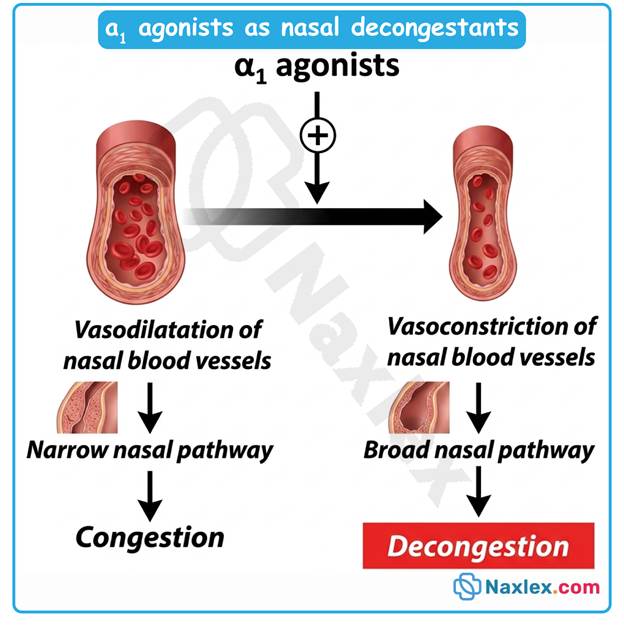
Activation of these receptors produces vasoconstriction, which decreases blood flow to the nasal tissues. Reduced blood flow results in:
- Decreased mucosal edema
- Reduced inflammation
- Less mucus production
- Increased nasal airway diameter
- Improved airflow through the nasal passages
As swelling subsides, clients experience rapid relief of nasal obstruction and are able to breathe more comfortably.
Topical decongestants produce localized vasoconstriction directly within the nasal mucosa, whereas oral decongestants produce more generalized systemic vasoconstriction throughout the body.
Therapeutic Uses
Decongestants are indicated for temporary relief of nasal congestion associated with a variety of upper respiratory conditions.
Common therapeutic uses include:
- Allergic rhinitis
- Nonallergic rhinitis
- Acute sinusitis
- Viral upper respiratory tract infections
- The common cold
- Influenza
- Eustachian tube dysfunction associated with upper respiratory inflammation
These medications improve nasal airflow, decrease sinus pressure, facilitate drainage of nasal secretions, and improve sleep quality by relieving nighttime congestion.
They are intended for short-term symptom management rather than long-term treatment of chronic nasal disorders.
Assessment Before Administration
Prior to administering a decongestant, the nurse should conduct a comprehensive assessment.
Assessment includes:
- Determine the duration and severity of nasal congestion.
- Assess for nasal drainage, sinus tenderness, and facial pain.
- Evaluate respiratory rate and breathing pattern.
- Assess blood pressure and heart rate.
- Review the client's cardiovascular history.
- Determine whether the client has hypertension, coronary artery disease, glaucoma, diabetes mellitus, or hyperthyroidism.
- Review current medications for potential interactions.
- Assess previous use of topical nasal sprays to identify possible rebound congestion.
The nurse should also determine whether congestion is caused by an acute illness or a chronic condition, as prolonged use of decongestants is generally inappropriate for chronic nasal congestion.
Adverse Effects
Rebound Congestion (Rhinitis Medicamentosa)
The most important complication associated with topical nasal decongestants is rebound congestion.
Rebound congestion develops when topical vasoconstrictors are used continuously for longer than 3 to 5 days. Prolonged stimulation of alpha receptors reduces receptor responsiveness, causing severe nasal congestion when the medication is discontinued.
Clients often respond by increasing the frequency of medication use, creating a cycle of dependence on the nasal spray.
Symptoms include:
- Persistent nasal obstruction
- Increased swelling of the nasal mucosa
- Difficulty breathing through the nose
- Frequent need for repeated dosing
To prevent rebound congestion, nurses should emphasize that topical nasal decongestants should never be used for more than 3 to 5 consecutive days.
When discontinuation is difficult, gradual withdrawal may be achieved by stopping treatment in one nostril at a time, allowing the untreated nostril to recover before discontinuing therapy completely.
Central Nervous System Stimulation
Because oral decongestants stimulate the sympathetic nervous system, they may produce CNS stimulation.
Manifestations include:
- Nervousness
- Agitation
- Restlessness
- Anxiety
- Tremors
- Insomnia
- Irritability
These effects occur more commonly with oral decongestants than with topical preparations because systemic absorption is significantly greater.
Clients should discontinue the medication and notify their healthcare provider if severe CNS stimulation develops.
Cardiovascular Effects
Sympathetic stimulation also produces systemic vasoconstriction, which may result in:
- Elevated blood pressure
- Tachycardia
- Palpitations
- Increased myocardial oxygen demand
These cardiovascular effects are particularly concerning in clients with hypertension, coronary artery disease, heart failure, or other cardiovascular disorders.
Contraindications and Precautions
Decongestants are contraindicated in clients with chronic rhinitis, as prolonged use may worsen symptoms and contribute to rebound congestion.
They should be used with extreme caution in clients who have:
- Hypertension
- Coronary artery disease
- Hyperthyroidism
- Diabetes mellitus
- Glaucoma
- Benign prostatic hyperplasia
- Cardiac dysrhythmias
Because oral decongestants increase blood pressure and heart rate, healthcare providers should carefully evaluate the risks and benefits before initiating therapy in these populations.
Nursing Interventions
Nurses play an important role in ensuring safe and effective use of decongestants.
Key nursing responsibilities include:
- Assess nasal congestion before treatment.
- Monitor blood pressure and heart rate in at-risk clients.
- Evaluate for signs of rebound congestion.
- Monitor for CNS stimulation.
- Reinforce short-term use of topical products.
- Review all prescription and over-the-counter medications for duplicate decongestant therapy.
When caring for clients with cardiovascular disease, nurses should encourage consultation with the healthcare provider before initiating over-the-counter decongestants.
Administration Considerations
Nasal Drops
Correct positioning improves medication distribution and reduces swallowing of the medication.
Clients should:
- Lie in a side-lying position.
- Lower the head appropriately so the medication reaches the affected nasal passages.
- Remain in position briefly after administration.
Nasal drops are frequently preferred for infants and young children because they allow more precise dosing and reduce the likelihood of systemic toxicity.
Nasal Sprays
Clients using nasal sprays should be instructed to:
- Gently blow the nose before administration.
- Keep the head upright during spraying.
- Direct the spray away from the nasal septum.
- Avoid excessive sniffing immediately after administration.
- Clean the spray tip regularly to prevent contamination.
Proper technique maximizes local drug delivery while minimizing systemic absorption.
Topical Versus Oral Decongestants
Understanding the differences between topical and oral preparations is essential for safe medication selection.
Topical Decongestants
Advantages
- Rapid onset of action
- Strong localized effect
- Minimal systemic absorption
- Lower incidence of systemic adverse effects
Disadvantages
- Short duration of action
- Risk of rebound congestion
- Should not be used longer than 3 to 5 days
Oral Decongestants
Advantages
- Longer duration of action
- Convenient administration
- No rebound congestion
Disadvantages
- Greater systemic absorption
- Increased risk of hypertension
- More pronounced CNS stimulation
- Greater likelihood of cardiovascular adverse effects
The choice between topical and oral therapy depends on the client's medical history, symptom severity, and risk factors.
Client Education
Client education is essential for preventing medication-related complications.
Teach clients to:
- Use topical nasal decongestants for no longer than 3 to 5 days.
- Follow recommended dosages exactly.
- Avoid taking multiple cold medications containing decongestants.
- Monitor blood pressure if they have hypertension.
- Report palpitations, severe headache, chest pain, or persistent nervousness.
- Avoid taking oral decongestants late in the day if insomnia develops.
- Read over-the-counter medication labels carefully.
- Seek medical evaluation if congestion persists beyond the expected course of illness.
Clients should also understand that decongestants relieve symptoms but do not eliminate the underlying cause of nasal inflammation.
Evaluation of Medication Effectiveness
The effectiveness of decongestant therapy is assessed through improvement in nasal airflow and reduction of congestion.
Desired therapeutic outcomes include:
- Reduced nasal congestion
- Improved nasal airflow
- Easier breathing
- Decreased sinus pressure
- Improved sleep quality
- Reduced mouth breathing
- Improved ability to perform normal daily activities
Persistent congestion despite appropriate therapy should prompt further assessment for chronic sinus disease, allergic disorders, structural abnormalities, or other underlying conditions.
Key Nursing Considerations
Decongestants provide rapid and effective relief of nasal congestion by producing vasoconstriction of the nasal mucosa. Nurses should carefully assess cardiovascular risk factors, reinforce the importance of limiting topical therapy to 3 to 5 days, educate clients about proper administration techniques, and monitor for rebound congestion, CNS stimulation, and systemic cardiovascular effects. Careful client education significantly reduces preventable complications associated with these commonly used medications.
Nursing Insights
- Topical nasal decongestants should never be used for longer than 3 to 5 consecutive days because of rebound congestion.
- Oral decongestants produce more systemic adverse effects, including hypertension, tachycardia, and CNS stimulation.
- Assess blood pressure before recommending or administering decongestants to clients with cardiovascular disease.
- Decongestants relieve nasal congestion but do not treat the underlying infection or allergic condition.
Antihistamines
First-Generation H1 Antihistamines
- Diphenhydramine (Benadryl)
- Promethazine (Phenergan)
- Dimenhydrinate (Dramamine)
Second-Generation H1 Antihistamines
- Loratadine (Claritin)
- Cetirizine (Zyrtec)
- Fexofenadine (Allegra)
- Desloratadine (Clarinex)
Intranasal Antihistamines
- Azelastine (Astelin, Astepro)
- Olopatadine (Patanase)
Overview
Antihistamines are medications that block the actions of histamine, one of the primary chemical mediators released during an allergic response. Histamine is responsible for many of the characteristic symptoms of allergic disorders, including sneezing, rhinorrhea, nasal congestion, itching, watery eyes, and urticaria. By preventing histamine from binding to H1 receptors, antihistamines reduce these symptoms and improve client comfort.
Antihistamines are among the most commonly prescribed and purchased medications for treating seasonal allergic rhinitis, perennial allergic rhinitis, and other mild allergic conditions. Some antihistamines also possess anticholinergic, antiemetic, and sedative properties, making them useful for treating motion sickness, nausea, and insomnia.
Antihistamines are classified into first-generation and second-generation H1 receptor antagonists.
- First-generation antihistamines readily cross the blood-brain barrier, producing significant sedation and anticholinergic effects.
- Second-generation antihistamines are more selective for peripheral H1 receptors and produce minimal sedation, making them the preferred choice for long-term allergy management.
- Intranasal antihistamines provide localized relief of nasal allergy symptoms while minimizing systemic adverse effects.
Mechanism of Action
Antihistamines competitively block H1 receptors, preventing histamine from producing its effects on blood vessels, capillaries, sensory nerves, and smooth muscle during allergic reactions.
Blocking histamine results in:
- Reduced capillary permeability
- Decreased tissue swelling
- Reduced itching
- Less sneezing
- Reduced nasal discharge
- Decreased tearing
Many first-generation antihistamines also possess significant anticholinergic activity, which decreases mucus production by drying respiratory secretions. This contributes to relief of rhinorrhea but also explains many of their adverse effects such as dry mouth, constipation, urinary retention, and blurred vision.
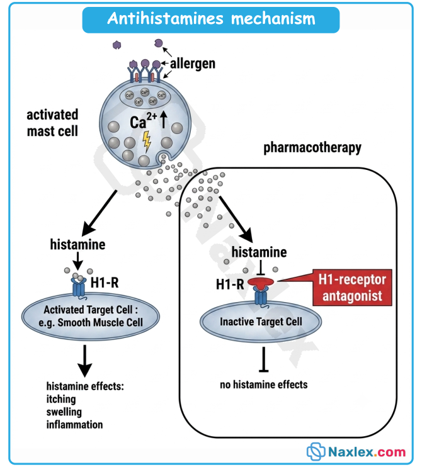
Therapeutic Uses
Antihistamines are used in a variety of allergic and nonallergic conditions.
Common indications include:
- Seasonal allergic rhinitis
- Perennial allergic rhinitis
- Urticaria (hives)
- Mild allergic skin reactions
- Allergic conjunctivitis
- Mild transfusion reactions
- Pruritus
- Insect bite reactions
Adjunct Therapy for Anaphylaxis
Although antihistamines are not first-line treatment for anaphylaxis, they are commonly administered as adjunctive therapy following epinephrine to reduce persistent itching, urticaria, and swelling.
They should never delay administration of epinephrine in clients experiencing anaphylaxis because antihistamines do not rapidly reverse airway obstruction or severe hypotension.
Motion Sickness
First-generation antihistamines such as dimenhydrinate and diphenhydramine suppress stimulation of the vestibular system and vomiting center, making them effective for preventing and treating motion sickness.
For maximum effectiveness, these medications should generally be taken 30 to 60 minutes before travel.
Insomnia
Because first-generation antihistamines readily enter the central nervous system, they commonly produce sedation. Diphenhydramine is therefore frequently included in over-the-counter sleep aids for the short-term management of insomnia.
Combination Therapy
Antihistamines are frequently combined with sympathomimetic decongestants, analgesics, or antitussives in many allergy and cold preparations. Combination therapy provides relief of multiple symptoms simultaneously but increases the risk of duplicate ingredients and adverse drug reactions.
Assessment Before Administration
Before administering antihistamines, the nurse should perform a comprehensive assessment.
Assessment includes:
- Determine the cause and severity of allergic symptoms.
- Assess respiratory status and airway patency.
- Evaluate nasal congestion, sneezing, itching, and rhinorrhea.
- Assess for urticaria or other skin manifestations.
- Review current medications for possible interactions.
- Assess pregnancy and breastfeeding status.
- Determine whether the client has asthma, glaucoma, benign prostatic hyperplasia, urinary retention, hypertension, or liver disease.
Because first-generation antihistamines may significantly impair alertness, assessment should also include evaluation of the client's daily activities and fall risk.
Adverse Effects
Sedation
The most common adverse effect of first-generation antihistamines is sedation.
Sedation occurs because these medications cross the blood-brain barrier and depress central nervous system activity.
Manifestations include:
- Drowsiness
- Fatigue
- Decreased concentration
- Slowed reaction time
- Impaired coordination
Sedation significantly increases the risk of falls, particularly among older adults.
Second-generation antihistamines produce considerably less sedation because they penetrate the central nervous system poorly.
Anticholinergic Effects
Many first-generation antihistamines produce anticholinergic adverse effects, including:
- Dry mouth
- Dry nose
- Blurred vision
- Constipation
- Urinary retention
- Tachycardia
These adverse effects are generally mild but may become problematic in older adults or clients with chronic medical conditions.
To reduce discomfort, nurses should encourage:
- Frequent sips of water
- Sugar-free hard candy or chewing gum
- Increased dietary fiber
- 2 to 3 liters of fluid daily, when not contraindicated
Gastrointestinal Effects
Some clients experience:
- Nausea
- Vomiting
- Mild abdominal discomfort
- Constipation
Taking antihistamines with meals often minimizes gastrointestinal irritation.
Acute Toxicity
Overdose of antihistamines can produce serious anticholinergic toxicity, particularly in children.
Manifestations include:
- Facial flushing
- High fever
- Tachycardia
- Marked dry mouth
- Dilated pupils
- Urinary retention
- Hallucinations
- Agitation
- Ataxia
- Seizures
Acute toxicity constitutes a medical emergency requiring immediate intervention.
Management may include:
- Prompt notification of the healthcare provider
- Gastrointestinal decontamination with activated charcoal, when appropriate
- Administration of a cathartic agent if indicated
- Supportive management of hyperthermia using acetaminophen, cooling blankets, cool sponge baths, or ice packs
- Continuous monitoring of neurological and cardiovascular status
(Current clinical practice generally does not recommend routine induction of vomiting because of aspiration risk; treatment focuses on supportive care and poison center guidance.)
Contraindications and Precautions
Antihistamines should be used cautiously because of their widespread effects on multiple body systems.
They are generally contraindicated in:
- Neonates
- Breastfeeding mothers
- The third trimester of pregnancy (particularly first-generation agents unless specifically prescribed)
Promethazine is classified as Pregnancy Category C and should be avoided or used cautiously in clients with:
- Cardiac dysrhythmias
- Liver disease
- Concurrent MAOI therapy
Use caution in clients with:
- Asthma
- Benign prostatic hyperplasia
- Urinary retention
- Open-angle glaucoma
- Hypertension
- Older age
- Young children
These clients are more susceptible to the medication's anticholinergic and sedative effects.
Drug and Food Interactions
Antihistamines interact with numerous medications that depress the central nervous system.
Concurrent use with:
- Alcohol
- Opioids
- Benzodiazepines
- Barbiturates
- Sedative-hypnotics
may produce additive CNS depression, resulting in profound drowsiness, impaired coordination, respiratory depression, and increased fall risk.
Clients should be instructed to avoid alcohol and consult their healthcare provider before taking other medications that cause sedation.
Nursing Interventions
Important nursing responsibilities include:
- Assess allergy symptoms before and after treatment.
- Monitor for excessive sedation.
- Evaluate respiratory status in clients with asthma.
- Monitor bowel function in clients experiencing constipation.
- Encourage adequate fluid intake if not contraindicated.
- Assess urinary elimination in clients at risk for urinary retention.
- Monitor older adults closely for confusion, dizziness, and falls.
- Reinforce appropriate use of first-generation antihistamines, particularly when daytime alertness is required.
When caring for clients receiving intranasal antihistamines, teach correct spray technique to maximize local drug delivery and reduce systemic absorption.
Client Education
Teach clients to:
- Take first-generation antihistamines at bedtime whenever possible.
- Avoid driving, operating machinery, or performing hazardous activities until they know how the medication affects them.
- Avoid consuming alcohol while taking antihistamines.
- Avoid combining antihistamines with other CNS depressants unless approved by the healthcare provider.
- Increase fluid intake and dietary fiber to reduce constipation.
- Use sugar-free candy or frequent sips of water to relieve dry mouth.
- Read over-the-counter medication labels carefully to avoid taking multiple products containing antihistamines.
- Report urinary retention, severe dizziness, confusion, or symptoms of toxicity immediately.
Clients should also understand that second-generation antihistamines generally produce much less drowsiness and are often preferred when maintaining daytime alertness is important.
Evaluation of Medication Effectiveness
Therapeutic effectiveness is demonstrated by improvement or resolution of allergy symptoms.
Desired outcomes include:
- Reduced sneezing
- Decreased nasal congestion
- Less rhinorrhea
- Reduced itching
- Resolution of urticaria
- Improved comfort
- Relief of motion sickness symptoms
- Decreased nausea and vomiting during travel
- Improved sleep when used for short-term insomnia
The nurse should also evaluate whether the client is achieving symptom relief without excessive sedation or anticholinergic adverse effects.
Key Nursing Considerations
Antihistamines are highly effective for the management of allergic disorders, but their adverse-effect profiles differ considerably between first- and second-generation agents. First-generation antihistamines commonly cause sedation and anticholinergic effects, whereas second-generation antihistamines provide effective allergy relief with minimal CNS depression. Nurses should carefully assess clients for contraindications, monitor for adverse reactions, educate clients about avoiding alcohol and other CNS depressants, and reinforce the safe use of combination cold and allergy medications.
Nursing Insights
- First-generation antihistamines commonly cause sedation and anticholinergic effects, whereas second-generation agents produce minimal drowsiness.
- Epinephrine—not antihistamines—is the first-line treatment for anaphylaxis; antihistamines are used only as adjunct therapy.
- Avoid alcohol and other CNS depressants while taking first-generation antihistamines because of additive sedative effects.
- Encourage adequate fluid intake, dietary fiber, and measures to relieve dry mouth when anticholinergic effects occur.
Nasal Glucocorticoids
Prototype Medication: Mometasone (Nasonex)
Other Medications
- Fluticasone (Veramyst)
- Triamcinolone (Nasacort)
- Budesonide (Rhinocort Aqua)
Overview
Nasal glucocorticoids, also known as intranasal corticosteroids, are considered the most effective medications for the long-term management of allergic rhinitis. These medications reduce inflammation directly within the nasal passages, relieving symptoms such as nasal congestion, rhinorrhea, sneezing, and nasal itching. Because they act locally within the nasal mucosa, they provide significant symptom relief while producing minimal systemic corticosteroid effects when used correctly.
Unlike nasal decongestants, which provide rapid but temporary relief through vasoconstriction, nasal glucocorticoids address the underlying inflammatory process responsible for allergic symptoms. They are therefore regarded as the first-line pharmacologic treatment for clients with moderate to severe allergic rhinitis and are appropriate for both seasonal and perennial allergic conditions.
Although these medications are highly effective, clients should understand that they do not provide immediate symptom relief. Their therapeutic effects develop gradually with consistent daily use, making adherence to the prescribed regimen an important nursing teaching point.
Mechanism of Action
Nasal glucocorticoids exert their effects by suppressing localized inflammation within the nasal mucosa.
They inhibit the release of multiple inflammatory mediators, including:
- Histamine
- Prostaglandins
- Leukotrienes
- Cytokines
As inflammation decreases, there is a reduction in:
- Mucosal edema
- Capillary permeability
- Nasal secretions
- Recruitment of inflammatory cells
- Tissue swelling
These actions improve airflow through the nasal passages and provide sustained relief from allergy symptoms.
Because the medication acts primarily within the nasal tissues, systemic absorption is minimal when administered at recommended doses.
Therapeutic Uses
Nasal glucocorticoids are indicated for a variety of inflammatory nasal disorders.
Common therapeutic uses include:
- Seasonal allergic rhinitis
- Perennial allergic rhinitis
- Persistent nasal congestion
- Rhinorrhea
- Nasal itching
- Sneezing
- Chronic nasal inflammation
They are particularly effective in clients whose symptoms are inadequately controlled with antihistamines alone.
Compared with antihistamines, nasal glucocorticoids generally provide superior relief of nasal congestion, making them the preferred treatment for clients experiencing significant obstruction of the nasal passages.
These medications may also be prescribed following nasal surgery or for chronic inflammatory nasal conditions when recommended by the healthcare provider.
Assessment Before Administration
Before initiating therapy, the nurse should perform a comprehensive assessment of the client's upper respiratory status.
Assessment should include:
- Determine the duration and severity of allergy symptoms.
- Assess nasal congestion, rhinorrhea, itching, and sneezing.
- Inspect the nasal mucosa for redness, swelling, bleeding, ulceration, or infection.
- Assess for the presence of nasal polyps when applicable.
- Evaluate respiratory status and airway patency.
- Determine previous use of allergy medications and therapeutic response.
- Review pregnancy status and current medications.
The nurse should also determine whether symptoms are caused by allergic rhinitis, infection, structural abnormalities, or another underlying condition before initiating long-term corticosteroid therapy.
Adverse Effects
Because nasal glucocorticoids act locally, adverse effects are generally mild and confined to the nasal passages.
Nasal Irritation
Clients commonly experience:
- Burning sensation
- Nasal dryness
- Mild irritation
- Temporary discomfort following administration
These symptoms usually improve as therapy continues and rarely require discontinuation.
Epistaxis
Nosebleeds are among the most frequently reported adverse effects.

Repeated spraying onto the nasal septum may irritate the delicate mucosal tissues and increase the likelihood of bleeding.
Correct administration technique significantly reduces this complication.
Sore Throat
Some clients develop:
- Sore throat
- Mild throat irritation
- Hoarseness
These symptoms are usually related to medication drainage into the oropharynx following administration.
Headache
Mild headaches occasionally occur during therapy but are generally self-limiting.
Persistent or severe headaches should be reported to the healthcare provider.
Nursing Interventions
The nurse should monitor clients for both therapeutic response and medication-related adverse effects.
Important nursing interventions include:
- Assess nasal symptoms before and during treatment.
- Monitor for persistent nasal irritation.
- Observe for recurrent epistaxis.
- Assess for signs of nasal infection.
- Reinforce proper administration technique.
- Encourage consistent daily use.
- Evaluate adherence during follow-up visits.
Clients experiencing persistent nosebleeds, severe nasal irritation, ulceration, or worsening symptoms should be referred to their healthcare provider for further evaluation.
Contraindications and Precautions
Nasal glucocorticoids are classified as Pregnancy Risk Category C, indicating that adequate studies in pregnant women are lacking and therapy should be used only when the anticipated benefits outweigh potential fetal risks.
Use caution in clients with:
- Untreated nasal infections
- Recent nasal surgery
- Recent nasal trauma
- Frequent epistaxis
- Nasal ulcerations
Because corticosteroids may delay tissue healing, healthcare providers may postpone therapy until adequate healing has occurred following nasal surgery or injury.
Although systemic absorption is minimal, prolonged therapy should still be monitored carefully, particularly in clients receiving multiple corticosteroid preparations simultaneously.
Administration Considerations
Metered-Dose Nasal Spray
Nasal glucocorticoids are administered using a metered-dose nasal spray, which delivers a precise amount of medication with each actuation.
Proper administration technique is essential to maximize local drug delivery and reduce adverse effects.
Recommended technique includes:
- Gently blow the nose before administration.
- Shake the spray bottle if indicated.
- Keep the head slightly upright.
- Insert the spray tip into one nostril while occluding the opposite nostril.
- Aim the nozzle away from the nasal septum toward the outer wall of the nostril.
- Inhale gently while activating the spray.
- Repeat in the opposite nostril if prescribed.
- Avoid forceful sniffing immediately after administration to prevent medication from draining into the throat.
The spray tip should be cleaned regularly according to manufacturer instructions to prevent contamination and blockage.
Importance of Daily Administration
One of the most important concepts nurses should reinforce is that nasal glucocorticoids are maintenance medications, not rescue medications.
They should be administered every day, even when symptoms improve.
Unlike decongestants, these medications do not provide immediate relief after a single dose.
Irregular or "as-needed" use significantly reduces treatment effectiveness because suppression of inflammation requires continuous therapy.
Timeline for Therapeutic Response
Clients should receive realistic expectations regarding the onset of symptom relief.
For seasonal allergic rhinitis:
- Some improvement may occur within several days.
- Maximum therapeutic benefit often requires 7 days or longer of continuous daily use.
For perennial allergic rhinitis:
- Improvement develops gradually.
- Optimal symptom control may require up to 21 days of uninterrupted therapy.
Failure to educate clients regarding this delayed onset often results in premature discontinuation because clients mistakenly believe the medication is ineffective.
Client Education
Effective client education significantly improves adherence and treatment success.
Teach clients to:
- Use the medication every day rather than only when symptoms occur.
- Continue therapy even if improvement is gradual.
- Report persistent nosebleeds, severe nasal irritation, or worsening symptoms.
- Avoid sharing nasal spray devices with others.
- Clean the applicator regularly.
- Store the medication according to manufacturer recommendations.
- Avoid directing the spray toward the nasal septum.
- Contact the healthcare provider if symptoms fail to improve after several weeks of consistent therapy.
Clients should also understand that these medications control symptoms but do not cure the underlying allergic condition.
Evaluation of Medication Effectiveness
The nurse evaluates therapy by assessing improvements in allergy symptoms and nasal function.
Desired therapeutic outcomes include:
- Reduced nasal congestion
- Decreased rhinorrhea
- Reduced sneezing
- Less nasal itching
- Improved nasal airflow
- Better sleep quality
- Improved daily functioning
- Reduced dependence on rescue medications such as topical decongestants
Continued symptom improvement over several weeks indicates successful suppression of nasal inflammation.
Key Nursing Considerations
Nasal glucocorticoids are the first-line pharmacologic therapy for persistent allergic rhinitis because they directly suppress nasal inflammation, providing superior relief of congestion compared with antihistamines. Nurses should emphasize that these medications must be used consistently every day, educate clients regarding the delayed onset of therapeutic effects, reinforce proper spray technique, and monitor for local adverse effects such as epistaxis, nasal irritation, and sore throat. Appropriate education greatly improves adherence and optimizes long-term symptom control.
Nursing Insights
- Nasal glucocorticoids are the most effective first-line medications for moderate to severe allergic rhinitis.
- Use these medications daily—not as needed—for maximum therapeutic benefit.
- Peak symptom relief may require 7 days for seasonal allergic rhinitis and up to 21 days for perennial allergic rhinitis.
- Aim the nasal spray away from the nasal septum to reduce the risk of epistaxis and local irritation.
Summary
Medications affecting the upper respiratory system are primarily used to relieve symptoms, improve airway patency, reduce inflammation, and promote comfort in clients experiencing conditions such as allergic rhinitis, nonallergic rhinitis, the common cold, influenza, sinusitis, and chronic cough.
Antitussives suppress the cough reflex and are used for dry, nonproductive coughs. Opioid antitussives (codeine, hydrocodone) act on the CNS but may cause sedation, respiratory depression, constipation, and abuse potential. Nonopioid antitussives (dextromethorphan) provide cough relief with fewer adverse effects but may still cause mild dizziness or sedation.
Expectorants, such as guaifenesin, increase the hydration of respiratory secretions, making mucus easier to cough up. They are most effective for productive coughs and should be taken with adequate fluid intake to maximize mucus clearance.
Mucolytics, including acetylcysteine and hypertonic saline, thin thick respiratory secretions, improving airway clearance in disorders such as cystic fibrosis and chronic pulmonary disease. Acetylcysteine also serves as the antidote for acetaminophen poisoning. Nurses should monitor for bronchospasm and aspiration during therapy.
Decongestants reduce nasal congestion through vasoconstriction of the nasal mucosa. Topical decongestants should not be used for longer than 3 to 5 days because of rebound congestion, while oral decongestants have longer effects but greater risks of hypertension, tachycardia, and CNS stimulation.
Antihistamines block H1 receptors to relieve allergic symptoms. First-generation antihistamines commonly cause sedation and anticholinergic effects, whereas second-generation antihistamines provide effective allergy relief with much less drowsiness. Clients should avoid alcohol and other CNS depressants when taking first-generation agents.
Nasal glucocorticoids are the first-line treatment for persistent allergic rhinitis because they suppress nasal inflammation. They relieve congestion, sneezing, rhinorrhea, and itching but must be used daily. Maximum benefit develops gradually, often requiring several days to weeks of continuous therapy.

Naxlex
Videos
Login to View Video
Click here to loginTake Notes on Drugs Used to Treat Upper Respiratory Disease
This filled cannot be empty
Join Naxlex Nursing for nursing questions & guides! Sign Up Now