





Please set your exam date
Opioid Use Disorder
Study Questions
Practice Exercise 1
The nurse is teaching a community group about the classification of opioid agents. Which of the following statements by a participant indicates that the teaching has been effective?
Explanation
Opioid classifications distinguish natural opiates derived directly from Papaver somniferum plant sap from semisynthetic derivatives chemically modified in laboratories and synthetic ligands constructed synthetically. These exogenously administered agents interact with endogenous mu-opioid receptors within the central nervous system to alter nociceptive signal propagation.
Rationale for correct answer:
2. Naturally occurring alkaloids isolated directly from the opium poppy resin are classified as true opiates. Both codeine and morphine are naturally occurring plant extracts without laboratory modifications. This participant statement accurately describes the precise pharmacological derivation of natural opiate compounds. Recognizing plant-derived compounds ensures proper clinical understanding of pharmacokinetic variations among analgesic categories.
Rationale for incorrect answers:
1. Fentanyl is a fully synthetic phenylpiperidine derivative manufactured entirely through chemical synthesis rather than poppy plant modification. Semisynthetic opioids like oxycodone or hydrocodone require natural morphine precursor molecules for chemical alteration. Fentanyl contains 0 natural plant extracts in its manufacturing process. Correctly identifying synthetic agents prevents errors when assessing patient cross-reactivity or drug sensitivities.
3. Naltrexone functions as a competitive antagonist at mu-opioid receptors without intrinsic agonist activity. Mixed agonist-antagonist agents like buprenorphine or nalbuphine produce partial receptor activation alongside blockade. Naltrexone completely blocks opioid binding to attenuate euphoria and prevent overdose effects. Understanding pure antagonist pharmacodynamics is critical during acute opioid toxicity management and addiction recovery protocols.
4. Methadone is a long-acting synthetic agonist produced entirely through chemical synthesis in pharmaceutical laboratories. Endogenous opioids generated internally in response to noxious pain stimulation include endorphins, enkephalins, and dynorphins. Methadone is exogenously administered to manage severe pain or treat substance use disorders. Differentiating endogenous peptides from exogenous pharmaceuticals guides appropriate analgesic regimen selection.
Test-taking strategy:
- Analyze the Scenario/Question: The scenario involves a community health teaching session regarding opioid agent classifications. The nurse must identify the participant statement that accurately reflects pharmacological definitions of natural opiates, semisynthetic opioids, synthetic opioids, and endogenous compounds.
- Apply Knowledge of Opioid Agent Classifications: Opioid classification depends on whether the chemical origin is natural plant extract, chemically modified natural precursor, synthetic synthesis, or endogenous production. Accurate differentiation requires understanding receptor binding properties such as full agonists, partial agonists, and antagonists.
- Rule out Choice 1: Fentanyl is entirely synthetic, whereas semisynthetic agents require natural opioid precursor molecules for chemical modification.
- Rule in Choice 2: Morphine and codeine represent true opiates obtained directly as natural alkaloids from the opium poppy plant.
- Rule out Choice 3: Naltrexone is a pure opioid antagonist, whereas mixed agents possess partial agonist properties at receptors.
- Rule out Choice 4: Methadone is an exogenous synthetic pharmaceutical, whereas endorphins represent internal endogenous pain-modulating peptides.
- Select the Conclusion: Select Choice 2 as the effective statement demonstrating correct understanding of natural opiate classifications.
Take home points
- Opiates are natural alkaloids harvested directly from the opium poppy, including morphine and codeine.
- Semisynthetic opioids are created by chemically altering natural opium precursors, whereas synthetic opioids are entirely laboratory-synthesized.
- Naltrexone is a competitive opioid antagonist, differing from partial agonists or mixed agonist-antagonists.
- Endogenous opioids like endorphins are manufactured internally by the body, whereas methadone is an exogenous synthetic opioid agonist.
The nurse in an outpatient clinic is discussing current national trends in opioid-related deaths with a group of nursing students. Which of the following statements should the nurse include? Select all that apply.
Explanation
Opioid overdose fatality stems from acute respiratory depression mediated by central mu-opioid receptor hyperactivation in the brainstem medullary respiratory center. Illicit synthetic analogues, altered individual tolerance levels, prior prescription exposure, and inadequate naloxone access drive national mortality surges across vulnerable populations.
Rationale for correct answers:
1. Non-pharmaceutical fentanyl and related synthetic derivatives drive the majority of acute overdose fatalities nationwide today. High potency and rapid receptor binding induce sudden apnea before clinical intervention occurs. Street supplies frequently contain unknown concentration variations that overwhelm patient physiological tolerance. Synthetics remain the primary vector of modern fatal toxicity.
2. Individuals recently released from incarceration experience profound loss of pharmacological opioid tolerance during institutional abstinence. Resuming previous baseline doses upon community reentry rapidly triggers fatal hypoventilation and cerebral hypoxia. The initial 4 weeks post-release present an extreme statistical peak for fatal overdose events. Targeted peer distribution of nasal naloxone reduces reentry mortality.
3. Historical epidemiological data demonstrate that most non-medical heroin users initially initiated opioid exposure through therapeutic prescription analgesics. Early iatrogenic exposure establishes physical dependence and neurobiological tolerance, transitioning patients toward cheaper street alternatives when prescriptions cease. Prescribers must monitor risk factors to prevent transition to illicit substances. Risk mitigation requires rigorous stewardship practices.
Rationale for incorrect answers:
4. National fatal overdose rates have reached historical peaks rather than steadily declining in recent years. Severe structural barriers restrict broad clinical access to essential medication-assisted treatment modalities like buprenorphine and methadone. Underutilization of evidence-based pharmacotherapy leaves millions of vulnerable patients without protective receptor blockade. Expanding harm reduction remains a critical priority.
5. Biological males experience disproportionately higher overdose mortality rates compared to females across almost all demographic categories. Epidemiological surveillance indicates men account for roughly 70% of fatal opioid intoxications annually. Women are statistically less likely to initiate use through illicit injection routes. Misidentifying high-risk demographic trends compromises effective targeted community surveillance.
Test-taking strategy:
- Analyze the Scenario/Question: The scenario requires evaluating national epidemiological trends regarding opioid overdose deaths to identify accurate statements for nursing student education.
- Apply Knowledge of National Opioid Overdose Trends: Epidemiological surveillance highlights illicit fentanyl as the leading cause of fatal overdoses, while post-incarceration periods pose critical risk due to diminished tolerance. Historical patterns link prescription analgesics to subsequent heroin initiation, whereas men consistently exhibit higher overdose mortality rates than women.
- Rule in Choice 1: Illicitly manufactured synthetic opioids represent the leading cause of acute fatal overdose nationally.
- Rule in Choice 2: Incarceration causes lost pharmacological tolerance, making the post-release period extraordinarily high risk.
- Rule in Choice 3: Prescription opioid exposure serves as the primary initial precursor for a majority of illicit heroin users.
- Rule out Choice 4: Overdose mortality rates remain elevated because medication treatment access remains significantly underutilized.
- Rule out Choice 5: Men account for the majority of fatal overdoses, contradicting claims that females experience double the mortality rate.
- Select the Conclusion: Select Choice 1, Choice 2, and Choice 3 as the accurate evidence-based statements.
Take home points
- Synthetic opioids like illicit fentanyl are the leading driver of fatal overdoses nationwide.
- The first 4 weeks post-incarceration carry extreme overdose risk due to loss of physical tolerance.
- Prescription opioid exposure historically preceded illicit heroin use in a majority of individuals.
- Males experience significantly higher rates of fatal opioid overdose than females across most age groups.
The nurse is preparing discharge teaching for a client who has completed 3 weeks of inpatient treatment and remains abstinent from opioids. Which of the following instructions should the nurse prioritize?
Explanation
Abrupt cessation of chronic opioid exposure induces rapid reversal of cellular neuroadaptation and downregulates mu-receptor activity. This loss of physical tolerance drastically lowers the threshold for life-threatening respiratory depression during subsequent relapse episodes. Discharge planning emphasizes safety mitigation against acute fatal overdose caused by reduced physiological capacity.
Rationale for correct answer:
2. Reduced receptor tolerance following 3 weeks of abstinence makes resuming pre-treatment doses catastrophic. Brainstem respiratory centers lose pharmacological accommodation, causing acute apnea if baseline quantities are re-administered. Prioritizing life-threatening safety risks takes precedence over general psychoeducational measures. Re-educating clients about loss of tolerance prevents immediate fatal toxicity during relapse.
Rationale for incorrect answers:
1. Participating in support groups fosters long-term peer recovery and accountability. While mutual-help attendance decreases psychological isolation, it does not address immediate physiological mortality risks. Safety priorities addressing fatal overdose take preceding importance over psychosocial interventions during initial discharge transition. Peer support is secondary to preventing acute respiratory arrest.
3. Maintaining outpatient primary medical follow-up ensures continuity of care and health monitoring. However, provider appointments do not directly mitigate immediate life-threatening physiological hazards upon community reentry. Life-safety education regarding lost pharmacological tolerance addresses immediate mortality risks prior to routine clinical visits. Medical follow-up supports ongoing health rather than acute survival.
4. Tracking environmental triggers in a craving journal enhances cognitive-behavioral self-monitoring skills. Identifying stressors helps clients develop coping mechanisms, but fails to prevent acute fatal overdose if relapse occurs. Life-threatening physiological consequences of diminished tolerance override behavioral self-reflection techniques. Logbook documentation represents a secondary behavioral strategy.
Test-taking strategy:
- Analyze the Scenario/Question: The scenario presents a client discharging after 3 weeks of opioid abstinence in an inpatient facility. The nurse must prioritize discharge teaching instructions using principles of life safety and risk reduction.
- Apply Knowledge of Opioid Abstinence and Loss of Tolerance: Inpatient treatment causes rapid loss of neurobiological opioid tolerance within days to weeks. Prioritization frameworks dictate that physiological hazards—specifically fatal respiratory depression upon relapse—must take precedence over psychosocial or behavioral interventions.
- Rule out Choice 1: Attending mutual-help meetings provides vital psychosocial support, but does not address immediate physiological life-safety hazards.
- Rule in Choice 2: Warning against pre-treatment dosage prevents acute overdose caused by loss of pharmacological tolerance.
- Rule out Choice 3: Scheduling primary care follow-up supports ongoing health maintenance rather than preventing immediate fatal respiratory collapse.
- Rule out Choice 4: Maintaining a craving log is a helpful behavioral strategy that remains lower priority than preventing fatal toxicity.
- Select the Conclusion: Select Choice 2 as the priority discharge instruction addressing immediate life-threatening safety risks.
Take home points
- Complete abstinence for as little as 1 to 3 weeks rapidly reduces physiological tolerance to opioids.
- Resuming pre-treatment opioid doses after abstinence is a primary driver of fatal respiratory depression.
- Patient safety and immediate life-threatening physiological risks take educational priority over psychosocial strategies.
- Discharge planning for opioid use disorder must explicitly prioritize harm reduction and overdose prevention education.
The nurse is explaining to a client why the intravenous route produced a far more intense sensation than the oral tablets the client had previously taken. Which of the following explanations is most accurate?
Explanation
Intravenous administration achieves rapid central nervous system bioavailability by bypassing gastrointestinal absorption and hepatic metabolism. Accelerated blood-brain barrier penetration increases the rate of central mu-opioid receptor occupancy within mesolimbic reward pathways. Rapid peak plasma levels heighten psychological reinforcement and intense euphoric sensations. Pharmacokinetic onset velocity directly drives addictive neuroadaptations.
Rationale for correct answer:
2. Rapid intravenous delivery causes accelerated pharmacokinetics with immediate blood-brain barrier crossing. High rate of mu-receptor binding rapidly activates ventral tegmental area dopamine pathways to produce intense euphoric rushes. Fast receptor occupancy drives heightened psychological reinforcement compared to slow oral absorption. High kinetic velocity increases addiction liability through powerful reward circuit stimulation.
Rationale for incorrect answers:
1. Intestinal mu-opioid receptor binding causes peripheral constipation rather than significantly altering central brain availability. Bypassing enteric receptors does not explain the heightened subjective rush of parenteral routes. Oral formulation bioavailability differences depend primarily on hepatic first-pass metabolism rather than enteric binding sites. Fast cerebral drug delivery velocity dictates subjective euphoric intensity.
3. Intravenous administration accelerates neurobiological tolerance development due to repeated high peak plasma concentrations. Chronic parenteral exposure downregulates central mu receptors and uncouples secondary messenger systems rapidly. High-dose parenteral administration requires progressive dosage escalation to achieve equivalent analgesic responses. Route of administration does not confer protection against pharmacological desensitization.
4. Activation of central kappa-opioid receptors produces dysphoria, psychotomimetic effects, and sedation rather than euphoric reinforcement. Positive reinforcement and intense subjective rushes are mediated exclusively through mu-opioid receptor agonism. Parenteral administration does not alter intrinsic receptor subtype selectivity or binding affinity. Mu receptor activation within mesolimbic circuits drives the rewarding effects of opioids.
Test-taking strategy:
- Analyze the Scenario/Question: The scenario involves a client comparing intravenous and oral opioid routes. The nurse must identify the correct physiological explanation for why intravenous administration yields a significantly more intense euphoric sensation.
- Apply Knowledge of Pharmacokinetics and Opioid Receptor Kinetics: Route of administration determines drug absorption rate, onset velocity, and peak plasma concentration. Parenteral delivery bypasses first-pass metabolism to flood central mu-opioid receptors rapidly, triggering intense mesolimbic reward signaling.
- Rule out Choice 1: Bypassing enteric receptors reduces constipation side effects but does not account for central euphoric intensity.
- Rule in Choice 2: Rapid delivery accelerates central receptor occupancy, maximizing dopamine release and psychological reinforcement.
- Rule out Choice 3: Intravenous drug delivery accelerates cellular tolerance rather than preventing neuroreceptor desensitization.
- Rule out Choice 4: Kappa receptor activation induces dysphoria, whereas mu receptors exclusively mediate euphoric reinforcement.
- Select the Conclusion: Select Choice 2 as the most accurate explanation for route-dependent euphoric intensity.
Take home points
- The velocity of drug delivery to the brain dictates the intensity of euphoric reinforcement and addiction liability.
- Mu-opioid receptors in the mesolimbic pathway mediate euphoria and reward, whereas kappa receptors mediate dysphoria.
- Intravenous administration bypasses first-pass hepatic metabolism, producing rapid peak plasma concentrations and fast receptor occupancy.
- Chronic intravenous administration accelerates cellular tolerance and physical dependence rather than preventing them.
The nurse is caring for a client who states, "I do not even get high anymore, I just use so I do not feel sick." Which of the following conclusions about the client's condition are supported by this statement? Select all that apply.
Explanation
Chronic substance exposure induces cellular neuroadaptation within brain reward pathways, triggering receptor downregulation and blunted dopamine transmission. This process shifts behavior from seeking reward to avoiding physiological withdrawal symptoms. Allostatic mechanisms elevate the baseline hedonic set point, establishing severe physical dependence.
Rationale for correct answers:
1. Chronic substance use transitions motivation from seeking pleasure to avoiding distressing physiological withdrawal. Positive reinforcement drives early drug acquisition, whereas negative reinforcement maintains ongoing use to alleviate discomfort. The client explicitly describes using solely to prevent sickness rather than achieve euphoria. Recognizing this shift guides effective addiction treatment planning and relapse prevention.
3. Sustained opioid exposure causes allostatic neuroadaptations that elevate the central hedonic threshold above baseline levels. Upregulation of cyclic adenosine monophosphate pathways and receptor desensitization impair normal dopamine signaling and endogenous pleasure processing. Consequently, the client requires exogenous opioids simply to achieve a baseline state without experiencing profound anhedonia. Identifying hedonic set point alterations helps clinicians set realistic expectations for long-term affective recovery.
Rationale for incorrect answers:
2. Cross-tolerance occurs predominantly between pharmacological agents that share identical cellular receptor targets. Opioids act selectively on mu receptors, whereas nonopioid sedatives like alcohol modulate GABAergic neuroreceptors. Chronic opioid ingestion does not confer direct cellular tolerance to central nervous system depressants operating through distinct signaling pathways. Differentiating receptor-specific tolerance prevents clinical errors when managing concurrent substance detoxification protocols.
4. Absence of euphoria indicates profound pharmacodynamic tolerance rather than a loss of physical dependence. Physical dependence is clinically defined by the emergence of characteristic withdrawal signs when drug administration ceases. The client's reliance on opioids to avoid feeling sick confirms persistent physical dependence. Misinterpreting the absence of euphoric responses risks failing to identify severe physical addiction.
5. Relapse risk remains extremely high when individuals use opioids primarily to escape physiological withdrawal. Intense psychological cravings persist even when euphoric sensations diminish due to long-lasting neurochemical changes in amygdalar circuits. Using drugs to avoid illness reflects profound compulsion and severe physical dependence. Recognizing persistent relapse vulnerability is essential for implementing robust long-term recovery monitoring.
Test-taking strategy:
- Analyze the Scenario/Question: The scenario presents a client stating they use opioids only to avoid feeling sick rather than to achieve euphoria. The nurse must identify valid neurobiological conclusions supported by this statement.
- Apply Knowledge of Neurobiology of Addiction and Dependence: Chronic substance exposure causes neuroadaptation, tolerance, and allostatic resetting of reward pathways. As addiction progresses, drug-seeking motivation transitions from seeking pleasure to avoiding a painful withdrawal state.
- Rule in Choice 1: Using to avoid feeling sick represents negative reinforcement, whereas seeking euphoria represents positive reinforcement.
- Rule out Choice 2: Cross-tolerance occurs within identical drug classes, not between opioids and GABAergic sedatives.
- Rule in Choice 3: Allostatic neuroadaptation raises the hedonic set point, blunting baseline pleasure and requiring opioids to feel normal.
- Rule out Choice 4: Avoidance of withdrawal symptoms proves physical dependence remains present despite loss of euphoria.
- Rule out Choice 5: Using to prevent sickness indicates severe compulsion, maintaining high relapse risk and active craving.
- Select the Conclusion: Select Choice 1 and Choice 3 as the conclusions supported by the client's statement.
Take home points
- Chronic substance use shifts behavioral motivation from positive reinforcement to negative reinforcement.
- Long-term opioid exposure alters the hedonic set point, causing baseline anhedonia when abstinent.
- Absence of euphoria reflects tolerance, while using to prevent withdrawal confirms physical dependence.
- Cross-tolerance occurs between drugs acting on identical receptor systems, not between opioids and sedatives.
Practice Exercise 2
The nurse is reviewing the record of a client who has met 5 of the 11 diagnostic criteria for opioid use disorder over the past 12 months. Which of the following severity classifications should the nurse expect to find documented?
Explanation
Diagnostic categorization of opioid use disorder relies on quantifying symptom criteria met within a 12-month period according to standardized psychiatric guidelines. Severity stratifications correlate directly with neurobiological impairment and guide targeted pharmacotherapy interventions.
Rationale for correct answer:
2. Documenting meeting 4 to 5 diagnostic criteria establishes a moderate severity classification. Symptom counts reflect progressive neuroadaptation and functional impairment across personal and occupational domains. Accurately grading clinical severity ensures appropriate selection of intensive psychosocial and pharmacological treatments. Precise diagnostic coding supports continuous monitoring of disease progression.
Rationale for incorrect answers:
1. A mild classification requires meeting only 2 or 3 criteria within the preceding 12-month timeframe. Early remission specifies that no criteria have been met for at least 3 months but under 12 months. Meeting 5 active criteria exceeds the mild threshold and precludes remission status. Misclassifying active moderate disease delays vital clinical escalation.
3. Categorizing disorder severity as severe requires demonstrating 6 or more diagnostic criteria over 12 months. Controlled environment specifiers apply exclusively when physical access to opioid substances is structurally restricted. Meeting 5 criteria falls below the severe diagnostic benchmark despite active symptom presentation. Overestimating disease severity compromises appropriate level-of-care placement.
4. Diagnostic designation as unspecified opioid-related disorder is reserved for presentations with insufficient clinical information. Clinicians utilize unspecified codes when full diagnostic criteria are not evaluated or documented. Meeting 5 explicit criteria provides definitive data requiring a specific moderate diagnosis. Proper diagnostic specificity prevents medical coding errors.
Test-taking strategy:
- Analyze the Scenario/Question: The scenario presents a client who meets 5 out of 11 diagnostic criteria for opioid use disorder over a 12-month period. The nurse must identify the correct diagnostic severity classification corresponding to this specific criteria threshold.
- Apply Knowledge of Diagnostic Criteria for Opioid Use Disorder: Diagnostic frameworks stratify opioid use disorder severity based on the number of criteria present within 12 months: 2 to 3 criteria indicate mild, 4 to 5 criteria indicate moderate, and 6 or more criteria indicate severe disorder. Remission and environment specifiers require specific historical or contextual findings.
- Rule out Choice 1: Mild severity requires 2 to 3 criteria, and early remission requires a sustained absence of criteria for at least 3 months.
- Rule in Choice 2: Meeting 5 criteria falls precisely into the 4 to 5 criteria threshold defined for moderate opioid use disorder.
- Rule out Choice 3: Severe classification requires meeting 6 or more criteria, and controlled environment requires restricted physical access.
- Rule out Choice 4: Unspecified disorder is used when symptoms do not meet full criteria or documentation is inadequate.
- Select the Conclusion: Select Choice 2 as the correct severity classification corresponding to 5 criteria.
Take home points
- Opioid use disorder severity is categorized by criteria count over 12 months: mild (2-3), moderate (4-5), and severe (6 or more).
- Meeting 5 criteria explicitly places the client in the moderate severity classification.
- Early remission requires zero active criteria except craving for a duration between 3 and 12 months.
- Controlled environment specifiers apply only when access to opioids is physically restricted, such as during incarceration.
The nurse is assessing a client brought to the emergency department after being found unresponsive in a parked vehicle. Which of the following findings would support a hypothesis of opioid overdose rather than sedative-hypnotic overdose? Select all that apply.
Explanation
Opioid toxicity induces central nervous system and autonomic depression through parasympathetic stimulation of the Edinger-Westphal nucleus and profound inhibition of enteric neural networks. Distinguishing opioid poisoning from sedative-hypnotic intoxication hinges on identifying prominent miosis and severe gastrointestinal hypomotility alongside severe brainstem medullary respiratory depression.
Rationale for correct answers:
1. Central stimulation of the parasympathetic oculomotor pathways produces severe bilateral miosis characteristic of acute opioid intoxication. Symmetrical pinpoint pupils persist despite environmental light changes, distinguishing opioids from most sedative-hypnotic agents. Identifying severe miosis rapidly guides emergency administration of targeted reversal pharmacotherapy. Pupil size serves as a critical bedside diagnostic marker.
4. Opioid receptor binding within the myenteric plexus inhibits gastrointestinal peristalsis, resulting in paralytic ileus and absent bowel sounds. Sedative-hypnotics like benzodiazepines or barbiturates do not produce profound inhibition of enteric autonomic motility. Auscultating a silent abdomen strongly supports acute opioid toxicity over other central depressants. Evaluating intestinal motility differentiates systemic opioid actions from generalized sedation.
Rationale for incorrect answers:
2. Severe bradypnea and respiratory arrest occur in both acute opioid and severe sedative-hypnotic overdoses due to direct medullary respiratory center depression. Depressed breathing effort reflects generalized central nervous system suppression rather than a unique discriminator between depressant classes. Respiratory rate alone cannot reliably differentiate opioid poisoning from sedative-hypnotic toxicity. Emergency airway management remains essential for both clinical toxidromes.
3. Horizontal gaze nystagmus combined with an ethanol odor indicates acute alcohol, barbiturate, or benzodiazepine intoxication rather than pure opioid toxicity. Opioid overdose typically presents with impaired extraocular movement or fixed central gaze without characteristic nystagmus. Misinterpreting nystagmus risks misdiagnosing sedative-hypnotic or alcohol ingestion. Eye movement patterns guide accurate toxidrome differentiation.
5. Copious bronchorrhea, salivation, and lacrimation represent classic cholinergic crisis symptoms resulting from acetylcholinesterase inhibition by organophosphate pesticides or nerve agents. Opioids cause systemic drying of mucous secretions and decreased glandular excretion due to autonomic inhibition. Copious secretions indicate organophosphate exposure rather than opioid toxicity. Differentiating autonomic toxidromes prevents inappropriate administration of atropine.
Test-taking strategy:
- Analyze the Scenario/Question: The scenario presents an unresponsive client in the emergency department. The nurse must select findings that specifically support a hypothesis of opioid overdose rather than sedative-hypnotic overdose.
- Apply Knowledge of Differential Diagnosis for Depressant Toxidromes: Opioid toxicity presents with the classic triad of central nervous system depression, respiratory depression, and miosis, accompanied by absent bowel sounds. Sedative-hypnotics cause hypoventilation but usually present with normal or mid-position pupils, present bowel sounds, and frequent nystagmus.
- Rule in Choice 1: Symmetrical pinpoint pupils (miosis) specifically distinguish opioid toxicity from sedative-hypnotic overdose.
- Rule out Choice 2: Severe bradypnea occurs in both opioid and sedative-hypnotic toxicity, making it non-discriminatory.
- Rule out Choice 3: Horizontal nystagmus is characteristic of sedative-hypnotics, ethanol, and anticonvulsants, not opioids.
- Rule in Choice 4: Absent bowel sounds reflect severe opioid-induced enteric paralysis, distinguishing it from sedative use.
- Rule out Choice 5: Copious secretions reflect a cholinergic toxidrome, whereas opioids decrease fluid secretions.
- Select the Conclusion: Select Choice 1 and Choice 4 as the specific diagnostic findings supporting opioid overdose over sedative-hypnotics.
Take home points
- Miosis (pinpoint pupils) and absent bowel sounds specifically differentiate acute opioid toxicity from sedative-hypnotic overdose.
- Respiratory depression occurs in both opioid and sedative-hypnotic toxidromes and cannot independently differentiate between them.
- Nystagmus is characteristic of alcohol, barbiturate, or benzodiazepine toxicity, whereas opioids rarely cause nystagmus.
- Copious pulmonary secretions and salivation reflect cholinergic toxicity, not opioid toxicity.
The nurse finds a client unresponsive with a respiratory rate of 4 breaths/min, pinpoint pupils, and cyanotic lips. Which of the following actions should the nurse take first?
Explanation
Acute opioid overdose induces fatal central hypoventilation through direct inhibition of brainstem respiratory centers. Rapid hypoxia and progressive respiratory acidosis cause cardiac arrest prior to pharmacological reversal. Establishing immediate airway patency and providing manual bag-valve-mask ventilation take precedence over all diagnostic testing or medication administration.
Rationale for correct answer:
3. Primary resuscitation guidelines mandate immediate stabilization of airway and ventilation in severe respiratory depression. Providing bag-valve-mask ventilation with high-flow oxygen halts life-threatening hypoxemia and cerebral ischemia before administering pharmacological antidotes. Restoring systemic oxygenation prevents hypoxia-induced cardiac arrest while preparing targeted reversal agents. Airway management represents the non-negotiable first step in emergency resuscitation.
Rationale for incorrect answers:
1. Arterial blood gas sampling and toxicology screens offer valuable diagnostic data regarding acid-base status and co-ingestants. However, performing invasive diagnostic draws during acute apneic crisis delays vital oxygenation. Diagnostic laboratory procedures must never supersede basic airway and ventilation interventions in life-threatening emergencies. Blood sampling is deferred until airway stabilization is achieved.
2. Evaluating capillary glucose rules out severe hypoglycemia, which presents with altered consciousness and responsiveness. While point-of-care testing is essential in altered mental status protocols, addressing a critical respiratory rate of 4 takes immediate priority. Re-oxygenating the brainstem takes immediate operational precedence over bedside diagnostic screening. Blood glucose monitoring occurs immediately after securing ventilation.
4. Naloxone restores spontaneous breathing by competitively antagonizing central mu-opioid receptors. However, administering medication without first providing manual ventilation worsens underlying hypoxic tissue injury during drug preparation. Re-oxygenating the patient before or during antidote administration reduces the risk of hypoxia-induced cardiac dysrhythmias. Medication administration is secondary to immediate manual ventilation.
Test-taking strategy:
- Analyze the Scenario/Question: The scenario presents an unresponsive client with a life-threatening respiratory rate of 4 breaths/min, pinpoint pupils, and cyanosis. The nurse must identify the immediate priority action using emergency resuscitation protocols.
- Apply Knowledge of Airway, Breathing, and Circulation (ABCs) Prioritization: In emergency scenarios involving severe respiratory depression and cyanosis, the immediate priority is restoring oxygenation and ventilation (Airway and Breathing). Pharmacological reversal and diagnostic testing are secondary to securing gas exchange.
- Rule out Choice 1: Laboratory draws cause catastrophic delays in managing acute severe hypoxia.
- Rule out Choice 2: Checking blood glucose is essential in altered mental status but secondary to acute respiratory arrest.
- Rule in Choice 3: BVM ventilation directly addresses severe cyanosis and apneic hypoventilation as the immediate first priority.
- Rule out Choice 4: Antidote administration is vital, but providing manual ventilation must occur first to restore oxygenation.
- Select the Conclusion: Select Choice 3 as the priority action to ensure immediate airway management and oxygenation.
Take home points
- Airway management and manual bag-valve-mask ventilation take absolute priority over medication administration in apneic clients.
- Providing high-flow oxygen prevents acute hypoxic cardiac arrest while naloxone is being prepared.
- Diagnostic testing, including blood gases and toxicology, must be deferred until ventilation is secured.
- Naloxone restores spontaneous respiration, but manual oxygenation must be initiated first when severe cyanosis is present.
The nurse has administered naloxone to a client who overdosed on sustained-release oxycodone, and the client is now breathing 16 breaths/min and responding to voice. The client asks to leave. Which of the following responses by the nurse is most appropriate?
Explanation
Naloxone is a short-acting competitive opioid antagonist with an elimination half-life of 30 to 90 minutes. Sustained-release formulations of opioids like oxycodone continue releasing active agonist into systemic circulation over 12 to 24 hours. As naloxone levels decline, recurrent receptor binding triggers delayed respiratory depression, requiring extended clinical monitoring.
Rationale for correct answer:
2. Explaining the duration mismatch between short-acting naloxone and long-acting opioids provides critical safety rationale for continued observation. Because naloxone metabolizes significantly faster than sustained-release oxycodone, re-sedation and recurrent apnea occur as competitive blockade declines. Informing the client of delayed respiratory failure risks promotes compliance with necessary clinical monitoring. Education regarding half-life disparities prevents fatal discharge events.
Rationale for incorrect answers:
1. Discharging the client immediately after initial respiration recovery creates a severe risk for fatal out-of-hospital overdose recurrence. Temporary normalization of breathing indicates active receptor blockade, not complete elimination of the ingested sustained-release agonist. Premature discharge while sustained-release oxycodone remains in systemic circulation leads to delayed apnea. Nurse confirmation of temporary stability must never justify early discharge.
3. Delaying discharge solely to wait for urine toxicology screening results lacks clinical justification for patient safety management. Urine screens confirm past drug exposure but do not measure active systemic concentrations or predict ongoing toxicity risks. Patient safety protocols depend on monitoring physiological status and pharmacokinetic duration rather than lab reports. Laboratory confirmation does not dictate clinical monitoring duration.
4. Administering repeated doses of naloxone to a conscious, ventilating client precipitates severe acute opioid withdrawal syndrome. Antidote titration aims exclusively to restore adequate spontaneous ventilation, not achieve total chemical reversal in alert clients. Unnecessary naloxone administration induces severe hypertension, agitation, and acute pulmonary edema. Repeated dosing is reserved for recurrent respiratory depression.
Test-taking strategy:
- Analyze the Scenario/Question: The scenario describes a client who overdosed on sustained-release oxycodone and received naloxone, resulting in normal respiration and responsiveness. The nurse must select the most appropriate response to the client's request to leave.
- Apply Knowledge of Pharmacokinetics of Naloxone versus Long-Acting Opioids: Naloxone has a brief half-life (30-90 minutes), whereas sustained-release oxycodone continues to be absorbed for up to 24 hours. The primary clinical concern following successful reversal of a long-acting opioid is recurrent respiratory depression as naloxone wears off.
- Rule out Choice 1: Initial normal breathing is temporary; discharging the client puts them at high risk for fatal re-sedation and apnea.
- Rule in Choice 2: Accurately explains that naloxone wears off before sustained-release oxycodone, requiring extended monitoring.
- Rule out Choice 3: Urine drug screens provide historical data but do not guide acute monitoring safety requirements.
- Rule out Choice 4: Prophylactic naloxone in a conscious, adequately ventilating client precipitates painful acute withdrawal.
- Select the Conclusion: Select Choice 2 as the response that accurately addresses pharmacokinetic safety and the need for ongoing observation.
Take home points
- Naloxone has a short half-life (30 to 90 minutes), whereas sustained-release opioids exert effects for 12 to 24 hours.
- Recurrent respiratory depression and re-sedation frequently occur as naloxone wears off before the opioid agonist clears.
- Extended clinical observation (typically 4 to 6 hours minimum) is mandatory after reversing long-acting or sustained-release opioids.
- Naloxone titration aims to restore adequate spontaneous respiration rather than maintain total opioid blockade in alert clients.
The nurse is caring for a client who remained unconscious on a bathroom floor for several hours before being found and reversed with naloxone. Which of the following complications should the nurse monitor for during the observation period? Select all that apply.
Explanation
Prolonged immobilization on a hard surface during acute opioid toxicity induces muscle ischemia, severe tissue compression, and subsequent cell necrosis. Rhabdomyolysis releases intracellular myoglobin and enzymes into systemic circulation, predisposing the client to acute kidney injury. Microvascular compromise within tight fascial borders precipitates acute compartment syndrome in dependent extremities, requiring continuous monitoring for tissue perfusion failure and systemic nephrotoxicity.
Rationale for correct answers:
1. Unconsciousness leading to prolonged static tissue compression causes muscle necrosis, releasing excessive intracellular creatine kinase and myoglobin into circulation. Renal tubular obstruction by myoglobin casts produces characteristic dark, tea-colored urine and acute tubular necrosis. Serial monitoring of urine color and enzyme elevations detects early acute kidney injury. Identifying severe myoglobinuria guides aggressive intravenous fluid resuscitation.
2. Prolonged limb compression increases intracompartmental pressures within bounded fascial spaces, severely compromising microvascular perfusion to distal muscles and nerves. Ischemic muscle injury triggers localized tissue edema, severe progressive pain, swelling, and diminished peripheral pulses. Recognizing early neurovascular impairment permits emergent surgical fasciotomy to prevent permanent tissue loss. Serial neurovascular assessments of dependent extremities are mandatory following extended immobilization.
Rationale for incorrect answers:
3. Hyperactive bowel motility and watery diarrhea reflect acute opioid withdrawal gastrointestinal hypermotility rather than mechanical compression complications. While withdrawal may occur after naloxone administration, rapid onset hypermotility does not directly result from prolonged physical immobilization. Managing gastrointestinal hyperactivity involves supportive symptom monitoring rather than surgical or renal interventions. Enteric hypermotility is a secondary effect of receptor blockade.
4. Autonomic hyperactivity symptoms like piloerection, lacrimation, and rhinorrhea represent classic opioid withdrawal features induced by rapid receptor reversal. These signs indicate acute abstinence rather than prolonged physical compression injury resulting from immobility. Addressing withdrawal involves supportive care and cautious medication titration rather than emergency compartment management. Withdrawal features do not indicate structural muscle damage or ischemia.
5. Hemoglobin A1c measurements reflect average glycemic control over the preceding 3 months rather than acute traumatic or ischemic injuries. An elevated value diagnoses pre-existing chronic diabetes mellitus rather than a complication of prolonged mechanical tissue compression. Orderly evaluation of acute post-overdose complications focuses on renal, metabolic, and neurovascular integrity. Glycemic monitoring plays no role in identifying acute skeletal muscle lysis.
Test-taking strategy:
- Analyze the Scenario/Question: The scenario involves a client found unconscious on a bathroom floor for several hours due to an opioid overdose. The nurse must identify complications specific to prolonged immobilization and tissue compression.
- Apply Knowledge of Immobilization Complications (Rhabdomyolysis and Compartment Syndrome): Prolonged unconsciousness on a hard surface compresses skeletal muscle, leading to muscle ischemia, cell breakdown (rhabdomyolysis), and increased compartmental pressure in dependent limbs. The key complications are myoglobinuric renal failure and acute compartment syndrome.
- Rule in Choice 1: Prolonged muscle compression causes rhabdomyolysis, leading to myoglobinuria (tea-colored urine) and elevated creatine kinase.
- Rule in Choice 2: Dependent limb compression triggers tissue edema and rising fascial pressure, resulting in compartment syndrome.
- Rule out Choice 3: Hyperactive bowel sounds reflect opioid withdrawal, not a complication of physical immobilization.
- Rule out Choice 4: Piloerection and lacrimation indicate acute withdrawal symptoms following naloxone administration.
- Rule out Choice 5: Hemoglobin A1c evaluates long-term glycemic control, not acute structural muscle ischemia or injury.
- Select the Conclusion: Select Choice 1 and Choice 2 as the complications directly caused by prolonged physical immobilization and muscle compression.
Take home points
- Prolonged unconsciousness on a hard surface leads to muscle compression, ischemia, and rhabdomyolysis.
- Dark, tea-colored urine and elevated serum creatine kinase indicate myoglobinuria and high risk for acute kidney injury.
- Progressive limb pain, swelling, and diminished pulses indicate acute compartment syndrome requiring immediate surgical evaluation.
- Symptoms like piloerection and diarrhea represent acute opioid withdrawal, not direct complications of prolonged physical immobility.
Practice Exercise 3
The nurse is explaining to a student why clonidine relieves the manifestations of opioid withdrawal. Which of the following explanations by the nurse is most accurate?
Explanation
Opioid withdrawal induces severe hyperautonomic instability driven by massive central noradrenergic hyperactivity originating in the locus coeruleus. Alpha-2 adrenergic agonism provides non-opioid symptomatic suppression by binding presynaptic autoreceptors to inhibit excessive autonomic outflow. Centrally blunting sympathetic hyperactivity dampens systemic manifestations such as diaphoresis, tachycardia, hypertension, and tremors during detoxification.
Rationale for correct answer:
1. Central stimulation of presynaptic alpha-2 adrenergic autoreceptors provides negative feedback that drastically suppresses locus coeruleus firing. Suppressing this brainstem nucleus halts excessive central and peripheral norepinephrine release during acute abstinence. Blunting noradrenergic surges relieves hyperautonomic features including tachycardia, tremors, and piloerection without activating opioid receptors. Understanding adrenergic pharmacodynamics guides non-opioid withdrawal management.
Rationale for incorrect answers:
2. Clonidine is an adrenergic agonist that possesses zero intrinsic affinity or binding capability for mu-opioid neuroreceptors. Displacement of receptor ligands occurs exclusively with true opioid competitive antagonists like naloxone or naltrexone. Clonidine treats autonomic hyperactivity through sympathetic blockade rather than competitive opioid receptor occupancy. Misidentifying drug classes leads to errors when anticipating opioid reversal kinetics.
3. Inhibiting dopamine transmission within the mesolimbic pathway reduces euphoric reinforcement but does not eliminate acute psychological cravings or complex drug-seeking behaviors. Clonidine primarily modulates brainstem noradrenergic circuits in the locus coeruleus rather than mesolimbic dopamine pathways. Cravings persist independently of noradrenergic stabilization and require comprehensive behavioral and medical interventions. Sympathetic suppression does not eliminate complex reward-driven cravings.
4. Endogenous peptide synthesis like beta-endorphin production remains blunted for months following chronic exogenous opioid administration. Clonidine does not accelerate neurochemical recovery or restore natural polypeptide gene transcription within pituitary or hypothalamic tissues. Reversing hyperalgesia requires gradual neuroreceptor recalibration over extended abstinence periods. Expecting rapid peptide restoration fails to reflect chronic neuroadaptation mechanisms.
Test-taking strategy:
- Analyze the Scenario/Question: The scenario asks for the accurate physiological explanation of why clonidine relieves manifestations of opioid withdrawal during clinical detoxification.
- Apply Knowledge of Clonidine Mechanism of Action in Opioid Withdrawal: Opioid withdrawal causes massive rebound hyperactivity of the locus coeruleus, flooding the nervous system with norepinephrine. Clonidine is a central alpha-2 adrenergic agonist that stimulates presynaptic autoreceptors, inhibiting norepinephrine release and blunting sympathetic hyperactivity.
- Rule in Choice 1: Clonidine acts as a presynaptic alpha-2 agonist in the locus coeruleus, decreasing central noradrenergic outflow.
- Rule out Choice 2: Clonidine has no affinity for mu-opioid receptors and does not displace opioids.
- Rule out Choice 3: Dopamine inhibition in the accumbens does not describe clonidine's primary action, nor does it eliminate craving.
- Rule out Choice 4: Clonidine does not restore endogenous beta-endorphin production or rapidly eliminate withdrawal hyperalgesia.
- Select the Conclusion: Select Choice 1 as the accurate pharmacological explanation for clonidine's therapeutic effect.
Take home points
- Clonidine is a central alpha-2 adrenergic agonist that reduces norepinephrine release from the locus coeruleus.
- It effectively blunts hyperautonomic symptoms of opioid withdrawal, such as tachycardia, hypertension, diaphoresis, and anxiety.
- Clonidine does not bind to mu-opioid receptors, nor does it treat psychological craving or abdominal cramping effectively.
- Blood pressure and heart rate must be monitored prior to clonidine administration due to the risk of severe hypotension and bradycardia.
The nurse is admitting a client whose last dose of methadone was 36 hours ago. Which of the following statements by the nurse to the oncoming shift is most accurate regarding this client's withdrawal?
Explanation
Methadone is a long-acting synthetic agonist with a prolonged elimination half-life ranging from 24 to 36 hours. Extended tissue accumulation and slow hepatic clearance delay the onset and peak of acute abstinence syndromes compared to short-acting opioids. Neuroadaptation and prolonged receptor clearance produce an protracted withdrawal pattern characterized by persistent autonomic and psychological instability.
Rationale for correct answer:
2. Methadone's extended pharmacological half-life causes withdrawal manifestations to emerge slowly, peaking between 72 and 96 hours post-ingestion. Dissociation from tissue binding sites sustains systemic agonist exposure, extending acute physical withdrawal for 2 to 3 weeks. Informing staff of this delayed timeline ensures appropriate long-term clinical monitoring and symptom management. Accurate pharmacokinetic awareness prevents premature discontinuation of withdrawal monitoring protocols.
Rationale for incorrect answers:
1. Rapid peak and resolution within 12 to 24 hours reflect short-acting parenteral agents like fentanyl rather than long-acting methadone. Methadone withdrawal symptoms rarely manifest fully within the first 24 hours due to slow clearance from tissue storage. Expecting complete resolution by morning fails to account for methadone's extended elimination kinetics. Misjudging onset times leads to inadequate clinical surveillance.
3. Physical withdrawal symptoms typically begin within 24 to 48 hours following the last dose, not after 5 days. Tissue storage delays initial symptom onset compared to short-acting agents, but does not forestall acute abstinence manifestations for nearly a week. Expecting no symptoms until day 5 risks missing emerging early autonomic instability. Clinical monitoring must commence immediately upon admission rather than being deferred for days.
4. Heroin exhibits a short elimination half-life, with withdrawal peaking within 36 to 72 hours and resolving in 5 to 10 days. Methadone withdrawal follows a significantly longer trajectory due to extended receptor occupancy and tissue accumulation. Conflating long-acting methadone kinetics with short-acting heroin leads to incorrect expectations regarding treatment duration. Pharmacokinetic differences dictate distinct clinical trajectories.
Test-taking strategy:
- Analyze the Scenario/Question: The scenario involves a client whose last dose of methadone was 36 hours ago. The nurse must identify the accurate statement regarding the expected timeline, peak, and duration of methadone withdrawal.
- Apply Knowledge of Pharmacokinetics of Short-Acting vs. Long-Acting Opioid Withdrawal: Methadone has a long elimination half-life (24-36 hours) and extensive tissue binding. Consequently, its withdrawal syndrome has a delayed onset (24-48 hours), a delayed peak (72-96 hours), and a protracted duration (2-3 weeks), unlike short-acting opioids such as heroin or morphine.
- Rule out Choice 1: Rapid peak and resolution within 12 hours apply to ultra-short-acting fentanyl or parenteral formulations.
- Rule in Choice 2: Accurately describes methadone's delayed peak (72-96 hours) and protracted duration (2-3 weeks).
- Rule out Choice 3: Claiming symptoms will not begin for 5 days overstates tissue storage effects; symptoms typically start within 24-48 hours.
- Rule out Choice 4: Short-acting timeline (resolving in 5-10 days) applies to heroin, not long-acting methadone.
- Select the Conclusion: Select Choice 2 as the accurate statement describing methadone's extended withdrawal timeline.
Take home points
- Methadone has a long half-life (24 to 36 hours) and extensive tissue accumulation, delaying withdrawal onset and prolonging duration.
- Methadone withdrawal typically onset occurs at 24 to 48 hours, peaks at 72 to 96 hours, and lasts 2 to 3 weeks.
- Short-acting opioids (heroin, morphine) onset within 8 to 12 hours, peak at 36 to 72 hours, and resolve within 5 to 10 days.
- Nurses must maintain long-term withdrawal monitoring for clients tapering or discontinuing long-acting opioids.
The nurse is scoring a client using the Clinical Opiate Withdrawal Scale. Which of the following are objective items the nurse rates by direct observation during this assessment? Select all that apply.
Explanation
The Clinical Opiate Withdrawal Scale is a validated 11-item diagnostic instrument designed to rate physical opioid withdrawal severity through measurable clinical manifestations. Objective physical parameters assessed directly by the clinician include pupillary dilation, cardiovascular autonomic reactivity, cutaneous piloerection, and involuntary motor movements. Utilizing standardized objective scoring criteria ensures precise pharmacological titration and prevents premature medication administration during detoxification.
Rationale for correct answers:
1. Direct visual measurement of pupillary diameter under ambient light provides an objective assessment of sympathetic autonomic arousal. Mydriasis occurs as central noradrenergic discharge overcomes parasympathetic ocular tone during acute abstinence. Measuring pupil size allows clinicians to score physical withdrawal severity without relying on client reporting. Pupil measurement serves as a validated indicator of autonomic rebound.
2. Evaluating resting heart rate following a 1-minute seated stabilization period yields a precise objective parameter of cardiovascular sympathetic surge. Locus coeruleus hyperactivity increases circulating catecholamines, producing progressive sinus tachycardia as withdrawal worsens. Standardized pulse measurement provides quantifiable physical data to guide therapeutic dosing decisions. Objective vitals assessment eliminates subjective bias during clinical scoring.
3. Observing piloerection or gooseflesh skin on exposed extremities confirms hyperautonomic cutaneous nervous system stimulation. Cold involuntary piloerection arises from sympathetic arrector pili muscle contractions characteristic of peak opioid withdrawal. Direct visual inspection of the skin provides clear physical confirmation of autonomic rebound. Visual skin inspection yields verifiable diagnostic evidence.
Rationale for incorrect answers:
4. Rating subjective craving intensity on a numerical scale measures psychological desire rather than an objective physical item on the 11-item scale. Cravings represent internal psychological states that cannot be directly observed or validated by the examining nurse. The scale excludes subjective craving intensity to maintain focus on observable autonomic and physical signs. Subjective rating scales measure psychological drive rather than physical withdrawal.
5. Continuous pulse oximetry provides objective arterial oxygen saturation monitoring but is not an integrated scoring component of the standardized tool. While hypoxemia monitoring remains essential during acute overdose resuscitation, simple uncomplicated opioid withdrawal does not typically compromise peripheral oxygen saturation. Including non-standardized parameters distorts total tool scoring calculations. Oxygen saturation monitoring reflects respiratory adequacy rather than withdrawal severity.
Test-taking strategy:
- Analyze the Scenario/Question: The scenario asks the nurse to identify objective items directly observed or measured by the clinician when scoring a client using the Clinical Opiate Withdrawal Scale (COWS).
- Apply Knowledge of the Clinical Opiate Withdrawal Scale (COWS): The COWS tool comprises 11 specific physical and observable items: resting pulse rate, sweating, restlessness, pupil size, bone or joint aches, runny nose or tearing, GI upset, tremor, yawning, anxiety/irritability, and gooseflesh skin. Items must be directly observable by the clinician.
- Rule in Choice 1: Pupil size is an objective visual measurement included in the scale scoring matrix.
- Rule in Choice 2: Resting pulse rate is a direct, quantifiable vital sign item on the scale.
- Rule in Choice 3: Gooseflesh skin (piloerection) is a directly observable cutaneous sign on the scale.
- Rule out Choice 4: Self-reported craving intensity is a subjective psychological metric not included in scale items.
- Rule out Choice 5: Pulse oximetry measures oxygenation, which is not an item on the tool.
- Select the Conclusion: Select Choice 1, Choice 2, and Choice 3 as the objective, observable parameters scored on the Clinical Opiate Withdrawal Scale.
Take home points
- The Clinical Opiate Withdrawal Scale (COWS) uses 11 specific parameters to quantify physical withdrawal severity.
- Directly observable items include resting pulse rate, pupil size, gooseflesh skin, GI upset, tremors, and restlessness.
- Subjective metrics like craving scales and unrelated vitals like pulse oximetry are not items on the COWS tool.
- Accurate COWS scoring ensures appropriate timing and dosing of withdrawal medications like buprenorphine.
The nurse is caring for a 3-day-old neonate exposed to opioids in utero who has a high-pitched cry, tremors, and poor feeding. Which of the following interventions should the nurse implement initially?
Explanation
In utero opioid exposure leads to neonatal abstinence syndrome characterized by central nervous system hyperirritability, gastrointestinal dysfunction, and autonomic instability. Non-pharmacological soothing strategies serve as the foundational initial intervention to dampen sensory overload and organize motor responses. Decreasing ambient stimulation stabilizes neurobehavioral parameters before initiating systemic pharmacotherapy or diagnostic testing.
Rationale for correct answer:
1. Swaddling in a flexed posture provides proprioceptive containment that decreases motor tremors and frantic hyperirritability. Dimming room lights and minimizing auditory noise reduces sensory overstimulation in a hypersensitive neonatal nervous system. Prioritizing non-pharmacological comfort interventions stabilizes hyperautonomic responses without exposing the neonate to premature medication risks. Non-pharmacological measures represent the primary initial step in managing neonatal abstinence.
Rationale for incorrect answers:
2. Morphine administration is reserved for neonates whose abstinence scores remain consistently elevated despite maxed non-pharmacological comfort interventions. Initiating opiate replacement therapy without first attempting environmental modifications exposes the infant to unnecessary drug toxicity and prolonged hospitalization. Pharmacotherapy is a secondary intervention guided by protocol scoring thresholds after non-pharmacological failure. Medication administration follows initial supportive environmental comfort measures.
3. Healthcare provider notification is indicated when validated scoring tools demonstrate severe escalating withdrawal uncontrolled by non-pharmacological care. However, the immediate initial nursing action is providing direct bedside soothing to calm the distressed neonate. Provider communication occurs after implementing supportive nursing care and documenting serial abstinence scores. Environmental stabilization takes operational priority over routine provider notification.
4. Meconium collection confirms intrauterine substance exposure history but provides zero therapeutic relief for acute hyperirritability. Diagnostic specimen collection must not supersede immediate non-pharmacological comfort interventions for a distressed neonate experiencing central nervous system hyperarousal. Laboratory testing guides historical confirmation rather than acute bedside stabilization. Symptom relief precedes diagnostic sample collection.
Test-taking strategy:
- Analyze the Scenario/Question: The scenario describes a 3-day-old neonate with neonatal abstinence syndrome displaying high-pitched crying, tremors, and poor feeding. The nurse must select the initial nursing intervention.
- Apply Knowledge of First-Line Non-Pharmacological Interventions in Neonatal Abstinence Syndrome: Clinical guidelines for neonatal abstinence syndrome mandate non-pharmacological interventions (swaddling, flexed positioning, low-stimulation environment, gentle rocking) as the initial first-line therapy before considering pharmacotherapy or provider escalation.
- Rule in Choice 1: Swaddling in flexion and reducing environmental stimuli directly addresses neurobehavioral hyperirritability as the immediate initial intervention.
- Rule out Choice 2: Pharmacotherapy with oral morphine is initiated only after non-pharmacological interventions fail to control symptoms.
- Rule out Choice 3: Provider notification is secondary to implementing immediate bedside comfort measures and completing objective scoring.
- Rule out Choice 4: Meconium collection provides diagnostic confirmation but offers no direct symptomatic relief for the distressed infant.
- Select the Conclusion: Select Choice 1 as the initial non-pharmacological nursing intervention.
Take home points
- Non-pharmacological interventions are the first-line treatment for neonatal abstinence syndrome regardless of severity.
- Swaddling in a flexed position and reducing environmental light and sound decrease central nervous system hyperarousal.
- Pharmacotherapy (e.g., oral morphine or methadone) is indicated only when non-pharmacological measures fail to stabilize abstinence scores.
- Diagnostic testing like meconium analysis confirms intrauterine exposure but does not replace acute comfort care.
The nurse is managing a client experiencing peak opioid withdrawal with profuse vomiting and diarrhea. Which of the following actions should the nurse take? Select all that apply.
Explanation
Peak opioid withdrawal causes severe gastrointestinal fluid losses through unremitting vomiting and diarrhea, predisposing the client to severe electrolyte imbalances and dehydration. Pharmacological management during detoxification requires careful monitoring of hemodynamic stability and serum electrolytes, while avoiding dangerous non-prescribed over-the-counter misuse or co-administering unprescribed central nervous system depressants.
Rationale for correct answers:
1. Profuse fluid loss from severe gastrointestinal hypermotility excretes excessive amounts of upper and lower intestinal fluid rich in potassium. Hypokalemia precipitates dangerous cardiac dysrhythmias and severe neuromuscular weakness if left uncorrected. Serial monitoring of electrolyte panels and timely potassium replacement prevents life-threatening cardiovascular instability. Assessing electrolyte status is a vital nursing priority during acute gastrointestinal purging.
2. Clonidine is an alpha-2 adrenergic agonist that lowers central sympathetic outflow, reducing baseline arterial pressure. Administering clonidine when systolic blood pressure falls below 90 mm Hg risks triggering profound hypotension, syncope, and cerebral hypoperfusion. Withholding the dose and notifying the provider ensures patient hemodynamic safety. Nursing parameters mandate holding antihypertensives during severe hypotension.
Rationale for incorrect answers:
3. Requesting routine benzodiazepines like lorazepam introduces significant risks of cross-dependence, sedation, and additive central nervous system depression. Standard non-addictive management of withdrawal-induced restlessness utilizes alpha-2 agonists, non-opioid analgesics, or sedating antihistamines rather than controlled sedatives. Introducing benzodiazepines during opioid recovery complicates addiction treatment and increases overdose vulnerability. Benzodiazepines are not first-line agents for uncomplicated opioid withdrawal restlessness.
4. High-dose loperamide administration is strongly contraindicated due to extreme cardiotoxicity, QTc prolongation, and torsades de pointes. Patients sometimes misuse excessive loperamide to achieve central opioid effects, leading to fatal cardiac arrhythmias. Diarrhea should be managed with standard therapeutic dosing of anti-diarrheals under strict medical supervision. Educating clients against megadosing prevents life-threatening cardiotoxicity.
5. Uncomplicated opioid withdrawal is extremely painful and distressing, but it is not fatal in the absence of severe uncorrected dehydration or underlying cardiovascular disease. Reassuring the client that withdrawal is inherently fatal creates unnecessary panic and spreads false medical information. Management focuses on supportive symptomatic relief, rehydration, and compassionate reassurance. Opioid withdrawal differs from alcohol or sedative withdrawal, which carries direct withdrawal-induced mortality risks.
Test-taking strategy:
- Analyze the Scenario/Question: The scenario presents a client in peak opioid withdrawal experiencing profuse vomiting and diarrhea. The nurse must select appropriate nursing actions from the choices provided.
- Apply Knowledge of Opioid Withdrawal Management and Safety Parameters: Opioid withdrawal produces severe fluid loss, requiring electrolyte monitoring (especially potassium). Clonidine is an alpha-2 agonist that lowers blood pressure; it must be held for hypotension (systolic BP < 90 mm Hg). High-dose loperamide causes fatal cardiotoxicity, and uncomplicated opioid withdrawal is not uniformly fatal.
- Rule in Choice 1: Profuse vomiting and diarrhea cause hypokalemia, making serum potassium monitoring essential.
- Rule in Choice 2: Clonidine must be held when systolic BP drops below 90 mm Hg (here 84 mm Hg) due to severe hypotension risk.
- Rule out Choice 3: Routine lorazepam is avoided to prevent secondary addiction and CNS depression during recovery.
- Rule out Choice 4: High doses of loperamide induce severe QTc prolongation and lethal ventricular dysrhythmias.
- Rule out Choice 5: Uncomplicated opioid withdrawal is uncomfortable but not fatal, unlike alcohol or sedative withdrawal.
- Select the Conclusion: Select Choice 1 and Choice 2 as the safe and evidence-based nursing interventions.
Take home points
- Profuse GI fluid loss during opioid withdrawal requires close monitoring and replacement of electrolytes, particularly potassium.
- Clonidine must be held if the client is hypotensive (systolic blood pressure < 90 mm Hg) or bradycardic.
- High-dose loperamide is extremely dangerous and causes life-threatening cardiac arrhythmias (QTc prolongation).
- Uncomplicated opioid withdrawal is non-fatal, distinguishing it from life-threatening alcohol or barbiturate withdrawal.
Practice Exercise 4
The nurse is preparing to administer the first dose of buprenorphine to a client whose Clinical Opiate Withdrawal Scale score is 4. Which of the following actions should the nurse take first?
Explanation
Buprenorphine is a partial mu-opioid agonist used for opioid use disorder. Administering it before mild-to-moderate opioid withdrawal occurs triggers severe precipitated withdrawal due to high receptor affinity and low intrinsic activity. Induction requires a minimum Clinical Opiate Withdrawal Scale score ≥8 to ensure safe agonist receptor displacement.
Rationale for correct answer:
2. A Clinical Opiate Withdrawal Scale score of 4 indicates minimal withdrawal, which is insufficient to safely initiate buprenorphine therapy. Initiating treatment at this stage risks triggering acute precipitated withdrawal by displacing remaining full opioid agonists from receptors. The nurse must withhold administration and re-evaluate the score until objective clinical signs reach a threshold score ≥8. Continued monitoring ensures patient safety before introducing partial agonist pharmacotherapy.
Rationale for incorrect answers:
1. Administering buprenorphine prematurely at a low score triggers rapid displacement of full agonists from mu receptors. Reassessing in 1 hour after administration would fail to prevent the acute onset of severe cramping and severe physiological distress. Sublingual administration is the correct route, but timing parameters must be met first based on withdrawal severity. The client requires further opioid clearance prior to receiving the initial dose.
3. Requesting clonidine is inappropriate because a withdrawal score of 4 does not indicate severe autonomic hyperactivity requiring alpha-2 adrenergic agonist therapy. Clonidine manages symptoms like hypertension during active withdrawal, but it does not replace the need for accurate scoring prior to buprenorphine induction. Administering antihypertensives without documented hemodynamic instability risks causing unnecessary side effects like iatrogenic hypotension. The priority action remains timing buprenorphine induction correctly.
4. Instructing the client to swallow buprenorphine results in extensive first-pass metabolism, rendering the medication ineffective due to low oral bioavailability. Buprenorphine must be administered via the sublingual route to achieve therapeutic systemic absorption and clinical efficacy. Furthermore, swallowing the tablet does not resolve the premature timing of administration with a score of 4. Route education is secondary to establishing sufficient clinical withdrawal.
Test-taking strategy:
- Analyze the Scenario/Question: The client has a Clinical Opiate Withdrawal Scale score of 4 and the nurse is preparing to administer sublingual buprenorphine. The nurse must determine the correct priority intervention based on clinical withdrawal parameters.
- Apply Knowledge of Opioid Withdrawal and Buprenorphine Induction:
- Buprenorphine induction requires a client to manifest active moderate opioid withdrawal with a Clinical Opiate Withdrawal Scale score ≥8 to 12. Administering a partial agonist when full agonists still occupy mu receptors precipitates severe acute withdrawal symptoms.
- Rule out Choice 1: Administering the drug with a score of 4 precipitates acute withdrawal symptoms and reassessment after administration does not prevent adverse drug reactions.
- Rule in Choice 2: Withholding the medication and continuing monitoring ensures the client reaches safe clinical thresholds before partial agonist induction.
- Rule out Choice 3: Requesting clonidine is premature as a score of 4 does not demonstrate sympathetic overactivity requiring alpha-2 agonist management.
- Rule out Choice 4: Instructing the client to swallow the sublingual tablet causes rapid hepatic degradation through first-pass clearance, rendering it therapeutically ineffective.
- Select the Conclusion: Select Choice 2 as the priority nursing action when initiating buprenorphine therapy at a Clinical Opiate Withdrawal Scale score of 4.
Take home points
- Buprenorphine induction requires a Clinical Opiate Withdrawal Scale score of at least 8 to 12 to prevent precipitated withdrawal.
- Precipitated withdrawal occurs when a partial opioid agonist displaces full agonists from mu receptors before moderate withdrawal develops.
- Buprenorphine must be administered sublingually because oral ingestion results in extensive first-pass hepatic metabolism.
- Clonidine is an alpha-2 adrenergic agonist used to treat autonomic withdrawal symptoms like tachycardia and hypertension, not to initiate induction.
The nurse is preparing a client for the first extended-release injectable naltrexone dose. The client's last use of hydromorphone was 3 days ago. Which of the following actions by the nurse is most appropriate?
Explanation
Naltrexone is a competitive opioid receptor antagonist used for relapse prevention in opioid use disorder. Initiating treatment requires an opioid-free duration of 7 to 10 days for short-acting opioids to prevent severe precipitated withdrawal. Premature administration blocks mu receptors while opioids remain, triggering sudden autonomic crisis.
Rationale for correct answer:
2. Hydromorphone is a short-acting opioid requiring an opioid-free period of at least 7 to 10 days prior to naltrexone administration. Administering naltrexone after only 3 days will precipitate acute withdrawal due to competitive displacement of remaining opioids. The nurse must notify the provider to delay administration until the appropriate clearance window has elapsed. Patient safety requires verifying complete physiological detoxification before initiating full antagonist therapy.
Rationale for incorrect answers:
1. Extended-release naltrexone must be administered via gluteal intramuscular injection rather than the deltoid muscle. The formulation requires a deep gluteal injection using the supplied specialty needle to ensure proper absorption and prevent tissue necrosis. Additionally, administering the injection after 3 days remains strictly contraindicated regardless of the route. Route accuracy cannot override the requirement for an adequate drug washout period.
3. Confirming a Clinical Opiate Withdrawal Scale score ≥8 is the threshold for buprenorphine induction, not naltrexone initiation. Administering a full antagonist like naltrexone during active withdrawal triggers severe iatrogenic crisis and physiological collapse. Naltrexone requires complete absence of withdrawal symptoms and negative urine toxicology prior to administration. Assessing a COWS score does not substitute for the mandatory 7 to 10 day opioid abstinence.
4. Administering a 50 mg oral test dose after only 3 days will trigger severe distress by acutely precipitating opioid withdrawal. Oral challenge tests or naloxone challenge tests are only performed when abstinence status is uncertain after the 7 to 10 day window. Giving a full therapeutic oral dose of 50 mg is unsafe and inappropriate when recent opioid use is documented. The immediate priority is delaying therapy until the full washout period is completed.
Test-taking strategy:
- Analyze the Scenario/Question: The client is scheduled for extended-release injectable naltrexone, with last hydromorphone use 3 days ago. The nurse must determine the most appropriate action based on opioid antagonist initiation protocols.
- Apply Knowledge of Opioid Antagonist Pharmacology and Safety Intervals:
- Naltrexone is a full mu-opioid receptor antagonist that requires an opioid-free interval of 7 to 10 days for short-acting opioids like hydromorphone to avoid severe precipitated withdrawal.
- Rule out Choice 1: Extended-release naltrexone requires gluteal intramuscular injection, and deltoid administration does not address the premature timing hazard of recent opioid exposure.
- Rule in Choice 2: Notifying the healthcare provider is necessary because 3 days is insufficient for opioid washout, creating a high risk of precipitated withdrawal.
- Rule out Choice 3: A score ≥8 on the Clinical Opiate Withdrawal Scale indicates active withdrawal suitable for buprenorphine induction, whereas naltrexone requires complete opioid abstinence.
- Rule out Choice 4: Administering an oral naltrexone test dose will precipitate acute withdrawal symptoms because the client has used hydromorphone within the past 7 days.
- Select the Conclusion: Select Choice 2 as the appropriate nursing action to ensure client safety and prevent precipitated withdrawal.
Take home points
- Naltrexone initiation requires an opioid-free duration of at least 7 to 10 days for short-acting opioids and 10 to 14 days for long-acting opioids.
- Administering naltrexone before adequate opioid clearance precipitates severe, acute opioid withdrawal symptoms.
- Extended-release injectable naltrexone must be administered deep intramuscularly into the gluteal muscle, not the deltoid muscle.
- A Clinical Opiate Withdrawal Scale score of 8 or higher guides buprenorphine induction, whereas naltrexone requires complete absence of opioids.
The nurse is monitoring a client on day 4 of methadone titration in an opioid treatment program. Which of the following assessment findings should the nurse report to the primary health care provider? Select all that apply.
Explanation
Methadone is a synthetic full opioid agonist with a prolonged terminal half-life ranging from 24 to 36 hours. Accumulation during initial titration increases risks of severe respiratory depression and delayed cardiac dysrhythmias.
Rationale for correct answers:
1. A corrected QT interval of 520 milliseconds indicates dangerous cardiac repolarization delay from methadone therapy. Exceeding 500 milliseconds significantly increases client susceptibility to torsades de pointes ventricular tachycardia. The nurse must report this finding immediately to adjust medication dosing safely. Urgent intervention prevents life-threatening ventricular dysrhythmias.
2. A respiratory rate of 10 breaths/min coupled with somnolence indicates central nervous system depression from methadone accumulation. Methadone peak respiratory depressant effects lag behind peak analgesic effects during early titration days. The nurse must report this clinical deterioration immediately to prevent respiratory arrest. Prompt administration of opioid antagonists may be required.
3. A serum potassium level of 3.0 milliequivalents per liter represents significant hypokalemia that exacerbates methadone-induced cardiotoxicity. Low extracellular potassium impairs repolarization potassium currents, further lengthening the QT interval and precipitating fatal arrhythmias. The nurse must report this electrolyte imbalance to initiate urgent potassium replacement. Electrolyte stabilization reduces overall arrhythmogenic risk.
Rationale for incorrect answers:
4. Mild constipation is a common gastrointestinal side effect resulting from mu-opioid receptor activation slowing intestinal motility. Managing constipation with over-the-counter stool softeners is expected protocol and does not require immediate provider notification. The nurse should encourage fluid intake and dietary fiber rather than reporting mild symptoms. Routine monitoring remains appropriate for controlled bowel dysfunction.
5. Diaphoresis is a recognized autonomic side effect of methadone maintenance that commonly occurs during early treatment phases. Excess sweating without concurrent fever, chest pain, or respiratory distress is not an emergent finding. The nurse can recommend supportive measures like adequate hydration to manage benign sweating. Reporting is unnecessary unless accompanied by signs of acute withdrawal syndrome.
Test-taking strategy:
- Analyze the Scenario/Question: The client is on day 4 of methadone titration in an opioid treatment program. The nurse must identify critical assessment findings that require immediate primary health care provider notification.
- Apply Knowledge of Methadone Titration and Toxicity Monitoring: Methadone has a prolonged elimination half-life causing tissue accumulation during initial titration, significantly increasing risks for delayed respiratory depression, QTc prolongation, and electrolyte-induced dysrhythmias. The nurse must differentiate life-threatening adverse reactions from expected opioid side effects.
- Rule in Choice 1: A QTc interval exceeding 500 milliseconds creates an extreme risk for torsades de pointes and requires immediate provider notification.
- Rule in Choice 2: Bradypnea with somnolence signifies acute opioid toxicity from accumulation during initial titration days.
- Rule in Choice 3: Hypokalemia severely worsens methadone-induced cardiotoxicity and increases client susceptibility to lethal dysrhythmias.
- Rule out Choice 4: Mild constipation is a predictable side effect managed effectively with standard bowel regimens without requiring provider escalation.
- Rule out Choice 5: Diaphoresis is a common benign effect of methadone maintenance that does not indicate urgent clinical deterioration.
- Select the Conclusion: Select Choice 1, Choice 2, and Choice 3 as the assessment findings that must be reported to the primary health care provider.
Take home points
- Methadone accumulation during initial titration elevates risks for delayed respiratory depression and sedation.
- QTc prolongation exceeding 500 milliseconds requires urgent medical evaluation to prevent torsades de pointes.
- Electrolyte derangements such as hypokalemia exacerbate methadone-induced cardiac repolarization abnormalities.
- Predictable opioid side effects like mild constipation and sweating do not require urgent provider reporting.
The nurse is talking with a client who says, "My group told me I am not really in recovery because I take buprenorphine every day." Which of the following responses by the nurse is most appropriate?
Explanation
Buprenorphine is an evidence-based pharmacotherapy for opioid use disorder that reduces mortality and supports medication-assisted recovery. Maintained receptor occupancy promotes neurobiological stability while reducing craving and enhancing long-term treatment retention.
Rationale for correct answer:
3. Validating medication-assisted recovery affirms evidence-based pharmacotherapy for substance use disorder management. Recommending medication-assisted support groups addresses stigma while promoting therapeutic engagement and treatment adherence. The nurse provides accurate education without invalidating the client's recovery progress or personal autonomy. Empowering clients with supportive resources preserves long-term relapse prevention.
Rationale for incorrect answers:
1. Recommending a medication taper prematurely increases overdose mortality and severe relapse risk. Tapering buprenorphine due to peer pressure contradicts evidence-based clinical guidelines for chronic illness management. The nurse should advocate for pharmacotherapy rather than encouraging treatment discontinuation. Maintaining therapeutic stability is essential for client safety.
2. Advising secrecy promotes internalized stigma and shame regarding essential medical treatment. Secrecy hinders open therapeutic communication and fails to connect the client with supportive networks. The nurse should empower the client to seek inclusive communities rather than hiding their prescribed pharmacotherapy. Honest discussion fosters long-term peer support.
4. Stating that all groups hold negative views provides inaccurate information regarding recovery communities. Specialized groups like Medication-Assisted Recovery Anonymous actively support individuals utilizing opioid agonist therapy. Forcing a false dichotomy increases client distress and encourages unnecessary isolation. Inclusive mutual aid options exist for MOUD participants.
Test-taking strategy:
- Analyze the Scenario/Question: The client experiences peer stigma regarding buprenorphine maintenance in a recovery group. The nurse must identify the therapeutic response that validates evidence-based treatment and supports client recovery.
- Apply Knowledge of Medication-Assisted Recovery and Client Advocacy: Medication for opioid use disorder is a legitimate, life-saving medical treatment for a chronic disease. Nurses must educate clients, reduce stigma surrounding pharmacotherapy, and direct clients to inclusive mutual support groups that honor medication-assisted recovery.
- Rule out Choice 1: Advising medication tapering due to group pressure exposes the client to high relapse risks and potential overdose.
- Rule out Choice 2: Encouraging secrecy reinforces internalized stigma and prevents the client from finding genuine peer support.
- Rule in Choice 3: Validating pharmacotherapy and providing access to supportive communities reinforces treatment retention and patient empowerment.
- Rule out Choice 4: Claiming all recovery groups reject medication is false and creates unnecessary distress for the client.
- Select the Conclusion: Select Choice 3 as the most appropriate response to support the client's recovery and validate their treatment.
Take home points
- Medication for opioid use disorder is an evidence-based, legitimate treatment for chronic addiction.
- Premature tapering of buprenorphine due to external social pressure significantly increases overdose risk.
- Specialized mutual aid groups exist specifically to support individuals practicing medication-assisted recovery.
- Nurses must advocate for clients by providing accurate education and combating stigma related to pharmacotherapy.
The nurse is providing harm reduction education to a client who declines to stop using opioids. Which of the following instructions should the nurse include? Select all that apply.
Explanation
Harm reduction strategies aim to lower morbidity and overdose mortality in active opioid users. Reduced tolerance following periods of abstinence elevates toxicity risks, while co-ingestion of depressants causes profound respiratory depression. Supplying naloxone distribution and promoting sterile syringe practices minimize fatal outcomes and severe infectious complications.
Rationale for correct answers:
1. Tolerance decreases rapidly during periods of abstinence, making previous doses potentially fatal due to loss of tolerance. Administering a small test amount allows the individual to gauge drug potency and physiological response. This precaution significantly mitigates the risk of fatal overdose when resuming substance use. Testing doses is a cornerstone principle of clinical harm reduction education.
2. Layperson administration of naloxone rapidly reverses life-threatening opioid toxicity by competitive receptor displacement. Ensuring household members are trained guarantees immediate response capability during an acute respiratory arrest episode. Keeping naloxone accessible converts bystanders into immediate lifesavers before emergency personnel arrive. Widespread naloxone availability directly lowers community overdose mortality rates.
3. Using opioids alone removes the safety net of bystander recognition and immediate emergency response during overdose events. Having a trusted individual present ensures someone can administer naloxone and summon rescue services if loss of consciousness occurs. Non-fatal overdoses can quickly progress to death without immediate external intervention. Peer presence is a fundamental behavioral safeguard in harm reduction.
Rationale for incorrect answers:
4. Combining benzodiazepines with opioids produces synergistic central nervous system depression and profound respiratory inhibition. Dual administration severely heightens the probability of fatal respiratory arrest and hypoxic brain injury. Clients must be explicitly warned against mixing sedative-hypnotics with opioid substances. Co-ingestion represents one of the highest risk factors for overdose fatalities.
5. Reusing personal needles causes structural barbed degradation of the syringe tip, leading to severe vascular trauma and tissue destruction. Repeated use introduces skin flora into the bloodstream, dramatically increasing risks for bacterial endocarditis and localized abscess formation. Syringes should be discarded after a single use and replaced with new sterile equipment. Sterile access protects long-term venous integrity and reduces systemic infection risks.
Test-taking strategy:
- Analyze the Scenario/Question: The client declines to stop using opioids, requiring the nurse to provide evidence-based harm reduction education. The nurse must select interventions that minimize overdose death and medical complications without promoting substance abuse.
- Apply Knowledge of Harm Reduction Principles and Overdose Prevention: Harm reduction acknowledges that clients may continue substance use and focuses on practical strategies to prevent fatal overdose, blood-borne infections, and tissue injury. Interventions prioritize maintaining life, preventing synergistic central nervous system depression, and providing sterile equipment.
- Rule in Choice 1: Using a test dose accounts for lost tolerance after abstinence periods, reducing the risk of a fatal overdose.
- Rule in Choice 2: Equipping household members with naloxone ensures rapid reversal of opioid-induced respiratory depression in an overdose emergency.
- Rule in Choice 3: Avoiding solitary use ensures another individual is available to administer rescue medications and call emergency services.
- Rule out Choice 4: Combining opioids with benzodiazepines causes synergistic respiratory depression, exponentially increasing fatal overdose risk.
- Rule out Choice 5: Reusing personal syringes causes mechanical tissue damage and introduces bacteria leading to abscesses and endocarditis.
- Select the Conclusion: Select Choice 1, Choice 2, and Choice 3 as appropriate evidence-based harm reduction instructions.
Take home points
- Abstinence reduces opioid tolerance, making resumption of prior doses a primary driver of fatal overdose.
- Bystander naloxone training and avoiding solitary substance use provide critical safeguards against fatal respiratory arrest.
- Co-ingesting opioids with benzodiazepines creates synergistic central nervous system depression and drastically elevates overdose mortality.
- Reusing personal syringes causes mechanical vein damage and severe bacterial infections like endocarditis.
Practice Exercise 5
The nurse is admitting a client who injects opioids and has a temperature of 38.9°C (102°F), a new murmur, and pleuritic chest pain. Which of the following assessments should the nurse prioritize?
Explanation
Infective endocarditis in intravenous drug users frequently involves right-sided heart valves, leading to septic pulmonary emboli that cause pleuritic chest pain, fever, and progressive respiratory compromise requiring immediate hemodynamic and pulmonary evaluation.
Rationale for correct answer:
2. Respiratory assessment remains the critical immediate priority during acute clinical deterioration. Pleuritic pain strongly indicates pulmonary embolization originating from infected cardiac vegetations. Evaluating baseline oxygenation parameters identifies early gas exchange impairments. Prompt detection prevents fatal respiratory collapse.
Rationale for incorrect answers:
1. Dermatological manifestations like Janeway lesions provide supporting diagnostic evidence for systemic infection. These peripheral findings do not indicate immediate life-threatening physiological instability. Auscultating breath sounds takes precedence over skin inspection. Clinicians assess cutaneous signs only after establishing stable vital signs.
3. Substance use history is essential for comprehensive admission documentation and nursing planning. Obtaining a detailed timeline does not address acute cardiopulmonary compromise. Emergency physiological evaluation supersedes chronic history taking. Nurses prioritize active symptom management over administrative data collection.
4. Withdrawal scoring using the Clinical Opiate Withdrawal Scale evaluates physical dependence severity. A client presenting with high fever and new murmurs faces immediate infectious risks. Assessing acute infection complications supersedes routine substance withdrawal monitoring. Stabilization of vital organ function remains paramount during sepsis evaluations.
Test-taking strategy:
- Analyze the Scenario/Question: The client is an intravenous drug user presenting with a high fever, a new cardiac murmur, and pleuritic chest pain, indicating potential infective endocarditis with septic pulmonary complications. The nurse must apply airway, breathing, and circulation principles to prioritize urgent assessments.
- Apply Knowledge of Infection Complications and Priority Assessment: Infective endocarditis commonly affects right-sided valves in injection drug users, dislodging septic emboli into pulmonary circulation. Pleuritic chest pain combined with fever and new murmurs signals acute respiratory threat requiring immediate oxygenation and ventilation checks.
- Rule out Choice 1: Inspecting extremities for peripheral stigmata provides diagnostic data but is secondary to evaluating acute respiratory compromise.
- Rule in Choice 2: Auscultating respiratory rate, effort, and oxygen saturation directly addresses the highest airway, breathing, and circulation priority for potential septic pulmonary emboli.
- Rule out Choice 3: Documenting substance use history is necessary for comprehensive care but does not address immediate life-threatening physiological instability.
- Rule out Choice 4: Measuring withdrawal scores evaluates comfort and dependency but must follow stabilization of acute infectious cardiopulmonary threats.
- Select the Conclusion: Select Choice 2 as the priority nursing assessment for a client exhibiting signs of infective endocarditis and potential pulmonary embolization.
Take home points
- Pleuritic chest pain in an intravenous drug user with fever and a new murmur suggests septic pulmonary emboli from endocarditis.
- Airway, breathing, and circulation principles require prioritizing respiratory assessment over peripheral physical exam findings during acute instability.
- Peripheral stigmata such as Janeway lesions and splinter hemorrhages offer supportive diagnostic data rather than emergency stabilization.
- Comprehensive substance history and withdrawal scoring are secondary nursing tasks during acute systemic infection evaluations.
The nurse is caring for a client at 32 weeks of gestation who is on methadone maintenance and reports early morning sweating, nausea, and restlessness. Which of the following actions should the nurse anticipate?
Explanation
Methadone metabolism increases significantly during the third trimester of pregnancy due to enhanced hepatic induction, expanding vascular volume, and elevated renal clearance. Accelerated drug elimination lowers trough serum concentrations, necessitating dose adjustments to maintain maternal stability and prevent fetal distress.
Rationale for correct answer:
3. Pregnancy increases methadone clearance, leading to subtherapeutic trough levels and early morning withdrawal symptoms. Increasing the total daily dose or transitioning to a divided dose schedule stabilizes plasma drug concentrations throughout 24 hours. Split dosing prevents peak-related sedation while eliminating trough withdrawal during peak fetal developmental windows. This adjustment maintains steady maternal blood levels and protects fetal well-being.
Rationale for incorrect answers:
1. Tapering methadone during pregnancy is strictly contraindicated due to high risks of precipitating fetal demise or triggering preterm labor. Abrupt withdrawal causes uterine hypertonicity, severe fetal hypoxia, and increased risk of maternal relapse to illicit substances. Dosing must remain sufficient to prevent maternal withdrawal symptoms entirely during all gestational stages. Protecting fetal physiology requires maintaining adequate opioid agonist coverage.
2. Discontinuing methadone and initiating naltrexone induces severe acute withdrawal that threatens pregnancy viability. Full opioid antagonists strip mu receptors, causing catastrophic uteroplacental insufficiency and elevated fetal mortality. Naltrexone maintenance is never initiated during active pregnancy for clients already stabilized on full agonists. Maintaining opioid agonist therapy remains the standard of care for pregnant individuals.
4. Administering naloxone during pregnancy is dangerous because competitive antagonist action precipitates sudden fetal withdrawal and placental dysfunction. Diagnostic challenge tests using antagonists are contraindicated due to the extreme risk of spontaneous abortion or fetal death. Clinical signs of sweating and restlessness sufficiently confirm inadequate dosing without invasive diagnostic testing. Safe management relies on symptom-based dose adjustments.
Test-taking strategy:
- Analyze the Scenario/Question: The client is at 32 weeks of gestation on methadone maintenance presenting with morning withdrawal symptoms. The nurse must select the appropriate medical intervention to stabilize maternal-fetal pharmacokinetics.
- Apply Knowledge of Methadone Pharmacokinetics in Pregnancy: Physiological changes during the third trimester, including increased plasma volume and enzymatic clearance, accelerate methadone metabolism. This results in shortened drug duration and withdrawal symptoms requiring dose escalation or split dosing to preserve fetal stability.
- Rule out Choice 1: Tapering methadone during late pregnancy causes severe fetal stress and increases risks for spontaneous labor or maternal relapse.
- Rule out Choice 2: Transitioning to an antagonist like naltrexone triggers immediate uteroplacental compromise and high risk of fetal death.
- Rule in Choice 3: Increasing or dividing the daily methadone dose compensates for accelerated gestational metabolism and eliminates trough withdrawal symptoms.
- Rule out Choice 4: Administering naloxone causes acute iatrogenic withdrawal that severely compromises fetal oxygenation and wellbeing.
- Select the Conclusion: Select Choice 3 as the appropriate action to stabilize maternal methadone levels during late gestation.
Take home points
- Gestational changes in the third trimester increase methadone metabolic clearance, frequently causing trough withdrawal symptoms.
- Increasing the methadone dose or utilizing split-dosing protocols maintains therapeutic steady-state levels without harming the fetus.
- Tapering or discontinuing methadone during pregnancy is contraindicated due to risks of preterm labor and fetal distress.
- Opioid antagonists like naloxone and naltrexone are strictly contraindicated during pregnancy due to severe precipitated withdrawal.
The nurse is documenting care for a client with opioid use disorder. Which of the following entries reflect appropriate documentation practice? Select all that apply.
Explanation
Medical documentation requires objective metrics, standardized clinical assessments, and person-first terminology to describe substance use disorders. Eliminating stigmatizing language prevents diagnostic bias, preserves chart neutrality, and upholds professional ethical standards.
Rationale for correct answers:
1. Documenting specific diagnostic laboratory findings provides factual objectivity without embedding subjective assumptions or clinical bias. Reviewing findings directly with the client promotes patient-centered communication and therapeutic engagement. This entry accurately records objective clinical data and nursing actions. Legal documentation standards require precise reporting of diagnostic results.
2. Recording specific physiological parameters alongside precise time stamps ensures clinical accuracy during acute pharmacological titration. Explicitly documenting held medications and provider communication establishes clear accountability protocols for patient safety. Objective metrics prevent dangerous misunderstandings among interprofessional care teams. Factual recording of respiratory depression guides timely medical interventions.
4. Utilizing validated clinical evaluation scales provides quantifiable measurement of physical withdrawal severity at specific intervals. Documenting the corresponding pharmacotherapy administration demonstrates evidence-based intervention aligned with prescribed protocols. Objective scoring minimizes individual interpreter variance across nursing shifts. Precise tracking supports optimal symptom management and dosing adjustments.
Rationale for incorrect answers:
3. Categorizing client behaviors as manipulative introduces pejorative bias that compromises medical objectivity in health records. Subjective descriptors lack concrete observational data required to support clinical nursing assessments. Stigmatizing entries degrade interprofessional care quality and perpetuate healthcare disparities. Nurses must record specific observable actions rather than personal opinions.
5. Employing outdated terminology like addict and dirty urine reinforces person-stigmatizing language within official health documentation. Modern clinical practice mandates objective terms such as positive toxicology or individual with substance use disorder to preserve professional neutrality. Judgmental phrasing damages the therapeutic relationship and invalidates client care records. Documentation must reflect professional, non-judgmental medical terminology.
Test-taking strategy:
- Analyze the Scenario/Question: The nurse is documenting nursing care for a client with an opioid use disorder. The nurse must identify entries that adhere to objective, non-stigmatizing, and legal clinical documentation standards.
- Apply Knowledge of Nursing Documentation and Stigma Reduction: Clinical documentation must be factual, objective, timely, and free from pejorative or judgmental language. Utilizing validated scoring tools and person-first language ensures accurate interprofessional communication and reduces diagnostic bias against clients with substance use disorders
- Rule in Choice 1: Stating objective urine toxicology results and client communication reflects accurate factual reporting without subjective judgment.
- Rule in Choice 2: Documenting exact vital signs, timing, held medication, and provider contact demonstrates objective accountability and safety protocol adherence.
- Rule out Choice 3: Describing a client as drug seeking or manipulative uses pejorative labeling rather than observable behavioral descriptions.
- Rule in Choice 4: Recording a standardized Clinical Opiate Withdrawal Scale score with intervention timing reflects quantifiable assessment and protocol compliance.
- Rule out Choice 5: Using terms like addict and dirty urine screen employs stigmatizing language instead of professional, person-first medical terminology.
- Select the Conclusion: Select Choice 1, Choice 2, and Choice 4 as appropriate documentation entries.
Take home points
- Clinical documentation must remain objective, factual, and free of pejorative or judgmental language.
- Standardized assessment tools like the Clinical Opiate Withdrawal Scale provide quantifiable data to guide care.
- Person-first and non-stigmatizing terminology should replace terms like addict or dirty urine screen.
- Exact times, physical measurements, medication holdings, and provider notifications are essential for patient safety documentation.
The nurse is planning care for a client admitted after a third overdose in 6 months who states, "There is no point in trying anymore." Which of the following nursing diagnoses should the nurse identify as the priority?
Explanation
Recurrent non-fatal overdoses combined with expressed hopelessness signal severe suicidal lethality and profound psychological despair. Prioritizing life safety via immediate risk mitigation supersedes all non-emergent psychosocial or educational nursing diagnoses during acute crisis stabilization protocols.
Rationale for correct answer:
1. The client demonstrates profound hopelessness and recurrent life-threatening behaviors indicating imminent suicide risk. Safety and life preservation represent the absolute highest nursing priority according to physiological and safety hierarchies. Immediate suicide precautions must be implemented to prevent potential self-directed violence. Addressing immediate safety precedes secondary cognitive or behavioral nursing care planning.
Rationale for incorrect answers:
2. Ineffective coping addresses impaired adaptive abilities and reliance on maladaptive stress regulation mechanisms. While substance use reflects underlying coping deficits, this diagnosis does not address immediate life-threatening safety threats. Psychosocial rehabilitation becomes the focus only after establishing complete physical safety and mitigating active self-harm intention. Prioritizing coping strategies prematurely delays urgent safety measures and crisis intervention.
3. Chronic low self-esteem evaluates negative self-evaluations stemming from internalized stigma and recurrent relapse cycles. Evaluating self-worth is a long-term goal that does not mitigate the immediate risk of fatal self-harm. Long-term self-concept interventions are secondary to immediate mortality reduction and safety monitoring. The nurse must first secure physical safety before addressing long-standing psychological perceptions.
4. Deficient knowledge regarding overdose risk and lost tolerance represents an essential educational nursing need. Educational deficits are non-emergent and cannot be addressed while the client experiences severe active despair. Patient teaching requires cognitive readiness that is absent during acute psychological crisis and suicidal ideation. Client survival and safety override all patient education goals during emergent admissions.
Test-taking strategy:
- Analyze the Scenario/Question: The client presents with a third overdose in 6 months and expresses verbalizations of hopelessness. The nurse must apply priority-setting principles to select the highest priority nursing diagnosis.
- Apply Knowledge of Prioritization Principles and Safety Hierarchies: Prioritization frameworks such as Maslow's Hierarchy of Needs and safety-first guidelines require the nurse to address life-threatening threats before non-emergent psychosocial or educational needs. Statements of hopelessness combined with recurrent high-lethality events indicate acute suicide risk.
- Rule in Choice 1: Risk for suicide directly addresses immediate life preservation and safety, making it the highest priority nursing diagnosis.
- Rule out Choice 2: Ineffective coping addresses long-term maladaptive behaviors, which are secondary to immediate life safety.
- Rule out Choice 3: Chronic low self-esteem focuses on self-concept, which represents a non-urgent psychosocial need.
- Rule out Choice 4: Deficient knowledge is an educational outcome that must defer to acute mortality reduction.
- Select the Conclusion: Select Choice 1 as the priority nursing diagnosis to ensure immediate safety and suicide precautions.
Take home points
- Life safety and suicide risk mitigation always supersede non-emergent psychosocial and educational diagnoses.
- Verbalizations of hopelessness combined with repeated life-threatening events indicate severe suicide risk.
- Patient education and coping skills training require emotional and physiological stability before implementation.
- Immediate nursing interventions for suicide risk focus on safety precautions and continuous monitoring.
The nurse is coordinating postoperative pain management for a client maintained on buprenorphine who has just undergone an open reduction of a femoral fracture. Which of the following actions should the nurse take? Select all that apply.
Explanation
Buprenorphine maintenance provides baseline receptor occupancy for opioid use disorder but does not cover acute surgical pain. Managing severe orthopedic trauma requires continuing baseline maintenance while adding multimodal analgesia to achieve optimal nociceptive control.
Rationale for correct answers:
1. Continuing maintenance buprenorphine prevents acute withdrawal syndrome and maintains baseline stability during severe surgical stress. Discontinuing baseline therapy destabilizes addiction recovery and increases the risk of postoperative relapse. The maintenance dose provides background tolerance management while acute pain is treated separately. Preserving therapy maintains essential neurobiological stability and long-term treatment retention.
3. Managing severe orthopedic pain requires multimodal analgesia combining non-opioids with short-acting full opioid agonists titrated to effect. High-affinity short-acting opioids can overcome partial receptor blockade to treat breakthrough acute pain effectively. Non-opioid adjuncts target distinct pain pathways to reduce overall opioid requirements. Combining therapeutic modalities achieves adequate nociceptive control and improves patient postoperative recovery.
Rationale for incorrect answers:
2. Administering mixed agonist-antagonists like nalbuphine triggers precipitated withdrawal by displacing buprenorphine from mu-opioid receptors. Mixed agents compete unpredictably at receptor sites and fail to provide effective relief for acute severe pain. Introducing partial or mixed agents creates severe physiological instability during acute surgical recovery. The nurse must avoid agonist-antagonist combinations to prevent acute neurological distress.
4. Withholding opioid analgesia for severe surgical trauma violates ethical pain management standards and causes unnecessary suffering. Buprenorphine baseline tolerance prevents non-opioid modalities alone from controlling acute severe fracture pain effectively. Uncontrolled pain triggers severe autonomic stress, delayed healing, and elevated risk of addiction relapse. Clients maintained on buprenorphine require adequate analgesia using titrated full agonists.
5. Explaining that maintenance doses control surgical pain provides inaccurate education regarding acute pain physiology and buprenorphine pharmacodynamics. Buprenorphine maintenance satisfies baseline opioid dependence but does not provide additional analgesia for acute tissue injury. Severe orthopedic trauma generates high-intensity nociceptive signaling requiring targeted supplemental analgesic agents. Nurses must acknowledge pain and advocate for supplemental analgesia to ensure effective relief.
Test-taking strategy:
- Analyze the Scenario/Question: The client is maintained on buprenorphine and undergoing open reduction of a femoral fracture. The nurse must identify appropriate postoperative pain management actions for a client on medication-assisted treatment.
- Apply Knowledge of Acute Pain Management in Buprenorphine Maintenance: Managing acute surgical pain in clients on buprenorphine maintenance requires continuing the baseline dose to maintain opioid dependence stability while layering multimodal analgesia, including short-acting full agonist opioids titrated to manage acute tissue injury.
- Rule in Choice 1: Continuing maintenance buprenorphine maintains baseline receptor saturation and prevents acute withdrawal during major surgery.
- Rule out Choice 2: Administering mixed agonist-antagonists like nalbuphine causes precipitated withdrawal and unpredictable analgesia.
- Rule in Choice 3: Advocating for multimodal analgesia with full agonists ensures adequate analgesia for severe orthopedic tissue trauma.
- Rule out Choice 4: Withholding opioids leads to severe uncontrolled pain and heightened autonomic stress, violating ethical standards of care.
- Rule out Choice 5: Telling the client that baseline buprenorphine controls surgical pain reflects misguided education because maintenance doses do not cover acute nociception.
- Select the Conclusion: Select Choice 1 and Choice 3 as the most appropriate evidence-based interventions for postoperative pain management.
Take home points
- Maintain baseline buprenorphine therapy during the perioperative period to prevent acute withdrawal and recovery destabilization.
- Utilize multimodal analgesia, including short-acting full opioid agonists, to treat severe acute surgical pain.
- Avoid mixed agonist-antagonist opioids like nalbuphine due to high risks of precipitating acute withdrawal.
- Never withhold opioid analgesia for severe pain in clients maintained on buprenorphine; maintenance doses do not treat acute nociception.
Comprehensive Questions
The nurse is documenting care for a client receiving opioid therapy.
Which of the following statements by the nurse reflects correct use of terminology?
Explanation
Substance use disorder terminology requires person-first language and objective clinical terminology to minimize diagnostic bias and social stigma. Standardized medical nomenclature replaces pejorative descriptors with diagnostic criteria that reflect chronic neurobiological disease concepts while maintaining chart neutrality.
Rationale for correct answer:
2. Stating the diagnostic entity alongside factual lab data reflects person-first language and clinical neutrality. Using objective descriptors prevents diagnostic overshadowing and maintains professional ethics in nursing documentation. Person-first phrasing affirms that the individual is not defined by their medical condition, thereby reducing institutional stigma during patient encounters. Factual reporting ensures seamless interprofessional healthcare communication.
Rationale for incorrect answers:
1. Describing a patient as an abuser and labeling toxicology results as dirty introduces pejorative descriptors that violate clinical documentation standards. Such judgmental phrasing damages the therapeutic alliance and perpetuates healthcare disparities for vulnerable populations. Objective reporting mandates replacing judgmental terms with factual descriptions of toxicology findings. The nurse must maintain strict chart neutrality at all times.
3. Referring to a client as a recovering addict who has stayed clean utilizes outdated terminology that reinforces internalized societal stigma. Phrases like staying clean imply that active substance use makes a person inherently dirty or morally deficient. Modern clinical practice mandates substituting these expressions with sustained remission or non-judgmental recovery terms. Neutral language supports evidence-based medical documentation.
4. Identifying opioid dependence as the current diagnostic term represents obsolete classification according to updated diagnostic frameworks. The Diagnostic and Statistical Manual of Mental Disorders fifth edition replaced older terminology with opioid use disorder to describe pathological use. Dependence describes physiological adaptation rather than the full neurobiological syndrome of addiction. Accurate diagnostic coding requires using current clinical definitions.
Test-taking strategy:
- Analyze the Scenario/Question: The nurse must identify the documentation statement that demonstrates correct, evidence-based, and non-stigmatizing clinical terminology when caring for a client receiving opioid therapy.
- Apply Knowledge of Clinical Documentation and Stigma Reduction: Modern healthcare standards mandate the use of objective, non-stigmatizing, person-first language in medical records. Replacing pejorative terms like addict, abuser, or clean/dirty with clinical diagnoses such as opioid use disorder reduces diagnostic bias and preserves professional integrity.
- Rule out Choice 1: Labeling a client an abuser and using dirty urine screen introduces pejorative descriptors that compromise objective documentation.
- Rule in Choice 2: Utilizing person-first terminology and stating factual toxicology results adheres to objective and non-stigmatizing documentation standards.
- Rule out Choice 3: Describing a client as a recovering addict who stayed clean employs outdated terminology that carries negative moral connotations.
- Rule out Choice 4: Claiming dependence is the current diagnostic term reflects obsolete classification since diagnostic manuals updated the term to opioid use disorder.
- Select the Conclusion: Select Choice 2 as the statement that demonstrates correct clinical terminology and non-stigmatizing nursing documentation.
Take home points
- Person-first language reduces healthcare stigma and promotes professional objectivity in medical documentation.
- Terms like addict, abuser, and clean or dirty urine should be replaced with objective clinical terminology.
- Opioid use disorder is the current diagnostic term according to modern diagnostic manuals, replacing dependence.
- Objective documentation relies on factual laboratory results and observable behaviors rather than subjective moral judgments.
The nurse is teaching about opioid agents that block rather than stimulate the mu receptor.
Which of the following agents should the nurse identify as a pure antagonist?
Explanation
Pure opioid antagonists bind competitively to mu-opioid receptors without triggering intrinsic receptor activation. This complete lack of intrinsic activity prevents receptor conformational changes necessary for downstream signal transduction. Consequently, antagonists rapidly reverse opioid toxicity by displacing circulating agonists and restoring autonomic stability.
Rationale for correct answer:
3. Naloxone acts as a pure mu-receptor antagonist with zero intrinsic efficacy at opioid receptor sites. High receptor binding affinity allows it to competitively displace full and partial opioid agonists during acute overdose episodes. Rapid reversal restores effective spontaneous respiration and prevents fatal hypoxic brain injury. Its short duration of action necessitates close ongoing monitoring for rebound depression.
Rationale for incorrect answers:
1. Buprenorphine is classified as a partial mu-agonist rather than a pure opioid receptor antagonist. It possesses high binding affinity with low intrinsic activity, producing a submaximal ceiling effect on respiratory depression. While it can block other opioids at high doses, its partial stimulation prevents it from functioning as a pure antagonist. This pharmacological profile makes it suitable for maintenance therapy in opioid use disorder.
2. Nalbuphine operates as a mixed agonist-antagonist agent across central nervous system opioid receptors. It acts as an antagonist at mu receptors while simultaneously stimulating kappa opioid receptors to provide analgesia. Because it possesses intrinsic activity at kappa sites, it cannot be categorized as a pure antagonist. Administering it to opioid-dependent clients can precipitate severe acute withdrawal.
4. Tramadol acts as a weak mu-agonist while also inhibiting norepinephrine and serotonin reuptake pathways. It requires hepatic conversion into an active metabolite that stimulates central mu receptors to generate analgesia. Its agonistic effects and dual monoaminergic mechanisms distinguish it entirely from receptor antagonists. Consequently, it carries notable risks for respiratory depression and central toxicity in overdose.
Test-taking strategy:
- Analyze the Scenario/Question: The nurse is teaching about opioid pharmacology and must identify an agent that functions solely as a pure mu-opioid receptor antagonist.
- Apply Knowledge of Opioid Receptor Pharmacodynamics: Pure opioid antagonists bind to mu receptors with high affinity but possess zero intrinsic activity, effectively blocking receptor activation without producing agonistic effects. Differentiating pure antagonists from partial agonists, mixed agonist-antagonists, and weak full agonists relies on evaluating their intrinsic activity and receptor binding profiles.
- Rule out Choice 1: Buprenorphine is a partial mu-agonist that activates receptors with low intrinsic activity rather than blocking them entirely.
- Rule out Choice 2: Nalbuphine is a mixed agonist-antagonist that antagonizes mu receptors while stimulating kappa opioid receptors.
- Rule in Choice 3: Naloxone is a pure mu-antagonist that competitively displaces opioids without eliciting any receptor activation.
- Rule out Choice 4: Tramadol is a weak mu-agonist and monoamine reuptake inhibitor that stimulates opioid pathways.
- Select the Conclusion: Select Choice 3 as the pure opioid receptor antagonist.
Take home points
- Naloxone is a pure mu-opioid receptor antagonist with zero intrinsic activity used for rapid overdose reversal.
- Buprenorphine is a partial mu-opioid agonist that exhibits a ceiling effect on respiratory depression.
- Nalbuphine is a mixed agonist-antagonist that stimulates kappa receptors while antagonizing mu receptors.
- Tramadol is a weak mu-opioid agonist that also inhibits serotonin and norepinephrine reuptake.
The nurse is identifying protective factors during an assessment of a client entering treatment.
Which of the following findings should the nurse document as protective? Select all that apply
Explanation
Protective factors reduce the likelihood of substance relapse by enhancing individual resilience and social capital. Structural stability, non-using support networks, and active peer engagement buffer against stress. Identifying these factors strengthens individual treatment adherence and fosters long-term recovery maintenance.
Rationale for correct answers:
1. Maintaining stable housing and employment provides essential environmental stability that lowers overall psychological stress and vulnerability. These structural assets support daily routines and reinforce positive social roles during early recovery efforts. Securing basic needs reduces the risk of returning to drug-using behaviors. Fostering economic stability directly strengthens long-term relapse prevention.
2. Having a partner who abstains from substances provides strong interpersonal support and reduces exposure to drug triggers. Healthy intimate relationships foster emotional safety and promote positive behavioral social norms. Positive social connections encourage treatment compliance and mitigate environmental stress. Surrounding oneself with non-using peers significantly enhances individual recovery resilience.
3. Engaging with peer recovery coaches delivers structured mutual aid and specialized navigation through early recovery challenges. Experiential support strengthens personal motivation while reinforcing accountability and active problem-solving skills. Connecting with peers who share recovery experiences builds crucial community integration. Accessing recovery coaching actively promotes sustained treatment retention.
Rationale for incorrect answers:
4. Receiving a long-acting opioid prescription introduces a high pharmacological risk for clients entering addiction treatment. Opioid exposure triggers central craving pathways and severely threatens hard-won abstinence goals. Managing pain in individuals with substance use disorders requires non-opioid or carefully monitored protocols. Unmonitored full agonist access elevates relapse and overdose hazards.
5. Maintaining contact with former using associates exposes the client to high-risk environmental triggers and peer pressure. Social networks centered around substance consumption directly increase craving frequency and relapse vulnerability. Re-establishing ties with active drug users compromises personal safety and recovery boundaries. Effective recovery planning necessitates establishing clear social boundaries.
Test-taking strategy:
- Analyze the Scenario/Question: The nurse is assessing a client entering treatment to identify protective factors that support long-term recovery. The nurse must distinguish between protective assets and environmental or clinical risk factors.
- Apply Knowledge of Protective Factors and Relapse Risk Stratification: Protective factors are individual, social, or environmental attributes that buffer against stress, reduce craving triggers, and enhance resilience during recovery. Identifying protective factors enables nurses to leverage client strengths while mitigating environmental and pharmacological risks.
- Rule in Choice 1: Stable housing and steady employment establish environmental stability and reduce psychological stressors that trigger relapse.
- Rule in Choice 2: A supportive, drug-free partner provides essential social capital and reinforces positive recovery behaviors.
- Rule in Choice 3: Peer recovery coaching offers specialized mutual support and experiential guidance to navigate early recovery.
- Rule out Choice 4: A 30-day supply of long-acting opioids creates a severe pharmacological hazard that triggers cravings and relapse.
- Rule out Choice 5: Contact with former using associates introduces high-risk social triggers that compromise recovery boundaries.
- Select the Conclusion: Select Choice 1, Choice 2, and Choice 3 as the protective factors to document during assessment.
Take home points
- Protective factors such as stable housing, employment, and non-using social networks buffer against relapse.
- Peer recovery coaches provide experiential support, navigation, and accountability during recovery transitions.
- Access to prescription opioids represents a major pharmacological risk factor for individuals with substance use history.
- Environmental triggers, including contact with former using associates, significantly increase craving frequency and relapse risk.
The nurse is explaining why chronic opioid use produces persistent constipation while the euphoric effect fades.
Which of the following explanations by the nurse is most accurate?
Explanation
Chronic opioid administration leads to differential receptor desensitization and selective cellular tolerance mechanisms. While central analgesic effects and euphoria rapidly diminish, enteric gastrointestinal hypomotility exhibits virtually no adaptive receptor downregulation.
Rationale for correct answer:
1. Repeated opioid administration causes rapid receptor internalization and signaling desensitization for central euphoric effects. Conversely, enteric mu-opioid receptors undergo minimal beta-arrestin mediated receptor downregulation during chronic exposure. Consequently, intestinal transit delay persists indefinitely despite progressive loss of central psychotropic responses. Clients require ongoing prophylactic bowel regimens throughout opioid therapy.
Rationale for incorrect answers:
2. Intestinal smooth muscle cells primarily express mu-opioid receptors that directly inhibit myenteric plexus acetylcholine release. Enteric delta and kappa receptors play minor roles in driving gastrointestinal dysfunction. Furthermore, the lack of bowel tolerance stems from differential signaling pathways rather than an absence of adaptation in specific receptor subtypes. Gastrointestinal opioid receptors remain persistently active.
3. Opioid-induced constipation primarily arises from direct enteric receptor activation that impairs peristalsis and increases fluid absorption. Inadequate fluid intake can exacerbate bowel dryness, but dehydration alone does not cause persistent hypomotility. Activation of peripheral mu receptors inhibits intestinal mucosal secretion and reduces propulsive contractions. Pharmacological receptor blockade, not rehydration alone, reverses this hypomotility.
4. Cross-tolerance refers to diminished responsiveness to 1 opioid agent following repeated exposure to a different agonist. This pharmacological phenomenon affects systemic receptor populations rather than selectively preventing intestinal adaptation. Enteric receptors maintain responsiveness due to intrinsic signaling kinetics rather than cross-tolerance between agents. Switching opioid formulations does not eliminate persistent constipation.
Test-taking strategy:
- Analyze the Scenario/Question: The nurse is explaining the physiological mechanism behind why opioid-induced euphoria diminishes while constipation persists during chronic therapy. The nurse must identify the correct pharmacological explanation regarding differential opioid tolerance.
- Apply Knowledge of Opioid Tolerance and Enteric Pharmacodynamics: Opioid receptor tolerance occurs at varying rates across different organ systems due to distinct receptor desensitization and internalization kinetics. Central nervous system effects like euphoria, analgesia, and respiratory depression exhibit rapid tolerance, whereas peripheral enteric mu-opioid receptors demonstrate negligible tolerance, leading to persistent constipation.
- Rule in Choice 1: Rapid desensitization reduces euphoric effects, while minimal enteric tolerance maintains gastrointestinal hypomotility.
- Rule out Choice 2: Enteric constipation is mediated predominantly by mu receptors, not non-adapting delta receptors.
- Rule out Choice 3: Constipation stems directly from receptor-mediated inhibition of intestinal motility, not primary dehydration.
- Rule out Choice 4: Cross-tolerance describes shared receptor desensitization across drugs rather than intestinal adaptation prevention.
- Select the Conclusion: Select Choice 1 as the accurate explanation for differential opioid tolerance.
Take home points
- Tolerance develops rapidly to central opioid effects such as euphoria, analgesia, and respiratory depression.
- Enteric mu-opioid receptors exhibit minimal to no tolerance, resulting in persistent constipation throughout chronic therapy.
- Opioid-induced constipation is caused by decreased intestinal motility and increased fluid absorption.
- Bowel regimens including stimulant laxatives and stool softeners should be initiated proactively for clients on chronic opioid therapy.
The nurse is caring for a client whose prescription is being rotated from morphine to hydromorphone.
Which of the following considerations should the nurse identify as most important?
Explanation
Opioid rotation involves switching between mu-opioid agonists to improve analgesia or minimize adverse effects. Due to variable receptor affinity and incomplete cross-tolerance, calculating equianalgesic conversions requires an automatic dose reduction of 25% to 50%. This precautionary step prevents lethal opioid toxicity and severe respiratory depression.
Rationale for correct answer:
1. Hydromorphone is significantly more potent than morphine, and cross-tolerance between distinct opioids is inherently incomplete cross-tolerance. When switching agents, the calculated equianalgesic dose must be reduced by 25% to 50% to prevent overdose toxicity. Individual variations in opioid receptor sensitivity make standard conversion tables potentially hazardous without this safety margin. Reducing the dose ensures safe analgesic titration while maintaining patient safety.
Rationale for incorrect answers:
2. Hydromorphone is actually substantially more potent than morphine, requiring a much smaller milligram dose for equivalent pain control. Increasing the equianalgesic conversion dose would lead to severe iatrogenic overdose and catastrophic clinical outcomes. Furthermore, incomplete cross-tolerance necessitates reducing the calculated dose regardless of relative potency. Nurses must understand potency differences to prevent fatal administration errors.
3. Enforcing a 24-hour opioid-free washout period is unnecessary and causes severe uncontrolled pain and acute withdrawal symptoms. Opioid rotation involves a direct transition between agents to preserve continuous nociceptive coverage. Withholding opioids during rotation destabilizes baseline analgesia and increases autonomic stress. Immediate transition using reduced equianalgesic dosing maintains steady systemic analgesia.
4. Requiring bedside naloxone for routine opioid rotation is not standard nursing practice unless the client presents with high overdose risk. Safe rotation relies on precise equianalgesic calculations and a 25% to 50% dose reduction to avoid toxicity. While nurses monitor vital signs and sedation, routine rotation does not automatically indicate imminent respiratory failure. Proper conversion protocols eliminate the need for emergent bedside rescue equipment.
Test-taking strategy:
- Analyze the Scenario/Question: The client is undergoing an opioid rotation from morphine to hydromorphone. The nurse must identify the most critical clinical pharmacological consideration when calculating the conversion dose.
- Apply Knowledge of Opioid Rotation and Equianalgesic Dosing: Opioid rotation requires converting the current dose to an equianalgesic equivalent of the new drug. Because cross-tolerance between different opioids is incomplete, using a 100% equianalgesic dose risks severe overdose. Standard clinical protocols require reducing the calculated equianalgesic dose by 25% to 50% to ensure patient safety.
- Rule in Choice 1: Reducing the equianalgesic dose accounts for incomplete cross-tolerance and prevents accidental opioid toxicity.
- Rule out Choice 2: Increasing the dose is dangerous because hydromorphone is more potent than morphine and cross-tolerance mandates dose reduction.
- Rule out Choice 3: Mandating a 24-hour opioid-free window causes severe acute withdrawal and breaks essential pain control.
- Rule out Choice 4: Bedside naloxone is not routinely required for standard rotation when equianalgesic principles are correctly applied.
- Select the Conclusion: Select Choice 1 as the most important consideration during an opioid rotation.
Take home points
- Cross-tolerance between different mu-opioid agonists is incomplete, requiring a 25% to 50% reduction of the calculated equianalgesic dose.
- Hydromorphone is significantly more potent than morphine, requiring lower numerical milligram doses for equivalent analgesia.
- Opioid rotation does not require a washout period, as continuous coverage prevents breakthrough pain and withdrawal.
- Proper equianalgesic dosing protocols prevent opioid overdose and eliminate the need for emergent bedside interventions.
The nurse is teaching about the brain changes that sustain opioid use disorder.
Which of the following statements should the nurse include? Select all that apply
Explanation
Opioid use disorder involves persistent neuroadaptation within mesolimbic dopamine pathways, altered prefrontal cortex executive functioning, and dysfunctional dorsal striatum habit circuits. These structural changes impair top-down cognitive control while amplifying incentive salience.
Rationale for correct answers:
1. Repeated drug administration causes conditioned environmental stimuli to trigger intense mesolimbic dopamine surges. These conditioned cues acquire incentive salience, driving intense psychological desire and sudden relapse. Neurobiological conditioning persists long after physical acute withdrawal signs resolve. Environmental exposures continuously activate hyper-reactive neural reward pathways.
2. Chronic opioid exposure degrades structural connections in prefrontal executive control networks. Impaired top-down regulation reduces inhibitory control, while compulsive behaviors transition to automatic dorsal striatal habit circuits. Reduced executive oversight makes resisting drug urges extraordinarily difficult. Sustained frontostriatal dysregulation perpetuates compulsive drug-seeking.
Rationale for incorrect answers:
3. Craving persists for months or years due to long-lasting synaptic neuroadaptations across limbic regions. While acute physical withdrawal symptoms peak and subside within 72 hours, psychological protracted withdrawal triggers ongoing cravings. Long-term neuroplastic remodeling makes craving a persistent vulnerability. Expecting cravings to vanish quickly ignores chronic neurobiological alterations.
4. Detoxification clears chemical substances from the body but does not instantly reverse structural brain adaptations. The mesolimbic pathway remains dysfunctional, exhibiting persistent hypodopaminergic states and heightened stress reactivity for extended periods. Reversing altered neural circuitry requires prolonged abstinence and targeted treatment interventions. Baseline neurological homeostasis requires sustained long-term recovery.
5. Compulsive opioid use stems from altered frontostriatal circuitry rather than individual moral failure or lack of willpower. Modern addiction neuroscience classifies opioid use disorder as a chronic relapsing brain disease characterized by compromised decision-making networks. Moralizing substance dependence perpetuates harmful healthcare stigma and delays evidence-based care. Pathological drug intake is driven by modified neurochemical circuits.
Test-taking strategy:
- Analyze the Scenario/Question: The nurse is teaching about neurobiological brain changes that sustain opioid use disorder. The nurse must select statements that accurately reflect evidence-based addiction neuroscience.
- Apply Knowledge of Neurobiology of Opioid Use Disorder: Chronic opioid exposure induces persistent neuroadaptations in mesolimbic dopamine pathways, frontostriatal habit circuits, and prefrontal executive centers. These structural changes enhance incentive salience for drug cues, weaken inhibitory decision-making control, and sustain compulsive drug seeking long after physical detoxification.
- Rule in Choice 1: Drug cues acquire strong motivational power through conditioned incentive salience, triggering intense drug cravings upon exposure.
- Rule in Choice 2: Prefrontal cortex dysfunction impairs top-down inhibitory control, allowing habit circuits to drive compulsive drug seeking.
- Rule out Choice 3: Cravings persist for extended periods due to protracted neuroadaptations, lasting far beyond 72 hours post-use.
- Rule out Choice 4: Detoxification removes the acute substance but leaves circuitry alterations that require months or years to recover.
- Rule out Choice 5: Compulsive drug use reflects altered brain reward pathways rather than personal moral deficiency or poor choices.
- Select the Conclusion: Select Choice 1 and Choice 2 as the statements reflecting accurate neurobiological changes in opioid use disorder.
Take home points
- Chronic opioid use alters frontostriatal and mesolimbic brain pathways, turning drug cues into powerful craving triggers.
- Reduced prefrontal cortex function impairs cognitive inhibitory control while automatic habit circuits strengthen.
- Cravings and underlying neuroadaptations persist long after acute physical detoxification resolves.
- Opioid use disorder is a chronic brain disease involving altered neurocircuitry rather than a moral failure.
The nurse is reviewing the chart of a client who has met no criteria other than craving for the past 7 months.
Which of the following specifiers should the nurse expect to see documented?
Explanation
DSM-5 defines remission specifiers for substance use disorder based on duration without diagnostic criteria. Early remission requires meeting no criteria, except possibly craving, for at least 3 but under 12 months. Sustained remission applies after 12 months, while controlled environments restrict substance availability entirely during clinical recovery.
Rationale for correct answer:
1. Early remission applies when a client meets zero diagnostic criteria for substance use disorder, except potentially craving, for at least 3 months but less than 12 months. Because this client has abstained from all criteria except craving for 7 months, this specifier is clinically appropriate. Accurate diagnostic coding ensures proper tracking of recovery progress during long-term outpatient psychiatric management.
Rationale for incorrect answers:
2. Sustained remission requires maintaining zero substance use disorder criteria, excluding craving, for a continuous period of 12 months or longer. A 7-month timeframe is insufficient to meet this diagnostic threshold despite sustained abstinence. The nurse must wait until the full 12-month milestone passes before applying this advanced specifier. Early tracking prevents misclassification in medical records.
3. The controlled environment specifier applies exclusively when an individual resides in a restricted setting where substance access is structurally limited, such as incarceration or inpatient rehabilitation. This specifier describes the client's physical environment rather than the duration of abstinence achieved. The question stem provides no evidence that the client lives in a locked facility.
4. Diagnostic criteria no longer utilize partial remission terminology, and mild severity describes active symptom counts rather than remission phases. Severity specifiers reflect meeting 2 to 3 criteria during an active substance use disorder evaluation. Combining severity with remission creates outdated diagnostic coding errors. The DSM-5 strictly uses early or sustained remission categories.
Test-taking strategy:
- Analyze the Scenario/Question: The client has met no substance use disorder criteria except craving for 7 months. The nurse must identify the correct DSM-5 diagnostic remission specifier for this timeframe.
- Apply Knowledge of Substance Use Disorder Remission Specifiers: DSM-5 specifies early remission as meeting no diagnostic criteria for substance use disorder (except craving) for at least 3 months but less than 12 months. Sustained remission requires at least 12 months without meeting criteria. Controlled environment describes restricted settings, and partial remission is not a standard DSM-5 specifier.
- Rule in Choice 1: The client meets zero criteria except craving for 7 months, which falls directly within the 3 to 12 month window for early remission.
- Rule out Choice 2: Sustained remission requires a minimum threshold of 12 full months without criteria, making 7 months insufficient time.
- Rule out Choice 3: Controlled environment applies only if access to substances is physically restricted by an inpatient facility or institution.
- Rule out Choice 4: Mild partial remission uses outdated terminology and inappropriately mixes active severity grading with remission status.
- Select the Conclusion: Select Choice 1 as the correct DSM-5 remission specifier for a 7-month duration.
Take home points
- Early remission applies when no substance use criteria (except craving) are met for at least 3 months but less than 12 months.
- Sustained remission requires a continuous period of 12 months or longer without meeting diagnostic criteria except craving.
- The controlled environment specifier indicates restricted substance access, such as in correctional facilities or locked units.
- Craving is the only DSM-5 criterion that may persist during both early and sustained remission without violating remission status.
The nurse is assessing a postoperative client who repeatedly requests analgesia before the scheduled time and whose pain score remains 8 out of 10. The behavior resolves once the dose is adjusted.
Which of the following conclusions by the nurse is most accurate?
Explanation
Pseudoaddiction occurs when undertreated pain induces behaviors that mimic addiction, such as demanding early analgesia. Achieving adequate analgesia completely eliminates these drug-seeking actions, distinguishing pseudoaddiction from opioid use disorder, physical dependence, and active medication diversion.
Rationale for correct answer:
2. The client exhibited pseudoaddiction, a clinical phenomenon where undertreated severe pain drives drug-seeking behaviors that mimic addiction. These behaviors completely resolve once adequate pain control is achieved through appropriate dose adjustment. Recognizing pseudoaddiction prevents inappropriate withholding of necessary analgesia from suffering postoperative clients. Proper titration ensures effective nociceptive relief and resolves behavioral distress.
Rationale for incorrect answers:
1. Diagnosing a severe opioid use disorder is inaccurate because the client's behaviors were driven by unrelieved pain rather than compulsive nonmedical use. True addiction persists despite pain resolution and involves impaired control over drug consumption. The prompt resolution of behaviors following dose adjustment disproves addiction pathology. Mislabeling clients leads to undertreatment of genuine surgical pain.
3. Physical dependence is a normal neuroadaptation resulting from repeated opioid administration over time, characterized by withdrawal upon abrupt discontinuation. It does not cause immediate drug-seeking behaviors that resolve instantly with dose titration for acute pain. The client's symptoms were driven by unmanaged nociceptive input rather than autonomic withdrawal. Dependence is distinct from inadequate pain management.
4. Medication diversion involves obtaining prescription drugs for nonmedical redistribution or illegal sale rather than personal pain relief. A client who is diverting would not show behavioral resolution and reported pain reduction following dose optimization. Furthermore, accusing a client of diversion without evidence compromises the therapeutic alliance. The client was seeking legitimate pain control.
Test-taking strategy:
- Analyze the Scenario/Question: The postoperative client displays drug-seeking behaviors and high pain scores that completely resolve following opioid dose adjustment. The nurse must identify the correct clinical concept describing pain-driven behaviors.
- Apply Knowledge of Pseudoaddiction versus Opioid Use Disorder: Pseudoaddiction describes a pattern of drug-seeking behaviors caused by undertreated pain that resolves completely once adequate analgesia is achieved. In contrast, true addiction involves compulsive drug use that persists despite pain control, whereas physical dependence involves withdrawal symptoms upon drug cessation.
- Rule out Choice 1: Opioid use disorder involves persistent compulsive use and craving that does not resolve simply by increasing the opioid dose for pain.
- Rule in Choice 2: The resolution of drug-seeking behaviors after dose adjustment confirms pseudoaddiction secondary to inadequate pain management.
- Rule out Choice 3: Physical dependence reflects physiological adaptation and withdrawal risk rather than behavior driven by acute uncontrolled pain.
- Rule out Choice 4: Diversion describes illegal medication redistribution, which is inconsistent with pain relief and behavioral resolution after dose optimization.
- Select the Conclusion: Select Choice 2 as the accurate conclusion explaining the client's behavioral resolution following dose adjustment.
Take home points
- Pseudoaddiction occurs when undertreated pain causes drug-seeking behaviors that mimic addiction.
- Drug-seeking behaviors caused by pseudoaddiction resolve completely once effective pain relief is achieved.
- Opioid use disorder is characterized by compulsive drug use that persists regardless of pain management.
- Physical dependence is a predictable physiological adaptation to opioids that differs from addiction and pseudoaddiction.
The nurse is inspecting a client suspected of long-term injection opioid use.
Which of the following findings would support this suspicion? Select all that apply
Explanation
Parenteral opioid misuse leads to distinct cutaneous and vascular stigmata due to recurrent venous trauma, non-sterile technique, and chemical irritation. Venous sclerosis drives users toward skin popping or deep central access, resulting in characteristic atrophic scarring and severe vascular compromise.
Rationale for correct answers:
1. Subcutaneous injection or skin popping causes atrophic lesions and circular hyperpigmented scars over accessible soft tissue sites like the thighs. Repeated tissue trauma and focal tissue necrosis create distinct round cutaneous indentations over time. Non-sterile administration further exacerbates local tissue trauma and scarring. These characteristic cutaneous marks strongly support a history of chronic parenteral misuse.
2. Sclerosis and collapse of peripheral vessels force individuals to seek deep venous access via femoral injection sites. Chronic intravenous drug administration causes extensive venous thrombosis and permanent obliteration of superficial arm veins. Utilizing the groin for access significantly increases risks of deep vein thrombosis and severe arterial injury. This shift to central sites indicates advanced, long-term venous obliteration.
5. Repeated intravenous puncturing along superficial veins produces linear hyperpigmentation known clinically as track marks. Chronic inflammatory responses to repeated needle trauma and adulterant deposits cause localized venous cords and skin discoloration. These linear scars typically follow the anatomical course of accessible peripheral antecubital and forearm veins. Observing these venous cords confirms chronic, recurrent intravenous access.
Rationale for incorrect answers:
3. Symmetrical digital clubbing and cyanotic nail beds indicate chronic hypoxemia secondary to severe pulmonary or cardiopulmonary pathology. While respiratory depression occurs in acute opioid toxicity, nail clubbing requires months to years of structural tissue hypoxia. Conditions like chronic obstructive pulmonary disease or cyanotic congenital heart disease typically cause these physical findings. Digital clubbing is not a direct physical stigmata of parenteral administration.
4. Bilateral lower extremity pitting edema and a positive Homan sign suggest venous insufficiency or deep vein thrombosis rather than direct injection stigmata. While femoral injection can cause localized deep vein thrombosis, bilateral swelling with a positive fluid overload state points toward systemic cardiac or renal failure. Furthermore, Homan sign is an unreliable clinical indicator for venous thrombosis evaluation. This presentation lacks specificity for chronic substance administration.
Test-taking strategy:
- Analyze the Scenario/Question: The client is suspected of long-term injection opioid use. The nurse must identify physical examination findings that specifically support long-term parenteral substance administration.
- Apply Knowledge of Cutaneous and Vascular Stigmata of Injection Drug Use: Parenteral opioid misuse causes progressive venous obliteration, localized skin damage, and altered administration routes. The nurse must distinguish direct physical stigmata of chronic injection, such as track marks and skin popping lesions, from unrelated systemic cardiovascular or pulmonary physical exam findings.
- Rule in Choice 1: Round atrophic scars result from subcutaneous injection practices known as skin popping.
- Rule in Choice 2: Femoral vein injection occurs after extensive peripheral sclerosis destroys accessible forearm veins.
- Rule out Choice 3: Symmetrical nail clubbing reflects chronic hypoxia rather than direct injection drug stigmata.
- Rule out Choice 4: Bilateral pitting edema indicates systemic congestion or heart failure rather than specific injection marks.
- Rule in Choice 5: Linear hyperpigmented scars along forearm veins represent classic track marks from chronic intravenous use.
- Select the Conclusion: Select Choice 1, Choice 2, and Choice 5 as the physical findings supporting long-term injection opioid use.
Take home points
- Linear hyperpigmented scars along superficial veins, known as track marks, represent classic stigmata of chronic intravenous drug use.
- Subcutaneous injection or skin popping creates round, hyperpigmented, or atrophic lesions over accessible soft tissue areas like the thighs.
- Loss of peripheral venous access forces individuals to seek deep central access, such as femoral vein injection in the groin.
- Physical findings like digital clubbing and bilateral edema reflect chronic hypoxic or systemic cardiac conditions rather than specific injection marks.
The nurse receives a report that a client's urine immunoassay for opiates is negative, yet the client reports daily fentanyl use. Which of the following actions should the nurse take?
Explanation
Standard urine opiate immunoassays selectively detect morphine derivatives rather than synthetic opioids. Fentanyl exhibits zero cross-reactivity with morphine antibodies, making specialized fentanyl immunoassays necessary to detect synthetic opioids, guide appropriate withdrawal monitoring, and prevent misdirected clinical management.
Rationale for correct answer:
2. Standard opiate immunoassays screen for morphine derivatives rather than synthetic opioid structures. Fentanyl lacks cross-reactivity with traditional screening reagents and goes completely undetected. Ordering a dedicated fentanyl panel ensures accurate diagnostic identification of recent substance use. Precise laboratory confirmation supports tailored medical management and effective withdrawal monitoring.
Rationale for incorrect answers:
1. Accusing the client of providing contradictory information damages the therapeutic alliance and fosters mistrust. False-negative results stem from diagnostic assay limitations rather than client dishonesty. The nurse must understand pharmacological testing parameters before challenging patient statements. Maintaining trust supports open communication and promotes ongoing treatment retention.
3. Canceling monitoring based on a false-negative immunoassay creates a severe patient safety risk. Fentanyl withdrawal produces severe autonomic instability that requires continuous clinical surveillance. Discontinuing protocols leaves acute withdrawal unmanaged and increases overall medical vulnerability. The nurse must prioritize clinical presentation over unconfirmed laboratory screens.
4. Repeating the same standard immunoassay will produce another false-negative result due to antibody specificity limitations. Routine opiate panels exclusively target morphine-structured compounds regardless of testing frequency. Re-testing without modifying the order wastes resources and delays accurate diagnostic confirmation. Requesting a specialized fentanyl immunoassay remains the only effective course.
Test-taking strategy:
- Analyze the Scenario/Question: The client reports daily fentanyl use, but the standard urine opiate immunoassay returns negative. The nurse must determine the correct action based on diagnostic toxicology principles.
- Apply Knowledge of Urine Toxicology Screening and Synthetic Opioids: Standard urine opiate screens utilize antibodies targeting natural opium alkaloid derivatives such as morphine, codeine, and heroin. Synthetic opioids like fentanyl, methadone, and oxycodone possess distinct chemical structures that do not cross-react with routine opiate assays, requiring dedicated testing panels.
- Rule out Choice 1: Confronting the client damages the therapeutic relationship when the negative result is caused by testing limitations rather than client dishonesty.
- Rule in Choice 2: Requesting a dedicated assay identifies synthetic opioids that fall outside the detection capabilities of standard opiate screens.
- Rule out Choice 3: Discontinuing monitoring creates serious safety risks by leaving impending fentanyl withdrawal unassessed and unmanaged.
- Rule out Choice 4: Repeating the same assay yields repeated false negatives because the test lacks chemical specificity for fentanyl.
- Select the Conclusion: Select Choice 2 as the appropriate action to obtain an accurate diagnostic fentanyl assessment.
Take home points
- Standard urine opiate immunoassays detect natural opiates derived from morphine but do not detect synthetic opioids like fentanyl.
- Detecting synthetic opioids requires ordering dedicated immunoassay panels or confirmatory gas chromatography testing.
- Nurses must advocate for appropriate laboratory testing rather than assuming client dishonesty when screens contradict reports.
- Clinical withdrawal monitoring should continue based on client history and physical symptoms rather than relying solely on immunoassay results.
The nurse is caring for four clients in the emergency department.
Which of the following clients should the nurse assess first?
Explanation
Acute opioid toxicity induces profound central nervous system depression, manifesting as the classic triad of miosis, unresponsiveness, and severe respiratory depression. Alveolar hypoventilation impairs gas exchange, precipitating rapid respiratory acidosis, hypoxic brain injury, and respiratory arrest. Prompt intervention takes triage priority.
Rationale for correct answer:
1. Severe bradypnea indicates impending respiratory failure secondary to brainstem mu-receptor activation. Hypoxia rapidly causes irreversible cellular damage and cardiac arrest if unmanaged. The nurse must immediately administer naloxone and establish ventilation. Airway and breathing assessments override non-life-threatening clinical presentations.
Rationale for incorrect answers:
2. Opioid withdrawal causes intense sympathetic hyperactivity resulting in autonomic distress and profuse emesis. While highly uncomfortable, uncomplicated withdrawal is not immediately life-threatening compared to respiratory failure. The client requires supportive antiemetics and targeted buprenorphine induction after securing critical airway stability. Symptoms remain secondary during acute triage.
3. An abscess with low-grade pyrexia indicates a localized soft tissue infection common in parenteral drug misuse. Absent signs of systemic inflammatory response syndrome or septic shock, this condition requires non-emergent intervention. Wound care and antimicrobial therapy defer to immediate life-saving resuscitation. Vital sign instability overrides localized suppuration.
4. Requesting a prescription refill represents an elective administrative maintenance request for stable outpatient management. This client exhibits no acute physiological distress, autonomic dysregulation, or vital sign impairment. Administrative coordination occurs after resolving urgent medical emergencies. Non-urgent requests receive the lowest priority.
Test-taking strategy:
- Analyze the Scenario/Question: The nurse must prioritize four clients in the emergency department presenting with varying conditions related to substance use and infection.
- Apply Knowledge of Triage and Prioritization Principles: The nurse applies the ABCs (Airway, Breathing, Circulation) framework alongside Maslow's Hierarchy of Needs to prioritize acute life threats over non-emergent or stable conditions. Severe respiratory depression (respiratory rate 8 breaths/min) represents an immediate life-threatening threat to breathing and systemic tissue oxygenation.
- Rule in Choice 1: Bradypnea and miosis indicate acute opioid overdose with critical respiratory depression, requiring immediate emergency intervention to prevent cardiac arrest.
- Rule out Choice 2: Moderate-to-severe opioid withdrawal causes severe physical discomfort and gastrointestinal distress but does not compromise immediate airway or breathing parameters.
- Rule out Choice 3: Injection site abscess with fever reflects a localized infection without systemic hemodynamic instability, making it lower priority than acute respiratory failure.
- Rule out Choice 4: A medication refill request represents a routine administrative need for a stable client without any physiological compromise.
- Select the Conclusion: Select Choice 1 as the client requiring immediate nursing assessment and life-saving intervention.
Take home points
- Prioritize clients using the ABCs framework, addressing life-threatening respiratory depression before non-emergent or non-life-threatening conditions.
- Acute opioid toxicity presents with miosis, CNS depression, and severe bradypnea requiring immediate naloxone administration and ventilatory support.
- Opioid withdrawal causes severe autonomic dysregulation and distress but is not immediately life-threatening compared to respiratory arrest.
- Localized soft tissue infections and administrative prescription refills are lower priority than acute physiological instability.
The nurse is administering naloxone to a client with known opioid dependence who has a respiratory rate of 8 breaths/min.
Which of the following approaches by the nurse is most appropriate?
Explanation
Naloxone administration in opioid-dependent individuals requires low-dose incremental titration to restore spontaneous respiratory drive without triggering acute precipitated withdrawal. Over-reversal causes severe sympathetic activation and dangerous pulmonary edema.
Rationale for correct answer:
2. Titrating small doses between 0.04 mg and 0.4 mg restores adequate spontaneous ventilation while minimizing severe withdrawal symptoms. Low-dose administration selectively reverses respiratory depression rather than full consciousness in opioid-tolerant clients. Incremental dosing prevents rapid sympathetic surge and dangerous hemodynamic instability. Reassessing breathing parameters after each micro-dose ensures safe pharmacological reversal.
Rationale for incorrect answers:
1. Administering an initial 2 mg dose induces sudden acute withdrawal in opioid-dependent individuals. Rapid displacement of mu-receptor agonists precipitates severe vomiting, hypertension, tachycardia, and potential pulmonary edema. The therapeutic target is adequate ventilation rather than immediate complete sedation reversal. Uncontrolled high-dose boluses create unnecessary physiological risk.
3. Delaying pharmacological reversal for 10 minutes causes prolonged tissue hypoxia and hypercapnic brain injury. While manual bag-valve-mask ventilation provides vital immediate oxygenation, antidote administration should occur concurrently without arbitrary prolonged delays. Prompt airway management combined with titrated naloxone prevents progressive hypoxic decline. Waiting excessively compromises definitive respiratory recovery.
4. Intravenous administration remains the preferred route in hospital settings due to rapid onset kinetics. Intravenous delivery does not inherently cause seizures, though abrupt withdrawal or severe pre-existing cerebral hypoxia can trigger convulsions. Utilizing intramuscular routes when intravenous access exists unnecessarily delays titrated reversal. Rapid vascular delivery allows precise real-time dose control.
Test-taking strategy:
- Analyze the Scenario/Question: The client has known opioid dependence and presents with acute hypoventilation (respiratory rate 8 breaths/min). The nurse must select the most appropriate naloxone administration approach to restore respiration safely.
- Apply Knowledge of Naloxone Dosing in Opioid-Dependent Clients: In clients with physical dependence on opioids, complete or rapid reversal with large naloxone boluses causes severe precipitated withdrawal, catecholamine surge, and pulmonary edema. The clinical goal is restoring adequate spontaneous ventilation (respiratory rate ≥ 12 breaths/min) using incremental micro-doses rather than achieving full regain of consciousness.
- Rule out Choice 1: Administering a large 2 mg bolus triggers severe precipitated withdrawal and autonomic dysregulation in dependent clients.
- Rule in Choice 2: Low-dose titrated naloxone (0.04 mg to 0.4 mg) safely restores respiratory drive while avoiding acute withdrawal.
- Rule out Choice 3: Delaying naloxone for 10 minutes leads to prolonged hypoxic injury despite supportive manual ventilation.
- Rule out Choice 4: Avoiding intravenous access is unnecessary because intravenous titration provides the fastest, most controllable response.
- Select the Conclusion: Select Choice 2 as the safest and most effective nursing intervention for an opioid-dependent client with hypoventilation.
Take home points
- In opioid-dependent clients, titrate naloxone in small increments (0.04 mg to 0.4 mg) to restore adequate breathing without inducing severe withdrawal.
- The therapeutic goal of naloxone administration is adequate spontaneous ventilation rather than complete arousal or alertness.
- High initial doses of naloxone risk precipitating acute withdrawal, severe hypertension, arrhythmias, and neurogenic pulmonary edema.
- Intravenous administration allows rapid, precise titration to effect when reliable vascular access is available.
The nurse is assessing a client 10 hours after the last dose of heroin.
Which of the following findings should the nurse expect? Select all that apply
Explanation
Heroin cessation triggers acute opioid withdrawal within 6 to 12 hours as mu-opioid receptor stimulation declines. Central nervous system hyperirritability causes massive autonomic hyperactivity, profuse secretions, and systemic gastrointestinal hypermotility. Prompt clinical assessment guides supportive pharmacological management.
Rationale for correct answers:
1. Early withdrawal triggers excessive parasympathetic and autonomic rebound manifestations. Spontaneous yawning and involuntary lacrimation represent classic early physical indicators of waning drug levels. These findings typically emerge within 6 to 12 hours following last drug administration. Assessing these signs confirms active withdrawal onset.
2. Diminished mu-receptor stimulation relieves tonic central pupillary constriction. Resulting sympathetic hyperactivity causes pronounced mydriasis and increased light sensitivity during early withdrawal. Pupil size expands significantly as systemic drug clearance progresses toward peak intensity. Documenting dilated pupils supports objective withdrawal scoring using standardized clinical scales.
3. Noradrenergic surges produce classic cutaneous reflexes and excessive mucous membrane secretions. Cold-turkey phenomena trigger piloerection alongside profuse nasal discharge known as rhinorrhea. These physiological responses peak alongside restlessness during early acute withdrawal phases. Observing these signs confirms evolving sympathetic excitation.
Rationale for incorrect answers:
4. Opioid withdrawal induces autonomic hyperactivity, producing tachycardia and hypertension rather than bradycardia. Conversely, central depression, slowed heart rate, and low blood pressure characterize acute opioid intoxication. Depressed vital signs indicate drug excess rather than acute abstinence. The nurse expects elevated vitals during active withdrawal.
5. Loss of opioid inhibition accelerates gastrointestinal transit, causing hyperactive bowel sounds, abdominal cramping, and severe diarrhea. Absent or hypoactive bowel sounds occur during gastrointestinal hypomotility associated with acute opioid toxicity or constipation. Uninhibited enteric neurons cause intense intestinal spasms. The nurse anticipates hyperactive motility rather than silent bowel sounds.
Test-taking strategy:
- Analyze the Scenario/Question: The client is 10 hours post-heroin use. The nurse must identify physical examination findings consistent with acute short-acting opioid withdrawal.
- Apply Knowledge of Opioid Withdrawal Signs versus Opioid Intoxication: Opioid withdrawal represents a hyperadrenergic state characterized by central excitation, excessive secretions, pupillary dilation, and accelerated gastrointestinal motility, beginning 6 to 12 hours after short-acting opioid cessation. In contrast, opioid intoxication presents with central nervous system depression, miosis, hypoventilation, bradycardia, hypotension, and bowel hypomotility.
- Rule in Choice 1: Yawning and lacrimation represent classic early secretory manifestations of waning opioid levels.
- Rule in Choice 2: Sympathetic excitation during withdrawal causes dilated pupils rather than toxic miosis.
- Rule in Choice 3: Rebound noradrenergic hyperactivity produces piloerection and profuse rhinorrhea within 10 hours of cessation.
- Rule out Choice 4: Bradycardia and hypotension signal acute toxicity or overdose rather than hyperadrenergic withdrawal.
- Rule out Choice 5: Rebound enteric activation causes diarrhea and hyperactive motility rather than absent bowel sounds.
- Select the Conclusion: Select Choice 1, Choice 2, and Choice 3 as the expected findings during acute heroin withdrawal.
Take home points
- Short-acting opioid withdrawal begins 6 to 12 hours after last use, presenting with yawning, lacrimation, rhinorrhea, and piloerection.
- Opioid withdrawal induces sympathetic hyperactivity, leading to mydriasis, tachycardia, hypertension, and diaphoretic flushing.
- Gastrointestinal rebound during withdrawal causes hyperactive bowel sounds, abdominal cramping, nausea, and severe diarrhea.
- Bradycardia, hypotension, miosis, and absent bowel sounds indicate opioid intoxication or toxicity rather than withdrawal.
The nurse is caring for a client in withdrawal who also reports drinking a liter of vodka daily until admission.
Which of the following assessments should the nurse prioritize?
Explanation
Concurrent alcohol and opioid withdrawal presents severe clinical complexity because acute alcohol withdrawal carries high mortality from neuro-excitatory toxicity. Unmitigated central nervous system hyperactivity causes grand mal seizures and life-threatening delirium tremens.
Rationale for correct answer:
1. Severe alcohol withdrawal triggers sympathomimetic overdrive causing tremors, agitation, and lethal epileptic activity. Sudden ethanol cessation removes gamma-aminobutyric acid inhibition while upregulating glutamatergic N-methyl-D-aspartate pathways. The nurse must prioritize monitoring for autonomic instability and impending withdrawal seizures. Preventing alcohol-induced neurological collapse overrides managing non-fatal opioid symptoms.
Rationale for incorrect answers:
2. Utilizing the Clinical Opiate Withdrawal Scale systematically quantifies uncomfortable opioid abstinence parameters. Although opioid withdrawal produces profound distress, it rarely causes fatal autonomic collapse or cerebral damage. Serial scoring remains secondary to monitoring for life-threatening alcohol-induced convulsive activity. Monitoring efforts prioritize immediate neurological safety.
3. Evaluating fluid balance and tracking weight changes addresses gastrointestinal losses from severe metabolic depletion. Fluid loss occurs in both alcohol and opioid withdrawal states due to diaphoresis and emesis. However, hydration deficits develop gradually and do not pose immediate neurological risks like status epilepticus. Hemodynamic monitoring follows immediate seizure precautions.
4. Assessing readiness for addiction treatment represents an essential long-term rehabilitation strategy. Initiating maintenance discussions during acute physiological instability compromises effective patient education. Physiological stabilization from potentially fatal alcohol withdrawal must precede long-term recovery planning. Psychological assessments defer to urgent physiological stabilization.
Test-taking strategy:
- Analyze the Scenario/Question: The client presents with dual opioid and severe alcohol withdrawal following daily heavy intake. The nurse must prioritize assessment findings to manage the highest physiological risk.
- Apply Knowledge of Polysubstance Withdrawal Prioritization: Applying Maslow's Hierarchy of Needs and physiological risk stratification mandates prioritizing potentially fatal conditions over non-fatal withdrawal syndromes. Alcohol withdrawal can rapidly progress to delirium tremens and fatal seizures due to GABA withdrawal and NMDA hyper-excitation, whereas opioid withdrawal is profoundly uncomfortable but rarely life-threatening.
- Rule in Choice 1: Tremor, agitation, and seizure activity signal severe alcohol withdrawal, which poses an immediate, life-threatening risk requiring emergent monitoring and pharmacological intervention.
- Rule out Choice 2: Serial COWS scoring monitors opioid withdrawal, which causes severe discomfort but lacks the immediate mortality risk associated with alcohol-induced seizures.
- Rule out Choice 3: Assessing hydration status addresses fluid imbalances from diaphoresis and vomiting, which is secondary to preventing acute status epilepticus.
- Rule out Choice 4: Assessing treatment readiness represents a psychosocial intervention that must be deferred until the client achieves physiological stability.
- Select the Conclusion: Select Choice 1 as the highest-priority assessment to ensure client survival and neurological safety.
Take home points
- Alcohol withdrawal is potentially life-threatening due to delirium tremens and seizures, whereas opioid withdrawal is severe but rarely fatal.
- Prioritize assessments for central nervous system excitation, including tremors, agitation, and impending seizure activity, in clients with heavy alcohol intake.
- Physiological stabilization of high-mortality withdrawal syndromes must take precedence over routine withdrawal scoring and long-term recovery planning.
- Polysubstance withdrawal requires dual monitoring, with immediate intervention focused on preventing alcohol-induced autonomic and neurological collapse.
The nurse is teaching a client the correct technique for sublingual buprenorphine.
Which of the following statements by the client indicates the need for further teaching?
Explanation
Buprenorphine is a partial mu-opioid agonist utilized in opioid use disorder maintenance. Transmucosal sublingual administration bypasses extensive hepatic first-pass metabolism, ensuring optimal systemic bioavailability. Swallowing the medication results in presystemic degradation, rendering it therapeutically ineffective for outpatient pharmacotherapy.
Rationale for correct answer:
3. Chewing or swallowing sublingual buprenorphine exposes the drug to extensive gastrointestinal and hepatic first-pass metabolism. This enzymatic degradation severely compromises systemic drug absorption, rendering the dose therapeutically ineffective. The client must allow the film to dissolve completely under the tongue without swallowing. Statements expressing intent to chew or swallow indicate a need for further patient education.
Rationale for incorrect answers:
1. Placing the film directly sublingually allows efficient transmucosal absorption into the systemic circulation. Dissolving completely maximizes drug uptake across mucosal capillaries before any swallowing occurs. This statement demonstrates accurate understanding of sublingual administration guidelines. The client requires no additional instruction regarding film placement.
2. Talking during sublingual dissolution increases salivary flow and risks prematurely swallowing unabsorbed active drug. Minimizing verbal communication keeps the film stationary against the mucosal surface for optimal absorption. This client statement reflects proper adherence to sublingual administration protocols. No further clinical instruction is indicated for this correct technique.
4. Withholding oral intake for 15 minutes after dissolution prevents washing away residual active mucosal drug deposits. Immediate drinking or eating flushes sublingual medication into the stomach, decreasing total systemic bioavailability. This statement indicates proper comprehension of post-administration safety protocols. The nurse does not need to re-teach this post-dissolution guideline.
Test-taking strategy:
- Analyze the Scenario/Question: The nurse is evaluating client understanding of sublingual buprenorphine administration technique to identify a statement requiring further patient teaching.
- Apply Knowledge of Sublingual Pharmacokinetics and Administration: Sublingual buprenorphine relies on transmucosal absorption into systemic circulation to avoid extensive hepatic first-pass metabolism. Chewing or swallowing the film destroys the active ingredient through presystemic degradation. Proper technique mandates sublingual placement, avoiding talking during dissolution, and delaying oral intake for 15 minutes.
- Rule out Choice 1: Placing the film under the tongue to dissolve completely describes correct sublingual technique and requires no further teaching.
- Rule out Choice 2: Avoiding conversation during dissolution prevents premature swallowing of salivary drug solutions.
- Rule in Choice 3: Chewing and swallowing the film exposes buprenorphine to first-pass metabolism, representing incorrect technique that mandates teaching.
- Rule out Choice 4: Waiting 15 minutes post-dissolution before eating or drinking preserves optimal transmucosal absorption.
- Select the Conclusion: Select Choice 3 as the statement demonstrating incorrect technique and the need for further client teaching.
Take home points
- Sublingual buprenorphine must be absorbed transmucosally to bypass extensive hepatic first-pass metabolism.
- Chewing or swallowing buprenorphine films destroys active drug via presystemic clearance, resulting in therapeutic failure.
- Clients should avoid talking while sublingual films dissolve to prevent premature swallowing of salivary medication.
- Eating and drinking should be delayed for approximately 15 minutes post-dissolution to protect mucosal drug absorption.
The nurse is preparing discharge teaching for a client starting extended-release injectable naltrexone.
Which of the following instructions should the nurse include? Select all that apply
Explanation
Extended-release injectable naltrexone functions as a competitive mu-antagonist that suppresses craving and prevents relapse. By continuously blocking central opioid pathways without intrinsic activation, it eliminates euphoric reward while reducing overall drug-seeking behavioral drives.
Rationale for correct answers:
1. Carrying medical identification alerts healthcare personnel that standard opioid analgesics are blocked. Emergency pain management requires non-opioid modalities or specialized high-dose continuous titration protocols. This safety measure prevents delays during emergency trauma resuscitation efforts. Informing clinicians ensures appropriate selection of alternative non-opioid analgesic options.
2. Loss of physical tolerance during sustained blockade creates severe overdose sensitivity if relapse occurs. Clients attempting to overcome receptor blockade by consuming large drug quantities face rapid respiratory failure. Missing doses lowers the fatal threshold compared to baseline usage levels. Education regarding reduced tolerance parameters remains vital for survival safety.
Rationale for incorrect answers:
3. Naltrexone operates as a pure competitive antagonist lacking intrinsic activity at central opioid receptors. It blocks mu receptors completely rather than activating them to produce clinical effects. Craving reduction occurs through attenuation of reward pathways rather than receptor stimulation. Claiming receptor activation demonstrates a fundamental misunderstanding of pharmacological properties.
4. Supplemental oral dosing during acute craving episodes is inappropriate for monthly depot injections. Extended-release formulations maintain continuous therapeutic plasma levels throughout the entire dosage interval. Unsanctioned oral supplementation increases risk for severe dose-dependent hepatic toxicity. Craving spikes require non-pharmacological coping mechanisms rather than extra dosing.
5. Local anesthetics block nerve impulse conduction by inhibiting voltage-gated sodium channels directly. These agents do not rely on central or peripheral opioid receptors to produce effective analgesia. Dental procedures requiring local numbing agents can proceed safely without interrupting naltrexone therapy. Discontinuing therapy creates an unnecessary gap in relapse protection without clinical necessity.
Test-taking strategy:
- Analyze the Scenario/Question: The nurse is providing discharge education to a client initiating monthly extended-release injectable naltrexone. The nurse must select appropriate patient safety and pharmacological instructions.
- Apply Knowledge of Extended-Release Naltrexone Safety and Pharmacology: Extended-release naltrexone is a long-acting, pure mu-opioid antagonist that completely blocks opioid receptors. Clients must carry medical alert identification because standard opioid analgesics will not work during emergencies. Furthermore, because treatment reduces opioid tolerance, missing a dose or relapsing carries a severe risk of fatal overdose.
- Rule in Choice 1: Carrying medical alert documentation ensures emergency responders know that standard opioid analgesics are blocked and alternative pain modalities are required.
- Rule in Choice 2: Treatment decreases opioid tolerance, leaving clients at heightened risk for fatal overdose if they relapse or miss doses.
- Rule out Choice 3: Naltrexone is an antagonist with zero intrinsic activity, meaning it blocks rather than activates mu receptors.
- Rule out Choice 4: Monthly depot injections maintain steady-state levels, making supplemental oral dosing dangerous and unnecessary for craving spikes.
- Rule out Choice 5: Local anesthetics target sodium channels rather than opioid receptors, allowing dental procedures to continue without stopping naltrexone.
- Select the Conclusion: Select Choice 1 and Choice 2 as the essential discharge teaching instructions for extended-release naltrexone.
Take home points
- Clients receiving extended-release naltrexone must carry medical alert identification indicating that mu-opioid receptors are blocked.
- Reduced opioid tolerance during naltrexone therapy creates a high risk of fatal overdose if relapse occurs after missed doses.
- Naltrexone is a pure antagonist that blocks mu receptors without stimulating them or producing intrinsic opioid activity.
- Local anesthetics operate via sodium channel inhibition and do not interfere with naltrexone or require medication interruption.
The nurse is caring for a client receiving clonidine for withdrawal-related autonomic symptoms.
Which of the following assessments should the nurse perform before each dose?
Explanation
Clonidine, a centrally acting alpha-2 adrenergic agonist, suppresses sympathetic hyperactivity during withdrawal. While alleviating sweating and agitation, its potent vasodilatory action can induce severe hypotension and bradycardia. Evaluating vital signs before administration prevents critical hemodynamic collapse.
Rationale for correct answer:
2. Assessing blood pressure and heart rate before administration ensures baseline cardiovascular stability. Centrally acting alpha-2 agonists reduce peripheral vascular resistance and cardiac output, increasing the risk of sudden bradycardia. Holding medication for systolic pressure under 90 mm Hg prevents critical hypotensive crisis. Monitoring vital signs directly guides safe medication titration.
Rationale for incorrect answers:
1. Evaluating pupillary reactivity assesses cranial nerve function and opioid toxicity states. While mydriasis occurs during active withdrawal, pupil changes do not dictate clonidine dosing thresholds or immediate physiological safety. Monitoring pupillary responses helps evaluate overall sympathetic tone rather than acute cardiorespiratory risk. Cardiovascular assessments take priority over ocular neurological signs.
3. Auscultating bowel sounds evaluates gastrointestinal motility during hyperadrenergic withdrawal states. Although clonidine can cause dry mouth and constipation, gastrointestinal monitoring does not determine immediate dose safety. Rebound intestinal cramping does not contraindicate alpha-2 agonist administration or cause acute collapse. Hemodynamic safety parameters supersede routine gastrointestinal assessment.
4. Measuring aminotransferase levels evaluates hepatic tissue injury during chronic drug therapy. While hepatic metabolism clears clonidine, routine blood panels are not performed prior to every individual dose. Laboratory trends reflect long-term metabolic function rather than rapid hemodynamic shifts. Pre-dose parameters focus strictly on real-time cardiovascular stability.
Test-taking strategy:
- Analyze the Scenario/Question: The nurse is preparing to administer clonidine to a client experiencing withdrawal-related autonomic hyperactivity. The nurse must determine the essential physical assessment required prior to administering each dose.
- Apply Knowledge of Clonidine Assessment and Autonomic Safety: Clonidine acts as a central alpha-2 adrenergic agonist that blunts sympathetic outflow, effectively reducing hypertension, tachycardia, and diaphoresis during opioid or alcohol withdrawal. Because its principal adverse effects are severe hypotension and bradycardia, checking baseline cardiovascular parameters before every dose is mandatory to prevent cardiovascular collapse.
- Rule out Choice 1: Assessing pupil size evaluates sympathetic tone, but pupillary changes do not provide threshold parameters for safe clonidine administration.
- Rule in Choice 2: Measuring blood pressure and heart rate identifies clonidine-induced hypotension or bradycardia, ensuring doses are held when parameters fall below safety limits.
- Rule out Choice 3: Monitoring bowel sounds tracks gastrointestinal motility, but hypomotility does not represent an immediate dose-limiting life threat.
- Rule out Choice 4: Checking hepatic enzymes monitors drug metabolism over time, but laboratory tests are not required before administering individual scheduled doses.
- Select the Conclusion: Select Choice 2 as the mandatory assessment prior to each clonidine dose.
Take home points
- Assess blood pressure and heart rate before each clonidine dose to prevent severe hypotension and bradycardia.
- Hold clonidine and notify the healthcare provider if systolic blood pressure is <90 mm Hg or heart rate is <60 beats/min.
- Clonidine manages autonomic withdrawal symptoms by suppressing central sympathetic outflow from the locus coeruleus.
- Pupillary size, bowel sounds, and serum aminotransferase levels do not serve as pre-dose safety parameters.
The nurse is using motivational interviewing with a client who states, "I am not sure I even have a problem."
Which of the following responses by the nurse is most appropriate?
Explanation
Motivational interviewing is a person-centered counseling style that resolves ambivalence regarding behavior change. By exploring personal values without confrontation, nurses empower clients to discover internal motivation for recovery.
Rationale for correct answer:
2. Open-ended questions encourage self-reflection without evoking defensive resistance. Inviting clients to examine personal concerns explores ambivalence constructively while supporting autonomy. This non-confrontational inquiry allows the client to identify potential negative consequences independently. Eliciting change talk fosters internal motivation.
Rationale for incorrect answers:
1. Confronting clients with past events increases defensive resistance and damages rapport. Directly arguing about overdose history forces the client to defend their current behavior rather than explore change. Motivational interviewing strictly avoids confrontational tactics that provoke argument. Direct confrontation shuts down therapeutic communication.
3. Demanding diagnostic acceptance imposes external labels and creates therapeutic discord. Motivational interviewing emphasizes that formal diagnostic agreement is unnecessary for initiating positive behavioral change. Imposing strict requirements alienates ambivalence-stage clients who remain in precontemplation. Forcing diagnostic labels hinders collaborative engagement.
4. Labeling client responses as denial reflects judgmental attitudes that breach empathy. Dismissing statements using psychoanalytic cliches undermines the therapeutic relationship and fosters hostility. Motivational interviewing respects client perspective rather than pathologizing normal human precontemplation behavior. Imposing negative labels prevents meaningful rapport.
Test-taking strategy:
- Analyze the Scenario/Question: The client expresses uncertainty regarding whether they have a substance use problem, demonstrating ambivalence or precontemplation. The nurse must select a response adhering to motivational interviewing principles.
- Apply Knowledge of Motivational Interviewing Principles:
Motivational interviewing utilizes OARS principles (Open-ended questions, Affirmations, Reflective listening, Summarizing) to explore ambivalence, avoid argument, roll with resistance, and elicit change talk from the client. Confrontation, forced labeling, and judgmental statements provoke defensiveness and undermine therapeutic engagement.
-
- Rule out Choice 1: Confronting the client with overdose history causes defensive resistance and violates core motivational interviewing tenets.
- Rule in Choice 2: Asking an open-ended question regarding concerns explores ambivalence without judgment and invites self-reflection.
- Rule out Choice 3: Demanding diagnostic acceptance creates therapeutic discord and forces unnecessary labeling on the client.
- Rule out Choice 4: Attributing client statements to denial reflects a judgmental response that destroys rapport.
- Select the Conclusion: Select Choice 2 as the response that aligns with motivational interviewing techniques by exploring ambivalence constructively.
Take home points
- Motivational interviewing relies on open-ended questions to explore ambivalence and elicit change talk without confrontation.
- Avoid confronting, arguing with, or forcing diagnostic labels on clients who are in precontemplation.
- Rolling with resistance maintains the therapeutic alliance and empowers clients to identify personal reasons for change.
- Labeling client statements as denial creates therapeutic discord and increases defensive resistance.
The nurse is teaching a client who used once after 4 months of abstinence and now states, "I have ruined everything, so I may as well keep using."
Which of the following responses by the nurse is most appropriate?
Explanation
The abstinence violation effect describes cognitive dysregulation where a single lapse triggers intense guilt, loss of self-efficacy, and escalation into full substance relapse. Distinguishing a brief slip from chronic recurrence enables adaptive coping strategies that preserve long-term recovery motivation.
Rationale for correct answer:
1. Reframing a single lapse prevents cognitive distortion and mitigates the abstinence violation effect. Analyzing high-risk triggers restores the client's sense of self-efficacy and behavioral control. Emphasizing retained progress protects psychological motivation during early recovery. Identifying pre-lapse cues guides adaptive relapse prevention planning.
Rationale for incorrect answers:
2. Invalidating prior progress exacerbates feelings of helplessness and increases overall psychological distress. Demanding a complete program restart reinforces all-or-nothing thinking characteristic of cognitive dysregulation. Forcing clients backward undermines established therapeutic rapport and therapeutic momentum. Effective interventions build upon past recovery achievements.
3. Dismissing the episode prevents critical analysis of personal triggers and high-risk situations. Suppressing thoughts regarding a slip misses opportunities to strengthen effective coping mechanisms. Passive avoidance leaves underlying vulnerability factors completely unaddressed and unmanaged. Active exploration is essential for behavioral modification.
4. Normalizing progression to daily use fosters feelings of therapeutic hopelessness and promotes fatalistic thinking. Predicting inevitable full relapse reduces client motivation to re-establish immediate substance abstinence. Nursing communication should promote resilience rather than validating harmful behavioral expectations. Destructive generalizations compromise ongoing treatment retention.
Test-taking strategy:
- Analyze the Scenario/Question: The client experienced a single lapse after 4 months of abstinence and expresses catastrophic "all-or-nothing" thinking ("I have ruined everything"). The nurse must select the response that best counters this cognitive distortion and promotes recovery.
- Apply Knowledge of Relapse Prevention and Abstinence Violation Effect: The abstinence violation effect occurs when an isolated lapse leads to intense guilt, loss of self-efficacy, and the belief that recovery is completely ruined, frequently driving full relapse. Therapeutic nursing interventions reframe a lapse as a localized learning event rather than a total failure, helping the client analyze preceding triggers and re-establish self-efficacy.
- Rule in Choice 1: Validating past progress while exploring pre-lapse triggers addresses the abstinence violation effect and reinforces internal self-efficacy.
- Rule out Choice 2: Forcing a complete program restart reinforces all-or-nothing thinking and demoralizes the client by discounting four months of successful abstinence.
- Rule out Choice 3: Advising the client to ignore the event prevents identification of high-risk triggers necessary to revise relapse prevention plans.
- Rule out Choice 4: Predicting inevitable daily use reflects fatalistic expectations that destroy motivation and encourage full relapse.
- Select the Conclusion: Select Choice 1 as the therapeutic response that reframes the lapse and preserves recovery motivation.
Take home points
- Differentiate a single lapse (brief slip) from a complete relapse (sustained return to pattern use) to preserve self-efficacy.
- Counter the abstinence violation effect by reframing a lapse as a localized learning opportunity rather than complete failure.
- Analyze preceding high-risk situations, emotional states, and environmental triggers to update the client's relapse prevention plan.
- Avoid punitive measures, all-or-nothing statements, or fatalistic predictions that undermine client motivation and treatment retention.
The nurse is developing outcomes for a client with opioid use disorder.
Which of the following outcomes are correctly written? Select all that apply.
Explanation
Properly written client outcomes must be client-centered, specific, measurable, achievable, realistic, and time-framed (SMART criteria). They guide clinical evaluation and distinguish client behaviors from targeted nursing interventions.
Rationale for correct answers:
1. Demonstrating a motor skill provides an objective behavioral indicator of effective client learning. Setting the timeframe before discharge establishes a precise boundary for clinical evaluation. This statement uses client-centered action verbs to confirm functional skill acquisition. Evaluating return demonstration ensures safe naloxone administration.
2. Maintaining a specific respiratory rate provides a measurable clinical metric of physiological stability. Defining the target parameter as at least 12 breaths/min creates an unambiguous evaluation benchmark. Specifying throughout hospitalization provides a clear duration for continuous monitoring. Physiological metrics reflect essential respiratory stability.
3. Identifying an exact count of 3 items provides a measurable cognitive target for educational assessment. Setting the timeframe within 1 week establishes a defined temporal deadline for outcome evaluation. This statement focuses on client-centered behavioral achievement regarding coping strategy preparation. Quantifiable goals promote effective relapse prevention.
Rationale for incorrect answers:
4. Stating that a client will feel better relies on unmeasurable emotional terminology and vague descriptors. It lacks an objective behavioral indicator and provides no defined time boundary for evaluation. Outcome criteria must establish clear, observable, and quantifiable benchmarks. Ambiguous statements impede accurate clinical evaluation.
5. Directing actions to be taken by the nurse describes a nursing intervention rather than a client-centered outcome. Outcome statements must articulate desired changes in client behavior, knowledge, or physiological status. Confounding provider actions with client goals compromises care plan structure. Correct goals focus exclusively on client achievements.
Test-taking strategy:
- Analyze the Scenario/Question: The nurse is writing client outcomes for a client with opioid use disorder. The nurse must identify which outcome statements meet established criteria for correctly formatted client goals.
- Apply Knowledge of Nursing Care Planning and SMART Outcome Criteria: Properly written nursing outcome statements must be client-centered (focused on client behavior rather than nursing actions), specific, measurable, achievable, realistic, and time-bound (SMART). Vague emotional states or nurse-directed actions fail SMART outcome standards.
-
- Rule in Choice 1: The statement is client-centered, incorporates a measurable action verb (demonstrate), and includes a defined time parameter (before discharge).
- Rule in Choice 2: The statement uses a measurable physiological parameter (respiratory rate ≥ 12 breaths/min) and specifies a timeframe (throughout hospitalization).
- Rule in Choice 3: The outcome is client-centered, specifies a clear quantifiable benchmark (identify 3 triggers), and provides a time limit (within 1 week).
- Rule out Choice 4: Feeling better is subjective, unmeasurable, and lacks a specific timeframe for evaluation.
- Rule out Choice 5: Specifying actions for the nurse describes a nursing intervention rather than a client-centered outcome.
- Select the Conclusion: Select Choice 1, Choice 2, and Choice 3 as the correctly written client outcomes.
Take home points
- Correctly written client outcomes must be client-centered, specific, measurable, realistic, and time-framed (SMART).
- Measurable outcomes utilize concrete action verbs and quantitative parameters rather than vague emotional descriptors.
- Outcome statements define expected client behaviors or physiological responses, whereas nursing interventions describe actions taken by the nurse.
- Time-bound criteria establish clear temporal boundaries for evaluating client goal achievement during care transitions.
The nurse is caring for a client with a history of injection opioid use who reports severe back pain, fever, and new weakness of both legs.
Which of the following actions should the nurse take first?
Explanation
Spinal epidural abscess causes pyogenic accumulation within the epidural space, typically precipitated by hematogenous Staphylococcus aureus seeding. Expanding mass effect triggers spinal cord compression, producing localized spinal pain, fever, and progressive neurological deficits. Rapid surgical decompression prevents permanent ischemic myelopathy and severe paraplegia.
Rationale for correct answer:
1. Presenting with acute neurological deficits alongside infectious signs indicates impending spinal cord compression secondary to an epidural abscess. Immediate provider notification facilitates emergent neuroimaging and urgent neurosurgical evaluation to prevent permanent paralysis. Escalating motor weakness constitutes a time-sensitive medical emergency.
Rationale for incorrect answers:
2. Administering antipyretics addresses hyperthermia but fails to intervene on life-threatening spinal cord compression. Thermoregulation management delays critical diagnostic neuroimaging and neurosurgical consultation for expanding epidural infection. Symptomatic fever relief remains secondary during acute neurological deterioration.
3. Applying local heat and repositioning provides temporary non-pharmacological comfort measures for muscular pain. However, heat application increases localized vascular congestion, potentially exacerbating inflammatory pressure on compromised spinal pathways. Comfort interventions defer to urgent decompressive management.
4. Obtaining toxicology screening identifies concurrent substance exposure but provides zero therapeutic benefit for acute epidural suppuration. Diagnostic urine collection unnecessarily delays life-saving medical escalation and emergency neuroimaging. Laboratory drug screening represents a lower-priority administrative assessment.
Test-taking strategy:
- Analyze the Scenario/Question: The client with a history of injection opioid use presents with back pain, fever, and bilateral lower extremity weakness. The nurse must determine the immediate priority action.
- Apply Knowledge of Urgent Neurological Prioritization and Spinal Epidural Abscess: Spinal epidural abscess is a neurosurgical emergency characterized by focal back pain, fever, and progressive neurological deficits. Applying prioritization principles requires immediate notification of the primary healthcare provider to secure emergency magnetic resonance imaging and neurosurgical intervention before permanent neurological damage occurs.
- Rule in Choice 1: Bilateral leg weakness signals acute spinal cord compression requiring emergent provider notification for neuroimaging and surgical decompression.
- Rule out Choice 2: Antipyretics manage hyperthermia but do not address the underlying neurological threat posed by epidural infection.
- Rule out Choice 3: Comfort positioning and heat application offer symptomatic relief but delay definitive neurosurgical evaluation.
- Rule out Choice 4: Urine toxicology provides secondary diagnostic information and delays urgent care during acute ischemic myelopathy.
- Select the Conclusion: Select Choice 1 as the priority nursing action to prevent irreversible spinal cord injury.
Take home points
- Prioritize immediate healthcare provider notification when a client presents with back pain, fever, and new neurological deficits.
- Spinal epidural abscess is a neurosurgical emergency that requires prompt neuroimaging and potential surgical decompression to prevent irreversible paralysis.
- Symptomatic interventions such as antipyretics and heat application must not delay emergency evaluation for acute spinal cord compression.
- Injection drug use is a major risk factor for spinal epidural abscess due to hematogenous bacterial seeding.
The nurse is caring for a client who is 6 hours postpartum and stable on buprenorphine. The client asks about breastfeeding.
Which of the following responses by the nurse is most appropriate?
Explanation
Buprenorphine maintenance during lactation transfers minimal active medication into human milk due to low oral bioavailability and high protein binding. Breastfeeding is strongly encouraged because low drug concentrations reduce neonatal opioid withdrawal severity, enhance maternal-infant bonding, decrease overall hospitalization length, and support optimal infant neurodevelopment.
Rationale for correct answer:
2. Maternal stability on buprenorphine maintenance optimizes postpartum outcomes and infant care. Excreted drug levels in breast milk remain extremely low and safe for nursing infants. Small drug amounts attenuate withdrawal severity and reduce pharmacological intervention needs for neonatal opioid abstinence. Breastfeeding promotes essential bonding and clinical stabilization.
Rationale for incorrect answers:
1. Buprenorphine exhibits minimal transfer into breast milk with minimal systemic exposure in infants. Low oral bioavailability prevents significant gastrointestinal absorption in the neonate. Prohibiting nursing based on false excretion assumptions deprives infants of vital immunological protection. Breastfeeding remains safe and medically indicated.
3. Requiring medication tapering prior to initiating lactation increases maternal relapse risk and instability. Abrupt cessation or dosage reduction during the early postpartum period triggers acute withdrawal and psychological stress. Stable agonist therapy provides continuous harm reduction throughout infant feeding. Tapering is not a prerequisite for safe breastfeeding.
4. Pump and dump protocols cause unnecessary milk disposal without providing any clinical benefit. Drug concentrations remain steady during ongoing maintenance therapy, making temporary discarding ineffective. Unjustified feeding interruptions undermine lactation success and disrupt infant feeding schedules. Continuous nursing remains recommended without pump-and-discard delays.
Test-taking strategy:
- Analyze the Scenario/Question: The nurse is evaluating breastfeeding recommendations for a postpartum client stable on buprenorphine maintenance therapy.
- Apply Knowledge of Perinatal Buprenorphine and Lactation: Buprenorphine maintenance therapy during pregnancy and lactation is strongly supported by clinical guidelines when the mother is stable and free from active illicit drug use. Buprenorphine passes into breast milk in minimal amounts with low oral bioavailability, making it safe for the infant while actively mitigating the severity of neonatal opioid withdrawal syndrome.
- Rule out Choice 1: Stating buprenorphine passes heavily into milk represents inaccurate pharmacokinetics and unnecessarily discourages safe infant feeding.
- Rule in Choice 2: Breastfeeding is encouraged for stable mothers because low milk concentrations lessen neonatal withdrawal symptoms and decrease hospitalization duration.
- Rule out Choice 3: Tapering buprenorphine is unnecessary and creates severe maternal relapse vulnerability during the critical postpartum transition.
- Rule out Choice 4: Pumping and discarding milk is an unnecessary lactation interruption because steady-state drug levels do not pose neonatal toxicity.
- Select the Conclusion: Select Choice 2 as the accurate, evidence-based nursing response regarding breastfeeding on buprenorphine.
Take home points
- Breastfeeding is encouraged for postpartum clients stable on buprenorphine maintenance therapy without contraindications.
- Minimal buprenorphine transfers into human milk, and its low neonatal oral bioavailability prevents toxicity.
- Breastmilk transfer of buprenorphine lessens the severity of neonatal opioid withdrawal syndrome and reduces hospital stays.
- Tapering buprenorphine or discarding breast milk is unnecessary and increases maternal relapse risks.
The nurse is caring for a 78-year-old client with opioid use disorder.
Which of the following considerations should the nurse identify as most important when opioid dosing is planned?
Explanation
Aging alters geriatric pharmacokinetics, causing reduced hepatic blood flow and diminished glomerular filtration rate. These physiological changes impair drug clearance, leading to prolonged plasma elimination half-lives and increased systemic accumulation. Reduced metabolic capacity significantly increases susceptibility to opioid toxicity.
Rationale for correct answer:
1. Decreased hepatic clearance slows cytochrome P450 enzymatic metabolism in geriatric patients. Reduced renal function further delays the excretion of active drug metabolites. Consequently, prolonged elimination half-lives cause drug accumulation and heightened sedation risks. Careful dose titration is necessary to prevent severe respiratory depression.
Rationale for incorrect answers:
2. Older adults experience altered pharmacodynamic sensitivity rather than an inability to develop tolerance. Decreased tissue mass and altered receptor sensitivity require lower initial starting doses. Administering elevated doses increases the likelihood of lethal overdose events. Clinicians must start low and slow during dose titration protocols.
3. Withdrawal manifestations in geriatric populations are frequently atypical presentations rather than florid symptoms. Subtle cognitive changes, mild confusion, or vague lethargy often mask classic autonomic hyperactivity. Underlying comorbid conditions further obscure classic withdrawal indicators. Careful clinical monitoring prevents missed diagnoses of substance abstinence.
4. Complex polypharmacy interactions markedly exacerbate central nervous system depression in older adults. Co-administered sedatives, anxiolytics, or anticholinergics potentiate opioid-induced cognitive and respiratory impairment. Cytochrome P450 drug interactions alter plasma drug concentrations unpredictably. Comprehensive medication reconciliation is essential for patient safety.
Test-taking strategy:
- Analyze the Scenario/Question: The nurse is planning opioid dosing for a 78-year-old client with opioid use disorder. The nurse must identify the most critical physiological consideration influencing medication administration in geriatric clients.
- Apply Knowledge of Geriatric Pharmacokinetics and Pharmacology: Physiological aging decreases hepatic blood flow, cytochrome P450 enzyme function, renal plasma flow, and glomerular filtration rate. These age-related changes reduce drug metabolism and clearance, increasing elimination half-life and susceptibility to drug accumulation and toxicity. Dosing strategies must follow "start low and go slow" principles.
- Rule in Choice 1: Age-related decline in hepatic clearance and renal elimination prolongs drug half-life, dramatically increasing toxicity risks.
- Rule out Choice 2: Older adults require lower initial doses due to heightened central nervous system sensitivity rather than higher doses.
- Rule out Choice 3: Geriatric opioid withdrawal often manifests as atypical symptoms like subtle delirium rather than classic florid autonomic signs.
- Rule out Choice 4: Widespread polypharmacy increases dangerous drug-drug interactions, particularly when combined with central nervous system depressants.
- Select the Conclusion: Select Choice 1 as the primary pharmacological consideration when planning opioid dosing in older adults.
Take home points
- Age-related reductions in hepatic metabolism and renal excretion prolong opioid elimination half-lives and increase toxicity risk.
- Dosing regimens for older adults must follow a "start low, go slow" titration strategy to avoid severe respiratory depression.
- Opioid withdrawal in older adults can present atypically as subtle delirium, lethargy, or confusion rather than classic autonomic signs.
- Polypharmacy significantly increases the risk of adverse drug interactions and additive central nervous system depression.
The nurse suspects that a colleague is diverting opioids on the unit.
Which of the following actions should the nurse take? Select all that apply
Explanation
Impaired nursing practice stemming from substance diversion poses an immediate threat to patient safety and clinical care integrity. Recognizing behavioral red flags, documenting objective observations, and reporting through appropriate institutional channels are critical ethical and legal obligations under professional regulatory frameworks.
Rationale for correct answers:
1. Reporting suspected impaired practice fulfills mandatory ethical obligations established by regulatory licensing boards. Submitting observations through proper administrative leadership initiates required formal investigations and safeguards vulnerable clients. Timely reporting ensures prompt intervention before severe medical errors occur. Adhering to institutional policies maintains professional accountability.
2. Documenting factual details creates a verifiable objective record for administrative and legal evaluation. Recording medication wastage discrepancies, delayed administration times, or unexplained inventory shortages provides necessary evidence. Avoiding subjective assumptions ensures unbiased clinical documentation. Thorough records support fair administrative investigation procedures.
Rationale for incorrect answers:
3. Confronting the colleague privately with offers of confidentiality enables ongoing impaired practice and jeopardizes safety. Enabling behaviors allow substance diversion to continue, increasing risk for client harm and drug contamination. Protecting a peer compromises overall professional integrity. Nurses must report suspected impairment directly through established administrative channels.
4. Delaying reporting while waiting months allows ongoing drug diversion to compromise patient pain management. Prolonged delays increase the likelihood of severe adverse events, medication errors, or fatal drug administration errors. Immediate reporting is required to protect client welfare and secure timely peer assistance. Waiting needlessly exacerbates clinical risks.
5. Discussing unverified suspicions with shift staff constitutes unprofessional gossip dissemination and breaches privacy rights. Spreading rumors damages professional relationships and compromises workplace culture without resolving the underlying impairment. Reports must remain confidential and directed strictly to designated supervisory personnel. Professional channels ensure appropriate administrative handling.
Test-taking strategy:
- Analyze the Scenario/Question: The nurse suspects a colleague of diverting opioids. The nurse must select the correct ethical, legal, and institutional actions to address suspected nurse impairment and drug diversion.
- Apply Knowledge of Impaired Nursing Practice and Reporting Protocols: When dealing with suspected substance diversion or impaired practice, the nurse's primary obligation is protecting patient safety and upholding professional ethics. Mandatory actions include documenting objective, factual observations (such as wastage discrepancies or inaccurate sign-outs) and immediately reporting suspicions through official institutional supervisory channels. Private confrontations, gossip, or delaying reports enable harmful behavior and violate legal standards.
- Rule in Choice 1: Reporting observations through established institutional channels fulfills mandatory reporting obligations and protects patient safety.
- Rule in Choice 2: Documenting objective findings like waste discrepancies provides factual evidence required for formal administrative investigation.
- Rule out Choice 3: Confronting the colleague privately and offering confidentiality enables impaired practice and places clients at grave risk.
- Rule out Choice 4: Waiting several months allows ongoing substance diversion, increasing the risk of client harm and severe medication errors.
- Rule out Choice 5: Discussing concerns with shift staff represents inappropriate gossip dissemination and violates employee confidentiality protocols.
- Select the Conclusion: Select Choice 1 and Choice 2 as the appropriate ethical and legal actions for suspected drug diversion.
Take home points
- The primary obligation when recognizing suspected nurse impairment or opioid diversion is maintaining patient safety.
- Document specific objective observations, such as inaccurate pain documentation or medication wastage discrepancies.
- Report concerns immediately through designated institutional supervisory channels in accordance with state nurse practice acts.
- Avoid private confrontations, enabling behaviors, gossip among peers, or delaying reports, as these compromise patient care.
The nurse overhears a colleague state that clients with opioid use disorder "are just wasting our beds."
Which of the following responses by the nurse is most appropriate?
Explanation
Opioid use disorder is a treatable chronic disease characterized by neurobiological alterations and high relapse vulnerability. Healthcare provider stigmatizing language undermines clinical empathy, impairs patient trust, and directly compromises overall treatment engagement. Professional nursing advocacy requires active stigma reduction.
Rationale for correct answer:
2. Framing substance use disorder as a treatable medical condition corrects harmful clinical misconceptions among colleagues. Emphasizing the direct link between professional language and patient outcomes addresses biased healthcare provider attitudes non-confrontationally. Assertive communication advocates for vulnerable clients without creating unnecessarily hostile workplace confrontation. Promoting non-judgmental dialogue fosters an empathetic environment that optimizes patient therapeutic alliance.
Rationale for incorrect answers:
1. Expressing therapeutic helplessness validates harmful colleague bias and reinforces systemic clinical stigma. Validating negative stereotypes demoralizes the care team and promotes biased healthcare delivery. Stating that repeat presentations are unmanageable contradicts evidence-based addiction medicine principles. Effective nursing practice requires advocating for continuous, compassionate relapse management.
3. Advising colleagues to hide stigmatizing opinions merely controls surface behavior without addressing underlying clinical biases. Suppressing discriminatory attitudes in public spaces fails to improve internal nursing empathy or patient care quality. Private biases continue to manifest as subtle, harmful clinical care disparities. Professional advocacy requires directly challenging stigmatizing provider beliefs.
4. Asserting that addiction outcomes are universally poor promotes false fatalistic beliefs regarding recovery efficacy. Substantial clinical research demonstrates that evidence-based pharmacotherapy and behavioral counseling produce successful long-term treatment retention. Perpetuating therapeutic nihilism undermines patient motivation and compromises quality nursing care delivery.
Test-taking strategy:
- Analyze the Scenario/Question: The nurse overhears a colleague making a stigmatizing, dismissive comment regarding clients with opioid use disorder. The nurse must select the most appropriate therapeutic response to address provider bias.
- Apply Knowledge of Stigma Reduction and Professional Advocacy: Opioid use disorder is a chronic, treatable neurobiological illness, not a moral failing or a misuse of healthcare resources. Healthcare provider stigma negatively impacts patient trust, willingness to seek care, and clinical outcomes. The nurse must advocate for clients by addressing biased attitudes constructively, promoting person-centered language, and reinforcing evidence-based disease concepts.
- Rule out Choice 1: Agreeing that repeat presentations are frustrating validates colleague bias and promotes therapeutic nihilism.
- Rule in Choice 2: Re-framing addiction as a treatable illness directly challenges stigma and highlights how provider language affects quality of care.
- Rule out Choice 3: Requesting the colleague hide their opinion near families addresses location only while allowing harmful underlying biases to persist.
- Rule out Choice 4: Stating outcomes are poor perpetuates fatalistic misconceptions that contradict evidence-based addiction treatment success rates.
- Select the Conclusion: Select Choice 2 as the response that effectively advocates for clients and addresses provider stigma.
Take home points
- Opioid use disorder is a chronic, treatable medical condition, not a moral failing or a voluntary waste of healthcare resources.
- Stigmatizing language used by healthcare providers directly impairs patient trust, treatment engagement, and overall quality of care.
- Professional nursing advocacy involves challenging biased statements by re-framing addiction as a treatable illness.
- Avoid responses that validate bias, promote therapeutic nihilism, or merely manage public appearance without addressing underlying attitudes.
Exams on Opioid Use Disorder
Custom Exams
Login to Create a Quiz
Click here to loginLessons
Naxlex
Just Now
- Objectives
- Introduction
- Overview And Conceptual Foundations Of Opioid Use Disorder
- Neurobiology And Pharmacology Of Opioids
- Practice Exercise 1
- Diagnostic Criteria And Clinical Presentation
- Opioid Intoxication And Opioid Overdose
- Practice Exercise 2
- Opioid Withdrawal Syndrome
- Practice Exercise 3
- Pharmacologic Treatment: Medications For Opioid Use Disorder
- Psychosocial, Behavioral, And Harm Reduction Interventions
- Practice Exercise 4
- Nursing Process Applied To Opioid Use Disorder
- Complications, Special Populations, And Legal-ethical Considerations
- Practice Exercise 5
- Summary
- Comprehensive Questions
Notes Highlighting is available once you sign in. Login Here.
Objectives
- At the completion of these notes, the learner will be able to define opioid use disorder, differentiate it from tolerance and physical dependence, and classify natural, semisynthetic, synthetic, and endogenous opioids.
- The learner will describe the epidemiology, etiologic determinants, risk factors, and protective factors associated with opioid use disorder across the lifespan.
- The learner will explain the neurobiology of opioid receptor activation, including mu, kappa, and delta receptor function, and relate this to analgesia, euphoria, respiratory depression, and constipation.
- The learner will analyze the pharmacokinetics of commonly misused opioids and correlate half-life with onset, duration, and withdrawal timelines.
- The learner will describe the mesolimbic dopaminergic reward pathway and explain neuroadaptive changes producing tolerance, dependence, craving, and relapse.
- The learner will apply the 11 DSM-5-TR diagnostic criteria for opioid use disorder and assign severity specifiers of mild, moderate, or severe.
- The learner will apply DSM-5-TR course specifiers, including early remission, sustained remission, on maintenance therapy, and in a controlled environment.
- The learner will identify the behavioral, physical, and psychosocial manifestations of opioid use disorder and distinguish it from other substance use and psychiatric disorders.
- The learner will select and interpret validated screening instruments used in opioid use disorder assessment.
- The learner will recognize the opioid toxidrome, prioritize emergency interventions in opioid overdose, and administer naloxone according to evidence-based protocols.
- The learner will describe the pathophysiology, clinical course, and objective scoring of opioid withdrawal using the Clinical Opiate Withdrawal Scale.
- The learner will describe neonatal opioid withdrawal syndrome, its assessment, and its management.
- The learner will compare methadone, buprenorphine, buprenorphine-naloxone, and naltrexone with respect to pharmacology, indications, contraindications, adverse effects, and nursing implications.
- The learner will describe evidence-based psychosocial, behavioral, harm reduction, and relapse prevention interventions.
- The learner will apply the nursing process to the client with opioid use disorder, formulating priority nursing diagnoses, measurable outcomes, and therapeutic communication strategies.
- The learner will identify the medical, infectious, psychiatric, and obstetric complications of opioid use disorder and modify care for special populations.
- The learner will discuss the legal, ethical, and stigma-related dimensions of opioid use disorder nursing practice.
Introduction
- Opioid use disorder is a chronic, relapsing neurobiological disease characterized by a problematic pattern of opioid use leading to clinically significant impairment or distress.
- The disorder is classified within the Substance-Related and Addictive Disorders chapter of the current diagnostic nomenclature.
- Opioids act primarily as agonists at mu, kappa, and delta opioid receptors distributed throughout the central nervous system, peripheral nervous system, and gastrointestinal tract.
- Mu receptor activation produces analgesia, euphoria, sedation, miosis, respiratory depression, and decreased gastrointestinal motility.
- Repeated exposure induces neuroadaptation within the mesolimbic dopaminergic reward pathway, producing tolerance, physical dependence, and compulsive drug-seeking behavior.
- Tolerance and physical dependence are expected physiological adaptations and are not sufficient, by themselves, to diagnose opioid use disorder.
- When opioids are taken as prescribed under appropriate medical supervision, tolerance and withdrawal criteria are excluded from the diagnostic count.
- The disorder affects individuals across all age groups, socioeconomic strata, and clinical settings, including postoperative, oncology, and chronic pain populations.
- Contemporary morbidity and mortality are driven substantially by illicitly manufactured synthetic opioids such as fentanyl and its analogues.
- Fentanyl potency is approximately 50 to 100 times that of morphine, and carfentanil potency is approximately 10,000 times that of morphine.
- Opioid overdose is a life-threatening emergency characterized by the classic triad of respiratory depression, pinpoint pupils, and depressed level of consciousness.
- Naloxone is a competitive opioid antagonist that rapidly reverses opioid-induced respiratory depression and is the definitive pharmacologic antidote.
- Opioid withdrawal is rarely fatal in adults but is intensely distressing and is a major driver of relapse and return-to-use overdose deaths.
- Loss of tolerance following abstinence markedly increases overdose risk when the client resumes previous doses.
- Medications for opioid use disorder, comprising methadone, buprenorphine, and naltrexone, are the standard of care and reduce all-cause mortality substantially.
- Medication therapy is most effective when combined with psychosocial interventions, contingency management, and recovery support services.
- Harm reduction strategies, including take-home naloxone, syringe services, and fentanyl test strips, reduce overdose deaths and infectious complications.
- Opioid use disorder is frequently comorbid with depressive disorders, anxiety disorders, posttraumatic stress disorder, and other substance use disorders.
- Comorbid psychiatric illness elevates suicide risk and complicates treatment adherence.
- Pregnancy-associated opioid use disorder requires maintenance pharmacotherapy rather than medically supervised withdrawal, due to risks of fetal distress and maternal relapse.
- Neonatal opioid withdrawal syndrome results from intrauterine opioid exposure and requires structured neonatal assessment and management.
- The registered nurse occupies a central role in screening, overdose recognition, withdrawal monitoring, medication administration, education, and advocacy.
- Nonjudgmental, person-first, and trauma-informed communication is essential, as stigma remains a primary barrier to treatment engagement.
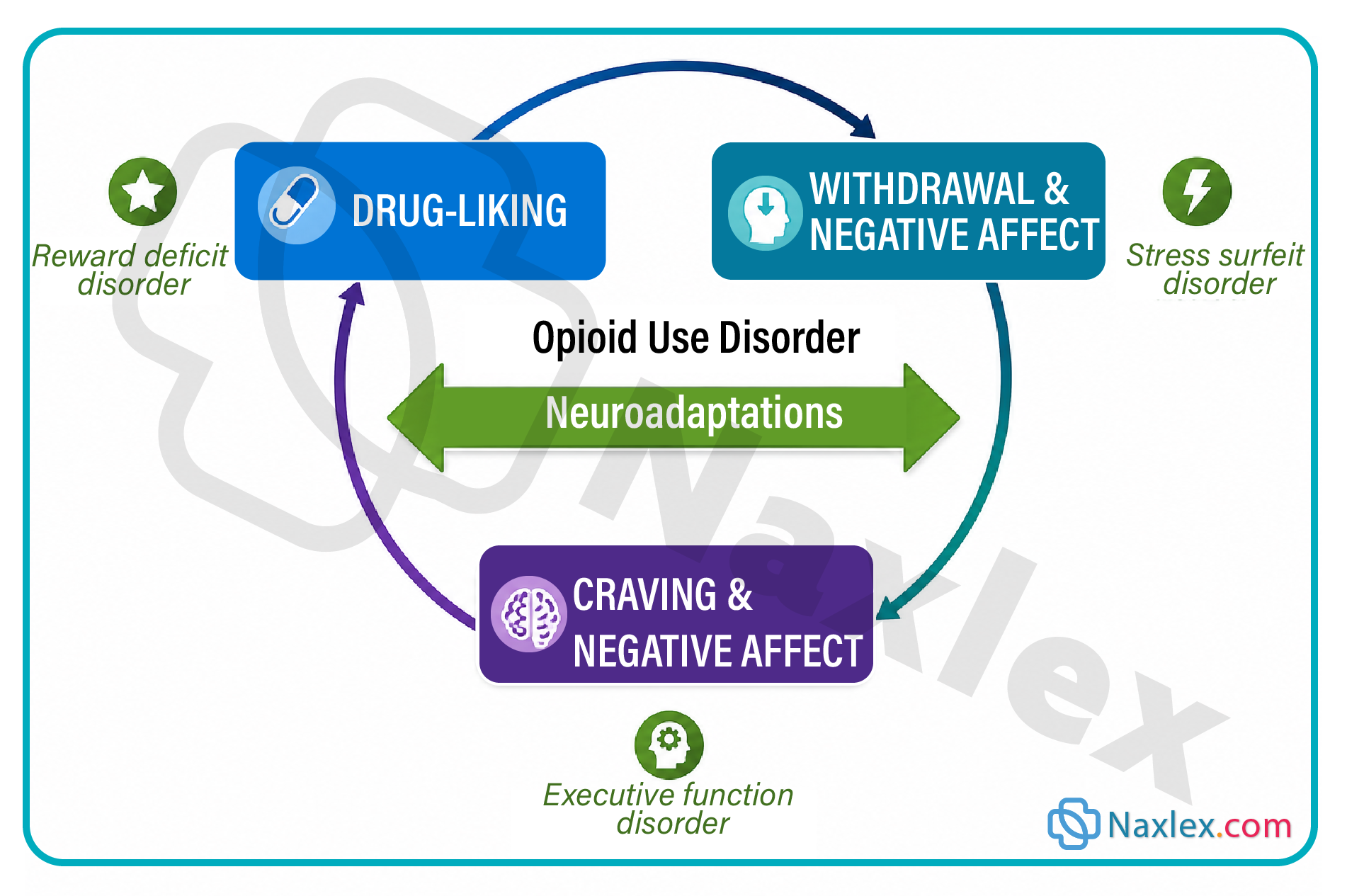
Overview And Conceptual Foundations Of Opioid Use Disorder
3.1 Definition and Terminology
- Opioid use disorder is defined as a problematic pattern of opioid use leading to clinically significant impairment or distress.
- The diagnosis requires that manifestations occur within a 12-month period.
- The term "opioid" refers to all substances, natural or synthetic, that bind to opioid receptors and produce morphine-like effects.
- The term "opiate" is narrower and refers only to alkaloid compounds derived directly from the opium poppy, Papaver somniferum.
- All opiates are opioids, but not all opioids are opiates.
- The older terms "opioid abuse" and "opioid dependence" are obsolete diagnostic categories.
- These two categories were merged into a single unified disorder measured on a severity continuum.
- The term "addiction" is not a formal diagnostic term, although it is retained in clinical and lay communication.
- Person-first language is the professional standard, and terms such as "addict," "junkie," and "abuser" are stigmatizing and clinically inappropriate.
- A urine toxicology result is described as "positive" or "negative," never as "clean" or "dirty."
Key terminology distinctions:
- Tolerance is a state of neuroadaptation in which a markedly increased dose is required to achieve the original effect, or a markedly diminished effect occurs with the same dose.
- Tolerance develops rapidly to euphoria, analgesia, sedation, nausea, and respiratory depression.
- Tolerance develops minimally or not at all to miosis and constipation.
- This differential tolerance explains why pinpoint pupils and constipation persist in chronic users.
- Physical dependence is a state of neuroadaptation manifested by a substance-specific withdrawal syndrome upon abrupt cessation, rapid dose reduction, or antagonist administration.
- Physical dependence is an expected physiological consequence of sustained opioid exposure.
- Physical dependence occurs in any client on continuous opioid therapy exceeding roughly 1 to 2 weeks.
- Psychological dependence refers to craving and compulsive drug-seeking behavior driven by anticipated reward or relief.
- Pseudoaddiction describes drug-seeking behavior that arises from undertreated pain and resolves when analgesia becomes adequate.
- Pseudoaddiction is not a true disorder and must be excluded before labeling a client as having opioid use disorder.
- Cross-tolerance is the reduced response to one opioid due to prior tolerance developed to another opioid.
- Diversion refers to the transfer of a prescribed controlled substance to unauthorized use or distribution.
- Withdrawal is a substance-specific syndrome produced by cessation or reduction of heavy and prolonged opioid use.
- Overdose is an acute toxic state characterized by respiratory depression and central nervous system depression.
- Remission refers to a period during which diagnostic criteria, other than craving, are no longer met.
- Maintenance therapy is long-term administration of an agonist or partial agonist to stabilize receptor occupancy and prevent withdrawal and craving.
Critical conceptual clarification:
- Tolerance and withdrawal alone do not establish a diagnosis of opioid use disorder.
- Tolerance and withdrawal criteria are explicitly excluded when opioids are taken solely under appropriate medical supervision.
- A postoperative client receiving prescribed morphine may develop tolerance and withdrawal without meeting criteria for the disorder.
- The distinguishing feature of the disorder is loss of control over use, compulsive use, and continued use despite harm.
3.2 Classification of Opioids
- Opioids are classified by origin, by receptor activity, and by clinical potency.
- Classification by origin distinguishes natural, semisynthetic, synthetic, and endogenous compounds.
|
Category |
Definition |
Representative Agents |
|
Natural (opiates) |
Alkaloids extracted directly from opium poppy latex |
Morphine, codeine, thebaine, papaverine, noscapine |
|
Semisynthetic |
Chemically modified natural alkaloids |
Heroin (diacetylmorphine), hydromorphone, oxycodone, oxymorphone, hydrocodone, buprenorphine |
|
Synthetic |
Fully laboratory-manufactured compounds |
Fentanyl, sufentanil, alfentanil, remifentanil, carfentanil, methadone, meperidine, tramadol, tapentadol |
|
Endogenous |
Naturally occurring opioid peptides produced by the body |
Beta-endorphins, enkephalins, dynorphins, endomorphins |
- Classification by receptor activity determines the pharmacologic and clinical profile of each agent.
|
Class |
Receptor Action |
Ceiling Effect |
Examples |
Key Clinical Point |
|
Full agonist |
Complete mu receptor activation |
None |
Morphine, heroin, fentanyl, methadone, oxycodone, hydromorphone |
Respiratory depression increases linearly with dose |
|
Partial agonist |
Submaximal mu receptor activation with high receptor affinity |
Yes |
Buprenorphine |
Ceiling on respiratory depression improves safety profile |
|
Mixed agonist-antagonist |
Kappa agonist with mu antagonist or partial agonist action |
Yes |
Butorphanol, nalbuphine, pentazocine |
Precipitates withdrawal in opioid-dependent clients |
|
Antagonist |
Competitive receptor blockade without activation |
Not applicable |
Naloxone, naltrexone, methylnaltrexone, naloxegol |
Reverses or blocks opioid effects |
- Classification by potency is expressed relative to morphine as the reference standard.
|
Agent |
Approximate Potency Relative to Morphine |
|
Codeine |
0.1 times |
|
Tramadol |
0.1 to 0.2 times |
|
Meperidine |
0.1 times |
|
Morphine |
1 time (reference) |
|
Oxycodone |
1.5 times |
|
Heroin |
2 to 3 times |
|
Hydromorphone |
5 to 7 times |
|
Methadone |
Variable and dose-dependent |
|
Fentanyl |
50 to 100 times |
|
Sufentanil |
500 to 1,000 times |
|
Carfentanil |
Approximately 10,000 times |
- Fentanyl analogues are the principal contributors to contemporary overdose fatality because milligram-level dosing errors are lethal.
- Illicitly manufactured fentanyl is frequently mixed into heroin, counterfeit tablets, and stimulant powders without the user's knowledge.
- Xylazine, a non-opioid veterinary alpha-2 adrenergic agonist, is increasingly detected as an adulterant.
- Xylazine is not reversed by naloxone and causes prolonged sedation and severe necrotic skin ulceration.
- Naloxone is still administered, since fentanyl is nearly always present alongside xylazine.
- Methadone possesses additional N-methyl-D-aspartate receptor antagonism and serotonin-norepinephrine reuptake inhibition.
- Tramadol and tapentadol have dual mechanisms involving mu agonism plus monoamine reuptake inhibition, conferring seizure and serotonin syndrome risk.
- Meperidine produces the neurotoxic metabolite normeperidine, which accumulates in renal impairment and lowers the seizure threshold.
3.3 Epidemiology and Current Trends
- Opioid use disorder is among the most lethal psychiatric disorders in terms of years of potential life lost.
- The 12-month prevalence of opioid use disorder in the adult population is estimated at approximately 0.5% to 1%, with higher rates in clinical and correctional settings.
- Prevalence among clients receiving long-term opioid therapy for chronic pain is substantially higher, estimated between 8% and 12%.
- Onset most commonly occurs in late adolescence and early adulthood, with peak incidence between 18 and 25 years of age.
- Males are affected at approximately 1.5 to 2 times the rate of females for heroin use.
- Females are more likely to be initiated through prescription opioid therapy and demonstrate telescoping.
- Telescoping describes a shorter interval from first use to development of disorder and treatment entry in women.
- The epidemic has progressed through recognizable overlapping waves.
- The first wave was driven by prescription opioid overprescription.
- The second wave was characterized by transition to heroin as prescription access tightened.
- The third wave was dominated by illicitly manufactured fentanyl and its analogues.
- The current wave involves polysubstance combinations of fentanyl with stimulants such as methamphetamine and cocaine, and with adulterants such as xylazine.
- A substantial majority of individuals who use heroin report initiating opioid use with prescription opioids.
- Mortality risk in untreated opioid use disorder is approximately 6 to 20 times that of the general population.
- The highest-risk periods for fatal overdose are the first 4 weeks after release from incarceration and the first 4 weeks after discharge from detoxification or inpatient treatment.
- These peaks reflect loss of tolerance combined with resumption of previously tolerated doses.
- Injection opioid use drives elevated incidence of human immunodeficiency virus, hepatitis B virus, hepatitis C virus, and infective endocarditis.
- Global prevalence is rising in low- and middle-income countries, with tramadol misuse being a prominent regional pattern in parts of Africa and the Middle East.
- Only a minority of individuals with opioid use disorder receive evidence-based medication treatment, representing a major treatment gap.
3.4 Etiology, Risk Factors, and Protective Factors
- The etiology of opioid use disorder is multifactorial and best explained by the biopsychosocial model.
- No single causal factor is sufficient; risk accumulates through gene-environment interaction.
Biological determinants:
- Heritability of opioid use disorder is estimated at approximately 40% to 60%.
- Polymorphisms of the OPRM1 gene encoding the mu opioid receptor alter receptor binding and reward response.
- Variation in cytochrome P450 2D6 metabolism alters conversion of codeine and tramadol to active metabolites.
- Ultrarapid metabolizers generate excessive morphine from codeine and are at risk of respiratory depression.
- Poor metabolizers experience inadequate analgesia and may escalate dosing.
- Preexisting deficiency of endogenous opioid tone may increase vulnerability to exogenous reinforcement.
- Chronic pain conditions increase exposure duration and therefore risk.
- Male sex, adolescence, and family history of substance use disorder are consistent biological risk markers.
Psychological determinants:
- Comorbid depressive, anxiety, bipolar, and posttraumatic stress disorders substantially elevate risk.
- Adverse childhood experiences, including physical abuse, sexual abuse, and neglect, demonstrate a dose-response relationship with later substance use disorder.
- Impulsivity, sensation seeking, novelty seeking, and low distress tolerance are consistent temperamental predictors.
- Antisocial and borderline personality features increase risk of both initiation and relapse.
- Self-medication of emotional pain, insomnia, and trauma symptoms is a common maintaining mechanism.
- Conduct disorder in childhood predicts early substance initiation.
Social and environmental determinants:
- Peer substance use and early exposure during adolescence are among the strongest environmental predictors.
- Ready availability of opioids through prescription, diversion, or illicit markets increases initiation.
- Poverty, unemployment, housing instability, and low educational attainment are associated with higher prevalence.
- Family dysfunction, parental substance use, and low parental monitoring increase adolescent vulnerability.
- Occupational access, as in healthcare workers, increases diversion-related risk.
- Incarceration and community disruption impair recovery and elevate relapse risk.
- Limited access to medication treatment and to naloxone increases mortality.
Iatrogenic and prescribing-related risk factors:
- Initial opioid prescription exceeding 5 to 7 days markedly increases probability of long-term use.
- High daily morphine milligram equivalents increase both dependence and overdose risk.
- Concurrent prescribing of benzodiazepines with opioids substantially increases fatal respiratory depression.
- Long-acting formulations prescribed to opioid-naive clients confer elevated risk.
- Inadequate tapering plans and abrupt discontinuation may precipitate transition to illicit sources.
|
Domain |
Risk Factors |
Protective Factors |
|
Biological |
Family history, OPRM1 variants, chronic pain, male sex, adolescent onset |
Absence of family history, effective non-opioid pain control |
|
Psychological |
Trauma history, impulsivity, comorbid mood or anxiety disorder, self-medication |
Emotional regulation skills, treated psychiatric illness, high self-efficacy |
|
Social |
Peer use, drug availability, unemployment, housing instability, incarceration |
Stable housing and employment, strong family support, recovery community |
|
Healthcare |
Prolonged prescribing, high-dose therapy, co-prescribed benzodiazepines |
Prescription monitoring programs, multimodal analgesia, naloxone co-prescription |
|
Developmental |
Early initiation before 18 years of age, conduct disorder |
Delayed initiation, school engagement, parental monitoring |
- Neurodevelopmental immaturity of the prefrontal cortex through the mid-20s explains heightened adolescent vulnerability.
- The prefrontal cortex mediates inhibitory control, and its incomplete myelination favors reward-driven behavior over executive restraint.
- Protective factors do not confer immunity but reduce probability and improve treatment outcomes.
Neurobiology And Pharmacology Of Opioids
4.1 Opioid Receptor Subtypes and Endogenous Opioid Peptides
- Opioid receptors are G protein-coupled receptors linked to inhibitory Gi/Go proteins.
- Receptor activation inhibits adenylate cyclase and reduces intracellular cyclic adenosine monophosphate.
- Activation opens potassium channels, producing potassium efflux and neuronal hyperpolarization.
- Activation closes voltage-gated calcium channels, reducing presynaptic neurotransmitter release.
- The net physiological effect is decreased neuronal excitability and decreased nociceptive transmission.
- Three classical receptor subtypes are recognized: mu, kappa, and delta.
- A fourth related receptor, the nociceptin/orphanin FQ peptide receptor, modulates pain and stress responses.
|
Receptor |
Principal Locations |
Effects of Activation |
Clinical Relevance |
|
Mu |
Periaqueductal gray, thalamus, brainstem respiratory centers, ventral tegmental area, nucleus accumbens, gastrointestinal tract |
Supraspinal analgesia, euphoria, sedation, miosis, respiratory depression, decreased gastrointestinal motility, physical dependence, pruritus, urinary retention |
Primary target of all clinically misused opioids and the source of lethality |
|
Kappa |
Spinal cord, hypothalamus, limbic structures |
Spinal analgesia, dysphoria, sedation, diuresis, miosis, psychotomimetic effects |
Explains dysphoria with mixed agonist-antagonists and low abuse potential of kappa agonists |
|
Delta |
Cortex, olfactory bulb, limbic system, spinal cord |
Spinal and supraspinal analgesia, mood modulation, antidepressant-like effects, possible seizure activity |
Less involved in reward; modulates affective state |
|
Nociceptin receptor |
Widely distributed in central nervous system |
Modulation of stress, anxiety, tolerance, and reward |
Emerging pharmacologic target |
- Mu receptor subtypes are functionally differentiated.
- Mu-1 receptors mediate supraspinal analgesia and euphoria.
- Mu-2 receptors mediate respiratory depression, bradycardia, physical dependence, and constipation.
- Respiratory depression is mediated principally at the pre-Bötzinger complex and the medullary chemoreceptor centers.
- Opioids blunt the medullary response to rising arterial carbon dioxide tension.
- Loss of hypercapnic drive is the fundamental mechanism of opioid overdose death.
Endogenous opioid peptides:
- Beta-endorphins are derived from proopiomelanocortin and act primarily at mu receptors.
- Beta-endorphins mediate exercise-induced analgesia, stress-induced analgesia, and reward.
- Enkephalins, including met-enkephalin and leu-enkephalin, are derived from proenkephalin and act primarily at delta receptors.
- Dynorphins are derived from prodynorphin and act primarily at kappa receptors.
- Dynorphin upregulation during withdrawal contributes to dysphoria and anhedonia.
- Endomorphins are highly selective mu receptor agonists.
- Chronic exogenous opioid administration suppresses endogenous opioid peptide synthesis.
- Suppression of endogenous opioid tone contributes to prolonged dysphoria, anhedonia, and hyperalgesia during abstinence.
4.2 Mechanisms of Analgesia, Euphoria, and Respiratory Depression
Mechanism of analgesia:
- Opioids modulate pain at peripheral, spinal, and supraspinal levels simultaneously.
- Peripherally, opioid receptors on primary afferent nociceptors are upregulated during inflammation and reduce nociceptor sensitivity.
- At the spinal level, presynaptic mu receptor activation in the dorsal horn inhibits release of substance P, glutamate, and calcitonin gene-related peptide.
- Postsynaptic hyperpolarization of second-order dorsal horn neurons further reduces ascending transmission.
- Supraspinally, opioids activate descending inhibitory pathways from the periaqueductal gray and rostral ventromedial medulla.
- Activation of these descending pathways involves disinhibition of gamma-aminobutyric acid interneurons.
- Opioids also alter the affective-motivational component of pain within the limbic system.
- The client may report that pain is still present but no longer distressing, reflecting limbic modulation.
Mechanism of euphoria and reinforcement:
- Mu receptor agonists bind receptors on gamma-aminobutyric acid interneurons within the ventral tegmental area.
- These interneurons normally exert tonic inhibition on dopaminergic neurons.
- Opioid-induced inhibition of the inhibitory interneuron produces disinhibition of dopaminergic neurons.
- Disinhibition results in surges of dopamine release into the nucleus accumbens.
- Dopamine surge in the nucleus accumbens generates the subjective experience of euphoria and reinforces drug-taking behavior.
- Rate of receptor occupancy determines subjective intensity, so rapid-onset routes produce more intense reinforcement.
- Intravenous heroin and smoked or insufflated fentanyl produce the most intense reinforcement due to rapid central nervous system entry.
Mechanism of respiratory depression:
- Mu-2 receptor activation in the pre-Bötzinger complex reduces respiratory rhythm generation.
- Central chemoreceptor sensitivity to arterial carbon dioxide tension is blunted, raising the apneic threshold.
- Peripheral chemoreceptor response to hypoxia is also depressed.
- The initial pattern is decreased respiratory rate with preserved or increased tidal volume, progressing to irregular breathing and apnea.
- Bradypnea below 12 breaths/min in a sedated client is an early warning sign.
- A respiratory rate ≤ 8 breaths/min with decreased responsiveness constitutes an emergency.
- Hypercapnia produces cerebral vasodilation, raising intracranial pressure and worsening obtundation.
- Concurrent central nervous system depressants such as benzodiazepines, alcohol, gabapentinoids, and sedating antihistamines act synergistically and markedly increase lethality.
Other mu-mediated effects:
- Miosis results from disinhibition of the Edinger-Westphal nucleus of the oculomotor nerve.
- Miosis does not undergo significant tolerance and remains a reliable clinical marker of opioid effect.
- Meperidine and tramadol may produce normal or dilated pupils rather than miosis.
- Severe hypoxia may produce pupillary dilation despite opioid presence, which is an ominous late finding.
- Constipation results from decreased peristalsis, increased sphincter tone, and increased fluid absorption in the gut.
- Constipation is the adverse effect most resistant to tolerance and requires ongoing prophylaxis.
- Nausea and vomiting result from stimulation of the chemoreceptor trigger zone in the area postrema.
- Histamine release, prominent with morphine and codeine, produces pruritus, flushing, urticaria, and hypotension.
- Histamine-mediated bronchospasm may occur and warrants caution in reactive airway disease.
- Urinary retention results from increased detrusor and sphincter tone.
- Chest wall rigidity, or wooden chest syndrome, occurs with rapid high-dose intravenous fentanyl and impairs ventilation.
- Endocrine effects include hypogonadotropic hypogonadism, reduced testosterone, amenorrhea, and reduced libido.
- Opioid-induced hyperalgesia is a paradoxical increase in pain sensitivity from sustained high-dose exposure.
- Opioid-induced hyperalgesia is managed by dose reduction or rotation, not by dose escalation.
4.3 Pharmacokinetics and Routes of Administration
- Onset, intensity, and duration of effect are governed by lipophilicity, route, and elimination half-life.
- Highly lipophilic agents cross the blood-brain barrier rapidly and produce faster, more intense effects.
- Heroin is more lipophilic than morphine and is rapidly deacetylated to 6-monoacetylmorphine and then to morphine.
- Rapid central entry explains the intense rush associated with heroin relative to equivalent morphine doses.
|
Route |
Onset |
Reinforcement Potential |
Associated Risks |
|
Intravenous |
Seconds to 1 min |
Highest |
Overdose, endocarditis, abscess, blood-borne infection, venous sclerosis |
|
Smoked or inhaled |
Seconds to 1 min |
Very high |
Pulmonary injury, bronchospasm |
|
Intranasal |
3 to 5 min |
High |
Nasal septal necrosis, sinusitis |
|
Intramuscular or subcutaneous |
10 to 20 min |
Moderate |
Skin popping, cellulitis, necrotizing infection, wound botulism |
|
Oral |
30 to 60 min |
Lower |
First-pass metabolism reduces bioavailability |
|
Transdermal |
12 to 24 h to steady state |
Lower but dangerous |
Heat-accelerated absorption, patch chewing, reservoir extraction |
Metabolism and elimination:
- Most opioids undergo hepatic metabolism through cytochrome P450 enzymes and glucuronidation.
- Morphine is metabolized to morphine-3-glucuronide and morphine-6-glucuronide.
- Morphine-6-glucuronide is an active analgesic metabolite that accumulates in renal failure.
- Accumulation in renal impairment causes prolonged sedation and respiratory depression.
- Codeine is a prodrug requiring cytochrome P450 2D6 conversion to morphine for analgesic effect.
- Codeine is contraindicated in children after tonsillectomy or adenoidectomy due to ultrarapid metabolizer deaths.
- Meperidine is metabolized to normeperidine, which is neurotoxic and proconvulsant.
- Methadone has a long and highly variable half-life of approximately 8 to 59 h, while its analgesic duration is only 4 to 8 h.
- This mismatch between analgesic duration and elimination half-life causes accumulation and delayed fatal respiratory depression.
- Steady state is not achieved for approximately 5 days, so dose increases must be gradual.
- Methadone prolongs the QT interval and can precipitate torsades de pointes.
- Buprenorphine has very high mu receptor affinity and a prolonged receptor dissociation half-life.
- High affinity displaces full agonists from the receptor and may precipitate withdrawal.
- High affinity also means that reversal of buprenorphine may require higher and repeated naloxone doses.
- Naloxone has a short half-life of approximately 30 to 90 min.
- Naloxone half-life is shorter than that of most opioids, so resedation after initial reversal is a critical risk.
- Continuous observation and repeat dosing or infusion are required after reversal of long-acting opioids.
|
Opioid |
Approximate Half-Life |
Withdrawal Onset |
Withdrawal Peak |
Withdrawal Duration |
|
Heroin |
15 to 30 min |
6 to 12 h |
36 to 72 h |
5 to 10 days |
|
Morphine |
2 to 4 h |
6 to 12 h |
36 to 72 h |
5 to 10 days |
|
Oxycodone |
3 to 5 h |
8 to 12 h |
36 to 72 h |
5 to 10 days |
|
Fentanyl |
3 to 7 h (highly tissue-dependent) |
6 to 12 h |
24 to 72 h |
5 to 14 days |
|
Methadone |
8 to 59 h |
24 to 48 h |
72 to 96 h |
14 to 21 days or longer |
|
Buprenorphine |
24 to 42 h |
24 to 72 h |
72 to 120 h |
14 to 21 days |
- Short half-life agents produce earlier, more intense, and shorter withdrawal.
- Long half-life agents produce delayed, milder, and more protracted withdrawal.
- Fentanyl is highly lipophilic and sequesters in adipose tissue in chronic users.
- Adipose sequestration causes prolonged and unpredictable withdrawal and complicates buprenorphine induction.
4.4 Neuroadaptation: Tolerance, Physical Dependence, and Cross-Tolerance
Cellular mechanisms of tolerance:
- Receptor desensitization occurs through phosphorylation by G protein-coupled receptor kinases.
- Phosphorylated receptors recruit beta-arrestin, which uncouples the receptor from its G protein.
- Receptor internalization removes receptors from the cell surface, reducing available binding sites.
- Downregulation reduces total receptor number with sustained exposure.
- Upregulation of the adenylate cyclase-cyclic adenosine monophosphate pathway produces compensatory hyperexcitability.
- This compensatory upregulation is the cellular basis of withdrawal when the opioid is removed.
Types of tolerance:
- Pharmacodynamic tolerance results from receptor-level adaptation and is the principal mechanism.
- Pharmacokinetic tolerance results from enzyme induction and increased drug clearance.
- Behavioral or learned tolerance results from conditioned compensatory responses in familiar settings.
- Loss of environmental cues in an unfamiliar setting reduces conditioned tolerance and increases overdose risk.
- Acute tolerance, or tachyphylaxis, may develop within a single administration session.
Differential tolerance:
- Rapid and substantial tolerance develops to euphoria, analgesia, sedation, nausea, and respiratory depression.
- Minimal or no tolerance develops to miosis and constipation.
- Differential tolerance narrows the therapeutic index over time, since analgesic tolerance outpaces respiratory tolerance only partially.
Loss of tolerance:
- Tolerance declines rapidly during abstinence, often substantially within 3 to 7 days.
- Loss of tolerance is the central mechanism of post-abstinence overdose death.
- The client who resumes a previously tolerated dose after incarceration, hospitalization, or residential treatment is at extreme risk.
- Client and family education on loss of tolerance is a mandatory nursing intervention before discharge.
Cross-tolerance:
- Cross-tolerance occurs among all full mu agonists because they act at the same receptor.
- Cross-tolerance is incomplete, so equianalgesic conversion requires a dose reduction of approximately 25% to 50% when rotating opioids.
- Failure to reduce the dose during opioid rotation is a recognized cause of iatrogenic overdose.
- No cross-tolerance exists between opioids and non-opioid sedatives, although additive respiratory depression does occur.
Physical dependence:
- Physical dependence reflects locus coeruleus and autonomic neuroadaptation rather than compulsive behavior.
- Withdrawal may be precipitated by cessation, dose reduction, or antagonist administration.
- Antagonist-precipitated withdrawal is more abrupt and severe than spontaneous withdrawal.
- Physical dependence develops in infants exposed in utero, producing neonatal opioid withdrawal syndrome.
4.5 Mesolimbic Reward Pathway and the Addiction Cycle
Anatomy of the reward pathway:
- The mesolimbic dopaminergic pathway projects from the ventral tegmental area to the nucleus accumbens.
- The mesocortical pathway projects from the ventral tegmental area to the prefrontal cortex and mediates executive control.
- The amygdala mediates conditioned emotional learning, stress reactivity, and negative affect.
- The hippocampus encodes contextual memory linking environmental cues to drug reward.
- The dorsal striatum mediates the transition from goal-directed use to habitual, automatic use.
- The prefrontal cortex mediates inhibitory control, decision-making, and salience attribution.
Progression of the disorder:
- Initial use is driven by positive reinforcement, meaning use to obtain euphoria.
- Continued use shifts toward negative reinforcement, meaning use to avoid withdrawal and dysphoria.
- Incentive salience develops, so drug-associated cues acquire powerful motivational value.
- Anti-reward systems become recruited, involving corticotropin-releasing factor, dynorphin, and norepinephrine.
- Allostatic shifting of the hedonic set point produces persistent anhedonia in the absence of the drug.
- Prefrontal hypofunction impairs inhibitory control while striatal habit circuits strengthen.
- The result is compulsive use that persists despite conscious intention to stop.
The three-stage addiction cycle:
- Binge and intoxication stage involves basal ganglia circuitry and dopamine-mediated reward.
- Withdrawal and negative affect stage involves the extended amygdala, corticotropin-releasing factor, and dynorphin.
- Preoccupation and anticipation stage involves prefrontal cortex dysfunction, craving, and impaired executive control.
- Each cycle strengthens conditioned associations and deepens neuroadaptation.
Clinical implications of the neurobiology:
- Craving is a neurobiological phenomenon, not a moral failing or lack of willpower.
- Cue-induced craving explains relapse triggered by people, places, paraphernalia, and emotional states.
- Neuroadaptive changes persist for months to years after cessation, justifying long-term treatment.
- Agonist maintenance therapy stabilizes receptor occupancy, normalizes reward signaling, and permits psychosocial recovery.
- Protracted withdrawal syndrome, comprising anhedonia, insomnia, dysphoria, and craving, may persist for 6 months or longer.
- Understanding this neurobiology supports the nurse's nonjudgmental therapeutic stance and rationale for maintenance therapy.
Diagnostic Criteria And Clinical Presentation
6.1 DSM-5-TR Diagnostic Criteria for Opioid Use Disorder
- The diagnosis requires a problematic pattern of opioid use leading to clinically significant impairment or distress.
- Manifestations must occur within a 12-month period.
- At least 2 of the 11 criteria must be met during that 12-month period.
- The 11 criteria are grouped into 4 conceptual clusters: impaired control, social impairment, risky use, and pharmacological criteria.
Cluster 1: Impaired control (criteria 1 to 4)
- Criterion 1: Opioids are taken in larger amounts or over a longer period than was originally intended.
- The client who intends to take 1 tablet but consistently takes 3 tablets meets this criterion.
- Criterion 2: There is a persistent desire or unsuccessful efforts to cut down or control opioid use.
- Repeated failed self-directed taper attempts satisfy this criterion.
- Criterion 3: A great deal of time is spent in activities necessary to obtain the opioid, use the opioid, or recover from its effects.
- Time spent visiting multiple prescribers or traveling to obtain supply is included.
- Criterion 4: Craving, or a strong desire or urge to use opioids, is present.
- Craving is the only criterion that may persist during remission without invalidating the remission specifier.
Cluster 2: Social impairment (criteria 5 to 7)
- Criterion 5: Recurrent opioid use results in failure to fulfill major role obligations at work, school, or home.
- Criterion 6: Opioid use continues despite persistent or recurrent social or interpersonal problems caused or exacerbated by opioid effects.
- Criterion 7: Important social, occupational, or recreational activities are given up or reduced because of opioid use.
Cluster 3: Risky use (criteria 8 and 9)
- Criterion 8: Recurrent opioid use occurs in situations in which it is physically hazardous.
- Driving while sedated and injecting alone are examples.
- Criterion 9: Opioid use is continued despite knowledge of a persistent or recurrent physical or psychological problem likely caused or exacerbated by the opioid.
- Continued injection despite recurrent endocarditis satisfies this criterion.
Cluster 4: Pharmacological criteria (criteria 10 and 11)
- Criterion 10: Tolerance is present, defined as a need for markedly increased amounts to achieve intoxication or desired effect, or a markedly diminished effect with continued use of the same amount.
- Criterion 11: Withdrawal is present, manifested by the characteristic opioid withdrawal syndrome, or opioids are taken to relieve or avoid withdrawal symptoms.
Critical exclusion rule:
- Criteria 10 and 11 are NOT counted for individuals taking opioids solely under appropriate medical supervision.
- This exclusion prevents misdiagnosis of postoperative, palliative, and chronic pain clients who develop expected physiological adaptation.
- A hospice client on escalating morphine with tolerance and withdrawal does not, on that basis alone, meet criteria.
- The exclusion does not apply when the client is misusing the prescription outside the supervised regimen.
|
Cluster |
Criterion Number |
Core Feature |
|
Impaired control |
1 |
Larger amounts or longer duration than intended |
|
Impaired control |
2 |
Persistent desire or failed efforts to cut down |
|
Impaired control |
3 |
Excessive time obtaining, using, or recovering |
|
Impaired control |
4 |
Craving or strong urge to use |
|
Social impairment |
5 |
Failure to fulfill major role obligations |
|
Social impairment |
6 |
Continued use despite social or interpersonal problems |
|
Social impairment |
7 |
Reduction or abandonment of important activities |
|
Risky use |
8 |
Recurrent use in physically hazardous situations |
|
Risky use |
9 |
Continued use despite known physical or psychological harm |
|
Pharmacological |
10 |
Tolerance (excluded if medically supervised) |
|
Pharmacological |
11 |
Withdrawal (excluded if medically supervised) |
6.2 Severity, Course, and Specifiers
Severity specifiers:
- Severity is determined by counting the number of criteria met within the 12-month period.
- Mild opioid use disorder: 2 to 3 criteria met.
- Moderate opioid use disorder: 4 to 5 criteria met.
- Severe opioid use disorder: 6 or more criteria met.
- Severity may change over time and should be reassessed at each evaluation.
- Severity classification guides treatment intensity and level-of-care decisions.
Course specifiers:
- In early remission: no criteria other than craving have been met for ≥ 3 months but < 12 months.
- In sustained remission: no criteria other than craving have been met for ≥ 12 months.
- Craving, criterion 4, is expressly permitted during both remission states.
- Remission is documented only after the minimum duration threshold is reached.
Additional specifiers:
- On maintenance therapy: applied when the client is taking a prescribed agonist or partial agonist such as methadone or buprenorphine.
- This specifier may also be applied when a full antagonist such as naltrexone is prescribed.
- Maintenance therapy is a legitimate treatment and does not itself constitute continued disorder activity.
- In a controlled environment: applied when the client is in a setting where opioid access is restricted.
- Examples include incarceration, locked inpatient units, and closely supervised residential facilities.
- Both specifiers may be applied together with a remission specifier.
|
Specifier |
Defining Threshold |
|
Mild |
2 to 3 criteria |
|
Moderate |
4 to 5 criteria |
|
Severe |
≥ 6 criteria |
|
Early remission |
No criteria except craving for ≥ 3 months and < 12 months |
|
Sustained remission |
No criteria except craving for ≥ 12 months |
|
On maintenance therapy |
Receiving prescribed methadone, buprenorphine, or naltrexone |
|
In a controlled environment |
Opioid access restricted by setting |
Related diagnostic entities:
- Opioid intoxication is a separate diagnosis characterized by recent use, problematic behavioral or psychological changes, and pupillary constriction with specified signs.
- Opioid withdrawal is a separate diagnosis requiring cessation or reduction of heavy prolonged use, or antagonist administration after use.
- Opioid-induced disorders include opioid-induced depressive disorder, anxiety disorder, sleep disorder, sexual dysfunction, and delirium.
- Unspecified opioid-related disorder is used when presentations cause distress but do not meet full criteria for any specific opioid-related disorder.
6.3 Behavioral, Physical, and Psychosocial Manifestations
Behavioral manifestations:
- Escalating requests for early refills, dose increases, or specific opioid agents are common presenting behaviors.
- Reported loss or theft of prescriptions occurs repeatedly.
- Obtaining prescriptions from multiple prescribers or pharmacies is a recognized pattern.
- Use of nonmedical sources, including family members' supplies and illicit markets, may be disclosed or concealed.
- Route escalation from oral to intranasal to intravenous administration reflects worsening severity.
- Preoccupation with medication administration times and clock-watching is frequently observed in hospitalized clients.
- Manipulation, splitting of staff, and threats to leave against medical advice may occur.
- Social withdrawal, secrecy, and deterioration in personal grooming develop as the disorder progresses.
- Criminal activity, including theft and diversion, may emerge to sustain acquisition.
Physical manifestations during active use:
- Pinpoint pupils that persist regardless of ambient light are a hallmark of current opioid effect.
- Sedation, drowsiness, and nodding, described as brief episodes of falling asleep mid-activity, are characteristic.
- Slurred speech and impairment of attention and memory occur during intoxication.
- Chronic constipation and abdominal distension are near-universal findings.
- Pruritus and excoriations occur secondary to histamine release.
- Weight loss, malnutrition, and dental caries are common in advanced disease.
- Amenorrhea, erectile dysfunction, and decreased libido reflect hypogonadotropic hypogonadism.
Physical signs of injection drug use:
- Track marks are linear hyperpigmented scars along superficial veins.
- Venous sclerosis, thrombophlebitis, and loss of peripheral venous access develop over time.
- Abscesses, cellulitis, and necrotizing soft tissue infections occur at injection sites.
- Skin popping scars are round atrophic lesions from subcutaneous injection.
- Injection into femoral, jugular, or digital veins indicates loss of peripheral access.
- Nasal septal perforation and chronic rhinitis suggest intranasal use.
Psychosocial manifestations:
- Occupational decline, absenteeism, and job loss are frequent consequences.
- Financial deterioration, debt, and legal problems accumulate.
- Family conflict, loss of custody, and relationship breakdown are common.
- Housing instability and homelessness increase with severity.
- Shame, guilt, hopelessness, and internalized stigma impair help-seeking.
- Isolation from non-using social networks narrows the recovery support base.
6.4 Differential Diagnosis and Psychiatric Comorbidity
Differential diagnosis:
- Physical dependence without disorder occurs in medically supervised clients and lacks impaired control and compulsive use.
- Pseudoaddiction reflects undertreated pain, and behaviors resolve once analgesia becomes adequate.
- Other substance use disorders, particularly sedative-hypnotic and alcohol use disorders, may mimic or coexist.
- Sedative-hypnotic intoxication produces sedation but with normal or dilated pupils and prominent nystagmus.
- Alcohol intoxication produces sedation with alcohol odor, nystagmus, and ataxia rather than miosis.
- Stimulant withdrawal produces hypersomnia, hyperphagia, and dysphoria without autonomic hyperactivity or piloerection.
- Cholinergic toxidrome shares miosis but adds bradycardia, salivation, lacrimation, urination, defecation, and bronchorrhea.
- Pontine hemorrhage produces pinpoint pupils with coma and does not respond to naloxone.
- Clonidine and other alpha-2 agonist overdose produces miosis, bradycardia, and hypotension and may partially respond to naloxone.
- Hypoglycemia, hypoxia, hypercapnia, sepsis, and head injury must be excluded in any client with altered consciousness.
- Malingering or drug-seeking for diversion rather than personal use should be considered but not assumed.
|
Condition |
Pupils |
Respirations |
Bowel Sounds |
Response to Naloxone |
|
Opioid intoxication |
Constricted |
Depressed |
Decreased |
Rapid improvement |
|
Sedative-hypnotic intoxication |
Normal or dilated |
Depressed |
Normal |
No response |
|
Cholinergic toxidrome |
Constricted |
Bronchorrhea, wet |
Hyperactive |
No response |
|
Anticholinergic toxidrome |
Dilated |
Normal or increased |
Absent |
No response |
|
Stimulant intoxication |
Dilated |
Increased |
Normal or decreased |
No response |
|
Pontine hemorrhage |
Pinpoint |
Irregular |
Variable |
No response |
Psychiatric comorbidity:
- Comorbid psychiatric illness is present in a majority of clients with opioid use disorder.
- Major depressive disorder is the most frequent mood comorbidity and elevates suicide risk.
- Anxiety disorders, including generalized anxiety and panic disorder, commonly precede or follow onset.
- Posttraumatic stress disorder is highly prevalent, particularly among women and veterans.
- Bipolar disorder increases impulsive use during manic and mixed states.
- Antisocial personality disorder and borderline personality disorder are overrepresented.
- Attention-deficit/hyperactivity disorder increases impulsivity and early substance initiation.
- Concurrent tobacco, alcohol, benzodiazepine, and stimulant use disorders are frequent.
- Integrated concurrent treatment of both disorders yields superior outcomes to sequential treatment.
- Untreated psychiatric comorbidity is a leading cause of treatment dropout and relapse.
6.5 Screening and Assessment Instruments
- Universal screening is recommended in primary care, emergency, obstetric, and pain management settings.
- Screening should be conducted privately, nonjudgmentally, and with clear explanation of confidentiality.
|
Instrument |
Purpose |
Key Feature |
|
Single-Question Screen |
Rapid universal screening |
Asks about nonmedical prescription drug use in the past year |
|
NIDA Quick Screen and NIDA-Modified ASSIST |
Substance-specific risk stratification |
Two-step screen with severity scoring |
|
CAGE-AID |
Brief screening adapted to include drugs |
Cut down, Annoyed, Guilty, Eye-opener |
|
DAST-10 |
Drug abuse screening |
10 items, scores stratify problem severity |
|
Opioid Risk Tool |
Predicts aberrant behavior before prescribing |
Weighted for family history, personal history, age, sexual abuse, psychiatric disorder |
|
COMM |
Monitors current aberrant behavior in chronic pain clients on opioids |
17 items assessing ongoing misuse |
|
SOAPP-R |
Predicts risk before initiating chronic opioid therapy |
24-item revised screener |
|
COWS |
Objective measurement of withdrawal severity |
11 items; guides buprenorphine induction timing |
|
SOWS and OOWS |
Subjective and objective withdrawal scales |
Client-rated and observer-rated versions |
|
ASI |
Comprehensive multidimensional addiction severity assessment |
Covers medical, employment, legal, family, psychiatric domains |
|
ASAM Criteria |
Determines appropriate level of care |
Six dimensions guiding placement |
Laboratory and diagnostic assessment:
- Urine drug screening by immunoassay is the initial test but has significant limitations.
- Standard opiate immunoassays detect morphine and codeine reliably.
- Standard opiate immunoassays do NOT reliably detect fentanyl, methadone, buprenorphine, oxycodone, or tramadol.
- Dedicated assays must be specifically ordered for fentanyl, methadone, buprenorphine, and oxycodone.
- Confirmatory testing uses gas chromatography-mass spectrometry or liquid chromatography-tandem mass spectrometry.
- False positives may arise from quinolones, rifampin, and poppy seed ingestion.
- A positive result confirms exposure but does not establish a disorder or impairment.
- Baseline laboratory workup includes complete blood count, comprehensive metabolic panel, liver function tests, and coagulation studies.
- Infectious screening includes human immunodeficiency virus, hepatitis A, hepatitis B, hepatitis C, tuberculosis, and syphilis.
- Pregnancy testing is mandatory for clients of childbearing potential before initiating pharmacotherapy.
- Electrocardiography with QTc measurement is required before and during methadone therapy.
- Blood cultures and echocardiography are obtained when endocarditis is suspected in injection drug users.
Prescription drug monitoring:
- Prescription drug monitoring program databases are queried to identify multiple prescribers and overlapping prescriptions.
- Query results are used to inform clinical conversation, not to punish or discharge the client.
Opioid Intoxication And Opioid Overdose
7.1 Pathophysiology of Opioid Intoxication
- Opioid intoxication is a reversible substance-specific syndrome produced by recent opioid use.
- The diagnosis requires clinically significant problematic behavioral or psychological changes developing during or shortly after use.
- Pupillary constriction is a required diagnostic feature, except when severe hypoxia has produced pupillary dilation.
- At least 1 of the following must also be present: drowsiness or coma, slurred speech, or impairment in attention or memory.
- The symptoms must not be attributable to another medical condition or better explained by another mental disorder.
- Intoxication represents a continuum extending from mild sedation to fatal respiratory arrest.
- The transition from intoxication to overdose is defined by loss of protective airway reflexes and inadequate ventilation.
- Overdose reflects saturation of mu-2 receptors in the brainstem respiratory centers.
- Blunting of central chemoreceptor sensitivity to arterial carbon dioxide raises the apneic threshold.
- Suppression of peripheral chemoreceptor hypoxic drive removes the last respiratory safeguard.
- Progressive hypoventilation produces hypercapnia, respiratory acidosis, and hypoxemia.
- Hypoxemia leads to anaerobic metabolism, lactic acidosis, and cellular injury.
- Cerebral hypoxia produces obtundation, seizure activity, and eventually irreversible anoxic brain injury.
- Myocardial hypoxia produces bradycardia, arrhythmia, and asystole.
- Death typically results from respiratory arrest preceding cardiac arrest, not from a primary cardiac event.
Factors that increase overdose risk:
- Concurrent central nervous system depressants, particularly benzodiazepines, alcohol, and gabapentinoids, act synergistically.
- Loss of tolerance after abstinence, incarceration, hospitalization, or detoxification is a leading contributor.
- Use of illicitly manufactured fentanyl or fentanyl analogues of unknown concentration is a dominant modern driver.
- Using alone eliminates the possibility of rescue.
- Variable purity and inconsistent mixing of illicit product produce unpredictable dosing.
- Preexisting respiratory disease, obstructive sleep apnea, hepatic impairment, and renal impairment increase susceptibility.
- Advanced age and frailty reduce physiologic reserve.
- Route escalation to intravenous or smoked administration accelerates peak serum concentration.
- Resumption of a previously tolerated dose after a period of abstinence is a classic lethal scenario.
7.2 The Opioid Toxidrome and Clinical Manifestations
The classic triad:
- Respiratory depression is the most critical and lethal component.
- Pinpoint pupils, or miosis, reflect Edinger-Westphal nucleus disinhibition.
- Decreased level of consciousness ranges from somnolence to unresponsive coma.
- Respiratory depression is the priority finding, as pupils and consciousness do not kill the client.
System-by-system manifestations:
- Respiratory: bradypnea, shallow tidal volume, irregular rhythm, apneic pauses, snoring respirations from airway obstruction, and frank apnea.
- Neurological: sedation, nodding, slurred speech, impaired attention and memory, stupor, coma, and absent gag reflex.
- Ocular: symmetrical pinpoint pupils that are sluggishly reactive.
- Cardiovascular: bradycardia, hypotension, and delayed capillary refill.
- Integumentary: pallor, cyanosis of lips and nail beds, cool clammy skin, and needle marks.
- Gastrointestinal: absent or markedly diminished bowel sounds, nausea, and vomiting.
- Musculoskeletal: flaccid muscle tone, or chest wall rigidity in high-dose fentanyl exposure.
- Genitourinary: urinary retention and decreased urine output.
- Thermoregulatory: hypothermia from environmental exposure and reduced metabolic activity.
Important exceptions to expect on examination:
- Meperidine and tramadol may produce normal or dilated pupils rather than miosis.
- Severe hypoxia may dilate pupils despite ongoing opioid effect, which is an ominous late sign.
- Concurrent stimulant use may produce mid-position pupils.
- Xylazine adulteration produces profound sedation and bradycardia that do not reverse with naloxone.
- Fentanyl may produce chest wall rigidity that prevents effective bag-valve-mask ventilation.
|
Stage |
Respiratory Rate |
Level of Consciousness |
Pupils |
Skin |
Priority Action |
|
Mild sedation |
12 to 16 breaths/min |
Drowsy, rousable to voice |
Constricted |
Warm, dry |
Monitor closely, hold next dose |
|
Moderate |
10 to 12 breaths/min |
Rousable only to physical stimulus |
Pinpoint |
Pale |
Stimulate, oxygen, prepare naloxone |
|
Severe |
≤ 8 breaths/min |
Unresponsive to stimulation |
Pinpoint |
Cyanotic, clammy |
Airway, ventilate, administer naloxone |
|
Arrest |
Apnea |
Unresponsive, no gag reflex |
Pinpoint or dilated |
Cyanotic, cold |
Bag-valve-mask ventilation, naloxone, resuscitation |
7.3 Diagnostic Evaluation and Laboratory Findings
- Opioid overdose is a clinical diagnosis, and treatment must never be delayed pending laboratory confirmation.
- Immediate bedside assessment includes airway patency, respiratory rate and effort, pulse oximetry, and level of consciousness.
- Point-of-care capillary blood glucose is obtained immediately, since hypoglycemia mimics overdose.
- Arterial blood gas analysis demonstrates respiratory acidosis with elevated arterial carbon dioxide tension and decreased arterial oxygen tension.
- Mixed respiratory and metabolic acidosis develops with prolonged hypoxia and lactate accumulation.
- Serum lactate is elevated in proportion to tissue hypoperfusion.
- Pulse oximetry may be falsely reassuring when supplemental oxygen masks hypoventilation.
- Capnography is superior to pulse oximetry for detecting early hypoventilation.
- Urine toxicology identifies substances but does not quantify impairment or guide acute management.
- Dedicated fentanyl assays must be requested specifically, as routine opiate immunoassays do not detect fentanyl.
- Serum acetaminophen and salicylate levels are obtained when combination analgesics may have been ingested.
- Creatine kinase is measured to detect rhabdomyolysis from prolonged immobility.
- Renal function studies detect acute kidney injury secondary to rhabdomyolysis or hypoperfusion.
- Electrocardiography detects QT prolongation associated with methadone and bradyarrhythmias.
- Chest radiography evaluates for aspiration pneumonitis and noncardiogenic pulmonary edema.
- Computed tomography of the head is indicated when consciousness does not improve after adequate naloxone reversal.
- Blood cultures and echocardiography are obtained when fever or murmur suggests endocarditis.
7.4 Emergency Management and Naloxone Therapy
Priority sequence of management:
- Assess responsiveness and call for emergency assistance immediately.
- Open and maintain the airway using head-tilt chin-lift or jaw-thrust if trauma is suspected.
- Provide rescue ventilation with bag-valve-mask and high-flow oxygen before or simultaneously with naloxone.
- Oxygenation and ventilation take priority, because hypoxia causes the organ damage and death.
- Administer naloxone as the definitive pharmacologic antidote.
- Establish intravenous access and attach continuous cardiac and pulse oximetry monitoring.
- Position in the recovery position if breathing is restored, to reduce aspiration risk.
- Prepare for advanced airway management if ventilation remains inadequate.
- Initiate cardiopulmonary resuscitation if pulseless.
- Correct hypoglycemia, hypothermia, and hypovolemia concurrently.
Naloxone pharmacology and administration:
- Naloxone is a pure competitive opioid antagonist with high affinity at mu receptors.
- Naloxone displaces the agonist from the receptor and rapidly restores respiratory drive.
- Naloxone has no agonist activity and produces no effect in the absence of opioids.
- Onset is approximately 1 to 2 min intravenously, 2 to 5 min intramuscularly, and 2 to 5 min intranasally.
- Duration of action is approximately 30 to 90 min.
- Half-life of naloxone is shorter than that of nearly all opioids, creating the risk of resedation.
- Standard initial intravenous dose in the client with respiratory depression is 0.4 mg to 2 mg.
- In the opioid-dependent client, a reduced starting dose of 0.04 mg to 0.4 mg is preferred to avoid abrupt precipitated withdrawal.
- The dose may be repeated every 2 to 3 min, titrating to adequate respiration rather than to full alertness.
- Cumulative doses exceeding 10 mg without response suggest a non-opioid cause or a non-reversible adulterant such as xylazine.
- Fentanyl and its analogues frequently require repeated or higher doses due to potency and rapid redistribution.
- Buprenorphine reversal requires higher doses because of its very high receptor affinity.
- Continuous naloxone infusion is used for long-acting opioids such as methadone and sustained-release formulations.
- Intranasal naloxone at 4 mg per spray is the standard community and take-home formulation.
- Auto-injector intramuscular formulations are available for lay rescuer use.
Critical titration principle:
- The therapeutic endpoint of naloxone is restoration of adequate spontaneous ventilation.
- The endpoint is NOT full consciousness or complete reversal of analgesia.
- Overzealous reversal precipitates acute withdrawal, severe pain, agitation, vomiting, and aspiration.
- Precipitated withdrawal may also cause tachycardia, hypertension, arrhythmia, and noncardiogenic pulmonary edema.
- Precipitated withdrawal in pregnancy may cause fetal distress, placental abruption, and preterm labor, yet maternal hypoxia remains the greater threat and naloxone is still given for respiratory arrest.
Post-reversal monitoring:
- Continuous observation for at least 4 to 6 h is required after reversal of short-acting opioids.
- Extended observation of 24 to 48 h is required after methadone, sustained-release formulations, or transdermal fentanyl exposure.
- Resedation is the principal danger and mandates monitored care rather than immediate discharge.
- Vital signs, respiratory rate, oxygen saturation, and sedation scale are documented at frequent intervals.
- The client who leaves against medical advice after reversal is at high risk of recurrent arrest.
- Every reversal event is a critical opportunity for treatment initiation and naloxone distribution.
- Buprenorphine may be initiated in the emergency department once withdrawal criteria are met.
Nursing Insights
- Ventilate before you reverse: hypoxia, not the opioid molecule, causes brain death, so bag-valve-mask ventilation with high-flow oxygen precedes or accompanies naloxone in every unresponsive client with a respiratory rate ≤ 8 breaths/min.
- Titrate naloxone to a respiratory rate ≥ 12 breaths/min, not to alertness, and start at 0.04 mg to 0.4 mg in a known dependent client, because a full 2 mg push precipitates violent withdrawal, vomiting, aspiration, and loss of the therapeutic relationship.
- Never discharge after a successful reversal without monitoring, since naloxone lasts 30 to 90 min while fentanyl, methadone, and sustained-release oxycodone last far longer, making resedation and repeat arrest a predictable event rather than a complication.
7.5 Complications and Sequelae of Overdose
Neurological complications:
- Anoxic brain injury results from prolonged cerebral hypoxia and may produce permanent cognitive impairment.
- Persistent vegetative state and coma follow severe or prolonged hypoxic insult.
- Post-hypoxic myoclonus and seizures may develop during or after resuscitation.
- Toxic leukoencephalopathy, historically associated with inhaled heroin, causes white matter degeneration.
- Cerebral edema may complicate severe hypercapnia.
Respiratory complications:
- Aspiration pneumonitis results from vomiting with absent protective airway reflexes.
- Aspiration pneumonia develops secondarily from bacterial colonization.
- Noncardiogenic pulmonary edema may occur following overdose or abrupt naloxone reversal.
- Acute respiratory distress syndrome may develop after major aspiration or prolonged hypoxia.
- Atelectasis and hypoventilation-associated infection complicate prolonged sedation.
Cardiovascular complications:
- Bradyarrhythmias, asystole, and hypoxic cardiac arrest are direct consequences of respiratory failure.
- Methadone-associated QT prolongation may precipitate torsades de pointes.
- Hypotension results from histamine release, vasodilation, and hypoxic myocardial depression.
Musculoskeletal and renal complications:
- Rhabdomyolysis develops from prolonged immobility and pressure necrosis while unconscious.
- Myoglobinuria from rhabdomyolysis causes acute tubular necrosis and acute kidney injury.
- Compartment syndrome may develop in a dependent limb compressed during unconsciousness.
- Elevated creatine kinase, hyperkalemia, and hyperphosphatemia accompany significant rhabdomyolysis.
Other complications:
- Hypothermia results from environmental exposure during unconsciousness.
- Pressure ulcers and peripheral nerve palsies follow prolonged immobility.
- Traumatic injury may occur from falls during loss of consciousness.
- Precipitated withdrawal from excessive naloxone causes vomiting, agitation, and hemodynamic instability.
- Recurrent overdose is common, and each event compounds cumulative neurological injury.
Nursing priorities in post-overdose care:
- Maintain airway patency and continuous respiratory monitoring throughout the observation period.
- Monitor for resedation, hypoxia, and recurrence of bradypnea.
- Assess for aspiration by auscultating breath lungs and monitoring temperature and oxygen requirement.
- Monitor urine output and color for evidence of myoglobinuria.
- Inspect dependent limbs for swelling, pain, and pulse changes indicating compartment syndrome.
- Provide nonjudgmental engagement, since shame after reversal is a major barrier to accepting treatment.
- Offer and dispense take-home naloxone with demonstration to the client and family before discharge.
- Educate explicitly that tolerance is now reduced and that resuming the previous dose may be fatal.
- Initiate referral to medication treatment and, where available, begin buprenorphine before discharge.
Opioid Withdrawal Syndrome
9.1 Pathophysiology and Locus Coeruleus Hyperactivity
- Opioid withdrawal is a substance-specific syndrome produced by cessation or reduction of heavy and prolonged opioid use.
- Withdrawal may also be precipitated by administration of an opioid antagonist or partial agonist after a period of use.
- The diagnosis requires ≥ 3 of the characteristic signs and symptoms developing within minutes to several days after cessation.
- The manifestations must cause clinically significant distress or impairment and must not be attributable to another condition.
Neurochemical basis:
- The locus coeruleus in the pons is the principal noradrenergic nucleus of the brain.
- Under normal conditions, endogenous opioids exert tonic inhibition on locus coeruleus neurons.
- Chronic exogenous opioid exposure produces sustained suppression of locus coeruleus firing.
- Compensatory upregulation of adenylate cyclase, cyclic adenosine monophosphate, and protein kinase A occurs in these neurons.
- Compensatory upregulation increases the number and sensitivity of excitatory signaling elements.
- When the opioid is abruptly withdrawn, the suppressed system is unmasked and rebound hyperexcitability occurs.
- Massive noradrenergic discharge produces the autonomic storm characteristic of withdrawal.
- Norepinephrine surge accounts for tachycardia, hypertension, diaphoresis, mydriasis, piloerection, tremor, and anxiety.
Additional contributing mechanisms:
- Dynorphin upregulation at kappa receptors produces dysphoria, anhedonia, and malaise.
- Corticotropin-releasing factor release in the extended amygdala produces anxiety and stress reactivity.
- Suppressed endogenous opioid peptide synthesis produces hyperalgesia and body aches.
- Increased gastrointestinal motility from loss of mu-mediated inhibition causes cramping and diarrhea.
- Rebound cholinergic and serotonergic activity contributes to lacrimation, rhinorrhea, and gastrointestinal hyperactivity.
- Disrupted thermoregulation produces alternating chills and hot flushes.
- These mechanisms explain why alpha-2 adrenergic agonists such as clonidine and lofexidine relieve withdrawal.
- Alpha-2 agonists stimulate presynaptic autoreceptors and reduce norepinephrine release from the locus coeruleus.
Critical safety comparison:
- Opioid withdrawal in adults is intensely uncomfortable but is rarely directly life-threatening.
- Alcohol and sedative-hypnotic withdrawal are potentially fatal due to seizures and delirium tremens.
- Opioid withdrawal becomes dangerous when complicated by severe dehydration, electrolyte derangement, or aspiration.
- Opioid withdrawal is potentially fatal to the fetus, causing distress, meconium passage, preterm labor, and intrauterine demise.
- Neonatal opioid withdrawal is also potentially life-threatening due to seizures and feeding failure.
- Untreated withdrawal is a leading cause of relapse and subsequent fatal overdose.
9.2 Clinical Manifestations and Time Course by Opioid Half-Life
Diagnostic manifestations:
- Dysphoric mood is a core affective feature.
- Nausea and vomiting are common gastrointestinal manifestations.
- Muscle aches, described as deep bone and joint pain, are characteristic.
- Lacrimation and rhinorrhea reflect autonomic hyperactivity.
- Pupillary dilation, piloerection, and sweating occur together as the adrenergic triad.
- Diarrhea results from rebound gastrointestinal hypermotility.
- Yawning is a classic and frequently observed early sign.
- Fever, usually low grade, may accompany autonomic activation.
- Insomnia is prominent and persists beyond resolution of physical symptoms.
Early manifestations (first 6 to 12 h for short-acting opioids):
- Anxiety, restlessness, and drug craving appear first.
- Yawning, lacrimation, rhinorrhea, and diaphoresis follow.
- Mydriasis replaces the miosis of intoxication.
- Insomnia and irritability develop.
Intermediate manifestations (12 to 36 h):
- Piloerection produces the appearance historically described as cold turkey.
- Muscle aches, bone pain, and joint pain intensify.
- Abdominal cramping, nausea, and anorexia develop.
- Tachycardia, hypertension, and tremor become evident.
- Hot and cold flushes alternate.
Peak manifestations (36 to 72 h for short-acting opioids):
- Vomiting and profuse diarrhea occur, producing fluid and electrolyte loss.
- Severe generalized myalgia and involuntary leg movements are present.
- Hyperalgesia makes any painful stimulus intolerable.
- Marked autonomic hyperactivity with diaphoresis and tachycardia persists.
- Intense craving reaches maximum severity at this stage.
Resolution and protracted phase:
- Acute physical symptoms resolve over 5 to 10 days for short-acting opioids.
- Protracted withdrawal syndrome may persist for weeks to months.
- Protracted features include insomnia, anhedonia, dysphoria, fatigue, poor concentration, and craving.
- Autonomic instability and reduced stress tolerance may persist for up to 6 months.
- Recognition of protracted withdrawal justifies long-term maintenance therapy rather than short detoxification.
|
Agent |
Onset |
Peak |
Duration of Acute Phase |
|
Heroin |
6 to 12 h |
36 to 72 h |
5 to 10 days |
|
Morphine |
6 to 12 h |
36 to 72 h |
5 to 10 days |
|
Oxycodone, hydrocodone |
8 to 12 h |
36 to 72 h |
5 to 10 days |
|
Fentanyl (illicit) |
6 to 12 h |
24 to 72 h |
5 to 14 days |
|
Methadone |
24 to 48 h |
72 to 96 h |
14 to 21 days or longer |
|
Buprenorphine |
24 to 72 h |
72 to 120 h |
14 to 21 days |
|
Parameter |
Intoxication |
Withdrawal |
|
Pupils |
Pinpoint (miosis) |
Dilated (mydriasis) |
|
Respiratory rate |
Decreased |
Normal or increased |
|
Heart rate |
Bradycardia |
Tachycardia |
|
Blood pressure |
Hypotension |
Hypertension |
|
Bowel activity |
Constipation, absent sounds |
Diarrhea, hyperactive sounds |
|
Skin |
Warm, dry, flushed, pruritic |
Cool, diaphoretic, piloerection |
|
Level of consciousness |
Sedation, coma |
Hyperalert, anxious, restless |
|
Mucous membranes |
Dry |
Lacrimation, rhinorrhea |
|
Lethality |
Potentially fatal |
Rarely fatal in adults |
9.3 Clinical Opiate Withdrawal Scale and Objective Assessment
- The Clinical Opiate Withdrawal Scale is the standard clinician-administered instrument for measuring withdrawal severity.
- The scale contains 11 items rated by direct observation and brief client report.
- The instrument requires approximately 2 min to administer and is repeated serially.
The 11 assessed items:
- Resting pulse rate measured after the client has been seated or lying for 1 min.
- Sweating over the past 30 min not accounted for by room temperature or activity.
- Restlessness observed during assessment.
- Pupil size assessed in room light.
- Bone or joint aches attributable to withdrawal.
- Runny nose or tearing not accounted for by allergy or upper respiratory infection.
- Gastrointestinal upset over the past 30 min.
- Tremor observed with outstretched hands.
- Yawning observed during assessment.
- Anxiety or irritability.
- Gooseflesh skin, or piloerection.
|
Total Score |
Severity |
Clinical Implication |
|
5 to 12 |
Mild |
Supportive care; monitor and reassess |
|
13 to 24 |
Moderate |
Symptomatic pharmacotherapy indicated; buprenorphine induction generally appropriate |
|
25 to 36 |
Moderately severe |
Active pharmacologic management required |
|
> 36 |
Severe |
Intensive management; assess hydration and electrolytes |
Clinical application of COWS:
- A COWS score ≥ 8 to 12 is generally required before initiating buprenorphine induction.
- Induction before adequate withdrawal risks precipitated withdrawal because buprenorphine displaces the full agonist.
- The score guides dose titration, and reassessment occurs 1 to 2 h after each dose.
- Serial scoring documents response and justifies escalation or de-escalation of therapy.
- Objective items such as pulse, pupils, sweating, and piloerection are weighted to reduce reliance on self-report.
Other assessment measures:
- Subjective Opiate Withdrawal Scale is a 16-item client-rated instrument.
- Objective Opiate Withdrawal Scale is a 13-item observer-rated instrument.
- Finnegan Neonatal Abstinence Scoring System and Eat, Sleep, Console are used in neonates.
- Vital sign trends, weight, intake and output, and electrolyte panels supplement scoring.
Nursing assessment priorities:
- Measure and document vital signs at least every 4 h during acute withdrawal, and more frequently if unstable.
- Assess hydration status, including mucous membranes, skin turgor, urine output, and orthostatic vital signs.
- Monitor serum electrolytes for hypokalemia, hyponatremia, and metabolic derangement from vomiting and diarrhea.
- Perform daily weights to quantify fluid loss.
- Assess pain separately from withdrawal, since hyperalgesia and true nociceptive pain may coexist.
- Screen for concurrent alcohol or benzodiazepine withdrawal, which carries seizure risk.
- Assess suicidal ideation, as dysphoria and hopelessness peak during withdrawal.
- Document objective findings rather than subjective impressions of client credibility.
9.4 Neonatal Opioid Withdrawal Syndrome
- Neonatal opioid withdrawal syndrome results from abrupt discontinuation of intrauterine opioid exposure at delivery.
- The syndrome is a physiologic withdrawal state and does not indicate that the neonate has a substance use disorder.
- The condition is expected in the majority of neonates exposed to chronic maternal opioids, including prescribed maintenance therapy.
- Onset is typically 24 to 72 h after birth for short-acting opioids.
- Onset is delayed to 48 h to 7 days, and occasionally later, for methadone and buprenorphine.
- Duration ranges from days to several weeks, and methadone-associated cases are more prolonged.
Clinical manifestations by system:
- Central nervous system: high-pitched shrill cry, irritability, tremors, hypertonia, hyperactive Moro reflex, exaggerated deep tendon reflexes, seizures, and disturbed sleep.
- Autonomic: sweating, nasal stuffiness, sneezing, yawning, mottling, fever, and tachypnea.
- Gastrointestinal: poor feeding, uncoordinated and excessive sucking, regurgitation, vomiting, loose stools, and poor weight gain.
- Integumentary: excoriation of the knees, elbows, nose, and chin from persistent rubbing.
- Respiratory: tachypnea > 60 breaths/min, nasal flaring, and apnea in severe cases.
Assessment:
- The Finnegan Neonatal Abstinence Scoring System quantifies severity across 21 items.
- Scoring is performed every 3 to 4 h, ideally after feeding and while the infant is undisturbed.
- Three consecutive scores ≥ 8, or two consecutive scores ≥ 12, generally indicate need for pharmacologic therapy.
- The Eat, Sleep, Console approach is a function-based alternative emphasizing feeding adequacy, sleep duration, and consolability.
- Eat, Sleep, Console assessment reduces pharmacologic treatment rates and shortens hospital stay.
- Urine, meconium, or umbilical cord tissue testing may confirm exposure, with meconium and cord tissue offering longer detection windows.
Nonpharmacologic management as first-line therapy:
- Rooming-in with the mother reduces severity and improves outcomes.
- Skin-to-skin contact and swaddling in a flexed position promote self-regulation.
- Minimize environmental stimulation with dim lighting and reduced noise.
- Cluster nursing care to protect sleep periods.
- Provide gentle vertical rocking and non-nutritive sucking with a pacifier.
- Offer small frequent feedings with high-calorie formula of 22 to 24 kcal/oz when weight gain is poor.
- Breastfeeding is encouraged when the mother is engaged in treatment and not using illicit substances.
- Breastfeeding is contraindicated with untreated human immunodeficiency virus infection and with ongoing illicit use.
- Protect skin integrity with barrier creams and soft bedding to prevent excoriation.
- Monitor intake, output, and daily weights closely.
Pharmacologic management:
- Oral morphine solution is a commonly used first-line pharmacologic agent.
- Methadone is an alternative first-line agent with a longer dosing interval.
- Buprenorphine sublingual solution is increasingly used and may shorten treatment duration.
- Phenobarbital or clonidine may be added as adjunctive therapy, particularly with polysubstance exposure.
- Naloxone is absolutely contraindicated in the neonate of an opioid-dependent mother, as it precipitates severe withdrawal and seizures.
- Doses are weaned gradually according to scoring once stabilization is achieved.
9.5 Pharmacologic and Supportive Management of Withdrawal
Guiding principles:
- Managed withdrawal alone, without transition to maintenance therapy, is associated with very high relapse and overdose death rates.
- Detoxification is not a treatment for opioid use disorder and should never be the endpoint of care.
- The preferred approach is initiation of buprenorphine or methadone maintenance rather than complete withdrawal.
- Loss of tolerance during withdrawal makes subsequent relapse doses potentially fatal.
Opioid agonist approaches:
- Buprenorphine relieves withdrawal effectively and transitions directly into maintenance therapy.
- Buprenorphine induction requires a COWS score ≥ 8 to 12 to avoid precipitated withdrawal.
- Methadone may be used for withdrawal management in licensed settings and in hospitalized clients.
- Methadone is titrated cautiously due to accumulation and delayed peak effect.
Non-opioid symptomatic management:
|
Symptom |
Medication |
Key Nursing Consideration |
|
Autonomic hyperactivity, anxiety, sweating |
Clonidine or lofexidine |
Monitor blood pressure and heart rate; hold for systolic blood pressure < 90 mm Hg or heart rate < 60 beats/min; risk of orthostatic hypotension and sedation |
|
Nausea and vomiting |
Ondansetron, promethazine, metoclopramide |
Monitor QT interval with ondansetron; monitor for extrapyramidal effects with metoclopramide and promethazine |
|
Diarrhea |
Loperamide |
Use only at recommended doses; high-dose misuse causes fatal QT prolongation and torsades de pointes |
|
Muscle aches and headache |
Ibuprofen, acetaminophen |
Avoid nonsteroidal agents with gastrointestinal bleeding or renal impairment; limit acetaminophen with hepatic disease |
|
Muscle cramps and restless legs |
Methocarbamol, baclofen |
Monitor sedation and fall risk |
|
Insomnia |
Trazodone, hydroxyzine |
Avoid benzodiazepines due to respiratory depression risk and misuse potential |
|
Anxiety |
Hydroxyzine |
Avoid benzodiazepines, particularly with concurrent opioid use |
|
Abdominal cramping |
Dicyclomine |
Monitor anticholinergic effects |
- Clonidine does not relieve craving, insomnia, or muscle aches as effectively as opioid agonists.
- Lofexidine is specifically approved for opioid withdrawal and causes less hypotension than clonidine.
- Benzodiazepines are avoided because combined use with opioids markedly increases respiratory depression and death.
Supportive nursing interventions:
- Maintain hydration with oral fluids and administer intravenous fluids when vomiting or diarrhea is severe.
- Replace electrolytes based on serum monitoring, with attention to potassium.
- Provide small, bland, frequent meals during nausea and advance diet as tolerated.
- Provide a quiet, low-stimulation environment and cluster care to promote rest.
- Apply warm blankets for chills and cool cloths for diaphoresis and hot flushes.
- Encourage frequent position changes, warm showers, and gentle stretching for myalgia.
- Provide oral care after emesis and skin care to areas subject to diaphoresis.
- Reassure the client that withdrawal is time-limited and that symptoms will be actively treated.
- Use calm, consistent, nonjudgmental communication and avoid confrontation during peak irritability.
- Set clear, consistent behavioral expectations while avoiding punitive responses.
- Monitor for suicidal ideation and implement safety precautions when indicated.
- Assess continuously for concurrent alcohol or sedative withdrawal, which requires different and potentially urgent management.
- Initiate discussion of maintenance therapy early, since motivation is often highest as symptoms subside.
- Provide take-home naloxone and overdose education before discharge in every case.
Pharmacologic Treatment: Medications For Opioid Use Disorder
- Medications for opioid use disorder constitute the evidence-based standard of care.
- Three agents are approved: methadone, buprenorphine, and naltrexone.
- Methadone and buprenorphine reduce all-cause mortality by approximately 50% or more compared with no medication.
- Medication therapy is not substitution of one addiction for another, and this misconception must be actively corrected.
- Receptor stabilization eliminates the cycle of intoxication and withdrawal, permitting restoration of function.
- Duration of therapy is indefinite for many clients, and there is no mandated endpoint.
- Discontinuation of maintenance therapy markedly increases relapse and overdose death risk.
- Medication is most effective when combined with counseling, but counseling is not a prerequisite for prescribing.
11.1 Methadone Maintenance Therapy
Pharmacology:
- Methadone is a long-acting full mu opioid receptor agonist.
- Methadone additionally antagonizes N-methyl-D-aspartate receptors, which may reduce opioid-induced hyperalgesia.
- Methadone inhibits serotonin and norepinephrine reuptake, contributing to serotonin syndrome risk with other serotonergic agents.
- Oral bioavailability is high at approximately 70% to 90%.
- Elimination half-life is 8 to 59 h and is highly variable between individuals.
- Analgesic duration is only 4 to 8 h, which is far shorter than the elimination half-life.
- This mismatch causes drug accumulation during initiation and delayed respiratory depression.
- Steady state is not reached for approximately 5 days after any dose change.
- Metabolism occurs primarily via cytochrome P450 3A4, 2B6, and 2D6.
Clinical use:
- Methadone for opioid use disorder must be dispensed through a federally certified opioid treatment program.
- Methadone prescribed for pain in a hospital does not require an opioid treatment program license.
- A hospitalized client already on maintenance may have the dose continued after verification with the dispensing program.
- Typical starting dose is 20 mg to 30 mg daily, with a maximum first-day total of 40 mg.
- Dose increases are limited to approximately 5 mg to 10 mg no more often than every 3 to 5 days.
- Effective maintenance doses generally range from 60 mg to 120 mg daily.
- Doses ≥ 60 mg daily are associated with superior retention and reduced illicit use.
- Take-home doses are earned progressively based on stability, adherence, and negative toxicology.
Adverse effects:
- Sedation, constipation, sweating, weight gain, and peripheral edema are common.
- QT interval prolongation is dose-dependent and may precipitate torsades de pointes.
- Electrocardiography is obtained at baseline, at approximately 30 days, and annually thereafter.
- A QTc > 500 ms generally requires dose reduction or transition to an alternative agent.
- Hypogonadism, decreased libido, and menstrual irregularity occur with chronic use.
- Respiratory depression risk is greatest during the first 2 weeks of induction.
- Overdose deaths during induction typically occur on days 3 to 5 as accumulation peaks.
Drug interactions:
- Cytochrome P450 3A4 inducers such as rifampin, carbamazepine, phenytoin, and efavirenz lower methadone levels and may precipitate withdrawal.
- Cytochrome P450 3A4 inhibitors such as fluconazole, erythromycin, and certain protease inhibitors raise levels and increase toxicity.
- QT-prolonging agents including ondansetron, haloperidol, quinolones, and certain antipsychotics increase arrhythmia risk.
- Benzodiazepines, alcohol, and gabapentinoids markedly increase respiratory depression risk.
Nursing responsibilities:
- Verify the dose directly with the dispensing opioid treatment program before administration.
- Observe ingestion of the liquid formulation to prevent diversion.
- Assess level of sedation and respiratory rate before each dose.
- Hold the dose and notify the prescriber for excessive sedation or respiratory rate < 12 breaths/min.
- Monitor the electrocardiogram and serum potassium and magnesium, since hypokalemia potentiates QT prolongation.
- Educate that the client will not feel the full effect immediately and must not take extra doses.
- Emphasize that methadone must be stored securely, as a single dose can be fatal to an opioid-naive child.
11.2 Buprenorphine and Buprenorphine-Naloxone
Pharmacology:
- Buprenorphine is a partial mu receptor agonist and a kappa receptor antagonist.
- Partial agonism produces a ceiling effect on respiratory depression, conferring a superior safety profile.
- Receptor affinity is very high, so buprenorphine displaces full agonists such as heroin, fentanyl, and morphine.
- Receptor dissociation is slow, giving prolonged duration and permitting alternate-day dosing in some clients.
- Elimination half-life is 24 to 42 h.
- Sublingual bioavailability is approximately 30%, while oral bioavailability is negligible due to first-pass metabolism.
- Metabolism occurs via cytochrome P450 3A4 to norbuprenorphine.
Formulations:
- Buprenorphine monoproduct sublingual tablets are used in pregnancy and where naloxone is not tolerated.
- Buprenorphine-naloxone combination products are the preferred outpatient formulation.
- The naloxone component is poorly absorbed sublingually and has minimal effect when taken correctly.
- If the combination product is injected, naloxone becomes bioavailable and precipitates withdrawal.
- The naloxone component therefore functions as an abuse-deterrent mechanism.
- Extended-release subcutaneous buprenorphine injection provides monthly dosing and eliminates diversion risk.
- Buccal film and subdermal implant formulations are also available.
Induction:
- Induction must not begin until the client is in objective moderate withdrawal.
- A COWS score ≥ 8 to 12 is generally required before the first dose.
- Recommended abstinence intervals before induction are approximately 12 to 24 h for short-acting opioids.
- Recommended abstinence intervals are approximately 24 to 72 h for methadone and long-acting formulations.
- Premature administration precipitates abrupt severe withdrawal because buprenorphine displaces the full agonist while providing less activation.
- Typical initial dose is 2 mg to 4 mg sublingually, reassessed after 1 to 2 h.
- Additional doses are given to a first-day total of approximately 8 mg to 16 mg.
- Maintenance doses typically range from 8 mg to 24 mg daily.
- Low-dose or micro-dosing induction protocols allow initiation without full withdrawal and are increasingly used with fentanyl exposure.
- Fentanyl tissue sequestration prolongs the risk window and complicates conventional induction timing.
Administration technique:
- The tablet or film is placed under the tongue and allowed to dissolve completely.
- The client must not chew, swallow, or talk during dissolution, which requires approximately 5 to 10 min.
- The client should not eat or drink for at least 15 min after dissolution.
- Swallowing the tablet destroys efficacy due to extensive first-pass metabolism.
- Drinking water immediately before dosing may improve absorption in a dry mouth.
Adverse effects:
- Headache, nausea, constipation, insomnia, and sweating are common.
- Dental caries and enamel erosion have been reported with sublingual formulations, so rinsing with water after dissolution is advised.
- Hepatic transaminase elevation may occur, and liver function is monitored periodically.
- Precipitated withdrawal is the principal induction complication.
- Respiratory depression is uncommon alone but occurs when combined with benzodiazepines or alcohol.
Advantages over methadone:
- Buprenorphine may be prescribed in office-based settings, improving access.
- The ceiling effect substantially reduces overdose lethality.
- Withdrawal upon discontinuation is generally milder, though more protracted.
- QT prolongation risk is lower than with methadone.
11.3 Naltrexone: Oral and Extended-Release Injectable
Pharmacology:
- Naltrexone is a pure competitive opioid antagonist with no agonist activity.
- Naltrexone blocks mu receptors, preventing euphoria if opioids are used.
- Naltrexone does not relieve withdrawal symptoms or craving through receptor activation.
- Naltrexone also reduces alcohol craving and is approved for alcohol use disorder.
- Oral formulation is 50 mg daily; the extended-release intramuscular formulation is 380 mg every 4 weeks.
Critical requirement before initiation:
- The client must be completely opioid-free for 7 to 10 days before the first dose.
- The client must be opioid-free for 10 to 14 days if previously on methadone or long-acting agents.
- Administration before adequate clearance precipitates severe, abrupt, and prolonged withdrawal.
- A naloxone challenge test may be used to confirm the absence of physical dependence.
- The required abstinence period is the principal barrier to naltrexone initiation.
Administration of the extended-release formulation:
- The injection is given intramuscularly into the gluteal muscle using the supplied needle.
- Injection sites are alternated between buttocks each month.
- The medication must never be given intravenously or subcutaneously.
- Injection site reactions, including induration, cellulitis, and necrosis, require monitoring.
Adverse effects and cautions:
- Nausea, headache, fatigue, dizziness, and insomnia are common early effects.
- Hepatotoxicity may occur, so liver function tests are obtained at baseline and periodically.
- Naltrexone is contraindicated in acute hepatitis and hepatic failure.
- Depression and suicidal ideation have been reported and require monitoring.
- Naltrexone blocks therapeutic opioid analgesia, complicating emergency and surgical pain management.
- The client should carry medical alert identification indicating naltrexone therapy.
- Non-opioid analgesia, regional anesthesia, and ketamine are used for pain during naltrexone therapy.
Overdose risk after discontinuation:
- Receptor blockade reduces tolerance during therapy.
- Overdose risk is markedly elevated if the client uses opioids after missing a dose or discontinuing therapy.
- Attempting to override the blockade with escalating opioid doses is a recognized cause of fatal overdose.
- Adherence is the major limitation of the oral formulation, and the injectable formulation improves retention.
Nursing Insights
- Never give buprenorphine to a client who is not already in objective moderate withdrawal, because its high receptor affinity strips the full agonist off the receptor and precipitates abrupt severe withdrawal; confirm a COWS score ≥ 8 to 12 first, and confirm the client waited 12 to 24 h after short-acting opioids or 24 to 72 h after methadone.
- Confirm 7 to 10 opioid-free days before naltrexone, extending to 10 to 14 days after methadone, and teach the client that this blockade also blocks analgesia, so they must carry medical alert identification and that resuming their old dose after stopping naltrexone can be fatal.
- Methadone accumulates faster than it acts, so the client feels little relief on day 1 but may die on day 3 to 5 from delayed respiratory depression; never increase the dose faster than 5 mg to 10 mg every 3 to 5 days, hold for a respiratory rate < 12 breaths/min or excessive sedation, and check the QTc before and during therapy.
11.4 Adjunctive and Symptom-Targeted Pharmacotherapy
- Adjunctive agents supplement, but never replace, agonist or antagonist maintenance therapy.
- Clonidine and lofexidine reduce autonomic hyperactivity through presynaptic alpha-2 adrenergic stimulation.
- Blood pressure and heart rate are assessed before each dose.
- The dose is held for systolic blood pressure < 90 mm Hg or heart rate < 60 beats/min.
- Clonidine is tapered rather than stopped abruptly, to avoid rebound hypertension.
- Ondansetron controls nausea, with attention to QT interval when combined with methadone.
- Loperamide controls diarrhea at recommended doses only, since high-dose misuse causes fatal arrhythmia.
- Nonsteroidal anti-inflammatory drugs and acetaminophen manage myalgia and headache.
- Trazodone and hydroxyzine manage insomnia and anxiety without respiratory depression risk.
- Benzodiazepines are avoided due to synergistic respiratory depression and misuse potential.
- Gabapentin may reduce anxiety and restless legs but carries its own misuse and respiratory risk with opioids.
- Antidepressants are used to treat diagnosed comorbid depressive and anxiety disorders.
- Nicotine replacement therapy and varenicline address the very high prevalence of concurrent tobacco use disorder.
- Naloxone is co-prescribed to every client with opioid use disorder and to household members.
- Vaccination against hepatitis A and hepatitis B is provided, along with treatment for hepatitis C when present.
11.5 Comparative Analysis of Agonist, Partial Agonist, and Antagonist Therapy
|
Feature |
Methadone |
Buprenorphine |
Naltrexone |
|
Receptor action |
Full mu agonist |
Partial mu agonist, kappa antagonist |
Pure mu antagonist |
|
Ceiling effect |
None |
Yes, on respiratory depression |
Not applicable |
|
Overdose risk from the drug itself |
Highest, especially during induction |
Low unless combined with sedatives |
None |
|
Prescribing setting |
Certified opioid treatment program only |
Office-based or clinic |
Any prescriber |
|
Route |
Oral liquid, daily observed initially |
Sublingual daily, or monthly injection |
Oral daily, or monthly intramuscular |
|
Requirement before starting |
Active dependence; no abstinence needed |
Objective moderate withdrawal, COWS ≥ 8 to 12 |
7 to 10 opioid-free days, or 10 to 14 after methadone |
|
Relieves withdrawal and craving |
Yes |
Yes |
No |
|
Blocks effect of other opioids |
Partial, via cross-tolerance |
Yes, via high receptor affinity |
Yes, competitively |
|
Key adverse effects |
QT prolongation, sedation, constipation, sweating |
Headache, constipation, precipitated withdrawal, dental erosion |
Hepatotoxicity, injection site reaction, nausea |
|
Use in pregnancy |
Recommended |
Recommended, monoproduct preferred |
Not first-line |
|
Withdrawal on discontinuation |
Severe and prolonged |
Milder but protracted |
None |
|
Mortality reduction |
Substantial |
Substantial |
Modest, adherence-dependent |
|
Major limitation |
Daily clinic attendance, accumulation risk |
Induction timing with fentanyl |
Required abstinence period, adherence |
Selection considerations:
- Methadone is preferred for high tolerance, severe disorder, prior buprenorphine failure, and clients needing structured daily supervision.
- Buprenorphine is preferred for outpatient management, clients seeking flexibility, and those at high overdose risk.
- Naltrexone is preferred for clients who are already abstinent, are motivated to avoid agonists, or face occupational restrictions on agonist therapy.
- Extended-release injectable formulations are preferred where adherence is a concern.
- Client preference is a strong predictor of retention and should guide selection.
- Pregnancy favors methadone or buprenorphine, not naltrexone.
- Significant hepatic impairment favors avoiding naltrexone.
- Significant cardiac conduction disease favors buprenorphine over methadone.
Key teaching points for all agents:
- Emphasize that medication treats a chronic brain disease and is not a moral compromise.
- Emphasize that stopping medication abruptly restores overdose vulnerability.
- Emphasize secure storage away from children and other household members.
- Emphasize that combining these medications with benzodiazepines or alcohol can be fatal.
- Emphasize continued engagement in counseling and recovery supports for optimal outcomes.
Psychosocial, Behavioral, And Harm Reduction Interventions
- Psychosocial interventions address the behavioral, cognitive, and environmental determinants that medication alone cannot modify.
- Medication combined with psychosocial treatment yields superior retention, function, and quality of life.
- Psychosocial engagement is offered, not mandated, since withholding medication for refusal of counseling increases mortality.
- Treatment intensity is matched to client need using multidimensional placement criteria.
12.1 Evidence-Based Psychotherapeutic Modalities
Cognitive behavioral therapy:
- Cognitive behavioral therapy identifies and restructures the automatic thoughts and maladaptive beliefs that sustain use.
- The client learns to recognize the antecedent-behavior-consequence chain preceding each episode of use.
- Functional analysis clarifies what need the substance was meeting in each situation.
- Coping skills training builds specific alternative responses to high-risk situations.
- Refusal skills, assertiveness training, and problem-solving training are core components.
- Homework assignments and self-monitoring diaries reinforce skill acquisition between sessions.
- Cognitive distortions such as all-or-nothing thinking and permission-giving statements are directly challenged.
Motivational interviewing:
- Motivational interviewing is a collaborative, client-centered method for strengthening intrinsic motivation to change.
- The approach is guided by partnership, acceptance, compassion, and evocation.
- The core skills are summarized as open-ended questions, affirmations, reflective listening, and summarizing.
- The clinician elicits change talk rather than supplying arguments for change.
- Resistance is treated as a signal to adjust approach rather than as client defiance.
- Confrontational and shaming approaches consistently increase dropout and are contraindicated.
- Motivational interviewing is particularly effective in ambivalent or precontemplative clients.
Contingency management:
- Contingency management provides tangible, escalating reinforcement for objectively verified target behaviors.
- Reinforced behaviors include negative urine toxicology results, appointment attendance, and medication adherence.
- Reinforcement may take the form of vouchers, prizes, or privileges such as take-home methadone doses.
- The approach has among the strongest effect sizes of all behavioral interventions for substance use disorders.
- Reinforcement must be immediate, escalating with sustained success, and reset after a positive result.
- The intervention leverages the same reward circuitry that the substance had captured.
Other established modalities:
- The Matrix Model is a structured intensive outpatient program integrating multiple modalities over 16 weeks.
- Twelve-Step Facilitation therapy systematically prepares and links the client to mutual-help participation.
- Community Reinforcement Approach restructures the environment so that non-use becomes more rewarding than use.
- Family behavior therapy and behavioral couples therapy address relational reinforcement of use.
- Multidimensional Family Therapy and Multisystemic Therapy are used with adolescents.
- Dialectical behavior therapy addresses emotional dysregulation and co-occurring borderline personality features.
- Trauma-focused therapies such as Seeking Safety address concurrent posttraumatic stress disorder.
- Acceptance and Commitment Therapy targets experiential avoidance and craving-related distress.
|
Modality |
Primary Mechanism |
Best Suited For |
|
Cognitive behavioral therapy |
Restructures thoughts and builds coping skills |
Clients with identifiable triggers and cognitive distortions |
|
Motivational interviewing |
Resolves ambivalence, elicits change talk |
Ambivalent or treatment-resistant clients |
|
Contingency management |
Positive reinforcement of verified abstinence |
Clients with poor early retention |
|
Twelve-Step Facilitation |
Links to mutual-help fellowship |
Clients open to peer-based recovery |
|
Community Reinforcement Approach |
Restructures environmental reinforcers |
Clients with unstable social environment |
|
Family and couples therapy |
Modifies relational reinforcement patterns |
Clients with involved family systems |
|
Dialectical behavior therapy |
Builds distress tolerance and emotion regulation |
Clients with self-harm and affective instability |
|
Trauma-focused therapy |
Processes traumatic material safely |
Clients with posttraumatic stress disorder |
Stages of change framework:
- Precontemplation is characterized by no intention to change and unawareness of the problem.
- Contemplation involves recognition of the problem with persistent ambivalence.
- Preparation involves intention to act within the near future and initial small steps.
- Action involves active behavioral modification requiring substantial effort.
- Maintenance involves consolidating gains and preventing relapse.
- Relapse is understood as a recurrent and expected event within the cycle, not as treatment failure.
- Interventions are matched to the client's current stage rather than to the clinician's expectations.
12.2 Mutual-Help Groups and Recovery Support Services
- Mutual-help groups provide peer support, accountability, structure, and identity reconstruction.
- Participation is associated with improved abstinence rates and reduced isolation.
- Groups are free, widely available, and complement rather than replace professional treatment.
Common mutual-help organizations:
- Narcotics Anonymous is a 12-step fellowship focused on abstinence from all mood-altering substances.
- Alcoholics Anonymous is the parent 12-step fellowship and admits members with opioid involvement.
- Methadone Anonymous and Medication-Assisted Recovery Anonymous explicitly affirm medication treatment.
- SMART Recovery is a secular program based on cognitive behavioral and motivational principles.
- LifeRing Secular Recovery and Women for Sobriety offer non-spiritual alternatives.
- Nar-Anon and Al-Anon provide support to family members affected by another person's substance use.
Critical caution regarding medication and mutual-help groups:
- Some traditional groups stigmatize clients receiving methadone or buprenorphine as not truly abstinent.
- Clients may be discouraged from sharing their medication status or pressured to discontinue treatment.
- The nurse must prepare the client for this possibility and reinforce that medication is legitimate treatment.
- Referral to medication-affirming groups protects clients from harmful pressure to discontinue therapy.
Recovery support services:
- Peer recovery coaches, who have lived experience, improve engagement, retention, and post-overdose linkage.
- Recovery housing provides substance-free, structured living environments during early recovery.
- Vocational rehabilitation, education support, and employment assistance restore role function.
- Case management coordinates housing, legal, medical, and social services.
- Transportation assistance and childcare address common practical barriers to attendance.
- Legal advocacy addresses charges, custody proceedings, and licensure issues.
- Telehealth and digital recovery applications extend access in rural and underserved settings.
12.3 Harm Reduction Strategies
- Harm reduction is a public health approach that reduces the negative consequences of drug use without requiring abstinence.
- The philosophy accepts that some individuals will continue to use and prioritizes keeping them alive.
- Harm reduction does not increase drug use and consistently increases entry into treatment.
- The core principle is that a dead client cannot recover.
Overdose prevention:
- Take-home naloxone distribution reduces community overdose mortality.
- The client, family members, and housemates are trained in recognition and administration.
- Training includes rescue breathing, calling emergency services, and the recovery position.
- Education emphasizes never using alone and staggering use so a companion can respond.
- Overdose prevention hotlines allow remote monitoring for people who use alone.
- Fentanyl test strips allow detection of fentanyl contamination before use.
- Xylazine test strips are increasingly available where that adulterant is prevalent.
- Education emphasizes starting with a small test dose after any period of abstinence.
- Education emphasizes avoiding mixing opioids with alcohol, benzodiazepines, or gabapentinoids.
Infection prevention:
- Syringe services programs provide sterile injection equipment and safe disposal.
- Syringe services reduce human immunodeficiency virus and hepatitis C transmission substantially.
- Safer injection education covers hand hygiene, skin antisepsis, rotation of sites, and avoidance of sharing any equipment.
- Sharing of cookers, cottons, water, and tourniquets also transmits infection and must be addressed.
- Pre-exposure prophylaxis for human immunodeficiency virus is offered to people who inject drugs.
- Hepatitis A and hepatitis B vaccination and hepatitis C treatment are provided regardless of ongoing use.
- Wound care services address abscesses and xylazine-associated ulceration.
- Supervised consumption sites, where legally available, have recorded no overdose deaths on site.
Nursing stance in harm reduction:
- Meet the client at their current stage without requiring commitment to abstinence.
- Provide accurate, practical safety information without moral commentary.
- Recognize that each contact is an opportunity to build trust for future treatment entry.
- Document objectively and avoid pejorative language in the health record.
- Advocate for institutional policies supporting naloxone distribution and syringe access.
12.4 Relapse Prevention and Trigger Management
- Relapse is defined as return to problematic use after a period of remission.
- A lapse is a single episode of use, whereas a relapse is a return to the prior pattern.
- Relapse is reframed as a treatable recurrence of a chronic disease rather than as personal failure.
- Relapse rates in opioid use disorder are comparable to those in hypertension, diabetes, and asthma.
- The abstinence violation effect describes the guilt and hopelessness after a lapse that drives full relapse.
- Teaching the client to interrupt the abstinence violation effect converts a lapse into a learning opportunity.
Categories of triggers:
- External triggers include people who use, places associated with use, paraphernalia, and drug-related cues.
- Internal triggers include negative affective states, physical pain, fatigue, and craving.
- Positive states such as celebration and reward-seeking are also relapse triggers and are commonly underestimated.
- The mnemonic HALT identifies hunger, anger, loneliness, and tiredness as high-risk internal states.
- Cue reactivity is a conditioned physiological response producing craving on exposure to drug-associated stimuli.
Relapse prevention interventions:
- Develop an individualized written relapse prevention plan with specific triggers and specific responses.
- Identify early warning signs, including romanticizing past use, contacting former using associates, and treatment disengagement.
- Rehearse refusal skills and escape plans for anticipated high-risk situations.
- Teach urge surfing, in which craving is observed as a transient wave that peaks and subsides within 15 to 30 min.
- Teach distraction, delay, and substitution techniques to interrupt the craving-to-use sequence.
- Build a structured daily schedule, since unstructured time is a strong relapse predictor.
- Address sleep hygiene, nutrition, and exercise, which stabilize mood and reduce craving.
- Treat comorbid psychiatric illness aggressively, as untreated depression and posttraumatic stress disorder drive relapse.
- Maintain medication adherence, which is the single strongest protective factor.
- Reconstruct the social network toward non-using relationships.
- Establish clear crisis contacts and a written plan for what to do immediately after a lapse.
- Ensure naloxone is present in the home at all times, including during periods of abstinence.
Warning signs requiring urgent clinical attention:
- Missed clinic appointments or missed medication doses.
- Renewed contact with former using associates or dealers.
- Sudden unexplained financial difficulty or missing possessions.
- Withdrawal from recovery supports and increasing social isolation.
- Escalating psychiatric symptoms, particularly hopelessness or suicidal ideation.
- Overconfidence expressed as belief that controlled use is now possible.
Nursing Process Applied To Opioid Use Disorder
14.1 Assessment and Data Collection
Substance use history:
- Obtain the specific substances used, including opioids, alcohol, benzodiazepines, stimulants, and nicotine.
- Document the age at first use and the age at onset of regular use.
- Document quantity, frequency, and route of administration for each substance.
- Document the date and time of the most recent use, which determines withdrawal timing.
- Document the longest period of abstinence and what supported it.
- Document previous treatment episodes, including medication trials and reasons for discontinuation.
- Document previous overdose events, including number, treatment received, and circumstances.
- Ask directly about using alone, since this is a critical mortality risk factor.
- Ask about naloxone access in the home.
Physical assessment:
- Measure and trend vital signs, with attention to respiratory rate, heart rate, and blood pressure.
- Assess pupil size and reactivity, differentiating miosis of intoxication from mydriasis of withdrawal.
- Assess level of consciousness and sedation using a standardized scale.
- Inspect skin thoroughly for track marks, abscesses, cellulitis, ulceration, and injection sites.
- Assess nasal mucosa and septum in clients using the intranasal route.
- Auscultate the heart for murmurs suggesting endocarditis.
- Auscultate the lungs for adventitious sounds suggesting aspiration or infection.
- Auscultate bowel sounds, which are diminished in intoxication and hyperactive in withdrawal.
- Assess hydration status, including mucous membranes, skin turgor, and orthostatic vital signs.
- Assess dentition, nutritional status, and weight trend.
- Assess pain separately from withdrawal using a validated scale.
Psychiatric and psychosocial assessment:
- Screen for depression, anxiety, posttraumatic stress disorder, and psychosis.
- Assess suicidal ideation, plan, intent, and access to means at every encounter.
- Assess history of trauma using a trauma-informed approach without demanding detail.
- Assess cognitive function, since chronic use and anoxic events impair memory and executive function.
- Assess motivation and readiness for change using the stages of change framework.
- Assess housing stability, employment, income, and legal involvement.
- Assess family structure, custody of children, and available support persons.
- Assess for intimate partner violence and exploitation.
- Assess cultural, spiritual, and personal values that influence treatment acceptance.
Diagnostic data:
- Review urine toxicology, remembering that routine opiate immunoassays miss fentanyl, methadone, and buprenorphine.
- Review complete blood count, comprehensive metabolic panel, and liver function tests.
- Review infectious screening for human immunodeficiency virus, hepatitis B, hepatitis C, tuberculosis, and syphilis.
- Review pregnancy test results in clients of childbearing potential.
- Review electrocardiogram and QTc interval, particularly before methadone.
- Review COWS scores serially during withdrawal.
- Query the prescription drug monitoring program for concurrent prescriptions.
14.2 Nursing Diagnoses
Priority physiological diagnoses:
- Ineffective breathing pattern related to opioid-induced central nervous system depression.
- Impaired gas exchange related to hypoventilation and hypoxemia.
- Risk for aspiration related to decreased level of consciousness and absent gag reflex.
- Risk for deficient fluid volume related to vomiting and diarrhea during withdrawal.
- Risk for electrolyte imbalance related to gastrointestinal fluid losses.
- Acute pain related to withdrawal-associated myalgia and hyperalgesia.
- Constipation related to opioid-induced decreased gastrointestinal motility.
- Imbalanced nutrition, less than body requirements, related to anorexia and neglect of self-care.
- Impaired skin integrity related to injection practices and excoriation.
- Risk for infection related to nonsterile injection and immunocompromise.
- Disturbed sleep pattern related to withdrawal and protracted abstinence syndrome.
Priority psychosocial diagnoses:
- Risk for suicide related to comorbid depression, hopelessness, and impulsivity.
- Ineffective coping related to reliance on substance use for stress regulation.
- Ineffective health self-management related to compulsive use and impaired executive function.
- Chronic low self-esteem related to internalized stigma, shame, and repeated relapse.
- Anxiety related to anticipated withdrawal and loss of control.
- Powerlessness related to perceived inability to control substance use.
- Impaired social interaction related to isolation from non-using support networks.
- Interrupted family processes related to conflict, mistrust, and role disruption.
- Deficient knowledge related to overdose risk, loss of tolerance, and medication therapy.
- Risk for injury related to sedation, falls, and impaired judgment.
Priority-setting principle:
- Airway, breathing, and circulation problems always precede psychosocial diagnoses.
- Among psychosocial diagnoses, risk for suicide takes priority.
- Physiological safety in withdrawal precedes educational and rehabilitative goals.
14.3 Planning and Outcome Identification
- Outcomes are written as client-centered, measurable, realistic, and time-bound statements.
- Outcomes are developed collaboratively with the client to support autonomy and engagement.
- Outcomes are staged as short-term for the acute phase and long-term for the recovery phase.
Short-term outcomes during the acute phase:
- The client will maintain a respiratory rate ≥ 12 breaths/min and oxygen saturation ≥ 94% throughout hospitalization.
- The client will maintain a patent airway with no evidence of aspiration during the observation period.
- The client will demonstrate a COWS score ≤ 12 within 24 h of initiating pharmacotherapy.
- The client will maintain urine output ≥ 30 mL/h and stable serum electrolytes during withdrawal.
- The client will remain free of self-harm throughout the hospitalization.
- The client will verbalize 2 non-pharmacologic strategies for managing craving before discharge.
- The client will demonstrate correct naloxone administration technique before discharge.
- The client will state 3 personal overdose risk factors before discharge.
Long-term outcomes during the recovery phase:
- The client will remain engaged in medication therapy for at least 12 months.
- The client will attend scheduled treatment appointments at a rate ≥ 80%.
- The client will report a reduction in craving intensity on a standardized scale.
- The client will identify and avoid 3 personal relapse triggers.
- The client will establish a written relapse prevention plan with specific coping responses.
- The client will demonstrate restored role function in employment, education, or family responsibilities.
- The client will maintain stable housing and report an expanded non-using social network.
- The client will complete indicated infectious disease screening, vaccination, and treatment.
14.4 Nursing Interventions and Therapeutic Communication
Acute physiological interventions:
- Monitor respiratory rate, depth, and pattern continuously in the sedated client.
- Use capnography where available, since pulse oximetry lags behind hypoventilation.
- Maintain naloxone and bag-valve-mask equipment immediately available at the bedside.
- Position the client to protect the airway and reduce aspiration risk.
- Administer prescribed pharmacotherapy for withdrawal and reassess response using COWS.
- Administer fluids and electrolyte replacement as prescribed and monitor intake and output.
- Provide antiemetics and antidiarrheals as prescribed and monitor effect.
- Implement a bowel regimen with stool softeners and stimulant laxatives for opioid-induced constipation.
- Provide wound care and monitor injection sites for progression of infection.
- Provide small, frequent, bland meals and monitor daily weights.
- Implement fall precautions during sedation and orthostatic hypotension.
Safety interventions:
- Conduct suicide risk assessment on admission and at regular intervals.
- Implement observation levels appropriate to assessed risk.
- Remove access to means of self-harm in inpatient settings.
- Search belongings per institutional policy to prevent introduction of substances.
- Monitor for diversion of prescribed medications on the unit.
- Observe medication ingestion when indicated, particularly sublingual buprenorphine and oral methadone.
- Assess continuously for concurrent alcohol or benzodiazepine withdrawal, which can be fatal.
Therapeutic communication principles:
- Use a calm, consistent, matter-of-fact tone free of judgment or moralizing.
- Use person-first language, referring to a client with opioid use disorder rather than an addict.
- Describe toxicology results as positive or negative, never as clean or dirty.
- Avoid confrontation during peak withdrawal irritability, when tolerance for stress is minimal.
- Set clear, consistent, and firm behavioral limits that are enforced by all staff.
- Address staff splitting through structured team communication and a unified plan of care.
- Acknowledge the reality of withdrawal distress rather than minimizing it.
- Avoid false reassurance and avoid promising outcomes that cannot be guaranteed.
- Use open-ended questions and reflective listening to elicit the client's own reasons for change.
- Affirm any expressed motivation, however small, and reinforce partial progress.
- Respond to manipulation by restating the plan calmly rather than by arguing or negotiating.
- Recognize and manage personal countertransference, including frustration after repeated relapse.
Educational interventions:
- Teach that loss of tolerance after abstinence makes the previous dose potentially fatal.
- Teach naloxone recognition, administration, rescue breathing, and the recovery position.
- Teach that naloxone wears off before the opioid and that emergency services must always be called.
- Teach the danger of combining opioids with benzodiazepines, alcohol, and gabapentinoids.
- Teach correct sublingual buprenorphine technique, including no chewing, swallowing, or talking.
- Teach that methadone accumulates and that extra doses must never be taken.
- Teach that naltrexone blocks analgesia and requires medical alert identification.
- Teach secure medication storage away from children and other household members.
- Teach the difference between a lapse and a relapse and what to do immediately after a lapse.
- Provide family education on the disease model, on medication legitimacy, and on naloxone use.
Referral and coordination:
- Initiate medication therapy before discharge whenever possible, as inpatient initiation improves linkage.
- Arrange a specific follow-up appointment with a named provider and confirmed date.
- Refer to peer recovery coaches, case management, and recovery housing where indicated.
- Coordinate infectious disease treatment, obstetric care, and psychiatric care as needed.
- Dispense or prescribe take-home naloxone to every client at discharge.
- Provide written discharge instructions in plain language at an appropriate literacy level.
14.5 Evaluation and Documentation
Evaluation of outcomes:
- Compare actual client responses against the previously established measurable outcomes.
- Evaluate physiological stability through respiratory rate, oxygen saturation, vital signs, and electrolyte values.
- Evaluate withdrawal control through serial COWS scores and trend analysis.
- Evaluate hydration through intake and output, weight, and mucous membrane assessment.
- Evaluate safety through absence of self-harm, falls, and adverse medication events.
- Evaluate learning by asking the client to teach back naloxone administration and overdose risk factors.
- Evaluate engagement through appointment attendance and medication adherence.
- Evaluate psychosocial progress through housing stability, role function, and support network expansion.
- Revise the plan of care when outcomes are not met, rather than attributing failure to the client.
- Recognize partial progress, such as reduced frequency of use, as meaningful clinical improvement.
Documentation principles:
- Document objective, observable findings rather than subjective judgments of credibility.
- Record exact vital signs, COWS scores, and administration times rather than general impressions.
- Document the specific medication, dose, route, time, and client response.
- Document any held dose with the specific clinical reason and the prescriber notification.
- Document verification of methadone dose with the dispensing opioid treatment program.
- Document naloxone administration, cumulative dose, and respiratory response.
- Document all education provided and the client's demonstrated understanding.
- Document suicide risk assessment findings and the level of observation implemented.
- Document referrals made, appointments scheduled, and naloxone dispensed.
- Avoid stigmatizing terminology, since documentation language measurably affects subsequent clinician behavior.
- Maintain confidentiality according to applicable substance use disorder record protections.
- Document the client's stated goals and preferences to support continuity of person-centered care.
Complications, Special Populations, And Legal-ethical Considerations
15.1 Medical and Infectious Complications
Infectious complications of injection use:
- Human immunodeficiency virus is transmitted through shared needles, syringes, cookers, cottons, and rinse water.
- Hepatitis C virus is the most prevalent blood-borne infection among people who inject drugs and survives on surfaces for prolonged periods.
- Hepatitis B virus transmission is preventable through vaccination, which should be offered at every encounter.
- Infective endocarditis most commonly involves the tricuspid valve in injection drug users.
- Staphylococcus aureus is the predominant causative organism.
- Presenting features include fever, new murmur, septic pulmonary emboli, and constitutional symptoms.
- Septic pulmonary emboli produce pleuritic chest pain, dyspnea, and multiple peripheral lung opacities.
- Peripheral stigmata include Janeway lesions, Osler nodes, splinter hemorrhages, and Roth spots.
- Blood cultures from separate sites and echocardiography are required for diagnosis.
- Skin and soft tissue infections include cellulitis, abscess, and necrotizing fasciitis.
- Wound botulism occurs with subcutaneous injection, or skin popping, and produces descending flaccid paralysis.
- Tetanus may occur with contaminated injection practices in unvaccinated individuals.
- Osteomyelitis, septic arthritis, and epidural abscess result from hematogenous seeding.
- Epidural abscess presents with back pain, fever, and progressive neurological deficit and is a surgical emergency.
- Mycotic aneurysm may develop from septic embolization to arterial walls.
- Xylazine-associated ulceration produces extensive necrotic wounds at sites distant from injection.
Non-infectious medical complications:
- Chronic constipation may progress to fecal impaction, obstruction, and narcotic bowel syndrome.
- Opioid-induced hyperalgesia produces paradoxical increased pain sensitivity requiring dose reduction rather than escalation.
- Hypogonadotropic hypogonadism causes amenorrhea, infertility, erectile dysfunction, reduced libido, and osteoporosis.
- Adrenal insufficiency may develop with chronic high-dose opioid exposure.
- Dental caries and periodontal disease result from xerostomia, sugar cravings, and neglected hygiene.
- Malnutrition, vitamin deficiency, and weight loss are common in advanced disease.
- Venous sclerosis, chronic venous insufficiency, deep vein thrombosis, and lymphedema follow repeated injection.
- Pulmonary complications include talc granulomatosis, pulmonary hypertension, and aspiration pneumonia.
- Renal complications include focal segmental glomerulosclerosis, rhabdomyolysis-induced acute kidney injury, and secondary amyloidosis.
- Hepatic complications include cirrhosis from chronic hepatitis C and hepatotoxicity from combination acetaminophen products.
- Anoxic brain injury and cognitive impairment result from prior overdose events.
- Trauma from falls, motor vehicle collisions, and violence is overrepresented.
15.2 Suicide Risk and Psychiatric Comorbidity
- Suicide risk in opioid use disorder is markedly elevated relative to the general population.
- Opioid overdose deaths may represent unintentional overdose, intentional self-harm, or ambiguous intent.
- Determination of intent is often impossible, so every overdose warrants suicide risk assessment.
Risk factors for suicide in this population:
- Comorbid major depressive disorder, bipolar disorder, and posttraumatic stress disorder.
- Chronic pain with functional impairment.
- Recent relapse, recent overdose, or recent discharge from treatment or incarceration.
- Interpersonal loss, custody loss, legal charges, and financial ruin.
- Hopelessness, shame, and internalized stigma.
- Impulsivity and concurrent alcohol or sedative use, which disinhibit action.
- Social isolation and absence of a support network.
- Access to lethal means, including a large supply of opioids or sedatives.
- Previous suicide attempt, which remains the strongest single predictor.
Nursing responsibilities:
- Screen for suicidal ideation at every clinical contact using a validated instrument.
- Assess ideation, intent, plan, means, and protective factors.
- Never assume that an overdose was accidental without direct assessment.
- Implement observation levels appropriate to the assessed risk.
- Develop a collaborative safety plan identifying warning signs, coping strategies, and contacts.
- Address means safety in a way that does not require naming specific methods.
- Treat comorbid psychiatric illness concurrently rather than deferring it until abstinence is achieved.
- Recognize that periods of highest risk include the first weeks after detoxification, release from incarceration, and discharge from inpatient care.
- Involve family and support persons in safety planning with the client's consent.
15.3 Pregnancy, Lactation, and Perinatal Care
Fundamental principle:
- Medication-assisted maintenance with methadone or buprenorphine is the standard of care in pregnancy.
- Medically supervised withdrawal during pregnancy is not recommended.
- Withdrawal in pregnancy causes fetal distress, meconium passage, preterm labor, and intrauterine fetal demise.
- Withdrawal in pregnancy also carries very high maternal relapse and overdose risk.
- Naltrexone is not first-line in pregnancy due to limited safety data.
Methadone in pregnancy:
- Methadone is well studied and provides stable maternal serum levels.
- Increased plasma volume, increased renal clearance, and increased hepatic metabolism in later pregnancy reduce methadone levels.
- Dose increases or split twice-daily dosing are frequently required in the second and third trimesters.
- Withdrawal symptoms in the third trimester are a signal to increase the dose, not to taper.
Buprenorphine in pregnancy:
- Buprenorphine monoproduct is generally preferred over the naloxone combination in pregnancy.
- Buprenorphine is associated with shorter neonatal treatment duration and shorter neonatal hospital stay than methadone.
- Buprenorphine allows office-based prescribing, which improves access for pregnant clients.
Obstetric and neonatal considerations:
- Maternal opioid use disorder is associated with preterm birth, fetal growth restriction, and low birth weight.
- Placental abruption is associated with acute withdrawal and stimulant co-use.
- Neonatal opioid withdrawal syndrome is expected and is not a contraindication to maintenance therapy.
- Naloxone is avoided in the pregnant client except when maternal respiratory arrest is present.
- When maternal respiratory failure occurs, naloxone is administered because maternal hypoxia is the greater threat to the fetus.
- Adequate labor analgesia is essential and must not be withheld because of maintenance therapy.
- The maintenance dose does not provide analgesia and must be continued in addition to labor analgesia.
- Mixed agonist-antagonists such as nalbuphine and butorphanol are avoided in labor, as they precipitate withdrawal.
Postpartum and lactation:
- Postpartum is a period of markedly elevated relapse and overdose risk due to reduced clearance and psychosocial stress.
- Methadone doses may require reduction postpartum as physiologic changes reverse.
- Breastfeeding is encouraged for clients stable on methadone or buprenorphine.
- Transfer of methadone and buprenorphine into breast milk is minimal.
- Breastfeeding reduces neonatal withdrawal severity and promotes bonding.
- Breastfeeding is contraindicated with untreated human immunodeficiency virus infection and with ongoing illicit substance use.
- Contraception counseling is provided, since fertility often returns rapidly with treatment.
- Child protective reporting requirements vary by jurisdiction and must be explained honestly to the client.
15.4 Adolescents, Older Adults, and Clients With Chronic Pain
Adolescents:
- Prefrontal cortical immaturity persists into the mid-20s and favors reward-driven decision making.
- Early initiation before 18 years of age substantially increases lifetime risk of disorder.
- Common initiation routes include diverted prescription opioids from family members and peers.
- Buprenorphine is approved for adolescents 16 years of age and older.
- Adolescents receive medication treatment at far lower rates than adults despite comparable benefit.
- Family-based interventions and school engagement improve outcomes.
- Confidentiality laws for adolescent substance treatment vary by jurisdiction and must be clarified early.
- Screening should be routine in pediatric primary care and emergency settings.
Older adults:
- Prescription opioid misuse in older adults is frequently unrecognized and undertreated.
- Age-related decline in hepatic and renal clearance prolongs opioid half-life and increases accumulation.
- Reduced lean body mass and altered protein binding raise free drug concentrations.
- Polypharmacy increases the probability of interaction with sedatives and anticholinergics.
- Manifestations may be misattributed to dementia, depression, or normal aging.
- Falls, fractures, delirium, and cognitive impairment are prominent consequences.
- Constipation is more severe and more likely to progress to obstruction.
- Doses are started low and titrated slowly, following the principle of start low and go slow.
- Withdrawal may be less florid but more physiologically destabilizing due to reduced cardiac reserve.
Clients with chronic pain:
- Chronic pain and opioid use disorder frequently coexist and must both be treated.
- Undertreated pain drives escalating use and must be distinguished from disorder.
- Pseudoaddiction resolves when analgesia becomes adequate and does not indicate a disorder.
- Multimodal analgesia includes nonsteroidal anti-inflammatory drugs, acetaminophen, gabapentinoids, antidepressants, and topical agents.
- Nonpharmacologic modalities include physical therapy, cognitive behavioral therapy for pain, and interventional procedures.
- Clients on buprenorphine maintenance who require acute pain management may continue buprenorphine while adding short-acting full agonists at higher doses.
- Clients on methadone maintenance require their maintenance dose plus separate analgesic dosing.
- Clients on naltrexone require non-opioid analgesia, regional anesthesia, or ketamine.
- Abrupt opioid tapering in chronic pain clients increases risk of illicit use, overdose, and suicide.
- Tapering must be gradual, collaborative, and accompanied by alternative pain management.
Clients in correctional settings:
- Continuation of medication treatment during incarceration reduces post-release overdose death substantially.
- The first 2 to 4 weeks after release is the highest-risk period for fatal overdose.
- Naloxone provision and immediate treatment linkage at release are essential interventions.
Healthcare professionals:
- Occupational access to controlled substances increases diversion-related risk.
- Signs include frequent volunteering to administer opioids, waste discrepancies, and unexplained absences.
- Nurses have a professional and legal duty to report suspected impairment and diversion.
- Alternative-to-discipline monitoring programs support recovery and license retention.
- The duty to report is fundamentally a duty to protect both clients and the affected colleague.
Nursing Insights
- Never taper or withhold maintenance methadone or buprenorphine from a pregnant client, because maternal withdrawal causes fetal distress, meconium passage, preterm labor, and fetal demise; third-trimester withdrawal symptoms mean the dose must be increased or split, not reduced.
- The maintenance dose provides no analgesia, so a client on methadone or buprenorphine who has surgery, trauma, or labor must receive their usual maintenance dose plus full separate pain management, and must never receive nalbuphine, butorphanol, or pentazocine, which precipitate withdrawal.
- Assess every overdose survivor for suicidal intent rather than assuming the event was accidental, and treat the weeks following release from jail, discharge from detoxification, and the postpartum period as the highest-risk windows for both fatal overdose and suicide.
15.5 Legal, Ethical, and Stigma-Related Considerations
Stigma:
- Stigma is the single greatest barrier to treatment entry and retention.
- Public stigma manifests as social exclusion, employment discrimination, and housing denial.
- Structural stigma manifests as restrictive prescribing regulations and limited treatment funding.
- Self-stigma manifests as shame, hopelessness, and concealment of the disorder.
- Healthcare stigma manifests as dismissive care, undertreated pain, and premature discharge.
- Documented stigmatizing language in the health record measurably alters subsequent clinician behavior and prescribing.
- Person-first, nonjudgmental language is an evidence-based clinical intervention, not merely courtesy.
- Nurses must examine and address their own attitudes, since implicit bias affects care delivery.
Ethical principles applied:
- Autonomy requires respecting the client's right to accept or decline treatment, including harm reduction options.
- Beneficence requires providing evidence-based medication treatment rather than withholding it as leverage.
- Nonmaleficence requires avoiding harm from abrupt discontinuation, undertreated pain, and precipitated withdrawal.
- Justice requires equitable access to treatment regardless of race, income, insurance status, or geography.
- Veracity requires honest communication about reporting obligations and treatment expectations.
- Fidelity requires consistent follow-through on commitments made to the client.
Confidentiality:
- Substance use disorder treatment records carry heightened confidentiality protections in many jurisdictions.
- Disclosure generally requires specific written client consent.
- Exceptions include medical emergencies, mandated reporting, and court orders.
- Clients must be informed of the limits of confidentiality before disclosure of sensitive information.
Legal and regulatory considerations:
- Methadone for opioid use disorder must be dispensed through a certified opioid treatment program.
- Buprenorphine may be prescribed in office-based settings, expanding access substantially.
- Prescription drug monitoring program review is mandated in many jurisdictions before prescribing.
- Good Samaritan laws provide limited legal protection to individuals who summon help for an overdose.
- Naloxone access laws permit pharmacy distribution without an individual prescription in many jurisdictions.
- Mandatory reporting obligations regarding perinatal substance exposure vary widely by jurisdiction.
- Discrimination against individuals receiving medication treatment is prohibited under disability protections in several jurisdictions.
Clinical ethical dilemmas encountered in practice:
- Balancing adequate pain management against concern for enabling misuse.
- Balancing the client's autonomy to continue use against the duty to protect from harm.
- Balancing mandated reporting obligations against the therapeutic alliance.
- Balancing resource allocation between repeated overdose presentations and other clinical demands.
- Balancing duty to report an impaired colleague against loyalty and personal relationship.
- Managing personal countertransference, moral distress, and compassion fatigue after repeated relapse.
Advocacy responsibilities of the nurse:
- Advocate for expanded access to medication treatment across all care settings.
- Advocate for naloxone distribution programs and standing orders within the institution.
- Advocate for continuation of maintenance therapy during hospitalization and incarceration.
- Advocate for adequate analgesia in clients with opioid use disorder.
- Advocate for institutional policies that replace punitive responses with clinical responses.
- Educate colleagues, students, and the public on the neurobiological basis of the disorder.
Summary
- Opioid use disorder is a chronic, relapsing neurobiological disease defined by a problematic pattern of opioid use causing clinically significant impairment or distress within a 12-month period.
- Opioids are classified by origin as natural, semisynthetic, synthetic, and endogenous, and by receptor activity as full agonists, partial agonists, mixed agonist-antagonists, and antagonists.
- Fentanyl is 50 to 100 times more potent than morphine and, together with its analogues and adulterants such as xylazine, drives contemporary overdose mortality.
- Mu receptor activation produces analgesia, euphoria, sedation, miosis, constipation, and the respiratory depression that causes death.
- Repeated exposure produces neuroadaptation, with compensatory upregulation of the cyclic adenosine monophosphate pathway underlying both tolerance and withdrawal.
- Tolerance develops to euphoria, analgesia, and respiratory depression but not to miosis and constipation.
- Reinforcement occurs through disinhibition of ventral tegmental dopaminergic neurons and dopamine release in the nucleus accumbens.
- The disorder progresses from positive reinforcement seeking euphoria to negative reinforcement avoiding withdrawal and dysphoria.
- The diagnosis requires ≥ 2 of 11 criteria, grouped as impaired control, social impairment, risky use, and pharmacological criteria.
- Tolerance and withdrawal are not counted when opioids are taken solely under appropriate medical supervision.
- Severity is mild at 2 to 3 criteria, moderate at 4 to 5 criteria, and severe at ≥ 6 criteria.
- Early remission requires ≥ 3 months and sustained remission requires ≥ 12 months without criteria other than craving.
- Opioid intoxication and overdose present with the triad of respiratory depression, pinpoint pupils, and decreased consciousness.
- Management of overdose prioritizes airway, ventilation, and oxygenation, followed by naloxone titrated to a respiratory rate ≥ 12 breaths/min rather than to full alertness.
- Naloxone lasts 30 to 90 min, which is shorter than most opioids, so resedation is a predictable danger requiring prolonged monitored observation.
- Opioid withdrawal results from unmasked locus coeruleus noradrenergic hyperactivity and produces mydriasis, tachycardia, hypertension, piloerection, myalgia, diarrhea, and diaphoresis.
- Withdrawal is rarely fatal in adults but is potentially fatal to the fetus and to the neonate, and it is a major driver of relapse and subsequent overdose death.
- The Clinical Opiate Withdrawal Scale quantifies severity across 11 items and guides buprenorphine induction timing.
- Neonatal opioid withdrawal syndrome is expected after intrauterine exposure and is managed first with rooming-in, swaddling, low stimulation, and frequent feeding before pharmacotherapy.
- Methadone is a long-acting full agonist that accumulates dangerously during induction and prolongs the QT interval.
- Buprenorphine is a high-affinity partial agonist with a ceiling on respiratory depression that must not be given before a COWS score of ≥ 8 to 12.
- Naltrexone is a pure antagonist requiring 7 to 10 opioid-free days, or 10 to 14 days after methadone, and blocks therapeutic analgesia.
- Medication therapy reduces all-cause mortality substantially and is the standard of care, not substitution of one addiction for another.
- Psychosocial interventions, including cognitive behavioral therapy, motivational interviewing, and contingency management, enhance retention and function.
- Harm reduction, including take-home naloxone, syringe services, and fentanyl test strips, reduces mortality and infectious complications without increasing use.
- Relapse is a recurrence of a chronic disease, and the abstinence violation effect must be interrupted so a lapse does not become a full relapse.
- Nursing assessment prioritizes respiratory status, hydration, withdrawal scoring, injection site inspection, and suicide risk.
- Nursing priorities follow airway, breathing, and circulation first, with risk for suicide as the leading psychosocial priority.
- Therapeutic communication requires person-first language, consistent limits, and the absence of moralizing or confrontation.
- Medical complications include endocarditis, blood-borne infection, soft tissue infection, rhabdomyolysis, hypogonadism, and anoxic brain injury.
- Pregnancy requires continued maintenance therapy, since withdrawal endangers the fetus, and breastfeeding is encouraged in stable clients.
- The highest-risk periods for fatal overdose are the weeks following release from incarceration, discharge from detoxification, and the postpartum period.
- Loss of tolerance after any period of abstinence is the central teaching point that must be delivered to every client and family.
- Stigma is the greatest barrier to treatment, and nonjudgmental person-first language is an evidence-based clinical intervention.
- The nurse's role spans screening, overdose recognition and reversal, withdrawal management, medication administration, education, harm reduction, and advocacy.

Naxlex
Videos
Login to View Video
Click here to loginTake Notes on Opioid Use Disorder
This filled cannot be empty
Join Naxlex Nursing for nursing questions & guides! Sign Up Now