






 Video Library


Please set your exam date
Acquired Cardiovascular Disorders: Pediatric Hypertension
Study Questions
Practice Exercise 1
The nurse reviews the medical record of an infant born prematurely who had an umbilical artery catheter placed during a NICU stay. Which acquired condition is this client at the highest risk for developing?
Explanation
Umbilical artery catheters extend directly into the abdominal aorta adjacent to major renal vascular branches. Indwelling arterial lines disrupt endothelial walls and alter local hemodynamics, predisposing premature neonates to thrombus formation, which can extend into renal vasculature and cause renal infarction.
Rationale for correct answer:
2. Catheter insertion into central arterial pathways directly damages vascular endothelium and activates coagulation cascades. Thrombi forming on or near the catheter tip can embolize or propagate directly into the renal artery or vein, leading to impaired renal perfusion, acute hypertension, or hematuria.
Rationale for incorrect answers:
1. Coarctation of the aorta is a congenital structural anomaly characterized by discrete narrowing of the aortic lumen. It results from abnormal fetal vascular development rather than iatrogenic trauma or invasive monitoring line placement. Catheter use does not cause congenital defects.
3. Autosomal dominant polycystic kidney disease is an inherited genetic disorder caused by mutations in the PKD1 or PKD2 genes. The condition features progressive renal cyst development and is entirely hereditary, having no causal relationship with invasive neonatal procedures.
4. Adrenal medullary hyperplasia involves abnormal proliferation of chromaffin cells within the adrenal medulla, typically linked to hereditary neoplastic syndromes. Invasive catheter placement causes mechanical vascular complications rather than endocrine cell hyperplastic growth.
Test-taking strategy:
- Analyze the scenario/question: The client is a premature infant who underwent umbilical artery catheter placement in the NICU. The nurse must identify the primary acquired condition associated with this procedure.
- Differentiate acquired vs. congenital/genetic etiologies:
- Identify mechanical and vascular risks: Invasive central arterial lines create direct endothelial injury and turbulent flow, leading to thrombus formation.
- Rule out non-acquired causes: Congenital structural heart defects and inherited genetic mutations cannot be caused by medical equipment.
- Evaluate answer choices:
- Rule out Choice 1: Aortic coarctation is a congenital malformation present at birth.
- Rule in Choice 2: Renal thrombosis is a well-documented vascular complication of central umbilical arterial access.
- Rule out Choice 3: Polycystic kidney disease is a genetic condition caused by inherited gene mutations.
- Rule out Choice 4: Adrenal hyperplasia reflects endocrine cellular growth rather than a procedural vascular complication.
Take home points:
- Vascular thrombosis is the most critical acquired risk associated with umbilical artery catheterization in premature neonates.
- Indwelling central arterial lines cause endothelial disruption, predisposing the infant to renal artery or renal vein occlusion.
- Congenital anomalies and genetic syndromes cannot be acquired through invasive procedural interventions.
- Neonates with umbilical lines require close monitoring for hypertension, hematuria, oliguria, and lower extremity ischemia.
An adolescent presents with a history of recurrent urinary tract infections (UTIs) and is found to have a blood pressure consistently above the 95th percentile. Which pathological mechanism does the nurse suspect is causing the hypertension?
Explanation
Recurrent urinary tract infections in adolescents often result in chronic pyelonephritis and renal parenchymal scarring. Localized renal tissue ischemia activates the renin-angiotensin-aldosterone system (RAAS), leading to persistent secondary hypertension.
Rationale for correct answer:
3. Persistent or recurrent upper urinary tract infections induce chronic inflammatory damage and subsequent renal scarring. The resulting focal ischemic parenchyma stimulates juxtaglomerular cells to hypersecrete renin, which initiates RAAS-mediated systemic vasoconstriction and sodium retention, producing pediatric hypertension.
Rationale for incorrect answers:
1. Excess mineralocorticoid secretion occurs in primary aldosteronism or adrenal cortical hyperplasia, leading to hypokalemic hypertension. While it causes systemic fluid retention, it has no pathophysiological connection to recurrent urinary tract infections or secondary renal tissue injury.
2. Left ventricular remodeling represents a structural myocardial adaptation to prolonged pressure or volume overload rather than the underlying primary cause of high blood pressure. While chronic hypertension causes cardiac hypertrophy, myocardial changes do not initiate renovascular disease.
4. Downregulation of beta-adrenergic receptors occurs as a compensatory counter-regulatory mechanism during chronic sympathetic nervous system overactivity. Decreased receptor responsiveness would tend to lower heart rate and contractility rather than drive pathological hypertension secondary to renal injury.
Test-taking strategy:
- Analyze the scenario/question: An adolescent with a history of recurrent UTIs presents with persistent blood pressure above the 95th percentile. The nurse must identify the primary pathological mechanism driving the hypertension.
- Correlate clinical history with disease processes:
- Link recurrent UTIs to renal structural damage: Repeated infections cause reflux nephropathy, chronic pyelonephritis, and scarring.
- Apply renal hypertension mechanisms: Ischemic parenchymal tissue releases excess renin, driving secondary hypertension via RAAS activation.
- Evaluate answer choices:
- Rule out Choice 1: Adrenal mineralocorticoid excess is an endocrine disorder unrelated to UTI history.
- Rule out Choice 2: Ventricular remodeling is an end-organ consequence of hypertension, not the initiating cause.
- Select Choice 3: Parenchymal scarring causes local ischemia, triggering renin release and secondary hypertension.
- Rule out Choice 4: Beta-receptor downregulation is a receptor response rather than a cause of renal hypertension.
Take home points:
- Recurrent pyelonephritis or vesicoureteral reflux leads to permanent renal parenchymal scarring.
- Ischemic scarred renal tissue activates juxtaglomerular cells to release excess renin, causing secondary hypertension.
- Blood pressure exceeding the 95th percentile in pediatric clients warrants thorough evaluation for underlying renal parenchymal disease.
- Long-term complications of chronic renal scarring include progressive renal insufficiency and end-stage kidney disease.
An adolescent is admitted with suspected pheochromocytoma. Which clinical presentation should the nurse anticipate during the physical assessment?
Explanation
Pheochromocytoma is a catecholamine-secreting tumor of the adrenal medulla that triggers massive, episodic releases of epinephrine and norepinephrine. This autonomic surge causes classic paroxysmal episodes of severe hypertension, tachycardia, profuse diaphoresis, and intense throbbing headaches.
Rationale for correct answer:
3. Excess circulating catecholamines stimulate alpha-1 adrenergic receptors to induce intense peripheral vasoconstriction, while beta-1 activation accelerates heart rate and cardiac contractility. This hyperadrenergic state presents with the classic clinical tetrad of severe paroxysmal hypertension, pronounced tachycardia, profuse diaphoresis, and severe headache.
Rationale for incorrect answers:
1. Hypotension, bradycardia, and generalized lethargy indicate parasympathetic dominance, adrenal insufficiency, or severe hypothyroidism. Pheochromocytoma induces a massive sympathetic surge characterized by severe systemic vasoconstriction and elevated heart rate rather than circulatory collapse or central nervous system depression.
2. Low-grade fever, diarrhea, and warm dry skin suggest chronic hyperthyroidism or gastrointestinal infection. Catecholamine excess produces severe diaphoresis with cool, clammy extremities due to alpha-mediated vascular constriction, alongside decreased gastrointestinal motility rather than frequent diarrhea.
4. Bilateral lower extremity edema, hepatomegaly, and jugular venous distention represent cardinal signs of right-sided heart failure. While chronic hypertension leads to left ventricular strain, acute pheochromocytoma crisis presents with hyperadrenergic vascular symptoms rather than primary systemic venous congestion.
Test-taking strategy:
- Analyze the scenario/question: An adolescent is admitted with suspected pheochromocytoma. The nurse must anticipate the primary clinical presentation resulting from excess adrenal catecholamine secretion.
- Apply pathophysiological principles:
- Recall the endocrine function of the adrenal medulla: Chromaffin cells hypersecrete epinephrine and norepinephrine.
- Predict the physiological effects of massive sympathetic stimulation: Marked vasoconstriction, elevated cardiac output, diaphoresis, and severe vascular headache.
- Evaluate answer choices:
- Rule out Choice 1: Depressed cardiovascular parameters contradict sympathetic hyperfunction.
- Rule out Choice 2: Diarrhea and dry skin do not align with catecholamine-induced diaphoresis and reduced intestinal motility.
- Select Choice 3: The combination of paroxysmal hypertension, tachycardia, diaphoresis, and headache forms the classic diagnostic tetrad.
- Rule out Choice 4: Systemic venous congestion reflects right heart failure rather than acute catecholamine surge.
Take home points:
- Pheochromocytoma is a rare chromaffin cell tumor of the adrenal medulla that secretes excess catecholamines.
- The classic diagnostic triad consists of episodic headache, sweating (diaphoresis), and tachycardia, accompanied by severe hypertension.
- Physical assessment must avoid deep abdominal palpation to prevent precipitating a sudden, life-threatening hypertensive crisis.
- Definitive diagnostic evaluation includes measuring 24-hour urinary fractionated metanephrines and plasma free metanephrines.
The nurse is reviewing the medications of an adolescent diagnosed with ADHD who was recently found to have elevated blood pressure. Which class of medication should the nurse identify as a potential secondary cause of the elevated blood pressure?
Explanation
Sympathomimetic stimulants enhance central synaptic concentration of norepinephrine and dopamine. Peripheral activation of alpha-1 and beta-1 adrenergic receptors increases cardiac output and systemic vascular resistance, making this drug class a primary cause of secondary medication-induced hypertension.
Rationale for correct answer:
2. Stimulants increase circulating catecholamines by blocking reuptake and promoting the release of central and peripheral neurotransmitters. Stimulation of cardiac beta-1 receptors increases heart rate and myocardial contractility, while vascular alpha-1 activation causes vasoconstriction, resulting in elevated systolic blood pressure.
Rationale for incorrect answers:
1. Central alpha-2 adrenergic agonists act centrally to reduce sympathetic outflow from the vasomotor center of the brainstem. These agents produce vasodilatory effects that lower systemic vascular resistance and cause hypotension, rather than inducing hypertensive reactions.
3. Non-steroidal anti-inflammatory drugs inhibit renal prostaglandin synthesis, leading to sodium retention and potential blood pressure elevation over long-term use. However, they do not serve as a primary first-line pharmacotherapy prescribed specifically for attention-deficit hyperactivity disorder.
4. Selective serotonin reuptake inhibitors act predominantly on central serotonergic pathways to regulate mood and behavioral control. While rare cardiovascular side effects exist, they lack the direct sympathomimetic activity characteristic of first-line ADHD stimulant medications that cause elevated blood pressure.
Test-taking strategy:
- Analyze the scenario/question: An adolescent with ADHD presents with newly elevated blood pressure. The nurse must identify which prescribed ADHD medication class acts as a potential secondary cause of hypertension.
- Correlate pharmacodynamics with clinical findings:
- Identify first-line ADHD agents: Amphetamines and methylphenidates fall under the sympathomimetic stimulant class.
- Evaluate physiological effects: Sympathomimetic activity stimulates adrenergic receptors, producing elevated blood pressure and tachycardia.
- Evaluate answer choices:
- Rule out Choice 1: Alpha-2 agonists decrease sympathetic tone, lowering blood pressure.
- Select Choice 2: Sympathomimetic stimulants directly elevate blood pressure via adrenergic stimulation.
- Rule out Choice 3: NSAIDs can elevate blood pressure, but they are not used to treat ADHD.
- Rule out Choice 4: SSRIs target serotonin transport without causing direct sympathomimetic vascular effects.
Take home points
- Sympathomimetic stimulants used for ADHD increase heart rate and blood pressure by elevating adrenergic activity.
- Baseline blood pressure and heart rate must be documented prior to initiating stimulant therapy in pediatric clients.
- Routine cardiovascular surveillance is required during dose adjustments and throughout ongoing stimulant administration.
- Non-stimulant options or central alpha-2 agonists should be evaluated when stimulant-induced hypertension develops.
The nurse is performing a physical assessment on a 4-year-old child admitted with suspected secondary hypertension. Which finding should the nurse recognize as a key clinical sign of coarctation of the aorta?
Explanation
Coarctation of the aorta is a congenital structural narrowing of the aortic lumen, typically located distal to the left subclavian artery. This mechanical obstruction increases left ventricular afterload and upper extremity blood pressure while causing diminished arterial perfusion and reduced pulse intensity in the lower extremities.
Rationale for correct answer:
1. Mechanical obstruction of the descending aorta impedes blood flow to the systemic circulation below the coarctation. This causes proximal systemic hypertension, resulting in upper extremity systolic pressures that significantly exceed lower extremity readings, which is a classic diagnostic hallmark.
Rationale for incorrect answers:
2. Hyperactive bowel sounds reflect increased gastrointestinal peristalsis secondary to gastroenteritis, dietary changes, or early bowel obstruction. Intestinal motility patterns carry no diagnostic correlation with coarctation of the aorta or systemic renovascular hypertension.
3. Obstruction distal to the aortic arch causes strong, bounding arterial pulsations in the upper body and carotid arteries. Conversely, restricted distal blood flow leads to decreased pedal and femoral pulses, directly reflecting compromised lower body perfusion.
4. Widened pulse pressure in the lower extremities occurs in conditions with high stroke volume or reduced diastolic pressure, such as aortic regurgitation or patent ductus arteriosus. Coarctation of the aorta produces narrowed, dampened pulse pressures in the lower limbs due to decreased perfusion.
Test-taking strategy:
- Analyze the scenario/question: The nurse is evaluating a 4-year-old child for suspected secondary hypertension due to coarctation of the aorta. The nurse must identify key clinical physical assessment findings characteristic of this structural anomaly.
- Apply pathophysiological principles:
- Recall the anatomical location of aortic coarctation: Discrete narrowing distal to the origin of the left subclavian artery.
- Predict blood pressure and pulse gradients: High blood pressure and hyperdynamic pulses proximal to the constriction (head and upper limbs); low blood pressure and weak or delayed pulses distal to the constriction (lower limbs).
- Evaluate answer choices:
- Rule in Choice 1: Upper extremity blood pressure exceeding lower extremity readings is a classic diagnostic hallmark of coarctation.
- Rule out Choice 2: Bowel motility sounds provide no diagnostic information regarding aortic structural narrowing.
- Rule out Choice 3: Pedal pulses are diminished or absent, not increased, due to restricted descending aortic blood flow.
- Rule out Choice 4: Lower extremities experience narrowed and dampened pulse pressures, not widened pulse pressures.
Take home points:
- Coarctation of the aorta causes classic upper extremity hypertension paired with lower extremity hypotension.
- Peripheral vascular examination reveals bounding carotid and radial pulses with weak, delayed, or absent femoral and pedal pulses.
- Diagnostic confirmation requires four-extremity blood pressure measurements and echocardiography to identify the aortic constriction.
- Surgical resection or balloon angioplasty is required to prevent long-term complications, including early left ventricular failure and hypertensive encephalopathy.
A nurse is conducting a health screening in an elementary school. When evaluating risk factors for primary (essential) hypertension in pediatric clients, which child should the nurse identify as having the highest risk?
Explanation
Primary (essential) hypertension in school-aged children and adolescents is strongly linked to metabolic dysfunction and excess body mass. Elevated body mass index induces chronic sympathetic nervous system activation, hyperinsulinemia, and enhanced renal sodium reabsorption, making severe pediatric obesity the leading risk factor.
Rationale for correct answer:
2. A body mass index at the 98th percentile classifies the child as having severe pediatric obesity. Excess adipose tissue releases pro-inflammatory cytokines, increases circulating leptin, and drives insulin resistance, which directly accelerates arterial stiffness and elevates systemic vascular resistance to initiate essential hypertension.
Rationale for incorrect answers:
1. Recurrent urinary tract infections predispose children to chronic pyelonephritis and renal parenchymal scarring. These pathological changes trigger local renal ischemia and renin-angiotensin-aldosterone system activation, leading to secondary hypertension rather than primary essential disease.
3. Coarctation of the aorta is a congenital structural defect that produces localized aortic constriction. This physical obstruction creates high resistance to left ventricular outflow, resulting in secondary hypertension of mechanical origin instead of primary idiopathic etiology.
4. Chemotherapy for acute lymphoblastic leukemia can induce vascular endothelial injury, nephrotoxicity, or fluid overload. These treatment-related complications cause transient or chronic secondary hypertension, whereas essential hypertension develops independently of underlying systemic oncologic therapies.
Test-taking strategy:
- Analyze the scenario/question: The nurse is screening elementary school children to identify the client at highest risk for developing primary (essential) hypertension.
- Differentiate Primary vs. Secondary Etiologies:
- Define primary hypertension: High blood pressure without an identifiable secondary organic disease, strongly driven by obesity, genetics, and lifestyle factors.
- Define secondary hypertension: Elevated blood pressure caused by an underlying renal, vascular, or pharmacological etiology.
- Evaluate answer choices:
- Rule out Choice 1: Recurrent UTIs cause renal parenchymal scarring, leading to secondary hypertension.
- Select Choice 2: A BMI at the 98th percentile represents severe obesity, which is the primary risk factor for essential hypertension in youth.
- Rule out Choice 3: Coarctation of the aorta is a congenital structural defect that causes secondary hypertension.
- Rule out Choice 4: Chemotherapy-induced renal or vascular toxicity produces secondary hypertension.
Take home points:
- Elevated body mass index (pediatric obesity) is the single strongest risk factor for primary (essential) hypertension in children.
- Primary hypertension occurs most frequently in school-aged children and adolescents with a positive family history and metabolic risk factors.
- Structural cardiac anomalies, renal diseases, and drug toxicities cause secondary hypertension rather than essential hypertension.
- Pediatric blood pressure evaluation must incorporate standardized age-, sex-, and height-specific percentile charts.
The nurse is reviewing epidemiology data regarding pediatric blood pressure disorders. Which statement accurately reflects the prevalence and clinical pattern of pediatric hypertension?
Explanation
Primary hypertension in pediatric populations has increased significantly over recent decades. This trend directly mirrors global epidemiologic shifts in childhood obesity, as excess visceral adiposity drives sympathetic overactivity, insulin resistance, and structural vascular remodeling in developing children.
Rationale for correct answer:
2. Longitudinal epidemiological studies confirm a strong direct correlation between elevated body mass index and high blood pressure in youth. Adipose tissue hypersecretion of inflammatory cytokines and leptin stimulates chronic adrenergic activation, driving the escalating prevalence of primary hypertension in modern pediatric cohorts.
Rationale for incorrect answers:
1. Primary hypertension is predominantly diagnosed in pubertal adolescents and older school-aged children. Toddlers presenting with sustained elevated blood pressure almost exclusively suffer from secondary etiologies, such as underlying renal parenchymal disease or coarctation of the aorta, rather than primary essential disease.
3. Secondary hypertension accounts for the majority of cases in infants and young children, but primary hypertension comprises over 80% to 90% of cases in late adolescence. The assertion that secondary causes dominate in late adolescent cohorts represents an inversion of established epidemiologic patterns.
4. Pediatric hypertension demonstrates strong longitudinal tracking into adulthood if left unmanaged. Sustained elevated childhood blood pressure accelerates early arterial stiffness and left ventricular hypertrophy, dramatically increasing the risk of premature adult cardiovascular disease.
Test-taking strategy:
- Analyze the scenario/question: The nurse is reviewing epidemiological data regarding pediatric blood pressure disorders to identify the accurate statement about prevalence and clinical patterns.
- Apply epidemiological and pathophysiological knowledge:
- Link obesity to essential hypertension: Increasing rates of childhood obesity are the primary driver of rising essential hypertension in youth.
- Evaluate age-based patterns: Essential hypertension peaks in adolescence, whereas secondary hypertension dominates early childhood.
- Understand disease progression: Unmanaged pediatric hypertension tracks strongly into adulthood.
- Evaluate answer choices:
- Rule out Choice 1: Primary hypertension is far more common in adolescents than in toddlers.
- Rule in Choice 2: Childhood obesity is the primary epidemiological factor driving the rising prevalence of primary pediatric hypertension.
- Rule out Choice 3: Primary (not secondary) hypertension accounts for the vast majority of cases in late adolescents.
- Rule out Choice 4: Pediatric hypertension frequently persists into adulthood and causes early end-organ damage.
Take home points:
- The rising incidence of pediatric primary hypertension strongly parallels global increases in childhood obesity.
- Primary hypertension is most commonly diagnosed in adolescents, while secondary hypertension predominates in infants and young children.
- Unmanaged elevated blood pressure during childhood strongly predicts adult hypertension and premature target organ damage.
- Routine annual screening starting at age 3 is essential for early identification and lifestyle intervention.
A nurse is gathering a health history for a 12-year-old client with elevated blood pressure. Which non-modifiable risk factor in the client's profile contributes significantly to the risk of primary hypertension?
Explanation
Primary hypertension develops through complex interactions between environmental triggers and underlying genetic susceptibility. While lifestyle habits represent modifiable targets, a strong family history of essential hypertension reflects polygenic traits that impair renal sodium excretion and alter vascular tone, making it the key non-modifiable risk factor.
Rationale for correct answer:
1. A documented family history of early essential hypertension or cardiovascular events represents a major non-modifiable risk factor. Genetic variants regulate the renin-angiotensin-aldosterone system and autonomic vascular reactivity, predisposing offspring to heightened systemic vascular resistance regardless of external environmental modifications.
Rationale for incorrect answers:
2. Consuming processed foods rich in sodium is a significant dietary contributor to elevated blood pressure. However, dietary intake is a modifiable risk factor that can be directly altered through nutritional education, dietary sodium reduction, and healthy meal planning rather than an inherent genetic trait.
3. Lack of physical activity promotes vascular stiffness, weight gain, and increased sympathetic drive. Sedentary behavior represents a lifestyle choice that can be modified by increasing daily aerobic exercise, making it a modifiable risk factor rather than an unalterable characteristic.
4. Academic stress triggers transient sympathetic activation and elevated cortisol secretion. Psychosocial stress levels can be successfully managed through cognitive behavioral strategies, relaxation techniques, and stress reduction interventions, classifying this parameter as a modifiable environmental factor.
Test-taking strategy:
- Analyze the scenario/question: The nurse is identifying a non-modifiable risk factor contributing to primary hypertension in a 12-year-old client.
- Differentiate modifiable vs. non-modifiable risk factors:
- Define non-modifiable risk factors: Inherent traits that cannot be altered or treated (e.g., genetics, family history, age, sex, race).
- Define modifiable risk factors: Behaviors, habits, or environmental exposures that can be changed or managed (e.g., diet, exercise, stress, weight).
- Evaluate answer choices:
- Rule in Choice 1: Family history is an unalterable genetic parameter, making it the correct non-modifiable risk factor.
- Rule out Choice 2: Sodium intake is a modifiable dietary factor.
- Rule out Choice 3: Physical inactivity is a modifiable lifestyle factor.
- Rule out Choice 4: Stress levels represent a modifiable psychosocial factor.
Take home points:
- Family history of essential hypertension is the primary non-modifiable risk factor for primary hypertension in children and adolescents.
- Non-modifiable risk factors include genetic predisposition, age, male sex, and specific racial backgrounds (e.g., Black or Hispanic descent).
- Dietary sodium intake, physical activity, body mass index, and stress are modifiable risk factors targeted during clinical management.
- Pediatric clients with a positive family history require early screening and proactive lifestyle modifications to mitigate genetic risk.
A nurse is assessing a 3-year-old client newly diagnosed with hypertension. The nurse understands that hypertension in children under 6 years of age is most frequently attributed to which etiology?
Explanation
Pediatric hypertension in early childhood differs fundamentally from adult presentation. Children under 6 years of age presenting with sustained elevated blood pressure overwhelmingly suffer from secondary hypertension, with renal parenchymal disease representing the single most common underlying organic etiology.
Rationale for correct answer:
2. Diagnostic evaluation of toddlers and young children with high blood pressure yields an underlying secondary pathology in the vast majority of cases. Glomerulonephritis, reflux nephropathy, cystic kidney disease, and congenital renal anomalies disrupt fluid homeostasis and activate the renin-angiotensin system, driving secondary hypertensive disease.
Rationale for incorrect answers:
1. Excessive dietary sodium intake contributes to fluid retention and elevated systemic vascular resistance. While excess sodium exacerbates elevated blood pressure in susceptible individuals, it serves as a modifiable lifestyle contributor rather than the primary underlying cause of newly diagnosed hypertension in toddlers.
3. Sedentary behavior and excessive screen time promote childhood obesity and metabolic dysfunction. These factors play a significant role in primary essential hypertension in older school-aged children and adolescents, but they rarely serve as the primary etiology for sustained hypertension in early childhood.
4. Familial essential hypertension represents the main diagnostic category for pubertal adolescents with elevated blood pressure. Idiopathic primary hypertension is exceptionally rare in children under 6 years of age, making genetic essential disease an unlikely explanation without thorough investigation for organic secondary causes.
Test-taking strategy:
- Analyze the scenario/question: The nurse is evaluating a 3-year-old child newly diagnosed with hypertension and must identify the most frequent etiology for high blood pressure in children under 6 years of age.
- Apply age-specific epidemiological rules:
- Recall the primary epidemiological principle of pediatric hypertension: The younger the child, the more likely the hypertension is secondary to an organic medical condition.
- Identify the leading secondary cause in young children: Renal parenchymal and renovascular diseases account for over 70% to 80% of secondary cases in toddlers.
- Evaluate answer choices:
- Rule out Choice 1: High sodium intake is a lifestyle contributor, not the primary cause in toddlers.
- Select Choice 2: Secondary causes, particularly renal parenchymal disease, account for the vast majority of hypertension in children under 6 years old.
- Rule out Choice 3: Sedentary screen time drives primary hypertension in older children and adolescents.
- Rule out Choice 4: Primary essential hypertension is rare in early childhood.
Take home points:
- Hypertension in children under 6 years of age is almost always secondary to an identifiable underlying organic condition.
- Renal parenchymal disease (e.g., glomerulonephritis, reflux nephropathy) is the leading cause of secondary pediatric hypertension.
- Primary (essential) hypertension is exceedingly rare in toddlers and requires exclusion of structural, renal, and vascular pathologies.
- Comprehensive diagnostic workup for young children with elevated blood pressure must include urinalysis, renal function tests, and renal ultrasonography.
Practice Excercise 2
The nurse is preparing to measure the blood pressure of a 5-year-old child. Which action should the nurse take to ensure measurement accuracy?
Explanation
Pediatric blood pressure measurement accuracy depends strictly on appropriate sphygmomanometer cuff sizing. The inflatable cuff bladder length must encircle 80% to 100% of the upper arm circumference, while the width should cover at least 40% of the distance between the acromion and olecranon processes to prevent falsely elevated readings.
Rationale for correct answer:
2. Selecting a properly sized cuff bladder is essential to ensure uniform arterial compression during inflation. Standard pediatric guidelines mandate that the cuff bladder length encircles 80% to 100% of the midpoint upper arm circumference. An undersized cuff produces falsely elevated pressure measurements, whereas an oversized cuff yields underestimations.
Rationale for incorrect answers:
1. A bladder width covering only 20% of the upper arm is significantly too narrow for a 5-year-old child. Current clinical standards require the inflatable bladder width to equal at least 40% of the arm circumference at the midpoint. Using an excessively narrow cuff leads to artificial overestimation of systolic and diastolic blood pressures.
3. Deflating the cuff at a rapid rate of 10 mmHg per second prevents accurate identification of Korotkoff sounds. Standard pediatric auscultation protocol mandates a slow deflation rate of 2 to 3 mmHg per second. Rapid deflation causes significant underestimation of systolic pressure and overestimation of diastolic pressure.
4. Positioning the client's upper arm above the level of the right atrium falsely lowers blood pressure readings due to hydrostatic forces. The client's arm must be fully supported at right atrium level (mid-sternum). Placing the extremity above heart level reduces measured arterial hydrostatic pressure artificially.
Test-taking strategy:
- Analyze the scenario/question: The nurse is preparing to measure blood pressure in a 5-year-old child and must identify the correct action to ensure clinical measurement accuracy.
- Apply pediatric assessment protocols:
- Recall cuff sizing standards: Bladder width must cover at least 40% of arm circumference at midpoint; bladder length must encircle 80% to 100% of arm circumference.
- Recall measurement positioning and technique: Deflate slowly at 2 to 3 mmHg per second; support the arm at heart level (right atrium).
- Evaluate answer choices:
- Rule out Choice 1: 20% width is too narrow and causes falsely high readings; 40% width is required.
- Select Choice 2: 80% to 100% length encirclement meets established pediatric blood pressure measurement guidelines.
- Rule out Choice 3: Deflating at 10 mmHg per second is too fast; 2 to 3 mmHg per second is required.
- Rule out Choice 4: Positioning above heart level causes falsely low blood pressure readings due to hydrostatic gravity effects.
Take home points:
- Blood pressure cuff bladder width must be at least 40% of the upper arm circumference at the midpoint between acromion and olecranon.
- Blood pressure cuff bladder length must encircle 80% to 100% of the upper arm circumference.
- The cuff must be deflated slowly at a rate of 2 to 3 mmHg per second during auscultation.
- The client's arm must be fully supported and positioned at the level of the right atrium during the measurement.
A 12-year-old client’s automated (oscillometric) blood pressure reading in the clinic is found to be 134/86 mmHg. Which action should the nurse perform next?
Explanation
Automated (oscillometric) blood pressure devices are widely used for pediatric screening, but abnormal oscillometric values are prone to measurement error or artifact. Clinical practice guidelines mandate that any elevated blood pressure reading obtained via an automated device must be confirmed using manual auscultation before establishing a diagnosis or initiating medical management.
Rationale for correct answer:
3. Oscillometric devices estimate blood pressure via mean arterial pressure oscillations, making them susceptible to motion artifacts or improper calibration. Standard pediatric hypertension guidelines mandate that an elevated oscillometric reading must be verified with manual auscultation using a validated sphygmomanometer and stethoscope before making diagnostic or therapeutic decisions.
Rationale for incorrect answers:
1. Establishing peripheral intravenous access is an invasive emergency intervention reserved for hypertensive emergencies with acute target-organ damage (e.g., encephalopathy, acute pulmonary edema). In an asymptomatic 12-year-old child presenting in an outpatient setting, initiating immediate IV access is excessively invasive and clinically inappropriate prior to confirming the reading.
2. Renal angiography is an invasive diagnostic imaging procedure used to evaluate renovascular structures (e.g., renal artery stenosis). Invasive workups are only considered after hypertension is confirmed through multiple auscultatory measurements and initial non-invasive screening (such as renal ultrasonography). Scheduling urgent angiography for an initial screening reading is unwarranted and premature.
4. Administering antihypertensive pharmacotherapy like clonidine based on a single automated screening reading is unsafe. Pharmacologic intervention is never initiated without first confirming true hypertension via auscultation, establishing age/sex/height percentiles, and ruling out acute anxiety or measurement artifacts.
Test-taking strategy:
- Analyze the scenario/question: A 12-year-old client has an elevated automated (oscillometric) blood pressure reading (134/86 mmHg). The nurse must determine the immediate next clinical action.
- Apply nursing process and diagnostic standards:
- Recall verification protocols for pediatric blood pressure: Screening via oscillometric devices requires manual auscultatory confirmation when readings are elevated.
- Prioritize assessment before intervention: Always verify data accuracy before initiating invasive procedures or administering medications.
- Evaluate answer choices:
- Rule out Choice 1: IV placement is an invasive intervention for hypertensive crises, not routine screening verification.
- Rule out Choice 2: Invasive diagnostic imaging is premature before confirming blood pressure and completing non-invasive workups.
- Select Choice 3: Obtaining a manual auscultatory measurement is the direct, standard first step to confirm automated screening values.
- Rule out Choice 4: Administering antihypertensive medications without manual confirmation risks iatrogenic hypotension.
Take home points
- Automated (oscillometric) blood pressure devices are screening tools; elevated readings must always be confirmed by manual auscultation.
- Manual auscultation remains the gold standard for diagnosing elevated blood pressure or hypertension in pediatric clients.
- Diagnostic testing and pharmacotherapy should never be initiated based solely on an unconfirmed single automated reading.
- Proper cuff sizing, client positioning, and manual verification prevent false-positive hypertension diagnoses.
The nurse is reviewing the diagnostic workup of a 14-year-old client with Stage 1 hypertension. Under current guidelines, when is an echocardiogram indicated for this client?
Explanation
Under current pediatric hypertension guidelines, an echocardiogram is indicated to evaluate for target organ damage, specifically left ventricular hypertrophy (LVH), prior to initiating pharmacological antihypertensive therapy, or when evaluating clients with persistent Stage 2 hypertension.
Rationale for correct answer:
3. Establishing a baseline assessment of cardiac structure is mandatory before starting antihypertensive medications. Identifying left ventricular hypertrophy (LVH) or structural cardiac remodeling alters management goals, confirms end-organ impact, and serves as a strong clinical indication to proceed with pharmacological intervention alongside lifestyle modifications.
Rationale for incorrect answers:
1. Obtaining an echocardiogram at the initial screening visit for suspected elevated blood pressure is premature. Initial steps focus on confirming elevated readings across multiple visits via manual auscultation and ruling out measurement artifacts before ordering specialized cardiac imaging.
2. A single abnormal automated (oscillometric) screening value requires verification with manual auscultation, not immediate advanced imaging. Cardiac diagnostic testing is never indicated based solely on an unconfirmed screening reading.
4. Waiting 2 years after starting drug therapy delays necessary baseline evaluation. Baseline cardiac status must be documented before starting medications so clinicians can evaluate treatment efficacy and monitor for the regression of left ventricular mass over time.
Test-taking strategy:
- Analyze the scenario/question: A 14-year-old client has confirmed Stage 1 hypertension. The nurse must identify the specific clinical indication for ordering an echocardiogram according to guidelines.
- Apply pediatric guidelines:
- Recall the purpose of echocardiography in pediatric hypertension: It assesses for target organ damage (specifically LVH).
- Determine timing: Guidelines recommend obtaining an echocardiogram before initiating antihypertensive pharmacotherapy or in Stage 2 hypertension to guide treatment decisions.
- Evaluate answer choices:
- Rule out Choice 1: Diagnostic imaging is premature at the initial screening stage.
- Rule out Choice 2: Automated screening readings must first be manually confirmed.
- Rule in Choice 3: An echocardiogram is required prior to initiating drug therapy to establish baseline cardiac health and identify LVH.
- Rule out Choice 4: Waiting 2 years is inappropriate; baseline testing must precede treatment.
Take home points
- An echocardiogram is recommended prior to initiating pharmacological therapy in pediatric clients with confirmed hypertension.
- Left ventricular hypertrophy (LVH) is the primary marker of hypertensive target organ damage evaluated by echocardiography.
- The presence of LVH is a definitive indication to initiate or escalate antihypertensive medication in combination with lifestyle modifications.
- Routine screening echocardiograms are not indicated for initial blood pressure screening or unconfirmed elevated readings.
An adolescent client undergoing 24-hour Ambulatory Blood Pressure Monitoring (ABPM) shows a nocturnal blood pressure dip of 4%. How should the nurse interpret this finding?
Explanation
During normal sleep, systemic blood pressure drops by 10% to 20% compared to daytime values (known as a "dipping" profile). A nocturnal decline of less than 10%, such as this client's 4% dip, is classified as a "non-dipping" pattern, which reflects sustained autonomic sympathetic activation and confers a significantly higher risk for target-organ damage and cardiovascular disease.
Rationale for correct answer:
2. Normal physiological circadian rhythms cause blood pressure to fall during sleep due to decreased sympathetic outflow. A nocturnal drop under 10% is defined as a non-dipping blood pressure profile. In children and adolescents, non-dipping is strongly correlated with target-organ damage, including left ventricular hypertrophy and renal arteriolar injury, and is frequently observed in secondary hypertension or chronic kidney disease.
Rationale for incorrect answers:
1. A 4% nocturnal reduction is abnormal. A normal physiological dipping pattern requires a 10% to 20% decrease in mean blood pressure overnight, reflecting parasympathetic dominance and reduced systemic vascular resistance during restorative sleep.
3. An oversized cuff causes falsely under-measured (low) blood pressure readings across all time points, which would typically exaggerate the appearance of a dip rather than mask it. Furthermore, improper cuff size affects absolute values, whereas dipping status measures the relative percentage change between daytime and nighttime averages.
4. White-coat hypertension is characterized by elevated blood pressure in a clinic setting with completely normal daytime and nighttime ABPM readings. Non-dipping reflects altered circadian hemodynamics and autonomic dysregulation, requiring further diagnostic evaluation rather than reassurance.
Test-taking strategy:
- Analyze the scenario/question: An adolescent undergoing 24-hour Ambulatory Blood Pressure Monitoring (ABPM) demonstrates a nocturnal blood pressure dip of 4%. The nurse must correctly interpret this numerical percentage.
- Recall circadian physiology parameters in ABPM:
- Dipper (Normal): Nighttime BP falls by 10 to 20% compared to daytime mean.
- Non-Dipper (Abnormal): Nighttime BP falls by < 10%.
- Extreme Dipper: Nighttime BP falls by > 20%.
- Reverse Dipper (Risky): Nighttime BP is higher than daytime mean.
- Evaluate answer choices:
- Rule out Choice 1: A 4% drop is well below the normal 10% threshold.
- Rule in Choice 2: A 4% dip represents a non-dipping profile, which increases the risk for target-organ damage.
- Rule out Choice 3: Cuff size errors affect absolute numbers, not the circadian percentage shift, and a large cuff lowers readings rather than causing a elevated nocturnal average.
- Rule out Choice 4: White-coat hypertension presents with normal out-of-clinic ABPM profiles, not abnormal non-dipping patterns.
Take home points
- Normal physiological nocturnal dipping is defined as a 10% to 20% drop in mean systolic and diastolic blood pressure during sleep.
- A nocturnal drop of < 10% defines a non-dipping status, indicating continuous cardiovascular strain and heightened risk for target-organ damage.
- Non-dipping is common in secondary hypertension, pediatric chronic kidney disease, obstructive sleep apnea, and diabetic nephropathy.
- 24-hour Ambulatory Blood Pressure Monitoring (ABPM) is the gold standard for diagnosing masked hypertension, white-coat effect, and abnormal circadian dipping patterns.
The nurse is performing a physical assessment on an adolescent and notes a significant delay between the radial and femoral pulses, along with cool lower extremities. Which diagnostic tests do the nurse anticipate the provider ordering to investigate this finding? Select all that apply
Explanation
Coarctation of the aorta is a congenital vascular acyanotic heart defect involving localized luminal constriction of the thoracic aorta. It leads to upper extremity hypertension, lower extremity hypoperfusion, and characteristic radiofemoral delay.
Rationale for correct answers:
1. An echocardiogram visualizes structural narrowing, measures pressure gradients, and assesses left ventricular hypertrophy. Transthoracic or transesophageal modalities confirm juxtaductal aortic constriction and evaluate associated bicuspid aortic valves.
3. Magnetic resonance angiography provides detailed three-dimensional vascular mapping of the aortic arch. It precisely quantifies collateral vessel formation and detects distal aortic coarctation or aneurysm formation.
4. Four-limb blood pressure evaluation quantifies the systolic gradient between upper and lower extremities. An upper-to-lower extremity systolic pressure differential greater than 10 to 20 mmHg confirms significant aortic arch obstruction.
Rationale for incorrect answers:
2. Serum cortisol testing evaluates functional adrenal pathology like Cushing syndrome or adrenal insufficiency. It does not assess mechanical vascular obstruction or congenital aortic coarctation.
5. Urinary catecholamine quantification screens for functional pheochromocytoma presenting with episodic severe hypertension. It lacks utility in evaluating structural pulse asymmetry or diminished femoral perfusion.
Test-taking strategy:
- Analyze the scenario/question: The patient is an adolescent presenting with radiofemoral pulse delay and lower extremity hypothermia, which are classic hallmark clinical features of aortic coarctation. The nurse must select diagnostic modalities that evaluate anatomical vascular stenosis and distal perfusion deficits.
- Evaluate diagnostic modalities:
- Choice 1 directly visualizes anatomical narrowing of the aortic arch via noninvasive ultrasonography.
- Choice 3 delivers high-resolution vascular imaging to assess the site and severity of aortic stenosis.
- Choice 4 objectively quantifies the physiological blood pressure gradient caused by mechanical obstruction.
- Identify unrelated workups:
- Rule out Choice 2: Cortisol levels screen for endocrine causes of hypertension rather than mechanical vascular defects.
- Rule out Choice 5: Urinary catecholamines investigate pheochromocytoma, which causes paroxysmal systemic hypertension without limb-specific pulse differences.
Take home points
- Coarctation of the aorta typically presents with upper extremity hypertension, radiofemoral pulse delay, and cool lower extremities.
- Initial diagnostic evaluation includes four-limb blood pressure measurements to establish an upper-to-lower extremity systolic gradient.
- Echocardiography and magnetic resonance angiography are essential imaging modalities to visualize aortic arch constriction and collateral circulation.
- Endocrine causes of hypertension like pheochromocytoma and Cushing syndrome present with systemic manifestations rather than localized limb asymmetry.
The nurse is measuring manual blood pressure on an 8-year-old child. At which Korotkoff phase should the nurse document the diastolic blood pressure?
Explanation
Pediatric blood pressure assessment requires identification of distinct Korotkoff sounds. The pediatric standard defines the fifth Korotkoff phase as true diastolic blood pressure, marking complete vascular muffling, arterial decompression, sound cessation, and laminar flow.
Rationale for correct answer:
4. Phase V represents the complete disappearance of Korotkoff sounds in pediatric auscultation. Clinical guidelines specify sound cessation as the true diastolic blood pressure indicator for children eight years of age.
Rationale for incorrect answers:
1. Phase I corresponds to the initial appearance of faint clear tapping sounds during cuff deflation. This acoustic onset establishes the exact measure of maximum systolic pressure within the brachial artery.
2. Phase III reflects a period where sounds become crisper and increase significantly in intensity. It represents turbulent arterial blood flow but does not demarcate diastolic pressure termination points.
3. Phase IV is characterized by a distinct muffling and softening of acoustic sounds. While historically used in young children, it indicates transitional auscultation rather than complete cessation of sound.
Test-taking strategy:
- Analyze the scenario/question: The nurse is measuring manual blood pressure on an 8-year-old child. The question asks for the specific Korotkoff phase designated for documenting diastolic blood pressure in this pediatric age group.
- Apply pediatric guidelines:
- Current pediatric guidelines from the American Academy of Pediatrics specify that Korotkoff Phase V (complete disappearance of sound) is the standard indicator for diastolic blood pressure in all children, including an 8-year-old child.
- Evaluate choices:
- Choice 4 correctly identifies Phase V as the clinical benchmark for pediatric diastolic blood pressure.
- Identify incorrect phases:
- Rule out Choice 1: Phase I marks the onset of tapping sounds and represents systolic blood pressure.
- Rule out Choice 2: Phase III describes increasing sound volume due to turbulent flow, not a diagnostic endpoint.
- Rule out Choice 3: Phase IV represents muffling of sounds, which was previously used for infants or young children when Phase V was absent, but Phase V remains the overall goal standard.
Take home points
- Korotkoff Phase I marks the first clear tapping sound and represents the systolic blood pressure.
- Korotkoff Phase V marks the complete disappearance of sounds and is documented as the pediatric diastolic blood pressure.
- Korotkoff Phase IV involves sound muffling and is noted only if sounds continue down to 0 mmHg.
- Accurate pediatric cuff sizing requires a bladder width equal to 40% of arm circumference and length covering 80% to 100% of arm circumference.
A client’s blood pressure is consistently at the 92nd percentile for age, sex, and height. How should the nurse classify this blood pressure category?
Explanation
Pediatric blood pressure classification uses percentile distributions based on age, sex, and height. Elevated blood pressure in children is defined as blood pressure from the 90th percentile to the 95th percentile, signaling early vascular, hemodynamic, hypertensive, and endothelial changes.
Rationale for correct answer:
2. Elevated blood pressure covers values between the 90th percentile and 95th percentile. A reading at the 92nd percentile falls precisely into this elevated category and requires lifestyle modification monitoring.
Rationale for incorrect answers:
1. Normal blood pressure is defined as systolic and diastolic readings below the 90th percentile. The 92nd percentile exceeds this threshold and represents an early hypertensive risk.
3. Stage 1 hypertension is defined as blood pressure from the 95th percentile to the 95th percentile plus 12 mmHg. The 92nd percentile remains below this diagnostic stage threshold.
4. Stage 2 hypertension requires blood pressure at or above the 95th percentile plus 12 mmHg. Readings at the 92nd percentile do not meet this severe classification criterion.
Test-taking strategy:
- Analyze the scenario/question: The client’s blood pressure is consistently at the 92nd percentile for age, sex, and height. The question asks the nurse to classify this specific blood pressure reading based on pediatric clinical guidelines.
- Apply pediatric guidelines:
- According to clinical practice guidelines for pediatric hypertension, blood pressure readings are categorized into specific percentiles for age, sex, and height.
- Normal blood pressure is defined as less than the 90th percentile.
- Elevated blood pressure is defined as greater than or equal to the 90th percentile to less than the 95th percentile (or 120/80 mmHg to less than the 95th percentile, whichever is lower).
- Stage 1 hypertension is defined as greater than or equal to the 95th percentile to less than the 95th percentile plus 12 mmHg.
- Stage 2 hypertension is defined as greater than or equal to the 95th percentile plus 12 mmHg.
- Evaluate choices:
- Choice 2 correctly classifies the 92nd percentile as elevated blood pressure because it falls in the range between the 90th and 95th percentiles.
- Identify incorrect categories:
- Rule out Choice 1: Normal blood pressure requires readings below the 90th percentile.
- Rule out Choice 3: Stage 1 hypertension requires readings at or above the 95th percentile.
- Rule out Choice 4: Stage 2 hypertension requires significantly higher readings at or above the 95th percentile plus 12 mmHg.
Take home points
- Pediatric blood pressure classification is based on age, sex, and height percentiles.
- Normal blood pressure is defined as less than the 90th percentile.
- Elevated blood pressure is defined as the 90th to 95th percentile.
- Stage 1 hypertension begins at the 95th percentile, while Stage 2 hypertension is greater than or equal to the 95th percentile plus 12 mmHg.
The nurse is assessing a child with severe hypertension who complains of a severe headache and double vision. The nurse notes papilledema during the funduscopic exam. Which complications should the nurse suspect? Select all that apply
Explanation
Hypertensive encephalopathy is a life-threatening neurological emergency resulting from acute, severe blood pressure elevations that exceed cerebral autoregulation limits, causing cerebral edema, microvascular leakage, papilledema, and altered neurological function.
Rationale for correct answers:
1. Hypertensive encephalopathy occurs when acute, severe hypertension causes breakdown of the blood-brain barrier. Symptoms such as severe headache, diplopia, and papilledema indicate acute cerebral edema and neurological microvascular injury.
3. Acute hypertensive crisis involves severe blood pressure spikes with acute target-organ damage. The acute presence of papilledema and visual disturbances indicates end-organ vascular injury and hypertensive emergency requiring immediate intervention.
5. Intracranial pressure elevation results from hyperperfusion and cerebral edema during a hypertensive crisis. Papilledema specifically reflects axoplasmic flow stasis at the optic disc secondary to elevated intracranial pressure and optic nerve sheath engorgement.
Rationale for incorrect answers:
2. Left ventricular hypertrophy is a chronic, compensatory structural adaptation of the myocardium to long-standing hypertension. It represents chronic cardiovascular strain rather than an acute, severe neurological crisis or sudden intracranial pressure surge.
4. Coarctation of the aorta is a congenital structural cardiovascular anomaly that can cause hypertension. While it may serve as an underlying cause of hypertension, it is an anatomical lesion rather than an acute neurological complication of severe hypertensive emergency.
Test-taking strategy:
- Analyze the scenario/question: The patient is a child with severe hypertension presenting with acute neurological manifestations (severe headache, double vision) and objective evidence of papilledema. The nurse must identify acute complications secondary to severe, rapid blood pressure elevation.
- Identify acute target-organ damage:
- Severe headache, diplopia, and papilledema are classic clinical indicators of acute central nervous system target-organ damage resulting from loss of cerebral vascular autoregulation.
- Evaluate choices:
- Choice 1 is an acute neurological emergency directly characterized by headache, visual changes, and papilledema.
- Choice 3 is correct because acute severe blood pressure elevation with target-organ damage defines an acute hypertensive crisis (hypertensive emergency).
- Choice 5 is correct because papilledema is a direct physical manifestation of increased intracranial pressure caused by cerebral hyperperfusion and edema.
- Identify chronic or underlying conditions:
- Rule out Choice 2: Left ventricular hypertrophy develops chronically over time from persistent pressure overload, not as an acute complication manifested by papilledema.
- Rule out Choice 4: Coarctation of the aorta is an underlying congenital cardiovascular defect that causes secondary hypertension, not an acute complication of the crisis itself.
Take home points
- Severe hypertension with headache, visual disturbances, and papilledema indicates acute hypertensive crisis and hypertensive encephalopathy.
- Papilledema is a direct clinical marker of elevated intracranial pressure secondary to cerebral edema and impaired autoregulation.
- Target-organ damage in hypertensive emergencies primarily affects the brain, eyes, heart, and kidneys.
- Chronic manifestations like left ventricular hypertrophy differ from acute neurological emergencies that require immediate intravenous antihypertensive therapy.
A 16-year-old client has a blood pressure of 132/84 mmHg. How should the nurse classify this adolescent’s blood pressure?
Explanation
Adolescent blood pressure classification transitions to absolute thresholds starting at 13 years of age. Stage 1 hypertension for adolescents aged 13 years or older is defined as blood pressure ranging from 130/80 to 139/89 mmHg, signaling early vascular, hemodynamic, hypertensive, and endothelial changes.
Rationale for correct answer:
3. Stage 1 hypertension criteria for adolescents aged 13 years or older utilize adult absolute cutoff values. A reading of 132/84 mmHg falls directly within the 130/80 to 139/89 mmHg range for Stage 1 hypertension.
Rationale for incorrect answers:
1. Normal blood pressure in adolescents aged 13 years or older requires systolic blood pressure less than 120 mmHg and diastolic blood pressure less than 80 mmHg. The reading of 132/84 mmHg exceeds these normal limits.
2. Elevated blood pressure in adolescents aged 13 years or older is defined as a systolic pressure of 120 to 129 mmHg with a diastolic pressure less than 80 mmHg. The diastolic reading of 84 mmHg places this client above the elevated category.
4. Stage 2 hypertension in adolescents aged 13 years or older is defined as a blood pressure of at least 140/90 mmHg. The reading of 132/84 mmHg remains below this severe classification threshold.
Test-taking strategy:
- Analyze the scenario/question: The client is a 16-year-old adolescent with a blood pressure of 132/84 mmHg. The question asks the nurse to correctly classify this blood pressure measurement based on clinical guidelines.
- Apply adolescent guidelines:
- According to American Academy of Pediatrics (AAP) guidelines, for children aged 13 years and older, blood pressure classification transitions from percentile-based charts to simplified absolute adult blood pressure cutoffs.
- Normal blood pressure: Less than 120/80 mmHg.
- Elevated blood pressure: Systolic 120 to 129 mmHg AND diastolic less than 80 mmHg.
- Stage 1 hypertension: Systolic 130 to 139 mmHg OR diastolic 80 to 89 mmHg.
- Stage 2 hypertension: Systolic at least 140 mmHg OR diastolic at least 90 mmHg.
- Evaluate choices:
- Choice 3 correctly identifies Stage 1 hypertension because both the systolic (132 mmHg) and diastolic (84 mmHg) components fall into the 130 to 139 mmHg and 80 to 89 mmHg ranges, respectively.
- Identify incorrect categories:
- Rule out Choice 1: Normal blood pressure requires a reading strictly below 120/80 mmHg.
- Rule out Choice 2: Elevated blood pressure requires a diastolic pressure less than 80 mmHg, but this client's diastolic reading is 84 mmHg.
- Rule out Choice 4: Stage 2 hypertension requires blood pressure at or above 140/90 mmHg.
Take home points
- For adolescents aged 13 years and older, blood pressure classification uses fixed absolute cutoffs instead of percentile charts.
- Normal blood pressure for adolescents aged 13 years or older is defined as less than 120/80 mmHg.
- Elevated blood pressure is defined as systolic 120 to 129 mmHg with diastolic less than 80 mmHg.
- Stage 1 hypertension is defined as 130/80 to 139/89 mmHg, while Stage 2 hypertension is defined as at least 140/90 mmHg.
A 15-year-old client with Stage 2 essential hypertension is prescribed an ACE inhibitor, enalapril. Which laboratory result should the nurse monitor closely prior to and during therapy?
Explanation
Angiotensin-converting enzyme inhibitors suppress aldosterone secretion and reduce renal efferent arteriolar tone. Enalapril therapy carries significant risk for hyperkalemia, renal dysfunction, decreased filtration, and serum creatinine elevation.
Rationale for correct answer:
2. Enalapril blocks angiotensin II synthesis, decreasing aldosterone production and causing potassium retention. Decreased renal efferent arteriolar vasoconstriction lowers glomerular filtration rate, necessitating baseline and serial monitoring of serum potassium and creatinine.
Rationale for incorrect answers:
1. Serum calcium and magnesium levels are primarily altered by loop or thiazide diuretics rather than ACE inhibitors. Enalapril does not directly disrupt calcium homeostasis or cause primary magnesium wasting.
3. Hematological parameters such as platelet and white blood cell counts are not routinely affected by ACE inhibitor therapy. Bone marrow suppression is an extremely rare adverse effect rather than a primary laboratory monitoring priority.
4. Hepatic enzymes such as bilirubin and alkaline phosphatase reflect hepatobiliary injury rather than renal dynamic changes. Enalapril is eliminated primarily via renal excretion, making hepatic monitoring less critical than renal function.
Test-taking strategy:
- Analyze the scenario/question: The client is a 15-year-old adolescent with Stage 2 essential hypertension initiated on enalapril, an ACE inhibitor. The nurse must identify the primary laboratory parameters requiring close monitoring prior to and during treatment.
- Apply pharmacological principles:
- ACE inhibitors block the conversion of angiotensin I to angiotensin II.
- Reduced angiotensin II leads to decreased aldosterone secretion, which causes decreased renal excretion of potassium, placing the patient at risk for hyperkalemia.
- Angiotensin II preferentially constricts the efferent arteriole of the renal glomerulus to maintain glomerular filtration rate (GFR). Inhibiting this mechanism relaxes efferent arterioles, which can drop GFR and cause a transient or sustained elevation in serum creatinine.
- Evaluate choices:
- Choice 2 directly identifies serum potassium (hyperkalemia risk) and serum creatinine (renal function indicator) as the critical monitoring parameters for ACE inhibitor therapy.
- Identify incorrect laboratory panels:
- Rule out Choice 1: Calcium and magnesium are monitored with diuretic therapy (e.g., thiazides, loop diuretics), not standard ACE inhibitor therapy.
- Rule out Choice 3: Complete blood count parameters are not the primary ongoing safety labs for ACE inhibitors.
- Rule out Choice 4: Liver function tests are not routine monitoring priorities for ACE inhibitor therapy compared to renal function and electrolytes.
Take home points
- ACE inhibitors like enalapril block aldosterone production, increasing the risk of hyperkalemia.
- ACE inhibitors dilate efferent renal arterioles, which can decrease glomerular filtration rate and elevate serum creatinine.
- Baseline and periodic monitoring of serum potassium and serum creatinine/BUN is essential during ACE inhibitor therapy.
- Clients taking ACE inhibitors should avoid potassium supplements and high-potassium diet substitutes unless specifically prescribed.
Prevention
The nurse is administering an intradermal injection to a client. Which action should the nurse take?
Explanation
Brief Introduction
Administering intradermal injections requires precise anatomical selection, correct needle positioning, and adherence to aseptic technique to ensure proper medication deposition within the dermal layer for diagnostic testing or local hypersensitivity evaluations. The correct answer is C.
Choice A rationale
Holding the syringe perpendicular to the skin at a 90 degree angle is utilized for intramuscular injections. Intradermal injections require a shallow 5 to 15 degree angle with the needle nearly parallel to the skin surface.
Choice B rationale
Massaging the injection site after administering an intradermal medication is strictly contraindicated because it can disperse the medication into subcutaneous tissue, alter diagnostic test results, and cause localized tissue trauma or rapid systemic absorption.
Choice C rationale
Ensuring the bevel of the needle is pointing upward allows the needle to puncture the epidermal layer smoothly, creating a visible bleb or wheal as the medication deposits correctly between the dermal layers of the skin.
Choice D rationale
Selecting the upper arm is appropriate for subcutaneous injections. Intradermal injections are preferentially administered on the inner forearm or upper back because these sites possess thinner skin layers optimal for diagnostic absorption and reaction reading.
Practice Excercise 3
A nurse is providing discharge instructions to the parents of an 11-year-old child diagnosed with Stage 1 primary hypertension. Which non-pharmacological management strategy should the nurse recommend first?
Explanation
Pediatric primary hypertension management emphasizes structured lifestyle modifications as the initial therapeutic intervention. First-line strategies focus on weight management, dietary optimization, and routine exercise to enhance endothelial, vascular, hemodynamic, and metabolic function.
Rationale for correct answer:
2. Non-pharmacological lifestyle interventions, including the DASH diet and regular aerobic exercise, are recommended as first-line therapy for pediatric Stage 1 primary hypertension. These non-invasive measures improve vascular compliance, reduce systemic vascular resistance, and lower overall cardiovascular risk without pharmacological side effects.
Rationale for incorrect answers:
1. Strict bed rest leads to cardiovascular deconditioning, loss of muscle mass, and increased risk of venous thromboembolism. It offers no therapeutic benefit for primary hypertension and contradicts guidelines promoting daily physical aerobic activity.
3. Fluid restriction is indicated for fluid-overload conditions such as oliguric acute kidney injury or congestive heart failure. Primary hypertension is managed through sodium reduction rather than unnecessary, restrictive fluid intake volume limitation.
4. Immediate pharmacological therapy is reserved for Stage 2 hypertension, symptomatic hypertension, secondary hypertension, or Stage 1 hypertension persistent despite lifestyle trial. Antihypertensive drugs are not the initial first-line intervention for asymptomatic Stage 1 disease.
Test-taking strategy:
- Analyze the scenario/question: The client is an 11-year-old child with Stage 1 primary hypertension receiving discharge instructions. The question asks for the recommended first-line non-pharmacological management strategy.
- Apply pediatric guidelines:
- For pediatric clients with Stage 1 primary hypertension without target-organ damage or underlying secondary causes, non-pharmacological lifestyle modifications are the initial treatment of choice.
- These include dietary changes (such as salt reduction and adoption of the DASH diet) and increased physical activity.
- Pharmacological management is introduced only if lifestyle modifications fail after a trial period (typically 3 to 6 months) or if the child presents with Stage 2 hypertension, symptoms, or end-organ damage.
- Evaluate choices:
- Choice 2 aligns directly with clinical practice guidelines that prioritize dietary modification and regular exercise as the foundational first step.
- Identify incorrect strategies:
- Rule out Choice 1: Bed rest is inappropriate and detrimental for primary hypertension management.
- Rule out Choice 3: Fluid restriction is not indicated for essential hypertension; salt restriction, rather than fluid restriction, is the primary dietary goal.
- Rule out Choice 4: Immediate drug therapy bypasses the required initial trial of lifestyle interventions for asymptomatic Stage 1 primary hypertension.
Take home points
- Lifestyle modifications, including dietary changes and physical activity, are first-line management for Stage 1 primary hypertension in children.
- Recommended dietary changes include reducing sodium intake and incorporating DASH diet principles rich in fruits, vegetables, and low-fat dairy.
- Children with Stage 1 primary hypertension should engage in at least 60 minutes of moderate-to-vigorous physical activity daily.
- Pharmacological therapy is reserved for Stage 2 hypertension, secondary hypertension, target-organ damage, or failed lifestyle modifications.
A client is prescribed lisinopril for hypertension secondary to chronic glomerulonephritis. Which electrolyte value should the nurse monitor closely in this client?
Explanation
Lisinopril is an angiotensin-converting enzyme inhibitor that suppresses aldosterone secretion. In clients with underlying chronic glomerulonephritis, reduced renal potassium excretion significantly increases the risk of severe hyperkalemia, cardiotoxicity, impaired clearance, and cardiac arrhythmias.
Rationale for correct answer:
3. Lisinopril inhibits angiotensin II production, which subsequently decreases aldosterone release from the adrenal cortex. Impaired renal clearance from chronic glomerulonephritis combined with reduced aldosterone-mediated excretion causes potassium retention and life-threatening hyperkalemia.
Rationale for incorrect answers:
1. Hypokalemia occurs with potassium-wasting diuretics like loop or thiazide agents rather than ACE inhibitors. Lisinopril promotes potassium retention, making low serum potassium levels an unexpected laboratory finding.
2. Hypernatremia is not a directly expected primary complication of lisinopril therapy. Aldosterone inhibition reduces renal sodium reabsorption, promoting mild sodium elimination rather than hypernatremia.
4. Hypocalcemia is not typically induced by angiotensin-converting enzyme inhibitor therapy. Lisinopril does not disrupt parathyroid hormone signaling or renal calcium reabsorption pathways responsible for calcium homeostasis.
Test-taking strategy:
- Analyze the scenario/question: The client has hypertension secondary to chronic glomerulonephritis and is prescribed lisinopril, an ACE inhibitor. The question asks which specific electrolyte value requires close monitoring.
- Apply pharmacological and pathophysiological principles:
- ACE inhibitors block angiotensin-converting enzyme, decreasing levels of angiotensin II and aldosterone.
- Aldosterone normally functions to excrete potassium and reabsorb sodium in the distal renal tubules. Decreased aldosterone levels lead to decreased potassium excretion and subsequent potassium retention.
- Chronic glomerulonephritis already impairs baseline glomerular and tubular renal excretion function, compounding the accumulation of potassium.
- Evaluate choices:
- Choice 3 correctly identifies hyperkalemia as the major electrolyte risk associated with ACE inhibitor administration, particularly in the setting of underlying renal disease.
- Identify incorrect electrolyte imbalances:
- Rule out Choice 1: Hypokalemia would be associated with potassium-wasting diuretics, not potassium-retaining ACE inhibitors.
- Rule out Choice 2: Inhibiting aldosterone causes sodium excretion rather than excess sodium retention.
- Rule out Choice 4: Calcium homeostasis is regulated by parathyroid hormone and vitamin D, not directly altered by ACE inhibitors.
Take home points
- ACE inhibitors like lisinopril suppress aldosterone secretion, leading to renal potassium retention and risk of hyperkalemia.
- Pre-existing renal impairment, such as chronic glomerulonephritis, significantly exacerbates the risk of hyperkalemia during ACE inhibitor therapy.
- Baseline and continuous monitoring of serum potassium, BUN, and serum creatinine levels is imperative.
- Clients taking lisinopril should be educated to avoid high-potassium foods, salt substitutes containing potassium, and potassium supplements.
The nurse is instructing an adolescent female client who is being started on losartan for Stage 2 hypertension. Which safety education must the nurse include in the teaching?
Explanation
Losartan is an angiotensin II receptor blocker that carries a black box warning for fetal toxicity. Administration during pregnancy causes oligohydramnios, renal dysgenesis, skull hypoplasia, and fetal death, making reliable contraception, pregnancy prevention, maternal counseling, and safety education mandatory.
Rationale for correct answer:
1. Losartan directly inhibits angiotensin II receptors, disrupting critical renin-angiotensin-aldosterone system pathways essential for fetal renal development. Adolescent females of childbearing potential must use reliable contraception due to severe, life-threatening teratogenic effects.
Rationale for incorrect answers:
2. Excessive caffeine intake acts as a central nervous system stimulant and potent vasoconstrictor that significantly worsens hypertension. It causes tachycardia rather than preventing bradycardia and directly counteracts therapeutic antihypertensive efficacy.
3. Unilateral, self-directed dose escalation can precipitate severe hypotension, acute renal injury, and syncope. Dose adjustments must be made exclusively under medical supervision following standardized blood pressure titration protocols.
4. Angiotensin II receptor blockers do not inhibit bradykinin breakdown and rarely cause the persistent dry cough typical of ACE inhibitors. Discontinuing therapy without medical guidance risks rebound hypertension decompensation.
Test-taking strategy:
- Analyze the scenario/question: The client is an adolescent female prescribed losartan, an angiotensin II receptor blocker (ARB), for Stage 2 hypertension. The nurse must identify a critical safety teaching point specific to this drug class and population.
- Identify critical drug safety warnings:
- Angiotensin II receptor blockers (ARBs), like ACE inhibitors, carry a strict Black Box Warning regarding fetal toxicity and teratogenicity.
- Exposure during pregnancy leads to fetal renal dysgenesis, oligohydramnios, skeletal deformations, pulmonary hypoplasia, and intrauterine growth restriction or death.
- Therefore, female clients of childbearing potential receiving an ARB must be educated on imperative pregnancy prevention and reliable contraceptive use.
- Evaluate choices:
- Choice 1 directly addresses the primary black box warning and safety precaution for female clients taking ARBs or ACE inhibitors.
- Identify unsafe or incorrect recommendations:
- Rule out Choice 2: High caffeine intake increases blood pressure and heart rate, directly contradicting hypertension management goals.
- Rule out Choice 3: Clients must never self-adjust medication dosages based on isolated high readings due to risks of profound hypotension and acute kidney injury.
- Rule out Choice 4: ARBs rarely cause a dry cough (unlike ACE inhibitors); moreover, clients should not abruptly stop antihypertensive therapy without provider consultation.
Take home points
- Losartan and other ARBs carry a Black Box Warning for fetal toxicity and are strictly contraindicated during pregnancy.
- Adolescent female clients of childbearing potential prescribed ARBs must be counseled on using reliable contraception.
- ARBs target the renin-angiotensin-aldosterone system directly at receptor sites, avoiding bradykinin accumulation and reducing cough risk compared to ACE inhibitors.
- Clients must be instructed never to double medication doses or abruptly discontinue therapy without medical supervision.
A client with hypertension is started on hydrochlorothiazide. The nurse should instruct the parents to encourage the consumption of which foods? Select all that apply
Explanation
Hydrochlorothiazide is a thiazide diuretic that inhibits sodium and chloride reabsorption in the distal convoluted tubule, promoting renal potassium excretion. Potassium-rich dietary choices prevent hypokalemia, muscle weakness, cardiac arrhythmias, and electrolyte imbalance.
Rationale for correct answers:
1. Bananas are an excellent dietary source of potassium containing approximately 400 mg per serving. Consuming bananas counteracts thiazide-induced urinary potassium wasting and helps maintain normal serum potassium levels.
3. Spinach is a nutrient-dense dark leafy green packed with dietary potassium, magnesium, and essential minerals. Regular intake helps replenish urinary electrolyte losses caused by thiazide diuresis.
5. Oranges and orange juice provide high concentrations of bioavailable potassium and dietary antioxidants. Incorporating citrus fruits supports electrolyte homeostasis during diuretic therapy.
Rationale for incorrect answers:
2. Processed canned soups contain extremely high sodium levels to enhance shelf stability and flavor. High sodium intake exacerbates fluid retention, raises blood pressure, and directly counteracts antihypertensive therapy.
4. Whole milk cheeses are high in saturated fats and sodium while offering relatively minimal potassium content. High-fat dairy choices contribute to cardiovascular disease risk without providing electrolyte repletion.
Test-taking strategy:
- Analyze the scenario/question: The client with hypertension is initiated on hydrochlorothiazide, a thiazide diuretic. The nurse needs to identify dietary recommendations that replenish potassium lost through diuretic-induced urinary excretion.
- Apply pharmacological principles:
- Hydrochlorothiazide (HCTZ) acts on the distal convoluted tubule to inhibit sodium and chloride reabsorption.
- Increased sodium delivery to the collecting duct leads to secondary potassium and hydrogen ion excretion, predisposing the client to hypokalemia.
- Nutritional teaching for non-potassium-sparing diuretics emphasizes consuming high-potassium foods to prevent electrolyte depletion.
- Evaluate choices:
- Choice 1 (Bananas), Choice 3 (Spinach), and Choice 5 (Oranges) are well-known, rich dietary sources of potassium that should be encouraged.
- Identify contraindicated or non-beneficial choices:
- Rule out Choice 2: Processed canned soups are loaded with sodium, which elevates blood pressure and negates diuretic efficacy.
- Rule out Choice 4: Whole milk cheeses are high in saturated fat and sodium and do not serve as a primary source for potassium repletion.
Take home points
- Thiazide diuretics like hydrochlorothiazide cause urinary potassium wasting and increase the risk of hypokalemia.
- Clients taking hydrochlorothiazide should be encouraged to increase their intake of dietary potassium through fresh fruits and vegetables.
- Excellent dietary sources of potassium include bananas, spinach, oranges, potatoes, tomatoes, and avocados.
- High-sodium processed foods must be avoided because excessive sodium intake elevates blood pressure and counteracts the therapeutic effect of diuretics.
A client with Stage 1 hypertension has been on a lifestyle modification plan for 6 months with no improvement in blood pressure readings. Which next step in care should the nurse anticipate?
Explanation
Pediatric and adult hypertension management protocols establish clear timelines for lifestyle modifications. When Stage 1 hypertension remains uncontrolled after a 3 to 6-month trial of conservative non-pharmacological interventions, guidelines mandate initiating pharmacological, antihypertensive, monotherapy, and pharmacotherapeutic agents.
Rationale for correct answer:
2. Current hypertension clinical guidelines recommend initiating single-agent pharmacological therapy when 6 months of structured lifestyle modifications fail to lower blood pressure. First-line choices include thiazide diuretics, ACE inhibitors, or calcium channel blockers to achieve target blood pressure control.
Rationale for incorrect answers:
1. Extreme sodium restriction beyond standard recommended guidelines offers diminishing clinical returns and can trigger compensatory renin-angiotensin-aldosterone activation. It does not replace the requirement for pharmacological intervention.
3. Immediate renal transplantation evaluation is an extreme, inappropriate measure reserved exclusively for end-stage renal disease. Essential Stage 1 hypertension without renal failure requires standard antihypertensive pharmacotherapy.
4. Discontinuing home blood pressure monitoring deprives clinicians of critical longitudinal data needed for medication titration. Home monitoring remains essential for evaluating treatment response and identifying white-coat hypertension.
Test-taking strategy:
- Analyze the scenario/question: A client with Stage 1 hypertension has adhered to a lifestyle modification plan for 6 months without achieving target blood pressure goals. The nurse must anticipate the next appropriate clinical step according to established management algorithms.
- Apply hypertension clinical guidelines:
- For clients with Stage 1 hypertension without target-organ damage or high cardiovascular risk, initial management consists of a 3 to 6-month trial of structured non-pharmacological lifestyle interventions (e.g., DASH diet, sodium reduction, exercise, weight management).
- If blood pressure remains elevated after 3 to 6 months of consistent lifestyle therapy, the next step in the clinical protocol is to initiate first-line antihypertensive drug therapy.
- Evaluate choices:
- Choice 2 directly aligns with standard treatment guidelines by progressing to first-line pharmacological monotherapy after a failed lifestyle trial.
- Identify incorrect or unsafe interventions:
- Rule out Choice 1: Unrealistic or extreme dietary restrictions are ineffective as a substitute for indicated pharmacotherapy and reduce long-term compliance.
- Rule out Choice 3: Renal transplantation is an invasive surgical treatment for end-stage renal disease, not a management step for uncomplicated Stage 1 hypertension.
- Rule out Choice 4: Home blood pressure monitoring should be continued to track therapeutic efficacy and verify blood pressure control outside the clinic.
Take home points
- Non-pharmacological lifestyle interventions are trialed for 3 to 6 months in clients with Stage 1 hypertension without end-organ damage.
- Failure to achieve target blood pressure after 6 months of lifestyle modifications warrants initiation of first-line pharmacological therapy.
- First-line antihypertensive agents typically include thiazide diuretics, ACE inhibitors, ARBs, or calcium channel blockers depending on client demographics and comorbidities.
- Home blood pressure monitoring must be maintained throughout treatment to evaluate drug efficacy and guide dosage titration.
An adolescent client is admitted to the emergency department in a hypertensive crisis. The provider orders a continuous intravenous infusion of sodium nitroprusside. Which nursing interventions are a priority during the administration of this medication? Select all that apply
Explanation
Sodium nitroprusside is a potent intravenous direct vasodilator utilized for rapid blood pressure reduction in hypertensive emergencies. Priority interventions focus on continuous hemodynamic monitoring, preventing rapid drug degradation through light protection, and monitoring for dangerous metabolic complications such as cyanide toxicity, thiocyanate accumulation, severe hypotension, and metabolic acidosis.
Rationale for correct answers:
1. Sodium nitroprusside acts instantaneously to induce profound arterial and venous vasodilation. Continuous intra-arterial or automated blood pressure monitoring is mandatory to prevent precipitous drops in perfusion and ensure accurate medication titration and hemodynamic stability.
2. Nitroprusside metabolizes into cyanide, which liver enzymes convert to thiocyanate for renal clearance. Prolonged infusions, high doses, or renal impairment lead to toxic accumulation manifesting as tinnitus, confusion, hyperreflexia, and cyanide toxicity leading to metabolic acidosis.
3. Sodium nitroprusside molecules rapidly undergo photochemical degradation when exposed to light, severely reducing therapeutic efficacy and forming toxic byproducts. Wrapping the IV container and tubing in an opaque cover provides critical light protection to maintain drug stability.
Rationale for incorrect answers:
4. Maintaining a reverse Trendelenburg position is unnecessary and can cause venous pooling in the lower extremities, exacerbating uncontrolled severe orthostatic hypotension. The client should be positioned comfortably in bed with frequent postural changes avoided during active titration.
5. Strict fluid restriction is not indicated during hypertensive crisis management unless fluid overload conditions coexist. Unjustified fluid restriction can trigger severe hypovolemia and acute renal ischemia as systemic resistance rapidly declines from vasodilation.
Test-taking strategy:
- Analyze the scenario/question: An adolescent is admitted with a hypertensive crisis and started on a continuous intravenous infusion of sodium nitroprusside. The nurse must identify priority interventions during administration.
- Apply pharmacological and nursing safety principles:
- Sodium nitroprusside is an ultra-short-acting, potent vasodilator.
- Rapid onset of action requires continuous arterial blood pressure monitoring to prevent severe hypotension and compromised end-organ perfusion.
- The drug breaks down into cyanide and thiocyanate; monitoring for thiocyanate toxicity (tinnitus, altered mental status, psychosis, hyperreflexia) is essential, especially with prolonged infusions or high doses.
- Nitroprusside is photosensitive and degrades when exposed to light; the IV bag and tubing must be covered with light-resistant shielding.
- Evaluate choices:
- Choice 1 is correct because continuous arterial blood pressure monitoring is required to safely titrate nitroprusside.
- Choice 2 is correct because monitoring for thiocyanate/cyanide toxicity is a life-saving monitoring priority.
- Choice 3 is correct because protecting the medication from light exposure prevents light-induced chemical degradation.
- Identify incorrect interventions:
- Rule out Choice 4: Reverse Trendelenburg position is not indicated and could cause excessive postural hypotension; supine positioning is preferred.
- Rule out Choice 5: Fluid restriction is not a standard intervention for hypertensive emergencies and could worsen hypoperfusion.
Take home points
- Sodium nitroprusside requires continuous, real-time blood pressure monitoring, ideally via an arterial line, during IV infusion.
- Sodium nitroprusside is sensitive to light and must be enclosed in an opaque protective cover to prevent chemical degradation.
- Extended infusions (> 48 to 72 hours) or high infusion rates (> 2 mcg/kg/min) increase the risk of cyanide and thiocyanate toxicity.
- Early signs of thiocyanate toxicity include tinnitus, blurred vision, confusion, nausea, and hyperreflexia, while cyanide toxicity leads to severe metabolic acidosis.
A client with obesity and newly diagnosed primary hypertension is being discharged. Which exercise recommendation by the nurse is most appropriate?
Explanation
Pediatric and adolescent primary hypertension management guidelines prioritize daily aerobic activity as a cornerstone non-pharmacological strategy. Engagement in routine dynamic exercise enhances cardiovascular, endothelial, metabolic, and hemodynamic function while promoting weight management.
Rationale for correct answer:
2. Current clinical practice guidelines for pediatric primary hypertension and obesity recommend engaging in at least 60 minutes of daily moderate-to-vigorous aerobic exercise. Aerobic activities like running, swimming, or cycling decrease systemic vascular resistance, improve vascular compliance, and support weight reduction.
Rationale for incorrect answers:
1. Isometric resistance exercises involve sustained muscle contractions that acutely cause significant spikes in intrathoracic pressure and blood pressure. Primary hypertension guidelines discourage heavy isometric straining due to increased cardiovascular risk, emphasizing dynamic aerobic activity instead.
3. Restricting exercise to light walking for 10 minutes every other day provides an insufficient stimulus to induce cardiovascular adaptations or metabolic improvements. Subtherapeutic activity levels fail to achieve target reductions in blood pressure or body mass index.
4. Restricting all physical activity until blood pressure drops below the 50th percentile is clinically unnecessary and detrimental to overall health. Asymptomatic individuals with primary hypertension are encouraged to remain active, as physical exertion is an essential therapeutic intervention.
Test-taking strategy:
- Analyze the scenario/question: The client is an adolescent with obesity and newly diagnosed primary hypertension being discharged. The nurse needs to select the most appropriate exercise recommendation based on established pediatric guidelines.
- Apply pediatric guidelines:
- According to the American Academy of Pediatrics (AAP) and clinical guidelines for pediatric hypertension and obesity, children and adolescents should engage in at least 60 minutes of moderate-to-vigorous physical activity daily.
- Aerobic physical activity (e.g., jogging, swimming, soccer) promotes vasodilation, lowers resting systemic vascular resistance, and aids in body weight management.
- Evaluate choices:
- Choice 2 directly aligns with standard public health and clinical guidelines recommending 60 minutes of daily moderate-to-vigorous aerobic activity.
- Identify incorrect or unsafe exercise recommendations:
- Rule out Choice 1: Isometric exercises (e.g., heavy weightlifting, static holds) increase afterload and transiently spike blood pressure; dynamic aerobic exercise is preferred.
- Rule out Choice 3: Light walking for 10 minutes every other day is far below the recommended physical activity threshold needed to yield cardiovascular or weight-loss benefits.
- Rule out Choice 4: Completely avoiding physical activity is contraindicated; exercise is a primary non-pharmacological treatment for Stage 1 and Stage 2 hypertension once cleared.
Take home points
- Pediatric guidelines recommend at least 60 minutes of moderate-to-vigorous aerobic activity daily for children and adolescents with hypertension and obesity.
- Dynamic aerobic activities reduce resting blood pressure, improve endothelial compliance, and assist in weight loss.
- Heavy isometric exercises should be avoided because they cause acute, transient spikes in systolic and diastolic blood pressure.
- Physical activity is a foundational non-pharmacological treatment and should not be delayed or restricted in uncomplicated primary hypertension.
The nurse is caring for a child with severe, uncontrolled Stage 2 hypertension. Why should the nurse instruct the child to avoid heavy weight-lifting or isometric exercises?
Explanation
Isometric exercises and heavy resistance training trigger a rapid pressor response characterized by intense muscular contraction without joint movement. In severe uncontrolled hypertension, these activities induce transient, profound intracranial, cardiovascular, hemodynamic, and hypertensive pressure spikes.
Rationale for correct answer:
2. Sustained static muscle contractions during isometric exercises compression of intramuscular blood vessels, sharply raising systemic vascular resistance. This physiological maneuver triggers acute, dangerous elevations in blood pressure that risk cerebrovascular accidents.
Rationale for incorrect answers:
1. Isometric exercises and resistance training do not cause structural damage to articular cartilage or acute loss of joint mobility. The physical restriction is based strictly on hemodynamic dangers.
3. Skeletal muscle exertion does not alter gastrointestinal drug bioavailability or systemic drug metabolism. Weight-lifting has no biochemical interaction with calcium channel blocker absorption.
4. Physiological skeletal muscle hypertrophy does not cause renal ischemia or structural tissue necrosis. Renal parenchymal injury results from severe, unmanaged vascular hypertension.
Test-taking strategy:
- Analyze the scenario/question: The client is a child with severe, uncontrolled Stage 2 hypertension. The question asks why the nurse must instruct the child to avoid heavy weight-lifting or isometric exercises.
- Apply exercise physiology principles:
- Isometric (static) exercises involve sustained muscle contraction against a fixed resistance without change in muscle length or joint movement (e.g., heavy weight-lifting, static wall sits, planking).
- Static muscle contraction compresses intramuscular blood vessels, causing a pronounced reflex increase in sympathetic drive and systemic vascular resistance (the pressor response).
- This pressor response leads to sudden, acute spikes in both systolic and diastolic blood pressure, which significantly increases cardiac afterload and risks acute end-organ damage (such as stroke or intracranial hemorrhage) in clients with severe, uncontrolled Stage 2 hypertension.
- Evaluate choices:
- Choice 2 directly identifies that isometric exercises trigger acute, dangerous spikes in blood pressure.
- Identify incorrect options:
- Rule out Choice 1: Resistance exercise does not impair joint mobility.
- Rule out Choice 3: Exercise does not affect gastrointestinal drug absorption of calcium channel blockers.
- Rule out Choice 4: Muscle hypertrophy does not cause renal parenchymal necrosis.
Take home points
- Isometric (static) exercise causes a sharp pressor response, leading to rapid, acute spikes in systolic and diastolic blood pressure.
- Clients with severe, uncontrolled Stage 2 hypertension must avoid heavy weight-lifting and static isometric training until blood pressure is controlled.
- Dynamic aerobic exercises (such as swimming, walking, or cycling) are preferred because they promote systemic vasodilation and lower resting blood pressure.
- Sudden spikes in blood pressure increase afterload and place clients at high risk for acute cardiovascular and cerebrovascular complications.
A client’s parent asks the nurse why the pediatrician is checking the child's eyes during a hypertension follow-up visit. Which response by the nurse is correct?
Explanation
Ophthalmoscopic funduscopic examination enables direct, non-invasive visualization of the microvasculature. Severe or chronic hypertension damages small retinal arterioles, leading to hypertensive retinopathy, arteriolar attenuation, optic disc edema, and microvascular hemorrhages.
Rationale for correct answer:
2. Funduscopic examination provides direct visualization of the retinal microvasculature, serving as a key window for end-organ vascular damage. High systemic blood pressure causes arteriolar narrowing, cotton-wool spots, and retinal hemorrhages, reflecting systemic vascular injury.
Rationale for incorrect answers:
1. Congenital cataracts are lens opacities present from birth and are unrelated to secondary target-organ damage from hypertension. Ophthalmoscopy during hypertension management specifically screens for vascular changes like hypertensive retinopathy.
3. Measuring intraocular pressure assesses for glaucoma using tonometry, not standard direct ophthalmoscopy. Hypertension follow-up funduscopic exams focus on vascular architecture and optic disc integrity.
4. High blood pressure does not directly damage lacrimal glands to cause primary severe dry eye syndrome. Retinal microvascular assessment remains the primary clinical focus of hypertensive ophthalmoscopy.
Test-taking strategy:
- Analyze the scenario/question: A parent asks why the pediatrician is performing an eye exam during a hypertension follow-up visit. The nurse must provide the accurate clinical rationale for funduscopic evaluation in hypertensive clients.
- Apply Pathophysiological Principles:
- Direct funduscopic examination of the retina is a uniquely accessible, non-invasive method to directly visualize systemic microvasculature.
- Systemic hypertension inflicts chronic pressure-induced stress on small blood vessels throughout the body, particularly in target organs such as the heart, kidneys, brain, and eyes.
- Retinal changes (hypertensive retinopathy) such as arteriolar narrowing, AV nicking, hemorrhages, exudates, and papilledema directly mirror microvascular damage occurring in other target organs.
- Evaluate choices:
- Choice 2 correctly explains that examining the eyes provides a direct visual assessment of microvascular target-organ damage caused by high blood pressure.
- Identify incorrect explanations:
- Rule out Choice 1: Congenital cataracts are structural opacities of the lens present at birth and are not a consequence of hypertension.
- Rule out Choice 3: Tonometry measures intraocular pressure for glaucoma, whereas the hypertension exam uses ophthalmoscopy to evaluate retinal vessels and the optic disc.
- Rule out Choice 4: Lacrimal gland destruction and chronic dry eyes are not the primary target-organ complications monitored in hypertension.
Take home points
- Funduscopic eye examination provides a direct view of the retinal microvasculature to evaluate systemic vascular damage.
- Hypertensive retinopathy findings include arteriolar narrowing, arteriovenous (AV) nicking, cotton-wool spots, flame hemorrhages, and papilledema.
- The retina is one of the primary target organs assessed for chronic or severe end-organ damage in hypertension alongside the heart, brain, and kidneys.
- Explaining the rationale for funduscopic exams helps clients and families understand the systemic impacts of hypertension and the importance of blood pressure control.
The nurse is developing a teaching plan focused on prevention. At what age should the nurse recommend that routine blood pressure screening begin for healthy children?
Explanation
Routine blood pressure monitoring in pediatric preventive care allows early detection of asymptomatic primary and secondary hypertension. Clinical guidelines mandate initiating annual screening for healthy children starting at 3 years of age to establish baseline hemodynamic, vascular, pediatric, and cardiovascular health.
Rationale for correct answer:
3. According to the American Academy of Pediatrics, routine annual blood pressure measurements should begin at 3 years of age during well-child visits. Early screening identifies asymptomatic hypertension and allows timely non-pharmacological management.
Rationale for incorrect answers:
1. Blood pressure is not routinely measured in healthy full-term neonates unless specific clinical risk factors exist. Indications in infancy include prematurity, congenital heart defects, umbilical artery catheterization, or underlying renal pathology.
2. Routine screening is not recommended for healthy 1-year-old children during standard well-child exams. Screening prior to age 3 is restricted to high-risk infants with known cardiac, renal, or systemic vascular conditions.
4. Delaying blood pressure screening until 13 years of age misses early opportunities to detect pediatric hypertension. Screening begins a decade earlier to prevent progressive long-term target-organ cardiovascular damage.
Test-taking strategy:
- Analyze the scenario/question: The nurse is developing a teaching plan focused on prevention. The question asks for the specific age at which routine blood pressure screening should begin for healthy children.
- Apply Pediatric Guidelines:
- Clinical practice guidelines from the American Academy of Pediatrics (AAP) specify that routine annual blood pressure measurements should begin at 3 years of age for healthy children during preventive well-child visits.
- Children younger than 3 years old only undergo blood pressure screening if specific high-risk conditions are present (e.g., history of prematurity, low birth weight, congenital heart disease, recurrent urinary tract infections, or renal disease).
- Evaluate choices:
- Choice 3 directly identifies 3 years of age as the standard clinical threshold for initiating routine blood pressure screening in healthy pediatric populations.
- Identify incorrect screening timelines:
- Rule out Choice 1: Neonatal screening is performed for hospitalized or sick infants, not as a routine outpatient screening for all healthy newborns.
- Rule out Choice 2: Routine annual screening does not start at 1 year of age for healthy toddlers without risk factors.
- Rule out Choice 4: Waiting until 13 years of age significantly delays screening and fails to identify childhood hypertension.
Take home points
- Routine annual blood pressure screening begins at 3 years of age during well-child visits for healthy children.
- Children under 3 years of age require blood pressure measurement only if high-risk factors like renal disease or cardiac anomalies are present.
- Early blood pressure screening helps detect essential hypertension and underlying secondary causes before target-organ damage occurs.
- Proper cuff size and manual auscultatory verification are essential components of pediatric screening.
Comprehensive Questions
The nurse is explaining the difference between primary and secondary hypertension to a parent. Which statements by the nurse accurately describe the epidemiology of these conditions in pediatric clients? Select all that apply
Explanation
Pediatric hypertension epidemiology differs significantly by age group. Younger children and infants predominantly present with secondary hypertension driven by identifiable underlying renal or vascular pathologies, whereas adolescents most frequently develop primary hypertension strongly linked to family history, metabolic factors, and lifestyle influences.
Rationale for correct answers:
1. Secondary hypertension is the most frequent presentation in children under 6 years of age. Pathological underlying causes, particularly renal parenchymal disease or structural renovascular malformations, account for the vast majority of diagnosed hypertension in early childhood. Identifying and treating the root cause is the clinical focus for this pediatric population.
2. Primary (essential) hypertension represents the main diagnostic form in adolescents. The rising incidence in older children strongly correlates with increasing rates of elevated body mass index, excess dietary sodium, physical inactivity, and metabolic syndrome. Lifestyle modifications serve as the primary therapeutic target.
3. Neonatal and infant hypertension is almost universally secondary to an identifiable organic pathology. Common etiologies include umbilical vascular catheter-induced thromboembolic events, congenital heart defects like aortic coarctation, and structural renal malformations. Essential hypertension does not manifest in early infancy.
Rationale for incorrect answers:
4. Primary hypertension in pediatric clients exhibits a very strong familial association. Children diagnosed with essential hypertension frequently have parents or first-degree relatives with early-onset essential hypertension, hyperlipidemia, or cardiovascular disease. Genetic predisposition plays a critical role in pathophysiological susceptibility.
5. Renal parenchymal and renovascular diseases, not endocrine tumors, are the most common causes of secondary hypertension in school-aged children. Endocrine tumors like pheochromocytoma or neuroblastoma represent extremely rare etiologies in this age group, accounting for less than one percent of all pediatric cases. Renal disease remains the predominant cause.
Test-taking strategy:
- Analyze the scenario/question: The nurse is teaching a parent about the differences in epidemiology between primary and secondary hypertension in pediatric clients. Select all options that accurately describe these epidemiologic patterns.
- Apply epidemiological patterns across age groups:
- Recall age-based distribution: Younger children (under 6 years) and infants almost exclusively have secondary hypertension (renal/vascular causes).
- Recognize adolescent patterns: Primary (essential) hypertension is the predominant form in teenagers, strongly tied to genetics and lifestyle factors.
- Identify primary underlying etiologies: Renal disease is the most common cause of secondary hypertension in all pediatric groups, whereas endocrine tumors are extremely rare.
- Evaluate answer choices:
- Rule in Choice 1: Secondary hypertension is indeed the primary form seen in children under 6 years old.
- Rule in Choice 2: Primary hypertension is the most common form diagnosed in adolescent clients.
- Rule in Choice 3: Infants presenting with elevated blood pressure almost always have an underlying secondary cause.
- Rule out Choice 4: Primary hypertension is strongly associated with family history, making this statement false.
- Rule out Choice 5: Renal parenchymal disease, not endocrine tumors, is the leading cause of secondary hypertension in school-aged children.
Take home points
- Secondary hypertension predominates in infants and young children, most commonly stemming from underlying renal or renovascular disease.
- Primary hypertension is the most prevalent form of elevated blood pressure identified in adolescent clients.
- Neonatal and infant hypertension is virtually always secondary to organic pathology such as umbilical line thrombosis or congenital vascular malformations.
- Family history of cardiovascular disease and elevated BMI are key risk factors strongly correlated with primary pediatric hypertension.
A nurse is caring for a pediatric client recently diagnosed with hypertension. Which diagnostic
tests should the nurse anticipate being ordered for this client? Select all that apply
Explanation
Pediatric hypertension requires comprehensive diagnostic evaluation to distinguish primary hypertension from secondary causes. Initial workup assesses renal structure, metabolic parameters, underlying systemic disease, and potential exogenous triggers like illicit drugs or vasoactive, toxicological, nephrological, and pharmacological agents.
Rationale for correct answers:
1. A complete blood count screens for anemia resulting from impaired erythropoietin production in chronic kidney disease. It evaluates underlying hematologic abnormalities and systemic infectious or inflammatory etiologies causing secondary hypertension.
2. Serum chemistry panels assess baseline renal function through blood urea nitrogen, creatinine, and electrolyte concentrations. Identifying renal parenchymal impairment or adrenal dysfunction is critical to establish secondary etiologies.
3. Renal ultrasonography visualizes kidney morphology, parenchymal thickness, and urinary tract architecture. It serves as the primary non-invasive imaging modality to rule out structural renal anomalies.
4. Urine or blood drug screening detects illicit substance use or exposure to sympathomimetic agents such as cocaine or amphetamines. Toxicological evaluation identifies exogenous pharmacological triggers causing acute or sustained vascular vasoconstriction.
Rationale for incorrect answer:
5. Fasting blood glucose and lipid panels evaluate cardiovascular risk, but an oral glucose tolerance test is not indicated. Extensive dynamic glucose testing is unnecessary for routine primary diagnostic hypertensive evaluations.
Test-taking strategy:
- Analyze the scenario/question: The client is a pediatric patient recently diagnosed with hypertension. The nurse must evaluate standard baseline diagnostic tests ordered to investigate etiology, target-organ involvement, and exogenous triggers.
- Apply diagnostic evaluation protocols:
- Pediatric hypertension, particularly in children and adolescents, requires screening for secondary etiologies including renal parenchymal disease, renovascular anomalies, and substance/medication exposure.
- Evaluate choices:
- Choice 1 is correct because CBC screens for chronic renal disease manifestations such as anemia.
- Choice 2 is correct because serum chemistry provides critical baseline data on renal function and electrolyte balance.
- Choice 3 is correct because renal ultrasonography evaluates structural renal parenchymal and vascular anomalies.
- Choice 4 is correct because toxicology screening rules out substance-induced vascular constriction and secondary hypertension.
- Identify non-indicated tests:
- Rule out Choice 5: Fasting glucose or lipid panels assess metabolic risk, but an oral glucose tolerance test (GTT) is not part of the routine hypertension diagnostic workup.
Take home points
- Pediatric hypertension evaluation aims to identify underlying secondary causes including renal, endocrine, and drug-induced etiologies.
- Initial diagnostic testing includes renal ultrasound, serum chemistry, complete blood count, and urine toxicology screening.
- Renal parenchymal disease remains the leading cause of secondary hypertension in pediatric patients.
- Identifying exogenous substances or toxicological agents is an essential component of evaluating newly diagnosed hypertension in children and adolescents.
A nurse is taking a history on an adolescent client who has a new onset of hypertension. The nurse is aware that a history of substance abuse may contribute to this condition and questions the adolescent. Which abused substances acknowledged by the adolescent could contribute to hypertension? Select all that apply
Explanation
Substance-induced hypertension results from acute or chronic alteration of autonomic nervous system tone and vascular compliance. Sympathomimetic agents directly stimulate alpha-adrenergic receptors, triggering severe peripheral vasoconstriction, heightened myocardial contractility, elevated systemic resistance, and acute endothelial stress.
Rationale for correct answers:
1. Amphetamines increase synaptic concentrations of dopamine and norepinephrine, provoking intense alpha-1 vascular stimulation. This potent sympathomimetic response induces sharp arterial vasoconstriction, causing marked, sustained elevations in systolic and diastolic blood pressure.
2. Cocaine blocks presynaptic reuptake of catecholamines and stimulates central sympathetic output. The resulting surge in circulating epinephrine and norepinephrine triggers severe coronary vasoconstriction, accelerated heart rate, and acute hypertensive crises.
4. Heavy or habitual alcohol consumption stimulates central sympathetic discharge and dysregulates the renin-angiotensin-aldosterone system. Chronic ingestion impairs vascular endothelial nitric oxide production, causing progressive vascular stiffness and persistent blood pressure elevation.
5. Ecstasy (MDMA) possesses strong sympathomimetic properties that drive systemic release of norepinephrine and serotonin. This excessive catecholamine release induces pronounced peripheral vasoconstriction, significant hyperthermia, and acute hypertensive spikes.
Rationale for incorrect answers:
3. Hallucinogens like lysergic acid diethylamide (LSD) primarily alter perception via serotonin receptor pathways rather than driving sustained systemic vasoconstriction. While transient autonomic fluctuations may occur, hallucinogens do not directly cause persistent hypertension.
6. Marijuana acute exposure produces mild transient tachycardia and systemic vasodilation due to cannabinoid receptor activation. Vasodilation frequently leads to orthostatic hypotension rather than sustained systemic hypertension.
Test-taking strategy:
- Analyze the scenario/question: An adolescent client presents with new-onset hypertension. The nurse must select all substances of abuse that directly cause or contribute to elevated blood pressure.
- Evaluate Pharmacological Mechanisms:
- Rule in Choice 1: Amphetamines are strong sympathomimetic agents that increase circulating catecholamines, causing arterial vasoconstriction.
- Rule in Choice 2: Cocaine blocks catecholamine reuptake, driving intense sympathetic stimulation and hypertensive crises.
- Rule in Choice 4: Excessive alcohol intake impairs endothelial relaxation and stimulates the sympathetic axis, resulting in blood pressure elevation.
- Rule in Choice 5: Ecstasy (MDMA) triggers profound catecholamine release, causing significant peripheral vasoconstriction.
- Rule out non-vasoconstrictive substances:
- Rule out Choice 3: Hallucinogens act primarily on central serotonergic perception pathways without causing sustained hypertension.
- Rule out Choice 6: Marijuana typically induces peripheral vasodilation and reflex tachycardia, often causing orthostatic hypotension rather than sustained hypertension.
Take home points
- Sympathomimetic illicit substances such as amphetamines, cocaine, and ecstasy (MDMA) trigger severe hypertensive spikes through excessive catecholamine release and systemic vasoconstriction.
- Chronic or high-volume alcohol consumption directly contributes to secondary hypertension by increasing sympathetic tone and altering renal sodium regulation.
- Nurses assessing new-onset adolescent hypertension must conduct a confidential, non-judgmental substance use history.
- Substance-induced hypertensive crises carry a high risk of acute target-organ damage, including stroke, myocardial ischemia, and aortic dissection.
A nurse is administering medications to a pediatric client with hypertension. Which oral antihypertensive medication ordered for a child should the nurse question?
Explanation
Pediatric hypertension management relies on established oral pharmacological classes, including angiotensin-converting enzyme inhibitors, calcium channel blockers, and diuretics. Oral nitrates are potent venodilators primarily indicated for angina and ischemic heart disease, making them inappropriate for primary pediatric, hypertensive, pharmacological, and antihypertensive management.
Rationale for correct answer:
4. Nitrates are direct-acting smooth muscle relaxants used predominantly for coronary vasodilation in adult myocardial ischemia and severe congestive heart failure. They are not recommended or standard oral agents for routine pediatric hypertension since they cause rapid vasodilation, unpredictable drops in blood pressure, and carry risks like methemoglobinemia in infants.
Rationale for incorrect answers:
1. ACE inhibitors, such as enalapril or lisinopril, are approved first-line oral antihypertensive medications in children. They block angiotensin II production, reducing systemic vascular resistance without requiring the nurse to question the prescription.
2. Calcium channel blockers, including amlodipine, are widely prescribed first-line oral agents for pediatric hypertension. They induce vascular smooth muscle relaxation to lower blood pressure safely, serving as standard pediatric pharmacotherapy.
3. Thiazide and loop diuretics are foundational oral antihypertensive agents in pediatric practice. They promote urinary sodium and water excretion to decrease intravascular volume, representing an accepted first-line therapeutic choice.
Test-taking strategy:
- Analyze the scenario/question: The nurse is administering medications to a pediatric client with hypertension. The question asks which ordered oral antihypertensive medication the nurse should question.
- Apply pediatric pharmacological principles:
- Recommended first-line oral antihypertensive drug classes for pediatric hypertension include:
- Angiotensin-converting enzyme (ACE) inhibitors (e.g., enalapril, lisinopril).
- Angiotensin II receptor blockers (ARBs) (e.g., losartan).
- Calcium channel blockers (CCBs) (e.g., amlodipine).
- Thiazide diuretics (e.g., hydrochlorothiazide).
- Nitrates (e.g., isosorbide dinitrate, nitroglycerin) are coronary vasodilators used primarily for adult ischemic heart disease, angina, or specialized acute continuous IV hemodynamic management in acute heart failure. They are not standard or approved oral agents for routine pediatric hypertension management.
- Recommended first-line oral antihypertensive drug classes for pediatric hypertension include:
- Evaluate choices:
- Choice 4 correctly identifies nitrates as an inappropriate routine oral antihypertensive order for a pediatric client that requires provider clarification.
- Identify standard pediatric antihypertensives:
- Rule out Choice 1: ACE inhibitors are standard first-line oral agents in children.
- Rule out Choice 2: Calcium channel blockers are standard first-line oral agents in children.
- Rule out Choice 3: Diuretics are standard first-line oral agents in children.
Take home points
- Recommended first-line oral antihypertensive classes for children include ACE inhibitors, ARBs, calcium channel blockers, and thiazide diuretics.
- Oral nitrates are not indicated for routine pediatric hypertension management and are primarily used for ischemic heart disease.
- The selection of pediatric antihypertensive medication depends on underlying etiologies, co-existing conditions like diabetes or chronic kidney disease, and child age.
- Nurses must question medication orders that fall outside established pediatric clinical practice guidelines.
A nurse is caring for a toddler diagnosed with Wilms tumor. What associated manifestation might the nurse occasionally find in this client?
Explanation
Wilms tumor (nephroblastoma) is a primary malignant renal neoplasm occurring predominantly in early childhood. Hypertension is an established clinical manifestation of Wilms tumor, occurring in up to 25% to 30% of affected pediatric clients due to excessive renin secretion, renal ischemia from tumor mass compression, and altered intrarenal hemodynamic, vascular, and renal perfusion.
Rationale for correct answer:
2. The enlarging renal tumor mass causes focal renal tissue ischemia and mechanically compresses adjacent intrarenal blood vessels. This mechanical disruption triggers the renin-angiotensin-aldosterone axis, resulting in elevated systemic blood pressure and hypertension.
Rationale for incorrect answers:
1. Atrial fibrillation is a structural atrial arrhythmia primarily occurring in adult cardiac disease and structural heart failure. It is not an associated clinical manifestation or direct paraneoplastic feature of Wilms tumor.
3. Endocarditis is an infectious or inflammatory endocardial tissue inflammation caused by bacteremia or valvular pathology. Nephroblastoma does not cause bacterial seeding or primary cardiac endocardial infection.
4. Hyperlipidemia is associated with nephrotic syndrome due to hepatic compensatory protein and lipid synthesis following urinary albumin loss. Wilms tumor is a localized solid malignant neoplasm rather than a glomerular protein-wasting nephrotic syndrome.
Test-taking strategy:
- Analyze the scenario/question: The client is a toddler diagnosed with Wilms tumor (nephroblastoma). The nurse needs to identify an associated clinical manifestation occasionally found during assessment.
- Apply pathophysiological principles:
- Wilms tumor is an embryonal renal neoplasm that presents primarily as an asymptomatic, firm, non-tender abdominal mass.
- As the encapsulated renal mass grows, it compresses normal surrounding kidney parenchymal tissue and renal vasculature.
- Microvascular compression induces focal renal ischemia, which stimulates the juxtaglomerular apparatus to hypersecrete renin (renin-mediated secondary hypertension).
- Evaluate choices:
- Choice 2 directly identifies hypertension as a recognized secondary clinical finding associated with Wilms tumor.
- Identify unrelated conditions:
- Rule out Choice 1: Atrial fibrillation is an adult cardiac arrhythmia, not a renal tumor manifestation.
- Rule out Choice 3: Endocarditis is an infection of the cardiac valves/endocardium.
- Rule out Choice 4: Hyperlipidemia is characteristic of nephrotic syndrome, not nephroblastoma.
Take home points
- Wilms tumor (nephroblastoma) is the most common primary renal malignancy in children, presenting typically between 2 and 5 years of age.
- Hypertension occurs in 25% to 30% of children with Wilms tumor secondary to tumor-induced renal ischemia and hyperreninemia.
- The classic presentation of Wilms tumor is a painless, firm, smooth abdominal mass that does not cross the midline.
- Palpation of the abdomen must be strictly avoided once Wilms tumor is suspected to prevent capsule rupture and tumor seeding.
A nurse is conducting a staff education program on pediatric anti-hypertensive medications. Which drug should not be used to control secondary hypertension in a sexually active adolescent female who uses intermittent birth control?
Explanation
Pediatric secondary hypertension often stems from underlying renal parenchyma or vascular pathology. Angiotensin-converting enzyme (ACE) inhibitors inhibit the conversion of angiotensin I to angiotensin II, causing potent systemic vasodilation, reduced aldosterone secretion, and decreased renal perfusion pressure.
Rationale for correct answer:
3. ACE inhibitors cause severe fetal toxicity and congenital malformations when taken during pregnancy. A sexually active adolescent using inconsistent birth control faces a high risk of unplanned pregnancy, making these medications strictly contraindicated.
Rationale for incorrect answers:
1. Beta blockers lower blood pressure by reducing cardiac output and inhibiting renin release. They do not carry teratogenic risks and are safe choices for treating adolescent hypertension.
2. Calcium channel blockers induce vascular smooth muscle relaxation to lower peripheral vascular resistance. They are safe during pregnancy and do not cause severe teratogenic defects.
4. Diuretics decrease intravascular volume by promoting renal sodium and water excretion. They are safe for secondary hypertension and lack teratogenic potential.
Test-taking strategy:
- Analyze the scenario/question: The client is a sexually active adolescent female with intermittent birth control compliance requiring treatment for secondary hypertension. The nurse must identify a drug with severe reproductive safety contraindications.
- Evaluate pharmacological risks:
- Rule in Choice 3: ACE inhibitors carry a black box warning for fetal harm, including renal dysgenesis and intrauterine growth restriction. Intermittent contraception creates high pregnancy risk, making this drug unsafe.
- Rule out safe alternatives:
- Rule out Choice 1: Beta blockers are safe regarding teratogenicity risks.
- Rule out Choice 2: Calcium channel blockers are effectively used for hypertension without embryonic toxicity.
- Rule out Choice 4: Diuretics reduce volume safely without causing structural fetal anomalies.
Take home points
- ACE inhibitors and ARBs are strictly contraindicated in females of childbearing potential who are not using reliable, consistent contraception due to teratogenicity.
- Fetal exposure to ACE inhibitors during the second and third trimesters causes fetal renal failure, oligohydramnios, skull hypoplasia, and death.
- Secondary hypertension in pediatric clients requires thorough evaluation of underlying renal, vascular, or endocrine etiologies.
- Calcium channel blockers and beta blockers serve as safer alternative antihypertensive agents for sexually active females with inconsistent contraceptive use.
A 16-year-old being treated for hypertension has a history of asthma. Which drug class should be avoided in treating this client’s hypertension?
Explanation
Pediatric hypertension with co-occurring reactive airway disease requires careful pharmacological selection. Non-selective beta blockers block beta-2 receptors in bronchial smooth muscle, triggering potent bronchospasm, severe airway resistance, and life-threatening asthma exacerbations.
Rationale for correct answer:
1. Beta blockers inhibit sympathetic stimulation on bronchial smooth muscle tissues. Non-selective agents cause severe bronchoconstriction, directly precipitating acute asthma attacks and compromising pulmonary ventilation, making them strictly contraindicated.
Rationale for incorrect answers:
2. Calcium channel blockers promote vascular smooth muscle relaxation without affecting pulmonary receptors. They maintain airway patency and do not exacerbate bronchial hyperreactivity.
3. ACE inhibitors lower systemic blood pressure by inhibiting angiotensin conversion. While they can cause a benign dry cough, they do not trigger bronchospasm risks.
4. Diuretics decrease intravascular volume through renal electrolyte excretion. They carry no pulmonary adverse effects and will not aggravate underlying reactive airways.
Test-taking strategy:
- Analyze the scenario/question: The client is a 16-year-old with dual diagnoses of hypertension and asthma. The nurse must identify which antihypertensive medication class poses a direct danger to airway stability.
- Evaluate pharmacological risks:
- Rule in Choice 1: Beta blockers (especially non-selective ones like propranolol) block beta-2 receptors in the lungs, provoking severe airway obstruction.
- Rule Out Safe Alternatives:
- Rule out Choice 2: Calcium channel blockers lower blood pressure safely without inducing bronchial constriction.
- Rule out Choice 3: ACE inhibitors affect the renin-angiotensin cascade and do not cause acute airway hyperresponsiveness.
- Rule out Choice 4: Diuretics reduce circulating intravascular fluid volume without causing pulmonary compromise.
Take home points
- Non-selective beta blockers are strictly contraindicated in clients with asthma or reactive airway disease due to the risk of fatal bronchospasm.
- Beta-2 receptor blockade prevents bronchodilation and antagonizes the therapeutic effects of rescue inhalers like albuterol.
- Calcium channel blockers and ACE inhibitors are safer first-line or secondary antihypertensive options for asthmatic pediatric clients.
- Selective beta-1 blockers should still be used with extreme caution if no alternative exists, as selectivity is lost at higher doses.
A nurse is conducting a staff education program on pediatric hypertension. Blood pressure screenings to detect end-organ damage should be done routinely beginning at what age?
Explanation
Pediatric blood pressure screening detects early endothelial dysfunction and prevents long-term cardiovascular morbidity. Routine screening identifies occult secondary hypertension, helping prevent end-organ damage such as left ventricular hypertrophy, renal insufficiency, and premature arterial stiffness.
Rationale for correct answer:
2. Screening begins routinely at age 3 during annual well-child visits. Early detection permits prompt identification of essential or secondary hypertension, facilitating timely management to prevent irreversible cardiovascular remodeling.
Rationale for incorrect answers:
1. Blood pressure is not routinely screened at birth unless specific high-risk neonatal conditions exist. Neonatal measurements are restricted to intensive care settings or infants with documented congenital anomalies.
3. Screening at age 8 misses five years of potential asymptomatic hypertensive changes. Delaying initial routine measurement allows subclinical disease to progress, increasing the likelihood of systemic complications.
4. Delaying screening until age 13 overlooks critical early childhood hypertensive trends. Adolescence represents an advanced timeframe where sustained elevated pressures may have already caused vascular pathology.
Test-taking strategy:
- Analyze the scenario/question: The nurse is educating staff on pediatric blood pressure screening protocols to identify hypertensive end-organ damage. The goal is to identify the age standard pediatric guidelines recommend initiating annual screenings.
- Evaluate clinical guidelines:
- Rule in Choice 2: The American Academy of Pediatrics recommends annual blood pressure screening starting at 3 years of age for healthy, asymptomatic children during routine preventive well-child assessments.
- Rule out outdated or non-standard options:
- Rule out Choice 1: Screening at birth is indicated only in high-risk neonates, not as a universal routine screening.
- Rule out Choice 3: Age 8 delays screening unnecessarily, allowing undetected long-term vascular damage.
- Rule out Choice 4: Waiting until adolescence misses early pediatric hypertension, increasing risk for target organ disease.
Take home points
- Routine annual blood pressure measurements begin at 3 years of age for all healthy, asymptomatic pediatric clients during well-child visits.
- Children under 3 years require blood pressure screening if they have high-risk conditions such as prematurity, congenital heart disease, renal disease, or systemic organ transplantation.
- Persistent pediatric hypertension leads to early end-organ damage, most commonly left ventricular hypertrophy and retinal vascular changes.
- Accurate measurement requires an appropriate cuff size with a bladder width covering at least 40% of the arm circumference and length encircling 80% to 100%.
The nurse is assessing an infant with Stage 2 hypertension. Which clinical findings should the nurse identify as consistent with hypertension in this age group? Select all that apply
Explanation
Infantile hypertension presents with non-specific, systemic manifestations rather than localized adult symptoms. Severe elevation triggers encephalopathy, leading to heightened central nervous system distress, systemic exhaustion, severe metabolic dysfunction, and persistent growth faltering.
Rationale for correct answer:
2. Infants cannot verbalize pain, expressing hypertensive encephalopathy or intracranial pressure through extreme neurological irritability. Inconsolable crying signifies central discomfort, increased cerebrovascular resistance, and significant systemic distress.
3. Chronic hypertension impairs cardiac output and metabolic efficiency, leading directly to caloric depletion. Impaired tissue perfusion prevents adequate weight gain, resulting in marked growth restriction.
4. Increased cardiac workload during exertion causes rapid fatigue while nursing or bottle feeding. Poor suck-swallow coordination and premature exhaustion lead to inadequate nutritional intake.
Rationale for incorrect answers:
1. Localized occipital headaches are adult complaints requiring verbal communication skills absent in infants. Neurodevelopmental immaturity prevents infants from expressing specific symptom localization.
5. Bounding lower extremity pulses with cold upper extremities are atypical for infant hypertension. Coarctation of the aorta typically produces diminished lower extremity pulses with elevated upper extremity pressures.
Test-taking strategy:
- Analyze the scenario/question: The nurse evaluates an infant diagnosed with Stage 2 hypertension. The nurse must select all clinical manifestations typical of severe blood pressure elevation in infancy.
- Evaluate developmental presentation:
- Rule in Choice 2: Infants express severe central nervous system discomfort via irritability and continuous crying.
- Rule in Choice 3: Sustained hypertension impairs metabolic processing, causing failure to thrive.
- Rule in Choice 4: Increased myocardial workload causes early exhaustion during feeding, manifesting as poor feeding.
- Rule out inconsistent findings:
- Rule out Choice 1: Infants cannot communicate a localized headache.
- Rule out Choice 5: Coarctation causes diminished pedal pulses, making bounding lower pulses a physiologic mismatch.
Take home points
- Infants with severe or Stage 2 hypertension display non-specific signs such as irritability, poor feeding, lethargy, and failure to thrive.
- Infantile hypertension is most commonly secondary, predominantly caused by renal vascular or parenchymal disorders, cardiac anomalies, or endocrine pathology.
- Physical assessment of infantile hypertension must include four-extremity blood pressure measurements and pulse comparisons to rule out vascular obstructions like aortic coarctation.
- Hypertensive crisis in infants can trigger acute heart failure, tachypnea, oliguria, seizures, or hypertensive encephalopathy.
An adolescent client has been diagnosed with primary hypertension. Which initial treatment approach should the nurse expect the healthcare provider to recommend?
Explanation
Primary hypertension management begins with non-pharmacological strategies to reduce cardiovascular risk. Non-drug interventions target vascular compliance, reduction of systemic vascular resistance, optimization of endothelial function, and long-term blood pressure stabilization.
Rationale for correct answer:
2. Initial management for uncomplicated primary hypertension emphasizes lifestyle modifications over early pharmacotherapy. Combining the low-sodium DASH diet with consistent aerobic activity effectively lowers systolic pressures and improves metabolic regulation.
Rationale for incorrect answers:
1. Initiating high-dose dual drug therapy immediately is unnecessary and dangerous for mild primary hypertension. Pharmacotherapy is reserved for higher stage classifications or when non-pharmacological interventions fail, preventing unnecessary drug toxicity.
3. Surgical intervention like renal artery angioplasty treats secondary hypertension caused by renal artery stenosis. Primary hypertension lacks structural renovascular lesions, rendering invasive surgical options clinically inappropriate.
4. Severe fluid restriction to under 500 mL daily is unsafe and unindicated for uncomplicated primary hypertension. Extreme volume depletion causes dehydration, electrolyte imbalances, and severe renal hypoperfusion.
Test-taking strategy:
- Analyze the scenario/question: The client is newly diagnosed with primary hypertension. The nurse must identify the recommended initial, first-line therapeutic approach for managing uncomplicated primary elevated blood pressure.
- Evaluate first-line interventions:
- Rule in Choice 2: Clinical guidelines recommend a 3-to-6-month trial of structured non-pharmacological interventions, focusing on dietary adjustments and consistent aerobic exercise.
- Rule out inappropriate therapies:
- Rule out Choice 1: Dual drug therapy is indicated for Stage 2 hypertension, not initial mild elevation.
- Rule out Choice 3: Surgical dilation targets secondary renovascular hypertension, not primary hypertension.
- Rule out Choice 4: Extreme fluid restrictions cause dangerous electrolyte and volumetric deficits.
Take home points
- Lifestyle modifications, including the DASH diet, sodium restriction, weight loss, and regular aerobic exercise, serve as the initial treatment for uncomplicated primary hypertension.
- Primary hypertension develops without an identifiable secondary cause, whereas secondary hypertension stems from underlying conditions like renal artery stenosis or endocrine dysfunction.
- Pharmacotherapy is initiated if blood pressure goals are not achieved after 3 to 6 months of lifestyle modifications or initially in clients with Stage 2 hypertension or high cardiovascular risk.
- Excessive fluid restrictions are contraindicated in primary hypertension management and do not replace evidence-based lifestyle changes.
The nurse is caring for an adolescent with a blood pressure of 142/92 mmHg. How should the nurse classify this blood pressure?
Explanation
Pediatric blood pressure classification for adolescents aged 13 years or older utilizes adult absolute numerical thresholds. Stage 2 hypertension indicates significant vascular resistance, requiring prompt medical evaluation to prevent chronic endothelial damage and progressive cardiovascular strain.
Rationale for correct answer:
4. For adolescents aged 13 years and older, a blood pressure reading of 142/92 mmHg meets the criteria for Stage 2 hypertension. The threshold for Stage 2 in this age group is a systolic pressure of 140 mmHg or greater or a diastolic pressure of 90 mmHg or greater, making this classification clinically accurate.
Rationale for incorrect answers:
1. Normal blood pressure in adolescents aged 13 years and older is defined as less than 120/80 mmHg. A reading of 142/92 mmHg significantly exceeds normal parameters and indicates severe hemodynamic elevation.
2. Elevated blood pressure in adolescents is defined as a systolic pressure between 120 and 129 mmHg with a diastolic pressure less than 80 mmHg. This client’s reading far surpasses these specific threshold limits.
3. Stage 1 hypertension for adolescents encompasses a systolic pressure from 130 to 139 mmHg or a diastolic pressure from 80 to 89 mmHg. The client’s values of 142/92 mmHg exceed Stage 1 range criteria.
Test-taking strategy:
- Analyze the scenario/question: The client is an adolescent with a recorded blood pressure of 142/92 mmHg. The nurse must apply standard pediatric/adolescent staging guidelines to correctly categorize this measurement.
- Apply staging criteria:
- Rule in Choice 4: For clients 13 years and older, American Academy of Pediatrics (AAP) guidelines align with adult thresholds. A systolic pressure ≥ 140 mmHg or diastolic pressure ≥ 90 mmHg defines Stage 2 hypertension.
- Rule out lower categories:
- Rule out Choice 1: Normal blood pressure requires values < 120/80 mmHg, which is far below this elevated reading.
- Rule out Choice 2: Elevated blood pressure covers systolic 120-129 mmHg with diastolic < 80 mmHg, failing to match these higher values.
- Rule out Choice 3: Stage 1 hypertension spans 130-139/80-89 mmHg, which is exceeded by both systolic and diastolic numbers.
Take home points
- In adolescents aged 13 years and older, blood pressure is categorized using adult numerical cutoffs rather than age- and height-based percentiles.
- Stage 2 hypertension in adolescents 13 years and older is defined as blood pressure ≥ 140/90 mmHg.
- Stage 1 hypertension in adolescents 13 years and older is defined as blood pressure ranging from 130/80 to 139/89 mmHg.
- Initial management for Stage 2 hypertension includes lifestyle modifications alongside prompt initiation of pharmacological therapy and specialist referral.
The nurse is reviewing a client’s medication list and notes the client is taking spironolactone. Which metabolic and electrolyte abnormalities should the nurse monitor for? Select all that apply
Explanation
Spironolactone is a potassium-sparing diuretic that competitively inhibits aldosterone at the distal renal tubules. Blocking aldosterone prevents sodium reabsorption while preserving potassium, leading to altered electrolyte balance, increased urinary water excretion, potential intravascular depletion, and altered renal clearance.
Rationale for correct answer:
2. Spironolactone antagonizes mineralocorticoid receptors, directly blocking renal potassium excretion. Retaining serum potassium significantly elevates the risk of severe hyperkalemia, which can precipitate fatal cardiac arrhythmias and requires continuous serum monitoring.
3. Aldosterone inhibition decreases active sodium reabsorption in the distal convoluted tubules and collecting ducts. Excreting excess sodium while retaining water clearance promotes serum dilution, directly causing hyponatremia.
4. Increased renal excretion of sodium and water produces a sustained diuretic effect. Excessive fluid loss reduces circulating blood volume, potentially causing dehydration and secondary prerenal azotemia if fluid intake is inadequate.
Rationale for incorrect answers:
1. Spironolactone spares potassium rather than promoting its urinary loss. Hypokalemia occurs with loop or thiazide diuretics, whereas spironolactone actively counteracts potassium excretion.
5. Spironolactone does not directly alter pancreatic insulin secretion or hepatic gluconeogenesis. Blood glucose levels remain unaffected by aldosterone receptor blockade, making hypoglycemia an unrelated finding.
Test-taking strategy:
- Analyze the scenario/question: The client is prescribed spironolactone. The nurse must identify all metabolic and electrolyte abnormalities directly caused by aldosterone antagonist therapy.
- Evaluate pharmacological mechanisms:
- Rule in Choice 2: Spironolactone inhibits aldosterone, preventing renal potassium excretion and resulting in hyperkalemia.
- Rule in Choice 3: Antagonizing aldosterone increases renal sodium elimination, leading directly to hyponatremia.
- Rule in Choice 4: Diuresis from increased sodium and water excretion can lead to dehydration.
- Rule out unrelated or opposite effects:
- Rule out Choice 1: Spironolactone spares potassium, making hypokalemia an incorrect effect.
- Rule out Choice 5: Mineralocorticoid receptor blockade does not impact glucose homeostasis, ruling out hypoglycemia.
Take home points
- Spironolactone is a potassium-sparing diuretic that carries a high risk of hyperkalemia, especially in clients with renal impairment or those taking potassium supplements or ACE inhibitors.
- By inhibiting aldosterone, spironolactone increases sodium excretion, which can lead to hyponatremia and fluid volume deficit.
- Nurses must monitor baseline and periodic serum electrolytes, blood urea nitrogen, creatinine, and daily weights during spironolactone therapy.
- Clients should be educated to avoid potassium-rich foods and salt substitutes containing potassium chloride while taking spironolactone.
An infant’s mother asks why the nurse is taking blood pressure in both the arm and the leg. Which explanation should the nurse provide?
Explanation
Infantile four-extremity blood pressure screening evaluates structural vascular patency and arterial perfusion. Obstruction within the thoracic aorta creates differential pressure gradients, leading to diminished femoral pulses, relative lower extremity hypotension, endothelial strain, and secondary cardiovascular compromise.
Rationale for correct answer:
2. Measuring blood pressure in upper and lower extremities screens for coarctation of the aorta. A significant discrepancy where leg pressure is lower than arm pressure confirms localized aortic narrowing, making this a crucial diagnostic strategy.
Rationale for incorrect answers:
1. Four-extremity blood pressure measurements do not calculate cardiac output or stroke volume directly. Cardiac output assessment requires invasive hemodynamic monitoring or echocardiographic Doppler studies, rendering this explanation physiologically inaccurate.
3. Dual-site measurement evaluates vascular patency rather than checking equipment function or cuff calibration. Equipment verification relies on standard manometer testing rather than multi-site patient assessments.
4. Peripheral vascular disease is an adult atherosclerotic disorder virtually non-existent in healthy infants. Attributing differential limb measurements to peripheral arterial disease reflects an inappropriate developmental diagnostic rationale.
Test-taking strategy:
- Analyze the scenario/question: The mother of an infant asks why blood pressure is being measured in both the arm and the leg. The nurse must provide the accurate clinical rationale for four-extremity blood pressure assessment in infancy.
- Evaluate congenital cardiac pathology:
- Rule in Choice 2: A upper-to-lower extremity blood pressure gradient (arm pressure higher than leg pressure) is a classic finding in coarctation of the aorta, making this the correct developmental screening explanation.
- Rule out inaccurate rationale:
- Rule out Choice 1: Blood pressure measurements do not quantify total cardiac output.
- Rule out Choice 3: Equipment functionality is verified before clinical application, not via dual-site measurements.
- Rule out Choice 4: Peripheral vascular disease is an adult degenerative condition, not a relevant infantile pathology.
Take home points
- Coarctation of the aorta is characterized by higher blood pressures in the upper extremities compared to the lower extremities, along with weak or absent femoral pulses.
- In healthy infants and children, blood pressure in the lower extremities is typically 10 to 20 mmHg higher than or equal to blood pressure in the upper extremities.
- Four-extremity blood pressure measurements and simultaneous pulse comparisons are essential components of pediatric cardiovascular assessment.
- Early identification of aortic coarctation prevents severe complications such as left ventricular failure, hypertensive encephalopathy, and aortic rupture.
The nurse is educating an adolescent with hypertension about dietary changes. Which food selection demonstrates that the client understands the DASH diet guidelines?
Explanation
The Dietary Approaches to Stop Hypertension (DASH) eating plan optimizes arterial compliance through micronutrient balance. Increased consumption of potassium, magnesium, calcium, and fiber promotes endothelial function, enhances urinary sodium excretion, supports vascular relaxation, and lowers systemic pressure.
Rationale for correct answer:
2. Fresh spinach, grilled chicken, strawberries, and low-fat dressing align with DASH guidelines by providing abundant potassium, magnesium, and lean protein while keeping sodium low. This nutrient-dense selection actively promotes vascular health.
Rationale for incorrect answers:
1. A double cheeseburger and French fries contain excessive saturated fat and processed sodium. High dietary sodium intake increases intravascular volume and peripheral vascular resistance, directly exacerbating hypertensive disease.
3. Canned vegetable soup, crackers, and commercial tomato juice contain extremely high levels of added sodium preservatives. Consuming processed canned goods induces fluid retention and counteracts therapeutic blood pressure control.
4. Fried chicken wings and hot sauce deliver high amounts of saturated fats and dietary sodium. High-sodium fried foods promote systemic inflammation, arterial stiffness, and accelerated cardiovascular disease.
Test-taking strategy:
- Analyze the scenario/question: The nurse evaluates an adolescent's dietary selection against the principles of the DASH diet. The nurse must identify the option that prioritizes high potassium, magnesium, fiber, and low sodium.
- Evaluate dietary principles:
- Rule in Choice 2: Fresh leafy greens, fresh fruits, lean poultry, and low-fat dressing reflect core DASH diet principles, offering rich micronutrients with minimal processed sodium.
- Rule out high-sodium or high-fat selections:
- Rule out Choice 1: Fast food contains excessive saturated fats and high sodium content.
- Rule out Choice 3: Canned soups and tomato juices are notoriously high in sodium preservatives.
- Rule out Choice 4: Fried foods and hot sauce deliver excessive saturated fats and sodium.
Take home points
- The DASH diet emphasizes high intake of fruits, vegetables, whole grains, lean proteins, and low-fat dairy products.
- DASH dietary patterns are rich in potassium, calcium, magnesium, and dietary fiber, which work synergistically to reduce blood pressure.
- Processed, canned, fast, and pre-packaged foods should be strictly limited due to their high hidden sodium and saturated fat content.
- Nutritional counseling for adolescents should focus on practical, fresh food substitutions to promote long-term cardiovascular health and diet adherence.
An adolescent client with severe hypertension is prescribed amlodipine. Which common side effects should the nurse instruct the parents to watch for? Select all that apply
Explanation
Amlodipine is a dihydropyridine calcium channel blocker that inhibits L-type calcium channels in vascular smooth muscle. Selective arterial vasodilation reduces systemic vascular resistance, but causes preferential arteriolar dilation, increased capillary hydrostatic pressure, microvascular leaking, and compensatory sympathetic activation.
Rationale for correct answer:
2. Selective precapillary arteriolar vasodilation increases capillary hydrostatic pressure relative to postcapillary venules. Fluid shifts into interstitial spaces, causing dependent peripheral edema in the ankles and feet as a common adverse reaction.
3. Rapid relaxation of vascular smooth muscle causes marked cutaneous vasodilation. Increased blood flow to superficial vessels of the face and neck leads to facial flushing and transient warmth, which are expected hemodynamic effects.
4. Acute vasodilation of cerebral arteries alters intracranial hemodynamics and stimulates vascular pain receptors. Cerebral arterial expansion frequently manifests as a prominent headache, especially during initial dose titration.
Rationale for incorrect answers:
1. A persistent, dry, hacking cough is a classic adverse effect of ACE inhibitors resulting from bradykinin accumulation. Calcium channel blockers do not alter bradykinin metabolism and do not induce airway coughing.
5. Amlodipine does not interfere with the renin-angiotensin-aldosterone axis or renal potassium handling. Serum potassium levels remain unaffected, making hyperkalemia an unassociated metabolic finding for calcium antagonists.
Test-taking strategy:
- Analyze the scenario/question: An adolescent with severe hypertension is prescribed amlodipine. The nurse must select all common side effects associated with dihydropyridine calcium channel blocker therapy.
- Evaluate pharmacological effects:
- Rule in Choice 2: Arterial vasodilation increases capillary hydrostatic pressure, leading directly to lower extremity peripheral edema.
- Rule in Choice 3: Cutaneous vascular smooth muscle relaxation causes predictable facial flushing.
- Assess Choice 4: Rapid cerebral vasodilation frequently causes a headache upon initiation.
- Rule out drug-specific effects of other classes:
- Rule out Choice 1: Dry hacking cough is caused by ACE inhibitor bradykinin buildup.
- Rule out Choice 5: Hyperkalemia occurs with aldosterone antagonists or ACE inhibitors, not calcium channel blockers.
Take home points
- Amlodipine is a dihydropyridine calcium channel blocker that selectively vasodilates peripheral arteries, effectively reducing blood pressure.
- Common side effects include peripheral edema, headache, facial flushing, dizziness, and reflex tachycardia due to rapid arteriolar dilation.
- Amlodipine does not cause hyperkalemia or a dry cough, distinguishing its side effect profile from ACE inhibitors and ARBs.
- Parents and clients should be taught to monitor for lower extremity swelling and report severe headaches or orthostatic symptoms to the healthcare provider.
The nurse is caring for a child with newly diagnosed hypertension. Which diagnostic test is the most important first-line study for evaluating potential cardiac target-organ damage?
Explanation
Sustained pediatric hypertension increases myocardial wall stress, forcing the left ventricle to contract against elevated systemic vascular resistance. Over time, this pressure overload triggers compensatory left ventricular hypertrophy, subclinical myocardial stiffness, structural cardiac remodeling, and secondary diastolic dysfunction.
Rationale for correct answer:
2. An echocardiogram is the standard first-line diagnostic modality for quantifying hypertensive cardiac target-organ damage. ECHO accurately measures left ventricular mass index, relative wall thickness, and geometry to detect early myocardial hypertrophy.
Rationale for incorrect answers:
1. An electrocardiogram has low sensitivity for detecting early left ventricular structural changes in pediatric hypertension. Electrical voltage criteria often fail to identify mild to moderate ventricular remodeling.
3. Cardiac catheterization is an invasive diagnostic procedure associated with unnecessary operative risks. Invasive hemodynamics are reserved for complex structural congenital heart disease, not routine target-organ assessment.
4. Chest radiographs lack precision for measuring subtle changes in cardiac muscle thickness. X-rays only identify gross cardiomegaly in advanced disease and fail to quantify ventricular mass.
Test-taking strategy:
- Analyze the scenario/question: The client is a child with newly diagnosed hypertension. The nurse must identify the premier, non-invasive first-line diagnostic test used specifically to evaluate cardiac target-organ damage (left ventricular hypertrophy).
- Evaluate diagnostic efficacy:
- Rule in Choice 2: An echocardiogram directly visualizes cardiac anatomy, providing precise measurement of the left ventricular mass index, making it the recommended baseline study.
- Rule out less sensitive or invasive options:
- Rule out Choice 1: Electrocardiography lacks sufficient sensitivity for detecting early pediatric structural remodeling.
- Rule out Choice 3: Invasive catheterization carries unnecessary risks for initial diagnostic staging.
- Rule out Choice 4: Chest radiograph lacks accuracy for measuring specific myocardial wall thickness.
Take home points
- An echocardiogram (ECHO) is the gold standard baseline study to assess for cardiac target-organ damage, specifically left ventricular hypertrophy, in children with hypertension.
- Left ventricular hypertrophy is the most common manifestation of hypertensive target-organ damage in pediatric clients.
- Electrocardiograms and chest X-rays have poor sensitivity compared to echocardiography for detecting early structural ventricular changes.
- Identification of target-organ damage on echocardiogram alters clinical management, often prompting immediate initiation of pharmacological therapy.
A nurse is preparing to measure the blood pressure (BP) of a 7-year-old child during a routine wellness visit. Which action by the nurse ensures an accurate blood pressure reading?
Explanation
Accurate pediatric blood pressure measurement requires precise equipment selection and standard positioning techniques. Improper cuff sizing alters pressure transmission, causing false readings that obscure true hemodynamic status, misguide clinical staging, and lead to inappropriate diagnostic management.
Rationale for correct answer:
1. Proper cuff selection requires a bladder width that covers at least 40% of the arm circumference midway between the olecranon and acromion processes. Correct cuff sizing prevents false elevations and ensures accurate measurement.
Rationale for incorrect answers:
2. Positioning the child’s arm above heart level causes artificially low blood pressure readings due to hydrostatic pressure effects. The arm must be supported at heart level to obtain accurate values.
3. Deflating the cuff at 5 to 6 mmHg per second is too rapid and can cause underestimation of systolic or overestimation of diastolic pressure. Guidelines recommend a deflation rate of 2 to 3 mmHg per second.
4. Placing the cuff over clothing prevents direct arterial occlusion assessment and leads to inaccurate pressure readings. The cuff must be applied directly to a bare upper arm to ensure proper contact.
Test-taking strategy:
- Analyze the scenario/question: The nurse is measuring the blood pressure of a 7-year-old child during a routine wellness visit. The nurse must select the standard action that ensures measurement accuracy.
- Evaluate measurement principles:
- Rule in Choice 1: American Academy of Pediatrics guidelines state the cuff bladder width must cover at least 40% of the arm circumference at the midpoint of the upper arm to ensure an accurate reading.
- Rule out inaccurate techniques:
- Rule out Choice 2: Positioning the arm above heart level falsely lowers the blood pressure reading.
- Rule out Choice 3: Deflating faster than 2 to 3 mmHg per second impairs accurate auscultation accuracy.
- Rule out Choice 4: Applying a cuff over clothing distorts pressure transmission and compromises measurement validity.
Take home points
- An accurate pediatric blood pressure reading requires selecting a cuff whose bladder width is at least 40% of the upper arm circumference and whose length encircles 80% to 100% of the arm.
- The child’s arm must be supported at heart level during measurement to prevent hydrostatic pressure errors.
- The blood pressure cuff must be deflated slowly at a rate of 2 to 3 mmHg per second to accurately identify Korotkoff sounds.
- Always place the cuff on a bare upper arm, as applying it over clothing introduces significant measurement error.
A nurse is caring for a 6-year-old client who presents to the emergency department with a severe headache, nausea, blurred vision, and a blood pressure of 142/96 mmHg. Which initial nursing intervention is the highest priority?
Explanation
A blood pressure of 142/96 mmHg in a 6-year-old accompanied by acute end-organ dysfunction indicates a hypertensive emergency. Rapid elevated pressures cause altered cerebral autoregulation, acute encephalopathy, neurovascular compromise, and impending systemic failure.
Rationale for correct answer:
2. Severe hypertension with neurological symptoms signals imminent target-organ damage like hypertensive encephalopathy. Priority interventions require immediate neurological assessment to monitor deterioration and rapid intravenous access to administer titratable antihypertensive medications.
Rationale for incorrect answers:
1. Acetaminophen addresses headache pain but fails to treat the underlying cause of severe intracranial pressure elevation. Delaying targeted blood pressure management risks severe neurological deterioration and cerebral hemorrhage.
3. Encouraging oral fluids is dangerous in a client experiencing nausea, blurred vision, and potential hypertensive encephalopathy. Oral intake increases aspiration risk and worsens potential fluid overload and cerebral edema.
4. Waiting several hours to recheck blood pressure during an acute hypertensive crisis is unsafe and delays life-saving care. Unmonitored severe hypertension causes acute organ damage, including cardiac failure and neurological injury.
Test-taking strategy:
- Analyze the scenario/question: A 6-year-old presents with severe hypertension (142/96 mmHg) and acute symptoms of target-organ damage (headache, nausea, blurred vision). The nurse must select the immediate priority intervention for a hypertensive emergency.
- Apply prioritization principles:
- Rule in Choice 2: Neurological assessment evaluates the progression of hypertensive encephalopathy, while obtaining IV access enables immediate delivery of life-saving intravenous antihypertensives.
- Rule out ineffective or dangerous actions:
- Rule out Choice 1: Analgesics only mask symptoms without treating dangerous hypertensive crises.
- Rule out Choice 3: Oral fluids increase aspiration risk during acute central nervous system neurological distress.
- Rule out Choice 4: Delaying intervention for hours risks severe, irreversible target-organ damage.
Take home points
- Hypertensive emergency is defined as severe blood pressure elevation accompanied by acute target-organ damage such as hypertensive encephalopathy or acute heart failure.
- Initial priority management involves immediate neurological evaluation, continuous vital sign monitoring, and securing intravenous access for rapid-acting medication administration.
- Controlled, gradual reduction of blood pressure using intravenous agents like labetalol or nicardipine is essential to avoid cerebral ischemia or stroke.
- Oral intake is strictly avoided in clients presenting with nausea and severe neurological symptoms to prevent aspiration and worsening fluid status.
The nurse is teaching a group of nursing students about measuring blood pressure in infants and young children. Which statement by a nursing student indicates a correct understanding of the procedure?
Explanation
Pediatric blood pressure norms increase progressively with age, body surface area, and height due to developmental changes in systemic vascular compliance. Physiological baselines in infants reflect lower overall stroke volume, reduced peripheral vascular resistance, and developmental cardiovascular maturation.
Rationale for correct answer:
1. Infant blood pressure parameters are physiologically lower than those of adolescents and adults. Normal baseline values increase gradually throughout childhood as systemic arterial resistance, vascular wall mass, and cardiac workload naturally increase with developmental age.
Rationale for incorrect answers:
2. An oversized cuff yields an artificially low blood pressure reading because pressure spreads across a wider area. Conversely, a cuff that is too small causes falsely elevated blood pressure values due to excessive tissue compression required for arterial occlusion.
3. Measuring blood pressure while an infant is crying produces transient, artificially elevated values due to increased intrathoracic pressure and sympathetic activation. Accurate readings require a quiet, calm state to establish true baseline physiological parameters.
4. Standard pediatric guidelines require the cuff bladder length to encircle 80% to 100% of the upper arm circumference. A bladder length covering only 50% is insufficient and leads to falsely elevated pressure measurements.
Test-taking strategy:
- Analyze the scenario/question: A nursing student is explaining pediatric blood pressure measurement guidelines. The nurse must identify the student statement that correctly reflects physiological norms and standard measurement procedures.
- Evaluate physiological and technical accuracy:
- Rule in Choice 1: Normal baseline blood pressure increases progressively from infancy through adolescence as systemic vascular resistance and body mass expand, making this statement physiologically correct.
- Rule out misconceptions and technical errors:
- Rule out Choice 2: An oversized cuff produces a falsely low reading, not a falsely elevated one.
- Rule out Choice 3: Crying elevates blood pressure; assessments must occur in a quiet state to capture baseline pressure.
- Rule out Choice 4: Bladder length must encircle 80% to 100% of arm circumference, making 50% insufficient for accuracy.
Take home points
- Normal blood pressure values in pediatric clients gradually increase from infancy through adolescence as cardiac output and vascular resistance mature.
- Selecting an undersized blood pressure cuff results in falsely elevated readings, whereas an oversized cuff yields falsely low readings.
- Pediatric blood pressure assessments must be conducted when the child is calm and rested, as crying or agitation significantly skews readings upward.
- Accurate measurement requires a cuff bladder width covering at least 40% of upper arm circumference and a bladder length encircling 80% to 100% of the perimeter.
A nurse is providing education to an adolescent client diagnosed with primary hypertension who plays high school football. The client asks if they can continue participating in sports. Which response by the nurse is correct?
Explanation
Adolescents with primary hypertension require comprehensive cardiovascular evaluation before sports clearance. Controlled blood pressure mitigates competitive cardiovascular risk, prevents acute pressure surges, preserves vascular function, and supports safe athletic performance.
Rationale for correct answer:
2. Participation in competitive sports is permitted once hypertension is properly evaluated and controlled. Ensuring blood pressure control prevents acute hypertensive spikes during exercise while allowing safe engagement in beneficial physical activity.
Rationale for incorrect answers:
1. Unnecessary restriction from all sports induces sedentary habits and worsens long-term cardiovascular outcomes. Total competitive restriction is unwarranted for uncomplicated, controlled hypertension and unnecessarily limits healthy exercise.
3. Static isometric resistance training like heavy weightlifting induces acute, severe spikes in systolic and diastolic blood pressure. High-intensity resistance exercises are contraindicated in uncontrolled hypertension due to sudden pressure surges.
4. Discontinuing prescribed antihypertensive medications before athletic clearance exposes the adolescent to dangerous hypertensive spikes during exertion. Safe sports participation requires continued medication compliance and hemodynamic stability.
Test-taking strategy:
- Analyze the scenario/question: An adolescent high school football player diagnosed with primary hypertension asks about sports participation. The nurse must select the accurate response regarding athletic clearance guidelines.
- Evaluate clinical athletic guidelines:
- Rule in Choice 2: American Academy of Pediatrics guidelines permit competitive sports once blood pressure is properly evaluated and controlled, ensuring athletic safety.
- Rule out inaccurate or dangerous directives:
- Rule out Choice 1: Complete restriction from all sports is an unnecessarily restrictive blanket prohibition.
- Rule out Choice 3: Heavy weightlifting causes massive pressure spikes, making isometric training physiologically unsafe.
- Rule out Choice 4: Discontinuing necessary medication increases risk for acute exertional hypertension.
Take home points
- Adolescents with primary hypertension may participate in competitive sports once their blood pressure is evaluated and effectively controlled.
- Competitive sports clearance requires ruling out target-organ damage (such as left ventricular hypertrophy) and secondary causes of hypertension.
- Heavy static isometric exercise, like intense weightlifting, should be restricted until blood pressure is well-controlled to prevent acute hypertensive spikes.
- Antihypertensive medications should be continued during athletic involvement, choosing agents that do not impair exercise tolerance or cause dehydration.
A nurse is instructing the parents of a 6-year-old child on how to obtain accurate home blood pressure readings. Which statement made by a parent demonstrates an understanding of the instructions?
Explanation
Accurate home blood pressure monitoring requires proper client preparation and standardized measurement conditions. Resting before measurement reduces sympathetic stimulation, mitigates acute hemodynamic fluctuations, ensures consistent vascular resistance, and reflects true baseline pressure.
Rationale for correct answer:
2. Allowing the child to sit quietly with back support and feet flat on the floor for 3 to 5 minutes establishes a resting state. Pre-measurement rest eliminates transient exertional elevations, ensuring an accurate baseline.
Rationale for incorrect answers:
1. Measuring blood pressure immediately after physical activity yields artificially high systolic values due to exertional catecholamine release. Readings must be delayed post-exercise to prevent measurement distortion.
3. Using an adult small cuff on a 6-year-old often results in improper sizing and overlapping bladder errors, leading to falsely low readings. Cuff sizing must be based on arm circumference rather than age labels.
4. Pediatric hypertension is usually asymptomatic, so measuring blood pressure only during symptomatic periods like headaches misses asymptomatic elevations. Monitoring requires a consistent schedule to detect subclinical trends.
Test-taking strategy:
- Analyze the scenario/question: The nurse is educating parents of a 6-year-old child on home blood pressure measurement protocols. The nurse must identify the parent statement that reflects accurate prep and technique.
- Evaluate measurement principles:
- Rule in Choice 2: Standard guidelines require 3 to 5 minutes of quiet resting with feet supported prior to taking a reading to ensure accurate baseline.
- Rule out inaccurate techniques:
- Rule out Choice 1: Physical activity causes transient exertional spikes, creating falsely high readings.
- Rule out Choice 3: Adult cuffs are generally too large for young children, causing falsely low pressure values.
- Rule out Choice 4: Hypertension is typically asymptomatic, so waiting for headaches causes delayed monitoring.
Take home points
- Prior to home blood pressure measurement, the child must rest quietly for 3 to 5 minutes with feet flat on the floor and back supported.
- Pediatric hypertension is predominantly asymptomatic; routine monitoring should follow a prescribed schedule rather than relying on clinical symptoms.
- Blood pressure should never be measured immediately following physical exercise, emotional distress, or acute illness due to transient pressure spikes.
- Proper cuff sizing based on mid-arm circumference is critical for accurate home monitoring, as ill-fitting cuffs generate falsely high or low readings.
Exams on Acquired Cardiovascular Disorders: Pediatric Hypertension
Custom Exams
Login to Create a Quiz
Click here to loginLessons
 Naxlex
Just Now
Naxlex
Just Now
- Objectives
- Introduction
- Epidemiology, Etiology, Risk Factors, And Pathophysiology
- Practice Exercise 1
- Clinical Manifestations
- Classification
- Diagnostic Evaluation
- Practice Excercise 2
- Therapeutic Management
- Nursing Care Plan
- Complications
- Prognosis
- Prevention
- Practice Excercise 3
- Summary
- Comprehensive Questions
Notes Highlighting is available once you sign in. Login Here.
Objectives
- Differentiate between primary (essential) and secondary pediatric hypertension, focusing on the distinct patient demographics, risk factors, and underlying etiologies.
- Identify the clinical manifestations of pediatric hypertension, contrasting asymptomatic presentations in mild cases with the signs of acute hypertensive crises and target-organ damage.
- Classify blood pressure (BP) categories in children aged 1 to 13 years and adolescents aged 13 years and older using percentile-based and absolute value criteria.
- Analyze the pathophysiology of pediatric hypertension, specifically looking at the renin-angiotensin-aldosterone system (RAAS), sympathetic nervous system (SNS) overactivity, and the structural vascular changes associated with obesity and renal pathology.
- Formulate a comprehensive diagnostic plan for a child suspected of having hypertension, distinguishing the timeline of testing from initial screening to advanced imaging and ambulatory blood pressure monitoring (ABPM).
- Compare pharmacological and non-pharmacological therapeutic management options, including dietary modifications (DASH diet), physical activity, and first-line pediatric antihypertensive drugs.
- Develop a detailed, individualized nursing care plan for a pediatric patient diagnosed with hypertension, emphasizing assessment, education on proper home blood pressure monitoring, and medication adherence.
- Anticipate, monitor, and design nursing interventions to prevent long-term and acute clinical complications of pediatric hypertension, such as hypertensive encephalopathy and left ventricular hypertrophy (LVH).
Introduction
- Pediatric hypertension is an increasingly prevalent acquired cardiovascular disorder that has transitioned from a rare clinical finding to a major public health concern.
- This shift is primarily fueled by the pediatric obesity epidemic and a rising awareness of the childhood origins of adult cardiovascular disease.
- Historically, pediatric hypertension was viewed almost exclusively as a secondary manifestation of an underlying disease (such as chronic kidney disease or aortic coarctation).
- However, contemporary data indicates that primary (essential) hypertension is now highly prevalent among school-aged children and adolescents.
- The condition is defined by a sustained elevation in systolic blood pressure (SBP), diastolic blood pressure (DBP), or both, measured on at least three separate occasions.
- Unlike adult hypertension, which relies on fixed cut-off values, the diagnosis in children younger than 13 years is highly dynamic.
- It is calculated normatively, adjusting for the child's age, biological sex, and height percentile to account for normal physiological growth. For adolescents aged 13 years and older, the diagnostic criteria align with adult standards.
- The pathophysiology of these defects centers on progressive vascular remodeling and neurohormonal dysfunction.
- Left untreated, sustained high pressure damages the delicate vascular endothelium, increasing arterial stiffness and placing an elevated afterload on the heart.
- This chronic workload frequently culminates in left ventricular hypertrophy (LVH) and accelerated atherosclerosis.
- From a nursing perspective, pediatric hypertension is often labeled a "silent killer" because the vast majority of affected children are entirely asymptomatic during the early stages of the disease.
- This places a significant burden of care on pediatric nurses, who must master precise measurement techniques using appropriate cuff sizes.
- Nurses are essential for early detection, comprehensive family education regarding lifestyle modifications, and coordinating care to prevent devastating target-organ damage.
Epidemiology, Etiology, Risk Factors, And Pathophysiology
Epidemiology
Pediatric hypertension affects approximately 3% to 4% of children and adolescents globally, while an additional 10% to 11% present with "elevated" blood pressure (previously termed prehypertension). The prevalence increases significantly with age and is tightly correlated with body mass index (BMI); up to 30% of pediatric patients with obesity are found to have hypertensive or pre-hypertensive blood pressure ranges.
Etiology
Pediatric hypertension is divided into two primary etiologic categories based on the presence or absence of an identifiable underlying cause:
A. Primary (Essential) Hypertension
This form has no single identifiable medical cause and is instead a multifactorial condition resulting from genetic and environmental interactions. It is the most common form of hypertension in adolescents (12 years and older) and is highly associated with a family history of cardiovascular disease and metabolic syndromes.
B. Secondary Hypertension
This form is caused by an underlying, often treatable, medical condition. It is much more common in infants and children younger than 6 years of age. The secondary causes are categorized as follows:
- Renal Parenchymal Diseases (Most Common: ~70–80% of secondary cases):
- Glomerulonephritis (acute or chronic).
- Polycystic kidney disease (Autosomal dominant or Recessive).
- Reflux nephropathy and chronic pyelonephritis (causing renal scarring).
- Chronic kidney disease (CKD).
- Renovascular Diseases (~10% of cases):
- Renal artery stenosis (narrowing of the renal artery, which activates the RAAS).
- Renal vein thrombosis (common in neonates with umbilical lines).
- Fibromuscular dysplasia.
- Cardiovascular Conditions:
- Coarctation of the aorta: A congenital narrowing of the aorta (typically distal to the left subclavian artery) that results in upper extremity hypertension and lower extremity hypotension/diminished pulses.
- Endocrine Disorders (~5% of cases):
- Pheochromocytoma: A catecholamine-secreting tumor of the adrenal medulla causing paroxysmal, severe hypertension. Other signs and symptoms include tachycardia, diaphoresis, and headache.
- Cushing’s syndrome: Excess cortisol production or exogenous corticosteroid administration.
- Congenital adrenal hyperplasia (CAH): Certain enzymatic defects (e.g., 11-beta-hydroxylase deficiency) lead to mineralocorticoid excess.
- Hyperthyroidism: Excess thyroid hormone increases cardiac output and systolic blood pressure.
- Neurogenic & Miscellaneous Causes:
- Increased intracranial pressure (ICP) (via the Cushing reflex: hypertension, bradycardia, irregular respirations).
- Obstructive sleep apnea (OSA) (adenotonsillar hypertrophy causing chronic nocturnal hypoxia and sympathetic activation).
- Medications/Toxins: Corticosteroids, oral contraceptives, sympathomimetics (ADHD stimulants like methylphenidate), NSAIDs, and illicit stimulants (cocaine, amphetamines).
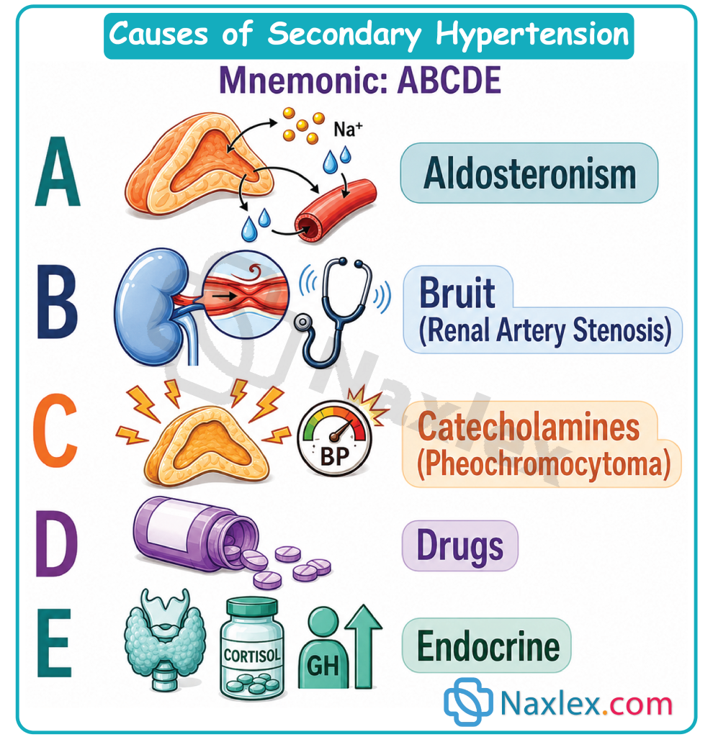
Risk Factors
- Obesity/Overweight: The single most significant modifiable risk factor; excess adiposity directly drives sympathetic and hormonal changes.
- Family History: Positive history of essential hypertension, early stroke, or myocardial infarction.
- Prematurity and Low Birth Weight: History of neonatal umbilical artery catheter placement, intrauterine growth restriction (IUGR), or bronchopulmonary dysplasia.
- Dietary Factors: High sodium intake (especially from ultra-processed foods), low potassium/calcium intake, and heavy caffeine consumption.
- Sedentary Lifestyle: Excess screen time and lack of moderate-to-vigorous physical activity.
- Chronic Stress & Low Socioeconomic Status: Environmental stressors trigger chronic activation of the hypothalamic-pituitary-adrenal (HPA) axis.
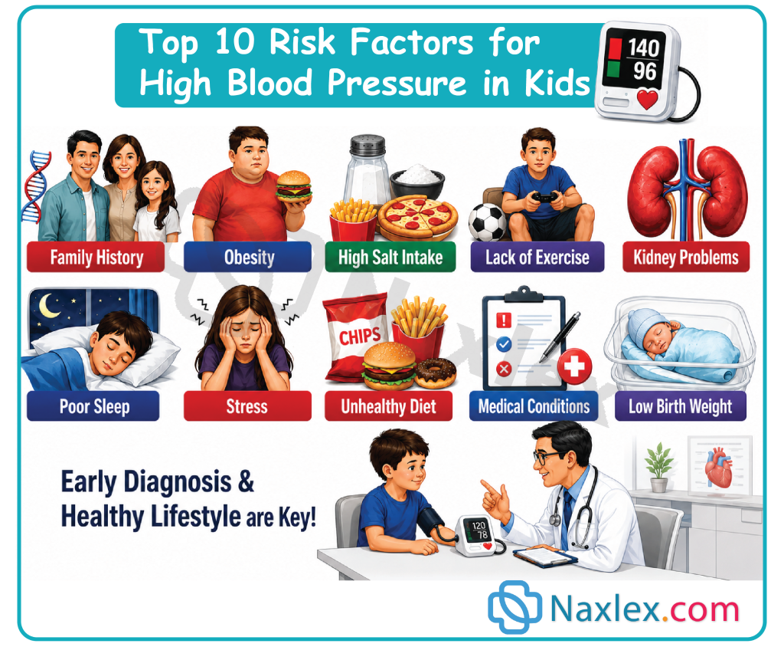
Pathophysiology
The physiological regulation of blood pressure is determined by the classic equation:
- Blood Pressure (BP)=Cardiac output (CO)×systemic vascular resistance (SVR)
Sustained elevation in BP occurs due to aberrations in one or both of these variables, driven by several interconnected pathways:
- Renal and Hormonal Mechanisms (The RAAS Axis): When renal perfusion is compromised (as in renal artery stenosis or parenchymal scarring), the juxtaglomerular apparatus releases renin. Renin cleaves angiotensinogen to angiotensin I, which is then converted by Angiotensin-Converting Enzyme (ACE) in the lungs to angiotensin II (a potent vasoconstrictor). Angiotensin II stimulates the adrenal cortex to secrete aldosterone, leading to sodium and water retention in the distal renal tubules, expanding intravascular volume, and increasing cardiac output.
- Sympathetic Nervous System (SNS) Overactivity: Commonly seen in obesity-related primary hypertension. Excess visceral fat releases inflammatory cytokines and leptin, which stimulate the hypothalamic sympathetic centers. SNS overactivity increases the heart rate (elevating cardiac output) and stimulates alpha-1 adrenergic receptors on peripheral arterioles, causing direct vasoconstriction and raising systemic vascular resistance.
- Insulin Resistance and Metabolic Dysfunction: Hyperinsulinemia (frequently seen in pediatric obesity and type 2 diabetes) acts as a vascular stimulant. Insulin directly increases renal sodium reabsorption, stimulates the SNS, and promotes vascular smooth muscle cell hypertrophy, reducing vessel lumen diameter and raising systemic vascular resistance.
- Endothelial Dysfunction and Vascular Remodeling: Chronic mechanical shear stress from high pressure damages the delicate endothelial lining of blood vessels. This impairs the release of nitric oxide (a natural vasodilator) while upregulating endothelin-1 (a potent vasoconstrictor). Over time, the vascular smooth muscle layers undergo structural remodeling, thickening the vessel walls and fixing the elevated systemic vascular resistance.
Clinical Manifestations
Mild to Moderate Hypertension (Asymptomatic Presentation)
- The vast majority of pediatric patients with Stage 1 or early Stage 2 hypertension present with zero physical symptoms.
- When symptoms do occur, they are typically non-specific and easily overlooked:
- Headache: Usually bilateral, throbbing, or located in the frontal/occipital regions, occurring most frequently upon awakening.
- Dizziness or Lightheadedness: Particularly during physical exertion.
- Fatigue & Sleep Disturbances: Daytime somnolence, difficulty concentrating, or nighttime waking.
- Epistaxis: Recurrent, unexplained nosebleeds (though rarely the sole presenting symptom).
Infantile Presentation (Vague and Non-Specific)
Infants cannot articulate symptoms. High blood pressure in this age group manifests as:
- Irritability and Inconsolable Crying: Driven by headaches or physical discomfort.
- Poor Feeding & Feeding Intolerance: The infant becomes fatigued or dyspneic during bottle or breastfeeding.
- Vomiting: Frequent, unexplained spitting up or projectile emesis.
- Failure to Thrive (FTT): Poor weight gain due to high metabolic demands and poor caloric intake.
- Respiratory Distress: Tachypnea, retractions, or grunting if hypertension has caused early congestive heart failure.
Severe Hypertension & Hypertensive Crisis (Target-Organ Symptoms)
When blood pressure rises acutely or reaches extreme heights (Stage 2 with signs of organ compromise), clinical signs become severe and demand immediate intervention:
- Neurological (Hypertensive Encephalopathy):
- Seizures (generalized tonic-clonic).
- Altered Mental State (lethargy, confusion, somnolence, coma).
- Facial Nerve Palsy (Bell's palsy mimic due to cranial nerve compression).
- Severe, sudden-onset, refractory headache.
- Visual Disturbances:
- Blurred vision, diplopia (double vision), or sudden vision loss.
- Papilledema: Swelling of the optic disc visible on funduscopic exam.
- Retinal hemorrhages.
- Cardiovascular Signs:
- Chest pain or pressure.
- Dyspnea and orthopnea (indicating pulmonary edema from acute left ventricular failure).
- Bounding peripheral pulses in the upper extremities with weak/absent femoral pulses (diagnostic of aortic coarctation).
- Renal/Urologic Signs:
- Gross hematuria (smoky, tea-colored, or bright red urine).
- Oliguria (profound decrease in urine output).
Classification
The American Academy of Pediatrics (AAP) updated its classification system in 2017 to improve diagnostic sensitivity and align adolescent criteria with adult standards. The classification is divided into two age-specific cohorts:
Children Aged 1 to Under 13 Years (Percentile-Based)
Percentiles are determined using the standardized AAP normative tables based on age, sex, and height percentile (derived exclusively from normal-weight children).
|
BP Category |
Systolic / Diastolic Criteria (Whichever is Higher) |
|
Normal Blood Pressure |
<90th percentile |
|
Elevated Blood Pressure |
≥90th percentile to <95th percentile OR 120/80 mmHg to <95th percentile (whichever is lower) |
|
Stage 1 Hypertension |
≥95th percentile to <95th percentile+12 mmHg OR 130/80 to 139/89 mmHg (whichever is lower) |
|
Stage 2 Hypertension |
≥95th percentile+12 mmHg OR ≥140/90 mmHg (whichever is lower) |
Adolescents Aged 13 Years and Older (Absolute Values)
Adolescent classification uses fixed, absolute thresholds matching the adult ACC/AHA guidelines, simplifying clinical recognition.
|
BP Category |
Systolic BP Range |
|
Diastolic BP Range |
|
Normal Blood Pressure |
<120 mmHg |
and |
<80 mmHg |
|
Elevated Blood Pressure |
120 to 129 mmHg |
and |
<80 mmHg |
|
Stage 1 Hypertension |
130 to 139 mmHg |
or |
80 to 89 mmHg |
|
Stage 2 Hypertension |
≥140 mmHg |
or |
≥90 mmHg |
Diagnostic Evaluation
Confirming pediatric hypertension requires a highly systematic, tiered approach designed to verify sustained elevations, screen for secondary causes, and assess for early target-organ damage.
Tier 1: Screening and Initial Measurement (The Nursing Core)
- Measurement Protocol:
- Initial screening: Can be performed via oscillometric (automated) devices.
- Confirmation: If an automated reading is elevated/hypertensive, it must be verified using the gold-standard manual auscultation method with a sphygmomanometer and stethoscope.
- Patient State: The child must sit quietly for 3 to 5 minutes before the reading, feet flat on the floor (or supported), back supported, with the right arm supported at heart level.
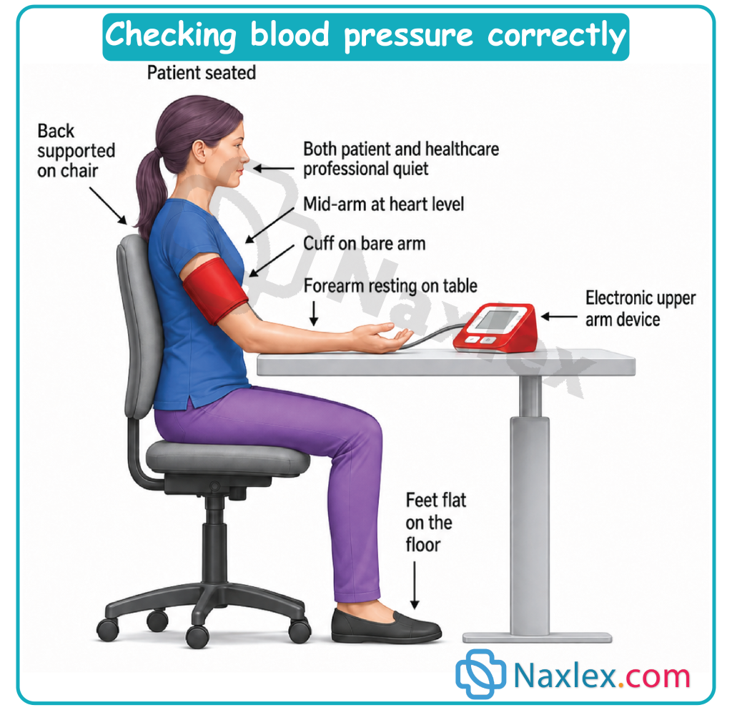
- Auscultation Milestones:
- Systolic pressure: Documented at the onset of the first Korotkoff sound (Phase I).
- Diastolic pressure: Documented at the complete disappearance of sounds (Phase V; do not use Phase IV muffling unless sounds are heard down to 0).
- Cuff Sizing Rule:
- Bladder Width: Must cover at least 40% of the arm circumference at the midpoint between the acromion and olecranon.
- Bladder Length: Must encircle 80% to 100% of the arm circumference.
- Nursing Alert: A cuff that is too small will yield a falsely high reading; a cuff that is too large will yield a falsely low reading.
Image Title: Pediatric Blood Pressure Cuff Sizing
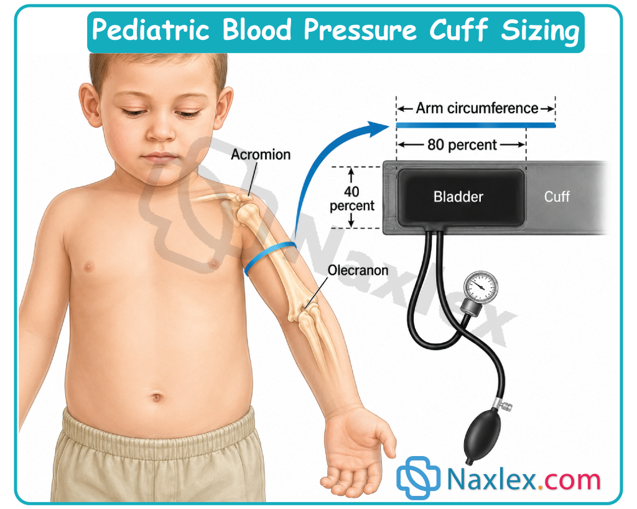
Tier 2: Diagnostic Confirmation
- Ambulatory Blood Pressure Monitoring (ABPM):
- A 24-hour wearable monitor that measures blood pressure at set intervals during daily activities and sleep.
- Highly recommended to rule out "White Coat Hypertension" (high BP only in the clinic) and identify "Masked Hypertension" (normal in clinic, high at home/during sleep).
- Calculates the "blood pressure load" (percentage of readings above normal parameters) and monitors nocturnal "dipping" (systolic BP should normally drop 10% to 20% at night).
Tier 3: Screening for Secondary Causes (Laboratory and Imaging Workup)
All children diagnosed with confirmed hypertension should undergo basic screening to rule out renal or endocrine disease:
- Urinalysis & Urine Microalbumin: Screens for proteinuria, hematuria, or active casts indicating glomerular or parenchymal renal disease.
- Serum Electrolytes, BUN, and Creatinine: Evaluates kidney function and screens for hypokalemia (suggestive of hyperaldosteronism).
- Renal Ultrasound with Doppler:
- Indicated for all hypertensive children under 6 years of age, or those with abnormal renal function/urinalysis.
- Evaluates kidney size, parenchymal scarring, and blood flow through the renal arteries to detect renovascular stenosis.
- Endocrine Workup (If Clinically Indicated):
- Thyroid Stimulating Hormone (TSH) and Free T4 (hyperthyroidism).
- Plasma free metanephrines or 24-hour urine catecholamines (pheochromocytoma).
- Early morning cortisol levels (Cushing's syndrome).
Tier 4: Assessing for Target-Organ Damage (TOD)
- Echocardiogram (ECHO):
- The primary tool used to identify left ventricular hypertrophy (LVH), defined in pediatrics by a left ventricular mass index (LVMI) ≥51 g/m2.7.
- AAP Guideline Change: ECHO is now reserved for children once the provider is actively considering initiating pharmacological antihypertensive therapy. It is no longer part of the initial routine workup for mild, non-pharmacological cases.
- Funduscopic Eye Exam: Evaluates the retinal vasculature for hypertensive retinopathy (arteriolar narrowing, hemorrhages, or papilledema).
Therapeutic Management
Therapeutic management is guided by the severity (Stage) of hypertension and the presence or absence of target-organ damage. The treatment goals are to reduce blood pressure to <90th percentile for children <13 years, and <130/80 mmHg for adolescents.
Non-Pharmacological Management (Lifestyle Modifications)
This is the first-line therapy for Elevated Blood Pressure and Stage 1 Hypertension without evidence of target-organ damage.
- Dietary Approaches to Stop Hypertension (DASH) Diet:
- Sodium Restriction: Limit sodium intake to 1,500 mg/day (or less depending on age) by avoiding processed foods, canned goods, fast food, and table salt.
- Nutrient-Rich Foods: Increase consumption of fresh fruits, vegetables, whole grains, and low-fat dairy products (high in potassium, calcium, and magnesium, which promote vasodilation).
- Calorie Management: Reduce sugar-sweetened beverages and high-calorie, nutrient-poor snacks to manage overweight/obesity.
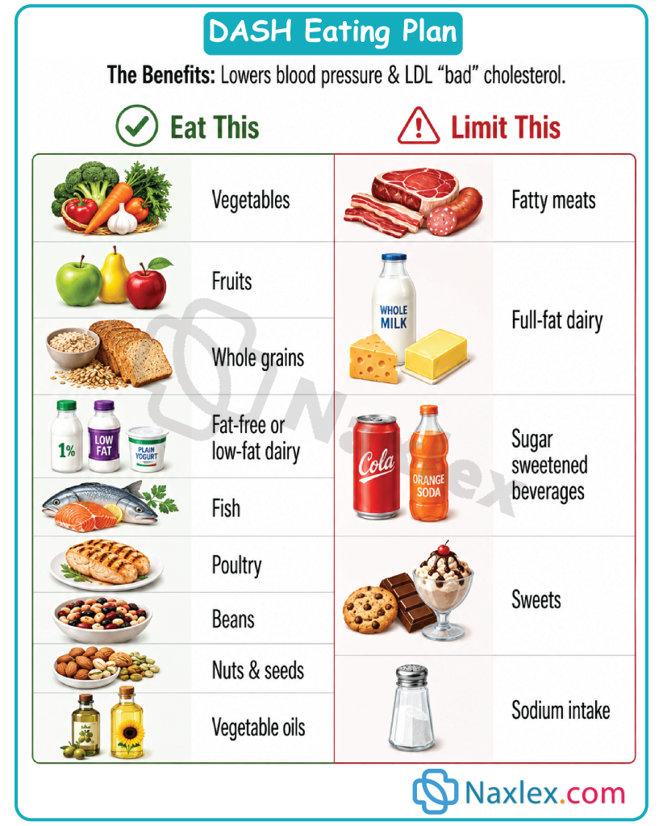
- Physical Activity:
- At least 60 minutes of moderate-to-vigorous physical activity daily.
- Nursing Limitation: Avoid isometric (weight-lifting) exercises during uncontrolled Stage 2 hypertension due to transient, acute spikes in intracranial and intrathoracic pressures. Focus instead on dynamic, aerobic activities (swimming, running, cycling).
- Weight Reduction: Even a modest 5% to 10% reduction in BMI can significantly reduce systolic and diastolic blood pressure in pediatric obesity-related hypertension.
- Sleep Hygiene: Maintain consistent sleep schedules and address sleep apnea (e.g., adenotonsillectomy if indicated) to decrease sympathetic tone.
Pharmacological Management
Indicated for Stage 2 hypertension, Stage 1 hypertension that fails to respond to 3–6 months of lifestyle changes, or any stage of hypertension accompanied by target-organ damage (e.g., LVH) or diabetes.
Pharmacologic Management of Pediatric Hypertension
|
Drug Class & Examples |
Mechanism of Action (MoA) |
Parameters to Monitor |
Adverse Effects |
Precautions / Contraindications |
|
ACE Inhibitors (ACEi) • Enalapril • Captopril • Lisinopril • Benazepril |
Inhibits Angiotensin-Converting Enzyme (ACE), blocking the conversion of Angiotensin I to Angiotensin II. Decreases systemic vascular resistance (SVR) and aldosterone secretion, reducing fluid retention. |
• Blood pressure & heart rate • Serum creatinine & BUN (at baseline, then 1–2 weeks post-initiation/titration) • Serum potassium (K+) |
•Hyperkalemia • Dry, persistent cough (bradykinin-mediated) • Acute kidney injury / elevated creatinine •Angioedema (rare, life-threatening) • Dizziness & hypotension |
• Contraindications: Pregnancy (boxed warning for teratogenicity/fetal toxicity), bilateral renal artery stenosis, history of ACEi-induced angioedema. • Precautions: Reduce dose in renal impairment; avoid concurrent potassium supplements or potassium-sparing diuretics. |
|
Angiotensin II Receptor Blockers (ARBs) • Losartan • Valsartan • Candesartan • Olmesartan |
Selectively blocks Angiotensin II Type 1 (AT1) receptors, preventing Angiotensin II binding without affecting bradykinin degradation. Promotes vasodilation and decreases aldosterone secretion. |
• Blood pressure & pulse • Serum creatinine & BUN • Serum potassium (K+) • Periodic renal function tests |
• Hyperkalemia • Dizziness & headache • Renal dysfunction / elevated BUN • Fatigue & upper respiratory symptoms |
• Contraindications: Pregnancy (teratogenic / fetal toxicity), bilateral renal artery stenosis. • Precautions: Preferred alternative for patients who develop an ACEi-induced dry cough; monitor renal function closely in patients with a solitary kidney. |
|
Calcium Channel Blockers (CCBs - Dihydropyridines) • Amlodipine • Isradipine • Extended-Release Nifedipine |
Inhibits L-type voltage-gated calcium channels in vascular smooth muscle cells, preventing calcium entry and inducing peripheral arterial vasodilation with reduced SVR. |
• Blood pressure & heart rate • Signs of peripheral edema (feet/ankles) • Dental/gingival health with chronic use |
• Peripheral edema • Headache & facial flushing • Reflex tachycardia • Gingival hyperplasia • Dizziness & nausea |
• Contraindications: Avoid short-acting nifedipine for acute BP reduction (risk of precipitous hypotension and ischemic events). • Precautions: Reduce dose in hepatic impairment; use caution in heart failure or baseline peripheral edema. |
|
Thiazide Diuretics •Hydrochlorothiazide (HCTZ) • Chlorthalidone |
Inhibits Na+/Cl− cotransporters in the distal convoluted tubule, promoting urinary excretion of sodium, chloride, and water. Decreases extracellular fluid volume and vascular resistance. |
• Serum electrolytes (Na+, K+, Mg2+, Ca2+) • Renal function (BUN/Cr) • Fasting blood glucose & lipids • Serum uric acid |
• Hypokalemia & hyponatremia • Hyperuricemia / gout flares • Hyperglycemia • Hypercalcemia • Dizziness & orthostasis |
• Contraindications: Anuria, severe sulfonamide allergy (relative). • Precautions: Ineffective in severe renal impairment (GFR<30 mL/min/1.73m2; loop diuretics preferred); monitor blood glucose in diabetic patients. |
|
Potassium-Sparing Diuretics / Aldosterone Antagonists • Spironolactone • Eplerenone
|
Competitive antagonist of mineralocorticoid receptors in the late distal tubule and collecting duct. Blocks aldosterone-mediated sodium reabsorption and potassium excretion, promoting mild diuresis while retaining potassium. |
• Serum potassium (K+, baseline, then 1–2 weeks post-initiation/titration) • Renal function (BUN/Cr) • Blood pressure & fluid balance
|
• Hyperkalemia • Gynecomastia, breast tenderness, & menstrual irregularities (anti-androgenic effects) • Hyponatremia • Gastrointestinal distress (nausea/vomiting/cramping)
|
• Contraindicated: Anuria, acute renal failure, severe renal impairment, baseline hyperkalemia (K+ > 5.0 mEq/L), Addison's disease. • Precautions: Avoid concurrent use with potassium supplements or other potassium-sparing drugs; use high caution when combined with ACEi or ARBs.
|
|
Beta-Blockers • Labetalol (α/β) • Atenolol (β1) • Metoprolol Succinate (β1) • Propranolol |
Blocks β1-adrenergic receptors, reducing cardiac output, heart rate, and renal renin secretion. Labetalol also blocks peripheral α1-receptors, causing direct vasodilation. |
• Heart rate (pulse) & blood pressure • Respiratory status / airway entry • Blood glucose (in diabetic patients) • Baseline/periodic ECG |
• Bradycardia & AV block • Bronchospasm / wheezing • Cold extremities • Fatigue & sleep disturbances • Masking of hypoglycemic symptoms |
• Contraindications: Asthma / reactive airway disease (especially non-selective agents), 2nd or 3rd-degree heart block, severe sinus bradycardia. • Precautions: Avoid abrupt withdrawal (risk of rebound hypertension); use caution in athletes and diabetic patients. |
|
Direct Vasodilators • Hydralazine • Minoxidil |
Directly relaxes vascular smooth muscle in systemic arterioles, causing marked reduction in peripheral vascular resistance and arterial blood pressure. |
• Blood pressure & heart rate • Fluid retention / daily body weight • ANA titer (long-term hydralazine) • Hypertrichosis evaluation (minoxidil) |
• Reflex tachycardia & palpitations • Fluid retention & peripheral edema • Headache & flushing • Drug-induced Lupus-Like Syndrome (Hydralazine) • Hypertrichosis (Minoxidil) |
• Contraindications: Coronary artery disease, severe rheumatic heart disease. • Precautions: Typically reserved as 2nd/3rd-line therapy; usually combined with a beta-blocker (to prevent reflex tachycardia) and a diuretic (to control fluid retention). |
Nursing insight: Nitrates & nitropressides (IV vasodilators) such as sodium nitroprusside are primarily reserved for pediatric hypertensive emergencies in ICU settings; requires continuous infusion pump and light-protected IV tubing (nitroprusside). Be on the lookout for adverse effects such as severe, rapid hypotension, reflex tachycardia, throbbing headache & facial flushing, cyanide and thiocyanate toxicity, and methemoglobinemia.
Nursing Care Plan
A comprehensive nursing care plan for a pediatric patient with hypertension centers on precise assessment, symptom management, and empowering the family to manage the condition at home.
Nursing Diagnosis 1: Risk for Ineffective Peripheral Tissue Perfusion
Related to vascular remodeling, arterial constriction, or renal impairment secondary to chronic high blood pressure.
- Expected Outcomes:
- The patient will maintain adequate tissue perfusion as evidenced by warm extremities, palpable peripheral pulses (2+), capillary refill <2 seconds, and a blood pressure within the target percentile (<90th percentile or <130/80 mmHg).
- Nursing Interventions:
- Assess and document blood pressure manually in both upper and lower extremities to screen for regional perfusion discrepancies (e.g., coarctation of the aorta).
- Monitor renal perfusion by tracking strict intake and output (I&O) and checking daily weights. Document and report any urine output falling below 1 mL/kg/hour in infants/children or 30 mL/hour in adolescents.
- Assess neurovascular status: check temperature, color, capillary refill, and strength of peripheral pulses in all four extremities.
- Administer prescribed antihypertensive medications on schedule, and monitor for signs of excessive vasodilation (hypotension, orthostatic dizziness).
Nursing Diagnosis 2: Deficient Knowledge
Related to unfamiliarity with the disease pathology, manual home blood pressure monitoring techniques, dietary restrictions, and long-term medication compliance.
- Expected Outcomes:
- The parents and/or child will verbalize understanding of the disease process, accurately demonstrate home blood pressure measurement, and list three key dietary modifications of the DASH diet.
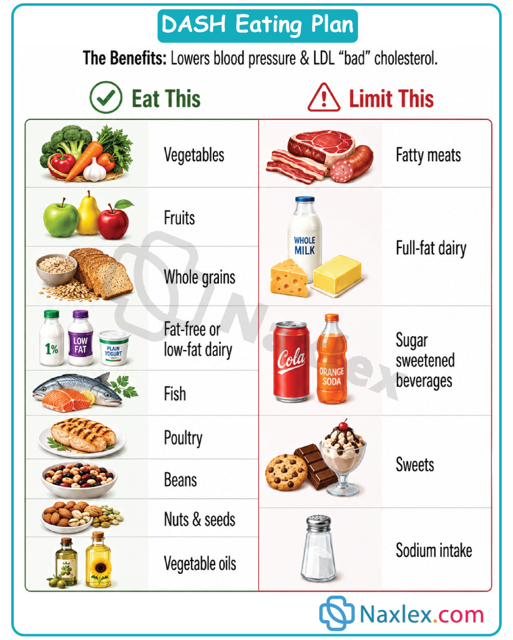
- The parents and/or child will verbalize understanding of the disease process, accurately demonstrate home blood pressure measurement, and list three key dietary modifications of the DASH diet.
- Nursing Interventions:
- Educate the family on the pathophysiology of hypertension using simple analogies (e.g., "high water pressure in a delicate garden hose").
- Provide hands-on, teach-back training on how to use a home blood pressure monitor:
- Instruct them to measure BP at the same times each day (morning and evening).
- Emphasize resting quietly for 5 minutes before taking a reading.
- Have the parent demonstrate correct cuff placement and measurement technique.
- Collaborate with a pediatric dietitian to teach the family how to read nutrition labels, specifically identifying "hidden" sodium in processed foods, and how to incorporate the DASH diet into family meals.
- Develop a visual medication schedule. Discuss potential side effects (such as orthostatic dizziness with CCBs or dry cough with ACE inhibitors) and instruct them never to abruptly discontinue these medications.
Complications
If untreated or poorly controlled, pediatric hypertension can lead to severe, irreversible systemic damage.
- Left Ventricular Hypertrophy (LVH):
- The heart's left ventricle must pump against chronically high systemic vascular resistance (increased afterload).
- To compensate, the myocardial fibers hypertrophy. Over time, this thickens the ventricle wall, reduces chamber compliance, impairs diastolic filling, and can eventually lead to congestive heart failure (CHF).
- Accelerated Atherosclerosis and Vascular Aging:
- High mechanical pressure injures the vascular endothelium, promoting lipid deposition, arterial stiffening, and plaque formation.
- This significantly elevates the risk of premature myocardial infarction and stroke during early adulthood.
- Hypertensive Nephropathy and End-Stage Renal Disease (ESRD):
- Hypertension damages the delicate capillary beds of the glomerulus (nephrosclerosis).
- This chronic ischemic damage causes glomerular scarring, leading to progressive proteinuria, worsening renal failure, and eventually a need for dialysis or transplant.
- Hypertensive Retinopathy:
- Retinal microvasculature damage leads to arterial narrowing, flame-shaped hemorrhages, cotton-wool spots, and optic disc edema (papilledema), which can permanently impair vision.
- Hypertensive Crisis (Encephalopathy & Stroke):
- An acute, severe rise in blood pressure can exceed the cerebral vasculature's autoregulatory capacity.
- This leads to hyperperfusion, breakdown of the blood-brain barrier, and cerebral edema.
- Manifests as severe headache, vomiting, seizures, hemiparesis, and intracranial hemorrhage.
Prognosis
- The long-term prognosis for pediatric hypertension is highly favorable if the condition is detected early and managed effectively.
- Secondary Hypertension: If the primary cause (such as coarctation of the aorta or renal artery stenosis) is surgically repaired or corrected early, blood pressure frequently returns to normal parameters, preventing long-term complications.
- Primary Hypertension: Prognosis depends heavily on lifestyle adherence and weight management. Children who successfully reduce weight, adopt the DASH diet, and maintain physical activity often experience a complete resolution of elevated blood pressure without needing lifelong medication.
- Uncontrolled Chronic Hypertension: Conversely, children with poorly controlled, sustained hypertension carry a high risk of developing clinical target-organ damage (specifically LVH and arterial stiffness) by their twenties or thirties, drastically reducing life expectancy due to early cardiovascular events.
Prevention
Preventative strategies are essential for reducing the incidence of primary hypertension and mitigating the progression of subclinical cardiovascular disease.
- Routine Pediatric Screening: Ensure that all children aged 3 years and older have their blood pressure measured at least once annually during routine wellness visits (or at every visit if risk factors such as obesity or renal disease are present).
- Family-Centered Nutritional Habits:
- Educate parents to avoid adding extra salt during food preparation and to minimize processed, pre-packaged snacks in the home.
- Promote family meals rich in fresh vegetables, whole grains, and potassium-dense fruits.
- Active Lifestyles:
- Limit recreational screen time (TV, video games, phones) to less than 2 hours per day.
- Encourage structured and unstructured outdoor physical activity, aiming for at least 60 minutes daily.
- Breastfeeding Promotion: Clinical evidence suggests that breastfeeding during infancy has a protective, down-regulating effect on blood pressure development in later childhood.
- Maternal Health and Prenatal Care: Promote optimal gestational nutrition and avoid maternal smoking/substance use, which contribute to low birth weight and intrauterine programming of hypertension.
Summary
- Pediatric hypertension is a vital marker of current and future cardiovascular health. It is defined as a sustained elevation in blood pressure measured on three or more separate occasions.
- Diagnosis in children under 13 years is determined by percentiles adjusted for age, sex, and height. Adolescents aged 13 and older are diagnosed using the adult absolute standard of ≥130/80 mmHg.
- Primary hypertension is highly associated with adolescent obesity and lifestyle factors, whereas secondary hypertension is more common in young children and is typically driven by renal parenchymal, renovascular, or endocrine disorders.
- The pathophysiology involves a combination of sympathetic overactivity, RAAS activation, fluid volume overload, and structural vascular remodeling.
- Because the condition is largely asymptomatic, manual auscultatory measurement with a correctly sized cuff is the gold standard for clinical verification.
- Therapeutic management prioritizes lifestyle modifications (the DASH diet, aerobic physical activity) for mild cases. Pharmacological therapy with ACE inhibitors, ARBs, CCBs, or thiazides is initiated for Stage 2 cases, or when lifestyle changes fail.
- Uncontrolled hypertension leads to severe, long-term complications including left ventricular hypertrophy (LVH), chronic kidney disease (CKD), and early-onset adult cardiovascular events.
- Nurses are crucial in performing accurate screenings, leading family education on home monitoring and diet, and promoting overall cardiovascular wellness.
Naxlex
Videos
Login to View Video
Click here to loginTake Notes on Acquired Cardiovascular Disorders: Pediatric Hypertension
This filled cannot be empty
Join Naxlex Nursing for nursing questions & guides! Sign Up Now