






 Video Library


Please set your exam date
Grief
Study Questions
Practice Questions 1
The nurse is caring for a 68-year-old client whose spouse died suddenly 3 days ago. The client reports acute chest pain and dyspnea, and diagnostic findings reveal transient left ventricular apical ballooning in the absence of coronary artery occlusion.
Which of the following conditions does the nurse recognize as most consistent with these findings?
Explanation
Takotsubo cardiomyopathy is a transient myocardial dysfunction triggered by severe emotional stressors, causing a severe catecholamine surge. It leads to characteristic left ventricular apical ballooning, chest pain, dyspnea, and electrocardiogram changes that mimic myocardial infarction despite completely angiographically normal coronary arteries.
Rationale for correct answer:
B. The clinical presentation of sudden bereavement, acute chest pain, and apical ballooning without coronary occlusion is the hallmark of takotsubo cardiomyopathy. Severe emotional stress precipitates massive myocardial stunning via catecholamine excess. The condition typically resolves spontaneously within several weeks with supportive care. This presentation fits the diagnostic criteria perfectly.
Rationale for incorrect answers:
A. A classic myocardial infarction involves acute coronary artery thrombosis leading to permanent ischemia and myocardial necrosis. Angiography reveals significant vascular occlusion, which is completely absent in this client. The transient nature of apical ballooning differentiates this from true atherosclerotic infarction. Thus, thrombotic infarction is excluded.
C. Acute pericarditis typically manifests with pleuritic chest pain that improves when sitting forward, along with a pericardial friction rub. It features diffuse ST-segment elevation on electrocardiogram rather than localized ventricular dysfunction. This patient lacks the typical infectious or inflammatory triggers of pericarditis. Therefore, pericarditis is incorrect.
D. A severe panic attack can cause somatic signs like chest pain and dyspnea due to panic-induced hyperventilation. However, panic attacks do not produce objective structural cardiac anomalies such as left ventricular dysfunction. The presence of transient apical wall motion changes confirms an organic cardiomyopathy. This rules out a purely psychological cause.
Test-taking strategy:
- Analyze the scenario/question: The client is an elderly individual experiencing acute cardiac symptoms immediately following sudden emotional trauma. The presence of left ventricular apical ballooning with normal coronary arteries indicates a specific stress-induced pathology rather than ischemic tissue necrosis.
- Apply knowledge of stress-induced cardiac conditions: This principle requires distinguishing between obstructive coronary artery disease and non-obstructive, catecholamine-mediated myocardial stunning. Recognizing the unique pathophysiology helps separate structural conditions from purely psychiatric manifestations.
- Rule in Choice 2: The pathognomonic finding of transient apical ballooning combined with clear emotional stress confirms this choice.
- Rule out Choice 1: Ischemic infarction requires an identifiable coronary occlusion, which is absent here.
- Rule out Choice 3: Pericarditis features positional pain and friction rubs rather than focal wall anomalies.
- Rule out Choice 4: Panic attacks present with somatic anxiety but cause no structural ventricular changes.
Take home points
- Stress-induced cardiomyopathy is characterized by transient left ventricular dysfunction and apical ballooning without obstructive coronary artery disease.
- The disorder is typically triggered by intense emotional or physical stress, resulting in a profound catecholamine-induced myocardial stunning.
- Clinical presentation closely mimics acute coronary syndrome, including chest pain, dyspnea, and electrocardiographic abnormalities.
- Management is primarily supportive, and ventricular function typically normalizes completely within days to weeks.
The nurse is assessing four clients on an inpatient behavioral health unit, each experiencing complicated grief following a recent death.
Which of the following clients should the nurse assess first?
Explanation
A. Giving away prized personal belongings combined with statements of meaninglessness indicates active suicidal ideation and preparation for self-harm. Complicated grief significantly elevates the risk of suicide. This client represents an immediate safety crisis requiring urgent crisis stabilization and close monitoring. Therefore, the nurse must assess this client first.
Rationale for incorrect answers:
B. Avoiding reminders of the deceased and refusing to enter shared living areas reflects severe maladaptive avoidance, a core component of complicated grief. While this behavior profoundly impacts functional mobility and emotional processing, it does not indicate immediate, life-threatening danger. The client requires structured behavioral therapy, not emergency safety intervention.
C. Experiencing intense yearning and a persistent preoccupation with a deceased spouse is a classic manifestation of prolonged grief. These symptoms cause immense emotional suffering and require targeted grief counseling over an extended period. However, they do not constitute an acute, life-threatening physiological or safety emergency.
D. Social withdrawal from group milestones and describing a profound sense of emotional numbness are common signs of depressive withdrawal following catastrophic loss. Although these symptoms warrant comprehensive psychiatric assessment and ongoing milieu therapy, they do not present an immediate risk of harm. This client remains stable for deferred evaluation.
Test-taking strategy:
- Analyze the scenario/question: The nurse must prioritize four clients experiencing complicated grief on a behavioral health unit. The question asks who to assess first, which demands the application of psychiatric prioritization frameworks to identify the client at highest risk for injury.
- Apply knowledge of psychiatric prioritization and safety risk reduction: In a behavioral health setting, the principle of safety first dictates that clients demonstrating signs of imminent self-harm or suicidal preparation always take precedence over those exhibiting standard, non-life-threatening maladaptive coping mechanisms. Behavioral indicators of suicide require immediate containment.
- Rule in Choice 1: Giving away personal items coupled with expressions of worthlessness indicates active suicide preparation, making this client the highest priority.
- Rule out Choice 2: Avoidance patterns reflect severe emotional distress but do not represent an acute lethality risk.
- Rule out Choice 3: Persistent yearning and preoccupation are standard diagnostic criteria for prolonged grief without indicating imminent danger.
- Rule out Choice 4: Emotional numbness and social isolation require long-term therapeutic intervention but do not constitute a safety emergency.
Take home points
- Prioritization in behavioral health settings always places immediate physical safety and suicide risk reduction above other psychiatric symptoms.
- Giving away personal possessions and stating that life is meaningless are warning signs of imminent suicidal behavior in clients with complicated grief.
- Complicated grief manifests as prolonged yearning, emotional numbness, social withdrawal, and severe avoidance patterns that impair daily functioning.
- Immediate nursing interventions for potential suicidal ideation include establishing line-of-sight safety observation and conducting a formal lethality assessment.
The nurse is developing a community education program on disenfranchised grief.
Which of the following scenarios should the nurse include as examples of disenfranchised grief? Select all that apply
Explanation
Disenfranchised grief refers to a socially unacknowledged loss that cannot be publicly mourned or openly supported because society validates neither the relationship, the loss, nor the griever. This lack of social sanction prevents the individual from engaging in standard mourning rituals, thereby increasing the risk of developing significant psychological complications.
Rationale for correct answers:
A. Grieving the death of a same-sex partner within an unsupportive community represents a classic example of socially minimized relationships. Society may withhold validation for non-traditional partnerships, leading to isolated mourning. The lack of community recognition prevents open grief expression. This creates profound psychological vulnerability for the surviving individual.
B. Early pregnancy loss via miscarriage is frequently an unacknowledged bereavement because the loss remains hidden from broader social awareness. Well-meaning individuals often minimize the severity of the loss, which invalidates the parent's deep emotional attachment. Consequently, the griever suffers without standard communal support mechanisms.
D. The death of a former spouse following a divorce represents a relationship that society assumes has already been emotionally terminated. The surrounding community often fails to recognize that significant attachment bonds can persist long after legal dissolution. This leaves the individual to process complex grief isolated from normal support.
Rationale for incorrect answers:
C. Grieving a spouse of 40 years surrounded by supportive family members constitutes a universally recognized and socially sanctioned loss. The duration of the marriage and the presence of familial support ensure that the grief is validated through standard public mourning. This scenario represents normal, supported bereavement rather than disenfranchisement.
E. The anticipated death of an aging parent with full family acknowledgment is a socially expected and completely validated loss. The open recognition by extended family provides a framework for shared mourning and supportive anticipatory grief. Because the loss is fully legitimized by society, it is not disenfranchised.
Test-taking strategy:
- Analyze the scenario/question: The nurse is identifying examples of disenfranchised grief for a community program. This requires identifying scenarios where the grief is hidden, socially unacknowledged, or lacks validation from the surrounding culture.
- Apply knowledge of social validation and mourning constraints: The core principle requires separating losses that receive universal community validation and support from those that are socially minimized, hidden, or legally detached. Recognizing the presence or absence of a societal support framework helps isolate the correct options.
- Rule in Choice 1: A same-sex partner in an unsupportive environment faces a distinct lack of social validation, making this disenfranchised grief.
- Rule in Choice 2: Early miscarriage represents a hidden, frequently minimized loss where standard mourning rituals are absent, fulfilling the criteria.
- Rule out Choice 3: A long-term marriage loss with strong family backing represents the ultimate socially sanctioned bereavement.
- Rule in Choice 4: Grieving an ex-spouse is disenfranchised because society assumes the emotional attachment bond ended with the legal divorce.
- Rule out Choice 5: The loss of a parent with explicit family acknowledgment receives full communal support, preventing disenfranchisement.
Take home points
- Disenfranchised grief occurs when an individual's loss is not recognized, validated, or openly supported by their society or culture.
- Common examples include the loss of non-traditional partners, hidden losses like miscarriages, and past relationships such as ex-spouses.
- The absence of social sanction deprives the griever of essential support systems and standard public mourning rituals.
- Nurses must recognize disenfranchised grief to provide targeted validation and prevent the progression to complicated grief disorders.
The nurse is caring for the family of a client receiving hospice care for end-stage disease. Weeks before the anticipated death, the adult child begins to emotionally withdraw from the dying client.
Which of the following best describes this response?
Explanation
Anticipatory grief is an emotional processing mechanism occurring prior to an inevitable loss, helping individuals prepare for the impending death. It often manifests as premature detachment or emotional withdrawal, which serves as a psychological defense to cushion the family member against the full impact of the final bereavement event.
Rationale for correct answer:
B. The adult child's behavior represents a classic manifestation of anticipatory grief, where individuals unconsciously detach to protect themselves from impending pain. This premature emotional withdrawal allows the family member to begin processing the loss before the actual death occurs. Recognizing this as a normal coping strategy prevents inappropriate clinical interventions.
Rationale for incorrect answers:
A. Emotional withdrawal prior to an expected death is a common protective response rather than a maladaptive denial process. The child is not denying the terminal reality but is instead protecting their own emotional health through premature detachment. Consequently, an immediate psychiatric referral is entirely unwarranted and inappropriate.
C. Disenfranchised grief occurs when a loss cannot be openly acknowledged or publicly mourned due to a lack of social validation. Hospice settings and family caregiver roles are highly visible and socially validated avenues for bereavement expression. Therefore, this scenario does not meet the criteria for disenfranchisement.
D. Delayed grief involves the purposeful or subconscious postponement of the normal mourning response long after the death occurs. Because the client is still alive and the loss has not yet taken place, the withdrawal cannot be classified as a delayed reaction. It is an active, anticipatory mechanism instead.
Test-taking strategy:
- Analyze the scenario/question: The nurse is assessing a family member of a hospice client who is withdrawing weeks before the anticipated death. The question requires selecting the concept that best explains this pre-death emotional withdrawal.
- Apply knowledge of pre-bereavement coping mechanisms: The key principle involves distinguishing between emotional responses that occur before a loss (anticipatory) and those that occur after a loss (delayed), while separating normal protective mechanisms from pathological psychological states. Understanding the timing of the behavior helps isolate the correct response.
- Rule in Choice 2: Emotional withdrawal weeks before a known, impending death is a recognized component of anticipatory grief, representing a protective defense mechanism.
- Rule out Choice 1: The behavior is a common adaptive variance of grief processing rather than a psychiatric crisis indicating pathological denial.
- Rule out Choice 3: The family caregiving context in hospice is fully recognized by society, eliminating the defining trait of unvalidated loss.
- Rule out Choice 4: A delayed response can only be diagnosed post-mortem, making it chronologically impossible during the antepartum phase of care.
Take home points
- Anticipatory grief occurs before an inevitable loss and allows individuals to emotionally prepare for the impending death.
- Premature detachment or emotional withdrawal is a frequent, normal protective mechanism used by family members during the terminal phase.
- Distinguishing between normal anticipatory coping and maladaptive psychological states prevents unnecessary psychiatric referrals.
- Hospice nursing interventions should focus on validating these pre-death emotional shifts as part of the natural grieving continuum.
The nurse is providing care to a bereaved family from a cultural background different from the nurse's own. Which of the following nursing actions demonstrate culturally appropriate grief support? Select all that apply
Explanation
Culturally competent nursing care requires acknowledging that mourning practices are deeply influenced by cultural and spiritual traditions. Delivering effective support involves performing a cultural assessment to avoid stereotypes, facilitating access to traditional spiritual resources, and accommodating culturally specific rituals safely within the institutional framework to promote healthy bereavement.
Rationale for correct answers:
A. Directly asking the family about their preferred traditions avoids the pitfalls of cultural stereotyping and implicit bias. Every family interprets cultural heritage uniquely, making individualized assessment essential for providing patient-centered care. This collaborative approach demonstrates respect and fosters clinical trust during an incredibly vulnerable time.
B. Facilitating immediate access to a family's spiritual advisor or clergy aligns care with the client's spiritual belief system. Spiritual leaders provide vital community connection and execute specific rites that comfort the bereaved. Integrating these advocates into the care team enhances the family's internal coping mechanisms.
D. Accommodating specific rituals within institutional guidelines provides the family with the necessary space to honor their deceased loved one according to their cultural norms. Honoring these practices helps the family navigate the initial stages of acute distress. This active accommodation prevents the development of institutional trauma during grief processing.
Rationale for incorrect answers:
C. Encouraging a family to restrain overt emotional expressions imposes the nurse's personal values on an individual's mourning behavior. Many cultures view loud wailing or intense physical expressions of sorrow as essential for emotional release. Restraining these behaviors can severely disrupt natural healing and induce profound psychological distress.
E. Interpreting an absence of visible crying as an abnormal response ignores the fact that emotional display rules are heavily dictated by cultural expectations. Some cultures mandate stoicism, emotional restraint, and internalizing sorrow as signs of strength or respect. Labeling this behavior as pathological displays a significant deficit in cultural humility.
Test-taking strategy:
- Analyze the scenario/question: The nurse is supporting a bereaved family from a different cultural background. The question asks for actions that demonstrate culturally appropriate grief support, requiring the selection of interventions that honor cultural diversity and promote individualized care.
- Apply knowledge of cultural competence and individualized assessment: The fundamental principle mandates that the nurse must explicitly assess rather than assume cultural preferences, facilitate traditional spiritual resources, and avoid pathologizing mourning behaviors that differ from the nurse's personal worldview. Applying cultural humility helps separate appropriate practices from ethnocentric behaviors.
- Rule in Choice 1: Asking the family directly about their preferences prevents stereotyping and ensures an accurate assessment of their distinct mourning needs.
- Rule in Choice 2: Providing access to spiritual clergy respects the family's external support systems and honors essential religious rites.
- Rule out Choice 3: Mandating emotional restraint enforces an ethnocentric standard and suppresses the family's natural emotional expression.
- Rule in Choice 4: Supporting specific rituals when institutionally feasible directly accommodates the family's traditional bereavement practices.
- Rule out Choice 5: Pathologizing an absence of crying fails to recognize that stoicism is a valid, culturally dictated coping variance.
Take home points
- Culturally competent grief support requires an individualized cultural assessment rather than relying on generalized cultural assumptions.
- Spiritual advisors and clergy are critical resources that must be integrated into end-of-life care to support the family's spiritual integrity.
- The expression of grief varies widely across cultures, ranging from intense public emotional displays to complete stoic restraint.
- Institutional policy should bend to accommodate safe, culturally specific mourning rituals whenever feasible to facilitate healthy bereavement.
Practice Questions 2
The nurse is caring for a client who recently received a terminal diagnosis and states, "If I can just live to see my daughter graduate, I will finally start taking care of myself."
Using the Kübler-Ross framework, which of the following stages does the nurse identify in this statement?
Explanation
The Kübler-Ross framework outlines specific grief stages experienced by individuals facing terminal illness. The stage of bargaining involves an explicit internal negotiation to secure a postponement of death, frequently featuring promises of future behavioral compliance or dedication to personal care in exchange for surviving until a major life milestone.
Rationale for correct answer:
C. The client's verbalization represents a classic example of bargaining within the conceptual framework. The statement outlines a conditional trade-off where the individual negotiates for a delayed loss in order to witness their daughter's milestone. The promise of future self-care serves as the psychological negotiation lever for extending time. This matches the stage criteria.
Rationale for incorrect answers:
A. The stage of denial functions as a primary protective barrier where an individual completely rejects their clinical reality. In this scenario, the client acknowledges the terminal nature of the illness by planning around a finite future graduation date. Because the diagnosis is acknowledged rather than actively blocked, prognosis rejection is absent.
B. The stage of anger typically manifests as bitter hostility, envy, or intense resentment directed toward caregivers or external entities. The client's statement focuses entirely on protective compromise rather than expressing externalized emotional rage or profound blame regarding their condition. Because the tone completely lacks characteristic displaced resentment, it is incorrect.
D. The stage of acceptance represents a peaceful surrender, stable emotional baseline, and a calm detachment regarding the inevitable demise. The client is actively resisting the immediate trajectory of the disease by trying to secure a deadline extension. Because the individual has not reached an state of quiet compliance, acceptance is ruled out.
Test-taking strategy:
- Analyze the scenario/question: The client is a terminally ill individual attempting to trade future health behaviors for an extension of life to witness an upcoming family graduation milestone. The nurse must accurately identify the corresponding stage of coping using the traditional Kübler-Ross framework.
- Apply knowledge of the Kübler-Ross framework: This conceptual model requires analyzing explicit verbal cues to differentiate between rejection, anger, negotiation, depression, and peace. Recognizing conditional statements helps the clinician distinguish active bargaining from passive acceptance or complete denial.
- Rule in Choice 3: The conditional structure of the client's statement signifies an internal negotiation to postpone death, confirming bargaining.
- Rule out Choice 1: The client openly acknowledges the diagnosis rather than displaying a total rejection of reality.
- Rule out Choice 2: The client's wording lacks the hallmark signs of projection, hostility, and displaced anger.
- Rule out Choice 4: The text demonstrates an ongoing struggle to delay the prognosis rather than emotional peace.
Take home points
- The bargaining stage of grief is characterized by implicit or explicit attempts to negotiate a delay in the terminal timeline.
- Clients in the bargaining phase frequently fixate on achieving specific family milestones before death occurs.
- Statements in this stage often utilize a conditional structure, promising future behavioral changes in exchange for more time.
- The Kübler-Ross stages are fluid and non-linear, requiring continuous nursing reassessment as the client's coping mechanisms shift.
The nurse is applying J. William Worden's four tasks of mourning when planning care for a bereaved client. Which of the following nursing actions align with these tasks? Select all that apply
Explanation
Worden's mourning model outlines active grief tasks essential for successful emotional adaptation. The tasks include accepting the loss reality, processing the profound grief pain, adjusting to an altered environment without the deceased, and emotionally relocating the deceased while embarking on a restructured life journey.
Rationale for correct answers:
A. Encouraging the client to accept the reality of the death directly fulfills the first task of mourning. Overcoming initial denial and recognizing the permanence of the loss is a foundational requirement for all subsequent healing. The nurse supports this by discussing the death openly using direct language to reinforce reality acceptance.
B. Assisting the client to adjust to a world without the deceased satisfies the third task of mourning. This involves adapting to external changes, internal identity shifts, and spiritual updates required when navigating daily routines alone. The nurse promotes autonomy by helping the client develop independent problem-solving skills.
C. Supporting the client through the intense physical and emotional suffering satisfies the second task of mourning. Suppressing or avoiding the distressing feelings stalls long-term recovery and increases vulnerability to pathological complications. The nurse facilitates healthy coping by encouraging the direct processing of pain.
Rationale for incorrect answers:
D. Reassuring a client that grief follows a rigid, unyielding timeline contradicts the core philosophy of individualized mourning. Worden views grief as an active, fluid process rather than a static sequence of passive emotional phases. Forcing a client into an arbitrary chronological framework can induce unnecessary performance anxiety and complicate natural recovery.
E. Directing the client to permanently destroy the emotional bond with the deceased misinterprets the fourth task of mourning. The goal is to emotionally relocate the deceased in a way that allows a continued connection while remaining open to new meaningful relationships. Severing the bond entirely causes profound, unnecessary psychological trauma.
Test-taking strategy:
- Analyze the scenario/question: The nurse is applying J. William Worden's tasks of mourning to plan care for a bereaved client. The question requires selecting all nursing actions that align with the active tasks of this specific theoretical framework.
- Apply knowledge of Worden's four tasks of mourning: This task-based model requires identifying interventions that promote active adaptation, such as accepting reality, feeling the pain, adjusting to the environment, and establishing a lasting connection while moving forward. Recognizing grief as active rather than linear helps rule out incorrect options.
- Rule in Choice 1: Helping the client acknowledge that the person is gone matches Task 1, which centers on accepting reality.
- Rule in Choice 2: Guiding the client to manage life tasks independently aligns with Task 3, which focuses on environmental adjustment.
- Rule in Choice 3: Encouraging the client to experience and verbalize their distress fits Task 2, emphasizing pain processing.
- Rule out Choice 4: Worden's tasks are fluid and non-linear, making the description of a fixed, sequential predetermined path inaccurate.
- Rule out Choice 5: The final task involves relocating the deceased within one's emotional life, not an absolute severing of bonds.
Take home points
- Worden's mourning model consists of four active tasks that the griever must navigate to process a loss effectively.
- The tasks include accepting reality, processing pain, adjusting to an environment without the deceased, and finding an enduring connection.
- Grief is understood as an active, non-linear process rather than a passive series of predictable, fixed chronological stages.
- Successful completion of the final task allows the individual to invest emotional energy into new relationships and life goals.
The nurse observes that a widowed client alternates between crying over photographs of the deceased spouse and actively managing new household finances and responsibilities.
Which of the following theoretical models best explains this pattern of coping?
Explanation
The Dual Process Model describes how bereaved individuals cope with significant loss through a fluid process of grief oscillation. Rather than moving through rigid stages, the individual shifts dynamically between loss-oriented coping, which focuses on processing the emotional pain, and restoration-oriented coping, which centers on adjusting to new life roles and daily practical demands.
Rationale for correct answer:
B. The alternating behavior of crying over photos and managing finances perfectly illustrates the concept of grief oscillation within the Dual Process Model. Looking at photos represents loss-oriented coping, where the individual directly confronts the bereavement. Managing household finances represents restoration-oriented coping, where the client handles daily functional adjustments. This model is unique in explaining this rapid, healthy shifting behavior.
Rationale for incorrect answers:
A. George Engel's stages outline a progressive movement from shock and developing awareness to restitution and resolving the loss. His model focuses on sequential, orderly step-by-step resolution rather than a rapid, daily alternating pattern of behavioral coping oscillation. Therefore, Engel's framework does not best describe this specific fluctuating clinical presentation.
C. The Kübler-Ross model describes a non-linear but distinct progression through five stages, where depression and acceptance are viewed as separate emotional phases. It does not possess a structural mechanism to explain an hourly or daily shifting between emotional mourning and practical reorientation behaviors. This makes the framework a poor fit for the scenario.
D. Therese Rando's processes involve a comprehensive multi-step system focusing heavily on mourning, relinquishing old attachments, and the emotional reinvestment into new relationships. While her final processes address rebuilding life, her model does not emphasize a structured, continuous oscillation between distress and practical adaptation. Thus, it is incorrect.
Test-taking strategy:
- Analyze the scenario/question: The client is a widow displaying a pattern of rapidly shifting between intense emotional expression (crying over photos) and functional, practical tasks (managing finances). The nurse must identify the specific grief theory that directly accounts for this alternating behavior.
- Apply knowledge of bereavement theories and behavioral mechanisms: The underlying principle requires matching the client's alternating behavioral states with the specific model that champions continuous shifting between emotional grief work and worldly adjustments. Recognizing the term "oscillation" helps identify the correct conceptual framework.
- Rule in Choice 2: The continuous shifting between dealing with the loss itself and adapting to altered life circumstances is the defining trait of the Dual Process Model.
- Rule out Choice 1: Engel's model focuses on a standard progression through resolving phases rather than a continuous fluid behavioral oscillation.
- Rule out Choice 3: Kübler-Ross frames grief around distinct stages rather than a dual-axis framework of emotional and functional tasks.
- Rule out Choice 4: Rando's framework outlines sequential tasks of mourning rather than a day-to-day shifting between competing coping mechanisms.
Take home points
- The Dual Process Model emphasizes that healthy grieving involves a continuous oscillation between two distinct coping orientations.
- Loss-oriented coping focuses on the emotional processing of the death, crying, yearning, and looking at reminders.
- Restoration-oriented coping focuses on secondary stressors, mastering new practical skills, and re-engaging with daily life responsibilities.
- Intermittent distraction from intense grief is viewed by this model as a necessary, adaptive mechanism for long-term psychological survival.
The nurse is caring for a client in the yearning and searching phase of John Bowlby's attachment-based model, who is tearful, restless, and repeatedly calling out for the deceased.
Which of the following actions should the nurse take first?
Explanation
The yearning and searching phase of John Bowlby's attachment-based model triggers intense separation anxiety and emotional distress following a significant loss. This phase causes profound physiological and psychological instability, markedly increasing the individual's vulnerability to acute crisis, which necessitates a proactive safety evaluation to rule out immediate self-harm intentions before implementing supportive counseling techniques.
Rationale for correct answer:
A. Acute emotional distress during the yearning phase can manifest as severe restlessness, panic, and an overwhelming desire to reunite with the deceased, which dramatically elevates the risk for suicidal behavior. Prioritization frameworks mandate that ensuring the client's physical safety always takes absolute precedence over psychosocial interventions. Conducting a comprehensive lethality assessment is the mandatory first nursing action.
Rationale for incorrect answers:
B. Encouraging the client to verbalize intense feelings of pining and longing is an effective therapeutic communication technique during acute distress. While this action directly validates the client's underlying attachment bonds, it must be deferred until immediate physical safety has been established. Reviewing coping strategies is inappropriate while a potential self-harm risk remains unaddressed.
C. Providing educational information regarding normal phase progression is a valuable component of cognitive grief stabilization. Informational interventions help normalize the client's experience and reduce anxiety, but teaching is ineffective during periods of severe hyperarousal. Consequently, educational efforts must be delayed until the client is safe and receptive.
D. Facilitating a formal referral to a community bereavement support group addresses the client's long-term psychosocial needs. Peer support groups assist with processing complex attachment changes, but scheduling future outpatient care is a low-priority action during an acute behavioral crisis. Immediate safety needs must be fully resolved first.
Test-taking strategy:
- Analyze the scenario/question: The client is exhibiting profound emotional distress, crying, and restlessness during Bowlby's yearning and searching phase. The nurse must identify the highest priority action, which requires applying psychiatric safety principles to manage a client in acute distress.
- Apply knowledge of safety risk reduction and prioritization: In situations involving extreme psychological distress, safety must be addressed before any therapeutic communication, education, or discharge planning occurs. Behavioral hyperarousal and statements or actions indicating a desire to reunite with the deceased require an immediate determination of self-harm risk.
- Rule in Choice 1: Assessing for suicidal ideation addresses the most critical, life-threatening vulnerability, fulfilling the requirement for immediate safety.
- Rule out Choice 2: Verbalizing feelings is a helpful therapeutic step but remains secondary to establishing physical crisis stabilization.
- Rule out Choice 3: Patient education is a non-urgent nursing intervention that cannot be processed by a client experiencing acute emotional hyperarousal.
- Rule out Choice 4: Long-term referrals are a component of discharge planning and must be deferred during the acute assessment phase.
Take home points
- Prioritization in psychiatric nursing always mandates that immediate physical safety assessments take precedence over all psychosocial or educational interventions.
- Bowlby's yearning and searching phase is characterized by intense pining, distress, calling out, and a strong drive to locate the deceased.
- The profound separation anxiety experienced during attachment disruptions significantly increases the client's risk for acute suicidal ideation.
- Educational and therapeutic communication strategies are ineffective until the client's physical safety is verified and emotional hyperarousal is reduced.
The nurse is using Therese Rando's six "R" processes of mourning to guide interventions for a grieving client. Which of the following interventions reflect these processes? Select all that apply
Explanation
Therese Rando's six "R" processes provide a framework for navigating complex mourning and facilitating healthy psychological adaptation. The processes include recognizing the loss, reacting to separation, recollecting and re-experiencing the deceased, relinquishing old attachments, readjusting to a new world, and reinvesting emotional energy into new relationships and life activities to prevent stalled grief.
Rationale for correct answers:
A. Supporting the client in reacting to and experiencing the pain of separation aligns with the second process of mourning. Clients must be allowed to cry, verbalize sorrow, and feel the raw impact of the detachment rather than suppressing their emotions. The nurse facilitates this by providing a safe, non-judgmental space for emotional expression.
C. Assisting the client in readjusting adaptively into a new world reflects the fifth process of mourning. This involves helping the individual transition into new social roles, master unfamiliar daily tasks, and form a restructured identity. The nurse supports this by encouraging autonomy while honoring the client's continuous, enduring memories.
E. Helping the client recognize and accept the reality of the death constitutes the first process of mourning. Overcoming the initial shock and intellectually acknowledging that the loved one is gone is required before any subsequent emotional processing can begin. The nurse achieves this by utilizing direct, unvarnished therapeutic communication.
Rationale for incorrect answers:
B. Encouraging a client to avoid recollecting or discussing the deceased completely contradicts the third process of mourning. Healthy adaptation requires the individual to intentionally recollect, re-examine, and re-experience past relationships to mentally process the loss. Promoting emotional avoidance can lead to severe psychological suppression and complicated grief.
D. Instructing the client to withhold all emotional energy indefinitely opposes the sixth process of mourning. The ultimate goal of bereavement work is the eventual reinvestment of emotional energy into new relationships, roles, and life pursuits. Forcing an indefinite emotional freeze keeps the client trapped in a state of chronic maladaptive isolation.
Test-taking strategy:
- Analyze the scenario/question: The nurse is applying Therese Rando's six "R" processes of mourning to guide clinical interventions for a grieving client. The question requires selecting all interventions that accurately reflect the components of this specific theoretical framework.
- Apply knowledge of Rando's six "R" processes of mourning: This model requires identifying interventions that align with its six chronological steps: recognize, react, recollect, relinquish, readjust, and reinvest. Recognizing that healthy mourning requires active engagement with memories and eventual social reintegration helps eliminate the incorrect options.
- Rule in Choice 1: Allowing the client to weep and express distress directly supports the step of reacting to separation.
- Rule out Choice 2: Avoiding reminders prevents the essential step of recollecting and re-experiencing the deceased.
- Rule in Choice 3: Navigating new roles and life adjustments corresponds directly to the step of readjusting adaptively.
- Rule out Choice 4: Withholding energy indefinitely blocks the final crucial step of reinvesting emotional energy.
- Rule in Choice 5: Embracing the harsh truth of the demise satisfies the initial step of recognizing the loss.
Take home points
- Rando's framework consists of six distinct processes: recognize, react, recollect, relinquish, readjust, and reinvest.
- Healthy mourning requires clients to actively recollect and re-experience the deceased rather than avoiding painful reminders.
- The final phase of bereavement involves the adaptive reinvestment of emotional energy into new relationships and life goals.
- Nursing care should facilitate the progression through these tasks to prevent the development of complicated or chronic mourning disorders.
Practice Questions 3
The nurse is reviewing the DSM-5-TR criteria for prolonged grief disorder with a group of nursing students.
Which of the following statements accurately reflects the diagnostic threshold for an adult client?
Explanation
Under the DSM-5-TR diagnostic framework, Prolonged Grief Disorder (PGD) is classified as a trauma- and stressor-related disorder. For an adult client, the diagnostic threshold requires a specific timeline and symptom frequency to differentiate pathological, persistent mourning from the normal, expected trajectory of acute bereavement.
Rationale for correct answer:
B. The DSM-5-TR explicitly establishes that for adults, a diagnosis of Prolonged Grief Disorder cannot be considered until at least 12 months have elapsed since the death of a close individual (for children and adolescents, the threshold is 6 months). Furthermore, the core gateway symptoms—which include an intense yearning or a deep preoccupation with thoughts or memories of the deceased—must be clinically significant, present most days, and have occurred nearly every day for at least the past month.
Rationale for incorrect answers:
A. A 6-month post-loss timeline is the diagnostic threshold used for children and adolescents under the DSM-5-TR, or for individuals of any age under the broader ICD-11 criteria. Furthermore, a symptom duration of only the "past 2 weeks" fails to meet the manual's mandate requiring the persistent grief response to occur nearly every day for at least the last month prior to diagnosis.
C. A 3-month timeline is far too brief to evaluate a client for a prolonged grief pathology. Diagnosing a profound loss at 3 months pathologizes what is clinically considered a normal, expected phase of acute mourning.
D. While the death timeline (12 months) is correct, the symptom criteria are incorrect. In addition to the gateway symptoms of yearning or preoccupation, the client must display at least three of eight accessory cognitive, emotional, or behavioral symptoms (e.g., identity disruption, disbelief, avoidance, intense emotional pain, numbness, or loneliness). Limiting symptoms exclusively to identity disruption and disbelief fails the required symptom count.
Test-taking strategy:
- Analyze the scenario/question: The nursing student or professional must identify the exact diagnostic criteria established by the DSM-5-TR for Prolonged Grief Disorder in adults.
- Recall specific diagnostic standards: Look for the exact dual-layer time requirement: the duration since the event versus the frequency/duration of active symptoms.
- Rule in Choice 2: It correctly pairs the 12-month post-loss requirement for adults with the "nearly every day for the last month" active symptom standard.
- Rule out Choice 1: The 6-month window is reserved for pediatric populations in this manual.
- Rule out Choice 3: 3 months captures acute, normal grief rather than a chronic, prolonged disorder.
- Rule out Choice 4: It neglects the requirement of meeting at least 3 accessory criteria alongside the core gateway symptoms.
Take home points
- Prolonged Grief Disorder requires that at least 12 months pass since the loss before an adult can be diagnosed.
- Core symptoms include an intense, pervasive longing for the deceased or constant preoccupation with their memories.
- Active symptoms must be present to a clinically disabling degree nearly every day for at least the past month.
- The disorder requires a minimum of 3 accessory symptoms, such as emotional numbness, marked disbelief, or avoidance of reminders.
The nurse is triaging four bereaved clients in an outpatient behavioral health clinic.
Which of the following clients should the nurse assess first?
Explanation
When triaging clients experiencing profound grief, the nurse must prioritize immediate physical safety and physiological stability over chronic psychological symptoms. Utilizing Maslow’s Hierarchy of Needs and safety risk-reduction frameworks, a client whose coping mechanisms have led to life-threatening physical self-neglect demands urgent, direct intervention.
Rationale for correct answer:
B. This client is exhibiting severe physiological decompensation and active self-neglect by refusing food and stopping essential prescribed medications. Coupled with the verbalized sentiment that "life is meaningless," this client is at an extremely high risk for acute medical instability and potential hidden suicidal ideation or behavior. The nurse must assess this client first to stabilize their physical health and perform an immediate safety evaluation.
Rationale for incorrect answers:
A. This client meets the time criteria for Prolonged Grief Disorder (14 months post-loss) and is experiencing expected accessory symptoms like loneliness and socialization barriers. While these psychosocial needs require therapeutic counseling and intervention, they do not pose an immediate, life-threatening danger compared to a client who has stopped eating and taking medications.
C. Avoidance of reminders and emotional numbness are classic accessory symptoms of pathological grief at 12 months. While these cognitive and emotional defense mechanisms indicate that the client is stuck in their mourning process, the client remains physically stable. This makes them a lower priority than the client experiencing active physiological decline.
D. Persistent yearning and disbelief 18 months after a loss are core indicators of Prolonged Grief Disorder. These symptoms signify a long-standing, chronic psychological struggle, but there is no indication of an acute behavioral or medical crisis that requires immediate, top-priority triage.
Test-taking strategy:
- Analyze the scenario/question: The nurse must triage four clients in an outpatient clinic who are all past the 12-month mark of a significant loss and experiencing symptoms of Prolonged Grief Disorder. The goal is to determine who requires the most immediate assessment.
- Apply prioritization frameworks: Use Maslow's Hierarchy of Needs (physiological and safety needs take precedence over psychosocial needs) and the ABCs/Safety first rule. Look for the client with active, immediate threats to their physical body or life.
- Rule in Choice 2: Stopping food and medications combined with feelings of meaninglessness represents a severe lethality and physiological risk.
- Rule out Choice 1: Intense loneliness and trouble re-engaging are psychosocial concerns that can be addressed after physical safety is assured.
- Rule out Choice 3: Emotional numbness and avoidance are cognitive coping styles that do not present an immediate threat to life.
- Rule out Choice 4: Yearning and disbelief are chronic grief symptoms that require long-term therapy rather than emergency triage.
Take home points
- Physiological stability and immediate physical safety always override chronic psychosocial or emotional symptoms during triage.
- Statements regarding life being "meaningless," combined with profound self-neglect (e.g., refusing food or medicine), indicate a high risk for a major psychiatric crisis or suicide.
- While all four clients display clinical features of Prolonged Grief Disorder, chronic grief processing is a long-term therapeutic goal, whereas physical self-neglect requires immediate stabilization.
- Outpatient triage requires the nurse to identify the client at highest risk for imminent harm or systemic medical failure.
The nurse is caring for a 4-year-old client whose parent recently died. Which of the following nursing approaches are developmentally appropriate for this child? Select all that apply
Explanation
Preschoolers experience magical thinking, viewing death as a temporary, reversible condition. Their egocentrism triggers guilt and severe separation anxiety, necessitating literal explanations and stable routines to support emotional processing.
Rationale for correct answers:
A. Preschool-aged individuals interpret communication literally due to cognitive immaturity. Using precise terms prevents misconceptions and avoids driving severe anxiety or fears regarding routine daily activities like sleep. Concrete language ensures the child begins processing the reality of perpetual absence.
B. Egocentric cognition causes young children to believe their inner thoughts directly alter external reality. This results in intense, unwarranted self-blame and guilt regarding the tragedy. Explicit reassurance actively dismantles this cognitive distortion, promoting psychological stability and therapeutic resolution.
D. Disrupted familiar structures exacerbate feelings of vulnerability and insecurity in grieving pediatric clients. Maintaining established, predictable daily schedules provides an essential environmental anchoring mechanism. This preservation mitigates excessive stress responses, fostering a safe baseline for emotional expression and behavioral regulation.
E. Younger cohorts lack the advanced linguistic proficiency required to verbally articulate complex internal trauma. Utilizing expressive play and artwork serves as a vital non-verbal therapeutic modality. These activities allow safe externalization of grief, enabling clinicians to assess subconscious coping and psychological integration effectively.
Rationale for incorrect answer:
C. Validating a child's misconception that death is temporary severely impedes healthy cognitive processing. Reinforcing this error delays ultimate emotional adjustment when the expected return fails to manifest. Providing honest, age-appropriate clarity remains imperative to prevent profound confusion, compromised trust, and complicated grief pathologies.
Test-taking strategy:
- Analyze the scenario/question: The client is a 4-year-old child dealing with acute parental loss. The clinical item requires selecting therapeutic nursing interventions matching a preschooler's cognitive capabilities.
- Apply Knowledge of Pediatric Development: Children at this stage rely strictly on preoperational thought processes. They fail to grasp the permanence of death and struggle with egocentric cognitive distortions.
- Rule in Choice 1: Concrete wording avoids literal misinterpretations caused by confusing euphemisms.
- Rule in Choice 2: Direct reassurance resolves magical thinking patterns and irrational self-blame.
- Rule out Choice 3: Validating developmental misconceptions hinders authentic psychological adjustment.
- Rule in Choice 4: Habitual routine preservation provides safety and stabilization.
- Rule in Choice 5: Play therapy accommodates linguistic deficits during complex emotional processing.
Take home points
- Preschool children perceive death as a temporary, reversible, and non-permanent state due to preoperational cognitive limitations.
- Magical thinking leads young pediatric clients to assume personal responsibility and irrational guilt for a loved one's passing.
- Concrete communication utilizing literal terms prevents secondary phobias associated with confusing euphemisms such as sleeping or being lost.
- Maintaining familiar daily structures and providing therapeutic play outlets serve as primary stabilization methods during pediatric grief.
The nurse is assessing a client who was widowed 13 months ago and is trying to distinguish prolonged grief disorder from major depressive disorder.
Which of the following findings most strongly supports prolonged grief disorder?
Explanation
Prolonged grief disorder is characterized by a maladaptive, persistent yearning for the deceased that continues beyond 12 months post-loss. Unlike the global disruptions found in clinical mood pathology, this condition features distress structurally anchored to the specific bereavement event. Individuals retain a localized preoccupation with the loss rather than experiencing generalized self-loathing. Diagnostic differentiation is crucial because targeted behavioral psychotherapies are required rather than traditional first-line antidepressant monotherapy, which fails to resolve intense, specialized separation distress symptoms.
Rationale for correct answer:
B. Intense longing for the deceased constitutes the pathognomonic marker of prolonged grief disorder rather than global depression. This distinct emotional distress remains contextually fixed onto the identity of the departed spouse. The cognitive focus is completely occupied by memories, leaving the individual locked in chronic separation anxiety. The psychological impairment relates specifically to the disruption of attachment bounds.
Rationale for incorrect answers:
A. Pervasive self-loathing and extensive guilt indicate a pathological major depressive disorder instead of typical or prolonged mourning. Grief-associated guilt is typically confined to specific omissions regarding the deceased person rather than general unworthiness. The presence of generalized negative self-appraisal signifies an endogenous affective shift. This comprehensive loss of self-esteem demands comprehensive clinical psychiatric management.
C. Global anhedonia that completely blocks pleasure across all life domains points directly toward systemic neurochemical mood deregulation. In bereavement syndromes, positive emotional reactivity remains accessible when talking about fond memories of the deceased. A total collapse of the capacity for joy indicates generalized major depressive illness. This systemic functional impairment spans far beyond the boundaries of localized mourning.
D. Marked psychomotor retardation alongside generalized thoughts of mortality strongly represents a classical major depressive episode. Grieving clients focus thoughts on joining the deceased person rather than expressing an undifferentiated, recurrent desire for cessation. Physical slowing reflects severe central nervous system deceleration typical of clinical depression. These specific neurovegetative disturbances highlight a wider, distinct psychiatric diagnostic entity.
Test-taking strategy:
- Analyze the scenario/question: The scenario involves a client widowed 13 months ago, requiring the nurse to identify the clinical finding that most strongly differentiates prolonged grief disorder from major depressive disorder. The timeframe of 13 months satisfies the essential diagnostic criteria threshold (> 12 months) for prolonged grief complications.
- Apply Knowledge of Psychiatric Differential Diagnosis: To differentiate these conditions, recognize that prolonged grief disorder is highly localized and centered entirely on the loss, while major depressive disorder features a pervasive, global breakdown of affect and self-worth.
- Expound further on the Apply knowledge of psychiatric differential diagnosis by focusing on the core themes of the patient's thoughts. In depressive states, the cognitive distortions are globally directed inward, causing widespread self-deprecation and systemic vegetative slowing. Conversely, complicated grief states preserve a functional self-concept but present severe, localized attachment disruption.
- Rule out Choice 1: Pervasive worthlessness is a hallmark symptom of global depression and is not a core feature of localized grief.
- Rule in Choice 2: Persistent yearning focused entirely on the deceased spouse is the definitive, distinguishing criteria for prolonged grief disorder.
- Rule out Choice 3: Global anhedonia indicates widespread systemic affective deregulation characteristic of major depression rather than bereavement.
- Rule out Choice 4: Psychomotor retardation and general thoughts of death indicate standard neurovegetative depression unrelated to specific attachment loss.
- Expound further on the Apply knowledge of psychiatric differential diagnosis by focusing on the core themes of the patient's thoughts. In depressive states, the cognitive distortions are globally directed inward, causing widespread self-deprecation and systemic vegetative slowing. Conversely, complicated grief states preserve a functional self-concept but present severe, localized attachment disruption.
Take home points
- Prolonged grief disorder is distinguished by a localized, intense yearning for the deceased that persists for more than 12 months after the loss.
- Major depressive disorder features global affective symptoms including pervasive worthlessness, universal anhedonia, and general self-loathing.
- Guilt in prolonged grief is restricted to aspects of the loss, whereas guilt in clinical depression is generalized across all domains of life.
- Differentiating these disorders ensures the appropriate utilization of specialized grief-focused psychotherapy rather than improper standalone antidepressant regimens.
The nurse is planning care for older adult clients experiencing bereavement. Which of the following factors place older adults at increased risk for complicated grief outcomes? Select all that apply
Explanation
Geriatric bereavement often induces bereavement overload, wherein multiple successive losses overwhelm existing coping mechanisms. This vulnerability triggers severe maladaptive neuroendocrine responses, raising the risk for psychiatric morbidity, functional decline, and localized cardiovascular events.
Rationale for correct answers:
A. Cumulative deprivations often occur closely together within older adult populations. Experiencing successive deaths prevents individuals from achieving complete resolution before subsequent emotional traumas manifest. This continuous psychological strain overtaxes adaptive reserves. The compounded impact increases susceptibility to prolonged grief pathologies.
B. The widowhood phenomenon drastically escalates short-term mortality risks for surviving partners. Acute stress responses trigger severe systemic neuroendocrine disruption, precipitating adverse cardiovascular events. This physiological vulnerability remains exceptionally high during the initial six months post-loss. The sudden deficit increases susceptibility to all-cause clinical decline.
D. Social isolation severely restricts access to vital community support networks. Coexisting sensory deficits and physical frailty diminish a client's autonomous coping capacity. These compounded limitations block essential external engagement opportunities. The resulting seclusion prevents effective processing of complicated marital bereavement.
Rationale for incorrect answers:
C. Chronic illness acts as a major physiological stressor rather than an emotional buffer. Coexisting medical frailties deplete systemic resilience, magnifying the negative health impacts of acute psychological trauma. Managing complex comorbidities under severe emotional strain increases vulnerability to functional decline. This somatic burden frequently exacerbates underlying geriatric grief complications.
E. Older bereaved males demonstrate disproportionately high rates of completed suicide. Assuming that aging uniformly reduces self-harm risks can lead to dangerous clinical omissions. Severe existential distress often intensifies following long-term partner loss. This specific demographic requires aggressive psychiatric evaluation for subtle suicidal ideation.
Test-taking strategy:
- Analyze the scenario\question: The nurse is planning care for older adult clients experiencing bereavement. The clinical item requires identifying specific risk factors that directly increase the likelihood of complicated grief outcomes in this demographic.
- Apply Knowledge of Geriatric Psychosocial Care: Older adults face unique vulnerabilities including accumulated life stressors, social isolation, and physiological frailty. These factors alter their psychological processing compared to younger cohorts. Understanding how these age-specific variables intersect allows the nurse to identify high-risk individuals.
- Rule in Choice 1: Successive losses leave insufficient time for natural psychological healing, creating emotional overload.
- Rule in Choice 2: The widowhood effect represents a documented phenomenon of elevated mortality following spousal loss.
- Rule out Choice 3: Pre-existing medical conditions deplete adaptive energy rather than offering a protective cushion.
- Rule in Choice 4: Impaired mobility and sensory deficits worsen isolation, stripping away vital protective mechanisms.
- Rule out Choice 5: Geriatric populations, particularly widowed males, retain an elevated risk for severe self-harm.
Take home points
- Bereavement overload occurs when multiple losses accumulate sequentially, preventing the individual from completing the normal grieving process for each loss.
- The widowhood effect refers to the statistically significant increase in mortality risk, particularly from cardiovascular events, following the death of a spouse.
- Sensory and mobility impairments compound social isolation in older adults, drastically reducing their available support systems and coping resources.
- Older adults experiencing severe bereavement require direct screening for suicidal ideation, as this demographic faces high rates of completed suicide.
Practice Questions 4
The nurse is conducting an initial assessment of a client bereaved 5 weeks ago.
Which of the following findings should the nurse prioritize for follow-up?
Explanation
Acute bereavement requires rapid risk stratification to differentiate normal grief manifestations from immediate psychiatric crises. While affective distress, sleep disturbances, and transient social withdrawal are expected behavioral adjustments, the presence of active suicidal ideation accompanied by preparatory behaviors demands immediate, restrictive clinical intervention to preserve client safety and prevent self-harm.
Rationale for correct answer:
B. Expressing existential worthlessness combined with giving away personal items represents an explicit warning sign for impending self-harm. These preparatory actions indicate a progression from passive ideation to active lethal planning, requiring immediate psychiatric containment. The nurse must prioritize this finding over normative mourning responses to ensure immediate safety stabilization.
Rationale for incorrect answers:
A. Intermittent sleep disturbances and decreased nutritional intake are common physiological responses during the first few weeks of mourning. While these somatic changes require ongoing nursing tracking and supportive care, they do not pose an immediate threat to life. The nurse should address these needs after ruling out acute suicidal intent.
C. Experiencing transient waves of intense sorrow and pseudo-hallucinations of the deceased are normal, benign elements of early bereavement. Grieving individuals frequently report briefly feeling or seeing the lost loved one, which should not be misdiagnosed as psychotic illness. This finding indicates active processing rather than systemic psychological decompensation.
D. Initial voluntary withdrawal to process significant emotional pain privately represents a typical coping mechanism for many individuals. Solitary mourning becomes pathological only if it persists indefinitely or causes severe functional impairment. Because this behavior is expected five weeks post-loss, it lacks the urgency of active self-harm preparations.
Test-taking strategy:
- Analyze the scenario\question: The client is in the acute phase of bereavement, exactly 5 weeks following a loss. The question asks the nurse to identify the finding requiring immediate prioritization, which signifies a life-threatening crisis over expected behavioral responses.
- Apply the Principles of Prioritization: Safety and risk reduction take absolute precedence according to Maslow's Hierarchy of Needs and psychiatric nursing frameworks. While choices 1, 3, and 4 represent normative or subacute features of the early grieving process, choice 2 indicates an imminent threat to life. Identifying explicit verbal and behavioral markers of suicide requires immediate safety interventions before addressing standard somatic or emotional grief needs.
- Rule out Choice 1: Somatic shifts like insomnia are common physiological adjustments that do not present immediate physical danger.
- Rule in Choice 2: Giving away items alongside expressing worthlessness indicates active preparatory behavior for self-inflicted harm.
- Rule out Choice 3: Olfactory or visual pseudo-hallucinations of the deceased are frequent, benign occurrences in early bereavement.
- Rule out Choice 4: Choosing to mourn privately is an acceptable initial coping choice and lacks immediate clinical urgency.
Take home points
- Preparatory behaviors such as giving away treasured personal belongings combined with statements of worthlessness signal high risk for completed suicide.
- Somatic complaints including mild weight loss, reduced appetite, and disrupted sleep patterns are common, expected features of early acute grief.
- Transient perceptual distortions or sensing the physical presence of the deceased are non-pathological phenomena during the early mourning period.
- Prioritization in psychiatric nursing mandates that data indicating immediate lethal intent or self-harm planning bypass all normative psychosocial responses.
The nurse is using therapeutic communication with a grieving client. Which of the following nursing statements or actions promote effective therapeutic communication? Select all that apply
Explanation
Therapeutic communication in grief management utilizes evidence-based verbal and nonverbal techniques to facilitate emotional processing, validation, and adaptive coping without imposing personal biases. Effective interventions foster a secure therapeutic alliance, validate subjective suffering, and prioritize the client's immediate psychological needs over social conventions. Maladaptive behaviors like offering false reassurance or enforcing toxic positivity cause emotional suppression, invalidate legitimate distress, and shut down meaningful therapeutic dialogue.
Rationale for correct answers:
A. Using purposeful silence provides a vital nonverbal intervention that honors the client's pace. This technique facilitates cognitive processing of acute grief, allowing the individual to assemble complex thoughts and experience deep emotional release without feeling rushed, pressured, or interrupted by the clinician.
C. Reflecting the client's vocalized or implied feelings demonstrates deep empathy and objective validation. This specific verbal strategy mirrors the individual's affective state, which actively reduces feelings of isolation and reinforces a secure, nonjudgmental environment necessary for authentic healing.
E. Offering a broad opening serves as an effective, unstructured communication tool that cedes conversational control to the client. This approach invites open-ended narrative exploration, allowing the grieving individual to direct the focus toward what feels most reminiscent or pressing at that moment.
Rationale for incorrect answers:
B. Presenting clichés like "they are in a better place" constitutes false reassurance within clinical practice. This script minimizes the profound reality of bereavement, effectively shuts down further authentic dialogue, and creates an environment of emotional isolation for the grieving individual.
D. Redirecting the client away from painful thoughts enforces a superficial dynamic of toxic positivity. Forcing a positive mood artificially interrupts the normal, painful trajectory of mourning, which ultimately promotes psychological distress and maladaptive coping mechanisms over time.
Test-taking strategy:
- Analyze the scenario/question: The communication scenario involves a grieving client, requiring the identification of nursing statements or actions that actively promote effective therapeutic communication. The select-all-that-apply format demands that each option be evaluated independently as either therapeutic or non-therapeutic.
- Apply Concept of Therapeutic Communication: Therapeutic communication must be client-centered, nonjudgmental, encouraging of expression, and validating of emotion. It must avoid communication blocks such as false reassurance, changing the subject, or giving unsolicited advice.
- Rule in Choice 1: Silence is a powerful nonverbal technique that gives the client control and time to express intense emotions.
- Rule out Choice 2: Giving platitudes is a communication block that dismisses the client's unique pain and terminates meaningful interaction.
- Rule in Choice 3: Reflection mirrors the client's emotional state, showing empathy and encouraging deeper exploration of their feelings.
- Rule out Choice 4: Changing the subject to force a positive mood invalidates the client's grief and serves the nurse's comfort rather than the client's needs.
- Rule in Choice 5: Broad openings allow the client to set the direction of the interaction and share memories at their own comfort level.
Take home points
- Therapeutic communication in grief requires the nurse to sit with discomfort and allow the client to guide the depth and pace of expression.
- Reflecting feelings and utilizing broad openings validate the client's emotional reality and foster a safe environment for mourning.
- False reassurance and clichés serve as communication blocks that minimize bereavement and increase the client's sense of isolation.
- Altering the focus to maintain a positive atmosphere encourages emotional suppression and hinders healthy, adaptive behavioral processing of loss.
The nurse is reviewing pharmacological management for a client experiencing uncomplicated grief. Which of the following statements best reflects appropriate use of medication in this client?
Explanation
Uncomplicated grief is a normal, non-pathological response to loss characterized by an intense emotional progression that gradually resolves without clinical intervention. This natural psychological process involves an intact reality testing mechanism and variable, wave-like distress that fluctuates rather than remaining static. Pharmacotherapy is completely absent of therapeutic utility for the primary grief process, which carries zero benefit from routine chemical minimization and requires careful differentiation from clinical major depressive disorder.
Rationale for correct answer:
B. There is no medication that treats grief itself because it represents a healthy, expected human reaction. Pharmacotherapy targets severe, impairing comorbid symptoms only, such as profound clinical depression or panic. Utilizing medications inappropriately risks altering the normal trajectory of psychological adaptation and healing.
Rationale for incorrect answers:
A. Routine benzodiazepine use is inappropriate because these agents interfere with necessary emotional processing of loss. They can induce psychological dependence, cognitive impairment, and severe rebound anxiety when discontinued. Suppressing normal distress chemically delays functional adaptation and can prolong the overall duration of bereavement.
C. Routine initiation of an antidepressant is incorrect because grief does not constitute a biochemical deficit requiring modification. Prophylactic antidepressant therapy fails to alter the adaptive trajectory of acute bereavement in clients. Universal prescription exposes individuals to adverse effects like gastrointestinal distress and sexual dysfunction unnecessarily.
D. Long-term sedative-hypnotics are contraindicated because they disrupt sleep architecture and risk treatment-induced dependency in clients. Chronic use impairs daytime cognitive functioning and carries a high risk for rebound insomnia upon discontinuation. Behavioral strategies represent the preferred first-line intervention for managing transient sleep disturbances during bereavement.
Test-taking strategy:
- Analyze the scenario\question: The question focuses on a client experiencing uncomplicated grief and asks for the statement that best reflects appropriate pharmacological management. The key is recognizing that uncomplicated grief is a natural, non-pathological process rather than a psychiatric illness.
- Apply knowledge of normal versus pathological human responses: Uncomplicated grief is an expected, time-limited reaction to loss that involves a wide range of emotional and behavioral responses. Because it is not a disease entity, the goal of nursing care is to provide supportive presence and active listening rather than seeking immediate chemical elimination of the distress.
- Rule out Choice 1: Benzodiazepines carry risks of sedation and dependency and alter normal coping.
- Rule out Choice 3: Antidepressants are reserved for clinical depression, not standard universal bereavement care.
- Rule out Choice 4: Chronic sleep medications are avoided due to tolerance and disruption of normal sleep stages.
- Rule in Choice 2: Pharmacotherapy is limited strictly to severe, co-occurring psychiatric conditions that meet diagnostic criteria.
Take home points
- Uncomplicated grief is a normal, adaptive emotional response to loss that does not constitute a psychiatric illness or require routine medication.
- Routine use of sedatives or antidepressants can impair the essential psychological processing required for healthy bereavement resolution.
- Pharmacological interventions are strictly reserved for severe, debilitating comorbid conditions such as major depressive disorder or panic disorder.
- First-line nursing interventions for uncomplicated grief focus on empathetic communication, active listening, and facilitating healthy coping mechanisms.
The nurse is caring for parents immediately following a stillbirth.
Which of the following actions should the nurse take first?
Explanation
Perinatal bereavement care following a stillbirth involves immediate psychosocial interventions designed to facilitate healthy grief processing and prevent prolonged maladaptive psychological outcomes for the family.
Rationale for correct answer:
C. The nurse first offers the therapeutic opportunity to hold the deceased newborn. This action validates the reality of loss and initiates mourning. Gentle exploration of parental wishes provides critical crisis intervention during acute grief. Providing this option immediately honors the bond and facilitates long-term coping.
Rationale for incorrect answers:
A. Offering referral information for a support group is an important discharge intervention. However, this action is premature during the immediate, acute phase of loss. Grieving parents are experiencing acute shock and require immediate emotional stabilization. This resource is more appropriate after the initial bereavement period concludes.
B. Creating physical mementos like footprints and photographs represents a valuable tangible memory intervention. This step should occur after the parents have been given the choice to see the infant. Forcing or prioritizing memento creation before establishing parental wishes can cause trauma. This action is implemented later during the postmortem care sequence.
D. Providing educational teaching about the normal physical and emotional course of grief is an essential informational strategy. Grieving individuals in acute shock cannot effectively synthesize complex educational concepts. The nurse must focus on immediate emotional support rather than structured cognitive instructions. This teaching is deferred until the family prepares for discharge.
Test-taking strategy:
- Analyze the scenario\question: The question specifies a client situation immediately following a stillbirth and asks for the first action, which requires applying prioritization principles for acute psychosocial crises.
- Apply Crisis Intervention and Psychosocial Prioritization: Perinatal loss triggers an acute crisis state requiring immediate emotional support and validation before long-term planning or education can occur. The nurse must prioritize immediate patient-centered actions that facilitate the initial attachment and acknowledgment of the loss.
- Rule out Choice 1 because providing support group referrals is a long-term coping resource suited for discharge preparation rather than the immediate post-delivery period.
- Rule out Choice 2 because creating physical mementos is a task performed after addressing the immediate emotional needs and wishes of the parents.
- Rule in Choice 3 because asking parents if they want to hold their infant directly addresses immediate emotional needs and initiates healthy grief.
- Rule out Choice 4 because formal teaching about grief requires cognitive processing that is ineffective during the initial phase of acute shock.
Take home points
- Immediate perinatal bereavement care focuses on facilitating the attachment and acknowledgment of the loss based on parental readiness.
- The nurse should gently offer the parents the option to view and hold the stillborn infant to validate the reality of death.
- Tangible mementos and community support referrals are important interventions that are secondary to immediate emotional stabilization.
- Patient education regarding the grief process should be deferred during the initial stage of acute shock and numbness.
The nurse manager is developing strategies to address compassion fatigue among nurses on a palliative care unit. Which of the following approaches are appropriate to include? Select all that apply
Explanation
Compassion fatigue represents a state of chronic emotional exhaustion resulting from prolonged exposure to trauma and suffering, which leads to diminished empathy and severe occupational burnout among healthcare professionals.
Rationale for correct answers:
A. Providing structured debriefing sessions and peer support after client deaths offers an essential restorative outlet for processing cumulative loss. These interventions mitigate secondary traumatic stress. Facilitating open professional dialogue reduces emotional isolation. Regular peer debriefings promote long-term psychological resilience.
B. Encouraging clinicians to maintain healthy professional boundaries and prioritize adequate rest prevents emotional depletion. Establishing clear limits protects the clinician's psychological reserves. Restorative self-care practices directly combat chronic stress. Promoting personal well-being ensures sustainable, high-quality caregiving.
D. Ensuring immediate access to professional counseling and employee assistance program resources provides critical therapeutic support. These external systems offer confidential psychological processing. Access to specialized mental health experts helps manage acute emotional distress. Utilizing professional resources prevents severe clinical depression.
Rationale for incorrect answers:
C. Advising staff to suppress personal grief to maintain an artificial professional facade increases emotional dissonance. Internalizing cumulative trauma leads to severe psychological distress and accelerated professional burnout. Expressing authentic sadness is a natural human response to loss. Denying emotional realities worsens workplace turnover.
E. Framing natural clinician grief as a personal weakness fosters a deeply toxic, unsupportive culture. This harmful practice induces unnecessary guilt and prevents nurses from seeking necessary mental health assistance. Compassion fatigue is a well-documented occupational hazard of palliative environments. Validating grief promotes an environment of safety and sustainability.
Test-taking strategy:
- Analyze the scenario\question: The question requires identifying appropriate administrative strategies to address and mitigate compassion fatigue among nursing staff working on a high-stress palliative care unit.
- Apply Management Principles and Psychological Safety: Addressing occupational stress requires systemic, supportive interventions that validate human responses to trauma rather than punitive actions or behavioral suppression. The manager must focus on building resilience, fostering open communication, and providing accessible psychological resources.
- Rule in Choice 1 because structured group debriefings provide immediate, validated pathways for teams to process the emotional impact of client deaths collectively.
- Rule in Choice 2 because reinforcing personal boundaries and adequate rest addresses the physiological and psychological foundations of stress management.
- Rule out Choice 3 because forcing emotional suppression increases psychological distress and accelerates the onset of severe burnout symptoms.
- Rule in Choice 4 because institutionalizing access to counseling services removes barriers to seeking specialized mental health support during crises.
- Rule out Choice 5 because stigmatizing grief as an individual failure isolates struggling staff and destroys unit morale.
Take home points
- Compassion fatigue is an expected occupational hazard in high-acuity environments that requires proactive institutional mitigation strategies.
- Emotional suppression and stigmatization of grief worsen psychological distress and increase nursing turnover rates.
- Structured peer debriefings and professional counseling services provide necessary frameworks for processing secondary traumatic stress.
- Promoting healthy lifestyle habits and firm professional boundaries protects long-term empathy and clinical performance.
Comprehensive Questions
The nurse is teaching a class on loss-related terminology.
Which of the following statements accurately describes mourning?
Explanation
Mourning represents the outward expression of loss, incorporating cultural rituals and social customs that shape how grief is displayed publicly to facilitate collective bereavement processing.
Rationale for correct answer:
C. The outward, culturally and socially patterned expression of grief defines mourning. This concept encompasses public funeral rituals, wearing specific clothing, and observing established community customs. These actions help individuals transition through loss. Socially structured rituals provide a framework for community mourning.
Rationale for incorrect answers:
A. The objective state or fact of having sustained a loss through death describes bereavement. Bereavement represents the actual situational reality of losing a significant person or object. It does not refer to the behavioral or emotional expression itself. Understanding this distinction prevents clinical confusion between state and reaction.
D. The subjective internal emotional and cognitive reaction to a loss defines grief. Grief involves internal psychological feelings, such as deep sadness, guilt, and yearning experienced by an individual. While internal grief triggers public mourning behaviors, they remain distinct concepts. Internal reactions are highly individualized and varied across individuals.
D. The condition of being deprived of something or someone of value is a general definition of deprivation. Deprivation focuses on the absence or loss of an essential resource or relationship needed for well-being. It is a broad structural description rather than a specific behavioral or emotional reaction. This state can occur without involving a mortality event.
Test-taking strategy:
- Analyze the scenario\question: The question requires identifying the statement that accurately defines the term mourning, which tests the ability to differentiate between distinct loss-related concepts.
- Apply Conceptual Differentiation and Psychological Principles: Loss-related terminology requires separating the objective state of loss from internal psychological responses and external behavioral displays. The nurse must recognize that mourning specifically describes the public and cultural manifestations of a loss.
- Rule out Choice 1 because the objective fact of losing someone defines bereavement rather than the outward behavioral expressions.
- Rule out Choice 2 because the internal emotional and cognitive processing of a loss represents grief, not public display.
- Rule in Choice 3 because mourning specifically encompasses the outward, socially, and culturally patterned expressions used to manifest grief.
- Rule out Choice 4 because being deprived of something valuable describes general deprivation, which lacks specific cultural and bereavement contexts.
Take home points
- Mourning refers specifically to the public, cultural, and behavioral expressions of loss rather than internal feelings.
- Grief represents the individualized, subjective internal cognitive and emotional response to a significant loss.
- Bereavement is the objective situational state of having experienced a loss through the death of a significant person.
- Distinguishing between loss-related terms enables clinicians to accurately assess and document a client's coping progress.
The nurse observes a recently widowed client attending the funeral service and wearing traditional black clothing.
Which of the following terms best describes the behavior the nurse is observing?
Explanation
Mourning encompasses the external behavioral displays and community customs that govern how loss is communicated publicly, serving as a structured cultural mechanism to navigate the profound internal experience of grief.
Rationale for correct answer:
C. The client's active attendance at a funeral service while wearing traditional black attire represents public mourning. These observable behaviors conform directly to established societal expectations and cultural rituals surrounding death. Public displays provide an acceptable framework for community expression. Observing these rituals helps families communicate their structural bereavement.
Rationale for incorrect answers:
A. Bereavement describes the objective state or situational reality of having suffered a significant loss. While the client is indisputably bereaved due to the recent passing of their spouse, this term defines their objective status rather than the specific, visible actions being performed. The term does not capture behavioral displays.
B. Grief refers to the subjective, internal cognitive and emotional response felt deep within the individual. Although the client is experiencing internal sadness, the nurse cannot directly see internal feelings like yearning or psychological pain. The nurse can only witness the external manifestations of that internal state, which is defined as mourning.
D. Anticipatory loss represents the emotional processing and distress experienced before an inevitable death occurs. Because the client is already widowed and attending a post-death funeral service, the loss is no longer upcoming or expected. The acute grieving period has transitioned into actual postmortem reality. This term is clinically inapplicable.
The nurse is assessing a client whose spouse died 6 weeks ago.
Which of the following findings would the nurse identify as consistent with normal, uncomplicated grief?
Explanation
Uncomplicated grief involves a dynamic progression of fluid emotional states characterized by wave-like pang sensations of sadness punctuated by brief periods of hedonic capacity and intact reality testing regarding the permanence of loss.
Rationale for correct answer:
B. Transiently sensing the presence of the deceased with intact reality testing is a common perceptual phenomenon during early bereavement. The client may briefly hear or see the lost spouse but quickly recognizes the reality of the death. This finding represents normal cognitive processing. It does not indicate clinical psychosis.
Rationale for incorrect answers:
A. A fixed, unremitting despair that fails to fluctuate in intensity suggests maladaptive clinical depression. Normal grief typically occurs in undulating waves triggered by specific reminders or thoughts of the deceased. Continuous, unyielding misery indicates a lack of normal emotional movement. This flat intensity warrants further psychological evaluation.
C. A complete and sustained inability to acknowledge that the death has occurred indicates prolonged denial. While brief numbness is common immediately after a loss, maintaining absolute denial at 6 weeks represents a severe defense mechanism. This prevents the client from initiating necessary tasks of mourning. It points toward complicated grief.
D. Persistent suicidal ideation accompanied by a detailed plan represents a critical psychiatric emergency. Normal bereavement may involve passive thoughts of wanting to join the deceased, but active suicidality is never normal. This finding indicates severe major depression or severe functional impairment. Immediate safety interventions are mandatory to prevent self-harm.
Test-taking strategy:
- Analyze the scenario\question: The question requires evaluating a client 6 weeks following a spousal death to identify a clinical finding that distinguishes normal, uncomplicated grief from complicated psychiatric pathologies.
- Apply Psychiatric Assessment and Normal Physiology: Evaluating bereavement requires differentiating expected, transient distress from fixed, life-threatening, or functionally debilitating symptoms. The nurse must recognize that normal grief retains a fluctuating nature and preserves basic reality testing.
- Rule out Choice 1 because a fixed, unremitting emotional state lacking fluctuation indicates a major depressive episode rather than normal grief.
- Rule in Choice 2 because transiently sensing a deceased person's presence while maintaining full awareness of reality is a documented, normal perceptual experience.
- Rule out Choice 3 because sustained, complete denial of a death at 6 weeks reflects a pathological failure to accept reality.
- Rule out Choice 4 because active suicidal ideation with a plan is an emergency that falls outside the boundaries of adaptive mourning.
Take home points
- Normal grief is characterized by a fluctuating intensity of emotions that typically occurs in waves rather than a fixed state.
- Transient pseudo-hallucinations of the deceased are common and benign if the client maintains intact reality testing.
- Persistent denial of the death or active suicidal ideation are indicators of complicated grief or major depression.
- Initial assessment of bereavement should occur within the context of the timeline and the client's functional capacity.
The nurse is supporting the family of a client with advanced dementia who no longer recognizes them.
Which of the following best describes the type of loss this family is experiencing?
Explanation
Advanced dementia introduces a chronic neurodegenerative decline where cognitive pathways disintegrate, causing a complete dissolution of the client's memory, persona, and interpersonal recognition while keeping internal organ systems physically functional. This creates a severe state of progressive cognitive impairment.
Rationale for correct answer:
B. The family is dealing with ambiguous loss due to the client's state. The client is physically present but psychologically absent. This specific contradiction creates a state of chronic, unresolved distress for caregivers. The mismatch complicates traditional boundary and closure processes during long-term bereavement.
Rationale for incorrect answers:
A. Disenfranchised grief develops when a person's relationship or loss is socially unacknowledged by community members. Society fully recognizes the severe burden and profound sorrow associated with neurodegenerative diseases like dementia. This type of loss does not lack societal validation. The distress is openly acknowledged by healthcare networks and support organizations.
C. Anticipatory grief manifests as emotional processing and mourning that occurs prior to an expected physical death. While families do experience this during terminal illnesses, it describes the emotional reaction rather than the structural type of loss. This specific situation highlights the ongoing psychological absence of a living person. The distinction makes another option more accurate for describing the phenomenon.
D. Delayed grief is characterized by an intentional or unintentional postponement of normal mourning responses. The family members in this scenario are already actively enduring the profound emotional impact of the client's cognitive decline. They are not putting off or avoiding their emotional pain. Their psychological distress is current, ongoing, and actively experienced during caregiving.
Test-taking strategy:
- Analyze the scenario\question: The question describes a family caring for a client with advanced dementia who is physically alive but no longer possesses cognitive recognition, asking for the term that best defines this specific category of loss.
- Apply Psychiatric Concepts and Knowledge of Loss: Evaluating relational loss in chronic illness requires differentiating between the physical status of a client and their psychological or cognitive availability to loved ones. The nurse must identify that a state where a person is physically alive but mentally absent represents a distinct psychological concept.
- Rule out Choice 1 because dementia caregiving is widely recognized by society, meaning the family's profound sorrow is not socially hidden or disenfranchised.
- Rule in Choice 2 because the situation perfectly matches the criteria for ambiguous loss, defined specifically by physical presence paired with psychological absence.
- Rule out Choice 3 because anticipatory grief describes the broad emotional preparation for an upcoming death rather than the specific structural paradox of psychological absence.
- Rule out Choice 4 because delayed grief involves suppressing or postponing a reaction until a later time, whereas this family is actively experiencing stress.
Take home points
- Ambiguous loss occurs when an individual is physically present but psychologically absent due to cognitive devastation.
- Chronic neurodegenerative diseases like advanced dementia frequently trigger ongoing ambiguous loss for family caregivers.
- Disenfranchised grief involves losses that lack societal acknowledgment, which does not apply to recognized medical conditions.
- Recognizing specific types of loss allows clinicians to provide targeted therapeutic interventions and support groups for families.
The nurse is reviewing patterns of complicated grief with a group of students. Which of the following descriptions correctly match the maladaptive grief patterns? Select all that apply
Explanation
Complicated grief presents as an enduring state of mourning marked by severe physiological and psychological distress that disrupts normal functional capacity, preventing the natural integration of loss into the client's updated life reality.
Rationale for correct answers:
A. Chronic grief involves an intense, prolonged acute distress reaction that fails to progress or resolve. The individual remains trapped in an unyielding cycle of severe sorrow across multiple years. Functional recovery is entirely stalled without professional psychiatric intervention. This perpetual mourning permanently disrupts the client's occupational and social functioning.
B. Delayed grief occurs when the typical emotional and behavioral reactions are consciously or unconsciously suppressed. The immediate response to the loss is completely avoided due to situational demands or defense mechanisms. The underlying emotional distress subsequently surfaces months or years later, often triggered by a minor secondary event.
D. Exaggerated grief involves an overwhelming, catastrophic response that completely paralyzes normal adaptive coping. Individuals experience an amplification of standard grief symptoms into clinical psychiatric disorders like major depression or severe phobias. The behavioral response becomes highly dysfunctional and dangerous. This pattern necessitates structured clinical psychotherapy to manage panic and self-destructive tendencies.
Rationale for incorrect answers:
C. Masked grief is characterized by the individual experiencing physical symptoms or maladaptive behaviors while remaining completely unaware of their connection to the loss. The underlying sorrow is kept hidden or unrecognized by the client's conscious mind. Openly connecting physical ailments to a loss contradicts the definitive nature of this specific pathology.
E. Chronic grief characteristically persists indefinitely over many years instead of resolving rapidly. Mourning rituals provide no relief or closure for individuals experiencing this severe, non-integrative form of complicated distress. Expecting rapid resolution ignores the permanent, unremitting nature of this chronic psychological condition. The disorder remains fixed without extensive therapeutic remediation.
Test-taking strategy:
- Analyze the scenario\question: The question requires identifying the correct descriptions of specific maladaptive, complicated grief patterns from a list of options presented during a student review session.
- Apply Psychiatric Concepts and Maladaptive Classifications: Evaluating complicated grief requires precise knowledge of the behavioral definitions that differentiate chronic, delayed, masked, and exaggerated responses to loss. The nurse must identify which options accurately align with established clinical descriptions of prolonged mourning.
- Rule in Choice 1 because chronic grief is defined by an intense, prolonged mourning response that fails to progress toward normal integration or functional recovery.
- Rule in Choice 2 because delayed grief explicitly involves the postponement or suppression of normal sorrow until a subsequent lifecycle event triggers its release.
- Rule out Choice 3 because masked grief implies that the client does not recognize or openly attribute their somatic symptoms to the bereavement process.
- Rule in Choice 4 because exaggerated grief scales up standard distress into disabling psychological states, including severe clinical phobias or panic disorders.
- Rule out Choice 5 because chronic grief is defined by its permanent, unyielding duration, making rapid resolution an clinical impossibility.
Take home points
- Chronic grief involves a prolonged, unremitting distress response that fails to transition into normal functional integration.
- Delayed grief features the suppression of immediate emotional reactions, which subsequently surface during later lifecycle stressors.
- Masked grief presents as somatic or behavioral symptoms that the client fails to recognize as related to their loss.
- Exaggerated grief amplifies normal mourning into disabling psychiatric conditions, including panic disorders and clinical phobias.
The nurse is applying George Engel's stages of grief to a client who now exaggerates the good qualities of the deceased and experiences a reduction in guilt.
Which of the following stages does this behavior represent?
Explanation
George Engel's theory defines a structured psychological progression of bereavement where individuals navigate distinct behavioral shifts to achieve emotional reintegration after experiencing a significant loss of a loved person or valued object.
Rationale for correct answer:
D. Idealization involves a conscious or unconscious focus on exaggerating the positive attributes of the deceased. During this stage, the bereaved person suppresses negative memories, which directly facilitates a gradual reduction in internal guilt. This emotional mechanism helps the individual detach from acute distress. The mind restructures the memory into a safe, manageable image.
Rationale for incorrect answers:
A. Shock and disbelief represent the initial phase characterized by absolute numbness and denial. Individuals in this phase refuse to accept the reality of the mortality event to protect their ego. This early stage does not involve cognitive reprocessing or the reduction of guilt through memory alteration. The focus is purely on psychological protection against sudden trauma.
B. Developing awareness is marked by the acute onset of intense emotional pain and anger. The individual realizes the permanence of the loss, which often manifests as crying, frustration, and somatic distress. Guilt and hostility are typically elevated during this phase rather than reduced or minimized. The mind is actively confronting the painful reality of deprivation.
C. Restitution encompasses the formal institutional and cultural rituals designed to stabilize the bereaved. This stage focuses on public mourning behaviors, including attending funeral services, receiving community support, and participating in religious customs. It addresses the social framework of loss rather than the individual intrapsychic process of idealizing personal memories.
Test-taking strategy:
- Analyze the scenario\question: The question describes a client who is exaggerating the good qualities of a deceased individual and experiencing a decrease in internal guilt, asking to match this behavior to the correct stage within George Engel's theoretical framework of grief.
- Apply Theoretical Knowledge of Bereavement: Evaluating psychological models requires mapping specific cognitive and behavioral coping mechanisms to their corresponding developmental stages. The nurse must recognize that altering memories to emphasize only positive traits is a defining feature of a specific stage.
- Rule out Choice 1 because shock and disbelief are characterized by cognitive denial and emotional numbness immediately following a traumatic event.
- Rule out Choice 2 because developing awareness involves the raw, unmitigated surge of anger and acute psychological pain, where guilt is often heightened.
- Rule out Choice 3 because restitution deals primarily with public, socially structured mourning rituals and community gatherings rather than private memory distortion.
- Rule in Choice 4 because idealizing the deceased by magnifying their virtues while minimizing flaws and resolving personal guilt explicitly defines the idealization stage.
Take home points
- George Engel's stages of grief outline a predictable psychological sequence that facilitates adaptive emotional recovery after a loss.
- The idealization stage is characterized by overemphasizing the positive qualities of the deceased while experiencing a decline in guilt.
- Initial stages like shock and developing awareness focus on immediate ego defense and the raw expression of intense psychological pain.
- Restitution serves as the social bridge of bereavement, utilizing cultural and religious rituals to support the grieving individual.
The nurse educator is discussing the classification of prolonged grief disorder.
Which of the following statements about its history is accurate?
Explanation
Prolonged grief disorder involves severe, perpetuating distress following a significant loss, remaining maladaptive beyond typical cultural norms. This condition manifests through persistent yearning and profound emotional numbness lasting greater than 12 months for adults. Pathological mourning alters neuroendocrine pathways, requiring distinct clinical differentiation from major depressive episodes.
Rationale for correct answer:
B. Prolonged grief disorder was formally added to the DSM-5-TR in March 2022. This addition placed the diagnosis within the trauma- and stressor-related disorders chapter. It establishes formal diagnostic criteria for clinicians treating individuals experiencing persistent, debilitating bereavement.
Rationale for incorrect answers:
A. The DSM-5 diagnostic manual released in 2013 did not recognize this condition as a formal disorder. It only included conditions like persistent complex bereavement disorder within its section for further study. It required years of subsequent research to validate its clinical separation.
C. This condition did not replace major depressive disorder in the revised diagnostic manual. The two conditions remain entirely separate clinical entities with distinct diagnostic codes. Depression involves generalized anhedonia, whereas this disorder focuses primarily on the specific loss.
D. The condition no longer remains restricted to the appendix section for future research. The publication of the DSM-5-TR transitioned it into an active, fully billable clinical diagnosis. Clinicians now use it to guide targeted psychotherapeutic interventions.
Test-taking strategy:
- Analyze the scenario/question: The question asks for an accurate historical statement regarding the formal diagnostic classification of prolonged grief disorder within the Diagnostic and Statistical Manual of Mental Disorders.
- Apply Psychiatric Classification History Knowledge: Understanding the timeline of diagnostic revisions helps differentiate between conditions under study and those officially adopted.
- The DSM-5-TR represents the text revision released specifically in March 2022 to update diagnostic criteria based on literal decades of post-2013 clinical research. This revision added specific codes for prolonged bereavement that were previously absent from the core chapters.
- Rule in Choice 2 because it accurately reflects the exact timing and structural placement of prolonged grief disorder within the trauma chapter of the DSM-5-TR.
- Rule out Choice 1 because the 2013 edition only proposed experimental criteria for bereavement tracking rather than creating an official category.
- Rule out Choice 3 because major depressive disorder is a distinct core mood disorder that was never replaced or consolidated by bereavement disorders.
- Rule out Choice 4 because the condition moved out of the category of needing research once the text revision was officially published.
- The DSM-5-TR represents the text revision released specifically in March 2022 to update diagnostic criteria based on literal decades of post-2013 clinical research. This revision added specific codes for prolonged bereavement that were previously absent from the core chapters.
Take home points
- Prolonged grief disorder was formally adopted as a distinct diagnosis in the DSM-5-TR in March 2022.
- The disorder is structurally categorized under the trauma- and stressor-related disorders chapter.
- Diagnostic criteria require the symptoms to persist for at least 12 months post-loss for adults.
- It remains a separate clinical entity from major depressive disorder and normal bereavement processes.
The nurse is planning care for adult clients experiencing grief. Which of the following statements accurately reflect grief in adulthood? Select all that apply
Explanation
Adult grief encompasses diverse, multidimensional responses to significant loss, which are heavily influenced by developmental tasks and social expectations. Coping mechanisms range from cognitive, problem-solving behaviors to raw emotional processing, both serving as adaptive pathways during bereavement. The intersection of cumulative life stressors and societal roles frequently alters the temporal trajectory of functional adaptation.
Rationale for correct answers:
C. Adult clients often manage multiple competing demands like employment, financial stability, and dependent care after a loss. These obligations can restrict emotional expression and delay necessary processing, which ultimately complicates the long-term resolution of their bereavement.
D. Modern societal structures demand rapid returns to functional baseline productivity, leaving individuals with minimal structured time to process loss. This lack of socially sanctioned space often forces individuals to suppress their feelings, significantly increasing the risk of repressed psychological distress.
E. Parent-child bonds represent a core existential attachment, making the loss of an offspring a profoundly disruptive event. This specific bereavement routinely demonstrates higher rates of clinical depression, severe traumatic stress, and extended functional impairment compared to other losses.
Rationale for incorrect answers:
A. Instrumental grieving relies on task-oriented activities and cognitive problem-solving, which is a completely healthy and normal way to process loss. Labeling activity-based coping as maladaptive ignores normal human variation and invalidates a major, highly functional adaptation style.
B. Mature adult development includes a fully realized understanding of the absolute permanence, irreversibility, and universality of biological death. Claiming adults lack this cognitive capacity confuses normal developmental stages with the temporary emotional denial seen in acute crisis phases.
Test-taking strategy:
- Analyze the scenario/question: The question asks the nurse to identify accurate, evidence-based characteristics of adult grief experiences to guide effective care planning for a group of clients.
- Apply Knowledge of Adult Development and Grief Theories: Understanding how mature cognitive processing, societal expectations, and attachment styles influence bereavement allows the nurse to distinguish normal variations from misconceptions.
- Adults possess full cognitive maturity regarding death but face external constraints from their complex social networks, which directly impacts their ability to process loss.
- Rule in Choice 3 because managing career and family roles simultaneously divides a client's emotional energy, often stalling normal mourning tasks.
- Rule in Choice 4 because institutional and social expectations prioritize productivity, which reduces the actual time and space allowed for open mourning.
- Rule in Choice 5 because out-of-order parental bereavement shatters fundamental life assumptions, making it a uniquely severe, enduring crisis.
- Rule out Choice 1 because instrumental coping is a well-documented, healthy style of mourning that relies on action rather than pure emotional expression.
- Rule out Choice 2 because cognitive recognition of death's permanence is achieved in childhood, well before reaching adulthood.
- Adults possess full cognitive maturity regarding death but face external constraints from their complex social networks, which directly impacts their ability to process loss.
Take home points
- Adult grief is highly individualized, utilizing both emotional expression and action-oriented coping strategies successfully.
- Socioeconomic responsibilities can limit the time available for mourning, which may delay normal psychological processing.
- The loss of a child causes an exceptionally intense and lasting grief reaction due to unique attachment dynamics.
- Nurses must assess concurrent life roles and stressors when evaluating an adult client's risk for complicated bereavement.
The nurse is formulating nursing diagnoses for a client experiencing grief. Which of the following are appropriate grief-related nursing diagnoses? Select all that apply
Explanation
Grief-related nursing diagnoses guide personalized care for individuals navigating the profound emotional, physical, and existential impact of significant loss. These diagnostic labels differentiate normal, fluid adaptive processes from distinct patterns of functional impairment that compromise a client's health. Accurately identifying these responses allows the nurse to implement targeted psychosocial support systems, optimize coping mechanisms, and prevent long-term clinical deterioration.
Rationale for correct answers:
B. Maladaptive grieving describes a state where an individual experiences prolonged, severe functional impairment and an inability to progress toward integrated loss resolution. This diagnosis alerts the healthcare team to a clear need for intensive, specialized psychotherapeutic counseling protocols.
C. Severe loss frequently shatters a client's core belief systems, causing profound internal conflict regarding meaning, purpose, and existential connectedness. This spiritual suffering can profoundly impair physical healing, requiring immediate holistic nursing assessment and targeted chaplaincy support services.
E. A risk diagnosis helps identify vulnerable individuals who present with specific pre-existing vulnerability factors, such as limited social networks or cumulative unresolved losses. Implementing early prophylactic interventions can successfully mitigate these hazards, preventing the subsequent development of chronic psychiatric complications.
Rationale for incorrect answers:
A. Standard mourning is a completely normal, non-pathological human response to loss that rarely requires any first-line psychopharmacological management. Mischaracterizing this healthy process as an inherent disease state promotes unnecessary medicalization and ignores the inherent human capacity for natural emotional healing.
D. Clients moving through normal bereavement still benefit immensely from supportive nursing presence, active listening, and comprehensive coping assessments. Declaring that nursing care is completely unwarranted ignores the foundational role of preventive mental health monitoring and holistic clinical advocacy.
The nurse is establishing expected outcomes for a grieving client. Which of the following are appropriate, client-centered outcomes? Select all that apply
Explanation
Expected outcomes for a grieving client prioritize progressive adaptation and the preservation of basic functional integrity through a highly individualized healing process. Nursing care focus centers around facilitating healthy emotional processing while preventing long-term physical or psychosocial decompensation. Successful care planning avoids rigid temporal restrictions, encouraging client autonomy and authentic emotional reconciliation.
Rationale for correct answers:
A. Acknowledging the actual reality of a permanent loss represents the foundational task of successful bereavement processing. Moving past initial denial allows the client to begin integrating the loss into their daily life, paving the way toward eventual emotional reorganization.
C. Expressing difficult emotions without internal judgment allows the client to move through their feelings safely, which prevents the development of repressed psychological trauma. Open expression fosters healthy coping and reduces the overall risk of developing severe, prolonged maladaptive mourning behaviors.
D. Maintaining physiological stability through adequate sleep, balanced nutrition, and consistent hygiene prevents secondary physical deterioration during acute crisis phases. Protecting these fundamental self-care habits ensures the client retains the baseline physical energy required to navigate complex emotional healing processes.
Rationale for incorrect answers:
B. Setting a rigid, arbitrary 2-week deadline for emotional resolution completely contradicts the well-established, highly unpredictable temporal trajectory of human bereavement. Forcing a fixed timeline promotes a false sense of failure and encourages the development of complex, delayed grief complications.
E. Demanding the permanent suppression of painful thoughts forces the client to rely on primitive, unhealthy avoidance coping mechanisms. Chronic emotional suppression is highly pathological and directly correlates with somatic physical complaints, severe clinical depression, and unresolved psychological distress.
Test-taking strategy:
- Analyze the scenario/question: The question requires the nurse to identify appropriate, client-centered expected outcomes for an adult client who is actively navigating the grieving process.
- Apply Evaluation and Outcome Identification Principles: Expected outcomes must be realistic, measurable, client-centered, and aligned with healthy, evidence-based psychological adaptation rather than suppression or rigid formatting rules.
- Healthy grief resolution is an evolving process that requires a stable physical foundation and complete emotional honesty rather than artificial deadlines or total suppression.
- Rule in Choice 1 because accepting that a loss has actually occurred is the necessary first step toward processing grief.
- Rule in Choice 3 because verbalizing feelings openly helps the client work through deep pain without developing a sense of shame.
- Rule in Choice 4 because protecting basic sleep and nutrition prevents the client's physical health from failing during an emotional crisis.
- Rule out Choice 2 because bereavement cannot be forced into an artificial 14-day timeline without causing psychological harm.
- Rule out Choice 5 because hiding or ignoring painful emotions leads directly to long-term psychological and physical health problems.
- Healthy grief resolution is an evolving process that requires a stable physical foundation and complete emotional honesty rather than artificial deadlines or total suppression.
Take home points
- Expected outcomes for grief must remain flexible and recognize that bereavement follows a highly individualized timeline.
- Promoting basic physical self-care is a high-priority nursing goal that prevents secondary health decline during acute mourning.
- Healthy bereavement care encourages clients to accept the reality of a loss and express their emotions without shame.
- Suppressing emotional responses or setting rigid recovery deadlines increases the risk of developing complicated, maladaptive grief.
The nurse is evaluating a client's progress toward healthy grief resolution. Which of the following findings indicate adaptive resolution? Select all that apply
Explanation
Healthy grief resolution is characterized by the gradual integration of a significant loss into the client's updated life narrative, facilitating a return to optimal functional baseline. This adaptive progression does not imply complete forgetfulness, but rather an evolution where the client preserves meaningful memories while re-establishing physical and psychological equilibrium. Nurses evaluate success by tracking the return of physical stability and the capacity for purposeful future planning.
Rationale for correct answers:
B. Regaining a stable sleep architecture, a normal baseline appetite, and a clear sense of future orientation confirms that autonomic nervous system hyperarousal has resolved. These physical improvements indicate that the client is successfully navigating the final, constructive phases of normal bereavement task completion.
C. Speaking about a deceased individual without experiencing crushing, incapacitated distress demonstrates that the client has successfully processed the acute trauma of the loss. It indicates that the memory has been successfully integrated into their consciousness, allowing for functional long-term emotional stabilization.
E. Reinvesting emotional energy into new social activities and relationships indicates that the client is moving forward into reorganized life roles. This behavioral shift shows that the client has broken free from absolute preoccupation with the past, demonstrating excellent psychosocial adaptive flexibility.
Rationale for incorrect answers:
A. Experiencing constant, agonizing yearning that completely blocks an individual's ability to complete daily tasks defines a state of pathological mourning. This severe functional freeze is a hallmark sign of prolonged grief disorder, indicating a clear need for intensive specialized clinical intervention.
D. Maintaining a steady pattern of self-neglect and withdrawal indicates a highly dangerous trajectory toward severe clinical depression. These maladaptive behaviors threaten the client's physical safety and signal that the individual is completely trapped in an unresolved, unhealthy coping cycle.
Test-taking strategy:
- Analyze the scenario/question: The question asks the nurse to evaluate a client's clinical presentation to determine which specific findings indicate successful, healthy progress toward grief resolution.
- Apply Evaluation Principles for Grief Resolution: Adaptive bereavement outcomes focus on a client's ability to accept a loss, restore normal physiological functions, and re-engage with society without being paralyzed by memories.
- Healthy adaptation allows a client to honor the past while actively participating in the present and planning for the future.
- Rule in Choice 2 because stable sleep, regular appetite, and looking ahead demonstrate a complete restoration of physical and mental baseline health.
- Rule in Choice 3 because talking about the deceased comfortably proves the raw emotional pain has lessened over time.
- Rule in Choice 5 because forming new connections shows the client is actively reinvesting in their life rather than withdrawing.
- Rule out Choice 1 because chronic yearning that paralyzes daily activities is a core symptom of complicated, maladaptive grief.
- Rule out Choice 4 because neglecting personal care and hiding from social networks are major red flags for profound psychological decompensation.
- Healthy adaptation allows a client to honor the past while actively participating in the present and planning for the future.
Take home points
- Successful grief resolution involves integrating the memory of the deceased into a functional, forward-looking lifestyle.
- Restoring normal biological patterns like sleep and appetite is a key indicator of physiological recovery from a crisis.
- Re-engaging in social roles and establishing new relationships demonstrates healthy, active psychosocial coping.
- Persistent functional impairment, self-neglect, and total social isolation indicate a transition into complicated, pathological grief.
The nurse is coordinating care for a client diagnosed with prolonged grief disorder.
Which of the following interventions should the nurse prioritize?
Explanation
Prolonged grief disorder requires targeted, evidence-based psychotherapeutic modalities designed specifically to resolve chronic, debilitating mourning. This pathological condition fails to respond to ordinary supportive counselling because embedded emotional blockages prevent normal cognitive-behavioral integration of the loss. Specialized clinical strategies target avoidance behaviors and restructure attachment narratives, facilitating a return to meaningful, functional life roles.
Rationale for correct answer:
A. Complicated grief treatment is a manualized psychotherapeutic intervention that stands as the definitive first-line therapy for this disorder. It uses targeted exposure techniques to break through severe emotional avoidance and facilitate healthy loss integration, which ordinary supportive strategies cannot accomplish.
Rationale for incorrect answers:
B. General community support groups are intended for uncomplicated bereavement and lack the structured clinical tools needed to address pathological mourning. Placing a client with an advanced psychiatric condition in a general group fails to provide adequate support and can inadvertently exacerbate internal distress.
C. Providing pamphlets regarding standard, time-bound mourning phases is an inadequate clinical response for a fully established psychiatric diagnosis. This diagnostic state has already progressed far beyond standard timelines, making basic informational materials completely ineffective for resolving entrenched trauma.
D. Recommending private, unguided journaling at home can easily worsen internal suffering by reinforcing unhealthy ruminative cycles. Without active clinical oversight and specialized processing, solitary focus on the deceased often deepens emotional fixation and prolongs functional impairment.
Test-taking strategy:
- Analyze the scenario/question: The question requires the nurse to identify the highest priority, evidence-based clinical intervention for an adult client who has been formally diagnosed with prolonged grief disorder.
- Apply Psychiatric Intervention and Prioritization Principles: When a client transitions from normal bereavement into an official DSM-5-TR psychiatric disorder, care must pivot from basic comfort measures to specialized, first-line clinical treatments.
- Pathological mourning involves deeply entrenched emotional blockages and maladaptive avoidance that standard, non-specific support systems are completely unequipped to resolve.
- Rule in Choice 1 because manualized therapy protocols are specifically engineered to dismantle the severe, chronic processing failures unique to this medical diagnosis.
- Rule out Choice 2 because peer-led community circles are designed exclusively for normal, uncomplicating loss adjustment and lack specialized psychiatric oversight.
- Rule out Choice 3 because teaching a client about normal timelines is completely irrelevant once their condition has developed into a chronic pathological state.
- Rule out Choice 4 because unmonitored tracking of thoughts can cause the client to spin into deeper cycles of distress rather than achieving adaptive processing.
- Pathological mourning involves deeply entrenched emotional blockages and maladaptive avoidance that standard, non-specific support systems are completely unequipped to resolve.
Take home points
- Prolonged grief disorder is a distinct psychiatric condition that requires specialized, evidence-based psychotherapeutic protocols.
- Complicated grief treatment is a structured, manualized first-line therapy that outperforms standard supportive counseling.
- General bereavement support groups are insufficient and inappropriate for clients experiencing pathologically complicated mourning.
- Unguided emotional processing or basic educational pamphlets cannot successfully resolve entrenched, maladaptive avoidance behaviors.
The nurse is referring bereaved clients to community resources. Which of the following statements about grief support groups are accurate? Select all that apply
Explanation
Community bereavement resources facilitate psychological adaptation following significant loss by providing structured environments for shared mourning. These interventions counteract social isolation, validate distressing emotional responses, and foster functional coping mechanisms among participants. Group dynamics promote the cognitive restructuring of attachment narratives, helping prevent the transition into maladaptive processing states.
Rationale for correct answers:
A. Peer support networks actively mitigate the profound isolation commonly experienced during acute bereavement phases. Connecting with similar individuals validates unique feelings and promotes healthy emotional expression throughout the reconstructive mourning journey.
B. Specialized counseling cohorts address highly distinct traumatic dimensions associated with sudden or unseasonably tragic occurrences. These targeted groups provide specific coping mechanisms tailored to unique scenarios like perinatal mortality or suicide loss survivors.
C. Hospice organizations routinely execute structured outreach extending for a minimum of 13 months post-mortem. This specific window guarantees clinical coverage past the critical one-year anniversary mark, mitigating the risk of acute celebratory exacerbations.
Rationale for incorrect answers:
D. Communal gathering spaces are not clinically contraindicated and do not systematically prolong normal, functional mourning trajectories. Rather than causing therapeutic harm, group settings normalize the complex feelings of loss, which actively reduces the risk of pathological fixation.
E. Resource referral is a foundational nursing intervention rather than a non-essential professional courtesy. Facilitating access to external psychiatric networks falls directly under the scope of holistic care coordination to optimize long-term client health outcomes.
Test-taking strategy:
- Analyze the scenario/question: The question asks the nurse to identify accurate statements regarding the clinical utility, specialization, availability, and professional status of community grief support groups.
- Apply Knowledge of Care Coordination and Grief Support Systems: Community resources act as validated, evidence-based interventions designed to support human adaptation by reducing loneliness and offering structured spaces for mourning.
- Nurses treat resource management as an objective clinical obligation within psychiatric care, recognizing that structured peer support reduces the risk of long-term psychological decline.
- Rule in Choice 1 because peer integration provides essential validation from individuals facing similar challenges, breaking down structural isolation.
- Rule in Choice 2 because specific traumatic losses possess distinct stigma and clinical profiles that generic bereavement groups cannot adequately address.
- Rule in Choice 3 because standard hospice care models are legally and clinically mandated to provide structured family follow-up across the first annual cycle.
- Rule out Choice 4 because group processing does not delay healing; it provides adaptive coping strategies that prevent individuals from staying stuck in denial.
- Rule out Choice 5 because discharge planning and resource mapping are core, non-delegable clinical duties within the nursing process.
- Nurses treat resource management as an objective clinical obligation within psychiatric care, recognizing that structured peer support reduces the risk of long-term psychological decline.
Take home points
- Peer support groups reduce social isolation by pairing bereaved individuals with others who share similar life experiences.
- Loss-specific groups offer targeted therapeutic environments for complex situations like perinatal loss and suicide survival.
- Hospice programs provide structured bereavement care that extends past the first anniversary of the death to ensure safety.
- Providing resource referrals is an independent nursing intervention that is essential for long-term community health promotion.
The nurse is caring for a client newly admitted to hospice with a prognosis of less than 6 months who reports uncontrolled physical pain. Which of the following actions should the nurse take first?
Explanation
Hospice care prioritizes aggressive comfort management for terminally ill individuals, focusing immediately on optimizing remaining quality of life. Failing to alleviate acute distress prevents the client from engaging in meaningful psychosocial or spiritual transitions during their terminal trajectory. Systematic pharmacological and non-pharmacological interventions must target the nociceptive pathways (pain-sensing pathways), establishing functional physical stability before addressing secondary holistic domains.
Rationale for correct answer:
C. Managing acute physical pain is the highest priority intervention when admitting a client into end-of-life care. Relieving distress stabilizes the autonomic nervous system, honors ethical comfort principles, and provides the necessary foundation for the client to process complex palliative transitions.
Rationale for incorrect answers:
A. Facilitating advance care planning is an essential component of comprehensive care but remains secondary to acute distress. Forcing a suffering client or family into complex administrative choices before achieving comfort violates basic humanitarian principles.
B. Coordinating long-term bereavement follow-up resources represents a future-oriented task handled later in the hospice continuum. Arranging posthumous family services while the client is currently experiencing severe, unmitigated suffering represents a severe clinical prioritization failure.
D. Providing specialized spiritual counseling addresses vital existential suffering but cannot succeed during acute crisis. Physical pain completely consumes cognitive bandwidth, meaning chaplaincy interventions must wait until the client achieves basic somatic comfort.
Test-taking strategy:
- Analyze the scenario/question: The question asks the nurse to determine the immediate, highest-priority action for a newly admitted hospice client who presents with uncontrolled physical pain and a terminal prognosis.
- Apply Prioritization Frameworks (ABCs and Maslow's Hierarchy of Needs): Physical pain and comfort represent fundamental physiological survival needs that must be resolved before higher-level psychosocial, administrative, or spiritual needs can be addressed.
- In end-of-life care, immediate symptom control overrides all long-term planning, counseling, or family documentation processes.
- Rule in Choice 3 because physiological comfort is the foundation of all hospice philosophy and must be achieved before any other care domain can begin.
- Rule out Choice 1 because administrative legal planning requires cognitive focus that a client in severe pain simply cannot maintain.
- Rule out Choice 2 because post-mortem family care is a long-term goal that is completely irrelevant during an acute physical crisis.
- Rule out Choice 4 because existential support cannot be effectively integrated while the client's body is in an active state of physiological distress.
- In end-of-life care, immediate symptom control overrides all long-term planning, counseling, or family documentation processes.
Take home points
- Relieving acute physical pain is always the first and most critical priority during the hospice admission process.
- Physiological needs and comfort management must be fully stabilized before introducing psychosocial or spiritual interventions.
- Advance care planning and document reviews are secondary interventions that are deferred until physical distress is controlled.
- Bereavement resources for the family are future-oriented goals that are managed long after immediate client comfort is secured.
The nurse is assessing four clients experiencing complicated grief.
Which of the following clients should the nurse assess first?
Explanation
Complicated grief can degenerate into critical psychiatric emergencies characterized by severe cognitive distortion and profound existential despair. When bereavement triggers active self-destructive ideation with a formulated method, the client presents an immediate, life-threatening hazard to their own safety. The nursing process dictates an instant shift toward high-acuity crisis management to secure physical safety and prevent preventable mortality.
Rationale for correct answer:
A. Actively expressing specific intent and a method to commit self-harm represents an acute psychiatric crisis. This client faces an immediate threat to life, requiring the nurse to initiate emergency safety precautions, continuous observation, and immediate crisis stabilization.
Rationale for incorrect answers:
B. Avoiding specific physical spaces represents a classic behavioral symptom of severe emotional avoidance. While this maladaptive coping mechanism requires targeted, long-term cognitive-behavioral therapy, it does not present an immediate, life-threatening danger to the client's physical safety.
C. Feeling completely detached and emotionally flat describes common cognitive features of depersonalization. These chronic psychological changes profoundly impair overall quality of life but do not dictate emergency, top-priority physiological or safety stabilization protocols.
D. Experiencing constant, painful longing and fixating on memories represents the core diagnostic presentation of pathological bereavement. Although these intrusive thoughts cause severe emotional suffering, they are non-emergent features that do not present an immediate lethal threat.
Test-taking strategy:
- Analyze the scenario/question: The question is a prioritization item asking the nurse to determine which of the four clients experiencing complicated grief requires the most immediate clinical assessment and intervention.
- Apply Safety and Risk Reduction Principles: Evaluate the choices to identify the client facing the most immediate, life-threatening danger to their survival.
- Active suicidal intent with a specific plan represents an emergency that overrides all other chronic, stable psychological symptoms.
- Rule in Choice 1 because an active plan for self-harm indicates an imminent threat to life that demands immediate protective intervention.
- Rule out Choice 2 because behavioral avoidance is a stable, chronic feature of maladaptive grieving that can be addressed safely after securing an acute crisis.
- Rule out Choice 3 because subjective numbness and isolation do not indicate a state of immediate, volatile behavioral danger.
- Rule out Choice 4 because chronic preoccupation is an expected diagnostic baseline for this condition and carries no immediate physical risk.
- Active suicidal intent with a specific plan represents an emergency that overrides all other chronic, stable psychological symptoms.
Take home points
- Active suicidal ideation with a specific plan is a top-priority psychiatric emergency requiring immediate crisis intervention.
- Safety and risk reduction principles dictate prioritizing life-threatening presentations over stable, chronic psychological symptoms.
- Behavioral avoidance, preoccupation, and emotional numbness are core symptoms of complicated grief that require long-term therapy rather than emergency containment.
- Nurses must maintain constant supervision and establish a safe environment for any client expressing clear intent to self-harm.
The nurse is triaging four bereaved clients presenting to an emergency department. Which of the following clients should the nurse assess first?
Explanation
Bereavement triggers extreme physiological stress that can precipitate acute cardiovascular events through sudden sympathetic nervous system hyperactivation. This massive surge of catecholamines causes coronary vasospasm, transient myocardial ischemia, or stress-induced cardiomyopathy, presenting as an immediate life-threatening emergency. The nurse must prioritize signs of myocardial infarction over normal, expected psychological manifestations of acute mourning to prevent imminent mortality.
Rationale for correct answer:
A. Experiencing sudden chest tightness, shortness of breath, and profuse sweating represents a life-threatening cardiovascular crisis. This presentation demands immediate electrocardiogram tracking and cardiac enzyme testing to rule out an acute coronary syndrome precipitated by intense emotional distress.
Rationale for incorrect answers:
B. Experiencing disrupted sleep patterns and decreased nutritional intake represents a common, expected somatic response 2 weeks after a loss. While these nutritional and rest alterations require supportive care, they do not present an immediate threat to physiological survival.
C. Exhibiting periodic bouts of crying and deep sorrow 1 month into bereavement describes completely normal uncomplicated mourning. These emotional releases are expected adaptive behaviors that require empathetic listening rather than high-acuity medical stabilization interventions.
D. Experiencing fleeting sensory perceptions of a deceased individual is a frequent, benign phenomenon during early grief adjustment. These transient experiences do not indicate psychiatric decompensation or an acute medical crisis, making this client the lowest priority for triage.
Test-taking strategy:
- Analyze the scenario/question: The question is a triage prioritization item requiring the nurse to identify which of four bereaved clients in the emergency department exhibits the highest acuity and must be assessed first.
- Apply the ABCs and Normal Physiology: Evaluate the clinical findings to separate acute, life-threatening physical alterations from expected, non-emergent psychological responses to loss.
- Cardiac ischemia can be triggered directly by severe emotional distress, making chest pain an immediate airway, breathing, or circulation emergency.
- Rule in Choice 1 because acute chest pain, dyspnea, and diaphoresis indicate a potential cardiovascular emergency that threatens physical survival.
- Rule out Choice 2 because insomnia and low appetite are stable, expected physical signs of early grief that do not cause immediate harm.
- Rule out Choice 3 because periodic crying spells and deep sadness represent a normal emotional trajectory for a client who lost someone a month ago.
- Rule out Choice 4 because transiently sensing the presence of the deceased is a common, non-pathological experience during bereavement that requires no crisis intervention.
- Cardiac ischemia can be triggered directly by severe emotional distress, making chest pain an immediate airway, breathing, or circulation emergency.
Take home points
- Acute chest pain and dyspnea after a loss indicate a potential cardiovascular crisis that requires immediate emergency intervention.
- Physiological emergencies involving airway, breathing, and circulation override expected somatic or psychological symptoms of bereavement.
- Somatic grief responses like insomnia, temporary low appetite, and tearfulness are common and do not indicate a medical emergency.
- Transient sensory perceptions of the deceased are benign, frequent occurrences in early grief and must not be confused with acute psychosis.
The nurse is caring for a 16-year-old client whose close friend recently died and who has begun engaging in reckless driving and substance use.
Which of the following actions should the nurse take initially?
Explanation
Adolescent grief frequently manifests through behavioral externalization, including high-risk activities, substance abuse, or underlying self-destructive tendencies due to neurological immaturity. When bereavement triggers dangerous, impulsive actions, the client presents an immediate hazard to their own survival and public safety. The nurse must prioritize an objective safety evaluation to determine the underlying intent of these actions before implementing secondary educational or therapeutic counseling modalities.
Rationale for correct answer:
D. Assessing for active self-harm or external risk is the initial action required when managing a reckless adolescent. The nurse must establish whether these dangerous behaviors stem from hidden suicidal intent or impaired judgment to ensure immediate physical safety preservation.
Rationale for incorrect answers:
A. Educating the teenager about typical developmental responses represents an essential component of long-term care but remains premature. Providing cognitive information while the client is actively engaging in life-threatening activities represents a significant clinical prioritization failure.
B. Promoting creative expression through journaling or art provides an excellent outlet for processing complex emotions later in therapy. However, these passive techniques are entirely inadequate for managing a current, active crisis involving immediate physical danger vectors.
C. Referrals to specialized peer support networks offer excellent long-term benefits for establishing healthy socialization during recovery. This action must be deferred until the nurse completely rules out an acute psychiatric emergency requiring intensive one-on-one stabilization.
Test-taking strategy:
- Analyze the scenario/question: The question asks for the initial, highest-priority nursing action for a 16-year-old client who is externalizing grief through reckless driving and substance abuse following the death of a close friend.
- Apply Safety and Risk Reduction Principles: When a client exhibits behaviors that place their life or the lives of others at immediate risk, the nurse must assess the severity of the danger and underlying self-destructive intent before initiating education or therapy.
- Immediate physical safety monitoring always takes precedence over long-term developmental education or group referrals.
- Rule in Choice 4 because an immediate safety assessment determines if the reckless actions are a form of active suicidal ideation, which guides the urgent care plan.
- Rule out Choice 1 because providing developmental education is ineffective if the client is currently in an unstable, unsafe physical environment.
- Rule out Choice 2 because creative expression is a long-term therapeutic tool that does not address or contain an immediate behavioral crisis.
- Rule out Choice 3 because group therapy referrals are secondary interventions designed for stable clients who are ready to process emotions collectively.
- Immediate physical safety monitoring always takes precedence over long-term developmental education or group referrals.
Take home points
- Assessing for active self-harm and ensuring physical safety is always the first priority when an adolescent exhibits reckless behavior.
- Adolescent grief often manifests as behavioral externalization, such as substance use or risk-taking, rather than traditional crying.
- Long-term therapeutic interventions like peer support groups or creative outlets must be deferred until immediate behavioral stability is verified.
- Nurses must directly investigate the underlying intent behind reckless activities to rule out hidden suicidal ideation.
The nurse is caring for a grieving client who states, "I just want to be with my spouse again; there is nothing left for me here."
Which of the following responses should the nurse make the priority?
Explanation
Statements reflecting an intense desire to join a deceased loved one signal profound hopelessness and can mask active suicidal ideation during critical bereavement phases. The nurse must directly confront these ambiguous statements with clear, non-judgmental inquiry regarding self-destructive intent to ensure physical survival. Evading direct assessment through false reassurance or delayed care handoffs compromises client protection, requiring immediate, high-acuity safety verification protocols.
Rationale for correct answer:
B. Asking the client directly about active thoughts of self-harm addresses an immediate potential safety crisis. This response validates the client's intense emotional despair while systematically gathering the objective data required to implement necessary emergency containment protocols.
Rationale for incorrect answers:
A. Telling the client what their deceased spouse would want creates an inappropriate, guilt-inducing barrier to open communication. This presumptive statement invalidates the client's authentic feelings of despair and completely fails to assess for imminent self-harm risk.
C. Offering platitudes that these painful feelings will eventually pass provides dismissive, hollow emotional reassurance. Normalizing statements that ignore a clear verbal warning sign of despair can cause the client to suppress their intent, creating a dangerous clinical monitoring failure.
D. Postponing specialized intervention by scheduling a consultation for the following week represents an unsafe clinical delay. A client expressing an active wish to die requires immediate, on-site crisis evaluation rather than a deferred appointment for routine outpatient therapy.
Test-taking strategy:
- Analyze the scenario/question: The question presents a client statement that implies a potential wish to die and asks the nurse to select the highest-priority, safest conversational response.
- Apply Safety and Risk Reduction Principles: When a client shares statements indicating a loss of purpose or a desire to join the deceased, the nurse must immediately screen for active suicidal intent.
- Direct, explicit questioning about self-harm always takes precedence over offering empty comfort, utilizing guilt, or postponing care to a future date.
- Rule in Choice 2 because it directly assesses the client's safety, using clear language to uncover active self-destructive thoughts without leaving room for misinterpretation.
- Rule out Choice 1 because invoking the deceased person's wishes is a non-therapeutic technique that shames the client instead of evaluating their immediate safety.
- Rule out Choice 3 because offering generic, time-based reassurance minimizes the client's current pain and ignores a major verbal red flag for suicide.
- Rule out Choice 4 because scheduling a referral for next week leaves an potentially unstable, highly vulnerable client completely unmonitored in the present moment.
- Direct, explicit questioning about self-harm always takes precedence over offering empty comfort, utilizing guilt, or postponing care to a future date.
Take home points
- Explicitly asking about suicidal intent is the mandatory priority response whenever a bereaved client expresses a desire to join the deceased.
- Direct, unambiguous questioning about self-harm does not implant the idea; it provides a necessary, life-saving screening tool.
- Postponing crisis care by making future outpatient appointments is unsafe when a client expresses an active loss of meaning in life.
- Minimizing a client's current despair with platitudes or utilizing guilt-based logic blocks therapeutic communication and compromises safety.
The nurse is following up with several recently bereaved clients in an outpatient clinic.
Which of the following clients should the nurse contact first for early intervention?
Explanation
Sudden, violent deaths shatter a client's foundational assumptions of safety and predictability, significantly increasing the risk of pathologically complicated grief. Out-of-order parental bereavement involving an offspring represents a profound trauma that severely compromises normal psychosocial coping mechanisms. The nurse must prioritize early proactive screening for individuals facing high-risk loss profiles to implement preventive counseling and prevent severe psychiatric decompensation.
Rationale for correct answer:
C. Experiencing the sudden, traumatic loss of a child exposes the parent to a catastrophic crisis trajectory. This specific profile presents the highest baseline risk for developing prolonged grief disorder, necessitating immediate outreach, close screening, and preventive clinical intervention.
Rationale for incorrect answers:
A. Anticipated parental deaths occurring late in life allow families time to process anticipatory grief transitions. Backed by functional family networks, this client demonstrates a highly stable, low-risk profile that does not dictate urgent proactive nurse triage.
B. Demonstrating a gradual return to functional baseline activities 12 months post-loss signals a healthy adaptive mourning progression. Because this client is successfully integrating the loss into daily routines, they require only standard, routine maintenance follow-up assessments.
D. Actively participating in structured peer networks while maintaining daily roles indicates excellent constructive resource utilization. This individual exhibits a highly resilient adaptation trajectory, making them a very low priority for immediate clinical outreach services.
Test-taking strategy:
- Analyze the scenario/question: The question asks the nurse to prioritize four outpatient clients following a loss to determine which individual possesses the highest risk and requires the most immediate proactive intervention.
- Apply Safety, Risk Reduction, and Vulnerability Principles: Evaluate the nature of each loss, the developmental context, and the presence of coping resources to identify the client most vulnerable to developing long-term psychological pathology.
- Sudden, violent, and out-of-order deaths (like losing a child) completely overwhelm standard defense mechanisms, demanding early clinical outreach over anticipated or well-supported losses.
- Rule in Choice 3 because the combination of an unexpected, violent death and parental bereavement represents an extreme trauma category with a high statistical probability of progressing to complicated grief.
- Rule out Choice 1 because an expected death of an elderly parent allows for healthy preparation and carries a much lower risk of traumatic stress.
- Rule out Choice 2 because a steady return to normal roles 1 year later confirms the client is moving through an expected, non-pathological timeline.
- Rule out Choice 4 because maintaining standard daily functions and using support groups shows excellent coping that does not require an emergency response.
- Sudden, violent, and out-of-order deaths (like losing a child) completely overwhelm standard defense mechanisms, demanding early clinical outreach over anticipated or well-supported losses.
Take home points
- Sudden, violent losses completely disrupt normal coping mechanisms and carry an exceptionally high risk for complicated grief.
- Out-of-order bereavement, such as the death of a child, represents a uniquely intense crisis that requires early, proactive nursing outreach.
- Expected deaths late in life supported by functional social networks generally follow a lower-risk, uncomplicated recovery trajectory.
- Gradual re-engagement with social activities and active participation in support groups indicate healthy, adaptive bereavement processing.
The nurse is reviewing the medication regimens of four grieving clients.
Which of the following clients should the nurse address first?
Explanation
Benzodiazepines are highly counterproductive in uncomplicated grief because they blunt the emotional processing necessary for natural adaptation. When taken daily for several weeks, they carry a high risk of physiological dependence, rebound anxiety, and withdrawal, and they significantly increase the likelihood of developing pathologically complicated grief. The nurse must prioritize addressing this client first to initiate a safe tapering plan and prevent long-term physiological and psychological dependence.
Rationale for correct answer:
B. Daily benzodiazepine use for several weeks for uncomplicated grief is an unacceptable pharmacological practice. It suppresses the normal, necessary emotional response to loss, stalls the mourning process, and puts the client at high risk for physical dependence, requiring immediate clinical review and de-prescribing interventions.
Rationale for incorrect answers:
A. Prescribing a selective serotonin reuptake inhibitor (SSRI) for a client with a documented history of comorbid major depressive disorder is an appropriate clinical intervention. Unlike uncomplicated grief, clinical depression requires active medical management, and this client is on a stable, safe therapeutic path.
C. Utilizing a temporary sleep aid for 3 nights to combat severe acute insomnia represents an appropriate, short-term somatic intervention. Brief, time-limited chemical assistance for sleep deprivation does not impede long-term emotional adjustment and carries a very low risk of dependence.
D. Processing grief through a structured counseling program without relying on medication is an ideal, low-risk therapeutic trajectory. This client is safely navigating their loss using non-pharmacological coping skills and requires no urgent medication adjustments.
Test-taking strategy:
- Analyze the scenario/question: The question is a medication safety prioritization item asking the nurse to identify which grieving client is on an inappropriate or dangerous drug regimen that needs to be addressed first.
- Apply Pharmacological Principles and Grief Physiology: Remember that grief is a normal human response, not a disease. Masking it with continuous central nervous system depressants (like benzodiazepines) causes chemical dependency and blocks psychological healing.
- Rule in Choice 2 because daily benzodiazepine use extending beyond a few days is dangerous for standard grief, masking symptoms while creating a physical dependency risk.
- Rule out Choice 1 because managing an actual medical diagnosis of major depression with an SSRI is correct and expected.
- Rule out Choice 3 because 3 days of a sleep aid falls within safe, short-term boundaries to prevent severe physical exhaustion.
- Rule out Choice 4 because engaging in talk therapy without medication is a highly safe, optimal approach that presents zero pharmacological risks.
Take home points
- Continuous, daily use of benzodiazepines for standard grief is highly inappropriate and delays natural emotional healing.
- Benzodiazepines should be strictly limited to short-term, intermittent use (less than 1 to 2 weeks) for extreme, acute panic episodes only.
- True comorbid major depressive disorder during bereavement should be treated appropriately with antidepressants, not confused with standard grief.
- Short-term use of sleep aids (3 nights) is an acceptable intervention to prevent severe physical exhaustion caused by acute insomnia.
Exams on Grief
Custom Exams
Login to Create a Quiz
Click here to loginLessons
 Naxlex
Just Now
Naxlex
Just Now
- Objectives
- Introduction
- Foundational Concepts Of Grief
- Types And Categories Of Grief
- Practice Questions 1
- Theoretical Frameworks And Models Of Grief
- Practice Questions 2
- Prolonged Grief Disorder Per The DSM-5-TR
- Grief Across The Lifespan
- Practice Questions 3
- The Nursing Process Applied To Grief
- Therapeutic And Pharmacological Management
- Practice Questions 4
- Special Considerations In Grief Nursing
- Summary
- Comprehensive Questions
Notes Highlighting is available once you sign in. Login Here.
Objectives
Upon completion of this unit, the registered nurse student will be able to:
- Define and differentiate grief, mourning, and bereavement, and describe the physiological, neurobiological, cultural, and spiritual dimensions of grief.
- Classify the types of grief—normal, anticipatory, complicated, disenfranchised, ambiguous, and the chronic, delayed, exaggerated, and masked variants.
- Compare the major grief theories (Kübler-Ross, Bowlby, Engel, Worden, the Dual Process Model, and Rando) and apply them clinically.
- Apply the DSM-5-TR criteria for Prolonged Grief Disorder, including its risk factors and differential diagnosis from MDD, PTSD, and normal grief.
- Examine how grief manifests across the lifespan, from infants and children to adults and older adults.
- Apply the nursing process to the grieving client, using appropriate diagnoses, therapeutic communication, and criteria for grief resolution.
- Evaluate therapeutic and pharmacological management, including counseling, the limited role of medication, and support resources.
- Integrate special considerations—palliative and hospice care, perinatal loss, and nurse self-care against compassion fatigue.
Introduction
- Grief is a universal, individualized response to loss that nurses encounter across all clinical settings, making it an essential nursing competency.
- Loss is being deprived of something or someone of value, and includes actual, perceived, maturational, situational, and anticipatory losses—each capable of triggering grief.
- Grief is a whole-body phenomenon, engaging the neuroendocrine, cardiovascular, immune, and autonomic systems, and can cause elevated cortisol, sleep disturbance, and even Takotsubo cardiomyopathy.
- Grief must be distinguished from related terms:
- Bereavement — the objective fact of loss through death.
- Grief — the subjective internal reaction to that loss.
- Mourning — the outward cultural expression of grief.
- Cultural, spiritual, and developmental factors shape grief, so no single timeline applies, and the nurse must avoid pathologizing culturally different responses.
- Many theorists (Kübler-Ross, Engel, Bowlby, Worden, the Dual Process Model, Rando) describe grief, but their stages are flexible constructs, not strict sequences.
- Most people integrate loss without professional help, but a significant minority develop maladaptive or prolonged grief that warrants treatment.
- The DSM-5-TR (March 2022) introduced Prolonged Grief Disorder to distinguish persistent, disabling grief from normal bereavement.
- Grief presentation varies by developmental stage, requiring age-appropriate approaches for children, adults, and older adults.
- The nurse uses the nursing process to assess, diagnose, plan, intervene with therapeutic presence, and evaluate grief resolution.
- Effective grief care is interdisciplinary, combining counseling, targeted medication, spiritual care, social work, and peer support.
- Finally, the nurse must guard against compassion fatigue, burnout, and professional grief through self-care and institutional support.
Foundational Concepts Of Grief
Definitions of Grief, Mourning, and Bereavement
- Grief is the subjective, internal, and highly individualized psychological, emotional, cognitive, physical, and behavioral response to a perceived, actual, or anticipated loss. It is a normal and universal reaction, not a pathological state in itself.
- Mourning is the outward, public, and culturally patterned expression of grief. It encompasses the rituals, customs, ceremonies, and behaviors (e.g., funerals, wearing black, sitting shiva, wakes) through which a society sanctions and structures the display of loss.
- Mourning is the process by which grief is externalized and eventually resolved, allowing the bereaved to integrate the loss and reinvest emotional energy.
- Bereavement is the objective state or fact of having experienced a loss through death. It denotes the situation of the survivor rather than their internal feelings.
- The term derives from "reave," meaning to be robbed or deprived, emphasizing the involuntary nature of the loss.
- Loss is the broad umbrella concept: the state of being deprived of something valued. Losses are categorized as:
- Actual loss — recognizable by others (e.g., death of a spouse, amputation of a limb).
- Perceived loss — experienced by the individual but intangible to others (e.g., loss of self-esteem, independence).
- Anticipatory loss — grief experienced before the loss actually occurs.
- Maturational (developmental) loss — normal life transitions (e.g., a child leaving home).
- Situational loss — sudden, unpredictable external events (e.g., loss of a job, trauma).
Distinguishing Grief From Mourning and Bereavement
- A frequent point of confusion (and a high-yield examination distinction) is that these three terms, though related, are not interchangeable. The simplest mnemonic framing is: bereavement is the situation, grief is the feeling, and mourning is the expression.
|
Concept |
Nature |
Location |
Example |
|
Bereavement |
Objective state/fact |
External circumstance |
A widow is bereaved after her husband dies |
|
Grief |
Subjective reaction |
Internal (private) |
The widow feels sorrow, anger, insomnia |
|
Mourning |
Cultural/social expression |
External (public) |
The widow attends the funeral, wears black |
- Grief is felt; mourning is shown; bereavement is the reality that triggers both.
- Grief can occur without death (e.g., divorce, chronic illness, infertility), whereas bereavement specifically refers to loss by death.
- Mourning is shaped by culture, religion, and society, while grief is shaped by the individual's internal attachment and meaning.
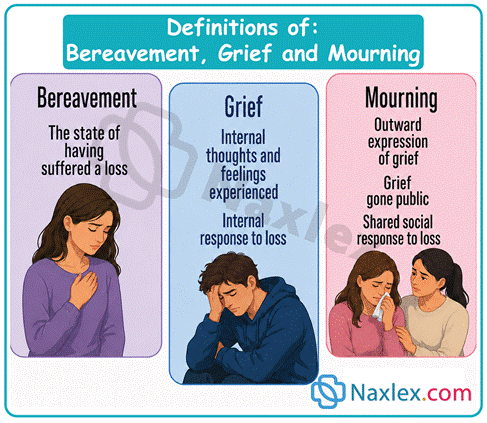
The Physiological and Neurobiological Basis of Grief
- Grief is a whole-body stress response, not merely an emotional one. Acute grief activates the hypothalamic-pituitary-adrenal (HPA) axis and the sympathetic nervous system, producing measurable physiological changes.
- Neuroendocrine effects:
- Elevated cortisol secretion from sustained HPA-axis activation.
- Dysregulation of catecholamines (epinephrine, norepinephrine), driving tachycardia and hypertension.
- Immunological effects:
- Suppressed immune function, including reduced natural killer (NK) cell activity and altered lymphocyte proliferation, increasing susceptibility to infection.
- Elevated pro-inflammatory cytokines contributing to a systemic inflammatory state.
- Cardiovascular effects:
- Increased risk of myocardial infarction in the days immediately following a major loss.
- Stress-induced (Takotsubo) cardiomyopathy, colloquially termed "broken heart syndrome," in which catecholamine surge produces transient left ventricular apical ballooning mimicking acute MI, occurring more often in postmenopausal women.
- Neurobiological/brain effects:
- Activation of the anterior cingulate cortex, insula, and amygdala (emotional pain processing).
- The nucleus accumbens (reward/attachment circuitry) is implicated in the yearning characteristic of grief; persistent activation is associated with prolonged grief.
- Common somatic manifestations of acute grief:
- Tightness of the chest and throat, breathlessness, sighing respirations.
- Anorexia, nausea, hollow feeling in the stomach, weight change.
- Insomnia and disrupted sleep architecture, fatigue, muscle weakness.
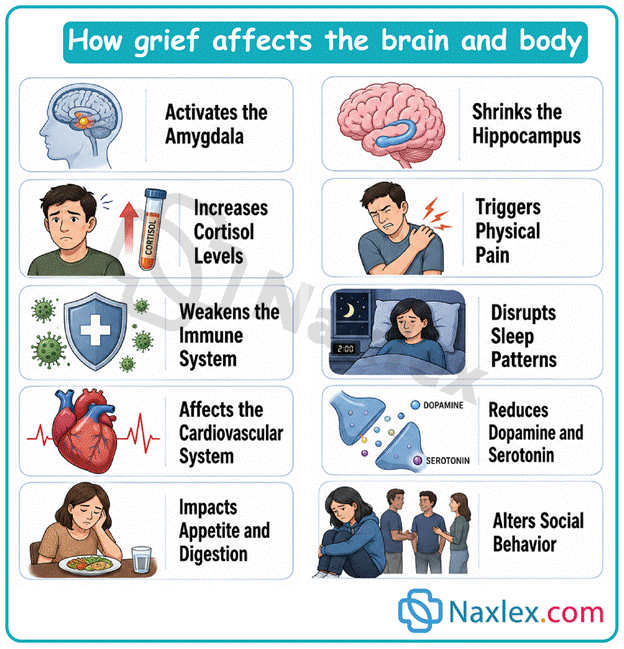
Cultural, Spiritual, and Religious Dimensions of Grief
- Culture profoundly determines how grief is expressed, how long mourning lasts, who may grieve openly, and what rituals are prescribed. The nurse must practice cultural humility and avoid ethnocentric interpretations.
- Variation in emotional expression:
- Some cultures value loud, overt, demonstrative mourning (wailing, keening); others value stoicism and restraint. Neither is more "healthy."
- Religious and spiritual frameworks provide meaning, structure, and coping:
- Beliefs about afterlife, the soul, divine will, and reincarnation shape how loss is interpreted and whether it is accepted.
- Prescribed practices affect timing and behavior (e.g., timing of burial, mourning periods, dietary and dress customs).
- Key nursing considerations:
- Assess, do not assume — ask the client and family about their specific beliefs and preferred practices rather than relying on stereotypes.
- Facilitate spiritual and religious support (chaplaincy, clergy, sacred texts, ritual objects).
- Support culturally specific rituals whenever institutionally feasible, as these are central to healthy mourning.
- Recognize that spiritual distress (questioning faith, feeling abandoned by God) is a legitimate nursing concern requiring intervention.
Types And Categories Of Grief
Normal (Uncomplicated) Grief
- Normal grief, also termed uncomplicated grief, is the expected, adaptive, and self-limiting response to loss that ultimately resolves with integration of the loss into the survivor's life.
- It is characterized by waves of acute grief that gradually diminish in intensity and frequency over time, interspersed with periods of normal functioning.
- Common manifestations:
- Emotional — sadness, anger, guilt, anxiety, loneliness, yearning.
- Cognitive — disbelief, preoccupation with the deceased, sense of presence, transient searching behaviors.
- Physical — anorexia, insomnia, fatigue, chest tightness, hollow stomach.
- Behavioral — crying, social withdrawal, restlessness, visiting places associated with the deceased.
- Perceptual experiences such as hearing or seeing the deceased are normal and should not be mislabeled as psychosis.
- Functioning is impaired temporarily but progressively restored; the bereaved retains the capacity for moments of pleasure and connection.
Anticipatory Grief
- Anticipatory grief is grief experienced before an actual loss occurs, commonly seen when a terminal diagnosis is given or during a prolonged dying trajectory.
- It is felt by both the dying client and the family, allowing gradual emotional preparation.
- Potential benefits:
- Opportunity for closure, reconciliation, and finishing "unfinished business."
- May soften the intensity of grief after the death.
- Potential risks:
- Premature detachment — withdrawing emotionally from the dying person before death, leaving them feeling abandoned.
- Guilt when the dying process is prolonged.
- Anticipatory grief does not guarantee an easier post-death course; some experience full grief again after the death.
Complicated (Maladaptive) Grief
- Complicated grief, also called maladaptive or dysfunctional grief, occurs when the normal grieving process is derailed, prolonged, or fails to progress toward resolution, causing persistent impairment.
- Distinguished from normal grief by intensity, duration, and functional disability that exceed cultural and developmental norms.
- Warning features:
- Persistent, intense yearning and preoccupation that does not attenuate.
- Inability to accept the death; avoidance of reminders.
- Suicidal ideation, profound loss of identity or purpose.
- When these features persist beyond the threshold duration, they may meet criteria for Prolonged Grief Disorder (detailed in Section 8).
- Subtypes include chronic, delayed, exaggerated, and masked grief (see 4.6).
Disenfranchised Grief
- Disenfranchised grief is grief that cannot be openly acknowledged, publicly mourned, or socially supported because the loss is not recognized as legitimate by society.
- Coined by Kenneth Doka; the loss, the griever, or the relationship is socially unsanctioned.
- Common examples:
- Loss of a non-traditional or stigmatized relationship (extramarital partner, same-sex partner in unsupportive settings, ex-spouse).
- Losses not recognized as significant — miscarriage, abortion, perinatal loss, death of a pet.
- Grievers not recognized as capable of grief — young children, individuals with cognitive impairment.
- Deaths carrying stigma — suicide, overdose, AIDS-related death.
- The absence of social support places these grievers at higher risk for complicated grief.
Ambiguous Loss
- Ambiguous loss, described by Pauline Boss, is loss that lacks closure or clear resolution, leaving the griever in a state of uncertainty.
- Two principal types:
- Physical absence with psychological presence — the person is gone but their status is unclear (e.g., a missing person, kidnapping, deployment, immigration separation).
- Psychological absence with physical presence — the person is bodily present but psychologically gone (e.g., advanced dementia, severe traumatic brain injury, coma).
- The lack of finality blocks normal grieving because the loss is never confirmed or fully realized.
- Produces frozen grief, role confusion, and difficulty making decisions.
- Nursing focus is on helping families tolerate ambiguity and find meaning without demanding closure.
Chronic, Delayed, Exaggerated, and Masked Grief
- These are recognized patterns of complicated (maladaptive) grief, distinguished by their timing and expression.
|
Type |
Key Feature |
Presentation |
|
Chronic grief |
Prolonged, unresolved |
Acute grief that persists indefinitely without progressing toward integration |
|
Delayed (inhibited) grief |
Postponed reaction |
Grief suppressed or absent at the time of loss, later triggered—sometimes intensely—by a subsequent event |
|
Exaggerated grief |
Overwhelming intensity |
Grief that is excessive, disabling, and may include severe phobias, panic, or suicidality |
|
Masked grief |
Hidden/somatized |
The person is unaware their symptoms relate to loss; grief surfaces as physical complaints or maladaptive behaviors |
- Chronic grief most closely overlaps with Prolonged Grief Disorder.
- Delayed grief may appear as an unexpectedly strong reaction to a minor later loss.
- Masked grief may present to primary care as unexplained somatic symptoms or behavioral change rather than overt sorrow.
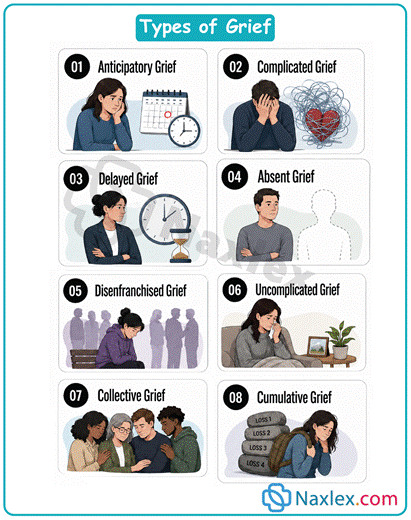
Nursing Insights
- Anticipatory grief is not "grief used up in advance"; the nurse should prepare families that intense grief can still follow the death, so they do not feel guilty or abnormal when it does.
- The nurse actively validates disenfranchised losses—a miscarriage, a pet, an estranged relationship—by naming the loss and offering the same acknowledgment given to socially sanctioned deaths, because unacknowledged grief predicts poor outcomes.
- Complicated grief that includes suicidal ideation, complete inability to function, or self-neglect is a safety concern; the nurse escalates for psychiatric evaluation rather than waiting for time to resolve it.
Theoretical Frameworks And Models Of Grief
- Grief theories provide descriptive frameworks to guide assessment and intervention. None are strictly linear or obligatory; stages and phases may be skipped, revisited, or experienced simultaneously.
Kübler-Ross Five Stages of Grief
- Proposed by Elisabeth Kübler-Ross (1969), originally describing the responses of dying clients, later applied to bereavement.
- The five stages:
- Denial — refusal to accept the reality of the loss; a protective buffer ("This can't be happening").
- Anger — resentment and rage, often displaced onto family, staff, or a higher power ("Why me?").
- Bargaining — attempts to postpone the loss through negotiation, often with God ("If I just...").
- Depression — profound sadness as the reality is acknowledged; withdrawal and mourning.
- Acceptance — coming to terms with the loss; calm and readiness.
- Stages are not sequential or universal; clients may not experience all of them.
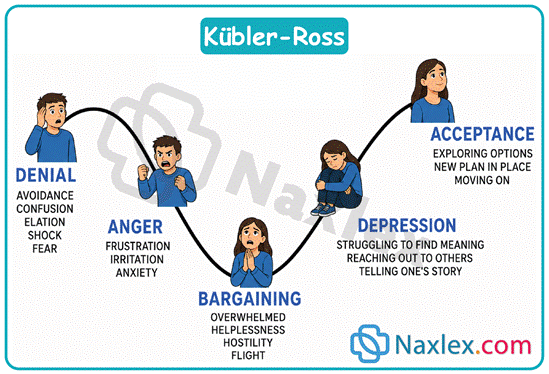
John Bowlby's Attachment-Based Phases of Grief
- Grounded in attachment theory; grief is the response to severed emotional bonds.
- Four phases:
- Numbness/shock — disbelief, feeling stunned.
- Yearning and searching — pining for the deceased, searching behaviors, anger, anxiety.
- Disorganization and despair — recognition of permanence; hopelessness, withdrawal.
- Reorganization — gradual recovery, reinvestment of energy, integration of the loss.
George Engel's Stages of Grief
- George Engel framed grief as a process requiring "work" (grief work) to heal, analogous to healing from a wound.
- Stages:
- Shock and disbelief — refusal to accept, feeling stunned.
- Developing awareness — reality penetrates; anguish, anger, guilt, crying.
- Restitution — rituals of mourning (funeral) aid acceptance.
- Resolving the loss — preoccupation with the deceased; dealing with the void.
- Idealization — exaggeration of the deceased's good qualities; guilt subsides.
- Outcome — resolution over a year or more; adaptive recovery.
J. William Worden's Four Tasks of Mourning
- Worden reframed grief as active tasks the mourner must accomplish, not passive stages—emphasizing the mourner's agency.
- Four tasks:
- Task I — accept the reality of the loss.
- Task II — process the pain of grief.
- Task III — adjust to a world without the deceased (external, internal, spiritual adjustments).
- Task IV — find an enduring connection with the deceased while embarking on a new life ("relocate" the deceased emotionally).
The Dual Process Model of Coping With Bereavement
- Developed by Stroebe and Schut; grief involves oscillation between two orientations.
- Two coping orientations:
- Loss-oriented — confronting the grief, yearning, and emotional pain of the loss.
- Restoration-oriented — attending to life changes, new roles, tasks, and distraction from grief.
- Healthy coping requires dynamic oscillation between the two; the mourner moves back and forth rather than progressing linearly.
- Explains why grievers alternate between crying and coping, which is normal and adaptive.
Therese Rando's Six "R" Processes of Mourning
- Therese Rando described mourning as six "R" processes across three phases (avoidance, confrontation, accommodation).
- The six processes:
- Recognize the loss.
- React to the separation (experience the pain).
- Recollect and re-experience the deceased and the relationship.
- Relinquish old attachments to the deceased and the assumptive world.
- Readjust to move adaptively into the new world without forgetting the old.
- Reinvest emotional energy into new relationships and pursuits.
Nursing Insights
- Grief theories are assessment tools, not checklists; the nurse should never tell a client they are "in denial" or "should be at acceptance by now," because forcing a client through stages is nontherapeutic.
- The Dual Process Model reassures families that alternating between grieving and normal activity—laughing one hour, weeping the next—is healthy oscillation, not avoidance or disrespect toward the deceased.
- Worden's task-based model is especially useful for nursing because tasks imply action the nurse can support, such as encouraging the client to view the body, tell
the story of the death, and gradually assume new roles.
Prolonged Grief Disorder Per The DSM-5-TR
Historical Context and Classification
- Prolonged Grief Disorder (PGD) was formally added as a distinct diagnosis in the DSM-5-TR (American Psychiatric Association, March 2022).
- It was placed within the Trauma- and Stressor-Related Disorders chapter.
- Prior to this, related constructs appeared in the literature as "complicated grief" and "persistent complex bereavement disorder," the latter having been listed in DSM-5 (2013) as a condition for further study.
- The formal inclusion provides standardized criteria to distinguish disabling, persistent grief from normative bereavement, ending prior diagnostic ambiguity.
DSM-5-TR Diagnostic Criteria
- Criterion A — The loss: The death, at least 12 months ago, of a person close to the bereaved. For children and adolescents, the threshold is at least 6 months.
- Criterion B — Core grief response: Since the death, a persistent grief response with one or both of the following, present nearly every day for at least the last month:
- Intense yearning/longing for the deceased.
- Preoccupation with thoughts or memories of the deceased.
- Criterion C — Associated symptoms: Since the death, at least 3 of 8 symptoms present nearly every day for at least the last month:
- Identity disruption (feeling part of oneself has died).
- Marked sense of disbelief about the death.
- Avoidance of reminders that the person is dead.
- Intense emotional pain (anger, bitterness, sorrow).
- Difficulty reintegrating into relationships and activities.
- Emotional numbness.
- Feeling that life is meaningless.
- Intense loneliness.
- Criterion D — Impairment: The disturbance causes clinically significant distress or impairment in social, occupational, or other important areas.
- Criterion E — Exceeds norms: The duration and severity clearly exceed expected social, cultural, or religious norms for the individual's context.
- Criterion F — Not better explained by another mental disorder (e.g., MDD, PTSD) or attributable to a substance or medical condition.
- The 12-month threshold (adults) is the single most high-yield examination point distinguishing PGD from normal grief.
Epidemiology, Prevalence, and Risk Factors
- PGD affects approximately 10% of bereaved adults, though estimates vary by loss type.
- Risk factors related to the death:
- Sudden, violent, or traumatic death (accident, homicide, suicide, disaster).
- Death of a child.
- Loss occurring under circumstances perceived as preventable.
- Risk factors related to the individual:
- Female sex; history of depression, anxiety, or prior trauma.
- Insecure attachment; high dependency on the deceased.
- Prior separation difficulties or caregiver strain.
- Risk factors related to context:
- Lack of social support; isolation.
- Financial stress and concurrent life crises.
Differential Diagnosis (Major Depressive Disorder, Post-Traumatic Stress Disorder, and Normal Grief)
- The central diagnostic challenge is distinguishing PGD from MDD, PTSD, and normal grief.
|
Feature |
Prolonged Grief Disorder |
Major Depressive Disorder |
PTSD |
Normal Grief |
|
Central focus |
Yearning/preoccupation with the deceased |
Pervasive low mood, anhedonia |
Re-experiencing a traumatic event |
Yearning that attenuates over time |
|
Emotional pattern |
Pain tied to the specific loss |
Global, persistent dysphoria |
Fear, hypervigilance, flashbacks |
Comes in waves, lessening |
|
Self-view |
Grief-focused; may feel part of self died |
Pervasive worthlessness/guilt |
Guilt tied to the trauma |
Self-esteem generally intact |
|
Positive emotion |
Blocked toward loss but possible elsewhere |
Broadly absent |
Numbing present |
Retained in moments |
|
Duration criterion |
>12 months (adults) |
≥2 weeks |
>1 month |
No fixed pathological cutoff |
- In normal grief, positive emotions and functioning progressively return; in PGD they remain blocked by persistent yearning.
- MDD features pervasive worthlessness and anhedonia across all domains, whereas PGD sorrow is centered on the loss.
- PTSD centers on fear and re-experiencing of trauma, whereas PGD centers on yearning and separation distress; the two may co-occur after a traumatic death.
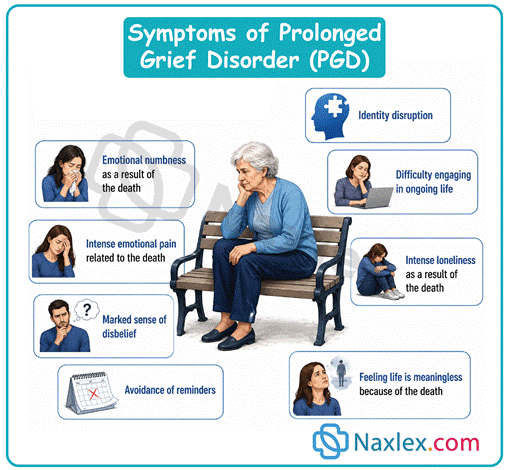
Grief Across The Lifespan
- The expression of grief is shaped by the individual's cognitive and emotional development, requiring age-tailored nursing approaches.
Grief in Infants, Children, and Adolescents
- Grief responses in the young are governed by their developmental capacity to understand death, particularly its irreversibility, universality, and nonfunctionality.
- Infants and toddlers (0–2 years): No concept of death; they react to separation and disruption of routine, showing distress, clinginess, and regression.
- Preschool (3–5 years): Death is seen as reversible and temporary (like sleep or a trip); thinking is magical, so children may believe their thoughts or behavior caused the death, producing guilt.
- School-age (6–12 years): Develop understanding that death is permanent and universal; may personify death, become curious about biological details, and fear it happening to others.
- Adolescents (13–18 years): Adult-level cognitive grasp of death but may feel a sense of invulnerability; grief may present as anger, risk-taking, or withdrawal rather than sadness.
- Nursing approach: use concrete, honest language (say "died," not "went to sleep" or "lost"), maintain routines, and permit expression through play and art.
Grief in Adults
- Adults grieve within the context of multiple concurrent roles and responsibilities (spouse, parent, employee, caregiver), which may delay or complicate the grieving process.
- Losses commonly encountered include death of a parent, spouse, or child, with the death of a child considered among the most intense and prolonged of all grief experiences.
- Grief may be complicated by the need to maintain functioning—returning to work and caregiving—leaving little sanctioned space to mourn.
- Gender-influenced patterns are observed: some grievers are more emotion-focused (expressing feelings) while others are more instrumental (problem-solving, activity-based); both are valid.
- Nursing approach: validate the legitimacy of taking time to grieve, assess for role overload and adequacy of support systems.
Grief in Older Adults
- Older adults frequently experience cumulative and multiple losses in close succession—spouse, siblings, friends, health, independence, and social role—producing bereavement overload.
- The loss of a long-term spouse may erode identity and disrupt decades of shared routine, raising risk of isolation.
- Grief in this group carries elevated risk of depression, physical decline, and mortality, including the well-documented "widowhood effect" (increased death risk after a spouse's death).
- Losses may be compounded by pre-existing chronic illness, sensory impairment, cognitive decline, and reduced mobility limiting access to support.
- Nursing approach: screen for depression and suicidal ideation, assess nutrition and self-care, and mobilize social and community resources to counter isolation.
Nursing Insights
- Nurses must use the concrete word "died" with children and avoid euphemisms such as "passed away," "lost," or "gone to sleep," because magical and literal thinking can make these phrases frightening or confusing.
- A grieving preschooler often believes their own behavior caused the death; the nurse should explicitly reassure the child that nothing they thought, said, or did made the person die.
- In older adults, the nurse distinguishes normal grief from major depression and always screens for suicidal ideation, since bereavement overload and the widowhood effect place this group at high risk of self-harm and physical decline.
The Nursing Process Applied To Grief
Assessment of the Grieving Client
- Assessment is holistic and ongoing, encompassing the emotional, cognitive, physical, behavioral, spiritual, and social dimensions of the grief response.
- Key areas to assess:
- Nature of the loss (actual, perceived, anticipatory) and circumstances of the death (sudden, traumatic, expected).
- Stage/phase of grief and where the client is in the trajectory.
- Physical symptoms — sleep, appetite, weight, energy, somatic complaints.
- Coping mechanisms and prior history of loss or mental illness.
- Support systems — family, friends, community, cultural and spiritual resources.
- Presence of risk factors for complicated grief and suicidal ideation.
- Assessment tools and therapeutic use of self guide the nurse in eliciting the client's subjective experience.
Nursing Diagnoses Related to Grief
- Diagnoses are individualized to the client's presentation. Common examples include:
- Grieving — a normal response requiring support (not a pathology).
- Maladaptive (Complicated) Grieving — impaired progression toward resolution.
- Risk for Complicated Grieving.
- Hopelessness and Powerlessness.
- Spiritual Distress.
- Impaired Social Interaction and Social Isolation.
- Risk for Loneliness.
- Disturbed Sleep Pattern and Imbalanced Nutrition.
- The distinction between normal grieving and maladaptive grieving drives the plan of care.
Outcome Identification and Planning
- Outcomes are realistic, measurable, client-centered, and time-framed, acknowledging that grief resolution is gradual.
- Sample expected outcomes — the client will:
- Acknowledge the reality of the loss.
- Express feelings of grief openly and without self-judgment.
- Identify and utilize effective coping strategies and support systems.
- Maintain physiological integrity — adequate sleep, nutrition, and self-care.
- Verbalize absence of suicidal ideation and a sense of future orientation.
- Progress toward reinvestment in relationships and activities.
Nursing Interventions and Therapeutic Communication
- The foundation of grief intervention is compassionate presence and skilled therapeutic communication.
- Key therapeutic techniques:
- Active listening and use of silence to allow expression.
- Open-ended questions and broad openings ("Tell me about them").
- Reflection and validation of feelings; conveying empathy, not sympathy.
- Avoid clichés ("They're in a better place," "I know how you feel") that block communication.
- Additional interventions:
- Encourage reminiscence and telling the story of the loss.
- Provide anticipatory guidance about the normal course of grief.
- Support cultural and spiritual rituals; facilitate chaplaincy and support groups.
- Attend to physical needs (sleep, nutrition, hydration).
- Assess safety continuously and intervene for suicidal ideation.
Evaluation of Grief Resolution
- Evaluation determines whether the client is progressing toward adaptive integration of the loss.
- Indicators of healthy resolution:
- Ability to speak about the deceased without disabling pain.
- Reinvestment of emotional energy into new relationships and roles.
- Return of normal functioning, sleep, appetite, and future orientation.
- Acceptance of the reality of the loss and finding meaning.
- Indicators warranting reassessment or referral:
- Persistent, intense yearning beyond expected norms.
- Functional impairment, self-neglect, or suicidal ideation — requiring psychiatric referral.
Nursing Insights
- The most therapeutic intervention is presence—the nurse who sits in silence and listens without rushing to fix or reassure provides more comfort than any cliché, so phrases like "they're in a better place" must be avoided.
- Nursing diagnosis of "Grieving" describes a normal, healthy process and requires support, not treatment; only "Maladaptive/Complicated Grieving" signals a pathological trajectory—confusing the two is a common and consequential error.
- Safety is never assumed; the nurse directly assesses for suicidal ideation at every stage of grief, particularly in older adults, after traumatic deaths, and when the client voices that life is meaningless.
Therapeutic And Pharmacological Management
Psychotherapeutic and Counseling Approaches
- The mainstay of grief management is psychotherapeutic, not pharmacological; most bereaved individuals need support, not medication.
- Grief counseling — supports those with normal grief to facilitate healthy mourning and the tasks of grief work.
- Grief therapy — a more specialized intervention for complicated grief or PGD.
- Evidence-based modalities:
- Complicated Grief Treatment (CGT) — a targeted, manualized therapy combining loss- and restoration-focused work; first-line for Prolonged Grief Disorder.
- Cognitive Behavioral Therapy (CBT) — addresses maladaptive thoughts, avoidance, and behaviors.
- Interpersonal therapy, narrative/reminiscence approaches, and complicated grief-focused techniques.
- Interventions may be delivered individually, in families, or in groups.
Pharmacological Considerations
- There is no medication that treats grief itself; pharmacotherapy targets specific, severe, comorbid symptoms, not normal bereavement.
- Appropriate, symptom-targeted use:
- Antidepressants (SSRIs) — for comorbid Major Depressive Disorder or when depressive symptoms are severe and persistent.
- Short-term sleep aids — cautiously for severe insomnia.
- Anxiolytics — brief, judicious use only; benzodiazepines carry dependence risk and are generally avoided for routine grief.
- Key principles:
- Medicating normal grief may impede the necessary work of mourning.
- Reserve pharmacotherapy for complicated grief with comorbidity or functional collapse.
- Always pair medication with psychotherapy and support.
Grief Support Groups and Community Resources
- Peer support groups reduce isolation by connecting the bereaved with others who share the experience, normalizing grief.
- Types and examples:
- General bereavement groups and loss-specific groups (e.g., loss of a child, spousal loss, suicide-loss survivors).
- Hospice-based bereavement programs, often extending support for ≥13 months after a death.
- Faith-based and community organizations.
- Additional resources:
- Chaplaincy and spiritual care, social work, and mental health referrals.
- Online and telehealth support for those with limited mobility or access.
- The nurse's role is to assess, recommend, and facilitate referral to appropriate resources.
Special Considerations In Grief Nursing
Palliative and Hospice Care Contexts
- Palliative care focuses on comfort and quality of life at any stage of serious illness, while hospice care serves those with a prognosis of ≤6 months who have shifted from curative to comfort goals.
- These settings routinely involve anticipatory grief in both the dying client and family, requiring skilled preparation and support.
- The interdisciplinary team addresses total pain—physical, emotional, social, and spiritual suffering—through coordinated care.
- Hospice programs provide structured bereavement follow-up to families, typically continuing for at least 13 months after the death.
- Nursing approach: facilitate advance care planning, honor the client's wishes, support the family through the dying process, and ensure a dignified death.
Perinatal and Pregnancy-Related Loss
- Perinatal loss—miscarriage, stillbirth, and neonatal death—produces genuine and often intense grief that is frequently disenfranchised and under-acknowledged by society.
- Parents grieve not only the infant but the lost future and expectations attached to the pregnancy.
- Evidence-based supportive practices:
- Offer the parents the opportunity to see and hold the infant.
- Provide mementos (photographs, footprints, lock of hair, identification band).
- Use the infant's name and acknowledge the baby as a real person.
- Allow parents to make choices about rituals, blessing, and burial.
- Nursing approach: validate the loss explicitly, avoid minimizing language ("You can have another"), and provide referral to perinatal loss support.
Nurse Self-Care, Compassion Fatigue, and Professional Grief
- Repeated exposure to death and suffering places nurses at risk of compassion fatigue, burnout, and cumulative grief.
- Key concepts:
- Compassion fatigue — emotional and physical exhaustion from caring for suffering others, eroding empathy over time.
- Burnout — chronic workplace stress producing exhaustion, cynicism, and reduced efficacy.
- Disenfranchised professional grief — nurses' grief for patients often goes unacknowledged by institutions.
- Protective strategies:
- Reflective practice, debriefing, and peer support.
- Healthy boundaries, adequate rest, and work-life balance.
- Institutional resources such as counseling and employee assistance programs.
- Effective self-care preserves both the nurse's wellbeing and the quality and safety of client care.
Summary
- Grief is the universal, individualized internal response to loss, distinct from mourning (its outward cultural expression) and bereavement (the objective fact of loss through death).
- Loss takes many forms—actual, perceived, anticipatory, maturational, and situational—and each can trigger a genuine grief response.
- Grief is a whole-body phenomenon, engaging neuroendocrine, immune, and cardiovascular systems, and can produce measurable effects such as broken heart syndrome.
- Culture, spirituality, and religion profoundly shape how grief is expressed and resolved, so the nurse assesses rather than assumes.
- Grief is categorized into normal, anticipatory, complicated, disenfranchised, and ambiguous types, alongside chronic, delayed, exaggerated, and masked patterns.
- Disenfranchised and ambiguous losses lack social acknowledgment or closure and carry elevated risk of complicated grief.
- Multiple theorists—Kübler-Ross, Bowlby, Engel, Worden, Stroebe and Schut, and Rando—describe grief through stages, phases, tasks, or oscillation, none of which are strictly linear.
- The DSM-5-TR (2022) introduced Prolonged Grief Disorder, diagnosed when disabling grief persists beyond 12 months in adults (6 months in children).
- PGD must be differentiated from major depressive disorder, PTSD, and normal grief, chiefly by its focus on persistent yearning for the deceased.
- Grief expression varies across the lifespan, shaped by developmental understanding of death, with children requiring concrete language and older adults at risk of bereavement overload.
- The nursing process guides holistic assessment, accurate diagnosis, realistic outcomes, therapeutic presence, and evaluation of grief resolution.
- The most powerful nursing interventions are presence, active listening, and validation, while clichés and premature reassurance are avoided.
- Management is chiefly psychotherapeutic; medication is reserved for severe comorbidity, as there is no drug that treats grief itself.
- Special contexts—palliative and hospice care, perinatal loss, and nurse self-care—demand tailored, compassionate, and culturally sensitive approaches.
- Safety remains paramount throughout, with continuous assessment for suicidal ideation and referral when grief becomes maladaptive.
Naxlex
Videos
Login to View Video
Click here to loginTake Notes on Grief
This filled cannot be empty
Join Naxlex Nursing for nursing questions & guides! Sign Up Now