






 Video Library


Please set your exam date
Alcohol Misuse
Study Questions
Practice Exercise 1
The nurse is evaluating several clients for factors that increase vulnerability to alcohol use disorder.
Which of the following factors should the nurse identify as the priority indicator of greatest lifetime risk?
Explanation
Alcohol use disorder reflects a gene-environment interaction, yet the age at drinking onset exerts the strongest single influence on lifetime risk. Regular drinking before 15 years disrupts adolescent neurodevelopment of prefrontal inhibitory and mesolimbic reward circuitry, embedding roughly fourfold lifetime vulnerability relative to onset after 21 years.
Rationale for correct answer:
2. Initiation before 15 years confers the greatest lifetime risk, raising the odds of alcohol use disorder roughly fourfold compared with onset after 21 years. Adolescent exposure interferes with maturation of prefrontal inhibitory control and dopaminergic reward pathways. This produces enduring neurobiological vulnerability that outweighs genetic, temperamental, and social factors. It is therefore the priority indicator.
Rationale for incorrect answers:
1. A maternal grandparent with alcohol use disorder is a second-degree relative, which dilutes the heritable contribution. Genetic loading is real but is far weaker than a first-degree family history. This confers lower risk than early-onset drinking. It is not the priority indicator.
3. Impulsivity and novelty seeking are heritable temperamental traits that raise susceptibility to substance use. They act as a distal predisposition rather than a direct exposure. They lack the neurodevelopmental impact and magnitude of pre-15 initiation. The risk is real but secondary.
4. Peer social gatherings represent environmental exposure and social modeling. Attendance alone, without early or heavy consumption, remains a modifiable situational factor. It carries the weakest lifetime risk among the options. It does not predict disorder independently.
Test-taking strategy:
- Analyze the scenario/question: The item asks for the factor conferring the greatest lifetime risk for alcohol use disorder, requiring differentiation of genetic, temperamental, developmental, and environmental contributors.
- Apply knowledge of developmental vulnerability: Risk is greatest when a factor directly alters the maturing adolescent brain rather than acting as a distant predisposition. Early drinking before 15 years remodels prefrontal and reward circuitry during a critical developmental window, yielding a robust fourfold effect. Genetics, temperament, and peer exposure raise probability but with smaller, more distal influence.
- Rule in Choice 2: pre-15 onset directly disrupts neurodevelopment and quadruples lifetime risk.
- Rule out Choice 1: a second-degree relative dilutes heritable loading.
- Rule out Choice 3: temperament is a distal predisposition, not direct exposure.
- Rule out Choice 4: peer attendance alone is a weak, modifiable situational factor.
- Select the factor whose timing directly alters adolescent brain maturation.
Take home points
- Alcohol use onset before 15 years is the strongest single predictor of lifetime alcohol use disorder, raising risk roughly fourfold.
- A first-degree family history carries greater genetic weight than a diluted second-degree (grandparent) history.
- Impulsivity and novelty seeking are heritable temperamental risks but act as distal predispositions.
- Peer social exposure is a modifiable environmental factor with the weakest independent predictive value.
The nurse is teaching nursing students about the hepatic metabolism of ethanol.
Which of the following substances should the nurse identify as the toxic intermediate formed when alcohol dehydrogenase acts on ethanol?
Explanation
Hepatic ethanol metabolism proceeds through alcohol dehydrogenase, which oxidizes ethanol to acetaldehyde, followed by aldehyde dehydrogenase, which converts acetaldehyde to acetate. Acetaldehyde is the highly reactive toxic intermediate responsible for hepatocellular injury, DNA adduct formation, and the disulfiram flushing reaction.
Rationale for correct answer:
2. Acetaldehyde is the immediate product of alcohol dehydrogenase acting on ethanol. It is highly reactive and cytotoxic, forming protein and DNA adducts that drive hepatotoxicity. Its accumulation causes the flushing reaction seen when aldehyde dehydrogenase is inhibited. It is therefore the toxic intermediate.
Rationale for incorrect answers:
1. Acetate is generated downstream by aldehyde dehydrogenase acting on acetaldehyde. It is a relatively nontoxic product that circulates and enters peripheral metabolism. It is not the direct product of alcohol dehydrogenase. Therefore it is incorrect.
3. Acetic acid is the protonated form of acetate and, like acetate, is a downstream nontoxic species. It does not form directly from ethanol oxidation by alcohol dehydrogenase. It lacks the reactive toxicity of acetaldehyde. Therefore it is incorrect.
4. Acetyl-coenzyme A is a terminal metabolite formed several steps later from acetate. It enters the citric acid cycle and lipogenesis as normal fuel. It is neither toxic nor the alcohol dehydrogenase product. Therefore it is incorrect.
Test-taking strategy:
- Analyze the scenario/question: The item asks specifically which substance is the toxic intermediate produced when alcohol dehydrogenase oxidizes ethanol, requiring recall of the ordered oxidation pathway.
- Apply knowledge of ethanol oxidation: The pathway proceeds ethanol to acetaldehyde to acetate to acetyl-coenzyme A. The first, most reactive step yields acetaldehyde, the species responsible for toxicity and flushing. Every later product is comparatively inert, so only the direct alcohol dehydrogenase product satisfies both criteria.
- Rule in Choice 2: acetaldehyde is the direct, toxic, reactive product of alcohol dehydrogenase.
- Rule out Choice 1: acetate is a downstream, nontoxic product of aldehyde dehydrogenase.
- Rule out Choice 3: acetic acid is simply protonated acetate, also downstream and nontoxic.
- Rule out Choice 4: acetyl-coenzyme A is a terminal fuel metabolite several steps later.
- Select the direct product that is both immediate and toxic.
Take home points
- Alcohol dehydrogenase oxidizes ethanol to acetaldehyde, the reactive toxic intermediate.
- Aldehyde dehydrogenase then converts acetaldehyde to nontoxic acetate.
- Acetaldehyde accumulation causes hepatotoxicity, DNA adducts, and the disulfiram flushing reaction.
- Acetate, acetic acid, and acetyl-coenzyme A are downstream, comparatively inert species.
The nurse is explaining why benzodiazepines are selected to manage the physiological effects of abrupt alcohol cessation.
Which of the following concepts best accounts for the therapeutic effectiveness of these agents?
Explanation
Both ethanol and benzodiazepines enhance gamma-aminobutyric acid type A (GABA-A) receptor chloride conductance, producing overlapping central nervous system depression. Abrupt alcohol cessation removes this inhibitory tone, unmasking glutamatergic hyperexcitability that manifests as tremor, seizures, and delirium tremens, which benzodiazepine cross-tolerance suppresses.
Rationale for correct answer:
1. Cross-tolerance exists because alcohol and benzodiazepines both potentiate GABA-A signaling. Benzodiazepines therefore substitute at the shared inhibitory receptor when alcohol is withdrawn. This restores inhibitory tone and suppresses withdrawal hyperexcitability, preventing seizures and delirium tremens. It is the mechanism of effectiveness.
Rationale for incorrect answers:
2. Dopamine up-regulation within the mesolimbic pathway underlies reward, reinforcement, and craving. It explains addictive behavior rather than the control of physiological withdrawal. It is unrelated to the GABA mechanism of benzodiazepines. Therefore it is incorrect.
3. Microsomal ethanol-oxidizing system induction accelerates hepatic ethanol clearance, contributing to metabolic tolerance. It does not describe how benzodiazepines relieve withdrawal at the receptor level. It reflects metabolic adaptation, not a therapeutic action. Therefore it is incorrect.
4. Potentiation of NMDA receptors is the opposite of the desired effect. Ethanol inhibits NMDA receptors, and withdrawal causes compensatory NMDA up-regulation and excitotoxicity. Benzodiazepines do not act on glutamate receptors. Therefore it is incorrect.
Test-taking strategy:
- Analyze the scenario/question: The item asks for the concept that explains why benzodiazepines relieve alcohol withdrawal, requiring understanding of the shared receptor mechanism between the two agents.
- Apply knowledge of GABAergic cross-tolerance: Alcohol and benzodiazepines both amplify GABA-A inhibition, so one can pharmacologically replace the other. When alcohol is stopped, benzodiazepines re-supply the lost inhibitory tone that otherwise gives way to glutamatergic hyperexcitability. Options describing reward, metabolism, or NMDA potentiation address different processes entirely.
- Rule in Choice 1: shared GABA-A potentiation lets benzodiazepines substitute for alcohol.
- Rule out Choice 2: dopamine up-regulation explains craving, not withdrawal control.
- Rule out Choice 3: microsomal enzyme induction is metabolic tolerance, not a drug action.
- Rule out Choice 4: ethanol inhibits NMDA, so potentiation would worsen excitability.
- Select the concept describing a shared inhibitory receptor mechanism.
Take home points
- Benzodiazepines treat alcohol withdrawal through cross-tolerance at the shared GABA-A receptor.
- Abrupt cessation removes GABA inhibition and unmasks glutamatergic (NMDA) hyperexcitability.
- Mesolimbic dopamine up-regulation explains craving and reinforcement, not withdrawal management.
- Microsomal ethanol-oxidizing system induction reflects metabolic tolerance, not a therapeutic effect.
The nurse is describing the effects of ethanol on central nervous system neurotransmission.
Which of the following actions of ethanol should the nurse include? Select all that apply
Explanation
Ethanol is a central nervous system depressant that acts on multiple receptor systems. It potentiates GABA-A inhibition, inhibits NMDA glutamate receptors, and raises mesolimbic dopamine within the nucleus accumbens, together producing sedation, anxiolysis, amnesia, and reward-driven reinforcement of continued use.
Rationale for correct answers:
1. GABA-A potentiation is the principal sedative action of ethanol. It increases chloride influx and neuronal inhibition. This mediates anxiolysis, sedation, and ataxia. It is a core central action of ethanol.
2. NMDA inhibition reduces excitatory glutamatergic transmission. This contributes to cognitive impairment, memory blackout, and, on withdrawal, rebound excitation. It is a central glutamatergic action of ethanol. It should be included.
3. Increased dopamine release in the nucleus accumbens drives the rewarding, reinforcing properties of ethanol. This mesolimbic surge underlies the development of dependence. It is the reward pathway action. It should be included.
Rationale for incorrect answers:
4. Dopamine reuptake blockade at the synaptic cleft is the mechanism of cocaine and related stimulants, not ethanol. Ethanol raises dopamine by increasing release rather than blocking reuptake. This describes a different drug class. Therefore it is incorrect.
5. Acetylcholine stimulation at the neuromuscular junction is not an action of ethanol. Ethanol acts centrally and does not enhance peripheral cholinergic transmission at the motor end plate. This is physiologically inaccurate. Therefore it is incorrect.
Test-taking strategy:
- Analyze the scenario/question: The item asks which listed actions correctly describe ethanol's effects on central nervous system neurotransmission, requiring separation of true central actions from mislabeled or peripheral ones.
- Apply knowledge of ethanol pharmacodynamics: Ethanol depresses the central nervous system by enhancing GABA, inhibiting NMDA, and elevating mesolimbic dopamine through increased release. Any option describing reuptake blockade or peripheral neuromuscular stimulation belongs to other agents, so those are excluded regardless of surface plausibility.
- Rule in Choice 1: GABA-A potentiation is ethanol's core sedative action.
- Rule in Choice 2: NMDA inhibition produces amnesia and withdrawal rebound.
- Rule in Choice 3: nucleus accumbens dopamine release drives reward.
- Rule out Choice 4: dopamine reuptake blockade is cocaine's mechanism.
- Rule out Choice 5: ethanol does not stimulate neuromuscular acetylcholine release.
- Select the three central mechanisms and exclude the peripheral and mislabeled options.
Take home points
- Ethanol potentiates GABA-A and inhibits NMDA receptors to depress the central nervous system.
- Ethanol raises nucleus accumbens dopamine by increasing release, driving reward and dependence.
- Dopamine reuptake blockade characterizes cocaine and stimulants, not ethanol.
- Ethanol has no stimulatory effect on acetylcholine at the neuromuscular junction.
The nurse is reviewing terminology related to alcohol consumption.
Which of the following statements accurately reflect these concepts? Select all that apply
Explanation
Standardized alcohol terminology distinguishes quantity, pattern, and consequence. A standard drink delivers a fixed alcohol mass, binge drinking denotes a pattern reaching a threshold blood alcohol concentration, and craving reflects subjective urge, while tolerance and harmful use carry precise, non-interchangeable meanings.
Rationale for correct answers:
1. Binge drinking is defined by a pattern that raises the blood alcohol concentration to ≥ 0.08 g/dL, typically about 5 drinks for men or 4 for women within 2 hours. It is a consumption pattern keyed to a measurable threshold. The statement is accurate.
2. One standard drink in the United States contains approximately 14 grams of pure alcohol, equal to about 12 ounces of beer, 5 ounces of wine, or 1.5 ounces of spirits. It provides a uniform measure for quantifying intake. The statement is accurate.
4. Craving is a strong subjective urge or desire to consume alcohol and is a core diagnostic feature of alcohol use disorder. It reflects reward-pathway drive rather than physical dependence alone. The statement is accurate.
Rationale for incorrect answers:
3. Tolerance denotes needing progressively larger amounts to achieve the same effect, or a diminished effect from the same amount. The statement instead describes withdrawal, the syndrome emerging when intake stops. This conflates two concepts. Therefore it is inaccurate.
5. Harmful use describes a pattern that has already caused demonstrable physical or psychological damage. The described drinking that raises risk without present damage is instead hazardous use. This mislabels hazardous use. Therefore it is inaccurate.
Test-taking strategy:
- Analyze the scenario/question: The item asks which terminology statements are accurate, requiring precise recall of standardized definitions and detection of concepts that have been swapped.
- Apply knowledge of alcohol terminology: Each term has a fixed meaning: tolerance is a shifting dose-response, withdrawal is the cessation syndrome, and harmful use requires actual damage while hazardous use only elevates risk. Statements that describe the wrong term under a given label are inaccurate even when each idea is individually true.
- Rule in Choice 1: binge drinking is defined by reaching a blood alcohol concentration ≥ 0.08 g/dL.
- Rule in Choice 2: a standard drink equals about 14 grams of pure alcohol.
- Rule in Choice 4: craving is the subjective urge to drink.
- Rule out Choice 3: the description given defines withdrawal, not tolerance.
- Rule out Choice 5: drinking that raises risk without damage is hazardous, not harmful, use.
- Select the statements whose definition matches the labeled term exactly.
Take home points
- Binge drinking is a pattern raising blood alcohol concentration to ≥ 0.08 g/dL; a US standard drink holds about 14 grams of alcohol.
- Craving is the subjective urge to drink and a core criterion of alcohol use disorder.
- Tolerance is an altered dose-response; the cessation syndrome is withdrawal.
- Harmful use implies existing damage, whereas hazardous use only elevates future risk.
Practice Exercise 2
The nurse is admitting a client with a long history of heavy drinking whose last reported drink was 8 hours ago.
Which of the following assessment findings should the nurse address first?
Explanation
Alcohol withdrawal reflects central nervous system rebound hyperexcitability after loss of GABA inhibition and glutamate up-regulation. Minor withdrawal begins 6 to 12 hours after the last drink, producing autonomic hyperactivity — tachycardia, hypertension, tremor, and diaphoresis — whose severity predicts progression to seizures and delirium tremens.
Rationale for correct answer:
1. Blood pressure 158/94 with heart rate 104 represents autonomic hyperactivity, the objective marker of withdrawal severity. Rising vital signs guide benzodiazepine titration and signal risk of escalation. They reflect physiological instability that must be addressed first. It is the priority finding.
Rationale for incorrect answers:
2. Nausea with a single emesis is a common minor gastrointestinal manifestation of early withdrawal. A solitary episode is not immediately life-threatening and warrants monitoring and antiemetics. It ranks below autonomic instability. Therefore it is not addressed first.
3. A fine bilateral tremor is an expected early sign of minor withdrawal and reflects the same sympathetic surge. Alone it is low acuity and does not require immediate intervention. It carries lower priority than abnormal vital signs. Therefore it is not addressed first.
4. A desire to leave against medical advice is an important safety and legal concern requiring education and de-escalation. It is a psychosocial issue rather than an acute physiological threat. It is managed after stabilizing vital signs. Therefore it is not addressed first.
Test-taking strategy:
- Analyze the scenario/question: The item asks which assessment finding to address first in a client entering alcohol withdrawal 8 hours after the last drink, a prioritization item.
- Apply knowledge of ABC and physiological priority: Prioritization favors physiological instability that threatens circulation and predicts deterioration over comfort or psychosocial concerns. Elevated blood pressure and heart rate quantify sympathetic overactivity and forecast seizures and delirium tremens, so they outrank tremor, mild nausea, and the wish to leave. The most physiologically unstable finding is treated first.
- Rule in Choice 1: abnormal vital signs mark withdrawal severity and guide treatment.
- Rule out Choice 2: a single emesis is a minor, non-urgent symptom.
- Rule out Choice 3: a fine tremor is an expected low-acuity early sign.
- Rule out Choice 4: leaving against medical advice is psychosocial, not an acute physiological threat.
- Select the finding reflecting physiological instability and risk of progression.
Take home points
- Minor alcohol withdrawal begins 6 to 12 hours after the last drink with autonomic hyperactivity.
- Elevated blood pressure and heart rate mark withdrawal severity and guide benzodiazepine dosing.
- Tremor and mild nausea are expected low-acuity early signs.
- A wish to leave against medical advice is a psychosocial concern addressed after physiological stabilization.
The nurse is applying the diagnostic criteria for alcohol use disorder.
Which of the following minimum numbers of criteria, occurring within a 12-month period, must a client meet to establish the diagnosis?
Explanation
Alcohol use disorder is diagnosed under DSM-5-TR when a client meets at least 2 of 11 criteria within a 12-month period. Severity is graded by the number met: mild 2 to 3, moderate 4 to 5, and severe 6 or more.
Rationale for correct answer:
2. Two of eleven criteria within 12 months is the minimum threshold to establish the diagnosis. Meeting exactly two indicates mild alcohol use disorder. The count then stratifies disorder severity into mild, moderate, and severe. It is the correct minimum.
Rationale for incorrect answers:
1. One criterion is subthreshold and does not satisfy the diagnostic requirement. A single feature may signal risk but cannot establish the disorder. It falls below the minimum threshold. Therefore it is incorrect.
3. Three criteria does meet the diagnosis but overstates the minimum needed. Two through three criteria define mild disorder, so three is not the least number required. It exceeds the required minimum. Therefore it is incorrect.
4. Four criteria corresponds to moderate severity rather than the diagnostic floor. It clearly meets criteria but far exceeds the minimum of two. It misidentifies the threshold value. Therefore it is incorrect.
Test-taking strategy:
- Analyze the scenario/question: The item asks for the minimum number of DSM-5-TR criteria within 12 months required to diagnose alcohol use disorder, a knowledge-recall item.
- Apply knowledge of DSM-5-TR thresholds: The diagnosis requires at least two of eleven criteria in a 12-month window, and the number met then defines severity. Options above two describe severity bands rather than the diagnostic floor, so they answer a different question. The lowest qualifying count is the answer.
- Rule in Choice 2: two criteria is the diagnostic minimum and defines mild disorder.
- Rule out Choice 1: one criterion is subthreshold.
- Rule out Choice 3: three meets criteria but is not the minimum.
- Rule out Choice 4: four indicates moderate severity, not the threshold.
- Select the smallest number that satisfies the diagnostic requirement.
Take home points
- Alcohol use disorder requires at least 2 of 11 DSM-5-TR criteria within a 12-month period.
- Severity is graded as mild (2 to 3), moderate (4 to 5), and severe (6 or more).
- A single criterion is subthreshold and cannot establish the diagnosis.
- Higher criteria counts describe severity rather than the diagnostic minimum.
The nurse is reviewing the laboratory results of a client with suspected chronic alcohol misuse.
Which of the following patterns should the nurse recognize as most suggestive of alcoholic liver disease?
Explanation
Alcoholic liver disease produces a characteristic biochemical pattern. The aspartate aminotransferase (AST) to alanine aminotransferase (ALT) ratio is typically ≥ 2:1 because alcohol causes mitochondrial injury and pyridoxine (vitamin B6) deficiency that limits ALT synthesis. Elevated gamma-glutamyl transferase and macrocytosis with thrombocytopenia commonly accompany it.
Rationale for correct answer:
2. AST exceeding ALT twofold (a ratio ≥ 2:1) is the classic signature of alcoholic liver disease. Alcohol-induced mitochondrial damage and B6 deficiency suppress ALT relative to AST. This AST-predominant pattern distinguishes it from other hepatopathies. It is the most suggestive finding.
Rationale for incorrect answers:
1. ALT exceeding AST indicates a hepatocellular pattern typical of viral hepatitis or nonalcoholic fatty liver disease. This is the reverse of the alcoholic ratio. It points to a different etiology. Therefore it is incorrect.
3. A decreased gamma-glutamyl transferase with normal mean corpuscular volume contradicts the expected findings. Chronic alcohol use raises gamma-glutamyl transferase and enlarges red cells. This pattern is opposite the truth. Therefore it is incorrect.
4. A decreased mean corpuscular volume with elevated platelets also reverses the typical picture. Alcohol characteristically causes macrocytosis and thrombocytopenia, not microcytosis and thrombocytosis. This pattern is physiologically inconsistent. Therefore it is incorrect.
Test-taking strategy:
- Analyze the scenario/question: The item asks which laboratory pattern most suggests alcoholic liver disease, requiring recall of the characteristic enzyme ratio and hematologic changes.
- Apply knowledge of alcoholic liver biochemistry: Alcohol yields an AST-predominant transaminase ratio of at least 2:1, alongside elevated gamma-glutamyl transferase, macrocytosis, and thrombocytopenia. Options showing an ALT-predominant ratio or reversed hematologic findings describe other conditions or are physiologically impossible in alcohol misuse. The AST-over-ALT pattern is the discriminator.
- Rule in Choice 2: an AST:ALT ratio ≥ 2:1 is the hallmark of alcoholic liver disease.
- Rule out Choice 1: ALT-predominance suggests viral hepatitis or fatty liver.
- Rule out Choice 3: alcohol raises, not lowers, gamma-glutamyl transferase and mean corpuscular volume.
- Rule out Choice 4: alcohol causes macrocytosis and thrombocytopenia, not the reverse.
- Select the AST-predominant enzyme ratio characteristic of alcohol.
Take home points
- An AST:ALT ratio of at least 2:1 is the classic laboratory marker of alcoholic liver disease.
- Pyridoxine (B6) deficiency and mitochondrial injury suppress ALT relative to AST.
- Chronic alcohol use elevates gamma-glutamyl transferase and mean corpuscular volume (macrocytosis).
- Alcohol typically causes thrombocytopenia rather than an elevated platelet count.
The nurse is interviewing a client suspected of alcohol use disorder who repeatedly downplays the drinking.
Which of the following statements by the client reflect defense mechanisms commonly associated with this disorder? Select all that apply
Explanation
Defense mechanisms are unconscious ego strategies that protect the client from the anxiety of confronting problematic drinking. In alcohol use disorder the predominant defenses are denial, minimization, projection, and rationalization. Their presence obstructs insight, whereas genuine acknowledgment of harm signals readiness for change rather than defense.
Rationale for correct answers:
1. Minimization is shown by "a couple of drinks, nothing serious," which downplays both quantity and consequence. The client reduces the perceived severity to avoid anxiety. It is a classic minimizing defense. It should be selected.
2. Projection is shown by blaming the spouse's nagging for the drinking, shifting responsibility onto another. External attribution protects the client from accountability. It is a recognized defensive strategy. It should be selected.
3. Denial is shown by "I could stop any time," which denies loss of control over alcohol. This is the hallmark defense of addiction. It shields the client from acknowledging dependence. It should be selected.
5. Rationalization is shown by favorable social comparison, claiming others drink more. This justifies the behavior and normalizes it. It is a minimizing, self-justifying defense. It should be selected.
Rationale for incorrect answer:
4. Insight and acceptance are shown by acknowledging liver damage and asking for help. This reflects honest awareness and motivation, the opposite of a defense mechanism. It signals readiness for change. Therefore it is not selected.
Test-taking strategy:
- Analyze the scenario/question: The item asks which client statements represent defense mechanisms in alcohol use disorder, requiring separation of protective ego strategies from genuine insight.
- Apply knowledge of addiction defenses: Denial, minimization, projection, and rationalization all distort reality to reduce anxiety and preserve continued drinking. A statement that openly admits harm and requests help is insight, not defense, and so is excluded. Any statement that shifts blame, shrinks severity, or denies control qualifies as a defense.
- Rule in Choice 1: "nothing serious" minimizes severity.
- Rule in Choice 2: blaming the spouse is projection.
- Rule in Choice 3: "stop any time" is denial of loss of control.
- Rule in Choice 5: comparing to others is rationalization.
- Rule out Choice 4: admitting harm and seeking help is insight, not defense.
- Select every statement that distorts reality and exclude the one showing insight.
Take home points
- Denial, minimization, projection, and rationalization are the hallmark defenses of alcohol use disorder.
- "I could stop any time" is denial of loss of control, a core addiction defense.
- Blaming others is projection; favorable comparison to others is rationalization.
- Acknowledging harm and requesting help reflects insight and readiness for change, not a defense mechanism.
The nurse is selecting a screening tool for a pregnant client at the first prenatal visit.
Which of the following instruments are validated to identify alcohol misuse in this population? Select all that apply
Explanation
Prenatal alcohol screening requires instruments sensitive to the lower drinking levels that still threaten the fetus. T-ACE and TWEAK were specifically developed and validated in pregnant women, detecting risk drinking that general tools miss and supporting early counseling to prevent fetal alcohol spectrum disorders.
Rationale for correct answers:
1. T-ACE (Tolerance, Annoyed, Cut down, Eye-opener) is validated in pregnancy and screens for at-risk drinking. Its tolerance item improves detection in women who underreport. It is pregnancy-specific. It should be selected.
2. TWEAK (Tolerance, Worried, Eye-opener, Amnesia, Cut down) is likewise validated for prenatal use with high sensitivity. It reliably identifies periconceptional risk drinking. It is validated in pregnancy. It should be selected.
Rationale for incorrect answers:
3. CRAFFT is validated for substance use screening in adolescents, not pregnant clients. Its items target youth behaviors such as driving and riding in cars. It is not pregnancy-validated. Therefore it is incorrect.
4. CAGE is a general adult tool with reduced sensitivity in women and pregnancy. It detects established dependence but misses the lower-level drinking relevant to the fetus. It is not optimized for pregnancy. Therefore it is incorrect.
5. AUDIT-C is a brief general-population consumption screen not developed specifically for pregnant clients. While useful broadly, it lacks the pregnancy-specific validation of T-ACE and TWEAK. It is not pregnancy-specific. Therefore it is incorrect.
Test-taking strategy:
- Analyze the scenario/question: The item asks which screening instruments are validated for alcohol misuse in pregnancy, requiring recall of population-specific tool validation.
- Apply knowledge of prenatal screening tools: T-ACE and TWEAK were derived and validated in pregnant women and detect the low-level drinking that endangers the fetus. Tools built for adolescents, general adults, or broad populations lack this pregnancy-specific validation, so they are excluded even when otherwise useful. Population fit determines the answer.
- Rule in Choice 1: T-ACE is validated specifically in pregnancy.
- Rule in Choice 2: TWEAK is validated specifically in pregnancy.
- Rule out Choice 3: CRAFFT is an adolescent screening tool.
- Rule out Choice 4: CAGE has low sensitivity in pregnancy.
- Rule out Choice 5: AUDIT-C is a general tool lacking pregnancy-specific validation.
- Select only the instruments validated in the pregnant population.
Take home points
- T-ACE and TWEAK are validated specifically to screen for alcohol misuse in pregnancy.
- Both include a tolerance item that improves detection in women who underreport.
- CRAFFT is an adolescent tool and CAGE has poor sensitivity in pregnancy.
- AUDIT-C is a useful general screen but lacks pregnancy-specific validation.
Practice Exercise 3
The nurse is caring for a client brought to the emergency department with severe alcohol intoxication, an unsteady gait, and depressed consciousness.
Which of the following interventions should the nurse implement initially?
Explanation
Severe alcohol intoxication depresses the central nervous system and blunts the protective gag and cough reflexes. Depressed consciousness with a high risk of vomiting creates a serious aspiration hazard. Initial care therefore follows the airway, breathing, circulation sequence before diagnostics or metabolic correction.
Rationale for correct answer:
1. Lateral positioning with a patent airway directly addresses the airway, the first priority in a client with depressed consciousness. The recovery position reduces aspiration by allowing secretions and vomitus to drain. It protects ventilation and oxygenation immediately. It is the initial intervention.
Rationale for incorrect answers:
2. Intravenous thiamine before dextrose correctly prevents Wernicke encephalopathy and is important in alcohol-dependent clients. However it does not secure the airway and follows once ventilation is protected. It is a secondary priority. Therefore it is not initial.
3. Obtaining a blood alcohol concentration and metabolic panel provides diagnostic data but does not stabilize the client. Laboratory work follows airway management in the priority sequence. It is a diagnostic step. Therefore it is not initial.
4. Warming measures for a temperature of 35.6°C address only mild hypothermia that is not immediately life-threatening. Rewarming can proceed after the airway is secured. It is a lower-priority intervention. Therefore it is not initial.
Test-taking strategy:
- Analyze the scenario/question: The item asks for the initial intervention in a client with severe intoxication and depressed consciousness, a prioritization item centered on stabilization.
- Apply knowledge of the ABC framework: Depressed consciousness impairs airway-protective reflexes, so preventing aspiration by positioning and securing the airway precedes vitamins, diagnostics, and temperature correction. Interventions that do not immediately protect ventilation are deferred until the airway is safe. The airway-directed action ranks first.
- Rule in Choice 1: lateral positioning secures the airway and prevents aspiration.
- Rule out Choice 2: thiamine is important but secondary to airway protection.
- Rule out Choice 3: laboratory tests are diagnostic, not stabilizing.
- Rule out Choice 4: mild hypothermia is not an immediate threat.
- Select the action that protects the airway first.
Take home points
- Severe alcohol intoxication depresses airway-protective reflexes and raises aspiration risk.
- Airway management by lateral positioning is the initial priority in depressed consciousness.
- Thiamine before dextrose prevents Wernicke encephalopathy but follows airway stabilization.
- Laboratory testing and rewarming are secondary to securing the airway.
The nurse is monitoring a client whose last alcoholic drink was consumed approximately 60 hours ago.
Which of the following presentations should the nurse recognize as most consistent with alcohol withdrawal delirium?
Explanation
Alcohol withdrawal delirium (delirium tremens) typically emerges 48 to 96 hours after the last drink and is a medical emergency. It combines a globally clouded sensorium and disorientation with severe autonomic hyperactivity, agitation, and hallucinations, carrying significant mortality when untreated.
Rationale for correct answer:
2. Clouded consciousness with disorientation, diaphoresis, and tachycardia is the hallmark of delirium tremens at 60 hours. The altered sensorium combined with severe autonomic instability defines the syndrome. It reflects life-threatening withdrawal. It is the most consistent presentation.
Rationale for incorrect answers:
1. A clear sensorium with visual hallucinations and stable vital signs describes alcoholic hallucinosis, not delirium. In hallucinosis orientation and consciousness remain intact. The preserved sensorium excludes delirium. Therefore it is incorrect.
3. A single self-limiting tonic-clonic seizure represents a withdrawal seizure, usually occurring 12 to 48 hours after the last drink. It is a distinct event rather than the sustained confusional state of delirium. It lacks the clouded sensorium. Therefore it is incorrect.
4. Fine hand tremor with intact orientation describes minor, uncomplicated withdrawal. Preserved orientation and only mild anxiety place this early on the continuum. It is far milder than delirium. Therefore it is incorrect.
Test-taking strategy:
- Analyze the scenario/question: The item asks which presentation, at 60 hours, best fits alcohol withdrawal delirium, requiring differentiation along the withdrawal continuum.
- Apply knowledge of the withdrawal timeline: Delirium tremens appears at 48 to 96 hours and uniquely couples an altered sensorium with severe autonomic hyperactivity. Presentations with an intact sensorium, an isolated seizure, or only minor signs belong to hallucinosis, withdrawal seizures, or minor withdrawal. Clouded consciousness plus autonomic storm is the discriminator.
- Rule in Choice 2: clouded sensorium with autonomic instability defines delirium tremens.
- Rule out Choice 1: a clear sensorium indicates alcoholic hallucinosis.
- Rule out Choice 3: an isolated seizure is a withdrawal seizure, not delirium.
- Rule out Choice 4: intact orientation reflects minor withdrawal.
- Select the presentation combining altered sensorium with autonomic hyperactivity.
Take home points
- Delirium tremens occurs 48 to 96 hours after the last drink and is a medical emergency.
- It combines clouded consciousness and disorientation with severe autonomic hyperactivity.
- Alcoholic hallucinosis features hallucinations with an intact sensorium and stable vitals.
- Withdrawal seizures and fine tremor with intact orientation are distinct, milder points on the continuum.
The nurse is using the Clinical Institute Withdrawal Assessment for Alcohol, Revised (CIWA-Ar) to guide care.
Which of the following scores should the nurse interpret as indicating severe withdrawal with a high risk of seizures and delirium?
Explanation
The CIWA-Ar is a validated 10-item scale scored from 0 to 67 that guides symptom-triggered benzodiazepine therapy. Interpretation bands are minimal to mild at 8 or below, moderate at 9 to 15, and severe at 16 or above, where the risk of seizures and delirium is greatest.
Rationale for correct answer:
4. A score of 16 or above indicates severe withdrawal and mandates aggressive pharmacologic treatment. At this level the client is at high risk for withdrawal seizures and delirium tremens. It signals impending complications. It is the correct interpretation.
Rationale for incorrect answers:
1. A score of 4 or below reflects minimal withdrawal that often requires no medication. It carries little risk of seizures or delirium. It is well below the severe range. Therefore it is incorrect.
2. A score of 5 to 8 represents mild withdrawal managed with monitoring and supportive care. It does not denote high complication risk. It remains below the severe threshold. Therefore it is incorrect.
3. A score of 9 to 15 corresponds to moderate withdrawal warranting scheduled or symptom-triggered benzodiazepines. It is serious but not yet the severe band. It falls short of severe. Therefore it is incorrect.
Test-taking strategy:
- Analyze the scenario/question: The item asks which CIWA-Ar band signals severe withdrawal with high seizure and delirium risk, a knowledge-recall item on scoring thresholds.
- Apply knowledge of CIWA-Ar bands: The scale escalates from minimal to severe, and only the highest band identifies clients at high risk for seizures and delirium tremens. Lower bands describe minimal, mild, or moderate withdrawal that lack this danger. The uppermost score is the answer.
- Rule in Choice 4: 16 or above marks severe withdrawal with high complication risk.
- Rule out Choice 1: 4 or below is minimal withdrawal.
- Rule out Choice 2: 5 to 8 is mild withdrawal.
- Rule out Choice 3: 9 to 15 is moderate withdrawal.
- Select the highest band, which carries the greatest complication risk.
Take home points
- The CIWA-Ar is a 10-item scale from 0 to 67 guiding symptom-triggered benzodiazepine therapy.
- A score of 16 or above indicates severe withdrawal with high seizure and delirium risk.
- Scores of 9 to 15 indicate moderate withdrawal requiring benzodiazepines.
- Scores of 8 or below reflect minimal to mild withdrawal.
The nurse is assessing a client for early, uncomplicated alcohol withdrawal 8 hours after the last drink.
Which of the following findings should the nurse anticipate? Select all that apply
Explanation
Early uncomplicated alcohol withdrawal begins 6 to 12 hours after the last drink from loss of GABA inhibition and glutamate rebound. It produces autonomic hyperactivity and central nervous system excitability — tremor, diaphoresis, tachycardia, hypertension, anxiety, and insomnia — with a preserved sensorium and no delirium.
Rationale for correct answers:
1. A coarse hand tremor is a characteristic early motor sign of withdrawal. It reflects the underlying sympathetic and neuromuscular hyperexcitability. It is an expected early finding. It should be selected.
2. Diaphoresis with tachycardia represents the autonomic hyperactivity central to early withdrawal. Increased sympathetic tone raises heart rate and sweating. It is a hallmark autonomic finding. It should be selected.
4. Insomnia with anxiety and irritability reflects central nervous system excitability during early withdrawal. These neuropsychiatric symptoms appear before any delirium. They are expected early features. They should be selected.
Rationale for incorrect answers:
3. Clouded consciousness with disorientation signals delirium tremens, a complicated late feature appearing at 48 to 96 hours. It is not expected in early, uncomplicated withdrawal at 8 hours. It denotes a complicated course. Therefore it is incorrect.
5. A resting heart rate of 52 is bradycardia, the opposite of the expected response. Withdrawal produces tachycardia from sympathetic activation. This finding is physiologically inconsistent. Therefore it is incorrect.
Test-taking strategy:
- Analyze the scenario/question: The item asks which findings to anticipate in early, uncomplicated withdrawal at 8 hours, requiring separation of early autonomic signs from complicated late features.
- Apply knowledge of the early withdrawal phase: Early uncomplicated withdrawal at 6 to 12 hours is dominated by sympathetic overactivity and central excitability with an intact sensorium. Disorientation belongs to later delirium, and bradycardia contradicts the expected tachycardia, so both are excluded. Findings consistent with an autonomic surge and preserved orientation are anticipated.
- Rule in Choice 1: a coarse tremor is an early motor sign.
- Rule in Choice 2: diaphoresis with tachycardia is autonomic hyperactivity.
- Rule in Choice 4: insomnia, anxiety, and irritability reflect early excitability.
- Rule out Choice 3: disorientation indicates later delirium tremens.
- Rule out Choice 5: bradycardia contradicts the expected tachycardia.
- Select the early autonomic and neuropsychiatric signs with a preserved sensorium.
Take home points
- Early uncomplicated withdrawal at 6 to 12 hours brings tremor, diaphoresis, tachycardia, anxiety, and insomnia.
- The sensorium remains intact in early, uncomplicated withdrawal.
- Clouded consciousness and disorientation indicate delirium tremens, a late complicated feature.
- Withdrawal produces tachycardia, not bradycardia.
The nurse is planning care for a client at risk for alcohol withdrawal seizures.
Which of the following actions should the nurse include? Select all that apply
Explanation
Alcohol withdrawal seizures are generalized tonic-clonic events usually occurring 12 to 48 hours after the last drink. Prevention and treatment rely on benzodiazepines that restore GABA inhibition, supported by environmental safety measures. Antiepileptics such as phenytoin are ineffective for this indication.
Rationale for correct answers:
1. Seizure precautions with padded side rails and a low bed protect the client from injury during a convulsion. These measures anticipate the risk without restraining the client. They provide a safe environment. They should be included.
2. Benzodiazepine administration is the first-line pharmacologic action to prevent and treat withdrawal seizures. These agents restore inhibitory GABA tone lost during withdrawal. They are the evidence-based treatment. They should be included.
5. Suction and oxygen at the bedside prepare the nurse to protect the airway and oxygenation if a seizure occurs. Ready equipment supports rapid postictal airway management. It ensures airway readiness. It should be included.
Rationale for incorrect answers:
3. Inserting a padded tongue blade into the mouth during a seizure is contraindicated. Forcing objects between the teeth risks dental injury, airway obstruction, and aspiration. It endangers the client. Therefore it is incorrect.
4. Relying on phenytoin as the primary agent is inappropriate because it does not prevent alcohol withdrawal seizures. Benzodiazepines, not antiepileptics, address the GABA-glutamate imbalance. It is an ineffective choice. Therefore it is incorrect.
Test-taking strategy:
- Analyze the scenario/question: The item asks which actions to include for a client at risk for withdrawal seizures, requiring recognition of correct prevention, treatment, and safety measures.
- Apply knowledge of seizure prevention and safety: Benzodiazepines are the definitive therapy because they correct the underlying GABA deficit, while padded rails, a low bed, and bedside suction and oxygen provide environmental protection. Placing objects in the mouth is always contraindicated, and phenytoin does not work for withdrawal seizures, so both are excluded. Correct actions are effective and safe.
- Rule in Choice 1: seizure precautions protect against injury.
- Rule in Choice 2: benzodiazepines are first-line prevention and treatment.
- Rule in Choice 5: bedside suction and oxygen ensure airway readiness.
- Rule out Choice 3: inserting objects in the mouth is contraindicated.
- Rule out Choice 4: phenytoin is ineffective for withdrawal seizures.
- Select the effective pharmacologic and environmental safety measures.
Take home points
- Benzodiazepines are the first-line agents to prevent and treat alcohol withdrawal seizures.
- Seizure precautions, a low bed, and bedside suction and oxygen provide environmental safety.
- Never insert objects into the mouth during a seizure; this causes injury and aspiration.
- Phenytoin is ineffective for alcohol withdrawal seizures and is not the primary agent.
Practice Exercise 4
The nurse is admitting a malnourished client with alcohol use disorder who presents with confusion.
Which of the following actions should the nurse prioritize?
Explanation
Thiamine (vitamin B1) is an essential cofactor for glucose metabolism through pyruvate dehydrogenase. In a thiamine-depleted client with alcohol use disorder, administering glucose first consumes the remaining thiamine and can precipitate Wernicke encephalopathy, so thiamine precedes glucose.
Rationale for correct answer:
3. Parenteral thiamine before glucose replenishes the depleted cofactor before any glucose load increases metabolic demand. This sequence prevents precipitating or worsening Wernicke encephalopathy in a confused, malnourished client. It addresses the greatest neurologic risk. It is the priority action.
Rationale for incorrect answers:
1. Intravenous dextrose given first may correct hypoglycemia but can trigger Wernicke encephalopathy when thiamine is deficient. Glucose should not precede thiamine in this population. It poses a neurologic hazard. Therefore it is not the priority.
2. A high-protein, high-calorie meal supports long-term nutrition but does not address the acute deficiency. The oral route is also unreliable in a confused client. It is a later intervention. Therefore it is not the priority.
4. Folic acid replacement treats megaloblastic anemia but not the acute encephalopathic risk. It is beneficial yet not urgent at admission. It carries lower priority than thiamine. Therefore it is not the priority.
Test-taking strategy:
- Analyze the scenario/question: The item asks which action to prioritize in a malnourished, confused client with alcohol use disorder, a prioritization item centered on preventing neurologic harm.
- Apply knowledge of thiamine and glucose sequencing: Thiamine is required for glucose metabolism, so giving glucose to a depleted client can consume residual thiamine and precipitate Wernicke encephalopathy. The safe sequence is thiamine before glucose, making other nutritional or vitamin measures secondary. The action preventing acute encephalopathy ranks first.
- Rule in Choice 3: thiamine before glucose prevents Wernicke encephalopathy.
- Rule out Choice 1: glucose before thiamine can precipitate encephalopathy.
- Rule out Choice 2: oral feeding is a later, unreliable measure in confusion.
- Rule out Choice 4: folic acid is beneficial but not urgent.
- Select the action that prevents acute neurologic injury.
Take home points
- Thiamine must be given before glucose in malnourished clients with alcohol use disorder.
- A glucose load in thiamine deficiency can precipitate Wernicke encephalopathy.
- Thiamine is a cofactor for glucose metabolism through pyruvate dehydrogenase.
- Folic acid and nutritional feeding are important but lower priority than thiamine.
The nurse is assessing a client with chronic alcohol misuse who cannot form new memories and fabricates detailed accounts to fill the gaps.
Which of the following conditions should the nurse suspect?
Explanation
Korsakoff syndrome is a chronic amnestic disorder caused by thiamine deficiency that damages the mammillary bodies and dorsomedial thalamus. It characteristically produces anterograde and retrograde amnesia with confabulation, often following untreated Wernicke encephalopathy, and is largely irreversible.
Rationale for correct answer:
4. Korsakoff syndrome is suspected because the inability to form new memories combined with confabulation is its defining feature. Thiamine deficiency injures the mammillary bodies and thalamus. This yields profound amnesia. It is the correct condition.
Rationale for incorrect answers:
1. Alcohol-induced major neurocognitive disorder involves broad, global cognitive decline rather than a focused amnestic-confabulatory picture. Acute confusion is not the hallmark described. It lacks the specific confabulation pattern. Therefore it is incorrect.
2. Wernicke encephalopathy presents acutely with the triad of confusion, ophthalmoplegia, and ataxia. It is potentially reversible with thiamine and precedes Korsakoff. It is not primarily an amnestic disorder. Therefore it is incorrect.
3. Hepatic encephalopathy features asterixis, elevated ammonia, and fluctuating consciousness from liver failure. It does not produce the fixed amnesia with confabulation described. Its mechanism is metabolic, not amnestic. Therefore it is incorrect.
Test-taking strategy:
- Analyze the scenario/question: The item asks which condition explains an inability to form new memories with confabulation in chronic alcohol misuse, requiring differentiation of alcohol-related neurologic disorders.
- Apply knowledge of thiamine-related brain injury: Persistent anterograde amnesia with confabulation localizes to mammillary body and thalamic damage from chronic thiamine deficiency, which defines Korsakoff syndrome. Acute triads, global dementia, and ammonia-driven encephalopathy describe different disorders. The amnesia-plus-confabulation pattern is the discriminator.
- Rule in Choice 4: amnesia with confabulation defines Korsakoff syndrome.
- Rule out Choice 1: major neurocognitive disorder is a global dementia.
- Rule out Choice 2: Wernicke is an acute, reversible triad.
- Rule out Choice 3: hepatic encephalopathy is ammonia-driven with asterixis.
- Select the chronic amnestic disorder marked by confabulation.
Take home points
- Korsakoff syndrome causes anterograde and retrograde amnesia with confabulation.
- It results from thiamine deficiency damaging the mammillary bodies and thalamus and is largely irreversible.
- Wernicke encephalopathy is the acute, reversible triad of confusion, ophthalmoplegia, and ataxia.
- Hepatic encephalopathy features asterixis and elevated ammonia, not confabulation.
The nurse is preparing to manage alcohol withdrawal in a client with established alcoholic cirrhosis.
Which of the following medications should the nurse anticipate as the most appropriate?
Explanation
Benzodiazepines remain first-line for alcohol withdrawal, but hepatic impairment alters their clearance. Agents cleared by glucuronidation (phase II conjugation) — lorazepam, oxazepam, and temazepam — lack active metabolites and do not accumulate, whereas long-acting oxidatively metabolized agents cause prolonged sedation in cirrhosis.
Rationale for correct answer:
4. Lorazepam is preferred in cirrhosis because it is cleared by glucuronidation rather than oxidative CYP metabolism. It has no active metabolites and does not accumulate with impaired hepatic function. This limits oversedation risk. It is the most appropriate agent.
Rationale for incorrect answers:
1. Chlordiazepoxide is long-acting and undergoes oxidative metabolism with active metabolites. These accumulate in liver disease and prolong sedation. It risks excessive central depression. Therefore it is incorrect.
2. Diazepam has a long half-life and produces the active metabolite desmethyldiazepam through CYP oxidation. Accumulation in cirrhosis heightens sedation and respiratory risk. It is poorly cleared in liver failure. Therefore it is incorrect.
3. Clonidine is an alpha-2 agonist that blunts autonomic symptoms but does not prevent withdrawal seizures or delirium. It is adjunctive rather than primary. It leaves the seizure risk unaddressed. Therefore it is incorrect.
Test-taking strategy:
- Analyze the scenario/question: The item asks which agent is most appropriate for withdrawal in cirrhosis, requiring knowledge of hepatic drug metabolism and benzodiazepine selection.
- Apply knowledge of hepatic benzodiazepine clearance: In liver disease, benzodiazepines metabolized by glucuronidation (lorazepam, oxazepam, temazepam) are safest because they bypass oxidative pathways and lack active metabolites. Long-acting oxidized agents accumulate, and a non-benzodiazepine sympatholytic does not prevent seizures. The conjugated benzodiazepine is the answer.
- Rule in Choice 4: lorazepam is glucuronidated and safe in cirrhosis.
- Rule out Choice 1: chlordiazepoxide accumulates through oxidative metabolism.
- Rule out Choice 2: diazepam has active metabolites that accumulate.
- Rule out Choice 3: clonidine does not prevent seizures or delirium.
- Select the benzodiazepine cleared by glucuronidation.
Take home points
- Lorazepam, oxazepam, and temazepam are preferred in hepatic impairment because they are glucuronidated.
- These agents lack active metabolites and avoid accumulation in cirrhosis.
- Chlordiazepoxide and diazepam undergo oxidative metabolism and accumulate in liver disease.
- Clonidine controls autonomic symptoms but does not prevent withdrawal seizures.
The nurse is providing discharge teaching to a client newly prescribed disulfiram.
Which of the following instructions should the nurse include? Select all that apply
Explanation
Disulfiram irreversibly inhibits aldehyde dehydrogenase, causing acetaldehyde to accumulate if alcohol is consumed. The resulting aversive reaction — flushing, throbbing headache, nausea, vomiting, tachycardia, and hypotension — deters drinking. Because inhibition is irreversible, the effect persists up to 14 days, requiring avoidance of all alcohol sources.
Rationale for correct answers:
2. Avoiding alcohol-containing products such as mouthwash, aftershave, and cough syrups prevents an unexpected reaction. Even topical or oral incidental alcohol can be absorbed and trigger symptoms. This teaching promotes safe avoidance. It should be included.
3. A reaction up to 14 days after the last dose reflects the irreversible enzyme inhibition. New aldehyde dehydrogenase must be synthesized before alcohol can be tolerated. This prolonged effect warrants continued caution. It should be included.
5. Hidden alcohol in sauces and vinegars can also provoke the reaction. Clients must read labels and avoid foods prepared with alcohol. This reinforces thorough vigilance. It should be included.
Rationale for incorrect answers:
1. Resuming moderate drinking after a skipped dose is false and dangerous. The enzyme inhibition persists for up to two weeks, so a reaction can still occur. This advice invites serious harm. Therefore it is incorrect.
4. Blocking opioid receptors describes naltrexone, not disulfiram. Disulfiram works by inhibiting aldehyde dehydrogenase to create aversion. This states the wrong mechanism. Therefore it is incorrect.
Test-taking strategy:
- Analyze the scenario/question: The item asks which discharge instructions are correct for disulfiram, requiring understanding of its mechanism and the scope of alcohol avoidance.
- Apply knowledge of disulfiram therapy: Disulfiram irreversibly blocks aldehyde dehydrogenase, so acetaldehyde accumulates and causes an aversive reaction that can occur up to 14 days after stopping. Correct teaching stresses avoiding every alcohol source, including hidden and topical ones, while statements permitting drinking or naming an opioid mechanism are wrong. Accurate mechanism and complete avoidance guide selection.
- Rule in Choice 2: alcohol-containing toiletries and syrups must be avoided.
- Rule in Choice 3: the reaction can occur up to 14 days after the last dose.
- Rule in Choice 5: hidden alcohol in foods can trigger a reaction.
- Rule out Choice 1: drinking after a skipped dose remains dangerous.
- Rule out Choice 4: opioid-receptor blockade describes naltrexone, not disulfiram.
- Select the instructions consistent with irreversible enzyme inhibition and total avoidance.
Take home points
- Disulfiram irreversibly inhibits aldehyde dehydrogenase, causing an aversive acetaldehyde reaction with alcohol.
- The reaction can occur up to 14 days after the last dose.
- Clients must avoid all alcohol, including mouthwash, aftershave, cough syrups, sauces, and vinegars.
- Opioid-receptor blockade is the mechanism of naltrexone, not disulfiram.
The nurse is assessing a client with a long history of chronic alcohol misuse.
Which of the following findings should the nurse anticipate? Select all that apply
Explanation
Chronic alcohol misuse causes multisystem injury. Hematologically it produces macrocytic anemia from folate deficiency and marrow toxicity; cardiac effects include dilated cardiomyopathy and atrial fibrillation; and neurologic injury yields a peripheral sensory neuropathy from thiamine deficiency and direct axonal toxicity.
Rationale for correct answers:
1. Macrocytic anemia arises from folate deficiency and the direct toxic effect of alcohol on the marrow. Enlarged red cells reflect impaired DNA synthesis. It is an expected hematologic finding. It should be selected.
3. Atrial fibrillation consistent with holiday heart syndrome follows heavy or binge drinking. Alcohol provokes this supraventricular arrhythmia even without structural disease. It is a recognized cardiac finding. It should be selected.
4. Symmetric distal stocking-glove neuropathy results from thiamine deficiency and axonal toxicity. Sensory loss begins in the feet and hands. It is a classic peripheral neuropathy. It should be selected.
Rationale for incorrect answers:
2. Microcytic, hypochromic anemia from iron overload is inconsistent with the typical alcohol picture. Alcohol causes macrocytosis, and iron overload does not produce this anemia pattern. It is the wrong morphology. Therefore it is incorrect.
5. Hypertrophic obstructive cardiomyopathy is a genetic disorder unrelated to alcohol. Chronic alcohol causes dilated, not hypertrophic, cardiomyopathy. It attributes the wrong pathology to alcohol. Therefore it is incorrect.
Test-taking strategy:
- Analyze the scenario/question: The item asks which findings to anticipate in chronic alcohol misuse, requiring recognition of true multisystem complications versus mismatched pathologies.
- Apply knowledge of alcohol-related organ injury: Chronic alcohol produces macrocytic anemia, atrial fibrillation, dilated cardiomyopathy, and stocking-glove neuropathy through nutritional deficiency and direct toxicity. Findings describing microcytic anemia from iron overload or a genetic hypertrophic cardiomyopathy do not fit this mechanism. Complications consistent with nutritional and toxic effects are anticipated.
- Rule in Choice 1: folate deficiency causes macrocytic anemia.
- Rule in Choice 3: binge drinking triggers holiday heart atrial fibrillation.
- Rule in Choice 4: thiamine deficiency causes stocking-glove neuropathy.
- Rule out Choice 2: alcohol causes macrocytosis, not microcytic anemia.
- Rule out Choice 5: alcohol causes dilated, not hypertrophic, cardiomyopathy.
- Select the findings matching nutritional deficiency and direct alcohol toxicity.
Take home points
- Chronic alcohol misuse causes macrocytic anemia from folate deficiency and marrow toxicity.
- Holiday heart syndrome is binge-associated atrial fibrillation.
- Alcohol causes a symmetric stocking-glove sensory neuropathy from thiamine deficiency.
- Alcohol produces dilated cardiomyopathy, not microcytic anemia or hypertrophic cardiomyopathy.
Practice Exercise 5
The nurse is caring for a pregnant client who reports drinking wine on most evenings.
Which of the following statements should the nurse prioritize during teaching?
Explanation
Prenatal alcohol exposure is teratogenic and causes fetal alcohol spectrum disorders through ethanol and acetaldehyde crossing the placenta. No safe amount, type, or timing has been established, and injury can occur throughout gestation. The only evidence-based guidance is complete abstinence.
Rationale for correct answer:
2. Complete abstinence is the only safe option because no threshold of alcohol has been proven safe in pregnancy. Ethanol crosses the placenta freely and disrupts fetal development at any stage. This teaching prevents fetal alcohol spectrum disorders. It is the priority statement.
Rationale for incorrect answers:
1. Switching wine to beer falsely implies that the beverage type changes risk. It is the ethanol content, not the source, that harms the fetus. This statement conveys inaccurate reassurance. Therefore it is incorrect.
3. Limiting to one drink each evening wrongly suggests a safe quantity exists. Even low-level exposure can cause neurodevelopmental harm. It endorses continued risk. Therefore it is incorrect.
4. Confining risk to the first trimester misrepresents the timeline. Brain development and harm continue across all trimesters. It gives false timing reassurance. Therefore it is incorrect.
Test-taking strategy:
- Analyze the scenario/question: The item asks which teaching statement to prioritize for a pregnant client who drinks, requiring recognition of the abstinence standard.
- Apply knowledge of prenatal alcohol teratogenicity: Alcohol harms the fetus regardless of type, amount, or trimester because ethanol crosses the placenta and disrupts development throughout gestation. Any statement implying a safe beverage, quantity, or window is inaccurate. Only complete abstinence reflects the evidence.
- Rule in Choice 2: complete abstinence is the only safe option.
- Rule out Choice 1: beverage type does not change ethanol risk.
- Rule out Choice 3: no safe quantity has been established.
- Rule out Choice 4: harm can occur across all trimesters.
- Select the statement that endorses total abstinence.
Take home points
- Complete abstinence is the only safe option for alcohol in pregnancy.
- No safe type, amount, or timing of prenatal alcohol has been established.
- Ethanol crosses the placenta and causes fetal alcohol spectrum disorders.
- Alcohol-related harm can occur throughout all trimesters.
The nurse is using motivational interviewing with a client who is ambivalent about reducing alcohol intake.
Which of the following approaches is most consistent with this technique?
Explanation
Motivational interviewing is a collaborative, client-centered method for resolving ambivalence. Its core principles are expressing empathy, developing discrepancy between values and behavior, rolling with resistance, and supporting self-efficacy, rather than confronting or coercing the client.
Rationale for correct answer:
2. Expressing empathy and developing discrepancy are central motivational interviewing techniques. Empathy builds rapport while discrepancy helps the client see the gap between goals and current drinking. This evokes intrinsic motivation. It is the consistent approach.
Rationale for incorrect answers:
1. Direct confrontation about denial contradicts the collaborative spirit of motivational interviewing. Confrontation tends to increase resistance rather than motivation. It undermines rapport. Therefore it is incorrect.
3. Advising immediate abstinence imposes the nurse's agenda rather than eliciting the client's. It bypasses the client's autonomy and readiness. It is directive, not collaborative. Therefore it is incorrect.
4. Warning about ending the relationship is coercive and threatening. This tactic damages trust and opposes the nonjudgmental stance of the method. It is counterproductive coercion. Therefore it is incorrect.
Test-taking strategy:
- Analyze the scenario/question: The item asks which approach fits motivational interviewing for an ambivalent client, requiring knowledge of its collaborative principles.
- Apply knowledge of motivational interviewing: The method resolves ambivalence through empathy, discrepancy, rolling with resistance, and supporting self-efficacy, always preserving client autonomy. Confrontation, imposed advice, and threats all violate this spirit and heighten resistance. The empathic, discrepancy-building option is correct.
- Rule in Choice 2: empathy and discrepancy are core techniques.
- Rule out Choice 1: confrontation increases resistance.
- Rule out Choice 3: imposing abstinence removes client autonomy.
- Rule out Choice 4: threats are coercive and damage trust.
- Select the empathic approach that develops discrepancy.
Take home points
- Motivational interviewing resolves ambivalence through collaboration, not confrontation.
- Core principles are empathy, developing discrepancy, rolling with resistance, and supporting self-efficacy.
- Confrontation and coercion increase resistance and damage rapport.
- The client's autonomy and intrinsic motivation drive change.
The nurse is planning care for an older adult client with alcohol use disorder.
Which of the following age-related considerations should the nurse recognize as most significant?
Explanation
Aging alters alcohol pharmacokinetics and pharmacodynamics. Total body water declines and lean mass falls, so the same intake yields a higher blood alcohol concentration. Slowed hepatic metabolism and increased central nervous system sensitivity heighten intoxication and fall risk in older adults.
Rationale for correct answer:
1. Decreased body water with slowed metabolism raises the blood alcohol concentration for any given intake. Less water to distribute alcohol and reduced hepatic clearance intensify and prolong effects. This increases toxicity and fall risk. It is the most significant consideration.
Rationale for incorrect answers:
2. Increased body water is the opposite of the aging change. Older adults have less, not more, total body water. This statement is physiologically inaccurate. Therefore it is incorrect.
3. Enhanced hepatic clearance misstates aging physiology. Hepatic metabolism slows with age, prolonging intoxication rather than shortening it. It reverses the true pharmacokinetics. Therefore it is incorrect.
4. Reduced central nervous system sensitivity is incorrect because sensitivity actually increases with age. Greater sensitivity raises, not lowers, the risk of falls and confusion. It misrepresents neurologic vulnerability. Therefore it is incorrect.
Test-taking strategy:
- Analyze the scenario/question: The item asks for the most significant age-related consideration in an older adult with alcohol use disorder, requiring knowledge of geriatric pharmacokinetics.
- Apply knowledge of aging and alcohol: With age, total body water and hepatic metabolism decline while central nervous system sensitivity rises, so the same intake produces higher blood alcohol levels and greater harm. Options claiming more body water, faster clearance, or reduced sensitivity contradict these changes. The option reflecting less water and slower metabolism is correct.
- Rule in Choice 1: less body water and slower metabolism raise blood alcohol concentration.
- Rule out Choice 2: body water decreases, not increases, with age.
- Rule out Choice 3: hepatic clearance slows rather than speeds up.
- Rule out Choice 4: central nervous system sensitivity increases, raising fall risk.
- Select the option matching decreased body water and slowed metabolism.
Take home points
- Aging decreases total body water, raising blood alcohol concentration for a given intake.
- Hepatic metabolism slows with age, prolonging intoxication.
- Central nervous system sensitivity increases with age, raising fall and confusion risk.
- Older adults experience greater alcohol effects from smaller amounts.
The nurse is teaching a client relapse-prevention strategies.
Which of the following should the nurse include? Select all that apply
Explanation
Relapse prevention teaches clients to anticipate and manage threats to recovery. Core elements include identifying high-risk situations and triggers, recognizing the HALT cues of hunger, anger, loneliness, and tiredness, and building coping and refusal skills, while reframing a lapse as a learning opportunity rather than failure.
Rationale for correct answers:
2. Identifying high-risk situations and triggers lets the client plan avoidance or coping in advance. Awareness of personal cues is foundational to prevention. It supports proactive control. It should be included.
3. Recognizing HALT cues — hunger, anger, loneliness, and tiredness — highlights states that heighten relapse vulnerability. Addressing these needs reduces impulsive drinking. It builds self-awareness. It should be included.
4. Developing coping and refusal skills equips the client to decline offers and manage stress without alcohol. Rehearsed responses strengthen resilience. They provide practical tools. They should be included.
Rationale for incorrect answers:
1. Framing a lapse as total failure reflects the abstinence violation effect and worsens outcomes. A single lapse should be treated as a recoverable learning event. This message promotes hopelessness. Therefore it is incorrect.
5. Avoiding all discussion of past drinking prevents useful reflection on triggers and patterns. Structured discussion supports insight rather than causing relapse. It blocks helpful processing. Therefore it is incorrect.
Test-taking strategy:
- Analyze the scenario/question: The item asks which relapse-prevention strategies to teach, requiring separation of adaptive skills from counterproductive messages.
- Apply knowledge of relapse prevention: Effective strategies build awareness of triggers and HALT cues and develop coping and refusal skills, while treating any lapse as a recoverable setback. Framing a lapse as total failure or forbidding all reflection on past use undermines recovery. Skill-building and self-awareness options are correct.
- Rule in Choice 2: identifying triggers enables proactive planning.
- Rule in Choice 3: HALT cues signal heightened vulnerability.
- Rule in Choice 4: coping and refusal skills build resilience.
- Rule out Choice 1: labeling a lapse a total failure promotes the abstinence violation effect.
- Rule out Choice 5: avoiding all discussion blocks helpful insight.
- Select the strategies that build awareness and coping skills.
Take home points
- Relapse prevention identifies high-risk situations and emotional triggers.
- HALT (hunger, anger, loneliness, tiredness) cues signal relapse vulnerability.
- Coping and refusal skills help the client decline offers to drink.
- A lapse is a recoverable learning event, not a total failure.
The nurse is planning care for a client with a dual diagnosis of alcohol use disorder and major depressive disorder.
Which of the following principles should guide the nurse's approach? Select all that apply
Explanation
Dual diagnosis describes co-occurring substance use and psychiatric disorders that interact bidirectionally. Evidence supports integrated treatment of both conditions together, with heightened suicide risk from combined depression and alcohol requiring continuous monitoring throughout care.
Rationale for correct answers:
1. Integrated treatment addressing both disorders simultaneously is the preferred, evidence-based model. Treating them together improves engagement and outcomes. It reflects best practice. It should be included.
3. Vigilant suicide monitoring is essential because depression and alcohol together sharply raise suicide risk. Alcohol lowers inhibition and worsens mood. Ongoing assessment is a safety priority. It should be included.
4. Mutual worsening means each disorder can aggravate the course and treatment response of the other. Depression fuels drinking and alcohol deepens depression. This interaction guides combined care. It should be included.
Rationale for incorrect answers:
2. Requiring full resolution of the substance disorder first reflects the outdated sequential model. Delaying depression treatment worsens both conditions and engagement. It contradicts integrated care. Therefore it is incorrect.
5. Sequential treatment in separate programs fragments care and produces poorer outcomes. Coordinated, integrated services are superior. It undermines continuity of care. Therefore it is incorrect.
Test-taking strategy:
- Analyze the scenario/question: The item asks which principles guide care for co-occurring alcohol use and major depressive disorder, requiring knowledge of dual-diagnosis management.
- Apply knowledge of integrated dual-diagnosis care: Co-occurring disorders interact bidirectionally and are best managed with integrated, simultaneous treatment and continuous suicide monitoring. Models that demand resolving one disorder first or splitting care into separate sequential programs are outdated and worsen outcomes. Integrated, safety-focused principles are correct.
- Rule in Choice 1: integrated simultaneous treatment is preferred.
- Rule in Choice 3: suicide monitoring is essential throughout.
- Rule in Choice 4: each disorder worsens the other.
- Rule out Choice 2: requiring one disorder to resolve first is outdated.
- Rule out Choice 5: separate sequential programs fragment care.
- Select the integrated, safety-focused principles.
Take home points
- Integrated treatment of both disorders simultaneously is the preferred dual-diagnosis model.
- Combined depression and alcohol use markedly raise suicide risk, requiring vigilant monitoring.
- Each disorder can worsen the course and treatment response of the other.
- Sequential or separate treatment fragments care and yields poorer outcomes.
Comprehensive Questions
The nurse is reviewing the metabolism of ethanol.
Which of the following statements best describes how alcohol is cleared at typical concentrations?
Explanation
Ethanol metabolism proceeds through oxidative enzymatic pathways predominantly located in the hepatic parenchyma, specifically utilizing alcohol dehydrogenase to facilitate conversion into acetaldehyde before oxidation into acetate and carbon dioxide.
Rationale for correct answer:
2. The metabolic elimination of ethanol at typical physiologic concentrations follows zero-order kinetics, meaning a constant amount is cleared per unit of time regardless of blood concentration. Because hepatic enzymes become saturated, the rate remains linear and predictable.
Rationale for incorrect answers:
1. Ethanol does not follow first-order kinetics because the metabolic capacity of hepatic enzymes is exceeded at common concentrations. This implies a rate-dependent process that is not observed for alcohol clearance, as the system reaches Vmax rapidly.
3. Only a minimal fraction of ingested ethanol is excreted unchanged via the kidneys or pulmonary system. The majority undergo extensive biotransformation within the liver, as renal filtration is insufficient for the clearance of significant quantities of ingested alcohol.
4. Ethanol clearance does not increase with larger volumes because the enzymatic pathways are already saturated at typical intake levels. Consuming larger amounts simply prolongs intoxication as the liver can only process a fixed quantity of ethanol per hour.
Test-taking strategy:
Analyze the scenario/question: The question requires knowledge of pharmacological kinetics, specifically how the body metabolizes ethanol. The student must differentiate between first-order kinetics (rate dependent on concentration) and zero-order kinetics (constant rate).
Apply knowledge of metabolic pharmacokinetics: Understanding that ethanol clearance is a saturation-dependent process is essential. In most clinical scenarios, the enzymes alcohol dehydrogenase and aldehyde dehydrogenase operate at their maximum capacity (Vmax).
- Rule out Choice 1: This describes first-order kinetics, which applies to substances where the rate of elimination is proportional to the plasma concentration. Ethanol does not follow this rule at common consumption levels.
- Rule out Choice 3: Renal excretion is a secondary route, whereas the liver performs the primary metabolic workload. The body relies on hepatic enzymes, not kidneys, to clear the substance.
- Rule out Choice 4: This describes a process where clearance accelerates with load. Since the metabolic pathway is saturated, the liver's capacity remains fixed, making this statement physiologically incorrect.
Take home points
- Ethanol is metabolized primarily by alcohol dehydrogenase in the liver
- Zero-order kinetics dictate a constant rate of elimination per hour
- Hepatic enzyme saturation prevents clearance from increasing with higher intake
- Renal and pulmonary excretion account for only a small percentage of removal
The nurse is caring for a client experiencing delirium tremens.
Which of the following interventions should the nurse implement? Select all that apply
Explanation
Delirium tremens represents a severe alcohol withdrawal complication characterized by profound autonomic hyperactivity and cognitive impairment, requiring urgent medical stabilization to prevent cardiovascular collapse or severe physical trauma to the patient.
Rationale for correct answer:
1. A quiet environment reduces external sensory stimuli that trigger hallucinations. Proper lighting prevents shadows that can exacerbate confusion, maintaining a calming atmosphere for the patient.
3. The standard treatment involves utilizing benzodiazepines to potentiate GABAergic activity. Clinicians titrate doses carefully to manage autonomic symptoms while preventing respiratory depression, which is crucial for stability.
4. Continuous one-to-one observation is mandatory to prevent self-injury during hallucinations. This constant nursing assessment ensures safety and rapid detection of worsening physiological instability or impending seizure activity.
Rationale for incorrect answers:
2. Routine four-point restraints are contraindicated as the initial intervention because they increase agitation and metabolic demand. Restraints should only be utilized as a last resort after less restrictive methods fail and when documented danger exists.
5. Prophylactic thiamine administration is essential to prevent Wernicke encephalopathy in malnourished patients. Withholding this critical nutrient could lead to permanent neurological damage, making it a mandatory component of initial management.
Test-taking strategy:
Analyze the scenario/question: The client is in delirium tremens, a life-threatening medical emergency of alcohol withdrawal. The nurse must prioritize safety, physiological stabilization, and harm reduction.
Apply the principles of nursing management for withdrawal:
- Prioritize Safety and Stability:
- Rule out Choice 2: Restraints are a restrictive intervention. Using them as a first measure is unsafe and inappropriate for delirium management.
- Rule in Choice 1: Modifying the environment is a foundational safety intervention.
- Rule in Choice 4: One-to-one monitoring is the standard of care for ensuring safety during delirium.
- Apply Pharmacological Knowledge:
- Rule in Choice 3: Benzodiazepines are the gold standard for managing autonomic symptoms in delirium tremens.
- Rule out Choice 5: Thiamine is a life-saving adjunct to prevent neurological decline; it must be administered, not withheld.
Take home points
- Delirium tremens is a medical emergency requiring benzodiazepine therapy
- Environmental management reduces sensory overload and associated agitation
- Constant observation is necessary to ensure safety during active delirium
- Thiamine must be administered immediately to prevent Wernicke encephalopathy
The nurse in an outpatient clinic is caring for four clients.
Which of the following clients should the nurse assess first?
Explanation
Alcohol withdrawal delirium, often termed delirium tremens, represents an acute medical emergency marked by extreme autonomic instability and potential for seizures, necessitating immediate intervention to prevent life-threatening cardiovascular or neurological complications.
Rationale for correct answer:
2. The confused state and diaphoresis indicate a severe progression of withdrawal symptoms. This patient is at high risk for hemodynamic collapse and requires immediate nursing assessment to initiate life-saving benzodiazepine therapy and prevent physical harm.
Rationale for incorrect answers:
1. Mild loose stools are a common side-effect of acamprosate therapy and do not indicate a critical condition. While the nurse should eventually address this, it is considered a stable symptom requiring non-urgent follow-up.
3. Requesting a medication refill for naltrexone is a standard outpatient interaction related to long-term management. This client is currently stable and requires no immediate nursing intervention, making this a low-priority task during clinic hours.
4. Disulfiram therapy necessitates strict adherence to alcohol avoidance, and asking about wine vinegar indicates responsible management. The nurse should provide education regarding safe culinary practices, but this is a routine inquiry without immediate danger.
Test-taking strategy:
Analyze the scenario/question: The nurse must prioritize clients based on the urgency of their clinical presentation. This is a classic prioritization question requiring the application of clinical stability and risk assessment principles.
Apply the principles of prioritization and triage:
- Assess for life-threatening conditions:
- Rule in Choice 2: Confusion and diaphoresis 60 hours post-cessation are hallmark signs of delirium tremens, which is a medical emergency. This client is the least stable and must be assessed first.
- Rule out Choice 1: Mild diarrhea is a non-urgent side effect of acamprosate; it does not pose an immediate threat to life.
- Rule out Choice 3: Refilling a maintenance medication is a routine administrative task for a stable, long-term client.
- Rule out Choice 4: A client seeking education on disulfiram is stable and acting proactively to maintain abstinence; this is a low-priority learning need.
Take home points
- Delirium tremens typically manifests 48 to 96 hours after the last alcohol intake
- Confusion and diaphoresis are high-acuity symptoms of withdrawal
- Acamprosate side effects like diarrhea are generally manageable and non-urgent
- Education regarding medication contraindications is a routine clinic intervention
The nurse is applying the DSM-5-TR severity specifiers for alcohol use disorder.
Which of the following numbers of criteria met within 12 months indicates a moderate disorder?
Explanation
The DSM-5-TR framework classifies alcohol use disorder severity based on the count of clinical diagnostic criteria met during a twelve-month period, providing a standardized mechanism for clinicians to assess patient acuity.
Rationale for correct answer:
3. A count of four to five criteria confirms a moderate disorder classification. This specific range serves as the clinical midpoint between mild presentations and the more intensive intervention requirements found in severe manifestations of the disease.
Rationale for incorrect answers:
1. A count of one to two criteria designates a mild disorder. This lower severity level implies fewer functional impairments and suggests that the patient may still retain significant cognitive or social resources for recovery.
2. The range of two to three criteria is inaccurate for diagnostic grading. DSM-5-TR criteria specifically distinguish between mild (two to three) and moderate (four to five), making this choice clinically inconsistent with established diagnostic manual standards.
4. A total of six or more criteria identifies a severe disorder. This categorization indicates a high degree of physiological, behavioral, and social impairment, which typically necessitates comprehensive treatment planning and intensive clinical support for the affected individual.
Test-taking strategy:
Analyze the scenario/question: The question tests specific knowledge of the DSM-5-TR classification system for alcohol use disorder severity. The student must recall the threshold ranges for defining mild, moderate, and severe categories.
Apply knowledge of diagnostic criteria thresholds:
- Use the DSM-5-TR classification hierarchy:
- Mild: Two to three criteria.
- Moderate: Four to five criteria.
- Severe: Six or more criteria.
- Evaluate the choices:
- Rule out Choice 1: This describes an insufficient range for the moderate classification.
- Rule out Choice 2: This range overlaps with the mild category and does not match the moderate definition.
- Rule in Choice 3: This correctly identifies the established range for moderate alcohol use disorder.
- Rule out Choice 4: This describes the criteria range for a severe disorder.
Take home points
- Alcohol use disorder severity is determined by the total number of symptoms met within a year
- Two to three criteria indicate a mild severity classification
- Four to five criteria indicate a moderate severity classification
- Six or more criteria indicate a severe severity classification
The nurse is teaching about neuroadaptation in chronic alcohol use.
Which of the following changes contribute to central nervous system hyperexcitability during withdrawal? Select all that apply
Explanation
Chronic alcohol consumption induces profound neuroadaptive changes within the brain's circuitry, specifically altering the balance of neurotransmitter systems to achieve homeostasis in the presence of a persistent central nervous system depressant.
Rationale for correct answer:
1. Ethanol acts as a GABA agonist, and chronic exposure causes a downregulation of these inhibitory receptors. When alcohol is removed, the reduced inhibitory tone contributes significantly to the observed CNS hyperexcitability and withdrawal symptoms.
2. Chronic alcohol intake suppresses glutamate activity, prompting a compensatory upregulation of NMDA receptors. Upon cessation, this excess glutamate signaling is unopposed by ethanol, leading to neurotoxicity, hyperexcitability, and the clinical manifestations of withdrawal.
Rationale for incorrect answers:
3. Alcohol use is associated with dopamine dysregulation, but it does not cause the permanent destruction of dopaminergic neurons. These pathways remain functional and capable of recovery following a prolonged period of abstinence and appropriate therapeutic support.
4. Chronic ethanol exposure often leads to a blunted sensitivity of opioid receptors rather than an increase. This adaptation contributes to the anhedonia frequently observed in individuals transitioning from active use to early stages of alcohol recovery.
5. Withdrawal is characterized by a hyperactive sympathetic nervous system, not sustained suppression. The brain’s attempt to restore balance leads to an autonomic surge, manifesting as tachycardia, hypertension, and diaphoresis, which is the direct opposite of suppressed states.
Test-taking strategy:
Analyze the scenario/question: The question asks to identify the neurobiological mechanisms underlying CNS hyperexcitability during alcohol withdrawal. The student must understand the concept of neuroadaptation (compensation) to chronic ethanol-induced depression.
Apply the concept of neurotransmitter homeostasis:
- Identify compensatory mechanisms:
- Rule in Choice 1: The brain compensates for the constant inhibitory effect of alcohol by reducing GABA function (downregulation).
- Rule in Choice 2: The brain compensates for the suppression of excitatory pathways by increasing the density or sensitivity of glutamate receptors (upregulation).
- Rule out Choice 3: While dopamine pathways are affected, permanent neuronal death is not a standard mechanism of neuroadaptation.
- Rule out Choice 4: Opioid receptors typically demonstrate decreased, not increased, sensitivity in chronic users.
- Rule out Choice 5: Alcohol withdrawal is defined by autonomic hyperactivity, indicating that the system is not in a state of suppression.
Take home points
- Chronic alcohol use creates a new neurochemical baseline that is dependent on the presence of ethanol
- Withdrawal occurs when the brain is suddenly deprived of ethanol, leaving upregulated excitatory systems unopposed
- GABA downregulation removes the brakes from the CNS, leading to increased neuronal firing
- NMDA upregulation creates a state of glutamate-mediated neurotoxicity during abstinence
The nurse is assessing a client for signs of alcoholic hallucinosis.
Which of the following findings distinguishes this condition from delirium tremens?
Explanation
Alcoholic hallucinosis is a distinct clinical syndrome characterized by the emergence of auditory hallucinations in a patient who otherwise maintains a stable cognitive state, differentiating it from the global confusion seen in other withdrawal states.
Rationale for correct answer:
2. The presence of a clear sensorium is the diagnostic hallmark that differentiates hallucinosis from delirium. Patients remain oriented to person, place, and time, which indicates that their underlying cognitive processing remains intact during the perceptual disturbance.
Rationale for incorrect answers:
1. Profuse diaphoresis and tachycardia are indicative of autonomic hyperactivity, which is common in both severe withdrawal and delirium tremens. This finding reflects systemic sympathetic arousal rather than providing a specific distinction between hallucinosis and true delirium.
3. Marked clouding of consciousness defines the pathophysiological state of delirium tremens. This level of cognitive impairment and fluctuating attention is the primary clinical feature used to classify withdrawal syndromes as life-threatening, unlike simple hallucinosis.
4. A high fever and severe agitation suggest extreme physiologic instability associated with delirium tremens. These findings are manifestations of systemic metabolic disruption and are not consistent with the stable mental status found in isolated alcoholic hallucinosis.
Test-taking strategy:
Analyze the scenario/question: The question requires differentiating between specific clinical presentations of alcohol withdrawal. The student must distinguish between conditions characterized by intact cognition versus those characterized by altered consciousness.
Apply knowledge of withdrawal pathophysiology:
- Evaluate clinical indicators:
- Rule in Choice 2: Alcoholic hallucinosis specifically involves sensory perceptions without the cognitive deficits associated with delirium.
- Rule out Choice 1: Autonomic signs (heart rate, sweating) are non-specific and are elevated in all severe withdrawal states.
- Rule out Choice 3: Clouding of consciousness is the defining feature of delirium tremens, which contradicts the diagnosis of simple hallucinosis.
- Rule out Choice 4: Hyperpyrexia and extreme agitation are signs of severe delirium, not the stable mental state seen in hallucinosis.
Take home points
- Alcoholic hallucinosis typically involves vivid auditory hallucinations while the client remains alert and oriented
- Delirium tremens is defined by profound confusion, global cognitive impairment, and autonomic instability
- Autonomic hyperactivity is common to most alcohol withdrawal syndromes and is not diagnostic of delirium alone
- Accurate assessment of sensorium is the most reliable method for distinguishing hallucinosis from delirium
The nurse is teaching a client's family about Al-Anon.
Which of the following statements by a family member indicates correct understanding?
Explanation
Al-Anon serves as a vital community-based support system designed to provide emotional guidance and coping strategies for the families and friends of individuals suffering from alcohol use disorder.
Rationale for correct answer:
2. This support group model provides members with a shared experience to address the impact of alcohol-related issues on their personal well-being. It fosters a healthy perspective by focusing on individual recovery rather than trying to control the relative's drinking.
Rationale for incorrect answers:
1. Al-Anon is not a clinical program and does not facilitate medical treatment or the distribution of prescribed medications. It is a non-professional peer support group that avoids involvement in the clinical management of the addicted individual.
3. Al-Anon is not a detoxification unit or a medical facility for substance withdrawal management. It lacks the nursing resources or clinical capabilities required to provide the medical monitoring and safety interventions needed for acute alcohol detoxification.
4. Participation in Al-Anon is strictly voluntary and is not a mandate imposed by legal or court-ordered systems. While individuals may be encouraged to attend, it is a personal decision and not a punitive measure following alcohol-related offenses.
Test-taking strategy:
Analyze the scenario/question: The nurse is assessing the family member's understanding of the purpose and nature of Al-Anon. The student must distinguish between peer support groups and professional clinical services.
Apply knowledge of support group models:
- Identify the function of Al-Anon:
- Rule in Choice 2: Al-Anon is a peer-run support group focusing on the needs of the family affected by a loved one's alcoholism.
- Rule out Choice 1: Peer support groups do not prescribe medication; this is a medical function.
- Rule out Choice 3: Al-Anon provides no medical or nursing care, nor does it function as a clinical treatment facility.
- Rule out Choice 4: Al-Anon is a voluntary organization, not a component of the judicial or legal system.
Take home points
- Al-Anon is a peer support group for friends and families of individuals with alcohol use disorder
- The focus of Al-Anon is on the family member's personal recovery and emotional well-being
- Al-Anon provides no clinical, medical, or pharmacological treatment services
- Membership in Al-Anon is voluntary and is not a court-mandated process
The nurse is assessing a client with suspected Wernicke encephalopathy.
Which of the following findings should the nurse expect? Select all that apply
Explanation
Wernicke encephalopathy is a critical neurological complication arising from thiamine deficiency, typically observed in chronic alcohol use, which requires urgent identification to prevent progression to permanent Korsakoff syndrome.
Rationale for correct answer:
1. The acute altered status of consciousness is a core clinical manifestation. Patients often present with profound mental impairment and disorientation as the metabolic demands of the brain remain unmet due to depleted thiamine levels.
2. The classic triad includes ocular motor dysfunction such as ophthalmoplegia and horizontal nystagmus. These findings result from the selective damage to the brainstem and cerebellar regions sensitive to acute thiamine-related metabolic failure.
3. Severe ataxic gait serves as a hallmark physical sign of this deficiency. The instability arises from cerebellar dysfunction, which is one of the primary areas of the central nervous system most vulnerable to rapid thiamine depletion.
Rationale for incorrect answers:
4. Although confabulation is a frequent feature of Korsakoff syndrome, it is not an early or defining finding for Wernicke encephalopathy. This cognitive distortion is a later manifestation of irreversible damage once the acute, reversible encephalopathic stage has passed.
5. Hyperpigmentation of the oral mucosa is not associated with thiamine deficiency. This clinical sign is more indicative of adrenal insufficiency or other endocrine disorders and does not contribute to the diagnosis of acute neurological deficits in alcohol use.
Test-taking strategy:
Analyze the scenario/question: The client is suspected of having Wernicke encephalopathy. The student must identify the classic clinical triad associated with this acute neurological emergency to prioritize assessment findings.
Apply the principles of identifying Wernicke-Korsakoff syndrome:
- Recognize the classic triad:
- Rule in Choice 1: Confusion and altered mental status are central to the encephalopathy component.
- Rule in Choice 2: Ocular motor signs (ophthalmoplegia/nystagmus) are definitive diagnostic indicators.
- Rule in Choice 3: Ataxic gait is the third pillar of this neurological triad.
- Differentiate from secondary complications:
- Rule out Choice 4: Confabulation indicates a progression to Korsakoff syndrome, not the initial acute Wernicke phase.
- Rule out Choice 5: Oral mucosal changes are unrelated to the pathophysiology of thiamine depletion and neurological decompensation.
Take home points
- Wernicke encephalopathy is a medical emergency caused by severe thiamine deficiency
- The classic triad consists of confusion, ophthalmoplegia, and ataxia
- Failure to treat this condition promptly often leads to irreversible Korsakoff syndrome
- Confabulation is a feature of the chronic Korsakoff state, not the acute Wernicke phase
The nurse is interpreting a client's blood alcohol concentration of 0.35 g/dL.
Which of the following effects should the nurse most anticipate at this level in a nontolerant client?
Explanation
Ethanol induced central nervous system depression exhibits a dose dependent progression where pathological suppression of brainstem centers occurs as the blood alcohol concentration increases beyond 0.3 g/dL.
Rationale for correct answer:
3. Extreme respiratory depression and coma are expected clinical sequelae at a concentration of 0.35 g/dL. This profound pharmacologic depression necessitates immediate airway management to prevent fatal aspiration or hypoxia caused by complete brainstem and respiratory arrest.
Rationale for incorrect answers:
1. Initial mild euphoria and lowered inhibitions manifest at significantly lower concentrations, typically ranging from 0.02 to 0.05 g/dL. These effects occur when ethanol exerts early stimulation before global inhibitory pathways are completely saturated and overwhelmed.
2. Pronounced slurred speech and ataxic gait typically characterize moderate intoxication levels between 0.15 and 0.25 g/dL. This stage demonstrates cerebellar dysfunction and impaired motor coordination without the life threatening suppression of involuntary autonomic respiratory drive.
4. Observable emotional lability and slowed reaction times are symptoms associated with the stage of impairment beginning around 0.1 g/dL. At this concentration, the cognitive deficits are readily apparent but do not yet threaten the integrity of basic life.
Test-taking strategy:
Analyze the scenario/question: The question requires determining the clinical effects of a high blood alcohol concentration (0.35 g/dL) in a nontolerant individual. The nurse must identify which manifestation matches this specific toxicological level.
Apply knowledge of alcohol toxicity stages:
- Understand the linear progression of ethanol toxicity where escalating doses move from cortical disinhibition to cerebellar dysfunction and finally medullary suppression.
- Toxicology dictates that 0.35 g/dL represents a state of severe physiological peril, significantly exceeding standard impairment levels.
- Rule out Choice 1: This represents mild, early-stage intoxication, not severe poisoning.
- Rule out Choice 2: This represents moderate intoxication where motor function is impaired but respiratory drive remains intact.
- Rule in Choice 3: This accurately describes the life-threatening central nervous system depression seen at high ethanol concentrations.
- Rule out Choice 4: This describes basic impairment found at much lower thresholds of alcohol consumption.
Take home points
- Blood alcohol levels of 0.35 g/dL indicate severe, life-threatening toxicity.
- Alcohol-induced CNS depression progresses in a predictable, dose-dependent manner.
- Respiratory depression is the primary cause of mortality at high blood alcohol concentrations.
- Nontolerant individuals are at significantly higher risk for fatal complications than chronic users.
The nurse is caring for a client with early alcohol withdrawal.
Which of the following actions should the nurse take first?
Explanation
Alcohol withdrawal syndrome requires immediate clinical assessment to determine the level of autonomic instability and potential for progression into severe states like delirium tremens, which necessitates urgent nursing interventions.
Rationale for correct answer:
1. Establishing baseline vitals and a CIWA-Ar score is the priority because alcohol withdrawal is a physiologic emergency. Objective data allows for accurate triage and the timely initiation of standardized benzodiazepine protocols to prevent life-threatening complications.
Rationale for incorrect answers:
2. Attending group therapy sessions is a secondary priority reserved for stable patients who have achieved adequate physiological stabilization. Attempting to integrate an acutely withdrawing client into social activities increases the risk of physical injury and psychosocial stress.
3. Providing written information for Alcoholics Anonymous is a component of long-term discharge planning rather than an acute intervention. While educational resources are essential for ongoing recovery, they do not address the immediate physiological dangers presented by current alcohol withdrawal.
4. Discussing relapse-prevention pharmacotherapy is a deferred priority focusing on preventative maintenance after the patient is no longer in acute distress. Prioritizing medication education over physiological assessment neglects the clinical risk of seizures and extreme autonomic hyper-arousal symptoms.
Test-taking strategy:
Analyze the scenario/question: The client is presenting with early alcohol withdrawal. The nurse must prioritize the assessment of the client's current physical status over educational or long-term management goals, adhering to the principle of patient stability.
Apply the principles of priority and risk reduction:
- The nurse must utilize the ABCs and clinical assessment to identify the severity of the withdrawal.
- Prioritization in a nursing context dictates that physiological stabilization must always precede health promotion or educational interventions.
- Rule in Choice 1: This is the most critical action. Collecting objective assessment data is the foundational step for determining the necessary medical response to prevent physical deterioration.
- Rule out Choice 2: Group therapy requires a client to be hemodynamically stable and capable of sustained attention, which is not guaranteed in early withdrawal.
- Rule out Choice 3: Providing pamphlets is an educational task that does not address the acute physiological risks of alcohol cessation.
- Rule out Choice 4: Discussing long-term medications is inappropriate for a patient currently experiencing the acute, unstable phase of withdrawal.
Take home points
- Physiological assessment is always the first priority in patients experiencing substance withdrawal
- The CIWA-Ar scale is the gold standard for objectively measuring the severity of alcohol withdrawal
- Early withdrawal can rapidly progress to severe complications, making frequent monitoring essential
- Long-term recovery planning should only commence once the patient is physiologically stable and alert
The nurse is caring for a client prescribed naltrexone for relapse prevention.
Which of the following findings is a contraindication the nurse must report before administration?
Explanation
Naltrexone functions as a potent opioid receptor antagonist, necessitating strict clinical screening for concurrent opioid usage because its administration will precipitate acute withdrawal symptoms in individuals who have physically dependent opioid systems.
Rationale for correct answer:
1. Administration of naltrexone to a client utilizing opioid analgesics triggers immediate, severe precipitated withdrawal. The drug displaces opioids from receptors, leading to an abrupt cessation of opioid effects that can be medically dangerous and distressing.
Rationale for incorrect answers:
2. A history of seasonal allergies is not a relevant factor for the therapeutic profile of naltrexone. This common finding does not interact with the drug mechanism or pose any significant risk to the client's physiological health.
3. A blood pressure of 128/78 mmHg is within the normal, physiologically acceptable range for adults. This finding does not contraindicate the use of naltrexone, as the medication is not known to cause significant adverse hemodynamic changes in stable patients.
4. A preference for oral dosing is entirely compatible with naltrexone therapy, as the medication is available in oral tablet formulations. This patient preference is clinically irrelevant to the safety profile and does not interfere with the efficacy of treatment.
Test-taking strategy:
Analyze the scenario/question: The nurse must identify contraindications for naltrexone, a medication used for alcohol and opioid use disorder. The student must understand the drug's mechanism as an antagonist to recognize the danger of interaction.
Apply the concept of pharmacological antagonism:
- Recognize that naltrexone binds tightly to opioid receptors, acting as an antagonist.
- Understand the risk of precipitated withdrawal when an antagonist is introduced to a patient with current opioid agonists in their system.
- Rule in Choice 1: This is a major clinical contraindication. Using naltrexone while opioids are present will cause an immediate and severe physiological withdrawal crisis.
- Rule out Choice 2: Allergies are unrelated to naltrexone's mechanism of action and do not preclude its use.
- Rule out Choice 3: This blood pressure reading is within normal limits and does not necessitate the withholding of therapy.
- Rule out Choice 4: Oral administration is a standard route for naltrexone and does not contraindicate the medication's prescription or use.
Take home points
- Naltrexone is an opioid receptor antagonist used for relapse prevention in alcohol and opioid use disorders.
- Patients must be opioid-free for 7 to 10 days before starting naltrexone to avoid precipitated withdrawal.
- Naltrexone does not cause physical dependence and does not produce euphoric effects.
- Always screen for current or recent opioid use before initiating naltrexone therapy.
The nurse is evaluating a client for features of alcohol use disorder.
Which of the following reflect the impaired-control cluster of diagnostic criteria? Select all that apply
Explanation
Alcohol use disorder is categorized by the DSM-5-TR using four distinct symptomatic clusters, where the impaired-control domain specifically addresses the loss of internal regulation and the persistent inability to limit consumption despite negative consequences.
Rationale for correct answer:
1. Consuming larger amounts than initially planned indicates a fundamental regulatory failure. This inability to adhere to self-imposed limits is a core diagnostic feature of the impaired-control cluster, reflecting compromised executive function and diminished behavioral inhibition regarding ethanol intake.
2. A persistent desire or failed attempts to limit use demonstrate the behavioral manifestation of impaired control. When individuals recognize the need to stop but cannot achieve their goal, it signifies a loss of autonomy over their drinking patterns.
4. Persistent craving or intense urges represent a neurobiological hallmark of impaired control. These strong drives override intentional efforts to abstain, as the brain's reward circuitry becomes pathologically fixated on seeking and consuming alcohol, regardless of the individual's stated goals.
Rationale for incorrect answers:
3. Using alcohol in physically hazardous situations belongs to the risky-use cluster of criteria. This behavior reflects a disregard for external safety and systemic risks rather than a direct failure to control the amount or duration of alcohol intake itself.
5. A failure to fulfill obligations at work or home is classified under the social-impairment cluster. While these failures are serious consequences of drinking, they characterize the disruption of functional roles rather than the inability to regulate the specific act of consumption.
Test-taking strategy:
Analyze the scenario/question: The question asks to identify criteria specific to the impaired-control cluster of alcohol use disorder. The student must differentiate between symptoms of loss of control and symptoms related to social, physical, or pharmacological consequences.
Apply the concept of diagnostic clustering:
- The DSM-5-TR divides the 11 criteria of alcohol use disorder into four groups: impaired control, social impairment, risky use, and pharmacological criteria.
- Rule in Choice 1: This represents a direct failure to regulate the amount consumed.
- Rule in Choice 2: This represents the inability to successfully limit or quit usage.
- Rule out Choice 3: This pertains to the risks taken while using, characterizing the risky-use cluster.
- Rule in Choice 4: This is the psychological manifestation of the loss of regulatory control.
- Rule out Choice 5: This relates to the disruption of life roles, characteristic of the social-impairment cluster.
Take home points
- Alcohol use disorder is diagnosed based on 11 criteria grouped into four functional domains.
- The impaired-control cluster includes unintended consumption, failed attempts to quit, and intense cravings.
- Social-impairment criteria focus on the breakdown of relationships and role responsibilities.
- Risky-use criteria address physical dangers and continued use despite known health or social problems.
The nurse is screening a client using the CAGE questionnaire.
Which of the following numbers of affirmative responses is considered clinically significant for problematic drinking?
Explanation
The CAGE questionnaire functions as a validated screening instrument designed to detect potential alcohol dependence by focusing on persistent behavioral patterns rather than specific quantities of ethanol consumed by the individual.
Rationale for correct answer:
2. Two or more affirmative responses are widely recognized as a clinically significant threshold for identifying problematic drinking. This cut-off point provides an optimal balance between sensitivity and specificity in identifying individuals requiring further comprehensive diagnostic assessment.
Rationale for incorrect answers:
1. A single positive response lacks sufficient diagnostic sensitivity to accurately identify individuals with clinically significant alcohol use issues. While one affirmative answer warrants brief intervention and increased clinical awareness, it does not reliably meet the criteria for problematic alcohol consumption.
3. Requiring three or more affirmative responses is unnecessarily restrictive and would result in an unacceptable rate of false negatives. This high threshold would overlook many clients who are currently suffering from significant alcohol-related harm and need immediate professional intervention.
4. Expecting all four affirmative responses is an inappropriate standard for screening, as it only identifies individuals in the most advanced stages of dependence. This approach ignores the primary goal of screening, which is early detection before severe impairment and physical addiction become fully established.
Test-taking strategy:
Analyze the scenario/question: The nurse is applying the CAGE screening tool. The student must identify the established threshold for a positive screen that indicates a need for further evaluation.
Apply the principles of clinical screening tools:
- Understand that screening tools are designed to catch potential cases early, so they must be sensitive enough to identify those at risk without being so narrow that they miss the condition entirely.
- Rule out Choice 1: This threshold is too broad, leading to many false positives and a lack of clinical specificity.
- Rule in Choice 2: This is the evidence-based cut-off commonly accepted in clinical practice for identifying significant risk.
- Rule out Choice 3: This threshold is too high, missing individuals who are beginning to experience adverse effects from alcohol.
- Rule out Choice 4: This threshold is excessively high and would only identify individuals with profound, late-stage alcohol use disorder.
Take home points
- The CAGE questionnaire consists of four questions regarding cutting down, annoyance, guilt, and eye-openers.
- A score of two or more affirmative answers is the standard threshold for clinical suspicion.
- Screening tools do not diagnose alcohol use disorder but identify the need for a comprehensive assessment.
- Brief interventions should be initiated for any client with one or more positive answers, even if they do not meet the full threshold.
The nurse is caring for a client who ingested alcohol and is now stuporous.
Which of the following interventions should the nurse prioritize?
Explanation
Stupor in the context of acute intoxication reflects a severe central nervous system depression that poses an immediate, life-threatening risk for airway obstruction and pulmonary aspiration of gastric contents.
Rationale for correct answer:
1. Establishing a patent airway is the absolute clinical priority because of the high risk of respiratory arrest or aspiration. Protecting the airway, often through lateral positioning, is essential for patient survival during the acute phase of severe intoxication.
Rationale for incorrect answers:
2. Although intravenous access is necessary for fluid administration and potential pharmacological intervention, it is a secondary action compared to airway management. The nurse must prioritize life-saving respiratory support before beginning any diagnostic or therapeutic vascular procedures.
3. Measuring blood alcohol concentration is a diagnostic task used to guide management but provides no immediate relief for the patient’s compromised status. The nurse should address life-threatening physiological instability before performing routine laboratory blood draws.
4. Addressing mild hypothermia is a supportive measure, but a temperature of 35.8°C (96.4°F) is not currently the most lethal threat compared to airway compromise. The nurse must stabilize the respiratory status before dedicating time to external warming interventions.
Test-taking strategy:
Analyze the scenario/question: The client is stuporous following alcohol ingestion. The nurse must prioritize interventions based on the urgency of potential life-threatening complications.
Apply the principles of airway, breathing, circulation (ABC):
- The ABC framework dictates that airway patency is the highest priority when managing an unstable or altered patient.
- Rule in Choice 1: This directly addresses the most immediate threat to life, which is the loss of airway protection in a stuporous state.
- Rule out Choice 2: Circulatory access is important but secondary to the immediate need for airway stabilization.
- Rule out Choice 3: Diagnostic information is irrelevant if the patient sustains a life-threatening airway injury in the meantime.
- Rule out Choice 4: While hypothermia can be a consequence of intoxication, stabilizing the respiratory system is the definitive clinical priority.
Take home points
- Airway compromise is the most frequent cause of death in acutely stuporous, intoxicated patients.
- Patients who are stuporous require close, continuous monitoring of respiratory rate and effort.
- Always prioritize life-saving respiratory support over diagnostic or routine nursing care tasks.
- Use the lateral recovery position for stuporous patients to minimize the risk of aspiration.
The nurse is teaching a nursing student about the "kindling" phenomenon in alcohol withdrawal.
Which of the following statements by the student indicates correct understanding?
Explanation
Kindling refers to the neurobiological process where repeated cycles of withdrawal from alcohol consumption induce long-lasting changes in neuronal excitability, leading to progressively more severe clinical manifestations with each subsequent episode of cessation.
Rationale for correct answer:
2. The progression of withdrawal severity is the defining characteristic of this phenomenon. Repeated neuronal sensitization results in an enhanced excitatory response, which causes each subsequent withdrawal event to be more physically and neurologically dangerous than the previous one.
Rationale for incorrect answers:
1. Withdrawal episodes do not become less severe over time; rather, the biological threshold for excitatory discharge decreases. This misconception ignores the clinical reality that chronic relapsing patients are at significantly higher risk for severe complications like seizures.
3. Kindling is not associated with the metabolic rate of alcohol clearance. While chronic drinkers may develop metabolic tolerance, this is a separate physiological process and does not explain the neurological phenomenon of heightened excitability during withdrawal periods.
4. This phenomenon does not describe cross-tolerance between alcohol and opioids. Kindling specifically relates to the neurological pathways of glutamate and GABA dysregulation in alcohol withdrawal, which remains distinct from the mechanisms involved in opioid receptor adaptations and tolerance.
Test-taking strategy:
Analyze the scenario/question: The student must define the kindling phenomenon in the context of alcohol withdrawal. The nurse is evaluating the student's grasp of how neurological sensitivity changes over time with repeated exposure and cessation.
Apply the principles of neurological sensitization:
- Understand that the kindling model suggests the brain becomes "primed" for excitability due to repeated withdrawal stress.
- Rule out Choice 1: This is the opposite of the kindling effect, which posits that severity increases over time.
- Rule in Choice 2: This accurately describes the heightened response and increased severity associated with kindling in alcohol withdrawal.
- Rule out Choice 3: Kindling is a neuro-excitatory phenomenon, not a description of metabolic rate changes.
- Rule out Choice 4: Kindling is specific to the alcohol withdrawal cycle, not general cross-tolerance between different drug classes.
Take home points
- The kindling phenomenon explains why chronic, relapsing patients experience increasingly severe withdrawal symptoms.
- Repeated withdrawal episodes lead to cumulative damage and increased susceptibility to seizures.
- Each successful abstinence period does not reset the brain to its original state but rather creates a new, more reactive neurochemical baseline.
- Clinical management must be more aggressive with each subsequent withdrawal event to prevent neurotoxicity.
The nurse is reviewing risk factors for alcohol use disorder.
Which of the following are recognized risk factors? Select all that apply
Explanation
Alcohol use disorder arises from a complex multifactorial interaction between genetic predispositions, environmental influences, and neurobiological development, creating a cumulative risk profile that varies significantly across the human lifespan and population.
Rationale for correct answer:
1. A first-degree family history provides a strong genetic marker for susceptibility. The inheritance of specific genes influencing reward pathways increases the likelihood that an individual will develop problematic alcohol use patterns compared to the general population.
2. The initiation of drinking before age 15 is a critical developmental risk factor. Early exposure during the adolescent period, when the brain is undergoing significant pruning and maturation, significantly elevates the risk of developing long-term maladaptive substance use.
4. A temperament characterized by impulsivity and sensation seeking predisposes individuals to substance use. These innate personality traits are often linked to deficits in executive control and risk assessment, making the individual more likely to engage in potentially harmful alcohol behaviors.
Rationale for incorrect answers:
3. An aldehyde dehydrogenase variant is a protective factor rather than a risk factor. The variant causes an accumulation of toxic acetaldehyde, leading to an immediate, unpleasant flushing reaction that naturally deters the individual from continuing to consume alcohol.
5. Consistent abstinence during the adolescent years is a strong protective factor against the development of future substance use disorders. Delaying the onset of drinking until adulthood allows the prefrontal cortex to mature, providing greater impulse control and reducing early susceptibility.
Test-taking strategy:
Analyze the scenario/question: The question requires identifying factors that contribute to the development of alcohol use disorder. The nurse must distinguish between risk factors that increase vulnerability and protective factors that decrease it.
Apply the concept of multifactorial risk:
- Risk factors are elements that increase the probability of an adverse outcome.
- Protective factors are elements that mitigate this probability.
- Rule in Choice 1: Genetic predisposition is a well-established risk factor.
- Rule in Choice 2: Early onset of usage is a major behavioral risk factor.
- Rule out Choice 3: This specific physiological reaction is a protective mechanism that limits intake.
- Rule in Choice 4: Impulsivity is a psychological trait that increases vulnerability to addiction.
- Rule out Choice 5: Abstinence is the definition of a protective factor, directly decreasing risk.
Take home points
- Alcohol use disorder is a complex disease resulting from genetic, environmental, and developmental factors.
- A strong family history significantly increases an individual's genetic predisposition for alcohol use disorder.
- Adolescent initiation of alcohol use is a strong predictor of later addiction due to critical brain development.
- Protective factors, such as late initiation of use or genetic deterrents like flushing reactions, can significantly lower the risk of disorder.
The nurse is assessing a newborn with suspected fetal alcohol syndrome.
Which of the following facial features should the nurse expect?
Explanation
Fetal alcohol syndrome represents the most severe manifestation of prenatal alcohol exposure, characterized by a specific constellation of craniofacial dysmorphology and neurodevelopmental impairments resulting from alcohol-induced teratogenicity during critical periods of embryogenesis.
Rationale for correct answer:
2. The diagnostic triad of fetal alcohol syndrome includes a smooth philtrum, a thin vermilion border of the upper lip, and short palpebral fissures. These distinct facial anomalies are pathognomonic markers used by clinicians to identify this developmental disorder.
Rationale for incorrect answers:
1. A prominent philtrum and a full upper lip are features of a typical infant, not an affected newborn. Fetal alcohol syndrome causes the opposite, creating a characteristically smooth, flattened philtrum and a very thin upper lip.
3. Macrocephaly is generally not associated with this syndrome; in fact, microcephaly is a common finding reflecting impaired brain growth. Widely spaced eyes are not a defining feature, though epicanthal folds may occasionally be present.
4. Low-set ears are a non-specific finding observed in various genetic conditions and do not constitute the diagnostic facial features of this syndrome. The absence of the characteristic philtrum and lip findings makes this a less accurate clinical description.
Test-taking strategy:
Analyze the scenario/question: The nurse is assessing a newborn for fetal alcohol syndrome (FAS). The question requires the identification of specific, classic facial features associated with this teratogenic condition.
Apply knowledge of craniofacial dysmorphology:
- Fetal alcohol syndrome is identified by a well-documented set of facial characteristics resulting from ethanol-induced cellular damage during early fetal development.
- Rule out Choice 1: This describes normal facial anatomy, contradicting the diagnostic features of FAS.
- Rule in Choice 2: This lists the specific, medically recognized features required for a clinical diagnosis.
- Rule out Choice 3: This describes microcephaly (not macrocephaly) and features unrelated to the syndrome's core diagnostic criteria.
- Rule out Choice 4: Low-set ears are a non-specific dysmorphic feature not unique to or diagnostic of FAS.
Take home points
- Fetal alcohol syndrome is a lifelong condition caused by alcohol consumption during pregnancy.
- The classic facial features are a smooth philtrum, a thin upper lip, and short palpebral fissures.
- Microcephaly and developmental delays are frequently present alongside craniofacial anomalies.
- No amount of alcohol is considered safe during pregnancy, as there is no known
The nurse is matching an intervention to a client in the contemplation stage of the transtheoretical model.
Which of the following approaches is most appropriate?
Explanation
The transtheoretical model posits that behavioral change occurs through distinct motivational phases, and the contemplation stage specifically identifies individuals who are ambivalent about change, requiring targeted interventions to resolve their decisional conflict.
Rationale for correct answer:
1. Assisting the client to weigh pros and cons through decisional balance exercises is the essential intervention for those in the contemplation stage. This approach helps the client explore their ambivalence, personal values, and the costs of continued drinking, facilitating a movement toward commitment.
Rationale for incorrect answers:
2. Developing a detailed action plan is an intervention appropriate for the preparation stage, not contemplation. Attempting to force a client who is still ambivalent into specific planning can lead to resistance and disengagement from the recovery process.
3. Reinforcing maintenance strategies is intended for individuals who have already achieved behavioral change for at least six months. This approach assumes the client has mastered the initial stages of modification, which is not applicable to someone who is still contemplating change.
4. Providing relapse-prevention coaching is a late-stage intervention reserved for those in the maintenance phase. This level of support focuses on managing long-term sobriety rather than addressing the initial motivation and internal conflict necessary for the early stages of behavioral change.
Test-taking strategy:
Analyze the scenario/question: The client is in the contemplation stage of the transtheoretical model of change. The student must select an intervention that aligns with the client's current level of motivation, which is characterized by ambivalence.
Apply the principles of the transtheoretical model:
- The transtheoretical model stages include: Precontemplation (no intention to change), Contemplation (considering change), Preparation (planning to change), Action (actively changing), and Maintenance (sustaining change).
- Rule in Choice 1: This addresses the core task of the contemplation stage, which is resolving ambivalence via a decisional balance.
- Rule out Choice 2: Planning is the core task of the preparation stage, not contemplation.
- Rule out Choice 3: Maintenance is for individuals who have already made successful, lasting changes.
- Rule out Choice 4: Relapse prevention is the focus of the maintenance stage, which is far beyond the contemplation stage.
Take home points
- The contemplation stage is defined by ambivalence and a weighing of the pros and cons of behavior change.
- Interventions in the contemplation stage should focus on increasing motivation and self-efficacy, not forcing immediate action.
- The preparation stage is characterized by the intent to take action in the near future, distinguishing it from contemplation.
- Matching the clinical intervention to the client's stage of change significantly improves engagement and treatment outcomes.
The nurse is reviewing complications of chronic alcohol misuse.
Which of the following are recognized hepatic or gastrointestinal effects? Select all that apply
Explanation
Chronic alcohol misuse exerts potent systemic toxicity, causing significant structural damage to the hepatic parenchyma and gastrointestinal tract through chronic inflammation, oxidative stress, and the disruption of normal physiologic homeostatic mechanisms.
Rationale for correct answer:
1. Alcohol-induced cirrhosis causes increased resistance to blood flow within the liver, leading to portal hypertension. This hemodynamic pressure facilitates the formation of esophageal varices, which are dilated, fragile collateral vessels that pose a major risk for life-threatening hemorrhage.
2. Alcohol ingestion is a leading cause of acute pancreatitis due to the direct toxic effect on acinar cells and the subsequent premature activation of digestive enzymes. Elevated serum amylase and lipase levels are critical diagnostic markers for this painful and serious inflammatory gastrointestinal complication.
3. Alcoholic steatosis, or fatty liver, is the earliest hepatic manifestation of chronic alcohol intake. This condition involves the accumulation of fat in hepatocytes, which is typically clinically silent but represents a critical, fully reversible stage if the client achieves early abstinence.
Rationale for incorrect answers:
4. Alcohol misuse typically causes anemia rather than polycythemia, often through bone marrow suppression or nutritional deficiencies. It does not trigger an increased secretion of erythropoietin; instead, chronic alcohol-related illnesses are frequently linked to megaloblastic or iron-deficiency hematologic profiles.
5. Chronic misuse leads to malabsorption rather than improved vitamin intake, as alcohol damages the intestinal mucosa and impairs pancreatic function. This often results in profound deficiencies of fat-soluble vitamins such as A, D, E, and K, rather than enhanced nutrient utilization.
Test-taking strategy:
Analyze the scenario/question: The question asks for recognized hepatic or gastrointestinal complications resulting from chronic alcohol misuse. The student must identify the pathophysiological consequences of prolonged ethanol exposure on the digestive and biliary systems.
Apply knowledge of alcohol-induced pathology:
- Recognize that chronic alcohol intake causes direct damage to the liver (steatosis, cirrhosis) and pancreas (pancreatitis).
- Rule in Choice 1: Portal hypertension from liver fibrosis directly causes the development of esophageal varices.
- Rule in Choice 2: Alcohol is a direct toxicant to the pancreas, leading to inflammatory enzyme release and pancreatitis.
- Rule in Choice 3: Steatosis is the hallmark initial, reversible hepatic response to chronic alcohol consumption.
- Rule out Choice 4: Chronic alcohol use generally leads to hematologic suppression and anemia, not polycythemia.
- Rule out Choice 5: Alcohol causes intestinal mucosal damage and malabsorption, drastically decreasing the uptake of essential nutrients and vitamins.
Take home points
- Hepatic steatosis is a common, reversible early warning sign of chronic alcohol-related liver injury.
- Portal hypertension from cirrhosis leads to dangerous vascular complications like esophageal varices.
- Acute pancreatitis is a frequent gastrointestinal emergency associated with heavy, prolonged alcohol misuse.
- Chronic alcohol misuse is characterized by widespread nutritional deficiencies due to intestinal malabsorption and dietary neglect.
The nurse is teaching about the pharmacodynamics of alcohol.
Which of the following best explains alcohol's central nervous system depressant effect?
Explanation
Ethanol exerts its profound neurological depression primarily by modulating major neurotransmitter systems, shifting the brain’s delicate balance toward inhibition through the potentiation of inhibitory pathways and the antagonism of excitatory signaling pathways.
Rationale for correct answer:
1. Ethanol acts as a GABA-A potentiator, enhancing the inhibitory chloride current, while simultaneously inhibiting NMDA glutamate receptor activity. This dual action suppresses excitatory neurotransmission and increases inhibitory activity, resulting in the characteristic central nervous system sedation observed during intoxication.
Rationale for incorrect answers:
2. Inhibiting GABA-A and potentiating NMDA glutamate receptors would cause central nervous system excitation and seizures. This mechanism is the exact opposite of alcohol's pharmacological profile and would result in an excitatory state rather than the sedative effects associated with intoxication.
3. Alcohol actually stimulates dopamine release within the nucleus accumbens, which contributes to its rewarding and addictive properties. Blocking this release would contradict the substance's well-documented reinforcement profile and the neurochemical mechanisms that drive the compulsive consumption patterns observed in users.
4. Ethanol does not act primarily by stimulating acetylcholine at nicotinic receptors to induce sedation. While alcohol interacts with various receptors, the sedative effect is mediated by its influence on inhibitory circuits rather than cholinergic transmission at these specific receptors.
Test-taking strategy:
Analyze the scenario/question: The question tests the fundamental pharmacological mechanism of alcohol as a central nervous system depressant. The student must identify the specific neurotransmitter actions that explain sedation.
Apply knowledge of neuropharmacology:
- Recognize that CNS depressants typically function by increasing GABA (the primary inhibitory neurotransmitter) and decreasing glutamate (the primary excitatory neurotransmitter).
- Rule in Choice 1: This accurately describes the neurochemical synergy (potentiating GABA, inhibiting glutamate) that creates a depressant effect.
- Rule out Choice 2: This mechanism would induce brain hyperactivity, not depression.
- Rule out Choice 3: Alcohol is a dopamine agonist in the reward pathways; blocking dopamine is not its primary mechanism of sedation.
- Rule out Choice 4: This is not the primary pharmacological pathway for alcohol-induced sedation or central nervous system depression.
Take home points
- Alcohol is a classic CNS depressant that achieves its effects through a dual-action mechanism on GABA and glutamate.
- GABA-A receptors are potentiated, leading to increased inhibitory activity.
- NMDA glutamate receptors are inhibited, leading to decreased excitatory signaling.
- The addiction and reinforcement associated with alcohol are driven by dopamine release, distinct from its sedative depressant effect.
The nurse is caring for an older adult client with alcohol use disorder.
Which of the following is the most appropriate reason misuse is frequently underrecognized in this population?
Explanation
Alcohol use disorder in the older adult population frequently presents with atypical symptomology, complicating the clinical identification process due to its significant overlap with physiological changes and common geriatric health conditions.
Rationale for correct answer:
2. Misuse in older adults is frequently underrecognized because symptoms like confusion, apathy, or physical decline are often incorrectly attributed to dementia, depression, or normal aging processes. Clinicians may overlook alcohol as a causative agent, leading to significant diagnostic delays in geriatric care.
Rationale for incorrect answers:
1. Older adults do not metabolize alcohol more efficiently; rather, their metabolic capacity is significantly reduced due to decreased liver blood flow and altered body composition. They actually exhibit higher blood concentrations from the same amount of alcohol compared to younger individuals.
3. Older adults frequently consume alcohol alongside multiple prescription medications, which increases the risk of dangerous drug-alcohol interactions. This polypharmacy complicates clinical assessment and exacerbates adverse effects like cognitive impairment, falls, and metabolic drug inhibition.
4. Standard screening tools often underestimate rather than overestimate alcohol use in the geriatric population. These tools may fail to capture the specific drinking patterns or the impact of low-level consumption, which can still be detrimental given the age-related physiological vulnerabilities.
Test-taking strategy:
Analyze the scenario/question: The question focuses on the clinical challenges of identifying alcohol use disorder in older adults. The nurse must identify why this condition remains frequently undiagnosed in this specific demographic.
Apply the principles of geriatric assessment:
- Understand the physiological changes of aging, such as reduced metabolism, and the overlap of alcohol symptoms with age-related illnesses.
- Rule out Choice 1: Aging decreases metabolic capacity, leading to higher, not lower, blood alcohol levels.
- Rule in Choice 2: This accurately explains the high rate of clinical misdiagnosis due to symptom overlap.
- Rule out Choice 3: Polypharmacy is a major, common concern in older adults that increases risks significantly.
- Rule out Choice 4: Screening tools often lack sensitivity for older populations, frequently leading to under-reporting.
Take home points
- Older adults are more sensitive to alcohol due to decreased total body water and reduced hepatic clearance.
- Alcohol-related cognitive and physical decline is often misdiagnosed as dementia or depression.
- Polypharmacy in the elderly increases the danger of alcohol use, even in small, seemingly moderate amounts.
- Clinicians should maintain a high index of suspicion for alcohol misuse when assessing unexplained falls or cognitive changes.
The nurse is planning care for a client with alcohol use disorder who repeatedly blames a spouse for the drinking.
Which of the following defense mechanisms is the client demonstrating?
Explanation
Projection serves as a maladaptive psychological mechanism where an individual attributes their own unacceptable impulses, desires, or personal failures onto others to avoid self-reflective accountability and minimize the psychological discomfort associated with acknowledging their addiction.
Rationale for correct answer:
2. The client is demonstrating projection by shifting the responsibility for their drinking behavior onto the spouse. By asserting that the spouse is the cause of the consumption, the client successfully externalizes the problem to protect their distorted ego from taking ownership of the addiction.
Rationale for incorrect answers:
1. Minimization is a mechanism where the individual downplays the significance or the amount of alcohol consumed to make the behavior seem trivial. The client here is not reducing the scale of the drinking but rather actively attributing the cause of the behavior to an external figure.
3. Rationalization involves constructing logical justifications or excuses to explain away the drinking behavior to themselves and others. While the client is making excuses, the specific act of assigning the blame for one's own actions onto someone else constitutes the classic definition of externalizing projection.
4. Denial is the flat-out refusal to accept the reality of the drinking problem or its negative consequences. Although the client is avoiding the truth, they are actively engaging in the process of blaming another person, which is a more specific and active distortion identified as defensive projection.
Test-taking strategy:
Analyze the scenario/question: The client is exhibiting a specific defense mechanism by blaming a spouse for their drinking. The nurse must identify which psychological term best categorizes this behavior of shifting blame.
Apply the principles of defense mechanisms:
- Recognize that defense mechanisms are unconscious psychological strategies used to cope with reality.
- Distinguish between shifting blame (projection), justifying behavior (rationalization), trivializing the problem (minimization), and rejecting reality (denial).
- Rule in Choice 2: Blaming another person for one's own behavioral shortcomings is the textbook definition of projection.
- Rule out Choice 1: The client is not arguing that the drinking is "not a big deal" or "only a little"; they are pointing the finger elsewhere.
- Rule out Choice 3: Rationalization focuses on creating "good reasons" for the behavior, whereas projection focuses on assigning the burden of the behavior to an outside party.
- Rule out Choice 4: Denial would look like the client saying "I don't have a drinking problem at all," rather than "You make me drink."
Take home points
- Defense mechanisms are common psychological barriers used by clients with substance use disorders to avoid the pain of self-examination.
- Projection is the specific act of attributing one's own faults or feelings to others.
- Recognizing these defense mechanisms is essential for the nurse to effectively facilitate the client's transition toward personal accountability.
- Confronting defense mechanisms requires a therapeutic, empathetic approach to help the client safely explore the reality of their addiction.
The nurse is reviewing why lorazepam and oxazepam are favored for alcohol withdrawal in clients with hepatic impairment.
Which of the following is the most accurate rationale?
Explanation
Lorazepam and oxazepam are the preferred agents for alcohol withdrawal in patients with significant hepatic impairment because their metabolic pathways bypass the compromised cytochrome P450 system in the liver.
Rationale for correct answer:
1. These agents undergo hepatic conjugation (glucuronidation) rather than complex oxidative metabolism. Since this pathway remains functionally intact in liver disease and these drugs lack active metabolites, they do not accumulate to toxic levels, ensuring a predictable and safe clinical profile.
Rationale for incorrect answers:
2. These medications actually possess shorter half-lives compared to agents like diazepam or chlordiazepoxide. A long half-life in a patient with metabolic dysfunction would increase the risk of prolonged sedation and accumulation, making those agents poor choices for hepatic failure.
3. No clinical evidence suggests these drugs possess superior efficacy in preventing alcohol-induced seizures compared to other benzodiazepines. Their selection is based on pharmacokinetic safety profiles related to drug metabolism rather than a difference in their ability to suppress neuronal excitability.
4. These drugs are not eliminated entirely unchanged by the renal system, as they still require hepatic conjugation. Although they are safer in hepatic disease, they are not primarily excreted as unaltered parent compounds through the kidneys, which is a pharmacokinetic misunderstanding of their metabolism.
Test-taking strategy:
Analyze the scenario/question: The question requires understanding why specific benzodiazepines are chosen for patients with liver disease. The nurse must identify the pharmacokinetic advantage of lorazepam and oxazepam over others.
Apply the concept of drug metabolism:
- Recognize that liver failure impairs oxidative metabolic pathways (Cytochrome P450) but often spares glucuronidation.
- Rule in Choice 1: This accurately identifies the conjugation pathway and the absence of active metabolites as the reason for their safety.
- Rule out Choice 2: Longer half-lives are actually a disadvantage in hepatic impairment due to the risk of accumulation.
- Rule out Choice 3: All benzodiazepines have comparable efficacy in treating withdrawal; the choice is based on metabolic safety.
- Rule out Choice 4: These drugs undergo conjugation, which is a metabolic process, not renal excretion of unchanged medication.
Take home points
- Hepatic impairment significantly slows the clearance of benzodiazepines metabolized via the cytochrome P450 pathway.
- Lorazepam and oxazepam are "liver-friendly" benzodiazepines due to their reliance on glucuronidation.
- Drugs with active metabolites can cause prolonged sedation in liver failure; avoiding these is a key safety principle.
- Always prioritize pharmacological safety when selecting medications for patients with known organ failure.
The nurse is establishing a therapeutic relationship with a client who has alcohol use disorder.
Which of the following nursing approaches are appropriate? Select all that apply
Explanation
Establishing a therapeutic relationship requires a foundation of empathic consistency where the nurse provides non-judgmental support while maintaining professional boundaries to foster the client’s internal psychological maturation and self-efficacy.
Rationale for correct answer:
1. Unconditional positive regard allows the nurse to accept the individual’s inherent dignity while maintaining a clear, non-negotiable professional rejection of the harmful, maladaptive drinking behaviors that threaten the client’s long-term health and safety.
2. Establishing firm limits is crucial for managing manipulative behaviors that often arise as part of the client’s defensive structure. Consistent boundaries prevent the disruption of the therapeutic environment and help the client learn to interact in more functional, honest ways.
5. The goal of therapy is to help the client transition from external dependence to internal accountability. Reinforcing every honest statement and encouraging personal responsibility for actions helps the client rebuild a sense of self-agency and control over their own recovery trajectory.
Rationale for incorrect answers:
3. Assuming personal responsibility for the client’s sobriety is a boundary violation known as enabling codependency. This approach undermines the client’s autonomy, as the nurse cannot make the client stay sober; the client must independently choose and manage their own recovery journey.
4. Harassing or confronting denial with hostility is clinically contraindicated and historically discredited in modern nursing practice. Harsh confrontation typically triggers increased defensive resistance and causes the client to withdraw from the therapeutic relationship, destroying any hope for achieving lasting cognitive insight.
Test-taking strategy:
Analyze the scenario/question: The nurse is establishing a therapeutic relationship with a client with alcohol use disorder. The student must distinguish between therapeutic nursing behaviors and those that are either enabling or confrontational.
Apply the principles of therapeutic communication:
- The nurse-client relationship relies on empathy, professional boundaries, and fostering patient autonomy.
- Rule in Choice 1: This follows the therapeutic principle of separating the person from the illness.
- Rule in Choice 2: Boundaries are essential to maintain safety and address behavioral distortions.
- Rule out Choice 3: This constitutes enabling and prevents the patient from owning their own recovery.
- Rule out Choice 4: Hostile confrontation is counter-therapeutic and violates the principles of supportive care.
- Rule in Choice 5: Promoting accountability is a core objective of the recovery process.
Take home points
- Therapeutic relationships are built on unconditional positive regard coupled with strict, healthy professional boundaries.
- Enabling behavior by the nurse prevents the client from experiencing the necessary consequences of their actions to motivate change.
- Harsh confrontation is ineffective and damaging to the therapeutic alliance in modern substance use treatment.
- Encouraging patient accountability is the cornerstone of sustainable behavioral change and long-term sobriety.
The nurse is reviewing laboratory results for a client with chronic alcohol misuse. W
hich of the following findings reflects the direct toxic effect of alcohol on erythrocytes and folate status?
Explanation
Chronic alcohol misuse exerts a direct toxic effect on the bone marrow and interferes with the metabolism of folic acid (vitamin B9), leading to the development of macrocytic anemia, which is characterized by the production of abnormally large, immature red blood cells.
Rationale for correct answer:
2. An increased mean corpuscular volume (MCV) is the classic hematological indicator of alcohol-induced macrocytosis. Alcohol directly suppresses erythropoiesis and impairs folate absorption and utilization, causing red blood cells to increase in size rather than reaching maturity, which is reflected by an elevated MCV value on a complete blood count (CBC).
Rationale for incorrect answers:
1. A decreased mean corpuscular volume indicates microcytic anemia, which is typically associated with iron deficiency, not alcohol-induced toxicity or folate status disruption. In the context of alcohol use, the bone marrow response is typically megaloblastic or macrocytic.
3. Chronic alcohol misuse usually causes thrombocytopenia (a decreased platelet count) rather than an elevated one. Alcohol has a suppressive effect on megakaryocytes in the bone marrow, leading to reduced platelet production, which is a common finding in clients with chronic alcohol use disorder.
4. While a decreased reticulocyte count can occur due to bone marrow suppression, this is not the most specific finding that reflects the combination of direct toxic effects and impaired folate status. Macrocytosis (elevated MCV) is the definitive and most frequently utilized clinical marker for this specific physiological disruption.
Test-taking strategy:
Analyze the scenario/question: The question asks to identify the laboratory finding that reflects the direct impact of alcohol on red blood cells and folate metabolism. The student must recognize the hallmark hematological sign of this process.
Apply knowledge of alcohol-induced hematology:
- Recognize that alcohol-induced damage typically leads to macrocytic (large cell) changes.
- Rule out Choice 1: Microcytosis is linked to iron deficiency, not alcohol toxicity/folate issues.
- Rule in Choice 2: Macro-cytosis is the well-documented result of disrupted erythropoiesis and folate deficiency caused by alcohol.
- Rule out Choice 3: Alcohol typically suppresses, not elevates, platelet levels.
- Rule out Choice 4: While suppression happens, the MCV elevation is the hallmark finding for this specific pathology.
Take home points
- Alcohol-related macrocytosis is a common laboratory finding in chronic alcohol use disorder.
- The elevation in MCV occurs because alcohol interferes with folate metabolism and directly affects the maturation of red blood cells in the bone marrow.
- Chronic alcohol misuse is frequently accompanied by multiple hematologic abnormalities, including anemia, thrombocytopenia, and leukopenia.
- Monitoring MCV is a useful clinical tool for both identifying potential alcohol misuse and tracking the progress of nutritional recovery during abstinence.
Exams on Alcohol Misuse
Custom Exams
Login to Create a Quiz
Click here to loginLessons
 Naxlex
Just Now
Naxlex
Just Now
- Objectives
- Introduction
- Overview And Terminology Of Alcohol Misuse
- Pharmacology And Neurobiology Of Alcohol
- Practice Exercise 1
- Alcohol Use Disorder
- Screening And Diagnostic Assessment
- Practice Exercise 2
- Alcohol Intoxication
- Alcohol Withdrawal Syndrome
- Practice Exercise 3
- Complications And Comorbidities Of Chronic Alcohol Misuse
- Pharmacological Management
- Practice Exercise 4
- Psychosocial And Nursing Interventions
- Special Populations And Considerations
- Practice Exercise 5
- Summary
- Comprehensive Questions
Notes Highlighting is available once you sign in. Login Here.
Objectives
Upon completion of these notes, the NCLEX-RN candidate will be able to:
- Define alcohol misuse and differentiate related terminology, including hazardous use, harmful use, and alcohol use disorder.
- Describe the epidemiology, risk factors, and etiological frameworks underlying alcohol misuse.
- Explain the pharmacokinetics and pharmacodynamics of ethanol at the cellular and neurotransmitter level.
- Analyze the mechanisms of tolerance, dependence, and neuroadaptation in chronic alcohol exposure.
- Apply the DSM-5-TR diagnostic criteria for alcohol use disorder, including severity and course specifiers.
- Identify the clinical and behavioral manifestations of alcohol use disorder.
- Select appropriate screening instruments and interpret laboratory biomarkers of alcohol misuse.
- Conduct a comprehensive nursing assessment of the client with suspected alcohol misuse.
- Recognize the clinical features of alcohol intoxication and correlate them with blood alcohol concentration.
- Describe the pathophysiology, timeline, and stratified severity of alcohol withdrawal syndrome.
- Differentiate minor withdrawal, withdrawal seizures, and alcohol withdrawal delirium (delirium tremens).
- Utilize the CIWA-Ar tool to guide symptom-triggered management of withdrawal.
- Explain the systemic complications and comorbidities of chronic alcohol misuse, including Wernicke-Korsakoff syndrome.
- Outline the pharmacological management of acute withdrawal and relapse prevention.
- Justify thiamine and nutritional replacement in the alcohol-dependent client.
- Implement psychosocial, behavioral, and motivational nursing interventions.
- Formulate an individualized nursing care plan across the recovery continuum.
- Adapt care for special populations, including pregnant clients, older adults, adolescents, and dual-diagnosis clients.
Introduction
- Alcohol misuse encompasses a spectrum of drinking patterns that cause clinically significant harm to physical, psychological, and social functioning.
- Ethanol is a central nervous system depressant that exerts widespread effects on multiple neurotransmitter systems.
- It is one of the most commonly used psychoactive substances worldwide and a leading preventable cause of morbidity and mortality.
- The DSM-5-TR consolidates prior categories of abuse and dependence into a single diagnosis termed alcohol use disorder.
- This disorder is characterized by impaired control, social impairment, risky use, and pharmacological criteria such as tolerance and withdrawal.
- Severity is graded as mild, moderate, or severe based on the number of criteria met.
- Chronic alcohol exposure produces neuroadaptive changes that underlie tolerance, physical dependence, and a predictable withdrawal syndrome.
- Alcohol withdrawal ranges from mild tremulousness to life-threatening delirium tremens and withdrawal seizures.
- Multisystem sequelae include hepatic, gastrointestinal, cardiovascular, hematologic, and neurologic damage.
- Thiamine deficiency may precipitate Wernicke encephalopathy, which can progress to irreversible Korsakoff syndrome.
- Prenatal alcohol exposure is associated with fetal alcohol spectrum disorders.
- Nursing care integrates early screening, safe detoxification, pharmacotherapy, and psychosocial rehabilitation.
- Evidence-based interventions such as motivational interviewing and relapse-prevention strategies support sustained recovery.
- The nurse plays a central role in assessment, harm reduction, symptom-triggered management, client education, and referral.
- A nonjudgmental, therapeutic approach is essential to engagement and long-term outcomes.
Overview And Terminology Of Alcohol Misuse
3.1 Definitions And Key Concepts
- Alcohol misuse is an umbrella term describing any drinking pattern that places the client at risk of, or results in, physical, psychological, or social harm.
- Ethanol (ethyl alcohol) is the psychoactive compound in alcoholic beverages and functions as a central nervous system (CNS) depressant.
- A standard drink in the United States contains approximately 14 g of pure alcohol, equivalent to 12 oz of beer (5%), 5 oz of wine (12%), or 1.5 oz of distilled spirits (40%).
- Hazardous use refers to a quantity or pattern of drinking that increases the risk of harmful consequences, though harm has not yet occurred.
- Harmful use denotes drinking that has already caused demonstrable damage to physical or mental health.
- Binge drinking is defined as a pattern raising the blood alcohol concentration (BAC) to ≥ 0.08 g/dL, typically ≥ 5 drinks for males or ≥ 4 drinks for females within about 2 hours.
- Heavy drinking is generally defined as ≥ 4 drinks/day or ≥ 14 drinks/week for men, and ≥ 3 drinks/day or ≥ 7 drinks/week for women.
- Intoxication is a reversible, substance-specific syndrome of maladaptive behavioral and physiological changes following recent ingestion.
- Tolerance is the need for markedly increased amounts to achieve the desired effect, or a diminished effect with the same amount.
- Withdrawal is a characteristic syndrome occurring when blood or tissue concentrations decline after prolonged heavy use.
- Physical dependence reflects neuroadaptation, evidenced by tolerance and withdrawal.
- Craving is a strong subjective urge or desire to consume alcohol.
- The DSM-5-TR replaces the older DSM-IV terms alcohol abuse and alcohol dependence with the single unified diagnosis of alcohol use disorder (AUD).
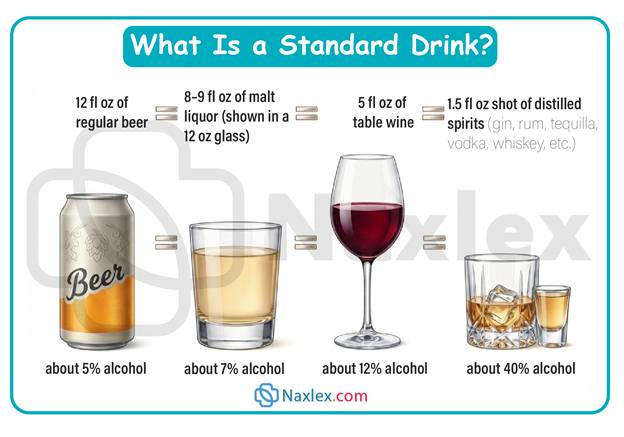
3.2 Epidemiology And Risk Factors
- Alcohol is among the most widely used psychoactive substances globally and a leading contributor to preventable death and disability.
- AUD demonstrates a higher lifetime prevalence in males than females, although the gap has narrowed in recent years.
- Onset of problematic drinking most commonly occurs in late adolescence and early adulthood.
- The following table summarizes major risk domains:
|
Risk Domain |
Representative Factors |
|
Genetic |
Family history of AUD; heritability estimated at ~50%; variations in alcohol-metabolizing enzymes |
|
Biological |
Male sex; certain ethnic enzyme polymorphisms; co-occurring psychiatric illness |
|
Psychological |
Impulsivity; sensation-seeking; negative affect; trauma history; low self-esteem |
|
Social/Environmental |
Peer influence; easy access; low cost; permissive cultural norms; early first use |
|
Developmental |
Early age of first drink (< 15 years) markedly increases lifetime risk |
- Protective enzyme variants, such as certain aldehyde dehydrogenase (ALDH2) alleles, cause an aversive flushing reaction and lower AUD risk in some populations.
- Comorbid psychiatric disorders, including depression, anxiety, bipolar disorder, and PTSD, substantially elevate risk.
3.3 Etiological Frameworks
- No single cause explains AUD; a biopsychosocial model best integrates the contributing factors.
- Genetic and biological theories:
- Emphasize inherited vulnerability and neurochemical predisposition.
- Focus on dysregulation of dopaminergic reward pathways in the mesolimbic system.
- Psychological theories:
- Behavioral/learning theory frames drinking as reinforced by pleasurable effects (positive reinforcement) and relief of distress or withdrawal (negative reinforcement).
- Psychodynamic theory links drinking to unresolved conflict and self-medication of emotional pain.
- Sociocultural theories:
- Highlight the role of cultural norms, availability, advertising, and family modeling.
- Neuroadaptation (disease) model:
- Conceptualizes AUD as a chronic, relapsing brain disorder involving reward, stress, and executive-control circuits.
- Supports a nonjudgmental, medically informed approach to treatment.
Pharmacology And Neurobiology Of Alcohol
4.1 Pharmacokinetics Of Ethanol
- Absorption:
- Ethanol is absorbed rapidly from the stomach (~20%) and small intestine (~80%) by passive diffusion.
- Food in the stomach delays gastric emptying and slows absorption, lowering peak BAC.
- Peak BAC is typically reached within 30–90 minutes of ingestion.
- Distribution:
- Ethanol is water-soluble and distributes into total body water.
- Women achieve higher BAC than men for an equivalent dose due to lower body water percentage and lower gastric alcohol dehydrogenase activity.
- Metabolism:
- Approximately 90% is metabolized hepatically; the remainder is excreted unchanged via breath, urine, and sweat.
- The primary pathway uses alcohol dehydrogenase (ADH) to convert ethanol to acetaldehyde.
- Aldehyde dehydrogenase (ALDH) then converts toxic acetaldehyde to acetate.
- The microsomal ethanol-oxidizing system (MEOS/CYP2E1) is induced with chronic use, accelerating metabolism and contributing to tolerance.
- Ethanol follows zero-order kinetics at typical doses, meaning a constant amount (~15–20 mg/dL/hour) is metabolized regardless of concentration.
- Excretion:
- Minor amounts leave via lungs (basis of breathalyzer testing), kidneys, and skin.
4.2 Pharmacodynamics And Neurotransmitter Effects
- Ethanol produces global CNS depression through actions on multiple neurotransmitter systems.
- Gamma-aminobutyric acid (GABA):
- Ethanol potentiates GABA-A receptors, the major inhibitory system.
- This enhances inhibitory tone, producing sedation, anxiolysis, muscle relaxation, and ataxia.
- Glutamate:
- Ethanol inhibits NMDA glutamate receptors, the major excitatory system.
- This suppresses excitatory neurotransmission and impairs memory and learning.
- Dopamine:
- Ethanol increases dopamine release in the nucleus accumbens (mesolimbic reward pathway), reinforcing continued use.
- Opioid and serotonergic systems:
- Endogenous opioid release contributes to euphoria and reward.
- Altered serotonin activity influences mood and impulsivity.
- The net effect explains the biphasic experience of early stimulation/disinhibition followed by sedation.
4.3 Tolerance, Dependence, And Neuroadaptation
- With chronic exposure, the CNS adapts to counter continuous ethanol depression.
- Neuroadaptive changes:
- Downregulation of GABA-A inhibitory activity.
- Upregulation of NMDA glutamate excitatory activity.
- These adaptations allow near-normal function despite high alcohol levels, producing functional (physiological) tolerance.
- Metabolic tolerance results from CYP2E1 induction, increasing clearance.
- When alcohol is abruptly stopped, the adaptations are unopposed, producing a hyperexcitable state.
- This CNS hyperexcitability—reduced inhibition plus excess excitation—is the neurochemical basis of alcohol withdrawal syndrome.
- Cross-tolerance exists with other CNS depressants, notably benzodiazepines and barbiturates, which is why benzodiazepines are used to treat withdrawal.
- Kindling describes the phenomenon whereby repeated withdrawal episodes become progressively more severe over time.
Nursing Insights
- Ethanol is metabolized at a fixed rate (~15–20 mg/dL/hour) via zero-order kinetics; no intervention "speeds up" sobering, so time is the only reliable factor in clearing alcohol.
- Withdrawal severity reflects the degree of GABA suppression and NMDA excitation; because benzodiazepines are cross-tolerant with alcohol, they are the first-line agents to restore inhibitory tone and prevent seizures.
- The kindling effect means each successive withdrawal can be worse than the last; a client with prior withdrawal seizures or delirium tremens must be monitored aggressively even if current symptoms appear mild.
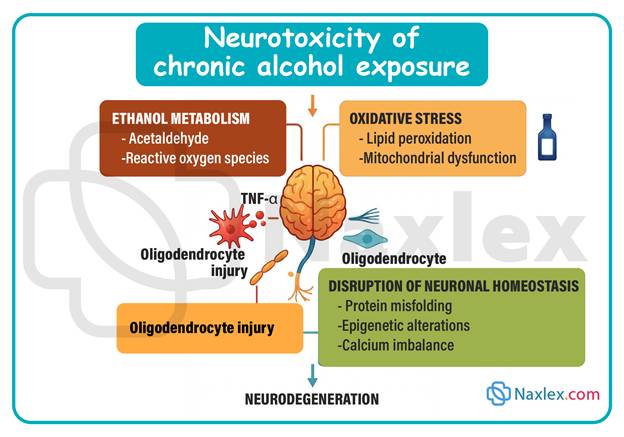
Alcohol Use Disorder
6.1 Diagnostic Criteria
- Alcohol use disorder (AUD) is defined as a problematic pattern of alcohol use leading to clinically significant impairment or distress.
- The diagnosis requires ≥ 2 of 11 criteria occurring within a 12-month period.
- The 11 criteria are grouped into 4 conceptual clusters: impaired control, social impairment, risky use, and pharmacological criteria.
|
Cluster |
Criteria |
|
Impaired Control |
1. Alcohol taken in larger amounts or over a longer period than intended |
|
2. Persistent desire or unsuccessful efforts to cut down or control use |
|
|
3. Great deal of time spent obtaining, using, or recovering from alcohol |
|
|
4. Craving, or a strong desire or urge to use alcohol |
|
|
Social Impairment |
5. Recurrent use resulting in failure to fulfill major role obligations |
|
6. Continued use despite persistent social or interpersonal problems |
|
|
7. Important social, occupational, or recreational activities given up or reduced |
|
|
Risky Use |
8. Recurrent use in situations that are physically hazardous |
|
9. Continued use despite knowledge of a persistent physical or psychological problem caused or worsened by alcohol |
|
|
Pharmacological |
10. Tolerance (need for increased amounts or diminished effect) |
|
11. Withdrawal (characteristic syndrome, or alcohol taken to relieve/avoid symptoms) |
- Key diagnostic points:
- Craving was added as a criterion, reflecting the neurobiological basis of the disorder.
- The prior DSM-IV criterion of recurrent alcohol-related legal problems was removed.
- Tolerance and withdrawal criteria are not counted when alcohol is taken solely under appropriate medical supervision.
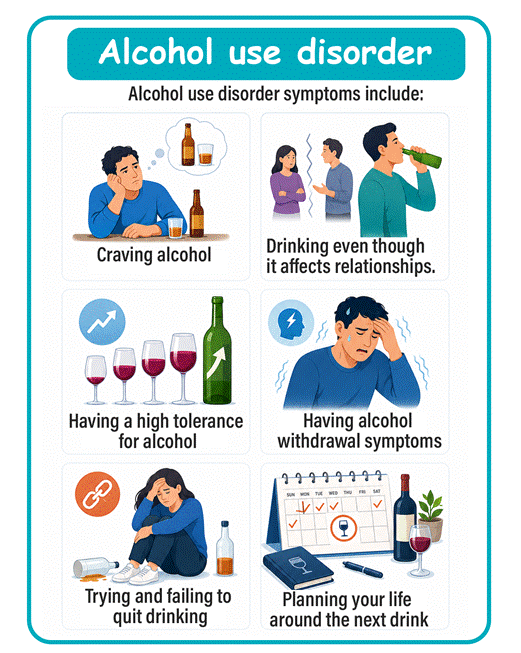
6.2 Severity Specifiers And Course Specifiers
- Severity is graded according to the number of criteria met:
|
Severity |
Number of Criteria Met |
|
Mild |
2–3 criteria |
|
Moderate |
4–5 criteria |
|
Severe |
≥ 6 criteria |
- Course specifiers describe the client's status over time:
- In early remission: No criteria (except craving) met for ≥ 3 months but < 12 months.
- In sustained remission: No criteria (except craving) met for ≥ 12 months.
- Additional specifiers:
- In a controlled environment: Access to alcohol is restricted (e.g., incarceration, locked inpatient unit).
- The severity level may change over the course of the disorder as criteria are gained or lost.
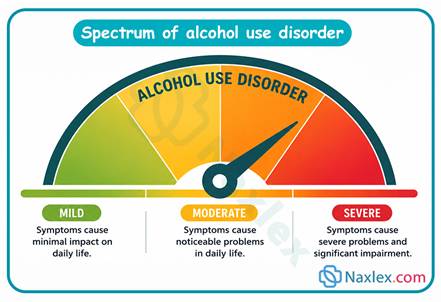
6.3 Clinical Features And Behavioral Manifestations
- AUD presents with a constellation of behavioral, physical, cognitive, and psychosocial features.
- Behavioral manifestations:
- Preoccupation with drinking and prioritizing alcohol over other activities.
- Loss of control over the amount and frequency of consumption.
- Drinking in secret, hiding alcohol, or lying about intake.
- Continued use despite mounting negative consequences.
- Denial, rationalization, and minimization of the problem.
- Physical manifestations:
- Signs of tolerance (drinking large amounts with little apparent impairment).
- Withdrawal symptoms (tremor, sweating, nausea) upon abstinence.
- Blackouts (anterograde amnesia for events during intoxication).
- Poor nutrition, weight loss, and signs of chronic organ damage.
- Cognitive and psychological manifestations:
- Impaired judgment and concentration.
- Mood instability, irritability, anxiety, and depression.
- Craving and intrusive thoughts about drinking.
- Psychosocial manifestations:
- Deterioration in occupational, academic, and family functioning.
- Financial and legal difficulties.
- Social isolation and strained interpersonal relationships.
- Codependency and enabling behaviors within the family system.
- Common defense mechanisms observed:
- Denial: Refusal to acknowledge the problem exists.
- Rationalization: Making excuses to justify drinking.
- Projection: Blaming others for one's drinking.
- Minimization: Downplaying the extent or consequences of use.
Screening And Diagnostic Assessment
7.1 Screening Instruments
- Screening enables early identification of at-risk drinking before dependence or organ damage develops.
- Screening is brief, nonjudgmental, and integrated into routine nursing assessment.
- CAGE Questionnaire:
- A rapid 4-item screen; a score of ≥ 2 affirmative answers suggests problematic drinking.
- C – Have you felt the need to Cut down?
- A – Have you felt Annoyed by criticism of your drinking?
- G – Have you felt Guilty about drinking?
- E – Have you had a morning Eye-opener to steady nerves or relieve a hangover?
- AUDIT (Alcohol Use Disorders Identification Test):
- A 10-item World Health Organization tool assessing consumption, dependence, and harm.
- More sensitive than CAGE and useful across diverse populations.
- A score of ≥ 8 indicates hazardous or harmful use.
- AUDIT-C:
- An abbreviated 3-item version focusing on consumption.
- T-ACE and TWEAK:
- Screening tools validated for use in pregnant clients, designed to reduce underreporting.
- CRAFFT:
- A screening tool tailored for adolescents.
7.2 Laboratory And Biomarker Evaluation
- Laboratory markers support clinical findings but do not independently confirm AUD.
- Blood alcohol concentration (BAC):
- Confirms recent use; a high BAC without gross intoxication indicates tolerance.
- Gamma-glutamyl transferase (GGT):
- Elevated with chronic heavy use; a sensitive but nonspecific marker of hepatic enzyme induction.
- Carbohydrate-deficient transferrin (CDT):
- A specific marker of sustained heavy drinking over recent weeks.
- Liver transaminases (AST, ALT):
- An AST:ALT ratio ≥ 2:1 is suggestive of alcoholic liver disease.
- Mean corpuscular volume (MCV):
- Macrocytosis reflects the direct toxic effect of alcohol on erythrocytes and folate deficiency.
- Additional findings:
- Elevated uric acid, triglycerides, and bilirubin.
- Decreased magnesium, phosphate, potassium, and thiamine.
- Thrombocytopenia and prolonged coagulation times in advanced liver disease.
7.3 Comprehensive Nursing Assessment
- The nurse gathers objective and subjective data using a therapeutic, nonjudgmental approach.
- Drinking history:
- Quantity, frequency, and pattern of consumption.
- Time of last drink (critical for anticipating withdrawal onset).
- History of prior withdrawal, seizures, or delirium tremens.
- Physical assessment:
- Vital signs, noting tachycardia, hypertension, and hyperthermia as early withdrawal signs.
- Neurological status, tremor, and level of consciousness.
- Signs of chronic misuse: jaundice, ascites, spider angiomata, palmar erythema, and peripheral neuropathy.
- Nutritional and hydration status.
- Psychosocial assessment:
- Mood, affect, and risk of self-harm or suicide.
- Support systems, living situation, and occupational status.
- Co-occurring psychiatric disorders.
- Assessment principles:
- Establish rapport and maintain a matter-of-fact, nonjudgmental stance.
- Expect and gently confront denial and minimization.
- Identify the time of last drink to predict the withdrawal timeline.
- Screen for polysubstance use, which complicates the clinical picture.
Alcohol Intoxication
9.1 Clinical Presentation And Blood Alcohol Concentration Correlates
- Alcohol intoxication is a reversible, dose-dependent syndrome of maladaptive behavioral and physiological changes following recent ingestion.
- The DSM-5-TR requires recent ingestion, clinically significant behavioral or psychological changes, and ≥ 1 sign such as slurred speech, incoordination, unsteady gait, nystagmus, impaired attention or memory, or stupor/coma.
- Signs of intoxication generally correlate with rising blood alcohol concentration (BAC), though tolerance shifts these thresholds in chronic drinkers.
|
BAC (g/dL) |
Typical Clinical Effects |
|
0.02–0.05 |
Mild euphoria, relaxation, lowered inhibitions, mild impairment of judgment |
|
0.05–0.10 |
Impaired coordination, slowed reaction time, emotional lability; 0.08 = legal limit in the U.S. |
|
0.10–0.20 |
Slurred speech, ataxia, marked incoordination, mood swings, nausea |
|
0.20–0.30 |
Confusion, stupor, vomiting, impaired consciousness |
|
0.30–0.40 |
Coma, hypothermia, respiratory depression |
|
> 0.40 |
Life-threatening respiratory failure, circulatory collapse, and death |
- Tolerance caveat:
- A client with chronic AUD may appear alert and conversational at a BAC that would be lethal in a nondrinker.
- The absence of gross intoxication at a high BAC is itself evidence of significant tolerance.
- Blackouts:
- Periods of anterograde amnesia during which the client functions but later cannot recall events.
- Reflect alcohol's disruption of hippocampal memory encoding.
9.2 Complications And Emergency Management
- Acute complications:
- Respiratory depression and airway compromise are the leading causes of death in severe intoxication.
- Aspiration of vomitus due to depressed gag reflex.
- Hypoglycemia, particularly in children, malnourished clients, and those with hepatic impairment.
- Hypothermia from peripheral vasodilation and environmental exposure.
- Trauma from falls, accidents, and violence secondary to impaired judgment.
- Alcohol poisoning is a medical emergency requiring immediate intervention.
- Emergency management priorities:
- Airway, breathing, and circulation (ABCs) take precedence; protect the airway and position to prevent aspiration.
- Administer supplemental oxygen and support ventilation as needed.
- Establish IV access; correct hypoglycemia with dextrose.
- Administer thiamine before glucose to prevent precipitating Wernicke encephalopathy.
- Monitor and correct fluid and electrolyte imbalances.
- Provide continuous monitoring of vital signs, oxygen saturation, and neurological status.
- Important nursing considerations:
- Intoxication is generally managed supportively; there is no specific antidote for ethanol.
- Naloxone does not reverse alcohol but is given if concurrent opioid use is suspected.
- Never leave a severely intoxicated client unattended, owing to the risk of aspiration and respiratory arrest.
- Anticipate the transition from intoxication to withdrawal as the BAC falls.
- Screen for co-ingestants, especially benzodiazepines, opioids, and acetaminophen.
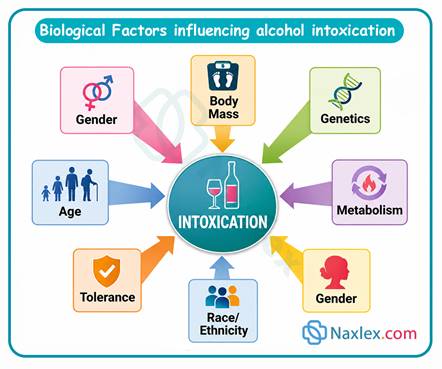
Alcohol Withdrawal Syndrome
10.1 Pathophysiology And Symptom Timeline
- Alcohol withdrawal syndrome (AWS) is the constellation of signs and symptoms that emerge when a physically dependent client abruptly reduces or stops alcohol intake.
- Pathophysiological basis:
- Chronic ethanol exposure produces compensatory downregulation of inhibitory GABA-A receptors.
- It simultaneously produces upregulation of excitatory NMDA glutamate receptors.
- When alcohol is withdrawn, these adaptations become unopposed, leaving the CNS in a state of autonomic and neuronal hyperexcitability.
- There is a resultant surge in noradrenergic (sympathetic) activity and a relative deficiency of inhibitory tone.
- This hyperexcitable state accounts for the tremor, autonomic instability, seizures, and delirium characteristic of withdrawal.
- Onset and general timeline:
- Symptoms typically begin 6–12 hours after the last drink.
- Onset is triggered by a falling BAC, so withdrawal may begin even while measurable alcohol remains in the blood in a highly tolerant client.
|
Time Since Last Drink |
Stage/Manifestation |
|
6–12 hours |
Minor withdrawal: tremor, anxiety, nausea, insomnia, diaphoresis, mild autonomic signs |
|
12–24 hours |
Alcoholic hallucinosis: visual, tactile, or auditory hallucinations with intact sensorium |
|
24–48 hours |
Withdrawal seizures: generalized tonic-clonic seizures |
|
48–72 hours (up to 96 hours) |
Alcohol withdrawal delirium (delirium tremens) |
- The timeline overlaps and is not strictly sequential; a client may progress directly to severe manifestations.
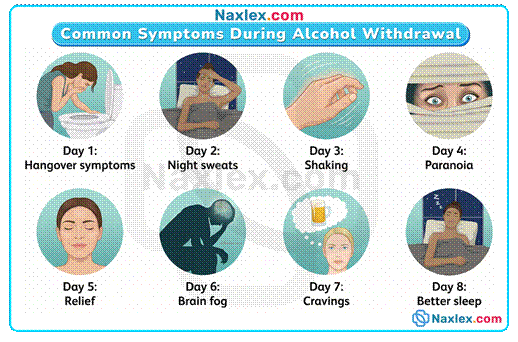
10.2 Minor And Major Withdrawal Manifestations
- Minor (early/uncomplicated) withdrawal:
- Onset 6–12 hours after the last drink.
- Tremor (classically a coarse, fast tremor of the hands—"the shakes").
- Anxiety, restlessness, irritability, and agitation.
- Insomnia and vivid dreams.
- Gastrointestinal upset: nausea, vomiting, and anorexia.
- Autonomic hyperactivity: diaphoresis, tachycardia, hypertension, and mild pyrexia.
- Headache and hyperreflexia.
- The client remains alert and oriented with an intact sensorium.
- Alcoholic hallucinosis:
- Occurs 12–24 hours after the last drink.
- Characterized by hallucinations—most commonly visual (e.g., insects, animals), but also tactile and auditory.
- Distinguishing feature: the sensorium remains clear and vital signs are relatively stable, differentiating it from delirium tremens.
- The client may recognize the hallucinations as unreal.
- Major (complicated) withdrawal:
- Encompasses withdrawal seizures and alcohol withdrawal delirium (delirium tremens).
- Represents a medical emergency with significant morbidity and mortality.
10.3 Alcohol Withdrawal Seizures
- Onset: typically 24–48 hours after the last drink, though they may occur earlier.
- Characteristics:
- Generalized tonic-clonic (grand mal) in type.
- Usually single or brief and self-limiting, but may occur in a cluster of 2–3.
- Occur early, before the peak risk period for delirium tremens.
- These are sometimes referred to as "rum fits."
- Clinical significance:
- Withdrawal seizures are a warning sign that the client is at high risk for progression to delirium tremens.
- Status epilepticus is uncommon; its presence should prompt a search for another cause.
- Nursing priorities:
- Institute seizure precautions: padded side rails, bed in low position, suction and oxygen at the bedside.
- Do not restrain the client or insert objects into the mouth during a seizure.
- Protect the airway and position the client laterally to prevent aspiration.
- Benzodiazepines are the mainstay for prevention and treatment; phenytoin is not effective for pure alcohol withdrawal seizures.
10.4 Alcohol Withdrawal Delirium (Delirium Tremens)
- Delirium tremens (DTs) is the most severe and life-threatening form of alcohol withdrawal.
- Onset: typically 48–72 hours after the last drink, occasionally up to 96 hours.
- Mortality: ranges from ~5% (treated) up to ~15% or higher (untreated), chiefly from cardiovascular collapse, hyperthermia, and comorbid illness.
- Defining clinical features:
- Delirium: acute clouding of consciousness, profound confusion, and disorientation.
- Fluctuating level of consciousness and impaired attention.
- Severe autonomic instability: marked tachycardia, hypertension, hyperthermia, and profuse diaphoresis.
- Vivid hallucinations (often visual and tactile—e.g., formication, the sensation of insects crawling on the skin).
- Agitation, tremor, and psychomotor hyperactivity.
- Delusions and paranoia.
- Key distinction:
- Unlike alcoholic hallucinosis, DTs feature a globally altered sensorium with clouded consciousness and gross autonomic instability.
- Risk factors for DTs:
- History of prior DTs or withdrawal seizures.
- Prolonged and heavy drinking history.
- Concurrent acute medical illness.
- Older age and abnormal electrolytes/dehydration.
- Nursing management priorities:
- Provide care in a quiet, well-lit environment to reduce misperceptions and overstimulation.
- Ensure one-to-one observation and continuous monitoring.
- Administer benzodiazepines promptly, titrated to symptom control.
- Maintain fluid and electrolyte balance and correct magnesium, potassium, and phosphate.
- Administer thiamine to prevent Wernicke encephalopathy.
- Implement reorientation and frequent reassurance.
- Institute fall and seizure precautions and monitor for hyperthermia.
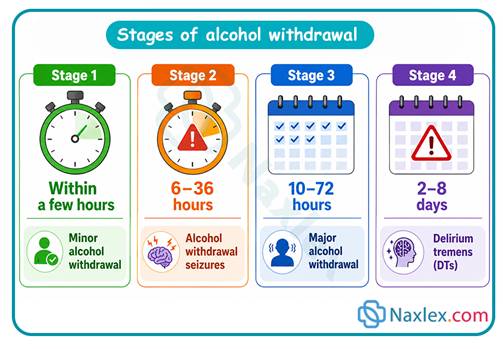
10.5 Severity Assessment Using CIWA-Ar
- The Clinical Institute Withdrawal Assessment for Alcohol, Revised (CIWA-Ar) is the validated tool used to quantify withdrawal severity and guide treatment.
- Structure:
- Comprises 10 items, each scored, with a maximum total of 67.
- Nine items are scored 0–7; the orientation item is scored 0–4.
- The 10 assessed parameters:
- Nausea/vomiting.
- Tremor.
- Paroxysmal sweats (diaphoresis).
- Anxiety.
- Agitation.
- Tactile disturbances.
- Auditory disturbances.
- Visual disturbances.
- Headache/fullness in head.
- Orientation and clouding of sensorium.
|
CIWA-Ar Score |
Severity |
General Implication |
|
≤ 8 |
Minimal/mild |
Usually no medication; continue monitoring |
|
9–15 |
Moderate |
Pharmacological treatment generally indicated |
|
≥ 16 |
Severe |
High risk of seizures and DTs; aggressive treatment required |
- Clinical application:
- The CIWA-Ar underpins symptom-triggered therapy, in which benzodiazepines are dosed according to the score rather than on a fixed schedule.
- Symptom-triggered dosing reduces total medication use, shortens treatment duration, and lowers oversedation risk.
- Reassessment is performed at regular intervals (e.g., hourly) and after each PRN dose.
- Limitations:
- The tool requires a client who can communicate; it is unreliable in intubated, nonverbal, or severely delirious clients.
- It does not replace clinical judgment or vital-sign monitoring.
Nursing Insights
- Withdrawal onset is driven by a falling BAC, not by a zero BAC; a highly tolerant client can begin withdrawing while still legally intoxicated, so the time of the last drink guides monitoring more reliably than a single blood level.
- Alcoholic hallucinosis features a clear sensorium and stable vital signs, whereas delirium tremens features clouded consciousness with gross autonomic instability; this distinction determines urgency, because DTs is a medical emergency with meaningful mortality.
- Benzodiazepines are first-line for both withdrawal seizures and DTs because of cross-tolerance with alcohol; phenytoin does not prevent or treat alcohol withdrawal seizures and should not be relied upon.
Complications And Comorbidities Of Chronic Alcohol Misuse
12.1 Wernicke Encephalopathy And Korsakoff Syndrome
- These disorders result from thiamine (vitamin B1) deficiency, which is common in chronic alcohol misuse owing to poor intake, malabsorption, and impaired hepatic storage.
- Thiamine is an essential cofactor for glucose metabolism in the CNS.
- Wernicke Encephalopathy:
- An acute, reversible neurological emergency.
- Classically presents as a triad:
- Confusion (acute mental status changes/encephalopathy).
- Ophthalmoplegia (ocular abnormalities, especially nystagmus and lateral rectus palsy).
- Ataxia (gait instability).
- The full triad is present in a minority of clients; any one feature in an at-risk client warrants treatment.
- Treated promptly with parenteral thiamine, it is reversible; untreated, it progresses to Korsakoff syndrome.
- Korsakoff Syndrome:
- A chronic, largely irreversible amnestic disorder.
- Characterized by profound anterograde and retrograde amnesia.
- Confabulation (fabrication of memories to fill gaps) is a hallmark feature.
- Inability to form new memories despite an otherwise intact sensorium.
- Wernicke-Korsakoff Syndrome (WKS):
- The combined and progressive spectrum of the two conditions.
- Critical nursing principle:
- Thiamine must be administered before glucose.
- Giving glucose first depletes the remaining thiamine and can precipitate or worsen Wernicke encephalopathy.
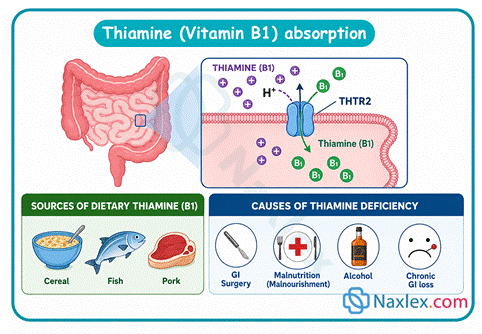
12.2 Hepatic, Gastrointestinal, And Pancreatic Effects
- The liver bears the greatest burden of chronic alcohol metabolism.
- Hepatic effects (progressive spectrum):
- Alcoholic (fatty) liver / steatosis: the earliest and reversible stage from fat accumulation.
- Alcoholic hepatitis: inflammation with jaundice, hepatomegaly, and fever; potentially reversible.
- Cirrhosis: irreversible fibrosis and nodular scarring with loss of function.
- Complications of cirrhosis and portal hypertension:
- Esophageal varices with risk of massive hemorrhage.
- Ascites and peripheral edema.
- Hepatic encephalopathy from accumulated ammonia, manifesting as asterixis and altered mentation.
- Coagulopathy from decreased clotting-factor synthesis.
- Jaundice, spider angiomata, palmar erythema, and gynecomastia.
- Gastrointestinal effects:
- Gastritis and peptic ulcer disease from direct mucosal irritation.
- Esophagitis and Mallory-Weiss tears from repeated vomiting.
- Malabsorption and nutritional deficiencies.
- Increased risk of oral, esophageal, and gastric malignancies.
- Pancreatic effects:
- Acute pancreatitis: severe epigastric pain radiating to the back, elevated amylase and lipase.
- Chronic pancreatitis: persistent pain, malabsorption, steatorrhea, and secondary diabetes mellitus.
12.3 Cardiovascular, Hematologic, And Neurologic Effects
- Cardiovascular effects:
- Alcoholic cardiomyopathy: dilated cardiomyopathy leading to heart failure.
- Cardiac arrhythmias, notably atrial fibrillation ("holiday heart syndrome").
- Hypertension from chronic use.
- Increased risk of stroke.
- Hematologic effects:
- Macrocytic anemia from folate deficiency and direct marrow toxicity.
- Thrombocytopenia from marrow suppression and hypersplenism.
- Leukopenia with increased infection risk.
- Coagulopathy secondary to hepatic dysfunction.
- Neurologic effects:
- Peripheral neuropathy: symmetric, distal sensory loss, paresthesia, and burning pain ("stocking-glove" distribution).
- Cerebellar degeneration producing chronic ataxia.
- Cognitive impairment and alcohol-related dementia.
- Central pontine myelinolysis, associated with overly rapid correction of hyponatremia.
- Musculoskeletal and metabolic effects:
- Myopathy, osteoporosis, and increased fracture risk.
- Electrolyte disturbances: hypomagnesemia, hypokalemia, hypophosphatemia, and hypocalcemia.
12.4 Psychiatric Comorbidities And Fetal Alcohol Spectrum Disorders
- Psychiatric comorbidities:
- Depression and anxiety disorders are highly prevalent and bidirectionally related to alcohol use.
- Suicide risk is significantly elevated in AUD.
- Bipolar disorder and PTSD frequently co-occur.
- Alcohol-induced disorders, including alcohol-induced depressive, anxiety, psychotic, and neurocognitive disorders.
- Polysubstance use, particularly with benzodiazepines, opioids, and tobacco.
- Dual diagnosis (a co-occurring psychiatric disorder plus a substance use disorder) complicates treatment and worsens prognosis.
- Fetal Alcohol Spectrum Disorders (FASD):
- Result from prenatal alcohol exposure; alcohol is a potent teratogen.
- There is no known safe amount of alcohol during pregnancy.
- Fetal Alcohol Syndrome (FAS) is the most severe form, characterized by:
- Facial dysmorphology: smooth philtrum, thin upper lip, and short palpebral fissures.
- Growth restriction (prenatal and postnatal).
- CNS abnormalities: microcephaly, intellectual disability, and behavioral problems.
- Effects are permanent and irreversible but entirely preventable through abstinence during pregnancy.
12.1 Wernicke Encephalopathy And Korsakoff Syndrome
- These disorders result from thiamine (vitamin B1) deficiency, which is common in chronic alcohol misuse owing to poor intake, malabsorption, and impaired hepatic storage.
- Thiamine is an essential cofactor for glucose metabolism in the CNS.
- Wernicke Encephalopathy:
- An acute, reversible neurological emergency.
- Classically presents as a triad:
- Confusion (acute mental status changes/encephalopathy).
- Ophthalmoplegia (ocular abnormalities, especially nystagmus and lateral rectus palsy).
- Ataxia (gait instability).
- The full triad is present in a minority of clients; any one feature in an at-risk client warrants treatment.
- Treated promptly with parenteral thiamine, it is reversible; untreated, it progresses to Korsakoff syndrome.
- Korsakoff Syndrome:
- A chronic, largely irreversible amnestic disorder.
- Characterized by profound anterograde and retrograde amnesia.
- Confabulation (fabrication of memories to fill gaps) is a hallmark feature.
- Inability to form new memories despite an otherwise intact sensorium.
- Wernicke-Korsakoff Syndrome (WKS):
- The combined and progressive spectrum of the two conditions.
- Critical nursing principle:
- Thiamine must be administered before glucose.
- Giving glucose first depletes the remaining thiamine and can precipitate or worsen Wernicke encephalopathy.
12.2 Hepatic, Gastrointestinal, And Pancreatic Effects
- The liver bears the greatest burden of chronic alcohol metabolism.
- Hepatic effects (progressive spectrum):
- Alcoholic (fatty) liver / steatosis: the earliest and reversible stage from fat accumulation.
- Alcoholic hepatitis: inflammation with jaundice, hepatomegaly, and fever; potentially reversible.
- Cirrhosis: irreversible fibrosis and nodular scarring with loss of function.
- Complications of cirrhosis and portal hypertension:
- Esophageal varices with risk of massive hemorrhage.
- Ascites and peripheral edema.
- Hepatic encephalopathy from accumulated ammonia, manifesting as asterixis and altered mentation.
- Coagulopathy from decreased clotting-factor synthesis.
- Jaundice, spider angiomata, palmar erythema, and gynecomastia.
- Gastrointestinal effects:
- Gastritis and peptic ulcer disease from direct mucosal irritation.
- Esophagitis and Mallory-Weiss tears from repeated vomiting.
- Malabsorption and nutritional deficiencies.
- Increased risk of oral, esophageal, and gastric malignancies.
- Pancreatic effects:
- Acute pancreatitis: severe epigastric pain radiating to the back, elevated amylase and lipase.
- Chronic pancreatitis: persistent pain, malabsorption, steatorrhea, and secondary diabetes mellitus.
12.3 Cardiovascular, Hematologic, And Neurologic Effects
- Cardiovascular effects:
- Alcoholic cardiomyopathy: dilated cardiomyopathy leading to heart failure.
- Cardiac arrhythmias, notably atrial fibrillation ("holiday heart syndrome").
- Hypertension from chronic use.
- Increased risk of stroke.
- Hematologic effects:
- Macrocytic anemia from folate deficiency and direct marrow toxicity.
- Thrombocytopenia from marrow suppression and hypersplenism.
- Leukopenia with increased infection risk.
- Coagulopathy secondary to hepatic dysfunction.
- Neurologic effects:
- Peripheral neuropathy: symmetric, distal sensory loss, paresthesia, and burning pain ("stocking-glove" distribution).
- Cerebellar degeneration producing chronic ataxia.
- Cognitive impairment and alcohol-related dementia.
- Central pontine myelinolysis, associated with overly rapid correction of hyponatremia.
- Musculoskeletal and metabolic effects:
- Myopathy, osteoporosis, and increased fracture risk.
- Electrolyte disturbances: hypomagnesemia, hypokalemia, hypophosphatemia, and hypocalcemia.
12.4 Psychiatric Comorbidities And Fetal Alcohol Spectrum Disorders
- Psychiatric comorbidities:
- Depression and anxiety disorders are highly prevalent and bidirectionally related to alcohol use.
- Suicide risk is significantly elevated in AUD.
- Bipolar disorder and PTSD frequently co-occur.
- Alcohol-induced disorders, including alcohol-induced depressive, anxiety, psychotic, and neurocognitive disorders.
- Polysubstance use, particularly with benzodiazepines, opioids, and tobacco.
- Dual diagnosis (a co-occurring psychiatric disorder plus a substance use disorder) complicates treatment and worsens prognosis.
- Fetal Alcohol Spectrum Disorders (FASD):
- Result from prenatal alcohol exposure; alcohol is a potent teratogen.
- There is no known safe amount of alcohol during pregnancy.
- Fetal Alcohol Syndrome (FAS) is the most severe form, characterized by:
- Facial dysmorphology: smooth philtrum, thin upper lip, and short palpebral fissures.
- Growth restriction (prenatal and postnatal).
- CNS abnormalities: microcephaly, intellectual disability, and behavioral problems.
- Effects are permanent and irreversible but entirely preventable through abstinence during pregnancy.
Pharmacological Management
13.1 Management Of Acute Withdrawal
- The goals of acute management are to relieve symptoms, prevent seizures and delirium tremens, and support physiological stability.
- Benzodiazepines (first-line therapy):
- The gold standard for treating and preventing alcohol withdrawal.
- They work via cross-tolerance, restoring GABA-mediated inhibitory tone.
- Long-acting agents provide a smoother, self-tapering course:
- Chlordiazepoxide and diazepam are long-acting.
- Lorazepam and oxazepam are shorter-acting and preferred in hepatic impairment, as they lack active metabolites and are metabolized by conjugation.
- Dosing strategies:
- Symptom-triggered: dosing guided by the CIWA-Ar score; reduces total dose and duration.
- Fixed-schedule: scheduled doses with additional PRN coverage, used when monitoring is limited.
- Monitor for oversedation and respiratory depression.
- Adjunctive agents:
- Alpha-2 agonists (e.g., clonidine, dexmedetomidine) to control autonomic hyperactivity (do not prevent seizures).
- Beta-blockers to manage tachycardia and hypertension (do not prevent seizures).
- Antipsychotics (e.g., haloperidol) for severe agitation or hallucinations; used cautiously as they lower the seizure threshold.
- Anticonvulsants (e.g., carbamazepine) in select mild cases.
- Barbiturates (e.g., phenobarbital) may be used in refractory or severe withdrawal.
- Supportive care:
- Correct fluid and electrolyte imbalances, especially magnesium, potassium, and phosphate.
- Monitor and manage glucose.
13.2 Pharmacotherapy For Relapse Prevention
- Maintenance pharmacotherapy supports abstinence and relapse prevention after detoxification, combined with psychosocial treatment.
|
Medication |
Mechanism |
Key Nursing Considerations |
|
Disulfiram |
Inhibits aldehyde dehydrogenase, causing acetaldehyde accumulation |
Produces a severe aversive reaction (flushing, throbbing headache, nausea, vomiting, tachycardia, hypotension) if alcohol is ingested; requires abstinence and adherence; avoid all hidden alcohol sources |
|
Naltrexone |
Opioid receptor antagonist; reduces craving and reward |
Contraindicated with current opioid use (precipitates withdrawal); monitor hepatic function; available oral and as a monthly IM depot |
|
Acamprosate |
Modulates glutamate/GABA balance; restores neurotransmitter equilibrium |
Preferred in hepatic impairment; renally excreted (caution/contraindicated in renal impairment); dosed 3 times daily |
- Disulfiram client teaching (high yield):
- Avoid all sources of alcohol, including mouthwash, cough syrups, aftershave, colognes, hand sanitizers, sauces, and vinegars.
- The reaction can occur up to 14 days after the last dose.
- Adherence depends on client motivation.
- Naltrexone and acamprosate are considered first-line for maintenance; disulfiram is reserved for highly motivated, closely supervised clients.
13.3 Thiamine And Nutritional Support
- Nutritional repletion is essential, given the high prevalence of deficiency.
- Thiamine (vitamin B1):
- Administered to prevent and treat Wernicke encephalopathy.
- Thiamine must be given before glucose to avoid precipitating or worsening Wernicke encephalopathy.
- Given parenterally (IV/IM) initially in acute or deficient clients due to impaired absorption.
- Additional supplementation:
- Folic acid and other B-complex vitamins to correct macrocytic anemia and deficiency.
- Magnesium replacement, which also lowers seizure risk.
- Correction of potassium and phosphate.
- The classic "banana bag":
- An IV infusion (often appearing yellow) containing thiamine, folic acid, a multivitamin, and magnesium in dextrose/saline.
- General nutritional care:
- Provide a well-balanced, high-protein, high-calorie diet as tolerated.
- Monitor hydration and encourage adequate oral intake once stable.
Nursing Insights
- Thiamine is always administered before glucose in the alcohol-dependent client; giving glucose first consumes remaining thiamine stores and can precipitate acute Wernicke encephalopathy.
- Lorazepam and oxazepam are preferred for withdrawal in clients with hepatic impairment because they are metabolized by conjugation and have no active metabolites, avoiding accumulation and oversedation.
- Disulfiram requires strict avoidance of all hidden alcohol, including mouthwash, aftershave, and cough syrups, and a reaction can occur up to 14 days after the last dose; thorough client teaching is essential for safety.
Psychosocial And Nursing Interventions
15.1 Psychotherapeutic And Behavioral Approaches
- Psychosocial treatment is the cornerstone of long-term recovery and works best combined with pharmacotherapy.
- Cognitive Behavioral Therapy (CBT): Identifies and modifies maladaptive thoughts and drinking-related behaviors. Teaches coping skills, trigger identification, and relapse-prevention strategies.
- Contingency management: Uses positive reinforcement (rewards) to promote abstinence and treatment adherence.
- Group therapy: Provides peer support, reduces isolation, and confronts denial in a therapeutic setting.
- Family therapy: Addresses codependency, enabling behaviors, and dysfunctional family dynamics. Educates the family and enlists their support in recovery.
- Individual counseling: Explores underlying issues and builds motivation and problem-solving skills.
15.2 Motivational Interviewing And Brief Interventions
- Motivational Interviewing (MI):
- A client-centered, nonconfrontational counseling style designed to strengthen intrinsic motivation.
- Works with ambivalence rather than against it and rolls with resistance.
- Core principles: express empathy, develop discrepancy between goals and behavior, avoid argumentation, and support self-efficacy.
- Stages of Change (Transtheoretical Model):
- Precontemplation: not yet considering change.
- Contemplation: ambivalent, weighing pros and cons.
- Preparation: intends to take action soon.
- Action: actively modifying behavior.
- Maintenance: sustaining change and preventing relapse.
- Interventions are matched to the client's stage.
- Brief interventions:
- Short, structured counseling sessions, often summarized by the FRAMES model: Feedback, Responsibility, Advice, Menu of options, Empathy, Self-efficacy.
- Effective for hazardous drinkers in primary care and community settings.
15.3 Self-Help Groups And Relapse Prevention
- Alcoholics Anonymous (AA):
- A widely used 12-step, peer-led fellowship based on mutual support and abstinence.
- Emphasizes acceptance, surrender to a "higher power," sponsorship, and lifelong recovery.
- Related mutual-support groups:
- Al-Anon and Alateen support family members and adolescents affected by another's drinking.
- SMART Recovery offers a secular, cognitive-behavioral alternative.
- Relapse prevention:
- Relapse is common and should be framed as a learning opportunity, not a failure.
- Identify high-risk situations and personal triggers (people, places, emotions).
- Teach coping and refusal skills and develop an emergency plan.
- Recognize HALT states—Hungry, Angry, Lonely, Tired—as vulnerability cues.
- Build a supportive, alcohol-free environment and structured routine.
15.4 Nursing Process And Care Planning
- Assessment:
- Obtain drinking history, time of last drink, withdrawal history, and comorbidities.
- Assess physical, psychosocial, and safety needs.
- Common nursing diagnoses:
- Risk for injury related to withdrawal, seizures, and altered sensorium.
- Ineffective coping related to substance use.
- Imbalanced nutrition: less than body requirements.
- Ineffective denial.
- Risk for other/self-directed violence.
- Planning and outcomes:
- Client will remain safe and free from injury during withdrawal.
- Client will acknowledge the problem and engage in treatment.
- Client will demonstrate healthy coping strategies.
- Implementation:
- Maintain safety as the priority during acute withdrawal.
- Provide a calm, structured environment.
- Administer medications and monitor with CIWA-Ar.
- Establish a therapeutic, nonjudgmental relationship.
- Set firm, consistent limits on manipulative behavior.
- Address denial gently and reinforce responsibility.
- Provide education and coordinate referrals.
- Evaluation:
- Determine whether the client remained safe, engaged in treatment, and met recovery goals.
- Therapeutic communication principles:
- Convey acceptance of the person while not accepting the harmful behavior.
- Avoid enabling, moralizing, and power struggles.
- Reinforce honesty and personal accountability.
Special Populations And Considerations
16.1 Pregnancy And Perinatal Considerations
- Alcohol readily crosses the placenta and reaches the fetus in concentrations equal to those of the mother.
- There is no known safe amount, type, or timing of alcohol use during pregnancy.
- Alcohol is a teratogen and the leading preventable cause of birth defects and intellectual disability.
- Fetal Alcohol Spectrum Disorders (FASD):
- The umbrella term for the range of effects of prenatal alcohol exposure.
- Fetal Alcohol Syndrome (FAS) is the most severe expression (facial dysmorphology, growth restriction, CNS dysfunction).
- Screening:
- Use validated tools such as T-ACE and TWEAK, designed to reduce underreporting in pregnancy.
- Screen at the first prenatal visit and throughout pregnancy.
- Withdrawal in pregnancy:
- Maternal alcohol withdrawal is a medical emergency that threatens both mother and fetus.
- Managed with benzodiazepines when the benefits outweigh the risks, under close monitoring.
- Nursing role:
- Provide nonjudgmental education on the risks of any alcohol use.
- Counsel that complete abstinence is the only safe option.
- Support cessation and coordinate multidisciplinary care.
16.2 Older Adults And Adolescents
- Older Adults:
- Age-related decreased body water and slowed metabolism raise BAC and prolong effects.
- Increased CNS sensitivity heightens the risk of falls, confusion, and injury.
- Polypharmacy creates dangerous interactions, especially with benzodiazepines, opioids, and sedatives.
- Misuse is often underrecognized, mistaken for dementia, depression, or normal aging.
- Screening tools should be age-appropriate (e.g., the geriatric version of the MAST).
- Even "moderate" amounts may be harmful in this population.
- Adolescents:
- Early first use (< 15 years) markedly increases lifetime risk of AUD.
- Binge drinking is the predominant pattern.
- Associated with risky behavior, injury, impaired brain development, and academic decline.
- Use the CRAFFT screening tool, validated for adolescents.
- Peer influence and experimentation are major drivers; involve family in intervention.
16.3 Dual Diagnosis And Cultural Considerations
- Dual Diagnosis (co-occurring disorders):
- The coexistence of a substance use disorder and another psychiatric disorder.
- Common pairings include depression, anxiety, bipolar disorder, PTSD, and schizophrenia.
- Each disorder can worsen the course and treatment of the other.
- Integrated treatment—addressing both conditions simultaneously within one program—is the preferred model.
- Sequential or parallel (separate) treatment is generally less effective.
- Elevated risk of suicide, nonadherence, and relapse requires vigilant monitoring.
- Cultural Considerations:
- Drinking norms, attitudes, and patterns vary widely across cultures and must inform care.
- Genetic enzyme variations (e.g., ALDH2 differences) affect metabolism and the flushing response in some populations.
- Consider stigma, spiritual beliefs, and family structure when planning care.
- Provide culturally sensitive, individualized education and interventions.
- Use professional interpreters when a language barrier exists.
- Recognize that culturally specific support resources may improve engagement and outcomes.
Summary
- Alcohol misuse spans a spectrum of hazardous and harmful drinking patterns; ethanol is a CNS depressant and a leading preventable cause of morbidity and mortality.
- Risk arises from an interplay of genetic, biological, psychological, and sociocultural factors, best understood through a biopsychosocial model.
- Ethanol follows zero-order kinetics (~15–20 mg/dL/hour) and acts by potentiating GABA and inhibiting NMDA glutamate receptors, while stimulating the dopaminergic reward pathway.
- Chronic use causes neuroadaptation—GABA downregulation and NMDA upregulation—producing tolerance, dependence, and withdrawal, with cross-tolerance to benzodiazepines and a kindling effect over repeated withdrawals.
- The DSM-5-TR defines alcohol use disorder (AUD) by ≥ 2 of 11 criteria in 12 months, graded mild (2–3), moderate (4–5), or severe (≥ 6).
- Screening employs tools such as CAGE, AUDIT, T-ACE, and CRAFFT, supported by biomarkers including elevated GGT, CDT, an AST:ALT ratio ≥ 2:1, and macrocytosis.
- Intoxication effects correlate with rising BAC, though tolerance shifts the thresholds; airway protection and supportive care are priorities.
- Alcohol withdrawal syndrome stems from CNS hyperexcitability on a falling BAC, progressing from minor withdrawal (6–12 h) and hallucinosis (12–24 h) to seizures (24–48 h) and delirium tremens (48–72 h).
- Delirium tremens is a life-threatening emergency marked by clouded consciousness and autonomic instability; the CIWA-Ar guides symptom-triggered benzodiazepine therapy.
- Chronic misuse causes multisystem damage, including Wernicke-Korsakoff syndrome, hepatic disease, pancreatitis, cardiomyopathy, and neuropathy; thiamine is always given before glucose.
- Acute withdrawal is managed with benzodiazepines (conjugated agents preferred in liver disease); relapse prevention uses disulfiram, naltrexone, and acamprosate.
- Recovery integrates CBT, motivational interviewing, brief interventions, and 12-step support, matched to the client's stage of change.
- Nursing care prioritizes safety, symptom-triggered management, therapeutic nonjudgmental communication, education, and referral across the recovery continuum.
- Special populations—pregnant clients (no safe amount; FASD risk), older adults, adolescents, and dual-diagnosis clients—require individualized, culturally sensitive care.
Naxlex
Videos
Login to View Video
Click here to loginTake Notes on Alcohol Misuse
This filled cannot be empty
Join Naxlex Nursing for nursing questions & guides! Sign Up Now