






 Video Library


Comprehensive Questions
Total Questions : 15
Showing 15 questions, Sign in for moreA 6-year-old client is diagnosed with rheumatic heart disease and the parent questions the nurse following the doctor’s statement that the child has a heart murmur. The nurse explains that a heart murmur is an abnormal or extra heart sound produced by which malfunctioning structure of the heart?
A nurse is preparing to discharge a 10-year-old male client who is hospitalized with the diagnosis of rheumatic fever. The nurse’s priority during the client’s discharge teaching should be:
An 11-year-old client has a diagnosis of rheumatic fever and has missed school for a week. What is the most likely cause of this problem?
A toddler has been diagnosed with streptococcal pharyngitis. When explaining to caregivers the importance of finishing the full course of oral antibiotic therapy, the nurse should include which potential complications of inadequately treated streptococcal infection? Select all that apply
A school-aged client admitted with a diagnosis of “Rule out rheumatic fever” has all of the following laboratory findings. Which finding supports the diagnosis of rheumatic fever?
A pediatric client with rheumatic fever is admitted to the nursing unit. The nurse should prioritize which nursing intervention as most important at this time?
An adolescent is admitted with a diagnosis of “Rule out rheumatic fever.” Based on Jones criteria, for which findings should the nurse assess?
A 12-year-old child has been diagnosed with group A strep pharyngitis. The primary health-care provider has ordered penicillin V 500 mg PO tid for 10 days. Which of the following questions is important for the nurse to ask the parents and the child before giving them the prescription?
A child who has been diagnosed with chorea has been admitted to the pediatric unit with a diagnosis of rheumatic fever. Immediately prior to admission, the child’s throat culture was positive for group A strep. Which of the following actions should the nurse perform when admitting the child? Select all that apply
The nurse is assessing a child diagnosed with rheumatic fever whose EKG is shown below.
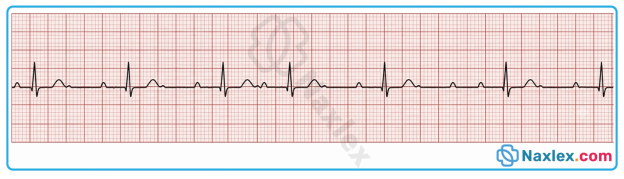
After examining the strip, which of the following conclusions would the nurse make? The strip shows evidence of:
A 10-year-old child is in the hospital on bedrest with a diagnosis of rheumatic fever complicated by carditis. When the nurse responds to the child’s call bell, the child states, “I hate this! I want to get up and play!” Which of the following responses is appropriate for the nurse to make at this time?
An 8-year-old client, who is complaining of a “really bad” sore throat and whose temperature is 102.2°F, is seen in the school nurse’s office. The nurse has the child lie down in a room away from other children. Which of the following statements is most important for the nurse to convey when calling the child’s parents?
A child who had rheumatic fever now has a complication of mild mitral valve prolapse. What information should be included in the child’s discharge instructions?
A 12-year-old child is in the urgent care clinic presents with a complaint of fever, headache, and sore throat. A diagnosis of group A β-hemolytic streptococcus (GABHS) pharyngitis is established with a rapid-strep test, and oral penicillin is prescribed. The nurse knows that which of the following statements about GABHS is correct?
The nurse is teaching the parents of a 6-year-old client about the long-term consequences of rheumatic fever. The nurse should discuss the possibility of:
Sign Up or Login to view all the 15 Questions on this Exam
Join over 100,000+ nursing students using Naxlex’s science-backend flashcards, practice tests and expert solutions to improve their grades and reach their goals.
Sign Up Now