






 Video Library


Exam Review
Hesi RN Exit (BSN) 2026 Proctored Exam
Total Questions : 129
Showing 20 questions, Sign in for moreThe charge nurse observes a new nurse preparing to irrigate an intravenous (IV) catheter. The new nurse brought a tipped syringe. Which action should the charge nurse take?
Visit 1, 0920
A 1-month-old male infant accompanied by parents for report of fussiness and yellowed sclera. Infant's birth weight was 6 lb 8 oz (2948 g) at 38 weeks gestational age. Parents report infant has become increasingly irritable, and fussiness doesn't respond to feeding, rocking, or other attempts at consoling. Parents state this fussiness occurs without regard to daytime or nighttime.
Review of Systems:
Constitutional: Fussiness that doesn't improve with consoling, yellowed sclera, decreased intake
Gastrointestinal: Decreased formula intake with occasional cough during feedings, no vomiting, reports 3 stools per day that have become very pale in color, eating every 4 hours
Genitourinary: Dark yellow urine
Physical Exam:
General: Lusty cry noted throughout examination and restless with intermittent crying after being swaddled and held
Skin: Yellowing also noted during blanching of skin on the chest and abdomen, turgor without tenting
Eyes, Ears, Nose, Throat: Yellowed sclera, oral mucous membranes moist
Cardiovascular: Heart rate regular without murmur
Respiratory: Lungs clear bilaterally with respirations unlabored
Abdomen: Soft with active bowel sounds, no grimace or cry with palpation
Genitourinary: Urine in diaper noted to be dark yellow
Musculoskeletal: Moves all extremities well, movements symmetrical
Visit 1, 0905
Parents present with infant, reporting increased fussiness, stating, "He just cries so much anymore, and nothing we do seems to help." Infant is formula-fed, parents report he consumes approximately 3 ounces (120 mL) every 4 hours, but has started eating less at some feedings over the past 1 or 2 weeks. Infant noted to be fussy, parent holding and speaking softly to him. Weight 2 weeks ago was 7 lb 6 oz (3345 grams) per parents' report.
Visit 1, 0900
Vital Signs
- Temperature: 98.3° F (36.8° C)
- Heart rate: 118 beats/minute
- Respirations: 30 breaths/minute
- Oxygen saturation via room air: 98%
- Weight: 7 lb 10 oz (3459 grams), 5th percentile
- Length: 21 inches (53.3 cm), 25th percentile
Visit 1, 0930
Complete blood count
Liver enzymes
Total bilirubin
Direct bilirubin
Visit 1, 1100
Abdominal ultrasound
Liver biopsy
Visit 1, 1030
Complete blood count (CBC)
|
Laboratory Test |
Result |
Reference Range |
|
White blood cells (WBC) |
11,100/mm3 (11.1 x 10⁹/L) |
6,200 to 17,000/mm3 (6.2 to 17 x 109/L) |
|
Hemoglobin (Hgb) |
16 g/dL (160 g/L) |
12 to 20 g/dL (120 to 200 g/L) |
|
Hematocrit (Hct) |
48% (0.48 volume fraction) |
39% to 59%(0.39 to 0.59 volume fraction) |
|
Platelet count |
325,000/mm3 (325 x 109/L) |
150,000 to 400,000/mm3 (150 to 400 x 109/L) |
Liver Function Tests
|
Laboratory Test |
Result |
Reference Range |
|
Alkaline Phosphatase (ALP) |
690 units/L |
85 to 235 units/L (85 to 235 IU/L) |
|
Alanine Aminotransferase (ALT) |
200 units/L |
4 to 35 units/L |
|
Aspartate Aminotransferase (AST) |
255 units/L |
15 to 60 U/L |
|
Bilirubin, total |
10 mg/dL (171 μmol/L) |
0.3 to 1 mg/dL (5.1 to 17 umol/L) |
|
Bilirubin, direct |
7 mg/dL (120 μmol/L) |
0.1 to 0.3 mg/dL (1.7 to 5.1 μmol/L) |
The nurse is reviewing the infant's assessment findings. Which finding(s) require follow-up? Select all that apply.
Visit 1, 0920
A 1-month-old male infant accompanied by parents for report of fussiness and yellowed sclera. Infant's birth weight was 6 lb 8 oz (2948 g) at 38 weeks gestational age. Parents report infant has become increasingly irritable, and fussiness doesn't respond to feeding, rocking, or other attempts at consoling. Parents state this fussiness occurs without regard to daytime or nighttime.
Review of Systems:
Constitutional: Fussiness that doesn't improve with consoling, yellowed sclera, decreased intake
Gastrointestinal: Decreased formula intake with occasional cough during feedings, no vomiting, reports 3 stools per day that have become very pale in color, eating every 4 hours
Genitourinary: Dark yellow urine
Physical Exam:
General: Lusty cry noted throughout examination and restless with intermittent crying after being swaddled and held
Skin: Yellowing also noted during blanching of skin on the chest and abdomen, turgor without tenting
Eyes, Ears, Nose, Throat: Yellowed sclera, oral mucous membranes moist
Cardiovascular: Heart rate regular without murmur
Respiratory: Lungs clear bilaterally with respirations unlabored
Abdomen: Soft with active bowel sounds, no grimace or cry with palpation
Genitourinary: Urine in diaper noted to be dark yellow
Musculoskeletal: Moves all extremities well, movements symmetrical
Visit 1, 0905
Parents present with infant, reporting increased fussiness, stating, "He just cries so much anymore, and nothing we do seems to help." Infant is formula-fed, parents report he consumes approximately 3 ounces (120 mL) every 4 hours, but has started eating less at some feedings over the past 1 or 2 weeks. Infant noted to be fussy, parent holding and speaking softly to him. Weight 2 weeks ago was 7 lb 6 oz (3345 grams) per parents' report.
Visit 1, 0900
Vital Signs
- Temperature: 98.3° F (36.8° C)
- Heart rate: 118 beats/minute
- Respirations: 30 breaths/minute
- Oxygen saturation via room air: 98%
- Weight: 7 lb 10 oz (3459 grams), 5th percentile
- Length: 21 inches (53.3 cm), 25th percentile
Visit 1, 0930
Complete blood count
Liver enzymes
Total bilirubin
Direct bilirubin
Visit 1, 1100
Abdominal ultrasound
Liver biopsy
Visit 1, 1030
Complete blood count (CBC)
|
Laboratory Test |
Result |
Reference Range |
|
White blood cells (WBC) |
11,100/mm3 (11.1 x 10⁹/L) |
6,200 to 17,000/mm3 (6.2 to 17 x 109/L) |
|
Hemoglobin (Hgb) |
16 g/dL (160 g/L) |
12 to 20 g/dL (120 to 200 g/L) |
|
Hematocrit (Hct) |
48% (0.48 volume fraction) |
39% to 59% (0.39 to 0.59 volume fraction) |
|
Platelet count |
325,000/mm3 (325 x 109/L) |
150,000 to 400,000/mm3 (150 to 400 x 109/L) |
Liver Function Tests
|
Laboratory Test |
Result |
Reference Range |
|
Alkaline Phosphatase (ALP) |
690 units/L |
85 to 235 units/L (85 to 235 IU/L) |
|
Alanine Aminotransferase (ALT) |
200 units/L |
4 to 35 units/L |
|
Aspartate Aminotransferase (AST) |
255 units/L |
15 to 60 U/L |
|
Bilirubin, total |
10 mg/dL (171 μmol/L) |
0.3 to 1 mg/dL (5.1 to 17 umol/L) |
|
Bilirubin, direct |
7 mg/dL (120 μmol/L) |
0.1 to 0.3 mg/dL (1.7 to 5.1 μmol/L) |
The nurse reviews the client's findings to determine the most likely condition.
For each clinical finding, click to indicate if it is consistent with gastroesophageal reflux disease, biliary atresia, or esophageal atresia. Each row must have at least 1, but may have more than 1 response option selected. Each column must have at least 1 response option selected.
Explanation
This question requires differentiating among three pediatric gastrointestinal disorders by correlating clinical manifestations with laboratory findings. The infant presents with persistent jaundice beyond the neonatal period, pale (acholic) stools, dark urine, elevated direct bilirubin, and markedly elevated liver enzymes, which are classic manifestations of biliary atresia. Although coughing during feedings can occur with gastroesophageal reflux disease (GERD), the remaining findings strongly indicate an obstructive hepatobiliary disorder rather than an esophageal congenital anomaly or uncomplicated reflux. Accurate recognition is critical because biliary atresia requires prompt surgical intervention to prevent progressive liver failure.
Rationale:
• Reported behavioral findings: The infant demonstrates increasing irritability, decreased feeding, persistent jaundice, and poor weight gain despite adequate parental care. These symptoms commonly develop during the first several weeks of life as bile flow becomes progressively obstructed, resulting in cholestasis and impaired fat absorption. As hepatic injury worsens, infants become increasingly fussy because of abdominal discomfort and nutritional deficiencies.
• Aspartate aminotransferase (AST) result: The AST level of 255 U/L is markedly elevated, indicating hepatocellular injury resulting from prolonged biliary obstruction. In biliary atresia, retained bile damages hepatocytes, causing leakage of intracellular liver enzymes into the bloodstream. Elevations in AST and ALT are expected laboratory findings and reflect progressive inflammation and fibrosis of the liver. Neither GERD nor esophageal atresia typically causes significant elevations in liver enzymes.
• Color of stools: The infant's stools have become very pale or acholic, which is a hallmark finding of biliary atresia. Because bile pigments cannot enter the intestinal tract due to obstruction of the extrahepatic bile ducts, stools lose their normal brown coloration. Pale stools are one of the earliest and most specific indicators of neonatal cholestasis. Prompt recognition is essential because delayed treatment significantly worsens long-term hepatic outcomes.
• Direct bilirubin level: The direct bilirubin level is markedly elevated at 7 mg/dL, indicating conjugated hyperbilirubinemia caused by obstruction of bile flow. In biliary atresia, hepatocytes successfully conjugate bilirubin, but the conjugated bilirubin cannot be excreted into the intestine because the bile ducts are obliterated. This results in accumulation of direct bilirubin in the bloodstream and excretion into the urine, producing dark urine. Conjugated hyperbilirubinemia is the laboratory hallmark of biliary atresia.
• Report of cough during feedings: Coughing during feedings commonly occurs in GERD because refluxed gastric contents irritate the esophagus and may be aspirated into the upper airway. Infants often exhibit coughing, gagging, choking, feeding aversion, and irritability associated with reflux episodes. In this client, occasional coughing during feedings may represent coexisting reflux. Although coughing during feedings is a classic feature of esophageal atresia, affected infants become symptomatic immediately after birth because milk cannot pass normally into the stomach. This infant fed adequately for several weeks before developing occasional cough, making congenital esophageal atresia inconsistent with the clinical timeline.
Visit 1, 0920
A 1-month-old male infant accompanied by parents for report of fussiness and yellowed sclera. Infant's birth weight was 6 lb 8 oz (2948 g) at 38 weeks gestational age. Parents report infant has become increasingly irritable, and fussiness doesn't respond to feeding, rocking, or other attempts at consoling. Parents state this fussiness occurs without regard to daytime or nighttime.
Review of Systems:
Constitutional: Fussiness that doesn't improve with consoling, yellowed sclera, decreased intake
Gastrointestinal: Decreased formula intake with occasional cough during feedings, no vomiting, reports 3 stools per day that have become very pale in color, eating every 4 hours
Genitourinary: Dark yellow urine
Physical Exam:
General: Lusty cry noted throughout examination and restless with intermittent crying after being swaddled and held
Skin: Yellowing also noted during blanching of skin on the chest and abdomen, turgor without tenting
Eyes, Ears, Nose, Throat: Yellowed sclera, oral mucous membranes moist
Cardiovascular: Heart rate regular without murmur
Respiratory: Lungs clear bilaterally with respirations unlabored
Abdomen: Soft with active bowel sounds, no grimace or cry with palpation
Genitourinary: Urine in diaper noted to be dark yellow
Musculoskeletal: Moves all extremities well, movements symmetrical
Visit 1, 0905
Parents present with infant, reporting increased fussiness, stating, "He just cries so much anymore, and nothing we do seems to help." Infant is formula-fed, parents report he consumes approximately 3 ounces (120 mL) every 4 hours, but has started eating less at some feedings over the past 1 or 2 weeks. Infant noted to be fussy, parent holding and speaking softly to him. Weight 2 weeks ago was 7 lb 6 oz (3345 grams) per parents' report.
Visit 2, 1400
A 5-week-old infant here with parents for follow-up visit. Parents report infant has an appointment with gastroenterologist tomorrow morning. State that infant's condition is unchanged since prior visit as he continues to have frequent episodes of fussiness. Jaundice noted. Mucous membranes moist. Heart rate regular, lungs clear bilaterally. Abdomen soft with active bowel sounds. Liver yellow urine
Physical Exam:
General: Lusty cry noted throughout examination and restless with intermittent crying after being swaddled and held Skin: Yellowing also noted during blanching of skin on the chest and abdomen, turgor without tenting
Eyes, Ears, Nose, Throat: Yellowed sclera, oral mucous membranes moist
Visit 1, 0900
Vital Signs
- Temperature: 98.3° F (36.8° C)
- Heart rate: 118 beats/minute
- Respirations: 30 breaths/minute
- Oxygen saturation via room air: 98%
- Weight: 7 lb 10 oz (3459 grams), 5th percentile
- Length: 21 inches (53.3 cm), 25th percentile
Visit 1, 0930
Complete blood count
Liver enzymes
Total bilirubin
Direct bilirubin
Visit 1, 1100
Abdominal ultrasound
Liver biopsy
Visit 1, 1030
Complete blood count (CBC)
|
Laboratory Test |
Result |
Reference Range |
|
White blood cells (WBC) |
11,100/mm3 (11.1 x 10⁹/L) |
6,200 to 17,000/mm3 (6.2 to 17 x 109/L) |
|
Hemoglobin (Hgb) |
16 g/dL (160 g/L) |
12 to 20 g/dL (120 to 200 g/L) |
|
Hematocrit (Hct) |
48% (0.48 volume fraction) |
39% to 59% (0.39 to 0.59 volume fraction) |
|
Platelet count |
325,000/mm3 (325 x 109/L) |
150,000 to 400,000/mm3 (150 to 400 x 109/L) |
Liver Function Tests
|
Laboratory Test |
Result |
Reference Range |
|
Alkaline Phosphatase (ALP) |
690 units/L |
85 to 235 units/L (85 to 235 IU/L) |
|
Alanine Aminotransferase (ALT) |
200 units/L |
4 to 35 units/L |
|
Aspartate Aminotransferase (AST) |
255 units/L |
15 to 60 U/L |
|
Bilirubin, total |
10 mg/dL (171 μmol/L) |
0.3 to 1 mg/dL (5.1 to 17 umol/L) |
|
Bilirubin, direct |
7 mg/dL (120 μmol/L) |
0.1 to 0.3 mg/dL (1.7 to 5.1 μmol/L) |
Visit 2
Abdominal ultrasound: hepatomegaly; small gallbladder
The nurse is reviewing the infant's assessment findings. Drag from Word Choices to complete the sentence. The nurse determines that the priority concern is to address the infant's
Explanation
This question focuses on identifying the highest-priority nursing concern in an infant with findings strongly suggestive of biliary atresia. The infant has persistent jaundice, elevated direct bilirubin, hepatomegaly, a small gallbladder on ultrasound, pale stools, and dark urine, all of which indicate extrahepatic biliary obstruction. Biliary atresia prevents bile from reaching the intestine, resulting in impaired fat digestion, poor absorption of fat-soluble vitamins, and progressive malnutrition. Applying Maslow's hierarchy and the ABCs, inadequate nutrition and poor growth are the priority concerns because they directly affect the infant's survival and development.
Rationale for correct choice:
• Weight: The infant's weight is the priority concern because there has been minimal weight gain despite five weeks of age, and the infant is currently at the 5th percentile. Biliary atresia causes impaired bile flow, preventing adequate digestion and absorption of dietary fats and fat-soluble vitamins (A, D, E, and K), leading to failure to thrive. The infant also has decreased formula intake and increasing irritability, further placing them at risk for malnutrition. Early nutritional intervention is essential while awaiting definitive treatment, such as the Kasai portoenterostomy, to optimize growth and improve surgical outcomes.
Rationale for incorrect choices:
• Sclera findings: Yellow sclera (scleral icterus) is an expected manifestation of conjugated hyperbilirubinemia resulting from biliary obstruction. Although persistent jaundice is an important indicator of disease progression and warrants ongoing assessment, it is a clinical manifestation rather than the most immediate nursing priority. Improving nutritional status and preventing failure to thrive have a greater impact on the infant's overall prognosis. Therefore, scleral icterus is monitored but is not the highest-priority concern.
• Urine color: The infant's dark yellow urine results from the renal excretion of conjugated bilirubin, which accumulates because bile cannot reach the intestine. While this finding supports the diagnosis of biliary atresia, it does not itself place the infant at immediate risk for physiological deterioration. Monitoring urine color helps evaluate the progression of cholestasis but does not require priority intervention compared with nutritional compromise. The nurse should instead focus on preventing the complications of poor growth and malabsorption.
• Temperament: The infant's persistent fussiness and irritability likely reflect discomfort, hunger from inadequate nutritional intake, and the effects of chronic liver disease. Although comforting the infant and assessing pain or distress are important aspects of care, temperament is a secondary concern compared with the infant's poor weight gain. Addressing the underlying nutritional deficits and hepatobiliary disease is more likely to improve the infant's behavior. Temperament is not the highest-priority nursing concern in this scenario.
Visit 1, 0920
A 1-month-old male infant accompanied by parents for report of fussiness and yellowed sclera. Infant's birth weight was 6 lb 8 oz (2948 g) at 38 weeks gestational age. Parents report infant has become increasingly irritable, and fussiness doesn't respond to feeding, rocking, or other attempts at consoling. Parents state this fussiness occurs without regard to daytime or nighttime.
Review of Systems:
Constitutional: Fussiness that doesn't improve with consoling, yellowed sclera, decreased intake
Gastrointestinal: Decreased formula intake with occasional cough during feedings, no vomiting, reports 3 stools per day that have become very pale in color, eating every 4 hours
Genitourinary: Dark yellow urine
Physical Exam:
General: Lusty cry noted throughout examination and restless with intermittent crying after being swaddled and held
Skin: Yellowing also noted during blanching of skin on the chest and abdomen, turgor without tenting
Eyes, Ears, Nose, Throat: Yellowed sclera, oral mucous membranes moist
Cardiovascular: Heart rate regular without murmur
Respiratory: Lungs clear bilaterally with respirations unlabored
Abdomen: Soft with active bowel sounds, no grimace or cry with palpation
Genitourinary: Urine in diaper noted to be dark yellow
Musculoskeletal: Moves all extremities well, movements symmetrical
Visit 1, 0905
Parents present with infant, reporting increased fussiness, stating, "He just cries so much anymore, and nothing we do seems to help." Infant is formula-fed, parents report he consumes approximately 3 ounces (120 mL) every 4 hours, but has started eating less at some feedings over the past 1 or 2 weeks. Infant noted to be fussy, parent holding and speaking softly to him. Weight 2 weeks ago was 7 lb 6 oz (3345 grams) per parents' report.
Visit 2, 1400
A 5-week-old infant here with parents for follow-up visit. Parents report infant has an appointment with gastroenterologist tomorrow morning. State that infant's condition is unchanged since prior visit as he continues to have frequent episodes of fussiness. Jaundice noted. Mucous membranes moist. Heart rate regular, lungs clear bilaterally. Abdomen soft with active bowel sounds. Liver yellow urine
Physical Exam:
General: Lusty cry noted throughout examination and restless with intermittent crying after being swaddled and held Skin: Yellowing also noted during blanching of skin on the chest and abdomen, turgor without tenting
Eyes, Ears, Nose, Throat: Yellowed sclera, oral mucous membranes moist
Visit 1, 0900
Vital Signs
- Temperature: 98.3° F (36.8° C)
- Heart rate: 118 beats/minute
- Respirations: 30 breaths/minute
- Oxygen saturation via room air: 98%
- Weight: 7 lb 10 oz (3459 grams), 5th percentile
- Length: 21 inches (53.3 cm), 25th percentile
Visit 1, 0930
Complete blood count
Liver enzymes
Total bilirubin
Direct bilirubin
Visit 1, 1100
Abdominal ultrasound
Liver biopsy
Visit 1, 1030
Complete blood count (CBC)
|
Laboratory Test |
Result |
Reference Range |
|
White blood cells (WBC) |
11,100/mm3 (11.1 x 10⁹/L) |
6,200 to 17,000/mm3 (6.2 to 17 x 109/L) |
|
Hemoglobin (Hgb) |
16 g/dL (160 g/L) |
12 to 20 g/dL (120 to 200 g/L) |
|
Hematocrit (Hct) |
48% (0.48 volume fraction) |
39% to 59%(0.39 to 0.59 volume fraction) |
|
Platelet count |
325,000/mm3 (325 x 109/L) |
150,000 to 400,000/mm3 (150 to 400 x 109/L) |
Liver Function Tests
|
Laboratory Test |
Result |
Reference Range |
|
Alkaline Phosphatase (ALP) |
690 units/L |
85 to 235 units/L (85 to 235 IU/L) |
|
Alanine Aminotransferase (ALT) |
200 units/L |
4 to 35 units/L |
|
Aspartate Aminotransferase (AST) |
255 units/L |
15 to 60 U/L |
|
Bilirubin, total |
10 mg/dL (171 μmol/L) |
0.3 to 1 mg/dL (5.1 to 17 umol/L) |
|
Bilirubin, direct |
7 mg/dL (120 μmol/L) |
0.1 to 0.3 mg/dL (1.7 to 5.1 μmol/L) |
Visit 2
Abdominal ultrasound: hepatomegaly; small gallbladder
The nurse is determining appropriate interventions for the client.
Drag one goal and one prescription to complete the sentences.
The nurse determines that an appropriate goal to address the priority concern is to
Explanation
This question focuses on nursing priorities and nutritional management for an infant diagnosed with biliary atresia. Biliary atresia causes progressive obstruction of the extrahepatic bile ducts, preventing bile from reaching the intestine. As a result, infants develop fat malabsorption, deficiencies of fat-soluble vitamins (A, D, E, and K), and failure to thrive. Before definitive surgical management, the priority is to optimize nutritional status and promote adequate growth through high-calorie feedings and formulas that are more easily absorbed.
Rationale for correct choices:
• Consume 150 calories/kg/day: Infants with biliary atresia require significantly increased caloric intake because chronic cholestasis and malabsorption increase metabolic demands while reducing nutrient absorption. A goal of approximately 125 to 150 kcal/kg/day supports normal growth, helps prevent failure to thrive, and improves nutritional reserves before surgical intervention. Adequate nutrition also enhances wound healing, immune function, and postoperative recovery following a Kasai portoenterostomy or liver transplantation if needed. Promoting weight gain is therefore the highest-priority therapeutic goal.
• A formula that contains medium-chain triglycerides: Medium-chain triglycerides (MCTs) are absorbed directly into the portal circulation without requiring bile salts for digestion. Because infants with biliary atresia have impaired bile secretion, standard long-chain fats are poorly absorbed, leading to caloric deficiency and steatorrhea. MCT-containing formulas improve fat absorption, increase caloric intake, and support growth while reducing the effects of fat malabsorption. These formulas are considered the nutritional therapy of choice for infants with cholestatic liver disease.
Rationale for incorrect choices:
• Exhibit a decrease in the total bilirubin level: Although lowering bilirubin levels is a desirable long-term outcome, nutritional support alone will not significantly reduce bilirubin concentrations because the underlying problem is mechanical obstruction of the bile ducts. Definitive improvement in bilirubin occurs only after restoration of bile flow through surgical intervention, such as the Kasai procedure, or liver transplantation if necessary. Therefore, decreasing bilirubin is not the immediate goal of nursing management. The priority is to maintain adequate nutrition and growth until definitive treatment is performed.
• Void amber to pale yellow urine: Dark urine results from increased excretion of conjugated bilirubin by the kidneys due to biliary obstruction. While lighter urine would indicate improved bile flow, nutritional interventions do not directly correct cholestasis or urine color. Resolution of bilirubinuria depends on successful treatment of the underlying biliary obstruction rather than dietary modifications alone. Consequently, urine color is not the primary therapeutic goal at this stage.
• Hemodialysis: Hemodialysis is used to remove metabolic waste products and excess fluid in clients with severe kidney failure or certain toxic ingestions. Biliary atresia is a hepatobiliary disorder and does not impair renal function in a way that requires dialysis. Hemodialysis would neither improve bile flow nor address the infant's malnutrition or conjugated hyperbilirubinemia. Therefore, it has no therapeutic role in managing biliary atresia.
• An exchange transfusion: Exchange transfusion is primarily indicated for severe unconjugated hyperbilirubinemia to prevent kernicterus in neonates, such as in hemolytic disease of the newborn. This infant has markedly elevated direct (conjugated) bilirubin, which results from biliary obstruction rather than excessive bilirubin production. Exchange transfusion does not relieve extrahepatic bile duct obstruction or improve cholestasis.
Visit 1, 0920
A 1-month-old male infant accompanied by parents for report of fussiness and yellowed sclera. Infant's birth weight was 6 lb 8 oz (2948 g) at 38 weeks gestational age. Parents report infant has become increasingly irritable, and fussiness doesn't respond to feeding, rocking, or other attempts at consoling. Parents state this fussiness occurs without regard to daytime or nighttime.
Review of Systems:
Constitutional: Fussiness that doesn't improve with consoling, yellowed sclera, decreased intake
Gastrointestinal: Decreased formula intake with occasional cough during feedings, no vomiting, reports 3 stools per day that have become very pale in color, eating every 4 hours
Genitourinary: Dark yellow urine
Physical Exam:
General: Lusty cry noted throughout examination and restless with intermittent crying after being swaddled and held
Skin: Yellowing also noted during blanching of skin on the chest and abdomen, turgor without tenting
Eyes, Ears, Nose, Throat: Yellowed sclera, oral mucous membranes moist
Cardiovascular: Heart rate regular without murmur
Respiratory: Lungs clear bilaterally with respirations unlabored
Abdomen: Soft with active bowel sounds, no grimace or cry with palpation
Genitourinary: Urine in diaper noted to be dark yellow
Musculoskeletal: Moves all extremities well, movements symmetrical
Visit 1, 0905
Parents present with infant, reporting increased fussiness, stating, "He just cries so much anymore, and nothing we do seems to help." Infant is formula-fed, parents report he consumes approximately 3 ounces (120 mL) every 4 hours, but has started eating less at some feedings over the past 1 or 2 weeks. Infant noted to be fussy, parent holding and speaking softly to him. Weight 2 weeks ago was 7 lb 6 oz (3345 grams) per parents' report.
Visit 2, 1400
A 5-week-old infant here with parents for follow-up visit. Parents report infant has an appointment with gastroenterologist tomorrow morning. State that infant's condition is unchanged since prior visit as he continues to have frequent episodes of fussiness. Jaundice noted. Mucous membranes moist. Heart rate regular, lungs clear bilaterally. Abdomen soft with active bowel sounds. Liver yellow urine
Physical Exam:
General: Lusty cry noted throughout examination and restless with intermittent crying after being swaddled and held Skin: Yellowing also noted during blanching of skin on the chest and abdomen, turgor without tenting
Eyes, Ears, Nose, Throat: Yellowed sclera, oral mucous membranes moist
Visit 1, 0900
Vital Signs
- Temperature: 98.3° F (36.8° C)
- Heart rate: 118 beats/minute
- Respirations: 30 breaths/minute
- Oxygen saturation via room air: 98%
- Weight: 7 lb 10 oz (3459 grams), 5th percentile
- Length: 21 inches (53.3 cm), 25th percentile
Visit 1, 0930
Complete blood count
Liver enzymes
Total bilirubin
Direct bilirubin
Visit 1, 1100
Abdominal ultrasound
Liver biopsy
Visit 1, 1030
Complete blood count (CBC)
|
Laboratory Test |
Result |
Reference Range |
|
White blood cells (WBC) |
11,100/mm3 (11.1 x 10⁹/L) |
6,200 to 17,000/mm3 (6.2 to 17 x 109/L) |
|
Hemoglobin (Hgb) |
16 g/dL (160 g/L) |
12 to 20 g/dL (120 to 200 g/L) |
|
Hematocrit (Hct) |
48% (0.48 volume fraction) |
39% to 59% (0.39 to 0.59 volume fraction) |
|
Platelet count |
325,000/mm3 (325 x 109/L) |
150,000 to 400,000/mm3 (150 to 400 x 109/L) |
Liver Function Tests
|
Laboratory Test |
Result |
Reference Range |
|
Alkaline Phosphatase (ALP) |
690 units/L |
85 to 235 units/L (85 to 235 IU/L) |
|
Alanine Aminotransferase (ALT) |
200 units/L |
4 to 35 units/L |
|
Aspartate Aminotransferase (AST) |
255 units/L |
15 to 60 U/L |
|
Bilirubin, total |
10 mg/dL (171 μmol/L) |
0.3 to 1 mg/dL (5.1 to 17 umol/L) |
|
Bilirubin, direct |
7 mg/dL (120 μmol/L) |
0.1 to 0.3 mg/dL (1.7 to 5.1 μmol/L) |
Visit 2
Abdominal ultrasound: hepatomegaly; small gallbladder
The nurse is providing teaching to the parents after reviewing the orders.
Which 3 statements should the nurse include in the teaching?
Visit 1, 0920
A 1-month-old male infant accompanied by parents for report of fussiness and yellowed sclera. Infant's birth weight was 6 lb 8 oz (2948 g) at 38 weeks gestational age. Parents report infant has become increasingly irritable, and fussiness doesn't respond to feeding, rocking, or other attempts at consoling. Parents state this fussiness occurs without regard to daytime or nighttime.
Review of Systems:
Constitutional: Fussiness that doesn't improve with consoling, yellowed sclera, decreased intake
Gastrointestinal: Decreased formula intake with occasional cough during feedings, no vomiting, reports 3 stools per day that have become very pale in color, eating every 4 hours
Genitourinary: Dark yellow urine
Physical Exam:
General: Lusty cry noted throughout examination and restless with intermittent crying after being swaddled and held
Skin: Yellowing also noted during blanching of skin on the chest and abdomen, turgor without tenting
Eyes, Ears, Nose, Throat: Yellowed sclera, oral mucous membranes moist
Cardiovascular: Heart rate regular without murmur
Respiratory: Lungs clear bilaterally with respirations unlabored
Abdomen: Soft with active bowel sounds, no grimace or cry with palpation
Genitourinary: Urine in diaper noted to be dark yellow
Musculoskeletal: Moves all extremities well, movements symmetrical
Visit 1, 0905
Parents present with infant, reporting increased fussiness, stating, "He just cries so much anymore, and nothing we do seems to help." Infant is formula-fed, parents report he consumes approximately 3 ounces (120 mL) every 4 hours, but has started eating less at some feedings over the past 1 or 2 weeks. Infant noted to be fussy, parent holding and speaking softly to him. Weight 2 weeks ago was 7 lb 6 oz (3345 grams) per parents' report.
Visit 2, 1400
A 5-week-old infant here with parents for follow-up visit. Parents report infant has an appointment with gastroenterologist tomorrow morning. State that infant's condition is unchanged since prior visit as he continues to have frequent episodes of fussiness. Jaundice noted. Mucous membranes moist. Heart rate regular, lungs clear bilaterally. Abdomen soft with active bowel sounds. Liver yellow urine
Physical Exam:
General: Lusty cry noted throughout examination and restless with intermittent crying after being swaddled and held Skin: Yellowing also noted during blanching of skin on the chest and abdomen, turgor without tenting
Eyes, Ears, Nose, Throat: Yellowed sclera, oral mucous membranes moist
Visit 1, 0900
Vital Signs
- Temperature: 98.3° F (36.8° C)
- Heart rate: 118 beats/minute
- Respirations: 30 breaths/minute
- Oxygen saturation via room air: 98%
- Weight: 7 lb 10 oz (3459 grams), 5th percentile
- Length: 21 inches (53.3 cm), 25th percentile
Visit 1, 0930
Complete blood count
Liver enzymes
Total bilirubin
Direct bilirubin
Visit 1, 1100
Abdominal ultrasound
Liver biopsy
Visit 1, 1030
Complete blood count (CBC)
|
Laboratory Test |
Result |
Reference Range |
|
White blood cells (WBC) |
11,100/mm3 (11.1 x 10⁹/L) |
6,200 to 17,000/mm3 (6.2 to 17 x 109/L) |
|
Hemoglobin (Hgb) |
16 g/dL (160 g/L) |
12 to 20 g/dL (120 to 200 g/L) |
|
Hematocrit (Hct) |
48% (0.48 volume fraction) |
39% to 59% (0.39 to 0.59 volume fraction) |
|
Platelet count |
325,000/mm3 (325 x 109/L) |
150,000 to 400,000/mm3 (150 to 400 x 109/L) |
Liver Function Tests
|
Laboratory Test |
Result |
Reference Range |
|
Alkaline Phosphatase (ALP) |
690 units/L |
85 to 235 units/L (85 to 235 IU/L) |
|
Alanine Aminotransferase (ALT) |
200 units/L |
4 to 35 units/L |
|
Aspartate Aminotransferase (AST) |
255 units/L |
15 to 60 U/L |
|
Bilirubin, total |
10 mg/dL (171 μmol/L) |
0.3 to 1 mg/dL (5.1 to 17 umol/L) |
|
Bilirubin, direct |
7 mg/dL (120 μmol/L) |
0.1 to 0.3 mg/dL (1.7 to 5.1 μmol/L) |
Visit 2
Abdominal ultrasound: hepatomegaly; small gallbladder
The nurse is reviewing the assessment findings.
Click to highlight the findings that indicate an improvement in the infant's condition.
Infant here with parents for routine follow-up visit. Infant is 10 weeks old and had surgical correction of biliary atresia one month ago. Parents report infant is consuming 4 to 5 ounces (120 to 150 mL) of high-calorie formula every 4 hours. Report infant sleeps 6 to 7 hours at night before waking for a feeding. Small, soft, brown stool noted in diaper. Infant voided light brown urine during assessment. Infant noted to be intermittently fussy and difficult to console. Weight 9 lb 1 oz (4111 grams), length 22.75 inches (58 cm).
Infant alert, sclera yellowed. Mouth moist with small amount of drooling. Heart rate regular, lungs clear bilaterally. Abdomen with healed surgical incision in right upper quadrant. Active bowel sounds.
Explanation
This question evaluates the nurse's ability to recognize expected improvements following surgical correction of biliary atresia (Kasai portoenterostomy). Successful restoration of bile flow results in improved digestion and absorption of fats, better nutritional status, normalization of stool color, and enhanced growth. Although some jaundice may persist during recovery, evidence of improved feeding, weight gain, and return of bile pigments to the stool are important indicators that the infant is responding positively to treatment.
Rationale for correct findings:
• Infant is consuming 4 to 5 ounces (120 to 150 mL) of high-calorie formula every 4 hours: This finding demonstrates a significant improvement in nutritional intake compared with the infant's previous decreased appetite. Improved feeding tolerance indicates better gastrointestinal function and increased caloric intake, both of which are essential for catch-up growth following correction of biliary obstruction. Adequate nutrition also supports liver regeneration and overall recovery. Increased intake is an important indicator that the infant's condition is improving.
• Report infant sleeps 6 to 7 hours at night before waking for a feeding: Before surgery, the infant was persistently fussy and difficult to console throughout the day and night. Longer uninterrupted sleep suggests improved comfort, decreased irritability, and better overall well-being. Infants experiencing less abdominal discomfort and improved nutritional status commonly demonstrate more organized sleep patterns. This finding indicates symptomatic improvement after treatment.
• Small, soft, brown stool noted in diaper: Brown stool is one of the strongest indicators that bile is successfully reaching the intestine following surgical correction. Before surgery, the infant had pale (acholic) stools because bile pigments were unable to enter the gastrointestinal tract due to biliary obstruction. Restoration of normal stool color reflects improved bile drainage through the Kasai procedure. This is a highly favorable postoperative finding.
• Weight 9 lb 1 oz (4111 grams): The infant has gained weight since previous visits, demonstrating improved nutritional status and successful caloric intake. Weight gain is one of the most important measures of recovery because infants with biliary atresia are at high risk for failure to thrive due to fat malabsorption. Consistent growth indicates that nutrient absorption has improved and that the nutritional management plan is effective.
Rationale for incorrect findings:
• Infant voided light brown urine during assessment: Although the urine is lighter than previously described, light brown urine is still abnormal and suggests continued excretion of conjugated bilirubin. Following successful restoration of bile flow, urine should gradually return toward a pale yellow color as bilirubin levels decrease. Persistent dark or brown urine indicates that cholestasis has not completely resolved. Therefore, this finding does not represent a clear indicator of improvement.
• Infant noted to be intermittently fussy and difficult to console: Persistent fussiness indicates that the infant continues to experience some degree of discomfort or illness. While the irritability is less severe than before surgery, an infant recovering well should gradually become easier to console as nutritional status and liver function improve. Continued episodes of inconsolable crying warrant ongoing monitoring for complications or inadequate recovery.
• Sclera yellowed.: Persistent scleral icterus indicates that conjugated hyperbilirubinemia has not completely resolved. Although jaundice may take several weeks to months to improve after a Kasai procedure, yellow sclera reflects continued bilirubin accumulation rather than normalization of liver function. The nurse should continue to monitor bilirubin levels and liver function closely. Thus, this finding does not represent evidence of improvement.
In performing the admission assessment for a client experiencing complications of long-term Parkinson's disease, which question by the nurse provides the best information about disease progression?
An infant born with esophageal atresia and tracheoesophageal fistula receives a prescription for enteral feedings after corrective surgery. To promote normal growth and development of the infant, which action should the nurse include in the plan of care?
To auscultate for a carotid bruit, the nurse places the stethoscope at which location (Select the correct location on the image. To change, click on a new location.)
Explanation
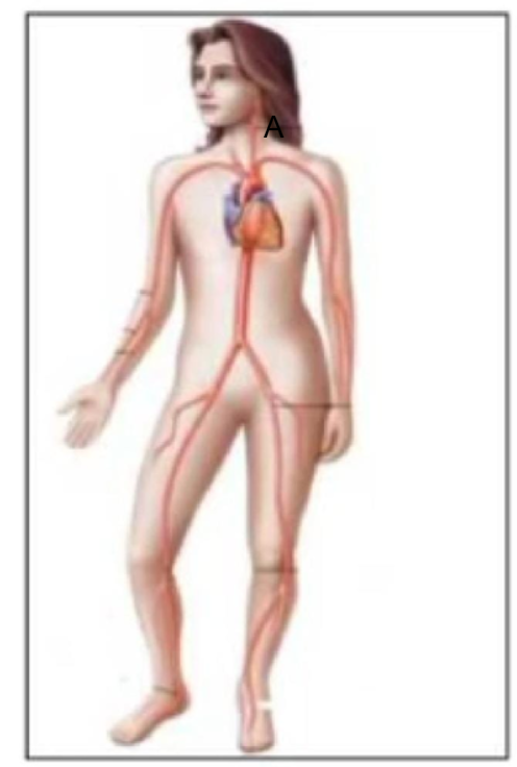
Brief introduction:
Auscultation of the carotid arteries is an important nursing assessment technique used to detect bruits—abnormal sounds caused by turbulent blood flow, often due to arterial narrowing or stenosis. Detecting a bruit can help identify patients at risk for stroke or other vascular complications.
Rationale:
To auscultate for a carotid bruit, the nurse places the bell of the stethoscope over the carotid artery at the angle of the jaw, along the anterior border of the sternocleidomastoid muscle, and below the mandible. Use the bell (not the diaphragm) because bruits are low-pitched sounds. Ask the patient to hold their breath briefly while listening, to avoid mistaking breath sounds for vascular sounds. Auscultate one side at a time to prevent compromising cerebral blood flow. A bruit suggests turbulent blood flow, often due to carotid artery narrowing or stenosis.
The nurse is developing a plan of care for a client with cardiovascular disease who reports chest pain on exertion. Which outcome should the nurse include in the plan of care for this client?
The nurse caring for a toddler with tetralogy of Fallot observes the child squatting. Which action should the nurse take?
A client with metastatic bone cancer is requesting pain medication. Which approach should the nurse use to assess the quality of the client's pain?
A client is being evaluated for pernicious anemia caused by cobalamin deficiency. Which laboratory finding(s) on the complete blood count (CBC) would the nurse expect? Select all that apply.
0730
A 42-year-old male client is admitted to the emergency department after a motor vehicle collision. Emergency medical services report that the client was unable to move his lower extremities at the scene. A rigid cervical collar and spinal backboard were applied prior to transport. The client reports mid-back pain and numbness in both legs.
Past Medical History: Hypertension
Home Medications: lisinopril 10 mg PO daily
Allergies: No known drug allergies
Physical Examination
General: Awake, anxious, immobilized on backboard
Neurological: No movement or sensation below the level of the nipples. Upper extremity strength intact
Cardiovascular: Bradycardia noted. Peripheral pulses palpable
Respiratory: Breath sounds clear bilaterally
Skin: Warm and flushed. No visible bleeding
0730
Client arrives immobilized with spinal precautions in place. Reports inability to move legs. Sensation absent below T4 dermatome.
0800
Blood pressure decreased. Heart rate at 48 beats/minute. Skin warm and flushed. Urine output minimal. Large-bore IV access established. IV normal saline initiated per order. Provider notified of hemodynamic changes.
0800
- Temperature: 97.9°F (36.6°C)
- Heart rate: 48 beats/minute
- Respirations: 18 breaths/minute
- Blood pressure: 86/48 mm Hg
- Oxygen saturation on room air: 96%
- Pain: 6 on a 0 to 10 scale (mid-back)
0745
Spinal immobilization
IV normal saline at 100 mL/hour
Neurologic checks every hour
CT spine (cervical, thoracic, lumbar)
Complete blood count
0800
Complete Blood Count
|
Laboratory Test |
Result |
Reference Range |
|
White blood cells (WBC) |
8,200/mm2 (8.2x 10⁹/L) |
5,000 to 10,000/mm3 (5 to 10 x 109/L) |
|
Red blood cells (RBC) |
5x 10⁶/μL (5 x 10⁶/L) |
4.7 to 6.1 x 10/μL (4.7 to 6.1 x 10¹²/L) |
|
Hemoglobin (Hgb) |
14.6 g/dL (146 g/L) |
14 to 18 g/dL (140 to 180 g/L) |
|
Hematocrit (Hct) |
44% (0.44 volume fraction) |
42% to 52% (0.42 to 0.52 volume fraction) |
|
Platelet count |
240,000/mm3 (240 x 109/L) |
150,000 to 400,000/mm3 (150 to 400 x 109/L) |
|
Erythrocyte sedimentation rate (ESR) |
10 mm/hr |
Less than or equal to 15 mm/hr |
|
Reticulocyte count |
1.1% (0.011 fraction) |
0.5% to 2% (0.005 to 0.02 fraction) |
0835
CT cervical, thoracic, lumbar spine: Fracture-dislocation at T4 with spinal canal narrowing and spinal cord compression
Complete the diagram by dragging from the lists of options provided to specify which condition the client is most likely experiencing, two actions the nurse should take to address that condition, and two parameters the nurse should monitor to assess the client's progress.
Explanation
This question assesses the nurse's ability to recognize and manage neurogenic shock following an acute spinal cord injury. The client has a T4 spinal cord fracture with hypotension, bradycardia, warm flushed skin, and minimal urine output, all of which are classic manifestations of neurogenic shock. This condition occurs because interruption of sympathetic nervous system pathways results in unopposed parasympathetic (vagal) stimulation, causing widespread vasodilation, hypotension, and bradycardia. Early recognition and aggressive hemodynamic monitoring are essential to maintain spinal cord perfusion and prevent secondary neurological injury.
Rationale for correct choices:
• Neurogenic shock: The client demonstrates the classic triad of neurogenic shock: hypotension (86/48 mm Hg), bradycardia (48 beats/minute), and warm flushed skin following an acute spinal cord injury above T6. Loss of sympathetic vascular tone causes widespread vasodilation, while unopposed vagal activity slows the heart rate. Unlike hemorrhagic shock, the skin remains warm rather than cool and clammy because peripheral vasodilation is present. The T4 spinal cord injury and corresponding neurological deficits strongly support neurogenic shock as the most likely diagnosis.
• Place on continuous cardiac monitoring: Continuous cardiac monitoring is essential because disruption of sympathetic innervation predisposes the client to significant bradycardia and potentially life-threatening dysrhythmias. Ongoing ECG monitoring allows rapid recognition of worsening bradycardia, conduction abnormalities, or cardiac arrest so interventions such as atropine or vasopressors can be initiated promptly. Maintaining adequate cardiac output is critical for preserving spinal cord perfusion. Therefore, continuous cardiac monitoring is a priority nursing intervention.
• Implement strict intake and output monitoring: The client's minimal urine output suggests reduced renal perfusion secondary to hypotension. Accurate intake and output monitoring provides valuable information regarding tissue perfusion, fluid status, and response to intravenous fluid therapy. Urine output is a sensitive indicator of adequate circulating volume and end-organ perfusion in shock states. Close monitoring helps guide ongoing treatment and detect worsening hemodynamic compromise.
• Blood pressure: Blood pressure is the primary indicator of hemodynamic stability in neurogenic shock because loss of sympathetic vascular tone results in profound vasodilation and hypotension. Frequent monitoring allows the healthcare team to evaluate the effectiveness of fluid resuscitation and vasopressor therapy. Maintaining adequate mean arterial pressure is essential to ensure sufficient spinal cord perfusion and minimize secondary neurological injury. Blood pressure trends therefore provide a critical measure of the client's response to treatment.
• Heart rate: Bradycardia is a hallmark feature of neurogenic shock due to unopposed parasympathetic stimulation after interruption of sympathetic pathways. Continuous assessment of heart rate helps detect worsening vagal stimulation, symptomatic bradycardia, or dysrhythmias that may require pharmacologic intervention. Improvement in heart rate often reflects restoration of cardiovascular stability. Therefore, heart rate is an essential parameter for monitoring treatment effectiveness.
Rationale for incorrect choices:
• Autonomic dysreflexia: Autonomic dysreflexia is a life-threatening complication that occurs after spinal shock has resolved, usually weeks to months following a spinal cord injury at or above T6. It presents with severe hypertension, reflex bradycardia, pounding headache, diaphoresis above the injury level, and flushing rather than hypotension. This client is in the acute phase immediately following trauma and exhibits hypotension rather than hypertension. Therefore, autonomic dysreflexia is not the correct diagnosis.
• Hemorrhagic shock: Hemorrhagic shock results from acute blood loss and typically presents with hypotension accompanied by tachycardia, cool clammy skin, delayed capillary refill, and declining hemoglobin or hematocrit. This client has normal CBC values, no visible bleeding, warm flushed skin, and significant bradycardia, findings inconsistent with hypovolemic shock. The absence of laboratory evidence of blood loss further excludes hemorrhagic shock. Therefore, hemorrhage is unlikely to explain the hemodynamic instability.
• Cardiogenic shock: Cardiogenic shock occurs when the heart fails to pump effectively, usually following a large myocardial infarction or severe cardiac dysfunction. Clients commonly present with hypotension, tachycardia, pulmonary edema, cool clammy skin, and signs of decreased cardiac output. This client has no history of acute cardiac disease, has clear lung sounds, and developed symptoms immediately after a thoracic spinal cord injury. The neurological injury provides a much more appropriate explanation for the hemodynamic findings.
• Apply sequential compression devices: Sequential compression devices are commonly used to prevent deep vein thrombosis in clients with spinal cord injuries because of prolonged immobility. Although this intervention is appropriate during hospitalization, it does not directly treat neurogenic shock or improve hypotension and bradycardia. Immediate stabilization of cardiovascular status takes priority over long-term prevention of venous thromboembolism.
• Encourage oral fluids: Encouraging oral fluids is inappropriate during the acute stabilization phase following major trauma. The client may require emergency surgery or additional diagnostic procedures and should generally remain NPO until fully evaluated. Furthermore, hypotension associated with neurogenic shock requires intravenous fluid resuscitation rather than oral intake because IV fluids provide rapid intravascular volume support. Therefore, encouraging oral fluids is not an appropriate intervention.
• Place the client in high-Fowler's position: High-Fowler's position can further decrease venous return and worsen hypotension in a client with neurogenic shock. Additionally, clients with suspected spinal cord injuries should maintain spinal alignment until the spine has been fully stabilized and cleared. Position changes should be minimized to avoid exacerbating neurological injury. Therefore, placing the client in high-Fowler's position is contraindicated in this situation.
• White blood cell count: The client's white blood cell count is within normal limits and is not directly affected by neurogenic shock. Although WBC monitoring may be useful later to identify infection, it does not provide information about cardiovascular stability or response to shock treatment. Neurogenic shock is a hemodynamic disorder rather than an infectious process. Therefore, WBC count is not a priority parameter for assessing progress.
• Hemoglobin: Hemoglobin monitoring is particularly important in hemorrhagic shock because declining levels may indicate ongoing blood loss. In neurogenic shock, hypotension results from vasodilation and loss of sympathetic tone rather than reduced blood volume. This client's hemoglobin is normal, and there is no evidence of active bleeding. Consequently, hemoglobin is not the most useful parameter for evaluating improvement in neurogenic shock.
• Blood glucose: Blood glucose monitoring may be indicated in clients with diabetes or critical illness, but it is not a primary indicator of recovery from neurogenic shock. Changes in glucose levels do not reflect restoration of vascular tone, cardiac function, or spinal cord perfusion. The client's presentation is unrelated to abnormalities in glucose metabolism. Therefore, blood glucose is not a priority parameter for monitoring the effectiveness of treatment.
A client is transferred from the operating room to the postanesthesia care unit (PACU) with vital signs of oral temperature 99.8° F (37.7° C), heart rate 62 beats/minute, respiratory rate 8 breaths/minute, blood pressure 95/54 mm Hg, and oxygen saturation 94% on 2 L/minute nasal cannula. Which medication should the nurse administer?
A client who is obese reports severe pain and is unable to bear weight in the right ankle after making dietary changes 3 weeks ago for weight loss. The client's medical history includes hypertension, gouty arthritis, and cholecystitis. Which instruction should the nurse include in the discharge teaching?
A client returns to the mental health clinic for assistance with an anxiety reaction that is manifested by a rapid heartbeat, sweating, shaking, and nausea while driving over the bay bridge. Which action in the treatment plan should the nurse implement?
The nurse is working with a client that is experiencing a health crisis. Which intervention(s) should the nurse utilize? Select all that apply.
A client recently diagnosed with Hodgkin's disease undergoes biopsy of cervical lymph nodes under local anesthesia. Which intervention is most important to include in this client's plan of care?
Sign Up or Login to view all the 129 Questions on this Exam
Join over 100,000+ nursing students using Naxlex’s science-backend flashcards, practice tests and expert solutions to improve their grades and reach their goals.
Sign Up Now