






 Video Library


Nur 160 Fundamentals Exam (Examplify) Proctored Exam
Total Questions : 72
Showing 10 questions, Sign in for moreA client's intraocular pressure (IOP) is measured at 28 mmHg during a routine eye exam. Which interpretation should the nurse make?
Which medication would cause surgery to be delayed if it had not been discontinued several days before surgery?
You have a patient that is hard of hearing, and you need to teach him how to use an incentive spirometer. The best way to promote communication is to:
Amanda is a 42 y.o. female who is married and has 4 school age children at home. She has chronic pain associated with fibromyalgia and is afraid of taking opiates. She does not have any knowledge of options and is unsure of how to manage her day to day pain. She seems withdrawn and has voiced her concerns that her physical complaints have put a strain on her husband and being able to care for their children
What is the nurse's best response to get Amanda to open up about her specific concerns and help her explore her feelings?
Which of the following best defines a sentinel event?
The LPN knows that which federal organization is responsible for ensuring workplace safety?
A nurse is assessing a patient's eyes during a routine physical exam. The nurse documents the pupils as "PERRLA." Which of the following findings -supports this documentation?
A nurse is preparing to give end-of-shift report on a group of clients. Which approach demonstrates best practice for effective handoff communication?
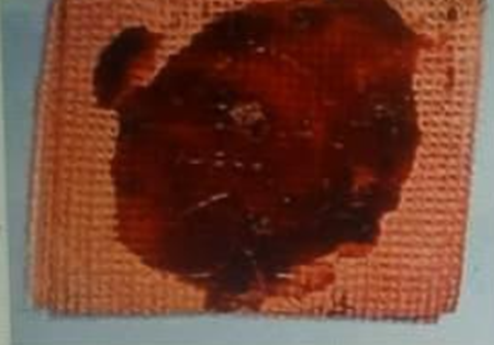
Which of the following best describes the drainage in the picture?
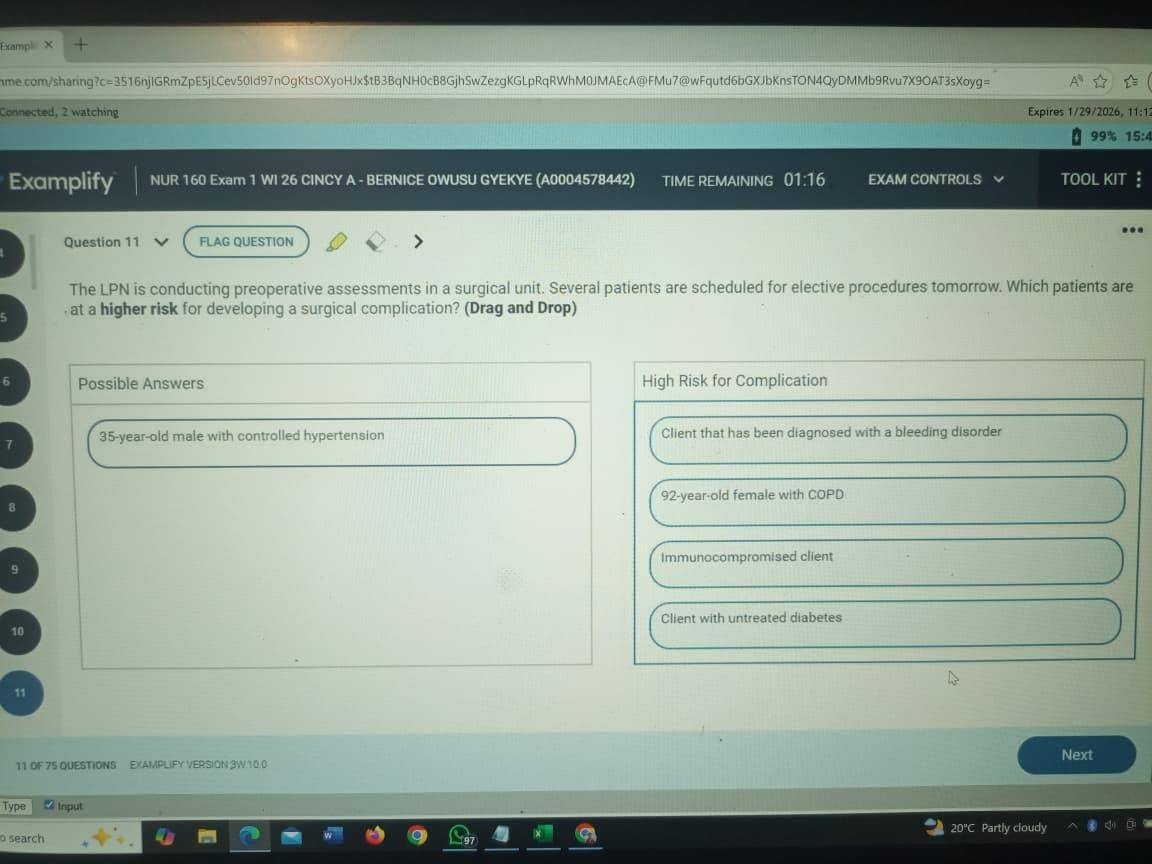
The LPN is conducting preoperative assessments in a surgical unit. Several patients are scheduled for elective procedures tomorrow. Which patients are at a higher risk for developing a surgical complication? (Drag and Drop)
Explanation
Rationale
High Risk for Complication
Client diagnosed with a bleeding disorder. Bleeding disorders impair normal coagulation pathways, increasing the risk of excessive bleeding during and after surgery. Surgical trauma can overwhelm the body’s ability to form stable clots. This increases the likelihood of hemorrhage and delayed wound healing.
92-year-old female with COPD. Advanced age is associated with decreased physiologic reserve and reduced ability to tolerate surgical stress. Chronic obstructive pulmonary disease impairs ventilation and gas exchange. This combination increases the risk for postoperative respiratory complications.
Immunocompromised client. Immunosuppression weakens the body’s ability to fight infection and mount an effective inflammatory response. Surgical incisions provide a portal of entry for pathogens. This greatly increases the risk of infection and impaired wound healing.
Client with untreated diabetes. Elevated blood glucose levels impair leukocyte function and collagen formation. These effects delay wound healing and increase susceptibility to infection. As a result, postoperative complications occur more frequently.
Lower Risk
35-year-old male with controlled hypertension. Blood pressure that is well managed reduces the risk of perioperative cardiovascular complications. Younger clients generally have greater physiologic reserve. Controlled hypertension alone does not significantly increase surgical risk.
Sign Up or Login to view all the 72 Questions on this Exam
Join over 100,000+ nursing students using Naxlex’s science-backend flashcards, practice tests and expert solutions to improve their grades and reach their goals.
Sign Up Now