






 Video Library


PN Comprehensive Predictor 2023 Proctored Exam
Total Questions : 174
Showing 174 questions, Sign in for moreA nurse on a unit is assisting with the care of a group of clients. Which of the following observations by the nurse requires intervention?
Day 1:
Admitted to medical-surgical unit following exploratory laparotomy for a ruptured appendix. Alert and oriented to person, place, and time. Bilateral breath sounds clear and present throughout. Bilateral pedal pulses 2+. Abdominal dressing with small serosanguinous drainage.
Day 5:
Alert and oriented to person, place, and time. Bilateral breath sounds clear and present throughout. Bilateral pedal pulses 2+. Client reports feeling something "popped" at the abdominal Incision after coughing. Abdominal dressing with large amount of serosanguinous drainage.
Day 1:
- Temperature 37.2° C (99° F)
- Blood pressure 128/60 mm Hg
- Heart rate 88/min
- Respiratory rate 18/min
- Oxygen saturation 96% on room air
Day 5:
- Temperature 38.2° C (100.8° F)
- Blood pressure 98/50 mm Hg
- Heart rate 110/min
- Respiratory rate 24/min
- Oxygen saturation 95% on room air
A nurse is assisting with the care of a client.
Select the 3 findings that require immediate follow up
Day 1:
Admitted to medical-surgical unit following exploratory laparotomy for a ruptured appendix. Alert and oriented to person, place, and time. Bilateral breath sounds clear and present throughout. Bilateral pedal pulses 2+. Abdominal dressing with small serosanguinous drainage.
Day 5:
Alert and oriented to person, place, and time. Bilateral breath sounds clear and present throughout. Bilateral pedal pulses 2+. Client reports feeling something "popped" at the abdominal Incision after coughing. Abdominal dressing with large amount of serosanguinous drainage.
Day 1:
- Temperature 37.2° C (99° F)
- Blood pressure 128/60 mm Hg
- Heart rate 88/min
- Respiratory rate 18/min
- Oxygen saturation 96% on room air
Day 5:
- Temperature 38.2° C (100.8° F)
- Blood pressure 98/50 mm Hg
- Heart rate 110/min
- Respiratory rate 24/min
- Oxygen saturation 95% on room air
A nurse is assisting with the care of a client.
Select the 3 findings that require immediate follow up
A nurse is assisting in the care of clients on a postpartum unit. Which of the following events should the nurse identify as needing to initiate a security alert for?
Day 1
Admission 0800:
Client hospitalized following a motor vehicle crash. Open fracture to right femur. Reduction of fracture and internal fixation device used to stabilize. Splint applied.
Day 2
0830:
Postoperative day
Client is alert to person, place, and time. Lung sounds diminished in the bases bilaterally, no adventitious sounds noted. Client denies shortness of breath. Bowel sounds hypoactive in all four quadrants, soft abdomen. Splint to right leg clean, dry, and intact. Client rates pain as 6 on a scale of 0 to 10. Right foot shows expected color for client's skin tone and warm to touch, no edema noted. Posterior tibial and dorsalis pedis pulses palpable, and capillary refill to toes less than 2 seconds. Client denies numbness or tingling to right foot.
Day 3 1200:
Client is alert to person, place, and time. Lung sounds clear. Client denies shortness of breath. Bowel sounds active in all four quadrants, soft abdomen. Client rates pain as 9 on a scale of 0 to 10. Right foot cool to touch, 2+ edema noted. Unable to palpate posterior tibial and dorsalis pedis pulses and capillary refill to toes greater than 2 seconds. Client reports numbness to right foot. Client unable to move toes on right foot. Splint to right leg intact, drainage noted.
Day 2
Postoperative day
0830:
- Temperature 36.8 °C (98.2 °F)
- Heart rate 90/min
- Respiratory rate 20/min
- Blood pressure 132/84 mm Hg
- Oxygen saturation 96% on room air
Day 3
1000
- Temperature 38.1 °C (100.6 °F)
- Heart rate 98/min
- Respiratory rate 24/min
- Blood pressure 128/78 mm Hg
- Oxygen saturation 96% on room air
Day 3
1200:
- Temperature 38.9 °C (102.1 °F)
- Heart rate 110/min
- Respiratory rate 24/min
- Blood pressure 118/68 mm Hg
- Oxygen saturation 94% on room air
Postoperative
Day 2:
Hgb 10 g/dL (12 to 16 g/dL)
Hct 34% (37% to 47%)
WBC count 14,000/mm3 (5,000 to 10,000/mm3)
Day 3:
Hgb 9.8 g/dL (12 to 16 g/dL)
Hct 32% (37% to 47%)
WBC count: 28,000/mm3 (5,000 to 10,000/mm3)
A nurse is assisting with the care of a client on an orthopedic unit.
Drag words from the choices below to fill in each blank in the following sentence.
The client is at risk for developing
Explanation
Rationale for correct choices:
• Compartment syndrome: The client demonstrates classic neurovascular compromise: severe escalating pain, numbness, inability to move toes, cool extremity, absent distal pulses, delayed capillary refill, and increasing edema. These findings reflect increased intracompartmental pressure compromising circulation and nerve function. This is a limb-threatening postoperative emergency following fractures and splinting.
• Osteomyelitis: The client has an open fracture with internal fixation, drainage at the surgical site, fever, and a marked rise in WBC count. Open fractures significantly increase the risk of bone infection due to direct contamination. Persistent fever and leukocytosis support developing osteomyelitis rather than normal postoperative inflammation.
Rationale for incorrect choices:
• Fat embolism syndrome: Fat embolism typically presents with acute respiratory distress, hypoxemia, altered mental status, and petechial rash. This client maintains adequate oxygen saturation and denies shortness of breath, making this condition less likely at this time.
• Deep vein thrombosis: DVT commonly presents with unilateral calf pain, warmth, erythema, and swelling, but does not cause absent pulses, motor loss, or sensory deficits. The acute neurovascular changes seen here point to arterial compromise rather than venous obstruction.
A nurse is caring for a client who is requesting assistance with smoking cessation. The nurse should anticipate a prescription for which of the following medications?
A nurse is discussing health practices with the mother of a toddler who is from a different cultural background than the nurse. Which of the following statements by the mother indicates that she practices cupping?
1500:
Client is restless and is not following commands. Client does not tolerate lying flat. Skin warm and dry. Regular heart sounds without murmur. Respirations labored. Breath sounds with right-sided crackles and wheezes in posterior lower lobe. Abdomen soft, nondistended with positive bowel sounds in all four quadrants. Tremors in hands.
1400:
Client's history includes cigarette smoking for 50 years but quit 3 years ago, Parkinson's disease, and anxiety. Yesterday, client reported "feeling bad." Client is alert and oriented to self. reports upper chest discomfort, and is coughing up thick clear sputum.
1500:
- Temperature 38.4 °C (101.2 °F)
- Heart rate 104/min
- Respiratory rate 30/min
- Blood pressure 108/62 mm Hg
- Oxygen saturation 89% on room air
A nurse is assisting in the care of an older adult client who was admitted from a long-term care facility.
Select the 3 findings that require immediate follow-up.
1200:
Client is 32 years old. Reports ending long-term relationship and recent loss of job. Client is withdrawn from family and friends. States, "I am so depressed. My life is a mess."
1400:
Client appears worried and has flat affect and feelings of worthlessness.
2000:
Client is tearful laying in bed and states, "I have so many problems. I wish I weren't here." Client placed in one-on-one observation.
1200:
Threatened to kill self 1 year ago
Family history of major depressive disorder
A nurse on a mental health unit is assisting with the care of a client.
Complete the following sentence by using the lists of options.
The client is at risk for
Explanation
Rationale for correct choices:
• Suicide: The client verbalizes hopelessness, worthlessness, and passive death wishes, stating “I wish I weren’t here.” There is a prior history of threatening to kill self and recent significant psychosocial stressors, including loss of a relationship and employment. Placement on one‑to‑one observation indicates concern for imminent self-harm risk.
• Suicidal ideation: The client expresses passive thoughts of not wanting to exist and significant emotional distress. Statements reflecting hopelessness and desire to escape life stressors are key indicators of suicidal ideation. These findings directly support an increased risk for suicide in the context of the patient’s depression.
Rationale for incorrect choices:
• Self mutilation: There is no evidence of deliberate self-injury behaviors such as cutting or burning. The client’s statements reflect thoughts about death rather than non-suicidal self-injury used to cope with emotional distress.
• Substance abuse: No information indicates current or past misuse of alcohol or drugs. The client’s symptoms are centered on mood disturbance, loss, and hopelessness rather than substance-seeking behavior or intoxication.
• Acute stress disorder: Acute stress disorder occurs shortly after a traumatic event and includes dissociation, intrusion symptoms, and hyperarousal. The client’s presentation reflects depressive symptoms and suicidal thoughts rather than trauma-related responses.
• Borderline personality disorder: There is no documented pattern of unstable relationships, impulsivity, identity disturbance, or chronic emotional dysregulation. The current symptoms are better explained by depression with suicidal ideation rather than a personality disorder.
A nurse is reinforcing teaching with a parent of a child who has asthma about the administration of montelukast. Which of the following statements by the parent indicates an understanding of the teaching?
A nurse is reinforcing discharge teaching with the caregiver of a client who has dependent personality disorder. Which of the following Instructions should the nurse include in the teaching?
A nurse is reinforcing teaching with a newly licensed nurse about caring for a client who has a history of dysphagia. Which of the following instructions should the nurse include in the teaching?
A nurse is assisting in the care of a client suspected of having a tuberculosis infection. Which of the following personal protective equipment should the nurse wear when in the client's room?
A nurse is collecting data from a client who is 2 days postoperative following abdominal surgery. Which of the following findings is a manifestation that can indicate an infection?
A nurse is assisting in the care of a group of clients. For which of the following client events should the nurse complete an incident report?
1000:
Client admitted to behavioral health unit for prolonged weight loss and refusal to eat. Client collapsed at school and was too weak to walk to the nurse's office. The client's guardians were called to the school. They contacted the primary care provider, who arranged for a direct admit.
Weight: 37.19 kg (82 lb)
Height: 157.48 cm (62 in)
BMI: 15
1200:
Client observed during noon meal. Client pushed food around plate. Intake 10% of meal. Offered nutritional supplement. Declined. Reports feeling anxious due to admission and mealtime. Client states, "I cannot eat this with you watching me."
1500:
Snack provided. Client observed opening package of crackers and throwing contents into the trash can. When client realized they had been observed, they admitted to their action and asked for a second snack. Observed client consuming 100% of crackers and peanut butter snack. Client states, "I just have to follow your plan and I can go home."
1530:
Client asked to use bathroom. Nurse stood outside bathroom door. Heard water running and then coughing and gagging. Client denied vomiting when asked, but eyes appeared watery.
1000:
- Temperature 36.1° C (97° F)
- Heart rate 50/min
- Respiratory rate 16/min
- Blood pressure 90/62 mm Hg
- Oxygen saturation 98% on room air
1400:
- Temperature 36.2° C (97.2° F)
- Heart rate 48/min
- Respiratory rate 16/min
- Blood pressure 88/60 mm Hg
- Oxygen saturation 99% room air
1000:
Skin dry and flaky, lanugo. Calluses noted on first and second knuckle on right hand. Lips are dry and chapped. Hair thin and dull, buccal mucosa dry.
Diminished bowel sounds. Abdomen swollen and bloated. Lungs clear to auscultation. Respirations regular and unlabored. Heart rate regular, 50/min.
Client reports no menstrual cycle for past 3 months. Client reports feeling depressed. Reports starting to avoid all carbohydrates and sugar 6 months ago because they "felt fat" compared to the "popular kids at school." Recent vacation with family, began vomiting after meals "because they made me eat." No allergies noted.
ECG sinus bradycardia
1130:
Sodium 145 mEq/L (136 to 145 mEq/L)
Potassium 2.8 mEq/L (3.5 to 5.0 mEq/L)
Chloride 110 mEq/L (98 to 106 mEq/L)
BUN 20 mg/dL (10 to 20 mg/dL)
Magnesium 1.2 mEq/L (1.3 to 2.1 mEq/L)
Total calcium 9.5 mg/dL (9.0 to 10.5 mg/dL)
Phosphate 3.2 mg/dL (3.0 to 4.5 mg/dL)
Glucose 74 mg/dL (74 to 106 mg/dL)
Total protein 4.8 g/dL (6.4 to 8.3 g/dL)
Albumin 2.7 g/dL (3.5 to 5.0 g/dL)
A nurse is assisting with the care of an 18-year-old client who was recently admitted.
Complete the diagram by dragging from the choices below to specify what condition the client is most likely experiencing, 2 actions the nurse should take to address that condition, and 2 parameters the nurse should monitor to assess the client's progress.
Explanation
Rationale for correct choices:
• Anorexia nervosa: The client has a significantly low BMI, prolonged weight loss, refusal to eat, fear of weight gain, and distorted body image. Physical findings such as lanugo, bradycardia, hypotension, amenorrhea, and electrolyte abnormalities strongly support this diagnosis. The client’s restrictive eating patterns and compensatory behaviors further align with anorexia nervosa.
• Provide a structured meal environment: A structured meal plan reduces anxiety, discourages food manipulation, and promotes consistent nutritional intake. Supervised meals help prevent hiding, discarding food, or engaging in compensatory behaviors. Consistency also supports gradual weight restoration. This intervention is a core component of treatment for anorexia nervosa.
• Focus on the client’s underlying feelings of dysphoria and lack of control: Anorexia nervosa is often associated with emotional distress, low self-worth, and a need for control. Addressing these feelings helps the client develop healthier coping mechanisms beyond food restriction. Emotional support is essential alongside nutritional rehabilitation.
• Weight on a daily basis
Daily weight monitoring evaluates nutritional rehabilitation and treatment effectiveness. Gradual, consistent weight gain is a primary goal in anorexia nervosa management. Sudden changes may indicate dehydration, food restriction, or manipulation. Tracking weight trends guides care planning and risk assessment.
• Cardiac function with ECG: The client has sinus bradycardia and severe hypokalemia, both of which significantly increase the risk of arrhythmias and cardiac arrest. Continuous or frequent ECG monitoring is essential to detect potentially life-threatening conduction abnormalities early.
Rationale for incorrect choices:
• Bulimia nervosa: Bulimia nervosa is characterized by binge eating followed by compensatory behaviors while maintaining normal or near-normal weight. This client demonstrates severe underweight status and primarily restrictive eating. The clinical presentation does not include recurrent binge episodes.
• Avoidant/restrictive food intake disorder: This disorder lacks body image distortion or fear of weight gain. In contrast, the client expresses feeling “fat” and avoids food due to weight concerns. The presence of body dissatisfaction and intentional restriction supports anorexia nervosa instead.
• Binge eating disorder: Binge eating disorder involves recurrent binge episodes without compensatory behaviors and typically results in overweight or obesity. The client is underweight and restricts intake rather than bingeing. No loss-of-control eating episodes are described.
• Encourage the client to limit fasting: While reducing fasting is important, this intervention is too vague and does not address the need for structured, supervised nutrition. Clients with anorexia often require clear expectations rather than general encouragement. Without structure, the client may continue restrictive behaviors.
• Accept the client’s belief about “forbidden” foods: Accepting food-related distortions reinforces maladaptive beliefs and perpetuates restriction. Treatment focuses on challenging rigid food rules rather than validating them. Supporting these beliefs can worsen anxiety and nutritional deficits.
• Provide the client with foods that have a variety of textures: Texture variety may be useful later in recovery but is not a priority during acute stabilization. Early treatment emphasizes caloric adequacy and meal completion rather than sensory exploration. Introducing multiple textures may increase anxiety and refusal. Structured consistency is more effective initially.
• Calcium level: The client’s calcium level is within normal limits and does not currently indicate acute risk. Other parameters such as potassium, magnesium, and cardiac status are more clinically significant. Calcium monitoring does not best reflect short-term progress.
• Vital signs every 8 hrs: Although vital signs are important, this frequency does not specifically measure recovery progress. More targeted parameters such as weight trends and post-meal behaviors provide clearer indicators of improvement. Vital signs alone may remain stable despite ongoing disordered behaviors. They are supportive but not primary indicators.
• Behavior 15 min after meals: Although useful in detecting purging behaviors, this is not as critical as cardiac monitoring in the context of severe bradycardia and hypokalemia. Behavioral monitoring remains important but secondary to life-threatening risk.
0900:
A 16-year-old client reports to the clinic with their friend. The client's friend informs the nurse that the client has not been themselves lately. Their parents and a sibling died due to injuries sustained when a tornado moved through their town 1 month ago. The client was the only survivor in their family and witnessed the death of their parents and sibling.
0910:
Client appears anxious but answers questions appropriately for age. They report experiencing nightmares that awaken them at night and startle easily during thunderstorms, but the client states that they have always been afraid of thunderstorms. Client states they have been smoking marijuana for about 1 month because it helps clear their mind. Client also states they have no desire to leave the house. Client states they do attend school regularly and are on the honor roll.
0915:
- Temperature 36.7° C (98°F)
- Blood pressure 122/80 mm Hg
- Respiratory rate 20/min
- Heart rate 99/min
A nurse is assisting with the care of client in a clinic.
Based on the information in the client's medical record, which of the following findings require immediate follow-up? Select the 4 findings that require immediate follow-up by the nurse.
A nurse is talking with a client who refuses a blood transfusion for religious reasons. Which of the following responses should the nurse make?
Today
0800;
Client presents to the clinic with reports of restlessness, abdominal pain, disorientation, and fever for the past 12hr. Client states, “I don't know what is wrong with me." Client denies recent illness. Denies fatigue and chills. Reports falling yesterday but didn't hit their head. Reports taking ibuprofen for muscle soreness. Client reports continued sleep disturbances. feelings of hopelessness, and disinterest in activities.
1 week ago
Client reports hopelessness and disinterest are lessened, but present. Sleep disturbance continues. Provider increased paroxetine to 30 mg daily. Return to clinic in 1 week
2 weeks ago
Client has a history of generalized anxiety disorder and major depressive disorder. Client presents with increased hopelessness, disinterest, and change in sleep and appetite over several months. Client is currently taking fluoxetine 20 mg daily for past year. Fluoxetine discontinued and paroxetine 10 mg daily started. Return to clinic in 1 week
A nurse is assisting with the care of a client
Drag 1 condition and 1 client finding to fill in each blank in the following sentence.
The client is at risk for developing
Explanation
Rationale for correct choices:
• Serotonin syndrome: The client presents with restlessness, abdominal pain, disorientation, and fever shortly after an increase in paroxetine, a selective serotonin reuptake inhibitor (SSRI). These symptoms are consistent with serotonin toxicity, which can develop when serotonergic medications are started or doses increased. Early recognition is critical because serotonin syndrome can progress rapidly and become life-threatening without prompt intervention.
• Adverse effects of paroxetine: The recent increase in paroxetine dosage to 30 mg daily places the client at risk for serotonergic adverse effects. Symptoms such as restlessness, gastrointestinal upset, and mental status changes reflect this risk. Identifying medication-related adverse effects allows the nurse to alert the provider for evaluation and potential dose adjustment or discontinuation.
Rationale for incorrect choices:
• Agoraphobia: The client does not exhibit fear of public spaces or avoidance behaviors typical of agoraphobia. Current symptoms are acute and physiological rather than anxiety-driven avoidance. Therefore, this condition does not explain the presenting findings.
• Bulimia: The client does not report binge eating, purging, or restrictive behaviors. Gastrointestinal symptoms are linked to medication effects rather than eating disorder behaviors. Bulimia is inconsistent with the acute presentation and current assessment.
• Mania: Manic symptoms include elevated mood, hyperactivity, decreased need for sleep, and impulsivity. The client reports hopelessness, disinterest, and lethargy rather than hyperactive or expansive mood changes. Mania is therefore unlikely. The presentation aligns more with serotonergic toxicity.
• Hypertensive crisis: Hypertensive crisis typically presents with severe headache, elevated blood pressure, visual changes, and possible neurological deficits. The client’s blood pressure is not noted as elevated, and symptoms focus on gastrointestinal and neurological changes. Medication risk for hypertensive crisis is more relevant with MAO inhibitors, not SSRIs.
• Abdominal pain: While the client reports abdominal discomfort, it is a symptom rather than a cause of risk. Abdominal pain is a manifestation of serotonin syndrome rather than an independent risk factor. It does not identify the underlying condition requiring immediate intervention.
• Recent fall: Although a recent fall is noted, it did not result in head trauma and is unlikely related to the acute presentation. The fall is not causative for serotonin syndrome. It may warrant monitoring but does not explain current physiological changes.
• Anxiety: The client has a history of generalized anxiety disorder, but current acute symptoms (fever, disorientation, restlessness) exceed baseline anxiety levels. Anxiety alone does not account for fever or neurologic changes. The acute presentation is medication-related rather than purely psychiatric.
• Feelings of hopelessness: Hopelessness is part of the client’s underlying depressive disorder, not the acute risk factor. While it may impact overall mental health, it does not directly cause serotonin syndrome. Monitoring mood is important but secondary to physiological assessment.
Day of admission, 1300:
The client is accompanied by a parent who reports that the client has become more aggressive and has been acting out at home. Few superficial cut marks on the wrist noted. The client has borderline personality disorder and alcohol use disorder.
Day 2, 1000:
The client is angry and tells the nurse, "You are a horrible person." Client initiated a fight with other peers in the unit.
1300:
The client is encouraged to share their feelings. The client tells the nurse, "You are the best. Much better than the other nurses."
Day of admission, 1400:
Citalopram 20 mg PO daily
Consult for cognitive and behavior therapy
Day 3, 1000:
Citalopram 20 mg PO twice per day
Valproate 500 mg PO daily
A nurse is assisting with the care of a client.
The nurse is collecting data from the client.
Drag words from the choices below to fill in each blank in the following sentence.
The nurse should identify that
Explanation
Rationale for correct choices:
• Emotional lability: The client demonstrates rapid and intense shifts in mood, such as being angry and hostile toward staff, then later praising the nurse excessively. This instability in affect is characteristic of borderline personality disorder (BPD). Emotional lability often leads to interpersonal conflicts and impulsive behaviors, which were observed in aggressive interactions with peers. Recognizing these shifts is essential for guiding therapeutic interventions.
• Fear of abandonment: Clients with BPD frequently experience intense fear of real or perceived abandonment, influencing their relationships and behaviors. The client’s alternating hostility and praise toward the nurse may reflect anxiety over potential rejection or inconsistent attachment. Identifying this fear helps the nurse implement consistent, supportive care while maintaining professional boundaries.
Rationale for incorrect choices:
• Elevated body temperature: There is no evidence of fever or infection in the client. Elevated temperature is not a feature of BPD. It reflects physiological issues unrelated to emotional or behavioral manifestations.
• Tactile hallucinations: The client has not reported or demonstrated perceptual disturbances such as hallucinations. Psychotic symptoms are not part of the core diagnostic features of BPD. Monitoring for hallucinations is unnecessary unless indicated by comorbid conditions.
• Increased heart rate: While heart rate may increase transiently during stress or agitation, it is a physiological response and not a defining characteristic of BPD. Emotional lability and interpersonal fears more accurately reflect the disorder’s manifestations.
A nurse is reinforcing teaching with the family of a client who is terminally ill about the grief process. Which of the following information should the nurse include in the teaching?
A nurse is contributing to the plan of care for a client who has ascites due to cirrhosis. Which of the following interventions should the nurse recommend to include in the plan?
A nurse is reinforcing teaching about hand hygiene with a newly licensed nurse. Which of the following information should the nurse include in the teaching?
A nurse is assessing a client two weeks postpartum. Which of the following statements by the client indicates a need for further evaluation?
A nurse is caring for a client who is experiencing warfarin toxicity. Which of the following medications should the nurse administer?
A nurse on a mental health unit is preparing to assist with the admission of a new client. Which of the following actions should the nurse plan to take during the therapeutic nurse-client relationship? (Move the steps into the box on the right, placing them in the order of performance. Use all the steps)
Explanation
A. Examine personal thoughts and feelings about meeting the client: The nurse should first engage in self-reflection to identify any biases, anxieties, or expectations. This helps ensure that personal feelings do not interfere with establishing a therapeutic and professional relationship with the client.
B. Introduce self and set goals for the relationship: After self-reflection, the nurse introduces themselves to the client and collaboratively establishes the goals and boundaries of the therapeutic relationship. This step builds trust and sets clear expectations for interactions.
C. Assist the client with identifying problem-solving techniques: Once the relationship is established, the nurse helps the client develop coping and problem-solving strategies. This step supports the client’s growth, autonomy, and ability to manage challenges effectively.
D. Summarize the achievement of goals that have been met: At the conclusion of the therapeutic relationship, the nurse reviews progress with the client and summarizes goals that were achieved. This reinforces accomplishments, encourages continued growth, and provides closure to the relationship.
A nurse begins to bathe a newly admitted client who reports that they have not had anything to eat that day. The nurse interrupts the bath and obtains a healthy meal for the client. This action by the nurse is an example of which of the following?
A nurse is assisting in the care of a client on a postpartum unit. The client had an uncomplicated vaginal delivery 24 hours ago. Which of the following data collection findings should the nurse report to the primary RN immediately?
A nurse is assisting in the care of an older adult. The client appears to be malnourished and bruising is noted on their arms and legs. The nurse should identify which of the following as the legal responsibility of the nurse?
A nurse is supervising an assistive personnel (AP) obtain supplies for a client who is on seizure precautions. Which of the following materials should the AP place in the client's room?
A nurse is reinforcing teaching with a client who is about to undergo surgery. Which of the following statements about informed consent should the nurse include in the teaching?
A nurse is collecting data from a client who is in Buck's traction. Which of the following findings indicates the traction is functioning correctly?
A nurse is collecting data for a client who is receiving enteral tube feedings. The nurse should identify that which of the following findings is a manifestation of fluid overload?
A nurse is assisting with the care of a client who is receiving a spinal epidural to treat a herniated disc. Which of the following findings should the nurse identify as an indicator of unrelieved pain?
A nurse is assisting with a prenatal examination of a client who is at weeks of gestation. The nurse notes that the client's vagina and vulva are a purplish color. The nurse should document this finding as which of the following?
A nurse is collecting data from a client who has hyponatremia. Which of the following findings should the nurse expect?
A nurse is reinforcing teaching with new parents about the provider's prescription for a serum bilirubin test. Which of the following statements should the nurse include in the explanation?
A nurse is collecting data from a client who is at 35 weeks of gestation. Which of the following findings should the nurse report to the provider?
A nurse is reinforcing discharge teaching with a client who has a prescription for antibiotic therapy. The client reports experiencing diarrhea when taking antibiotics. Which of the following foods should the nurse recommend to lessen the occurrence of diarrhea?
A nurse enters a client's room and finds her sitting on the floor next to the shower. The client states that she slipped on some water outside of the shower. Which of the following actions should the nurse take first?
A nurse is reinforcing teaching about delirium with the caregiver of a client. Which of the following information should the nurse include?
A nurse is caring for a client following placement of a sigmoid colostomy, in which of the following locations should the nurse expect to find a stoma? (You will find hot spots to select in the artwork below. Select only the hot spot that corresponds to your answer.
Explanation
A. Ascending colon area (right lower quadrant): This location corresponds to an ascending colostomy or ileostomy, not a sigmoid colostomy. The stoma here would produce more liquid stool due to its proximity to the small intestine.
B. Transverse colon area (upper abdomen): A stoma in this area represents a transverse colostomy, which produces semi-formed stool. This is not consistent with a sigmoid colostomy location.
C. Descending colon area (left upper quadrant): While descending colon colostomies are in the left side, they are higher up and produce more formed stool, but the typical sigmoid colostomy is lower in the left lower quadrant.
D. Sigmoid colon area (left lower quadrant): The sigmoid colon is located in the left lower quadrant of the abdomen. A sigmoid colostomy is placed here, producing more formed stool and allowing easier appliance management. This is the expected site for a stoma following sigmoid colostomy surgery.
A nurse is assisting in planning care for a 16-year-old client in a pediatric clinic. Which of the following actions would be a breach of confidentiality?
A nurse is assisting in the care of a client who is placed in wrist restraints. Which of the following should the nurse recognize as an expected finding?
A nurse is reinforcing client teaching about preventing stress injuries. Which of the following statements by the client indicates an understanding of teaching?
A nurse is reinforcing teaching with a client who has GERD and a prescription for pantoprazole. Which of the following statements indicates an understanding of the teaching?
A nurse is collecting data for a client who is postoperative and has an elevated temperature. Which of the following actions should the nurse take first?
A nurse is reinforcing discharge teaching with a client who states. "I don't feel confident driving to my follow-up appointments." The nurse should obtain a referral for which of the following members of the health care team?
A nurse is reinforcing teaching with a client who has an electrolyte imbalance. Which of the following foods should the nurse include as the lowest in potassium?
Six-month-old male infant who was born at 39 weeks of gestation, birth weight 3.6 kg (7.9 lb). Parent states infant breastfeeds and eats 0.5 Tbsp of cereal and fruit three times per day. Parent reports infant is up-to-date on immunizations and has no changes in health. Seeking a routine physical exam.
- Heart rate 128/min
- Temperature 37.4° C (99.3° F)
- Respiratory rate 26/min
- Weight 5.9 kg (13)
- Length 64.5 cm (25.4 in)
Infant noted to roll from abdomen to back and play with feet. Smiles at nurse when spoken to. Turns head toward voice and sound. Places toy in mouth. Two lower central incisors present.
A nurse is collecting data from a 6-month-old infant during a well-child visit. Which of the following findings should the nurse report to the provider? (Click on the exhibit tabs for additional information about the client. There are three tabs that contain separate categories of data)
A nurse is collecting data from a client who is receiving magnesium sulfate via continuous IV infusion to treat preeclampsia. Which of the following findings indicates that the medication is having a therapeutic effect?
A nurse is assisting with the care of a client who is requesting pain medication. The nurse returns to the bedside to administer the pain medication within the timeframe given to the client. Which of the following ethical principles did the nurse follow?
A nurse is reinforcing teaching with a client who has a cystocele. Which of the following statements by the client indicates an understanding of the teaching?
A nurse is assisting with the care of a group of clients. Which of the following actions should the nurse take to manage her time effectively? (Select all that apply.)
A nurse is assisting with the plan of care for a group of clients. Which of the following tasks should the nurse delegate to an assistive personnel?
A nurse is preparing to administer 0.9% sodium chloride 1,000 mL. IV to infuse over 8 hr. The nurse should set the IV pump to deliver how many mL/hr? (Round the answer to the nearest whole number. Use a leading zero if it applies. Do not use a trailing zero)
Explanation
Total Volume: 1,000 mL
Infusion Time: 8 hours
- Calculate the infusion rate
Infusion Rate (mL/hr) = Total Volume ÷ Time (hr)
Infusion Rate = 1,000 ÷ 8
Infusion Rate = 125 mL/hr
A nurse is giving a report to their supervisor. Which of the following indicates a need for client care to be transferred to a registered nurse?
A nurse on a hospice unit is caring for a client who has cancer and is in the active phase of dying. Which of the following findings requires intervention by the nurse?
A nurse is contributing to the plan of care for a client who is pregnant and reports having trouble sleeping. Which of the following instructions should the nurse include in the plan of care?
A nurse is caring for a client who is postoperative following a subtotal thyroidectomy. The nurse should place the client in which of the following positions?
A nurse in a mental health facility is caring for a client who reports palpitations and a sense of impending doom. Which of the following actions should the nurse take first?
2015:
Client appears disheveled with matted hair and stained clothing Attempting to get out of handcuffs. The client states, "I have to get out of here. I hear the helicopters. They are coming to get met
Client able to state name, but not date. They believe they are in a laboratory, run by the doctors who have been prescribing their medications. When asked about their medical history, they reply. "My name is Jamie, and you are the devil."
2030:
Reviewed police report: Client found attempting to break through a window at the clinic downtown. When approached, client yelled and tried to hit the officer with the stick they were using. "Get away. I have to get the notes, they are trying to poison me."
2145
Client appears to be responding to internal stimuli but is less outwardly agitated. Changed into hospital scrubs with encouragement. Handcuffs removed by police and 1:1 sitter at bedside. Cooperative with vital signs and provided contact information for parent
2030:
Admit to behavioral health unit.
Obtain urine drug screen, basic metabolic panel, and complete blood count.
Paliperidone 6 mg PO daily
Ziprasidone 20 mg IM every 4 hr PRN agitation and psychosis
2030:
Ziprasidone 20 mg IM left deltoid muscle
A nurse is assisting in the care of a client who was brought to the emergency department by the police
Select the 4 client findings from the Nurses' Notes that indicate psychosis.
2015:
Client appears disheveled with matted hair and stained clothing. Attempting to get out of handcuffs. The client states, "I have to get out of here. I hear the helicopters. They are coming to get me!"
Client able to state name, but not date. They believe they are in a laboratory, run by the doctors who have been prescribing their medications. When asked about their medical history, they reply, "My name is Jamie, and you are the devil."
2030:
Reviewed police report: Client found attempting to break through a window at the clinic downtown. When approached. client yelled and tried to hit the officer with the stick they were using. "Get away, I have to get the notes, they are trying to poison me."
2145:
Client appears to be responding to internal stimuli but is less outwardly agitated. Changed into hospital scrubs with encouragement. Handcuffs removed by police and 1:1 sitter at bedside. Cooperative with vital signs and provided contact information for parent.
2030:
Admit to behavioral health unit.
Obtain urine drug screen, basic metabolic panel, and complete blood count.
Paliperidone 6 mg PO daily
Ziprasidone 20 mg IM every 4 hr PRN agitation and psychosis
2030:
Ziprasidone 20 mg IM left deltoid muscle
Day 5, 0700:
Paliperidone 6 mg PO
2130:
Urine drug screen: positive for amphetamines
The nurse is continuing to assist in the care of the client.
Complete the following sentence by using the lists of options.
The nurse should reinforce teaching with the client to
Explanation
Rationale for correct choices:
• Monitor body temperature: Paliperidone, an antipsychotic, can increase the risk of neuroleptic malignant syndrome (NMS), a rare but potentially life-threatening condition characterized by hyperthermia, muscle rigidity, and altered mental status. Teaching the client to monitor body temperature helps with early recognition of NMS and timely intervention.
• Report sore throat: Paliperidone can cause hematologic adverse effects, including leukopenia, neutropenia, and agranulocytosis. A sore throat may be an early sign of infection due to low white blood cell counts. Reinforcing the need to report symptoms like sore throat ensures prompt evaluation and prevents serious complications.
Rationale for incorrect choices:
• Anticipated increased bruising: Although some antipsychotics may rarely affect platelet function, paliperidone is not commonly associated with increased bruising. This is not a primary teaching point for the client. Monitoring for bruising is less critical than monitoring for signs of infection or NMS.
• Stop taking contraceptive medication: There is no evidence that paliperidone interacts with contraceptives in a way that requires discontinuation. Advising the client to stop contraceptive medication is unnecessary and could place the client at risk for unintended pregnancy.
• Expect weight loss: Paliperidone is more commonly associated with weight gain rather than weight loss. Counseling the client about expecting weight loss would be inaccurate and could mislead them regarding lifestyle and dietary management.
• Follow a low-sodium diet: Paliperidone does not require sodium restriction. Low-sodium diet recommendations are not indicated unless the client has a comorbid condition like hypertension or heart failure. This is unrelated to the medication’s primary safety concerns.
A nurse is assisting with the care of a 17-year-old client who is married and needs to undergo an emergency appendectomy. Which of the following individuals should the nurse ask to sign the informed consent form?
A home health nurse is caring for a client who has Alzheimer's disease. The client's son is concerned about his mother becoming frustrated. Which of the following interventions should the nurse include?
A nurse is caring for a client who has depressive disorder. The client states. "Everyone would be better off if I were not around." Which of the following responses should the nurse make?
A nurse is preparing to administer a dose of digoxin to a client who is experiencing heart failure. Which of the following actions should the nurse take prior to administering this medication?
A nurse is collecting data from a client who has hypokalemia and recently started potassium chloride supplements. Which of the following findings indicates a positive response to the intervention?
A nurse is caring for a 3-year-old child who has acute bacterial conjunctivitis of the right eye and has been prescribed bacitracin ophthalmic ointment. Which of the following actions should the nurse take?
A nurse is assisting with screening a client for scoliosis. Which of the following actions should the nurse ask the client to perform?
A nurse is evaluating an 8-month-old infant's pain level following the administration of hydrocodone. Which of the following pain scales would the nurse use?
A charge nurse is educating a newly licensed nurse on how to perform a sterile dressing change on a client. Which of the following actions indicates an understanding of the teaching?
A charge nurse is reinforcing teaching with a newly licensed nurse about the nurse's role in obtaining informed consent. Which of the following statements by the newly licensed nurse indicates an understanding of the teaching?
1000:
Client is gravida 1 para 0 and reports headache, nausea, vomiting, and right epigastric pain.
Client is alert and oriented, appears restless. Client has gained 0.68 kg (1.5 lb) within the last week. Slight facial edema is present. Heart rate is regular and without murmur. Respirations are even, nonlabored, Lungs are clear to auscultation. Abdomen is gravid. Fundal height measurement is 26 cm. 1+ dependent edema is noted bilaterally. Deep tendon reflex (DTR) is 3+ bilaterally.
Assists with application of external fetal heart monitor. Tracing shows minimal variability. Fetal heart rate is 140/min.
1000:
- Temperature 37° C (98.6° F)
- Heart rate 92/min
- Respiratory rate 24/min
- Blood pressure 156/96 mm Hg
- Oxygen saturation (SaO2) 94% on room air
Fundal height
1100:
- Temperature 37° C (98.6° F)
- Heart rate 92/min
- Respiratory rate 24/min
- Blood pressure 156/96 mm Hg
- Oxygen saturation (SaO2) 94% on room air
A nurse working in labor and delivery is assisting in the care of a client who is at 30 weeks of gestation.
Select the 5 findings that the nurse should recommend for follow-up.
1000:
Client is gravida 1 para 0 and reports headache, nausea, vomiting, and right epigastric pain.
Client is alert and oriented, appears restless. Client has gained 0.68 kg (1.5 lb) within the last week. Slight facial edema is present. Heart rate is regular and without murmur. Respirations are even, nonlabored. Lungs are clear to auscultation. Abdomen is gravid. Fundal height measurement is 26 cm. 1+ dependent edema is noted bilaterally. Deep tendon reflex (DTR) is 3+ bilaterally.
Assists with application of external fetal heart monitor. Tracing shows minimal variability. Fetal heart rate is 140/min.
1000:
- Temperature 37.4° C (99.3° F)
- Heart rate 90/min
- Respiratory rate 20/min
- Blood pressure 148/94 mm Hg
- Oxygen saturation (SaO2) 95% on room air
1100:
- Temperature 37° C (98.6° F)
- Heart rate 92/min
- Respiratory rate 24/min
- Blood pressure 156/96 mm Hg
- Oxygen saturation (SaO2) 94% on room air
A nurse working in labor and delivery is assisting in the care of a client who is at 30 weeks of gestation.
Complete the following sentence by using the list of options.
The client is at risk for developing
Explanation
Rationale for correct choices:
• Placental abruption: The client exhibits sudden-onset hypertension, epigastric pain, headache, and facial edema at 30 weeks gestation, which are risk factors for placental abruption. Abruption involves premature separation of the placenta from the uterine wall, leading to maternal and fetal compromise. Early recognition is critical due to potential hemorrhage, fetal distress, and preterm delivery.
• Hypertension: The client’s blood pressure readings (148/94 mm Hg and 156/96 mm Hg) are significantly elevated for gestation, indicating preeclampsia or gestational hypertension. Hypertension increases the risk for placental abruption by causing vascular injury and reduced placental perfusion.
Rationale for incorrect choices:
• Postpartum hemorrhage: Postpartum hemorrhage occurs after delivery and is not a risk during the antepartum period at 30 weeks. While abruption can lead to bleeding, postpartum hemorrhage specifically refers to hemorrhage after birth and is not directly indicated by current findings.
• Placenta previa: Placenta previa involves implantation of the placenta over or near the cervical os, often presenting with painless vaginal bleeding. The client reports epigastric pain, headache, and hypertension, which are not characteristic of placenta previa.
• Hyperreflexia: While hyperreflexia is noted (DTRs 3+ bilaterally) and may indicate preeclampsia, it is a clinical finding rather than a direct cause of placental abruption. It is an important assessment parameter but does not independently increase the risk of abruption.
• Vomiting: Vomiting is a symptom the client reports but is not a primary risk factor for placental abruption. It may indicate associated preeclampsia or general discomfort but does not contribute directly to vascular placental separation.
1000:
Client is gravida 1 para 0 and reports headache, nausea, vomiting, and right epigastric pain.
Client is alert and oriented, appears restless. Client has gained 0.68 kg (1.5 lb) within the last week. Slight facial edema is present. Heart rate is regular and without murmur. Respirations are even, nonlabored. Lungs are clear to auscultation. Abdomen is gravid. Fundal height measurement is 26 cm. 1+ dependent edema is noted bilaterally. Deep tendon reflex (DTR) is 3+ bilaterally.
Assists with application of external fetal heart monitor. Tracing shows minimal variability. Fetal heart rate is 140/min.
1000:
- Temperature 37.4° C (99.3° F)
- Heart rate 90/min
- Respiratory rate 20/min
- Blood pressure 148/94 mm Hg
- Oxygen saturation (SaO2) 95% on room air
1100:
- Temperature 37° C (98.6° F)
- Heart rate 92/min
- Respiratory rate 24/min
- Blood pressure 156/96 mm Hg
- Oxygen saturation (SaO2) 94% on room air
1100:
Bloodwork
Hemoglobin 12.5 g/dL (greater than 11g/dL)
Hematocrit 37% (greater than 33%)
Platelet count 98,000/mm3 (150,000 to 400,000/mm3)
Fibrinogen 500 mg/dL (200 to 400 mg/dL)
BUN 23 mg/dL (10 to 20 mg/dL)
Creatinine 1.2 mg/dL (0.5 to 1.0 mg/dL)
Lactate dehydrogenase 220 units/L (100 to 190 units/L)
Aspartate aminotransferase 38 units/L (0 to 35 units/L)
Alanine aminotransferase 40 units/L (4 to 36 units/L)
Uric acid 8.5 mg/dL (2.7 to 7.3 mg/dL)
Urinalysis
Protein in urine 25 mg/dL (0 to 8 mg/dL)
The nurse is assisting in the care of the client who is at 30 weeks of gestation.
For each client finding, click to specify if the client is at risk for developing HELLP syndrome or preeclampsia. Each finding may support more than 1 disease process or none at all. There must be at least 1 selection in every column. There does not need to be a selection in every row.
Explanation
• Hemoglobin: Hemoglobin is within normal limits at 12.5 g/dL. HELLP syndrome involves hemolysis, which could lower hemoglobin, but in this case, there is no evidence of anemia yet. Preeclampsia may cause hemoconcentration, but the client’s hemoglobin is not abnormal.
• Platelet count: The client’s platelet count is 98,000/mm³, below the normal range. Thrombocytopenia is a hallmark of HELLP syndrome and can also occur in severe preeclampsia. Low platelets increase bleeding risk and indicate systemic endothelial dysfunction. Monitoring platelet trends is critical for anticipating complications and guiding treatment.
• Liver enzymes: AST and ALT are elevated (38 and 40 units/L), reflecting hepatocellular injury. Elevated liver enzymes are a defining component of HELLP syndrome (hemolysis, elevated liver enzymes, low platelets) and are commonly seen in preeclampsia due to hepatic involvement.
• Fibrinogen: Fibrinogen is elevated at 500 mg/dL. HELLP syndrome involves a hypercoagulable state with microangiopathic hemolysis and liver involvement, often causing changes in fibrinogen levels. Elevated fibrinogen supports the presence of HELLP syndrome.
1000:
Client is gravida 1 para 0 and reports headache, nausea, vomiting, and right epigastric pain.
Client is alert and oriented, appears restless. Client has gained 0.68 kg (1.5 lb) within the last week. Slight facial edema is
present. Heart rate is regular and without murmur. Respirations are even, nonlabored. Lungs are clear to auscultation. Abdomen is gravid. Fundal height measurement is 26 cm. 1+ dependent edema is noted bilaterally. Deep tendon reflex (DTR) is 3+ bilaterally.
Assists with application of external fetal heart monitor. Tracing shows minimal variability. Fetal heart rate is 140/min.
1000:
- Temperature 37.4° C (99.3° F)
- Heart rate 90/min
- Respiratory rate 20/min
- Blood pressure 148/94 mm Hg
- Oxygen saturation (SaO2) 95% on room air
1100:
- Temperature 37° C (98.6° F)
- Heart rate 92/min
- Respiratory rate 24/min
- Blood pressure 156/96 mm Hg
- Oxygen saturation (SaO2) 94% on room air
1100:
Bloodwork
Hemoglobin 12.5 g/dL (greater than 11g/dL)
Hematocrit 37% (greater than 33%)
Platelet count 98,000/mm3 (150,000 to 400,000/mm3)
Fibrinogen 500 mg/dL (200 to 400 mg/dL)
BUN 23 mg/dL (10 to 20 mg/dL)
Creatinine 1.2 mg/dL (0.5 to 1.0 mg/dL)
Lactate dehydrogenase 220 units/L (100 to 190 units/L)
Aspartate aminotransferase 38 units/L (0 to 35 units/L)
Alanine aminotransferase 40 units/L (4 to 36 units/L)
Uric acid 8.5 mg/dL (2.7 to 7.3 mg/dL)
Urinalysis
Protein in urine 25 mg/dL (0 to 8 mg/dL)
The nurse is assisting in the care of the client who is at 30 weeks of gestation.
Click to specify which of the following actions the nurse should recommend including in the client's plan of care. Select all that apply.
1000:
Client is gravida 1 para 0 and reports headache, nausea, vomiting, and right epigastric pain.
Client is alert and oriented, appears restless. Client has gained 0.68 kg (1.5 lb) within the last week. Slight facial edema is
present. Heart rate is regular and without murmur. Respirations are even, nonlabored. Lungs are clear to auscultation. Abdomen is gravid. Fundal height measurement is 26 cm. 1+ dependent edema is noted bilaterally. Deep tendon reflex (DTR) is 3+ bilaterally.
Assists with application of external fetal heart monitor. Tracing shows minimal variability. Fetal heart rate is 140/min.
1000:
- Temperature 37.4° C (99.3° F)
- Heart rate 90/min
- Respiratory rate 20/min
- Blood pressure 148/94 mm Hg
- Oxygen saturation (Sao,) 95% on room air
1100:
- Temperature 37° C (98.6° F)
- Heart rate 92/min
- Respiratory rate 24/min
- Blood pressure 156/96 mm Hg
- Oxygen saturation (SaO) 94% on room air
1400:
- Temperature 37.2° C (98.9° F)
- Heart rate 80/min
- Respiratory rate 14/min
- Blood pressure 170/112 mm Hg
- Oxygen saturation (SaO) 92% on room air
1800:
- Temperature 38.3° C (101° F)
- Heart rate 58/min
- Respiratory rate 18/min
- Blood pressure 146/96 mm Hg
- Oxygen saturation (SaO,) 95% on 2 L nasal cannula
1100:
Bloodwork
Hemoglobin 12.5 g/dL (greater than 11g/dL)
Hematocrit 37% (greater than 33%)
Platelet count 98,000/mm3 (150,000 to 400,000/mm3)
Fibrinogen 500 mg/dL (200 to 400 mg/dL)
BUN 23 mg/dL (10 to 20 mg/dL)
Creatinine 1.2 mg/dL (0.5 to 1.0 mg/dL)
Lactate dehydrogenase 220 units/L (100 to 190 units/L)
Aspartate aminotransferase 38 units/L (0 to 35 units/L)
Alanine aminotransferase 40 units/L (4 to 36 units/L)
Uric acid 8.5 mg/dL (2.7 to 7.3 mg/dL)
Urinalysis
Protein in urine 25 mg/dL (0 to 8 mg/dL)
The nurse is assisting in the care of the client who is at 30 weeks of gestation.
Click to highlight the findings that indicate the client's condition has improved. To deselect a finding, click on the finding again.
Temperature 38.3° C (101° F)
Blood pressure 146/96 mm Hg
Urine output 40 mL
Deep tendon reflexes 2+ bilaterally
Heart rate 58/min
Oxygen saturation (SaO) 95% on 2 L nasal cannula
Respiratory rate 18/min
Explanation
Rationale for correct choices:
• Deep tendon reflexes 2+ bilaterally: DTRs decreased from 3+ to 2+, indicating reduced hyperreflexia. Hyperreflexia is a hallmark of preeclampsia and HELLP syndrome; improvement suggests that neuromuscular excitability and central nervous system irritability are stabilizing. Monitoring DTRs helps evaluate treatment effectiveness and risk reduction for complications.
• Oxygen saturation (SaO₂) 95% on 2 L nasal cannula: Oxygenation is within acceptable limits for a patient on supplemental oxygen. Maintaining adequate maternal oxygenation supports fetal perfusion and reduces hypoxic stress. Improved oxygen saturation reflects better respiratory status and cardiovascular stability compared with prior readings (SaO₂ 92–94%).
• Respiratory rate 18/min: The client’s respiratory rate is within normal limits, improving from earlier tachypnea (24/min). Stabilization of respiratory rate indicates reduced distress, better oxygenation, and improved overall maternal status, which contributes to safer outcomes for both mother and fetus.
• Blood pressure 146/96 mm Hg: At 1400, the client’s blood pressure had spiked to a very dangerous 170/112 mm Hg (severe hypertension). The decrease to 146/96 mm Hg by 1800 indicates that medical interventions are successfully lowering the pressure toward a safer range.
Rationale for incorrect choices:
• Temperature 38.3° C (101° F): The client’s temperature is elevated, indicating fever. Fever does not reflect improvement and may signal infection, inflammation, or other complications. Ongoing assessment and intervention are required to address the cause of hyperthermia.
• Urine output 40 mL: A single low urine output reading suggests oliguria, which is concerning in preeclampsia or HELLP syndrome. Adequate renal perfusion is essential; this value does not indicate improvement and requires ongoing monitoring.
• Heart rate 58/min: Bradycardia may be related to medications, vagal stimulation, or underlying cardiovascular changes. While it is a change from prior tachycardia, bradycardia itself is not an indicator of improvement and may require further evaluation.
A nurse is reinforcing teaching with a client who has an open leg wound and is experiencing difficulty healing. The nurse should encourage the client to increase which of the following nutrients in his diet?
A nurse is preparing to administer ibuprofen solution 60 mg orally to a 7-month-old infant who is febrile. Available is ibuprofen 50 mg/1.25ml. How many mL should the nurse administer? (Round the answer to the nearest tenth. Use a leading zero if it applies. Do not use a trailing zero)
Explanation
Ordered Dose: 60 mg
Available Concentration: 50 mg/1.25 mL
- Calculate the volume to administer
Volume to administer = (Ordered Dose ÷ Concentration) × Volume
Volume to administer = (60 ÷ 50) × 1.25
Volume to administer = 1.2 × 1.25
Volume to administer = 1.5 mL
A nurse is collecting data from a child who has pertussis. Which of the following manifestations should the nurse expect?
A nurse on a pediatric unit is caring for a toddler who has poor dietary intake. Which of the following actions should the nurse take first?
A nurse is preparing to complete a sterile dressing change for a client's wound. Which of the following actions should the nurse take first?
A nurse is reinforcing dietary teaching with a client who is at 12 weeks of gestation. Which of the following statements should the nurse make?
A nurse is completing postmortem documentation for a client. Which of the following information should the nurse include in the documentation?
A school nurse is informed that a student has recently been diagnosed with idiopathic thrombocytopenia purpura. The nurse should identify that which of the following scheduled vaccines should be withheld?
A nurse is assisting a client to ambulate when the client begins to have a generalized seizure, identify the sequence of actions the nurse should take. (Move the steps into the box on the right, placing them in the order of performance. Use all the steps.)
Explanation
A. Turn the client's head to the side: Turning the head to the side helps maintain airway patency and allows saliva or secretions to drain, reducing the risk of aspiration. This action is performed once the client is safely positioned and seizing. Airway protection is a priority during active seizure activity.
B. Guide the client to the floor: Safely guiding the client to the floor prevents injury from a fall during sudden loss of muscle control. This is the first priority when a seizure begins during ambulation. Protecting the client from trauma takes precedence over all other actions.
C. Provide supplemental oxygen: After the seizure activity subsides, oxygen may be needed to address hypoxia caused by impaired breathing during the seizure. Supplemental oxygen supports adequate tissue oxygenation during the postictal phase. This action follows airway positioning and stabilization.
D. Provide hygiene: Hygiene care is provided after the seizure once the client is stable, as incontinence or excessive secretions may have occurred. Maintaining cleanliness promotes comfort and dignity. This step is not urgent and is addressed after physiologic needs are met.
E. Initiate reorientation: Reorientation is performed last, during the postictal phase, when the client may be confused or disoriented. Calm reassurance and simple explanations help reduce anxiety and support neurologic recovery. This action is appropriate only once the client is alert and stable.
A nurse is planning care for a client who is 6 hr postoperative following a right knee arthroplasty. Which of the following interventions should the nurse include in the client's plan of care?
Client reports, "I have a cough."
History of present illness: 38-year-old client presents to the ED with a 4-day history of cough, often productive. Client reports fatigue, night sweats, and a low-grade fever. Client reports "blood-tinged sputum." Client also reports, "I used to weigh 167 pounds. Now I weigh 162 pounds." Client reports a decreased appetite along with the 2.26 kg (5 lb) weight loss over the past week. Client states they have been trying to stay hydrated.
Family history: Child has asthma. All other family members healthy.
Social history. Heavy alcohol use (4 to 5 drinks per day), denies tobacco or illicit drug use. Recently traveled to visit their family in South Africa and stayed for 3 weeks.
- Temperature 38.1° C (100.5° F)
- Blood pressure 112/88 mm Hg
- Heart rate 98/min
- Respiratory rate 24/min
- Pulse oximetry 98% on room air
A nurse is assisting in the care of a client who presents to the emergency department.
A nurse is reviewing the client’s medical record. Which of the following findings indicate the need for further evaluation? Select all that apply.
Client reports, "I have a cough."
History of present illness: 38-year-old client presents to the ED with a 4-day history of cough, often productive. Client reports fatigue, night sweats, and a low-grade fever. Client reports "blood-tinged sputum." Client also reports, "I used to weigh 167 pounds. Now I weigh 162 pounds." Client reports a decreased appetite along with the 2.26 kg (5 lb) weight loss over the past week. Client states they have been trying to stay hydrated.
Family history: Child has asthma. All other family members healthy.
Social history. Heavy alcohol use (4 to 5 drinks per day), denies tobacco or illicit drug use. Recently traveled to visit their family in South Africa and stayed for 3 weeks.
- Temperature 38.1° C (100.5° F)
- Blood pressure 112/88 mm Hg
- Heart rate 98/min
- Respiratory rate 24/min
- Pulse oximetry 98% on room air
A nurse is assisting in the care of a client who presents to the emergency department.
Drag words from the choices below to fill in each blank in the following sentence.
To further evaluate the client, the nurse anticipates the client will need
Explanation
Rationale for correct choices:
• A Mantoux test: The client presents with a chronic productive cough, night sweats, low-grade fever, hemoptysis, recent weight loss, and recent travel to South Africa, which is a region with higher tuberculosis prevalence. A Mantoux test helps screen for Mycobacterium tuberculosis infection. These systemic and respiratory findings strongly support the need for TB evaluation.
• A chest xray: A chest xray is essential for evaluating pulmonary pathology when tuberculosis is suspected. It can reveal cavitary lesions, infiltrates, or consolidation consistent with active TB disease. Imaging is necessary to assess disease severity and guide further diagnostic testing and isolation precautions.
Rationale for incorrect choices:
• Blood cultures: Blood cultures are primarily used to identify systemic bloodstream infections or sepsis. This client’s presentation is localized to the respiratory system without signs of hemodynamic instability or systemic bacterial infection. Blood cultures would not be a priority for initial TB evaluation.
• A pulmonary function test: Pulmonary function tests assess chronic airflow or restrictive lung diseases such as asthma or COPD. They are not appropriate in the acute evaluation of suspected infectious diseases like tuberculosis. Performing PFTs would not help identify the cause of hemoptysis or constitutional symptoms.
• A nasopharyngeal swab: Nasopharyngeal swabs are used to detect viral respiratory infections such as influenza or COVID-19. The client’s prolonged symptoms, weight loss, night sweats, and hemoptysis are not consistent with an acute viral illness. TB evaluation requires targeted testing rather than upper airway swabs.
Client reports, "I have a cough."
History of present illness: 38-year-old client presents to the ED with a 4-day history of cough, often productive. Client reports fatigue, night sweats, and a low-grade fever. Client reports "blood-tinged sputum." Client also reports, "I used to weigh 167 pounds. Now I weigh 162 pounds." Client reports a decreased appetite along with the 2.26 kg (5 lb) weight loss over the past week. Client states they have been trying to stay hydrated.
Family history: Child has asthma. All other family members healthy.
Social history: Heavy alcohol use (4 to 5 drinks per day), denies tobacco or illicit drug use. Recently traveled to visit their family in South Africa and stayed for 3 weeks.
- Temperature 38.1° C (100.5° F)
- Blood pressure 112/88 mm Hg
- Heart rate 98/min
- Respiratory rate 24/min
- Pulse oximetry 98% on room air
Sputum culture: positive for M. tuberculosis
Complete the following sentence by using the list of options.
The nurse should wear an
Explanation
Rationale for correct choices:
• N95 respirator: Mycobacterium tuberculosis is transmitted via airborne particles that remain suspended in the air. An N95 respirator is required to filter airborne droplet nuclei and protect the nurse from inhalation exposure. Standard surgical masks do not provide adequate airborne protection in confirmed TB cases.
• Gloves: As part of Standard Precautions, gloves should always be worn when there is a risk of contact with body fluids, such as sputum or contaminated surfaces in the client's room.
Rationale for incorrect choices:
• Surgical mask: A surgical mask protects against large respiratory droplets but does not filter airborne particles. TB requires airborne precautions, which exceed the level of protection provided by a standard mask. Surgical masks are more appropriate for droplet-based infections.
• Face shield: A face shield protects mucous membranes from splashes or sprays but does not filter inhaled air. TB does not spread via splashes, making this equipment unnecessary for routine airborne precautions. Respiratory protection remains the priority.
Client reports, "I have a cough."
History of present illness: 38-year-old client presents to the ED with a 4-day history of cough, often productive. Client reports fatigue, night sweats, and a low-grade fever. Client reports "blood-tinged sputum." Client also reports, "I used to weigh 167 pounds. Now I weigh 162 pounds." Client reports a decreased appetite along with the 2.26 kg (5 lb) weight loss over the past week. Client states they have been trying to stay hydrated.
Family history: Child has asthma. All other family members healthy.
Social history: Heavy alcohol use (4 to 5 drinks per day), denies tobacco or illicit drug use. Recently traveled to visit their family in South Africa and stayed for 3 weeks.
- Temperature 38.1° C (100.5° F)
- Blood pressure 112/88 mm Hg
- Heart rate 98/min
- Respiratory rate 24/min
- Pulse oximetry 98% on room air
Sputum culture: positive for M. tuberculosis
The nurse reviews the client's test results.
For each potential provider's prescription, click to specify if the potential prescription is anticipated or contraindicated for the client. There must be at least 1 selection in every row. There does not need to be a selection in every column.
Explanation
• Ethambutol: Ethambutol is part of the standard initial four-drug regimen for active TB. It helps prevent the development of drug resistance while susceptibility results are pending and is routinely anticipated in treatment plans.
• Isoniazid: Isoniazid is a first-line antitubercular medication used to inhibit mycolic acid synthesis in the bacterial cell wall. It is a core component of therapy for active TB and is expected unless contraindicated by liver toxicity.
• Airborne precautions: TB is transmitted via airborne droplet nuclei, requiring airborne isolation to prevent spread. Negative-pressure rooms and appropriate respiratory protection are standard and anticipated nursing interventions.
• Rifampin: Rifampin is another first-line medication that works by inhibiting bacterial RNA synthesis. It is essential for effective TB treatment and is routinely included in combination therapy.
• Pyrazinamide: Pyrazinamide enhances the sterilizing effect of TB treatment during the intensive phase. It is anticipated in early treatment to shorten therapy duration and improve outcomes.
• Monthly TB skin test for 1 year: Once active TB is confirmed, skin testing is no longer useful for monitoring treatment response. The TB skin test detects exposure, not disease activity or resolution, making it inappropriate in this context.
• Contact precautions: TB does not spread through direct contact or contaminated surfaces. Airborne precautions are required instead, so contact precautions alone are insufficient and not indicated for TB management.
Client reports, "I have a cough."
History of present illness: 38-year-old client presents to the ED with a 4-day history of cough, often productive. Client reports fatigue, night sweats, and a low-grade fever. Client reports "blood-tinged sputum." Client also reports, "I used to weigh 167 pounds. Now I weigh 162 pounds." Client reports a decreased appetite along with the 2.26 kg (5 lb) weight loss over the past week. Client states they have been trying to stay hydrated.
Family history: Child has asthma. All other family members healthy.
Social history: Heavy alcohol use (4 to 5 drinks per day), denies tobacco or illicit drug use. Recently traveled to visit their family in South Africa and stayed for 3 weeks.
- Temperature 38.1° C (100.5° F)
- Blood pressure 112/88 mm Hg
- Heart rate 98/min
- Respiratory rate 24/min
- Pulse oximetry 98% on room air
Sputum culture: positive for M. tuberculosis
Ethambutol 1,200 mg PO daily
Rifampin 600 mg PO daily
Isoniazid 300 mg PO daily
Pyrazinamide 1,600 mg PO daily
Acetaminophen 650 mg PO three times daily every 6 hr PRN for fever greater than 38° C (100.4° F)
The nurse is reviewing the client's prescriptions.
The nurse is administering medications to the client and is monitoring potential adverse effects of medications.
For each body system below, click to specify the assessment findings that could indicate a serious adverse reaction. Each body system may support more than 1 potential assessment finding. To deselect a finding. click on the finding again.
|
Body system |
Findings |
|
Head, Eyes, Ears, Nose, and Throat (HEENT) |
Yellowing of the eyes Blurred vision Dry eyes |
|
Gastrointestinal |
Abdominal pain Weight gain |
|
Hematologic |
Increased bruising Increased bleeding tendency Insomnia |
|
Genitourinary |
Darkening of the urine Urinary frequency |
Explanation
Rationale for correct choices:
• Yellowing of the eyes: Yellowing of the sclera indicates jaundice, which can occur with hepatotoxicity caused by isoniazid, rifampin, or pyrazinamide. These medications are metabolized by the liver and can cause liver inflammation or failure. Early recognition of jaundice is critical to prevent progression to severe hepatic injury.
• Blurred vision: Ethambutol is associated with optic neuritis, which can present as blurred vision or changes in visual acuity. This adverse effect can be irreversible if not identified early. Regular visual assessment is essential during therapy. Any report of visual changes requires immediate provider notification.
• Abdominal pain: Abdominal pain may indicate liver irritation or hepatitis related to antitubercular medications. Isoniazid, rifampin, and pyrazinamide commonly cause hepatotoxic effects. Abdominal discomfort, especially in the right upper quadrant, can signal worsening liver function. Prompt assessment helps prevent serious complications.
• Increased bruising: Increased bruising can indicate impaired liver synthesis of clotting factors due to hepatotoxicity. Rifampin and isoniazid may contribute to coagulation abnormalities. This finding suggests compromised hepatic function and increased bleeding risk.
• Increased bleeding tendency: A tendency to bleed reflects potential liver dysfunction affecting clotting factor production. Antitubercular therapy–related hepatotoxicity can lead to coagulopathy. This is a serious adverse reaction requiring immediate evaluation. Early detection reduces the risk of hemorrhage.
• Darkening of the urine: Dark urine can be a sign of elevated bilirubin levels from liver injury. Rifampin may also discolor urine, but when combined with other hepatic symptoms, it raises concern for hepatotoxicity. Monitoring urine color helps differentiate benign effects from serious complications. This finding warrants further liver assessment.
Rationale for incorrect choices:
• Dry eyes: Dry eyes are not associated with serious adverse reactions to tuberculosis medications. This finding does not indicate optic nerve involvement or liver toxicity. It is related to environmental or minor irritative causes.
• Weight gain: Weight gain is not a known adverse effect of first-line tuberculosis medications. In fact, weight loss is more common due to infection and medication side effects. This finding does not indicate toxicity.
• Insomnia: Although sleep disturbances may occur with illness or stress, insomnia is not a serious adverse reaction related to the prescribed medications. It does not signal organ toxicity. Other findings are more clinically significant.
• Urinary frequency: Urinary frequency is not associated with antitubercular medication toxicity. Genitourinary adverse effects typically involve urine discoloration rather than changes in frequency. This finding does not suggest a serious reaction.
Client reports, "I have a cough."
History of present illness: 38-year-old client presents to the ED with a 4-day history of cough, often productive. Client reports fatigue, night sweats, and a low-grade fever. Client reports "blood-tinged sputum." Client also reports, "I used to weigh 167 pounds. Now I weigh 162 pounds." Client reports a decreased appetite along with the 2.26 kg (5 lb) weight loss over the past week. Client states they have been trying to stay hydrated.
Family history: Child has asthma. All other family members healthy.
Social history: Heavy alcohol use (4 to 5 drinks per day), denies tobacco or illicit drug use. Recently traveled to visit their family in South Africa and stayed for 3 weeks.
- Temperature 38.1° C (100.5° F)
- Blood pressure 112/88 mm Hg
- Heart rate 98/min
- Respiratory rate 24/min
- Pulse oximetry 98% on room air
Sputum culture: positive for M. tuberculosis
Ethambutol 1,200 mg PO daily
Rifampin 600 mg PO daily
Isoniazid 300 mg PO daily
Pyrazinamide 1,600 mg PO daily
Acetaminophen 650 mg PO three times daily every 6 hr PRN for fever greater than 38° C (100.4° F)
Discharge prescriptions, 0800:
Ethambutol 1,200 mg PO daily
Rifampin 600 mg PO daily Isoniazid 300 mg PO daily
Pyrazinamide 1,600 mg PO daily
The nurse is preparing the client for discharge.
Which of the following statements indicate the client understands the discharge teaching?
Select the 3 client statements that indicate an understanding of the teaching.
A nurse is contributing to the plan of care for a client who has herpes simplex. The nurse should plan to initiate which of the following isolation procedures when caring for this client?
A nurse is assisting in developing a list of internet sites for clients to obtain valid health information. When evaluating internet resources, which of the following findings indicates the information likely contains credible medical information?
A nurse is caring for a client who suddenly develops chest pain and dyspnea. Which of the following actions should the nurse take first?
A nurse is reinforcing teaching with a client who has a urinary tract infection. Which of the following instructions should the nurse include in the teaching?
A nurse is reinforcing teaching with a client who has a prescription for ferrous sulfate elixir. Which of the following statements by the client indicates an understanding of the teaching?
A nurse is providing care to a client who is immunocompromised. Which of the following should the nurse identify as a possible source of infection?
A nurse is assisting with the care of a preschooler who has manifestations that suggest epiglottitis. Which of the following actions should the nurse take?
A nurse is collecting data from a group of clients. Which of the following images indicates a client the nurse should identify as exhibiting clubbing of the fingers?
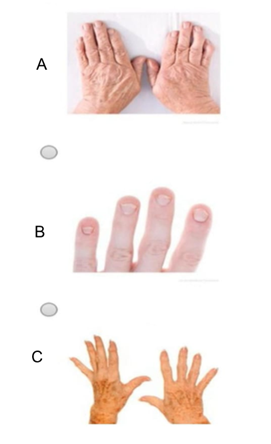
A charge nurse is discussing confidentiality requirements with a newly licensed nurse when sharing a client's medical information. Which of the following individuals should the charge nurse identify as appropriate with whom to share client information?
A nurse on a mental health unit is caring for a client who has anorexia nervosa. Which of the following statements by the nurse promotes the ethical principle of client autonomy?
A nurse is reinforcing teaching with a client who has a new diagnosis of COPD, Which of the following statements by the client indicates an understanding of the teaching?
A nurse is caring for a client who has bulimia nervosa. Which of the following actions should the nurse take first?
A nurse is assisting with the care of a preschooler who has epiglottitis. Which of the following actions should the nurse take?
A nurse is contacting an occupational therapist for a client who had a stroke with right-sided weakness and has difficulty eating. Which of the following roles should the nurse expect the occupational therapist to perform?
A nurse is reinforcing teaching about immunizations to a client who is pregnant. Which of the following immunizations should the nurse identity as contraindicated during pregnancy?
A nurse is preparing for an incoming storm. Which of the following clients should the nurse recommend for discharge planning?
A nurse is supervising an assistive personnel (AP) who is caring for a client who is at risk for falls. For which of the following actions by the AP should the nurse intervene?
A nurse is reinforcing teaching to the parents of an infant about the correct use of infant car seats. Which of the following statements by the parents indicates an understanding of the teaching?
A nurse is monitoring a client who has received external radiation for throat cancer. Which of the following findings should the nurse expect?
A nurse is caring for a client who has been given methylergonovine intramuscularly for a postpartum hemorrhage. The nurse should monitor for which of the following adverse effects?
A nurse is planning to complete an incisional dressing change for a client who is postoperative following an open cholecystectomy, in which of the following areas should the nurse expect to find the client's incision? (You will find hot spots to select in the artwork below. Select only the hot spot that corresponds to your answer.)
Explanation
A. Right upper quadrant of the abdomen: An open cholecystectomy involves surgical removal of the gallbladder, which is located in the right upper quadrant beneath the liver. The incision is typically made just below the right rib cage, making area A the correct site for the dressing change.
B. Midline of the upper abdomen: This area corresponds to the epigastric region and would not align with the typical location for a gallbladder incision. Incisions here are more common for other abdominal surgeries, such as exploratory laparotomy.
C. Lower midline abdomen: This area is associated with procedures involving the lower gastrointestinal tract, such as appendectomy or hysterectomy, and is not consistent with a cholecystectomy incision.
D. Right lower quadrant: This region is typically related to surgeries involving the appendix, cecum, or right ovary, not the gallbladder. Selecting this area would not correspond to the correct postoperative site for a cholecystectomy.
A nurse is reinforcing dietary teaching with a client whose prepregnancy BMI was 30.5. The nurse should include that which of the following is an acceptable weight gain for this client?
A nurse is preparing to apply a thigh-length sequential compression device for a client who is postoperative. Which of the following actions should the nurse take?
A nurse is assisting with the care of a client who is 24 hours following a vaginal birth. Which of the following findings should the nurse report to the RN?
A nurse is caring for a client who is incontinent of urine. Which of the following actions should the nurse take?
A nurse is reinforcing teaching with a client about advanced directives. Which of the following information should the nurse include?
A nurse working in an alternative therapy clinic is assisting in the care of a client who has elevated cholesterol levels. Which of the following herbs should the nurse recommend?
A nurse is preparing to collect data from a preschooler. Which of the following behaviors by the child indicates that he is ready to cooperate? (Select all that apply.)
A nurse enters the room of a school-age child and finds them on the floor experiencing a tonic-clonic seizure. Which of the following actions should the nurse take?
A nurse is planning to obtain a 12-lead ECG for a client who has a history of cardiac dysrhythmias. Which of the following actions should the nurse plan to take?
A nurse in an acute care setting is preparing to administer medications to a client. Which of the following information should the nurse obtain to identify the client?
A nurse is assisting in providing postmortem care for a client who was a devout follower of Hinduism. Which of the following requests should the nurse anticipate from the client's family?
A nurse is reinforcing teaching with a client who has a new prescription for epinephrine auto-injector PRN. The nurse should reinforce with the client that the medication can help treat which of the following manifestations?
A nurse is reviewing laboratory results for a client who has metabolic alkalosis. Which of the following blood gas values should the nurse expect?
A nurse is collecting data from the family members of a client who has Alzheimer's disease. Which of the following findings should the nurse identify is the priority and requires immediate intervention?
A nurse is collecting data from a client who has heart failure and is taking furosemide. Which of the following findings should indicate to the nurse that the medication is effective?
A nurse is reinforcing teaching with a client who has a new prescription for enoxaparin. The nurse should identify which of the following over-the- counter products as unsafe for use with enoxaparin?
A nurse in a provider's office is collecting baseline preoperative data from a 5-month-old infant who has coarctation of the aorta. Which of the following locations should the nurse palpate to check for the presence of the infant's femoral pulse? (You will find hot spots to select in the artwork below. Select only the hot spot that corresponds to your answer)
Explanation
A: This corresponds to the pedal/dorsalis pedis pulse area. While distal pulses are assessed, they would likely be even weaker than the femoral pulses in coarctation and are not the primary site for a "femoral" check.
B: This location corresponds to the inguinal crease where the femoral artery is most accessible in an infant. Assessing this pulse is critical for a child with coarctation of the aorta, as a classic clinical manifestation of this condition is weak or absent femoral pulses compared to strong upper-extremity pulses.
C: This corresponds to the brachial pulse area. In an infant with coarctation, the nurse would expect this pulse to be bounding or significantly stronger than those in the lower extremities due to high pressure in the arteries proximal to the aortic narrowing.
A nurse is implementing a bladder training program for a client who had a stroke. Which of the following interventions should the nurse take first?
A nurse is caring for a client who has a peanut allergy. The client states, "I feel like my throat is closing" which of the following actions should the nurse take?
A nurse is assisting with the care of a client on their first prenatal visit. Which of the following screenings require follow up intervention?
A nurse is assisting with the care of a client who is 6 hr postoperative following a right total knee arthroplasty. Which of the following actions should the nurse take?
A nurse is collecting data from a client who is at 12 weeks of gestation. The client states, "We've been trying to get pregnant for several months. but now I'm not sure I'm ready." Which of the following responses should the nurse make?
A nurse is receiving a telephone prescription for a client who reports having severe nausea. The provider states to administer ondansetron 4 mg every 6 hr as needed for nausea. Which of the following should the nurse clarity when reading back the prescription?
A nurse is reinforcing teaching for a client who has a new ascending colostomy. Which of the following comments by the client indicates an understanding of the teaching?
A nurse is collecting data from a client who has thrombocytopenia. The nurse should identify that which of the following findings increases the client's risk for injury?
A nurse is reviewing the laboratory results of a client and finds both their iron and vitamin B levels are below the expected reference range. The nurse should monitor the client for which of the following conditions?
A nurse is reinforcing teaching with the parents of a child who has a new diagnosis of Wilms' tumor. Which of the following information should the nurse include in the teaching?
A nurse is caring for an older adult client who reports dry, itchy skin. Which of the following actions should the nurse take?
A nurse is collecting data from a client who is receiving hydromorphone for pain management. For which of the following findings should the nurse notify the provider?
A nurse is caring for a client who has a prescription for acetaminophen 300 mg with codeine 30 mg. 1 tablet every 3 to 4 hr PRN for pain. The nurse inadvertently administers 2 tablets to the client. In which of the following locations should the nurse document this client care incident?
A nurse is reviewing the plan of care for a group of clients. The nurse should identify that informed consent is required for which of the following procedures?
A nurse overhears two assistive personnel (AP) in the nurses' station discussing a client who was recently admitted. Which of the following a should the nurse take?
A nurse is preparing to give change-of-shift report on a client who is 2 days postoperative following a total knee arthroscopy. Which of the following information should the nurse include in the report?
A nurse is reinforcing teaching with a new mother about facility security measures. Which of the following statements by the mother indicates an understanding of the teaching?
A nurse is assisting with the admission of a client who has varicella zoster. Which of the following interventions should the nurse plan to Implement?
A nurse is caring for a client who has major depressive disorder and is taking an antidepressant. The nurse should identify which of the following findings as the priority to report to the provider?
A nurse is contributing to the plan of care for a client who has partial-thickness and full-thickness burns on their lower extremities. Which of the following interventions should the nurse recommend including in the plan of care?
A nurse is preparing a client's body for a postmortem family viewing. Which of the following actions should the nurse take?
A nurse is administering pancrelipase to a child who has cystic fibrosis. Which of the following outcomes should the nurse expect as a therapeutic effect of the treatment?
A nurse is collecting data from a client who reports recently using cocaine. Which of the following manifestations should the nurse expect?
A nurse at an outpatient clinic receives a call from a client who reports experiencing syncope after starting a new prescription for enalapril. Which of the following instructions should the nurse give the client?
A nurse is caring for a client who has an indwelling catheter with a urinary drainage system. Which of the following actions should the nurse take?
A nurse is contributing to an in-service for newly licensed nurses about situations requiring an incident report. Which of the following examples should the nurse include?
A community health nurse is assisting with the development of a pamphlet regarding choking hazards for toddlers. Which of the following foods should the nurse include?
A community health nurse is developing a brochure about hypertension. Which of the following actions should the nurse take?
A nurse is assisting with a community health program for caregivers of clients who have Alzheimer's disease. Which of the following information should the nurse include?
A nurse is caring for a client who has paranoid schizophrenia and believes that they are being followed by FBI agents who are pretending to be psychiatric staff. Which of the following responses should the nurse make?
A nurse is collecting data from a client who has obsessive-compulsive personality disorder. Which of the following clinical manifestations should the nurse expect? (Select all that apply)
A nurse is reinforcing teaching with a client who has primary open-angle glaucoma and a new prescription for timolol eye drops. Which of the following statements indicates an understanding of the teaching?
A nurse is discussing risk factors for child maltreatment with a newly licensed nurse. Which of the following examples should the nurse include?
A nurse is collecting data from a client who is 1 day postoperative following a transurethral resection of the prostate. Which of the following findings should the nurse report to the provider?
A nurse is reinforcing teaching with a client who is scheduled for an intravenous pyelogram. Which of the following statements by the client indicates an understanding of the teaching?
A nurse is assisting with planning care for a client who has a new diagnosis of multiple sclerosis. Which of the interventions should the nurse recommend?
A nurse is participating in an interprofessional team meeting for a client. Which of the following information about the client should the nurse include?
2 months ago:
16-year-old adolescent presents to the outpatient
dermatologist's office with reports of worsening acne that is not responding to over-the-counter topical therapy. Adolescent states, "The acne is messing with my self-esteem." Adolescent has no past medical history and takes no prescribed medications. Adolescent does not smoke or use illicit drugs. Adolescent lives with family and is not sexually active.
Adolescent appears well-nourished, no distress. Oropharynx clear, mucus membranes moist. Bilateral breath sounds clear. Severe cystic acne noted to bilateral cheeks and forehead.
Today:
Adolescent returns with parent for a follow-up and states that there has been no improvement in acne. Adolescent says, "Please give me something to help with this."
Adolescent appears well-nourished, no distress. Oropharynx clear, mucus membranes moist. Bilateral breath sounds clear. Severe cystic acne noted to bilateral cheeks and forehead. Dry. flaking skin on chin.
2 months ago:
- Heart rate 82/min
- Respiratory rate 18/min
- Blood pressure 100/72 mm Hg
- Weight 50 kg (110 lb)
Today:
- Heart rate 80/min
- Respiratory rate 18/min
- Blood pressure 106/74 mm Hg
- Weight 50 kg (110 lb)
2 months ago:
Hemoglobin 10.8 g/dL (10 to 15.5 g/dL)
Hematocrit 32% (32% to 44%)
RBC count 8.5 million/mm3 (4.0 to 5.5 million/mm3)
WBC count 8,000 mm3 (5,000 to 10,000 mm3)
BUN 10 mg/dL (5 to 18 mg/dL)
Creatinine 0.5 mg/dL. (0.4 to 1 mg/dL)
Cholesterol 140 mg/dL (120 to 200 mg/dL)
Urine Human Chorionic Gonadotropin (hCG): negative (negative)
Today:
Urine hCG: negative (negative)
2 months ago:
Start doxycycline.
Start topical tretinoin cream.
Reinforce teaching to adolescent on potential side effects.
Check urine hCG.
Return in 2 months for follow-up.
Today:
Stop doxycycline.
Stop topical tretinoin cream.
Start isotretinoin.
Reinforce teaching to adolescent on potential side effects.
Check urine hCG.
Return in 1 month for follow-up.
2 months ago:
Doxycycline 100 mg PO BID
Tretinoin cream 0.05% apply topically at bedtime
Today:
Isotretinoin 10 mg PO BID x4 weeks
A nurse is assisting with the care of an adolescent in an outpatient dermatologist's office.
Complete the following sentence by using the lists of options.
A nurse is reinforcing teaching today on the newly prescribed medication. The nurse recommends that the adolescent notify the provider immediately if there is
Explanation
Rationale for correct choices:
• a change in mood: Isotretinoin has been associated with psychiatric effects including depression, mood swings, aggression, and suicidal ideation, particularly in adolescents. Any noticeable mood or behavioral changes require immediate provider notification so the medication can be reassessed and mental health support initiated if needed.
• decreased night vision: Isotretinoin can impair dark adaptation and cause decreased night vision due to its effects on the retina. This adverse effect may be sudden or irreversible, making early reporting essential to prevent safety risks such as accidents while driving in low-light conditions.
Rationale for incorrect choices:
• nausea: Mild gastrointestinal upset can occur with isotretinoin and is generally expected rather than emergent. This symptom is usually managed with supportive measures and does not require immediate discontinuation unless severe or persistent.
• dry mouth: Mucocutaneous dryness, including dry lips and mouth, is a very common and expected side effect of isotretinoin. This is typically managed with hydration and emollients and does not warrant urgent provider notification.
• the development of dry eyes: Dry eyes are a common isotretinoin effect related to decreased sebaceous gland activity. While uncomfortable and relevant to report at routine follow-up, it is not an urgent finding unless severe or affecting vision.
• sunburn: Photosensitivity can occur during isotretinoin therapy, making sunburn more likely. This is addressed with sun protection education and does not indicate a serious adverse reaction requiring immediate notification.
• engagement in sexual activity: Sexual activity itself is not an adverse effect of isotretinoin. Although pregnancy prevention is critical due to teratogenicity, sexual activity alone does not represent a medication-related complication.
• worsening of acne: Acne may initially worsen during early isotretinoin therapy as part of the treatment response. This is a known and expected effect and does not require urgent provider contact unless severe or accompanied by systemic symptoms.
A nurse is caring for a client who has a new diagnosis of diabetes mellitus and is refusing to learn how to self-administer insulin. Which of the following responses should the nurse make?
Today:
4-year-old child presents to pediatrician's office with their guardian. Guardian states, "My child has a bad cough." Guardian reports manifestations started with a dry, nonproductive cough about a week ago. Cough is not worsening but has not improved. Guardian reports the child is "always hungry" but is losing weight, Child has no previous health issues, Lungs with bilateral wheezing noted on auscultation. Abdomen soft, mildly distended. Active bowel sounds in all four quadrants. Provider ordered laboratory tests.
6 months ago:
- Heart rate 108/min
- Respiratory rate 24/min
- Temperature 37° C (98.6° F)
- Weight 15.5 kg (34.2 lb)
Today:
- Heart rate 102/min
- Respiratory rate 20/min
- Temperature 37° C (98.6° F)
- Weight 14.5 kg (32 lb)
Next day:
Sweat chloride test positive
A nurse is assisting in the care of a child in the pediatrician's office
Drag words from the choices below to fill in each blank in the following sentence.
The child is at risk for developing
Explanation
Rationale for correct choices:
• malabsorption: A positive sweat chloride test confirms cystic fibrosis, which leads to thick secretions obstructing pancreatic ducts. This reduces pancreatic enzyme delivery to the intestine, impairing fat and protein digestion and contributing to weight loss despite increased appetite.
• chronic respiratory infections: Cystic fibrosis causes thick, sticky mucus in the airways that traps bacteria and interferes with normal mucociliary clearance. This environment promotes recurrent and chronic respiratory infections, explaining the persistent cough and wheezing noted on assessment.
Rationale for incorrect choices:
• bone marrow failure: Cystic fibrosis does not directly affect bone marrow function or blood cell production. Findings such as anemia, leukopenia, or thrombocytopenia would suggest an alternative hematologic disorder rather than this condition.
• excessive weight gain: Children with cystic fibrosis typically experience poor weight gain or weight loss due to malabsorption and increased metabolic demands. Excessive weight gain would be inconsistent with the disease process and the child’s current presentation.
• hypernatremia: Although cystic fibrosis involves increased sodium and chloride loss in sweat, this does not typically result in hypernatremia under normal conditions. Electrolyte imbalances are more commonly related to dehydration rather than sustained elevated serum sodium levels.
Postoperative Day 3
0900:
Client reports pain at surgical incision site as 5 on a scale of 0 to 10. Client reports bladder fullness. Perineal dressing intact with minimal serosanguinous drainage. Client transferring out of bed to chair independently. Extremities cool and dry with 2+ peripheral pulses.
1300:
Client reports abdominal cramping and small, hard, painful bowel movement after lunch. Ambulating independently in hallway. Reports pain as 8 on a scale of 0 to 10. Urinary catheter intact with 100 mL/hr of pink urine.
Postoperative Day 3
0600:
1,400 mL pink urine output over 12 hr
1,800 mL fluid intake over 12 hr
A nurse is assisting with the care of a client who has had a prostatectomy.
Select the 2 actions the nurse should prepare to take for the client.
A nurse is caring for a client who is receiving oxygen when a fire starts in an adjacent room. Identify the sequence of actions the nurse should take. (Move the steps into the box on the right, placing them in the order of performance. Use all the steps.)
Explanation
A. Move the client to a safe location: The first priority in any fire emergency is client safety. Removing the client from immediate danger prevents injury and ensures they are out of harm’s way before other actions are taken.
B. Pull the nearest fire alarm: Activating the fire alarm alerts the entire facility to the emergency, initiating evacuation procedures and notifying the fire response team. Prompt alarm activation is critical for overall safety.
C. Shut all doors and windows: Closing doors and windows helps contain the fire and smoke, slowing its spread to other areas of the facility. This action protects other clients, staff, and the environment until fire services arrive.
D. Attempt to extinguish the fire: Only after the client is safe, the alarm is activated, and doors are closed should trained personnel attempt to extinguish the fire, if it is small and manageable. Attempting to fight a fire before these steps can place the client and nurse at significant risk.
Sign Up or Login to view all the 174 Questions on this Exam
Join over 100,000+ nursing students using Naxlex’s science-backend flashcards, practice tests and expert solutions to improve their grades and reach their goals.
Sign Up Now