






 Video Library


Ati med surg proctored exam (perfusion &metabolism)
Total Questions : 40
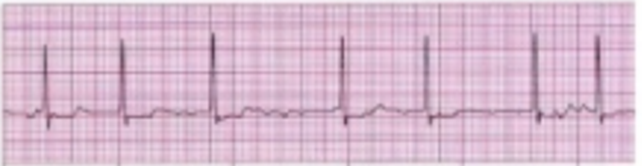
Showing 10 questions, Sign in for moreA nurse reviews the client's telemetry monitor at the beginning of the shift. The monitor displays the following image in a 6-second time period. Which cardiac rhythm should the nurse document in the client's record?
56-yr-old male client presents to office today for their 3-month follow-up visit. Alert and oriented x3. Lungs decreased in bases on auscultation bilaterally. 51. 52. no murmur. Abdomen large, distended. Pedal edema 2+ bilaterally. Sclera white: mucous membranes: pink and moist nailbeds: pink.
History of compensated cirrhosis of the liver, type 2 diabetes mellitus. hypertension, hyperlipidemia, and alcohol use disorder.
Hgb 12.5 g/dL (female: 12 g/dL to 16 g/dL: male: 14 to 18 g/dL)
Platelets 125/mm3 (150,000 to 400,000 mm3)
Albumin 3.3 g/dL (3.5 to 5.0 g/dL)
Ammonia 40 mcg/dL (10 to 80 mcg/dL)
Blood pressure 150/87 mm Hg
Pulse rate 89/min
Respiratory rate 16/min
Temperature 36.5° C (97.8° F)
A nurse is caring for a client in the provider's office.
The client is at the highest risk for developing
Explanation
Rationale for correct choices:
- Thrombocytopenia: The client’s platelet count is 125,000/mm³, which is below the normal reference range (150,000 to 400,000/mm³). In patients with cirrhosis, thrombocytopenia is common due to congestive splenomegaly (sequestration of platelets in the spleen) and decreased production of thrombopoietin by the liver.
- Spontaneous bleeding: Low platelet levels (thrombocytopenia) directly increase the risk of bleeding. Because the client’s platelets are low and they have chronic liver disease (which often impacts the production of clotting factors), they are at a heightened risk for spontaneous bleeding or prolonged bleeding from minor trauma.
Rationale for incorrect choices:
- Hyperammonemia / Encephalopathy: While the client has cirrhosis, their current ammonia level (40 mcg/dL) is within the normal range, and they are currently alert and oriented x3. There is no immediate evidence in the findings suggesting the client is currently at the highest risk for encephalopathy compared to the active lab abnormality of low platelets.
- Liver disease: The client already has a diagnosis of cirrhosis (liver disease); therefore, they are not "at risk for developing" a condition they already possess.
- Anemia: Although the hemoglobin is slightly low at 12.5 g/dL, the thrombocytopenia is a more specific and significant risk factor in the context of cirrhosis-related complications like variceal bleeding.
- Hepatitis B / Pancreatitis: There is no data in the clinical notes (such as elevated amylase/lipase or positive serology) to suggest the client is at high risk for these specific conditions at this time.
A nurse is caring for a client who has atrial fibrillation and is receiving heparin. Which of the following findings is the nurse's priority?
A nurse is providing discharge teaching to a client who has an implantable cardioverter/defibrillator (ICD). Which of the following information should the nurse include?
A nurse is caring for a client who has cirrhosis and a prolonged prothrombin time of 30 seconds. Which of the following medications should the nurse plan to administer?
A nurse is preparing to administer verapamil by IV bolus to a client who is having cardiac dysrhythmias. For which of the following adverse effects should the nurse monitor when giving this medication?
A nurse is preparing to administer aspirin 81mg to a client who has atrial fibrillation. The nurse should explain that the purpose of this medication is which of the following.
A nurse is caring for a client who has recently undergone cardiopulmonary arrest. The emergency response team has successfully restored a pulse but the client now has symptomatic bradycardia. The nurse anticipates the use of which of the following medications to help correct this arrhythmia?
A nurse is teaching a client about causes of biliary cirrhosis. Which of the following should the nurse include in the teaching?
A nurse is interpreting a client's ECG strip. Which of the following components of the ECG should the nurse examine to determine the time it takes for ventricular depolarization and repolarization?
Sign Up or Login to view all the 40 Questions on this Exam
Join over 100,000+ nursing students using Naxlex’s science-backend flashcards, practice tests and expert solutions to improve their grades and reach their goals.
Sign Up Now