
What is the most appropriate intervention for the parents of a 6-year-old child with precocious puberty?
Advise the parents to consider birth control for their daughter.
Reassure parents that there are no long-term consequences.
Counsel parents that there is no treatment currently available for this disorder.
Explain the importance the child having relationships with same-age peers.
The Correct Answer is D
Precocious puberty is the early onset of puberty before the age of 8 in girls and before the age of 9 in boys. It is important for parents of a child with precocious puberty to understand the impact it may have on their child's social and emotional development. In this case, explaining the importance of the child having relationships with same-age peers is crucial.
Children experiencing precocious puberty may appear physically more mature than their peers, which can lead to social and emotional challenges. Encouraging the child to maintain relationships with same-age peers helps foster a sense of normalcy and belonging. It can also support the child's social and emotional development by providing opportunities for age- appropriate interactions, friendships, and experiences.
Nursing Test Bank
Naxlex Comprehensive Predictor Exams
Related Questions
Correct Answer is B
Explanation
Thebehaviourdescribed,wherethechildappearstobestaringinto space,is characteristicof
B.Absenceseizures.
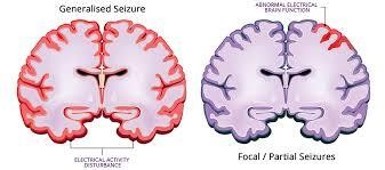
Absence seizures, also known as petit mal seizures, are a type of generalized seizure thatprimarily affects children. These seizures are brief and usually last for a few seconds. Duringan absence seizure, the child may appear to be staring blankly into space, unaware of theirsurroundings.Theymaynot respond to stimuli orengagein anypurposefulactivity.After theseizure ends, the child typically resumes their previous activity without any memory of theseizure.
Atonic seizures in (option A) is incorrect because it involves a sudden loss of muscle tone,leadingtoalimp or "drop"in theperson.
Simple partial seizures in (option C) are focal seizures that affect a specific region of thebrain,causinglocalizedsymptoms suchas twitchingor tinglinginaparticularbodypart.
Tonic-clonic seizures in (option D) also known as grand mal seizures, is incorrect because itinvolves a combination of muscle rigidity (tonic phase) and jerking movements (clonicphase).
Therefore, based on the description provided, the behaviour of staring into space ischaracteristic of B. Absence seizures. It is important for the child to be evaluated by ahealthcare professional for an accurate diagnosis and appropriate management of theirseizures.
Correct Answer is C
Explanation
A sign of increased intracranial pressure (ICP) in a 10-year-old child is a headache. Headache is a common symptom associated with increased pressure within the cranial cavity. It can be a result of various conditions that cause elevated intracranial pressure, such as brain tumours, intracranial haemorrhage, hydrocephalus, or brain trauma. The headache may be described as persistent, worsening, or accompanied by other symptoms such as nausea, vomiting, or changes in neurological status.
tachypnoea (rapid breathing), in (option A) is incorrect because it is not a specific sign of increased intracranial pressure. It can be seen in various conditions, including respiratory and cardiovascular disorders, anxiety, or physical exertion.
bulging fontanel in (option B) is incorrect because it, is more commonly observed in infants and is not typically seen in older children. The fontanelles (soft spots) on an infant's skull normally close by the age of 18-24 months.
an increase in head circumference in (option D) is incorrect because it, may be a sign of increased intracranial pressure in infants. However, in a 10-year-old child, the fontanelles are typically closed, and head circumference growth is not a reliable indicator of increased intracranial pressure
Whether you are a student looking to ace your exams or a practicing nurse seeking to enhance your expertise , our nursing education contents will empower you with the confidence and competence to make a difference in the lives of patients and become a respected leader in the healthcare field.
Visit Naxlex, invest in your future and unlock endless possibilities with our unparalleled nursing education contents today