
Patient Data History and Physical
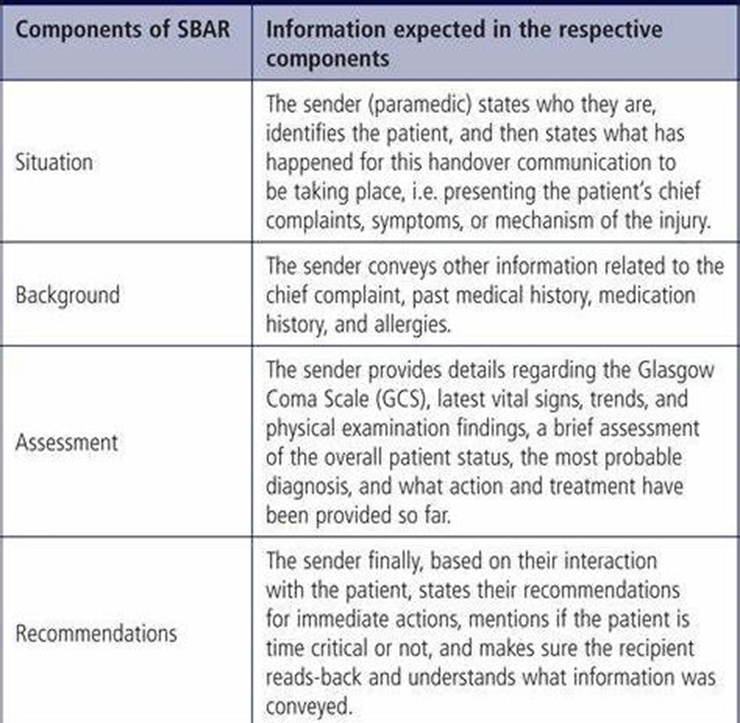
The nurse calls the provider to notify them that the digoxin level is above therapeutic range. Place the nurse statements in Situation, Background, Assessment, Recommendation (SBAR) format.
The client is a 61-year-old female with heart failure. She started digoxin 3 days ago
I am holding the digoxin because the client's digoxin level is too high
Do you want to recheck the digoxin level again tomorrow morning to see if we can restart it?
The Correct Answer is {"A":{"answers":"A"},"B":{"answers":"B,C"},"C":{"answers":"D"}}
The medical history of the client provides a background of the current issue of concern The nurse describes the current situation that has prompted her to contact the healthcare provider
A recommendation provides a proposal of plan of care to allow the healthcare provider to either agree, disagree or add more insight
Nursing Test Bank
Naxlex Comprehensive Predictor Exams
Related Questions
Correct Answer is C
Explanation
C. When providing health teaching to older adult clients, using everyday language is crucial. Older adults may have varying levels of health literacy and cognitive abilities, so using simple, clear language facilitates better understanding and comprehension of the information being provided.
A. Underlining key words on the written information may be helpful for emphasizing important points, but it is not as critical as using everyday language to enhance understanding
B. Speaking loudly and facing the client may not be necessary for all older adult clients and could even be perceived as patronizing or disrespectful.
D. Providing a very well-lit meeting space is important for optimizing visual acuity, especially for older adults who may have age-related changes in vision. However, while adequate lighting is beneficial, it is not as critical
Correct Answer is B
Explanation
A. Using an oral airway can be appropriate in some situations to keep the mouth open and facilitate oral care, especially in an unconscious client. This helps prevent biting and allows for easier access to the oral cavity. Therefore, this action does not indicate a need for additional training.
B. Placing an unconscious client in a supine position for oral care can be inappropriate, as it increases the risk of aspiration, especially if there are secretions in the mouth. It is generally safer to position the client in a lateral position to minimize this risk. This action may indicate a need for additional training.
C. Testing for a gag reflex before performing oral care is a standard precaution, especially for unconscious clients. This helps prevent aspiration and ensures the safety of the client during the procedure.
D. Suctioning secretions from the posterior pharynx is an appropriate action to maintain airway patency and prevent aspiration, especially for unconscious clients who may have difficulty managing their secretions.
Whether you are a student looking to ace your exams or a practicing nurse seeking to enhance your expertise , our nursing education contents will empower you with the confidence and competence to make a difference in the lives of patients and become a respected leader in the healthcare field.
Visit Naxlex, invest in your future and unlock endless possibilities with our unparalleled nursing education contents today