
A preterm newborn is admitted to the neonatal intensive care with the diagnosis of an omphalocele. What nursing actions would the nurse perform? Select all that apply.
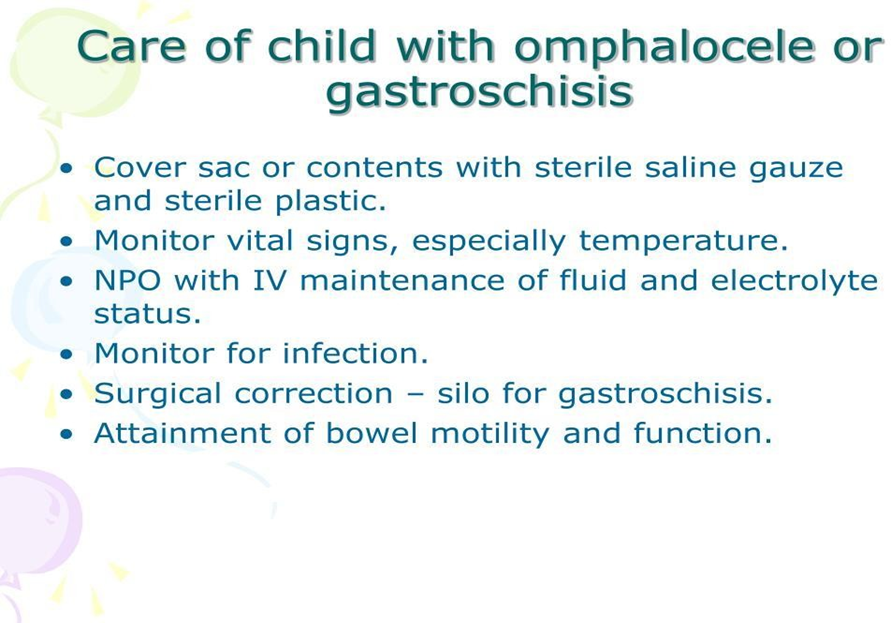
Fluid loss of the neonate will be minimized.
Neonatal weight loss will be prevented.
Assessment of hyperbilirubinemia will be monitored.
Perfusing to the exposed abdominal contents will be maintained.
The abdominal contents are protected.
Correct Answer : A,D,E
A. Minimizing fluid loss is important in the care of a neonate with an omphalocele to prevent dehydration.
B. Preventing neonatal weight loss is not directly related to the care of an omphalocele.
C. While monitoring for hyperbilirubinemia is important in neonatal care, it's not specific to the care of an omphalocele.
D. Maintaining perfusion to the exposed abdominal contents is essential for preventing complications such as ischemia or necrosis.
E. Protecting the abdominal contents helps prevent infection and trauma to the exposed organs.
Nursing Test Bank
Naxlex Comprehensive Predictor Exams
Related Questions
Correct Answer is B
Explanation
A. Children with health issues may actually be at an increased risk of being bullied due to differences in appearance or ability.
B. Both boys and girls are bullied, but they may experience different types of bullying. Boys usually bully boys and use physical force more often, while girls may bully girls or boys and use verbal or relational aggression more often.
C. Children who bully are not necessarily those who are lonely or have difficulty in forming friendships. Some children who bully may have high self-esteem, popularity, or social power. They may bully to dominate, control, or impress others.
D. This statement may not accurately reflect the prevalence of fear among school children and does not address the developmental concern of bullying.
Correct Answer is ["A","D","E"]
Explanation
A. Minimizing fluid loss is important in the care of a neonate with an omphalocele to prevent dehydration.
B. Preventing neonatal weight loss is not directly related to the care of an omphalocele.
C. While monitoring for hyperbilirubinemia is important in neonatal care, it's not specific to the care of an omphalocele.
D. Maintaining perfusion to the exposed abdominal contents is essential for preventing complications such as ischemia or necrosis.
E. Protecting the abdominal contents helps prevent infection and trauma to the exposed organs.
Whether you are a student looking to ace your exams or a practicing nurse seeking to enhance your expertise , our nursing education contents will empower you with the confidence and competence to make a difference in the lives of patients and become a respected leader in the healthcare field.
Visit Naxlex, invest in your future and unlock endless possibilities with our unparalleled nursing education contents today