
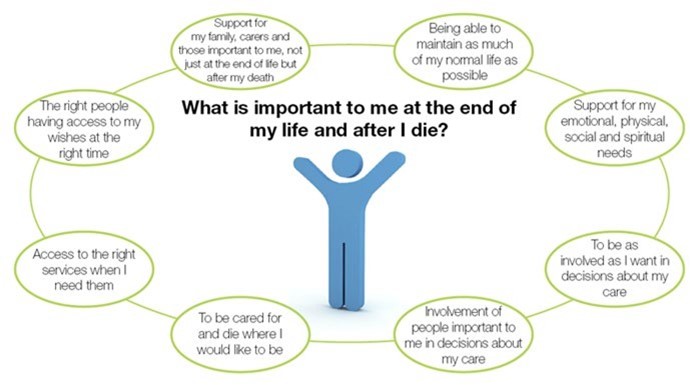
A nurse is providing teaching to a client about directives regarding end-of-life care. Which of the following information should the nurse include in the teaching?
The living will is a legally binding contract between the client and the provider.
The client's family has the authority to revoke the do-not-resuscitate order at any time.
The client can verbally choose a healthcare proxy if two nurses witness the designation.
The client can choose a non-family member as the designated power of attorney.
The Correct Answer is D
When educating a client about end-of-life directives, it is important for the nurse to provide accurate information to ensure the client's wishes are respected.
A living will is a legal document that outlines a person's wishes for medical treatment in the event they are unable to communicate their desires themselves. It is not a contract between the client and the provider, but rather a tool to guide medical decision-making.
A do-not-resuscitate order can be revoked by the client or their legal representative, but not by the client's family alone. In most states, the designation of a healthcare proxy must be done in writing and signed by the client.
It is not necessary for two nurses to witness the designation, although the client may choose to have witnesses present. Finally, the client can choose anyone they trust to be their designated power of attorney, regardless of whether they are a family member or not.
Nursing Test Bank
Naxlex Comprehensive Predictor Exams
Related Questions
Correct Answer is C
Explanation
This indicates that the client may have internal bleeding, which is a life-threatening condition that requires immediate medical attention. The nurse should provide supportive care, such as administering oxygen, and arrange for rapid transport to a trauma center.
The client with superficial partial-thickness burn injuries over 5% of his body may require medical attention, but this is not immediately life-threatening.
The client who is ambulatory and exhibits manic behavior may require psychological support, but this is not a priority in the acute phase of a traumatic event.
The client who has a femur fracture with a 2+ pedal pulse may require immobilization and pain management, but this is also not a priority in the acute phase of a traumatic event.
Correct Answer is D
Explanation
In a health maintenance organization (HMO), the provider is paid a set amount of money for each client enrolled in the program. This payment structure is known as capitation.
The provider is responsible for providing all necessary healthcare services to the client within the confines of the capitated payment.
The client is not required to pay the provider directly for any services rendered within the HMO network.
Whether you are a student looking to ace your exams or a practicing nurse seeking to enhance your expertise , our nursing education contents will empower you with the confidence and competence to make a difference in the lives of patients and become a respected leader in the healthcare field.
Visit Naxlex, invest in your future and unlock endless possibilities with our unparalleled nursing education contents today