
A nurse is planning care for a client who is 6 hr. postoperative following a right knee arthroplasty. Which of the following interventions should the nurse include in the client's plan of care?
Apply warm, moist packs to the surgical site.
Massage the lower leg in smooth, long strokes.
Place a pillow under the client's surgical knee.
Use the continuous passive-motion machine intermittently.
The Correct Answer is D
Choice A Reason:
Applying warm, moist packs to the surgical site may not be indicated as it can potentially increase swelling and disrupt the surgical site.
Choice B Reason:
Massaging the lower leg in smooth, long strokes is generally not recommended in the early postoperative period, as it can disturb the surgical site and potentially lead to complications.
Choice C Reason:
When planning care for a client who is postoperative following a knee arthroplasty, placing a pillow under the surgical knee can be beneficial. This helps maintain proper alignment, reduces pressure on the surgical site, and promotes comfort and circulation. Elevating the leg slightly with a pillow can also help reduce swelling and minimize the risk of complications such as deep vein thrombosis (DVT).
Choice D Reason:
Using the continuous passive-motion (CPM) machine intermittently should be done as ordered by the healthcare provider and under their guidance. CPM is typically initiated early postoperatively, often within the first 24 hours after surgery.
Nursing Test Bank
Naxlex Comprehensive Predictor Exams
Related Questions
Correct Answer is B
Explanation
An incident report is formal documentation used to report any unexpected or adverse events that occur during the course of patient care. It provides a record of the incident and helps identify areas for improvement in patient safety and quality of care. The incident report should include details about the error, the potential impact on the client, actions taken to address the error, and any necessary follow-up.
A nursing care plan is a document that outlines the client's nursing diagnoses, goals, interventions, and evaluations. It is not the appropriate place to document a medication error or incident.
The provider's progress notes are documentation made by the healthcare provider, typically documenting their assessments, diagnoses, treatment plans, and progress of the client. A medication error made by the nurse should not be documented in the provider's progress notes.
The controlled substance inventory record is a record used to track the dispensing and administration of controlled substances. While it is important to maintain accurate records of controlled substances, documenting a medication error in this record is not the appropriate place as it is primarily used for inventory management purposes
Correct Answer is D
Explanation
d. Muscle pain.
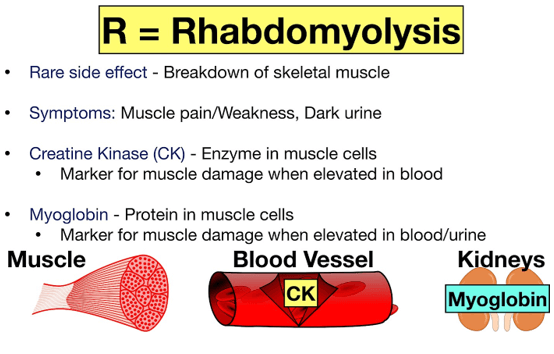
Atorvastatin is a medication used to lower cholesterol levels in the blood. One of the potential adverse effects of atorvastatin is myopathy, a condition characterized by muscle pain, weakness, and tenderness. In severe cases, myopathy can progress to rhabdomyolysis, a potentially life-threatening condition in which muscle breakdown products are released into the bloodstream and can cause kidney damage.
Therefore, the nurse should instruct the client to monitor for muscle pain, weakness, or tenderness and report these symptoms to the healthcare provider immediately. Hypoglycemia, palpitations, and daytime drowsiness are not commonly associated with atorvastatin use and would not require immediate reporting to the healthcare provider.
Whether you are a student looking to ace your exams or a practicing nurse seeking to enhance your expertise , our nursing education contents will empower you with the confidence and competence to make a difference in the lives of patients and become a respected leader in the healthcare field.
Visit Naxlex, invest in your future and unlock endless possibilities with our unparalleled nursing education contents today