
A nurse in the emergency department is caring for an adolescent who is requesting testing for STIs.
Which of the following actions is appropriate for the nurse to take?
Request verbal consent from the client.
Contact the client's parents to obtain phone consent.
Postpone the testing until the client's parents are present.
Obtain written consent from the client.
The Correct Answer is A
The nurse should request verbal consent from the client for STI testing.
All 50 states and the District of Columbia explicitly allow minors to consent for their own STI services.
Choice B is wrong because it is not necessary to contact the client’s parents to obtain phone consent.
Choice C is wrong because it is not necessary to postpone the testing until the client’s parents are present.
Choice D is wrong because written consent is not required for STI testing.
Nursing Test Bank
Naxlex Comprehensive Predictor Exams
Related Questions
Correct Answer is B
Explanation

Chest physiotherapy treatments aim to improve ventilation and mucociliary clearance by removing tenacious and obstructing secretions in patients with cystic fibrosis.
Increased expectoration indicates that the therapy has been effective in clearing secretions.
Choice A is wrong because increased urine output is not an indication of the effectiveness of chest physiotherapy.
Choice C is wrong because reduced pain is not a specific indication of the effectiveness of chest physiotherapy.
Choice D is wrong because increased heart rate is not an indication of the effectiveness of chest physiotherapy.
Correct Answer is A
Explanation
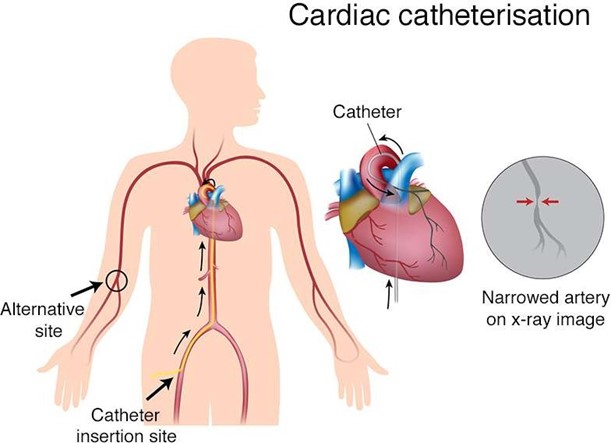
After an arterial cardiac catheterization, the patient will need to keep their leg straight for several hours following the procedure to prevent bleeding from the catheter insertion site.
Choice B is wrong because droplet isolation precautions are not necessary after an arterial cardiac catheterization.
Choice C is wrong because assisting the child into a supine position may not be necessary and could be uncomfortable for the child.
Choice D is wrong because checking oxygen saturation every 4 hours may not be frequent enough for a child who has undergone an arterial cardiaccatheterization and may require more frequent monitoring of oxygen saturation.
Whether you are a student looking to ace your exams or a practicing nurse seeking to enhance your expertise , our nursing education contents will empower you with the confidence and competence to make a difference in the lives of patients and become a respected leader in the healthcare field.
Visit Naxlex, invest in your future and unlock endless possibilities with our unparalleled nursing education contents today