
A nurse is providing teaching about home care to the parent of a child who has scabies.
Which of the following instructions should the nurse include in the teaching?
Wash the child's hair with shampoo containing ketoconazole.
Treat everyone who came into close contact with the child.
Soak combs and brushes in boiling water for 10 min.
Apply petroleum jelly to the affected areas.
The Correct Answer is B
Scabies is a highly contagious skin condition caused by mites and can spread easily through close physical contact.
It is important to treat everyone who came into close contact with the child to prevent reinfestation.
Choice A is wrong because ketoconazole shampoo is used to treat fungal infections of the scalp, not scabies.
Choice C is wrong because while it is important to clean combs and brushes, soaking them in boiling water for 10 minutes may not be necessary.
Choice D is wrong because petroleum jelly is not an effective treatment for scabies.
Nursing Test Bank
Naxlex Comprehensive Predictor Exams
Related Questions
Correct Answer is C
Explanation
The correct answer is choice C. Elevate the infant’s head to a 10° angle during feedings.
This position can help prevent milk from coming out of the infant’s nose and reduce the risk of choking.
Choice A is wrong because watery eyes are not an indication to discontinue feeding.
Choice B is wrong because babies with cleft palate should be burped more frequently, but not so often as to interrupt good feeding behaviors.
Choice D is wrong because the amount of formula an infant needs varies and should be determined by a pediatrician.
Correct Answer is A
Explanation
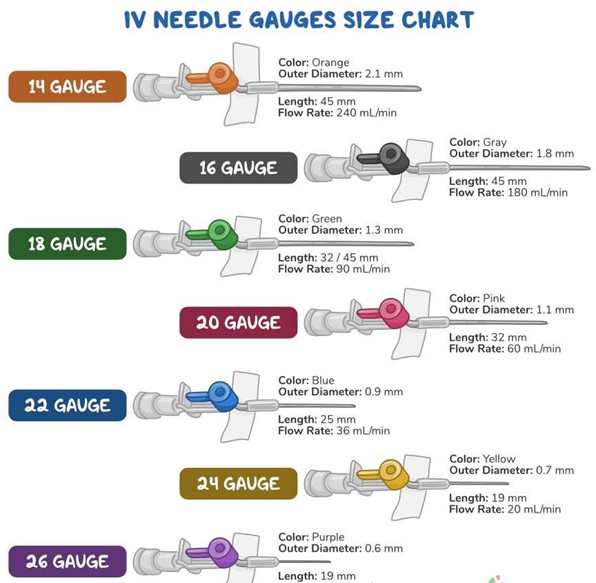
A 24-gauge catheter is the smallest-gauge catheter and is appropriate for administering IV fluids and medications to an infant.
Choice B is wrong because an opaque dressing would prevent the nurse from visualizing the insertion site.
Choice C is wrong because starting an IV in an infant’s foot can be painful and difficult to secure.
Choice D is wrong because IV sites should be changed every 72-96 hours or according to facility policy.
Whether you are a student looking to ace your exams or a practicing nurse seeking to enhance your expertise , our nursing education contents will empower you with the confidence and competence to make a difference in the lives of patients and become a respected leader in the healthcare field.
Visit Naxlex, invest in your future and unlock endless possibilities with our unparalleled nursing education contents today