
A nurse is reviewing the laboratory results of a child who was recently admitted for suspected rheumatic fever.
The nurse should identify that which of the following laboratory tests can contribute to confirming this diagnosis? (Select all that apply.)
Blood urea nitrogen (BUN)
Erythrocyte sedimentation rate (ESR)
Antistreptolysin O (ASO) titer
Partial thromboplastin time (PTT)
C-reactive protein (CRP).
Correct Answer : B,C,E
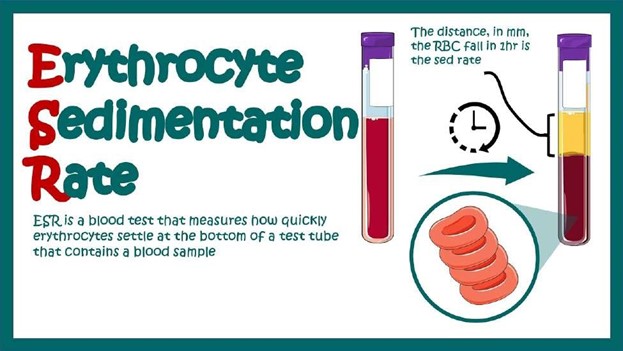
This laboratory test can contribute to confirming a diagnosis of rheumatic fever.
Choice A is wrong because Blood urea nitrogen (BUN) is not used to diagnose rheumatic fever.
Choice D is wrong because Partial thromboplastin time (PTT) is not used to diagnose rheumatic fever.
Nursing Test Bank
Naxlex Comprehensive Predictor Exams
Related Questions
Correct Answer is C
Explanation
During a seizure, it is important to clear the area around the person of anything hard or sharp to prevent injury.
Choice A is wrong because Minimize movement of the limbs, is not a recommended action during a seizure as it is important not to hold the person down or try to stop their movements.
Choice B is wrong because Insert a tongue blade between the teeth, is not a recommended action during a seizure as it is important not to put anything in the person’s mouth.
Choice D is wrong because Place the child in a prone position, is not a recommended action during a seizure as it is important to turn the person gently onto one side to help them breathe.
Correct Answer is C
Explanation
Pilocarpine iontophoresis is a test used to diagnose cystic fibrosis by measuring the amount of chloride in a person’s sweat.
Choice A is wrong because an IV is not necessary for this test.
Choice B is wrong because the test measures chloride in sweat, not protein in urine.
Choice D is wrong because fasting is not required for this test.
Whether you are a student looking to ace your exams or a practicing nurse seeking to enhance your expertise , our nursing education contents will empower you with the confidence and competence to make a difference in the lives of patients and become a respected leader in the healthcare field.
Visit Naxlex, invest in your future and unlock endless possibilities with our unparalleled nursing education contents today