
The nurse is performing a health history on a 6-year-old boy who is having trouble adjusting to school. Which question would be most likely to elicit valuable information?
"Do you enjoy reading a book?"
"Are you happy with your teacher?"
"Do you like your new school?"
“What are your new classmates like?"
The Correct Answer is D
A. "Do you enjoy reading a book?"
While reading preferences can provide some insight into the child's interests, it may not directly address the issue of trouble adjusting to school.
B. "Are you happy with your teacher?"
Asking about the child's satisfaction with the teacher may provide some information, but it may not uncover the underlying issues contributing to the trouble adjusting to school.
C. "Do you like your new school?"
This question addresses the general perception of the school environment but may not necessarily uncover specific issues related to adjusting to school.
D. “What are your new classmates like?"
Asking about the child's interactions with classmates can provide valuable information about social dynamics, peer relationships, and potential sources of stress or difficulty adjusting to school. It allows the nurse to explore the child's experiences and perceptions within the school setting, which can help identify areas of concern and potential interventions.
Nursing Test Bank
Naxlex Comprehensive Predictor Exams
Related Questions
Correct Answer is D
Explanation
A. Ignore the temper tantrums. - Ignoring tantrums may work for some children, but it's not a universal solution and can sometimes escalate the behavior. It also doesn't teach the child appropriate ways to cope with their emotions.
B. Tell the child that temper tantrums are not acceptable. - While setting boundaries is important, simply telling the child that tantrums are unacceptable without providing alternative coping
mechanisms may not be effective, especially for a toddler who may not fully understand verbal reasoning.
C. Restrain the child physically. - Physically restraining the child can be harmful and is not recommended as a method for handling temper tantrums. It can lead to increased frustration and potentially cause injury to the child.
D. Distract the child by offering to play a game. - Distracting the child with a game or other engaging activity can help redirect their attention away from the tantrum and towards a more positive outlet for their emotions. This approach can be effective in diffusing the situation and teaching the child healthy coping strategies.
Correct Answer is A
Explanation
A. They follow rules out of a sense of being a "good person.": According to Kohlberg, at the conventional stage of moral development, individuals are motivated to follow rules and laws to maintain social order and to be perceived as good members of society.
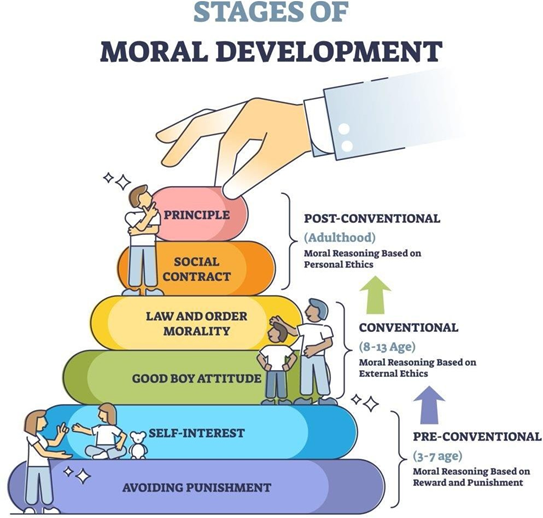
B. They follow rules out of fear of being punisheD. Fear of punishment is more characteristic of the preconventional stage of moral development, where individuals make moral decisions based on avoiding punishment or seeking reward.
C. They follow rules in order to receive praise from caretakers: Seeking praise from caretakers may influence behavior, but it does not reflect the underlying motivation for following rules according to Kohlberg's theory.
D. They follow rules because it is in their nature to do so: While some individuals may have a predisposition to follow rules, Kohlberg's theory focuses on the moral reasoning behind rule- following rather than inherent tendencies
Whether you are a student looking to ace your exams or a practicing nurse seeking to enhance your expertise , our nursing education contents will empower you with the confidence and competence to make a difference in the lives of patients and become a respected leader in the healthcare field.
Visit Naxlex, invest in your future and unlock endless possibilities with our unparalleled nursing education contents today