
A nurse observes assistive personnel (AP) perform mouth care for a client who is unconscious.
Which of the following actions by the AP requires intervention by the nurse?
Lowering the side rail on the side of the bed where they will stand to perform mouth care.
Using an oral care sponge swab moistened with cool water to clean the client’s mouth.
Wearing clean gloves to perform mouth care for the client.
Using two gloved fingers to open the client’s mouth for cleaning.
The Correct Answer is D
The correct answer is D. Using two gloved fingers to open the client’s mouth for cleaning.
Choice A rationale:
Lowering the side rail on the side of the bed where the AP will stand is necessary for safe access to the client. However, the AP should ensure the opposite side rail is up to prevent the client from falling.
Choice B rationale:
Using an oral care sponge swab moistened with cool water is an appropriate method for cleaning the mouth of an unconscious client. It helps maintain oral hygiene and comfort.
Choice C rationale:
Wearing clean gloves is essential for infection control and is a standard practice when performing mouth care to protect both the client and the caregiver.
Choice D rationale:
Using two gloved fingers to open the client’s mouth is not recommended as it can cause injury to the caregiver if the client bites down reflexively. Instead, a padded tongue blade should be used to gently open the mouth.
Nursing Test Bank
Naxlex Comprehensive Predictor Exams
Related Questions
Correct Answer is ["7"]
Explanation
Determine the total daily dose required in milligrams:
The prescribed dose is 80 mg/kg/day.
The child's weight is 35 kg.
Totaldailydose=80mg/kg/day×35kg
Calculate the total daily dose:
Totaldailydose=2800mg/day
Divide the total daily dose into four doses:
Doseperadministration: 2800mg/day ÷ 4 =700mg
Determine the volume of the oral suspension to administer per dose:
The available concentration of sucralfate oral suspension is 1 g/10 mL.
Convert 1 g to mg:
1g=1000mg.
Calculate the volume needed for 700 mg:
Volume(mL) = Desireddose(mg)÷Concentration(mg/mL)
Concentration = 1000mg÷10mL = 100mg/mL
Volume(mL) = 700 mg ÷ 100mg/mL
= 7 mL
Therefore, the nurse should administer 7 mL of sucralfate oral suspension per dose.
Correct Answer is B
Explanation
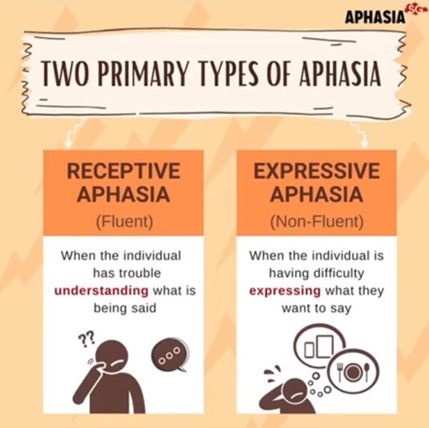
This type of aphasia is caused by damage to the frontal lobe of the brain, which affects the ability to produce language.
People with expressive aphasia can understand speech and know what they want to say, but they have difficulty saying words or forming sentences.
They may speak in short phrases that require a lot of effort.
Choice A is wrong because receptive aphasia is a type of fluent aphasia that affects the ability to comprehend language.
People with receptive aphasia have difficulty understanding speech and may produce meaningless words or sentences.
Choice C is wrong because global aphasia is the most severe type of aphasia that affects both the production and comprehension of language.
People with global aphasia cannot speak many words and do not understand speech.
They also cannot read or write.
Choice D is wrong because sensory aphasia is not a common term for a type of aphasia.
It may refer to Wernicke’s aphasia, which is another type of fluent aphasia that affects the ability to produce meaningful language.
People with Wernicke’s aphasia can speak fluently but often use incorrect or invented words or phrases.
Whether you are a student looking to ace your exams or a practicing nurse seeking to enhance your expertise , our nursing education contents will empower you with the confidence and competence to make a difference in the lives of patients and become a respected leader in the healthcare field.
Visit Naxlex, invest in your future and unlock endless possibilities with our unparalleled nursing education contents today