
A nurse is reinforcing teaching with a client about monitoring her blood pressure at home with a digital device. Which of the following statements by the client indicates an understanding of the teaching?
"I will make sure my hand is about 6 inches below my heart when I use the device."
"I will check my blood pressure at a different time each day."
"I will loosely wrap the blood pressure cuff around my upper arm."
"I will know my blood pressure is too high if I get a reading of 140 over 90 or higher."
The Correct Answer is D
This statement shows that the client understands the threshold for high blood pressure readings. A blood pressure reading of 140/90 mmHg or higher is considered elevated or hypertensive.
It is important for the client to be aware of this value and to seek medical attention or follow the prescribed management plan if their blood pressure exceeds this threshold.
The hand should be supported at the level of the heart or positioned comfortably during blood pressure measurement, but it does not need to be specifically 6 inches below the heart.
Consistency in the timing of blood pressure measurements is important for accurate monitoring. It is generally recommended to measure blood pressure at the same time each day to account for variations that can occur throughout the day.
The blood pressure cuff should be snug but not too tight around the upper arm. It should fit comfortably and securely to ensure accurate readings.
Nursing Test Bank
Naxlex Comprehensive Predictor Exams
Related Questions
Correct Answer is A
Explanation
During a mass casualty event, it is crucial for the nurse to assess and determine the acuity level (severity) and number of casualties who will be arriving at the healthcare facility. This information helps in planning and organizing resources, triaging patients based on their needs, and ensuring that appropriate care is provided to those who require immediate attention.
Delegating tasks to emergency health care specialists is a role that may be performed by a nurse in a leadership or supervisory position. However, the immediate priority for the nurse is to assess and triage incoming casualties.
Providing informational updates to members of the media is usually handled by designated spokespersons or communication specialists within the healthcare facility or incident command system. Nurses are primarily focused on patient care and should not be responsible for media communication during a mass casualty event.
Assisting in discharging stable clients to home is not directly related to the immediate response and care of casualties from a mass casualty event. The nurse's focus in such situations is primarily on the management of the incoming casualties and ensuring the availability of resources and care for those who require immediate attention.
Correct Answer is A
Explanation
Pain in the calf can be a potential symptom of deep vein thrombosis (DVT), which is a serious complication after surgery. Monitoring the client's pulse oximetry can help assess for signs of decreased oxygenation, which may indicate a possible clot or compromised circulation. A decrease in oxygen saturation can be an early indicator of a potential DVT-related complication, such as a pulmonary embolism. Monitoring the pulse oximetry can provide valuable information for timely intervention and management.
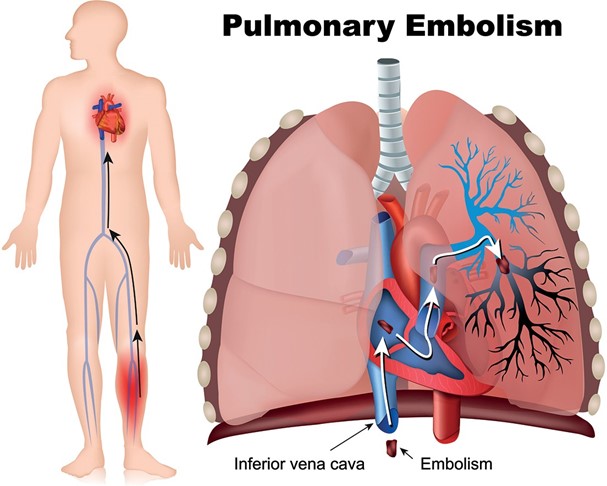
Instructing the client to massage the calf gently is not advisable without further assessment and evaluation. Massaging the calf can potentially dislodge a clot if one is present, leading to further complications. It is important to rule out DVT through appropriate diagnostic measures before providing specific instructions for calf massage.
Maintaining the leg in a dependent position while in bed can potentially worsen the symptoms and increase the risk of venous stasis. Elevating the affected leg, rather than maintaining it in a dependent position, can help improve venous return and reduce pain or swelling.
Applying a cold compress to the client's calf is not recommended without further assessment. Heat or cold therapy should be applied based on the underlying cause of the pain. In the case of potential DVT, applying a cold compress can increase vasoconstriction and potentially worsen the condition. It is essential to investigate the cause of the pain first and consult with the healthcare provider before initiating any specific therapies or interventions.
Whether you are a student looking to ace your exams or a practicing nurse seeking to enhance your expertise , our nursing education contents will empower you with the confidence and competence to make a difference in the lives of patients and become a respected leader in the healthcare field.
Visit Naxlex, invest in your future and unlock endless possibilities with our unparalleled nursing education contents today