
A nurse is reinforcing teaching about bottle-feeding with a client who is postpartum. Which of the following statements by the client indicates a need for further teaching?
“I will keep my baby’s head slightly elevated during the feeding.”
“I will hold my baby close to me while feeding.”
“Each feeding should last about 15 minutes.”
“Propping a bottle can cause otitis media.”
The Correct Answer is C
A. “I will keep my baby’s head slightly elevated during the feeding.”
This statement is correct. Keeping the baby's head slightly elevated during feeding can help prevent ear infections (otitis media) and is a recommended practice.
B. “I will hold my baby close to me while feeding.”
Holding the baby close during feeding promotes bonding and is generally considered a good practice for both bottle-feeding and breastfeeding.
C. “Each feeding should last about 15 minutes.”
This statement indicates a need for further teaching. The duration of a feeding can vary among infants, and it's not advisable to put a strict time limit on each feeding. It's important to follow the baby's cues and allow for individual variations in feeding patterns.
D. “Propping a bottle can cause otitis media.”
This statement is correct. Propping a bottle can lead to ear infections (otitis media) and is not a safe or recommended practice. The baby should be held during feedings to prevent these issues.
Nursing Test Bank
Naxlex Comprehensive Predictor Exams
Related Questions
Correct Answer is B
Explanation
A. “I wish I didn’t have to attach the electrodes to my skin.”
This statement reflects a common sentiment. Attaching electrodes to the skin is part of using TENS, and it's a non-invasive procedure where electrodes are placed on the skin surface to deliver electrical impulses for pain relief.
B. “It’s unfortunate that I have to be in the hospital for this treatment.”
This statement indicates a need for further teaching. TENS is typically an outpatient treatment, and individuals can use TENS units at home after receiving appropriate instructions and training. It does not require being in the hospital.
C. “I’ll need to shave the hair off the skin where I place the electrodes.”
This statement is accurate. To ensure proper contact and effectiveness, it is often recommended to shave or trim the hair in the area where the electrodes will be placed.
D. “I hope I don’t have to take as many pain pills.”
This statement reflects an understanding of the potential benefits of TENS. TENS is used as an adjunct therapy to help manage pain, and one of its goals may be to reduce the need for pain medications.
Correct Answer is A
Explanation
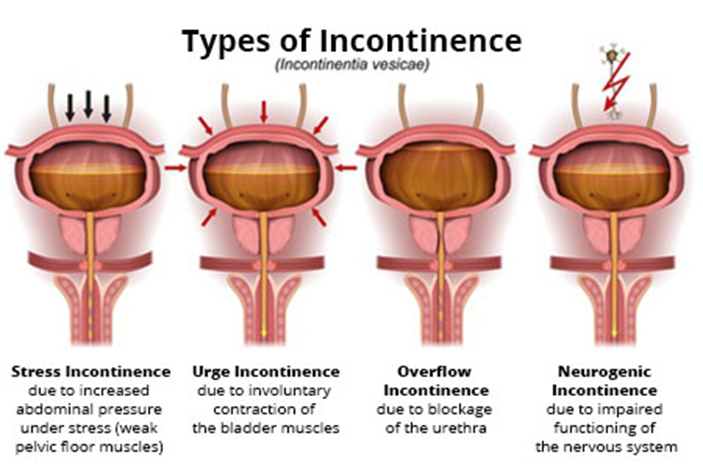
A. Stress incontinence
Stress incontinence is the involuntary loss of urine during activities that increase intra-abdominal pressure, such as sneezing, coughing, laughing, or lifting heavy objects. In stress incontinence, the pelvic floor muscles are weakened, leading to inadequate support of the bladder and urethra. This results in leakage of urine during moments of increased pressure on the bladder.
B. Urge incontinence
Urge incontinence involves a strong and sudden urge to urinate, leading to involuntary urine loss. It is often associated with an overactive bladder and may not be related to increased abdominal pressure.
C. Overflow incontinence
Overflow incontinence occurs when the bladder is unable to empty completely, leading to constant dribbling of urine. It is often associated with conditions that obstruct urine flow, such as an enlarged prostate in men.
D. Reflex incontinence
Reflex incontinence is characterized by the involuntary loss of urine due to a reflex arc that bypasses normal control mechanisms. It is often associated with neurological conditions that affect bladder control.
Whether you are a student looking to ace your exams or a practicing nurse seeking to enhance your expertise , our nursing education contents will empower you with the confidence and competence to make a difference in the lives of patients and become a respected leader in the healthcare field.
Visit Naxlex, invest in your future and unlock endless possibilities with our unparalleled nursing education contents today