
A nurse is planning care immediately following birth for a newborn who has a myelomeningocele that is leaking cerebrospinal fluid. Which of the following actions should the nurse include in the plan of care?
Monitor the rectal temperature every 4 hr.
Administer broad-spectrum antibiotics.
Cleanse the site with povidone-iodine.
Prepare for surgical closure after 72hr.
The Correct Answer is C
The priority action in this scenario is to prevent infection. Cleansing the site with povidone-iodine can help reduce the risk of infection. Rectal temperature monitoring and administration of antibiotics may be necessary if infection is suspected, but preventing infection is the priority. Surgical closure may be necessary, but this is not an immediate concern.
Nursing Test Bank
Naxlex Comprehensive Predictor Exams
Related Questions
Correct Answer is A
Explanation
Epidural anesthesia can cause hypotension in the mother, which can decrease blood flow to the fetus. Turning the client onto their side can help to improve blood flow to the fetus by reducing the pressure of the uterus on the vena cava and increasing venous return to the heart.
Option B is incorrect because an amnio-infusion is not indicated for hypotension related to epidural anesthesia.
Option C is also incorrect because naloxone is a medication used to reverse the effects of opioid medications and would not be appropriate for treating hypotension related to epidural anesthesia.
Option D is partially correct but does not address the immediate need to improve blood flow to the fetus. The nurse should monitor the client's blood pressure regularly but should also take immediate action to turn the client onto their side to improve blood flow.
Correct Answer is D
Explanation
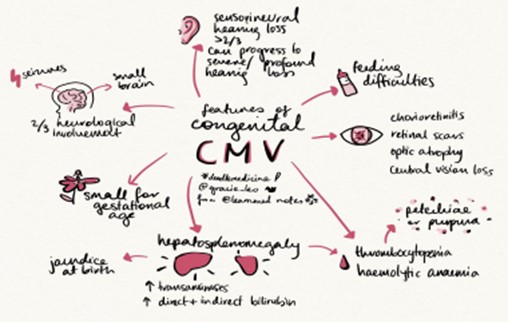
Cytomegalovirus (CMV) is a viral infection that can cause serious health problems for newborns if acquired in utero. Some newborns may appear asymptomatic at birth but later develop complications such as hearing loss, intellectual disability, and vision problems. The virus can be transmitted through bodily fluids such as saliva, urine, and breast milk, and can be especially dangerous for premature infants or those with weakened immune systems. While macrosomia (large body size) and urinary tract infections are possible complications in newborns, they are not typically associated with CMV. Cataracts may also occur in infants with congenital CMV, but hearing loss is a more common complication.
Whether you are a student looking to ace your exams or a practicing nurse seeking to enhance your expertise , our nursing education contents will empower you with the confidence and competence to make a difference in the lives of patients and become a respected leader in the healthcare field.
Visit Naxlex, invest in your future and unlock endless possibilities with our unparalleled nursing education contents today