
A nurse is discussing short and long term goals with a client who has alcohol use disorder and is being admitted to a treatment facility. Which of the following statements is appropriate for the nurse to include in the discussion?
You will be taking a once weekly dose of disulfiram to help control withdrawal symptoms during treatment.
Remaining physically active will help to minimize drowsiness and chills associated with initial alcohol withdrawal.
Attending Al-Anon meetings will help you identify a role model to assist you with making needed changes.
You will begin learning functional skills to replace defense mechanisms and behaviors while in treatment.
The Correct Answer is D
Choice A reason: You will not be taking a once weekly dose of disulfiram to help control withdrawal symptoms during treatment. Disulfiram is a medication that causes unpleasant reactions, such as nausea, vomiting, and headache, when alcohol is consumed. It is used to deter relapse, not to treat withdrawal symptoms. It is also taken daily, not weekly.
Choice B reason: Remaining physically active will not help to minimize drowsiness and chills associated with initial alcohol withdrawal. Physical activity may worsen dehydration, electrolyte imbalance, and blood pressure changes that occur during alcohol withdrawal. It may also increase the risk of seizures and delirium tremens. The nurse should monitor the client's vital signs, fluid and electrolyte status, and mental status, and administer medications as prescribed to manage withdrawal symptoms.
Choice C reason: Attending Al-Anon meetings will not help you identify a role model to assist you with making needed changes. Al-Anon is a support group for family members and friends of people with alcohol use disorder. It helps them cope with the effects of living with or caring for someone with alcohol problems. It does not provide role models or guidance for people with alcohol use disorder. The nurse should encourage the client to attend Alcoholics Anonymous (AA) meetings, which are peer support groups for people who want to stop drinking.
Choice D reason: You will begin learning functional skills to replace defense mechanisms and behaviors while in treatment. This is an appropriate statement for the nurse to include in the discussion, as it reflects one of the goals of treatment for alcohol use disorder. The nurse should help the client identify and modify the cognitive, emotional, and behavioral factors that contribute to alcohol use. The nurse should also teach the client coping skills, stress management techniques, and relapse prevention strategies.
Nursing Test Bank
Naxlex Comprehensive Predictor Exams
Related Questions
Correct Answer is D
Explanation
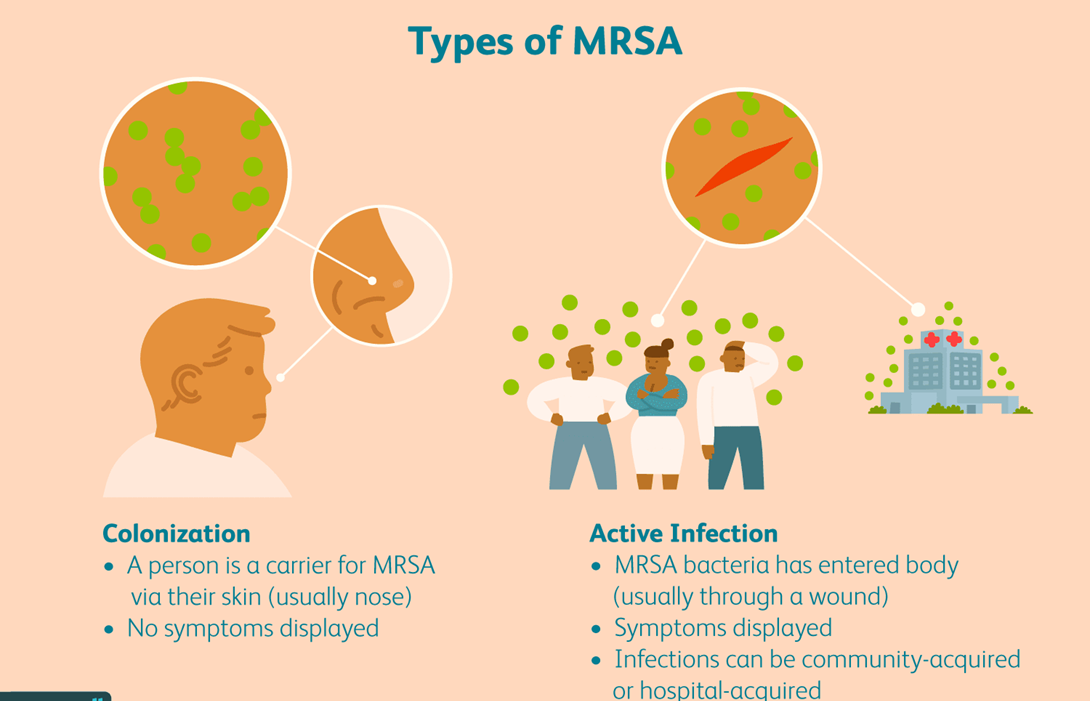
Choice A reason: Removing fresh flowers from the client's home is not an action that the nurse should take when caring for a client who has MRSA. Fresh flowers do not pose a risk of transmitting MRSA, and may provide some psychological benefits for the client.
Choice B reason: Wearing a mask when within 3 feet of the client is not an action that the nurse should take when caring for a client who has MRSA. MRSA is not an airborne infection, and a mask is not necessary to prevent its spread. The nurse should wear gloves and a gown when in contact with the client or the client's environment, and perform hand hygiene before and after the contact.
Choice C reason: Encouraging the client to use a HEPA filter in the house is not an action that the nurse should take when caring for a client who has MRSA. A HEPA filter is not effective in removing MRSA from the air, and may not have any impact on the client's health. The nurse should educate the client on how to clean and disinfect the surfaces and items that may be contaminated with MRSA, such as bedding, towels, and personal items.
Choice D reason: Double bagging soiled dressings in polyethylene bags is an action that the nurse should take when caring for a client who has MRSA. This is a standard precaution to prevent the exposure of other people or the environment to the infectious material. The nurse should also label the bags as biohazardous waste and dispose of them according to the agency's policy.
Correct Answer is D
Explanation
Step-by-Step Incidence Calculation Step 1 is (3,144 ÷ 325,986) = 0.00964292 Step 2 is 0.00964292 × 100,000 = 964.292 Step 3 is rounding 964.292 to the nearest whole number = 964
The closest answer choice to 964 cases per 100,000 population is D.
Answer: D.
Choice A reason: Option A states about 100 reported cases per 100,000 population, which is roughly one-tenth of the calculated rate (964 per 100,000). It underestimates the true incidence by nearly 864 cases per 100,000.
Choice B reason: Option B describes about 1 reported case per 10,000 population, equivalent to 10 per 100,000. This is far below the actual incidence (964 per 100,000) and thus is incorrect.
Choice C reason: Option C suggests about 10 reported cases per 10,000 population, which translates to 100 per 100,000. That remains well under the calculated rate and does not match the data.
Choice D reason: Option D indicates about 1,000 reported cases per 100,000 population. The calculated rate of 964 per 100,000 rounds to approximately 1,000 per 100,000, making this the correct choice.
Whether you are a student looking to ace your exams or a practicing nurse seeking to enhance your expertise , our nursing education contents will empower you with the confidence and competence to make a difference in the lives of patients and become a respected leader in the healthcare field.
Visit Naxlex, invest in your future and unlock endless possibilities with our unparalleled nursing education contents today