
A nurse is collecting data from a client who had a bronchoscopy. Which of the following findings should the nurse report to the provider?
Sore throat
Blood pressure 110/78 mm Hg
Facial edema
Presence of gag reflex
The Correct Answer is C
Choice A: This is incorrect because sore throat is not a finding that the nurse should report to the provider. Sore throat is a common and expected complication of bronchoscopy due to irritation from the endoscope. The nurse should provide oral care and offer ice chips or lozenges to soothe the throat.
Choice B: This is incorrect because blood pressure 110/78 mm Hg is not a finding that the nurse should report to the provider. Blood pressure 110/78 mm Hg is within the normal range and does not indicate any adverse effects from bronchoscopy. The nurse should monitor the vital signs and oxygen saturation of the client.
Choice C: This is correct because facial edema is a finding that the nurse should report to the provider. Facial edema can indicate an allergic reaction, airway obstruction, or mediastinal emphysema, which are serious and potentially life-threatening complications of bronchoscopy. The nurse should assess the airway, breathing, and circulation of the client and administer oxygen and medications as prescribed.
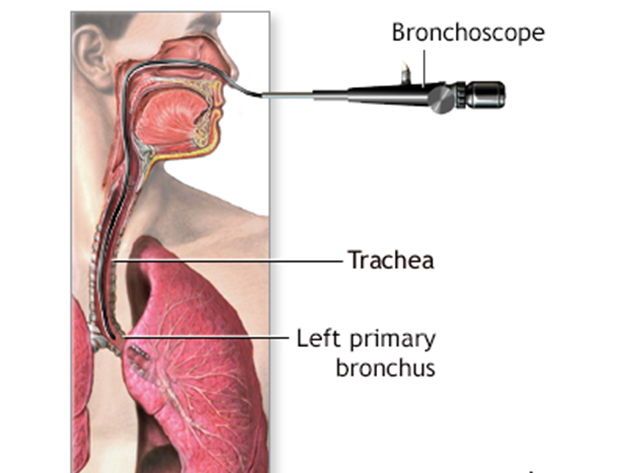
Choice D: This is incorrect because presence of gag reflex is not a finding that the nurse should report to the provider. Presence of gag reflex is an expected outcome of bronchoscopy, indicating that the anesthesia has worn off and the client can resume oral intake. The nurse should check the gag reflex before offering any food or fluids to the client.
Nursing Test Bank
Naxlex Comprehensive Predictor Exams
Related Questions
Correct Answer is C
Explanation
Choice A reason:This is a requirement for Airborne Precautions (used for smaller particles like those in Tuberculosis, Measles, or Varicella). Pertussis droplets are too large to remain suspended in the air, so a standard surgical mask is sufficient.
Choice B reason: Wearing a gown when caring for the client is not necessary, as pertussis is not transmitted by contact with body fluids or surfaces.
Choice C reason:Pertussis (Whooping Cough) is a highly contagious respiratory infection caused by the bacterium Bordetella pertussis. It is transmitted through large respiratory droplets expelled when an infected person coughs or sneezes. Because these droplets are heavy and typically travel only 3 to 6 feet before falling to the ground, Droplet Precautions are required.
Choice D reason: Placing the client in a negative air pressure room is not indicated, as pertussis is not classified as an airborne infection that requires isolation in a specially ventilated room.
Correct Answer is B
Explanation
Choice A reason: Chest x-ray showing cardiomegaly is not a new finding for the client who has heart failure, as it indicates enlargement of the heart due to increased workload and pressure on the cardiac chambers.
Choice B reason: PaCO2 55 mmHg is an abnormal finding for the client who has heart failure, as it indicates respiratory acidosis, which is a condition where the lungs cannot eliminate enough carbon dioxide and the blood becomes too acidic. This can be caused by pulmonary edema, which is a complication of heart failure that impairs gas exchange and ventilation.
Choice C reason: Potassium level 4.5 mEq/L is a normal finding for the client who has heart failure, as it indicates adequate electrolyte balance and renal function.
Choice D reason: Urinary output of 1,000 mL in 12 hr is a normal finding for the client who has heart failure, as it indicates adequate fluid status and cardiac output.
Whether you are a student looking to ace your exams or a practicing nurse seeking to enhance your expertise , our nursing education contents will empower you with the confidence and competence to make a difference in the lives of patients and become a respected leader in the healthcare field.
Visit Naxlex, invest in your future and unlock endless possibilities with our unparalleled nursing education contents today