
A nurse is caring for an older adult client who is suspected of having septicemia.
Which of the following actions is the nurse's priority?
Obtain a WBC count with differential.
Obtain a blood specimen for culture and sensitivity testing.
Obtain a history to determine recent injuries.
Obtain a broad-spectrum antibiotic for rapid administration.
The Correct Answer is B

The priority action for a nurse caring for an older adult client who is suspected of having septicemia is to obtain a blood specimen for culture and sensitivity testing.
This test will help identify the specific microorganism causing the infection and determine the most effective antibiotic treatment.
Choice A is incorrect because while a WBC count with differential can provide information about the presence of an infection, it does not identify the specific microorganism causing the infection.
Choice C is incorrect because while obtaining a history to determine recent injuries can provide useful information, it is not the priority action.
Choice D is incorrect because while administering a broad-spectrum antibiotic may be necessary, it should not be done before obtaining a blood specimen for culture and sensitivity testing.
Nursing Test Bank
Naxlex Comprehensive Predictor Exams
Related Questions
Correct Answer is A
Explanation
The aseptic technique is important to prevent infection when changing the dressing of a central venous access device.
Choice B is not correct because povidone-iodine is not always the recommended cleansing agent for central venous access devices.
Choice C is not correct because a 10-mL syringe may generate too much pressure and damage the catheter.
Choice D is not correct because the dressing does not always need to be changed every 24 hours; the frequency of dressing changes depends on the type of dressing and the condition of the site.
Correct Answer is C
Explanation
This statement indicates an understanding of the teaching because shaking the inhaler helps to mix the medicine inside the canister.
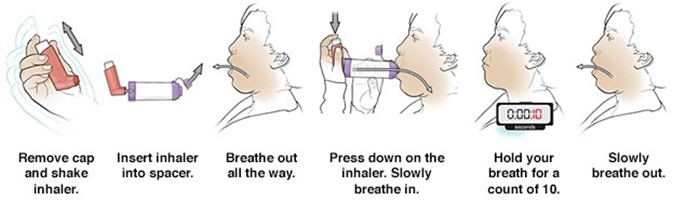
Choice A is incorrect because it is not necessary to clean the cap of the inhaler once per week.
Instead, it is important to clean the inhaler at least once a week or as directed.
Choice B is incorrect because one should inhale the medication slowly, not quickly.
Choice D is incorrect because one should wait 1 minute between puffs, not 15 seconds.
Whether you are a student looking to ace your exams or a practicing nurse seeking to enhance your expertise , our nursing education contents will empower you with the confidence and competence to make a difference in the lives of patients and become a respected leader in the healthcare field.
Visit Naxlex, invest in your future and unlock endless possibilities with our unparalleled nursing education contents today