
A nurse is caring for a client who reports manifestations of gastroesophageal reflux disease (GERD). Which of the following client statements should the nurse identify as a contributing factor to GERD?
"I like to drink a glass of warm milk before bed to help me sleep."
"I try to follow a low-fat, high-protein diet to help me maintain my weight."
"I stopped drinking caffeinated beverages several weeks ago."
"I have recently stopped drinking alcohol."
The Correct Answer is A
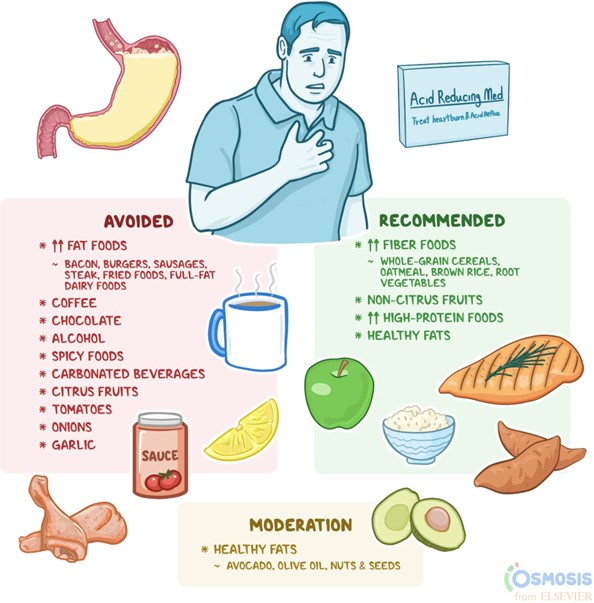
The nurse should identify the statement "I like to drink a glass of warm milk before bed to help me sleep" as a contributing factor to gastroesophageal reflux disease (GERD). Consuming a glass of warm milk before bed can worsen GERD symptoms due to its high-fat content. High-fat foods, including dairy products, can relax the lower esophageal sphincter (LES) and delay gastric emptying, allowing stomach acid to flow back into the esophagus, leading to symptoms of GERD.
"I try to follow a low-fat, high-protein diet to help me maintain my weight": Following a low-fat, high-protein diet is actually beneficial for managing GERD. High-fat foods can worsen GERD symptoms by relaxing the LES and delaying gastric emptying, while a low-fat diet can help reduce symptoms.
"I stopped drinking caffeinated beverages several weeks ago": Avoiding caffeinated beverages is a positive step in managing GERD. Caffeine can stimulate acid production in the stomach and relax the LES, contributing to GERD symptoms.
"I have recently stopped drinking alcohol": Stopping alcohol consumption is also beneficial for managing GERD. Alcohol can relax the LES and increase acid production in the stomach, leading to GERD symptoms.
Nursing Test Bank
Naxlex Comprehensive Predictor Exams
Related Questions
Correct Answer is A
Explanation
The expected finding in an older adult client with dysphagia and dehydration is tachycardia. Tachycardia, an increased heart rate, is a common finding in dehydration as the body tries to compensate for the decreased fluid volume.
The other choices (hypertension, distended neck veins, and decreased respiratory rate) are not typically associated with dehydration in this context.
here's an explanation of why these choices are incorrect:
1. Hypertension: Dehydration usually leads to a decrease in blood volume, resulting in low blood pressure rather than hypertension. Hypertension is not a typical finding in dehydration.
2. Distended neck veins: Dehydration causes a decrease in blood volume, which results in decreased venous return to the heart. Consequently, distended neck veins would not be an expected finding.
3. Decreased respiratory rate: Dehydration itself does not directly affect respiratory rate. However, severe dehydration can lead to electrolyte imbalances, such as hyponatremia (low sodium levels), which can affect brain function and potentially lead to changes in respiratory rate. However, decreased respiratory rate is not a common finding in dehydration alone.
It's important to remember that dehydration can have various signs and symptoms, including dry mucous membranes, decreased urine output, increased thirst, dry skin, dizziness, and confusion.
Correct Answer is A
Explanation
"Eat protein at each meal": This is an important instruction for a client with dumping syndrome. Including protein at each meal can help slow down the digestion process and reduce the rapid emptying of the stomach contents into the small intestine, which is characteristic of dumping syndrome. Protein takes longer to digest and can help stabilize blood sugar levels, promote satiety, and minimize the symptoms of dumping syndrome.
"Consume three large meals daily": Consuming three large meals daily is not recommended for clients with dumping syndrome. Large meals can exacerbate the symptoms by overloading the digestive system. Instead, it is generally advised to consume smaller, more frequent meals throughout the day to help manage dumping syndrome symptoms.
"Drink beverages with meals": It is not recommended to drink beverages with meals for clients with dumping syndrome. Consuming liquids with meals can further contribute to the rapid emptying of the stomach contents and worsen symptoms. It is preferable to drink fluids between meals to maintain hydration without affecting the digestion process.
"Sit up in bed after meals": This instruction is relevant for clients with gastroesophageal reflux disease (GERD) but may not be specifically related to dumping syndrome. In the case of dumping syndrome, it is generally recommended to remain in an upright position after meals to aid digestion and reduce symptoms, such as bloating, cramping, and diarrhea.
Whether you are a student looking to ace your exams or a practicing nurse seeking to enhance your expertise , our nursing education contents will empower you with the confidence and competence to make a difference in the lives of patients and become a respected leader in the healthcare field.
Visit Naxlex, invest in your future and unlock endless possibilities with our unparalleled nursing education contents today