
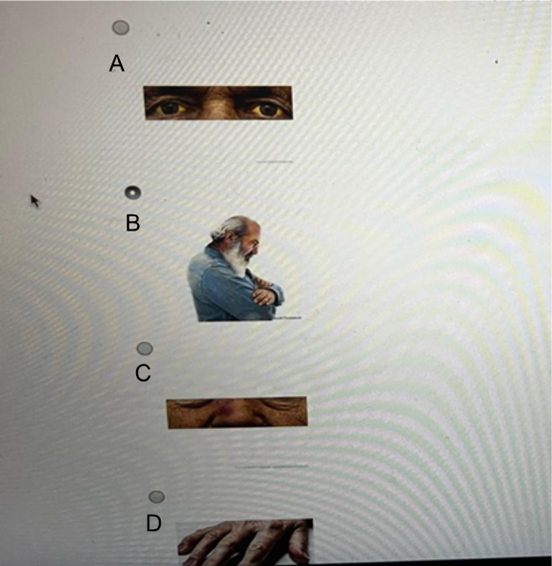
A nurse at a provider's office is collecting physical data from an older adult client. Which of the following images should the nurse identify as an example of an expected age-related change?
A
B
C
D
The Correct Answer is D
A. Close-up of eyes with yellow sclera: Could indicate jaundice or liver dysfunction, which is not an expected part of aging and requires further evaluation.
B. Older adult man with a rounded back and head tilted forward: Suggests kyphosis, which can occur with aging but is usually linked to osteoporosis or vertebral fractures, not considered an inevitable, expected change.
C. Close-up of nose with a reddish-purple spot (possible bruise): Might result from trauma, coagulopathy, or medication side effects like anticoagulants, not a routine age-related change.
D. Hands with prominent veins, thin skin, and wrinkles: Thinning skin due to decreased subcutaneous fat. Wrinkles from reduced skin elasticity. Prominent veins due to loss of skin turgor and connective tissue. These are all normal physical findings in older adults.
Nursing Test Bank
Naxlex Comprehensive Predictor Exams
Related Questions
Correct Answer is ["A","B","C","D"]
Explanation
A. Amount of time washing hands: The client increased handwashing time to 15 seconds, which meets the CDC’s recommended minimum for effective hand hygiene when preparing food.
B. Use of cutting board: The client now uses separate cutting boards for raw meats and raw vegetables, which helps prevent cross-contamination and foodborne illness.
C. Defrosting of frozen foods: Defrosting foods in the refrigerator is a safe method that prevents bacterial growth, unlike leaving food on the countertop.
D. Leftover storage time in refrigerator: Storing leftovers in the refrigerator for a maximum of 2 days (or 7 days initially) demonstrates proper food handling to prevent spoilage and bacterial growth.This aligns with recommended guidelines.
E. Refrigerator temperature: Although the temperature has improved (now 5.6°C instead of 6.7°C), the ideal refrigerator temperature should be 4°C (40°F) or lower for optimal food safety.
F. Time leftovers sit unrefrigerated on countertop: Leaving leftovers at room temperature for 2 hours still meets the maximum allowable limit, but best practice is to refrigerate within 1 hour if the room temperature is high (above 90°F/32°C), which might not reflect consistent safe food handling in all conditions.
Correct Answer is D
Explanation
A. The stoma protrudes slightly from the abdomen: A stoma that protrudes slightly (about 1–2 cm) above the skin surface is normal and indicates healthy placement. This finding does not require reporting.
B. The stoma bleeds lightly when touched: Light bleeding with gentle palpation or cleaning is common due to the stoma’s rich blood supply and is generally not concerning unless bleeding is excessive.
C. The stoma is draining a small amount of liquid stool: Liquid stool drainage is expected from a colostomy, especially in the early postoperative period. This is a normal finding that does not require reporting.
D. The stoma appears dark in color: A dark, dusky, or black stoma indicates compromised blood flow and possible ischemia or necrosis. This is a serious finding that requires immediate reporting to prevent further complications.
Whether you are a student looking to ace your exams or a practicing nurse seeking to enhance your expertise , our nursing education contents will empower you with the confidence and competence to make a difference in the lives of patients and become a respected leader in the healthcare field.
Visit Naxlex, invest in your future and unlock endless possibilities with our unparalleled nursing education contents today