
A newborn's failure to pass meconium within the first 24 hours after birth may indicate which of the following?
Abdominal wall defect
Celiac disease.
Intussusception
Hirschsprung disease
The Correct Answer is D
A. Abdominal wall defect:
Failure to pass meconium within the first 24 hours after birth can indicate a potential obstruction in the gastrointestinal tract. While an abdominal wall defect could potentially cause gastrointestinal issues, it is not specifically associated with failure to pass meconium.
B. Celiac disease:
Celiac disease is an autoimmune disorder characterized by an abnormal immune response to gluten. While celiac disease can cause gastrointestinal symptoms, such as diarrhea and abdominal pain, it is not typically associated with failure to pass meconium in the newborn period.
C. Intussusception:
Intussusception occurs when one segment of the intestine telescopes into another, causing a bowel obstruction. While intussusception is a cause of bowel obstruction in infants, it typically presents with symptoms such as colicky abdominal pain, vomiting, and the passage of "currant jelly" stool, rather than failure to pass meconium.
D. Hirschsprung disease:
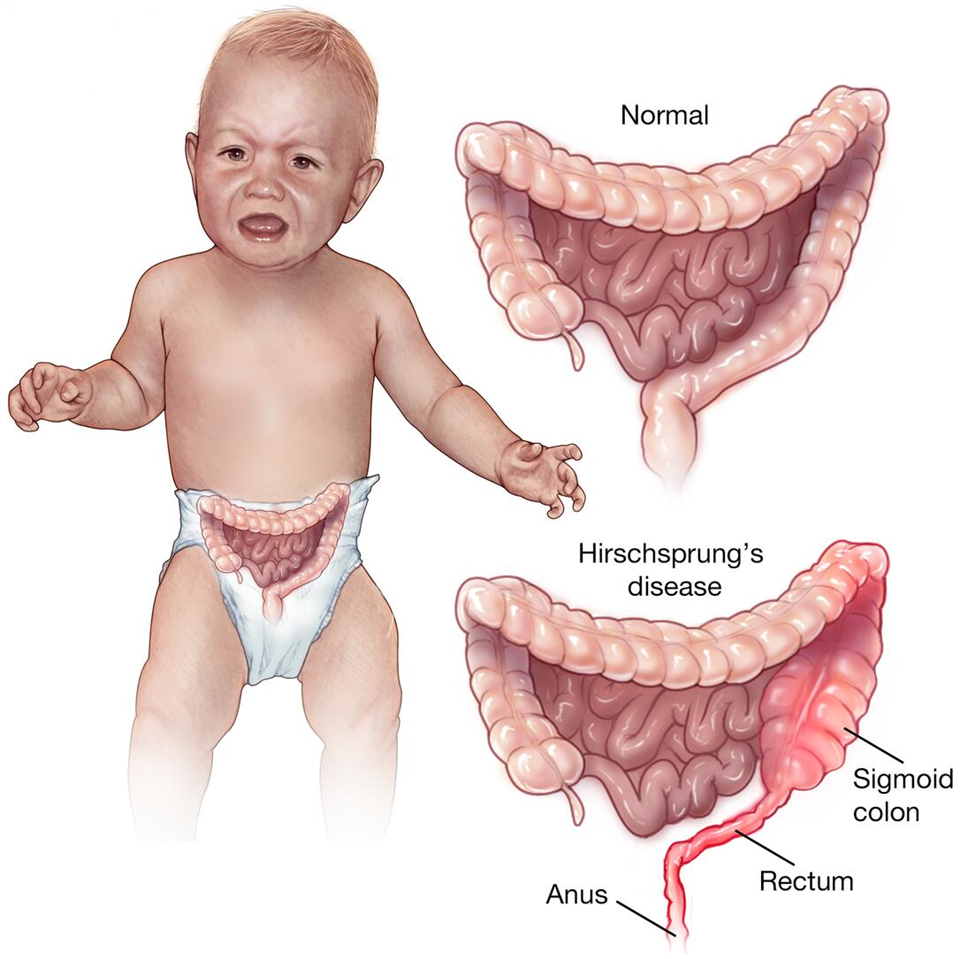
Hirschsprung disease is a congenital condition characterized by the absence of ganglion cells in the distal portion of the colon, leading to functional obstruction. Failure to pass meconium within the first 24 hours after birth is a classic sign of Hirschsprung disease. This condition requires surgical intervention to remove the affected portion of the colon and restore normal bowel function.
Nursing Test Bank
Naxlex Comprehensive Predictor Exams
Related Questions
Correct Answer is A
Explanation
A. No treatment is necessary, the fluid is reabsorbing normally:
- This option suggests that the hydrocele is resolving spontaneously, which is often the case in infants. The physician may choose to observe the hydrocele over time as it is likely to resolve without intervention.
B. Keeping the infant in a flat, supine position until the fluid is gone:
- This option does not address the underlying cause of the hydrocele and is not a standard treatment recommendation. Additionally, positioning changes are unlikely to affect the resolution of the hydrocele.
C. Referral to a surgeon for repair:
- Surgical repair may be considered if the hydrocele persists beyond a certain age or if it causes discomfort or complications. However, it is typically not recommended in infants unless the hydrocele persists beyond infancy or causes other issues.
D. Massaging the groin area twice a day until the fluid is gone:
- Massaging the groin area is not a recommended treatment for hydrocele and may not be effective in resolving the condition. Additionally, manipulating the scrotum may cause discomfort or injury to the infant.
Correct Answer is D
Explanation
A. Eczema: Eczema is a chronic skin condition characterized by inflammation, redness, and itching. It is not typically caused by bacterial infections and does not present with signs around the mouth and nose.
B. Vitiligo: Vitiligo is a condition characterized by the loss of skin color in patches. It is not caused by bacterial infections and does not typically present with signs around the mouth and nose.
C. Angioedema: Angioedema is swelling beneath the skin, often around the eyes and lips, and is commonly associated with allergic reactions or other triggers. It is not caused by bacterial infections.
D. Impetigo: Impetigo is a bacterial skin infection caused by Staphylococcus aureus or Streptococcus pyogenes bacteria. It commonly presents with red sores or blisters around the mouth and nose, especially in children and the elderly. Therefore, option D, Impetigo, is the correct answer.
Whether you are a student looking to ace your exams or a practicing nurse seeking to enhance your expertise , our nursing education contents will empower you with the confidence and competence to make a difference in the lives of patients and become a respected leader in the healthcare field.
Visit Naxlex, invest in your future and unlock endless possibilities with our unparalleled nursing education contents today