
A client's father has recently died. Which response from the nurse would be most therapeutic?
‘I know how you feel. I've lost people close to me too."
"Your mother is still living to give you support."
"You will never be the same. This will make you stronger"
1 am sad for you. I'll stay with you for a while if you need to talk."
The Correct Answer is D
D. It acknowledges the client's emotions by expressing empathy ("I am sad for you") and offering support ("I'll stay with you for a while if you need to talk"). This approach validates the client's grief, acknowledges the significance of their loss, and offers the opportunity for the client to express their feelings if they choose to do so.
A. This can inadvertently minimize the client's grief by suggesting that the nurse's losses are comparable or that the nurse understands the client's emotions completely.
B. It does not acknowledge or validate the client's current emotions and may overlook the complex feelings associated with losing a parent.
C. This response, although intended to provide encouragement, may not be therapeutic in the context of immediate grief. It suggests a future positive outcome from the loss without acknowledging the client's current emotional pain.
Nursing Test Bank
Naxlex Comprehensive Predictor Exams
Related Questions
Correct Answer is ["A","E"]
Explanation
A. Venous ulcers often have irregular wound borders. This is due to the underlying venous hypertension and tissue breakdown, which can lead to irregular shapes of the ulcer.
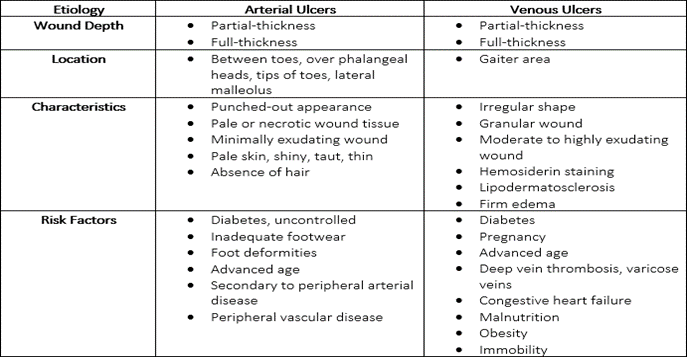
E. Significant edema, particularly in the lower leg and ankle area (often graded as +2 or +3), is commonly associated with venous ulcers. Venous insufficiency leads to fluid accumulation in the tissues, resulting in edema.
B. This is less likely to be associated with a venous ulcer. Venous ulcers typically occur on the lower leg, particularly around the medial or lateral malleolus, rather than on the plantar aspect of the foot.
C. Severe pain, especially on a scale of 9 out of 10, is less typical of venous ulcers. Venous ulcers are usually associated with mild to moderate discomfort or pain, often described as aching or heaviness rather than severe pain.
D. Venous ulcers typically exhibit moderate to heavy serous drainage. This is due to the chronic inflammation and venous congestion that characterize venous insufficiency.
Correct Answer is A
Explanation
A. Spiritual care is integral to holistic care. Addressing spiritual needs can provide comfort, meaning, and a sense of peace to clients, which can contribute to a reduction in suffering, both physical and emotional. Spiritual distress can exacerbate physical symptoms and affect overall well-being, so addressing these needs can lead to better outcomes.
B. While nurses play a significant role in providing holistic care, including spiritual care, they are not the sole providers. Spiritual care can be provided by chaplains, spiritual counselors, and other healthcare professionals trained in addressing spiritual needs. However, nurses often have frequent and intimate contact with patients, making them well-positioned to assess and address spiritual concerns and to collaborate with other members of the healthcare team to meet these needs.
C. While addressing spiritual needs can contribute to overall well-being and healing, physical healing does not solely depend on meeting spiritual needs. Physical healing involves medical interventions, treatments, and physiological processes. However, addressing spiritual needs can positively impact a client's emotional and psychological state, which can support the overall healing process.
D. Understanding and respecting the client's own beliefs, values, and preferences regarding spirituality is crucial. Each individual may have unique spiritual beliefs and practices that influence their health beliefs and behaviors. The nurse should approach spiritual care with cultural sensitivity and respect for diversity, ensuring that the care provided aligns with the client's beliefs and preferences.
Whether you are a student looking to ace your exams or a practicing nurse seeking to enhance your expertise , our nursing education contents will empower you with the confidence and competence to make a difference in the lives of patients and become a respected leader in the healthcare field.
Visit Naxlex, invest in your future and unlock endless possibilities with our unparalleled nursing education contents today