
Nursing Assessment of Fluid and Electrolyte Imbalances
-
Chronic diseases
-
Acute conditions
-
Medications
-
Age:
-
Very old or very young
-
-
Inability to access food and fluids
-
Skin
-
Mucus membranes
-
Eyes
-
Fontanels (infants)
-
Cardiovascular system
-
Respiratory system
-
Neurologic
-
Daily weights:
-
At the same time each day
-
Wearing the same or similar clothing
-
On the same scale
-
-
Vital signs
-
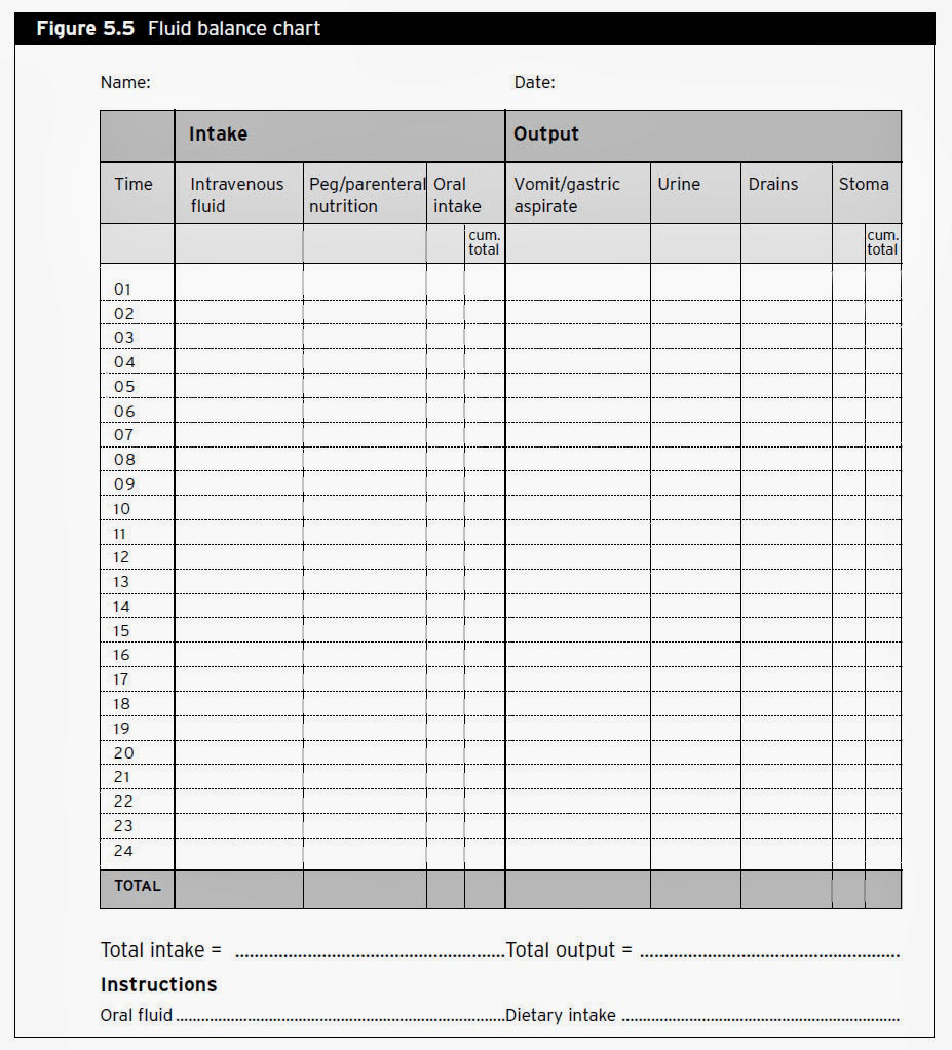
Fluid intake/output
-
Oral fluids
-
Foods that are or become liquid at room temperature
-
Tube feedings
-
Parenteral feedings
-
IV medications
-
Catheter or tube irrigation
-
Urinary output
-
Vomitus and liquid feces
-
Tube drainage
-
Wound and Fistula Drainage
Physical Assessment:
Clinical Measurements:
Intake to be Recorded:
Output to be Recorded:
Nursing Test Bank
Test Bank #1: RN Pharmacology Exams
Test Bank #2: RN Medical-Surgical Exams
Test Bank #3: RN Fundamentals Exams
Test Bank #4: RN Maternal-Newborn Exams
Test Bank #5: RN Anatomy and Physiology Exams
Test Bank #6: RN Obstetrics and Pediatrics Exams
Test Bank #7: RN Fluid and Electrolytes Exams
Test Bank #9: RN Adult Health
Test Bank #10: RN Dosage Calculation
Test Bank #11: RN Community Health Exams
Test Bank #12: RN Psychology Exams
Test Bank #13: RN Nursing Care Of Children
Test Bank #14: RN Foundations of Nursing Exams
Naxlex Comprehensive Predictor Exams
Exam #1: RN Comprehensive predictor 2023 proctored exam
Exam #2: Ati rn vati comprehensive predictor proctored exam
Exam #3: Ati Rn Comprehensive Predictor Proctored Exam 2023
Exam #4: Rn Comprehensive Predictor 2023 Proctored Exam - St. Joseph
Exam #5: RN Comprehensive Predictor Proctored Exam (National U CA San Diego)
Exam #6: Ati rn comprehensive predictor 2023 retake proctored exam
Exam #7: RN Hesi Exit Proctored Exam
Exam #8: Hesi RN Exit proctored exam
Exam #9: Hesi rn exit proctored exam
Exam #10: Hesi Rn compass exit B proctored exam
Questions on Nursing Assessment of Fluid and Electrolyte Imbalances
Correct Answer is A
Explanation
<p>Having a headache and dizziness is a sign of cerebral dehydration and a negative outcome of IV fluid therapy. Headache and dizziness are common symptoms of dehydration that result from reduced blood flow to the brain and increased osmolality of the blood. When IV fluids are administered, they improve the cerebral perfusion and osmotic balance and relieve the headache and dizziness.</p>
Correct Answer is ["A","B","C","E"]
Explanation
<p>Elevating the head of the bed is a fourth action that the nurse should take because it improves respiratory function and reduces pulmonary congestion. The nurse should elevate the head of the bed to at least 30 degrees or more, depending on the client's comfort and tolerance. The nurse should also monitor the client's oxygen saturation, breath sounds, and dyspnea.</p>
Correct Answer is C
Explanation
<p>Crackles in the lungs are not a sign of fluid volume deficit, but rather a sign of fluid volume excess or pulmonary edema. Crackles are abnormal lung sounds that indicate fluid accumulation in the alveoli or air sacs of the lungs. Fluid volume deficit does not cause fluid accumulation in the lungs, but rather dehydration of the lung tissues. Some additional information: Fluid volume deficit, also known as dehydration, is a condition where the body loses more fluids than it takes in. This can result from excessive vomiting, diarrhea, sweating, burns, hemorrhage, or diuretic use. Fluid volume excess, also known as overhydration or hypervolemia, is a condition where the body retains more fluids than it needs. This can result from excessive fluid intake, kidney failure, heart failure, liver cirrhosis, or steroid use. Fluid balance is essential for maintaining homeostasis and normal functioning of the body systems. Fluid balance is regulated by various mechanisms such as thirst, urine output, hormones, and electrolytes.</p>