
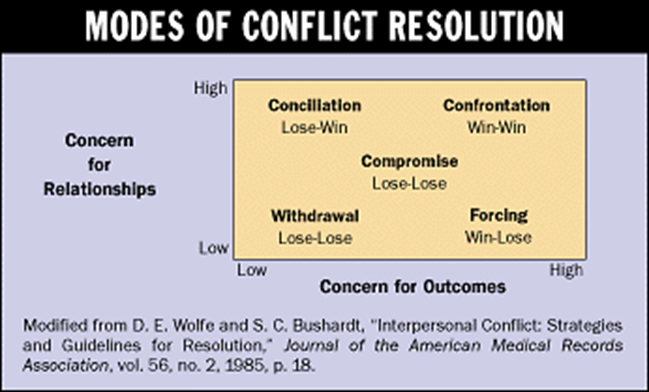
To resolve a conflict between staff members regarding potential changes in policy, a nurse manager decides to implement the changes she prefers regardless of the feelings of those who oppose those changes. Which of the following conflict resolution strategies is the nurse manager using?
Cooperating
Collaborating
Competing
Compromising
The Correct Answer is C
A. Cooperating involves finding a middle ground and working together, which isn't reflected in the manager's unilateral decision-making.
B. Collaborating involves working together toward a solution that accommodates various perspectives, which isn't the case here.
C. Competing involves asserting one's own concerns at the expense of others' viewpoints, which aligns with the manager's decision to implement changes regardless of opposition.
D. Compromising entails finding a middle ground that satisfies all parties involved, which isn't evident in the manager's decision-making process.
Nursing Test Bank
Naxlex Comprehensive Predictor Exams
Related Questions
Correct Answer is D
Explanation
A. Gestures and hand signals can be helpful but might not fully convey complex medical information.
B. Involving the client's partner can be beneficial but might not ensure accurate communication and understanding.
C. Interpreting body language is essential for communication but might not suffice for comprehensive teaching.
D. Providing an interpreter ensures accurate and complete communication during the teaching session, facilitating understanding and informed consent.
Correct Answer is D
Explanation
A. A generalized rash over the trunk might indicate various conditions but might not be an immediate concern in the context of meningitis.
B. An increased temperature is an expected finding in meningitis and should be
monitored but might not necessitate immediate reporting unless exceptionally high or coupled with other concerning symptoms.
C. Photophobia, or sensitivity to light, is a common symptom in meningitis but alone might not necessitate immediate reporting if the client's other symptoms are stable.
D. Decreased level of consciousness can indicate neurological deterioration and requires immediate attention as it could signal worsening of the client's condition.
Whether you are a student looking to ace your exams or a practicing nurse seeking to enhance your expertise , our nursing education contents will empower you with the confidence and competence to make a difference in the lives of patients and become a respected leader in the healthcare field.
Visit Naxlex, invest in your future and unlock endless possibilities with our unparalleled nursing education contents today