
The nurse is providing education to a client regarding a new prescription for lithium carbonate. Which statement by the client indicates the need for additional education?
"I will restrict my intake of processed foods high in sodium."
"I will drink 8 to 12 glasses of liquids daily."
"I will take my medications with food."
"I will have my blood drawn on schedule."
The Correct Answer is B
Choice A reason: Restricting sodium intake is not necessary with lithium carbonate, and maintaining a consistent sodium level is important to prevent lithium toxicity.
Choice B reason: Drinking excessive fluids can dilute lithium levels in the blood, potentially leading to subtherapeutic levels and reduced efficacy of the medication.
Choice C reason: Taking medications with food can help with absorption and minimize gastrointestinal side effects, but it is not specific to lithium carbonate.
Choice D reason: Having blood drawn on schedule is important for monitoring lithium levels and ensuring safe treatment.
Nursing Test Bank
Naxlex Comprehensive Predictor Exams
Related Questions
Correct Answer is ["C","D","E"]
Explanation
Choice A reason: Urinary retention and constipation are not typically associated with tardive dyskinesia, which is characterized by involuntary movements.
Choice B reason: Fine hand tremors and pill rolling are more commonly associated with Parkinson's disease rather than tardive dyskinesia.
Choice C reason: Tongue thrusting and lip smacking are classic signs of tardive dyskinesia, often resulting from long-term use of antipsychotic medications.
Choice D reason: Facial grimacing and eye blinking are also indicative of tardive dyskinesia, reflecting involuntary facial movements.
Choice E reason: Involuntary pelvic rocking and hip thrusting movements can be manifestations of tardive dyskinesia, representing involuntary movements of the body.
Correct Answer is ["A","B","D","E"]
Explanation
Choice A: Hyperventilation
Hyperventilation is rapid breathing that usually occurs because of anxiety or panic. This leads to low levels of carbon dioxide in your blood which causes a number of symptoms. Hyperventilation in anxiety can be a tricky thing to understand. On one hand, it can feel like you're suffocating or not getting enough air. On the other hand, hyperventilation can also cause shortness of breath, chest pain, and lightheadedness.
Choice B: Irritability
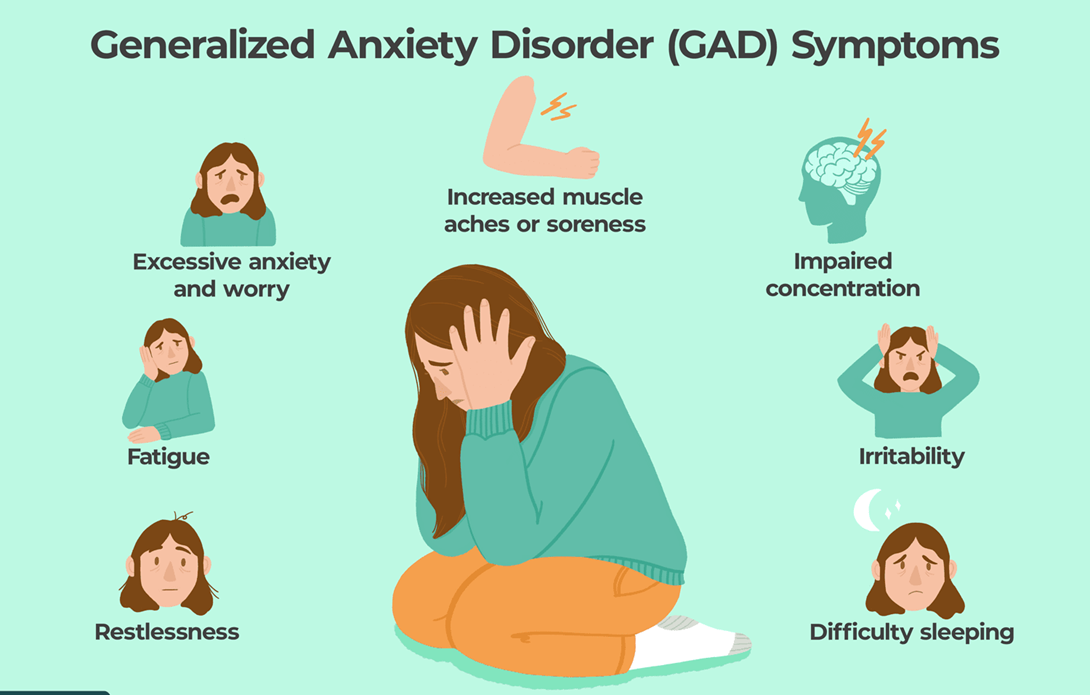
Irritability is a common symptom of Generalized Anxiety Disorder (GAD). Individuals with GAD often experience severe feelings of fear and unease and report feeling restless and irritable that interfere with the quality of their life.
Choice C: Anorexia
While there is a relationship between anxiety disorders and anorexia nervosa, anorexia is not a common symptom of Generalized Anxiety Disorder (GAD). Anorexia nervosa is a separate disorder that involves a fear of gaining weight and a distorted body image.
Choice D: Insomnia
Insomnia is highly prevalent in psychiatric disorders, and it has significant implications. The anxiety that characterizes GAD often interferes with the ability to sleep and leads to insomnia. This is not unexpected. Anxiety might be viewed as an inappropriate escalation of a response called arousal.
Choice E: Fatigue
Fatigue is a common symptom of Generalized Anxiety Disorder (GAD). Individuals with GAD may feel restless and have trouble relaxing. They may also tire easily or feel tired all the time.
Whether you are a student looking to ace your exams or a practicing nurse seeking to enhance your expertise , our nursing education contents will empower you with the confidence and competence to make a difference in the lives of patients and become a respected leader in the healthcare field.
Visit Naxlex, invest in your future and unlock endless possibilities with our unparalleled nursing education contents today