
The nurse is providing care for an elderly client who has cognitive changes. The nurse recognizes that which statement regarding dementia and delirium is true?
Both are accompanied by changes in level of consciousness.
Memory is affected equally in both diseases.
Only delirium is reversible.
The progression of both diseases is slow.
The Correct Answer is C
C. Delirium is often reversible once the underlying cause is identified and treated (e.g., correcting electrolyte imbalances, managing infections, discontinuing medications contributing to delirium). With appropriate intervention, the mental status can improve, and the individual can return to their baseline cognitive function.
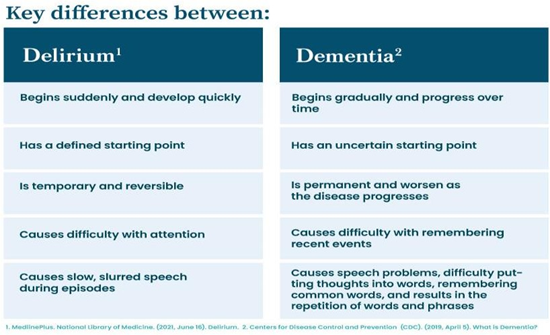
A. Dementia, on the other hand, is a chronic, progressive syndrome that primarily affects memory, thinking, behavior, and the ability to perform everyday activities. It does not typically cause acute changes in consciousness.
B. Memory impairment is a hallmark feature of dementia, especially in the early stages. In contrast, delirium primarily affects attention, awareness, and cognition acutely, with memory impairment being variable and not a defining feature.
D. Delirium develops rapidly, often over hours to days, in response to an acute medical condition, medication change, or other factors. It is characterized by a fluctuating course and can resolve once the underlying cause is managed.
Nursing Test Bank
Naxlex Comprehensive Predictor Exams
Related Questions
Correct Answer is B
Explanation
B Leaning away from the client can convey disinterest, distraction, or a lack of engagement. It creates physical distance and may inhibit the client from feeling heard or valued. Thus, leaning away from the client can be a barrier to active listening as it diminishes the nurse's ability to fully attend to and understand the client's message.
A. An open posture, where the nurse's body is facing the client with arms uncrossed and relaxed, signals openness and receptivity. It encourages communication and shows the client that the nurse is engaged and attentive. Therefore, an open posture promotes active listening rather than serving as a barrier.
C. Eye contact is essential for effective communication and active listening. It demonstrates attentiveness, interest, and respect. Establishing eye contact helps the nurse to connect with the client and encourages them to continue sharing their thoughts and feelings. Therefore, eye contact supports active listening rather than hindering it.
D. Sitting squarely facing the client promotes engagement and shows that the nurse is focused on the client. It facilitates direct communication and helps the nurse to observe the client's nonverbal cues effectively. This posture encourages open dialogue and supports active listening rather than acting as a barrier.
Correct Answer is ["A","C","D"]
Explanation
A. Older adult skin is typically more fragile and prone to injury and tears due to decreased elasticity and thinning. Handling the skin gently helps prevent trauma, skin tears, and bruising, promoting skin integrity and comfort.
C. Older adults are more susceptible to temperature changes and may have difficulty regulating body temperature. Appropriate clothing that helps maintain warmth without causing overheating is essential. This includes wearing layers that can be easily adjusted and using fabrics that are breathable and comfortable.
D. Older adult skin tends to be drier due to decreased oil production and reduced hydration levels. Applying moisturizers after bathing helps replenish lost moisture, maintain skin hydration, and prevent dryness and cracking. It is important to choose moisturizers that are suitable for older adult skin and free from irritants.
B. Daily bathing may not be necessary or suitable for all older adults. Excessive bathing can strip the skin of natural oils, leading to dryness and irritation. Instead, the nurse should promote bathing frequency based on individual skin needs, such as using mild, moisturizing cleansers and lukewarm water.
E. Adequate hydration is crucial for maintaining skin health and overall well-being in older adults. While fluid needs vary among individuals, restricting fluid intake to such a low level (1000 mL) is generally not
appropriate unless medically indicated. Older adults should be encouraged to maintain adequate hydration to support skin elasticity, circulation, and overall health.
Whether you are a student looking to ace your exams or a practicing nurse seeking to enhance your expertise , our nursing education contents will empower you with the confidence and competence to make a difference in the lives of patients and become a respected leader in the healthcare field.
Visit Naxlex, invest in your future and unlock endless possibilities with our unparalleled nursing education contents today