
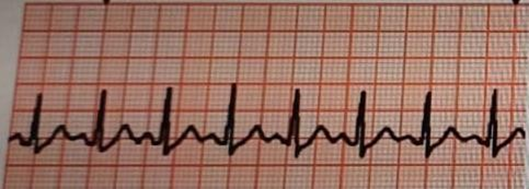
The nurse is evaluating the following rhythm strip on a client in the telemetry unit. The client is alert and oriented but complains of slight nausea after eating breakfast. What is the nurse's best action?
Perform a 12 lead EKG and request an order for bumetanide 0.5 mg IV
Administer pantoprazole sodium 40 mg by mouth to decrease GI distress
Administer carvedilol 10 mg by mouth and reassess in 30 minutes
Complete the remainder of the assessment and continue to monitor
The Correct Answer is D
A. The 12-lead EKG might be unnecessary right now, especially since the client has no other alarming symptoms. Bumetanide is also not indicated for nausea or tachycardia in this scenario.
B. There is no clear indication that the nausea is related to acid reflux or GI distress that would justify pantoprazole.
C. The tachycardia could be physiological, and treating it with a beta-blocker is unnecessary unless there is a more concerning underlying cause (like heart failure or ischemia). The priority here is not pharmacological intervention but monitoring the client's overall condition.
D. This action allows for appropriate monitoring of the client's condition. Sinus tachycardia may resolve on its own without intervention, and the client doesn't exhibit severe symptoms requiring immediate pharmacologic treatment.
Nursing Test Bank
Naxlex Comprehensive Predictor Exams
Related Questions
Correct Answer is A
Explanation
A. A decreased D-dimer level is a positive outcome, as D-dimer is elevated in DIC due to the formation of clots and the breakdown of fibrin. Lower levels indicate less clot formation and better control of the condition.
B. Fibrinogen levels are typically low in DIC due to consumption of clotting factors. Elevated fibrinogen in this case would be a negative indicator, suggesting that clotting is not resolving.
C. A decreased platelet count is a hallmark of DIC and indicates ongoing consumption of platelets due to widespread clotting. A decrease would not be a positive outcome.
D. A prolonged PT is another indicator of DIC, suggesting impaired clotting function. This is not a positive outcome.
Correct Answer is C
Explanation
A. This test set is incomplete for diagnosing DIC. While PT and fibrinogen are important, the eosinophil count is not a key test for DIC.
B. While fibrin degradation products are useful, lactic acid is not specific for DIC and may indicate other issues. A complete blood count is helpful but not definitive for diagnosing DIC.
C. These are key markers for DIC. An elevated D-dimer indicates clot formation and breakdown, while fibrinogen and fibrin degradation products are used to assess clotting and fibrinolysis, both of which are abnormal in DIC.
D. Complete blood count, complete metabolic panel, and prothrombin time are general tests and can give some clues, but they are not definitive for diagnosing DIC.
Whether you are a student looking to ace your exams or a practicing nurse seeking to enhance your expertise , our nursing education contents will empower you with the confidence and competence to make a difference in the lives of patients and become a respected leader in the healthcare field.
Visit Naxlex, invest in your future and unlock endless possibilities with our unparalleled nursing education contents today