
The nurse is caring for a client admitted with a first episode of acute cholecystitis. Which of the following may have contributed to this event? She:
eats a high fiber diet.
has had a normal weight gain with her pregnancy.
is of African-American ancestry.
is 8 months pregnant.
The Correct Answer is D
D. Pregnancy is a known risk factor for gallstone formation and cholecystitis. Hormonal changes during pregnancy, particularly increased levels of estrogen, can lead to increased cholesterol saturation in bile, decreased gallbladder emptying, and increased risk of gallstone formation.
A. Fiber helps to regulate bowel movements and may decrease cholesterol levels in bile, thereby reducing the likelihood of gallstone formation.
B. Pregnancy itself can predispose individuals to gallstone formation due to hormonal changes that increase cholesterol saturation in bile. However, normal weight gain reduces the risk of cholecystitis.
C. Certain ethnicities, including individuals of Native American, Hispanic, and African-American ancestry, have a higher prevalence of gallstones compared to other populations. However, ethnicity alone may not be a direct cause of acute cholecystitis.
Nursing Test Bank
Naxlex Comprehensive Predictor Exams
Related Questions
Correct Answer is C
Explanation
C. Dietary factors, such as high intake of certain foods (e.g., animal protein, sodium, oxalate-rich foods) and low intake of others (e.g., fluids, calcium), can influence the composition of urine and contribute to the formation of renal stones. For example, calcium oxalate stones can form when there is an imbalance of calcium and oxalate in the urine, while uric acid stones can form in individuals with high purine diets.
A. The frequency of renal stones can vary depending on factors such as climate, dietary habits, and genetic predisposition, but it is not specifically associated with the northern United States.
B. Dehydration and inadequate fluid intake can contribute to the formation of renal stones, particularly calcium-based stones. Insufficient fluid intake can lead to concentrated urine, which increases the risk of stone formation and not vice versa.
D. The risk of renal stones is equal in both men and women.
Correct Answer is C
Explanation
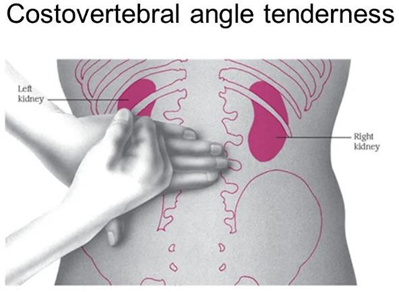
C. Costovertebral tenderness, which is tenderness over the costovertebral angle (where the ribs meet the vertebral column) on palpation, is more indicative of acute pyelonephritis rather than cystitis. In acute pyelonephritis, inflammation of the kidney parenchyma and surrounding tissues can lead to tenderness in this area.
A. Both acute pyelonephritis and cystitis can present with urinary urgency, as it is a common symptom of urinary tract infections (UTIs) in general.
B. Increased WBCs in urinalysis: While an increased number of white blood cells (WBCs) in the urinalysis can indicate a urinary tract infection, it is not specific to either acute pyelonephritis or cystitis.
D. Hematuria can occur in both acute pyelonephritis and cystitis.
Whether you are a student looking to ace your exams or a practicing nurse seeking to enhance your expertise , our nursing education contents will empower you with the confidence and competence to make a difference in the lives of patients and become a respected leader in the healthcare field.
Visit Naxlex, invest in your future and unlock endless possibilities with our unparalleled nursing education contents today