
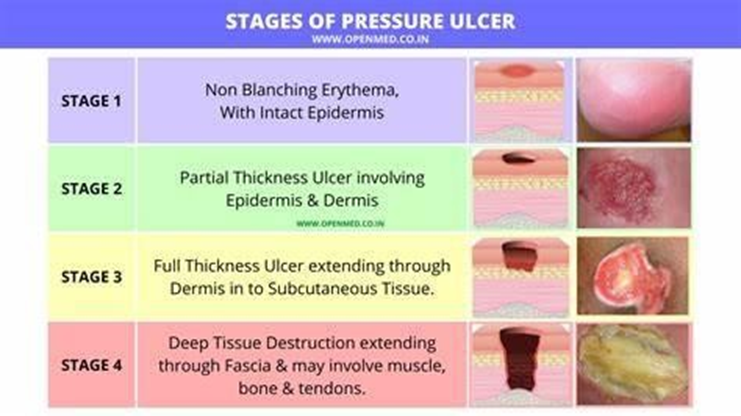
The nurse assesses an open wound that is over the area of the client's greater trochanter. What finding would indicate to the nurse that this is a Stage IV pressure injury?
The ulcer has thick dark eschar over the top
Exposed bone/tendon is visible
There is partial-thickness loss of dermis
The wound extends into the subcutaneous tissue.
The Correct Answer is B
B. This finding suggests deep tissue involvement and is characteristic of a Stage IV pressure injury. Stage IV pressure injuries involve full-thickness tissue loss with exposure of underlying structures such as bone, tendon, or muscle. This level of tissue damage requires extensive wound care and management to promote healing.
A. Thick dark eschar indicates necrotic tissue that typically covers the wound. While eschar itself is a characteristic of severe wounds, its presence alone does not define a Stage IV pressure injury. Eschar can be present in various stages of pressure injuries.
C. Partial-thickness loss of dermis typically corresponds to Stage II pressure injuries, where the injury extends into the epidermis and dermis but does not yet involve full-thickness tissue loss. This finding does not indicate a Stage IV pressure injury.
D. This finding is characteristic of a Stage III pressure injury, where the wound extends through the dermis into the subcutaneous tissue layer. In Stage IV pressure injuries, the damage progresses further to involve deeper structures such as muscle and bone, beyond the subcutaneous tissue.
Nursing Test Bank
Naxlex Comprehensive Predictor Exams
Related Questions
Correct Answer is B
Explanation
B. Expected outcomes are specific, measurable criteria used to determine goal achievement. These outcomes are set during the planning phase of the nursing process in collaboration with the client. During evaluation, the nurse compares the client's actual progress with these expected outcomes. This assessment helps determine whether the goals were met, partially met, or not met, which guides further nursing actions.
A. During the evaluation phase, the nurse assesses the effectiveness of these interventions in achieving the desired outcomes rather than the interventions themselves. The focus is on determining whether the interventions were appropriate, timely, and effective in meeting the client's goals.
C Definitions typically refer to the meaning or understanding of terms used in the nursing process, such as nursing diagnoses or medical conditions. They provide clarity and context to ensure accurate assessment, planning, and intervention. However, definitions themselves are not directly evaluated in the evaluation phase of the nursing process.
D. In the evaluation phase, the nurse assesses the client's response to interventions aimed at addressing these diagnoses. The focus is on determining the effectiveness of the care provided rather than evaluating the diagnoses themselves.
Correct Answer is B
Explanation
B. Deep breathing and coughing exercises help to maintain lung expansion and prevent atelectasis (collapse of lung tissue), clear secretions from the airways, which can reduce the risk of respiratory infections like pneumonia, improve oxygenation and ventilation-perfusion matching in the lungs. Additionally, deep breathing exercises can stimulate circulation indirectly by improving oxygenation and gas exchange, which can benefit circulatory function.
A. Massaging bony areas can help prevent pressure ulcers (bedsores) in immobile patients, but it does not directly improve respiratory or circulatory functions. While skin integrity is important, it does not address the physiological needs of respiratory and circulatory systems.
C. While nutrition is important for overall health, especially in a nonresponsive client who may not be able to feed themselves orally, tube feedings primarily address nutritional needs and do not directly impact respiratory or circulatory functions. They are important for preventing malnutrition and supporting recovery, but they do not specifically target the goals of improving respiratory or circulatory functions.
D. Changing positions regularly is crucial for preventing complications such as pressure ulcers and maintaining skin integrity. It can also aid in improving circulation by relieving pressure on vulnerable areas and promoting blood flow. Proper positioning can optimize respiratory function by preventing pooling of secretions and improving lung ventilation. Additionally, positional changes encourage movement of the diaphragm and chest wall, which aids in ventilation and gas exchange.
Whether you are a student looking to ace your exams or a practicing nurse seeking to enhance your expertise , our nursing education contents will empower you with the confidence and competence to make a difference in the lives of patients and become a respected leader in the healthcare field.
Visit Naxlex, invest in your future and unlock endless possibilities with our unparalleled nursing education contents today