
Which goal is appropriate for a client who is experiencing diarrhea? The client will:
defecate regularly.
increase ingestion of fruits.
limit fluid intake.
regain normal stool consistency.
The Correct Answer is D
D. This is the most appropriate goal for a client experiencing diarrhea. Diarrhea is characterized by loose or watery stools, and the goal of treatment is to restore normal stool consistency. This goal focuses on improving the symptoms and resolving the underlying cause of diarrhea, whether it's due to infection, dietary factors, or other reasons.
A. "Defecating regularly" does not necessarily imply improvement in diarrhea symptoms or resolution of the underlying cause. It is vague and does not provide a clear target related to diarrhea management.
B. Increasing ingestion of fruits may be beneficial for some individuals as fruits contain fiber and fluids that can help regulate bowel movements and maintain hydration. However, certain fruits high in fiber (e.g., apples, pears) may exacerbate diarrhea in some cases. This goal should be tailored based on the individual's tolerance and specific dietary needs.
C. This goal is not appropriate for managing diarrhea. Diarrhea leads to fluid loss and dehydration, so limiting fluid intake can worsen dehydration and electrolyte imbalances. Adequate fluid intake is crucial to replace lost fluids and maintain hydration during episodes of diarrhea.
Nursing Test Bank
Naxlex Comprehensive Predictor Exams
Related Questions
Correct Answer is B
Explanation
B Leaning away from the client can convey disinterest, distraction, or a lack of engagement. It creates physical distance and may inhibit the client from feeling heard or valued. Thus, leaning away from the client can be a barrier to active listening as it diminishes the nurse's ability to fully attend to and understand the client's message.
A. An open posture, where the nurse's body is facing the client with arms uncrossed and relaxed, signals openness and receptivity. It encourages communication and shows the client that the nurse is engaged and attentive. Therefore, an open posture promotes active listening rather than serving as a barrier.
C. Eye contact is essential for effective communication and active listening. It demonstrates attentiveness, interest, and respect. Establishing eye contact helps the nurse to connect with the client and encourages them to continue sharing their thoughts and feelings. Therefore, eye contact supports active listening rather than hindering it.
D. Sitting squarely facing the client promotes engagement and shows that the nurse is focused on the client. It facilitates direct communication and helps the nurse to observe the client's nonverbal cues effectively. This posture encourages open dialogue and supports active listening rather than acting as a barrier.
Correct Answer is D
Explanation
D. Metabolic alkalosis is characterized by an increased pH (alkalosis) and an increased HCO3. In this case, the pH is elevated (7.5), indicating alkalosis, which supports metabolic alkalosis. The HCO3 is elevated at 40 mEq/L, which further supports metabolic alkalosis. The PaCO2 is normal or slightly low (36 mmHg), which can occur as a compensatory response to metabolic alkalosis.
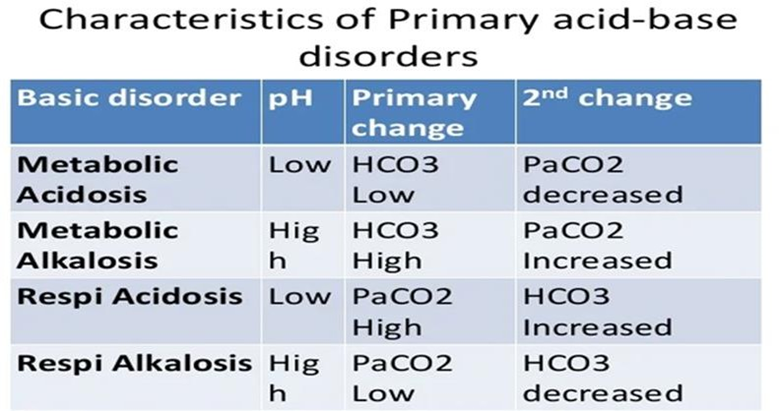
A. Respiratory alkalosis is characterized by an increase in pH (alkalosis) and a decrease in PaCO2 (hypocapnia). In this scenario, the pH is elevated (7.5), which indicates alkalosis. The PaCO2 is 36 mmHg, which is within the normal range (35-45 mmHg) but slightly on the lower side (slight hypocapnia). The HCO3 is elevated at 40 mEq/L, which suggests a compensatory response by the kidneys to retain bicarbonate to counteract the alkalosis.
B. Respiratory acidosis is characterized by a decrease in pH (acidosis) and an increase in PaCO2 (hypercapnia). In this case, the pH is elevated (7.5), indicating alkalosis, which contradicts respiratory acidosis. The PaCO2 is 36 mmHg, which is normal or slightly low, not high as expected in respiratory acidosis. The elevated HCO3 (40 mEq/L) suggests a compensatory metabolic response to the alkalosis, not to acidosis.
C. Metabolic acidosis is characterized by a decreased pH (acidosis) and a decreased HCO3. In this scenario, the pH is elevated (7.5), indicating alkalosis, which contradicts metabolic acidosis. The HCO3 is elevated at 40 mEq/L, indicating metabolic alkalosis rather than metabolic acidosis.
Whether you are a student looking to ace your exams or a practicing nurse seeking to enhance your expertise , our nursing education contents will empower you with the confidence and competence to make a difference in the lives of patients and become a respected leader in the healthcare field.
Visit Naxlex, invest in your future and unlock endless possibilities with our unparalleled nursing education contents today