
The healthcare provider prescribes allopurinol 0.2 grams PO for a client with gout. The available medication is labeled, "Allopurinol tablets 200 mg." How many tablets should the nurse administer? (Enter numerical value only, rounded to the nearest whole number.)
The Correct Answer is ["1"]
1 gram= 1000mg
0.2 grams = 200 milligrams
Since each tablet is 200 mg, the nurse should administer:
200 mg ÷ 200 mg/tablet = 1 tablet
Therefore, the nurse should administer 1 tablet of allopurinol.
Nursing Test Bank
Naxlex Comprehensive Predictor Exams
Related Questions
Correct Answer is B
Explanation
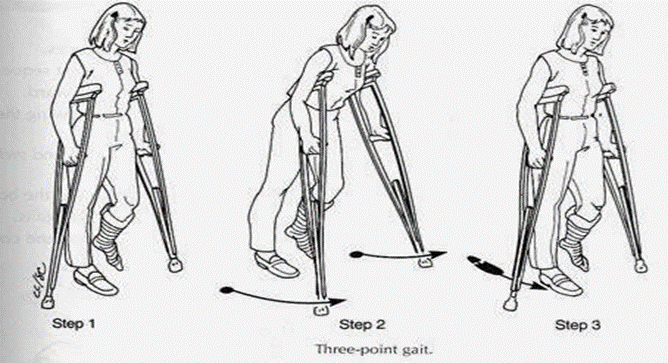
B. In three-point gait crutch walking, the client should progress to foot touchdown and weight bearing of the affected leg. This means that the client is able to advance the crutches forward, followed by the affected leg, and then the unaffected leg. The weight should be borne primarily by the hands and arms on the crutches while the affected leg supports some weight as tolerated.
A. Bearing body weight on the palms of hands during the crutch gait describes the correct distribution of weight on the crutches, which is important for proper technique, but it does not specifically address the coordination of crutch and leg movements in three-point gait.
C. Practices bicep and triceps isometric exercises is not directly related to proper crutch walking technique but may be beneficial for strengthening the upper extremities, which are involved in using crutches.
D. Inspects crutches to ensure rubber tips are intact is important for safety but does not specifically indicate understanding of proper crutch walking technique.
Correct Answer is A
Explanation
A. This technique involves creating vivid mental images of serene and calming environments, allowing the client to mentally escape from discomfort and focus on a peaceful setting. By immersing themselves in this imagined place, clients may experience relaxation and relief from pain.
B. Motivational phrases are statements or affirmations that inspire and encourage the client. While motivational phrases can be incorporated into guided imagery sessions to boost morale and foster positive thinking, they may not be as effective as focusing on a positive external place for managing chronic pain.
C. While emotional reflection can be an important aspect of holistic pain management, it may not be the primary focus during guided imagery sessions aimed at pain relief.
D. While soothing sounds can create a peaceful ambiance and contribute to stress reduction, they are often used as background elements rather than the primary focus of guided imagery for pain management.
Whether you are a student looking to ace your exams or a practicing nurse seeking to enhance your expertise , our nursing education contents will empower you with the confidence and competence to make a difference in the lives of patients and become a respected leader in the healthcare field.
Visit Naxlex, invest in your future and unlock endless possibilities with our unparalleled nursing education contents today