
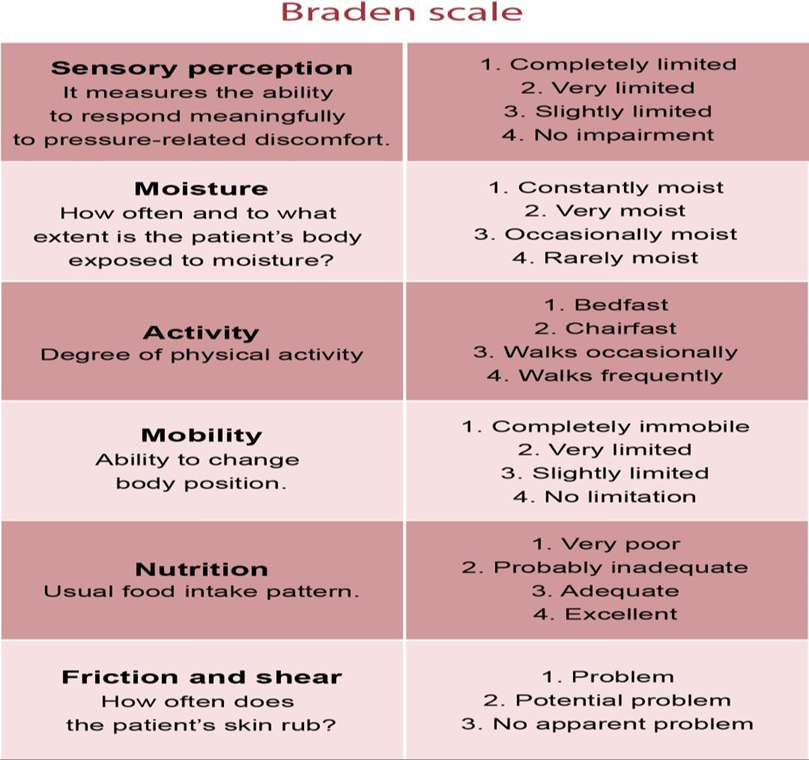
It is most important for the nurse to recalculate the Braden scale score for a client who has developed which problem?
Weakened cough effort.
Hypoactive bowel sounds.
Urinary incontinence.
Plus two ankle edema.
The Correct Answer is C
C. Urinary incontinence affects the moisture component of the Braden scale. Proper assessment and interventions are crucial to prevent skin breakdown.
A. A weakened cough effort is not directly related to pressure ulcer risk assessment, which is the purpose of the Braden Scale.
B. Bowel sounds are not included in the Braden Scale assessment criteria.
D. Ankle edema is not included as a factor in the Braden Scale assessment.
Nursing Test Bank
Naxlex Comprehensive Predictor Exams
Related Questions
Correct Answer is D
Explanation
D. Addressing fluid volume deficit promptly is essential to prevent complications such as hypovolemic shock and renal dysfunction.
A. Bowel incontinence, especially in a client with celiac disease experiencing diarrhea, can lead to skin breakdown, discomfort, and embarrassment. However, it may not be the highest priority if the client's safety and physiological needs are not compromised.
B. Impaired bed mobility after knee replacement surgery can impact the client's recovery, comfort, and risk of complications such as deep vein thrombosis (DVT). However, if the client's condition allows for safe positioning and mobility within bed, this problem may not be the highest priority compared to more immediate concerns.
C. Caregiver role strain is a valid concern, especially if the primary caregiver is experiencing difficulty managing the client's needs. However, the priority is typically focused on addressing the client's immediate physiological needs before addressing caregiver concerns.
Correct Answer is D
Explanation
D. When encountering a medication dosage that appears unusually large or different from what is expected, the nurse should always verify the prescription with the healthcare provider before administering the medication. This step ensures patient safety and helps prevent medication errors.
A. Giving the dosage recommended in the drug handbook may not be appropriate if the prescribed dosage differs significantly from the usual or recommended dosage due to patient- specific factors or other considerations.
B. In situations where the prescribed dosage seems unusually large or different from the usual guidelines, it is essential to confirm with the healthcare provider who wrote the prescription to ensure accuracy and appropriateness for the specific patient.
C. Administering the medication as prescribed without further clarification could potentially lead to harm if the prescribed dosage is incorrect or inappropriate for the patient's condition.
Whether you are a student looking to ace your exams or a practicing nurse seeking to enhance your expertise , our nursing education contents will empower you with the confidence and competence to make a difference in the lives of patients and become a respected leader in the healthcare field.
Visit Naxlex, invest in your future and unlock endless possibilities with our unparalleled nursing education contents today