
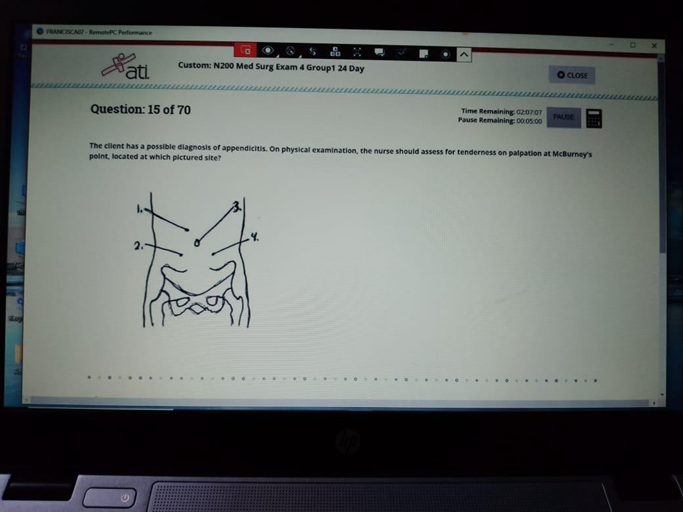
The client has a possible diagnosis of appendicitis. On physical examination, the nurse should assess for tenderness on palpation at McBurney's point, located at which pictured site?
1
2
3
4
The Correct Answer is B
McBurney's point is located approximately one-third of the distance from the anterior superior iliac spine (ASIS) to the umbilicus (navel), on the right side of the abdomen.
Nursing Test Bank
Naxlex Comprehensive Predictor Exams
Related Questions
Correct Answer is D
Explanation
D. Bloody diarrhea is a hallmark symptom of ulcerative colitis, particularly during disease flares. It typically presents as frequent and urgent bowel movements containing blood, mucus, and pus. Crohn's disease, on the other hand, may present with bloody diarrhea but usually involves less frequent bowel movements.
A. Both ulcerative colitis and Crohn's disease can manifest at various ages, including during adolescence and early adulthood.
B. Abdominal pain and cramping are common symptoms of both ulcerative colitis and Crohn's disease.
C. Weight loss can occur in both ulcerative colitis and Crohn's disease due to factors such as decreased appetite, malabsorption, and inflammation of the gastrointestinal tract.
Correct Answer is ["D","E"]
Explanation
D. Prophylactic antibiotics are often administered before surgery for appendicitis to reduce the risk of postoperative infection, particularly in cases of suspected or confirmed appendiceal perforation.
E. Keeping the client NPO (nothing by mouth) is a standard precaution before surgery to prevent aspiration of gastric contents during anesthesia induction and to reduce the risk of surgical complications.
A. Applying heat to the abdomen can potentially worsen inflammation and increase the risk of appendiceal rupture.
B. Ambulation may exacerbate the pain and increase the risk of complications, such as appendiceal rupture.
C. Administering a cleansing enema in preparation for surgery may be appropriate in some cases to help prepare the bowel for surgery, particularly if there is concern about bowel obstruction or to reduce the risk of contamination during surgery.
Whether you are a student looking to ace your exams or a practicing nurse seeking to enhance your expertise , our nursing education contents will empower you with the confidence and competence to make a difference in the lives of patients and become a respected leader in the healthcare field.
Visit Naxlex, invest in your future and unlock endless possibilities with our unparalleled nursing education contents today