
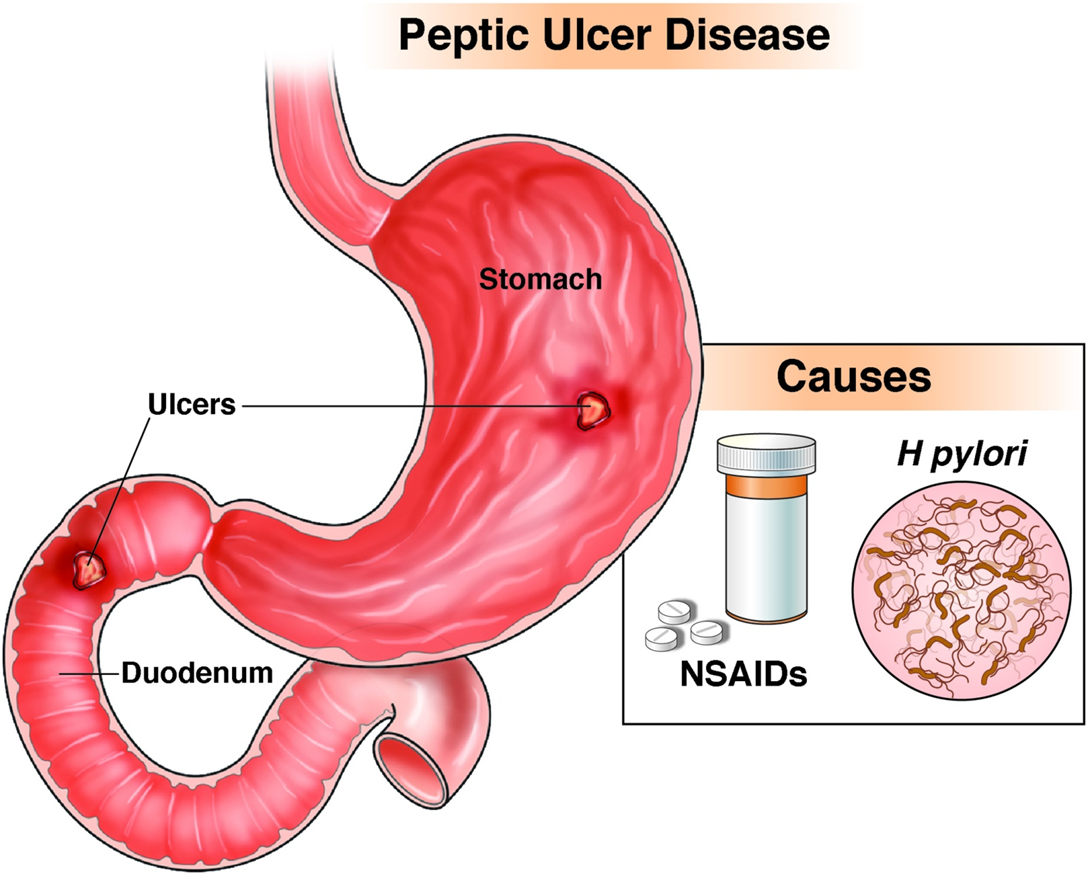
A nurse is reviewing the medical record of a client who has a peptic ulcer. Which of the following findings should the nurse identify as a risk factor for this condition?
History of bulimia.
Drinks green tea.
Consumes spicy foods 5 to 8 times weekly.
History of ibuprofen use.
The Correct Answer is D
Choice A reason: While bulimia can contribute to gastrointestinal issues, it is not as directly linked to peptic ulcers as the use of nonsteroidal anti-inflammatory drugs (NSAIDs).
Choice B reason: Drinking green tea is not typically associated with an increased risk of peptic ulcers.
Choice C reason: Consuming spicy foods is a commonly believed risk factor, but it is not supported by strong evidence as a direct cause of peptic ulcers.
Choice D reason: The use of NSAIDs, such as ibuprofen, is a well-established risk factor for the development of peptic ulcers due to their effect on the stomach lining.
Nursing Test Bank
Naxlex Comprehensive Predictor Exams
Related Questions
Correct Answer is A
Explanation
Choice A reason: Antiembolism stockings are designed to apply pressure to the lower legs, promoting blood circulation and preventing blood from pooling in the veins, which can lead to venous stasis.
Choice B reason: While antiembolism stockings aid in circulation, they do not replace the need for postoperative leg exercises, which are important for recovery.
Choice C reason: These stockings are not specifically used to prevent varicose veins; their primary purpose is to prevent deep vein thrombosis (DVT) in postoperative patients.
Choice D reason: The stockings are not primarily used for pain reduction; their main function is to improve venous return and prevent DVT.
Correct Answer is B
Explanation
Choice A reason: While providing information on stress reduction is helpful, it is not the immediate priority.
Choice B reason: Assisting the client to identify triggers is a priority as it directly addresses the cause of the OCD behaviors.
Choice C reason: Speaking to the client in a calm manner is supportive but does not address the underlying OCD behaviors.
Choice D reason: Identifying anxiety levels can be part of the intervention, but it is not as specific as identifying triggers for the OCD behaviors.
Whether you are a student looking to ace your exams or a practicing nurse seeking to enhance your expertise , our nursing education contents will empower you with the confidence and competence to make a difference in the lives of patients and become a respected leader in the healthcare field.
Visit Naxlex, invest in your future and unlock endless possibilities with our unparalleled nursing education contents today