
Michelle complains to the night nurse that the staff on the day shift don't like her. She continues to tell the nurse that she is the best nurse on the unit because she is always caring and kind. The nurse informs Michele that she will be on vacation for the next week. An hour later. Michelle is found cutting her wrists with a plastic knife. Which personality disorder would you suspect Michelle has?
Histrionic
Obsessive compulsive
Narcissistic
Borderline
The Correct Answer is D
A. Histrionic Personality Disorder:
Individuals with histrionic personality disorder typically seek attention and may be overly dramatic, but self-harm as a response to perceived abandonment is not a characteristic feature.
B. Obsessive-Compulsive Personality Disorder (OCPD):
People with obsessive-compulsive personality disorder are characterized by perfectionism, preoccupation with details, and a desire for control. Michelle's behavior, including self-harm in response to perceived rejection, aligns more closely with borderline personality disorder.
C. Narcissistic Personality Disorder:
While narcissistic individuals may exhibit a sense of superiority and a desire for admiration, self-harm in response to abandonment is not a typical trait of narcissistic personality disorder.
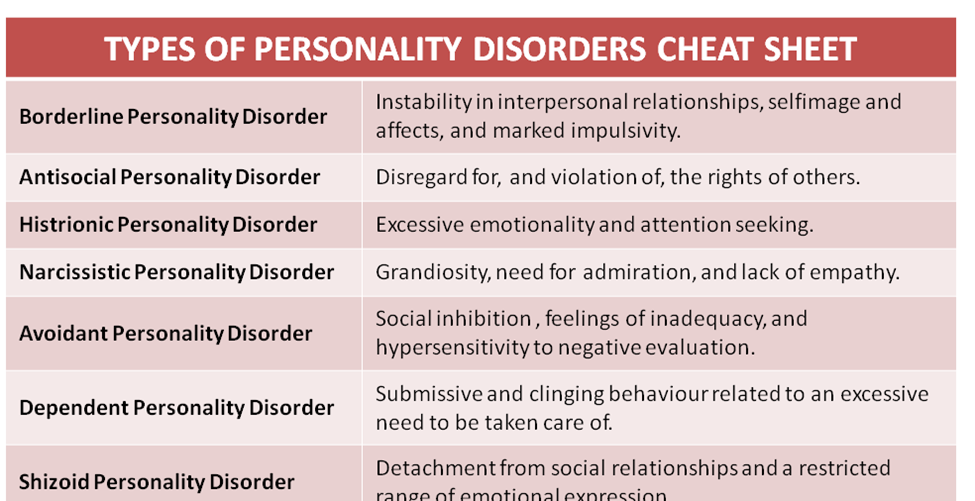
D. Borderline Personality Disorder (BPD):
This personality disorder is characterized by unstable relationships, self-image, and emotions. Individuals with BPD may have intense fears of abandonment and engage in impulsive and self-destructive behaviors. Michelle's perception of being disliked, her claim of superiority, and the self-harming action in response to news of the nurse's vacation are consistent with BPD.
Nursing Test Bank
Naxlex Comprehensive Predictor Exams
Related Questions
Correct Answer is A
Explanation
A. Altered nutrition: less than body requirements R/T hyperactivity AEB weight loss: This is the correct priority nursing diagnosis. The client's significant weight loss is indicative of altered nutrition and poses a more immediate threat to their well-being. Addressing the nutritional deficit takes precedence to ensure the client's physical health and stability.
B. Altered sleep patterns R/T mania AEB insomnia for the past 3 nights: While altered sleep patterns are a concern, the priority in this scenario is the significant weight loss, which is indicative of altered nutrition. Nutritional deficits can have more immediate health consequences.
C. Knowledge deficit R/T bipolar disorder AEB concern about symptoms: While addressing knowledge deficits is important for the client's understanding of their condition, the immediate concern is the client's significant weight loss. Nutritional deficits can lead to serious health issues and should be addressed as a priority.
D. Risk for suicide R/T powerlessness AEB insomnia and anorexia: While the client's symptoms may contribute to a risk for suicide, the immediate focus should be on addressing the altered nutrition, which is a more direct threat to the client's physical health.
Correct Answer is C
Explanation
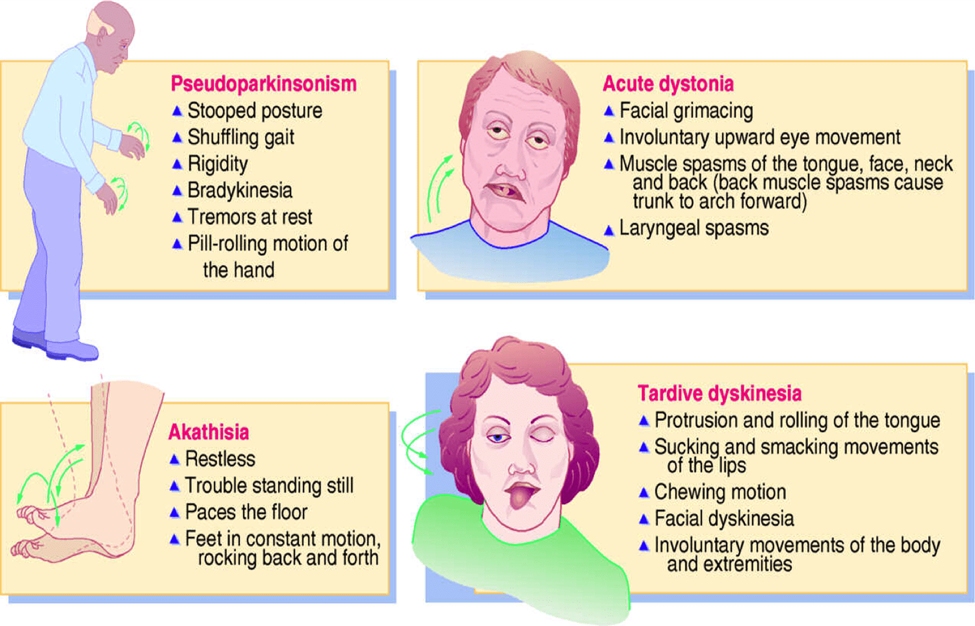
A. Neuroleptic malignant syndrome, treated by discontinuing antipsychotic medications: The symptoms described (uncontrollable tongue movements, stiff neck, difficulty swallowing) are more indicative of tardive dyskinesia than neuroleptic malignant syndrome. Neuroleptic malignant syndrome is characterized by hyperthermia, autonomic dysregulation, altered mental status, and generalized muscle rigidity. Treatment involves discontinuing antipsychotic medications and supportive care.
B. Agranulocytosis treated by administration of clozapine (Clozaril): Agranulocytosis is a rare but serious side effect of clozapine, not a treatment for the symptoms described. The symptoms presented are more consistent with tardive dyskinesia.
C. Tardive dyskinesia treated by discontinuing antipsychotic medication: This is the correct answer. Tardive dyskinesia is a movement disorder characterized by involuntary and abnormal movements, including tongue protrusion and facial grimacing. It can result from long-term use of antipsychotic medications, and discontinuing or reducing the dose of the antipsychotic is a primary intervention.
D. Headache treated by administration of Hydrochlorothiazide: Hydrochlorothiazide is a diuretic used to treat conditions like high blood pressure and edema, not headache or the symptoms described, which are more indicative of tardive dyskinesia.
Whether you are a student looking to ace your exams or a practicing nurse seeking to enhance your expertise , our nursing education contents will empower you with the confidence and competence to make a difference in the lives of patients and become a respected leader in the healthcare field.
Visit Naxlex, invest in your future and unlock endless possibilities with our unparalleled nursing education contents today