
After falling down the basement steps, a client is brought to the emergency room. X-rays confirms that the client's right leg is fractured. Following application of a leg cast, which assessment finding warrants immediate intervention by the nurse?
Increased temperature to lower extremity.
Right foot pale with sluggish capillary refill.
Circumferential edema of right foot.
Complaint of throbbing right leg pain
The Correct Answer is B
A. Increased temperature to the lower extremity:
While increased temperature could indicate inflammation or infection, it is not as immediately concerning as impaired circulation.
B. Right foot pale with sluggish capillary refill.
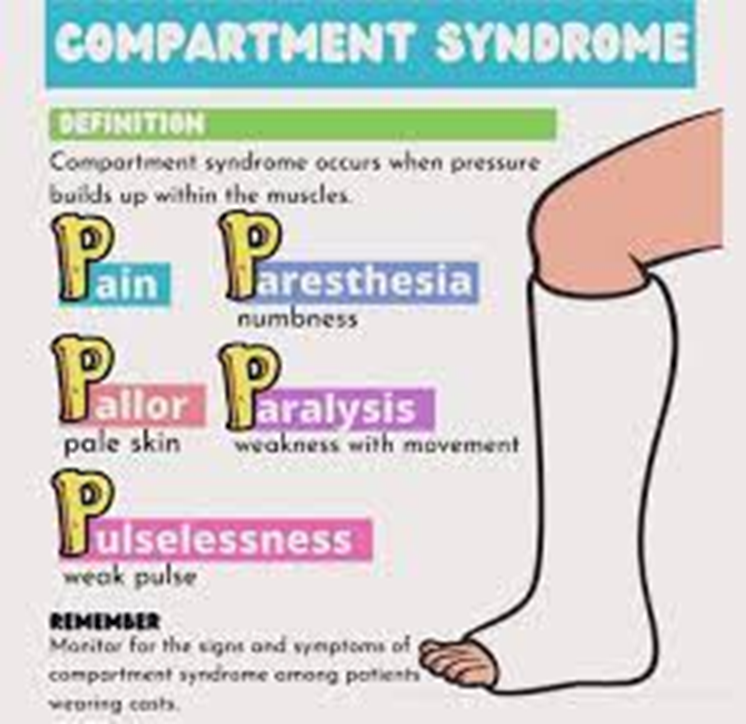
This finding suggests a potential impairment in blood flow to the right foot, which could be due to complications such as compartment syndrome or impaired circulation. Compartment syndrome is a serious condition that occurs when there is increased pressure within a muscle compartment, leading to reduced blood flow. Pale color and sluggish capillary refill indicate compromised circulation and require prompt intervention to prevent further damage.
C. Circumferential edema of the right foot:
Edema is a common finding after a fracture and cast application. However, in the context of pale color and sluggish capillary refill, it may indicate increased pressure within the compartment, requiring immediate attention.
D. Complaint of throbbing right leg pain:
Pain is a common complaint after a fracture, and throbbing pain may be expected. However, the priority is to address the potential compromise in circulation indicated by the pale color and sluggish capillary refill.
Nursing Test Bank
Naxlex Comprehensive Predictor Exams
Related Questions
Correct Answer is D
Explanation
A. Jogs more frequently than usual daily routine:
Exercise, including jogging, is generally not associated with an increased risk of renal calculi. In fact, regular physical activity can have health benefits.
B. Eats a vegetarian diet with cheese 2 to 3 times a day:
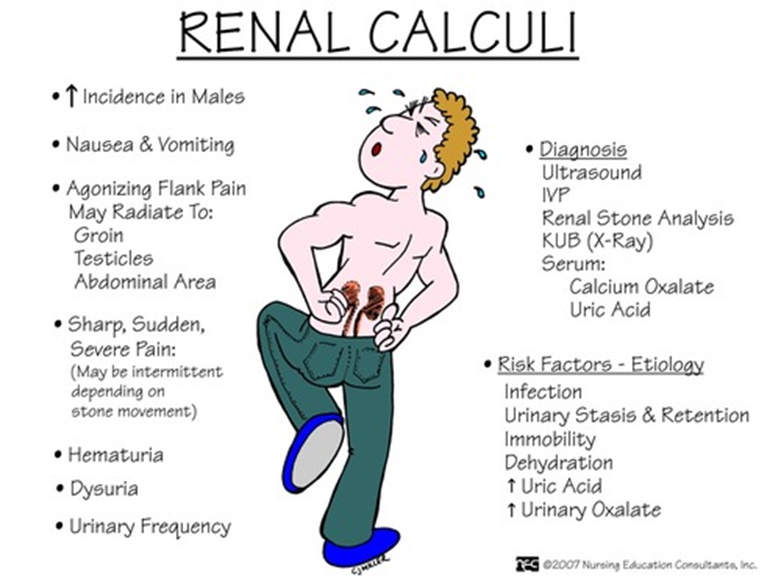
A vegetarian diet alone is not necessarily a risk factor for renal calculi. However, the inclusion of high-oxalate foods, such as certain types of cheese, may contribute to the formation of kidney stones.
C. Experiences additional stress since adopting a child:
Stress is not a direct risk factor for renal calculi. However, certain dietary and lifestyle factors play a more significant role in stone formation.
D. Drinks several bottles of carbonated water daily:
This is the correct answer. Consuming large amounts of carbonated water, especially if it is high in phosphoric acid, can contribute to the formation of kidney stones. Carbonated beverages may increase the excretion of calcium in the urine, potentially leading to stone formation.
Correct Answer is D
Explanation
A. Encourage regular turning:
While turning is important for preventing complications like pressure ulcers, in this acute situation, addressing fluid imbalance and potential sepsis take precedence.
B. Monitor skin for breakdown:
Monitoring for skin breakdown is essential but is not the most critical intervention at this moment.
C. Assess wound drainage daily:
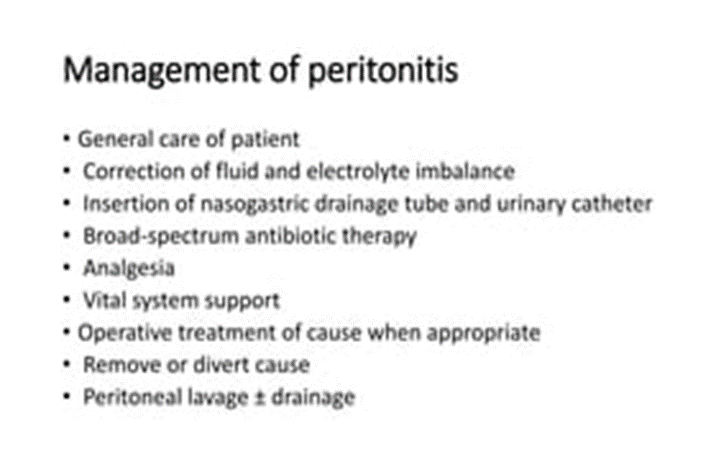
Daily assessment of wound drainage is important for evaluating the status of the surgical site. However, in this situation of potential anastomosis leakage with signs of systemic infection and hypotension, immediate interventions to stabilize the client's condition are of higher priority.
D. Strict IV fluid replacement:
This is the correct answer. The client is displaying signs of systemic infection (fever) and possible sepsis (tachycardia, hypotension), which might be due to an anastomosis leakage following gastric bypass surgery. Ensuring adequate IV fluid replacement is crucial to address hypotension, maintain perfusion, and support hemodynamic stability in this critical situation.
Whether you are a student looking to ace your exams or a practicing nurse seeking to enhance your expertise , our nursing education contents will empower you with the confidence and competence to make a difference in the lives of patients and become a respected leader in the healthcare field.
Visit Naxlex, invest in your future and unlock endless possibilities with our unparalleled nursing education contents today