
A student nurse is performing a urinary catheterization for the first time and inadvertently contaminates the catheter by touching the bed linens. What should the nurse do to maintain surgical asepsis for this procedure?
Complete the procedure and then report what happened.
Apologize to the client and continue on with the procedure.
Nothing because the client is on antibiotics.
Gather new sterile supplies and start the procedure over.
The Correct Answer is D
The correct answer is choice D. Gather new sterile supplies and start the procedure over.
In order to maintain surgical asepsis during a urinary catheterization procedure, the nurse must ensure that all equipment used is sterile and that there is no contamination of the equipment during the procedure. If the catheter is contaminated, the nurse should stop the procedure, gather new sterile supplies, and start the procedure over to prevent the introduction of bacteria into the urinary tract. Reporting the incident and apologizing to the client are important, but not the first priority in maintaining surgical asepsis. The fact that the client is on antibiotics does not change the need for sterile technique during the procedure.
Nursing Test Bank
Naxlex Comprehensive Predictor Exams
Related Questions
Correct Answer is D
Explanation
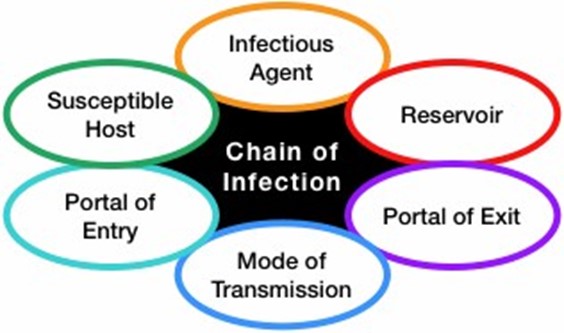
The correct answer is D. Reservoir. A reservoir is a source of infection where infectious agents can live and reproduce. In the case of food poisoning, the contaminated food serves as the reservoir of infectious agents, such as bacteria or viruses, that cause the illness. Other examples of reservoirs include animals, soil, water, and contaminated medical equipment. The contaminated food can be a potential source of infection for anyone who consumes it, and it is important to properly handle and prepare food to prevent the spread of illness. By identifying and controlling the source of the infection, such as the contaminated food, healthcare providers can help prevent the spread of infectious diseases.
Correct Answer is D
Explanation
A. Letting the certified nursing assistant change a sterile wound dressing – Changing a sterile wound dressing is not within the scope of practice for a Certified Nursing Assistant (CNA).
B. Having the LPN complete the initial admission assessment – Initial assessments are typically within the RN's scope of practice. LPNs can assist with ongoing assessments, but the RN should handle the first comprehensive admission assessment.
C. Allowing certified nursing assistant to place an IV – CNAs are not trained or licensed to place IVs; this task requires at least an LPN or RN, depending on local regulations.
D. Asking LPN to pass morning PO blood pressure med to client.This represents proper delegation because passing oral medications, including blood pressure medications, is within the scope of practice for a Licensed Practical Nurse (LPN).
Whether you are a student looking to ace your exams or a practicing nurse seeking to enhance your expertise , our nursing education contents will empower you with the confidence and competence to make a difference in the lives of patients and become a respected leader in the healthcare field.
Visit Naxlex, invest in your future and unlock endless possibilities with our unparalleled nursing education contents today